Do you love sleeping with your pet? Science reveals there’s a tricky trade-off

Source: The Conversation – Canada – By Renata Roma, Research Associate – Pawsitive Connections Lab, University of Saskatchewan

For some pet guardians, their pets are present in their lives from the moment they wake up to the moment they go to bed.

This happens because cats, dogs and other companion animals are increasingly perceived as family members. I’m not talking about the distant cousin, for example, but the ones who really take part in our everyday lives.

In some cases, this includes quieter, more intimate moments, like bedtime. Sleeping with your cat or dog can feel comforting, even essential.

In fact, according to a survey conducted by the American Academy of Sleep Medicine, almost half — 46 per cent — of respondents sleep in the same bed with a pet. As a clinical researcher that focuses on the interactions between pet owners and their animals, I work with many people who describe a close relationship with their pets and share a variety of moments with them.

The benefits of this bond is supported by science. Research shows daily interactions with pets can enhance well-being.

But research also suggests any potential benefits to sleeping next to a beloved pet aren’t straightforward: it can feel comforting even as it may quietly disrupt sleep quality.

The emotional logic of co-sleeping with pets

The impact of co-sleeping can be measured through self-reports and questionnaires, as well as with objective tools, like wristwatches that measure what’s happening physiologically during the night.

In studies using subjective measures, many pet guardians report sleeping better when their pets are with them. Other benefits linked with co-sleeping include an increase in feelings of comfort and emotional safety.

In this context, sleeping places us in a state of perceived vulnerability. Sleeping with a pet, particularly one with whom we have a close bond, may reduce this sense of vulnerability while enhancing a sense of safety.

Emotional regulation is another possible mechanism in this context, as feeling safer can lower emotional arousal. In other words, the presence of a pet may simply help pet guardians feel safe and comfortable. Waking up with a pet next to them can bring a sense of happiness, which may lead them to feel they slept well.

At the same time, some studies using standard questionnaires to assess insomnia and sleep quality suggest that co-sleeping with a pet is not linked to lower stress and may increase insomnia and reduce perceived sleep quality.

These mixed findings suggest that the effects of co-sleeping are more complex than they may seem — that how we feel about our sleep doesn’t always match what’s happening in our body.

Co-sleeping from a physiological perspective

we can also investigate the impacts of co-sleeping with pets more objectively, using tools to assess sleep patterns, awakenings during the night and overall sleep quality.

Research suggests that even when pet guardians report better sleep, physiological measures often show more fragmented sleep when they share the bed with their pets. In one study, researchers used a wristwatch-like device to measure people’s movement during the night while they slept with their pets.

They found that even when people felt they slept well, their sleep tended to be more disrupted.

In some cases, these disruptions were related to the pet’s movements during the night. Researchers observed a synchrony in which pet’s movements influenced their guardians’ movement patterns, and vice versa.

Co-sleeping with a pet, therefore, may affect both the person’s sleep and the pet’s sleep. And though these disruptions aren’t uniform, they may depend on the type of animal you share your bed.

Why does disrupt sleep more than cats

There is also evidence that the impact may vary depending on the type and number of pets. People who sleep with dogs may experience more disruption, while those sleeping with cats often report mixed results.

Although the reasons for these differences are unclear, they may be linked to dogs’ greater sensitivity to external stimuli, such as car noise, barking in the neighbourhood and other environmental sounds.

Considering how these experiences can shape mental health and well-being, it is important to note that poor sleep quality over time can impact emotional regulation.

This may appear as lower tolerance for frustration or a reduced ability to manage emotionally challenging situations. Fatigue, depressed mood, difficulty focusing and a range of other symptoms may also be linked to poor sleep.

Taken together, these findings challenge the idea that co-sleeping is simply either good or bad.

Rethinking the “good or bad” debate

Sleeping with a pet seems to be both comforting and disruptive at the same time.

It is a complex behaviour, and understanding people’s motivations behind whether they share their bed is important. In some cases, for example, co-sleeping with a pet can be very meaningful, aligned with people’s needs and potentially linked to comfort and well-being.

At the same time, it is important to keep in mind that our perceptions do not always fully reflect what is happening in the body.

From a practical perspective, a more nuanced understanding of co-sleeping can shed light on how it shapes daily experiences, sleep and overall health. Closer attention to how pets are integrated into our lives can help guardians make decisions that consider both physical and mental health, without neglecting the potential impacts of those decisions on the pet.

Rather than asking whether co-sleeping with your pet is beneficial or harmful, a better questions is what are you prioritizing: emotional comfort or uninterupted sleep? Recognizing the trade-off can help pet guardians make an informed choice.

The Conversation

Renata Roma does not work for, consult, own shares in or receive funding from any company or organisation that would benefit from this article, and has disclosed no relevant affiliations beyond their academic appointment.

ref. Do you love sleeping with your pet? Science reveals there’s a tricky trade-off – https://theconversation.com/do-you-love-sleeping-with-your-pet-science-reveals-theres-a-tricky-trade-off-277464

Italy: Middle East crisis pushes the Meloni government away from the US

Source: The Conversation – France – By Jean-Pierre Darnis, Full professor at the University of Côte d’Azur, director of the master’s programme in “France-Italy Relations”. Associate fellow at the Foundation for Strategic Research (FRS, Paris) and adjunct professor at LUISS University (Rome), Université Côte d’Azur

The situation in the Middle East represents a negative framework for Italy, which, like its European partners, is a mere spectator watching a conflict that it does not endorse.

Italy is both an exporting nation, sensitive to global economic cycles, and a country characterised by its dependence on fossil fuels, with Italian electricity production largely powered by natural gas.

Both the rise in gas prices and a slowdown in global trade pose a dangerous economic pincer for Italy. This widely shared assessment within the Italian political class underpins Italy’s critical stance towards the conflict.

EU alignment versus handling US relations with care

It is also important to note a shift in Italy’s positioning. Since the beginning of Trump’s presidency, Giorgia Meloni’s government has shown conciliation towards Trump.

While Italy maintained a form of European orthodoxy – supporting Ukraine, expressing a favourable position towards Denmark regarding Greenland – it also tried to please both sides, paranoidly avoiding initiatives that could be perceived as distancing itself from Washington, especially due to concerns over tariffs. From this perspective, Italy remained in the background regarding European defence initiatives led by France and the United Kingdom, from the “coalition of the willing” to the new concept of “forward deterrence”, which sees France collaborating with major European countries, including Germany.

In some ways, this Italian caution may have contributed to a misjudgment by the Italian government, which, for example, did not anticipate Germany’s growing distance from the United States.

In February, Italy’s participation as an observer in Trump’s “Board of Peace” had already raised many questions.

This choice by Meloni’s government appeared as a continuation of an open line towards the American administration, a traditional position she has repeatedly voiced when evoking her vision of Western unity, conceived as a fundamental project. At the time, the left-wing opposition expressed its discontent, while even the Vatican showed its perplexity.

Italy seeks distance on Iran

Following Israel’s and the United States’ military action against Iran, the Italian Prime Minister expressed euphemistic distancing from the United States, declaring in the Chamber of Deputies that the actions of the United States and Israel were taking place outside international law. This amounted to an implicit rejection by Italy, which remains constitutionally committed to legality. Although not a direct condemnation of the Trump administration, this moment marked a turning point, breaking with a government that had previously appeared consistently lenient towards Trump’s positions.

This shift was later confirmed by Italy’s signing, alongside Canada, France, Germany and the United Kingdom, of a letter refusing to send military capabilities to the Strait of Hormuz following a request by Donald Trump.

Keeping energy options open with Tehran

Further factors help explain this position. Italy has always cultivated its relationship with Tehran. Iran had been a privileged partner in Italy’s energy policy, established by ENI under Enrico Mattei since 1957, an agreement that, in some ways, endured even after the 1979 revolution.

Despite sanctions, Italian diplomacy has always sought to maintain channels of dialogue with Tehran. On the other hand, Italians have always been, rightly, extremely critical of military ventures aimed at regime change. In 2011, they had warned – though unheeded – that the fall of Gaddafi’s regime would lead to a scenario of great instability. They were also disillusioned by the withdrawal from Afghanistan, a theatre in which they had invested heavily and where they perceived a form of American betrayal.

Generally, Italy, a country marked by pacifism, does not believe in solutions imposed by force. Thus, the March 2026 attack represents a worst-case scenario for Italians: it creates a risk for their economy, marks a rupture with a country long considered a partner, and defines a military spiral that Italians know to be harmful. This conflict, along with pressures at home, has put the Meloni government in a state of crisis, as it has made Atlantic loyalty a hallmark, in keeping with the line expressed by the Italian right since Silvio Berlusconi.

The Italian context

Italian domestic politics have been characterised by competition over the recent government-backed justice referendum – a key test for Meloni, who, despite this defeat, is continuing as PM**. The events in Minneapolis and the blatant violations of freedoms by U.S. federal forces have contributed to Italy’s cautious stance towards judicial reform, perceived as an untouchable shield for democracy.

References to Trump now act as a repellent for the entire Italian political class, including the right. This factor played a role in the vote against the referendum, which is a major blow for Meloni. It is also worth noting that the visit of Palantir CEO Peter Thiel to Rome in March 2026 sparked both calculated political indifference and an outcry among Catholic circles: Thiel was labelled a heretic and an opponent of the social doctrine of a religious institution that remains steadfast in its defence of democracy.

This distance from America’s tech-right contrasts with the warm welcome Giorgia Meloni had reserved for Elon Musk until 2024.

The radicalisation of Trump’s position is pushing the Italian government to clarify its pro-European choice, a painful evolution for a political camp whose visceral Atlanticism feels betrayed by the United States.

The Conversation

Jean-Pierre Darnis ne travaille pas, ne conseille pas, ne possède pas de parts, ne reçoit pas de fonds d’une organisation qui pourrait tirer profit de cet article, et n’a déclaré aucune autre affiliation que son organisme de recherche.

ref. Italy: Middle East crisis pushes the Meloni government away from the US – https://theconversation.com/italy-middle-east-crisis-pushes-the-meloni-government-away-from-the-us-274314

La ZEE française, levier de puissance pour Paris dans le duel Washington-Pékin

Source: The Conversation – France in French (3) – By Laurent Vilaine, Docteur en sciences de gestion, ancien officier, enseignant en géopolitique à ESDES Business School, ESDES – UCLy (Lyon Catholic University)

La France possède la deuxième plus grande zone économique exclusive du monde, répartie sur tous les océans grâce à ses territoires d’outre-mer. En la matière, elle n’est devancée que par les États-Unis. Mais qu’est-ce exactement qu’une ZEE, et qu’apporte-t-elle à la diplomatie, à l’économie et à la stratégie de Paris ?


On décrit souvent la France comme une puissance continentale en reflux. Pourtant, sa zone économique exclusive (ZEE) – un espace maritime de près de 11 millions de kilomètres carrés – lui confère une géographie mondiale. Dans un XXIᵉ siècle dominé par la rivalité États‑Unis/Chine, les océans redeviennent le lieu où se jouent les rapports de force : routes commerciales, câbles sous‑marins, ressources halieutiques et minérales…

Que change réellement la ZEE à la puissance française, et à quelles conditions cet atout devient‑il autre chose qu’un chiffre impressionnant ? Notre approche est volontairement descriptive : elle vise à clarifier les mécanismes plutôt qu’à promettre une recette miracle. Nous privilégions le temps long et les dynamiques des grands acteurs, en particulier les États‑Unis et la Chine.

Un atout et une responsabilité

La mer n’est pas un décor. Elle est une infrastructure, un espace économique et un théâtre de puissance. Cette idée, classique depuis Alfred Thayer Mahan, revient au centre des débats au moment où l’Indo‑Pacifique devient la région clé de l’économie mondiale et de la compétition stratégique.

L’histoire mondiale est aussi une histoire de la mer : les puissances qui contrôlent les flux contrôlent une part du monde. Dans cette lecture, l’hégémonie américaine depuis 1945 s’explique en bonne partie par une supériorité navale et par un réseau d’alliances garantissant la liberté des routes. De même, la montée en puissance chinoise s’accompagne logiquement d’une ambition maritime : une puissance exportatrice et importatrice ne peut accepter de dépendre durablement d’un système contrôlé par un rival. Cet arrière-plan historique explique pourquoi la mer redevient, aujourd’hui, un espace de compétition systémique.

Dans cette configuration, la France possède un atout singulier : un vaste domaine maritime, largement ultramarin, qui la place dans tous les océans.

Mais un atout n’est pas une politique. Une ZEE « immense » n’implique pas automatiquement une puissance « immense ». Elle impose des obligations : surveiller, administrer, arbitrer les usages, protéger des infrastructures et faire respecter le droit. Elle révèle aussi une contrainte : la puissance maritime se mesure à la durée, donc à la capacité de présence.

En 2026, que vaut réellement la ZEE française comme levier de puissance ?

La ZEE de la France.
Louhansk/Wikimedia, CC BY-NC-SA

Nous répondons en trois étapes. D’abord, nous plaçons le retour du maritime dans le temps long de la rivalité États‑Unis/Chine, en rappelant pourquoi la mer structure l’économie et la sécurité. Ensuite, nous expliquons ce que la ZEE française permet – et ce qu’elle ne permet pas – autour de trois enjeux concrets : ressources vivantes, ressources des grands fonds, câbles sous‑marins. Enfin, nous décrivons, sans posture incantatoire, les conditions minimales d’une ZEE « gouvernée », c’est‑à‑dire d’un espace maritime effectivement administré.

Le retour du maritime dans le temps long : économie, sécurité, normes

La mer comme squelette de la mondialisation

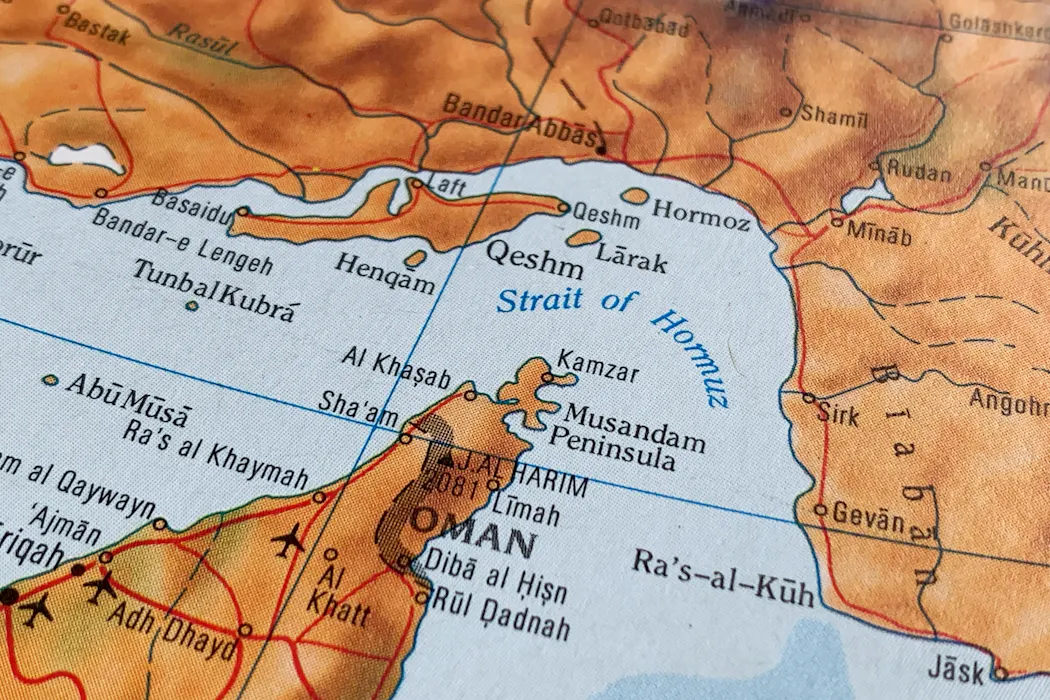
En 2026, l’essentiel du commerce mondial continue de passer par la mer. Conteneurs, hydrocarbures, céréales et équipements industriels circulent sur des routes maritimes relativement stables. Cette dépendance explique un phénomène simple : les points de passage obligés – détroits et canaux – concentrent des vulnérabilités. Une perturbation à Suez, au détroit de Malacca, ou à Ormuz/Bab el‑Mandeb comme aujourd’hui, se transforme rapidement en choc économique.


À lire aussi :
Blocage du détroit d’Ormuz : le risque d’un choc industriel pour l’Europe ?


La dépendance maritime se mesure aussi dans le domaine de l’énergie. Même lorsque les économies s’engagent dans des trajectoires de décarbonation, le pétrole et le gaz restent déterminants pour le transport et l’industrie. Or, une part importante des flux énergétiques transite par des détroits. Cette configuration rend l’économie mondiale sensible à des crises localisées. Elle explique pourquoi les marines, au‑delà du combat, sécurisent des routes, escortent, et affichent une présence dissuasive.

Le retour des grandes puissances sur mer

Le retour de la mer comme espace stratégique n’est pas seulement une affaire de commerce. C’est aussi une affaire d’armées. Après la fin de la guerre froide, beaucoup ont cru à une baisse durable de la conflictualité maritime. Or l’époque actuelle montre l’inverse : les marines se modernisent, les routes se sécurisent, et les fonds marins deviennent un enjeu.

Cette dynamique est lisible dans l’Indo‑Pacifique, mais elle déborde largement : Arctique, mer Noire, mer Baltique, Méditerranée orientale et, bien sûr, aujourd’hui, dans des zones de tension comme le golfe Persique et la mer Rouge, où les attaques contre le trafic maritime illustrent la vulnérabilité des routes commerciales.

La dimension militaire n’est pas seulement conventionnelle. Les océans sont aussi le sanctuaire de la dissuasion nucléaire pour plusieurs puissances, via les sous-marins nucléaires lanceurs d’engins. Cette réalité renforce la centralité stratégique de la mer : contrôler la surface ne suffit pas si l’adversaire peut frapper depuis les profondeurs. La mer devient alors un espace de permanence stratégique, où la capacité d’agir discrètement compte autant que la visibilité des flottes.

États‑Unis/Chine : la rivalité s’ancre dans l’Indo‑Pacifique

La rivalité dominante du siècle se joue dans l’Indo‑Pacifique. Les États‑Unis restent la puissance navale de référence : capacités de projection, réseau de bases, alliances, interopérabilité. Mais la Chine modifie le rapport de force par une montée en puissance rapide de sa marine, au service d’un objectif plus large : sécuriser ses flux, desserrer ce qu’elle perçoit comme un encerclement, et peser sur les règles du jeu régional.

Il est utile d’être pédagogique : la confrontation sino-américaine n’est pas seulement la course au tonnage. Elle est un mélange de trois couches.

Première couche : la sécurité des routes. La Chine dépend d’importations énergétiques et de flux commerciaux maritimes. Elle cherche donc des points d’appui, des capacités d’escorte, et une liberté de manœuvre au large.

Deuxième couche : la géographie des « goulets ». Le détroit d’Ormuz est un passage clé. Il n’est pas le seul, mais il symbolise une vulnérabilité : une route unique, difficile à remplacer rapidement.

Troisième couche : la norme. Les « opérations de liberté de navigation » (Freedom of Navigation Operations, ou FONOPs) consistent pour les États-Unis à faire circuler des navires militaires afin de contester juridiquement des revendications jugées excessives. Par exemple, des bâtiments américains traversent régulièrement la mer de Chine méridionale à proximité d’îlots revendiqués par Pékin, ou encore le détroit de Taïwan, afin d’affirmer le principe de libre circulation garanti par le droit international (une ironie aujourd’hui). Pékin, de son côté, combine présence navale, garde‑côtes, milices maritimes et pression économique. Le cœur du sujet n’est pas seulement « qui est le plus fort ? », mais « qui impose les règles ? »


À lire aussi :
La loi chinoise sur les garde-côtes va-t-elle provoquer de nouvelles tensions sur les mers d’Asie ?


C’est ici que la ZEE française prend sens. Non pas comme un « empire », mais comme une géographie d’influence potentielle, à condition de la gouverner.

ZEE : droit économique, pas souveraineté totale

Laurent Vilaine et Damien Afonso ont co-écrit le Retour de la puissance en géopolitique. Bienvenue dans le vrai monde.
L’Harmattan, 2025

Pour éviter un contresens fréquent : la ZEE n’est pas une « mer territoriale élargie ». La mer territoriale va jusqu’à 12 milles marins. La ZEE peut aller jusqu’à 200 milles marins (370 km). Dans la ZEE, l’État côtier ne possède pas tous les droits qu’il a sur terre. Il a surtout des droits souverains sur l’exploration et l’exploitation des ressources (sol, sous-sol et colonne d’eau), ainsi que des compétences liées à l’environnement, la recherche et les installations.

Cette précision est centrale. Elle rappelle que la puissance maritime n’est pas une question de surface. Elle dépend de la capacité à exercer, concrètement, les droits attachés à la ZEE : surveiller, contrôler, arbitrer.

LA ZEE française, c’est 90 milliards d’euros de chiffre d’affaires annuel et environ 350 000 emplois directs en France.

Un rappel utile : les zones maritimes s’emboîtent

Pour un lecteur non spécialiste, il est utile de visualiser un emboîtement simple. D’abord la mer territoriale, où l’État exerce une souveraineté comparable à celle de la terre. Ensuite la zone contiguë, où il peut prévenir certaines infractions. Puis la ZEE, où l’enjeu est surtout économique.

Enfin la haute mer, où prévaut la liberté. Cette gradation explique pourquoi la ZEE est à la fois essentielle (ressources) et limitée (navigation). Elle explique aussi pourquoi la puissance maritime se construit autant par le droit que par les moyens d’action.

Sur le plan économique, la ZEE française représente un potentiel considérable. Les activités liées à la mer – pêche, aquaculture, transport maritime, câbles sous-marins ou encore énergies marines – contribuent déjà à plusieurs dizaines de milliards d’euros par an à l’économie nationale. À cela s’ajoutent des perspectives encore incertaines mais potentiellement majeures, notamment autour des ressources minérales des grands fonds et du développement des énergies offshore.

Mais ce potentiel suppose une capacité à gouverner effectivement cet espace. Or, en pratique, la gestion de la ZEE française repose sur une architecture institutionnelle fragmentée. L’État y intervient à travers une pluralité d’acteurs : la Marine nationale pour la surveillance et la protection, les préfets maritimes pour l’action de l’État en mer, les directions des affaires maritimes pour la régulation des usages, ou encore les organismes scientifiques pour la connaissance des milieux.

À l’échelle européenne, la situation est hybride. La ZEE demeure juridiquement nationale, mais certaines politiques – en particulier la pêche et l’environnement – sont en partie intégrées au cadre communautaire. Autrement dit, la ZEE française n’est pas une ZEE européenne, mais elle est partiellement encadrée par des normes de l’Union, ce qui peut générer des tensions ou des arbitrages complexes.

Cette superposition des niveaux de décision pose une question centrale de lisibilité et d’efficacité. La France dispose d’un espace maritime mondial, mais sans administration unifiée spécifiquement dédiée à la ZEE. D’où un débat récurrent : faut-il renforcer la coordination existante ou créer une véritable gouvernance intégrée de la mer ?

Dans ce contexte, une ZEE « gouvernée » ne se réduit pas à un espace juridiquement défini. Elle désigne un espace effectivement surveillé, régulé et inscrit dans une stratégie cohérente, condition indispensable pour transformer cet atout géographique en levier de puissance durable.

The Conversation

Les auteurs ne travaillent pas, ne conseillent pas, ne possèdent pas de parts, ne reçoivent pas de fonds d’une organisation qui pourrait tirer profit de cet article, et n’ont déclaré aucune autre affiliation que leur organisme de recherche.

ref. La ZEE française, levier de puissance pour Paris dans le duel Washington-Pékin – https://theconversation.com/la-zee-francaise-levier-de-puissance-pour-paris-dans-le-duel-washington-pekin-278603

On Passover, some Sephardic Jews revisit not only the story of their ancestors, but also their Ladino language

Source: The Conversation – USA (3) – By Bryan Kirschen, Associate Professor of Spanish and Linguistics, Binghamton University, State University of New York

Decorated ‘guevos haminados,’ or slow-cooked eggs, are a common Passover food for Sephardic Jewish families. sbossert/iStock via Getty Images Plus

When Passover arrives each spring, Jewish families around the world gather at their tables to retell a story passed down for thousands of years. At ritual dinners known as Seders, they recount the Exodus, the biblical story of the Israelites’ liberation from slavery in Egypt – asking questions, singing songs and explaining the meaning behind symbolic foods like matzo.

In the United States, most Seders move between English, Hebrew and Aramaic, which was once the lingua franca of much of the ancient Middle East. In some homes, another language joins the table: Ladino, a form of Judeo-Spanish that Jews carried across the Mediterranean after being expelled from Spain in 1492.

Multilingualism has long been part of Jewish tradition. For Sephardic Jews who spent centuries in Ottoman and Muslim lands after their forced exodus from Spain – or Sepharad, as it is called in Hebrew – Ladino has played a central role at Passover. For many families today, the holiday provides a rare opportunity to hear the now-endangered language spoken aloud – a focus of my sociolinguistic research.

My work with Sephardic communities has demonstrated the ways in which the language is preserved across generations. Just as the story of Passover is transmitted each year, the holiday also provides a recurring encounter with Ladino.

A message in Judeo-Spanish about Passover from Dallas resident Rachel Amado Bortnick, who is originally from Izmir, Turkey.

Spanish roots

To the ear, Ladino sounds very much like Spanish. However, it has been shaped by many other languages with which its speakers have come into contact: Hebrew, Arabic, Portuguese, French, Italian and Turkish, to name a few.

To the eye, however, Ladino used to look very different; it was traditionally written in Hebrew-based characters. Over the past century, most people who write the language have used the Latin alphabet.

A piece of paper filled with black script in Ladino in the Hebrew alphabet.
A handwritten Haggadah – or ‘Agada,’ in Ladino – from the late 1800s. The text, which is used during Passover Seders, includes Aramaic, Ladino and Hebrew.
Bryan Kirschen

Meanwhile, Ladino speakers assimilated to the majority languages of their countries – that is, if they were not from communities entirely wiped off the map during the Holocaust. Today, Ladino is an endangered language, spoken mostly by older Sephardic Jews.

However, since the turn of the 21st century, speakers from around the world have found new opportunities to communicate with each other, especially online.

Most speakers can be found in Israel, Turkey and the United States. A 2025 report from JIMENA, a Jewish nonprofit based in California, estimates that about 10% of Jews in the U.S. are Sephardic and/or Mizrahi. The latter term includes other populations of Jews from around the Middle East and North Africa. The Pew Research Center estimates that 4% of American Jews are Sephardic or Mizrahi, and another 6% say they are a combination of those groups and Ashkenazi – the term for Jews with ancestors from Eastern Europe.

Two varieties

“Ladino” is regularly used to refer to the everyday spoken language of Judeo-Spanish. Many native speakers simply call it “Spanyol” or “Espanyol.”

However, some speakers and scholars use the term “Ladino” to refer to a very particular variety: the form of the language found in religious materials like the Haggadah, the text that guides the Seder ritual. For many Sephardim, the word “Haggadah” also refers to the Seder itself.

This variety of Ladino preserves the structure of Hebrew, using a word-for-word translation – what linguists call a “calque.” For example, a native speaker might say “esta noche,” as in other varieties of Spanish, to refer to “tonight.” The Ladino textual tradition, though, reads “la noche la esta.” This mirrors the word order of the Hebrew phrase: “ha-laylah ha-zeh,” or “the night the this.”

That this practice has endured for centuries is both remarkable and, in some ways, unsurprising.

Sephardic populations once regularly spoke Judeo-Spanish as an everyday language, reserving the calque variety for religious or instructional contexts. Today, though, the spoken language is rarely transmitted to younger generations and has entered what linguists call a “post-vernacular” phase.

Many Sephardic Jews have completely lost the language of their ancestors, but others have preserved it and even found new ways to use it. One New York native with Sephardic roots in Turkey who I interviewed said she uses Ladino not just with relatives, friends and students, but even with “neighbors and Uber drivers, who are very interested in knowing more; when speaking to animals; or thinking by myself.”

Sephardic practices at Passover explained in an online ‘Enkontro de Alhad’ program, conducted in Judeo-Spanish.

Still, the calque variety – the word-for-word translation from Hebrew – persists. Importantly, someone does not need to be fluent in the spoken language to participate, just as many Jews can recite prayers, lists and songs in Hebrew and Aramaic without necessarily being able to communicate in those languages. In this sense, engaging with multiple languages is a natural part of Jewish cultural practice.

Honoring tradition

Just as Passover tells the story of the ancient Israelites’ exodus and liberation, the use of Ladino today is a story of survival.

In my research, American Sephardim share that it is important to preserve their families’ heritage, referring to themes such as tradition, ancestry, memory and nostalgia. One Los Angeles native with roots in Turkey and Greece noted that it’s important “to honor our family members who survived to pass things along to us … to create new memories for the next generation. I think my kids cherish that their Passover is different from others.” Another, a Seattle native with roots on the Greek island of Rhodes, said, “I want to keep it alive in some way or another. And the only way I’m able to do that is by using it at the Seder.”

A page from an illuminated manuscript with a flowered border and ornately colored Hebrew letters.
The ‘Sarajevo Haggadah,’ a 14th-century manuscript, originally came from a Sephardic Jewish community in Spain.
Zemaljski Muzej via Wikimedia Commons

Beyond the read-aloud portions of the Haggadah, Sephardim of different generations keep Judeo-Spanish alive through songs and cuisine. Traditional dishes include “mina de karne,” meat pie; “keftes de prasa,” leek patties; “guevos haminados,” slow-cooked eggs; “bimuelos,” fried fritters; and even “arroz,” rice – a staple in some communities, but less common in others.

The Seder provides many different ways to engage with the language, often alongside older generations who acquired varying degrees of proficiency from their forebears. One Los Angeles native whose family came from Rhodes shared that all five generations of her family and their guests sing Ladino songs like “Un Kavretiko” – which many other Jews know as “Chad Gadya,” or “One Little Goat” – and “Ken Supiense,” or “Who Knows One?” Each family makes deliberate decisions about language use, customizing traditions and even the Haggadah text to suit their cultural and linguistic needs.

Like the Passover story itself, Ladino persists through the voices of relatives who learned the language from generations before them. For many Sephardic families, the Passover Seder remains one of the few moments each year when these sounds return to the table, linking the past and present through shared practices of storytelling, memory and language.

The Conversation

Bryan Kirschen is affiliated with the American Ladino League.

ref. On Passover, some Sephardic Jews revisit not only the story of their ancestors, but also their Ladino language – https://theconversation.com/on-passover-some-sephardic-jews-revisit-not-only-the-story-of-their-ancestors-but-also-their-ladino-language-278290

US troops in Nigeria to help fight terrorism could end up making it worse – analyst

Source: The Conversation – Africa (2) – By Saheed Babajide Owonikoko, Researcher, Centre for Peace and Security Studies, Modibbo Adama University of Technology

The recent deployment of US soldiers in Nigeria to assist the west African country in its counterterrorism campaign could worsen Nigeria’s insecurity.

It might be perceived as a sign of weakness; deepen religious divisions; widen the rift between the Economic Community of West African State (Ecowas) and the breakaway Alliance of Sahel States (AES); provoke terrorist attacks; and hinder the development of Nigeria’s armed forces.

Since Nigeria’s 1999 transition to civil rule, insecurity has worsened in the country’s northern regions. In 2024, 9,662 people were killed nationwide, 86% of them in the north. In 2025, violent deaths rose to 11,968, with northern Nigeria still the most affected.

The first batch of US soldiers was deployed barely two months after the US bombed militants in Nigeria’s north-west on Christmas Day 2025.

The director of defence information at Nigeria’s defence headquarters said the US troops’ presence would give Nigerian troops access to specialised technical capabilities. This would strengthen Nigeria’s ability to deter terrorist threats and enhance the protection of vulnerable communities across the country.

This is not the first time foreign boots have been brought into Nigeria since its independence in 1960. Foreign soldiers were deployed to fight the Nigerian Civil War, and to re-professionalise the Nigerian Armed Forces.

Between December 2014 and April 2015, Nigeria is said to have hired a private military company called Specialised Tasks, Training, Equipment and Protection (STTEP) International, involving 100 to 250 South African ex-soldiers, for a direct combat role against insurgents in Maiduguri. The government denied this.

Now is the first time US soldiers will be deployed in a combat-related operation as part of Nigeria’s counterterrorism efforts. Among members of the public, there are divided opinions over this.

As a security scholar who researches Nigeria’s security crises, I have serious concerns that the deployment of US soldiers in Nigeria, regardless of their number, may exacerbate insecurity rather than improving it.

Why it may backfire

The armed forces of any country are an emblem of sovereignty. Foreigners in a combat operation against terrorism in another country may be framed domestically as a loss of control over security.

The US has long sought to station its Africa Command (Africom) in Nigeria. Nigeria resisted this, largely due to the sovereignty issue, regional politics in Ecowas and other strategic calculations. Since the US Christmas Day bombing, President Bola Tinubu has come under heavy criticism for not being able to truly act as commander-in-chief while a foreign power handles the security.

What is more, President Donald Trump has widened existing religious divisions across Nigeria by:

  • framing Nigeria’s security challenge as persecution of Christians

  • declaring Nigeria a country of particular concern

  • threatening to deploy the US military to Nigeria unilaterally to defend Christians.

Given this context, US boots on the ground in Nigeria may feed into several conspiracy narratives. One is the perception that the US is seeking access to Nigeria’s critical mineral resources.

It could reinforce the Alliance for Sahelian States-Ecowas crisis, deepening the security conundrum in the Sahel. Nigeria would likely be the most affected.

After the coups in Mali, Niger and Burkina Faso, and Ecowas efforts to force the coupists to return power to civilians, the Alliance of Sahel States formed and disengaged with western powers. Animosity developed between the two regional groupings.

The Alliance of Sahel States countries, which used to be allies of France and the US, have now shifted to Russia and China. Niger’s junta ordered the withdrawal of over 1,000 foreign military personnel and closure of US facilities, including a drone base in Agadez.

Russia currently has at least 1,500 foreign troops, tagged as the African Corps (previously Wagner), fighting in Mali alone.

The deployment of US troops to Nigeria, given the context of fracture within Ecowas and the shift in foreign alliances, could lead to an escalation of insecurity in the region.

Thirdly, the US is the global arrowhead of westernisation that most Islamist terrorist organisations usually select as the target of attacks. Boko Haram attacks in Nigeria and the support it gets from foreign terrorist organisations like al-Qaeda and ISIS are due largely to the perception that Nigeria is a proxy for the US.

With US soldiers in Nigeria, Nigeria’s value as a target for terrorist organisations may increase. There are already signs that terrorist attacks are escalating in Nigeria since the Christmas Day bombing.

Even with US troops deployed to Nigeria’s north-east, terrorist attacks have become more daring. On 5 March, Islamic State West Africa Province attacked military bases in Borno State. Several high-ranking military officers were killed and arms and ammunition were carted away.

If US forces are attacked, Trump is more likely to deploy more soldiers.

This was the case in Somalia in May 2017. Trump expanded US military operations in Somalia after a US Navy Seal was killed by al-Shabaab.

Even if the presence of the US soldiers in Nigeria is to help Nigerian Armed Forces in operational capacities such as intelligence, surveillance and reconnaissance, logistics and air power manoeuvres, heavy reliance on the US could weaken the long-term development of the Nigerian Armed Forces.

What to do

US support is key to Nigeria’s improved capability to address its security challenge, but this should not take the form of US military boots on the ground in Nigeria. It can come in the form of training support and supply of precision equipment. That would help to address critical shortages that affect Nigeria’s ability to deal with insecurity.

The Conversation

Saheed Babajide Owonikoko does not work for, consult, own shares in or receive funding from any company or organisation that would benefit from this article, and has disclosed no relevant affiliations beyond their academic appointment.

ref. US troops in Nigeria to help fight terrorism could end up making it worse – analyst – https://theconversation.com/us-troops-in-nigeria-to-help-fight-terrorism-could-end-up-making-it-worse-analyst-278112

Anthrax-causing bacteria have dwelled in soil for centuries – cycling through people, animals and earth

Source: The Conversation – USA – By Hannah Kinzer, Ph.D. Candidate in Public Health, Washington University in St. Louis

Without timely treatment, _Bacillus anthracis_ can cause fatal infection. CDC

The bacteria that cause deadly anthrax disease persist in the earth, a place their ancestors preferred over petri dishes and blood-filled tissues.

The bacteria that cause anthrax are called Bacillus anthracis. In the soil, they hang out and can form communities around plant roots. They also interact with neighboring organisms, though they’re an admittedly less-than-ideal neighbor to the soil-dwelling amoebae they infect and kill.

As a public health researcher, I am fascinated by how diseases move among people, animals and the environment. When I worked in a state health department, I was surprised to learn how the bacteria that cause anthrax cycle between land and the animals that rely on that land – including people.

Anthrax in the ecosystem

Give these bacteria alkaline-rich dirt, calcium and some nitrogen, and they happily subsist in the ground. If the temperature, humidity or acidity is not favorable, these bacteria can also slumber for decades in a spore form – underfoot and forgotten by nearly all except cattle.

Cattle, deer and other large herbivores disturb the abodes of bacteria. They sometimes unintentionally eat anthrax spores along with their food or are exposed to them through a cut. After anthrax spores enter the animal’s body, immune cells known as macrophages pick up these spores for removal. But instead of being destroyed like other intruding pathogens, the spores germinate and multiply.

Microscopy image of two or three long, thin orange rods being swallowed by two yellow blobs
Immune cells (yellow) engulfing anthrax bacteria (orange).
Volker Brinkmann/Wikimedia Commons, CC BY-SA

Once the spores take the form of bacteria, they can also mount an aggressive offensive. Anthrax bacteria can cleave vital proteins with toxins and wreak havoc on their cellular adversaries. Cattle succumb to the bacteria within days if left untreated – sometimes within 48 hours of infection.

Through the cattle’s death, the bacteria are brought back to the earth to vegetate or sporulate once more.

Humans seeding anthrax

People can get caught in the life cycle of Bacillus anthracis.

Throughout history, humans and animals have seeded new lands with Bacillus anthracis spores. The spores are hardy travelers: They can survive for over 50 years and are resilient to dehydration, radiation, toxic chemicals and enzymatic degradation.

Anthrax in early Egypt may have been one of the plagues described in the Bible. Animal husbandry texts in China have described anthrax for millennia. French explorers brought Bacillus anthracis spores to American soil in the early 1700s.

While people usually spread anthrax accidentally, there are infamous examples of anthrax spread on purpose.

In the 1930s and ’40s, Japanese military leaders released anthrax spores in Chinese villages, killing thousands of people. On Sept. 18, 2001, envelopes of spores were mailed to American media and congressional leaders, killing five people.

The weaponized use of Bacillus anthracis spores brings to mind white powder rather than the brown earth where they naturally lie.

Close-up of person handling envelope with gloved hand and pliers held in a plastic cover over a platform with the word 'ANTHRAX' in a red no symbol
Anthrax has been sent through the mail as an act of bioterrorism.
Pool Demange/MARCHI/Gamma-Rapho via Getty Images

Anthrax underfoot

Most cases of human anthrax result from working with animals – an occupational hazard for tanners, wool sorters and butchers.

Anthrax in people manifests as blisters and dark sores when a person is exposed to the spores through an open wound. When spores are inhaled, symptoms include fever, nausea and chest pain. Very few people ingest the bacteria or spores, but those who do typically get them from eating undercooked meat from an infected animal. Symptoms include vomiting, stomach pain and bloody diarrhea.

Inhalation anthrax is the most deadly type of anthrax. While researchers have estimated that 95% of people with inhalation anthrax die, this is based on historical outbreaks when patients often did not have timely diagnosis or treatment.

Treatment for anthrax includes antibiotics and monoclonal antibodies. William Smith Greenfield developed a vaccine to prevent anthrax around the same time that Louis Pasteur developed one in 1881. However, anthrax vaccines are currently recommended only for people at high risk of anthrax exposure, including animal handlers and U.S. military members.

Anthrax ecology

The bacteria that cause anthrax are forever associated with weapons that destroy people, overshadowing their ecologically complex role in animals and soils that sustain humanity.

In the soil, they interact with other organisms and plants in ways scientists are only beginning to understand. In animals, they are part of the circle of life and death that maintain populations.

Beneath the ever-expanding footprint of civilization, anthrax bacteria will continue to be inseparable from the earth that humans walk upon.

The Conversation

Hannah Kinzer does not work for, consult, own shares in or receive funding from any company or organization that would benefit from this article, and has disclosed no relevant affiliations beyond their academic appointment.

ref. Anthrax-causing bacteria have dwelled in soil for centuries – cycling through people, animals and earth – https://theconversation.com/anthrax-causing-bacteria-have-dwelled-in-soil-for-centuries-cycling-through-people-animals-and-earth-278288

Pittsburgh’s post-steel economy is a success – and a warning for other cities

Source: The Conversation – USA (2) – By Christopher Briem, Regional Economist, Center for Social and Urban Research, University of Pittsburgh

Slow and steady growth in higher education and health care led to economic advantages for Pittsburgh. YT412/iStock via Getty Images Plus

Few regions pose as much of an economic conundrum as Pittsburgh.

Is the city and region – once the center of American steelmaking – a paragon of postindustrial transformation, or a left-behind region still struggling to move beyond its industrial past?

I’m an economist at the University of Pittsburgh and author of the new book “Beyond Steel: Pittsburgh and the Economics of Transformation.” In it, I attempt to reconcile the economic paths that have shaped modern Pittsburgh as the city tries to redefine itself.

One core question is not why the steel industry in Pittsburgh collapsed, but why steel production remained so concentrated in the region for so long.

Past researchers foretold with uncanny accuracy the problems the region would face if it did not move away from its monolithic dependence on the steel industry. One prognostication, made by two University of Pittsburgh economists in the 1960s, stands out more than others.

Pittsburgh’s rebrand gets a global stage

When, in May 2009, White House Press Secretary Robert Gibbs announced that Pittsburgh would host the G20 Summit of world leaders that fall, the assembled journalists of the White House press corps presumed it was a lighthearted joke before Gibbs jumped into the substance of the day’s briefing.

A thin Black man in a suit and red tie speaks at a podium with world flags behind him.
President Barack Obama announced that Pittsburgh would the site of the 2009 G20 Summit, a choice meant to showcase the city’s postindustrial transformation.
Scott Olson via Getty Images News

Yet Gibbs was not joking. At the height of the Great Recession between 2007 and 2009, Pittsburgh was purposely chosen because of its history of overcoming past economic trauma and building new prosperity.

It would be a vision of Pittsburgh repeatedly highlighted by foreign media upon their arrival in Pittsburgh that fall for the summit. More than one major publication described Pittsburgh as “no longer hell with the lid off,” a play on a historical description of the city dating to the 1860s.

That idealized story is based on real change in a region that suffered extraordinary structural decline when a century of dependence on heavy industry imploded in the 1970s. Yet it is a story that needs to be tempered by the chronic poverty and lack of development in many former mill towns of southwestern Pennsylvania, which have not shared in the greater region’s redevelopment. Some communities, including Braddock – ironically, where Andrew Carnegie began his steelmaking empire in the 1870s – remain among the poorest in the nation.

How Pittsburgh reinvented itself

University of Pittsburgh economists Edgar M. Hoover and Ben Chinitz led a multiyear study of Pittsburgh’s regional economy funded by the Ford Foundation, a private foundation that works to advance human welfare, at the beginning of the 1960s. They described the economic study as an “immersion in regional economics.” Their four-volume distillation of all aspects of the Pittsburgh economy foretold the decline the region would face due to the shifting economic geography of the steel industry and Pittsburgh’s extreme lack of industrial diversification – things local leaders commonly saw as strengths.

Their comprehensive work left little doubt about Pittsburgh’s fate if the city stayed its course. But moving away from steel proved far too difficult for regional civic and business leaders, as the region was almost entirely dependent on steel production and related industries. By putting off real economic change, the collapse of the 1980s was even more painful when it finally arrived.

A man in a hard hat and reflective vest looks at an industrial fire.
After the steel industry collapsed in the 1980s, Pittsburgh reinvented its economy around health care, education and technology.
Michael Mathes/AFP Collection via Getty Images

Hoover and Chinitz’s message applied far beyond Pittsburgh. Pittsburgh may have been an extreme case, but they knew that all U.S. regions needed to learn to adapt in the face of accelerating and inexorable change. At the core of their thesis was the idea that many of the geographic linkages that had long bound certain industries to certain regions – like automotive in Michigan and meatpacking in the Midwest – were weakening. Just as the Pacific Northwest no longer relies on the timber industry, or as coal has failed to sustain prosperity in West Virginia, no region can rely on past dominance in any industry to ensure future prosperity.

Among other shifts they projected, Hoover and Chinitz foresaw that future competition between regions would not rest upon the ability to attract and retain specific industries. Instead, the success of regions would rest on their ability to attract and retain workers, something many regions long took for granted.

Workers and their families value regional amenities, affordability and many other factors that historically had little impact on corporate site selection. Today, the factors that make a region a place where workers want to live and work, like a strong job market, access to a quality education and affordable housing, shape the pattern of growth and decline among and within regions.

For Pittsburghers, whose city had for so long been singularly defined by the production of steel, the idea that industrial competitiveness was not paramount bordered on apostasy.

What other cities can learn from Pittsburgh

Pittsburgh’s transformation is incomplete, and ongoing. Looking ahead, history teaches us that all regions in the U.S. need to consider any current economic successes as temporary, eventually to be eviscerated by changing circumstances. Envisioning a future without steel was once an inconceivable scenario for Pittsburgh.

One of the key challenges Pittsburgh faced after the decline of steel was the significant loss of workers fleeing deindustrialization. At its economic rock bottom in the 1980s, Pittsburgh saw an exodus of young workers who saw their economic futures elsewhere. Those workers took with them their families and their future families, compounding and extending the repercussions of past job destruction. Rebuilding a competitive workforce took a career-span length of time, but is in many ways the core of Pittsburgh’s rebound.

Slow and steady growth in higher education and health care, and enviable success at research investment in tech, has built new competitive advantages. National firms including Google, Apple, Amazon and others have set up significant local operations to take advantage of the region’s current concentration of skilled workers.

The silhouette of a city in the background of a busy street.
One of the key challenges Pittsburgh faced after the decline of steel was the significant loss of workers.
UCG/Universal Images Group via Getty Images

Again, success is not spread evenly across the region. Where Pittsburgh’s new workers want to live, long-depressed communities, like Lawrenceville and East Liberty, have turned around, but where local amenities are lacking, depressed communities are finding it ever harder to abate decline. Many workers no longer need to live close to their jobs. Location of a major firm or factory is rarely enough to catalyze sustainable and prosperous communities.

It appears we are living in the future foretold by Ben Chinitz and Edgar M. Hoover. The message that workforce is crucial to economic development is now accepted in a way that was once difficult to accept. But workforce advantages, like most competitive advantages that regions have today, are fleeting.

The Conversation

Christopher Briem does not work for, consult, own shares in or receive funding from any company or organization that would benefit from this article, and has disclosed no relevant affiliations beyond their academic appointment.

ref. Pittsburgh’s post-steel economy is a success – and a warning for other cities – https://theconversation.com/pittsburghs-post-steel-economy-is-a-success-and-a-warning-for-other-cities-276814

Food aid doesn’t make people loafers – research shows government benefits help low-income people find jobs

Source: The Conversation – USA (2) – By Claudia Strauss, Professor of Anthropology, Pitzer College

Millie Morales believes in hard work.

“I feel that as an American citizen, we all have a great opportunity to be able to improve our life,” the 58-year-old woman explained in an interview I conducted with her in 2025. “Are you willing to put in the work, or are you not?”

Morales, whose name I changed to protect her privacy, was a stay-at-home mom devoted to caring for her large family. After her divorce, she worked at social service agencies and enrolled at a local college. Then her ex-husband stopped paying for child support, and she and her eight children faced eviction.

She said she is very grateful for the government benefits she received for the first time, including the Supplemental Nutrition Assistance Program, which helps low-income Americans buy groceries.

Those benefits made it possible for her to keep putting food on the table and remain housed until she earned a college degree and obtained jobs that could pay those bills. Now she assists families dealing with difficult medical decisions, a job that makes her feel she is able to help others through hard times in their lives.

Learning how people think about work

Morales is one of more than 100 Americans I have interviewed for my research on how people think about work and about government assistance. Currently, I am updating the research on how Americans think about government assistance, which is how I met Morales. Not all of the participants in these projects received SNAP benefits before or after these interviews.

But among those who had, I found her experience typical: SNAP provided a crucial source of support while they looked for work. With the exception of a few in their late 50s and 60s who faced age discrimination and eventually retired, all persisted until they found another job.

My research highlights that most of the people who get benefits through SNAP and other government programs want to work. And SNAP supports their work ethic.

Many Americans need jobs and benefits

A study co-authored by a group of people who got SNAP benefits and an academic research team found that most of the people with benefits would have preferred not to have to turn to the government for help. They get benefits only because their jobs tended to be precarious and pay too little to meet their basic needs.

The average SNAP benefits, which many people refer to as food stamps, as of 2025 are US$188 per person per month, which comes to about $6 a day. About 42 million low-income Americans receive them.

It’s worth noting that 58% of the people who get SNAP benefits are either under 18 or 60 and up. Many of the rest have disabilities of their own or are caring for young children or someone with disabilities – or fall into a combination of those three categories.

SNAP cuts are on the way

Morales was able to obtain the help she needed, but I also spoke with others who needed help and whose applications were denied. Now the holes in the safety net are growing.

Some provisions in the large tax and budget bill that Congress passed in July 2025 could jeopardize the SNAP benefits for millions of Americans.

For example, it expanded the number of people who will be subjected to a three-month limit on SNAP benefits.

And for the first time, the federal government will no longer cover the full cost of benefits; this will start with the 2028 fiscal year, which begins on Oct. 1, 2027. The big 2025 tax and budget package will also halve the federal government’s share of states’ administrative costs, starting Oct. 1, 2026.

Many states may have no choice but to reduce or eliminate benefits, threatening support for millions of Americans.

Agriculture Secretary Brooke Rollins, whose department oversees SNAP, has said the new rules will “reflect the importance of work and responsibility.”

In other words, the new rules presume that SNAP benefits undermine recipients’ work ethic. There are exceptions, of course, but my research and that of others shows that presumption is wrong for most people who receive those benefits.

How SNAP affects a willingness to work

The government first imposed work requirements for most working-age adults to receive food stamps in the 1970s. It has set time limits for most “able-bodied adults without dependents” since 1996, making some exceptions during severe recessions.

Among families that include children and working-age adults without disabilities who receive SNAP benefits, more than 9 in 10 include someone with a job.

These requirements can become counterproductive when people who get SNAP benefits have to miss work, for example, to provide proof of their employment track record because their caseworkers have lost their paperwork.

A real-world SNAP experiment

Economists Jason B. Cook and Chloe N. East noted in a study originally published in 2023 and revised in 2025 that the caseworker an applicant is assigned can affect whether someone’s SNAP application gets approved.

Caseworkers don’t make the approval decisions, but they vary in their diligence in ensuring that applicants answer all the required questions. Applicants who are unlucky in the caseworker they are assigned are less likely to provide all the relevant information, leading to a denial.

Comparing applicants who were randomly assigned to more helpful or less helpful caseworkers, the economists followed what happened to nearly 200,000 SNAP applicants in one state, tracking their employment and earnings for three years whether or not they received SNAP benefits.

If Secretary Rollins is right that SNAP benefits undermine a work ethic, someone who doesn’t receive benefits should be working more than someone who is the same in other ways but does receive benefits. But that’s not what Cook and East found.

The economists found that for people who had previously held steady jobs, those who received SNAP benefits were far more likely to be working again two and three years later than the ones who were denied benefits.

And they were earning more money as well.

They also found that for SNAP applicants who had not worked steadily before applying for benefits, receiving benefits made no difference to their future employment.

In other words, SNAP benefits and similar programs that help people facing economic hardship can make someone more likely to earn income rather than less so. They do this by providing some of the money low-income people need to put food on the table so they can focus on finding a good job.

As Millie Morales put it, “If I don’t have a decent place to eat and sleep and shower and take care of myself, how am I then supposed to go look for a job, or go to a job, or go to school?”

The Conversation

Claudia Strauss has received funding from NSF and the Wenner-Gren Foundation. No current funding.

ref. Food aid doesn’t make people loafers – research shows government benefits help low-income people find jobs – https://theconversation.com/food-aid-doesnt-make-people-loafers-research-shows-government-benefits-help-low-income-people-find-jobs-275659

A connection to nature fuels well-being worldwide, according to a study of 38,000 people

Source: The Conversation – USA (3) – By Stylianos Syropoulos, Assistant Professor of Psychology, Arizona State University

Across cultures, languages and economic systems, feeling connected to the natural world is consistently linked to living a more hopeful, purposeful and resilient life. nymphoenix/iStock via Getty Images Plus

When life feels overwhelming, many people instinctively turn to nature. A walk in a park. Sitting by the ocean. Watching a sunset. Is this just a pleasant feeling, or is there something deeper at work?

A multitude of studies have linked spending time in nature with different aspects of mental health and wellness. For example, immersing oneself in outdoor natural spaces seems to lift depression and influence brain activity patterns. The effect may be especially relevant in children. But most research on this question has looked at people living in so-called WEIRD societies – Western, educated, industrialized, rich and democratic.

As environmental psychologists based in the U.S. and in Germany, we were part of a team of more than 100 researchers who set out to examine this phenomenon on a global scale and determine how consistent it is around the world.

Across countries as diverse as Brazil, Japan, Nigeria, Germany and Indonesia, we saw a clear pattern: People who felt more connected to nature also reported higher well-being.

Worldwide oneness with nature

Researchers who study people’s relationship with the natural world often use the term “nature connectedness.” This phrase doesn’t simply mean going hiking or visiting a park. Nature connectedness refers to the extent to which people see nature as part of who they are – whether they feel an emotional bond with the natural world and experience a sense of oneness with it.

Someone who has a high degree of nature connectedness might agree with statements like, “My relationship to nature is an important part of who I am.” It reflects identity and meaning, not just exposure.

In a new study, people who had a stronger sense of nature connectedness tended to have a higher degree of mindfulness.

We drew on data collected between 2020 and 2022 from more than 38,000 participants through a large international collaboration that was established to gauge how people responded to the COVID-19 pandemic. Participants came from 75 countries and were on average in their teens, 20s or 30s. They completed questionnaires that explored the link between people’s bond with nature and several aspects of well-being.

The questionnaires probed people’s sense of purpose in life; their feelings of hope, life satisfaction and optimism; their sense of resilience and their ability to cope with stress they felt; as well as whether they practice mindfulness as they go through their everyday life.

Across this large international sample, we found that people who felt more connected to nature consistently reported higher levels of well-being and mindfulness. This was true not just for feeling satisfied with life but also for deeper aspects of flourishing, such as having a sense of direction and meaning. And these associations held even when accounting for age and gender.

Does national context matter?

We also explored whether specific characteristics of a country strengthen the benefits of feeling connected with nature.

For example, we looked at things such as how well countries take care of their air, and water systems and ecosystems, as well as whether citizens have equal access to education, democratic participation, and other key social and financial resources, and whether cultures tend to prioritize collective well-being over individual priorities. There were some differences, but the main takeaway was pretty clear: A connection with nature and well-being shows up across a wide range of economic, cultural and environmental contexts.

In other words, the psychological benefits of feeling connected to nature do not appear to be limited to wealthy Western nations or specific cultural worldviews.

A child plays with sand in in front of a rock formation in Monument Valley
Bonding with nature may make people more resilient.
Mike Tauber/Tetra Images via Getty Images

Why might connection matter?

One reason why feeling a connection with nature may be linked to well-being is that nature connectedness fosters mindfulness – the ability to be present and attentive.

In our data, people who had a stronger sense of nature connectedness tended to have a higher degree of mindfulness, which is itself strongly linked to mental health.

Another possibility is that bonding with nature may also make people more resilient. People who feel connected to something larger than themselves may find it easier to cope with stress and uncertainty. A sense of belonging – even to the natural world – can provide psychological grounding in a world characterized by stressors. There may also be a feedback loop: Feeling better may encourage people to engage more deeply with nature, strengthening the bond over time.

Implications for policy and everyday life

These findings matter beyond academic debates. Around the world, policymakers are increasingly recognizing the links between human health and environmental sustainability. International agreements such as the Convention on Biological Diversity, a landmark treaty signed by 196 countries in 1992, emphasize the importance of restoring humanity’s relationship with nature.

These policy actions seek to protect Earth’s ecosystems, but our results suggest they may also benefit people’s psychological well-being. Similarly, designing cities with accessible green spaces, incorporating nature-based experiences into schools and supporting community engagement with local environments may do more than beautify neighborhoods – they may also help people flourish.

Across cultures, languages and economic systems, feeling connected to the natural world is consistently linked to living a more hopeful, purposeful and resilient life. At a time when mental health challenges are rising globally, reconnecting with nature is not a luxury but a fundamental – and widely shared – human need.

The Conversation

The authors do not work for, consult, own shares in or receive funding from any company or organization that would benefit from this article, and have disclosed no relevant affiliations beyond their academic appointment.

ref. A connection to nature fuels well-being worldwide, according to a study of 38,000 people – https://theconversation.com/a-connection-to-nature-fuels-well-being-worldwide-according-to-a-study-of-38-000-people-276572

Teens are driving the demand for online abortion pills via telehealth – new research

Source: The Conversation – USA (3) – By Dana Johnson, Postdoctoral Fellow in Health Disparities Research, University of Wisconsin-Madison

Abortion pills have been shown to be safe and effective. MementoJpeg/Moment via Getty Images

Teens in the U.S. are obtaining medication abortion pills through telehealth, and young people age 18 to 24 are ordering medication abortion at much higher rates than older adults.

Those are the key findings of a new study that my colleagues and I published in the journal JAMA Health Forum.

We examined requests for medication made to an online telemedicine service – one of the few to support people in all 50 states, without age restrictions. We compared average weekly request rates both before and after the Supreme Court overturned Roe vs. Wade in June 2022. Over time, we examined request rates across three age groups (15-17, 18-24 and 25-49) and by the severity of state-level abortion restrictions.

After Roe was overturned, researchers expected the number of abortions across the U.S. to fall. Intuitively, this makes sense, as most states have at least one law substantially restricting abortion services, which limits access at a clinic.

However, research from the Society of Family Planning #WeCount project shows the opposite: that the number of abortions has increased nationwide. The trend was even seen in states that ban abortion.

The main reason for this is the steep rise in medication abortion services through telehealth, which has expanded access for tens of thousands of people. As of early 2025, an estimated 1 in 4 abortions are done via telehealth. Until now, research and media attention have largely focused on this phenomenon among adults rather than among teenagers.

Why it matters

Understanding this trend among adolescents is important because minors – or teenagers under 18 – face a unique legal situation when it comes to abortion.

More than 7 million teenage girls age 13 to 17 live in a state with an abortion ban, and the legal landscape is quickly changing for teens.

In most states, adolescents seeking abortion services must navigate parental involvement laws, which require a minor to obtain consent for, or notify a parent of, their abortion. Such laws make it difficult or even impossible for many teens under 18 to obtain care, even in states like Massachusetts or Pennsylvania that have moved to protect abortion access.

In some cases, teens seek judicial bypass services, which help them circumvent the parental involvement process. In addition to legal barriers, teens who seek abortion may already face stigma around teen pregnancy and sex, likely lack reliable access to a car – or may not even have a driver’s license – and probably don’t have US$600 or more on hand to pay for an abortion at a clinic.

To circumvent these barriers, minors are bypassing parental involvement requirements and requesting telehealth at higher rates in states with parental involvement laws, compared with their counterparts in more liberal abortion access states.

This is important because this trend may be evidence of the huge barrier of parental involvement laws. It may also signal that states with parental involvement laws also have additional policies restricting abortion – such as mandatory waiting periods or gestational bans – and that minors are living in an even more restrictive policy context than adults.

What still isn’t known

More research is needed to understand how and why teens are turning to online providers. Findings will help clinicians and advocates support adolescents who are ordering telehealth medication abortion online.

There are some very real legal risks involved for any teenager ordering pills online, and young people have been criminalized for taking abortion pills ordered from online sources.

Furthermore, anti-abortion prosecutors and lawmakers frequently target teens. For example, Idaho has become notorious for passing an “abortion trafficking” law, which makes it illegal to help minors access abortion.

At the federal level, attempted revisions to the Food and Drug Administration’s approval of the abortion drug mifepristone have explicitly tried to ban access for minors, and federal officials continue to spread misinformation about the safety of medication abortion for teens.

The Research Brief is a short take on interesting academic work.

The Conversation

Dana Johnson receives funding from the National Institute of Health, the Society of Family Planning Research Fund, and the UW-Madison Collaborative for Reproductive Equity. She also serves on the Board of Directors for Jane’s Due Process.

Laura D. Lindberg is affiliated with Youth Reproductive Equity and Power to Decide

ref. Teens are driving the demand for online abortion pills via telehealth – new research – https://theconversation.com/teens-are-driving-the-demand-for-online-abortion-pills-via-telehealth-new-research-277943