Minéraux critiques d’Afrique : le cadre du G20 définit les moyens d’en profiter

Source: The Conversation – in French – By Glen Nwaila, Director of the Mining Institute and the African Research Centre for Ore Systems Science; Associate Professor of Geometallurgy and Machine Learning, University of the Witwatersrand

Alors que le monde se tourne vers les énergies propres, les minéraux tels que le lithium, le cobalt et le manganèse sont devenus aussi importants que l’était autrefois le pétrole. L’Afrique détient d’importantes réserves de ces minéraux critiques. Pourtant, ils sont principalement exportés sous forme de matières premières, puis reviennent sous forme de technologies vertes coûteuses fabriquées dans des usines à l’étranger. La présidence sud-africaine du G20 a mis en place un nouveau cadre pour les minéraux critiques. Ce cadre vise à aider les pays africains riches en minéraux à tirer davantage profit de la transformation et de la fabrication locales. Les géoscientifiques Glen Nwaila et Grant Bybee expliquent ce qu’il faut faire pour extraire les minéraux en toute sécurité et transformer les richesses souterraines en valeur économique en Afrique.


Que sont les minéraux critiques et quelle place occupent-ils dans les ressources africaines ?

Le cobalt, le manganèse, le graphite naturel, le cuivre, le nickel, le lithium et le minerai de fer sont tous essentiels à la fabrication de panneaux solaires, d’éoliennes, de batteries pour véhicules électriques et d’autres équipements liés aux énergies vertes.

L’Afrique abrite d’importantes réserves de minéraux critiques. Le continent détient 55 % des gisements mondiaux de cobalt. Il abrite 47,65 % de tout le manganèse mondial et 21,6 % du graphite naturel.


Read more:
Les minerais critiques, des ambitions pour l’Afrique


Environ 5,9 % du cuivre, 5,6 % du nickel, 1 % du lithium et 0,6 % du minerai de fer mondial se trouvent en Afrique.

L’Afrique du Sud possède entre 80 % et 90 % des métaux du groupe du platine dans le monde et plus de 70 % des ressources mondiales en chrome et en manganèse. Ces métaux sont essentiels pour fabriquer les composants pour les technologies d’énergie propre et l’électronique.

L’Agence internationale de l’énergie prévoyait en 2025 que la demande en lithium serait multipliée par cinq entre 2025 et 2040. La demande en graphite et en nickel doublera. Entre 50 % et 60 % de cobalt et d’éléments de terres rares supplémentaires seront nécessaires d’ici 2040. La demande en cuivre augmentera de 30 % au cours de la même période.

Quels sont les principaux défis auxquels sont confrontées ces ressources précieuses ?

Dans beaucoup d’économies africaines, les minéraux critiques sont exportés à l’état brut ou semi-transformés, pour être utilisés dans la production de diverses technologies d’énergie verte. Les pays africains importent ensuite ces technologies, passant ainsi à côté des emplois et des industries qui pourraient être créés s’ils fabriquaient eux-mêmes des composants liés aux énergies vertes.

La transformation des minéraux et éléments critiques en Afrique permettrait de créer environ 2,3 millions d’emplois sur le continent. Cela augmenterait le PIB continental d’environ 12 %. Cela contribuerait à résoudre un problème de chômage chronique. Par exemple, l’Afrique du Sud affiche un taux de chômage de 31,9 %. Chez les jeunes âgés de 15 à 34 ans, le taux de chômage atteint 43,7 %.

Quelles solutions sont proposées ?

Le nouveau cadre pour les minéraux critiques du G20 définit des règles et des normes claires afin de garantir une plus grande valeur ajoutée au niveau local (par exemple en transformant les minéraux là où ils sont extraits au lieu de les expédier à l’état brut). C’est ce qu’on appelle la promotion de « la valorisation locale à la source » ou « la création valeur et la rétention de valeur ».

Le cadre soutient la diffusion de l’exploitation minière, du transport, de la transformation et de la vente dans différents pays.

Cela permettra de réduire la dépendance à l’égard d’un seul pays ou d’une seule entreprise. Cela favorisera également la mise en place de chaînes d’approvisionnement plus fiables, moins susceptibles d’être perturbées.


Read more:
Entre la Chine et les Etats-Unis, l’Afrique doit s’imposer comme l’arbitre des minéraux critiques


Le cadre propose également que l’exploitation minière des minéraux critiques soit soumise à des règles strictes et équitables qui protègent les populations, les économies et l’environnement, conformément aux lois et politiques propres aux pays africains.

Il vise également à créer une carte claire (ou un inventaire) de l’emplacement de tous les minéraux critiques sur le continent, afin que l’exploration (en particulier dans les zones sous-explorées) puisse se faire sans nuire aux communautés ou à l’environnement.


Read more:
Ruée vers l’Afrique pour l’extraction des minéraux essentiels comme le lithium : comment le continent devrait répondre à la demande


Il encourage les nouvelles idées, les nouvelles technologies et les formations afin que les gens puissent acquérir les compétences nécessaires pour travailler dans les industries des énergies vertes.

Bien qu’il s’agisse d’un document volontaire et non contraignant, il est essentiel en tant que guide des meilleures pratiques.

En quoi le rôle des géoscientifiques est-il essentiel ?

Les géosciences influencent la vie quotidienne, ce qui n’est pas évidente pour la plupart des gens. Les hydrogéologues contribuent à garantir que les villes, les fermes et les mines disposent d’une eau fiable et propre sans nuire à l’environnement. Les géophysiciens sont capables de « voir » sous terre à l’aide d’outils spécialisés pour trouver des minéraux. Ils déterminent également les endroits où il est sûr de construire des routes, des tunnels et des centrales électriques, et surveillent les risques naturels tels que les tremblements de terre.

Il existe beaucoup de domaines dans les géosciences. Les géométallurgistes cherchent à déterminer comment traiter plus efficacement les roches extraites, en utilisant moins d’énergie et d’eau et en produisant moins de déchets. Les scientifiques spécialisés dans les géodonnées transforment les images satellites et les données terrestres en cartes qui sont utilisées pour planifier les villes et s’adapter au changement climatique. Les géologues spécialisés dans les ressources estiment la quantité de minéraux ou de métaux précieux pouvant être extraits, ainsi que les risques associés.


Read more:
Les minerais africains sont échangés contre la sécurité : pourquoi c’est une mauvaise idée


Les géologues ingénieurs contribuent à la sécurité des bâtiments, des tunnels, des barrages et des installations de traitement des déchets miniers. Les géologues environnementaux surveillent les sols, l’eau et l’air afin de s’assurer que le développement ne nuit pas aux personnes ni à l’environnement.

Les vastes réserves de minéraux critiques de l’Afrique ne peuvent créer des emplois, favoriser la croissance économique et le développement durable que si les pays disposent d’un nombre suffisant de géoscientifiques bien formés pour les trouver, les extraire et les traiter. Leur expertise permet de transformer les ressources souterraines en véritables opportunités économiques.

L’Afrique continue de former beaucoup de géoscientifiques talentueux. Ceux-ci travaillent dans les chaînes de valeur des minéraux critiques et apportent une contribution précieuse. Cependant, des compétences plus avancées en science des géodonnées, en géométallurgie, en modélisation prédictive et en leadership sont nécessaires. À l’heure actuelle, d’importantes lacunes subsistent en Afrique.

Pour combler ces lacunes, les gouvernements africains, les universités, les partenaires industriels et les collaborateurs internationaux doivent investir de toute urgence dans des programmes d’éducation et de formation ciblés. Ceux-ci devraient se concentrer sur la formation en science des géodonnées avancée, en géométallurgie, en modélisation prédictive, en science des systèmes minéraux et en développement du leadership. Des partenariats doivent être mis en place avec des entreprises privées. Les étudiants doivent participer à des échanges de connaissances internationaux.

Les entreprises minières doivent être incitées à partager leurs connaissances afin que les professionnels africains soient formés pour effectuer eux-mêmes des travaux de haute valeur dans le domaine des géosciences et de l’exploitation minière.

Cela permettrait à l’Afrique non seulement d’extraire, mais aussi d’exploiter pleinement ses richesses minérales souterraines. Cette croissance favoriserait une croissance économique inclusive, la création d’emplois et une transition énergétique juste.

The Conversation

Glen Nwaila reçoit un financement de recherche de la part de l’Open Society Foundations, en collaboration avec le Southern Centre for Inequality Studies de l’université de Wits, afin de soutenir ses travaux sur les minéraux critiques en Afrique.

Grant Bybee does not work for, consult, own shares in or receive funding from any company or organisation that would benefit from this article, and has disclosed no relevant affiliations beyond their academic appointment.

ref. Minéraux critiques d’Afrique : le cadre du G20 définit les moyens d’en profiter – https://theconversation.com/mineraux-critiques-dafrique-le-cadre-du-g20-definit-les-moyens-den-profiter-274747

Ransomware : qu’est-ce que c’est et pourquoi cela vous concerne ?

Source: The Conversation – in French – By Thembekile Olivia Mayayise, Senior Lecturer, University of the Witwatersrand

Le ransomware ou rançongiciel est un type de logiciel malveillant qui rend les données, le système ou l’appareil de la victime inaccessibles. Il les verrouille et les crypte (en les rendant illisibles) jusqu’à ce qu’une rançon soit payée aux pirates.

Il s’agit de l’une des formes de cyberattaques les plus répandues et les plus destructrices qui touchent les organisations à travers le monde. Un rapport d’Interpol a identifié les ransomwares comme l’une des cybermenaces les plus répandues en Afrique en 2024. L’Afrique du Sud a signalé 12 281 détections et l’Égypte 17 849.

Malgré les efforts mondiaux pour le freiner, le ransomware continue de prospérer, alimenté par l’appât du gain rapide des cybercriminels à la recherche de gains financiers rapides. Dans son rapport du premier trimestre 2025, la société mondiale de cybersécurité Sophos a révélé que 71 % des organisations sud-africaines touchées par des ransomwares ont payé une rançon et récupéré leurs données. Mais le coût total d’une attaque par ransomware est difficile à quantifier. Il va au-delà du paiement de la rançon et inclut les pertes de revenus pendant la période d’indisponibilité du système et les dommages potentiels à la réputation.

Les cybercriminels choisissent souvent des organisations où une interruption de service peut avoir des répercussions importantes sur le public ou les opérations, ce qui augmente la pression pour payer la rançon. Les réseaux électriques, les systèmes de santé, les réseaux de transport et les systèmes financiers en sont des exemples. Lorsque les victimes refusent de payer la rançon, les malfaiteurs menacent souvent de divulguer des informations sensibles ou confidentielles.

L’une des raisons pour lesquelles les ransomwares sont devenus si répandus en Afrique est le retard du continent en matière de cybersécurité. De nombreuses organisations ne disposent pas de ressources dédiées à la cybersécurité, ni des compétences. Il leur manque aussi la sensibilisation, les outils et les infrastructures nécessaires pour se défendre contre les cyberattaques.

Dans cet environnement, les pirates informatiques peuvent opérer relativement facilement. Tous les chefs d’entreprise, en particulier ceux qui supervisent les technologies de l’information et de la communication (TIC) ou gèrent des données sensibles, devraient se poser une question cruciale. Notre organisation peut-elle survivre à une attaque par ransomware ?

Il ne s’agit pas seulement d’une question technique, mais aussi d’une question de gouvernance. Les membres des conseils d’administration et les équipes de direction sont de plus en plus responsables de la gestion des risques et de la cyber-résilience.

En tant que chercheur et expert en gouvernance des technologies de l’information et en cybersécurité, je constate que la région africaine est en train de devenir un foyer majeur pour les cyberattaques. Les organisations doivent être conscientes des risques et prendre des mesures pour les atténuer.

Les attaques par ransomware peuvent être extrêmement coûteuses, et une organisation peut avoir des difficultés à se remettre d’un incident, voire y succomber.

Les faiblesses qui augmentent le risque de ransomware

Le rapport 2025 de l’entreprise de télécommunications Verizon sur les violations de données a révélé que le nombre d’organisations touchées par des attaques par ransomware avait augmenté de 37 % par rapport à l’année précédente. Cela montre à quel point de nombreuses organisations sont mal préparées pour prévenir une attaque.

Un plan de continuité des activités détaille la manière dont une entreprise poursuit ses activités en cas de perturbation. Un plan de reprise après sinistre informatique fait partie du plan de continuité. Ces plans sont essentiels pour assurer la continuité des activités après l’attaque, car les entreprises touchées subissent souvent des temps d’arrêt prolongés, une perte d’accès aux systèmes et aux données, ainsi que de graves perturbations opérationnelles.

Les hackers professionnels vendent en fait des outils de ransomware, ce qui permet aux cybercriminels de lancer plus facilement et de manière plus rentable des attaques sans se soucier de leurs conséquences.

Les pirates peuvent infiltrer les systèmes de différentes manières :

  • contrôles de sécurité faibles, tels que des mots de passe ou des mécanismes d’authentification peu sûrs

  • réseaux non surveillés, où il n’existe pas de systèmes de détection d’intrusion capables de signaler toute activité réseau suspecte

  • erreur humaine, lorsque des employés cliquent par erreur sur des liens dans des e-mails qui contiennent des ransomwares.

Une surveillance insuffisante du réseau peut permettre aux pirates informatiques de rester indétectables suffisamment longtemps pour collecter des données sur les vulnérabilités et identifier les systèmes clés à cibler. Dans de nombreux cas, les employés introduisent à leur insu des logiciels malveillants, des liens ou des pièces jointes provenant d’e-mails de phishing. Le phishing est une attaque d’ingénierie sociale qui utilise diverses techniques de manipulation pour inciter un utilisateur à divulguer des informations sensibles, telles que ses coordonnées bancaires ou ses identifiants de connexion, ou pour le piéger en le poussant à cliquer sur des liens malveillants.

Payer la rançon

Les attaquants exigent généralement un paiement en bitcoins ou autres cryptomonnaies, car ces paiements sont très difficiles à tracer. Le paiement de la rançon n’offre aucune garantie de récupération complète des données ni de protection contre de futures attaques. Selon la société mondiale de cybersécurité Check Point, des groupes de ransomware notoires tels que Medusa ont popularisé les tactiques de double extorsion.

Ces groupes exigent un paiement et menacent de publier les données volées en ligne. Ils utilisent souvent les réseaux sociaux et le dark web (une partie d’Internet accessible uniquement à l’aide d’un logiciel spécial), ce qui leur permet de rester anonymes et introuvables. Leur objectif est d’humilier publiquement les victimes ou de divulguer des informations sensibles, afin de faire pression sur les organisations pour qu’elles se plient à leurs exigences.

Ces violations contribuent également aux escroqueries par hameçonnage, car les adresses e-mail et les identifiants exposés circulent sur Internet, ce qui entraîne davantage de violations de données. Des sites web tels que Have I Been Pwned peuvent vous aider à vérifier si votre adresse e-mail a été compromise lors d’une précédente violation de données.

Renforcer la résilience des organisations

Les organisations doivent renforcer leur cybersécurité de plusieurs manières.

  • Mettre en place des mesures techniques et administratives solides pour assurer la sécurité des données. Il s’agit notamment de contrôles d’accès efficaces, d’outils de surveillance du réseau et de sauvegardes régulières des systèmes et des données.

  • Utiliser des outils qui bloquent les attaques de logiciels malveillants à un stade précoce et émettent des alertes en cas d’activités suspectes. Cela inclut l’utilisation d’une protection solide des terminaux, garantissant que tout appareil connecté au réseau dispose de systèmes de détection d’intrusion qui aident à repérer les activités réseau inhabituelles.

  • Doter le personnel des connaissances et de la vigilance nécessaires pour détecter et prévenir les menaces potentielles.

  • Élaborer, documenter et communiquer un plan d’intervention clair en cas d’incident.

  • Faire appel à des experts externes en cybersécurité ou à des services de sécurité gérés lorsque l’organisation ne dispose pas des compétences ou des capacités nécessaires pour gérer seule la sécurité.

  • Élaborez, maintenez et testez régulièrement des plans de continuité des activités et de reprise après sinistre des TIC.

  • Souscrivez une cyberassurance pour couvrir les risques qui ne peuvent être totalement évités.

Les attaques par ransomware constituent une menace grave et croissante pour les particuliers et les organisations. Elles peuvent entraîner des pertes de données, des pertes financières, des perturbations opérationnelles et une atteinte à la réputation. Aucune mesure de sécurité ne peut garantir une protection totale contre de telles attaques. Mais les mesures décrites ici peuvent vous aider.

The Conversation

Thembekile Olivia Mayayise does not work for, consult, own shares in or receive funding from any company or organisation that would benefit from this article, and has disclosed no relevant affiliations beyond their academic appointment.

ref. Ransomware : qu’est-ce que c’est et pourquoi cela vous concerne ? – https://theconversation.com/ransomware-quest-ce-que-cest-et-pourquoi-cela-vous-concerne-274459

What’s the point of a space station around the Moon?

Source: The Conversation – Global Perspectives – By Berna Akcali Gur, Lecturer in Outer Space Law, Queen Mary University of London

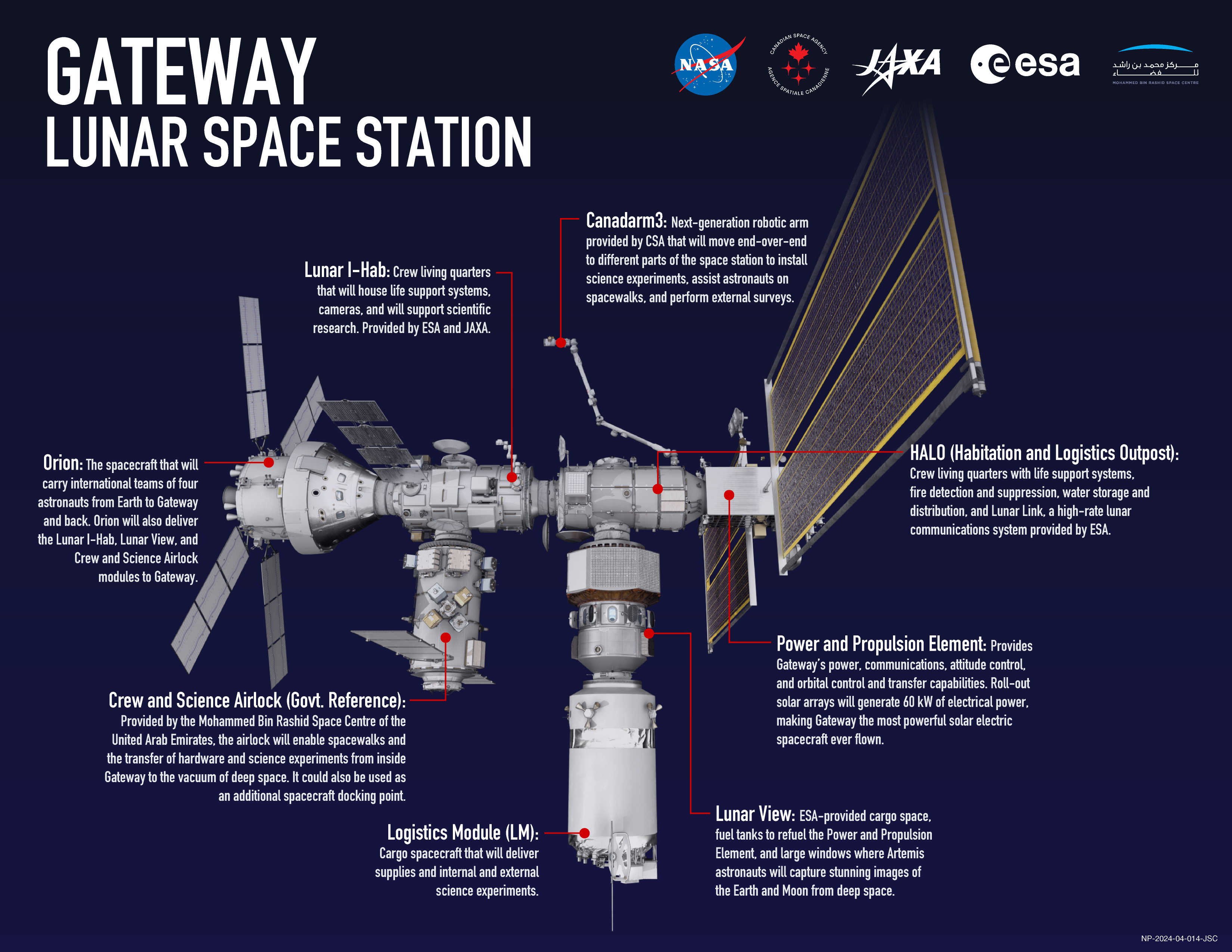
The Lunar Gateway is planned space station that will orbit the Moon. It is part of the Nasa‑led Artemis programme. Artemis aims to return humans to the Moon, establishing a sustainable presence there for scientific and commercial purposes, and eventually reach Mars.

However, the modular space station now faces delays, cost concerns and potential US funding cuts. This raises a fundamental question: is an orbiting space station necessary to achieve lunar objectives, including scientific ones?

The president’s proposed 2026 budget for Nasa sought to cancel Gateway. Ultimately, push back from within the Senate led to continued funding for the lunar outpost. But debate continues among policymakers as to its value and necessity within the Artemis programme.

Cancelling Gateway would also raise deeper questions about the future of US commitment to international cooperation within Artemis. It would therefore risk eroding US influence over global partnerships that will define the future of deep space exploration.

Gateway was designed to support these ambitions by acting as a staging point for crewed and robotic missions (such as lunar rovers), as a platform for scientific research and as a testbed for technologies crucial to landing humans on Mars.

It is a multinational endeavour. Nasa is joined by four international partners, the Canadian Space Agency, the European Space Agency (Esa), the Japan Aerospace Exploration Agency and the United Arab Emirates’ Mohammed Bin Rashid Space Centre.

Schematic of the Lunar Gateway.
The Lunar Gateway.
Nasa

Most components contributed by these partners have already been produced and delivered to the US for integration and testing. But the project has been beset by rising costs and persistent debates over its value.

If cancelled, the US abandonment of the most multinational component of the Artemis programme, at a time when trust in such alliances is under unprecedented strain, could be far reaching.

It will be assembled module by module, with each partner contributing components and with the possibility of additional partners joining over time.

Strategic aims

Gateway reflects a broader strategic aim of Artemis, to pursue lunar exploration through partnerships with industry and other nations, helping spread the financial cost – rather than as a sole US venture. This is particularly important amid intensifying competition – primarily with China.

China and Russia are pursuing their own multinational lunar project, a surface base called the International Lunar Research Station. Gateway could act as an important counterweight, helping reinforce US leadership at the Moon.

In its quarter-century of operation, the ISS has hosted more than 290 people from 26 countries, alongside its five international partners, including Russia. More than 4,000 experiments have been conducted in this unique laboratory.

In 2030, the ISS is due to be succeeded by separate private and national space stations in low Earth orbit. As such, Lunar Gateway could repeat the strategic, stabilising role among different nations that the ISS has played for decades.

However, it is essential to examine carefully whether Gateway’s strategic value is truly matched by its operational and financial feasibility.

It could be argued that the rest of the Artemis programme is not dependant on the lunar space station, making its rationales increasingly difficult to defend.

Some critics focus on technical issues, others say the Gateway’s original purpose has faded, while others argue that lunar missions can proceed without an orbital outpost.

Sustainable exploration

Supporters counter that the Lunar Gateway offers a critical platform for testing technology in deep space, enabling sustainable lunar exploration, fostering international cooperation and laying the groundwork for a long term human presence and economy at the Moon. The debate now centres on whether there are more effective ways to achieve these goals.

Despite uncertainties, commercial and national partners remain dedicated to delivering their commitments. Esa is supplying the International Habitation Module (IHAB) alongside refuelling and communications systems. Canada is building Gateway’s robotic arm, Canadarm3, the UAE is producing an airlock module and Japan is contributing life support systems and habitation components.

Gateway’s Halo module at a facility in Arizona operated by aerospace company Northrop Grumman.
Nasa / Josh Valcarcel

US company Northrop Grumman is responsible for developing the Habitat and Logistics Outpost (Halo), and American firm Maxar is to build the power and propulsion element (PPE). A substantial portion of this hardware has already been delivered and is undergoing integration and testing.

If the Gateway project ends, the most responsible path forward to avoid discouraging future contributors to Artemis projects would be to establish a clear plan to repurpose the hardware for other missions.

Cancellation without such a strategy risks creating a vacuum that rival coalitions, could exploit. But it could also open the door to new alternatives, potentially including one led by Esa.

Esa has reaffirmed its commitment to Gateway even if the US ultimately reconsiders its own role. For emerging space nations, access to such an outpost would help develop their capabilities in exploration. That access translates directly into geopolitical influence.

Space endeavours are expensive, risky and often difficult to justify to the public. Yet sustainable exploration beyond Earth’s orbit will require a long-term, collaborative approach rather than a series of isolated missions.

If the Gateway no longer makes technical or operational sense for the US, its benefits could still be achieved through another project.

This could be located on the lunar surface, integrated into a Mars mission or could take an entirely new form. But if the US dismisses Gateway’s value as a long term outpost without ensuring that its broader benefits are preserved, it risks missing an opportunity that will shape its long term influence in international trust, leadership and the future shape of space cooperation.

The Conversation

Berna Akcali Gur does not work for, consult, own shares in or receive funding from any company or organisation that would benefit from this article, and has disclosed no relevant affiliations beyond their academic appointment.

ref. What’s the point of a space station around the Moon? – https://theconversation.com/whats-the-point-of-a-space-station-around-the-moon-274765

Dans le cerveau des chevaux : comment le lien maternel affecte le cerveau et le comportement des poulains

Source: The Conversation – France in French (2) – By Mathilde Valenchon, Chercheuse en Ethologie, Inrae

Les interactions entre les poulains et leurs mères ont des implications sur leur comportement, sur leur physiologie et sur leur développement cérébral. © UMR PRC INRAE-CNRS-Université de Tours, M. E. Le Bachelier de la Rivière., Fourni par l’auteur

Une nouvelle étude montre comment la présence prolongée de la mère façonne le développement comportemental, physiologique et cérébral des poulains.


Chez les mammifères sociaux, les relations sociales jouent un rôle déterminant dans le développement. On sait depuis longtemps que la période autour de la naissance est cruciale, lorsque le nouveau-né dépend entièrement de son ou de ses parent(s) pour se nourrir et se protéger. En revanche, ce qui se joue après, lorsque le jeune n’est plus physiquement dépendant de sa mère mais continue de vivre à ses côtés, reste encore mal compris.

Dans une étude récente publiée dans Nature Communications, nous avons exploré chez le cheval cette période souvent négligée du développement. Nos résultats montrent que la présence prolongée de la mère façonne à la fois le cerveau, le comportement
– social en particulier – et la physiologie des poulains.

Pourquoi s’intéresser à l’« enfance » chez le cheval ?

Le cheval est un modèle particulièrement pertinent pour étudier le rôle du lien parental sur le développement des jeunes. Comme chez l’humain, les mères donnent généralement naissance à un seul petit à la fois, procurent des soins parentaux prolongés et établissent un lien mère-jeune fort sur le plan affectif, individualisé et durable.

Dans des conditions naturelles, les poulains restent avec leur groupe familial, et donc avec leur mère, jusqu’à l’âge de 2 ou 3 ans. En revanche, en élevage ou chez les particuliers, la séparation est le plus souvent décidée par l’humain et intervient bien plus tôt, autour de 6 mois. Ce contraste offre une occasion unique d’étudier l’impact de la présence maternelle sur le développement au-delà de la période néonatale.

Comment étudier de rôle d’une présence maternelle prolongée chez le cheval ?

Pour isoler l’effet de la présence maternelle, nous avons suivi 24 poulains de l’âge de 6 à 13 mois. Cette période peut être assimilée à celle de l’enfance chez l’être humain. En effet, durant cette période, les poulains ressemblent déjà physiquement à de petits adultes, apparaissent autonomes dans leurs déplacements et consomment très majoritairement des aliments solides, tout en étant encore sexuellement immatures. En d’autres termes, leur survie immédiate ne dépend plus directement de la mère.

Dans notre étude, tous les poulains vivaient ensemble dans un contexte social riche, avec d’autres jeunes et des adultes. La seule différence concernait la présence ou non de leurs mères respectives à partir de l’âge de 6 mois : ainsi, 12 poulains sont restés avec leur mère tandis que 12 autres en ont été séparés, comme c’est fréquemment le cas en élevage.

Durant les sept mois qui ont suivi, nous avons étudié le développement de ces poulains. En éthologie, les comportements sont étudiés de façon quantitative. Nous avons suivi le développement comportemental des poulains à l’aide d’observations et de tests comportementaux standardisés, puis analysé statistiquement ces données pour comparer leurs trajectoires développementales. Ces données ont été complétées par des mesures physiologiques régulières (par exemple, la prise de poids, les concentrations hormonales) et par une approche d’imagerie par résonance magnétique (IRM) pour visualiser les différences fonctionnelles et morphologiques entre nos deux groupes de poulains de manière non invasive.


À lire aussi :
Les chevaux nous reconnaissent-ils ?


La présence de la mère favorise l’émergence des compétences sociales

Les résultats issus de nos observations répétées dans le temps montrent que les poulains bénéficiant de la présence de leur mère interagissaient davantage avec leurs congénères, notamment à travers des comportements positifs, comme le jeu ou le toilettage mutuel, que les poulains séparés de leurs mères. Ils se montraient aussi plus explorateurs et plus à l’aise face à des situations sociales nouvelles, suggérant une plus grande sociabilité.

Autre résultat intéressant, les poulains bénéficiant de la présence de leur mère passaient moins de temps à manger mais prenaient plus de poids, suggérant une croissance plus efficace.

Le lien maternel, moteur du développement du cerveau

Pour aller plus loin, nous avons combiné ces observations comportementales avec une approche encore rare chez les animaux d’élevage : l’imagerie médicale. Ici nous avons utilisé des techniques d’IRM, permettant d’observer le fonctionnement et l’organisation du cerveau vivant, sans douleur. Ainsi, nous avons pu caractériser le développement cérébral de nos poulains.

« Comprendre l’IRM en deux minutes ». Source : Institut du cerveau — Paris Brain Institute.

Cette approche nous a permis d’identifier, pour la première fois chez le cheval, un réseau cérébral appelé le réseau du mode par défaut. Bien connu chez l’humain et identifié chez une poignée d’autres espèces animales, ce réseau serait impliqué dans l’intégration des pensées introspectives, la perception de soi et des autres. Chez les poulains ayant bénéficié d’une présence maternelle prolongée, ce réseau était plus développé, faisant écho aux meilleures compétences sociales que nous avons observées.

En outre, nous avons observé des différences morphologiques dans une région fortement impliquée dans la régulation physiologique, l’hypothalamus, en lien avec les différences physiologiques et de comportement alimentaire mises en évidence.

Une phase clé du développement aux effets multidimensionnels

Pris dans leur ensemble, nos résultats soulignent l’importance de cette phase du développement, encore peu étudiée chez l’animal, située entre la petite enfance et l’adolescence.

Ils suggèrent que la présence maternelle prolongée induit un développement comportemental, cérébral et physiologique plus harmonieux, qui pourrait contribuer à équiper les jeunes pour leur vie adulte future, notamment dans le domaine de compétences sociales.

Quelles implications pour l’élevage… et au-delà ?

Notre travail ne permet pas de définir une règle universelle sur l’âge idéal de séparation chez le cheval. Il montre en revanche que la séparation précoce a des conséquences mesurables, bien au-delà de la seule question alimentaire.

Lorsque les conditions le permettent, garder plus longtemps le poulain avec sa mère pourrait donc constituer un levier simple et favorable au développement du jeune. Cependant, d’autres études sont nécessaires pour évaluer l’impact de ces pratiques sur les mères et les capacités de récupération des poulains après la séparation, par exemple.

Avec grande prudence, ces résultats font aussi écho à ce que l’on observe chez d’autres mammifères sociaux, y compris l’humain : le rôle du parent ou de la/du soignant·e (« caregiver ») comme médiateur entre le jeune et son environnement social et physique pourrait être un mécanisme largement partagé. Le cheval offre ainsi un modèle précieux pour mieux comprendre comment les premières relations sociales façonnent durablement le cerveau et le comportement.

The Conversation

Cette étude a été financée grâce à une bourse européenne HORIZON 2020 Marie Skłodowska-Curie Actions (MSCA) (ref: 101033271, MSCA European Individual Fellowship, https://doi.org/10.3030/101033271) et au Conseil Scientifique de l’Institut
Français du Cheval et de l’Equitation (IFCE) (ref: DEVELOPPEMENTPOULAIN).

David Barrière ne travaille pas, ne conseille pas, ne possède pas de parts, ne reçoit pas de fonds d’une organisation qui pourrait tirer profit de cet article, et n’a déclaré aucune autre affiliation que son organisme de recherche.

ref. Dans le cerveau des chevaux : comment le lien maternel affecte le cerveau et le comportement des poulains – https://theconversation.com/dans-le-cerveau-des-chevaux-comment-le-lien-maternel-affecte-le-cerveau-et-le-comportement-des-poulains-274144

Bad Bunny’s Super Bowl show is part of long play drawn up by NFL to score with Latin America

Source: The Conversation – USA (2) – By Jared Bahir Browsh, Assistant Teaching Professor of Critical Sports Studies, University of Colorado Boulder

Bad Bunny performs on stage on Dec. 11, 2025, in Mexico City, Mexico. Emma McIntyre/Getty Images

Donald Trump, it is fair to assume, will be switching channels during this year’s Super Bowl halftime show.

The U.S. president has already said that he won’t be attending Super Bowl LX in person, suggesting that the venue, Levi’s Stadium in Santa Clara, California, was “just too far away.” But the choice of celebrity entertainment planned for the main break – Puerto Rican reggaeton star Bad Bunny and recently announced pregame addition Green Day – didn’t appeal. “I’m anti-them. I think it’s a terrible choice. All it does is sow hatred. Terrible,” Trump told the New York Post.

National Football League Commissioner Roger Goodell likely didn’t have the sensibilities of the U.S. president in mind when the choice of Bad Bunny was made.

One of the top artists in the world, Bad Bunny performs primarily in Spanish and has been critical of immigration enforcement, which factored into the backlash in some conservative circles to the choice. Bad Bunny’s anti-ICE comments at this year’s Grammy Awards will have only stoked the ire of some conservatives.

But for the NFL hierarchy, this was likely a business decision, not a political one. The league has its eyes on expansion into Latin America; Bad Bunny, they hope, will be a ratings-winning means to an end. It has made such bets in the past. In 2020, Shakira and Jennifer Lopez were chosen to perform, with Bad Bunny making an appearance. The choice then, too, was seen as controversial.

A man dressed in silver sings while crouched over a woman.
Shakira and Bad Bunny perform during the Pepsi Super Bowl LIV Halftime Show on Feb. 2, 2020, in Miami, Fla.
Al Bello/Getty Images

Raising the flag overseas

As a teacher and scholar of critical sports studies, I study the global growth of U.S.-based sports leagues overseas.

Some, like the National Basketball Association, are at an advantage. The sport is played around the globe and has large support bases in Asia – notably in the Philippines and China – as well as in Europe, Australia and Canada.

The NFL, by contrast, is largely entering markets that have comparatively little knowledge and experience with football and its players.

The league has opted for a multiprong approach to attracting international fans, including lobbying to get flag football into the 2028 Olympics in Los Angeles.

Playing the field

When it comes to the traditional tackle game, the NFL has held global aspirations for over three-quarters of a century. Between 1950-1961, before they merged, the NFL and American Football League played seven games against teams in Canada’s CFL to strengthen the relationship between the two nations’ leagues.

Developing a fan base south of the border has long been part of the plan.

The first international exhibition game between two NFL teams was supposed to take place in Mexico City in 1968. But Mexican protest over the economy and cost of staging the Olympics that year led the game, between the Detroit Lions and Philadelphia Eagles, to be canceled.

Instead, it was Montreal that staged the first international exhibition match the following year.

In 1986, the NFL added an annual international preseason game, the “American Bowl,” to reach international fans, including several games in Mexico City and one in Monterrey.

But the more concerted effort was to grow football in the potentially lucrative, and familiar, European market.

After several attempts by the NFL and other entities in the 1970s and ’80s to establish an international football league, the NFL-backed World League of Football launched in 1991. Featuring six teams from the United States, one from Canada and three from Europe, the spring league lost money but provided evidence that there was a market for American football in Europe, leading to the establishment of NFL Europe.

But NFL bosses have long had wider ambitions. The league staged 13 games in Tokyo, beginning in 1976, and planned exhibitions for 2007 and 2009 in China that were ultimately canceled. These attempts did not have the same success as in Europe.

Beyond exhibitions

The NFL’s outreach in Latin America has been decades in the making. After six exhibition matches in Mexico between 1978 and 2001, the NFL chose Mexico City as the venue of its first regular season game outside the United States.

In 2005, it pitted the Arizona Cardinals against the San Francisco 49ers at Estadio Azteca in Mexico City. Marketed as “Fútbol Americano,” it drew the largest attendance in NFL history, with over 103,000 spectators.

The following year, Goodell was named commissioner and announced that the NFL would focus future international efforts on regular-season games.

The U.K. was a safe bet due to the established stadium infrastructure and the country’s small but passionate fan base. The NFL International Series was played exclusively in London between 2007 and 2016.

But in 2016, the NFL finally returned to Mexico City, staging a regular-season game between the Oakland – now Las Vegas – Raiders and Houston Texans.

And after the completion of upgrades to Latin America’s largest stadium, Estadio Azteca, the NFL will return to Mexico City in 2026, along with games in Munich, Berlin and London. Future plans include expanding the series to include Sydney, Australia, and Rio de Janeiro, Brazil, in 2026.

The International Player Pathway program also offers players from outside the United States an opportunity to train and earn a roster spot on an NFL team. The hope is that future Latin American players could help expand the sport in their home countries, similar to how Yao Ming expanded the NBA fan base in China after joining the Houston Rockets, and Shohei Ohtani did the same for baseball in Japan while playing in Los Angeles.

Heading south of the border

The NFL’s strategy has gained the league a foothold in Latin America.

Mexico and Brazil have become the two largest international markets for the NFL, with nearly 40 million fans in each of the nations.

Although this represents a fraction of the overall sports fans in each nation, the raw numbers match the overall Latino fan base in the United States. In recent years the NFL has celebrated Latino Heritage Month through its Por La Cultura campaign, highlighting Latino players past and present.

Latin America also offers practical advantages. Mexico has long had access to NFL games as the southern neighbor to the United States, with the Dallas Cowboys among the most popular teams in Mexico.

For broadcasters, Central and South America offer less disruption in regards to time zones. Games in Europe start as early as 6:30 a.m. for West Coast fans, whereas Mexico City follows Central time, and Brasilia time is only one to two hours ahead of Eastern time.

A man in a bowtie holds three trophies.
Bad Bunny poses with the Album of the Year, Best Música Urbana Album and Best Global Music Performance awards during the 68th Grammy Awards on Feb. 1, 2026, in Los Angeles.
Matt Winkelmeyer/Getty Images for The Recording Academy

The NFL’s expansion plans are not without criticism. Domestically, fans have complained that teams playing outside the U.S. borders means one less home game for season-ticket holders. And some teams have embraced international games more than others.

Another criticism is the league, which has reported revenues of over US$23 billion during the 2024-25 season – nearly double any other U.S.-based league – is using its resources to displace local sports. There are also those who see expansion of the league as a form of cultural imperialism. These criticisms often intersect with long-held ideas around the league promoting militarism, nationalism and American exceptionalism.

Bad Bunny: No Hail Mary attempt

For sure, the choice of Bad Bunny as the halftime pick is controversial, given the current political climate around immigration. The artist removed tour dates on the U.S. mainland in 2025 due to concerns about ICE targeting fans at his concerts, a concern reinforced by threats from the Department of Homeland Security that they would do just that at the Super Bowl.

But in sticking with Bad Bunny, the NFL is showing it is willing to face down a section of its traditional support and bet instead on Latin American fans not just tuning in for the halftime show but for the whole game – and falling in love with football, too.

The Conversation

Jared Bahir Browsh does not work for, consult, own shares in or receive funding from any company or organization that would benefit from this article, and has disclosed no relevant affiliations beyond their academic appointment.

ref. Bad Bunny’s Super Bowl show is part of long play drawn up by NFL to score with Latin America – https://theconversation.com/bad-bunnys-super-bowl-show-is-part-of-long-play-drawn-up-by-nfl-to-score-with-latin-america-271068

Here are Canada’s 2026 Winter Olympic medal hopefuls, from hockey to freestyle skiing

Source: The Conversation – Canada – By Taylor McKee, Assistant Professor, Sport Management, Brock University

Game Plan. Best Ever ‘88. Own the Podium. The messaging from the Canadian government’s Olympic high-performance sport initiatives over the past 50 years makes the stakes clear: winning is important.

Gone are the days of Canadian athletes being satisfied with simply making it to the Olympics. An expectation of excellence now pervades the Olympic program. Athletes are considered ambassadors of their countries and symbols of national pride.

This year in Italy, that expectation will be front and centre amid recent geopolitical tensions. It’s no wonder the new slogan is one that evokes unity and patriotism: “We Are All Team Canada.”

While there is little doubt that all Olympic athletes are expected to play and perform under pressure, Canada’s historical successes at the Winter Games have created heightened expectations. The country set a record for the most gold medals won by a host nation at a single Winter Olympics with 14 in Vancouver in 2010.

When I ask my undergraduate students which Canadian athletes they believe feel the most pressure to win gold at the Olympics, most say hockey, though that may be too simple an answer.

Curling hopefuls

It is certainly true that Canadians expect strong results from men’s and women’s hockey teams, and for good reason. Canada is the most successful ice hockey nation in Olympic history, with 23 medal wins.

Yet many Canadian hockey fans recognize the strength of other hockey nations. Canadians both love and loathe the Swedes, Finns, Slovaks, Czechs and Americans that play for their National Hockey League teams. A loss to those players and those teams is devastating, but explicable.

Curling presents a different story. Here, expectations are clear: gold medals. Casual Olympic viewers may not realize that Scots and Swiss make up the top-three men’s curling rinks in the world, and the Swiss women have won two of the last four World Championships.

That said, Canada’s teams are formidable. The men’s rink, led by Brad Jacobs, won gold in 2014 in Sochi, and the women’s rink, led by Rachel Homan, is currently ranked No. 1 in the world. Far from a golden fait accompli, Canada’s curlers are among the most heavily scrutinized athletes heading to Milan Cortina.

Speed skating hopefuls

Canada has realistic medal potential in both short-track and long-track speed skating. Laurent Dubreuil is a defending silver medallist in the 1000m and finished fourth in the 500m in Beijing 2022.

Ivanie Blondin and Isabelle Weidemann are members of the defending gold medallist Team Pursuit team and silver medallists in other distances. The Team Pursuit event is among the most exciting long-track events at the Olympics and certainly worth circling on the viewing calendar.

On short track, the location of some of the highest drama and most intense finishes at every Olympics, Canada has some serious medal potential with a full complement of 10 skaters headed to Milan.

The women’s team features four-time Olympic medallist Kim Boutin, who will compete at her third consecutive Olympic Winter Games. Boutin received medals in all three women’s individual events at PyeongChang 2018 and later added bronze in the 500m at Beijing 2022. Over the past decade, she has earned 17 medals at the ISU World Short Track Championships and two more world titles at the 2025 Championships, winning gold in the women’s 3000m relay and the mixed relay.

Freestyle skiing hopefuls

Many Canadians might assume speed skating has produced the most medals for Canada over the years. Speed skating accounts for 23 total events between short and long-track at this year’s Olympics, and Canada won their first speed skating medal in 1932.

However, despite it only being added as a full medal sport in 1992, Canada has won 30 total medals in a different sport, including the distinction of Canada’s first home gold medal won by Alexandre Bilodeau in 2010: freestyle skiing.

Equal parts agility and artistry, freestyle skiing is definitely one of Games’ most beguiling and exhilarating watches.

Comprised of eight separate disciplines, Canada has numerous medal threats, headlined by “greatest mogul skiier of all time” Mikaël Kingsbury, fresh off of a Jan. 10 victory in men’s moguls at Val St. Côme, marking a staggering 100 career World Cup victories for the skier.

And then, there’s hockey.

Ice hockey hopefuls

The centre of the women’s hockey is a binary system: two stars bound together, their combined gravity ordering the remaining planets, paling in size and importance to their suns.

This year marks a new era, as professional women’s players will compete for the first time at the Olympics, following the establishment of the Professional Women’s Hockey League.

Since 1990, only one team other than Canada and the U.S. — Finland in 2019 — has reached the Ice Hockey World Championships gold medal game. Canada won bronze that year.

Gold medallists in five of seven previous Olympics, the Canadian women’s team enters as a slight underdog this year, with Team USA defending their World Champion title.

Given the storied history of these two teams and the heightened tension currently between the two nations, their matchup will assuredly be among the most exciting 60 minutes played this year.

On the men’s side, a long, protracted wait is over: NHL players return to the Olympics. Canadian captain Sidney Crosby will be aiming for his third Olympic gold.

Alongside the return of pro talent comes a familiar source of tension for Canadian hockey fans: consternation around goaltending.

Canada remains one of the tournament’s favourites, shimmering with a galaxy of superstars on forward and defence, yet persistent concerns over net-minding continue to fuel doubt among some fans.

No shortage of Olympic hopefuls

There are many more medal hopefuls for Team Canada heading into Milan Cortina, from alpine skiiers and ski cross athletes to snowboarding, figure skating and freestyle skiing.

But simply taking in the Games when possible can be a rewarding experience in and of itself.

While cynicism and skepticism towards the International Olympic Committee and Olympic movement are certainly warranted, the Winter Olympics will provide the opportunity for Canadian athletes to achieve global sporting excellence.

While we know that pressure creates diamonds, these athletes may soon prove that it can produce gold, too.

The Conversation

Taylor McKee receives funding from the Social Sciences and Humanities Research Council of Canada

ref. Here are Canada’s 2026 Winter Olympic medal hopefuls, from hockey to freestyle skiing – https://theconversation.com/here-are-canadas-2026-winter-olympic-medal-hopefuls-from-hockey-to-freestyle-skiing-274407

Tariffs are reshaping Canadian manufacturing, but not all workers are being impacted the same way

Source: The Conversation – Canada – By Marshia Akbar, Research Lead on Labour Migration at the CERC Migration and Integration Program, TMU, Toronto Metropolitan University

American tariffs have reshaped Canada’s manufacturing sector, but labour-market impacts have not been evenly shared across workers.

The United States imposed tariffs on Canadian steel, aluminum, automobiles and auto parts as part of a broader protectionist push under Donald Trump’s administration. Canada’s government responded with its own counter-tariffs and trade measures, but disruptions to the industry were already underway by that point.

Manufacturing is a major source of employment for both immigrant and Canadian-born workers. It includes everything from automotive and aerospace parts to food processing and steel products, and it contributes roughly 10 per cent of Canada’s GDP.

Manufacturing is particularly vulnerable to U.S. tariffs because of its deep integration with cross-border supply chains. More than 60 per cent of Canada’s manufacturing sector has substantial trade exposure to the U.S., making it the primary channel through which tariffs affect the Canadian economy.

As firms adjusted to rising costs and trade uncertainty, immigrant and Canadian-born workers experienced different forms of employment risk at different points in 2025.

A sector under strain

A recent report shows that between January and September 2025, Canada’s manufacturing sector experienced lower production, fewer jobs and higher prices.

After momentum earlier in the year, manufacturing jobs fell sharply in the spring, with the largest consecutive job losses occurring in April, when 30,600 jobs were lost, and May, when a further 12,200 jobs disappeared. Overall, employment fell by nearly 43,000 workers between March and May.

This was followed by persistent instability rather than sustained recovery later in the year. Employment rebounded in September, with 27,800 jobs gained, and rose again in October, but these gains were partially reversed in November, when 9,300 jobs were lost.

Firms responded to the tariff shocks through delayed and incremental employment cuts, but these sector-wide adjustments were experienced differently by immigrant and Canadian-born workers.

Immigrant workers are more vulnerable

Not all workers felt the shocks from the labour market equally. Immigrant workers were disproportionately affected by tariff-related employment adjustments and are particularly vulnerable when manufacturing employment becomes unstable.

Manufacturing is a critical source of employment for immigrants, particularly in large metropolitan regions and along industrial corridors.

In March 2025, immigrants accounted for 30 per cent of employment in Canada’s manufacturing sector, compared with 70 per cent of Canadian-born workers. By December 2025, however, the immigrant share had declined to 28 per cent, while the share of Canadian-born workers increased to 72 per cent.


Read more:
Canadian immigrants are overqualified and underemployed — reforms must address this


This disparity was compounded by a structural educational mismatch. While 80 per cent of workers in the sector don’t have a university degree, immigrant workers were more than twice as likely as Canadian-born workers to be university educated.

Nevertheless, these higher education levels often do not translate into higher-paid roles within manufacturing.

Lower wages amplify employment risk

Wage data shows that many immigrant manufacturing workers are concentrated in lower-paid or more labour-intensive jobs that are particularly vulnerable during an economic downturn.

Throughout 2025, immigrant workers earned roughly $2.50 to $3 less per hour than Canadian-born workers. This gap did not narrow even when wages recovered later in the year.

Average hourly wages for all workers increased from $34.43 in March to $35.29 in December. Yet the wage gap for immigrant workers widened slightly — from $2.52 to $2.56.

Lower pay combined with higher educational attainment points to persistent credential under-utilization, meaning workers possess skills or qualifications that are not fully used or rewarded in their jobs. This under-utilization increases immigrant workers’ exposure to employment instability when trade disruptions occur.

How job loss patterns shifted

Job loss also unfolded differently over time. In the first half of 2025, unemployed former workers who were immigrants were more likely to report layoffs — temporary or permanent — as the cause of their joblessness.

That share remained consistently high — at 66 per cent in June — before gradually declining later in the year. By December, 51 per cent of immigrant former workers reported job loss as the reason for unemployment.

In contrast, job loss became increasingly concentrated among Canadian-born workers in the second half of the year. In March, only 53 per cent reported job loss as the reason for unemployment. This share rose steadily throughout the rest of the year, reaching 71 per cent by December.

These trends indicate that firms initially relied more heavily on reductions in immigrant labour, and later expanded layoffs to include Canadian-born workers as tariff pressures persisted.

Differential adjustment strategies

U.S. tariffs reshaped Canadian manufacturing not through a single employment shock, but through different labour-adjustment strategies over time.

Highly educated immigrant workers, many of whom were concentrated in lower-paid roles, were more exposed to early layoffs, wage penalties and unstable employment. As tariff pressures deepened, job loss became more concentrated among Canadian-born workers as longer-term restructuring took place.

These patterns matter for policy. If manufacturing is to remain a viable pillar of the Canadian economy in an era of trade disruption, policy responses must recognize these unequal adjustment patterns and address the underlying vulnerabilities that leave some workers more exposed than others.

This could include targeted income supports and rapid-response training for displaced workers, and tailored settlement and employment services for immigrant workers who, as a group, are concentrated in lower-wage and more unstable jobs.

In addition, better co-ordination between trade, industrial, and immigration policies could help ensure that adjustment costs are not disproportionately borne by already vulnerable workers.

The Conversation

Marshia Akbar receives funding from the Social Sciences and Humanities Research Council of Canada (SSHRC).

Devaanshi Khanzode does not work for, consult, own shares in or receive funding from any company or organisation that would benefit from this article, and has disclosed no relevant affiliations beyond their academic appointment.

ref. Tariffs are reshaping Canadian manufacturing, but not all workers are being impacted the same way – https://theconversation.com/tariffs-are-reshaping-canadian-manufacturing-but-not-all-workers-are-being-impacted-the-same-way-274269

Whether it’s Valentine’s Day notes or emails to loved ones, using AI to write leaves people feeling crummy about themselves

Source: The Conversation – USA (2) – By Julian Givi, Assistant Professor of Marketing, West Virginia University

People seem to intuitively understand something meaningful should require doing more than pushing a button or writing a prompt. design master/iStock via Getty Images

As Valentine’s Day approaches, finding the perfect words to express your feelings for that special someone can seem like a daunting task – so much so that you may feel tempted to ask ChatGPT for an assist.

After all, within seconds it can dash off a well-written, romantic message. Even a short, personalized limerick or poem is no sweat.

But before you copy and paste that AI-generated love note, you might want to consider how it could make you feel about yourself.

We research the intersection of consumer behavior and technology, and we’ve been studying how people feel after using generative AI to write heartfelt messages. It turns out that there’s a psychological cost to using the technology as your personal ghostwriter.

The rise of the AI ghostwriter

Generative AI has transformed how many people communicate. From drafting work emails to composing social media posts, these tools have become everyday writing assistants. So it’s no wonder some people are turning to them for more personal matters, too.

Wedding vows, birthday wishes, thank you notes and even Valentine’s Day messages are increasingly being outsourced to algorithms.

The technology is certainly capable. Chatbots can craft emotionally resonant responses that sound genuinely heartfelt.

But there’s a catch: When you present these words as your own, something doesn’t sit right.

When convenience breeds guilt

We conducted five experiments with hundreds of participants, asking them to imagine using generative AI to write various emotional messages to loved ones. Across every scenario we tested – from appreciation emails to birthday cards to love letters – we found the same pattern: People felt guilty when they used generative AI to write these messages compared to when they wrote the messages themselves.

When you copy an AI-generated message and sign your name to it, you’re essentially taking credit for words you didn’t write.

This creates what we call a “source-credit discrepancy,” which is a gap between who actually created the message and who appears to have created it. You can see these discrepancies in other contexts, whether it’s celebrity social media posts written by public relations teams or political speeches composed by professional speechwriters.

When you use AI, even though you might tell yourself you’re just being efficient, you can probably recognize, deep down, that you’re misleading the recipient about the personal effort and thought that went into the message.

The transparency test

To better understand this guilt, we compared AI-generated messages to other scenarios. When people bought greeting cards with preprinted messages, they felt no guilt at all. This is because greeting cards are transparently not written by you. Greeting cards carry no deception: Everyone understands you selected the card and that you didn’t write it yourself.

We also tested another scenario: having a friend secretly write the message for you. This produced just as much guilt as using generative AI. Whether the ghostwriter is human or an artificial intelligence tool doesn’t matter. What matters most is the dishonesty.

There were some boundaries, however. We found that guilt decreased when messages were never delivered and when recipients were mere acquaintances rather than close friends.

These findings confirm that the guilt stems from violating expectations of honesty in relationships where emotional authenticity matters most.

Somewhat relatedly, research has found that people react more negatively when they learn a company used AI instead of a human to write a message to them.

But the backlash was strongest when audiences expected personal effort – a boss expressing sympathy after a tragedy, or a note sent to all staff members celebrating a colleague’s recovery from a health scare. It was far weaker for purely factual or instructional notes, such as announcing routine personnel changes or providing basic business updates.

What this means for your Valentine’s Day

So, what should you do about that looming Valentine’s Day message? Our research suggests that the human hand behind a meaningful message can help both the writer and the recipient feel better.

This doesn’t mean you can’t use generative AI as a brainstorming partner rather than a ghostwriter. Let it help you overcome writer’s block or suggest ideas, but make the final message truly yours. Edit, personalize and add details that only you would know. The key is co-creation, not complete delegation.

Generative AI is a powerful tool, but it’s also created a raft of ethical dilemmas, whether it’s in the classroom or in romantic relationships. As these technologies become more integrated into everyday life, people will need to decide where to draw the line between helpful assistance and emotional outsourcing.

This Valentine’s Day, your heart and your conscience might thank you for keeping your message genuinely your own.

The Conversation

The authors do not work for, consult, own shares in or receive funding from any company or organization that would benefit from this article, and have disclosed no relevant affiliations beyond their academic appointment.

ref. Whether it’s Valentine’s Day notes or emails to loved ones, using AI to write leaves people feeling crummy about themselves – https://theconversation.com/whether-its-valentines-day-notes-or-emails-to-loved-ones-using-ai-to-write-leaves-people-feeling-crummy-about-themselves-271805

Greenland’s ‘green mining’ row highlights the key tensions in the energy transition

Source: The Conversation – UK – By Narmin Nahidi, Assistant Professor in Finance, University of Exeter

pathdoc/Shutterstock

Green finance is built on a promise: that capital can be redirected to support the transition to a low-carbon economy while avoiding the environmental mistakes of the past. That promise is getting harder to keep.

The technologies needed for decarbonisation of electric vehicles, wind turbines, batteries and grid infrastructure rely on large quantities of critical minerals. Extracting those materials, even from remote places such as Greenland, remains environmentally disruptive, socially contested and politically fraught.

Sustainable finance shapes investment decisions across energy, infrastructure and manufacturing. The ethical frameworks this finance is based on often assume that environmental harm can be minimised through better disclosure, cleaner technologies and improved governance.

The extraction of critical minerals challenges that assumption. Mining is land intensive, energy hungry and often polluting. Recycling of existing batteries, electronics and turbines, and substitution away from scarce materials can reduce demand.

But most projections from the world’s energy watchdog, the International Energy Agency, show that demand for critical minerals will rise sharply under clean energy transitions . Similar bodies show that extraction of raw materials such as lithium, cobalt, nickel and rare earth elements will rise sharply over the next two decades.

This is because the transition away from fossil fuels depends on large volumes of new infrastructure including electric vehicle batteries, wind turbines and grid storage, which cannot be supplied from recycled materials alone.

Recent research and policy assessments suggest this contradiction is becoming more acute, not less. Recent analyses of critical mineral supply chains show that extraction and processing remain highly concentrated in a few countries particularly China, Australia, Chile and the Democratic Republic of Congo.

These supply chains are environmentally intensive, involving significant land use, water consumption and pollution. These supply chains are slow to scale because it takes years to obtain permits for new mines, requires large upfront investment, and depends on the construction of extensive infrastructure. Yet global climate targets assume rapid expansion of clean-energy technologies.

In Greenland, environmental regulation and local political decisions have delayed or halted mining projects that are often considered key to the green transition.

Greenland is geologically rich. The island is home to significant deposits of rare earth elements, graphite, zinc and other minerals considered critical by both the EU and the US. These materials are central to clean-energy supply chains and have become strategically important as governments seek to reduce dependence on China, a superpower which dominates global processing capacity.

At the same time, Greenland’s environment is exceptionally fragile. Arctic ecosystems recover slowly from industrial disruption, infrastructure is limited and mining projects face high logistical and financial costs. These constraints have already shaped political choices.

In 2021, Greenland’s government introduced restrictions on uranium mining, effectively blocking the development of the large Kvanefjeld rare earth project. That decision reflected environmental and social priorities. It also highlighted the economic and legal pressures that arise when sustainability policies collide with global demand for transition minerals.

When green finance meets geopolitics

In a world of geopolitical competition, governments are increasingly treating access to critical minerals as a matter of national security as well as climate policy. Policy statements and strategy documents from the US, the EU and other major economies now frame mineral supply not just as an environmental issue, but as essential to economic resilience, defence capability and technological leadership.

This shift has encouraged public financial support, diplomatic engagement and strategic partnerships aimed at securing future supply, including increased foreign interest in Greenland’s mineral sector. While Greenland retains control over its resources, international attention reflects the growing geopolitical importance of potential new supply sources.

Projects justified as supporting the energy transition may be driven as much by geopolitical urgency as by environmental benefit. Academic research on critical mineral supply chains shows that when geopolitical and industrial priorities shape governance frameworks, local environmental risks and community consent are often marginalised in favour of strategic and economic goals


Read more:
The economics of climate risk ignores the value of natural habitats


Tension in Greenland

Despite international interest, large-scale mining in Greenland has not taken off. Environmental safeguards, political opposition, infrastructure gaps and high costs have slowed development. This reality complicates the assumption that new mineral frontiers can quickly solve clean-energy supply bottlenecks through investment alone.

For investors, Greenland raises difficult questions about how environmental, social and governance (ESG) standards apply to transition minerals. Financing a rare earth mine may reduce long-term emissions by enabling renewable technologies, yet still impose immediate environmental damage. Standard ESG metrics struggle to capture this trade-off. They are better suited to assessing corporate behaviour than to resolving conflicts between global climate goals and local environmental harm.

lone husky howling on greenland icy landscape
Current geopolitical dynamics have huge consequences for Greenland’s environment.
Kedardome/Shutterstock

In Greenland, the debate over “green mining” (the idea that mineral extraction can be made environmentally acceptable through cleaner technologies, higher standards and better governance) is not a case of poor regulation or weak oversight. Instead, it reflects a jurisdiction that has deliberately placed environmental limits on extraction, even as it faces economic and strategic pressure as a result.

As governments continue to pursue ambitious climate targets under national and international commitments, similar dilemmas will emerge elsewhere. Green finance cannot avoid the material foundations of the energy transition.

Sustainable finance frameworks must evolve to handle situations where environmental protection constrains access to strategically important resources. Greenland shows how protecting the environment can clash with efforts to secure the minerals needed for the energy transition, and that this tension is far from resolved.

Without clearer rules on how to balance climate benefits against local ecological costs and without genuine respect for sovereignty and community choice, green finance risks becoming reactive, stretched between environmental principles and geopolitical realities.

The transition to a low-carbon economy requires minerals. But Greenland highlights that how those minerals are sourced and who bears the environmental cost remains unresolved.


Don’t have time to read about climate change as much as you’d like?

Get a weekly roundup in your inbox instead. Every Wednesday, The Conversation’s environment editor writes Imagine, a short email that goes a little deeper into just one climate issue. Join the 47,000+ readers who’ve subscribed so far.


The Conversation

Narmin Nahidi does not work for, consult, own shares in or receive funding from any company or organisation that would benefit from this article, and has disclosed no relevant affiliations beyond their academic appointment.

ref. Greenland’s ‘green mining’ row highlights the key tensions in the energy transition – https://theconversation.com/greenlands-green-mining-row-highlights-the-key-tensions-in-the-energy-transition-274336

Addressing climate change without the ‘rules-based order’

Source: The Conversation – Canada – By Matthew Hoffmann, Professor of Political Science and Co-Director of Environmental Governance Lab, University of Toronto

At the recent World Economic Forum in Switzerland, Canadian Prime Minister Mark Carney proclaimed “a rupture” in the global “rules-based order” and a turn to great power rivalry.

While its demise is not certain, even the current disruption to global order, largely due to the Donald Trump administration in the United States, promises profound impacts on the global response to climate change. The world is at risk of losing even the insufficient progress made in the last decade.

But it’s unclear what that effect will be. That uncertainty is both a cause for concern and a source of hope. The climate crisis is not slowing, and humanity must figure out how to navigate the disruption.


Read more:
Venezuela attack, Greenland threats and Gaza assault mark the collapse of international legal order


Unfortunately, much of what we know about how climate politics works has depended on a relatively stable rules-based order. That order, however problematic, provided institutions like the United Nations Framework Convention on Climate Change and the Paris Agreement.

It also established trade rules for energy technology, co-operative agreements on public and private climate finance, and parameters for how civil society and states interact. It structured the opportunities and obstacles for acting on climate change.

Everyone who cares about climate action must now grapple with how climate politics can function in a new world of uncertainty. It won’t be easy.

But, to inject a slight note of hope, I’m not convinced that meeting the climate challenge is harder now. It’s difficult in a different way. Let’s be clear: the rules-based order was not producing effective global co-operation on climate change.

Limited successes of the rules-based order

Canadian Prime Minister Mark Carney’s speech in Davos where he noted the ‘rupture’ in the global rules-based order.(The Journal)

The U.S. has consistently been an obstacle to global climate action. As Carney noted, under the the rules-based order “the strongest would exempt themselves when convenient.” Clearly the U.S. decided from very early on that a stable climate was not a public good it was willing to seriously support.

The U.S. failed to see benefits from climate action that outweighed the perception of costs and has consistently been influenced by status quo, fossil-capital economic interests.

That’s not to say there was no progress under the old rules-based system. At least five sources of progress are worth highlighting:

Possibilities for progress

These sources of past progress on climate action could survive the current disruption and play a role in increasing momentum in the global response to climate change. But uncertainties and questions are more plentiful than answers.

A coalition of the ambitious is clearly what Carney’s speech is seeking to catalyze among middle powers. He was not talking about climate change, but a commitment to climate action could and should be a cornerstone that a new order is built upon. This may even attract one of those competing great powers that he alluded to — China. Will China see climate leadership as a means to enhance its global position?

The political economy of renewable energy has momentum that is at least somewhat insulated from the current disruption. How insulated it remains depends on a number of uncertainties.

What will trade rules and practices look like moving forward? What happens within the fossil-fuel energy sector as the U.S. continues to engage in resource imperialism? How will resource competition and co-operation in the renewables sector (over critical minerals, for example) play out moving forward?

Can experimental efforts be a source of resistance and change within the U.S., especially among individual states? And can they play the same role that they did previously, catalyzing further innovation and public support?

Public support for climate action in this new era will likely vary wildly by country. How will growing dissatisfaction with the status quo play out as it intersects with increasingly severe climate impacts?

This could generate further support for right-wing populism. However, affordability and inequality concerns could also become the foundation for building support for climate action and a just transition.

Does the Paris Agreement survive this? It could become a backbone institution for the coalition of the ambitious. The U.S. is gone, again. Maybe other recalcitrant governments should be sidelined from multilateral climate efforts as well, and those willing to act can proceed.

If full global co-operation around climate change is no longer even a façade of the possible now, then the imperative to bring everyone along at each step in the process may evaporate.

None of the ways forward I’ve laid out here are easy. Even if the positive possibilities materialize, they do not guarantee decarbonization and a just transition that is fast and effective enough to matter; to head off the worst of climate change.

What is clear, though, is that like Carney, climate scholars and activists may need to let the fiction of the global rules-based order go. It was not working either in addressing climate change or enhancing justice. Perhaps its disruption is an opportunity to build better foundations for a just and effective global response to climate change.

The Conversation

Matthew Hoffmann receives funding from Social Science and Humanities Research Council and the Lawson Climate Institute.

ref. Addressing climate change without the ‘rules-based order’ – https://theconversation.com/addressing-climate-change-without-the-rules-based-order-273745