Indigenous-led renewable energy projects offer benefits that reach far beyond reducing carbon emissions

Source: The Conversation – Canada – By Ian Munroe, Research Associate, Sinton Lab, University of Toronto

The number of renewable energy projects that are fully or partly Indigenous-owned is growing quickly in Canada, and our new research suggests that their benefits reach far beyond reducing greenhouse gas emissions.

The number of such projects on traditional Indigenous territories and reserve lands jumped by more than 300 per cent between 2009 and 2020. Nearly one-fifth of the country’s electricity-generating infrastructure involved First Nations, Métis and Inuit partners or beneficiaries as of 2022.

Yet little is known about the impacts of these renewable-energy projects within the participating communities beyond the physical footprint of the construction.

We aimed to fill this information policy gap in response to a request from two organizations that work extensively with First Nations, the Clean Energy Association of British Columbia and the New Relationship Trust, which obtained funding from Natural Resources Canada to conduct research.

Together we conducted a study to paint a more complete picture of these broader impacts, interviewing knowledge-holders in 14 First Nations in British Columbia involved with 36 planned or operational Indigenous-led renewable energy projects.

We found that these projects employ “placed-based” approaches, often with a high degree of community engagement early on, and revenues often allocated to support their own culture, governance, ecology, support services and economy.

Transformational change

a solar panel with wind turbines in the far distance with the setting sun
The world is entering a new era in which energy independence will be more important.
(Unsplash/Alexander Mils)

We found that when First Nations’ worldviews are centred and community control is enabled, broad social and cultural benefits result, providing greater self-determination.

As part of our research, we interviewed knowledge-holders from the West Moberly First Nations near Peace River, B.C. The nation has used wind-project revenues to support cultural camps and youth programs. As one knowledge-holder there told us:

“We are involved in it, and we are engaged in it. We are co-owners. And I know our Elders feel really good about hearing that. Knowing that we are not just sitting on the sidelines, while other people fill their pockets in our territory. And our community is doing that kind of stuff more and more. There is a connection there, right, because you are involved. More money is flowing to the community.”

In the Fraser Canyon region, the T’eqt’aqtn’mux (Kanaka Bar Indian Band), which has been affected by wildfires in recent years, has used proceeds from solar projects to reduce fire hazards and protect homes.

In the case of the Skidegate Band Council, we heard that revenues from a two-megawatt microgrid solar project would go toward funding Tll Yahda Energy, a partnership with the Old Massett Village Council to develop renewable energy projects in Haida Gwaii.

While these results demonstrate that a broad range of positive outcomes can flow from Indigenous-led renewable energy projects, the social and cultural impacts remain neglected in conventional energy practice.

An alternative to traditional energy planning

The Indigenous-led projects we heard about stand in contrast to typically used top-down decision-making, favoured by governments.

This approach is often characterized by public consultation that occurs after the decision of where to site the project has been made, often leading to local rejection of the project, and sometimes cancellation.

The bottom-up nature of the approaches we heard about hold important lessons that can enable widespread acceptance of energy transitions.

This is particularly relevant in B.C., where the provincial government is encouraging renewable energy projects to create economic opportunity and counter external economic shocks, including tariffs from the United States.

an aerial view of a group of solar panels
Indigenous-led approaches can support communities and aid progress toward decarbonization goals.
(Unsplash/Anders J)

This policy push extends to the province’s more than 200 First Nations, with a 2025 procurement call that requires at least 25 per cent First Nations ownership of a project.

The B.C. government must also meet its obligations under the Declaration on the Rights of Indigenous Peoples Act (DRIPA), which aims to bring provincial legislation into agreement with the United Nations Declaration on the Rights of Indigenous Peoples.

The UN treaty requires that state parties enable self-determination and obtain free, prior and informed consent from Indigenous Peoples for projects that impact their lands or resources. Indigenous-led renewable electricity projects in B.C. could help meet requirements under DRIPA to provide pathways for First Nations to improve their economic and social conditions without discrimination.

The Indigenous-led approaches we studied provide a vehicle to support Indigenous communities and make progress toward the province’s decarbonization goals. They also hold valuable lessons for developing policy in other jurisdictions like Ontario, where the provincial government has pledged to boost support for the growing number of Indigenous energy projects.

The world is entering a new era in which energy independence will be more important. Our findings about Indigenous-led projects illustrate a radically different approach to growing the Canada’s renewables industry in a way that can provide energy and facilitate transformational social and cultural change.

The Conversation

Christina E. Hoicka receives funding from the Canada Research Chair Secretariat, the Government of Canada’s New Frontiers in Research Fund, CANSTOREnergy project NFRFT-2022-00197, New Frontiers in Research Fund Global NFRFG-2020-00339, funding from Natural Resources Canada Clean Energy for Rural and Remote Communities Program, Capacity Building Stream funding program, all of which supported this research. The research was conducted in partnership with the Clean Energy Association of British Columbia and the New Relationship Trust.

Anna Berka and Ian Munroe do not work for, consult, own shares in or receive funding from any company or organisation that would benefit from this article, and have disclosed no relevant affiliations beyond their academic appointment.

ref. Indigenous-led renewable energy projects offer benefits that reach far beyond reducing carbon emissions – https://theconversation.com/indigenous-led-renewable-energy-projects-offer-benefits-that-reach-far-beyond-reducing-carbon-emissions-276612

Tuerie de Tumbler Ridge. Quelle est la responsabilité d’OpenAI ?

Source: The Conversation – in French – By Marianne Ozkan, Doctorante en droit, L’Université d’Ottawa/University of Ottawa

OpenAI a déclaré dans la foulée de la fusillade survenue le 10 février 2026 dans une école secondaire de Tumbler Ridge en Colombie-Britannique, que Jesse Van Rootselaar, la tueuse alléguée, avait évoqué des scénarios d’attaques armées lors de conversations avec ChatGPT. La compagnie a mis en œuvre son protocole interne de sécurité et clôturé son compte sans la dénoncer auprès des autorités policières.


En réaction, le ministre canadien de l’Intelligence artificielle et de l’Innovation numérique, Evan Solomon, a sommé OpenAI de clarifier son protocole de sécurité. Le premier ministre de la Colombie-Britannique, David Eby, a pour sa part obtenu que le PDG Sam Altman vienne s’excuser à Tumbler Ridge.

Le coroner en chef de la Colombie-Britannique a lancé une enquête, alors que la famille d’une des victimes hospitalisées poursuit OpenAI au civil. Mais quelle peut être la responsabilité d’OpenAI et quels écueils législatifs doivent être évités ?

Céline Castets-Renard et Emmanuelle Bernheim sont professeures et spécialistes respectivement en droit de l’IA et en droit de la santé mentale. Marianne Ozkan est candidate au doctorat et travaille sur les enjeux sociaux et juridiques soulevés par les agents conversationnels. Ensemble, leurs travaux portent sur l’encadrement juridique des relations intimes entre les personnes et les machines.

La responsabilité d’OpenAI

La plainte de la famille, telle que rapportée, allègue que l’entreprise « avait connaissance précise du projet à long terme du tireur d’organiser un événement causant de nombreuses victimes », mais « n’a pris aucune mesure pour agir sur la base de ces informations », ce qui caractériserait une négligence.

Ceci pose plusieurs difficultés de preuve, à commencer par savoir quel rôle ChatGPT a joué dans la tuerie. Sachant qu’un tel geste est le résultat de causes complexes et multifactorielles, le lien causal de ChatGPT avec la tuerie ne peut qu’être relatif. ChatGPT a-t-il servi d’exutoire à des idées violentes ? A-t-il encouragé ces idées ou aidé à formuler des plans pour commettre ces gestes violents ? La teneur des conversations pourrait apporter quelques éléments de réponse.


À lire aussi :
D’Anthropic à l’Iran : qui fixe les limites de l’utilisation de l’IA dans les domaines de la guerre et de la surveillance ?


Cela convoque une autre question centrale à la reconnaissance de la responsabilité d’OpenAI : le risque de passer à l’acte était-il raisonnablement prévisible ? La distinction entre l’intention et la simple idéation d’idées violentes devra être départagée et remise dans le contexte des informations limitées à disposition d’OpenAI concernant l’utilisatrice.

Une législation spécifique aux IA ?

Ces difficultés de preuve justifient peut-être de créer une législation spécifique pour encadrer les risques de l’IA, afin de ne pas dépendre des règles d’autorégulation établies par les entreprises et des décisions prises par leurs comités de sécurité internes. Le premier ministre Eby considère qu’un seuil national d’alerte et une « obligation de signalement » doivent être établis, ce qui soulève plusieurs interrogations. Quels critères pourraient s’avérer plus fiables que celui de « risque crédible et imminent » utilisé par OpenAI ? N’y a-t-il pas un risque d’atteinte à la vie privée ou de dénonciation erronée, au nom de la prévention ?

D’autres législateurs ont déjà choisi d’encadrer l’IA : l’Union européenne a adopté un règlement en 2024, tandis qu’aux États-Unis, plusieurs législations étatiques ont été adoptées, comme en Californie, ou sont en cours d’élaboration, comme dans l’État de New York pour encadrer les robots conversationnels dits « IA compagnons ».

Les protocoles de sécurité envisagés visent à détecter les idéations violentes et rediriger l’utilisateur vers des ressources d’aide, alors qu’OpenAI fait déjà l’objet de plusieurs poursuites reliées à des suicides ou des psychoses.


À lire aussi :
« Psychose induite par l’IA » : un danger réel pour les personnes à risque, selon un psychiatre


Or, au Canada, aucune loi n’a encore été adoptée sur l’intelligence artificielle ni plus spécifiquement sur les robots conversationnels, depuis l’abandon du projet de loi C-27 qui visait, d’une part, la modernisation de la loi fédérale sur la protection des données personnelles dans le secteur privé (LPRPDE) et, d’autre part, l’encadrement des systèmes d’IA et des données(LIAD).

La pente glissante de la prévention du risque en santé mentale

La discussion actuelle préconise donc une obligation de signalement aux services policiers lorsqu’un risque est identifié dans le cadre de discussions avec un agent conversationnel. Elle se déroule sans considérer les cadres légaux et les pratiques régissant déjà les interventions en santé mentale (intervention policière, admission involontaire, traitements forcés, surveillance en communauté) et qui sont fondés sur la notion de risque.

La police était intervenue à plusieurs reprises pour des enjeux de santé mentale au domicile de Van Rootselaar avant la tuerie. Ses armes lui avaient été retirées, puis remises, et elle avait fait l’objet d’une admission involontaire en vertu de la Loi sur la santé mentale. Dans ce contexte, on peut se demander si un signalement de la part d’OpenAI aurait vraiment pu changer le cours des choses. Rien ne permet de le démontrer.


Déjà des milliers d’abonnés à l’infolettre de La Conversation. Et vous ? Abonnez-vous gratuitement à notre infolettre pour mieux comprendre les grands enjeux contemporains.


Dans les dernières décennies, le recours aux services policiers et à la coercition en santé mentale est devenu la norme faute de services accessibles. Le Canada est d’ailleurs le pays où l’hospitalisation involontaire est la plus utilisée.

Ces pratiques visent particulièrement les personnes vivant en situation de pauvreté, racialisées et immigrantes, et leurs effets thérapeutiques ne sont pas démontrés. Au contraire, les effets traumatiques des interventions policières et coercitives résultent en une perte de confiance et en une réticence à demander de l’aide lorsque nécessaire. En somme, elles n’améliorent pas l’accès aux soins et sont empreintes de violations des droits et de violence policière.

C’est ce qui a mené plusieurs villes canadiennes, mais aussi américaines, à retirer les interventions de crise de la compétence des services de police, et à abolir en tout ou en partie les équipes mixtes de police (policiers et professionnels de la santé ou des services sociaux). Par exemple, la ville de Toronto a confié les « wellness check » et les interventions de crise à une équipe communautaire, et la ville de Vancouver a confié le triage des appels en santé mentale à des infirmières, offrant une réponse non policière et « plus appropriée » à 54 % des appels.

Repenser le système

Les discussions sur les obligations de signalement aux autorités policières nous invitent à insérer OpenAI dans le système existant de gestion des risques en santé mentale sans toutefois nous inciter à réfléchir aux limites de ce système ni à envisager les enjeux structuraux à l’œuvre. Or, dans un contexte où Van Rootselaar avait fait l’objet de plusieurs interventions policières et psychiatriques dans les dernières années, ne devrait-on pas considérer l’approche en santé mentale fondée sur les risques comme un échec ? Il revient maintenant à l’enquête du Coroner de mettre au jour les failles d’un système de santé qui vise plus à gérer des risques qu’à prendre soin des humains.

Si la tuerie de Tumbler Ridge nous enjoint à réfléchir aux moyens d’empêcher de tels drames, elle doit aussi nous interpeller sur les causes du recours aux agents conversationnels et aux conditions de prise en charge de la santé mentale. Tumbler Ridge nous montre l’urgence d’adopter un cadre légal pour l’IA – et particulièrement pour les agents conversationnels – afin que les obligations imposées aux fournisseurs de ces technologies tiennent compte de la variété des risques que leurs produits peuvent engendrer. Chose certaine, la solution ne peut pas être d’appliquer une réponse unique comme le signalement à la police.

La Conversation Canada

Marianne Ozkan a reçu des financements des Fonds de recherche du Québec (FRQ).

Céline Castets-Renard et Emmanuelle Bernheim ne travaillent pas, ne conseillent pas, ne possèdent pas de parts, ne reçoivent pas de fonds d’une organisation qui pourrait tirer profit de cet article, et n’ont déclaré aucune autre affiliation que leur poste universitaire.

ref. Tuerie de Tumbler Ridge. Quelle est la responsabilité d’OpenAI ? – https://theconversation.com/tuerie-de-tumbler-ridge-quelle-est-la-responsabilite-dopenai-276927

Réforme linguistique : les nombres comptent aussi !

Source: The Conversation – in French – By Jean-Charles Pelland, Postdoctoral Researcher, Department of Psychosocial Science, University of Bergen

On connait tous Charles Darwin, l’homme derrière la théorie de l’évolution, qui permet d’expliquer les origines et le lent développement de la vie sur Terre (et ailleurs, en théorie).


Or, peu de gens savent que dans son ouvrage La Filiation de l’homme et la sélection liée au sexe, Darwin avait remarqué que les mêmes principes qui expliquent l’évolution des espèces biologiques sont aussi applicables aux traits culturels comme les langues.

L’idée ici est de voir des produits de la culture – que ce soit des mots, des sports, des danses, des coupes de cheveux, ou n’importe quelle autre pratique qui n’est pas biologiquement déterminée – comme si elles sont en lutte les unes contre les autres, comme le sont des espèces biologiques dans la sélection naturelle.

Étonnamment, malgré la précision et l’objectivité des mathématiques, une telle lutte caractérise le développement des systèmes de numérotation au fil des millénaires à travers le monde. C’est d’ailleurs sur l’évolution culturelle des systèmes de quantification que porte mon travail de chercheur postdoctoral au département des sciences psychosociales à l’université de Bergen, en Norvège.

En collaboration avec un groupe d’archéologues du laboratoire Pacea de l’université de Bordeaux et un groupe de linguistes de l’Institut Max Planck pour l’anthropologie de l’évolution à Leipzig, en Allemagne, notre équipe de chercheurs en sciences cognitives étudie l’origine et l’évolution culturelle des systèmes de numérotation pour QUANTA, un projet de recherche interdisciplinaire financé par le Conseil Européen de la recherche (ERC).

Sélection naturelle et artificielle

L’arrivée récente de l’expression « six seven » dans notre environnement linguistique illustre bien cette analogie dont je parle : tout comme des plantes exotiques peuvent envahir des écosystèmes et remplacer les espèces locales, des expressions linguistiques peuvent aussi conquérir l’espace culturel et remplacer des pratiques locales.

Ce parallèle entre l’évolution culturelle et l’évolution biologique s’applique à la sélection naturelle, mais aussi à la sélection artificielle. De la même façon que l’on intervient pour empêcher une plante d’envahir un écosystème, des institutions, comme des écoles ou des gouvernements, appliquent parfois une forme de sélection artificielle aux traits culturels.

C’est le cas du Québec, qui n’a pas froid aux yeux quand vient le temps de faire de la sélection artificielle pour protéger sa culture. On le voit avec la loi 101, ou avec le zèle (parfois excessif, diront certains) avec lequel les agents de l’Office québécois de la langue française appliquent certaines lois linguistiques : on veut protéger notre culture en empêchant une autre de la remplacer.

Comme en témoigne la réforme (ratée) de 1668, ce type d’interventionnisme linguistique existe depuis bien longtemps en France. De nos jours, si le Québec est singulier dans son recours à des lois pour encadrer certaines pratiques linguistiques, il est loin d’être seul à intervenir pour réglementer l’usage du français.


À lire aussi :
Comment les systèmes de numération façonnent-ils notre pensée et influencent-ils l’apprentissage, le langage et la culture ?


L’enjeu des nombres

Prenez la nouvelle orthographe proposée par l’Académie française en 1990, dont plusieurs éléments ont été adaptés à la culture québécoise et imposés aux élèves du primaire et du secondaire cet automne dans la Belle Province. Pour simplifier le français et le rendre plus uniforme, voire même logique, cette réforme encadre entre autres l’usage des accents, traits d’union, et trémas, en plus d’uniformiser certains pluriels et d’éliminer des anomalies.

Or, un important élément illogique n’a malheureusement pas été corrigé par cette réforme, concernant comment nous parlons des nombres dans la langue de Molière.

Certes, la réforme a corrigé une des anomalies liées nos façons de composer les expressions numériques, uniformisant l’usage du trait d’union à tous les numéraux, qu’ils soient supérieurs ou inférieurs à 100. Malheureusement, le français comporte plusieurs autres irrégularités dans sa façon de parler des nombres qui n’ont pas été touchées par cette réforme.


À lire aussi :
La langue inclusive : lorsque des mythes font leur entrée dans les politiques publiques


Bien que plusieurs langues affichent des irrégularités entre 10 et 20, le français du Québec et de la France en rajoute avec son célèbre traitement des nombres entre 70 et 99, dont les noms sont des vestiges d’une époque lointaine où l’on comptait de vingt en vingt en France.

Désordre dans les nombres

Au lieu de continuer à appliquer le suffixe – ante comme dans quarante, cinquante, ou soixante, notre français bifurque vers une construction décimale inutilement compliquée avec soixante-dix, avant de délaisser 10 comme ancre de composition dans quatre-vingts, pour ensuite réunir 10 et 20 dans quatre-vingt-dix.

Pour une personne qui apprend à compter en français, ces montagnes russes entre 10 et 20 sont totalement imprévisibles, compte tenu de la logique décimale qui gouverne les expressions numériques pour les nombres entre 30 et 60. Pendant ce temps, en Belgique, en Suisse, et dans certains pays d’Afrique, la logique est respectée… ou presque : pour 70 et 90, on utilise des constructions plus simples comme septante et nonante. Or, pour ce qui est de huitante et ses variants, outre certaines contrées de Suisse, de France, et même de Nouvelle-Écosse (!), il peine à remplacer quatre-vingts.

C’est ici que nos institutions pourraient intervenir pour donner un petit coup de pouce à la logique, en uniformisant comment on nomme les nombres en français.


Déjà des milliers d’abonnés à l’infolettre de La Conversation. Et vous ? Abonnez-vous gratuitement à notre infolettre pour mieux comprendre les grands enjeux contemporains.


Les conséquences de la complexité de la langue

Comme je le mentionne ailleurs, ces irrégularités ont des conséquences bien concrètes. La façon dont une langue représente la base d’un système de numérotation a des conséquences cognitives et culturelles bien réelles, comme en témoigne un numéro thématique récemment paru dans Philosophical Transactions of the Royal Society.

Les langues qui contiennent moins d’irrégularités dans leur façon de nommer les nombres sont plus faciles à apprendre, requièrent moins de ressources cognitives, et mènent à moins d’erreurs de calculs et de transcription. Les irrégularités qu’affiche notre français entre 70 et 99 intensifient ces effets, comme le démontrent des études qui ont trouvé que ces constructions irrégulières peuvent nous ralentir et mener à plus d’erreurs dans une multitude de tâches, incluant la dictée, la lecture à voix haute et l’identification de nombres écrits.


À lire aussi :
L’évolution de l’accent de Bernard Derome raconte l’affirmation du français québécois


C’est précisément pour ce genre de raison que des pays comme la Norvège et le Pays de Galles ont procédé à des réformes de leurs systèmes de numérotation.

Une réforme nécessaire ?

Si la culture était laissée à elle-même, ces irrégularités auraient peut-être déjà disparu, compte tenu des coûts cognitifs liés à leur usage. Or, nos institutions contournent la sélection naturelle et continuent ainsi à rendre l’apprentissage des nombres plus difficile et moins efficace en français.

Sachant que la numératie est un élément crucial de notre vie moderne, la question se pose : Est-il temps de réformer comment on parle des nombres en français ?

La Conversation Canada

Jean-Charles Pelland est membre de ‘QUANTA: Evolution of Cognitive Tools for Quantification’ , un projet de recherche interdisciplinaire financé par le Conseil Européen de la Recherche (ERC) à l’aide d’une bourse Synergy (Subvention 951388).

ref. Réforme linguistique : les nombres comptent aussi ! – https://theconversation.com/reforme-linguistique-les-nombres-comptent-aussi-270611

A concerto played with trash: Barbican offers a masterclass in thought-provoking classical programming

Source: The Conversation – UK – By Jennifer Fuller, PhD Candidate in Music, University of Sheffield

The Barbican Centre’s 2025-26 concert season, Fragile Earth: Sounds of a Living Planet, brings the connection between music and nature, and its vulnerability to climate change, to the fore.

The chamber orchestra Britten Sinfonia embraced the theme with their contribution, Nature and Rapture: Recycling Concerto, which took place on March 12 and 13. The concerto was written by Gregor A. Mayrhofer for the virtuosic percussionist Vivi Vassileva. Together, the pair have collected and tuned an enormous battery of percussion from repurposed rubbish.

The stage presented a striking array of litter, including an enormous plastic bottle marimba, a wall of tuned glass bottles, discarded flower pots, cooking pans and a washing machine drum.

The first movement, The Happy Tsunami of Wealth, emerged with the crackling and rustling of plastic bags as Vassileva threw them across the stage. She then, with astonishing accuracy, used makeshift single-use beaters such as corks, plastic lids and coffee capsules, throwing them at the traditional tuned percussion and leaving them discarded on the floor. The music built to a dense sound, described by Mayrhofer as “an insurmountable pile of acoustic rubbish”.

In the second movement, Meltdown Meltup, the mood of the piece moves from joy and abandon into reflection, recycling music from the first movement. It also references the theme from Charles Ives’s The Unanswered Question as recognition that we don’t have the answers yet, but we can’t just sit back and let this assault on our planet continue.

Plastic Bottle Cadenza from the Recycling Concerto.

In the Plastic Bottle Cadenza, Vassileva performed a virtuosic cadenza with just two plastic drinking bottles that changed pitch as she released air from them. Mayrhofer and Vassileva have made something quite stunning out of rubbish. The beautiful sounds of the unique instruments provide quite the juxtaposition to the pile of used bottles, pans and pieces of non-descript metal with which they started.

In the final movement, Recycling Music, Mayrhofer continues to recycle existing themes within the composition. Several of these are taken from the advertising jingles of some of the biggest polluting corporations in the world – think soft drinks, fast food, coffee and communications companies. These themes weave into the performance like a musical naming and shaming.

The orchestra, soloist and conductor brought the performance to a peaceful close, quoting again The Unanswered Question, ankle deep in plastic bags, discarded lids and other rubbish. It was a visually and aurally striking end to a moving plea to take more care of our environment.

From the noise of pollution to the sounds of nature

The second half of the evening opened with a breathtaking performance of Einojuhani Rautavaara’s Cantus Arcticus: Concerto for Birds and Orchestra. Rautavaara combines recordings of birdsong, recorded in the Arctic Circle and the marshlands of Limnika, with the orchestra, creating an immersive experience of music and nature combined.

The first movement, The Bog, opens with two flutes calling and answering to one another. They’re soon joined by a recording of marsh birds. The movement evolves with instruments mimicking the birdsong.

I was completely absorbed by the sound-world, often unable to differentiate between true birdsong and the orchestral imitations.

Movement two, Melancholy, begins with the call of the shorelark, but transposed down two octaves, described by the composer as a “ghost bird”. This is accompanied by a chorale-like structure, first in strings only until it builds to a full orchestral sound that is almost overwhelming for a short time before quickly fading back to nothing.

The final movement, Swans Migrating, features the call of the whooper swan which builds to a cacophony of music and birdsong, fading in the final few moments of the piece. It is a beautiful expression of nature that was a striking contrast to the first half of the concert.

The concert closed with Beethoven’s Symphony No. 6 Pastoral, which is truly evocative of the environment. The five movements describe the countryside while portraying Beethoven’s emotional connection to nature.

I left the concert on a musical high, but also feeling reflective. To hear the sounds of nature as experienced by Beethoven, an early 19th-century nature enthusiast, in the same programme as the Recycling Concerto was extremely thought-provoking.

Musicians are increasingly using their craft to communicate the climate crisis. This potential to influence audiences in their attitudes to the environment is currently a subject of research, for example at the Influencing Environmental Values Through Music research group at the University of Sheffield.

In the orchestral music sphere, intentional programming to address the climate crisis is starting to become more common. Ensembles like the Orchestra for the Earth aim to inspire audiences to connect with and care for the natural world. Julie’s Bicycle is an international non-profit supporting creative organisations to take climate action in their practices, and in terms of engaging their audiences, and the Association of British Orchestras offers guidance to help orchestras operate sustainably.

If music can convey the message of environmentalism to audiences, as research suggests, then cultural organisations could be said to have a duty to take action. There is research that shows audiences for classical music are in decline and lack diversity. Further research explores the motivations of audiences attending cultural events: sustainability messaging could be a way to reach out to a new audience for whom this is an important issue.

Britten Sinfonia, with its innovative approach to programming and public engagement, is well placed to lead the way.


The climate crisis has a communications problem. How do we tell stories that move people – not just to fear the future, but to imagine and build a better one? This article is part of Climate Storytelling, a series exploring how arts and science can join forces to spark understanding, hope and action.


The Conversation

Jennifer Fuller receives funding from the Grantham Centre for Sustainable Futures.

ref. A concerto played with trash: Barbican offers a masterclass in thought-provoking classical programming – https://theconversation.com/a-concerto-played-with-trash-barbican-offers-a-masterclass-in-thought-provoking-classical-programming-278482

The Other Bennet Sister: this fresh take on Pride and Prejudice transforms the overlooked Mary

Source: The Conversation – UK – By Andrew McInnes, Reader in Romanticisms, Edge Hill University

When Lizzy Bennet, the witty sister in Jane Austen’s Pride and Prejudice (1813), asks: “What are men to rocks and mountains?” she is thinking about ways of understanding self and world through the notion of the sublime.

The sublime was one of the key 18th-century philosophical ideas of Romanticism, balancing our physical insignificance next to something majestic like a mountain, with our imaginative capacity to conceptualise it. Lizzy is trying to get over her own and her sister Jane’s heartbreak by thinking beyond herself to the wider world of nature around her.

The philosopher Sianne Ngai claims that the notion of the sublime no longer holds any force. Instead, today’s culture replaces the idea with concepts that have a weaker emotional impact on us, such as the “zany”, the “cute” and the “interesting”.

For big hits, social media demands zany personalities and cute images. And to say something is “interesting” might actually indicate that you find the topic boring. In her book Our Aesthetic Categories, Ngai basically argues that 21st-century capitalist society has no time for the ecstatic experience of the sublime.

Although the new BBC TV series The Other Bennet Sister – adapted from Janice Hadlow’s 2020 novel – is a development and continuation of Austen’s novel, the programme steers clear of the sublime and the beautiful and focuses especially on the “cute”.

The Other Bennet Sister starts where Pride and Prejudice also begins. The local grand house Netherfield Park is being let at last, causing much excitement over the identity of the new tenant and the potential opportunities for socialising they may provide.

Focusing on Mary Bennet, the mousy pedantic sister who remains unmarried at the end of Austen’s novel, the TV drama quickly dispatches with the plot of Pride and Prejudice in the first two episodes. Mary is left standing with her mother and father as the rest of her sisters get married.

But Mr Bennet (Richard E. Grant) dies and the sisters’ cousin Mr Collins (Ryan Sampson) and his wife descend on Longbourn to claim the Bennet family home as their own. So Mary is sent to London to stay with her aunt and uncle, the kindly Gardiners in Gracechurch Street.

In London, Mary begins to to enjoy herself and have her own adventures, and crucially, find out who she is – if she’s not the witty one (Lizzy), the beautiful one (Jane), the good-humoured one (Kitty), or the lively one (Lydia). In this BBC incarnation, Mary is the cute, endearing one.

A different perspective

The first episode rewrites Austen’s novel from Mary’s perspective, with her cutting a lonely and drab figure next to the pastel couples of Lizzy and Jane, and Kitty and Lydia. Ruth Jones’s Mrs Bennet is transformed from a character beset by nerves to a woman with nerves of steel. She forbids Mary a cute romance with her optician, or from flirting with Mr Collins as the formidable matriarch has set her sights on him marrying Lizzy (who, of course, will not have the pompous bore).

The Other Bennet Sister makes Mary’s sisters seem distant and shallow, and focuses on her struggles with self-esteem in response to their lack of notice. Like Hill, the Bennet servant you can tell likes Mary best, you just want to give her a hug. In a neat twist, Hill is played by Lucy Briers, who played Mary herself in the BBC’s famous 1995 Pride and Prejudice series.

In London, Mary starts to overcome her awkwardness and self-consciousness under the care of the Mr and Mrs Gardiner, played with verve by Richard Coyle and Indira Varma. She nervously begins a romance with Mr Tom Hayward (Dónal Finn) only to discover he is already engaged.

The show hints heavily that this engagement has faded in intensity like Sense and Sensibility’s Edward Ferrars with Lucy Steele, though Amy Baxter, played by Doctor Who’s Varada Sethu, is far nicer than the two-faced Lucy. By the end of the fifth episode, before she is called away to look after her ailing mother, Mary has found herself in a love triangle.

Throughout the series, Mary wonders just who she is. The audience, along with sensitive characters like Mrs Gardiner, already know: she is kind, funny, caring and thoughtful. In today’s parlance, she’s cute.

There is a sublime moment when Tom tries to cheer Mary up from one of her bouts of self-doubt. He arranges for Mr and Mrs Gardiner and Mary to enter a secret garden, where he reads Wordsworth’s poem Composed Upon Westminster Bridge:

Earth has not any thing to show more fair:

Dull would he be of soul who could pass by

A sight so touching in its majesty:

This City now doth, like a garment, wear

The beauty of the morning; silent, bare,

Ships, towers, domes, theatres, and temples lie

Open unto the fields, and to the sky;

All bright and glittering in the smokeless air.

Mary is moved to tears and it is clear to the audience, if not Mary or even Tom, that when he uses Wordsworth’s words to describe London, he is also describing Mary. Again, for the viewer, this is cute.

It’s clear The Other Bennet Sister is shaping up to be a classic reimagining of Pride and Prejudice, transforming the overlooked Mary Bennet into something and somebody else: as bright and glittering as the Thames in Wordsworth’s poem.

This article features references to books that have been included for editorial reasons, and may contain links to bookshop.org; if you click on one of the links and go on to buy something, The Conversation UK may earn a commission.

The Conversation

Andrew McInnes received funding from AHRC for the Early Career Researcher Leadership Fellow project, ‘The Romantic Ridiculous, running from 2020-2022, and thinking about the funny side of Romantic Studies.

ref. The Other Bennet Sister: this fresh take on Pride and Prejudice transforms the overlooked Mary – https://theconversation.com/the-other-bennet-sister-this-fresh-take-on-pride-and-prejudice-transforms-the-overlooked-mary-278555

British children are getting taller – and obesity may be the cause

Source: The Conversation – UK – By Andrew Moscrop, Primary Care Researcher, University of Oxford

New Africa/Shutterstock.com

British children are not getting shorter, despite claims to the contrary. In fact, they are getting taller.

But this is not good news. When my colleagues and I analysed national data on child height, we found that the trend is largely explained by rising childhood obesity and widening inequalities.

Claims that British children are becoming shorter than their European peers have circulated widely in recent years. These concerns were often linked to suggestions that poor diet and food insecurity were harming children’s growth. But when we examined the available data, we found that many of these claims relied on incomplete or misinterpreted evidence.

To understand what was really happening, we analysed height data from the child measurement programmes that operate across Britain. These programmes measure the height and weight of children in their first year of state school and again in their final year of primary education. In England alone, around 600,000 children aged four to five are measured each year. Children aged ten to 11 are also measured – another 600,000 pupils annually.

Together, these programmes create an unusually rich dataset. The annual measurement of more than a million children provides one of the most comprehensive sources of child growth data anywhere in the world. Using freedom of information requests and official releases, my colleagues and I obtained all available height data from these programmes.

The pandemic effect

When we analysed the data we found two surprising results.

First, child height increased dramatically during the COVID pandemic. At first we suspected this might be a quirk of the data. School closures disrupted measurement programmes, meaning children were often measured later than usual – and therefore at slightly older ages.

But even after correcting for the children’s ages at measurement, the increase remained. The rise in height during COVID was seen among boys and girls, across levels of deprivation and most ethnic groups and localities.

Average height of 11-year-olds in England

Why did child height increase during COVID? The answer appears to be obesity. Obesity causes hormonal changes that accelerate child growth, meaning that obese children often grow taller faster than their healthy-weight peers.

Lockdowns are already known to have led to a surge in childhood obesity. Our analysis suggests they also led to a surge in child height. Among girls aged 11 in England, average height increased from 146.6cm to 148cm between the 2019–20 and 2020–21 school years, while the proportion of overweight or obese children in this group rose from 35.2% to 40.9%.

The second surprising finding was that even before COVID, average child height in Britain had been gradually increasing. At first this appeared encouraging – particularly because the largest increases were seen among children living in deprived areas.

But again the explanation appears to be obesity.

In England’s most deprived areas, the average height of 11-year-old boys increased by 1.7cm – from 144.4cm to 146.1cm – between 2009–10 and 2023–24. Over the same period, the proportion of children who were overweight or obese increased from 37.7% to 43.3%.

Similar patterns can be seen in Scotland. Childhood obesity rates have increased in deprived areas while declining in more affluent ones, widening the health gap between them.

Height gains linked to childhood obesity do not signal better health. Obese children often enter puberty earlier and stop growing sooner, and they face increased risks of chronic diseases such as diabetes and heart disease later in life.

The role of inequality

These trends reflect deeper inequalities. While everyone’s access to outdoor spaces was restricted during the COVID lockdowns, poorer families face many other pressures that drive weight gain – and those don’t go away.

Children in deprived areas are more exposed to unhealthy food outlets and have fewer healthy food sources. They often have less access to safe outdoor spaces where they can play and exercise safely, and children’s services have been cut back – most severely in the areas that need them most.

British children may not be shrinking, but their growth is not good news.

Child height can no longer be assumed to signal good health. In Britain today, rising average height among children reflects rising childhood obesity and deepening inequality. If we want children to grow up healthy, we need to address child poverty, inequality and the environments children grow up in.

The Conversation

Andrew Moscrop does not work for, consult, own shares in or receive funding from any company or organisation that would benefit from this article, and has disclosed no relevant affiliations beyond their academic appointment.

ref. British children are getting taller – and obesity may be the cause – https://theconversation.com/british-children-are-getting-taller-and-obesity-may-be-the-cause-277917

Saturday Night Live has thrived in the US for 50 years – but a British SNL faces an uphill battle

Source: The Conversation – UK – By William Garbett, PhD Candidate in History, Lancaster University

A tall, well-built man saunters past a band and onto the stage. He is handsome and slick, the parody of an American talk show host. Magnanimously he interviews the band, only to cut off one guitarist, patronise another and upstage the saxophonist with a mimed solo. And so, Swedish actor Alexander Skarsgård opened the 1,000th episode of the American sketch show Saturday Night Live (or SNL) on January 31.

SNL is essentially a variety show, with sketches, a bit of stand-up and live music from bestselling artists. Although streaming has revolutionised how we consume television, almost as many American viewers are tuning in to SNL as they were ten years ago. The programme – which has run on the US commercial TV channel NBC since 1975 – clearly has staying power.

Clips from SNL have long been available to British audiences on YouTube, and full episodes are often available on streaming services. But on March 21, Sky will broadcast a British adaptation of the programme. The received wisdom is that British and American humour mixes poorly, and the decision to adapt SNL for the British market has been met with some derision.

The Today Show discusses the cast of SNL UK.

British comedy is sometimes judged too “acerbic” for American tastes. When adapted word-for-word for the American market, it can be disastrous (think the 2005 US Peep Show pilot, featuring Johnny Galecki, or the 2012 US adaptation of The Inbetweeners). Often, these adaptations require changes in tone to be successful. In the US version of TV comedy series The Office, Steve Carrel’s Michael Scott is much more likeable than Ricky Gervais’ David Brent.

Some American comedies are popular in Britain, and repeats of sitcoms like The Simpsons and Brooklyn Nine-Nine dominate E4’s afternoon scheduling. But, American programmes (and SNL sketches) can leave British audiences bemused, or even offended, as happened with a recent sketch making fun of the Mancunian White Lotus star Aimee Lou Wood’s teeth. In my opinion, there are no good examples of an American comedy successfully adapted for a British audience.

No laughing matter

The format of SNL – which will presumably be the format of SNL UK – isn’t the problem. It is reminiscent of the British “alternative cabaret” scene of the 1970s and 1980s (in part inspired by a Los Angeles club called the Comedy Store) that featured young, political comedians and alternative music. It launched the careers of the likes of English comedians Alexei Sayle and Dawn French.

This movement ( which is covered in depth in the book Alternative Comedy by Oliver Double) inspired a British television show much like SNL called Saturday Live (1986-88). It made comedians including Ben Elton and Harry Enfield household names.

It is the glamour and the tone of American comedy that might make the transition to British television difficult, however. In Britain, there is nothing quite like the sometimes-comfortable American relationship between entertainment, politics and satire.

Donald Trump’s opening monologue from 2015.

Many of SNL’s hosts – like Skarsgård – are celebrities rather than comedians, with Timothée Chalamet, Scarlett Johansson and Ariana Grande hosting in recent years. More intriguingly, politicians occasionally host SNL. The most notable example of this is Donald Trump, who hosted during the run-up to the Republican primaries in the autumn of 2015. But Hilary Clinton, Elizabeth Warren and Bernie Sanders have also appeared.

British comedies are less sympathetic towards those with political or cultural power. In 1997 and 2001, Chris Morris’s mockumentary, Brass Eye lured politicians and celebrities into lending their credibility to public information campaigns around fake but plausible moral panics. This resulted in the late MP David Amess earnestly raising a question about an invented drug in parliament and in football pundit Gary Lineker reading out some bizarre fake paedophile slang. In the last few years, Diane Morgan’s satirical Netlix show Philomena Cunk has confronted academics with the absurdity of their expertise.

Some British politicians appear on panel shows – it is one way to raise their profile or to humanise themselves – but it is hard to say whether this has ever translated into political success in the short term. A notable exception to the rule could be Boris Johnson, who appeared seven times on the BBC’s long-running satirical panel show Have I Got News for you between 1998 and 2006.

Last year, the leader of the Liberal Democrats Sir Ed Davey appeared on Have I Got News for You, but was taken to task over his failure to investigate the Post Office scandal while serving as minister for postal affairs in the 2010-15 coalition government.

SNL regularly attracts high-profile politicians, and Americans are used to seeing people in power on satirical television. In 2004, the progressive senator John Edwards chose to launch his (unsuccessful) presidential bid on John Stewart’s The Daily Show, while in 2008 Senator Hilary Clinton chose to appear on Stewart’s programme on the eve of the Ohio and Texas primaries (which she won – but she did not win the Democrat nomination).

American comedy is more glamorous, and while spectacle has little relationship to success, there is perhaps a little more deference for politicians on American TV. As former president Barack Obama neared the end of his second term in 2016, he appeared on The Tonight Show Starring Jimmy Fallon, delivering his thoughts on his presidency and that year’s election over a live band.

British politics is less spectacular than its American counterpart. It is difficult to imagine Keir Starmer (or even Boris Johnson) delivering an opening monologue to musical accompaniment. And, it is even more difficult to imagine British voters rewarding it, especially at a time when our politics is already saturated with viral moments and attempts at forced authenticity.

As a tried and tested format SNL UK will hopefully raise the profile of young comedians, but is it going to be able to thread the needle of American spectacle and British cynicism? We’ll have to tune in to see.

This article features references to books that have been included for editorial reasons, and may contain links to bookshop.org. If you click on one of the links and go on to buy something from bookshop.org The Conversation UK may earn a commission.

The Conversation

William Garbett does not work for, consult, own shares in or receive funding from any company or organisation that would benefit from this article, and has disclosed no relevant affiliations beyond their academic appointment.

ref. Saturday Night Live has thrived in the US for 50 years – but a British SNL faces an uphill battle – https://theconversation.com/saturday-night-live-has-thrived-in-the-us-for-50-years-but-a-british-snl-faces-an-uphill-battle-277286

Can Wales’ wellbeing law survive the pressures of the next Senedd election?

Source: The Conversation – UK – By Lowri Sian Wilkie, Postdoctoral Research Fellow in Psychology, Swansea University

jax10289/Shutterstock

With the Senedd (Welsh parliament) election due in May, Wales faces a test of whether long-term thinking can survive short-term political pressure.

In 2015, Wales made a bold move. Through the Well-being of Future Generations Act prevention was written into Welsh law, requiring public bodies to consider how today’s decisions shape the wellbeing of future generations.

It requires them to set wellbeing objectives, work across organisational boundaries and prioritise prevention over short-term reaction. Success is measured not only through economic growth but through health, equality, environmental resilience and strong communities.

Take Sian, aged 41, who lives in Swansea and was one of the participants in our recent study. She works full time, has two children, doesn’t sleep enough and had stopped exercising. After rising blood pressure and a health scare, she was introduced to a local community coordinator.

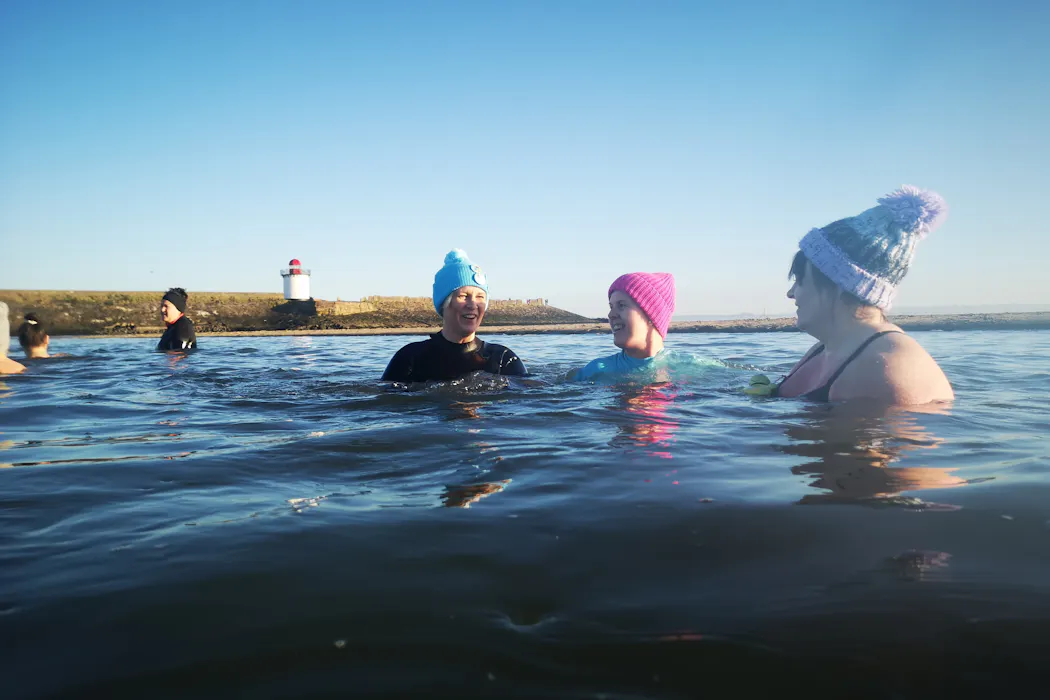
They met for coffee, then walked to a small Sunday sea swim. The first time, the coordinator went into the water with her. Sian was hooked. Through the group she met other women. She now helps organise the swims, and her children go to the beach in all weathers. What began as a referral became part of her life and community.

What shifted was not just her blood pressure, but her connection to movement, people and place. Our research on local area coordination suggests this relationship-centred support can strengthen wellbeing, confidence and social ties before problems escalate into crises.

If this type of preventive work is scaled back, crises may become more frequent and costs may rise, leading to further pressure on hospitals and social care. Health and social care already consume more than half of the Welsh government’s budget. With services stretched and more people living longer with complex needs, that path is not sustainable.

Politically fragile

Passing a law is one thing. Changing how an entire system behaves is another. Politics naturally pulls towards the immediate. Election cycles are short and budgets are set year by year. Members of the Senedd must respond to urgent concerns from voters. Visible problems demand visible progress.

Prevention, by contrast, produces quieter results that often emerge slowly and may not appear within a single parliamentary term. Implementation is also hard. Frontline services and staff are stretched. Legislation can set direction, but embedding change in strained organisations requires sustained backing, culture change and investment.

Public attention follows the same pattern. When uncertainty rises, attention narrows. Waiting lists, rising living costs and visible migration are immediate and emotionally charged. Policies designed to reduce future risk can feel abstract by comparison.

Psychological research helps explain this. Studies suggest that when people feel under threat, they look for stories that explain what is happening and who is responsible. These narratives can restore a sense of control, but they may also simplify complex problems into clear lines of blame.

For a policy built around prevention, this creates a difficult political environment. Polarised debate tends to reward immediate fixes and simple villains rather than the slower work of building the conditions that allow people to stay well.

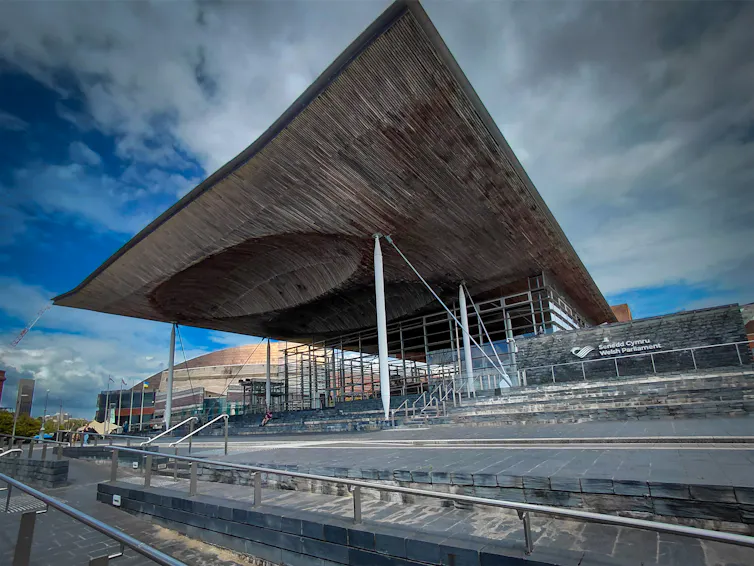
The exterior of the Senedd in Cardiff Bay.
Wales heads to the polls on May 7.
Leighton Collins/Shutterstock

The Wales the Act imagines

The wellbeing approach takes a broader view of health. Rather than seeing health solely as an individual responsibility, it recognises that wellbeing is shaped by social and environmental conditions. In other words, safe neighbourhoods, strong communities and access to nature.

International evidence suggests that investing earlier in community support can reduce pressure on crisis services. Wales is now exploring a similar redesign, but it will require leadership support and investment.

Research published in 2023 that had followed Welsh communities over a decade found better mental health in greener neighbourhoods, particularly in more deprived areas. Access to nature improves wellbeing directly and can also strengthen people’s sense of connection to the environment, which in turn encourages more sustainable behaviour.

These insights are already influencing local initiatives. Our work has embedded neurorehabilitation – support for people recovering from brain injury or neurological illness – into everyday community life through partnerships between health services and local organisations.

Ecotherapy programmes have been developed through relationships with locally valued initiatives, including community farms and a surfing charity that works with the coastline as part of recovery.

The aim is a shift from simply fixing what is “wrong” to rebuilding agency, purpose and connection. These are all factors linked to resilience and reduced demand on services over time.


Read more:
A decade on, six things the world can learn from Wales’ innovative future generations law


Our work also incorporates “biophilic” design – architecture that integrates greenery, natural light and outdoor spaces into buildings – into social housing developments. This work is re-imagining preventive health by bringing nature into our cities, offering residents an opportunity to reconnect to nature, tend to community gardens and grow their own food.

The goal is what we refer to as “sustainable wellbeing”, which means improving health while also nurturing the skills and mindsets needed for a more sustainable future.

Wales is making decisions amid overlapping crises, including widening inequality, rising chronic illness and the accelerating effects of climate change. In this context, the Well-being of Future Generations Act is either a framework for building more resilient systems, or a piece of legislation that is often praised but rarely followed.

Governments ultimately decide whether prevention is protected when finances tighten. But voters shape those choices too. A question facing this Senedd election is whether the Act continues to guide party manifestos, budgets and service design, or slips behind the pressure for immediate solutions.

On May 7, Wales will not only choose its representatives. It will also decide whether the wellbeing of people – and the planet they depend on – remains at the heart of public decision-making.

The Conversation

Lowri Wilkie is a Post-Doctoral Research Fellow in Psychology at Swansea University. She is funded by the Welsh Graduate School for the Social Sciences.

Andrew H. Kemp has previously received funding from Health and Care Research Wales and currently receives funding from the Arts and Humanities Research Council, including support for research on biophilic living, sustainable wellbeing and wellbeing policy. He is Professor of Psychology at Swansea University and holds an honorary clinical research appointment with Swansea Bay University Health Board. He is a member of the Green Party of England and Wales in a personal capacity.

Zoe Fisher has previously received funding from Health Care Research Wales. She is employed by Swansea Bay University Health board and seconded to the West Glamorgan Regional Partnership Board. She also holds an Associate Professor role at Swansea University.

ref. Can Wales’ wellbeing law survive the pressures of the next Senedd election? – https://theconversation.com/can-wales-wellbeing-law-survive-the-pressures-of-the-next-senedd-election-276121

Los ataques contra hospitales están aumentando en las zonas de guerra: ¿los protege lo suficiente la ley?

Source: The Conversation – (in Spanish) – By Shannon Bosch, Associate Professor (Law), Edith Cowan University

Afganistán afirma que al menos 400 personas han muerto en un ataque aéreo pakistaní contra un hospital de rehabilitación de drogadictos en Kabul el lunes por la noche, con posiblemente cientos más de heridos.

Pakistán ha negado haber atacado deliberadamente el centro sanitario. En un comunicado en la red social X, el Ministerio de Información y Radiodifusión de Pakistán afirmó que los ataques “se dirigieron específicamente contra instalaciones militares e infraestructuras de apoyo a los terroristas, incluidos los almacenes de equipo técnico y municiones de los talibanes afganos”.

Sea como fuere, los ataques contra centros sanitarios están aumentando en todo el mundo.

El 14 de marzo, un ataque aéreo israelí alcanzó un centro sanitario en el Líbano, matando a 12 médicos, enfermeros y paramédicos. El ataque elevó a 31 el número de trabajadores sanitarios muertos en el Líbano en los últimos días.

Veintisiete ataques contra centros sanitarios en menos de tres semanas

Desde principios de marzo, la Organización Mundial de la Salud (OMS) ha verificado 27 ataques contra centros sanitarios solo en el Líbano, a medida que los ataques israelíes en el Líbano y las operaciones conjuntas de EE. UU. e Israel en Irán se han intensificado.

La Oficina del Alto Comisionado para los Derechos Humanos (ACNUDH) y la OMS condenaron estos ataques como violaciones del derecho internacional.

Exactamente, ¿qué leyes protegen a las instalaciones médicas, al personal y a los pacientes durante los conflictos? ¿Y pierden esta protección si las instalaciones se utilizan para dar refugio a combatientes?

Lo que dicen las “leyes de la guerra” sobre la protección de los hospitales

El derecho internacional humanitario contiene normas detalladas para proteger al personal médico, las instalaciones sanitarias y a los enfermos y heridos durante los conflictos armados.

Según estas “leyes de la guerra”:

  • El personal médico, incluidos médicos, enfermeros y paramédicos, debe ser respetado y protegido mientras desempeña sus funciones

  • Existen protecciones especiales para las ambulancias y los medios de transporte utilizados exclusivamente con fines médicos

  • Estas protecciones se extienden a los heridos y enfermos a su cargo. Esto incluye a los combatientes enemigos que requieran tratamiento y ya no participen en las hostilidades

  • Se debe permitir a las organizaciones humanitarias imparciales prestar asistencia médica. No se puede denegar arbitrariamente el consentimiento para su labor

  • Las instalaciones médicas deben exhibir los emblemas distintivos de protección de la Cruz Roja, la Media Luna Roja o el Cristal Rojo. El personal médico debe llevar identificaciones y brazaletes que muestren estos emblemas

  • El uso indebido de estos símbolos para proteger operaciones militares está prohibido. Hacerlo puede constituir “perfidia”, un tipo de engaño deliberado que constituye un crimen de guerra según el derecho internacional

  • Atacar deliberadamente al personal médico o a las instalaciones que exhiban estos emblemas también puede constituir un crimen de guerra.

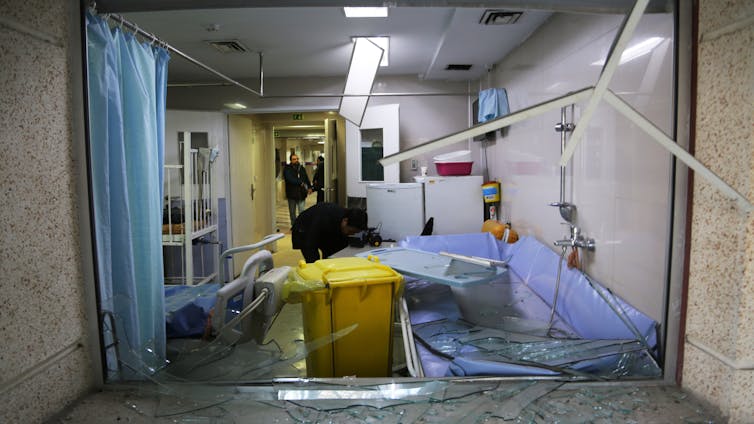
Vidrios rotos rodean una sala de hospital dañada.
Daños causados por los ataques estadounidenses e israelíes al Hospital Shahid Motahhari de Teherán.
Anadolu/Getty

¿De dónde provienen estas normas?

Las leyes que protegen los servicios médicos en la guerra surgieron como respuesta al enorme sufrimiento presenciado en los conflictos de los siglos XIX y XX. El primer tratado que protegía a los soldados heridos y al personal médico se remonta a 1864, cuando los Estados adoptaron el Convenio de Ginebra original.

Hoy en día, los Convenios de Ginebra de 1949 y sus Protocolos Adicionales, junto con un conjunto de normas de derecho internacional consuetudinario, conforman un marco jurídico casi universal que vincula a todas las partes en conflicto. Esto incluye a los grupos armados no estatales.

Estas normas exigen a las partes beligerantes que respeten y protejan al personal médico, las instalaciones sanitarias y los heridos y enfermos en todas las circunstancias.

¿Por qué están aumentando los ataques contra la asistencia sanitaria?

En enero, Médicos Sin Fronteras (MSF) informó de que los ataques contra instalaciones y personal médico habían alcanzado niveles sin precedentes en todo el mundo. Solo en 2025 se produjeron 1348 ataques contra instalaciones sanitarias, el doble de los registrados en 2024.

La ley en sí no ha cambiado, pero la guerra sí. Los recientes conflictos en Sudán del Sur, Ucrania, Gaza, Irán y el Líbano se están produciendo en entornos urbanos densamente poblados. Los grupos armados operan en entornos civiles complejos, a menudo cerca de hospitales y clínicas.

Esto ha cambiado el discurso utilizado por algunas de las partes beligerantes. Lo que antes se describía como “ataques erróneos” ahora se justifica con frecuencia por motivos de necesidad militar. Los Estados suelen alegar que los insurgentes están utilizando hospitales o ambulancias para obtener ventaja militar.

Israel, por ejemplo, ha acusado a Hezbolá y Hamás de utilizar la infraestructura médica con fines militares.

¿Pueden los hospitales perder su protección si hay combatientes escondidos en su interior?

En efecto, los hospitales pueden perder su protección especial si se utilizan, al margen de su función humanitaria, para causar daño al enemigo. Sin embargo, la ley establece un umbral muy alto para ello.

El personal médico puede llevar armas ligeras para su defensa propia. También puede haber guardias armados presentes para proteger las instalaciones. Y la presencia de combatientes heridos que reciben tratamiento no cambia esto: las protecciones siguen siendo aplicables.

La protección solo puede perderse si los hospitales se utilizan para actividades tales como:

  • Lanzar ataques.

  • Servir como puesto de observación.

  • Almacenar armas.

  • Actuar como centro de mando o de enlace.

  • Dar refugio a combatientes sanos.

Incluso en esas situaciones, en caso de duda, se debe presumir que los hospitales están protegidos.

Es importante destacar que el hecho de verificar que un hospital está siendo utilizado indebidamente no da carta blanca a las partes para atacar. Antes de lanzar un ataque contra un centro médico comprometido, el derecho internacional humanitario exige que se emita una advertencia y que se conceda un tiempo razonable para que cese el uso indebido.

Si se ignora la advertencia, la parte atacante debe seguir cumpliendo los principios fundamentales del derecho internacional humanitario:

  1. Proporcionalidad: La ventaja militar esperada debe sopesarse frente a las consecuencias humanitarias del ataque. Esto incluye los impactos a largo plazo en los servicios de atención sanitaria. Si el daño civil esperado fuera excesivo, el ataque debe cancelarse.

  2. Precaución: Deben tomarse todas las precauciones posibles para minimizar el daño a los pacientes y al personal médico. Esto puede incluir facilitar las evacuaciones, planificar ante la interrupción de los servicios médicos y ayudar a restablecer la capacidad sanitaria tras el ataque.

Incluso cuando un centro pierda su protección, los heridos y los enfermos deben seguir siendo respetados y protegidos.

¿Se están normalizando los ataques contra la asistencia sanitaria?

El Consejo de Seguridad de la ONU, la OMS, MSF y el ACNUDH han expresado su preocupación por el hecho de que los ataques contra el personal y las instalaciones médicas —y la falta de rendición de cuentas por ellos— se están normalizando de forma peligrosa.

El marco jurídico que protege a los hospitales y al personal sanitario ya existe. Los Estados y los grupos armados deben difundir la ley y formar a sus fuerzas militares.

Se espera que los sistemas jurídicos nacionales investiguen y enjuicien a quienes cometan crímenes de guerra contra heridos y enfermos, personal médico y sus instalaciones, o hagan un uso indebido de los emblemas de protección para obtener ventaja militar.

En la práctica, sin embargo, investigar los ataques durante un conflicto activo es extremadamente difícil. Los Estados territoriales a menudo no están dispuestos o no pueden llevar a cabo los enjuiciamientos.

¿Podemos revertir esta tendencia?

Grupos de investigación de código abierto como Forensic Architecture, Bellingcat, Mnemonics y Airwars desempeñan ahora un papel cada vez más importante en la conservación de imágenes satelitales, datos de geolocalización y vídeos subidos a las redes sociales. Esto permite que las misiones independientes de verificación de hechos lleven a cabo investigaciones fiables. Pueden exigir responsabilidades incluso cuando los Estados territoriales no están dispuestos a hacerlo o no pueden hacerlo.

Sin esa rendición de cuentas, los lugares destinados a salvar vidas durante los conflictos pueden convertirse en objetivos cada vez más.

The Conversation

Shannon Bosch no recibe salario, ni ejerce labores de consultoría, ni posee acciones, ni recibe financiación de ninguna compañía u organización que pueda obtener beneficio de este artículo, y ha declarado carecer de vínculos relevantes más allá del cargo académico citado.

ref. Los ataques contra hospitales están aumentando en las zonas de guerra: ¿los protege lo suficiente la ley? – https://theconversation.com/los-ataques-contra-hospitales-estan-aumentando-en-las-zonas-de-guerra-los-protege-lo-suficiente-la-ley-278714

Une étude affirme que la viande pourrait réduire le risque de décès par cancer… Vraiment ?

Source: The Conversation – in French – By Ahmed Elbediwy, Senior Lecturer in Cancer Biology & Clinical Biochemistry, Kingston University

Une étude sur les protéines animales a été vue comme un feu vert pour manger plus de viande. Pas si vite, prévient un expert. (lightpoet/Shutterstock)

Depuis longtemps, les autorités sanitaires mettent en garde contre la consommation de viande rouge, classée par l’Organisation mondiale de la santé (OMS) comme « probablement cancérigène pour l’humain ». Mais une nouvelle étude controversée remet en cause cette position et avance que les protéines animales pourraient, au contraire, réduire la mortalité liée au cancer.

Le Centre international de recherche sur le cancer (CIRC), qui fait partie de l’OMS, classe depuis des années la viande rouge, notamment le bœuf, le porc, l’agneau et le mouton, comme probablement cancérigène. Les viandes transformées telles que le bacon et les saucisses sont quant à elles classées comme cancérigènes avérés. Ce classement reflète un ensemble d’études établissant un lien entre la viande rouge et le cancer colorectal, sur lesquelles reposent les recommandations de modérer sa consommation.

Pourtant, une nouvelle étude menée par l’Université McMaster, en Ontario, suggère le contraire : les personnes qui consomment davantage de protéines animales pourraient en fait avoir un taux de mortalité par cancer plus faible. Mais avant de vous précipiter pour acheter un paquet de saucisses, quelques points importants méritent attention.

Des conclusions à relativiser

Les méthodes de cette étude comportent des limites qui nuancent ses conclusions. Plutôt que d’examiner spécifiquement la viande rouge, les chercheurs ont analysé la consommation de « protéines animales », une catégorie large qui comprend la viande rouge, la volaille, le poisson, les œufs et les produits laitiers. Cette distinction est importante, car le poisson, en particulier les variétés grasses telles que le maquereau et les sardines, est associé à une protection contre le cancer.

En regroupant toutes les protéines animales, l’étude a peut-être mis en évidence les effets protecteurs du poisson et de certains produits laitiers plutôt que de prouver la sécurité de la viande rouge.

Les produits laitiers eux-mêmes présentent un tableau complexe dans la recherche sur le cancer. Certaines études suggèrent qu’ils réduisent le risque de cancer colorectal tout en augmentant potentiellement le risque de cancer de la prostate. Ces contradictions montrent combien la catégorie « protéines animales » occulte des différences majeures.

Cette étude, financée par la National Cattlemen’s Beef Association, le principal groupe de pression de l’industrie bovine américaine, comporte d’autres limites. Notamment, les chercheurs n’ont pas distingué les viandes transformées des viandes non transformées, une nuance que de nombreuses études considèrent essentielle.

Les viandes transformées comme le bacon, les saucisses et les charcuteries augmentent systématiquement le risque de cancer par rapport aux morceaux frais et non transformés. De plus, la recherche n’a pas examiné des types de cancer spécifiques, ce qui rend impossible de déterminer si les effets protecteurs s’appliquent de manière générale ou à des cancers particuliers.

L’étude s’est aussi penchée sur les protéines végétales, notamment les légumineuses, les noix et les produits à base de soja tels que le tofu, et a constaté qu’elles n’avaient pas d’effet protecteur significatif contre le décès par cancer. Cette conclusion contredit des travaux antérieurs qui suggéraient que les protéines végétales sont liées à une diminution du risque de cancer, ce qui complique encore le tableau.


Déjà des milliers d’abonnés à l’infolettre de La Conversation. Et vous ? Abonnez-vous gratuitement à notre infolettre pour mieux comprendre les grands enjeux contemporains.


Ces résultats ne remettent pas en cause les bienfaits reconnus des aliments végétaux, qui fournissent des fibres, des antioxydants et d’autres composés associés à une réduction du risque de maladie.

Aliments d’origine végétale, notamment noix, champignons et tofu
La nouvelle étude ne remet pas en cause les nombreuses preuves démontrant que les aliments d’origine végétale sont bons pour la santé.
(5PH/Shutterstock)

Pas un feu vert

Même si les conclusions de l’étude sur les protéines animales s’avèrent exactes, celle-ci ne doit pas justifier une consommation à outrance de viande. Une consommation excessive de viande rouge reste associée à d’autres problèmes de santé graves, notamment les maladies cardiaques et le diabète. Mieux vaut privilégier la modération et l’équilibre.

Les résultats contradictoires de ces études rappellent à quel point la nutrition est une science difficile : impossible d’isoler l’effet d’un seul aliment. Nous mangeons des combinaisons d’aliments intégrées à un mode de vie, et c’est l’ensemble de ces habitudes qui pèse le plus sur la santé.

Une approche équilibrée de l’assiette, comprenant une variété de sources de protéines, beaucoup de fruits et légumes et des aliments peu transformés, reste l’approche la mieux étayée pour une santé optimale.

Si cette étude apporte un nouvel éclairage sur le débat sur la viande, elle ne devrait pas clore la discussion. La science de la nutrition évoluant sans cesse, la meilleure approche reste simple : modération, variété et équilibre au quotidien.

La Conversation Canada

Les auteurs ne travaillent pas, ne conseillent pas, ne possèdent pas de parts, ne reçoivent pas de fonds d’une organisation qui pourrait tirer profit de cet article, et n’ont déclaré aucune autre affiliation que leur organisme de recherche.

ref. Une étude affirme que la viande pourrait réduire le risque de décès par cancer… Vraiment ? – https://theconversation.com/une-etude-affirme-que-la-viande-pourrait-reduire-le-risque-de-deces-par-cancer-vraiment-264551