Angola’s Lobito Corridor is being revived – but who stands to gain?

Source: The Conversation – Africa – By Daniel Tjarks, Resarch Associate in Human Geography, Saarland University

The Lobito Corridor is a massive infrastructure axis linking Angola’s shore on the west of Africa to the mineral-rich interior. Built in the first three decades of the 1900s to export cheap commodities to colonial Portugal, it later fell into disrepair. Its main railway was rebuilt during Angola’s post-war reconstruction. More recently it has attracted renewed and competing international interests.

Daniel Tjarks has researched Angola’s political and economic geography, the spatial development of colonial Angola and the current role of international actors in the country. Angola’s post-war spatial development and the government’s plans to promote more balanced and equitable growth also feature in his PhD dissertation. He questions some of the celebratory political claims made about efforts to revitalise the corridor. In particular, whether it will help Angola diversify its oil-dependent economy and benefit ordinary citizens.


What is the Lobito Corridor?

The Lobito Corridor is a logistics corridor. At its heart is a 1,300km rail line that connects the port of the Angolan city of Lobito to the mineral-rich parts of Zambia and Congo to the east.

Its most important component, the Benguela Railway, was constructed between 1903 and 1931 under Portuguese colonial rule by Scottish engineer Robert Williams.

At the time, it was one of three separate railways linking the colony’s ports to its hinterland. This way, colonial Angola could provide Portugal with cheap commodities.

During Angola’s post-independence civil war (1975-2002), the line was largely destroyed. As Angola entered the peace period, the country was able to rebuild its infrastructure thanks to its booming oil business.

Chinese capital and construction companies enabled the resurrection of the railway between 2006 and 2014.

In 2023, a western consortium outbid Chinese competitors for a 30-year concession for the line’s operation. The consortium consists of Swiss commodity trader Trafigura, Portuguese construction company Mota-Engil and Belgian rail operator Vecturis. It has committed to invest US$455 million in the corridor’s development in Angola alone. Trafigura CEO Jeremy Weir says it will not only “create a western route to market for goods and materials” but also “boost the development of sectors along the line”.

Why is the corridor attracting so much attention again?

A lot is at stake in the Lobito corridor. Much more than a regional infrastructure project, it has gained strategic importance in the global scramble for critical resources.

Cobalt and copper from Zambia and the Democratic Republic of Congo are key to the clean energy transition and modern communication technology. The DRC and Zambia together account for about 14% of the global mine production of copper and the DRC for 73% of cobalt.

Control of access to these minerals is at the heart of growing US-China competition, at times referred to as a “second cold war”.

The Lobito corridor has therefore become a project of global importance.

For this reason, the railway line has attracted high-ranking visits in recent years. In 2024, then US president Joe Biden inspected the rail line, marking the first visit of a US president to the continent since 2015 and the first of a sitting US president to Angola. In 2025, German president Frank-Walter Steinmeier also made the trip – again, the first of a German president to the country.

Even the Trump administration seems to have decided it will not break with commitments to support development of the corridor.

In 2024, the US, Europe, the African Development Bank and the three host countries signed a memorandum of understanding to extend the line to the east and mobilise investment alongside it.

At the seventh AU-EU summit in November 2025, European commission president Ursula von der Leyen described these commitments as evidence of the “European model” of investment and the two continents’ “unique and strategic partnership”. The commission promised to mobilise loans and private investments for the corridor worth no less than US$2 billion.

As the US and EU are trying to counter Chinese capital investment in Angola and in the wider region, the Lobito Corridor will continue to play a key role.

Who will benefit from the Lobito corridor?

There are good reasons to remain sceptical about the corridor’s promised benefits.

First, recent background reports point to major challenges facing the development of the soft infrastructure of customs and regulations. Others have pointed to the corridor’s unclear commercial viability. Ships having to call at the secondary port of Lobito will incur higher costs. There’s also competition from other routes – mostly, the Chinese-built Tazara railway, connecting Zambia to Dar-es-Salaam.

Second, the economic model at the heart of the Lobito corridor is anything but a break with exploitative extractivism. Throughout Angolan history, primary commodities have left the country, while hopes for broad-based growth have repeatedly been frustrated.

The consortium that now operates the railway grounds its investment primarily in expectations of future demand for critical minerals. And while the political emphasis on complementary investments is laudable, the corridor does not, as one background report puts it,

immediately lend itself to linking minerals and wider development.

Moreover, the country has already seen decades of large-scale oil exports that have delivered few tangible results for the wider population. Instead they have propelled blatant corruption and growing discontent with a ruling party that has been in power since independence.

Angolan economists Alves da Rocha and Wilson Chimoco have argued that “expectations on the impact on economic diversification are very low”.

Angolan government critic and journalist Rafael Marques de Morais has even called the corridor

a mirror of everything negative the continent endures: Chinese debt, Western opportunism, Congolese blood, Angolan misrule.

For him

if hypocrisy needed a railway, it would look exactly like the Lobito Corridor.

If the project really is to benefit all, the government will have to live up to promises that fewer and fewer Angolans seem to believe it capable of delivering.

The Conversation

Daniel Tjarks does not work for, consult, own shares in or receive funding from any company or organisation that would benefit from this article, and has disclosed no relevant affiliations beyond their academic appointment.

ref. Angola’s Lobito Corridor is being revived – but who stands to gain? – https://theconversation.com/angolas-lobito-corridor-is-being-revived-but-who-stands-to-gain-274305


Nigeria’s open borders promised more trade and free movement: but crossings are chaotic and corrupt

Source: The Conversation – Africa (2) – By John Babalola, Associate lecturer, University of Lincoln

West Africa has pursued one of the world’s most ambitious border liberalisation schemes in the past four decades. The Ecowas Free Movement Protocol, signed in 1979, enables citizens of 16 member states to cross international borders with minimal documentation. The intention was to promote economic integration and prosperity across the region.

For instance, Nigeria’s open borders promise trade. Yet at Nigeria’s border posts, a troubling reality emerges. The open border system has become a vehicle for systematic exploitation of travellers.

My research towards my PhD at the University of Lincoln under the supervision of Dr Joshua Skoczylis focuses on west African migration and border governance. Together, we have examined how the region’s free movement protocol operates in practice at Nigeria’s frontiers.

Using the examples of two contrasting Nigerian border crossings – Idi-Iroko on the Benin border and Chikanda on the Niger border – I sought to understand the protocol’s impact on border security in Nigeria. Through qualitative interviews with policymakers, frontline security staff and community leaders, the research reveals how information gaps between officials and citizens transform an integration policy into an instrument of corruption.

While these sites cannot claim to represent all of Nigeria’s 84 manned official border posts, they illustrate the institutional dynamics reported across major crossing points in the region.

My findings show that the Ecowas Free Movement Protocol is an example of what policy scholars call an implementation gap: the chasm between what policies promise on paper and what happens on the ground. This protocol establishes free movement principles without prescribing mechanisms or standard practices. But Nigeria has failed to develop its own ways to manage its borders.

The current chaotic system is crying out for changes: these should include standardised operating procedures, proper remuneration for border personnel, accountability mechanisms and intelligence sharing.

When nobody knows the rules

The protocol’s basic requirement is straightforward: travellers need a valid travel document (a passport) and an international health certificate. Yet interviews with dozens of border community members revealed that most had never seen these requirements written down, let alone understood them.

“I think the protocol is good for trade between countries,” one Idi-Iroko resident told me, “but I don’t really know what it says.” Another community member was more direct: “International passports? Those are a waste of time and money. You don’t need them to cross the borders.”

When citizens remain uncertain about requirements, officials can demand payments for unknown violations, charge fees for services that should be free, and accept bribes to overlook supposed irregularities. What looks like bureaucratic failure becomes a feature of the system for those who benefit from it.

Multiple residents confirmed they crossed regularly without documents, recognised by officials who “know them” as locals.

Border residents understand that in practice, rules matter less than relationships with officials. Documentation requirements are negotiable, and informal payment often smooths passage more effectively than proper papers.

The strategic information gap

Security agencies claim they regularly conduct community information programmes. Immigration officials described visiting market squares and motor parks to distribute flyers about trafficking dangers and documentation requirements. “We do enlightenment campaigns constantly,” one senior officer insisted. Yet my requests for programme documentation, schedules, attendance records, or evaluation reports yielded nothing.

None of the community members interviewed across two border zones recalled such programmes. Most had gleaned their understanding of border operations from informal conversations and personal experience.

The real implementation gap

Free movement doesn’t mean unregulated movement. Even within a borderless zone, states retain legitimate security interests: preventing trafficking, controlling smuggled goods, monitoring public health threats, and maintaining basic records of cross-border flows. The protocol acknowledges this by allowing member states to refuse entry on grounds of security, public health, or public order. Rules are needed to distinguish between these legitimate security functions and arbitrary restrictions that undermine the integration agenda.

The protocol assumes member states will create necessary institutional capacity: motivated, well-resourced security forces working collaboratively. But in reality there are ten competing agencies at major Nigerian posts, earning vastly different salaries, following separate mandates, jealously guarding information. As one military officer explained: “One organisation tries to be smarter, working individualistically instead of in cooperation.”

Frontline officers exercise enormous discretion in this under-regulated environment. They become de facto policymakers. They don’t simply implement policy poorly, they effectively create policy through their daily choices about whom to stop, what to inspect, and which violations to overlook.

A customs official candidly admitted to me:

Many people don’t go there for patriotism or duty. They go for survival. Even if you have the numbers, they’ll always try to see where the honey tastes better.

In this context, systematic corruption isn’t aberrant behaviour – it’s a strategy within deficient systems that national governments have failed to develop.

Why technology won’t fix this

Security officials often cite lack of technology as their main challenge. They argue that scanners, biometric systems and digital monitoring could help verify travellers’ identities, flag security threats, and create audit trails of border transactions. In theory, that could reduce opportunities for officials to demand arbitrary payments or wave through prohibited goods.

But technology won’t solve the fundamental problem my research uncovered.

The issue isn’t capacity for enforcement. It’s the incentive for exploitation. Sophisticated surveillance equipment won’t prevent officials from accepting bribes if their salaries are inadequate and accountability mechanisms are absent.

Anyway, most border posts lack electricity infrastructure to power such technology. And equipment placed in remote areas becomes vulnerable to theft or vandalism. Investment in hardware simply creates more expensive ways to fail.

What needs to change

Forty-six years after the protocol’s enactment, Ecowas needs to confront uncomfortable realities. Real reform requires several interconnected changes:

  • Genuine transparency about requirements: sustained, accessible public information about what documentation is legally required, what fees are legitimate, and how to report violations.

  • Standardised operating procedures across member states.

  • Adequate compensation for security personnel.

  • Accountability mechanisms with genuine consequences for exploitative behaviour.

  • Coordination frameworks that reduce inter-agency competition and enable intelligence sharing.

Until Ecowas confronts this reality, the free movement protocol will continue delivering the opposite of its promise: not integration and prosperity, but fragmentation and exploitation.

This article is based on doctoral fieldwork conducted in Nigeria between 5 June 2024 and 1 August 2024. Interview data and full findings will be available in the forthcoming PhD thesis at the University of Lincoln.

The Conversation

The authors do not work for, consult, own shares in or receive funding from any company or organisation that would benefit from this article, and have disclosed no relevant affiliations beyond their academic appointment.

ref. Nigeria’s open borders promised more trade and free movement: but crossings are chaotic and corrupt – https://theconversation.com/nigerias-open-borders-promised-more-trade-and-free-movement-but-crossings-are-chaotic-and-corrupt-273670

Is the whole universe just a simulation?

Source: The Conversation – USA – By Zeb Rocklin, Associate Professor of Physics, Georgia Institute of Technology

Could the Earth and everything on it – and even the whole universe – be a simulation running on a giant computer? OsakaWayne Studios/Moment via Getty Images

Curious Kids is a series for children of all ages. If you have a question you’d like an expert to answer, send it to CuriousKidsUS@theconversation.com.


Is the whole universe just a simulation? – Moumita B., age 13, Dhaka, Bangladesh


How do you know anything is real? Some things you can see directly, like your fingers. Other things, like your chin, you need a mirror or a camera to see. Other things can’t be seen, but you believe in them because a parent or a teacher told you, or you read it in a book.

As a physicist, I use sensitive scientific instruments and complicated math to try to figure out what’s real and what’s not. But none of these sources of information is entirely reliable: Scientific measurements can be wrong, my calculations can have errors, even your eyes can deceive you, like the dress that broke the internet because nobody could agree on what colors it was.

Because every source of information – even your teachers – can trick you some of the time, some people have always wondered whether we can ever trust any information.

If you can’t trust anything, are you sure you’re awake? Thousands of years ago, Chinese philosopher Zhuangzi dreamed he was a butterfly and realized that he might actually be a butterfly dreaming he was a human. Plato wondered whether all we see could just be shadows of true objects. Maybe the world we live in our whole lives inside isn’t the real one, maybe it’s more like a big video game, or the movie “The Matrix.”

screenshot of a landscape in a cartoonish video game
Are we living in a very sophisticated version of Minecraft?
Tofli IV/Wikimedia Commons, CC BY-SA

The simulation hypothesis

The simulation hypothesis is a modern attempt to use logic and observations about technology to finally answer these questions and prove that we’re probably living in something like a giant video game. Twenty years ago, a philosopher named Nick Bostrom made such an argument based on the fact that video games, virtual reality and artificial intelligence were improving rapidly. That trend has continued, so that today people can jump into immersive virtual reality or talk to seemingly conscious artificial beings.

Bostrom projected these technological trends into the future and imagined a world in which we’d be able to realistically simulate trillions of human beings. He also suggested that if someone could create a simulation of you that seemed just like you from the outside, it would feel just like you inside, with all of your thoughts and feelings.

Suppose that’s right. Suppose that sometime in, say, the 31st century, humanity will be able to simulate whatever they want. Some of them will probably be fans of the 21st century and will run many different simulations of our world so that they can learn about us, or just be amused.

Here’s Bostrom’s shocking logical argument: If the 21st century planet Earth only ever existed one time, but it will eventually get simulated trillions of times, and if the simulations are so good that the people in the simulation feel just like real people, then you’re probably living on one of the trillions of simulations of the Earth, not on the one original Earth.

This argument would be even more convincing if you actually could run powerful simulations today, but as long as you believe that people will run those simulations someday, then you logically should believe that you’re probably living in one today.

Scientist Neil deGrasse Tyson explains the simulation hypothesis and why he thinks the odds are about 50-50 we’re part of a virtual reality.

Signs we’re living in a simulation … or not

If we are living in a simulation, does that explain anything? Maybe the simulation has glitches, and that’s why your phone wasn’t where you were sure you left it, or how you knew something was going to happen before it did, or why that dress on the internet looked so weird.

There are more fundamental ways in which our world resembles a simulation. There is a particular length, much smaller than an atom, beyond which physicists’ theories about the universe break down. And we can’t see anything more than about 50 billion light-years away because the light hasn’t had time to reach us since the Big Bang. That sounds suspiciously like a computer game where you can’t see anything smaller than a pixel or anything beyond the edge of the screen.

Of course, there are other explanations for all of that stuff. Let’s face it: You might have misremembered where you put your phone. But Bostrom’s argument doesn’t require any scientific proof. It’s logically true as long as you really believe that many powerful simulations will exist in the future. That’s why famous scientists like Neil deGrasse Tyson and tech titans like Elon Musk have been convinced of it, though Tyson now puts the odds at 50-50.

Others of us are more skeptical. The technology required to run such large and realistic simulations is so powerful that Bostrom describes such simulators as godlike, and he admits that humanity may never get that good at simulations. Even though it is far from being resolved, the simulation hypothesis is an impressive logical and philosophical argument that has challenged our fundamental notions of reality and captured the imaginations of millions.


Hello, curious kids! Do you have a question you’d like an expert to answer? Ask an adult to send your question to CuriousKidsUS@theconversation.com. Please tell us your name, age and the city where you live.

And since curiosity has no age limit – adults, let us know what you’re wondering, too. We won’t be able to answer every question, but we will do our best.

The Conversation

Zeb Rocklin does not work for, consult, own shares in or receive funding from any company or organization that would benefit from this article, and has disclosed no relevant affiliations beyond their academic appointment.

ref. Is the whole universe just a simulation? – https://theconversation.com/is-the-whole-universe-just-a-simulation-268177

From ski jumping to speedskating, winter sports represent physics in action

Source: The Conversation – USA – By Amy Pope, Principal Lecturer of Physics and Astronomy, Clemson University

An understanding of angular momentum helps figure skaters glide across the ice and execute complex spins. AP Photo/Jeff Roberson

During the 2026 Winter Olympics, athletes will leap off ramps, slide across ice and spin through the air. These performances will look different to my students who have studied physics through sports. These feats will be something the students have already measured, modeled or felt. As a physicist, I help my students see the games as a place where classroom lessons come to life.

I spend a lot of time thinking about how abstract ideas such as kinematics, forces, energy, momentum and motion are understood in the real world. Recently, I listened to a meeting of the Clemson football team’s offense to gain an appreciation for what my student-athletes do. But I came out with an idea for a new introductory physics class.

While sitting in the back row, listening to the coach break down the Tigers’ upcoming game, I realized that I could understand every single word said, despite never having played football. Most of the guys were called Sam or Mike, and they continually talked about gaps and boxes. I knew the terminology. I followed the diagrams. I could repeat the language. And yet, I understood absolutely nothing about how that information translated into a strategy for winning the game.

It dawned on me that my confusion is likely similar to how many students experience physics. They can follow the individual pieces, equations, definitions and vocabulary, but they have trouble connecting those pieces to real-world meaning. Physics makes sense as a subject of study, yet it often seems disconnected from everyday life.

I created Clemson’s Physics of Sports class to close the gap. The course begins not with abstract problems or idealized systems, but with sports that people already care about. The class then reveals the physics that make those activities possible.

Physics in skiing

Many introductory, algebra-based physics courses have students study frictionless blocks sliding down imaginary planes. In my course, students analyze the newest Olympic sports.

Ski mountaineering, making its Olympic debut in 2026, requires athletes to climb steep, snow-covered slopes entirely under their own power. My students uncover an elegant physics problem involving friction, the force that resists sliding between surfaces.

Ski mountaineering competitors ski up a snowy hill marked with banners.
Ski mountaineers use friction to go uphill before skiing down.
AP Photo/Antonio Calanni

To accelerate uphill, the skis must experience a small amount of friction while moving in the forward direction. However, the same ski must provide enough friction in the opposite direction to prevent the skier from sliding back down the slope.

Skiers resolve this contradiction using climbing skins on their skis that are engineered to grip the snow in one direction while allowing smooth sliding in the opposite direction. In class, students examine how the skin material’s design helps climbers summit the mountain efficiently.

Students also look at how specialized materials assist in ski jumping.

The skintight suits skiers wear are not for aesthetics; they help control the physics of air. Loose fabric increases drag and can even generate lift, much like a wingsuit worn by skydivers. Tight-fitting clothing minimizes these effects, making competition fairer by leveling the field for all athletes.

A ski jumper flying through the air.
The tight suits ski jumpers wear prevent them from gaining an unfair advantage by using drag and lift from loose fabric.
AP Photo/Matthias Schrader

Physics in skating

When it comes to skating, small changes in physics can set medalists apart from the rest of the field. In class, students investigate how speedskaters can lean dramatically toward the ice without falling by analyzing their centripetal acceleration and the forces acting on their bodies during high-speed turns. Centripetal acceleration is the accelerating force directed toward the center of a turn. It keeps the skater moving in a curved path rather than moving along a straight path.

Figure skating provides another striking example where small changes in body positioning can dramatically affect the athlete’s performance. Angular momentum, which describes how much rotational motion an object has, depends on both how fast the object spins and how its mass is distributed. Angular momentum allows skaters to control how many times they spin in midair.

A diagram showing two sketches of a figure skater, one where they spin with their arms outstretched (and go slower) and one where they pulls their arms in (and go faster).
When a figure skater pulls their limbs in toward their torso, they spin faster. In physics, this concept is called the conservation of angular momentum.
Sketchplanations, CC BY-NC

In class, students don’t just watch the elite athletes – they model these concepts with their own movements. By sitting on a rotating stool with weights in their outstretched hands, students emulate a figure skater by pulling their arms inward and spinning much faster as their mass moves closer to their axis of rotation.

Physics in action

By studying sports, students begin to see physics not as a collection of formulas but as a framework for understanding how the world works. A basic understanding of physics allows students to critically evaluate everyday claims, ranging from viral sports clips to misleading headlines and exaggerated performance claims.

In highlight reels, for example, athletes often appear to steer left or right after taking off on a jump. Physics students know that can’t be the case – once airborne, there is no way to change that path without pushing on something.

Elite athletic performances aren’t the only places to see physics in action, of course. The same principles underlie most everyday experiences. With sports as an entry point, students can learn a language that allows them to interpret the physical world around them.

Physics does not live only in textbooks or exams. It is written into every stride, turn and jump, at every level, from recreational activities to Olympic competitions.

The Conversation

Amy Pope does not work for, consult, own shares in or receive funding from any company or organization that would benefit from this article, and has disclosed no relevant affiliations beyond their academic appointment.

ref. From ski jumping to speedskating, winter sports represent physics in action – https://theconversation.com/from-ski-jumping-to-speedskating-winter-sports-represent-physics-in-action-272958

Drastic water shortages and air pollution are fuelling Iran’s protests

Source: The Conversation – UK – By Rachael Jolley, Environment Editor, The Conversation

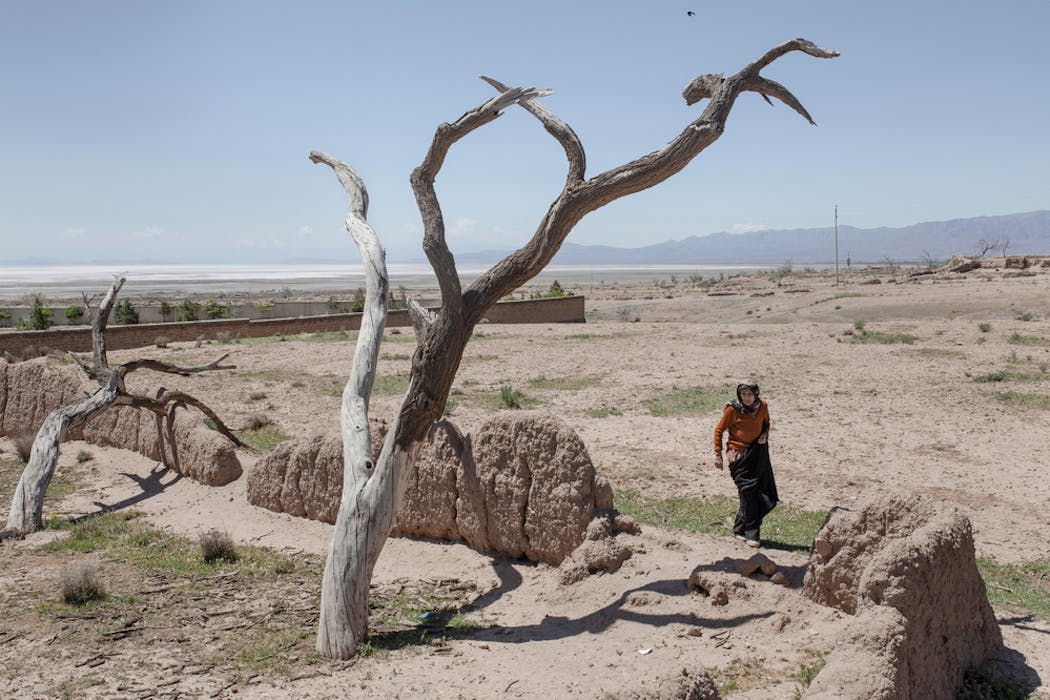
This dry landscape in Iran was once the sixth largest salt lake in the world. solmaz daryani/Shutterstock

This roundup of The Conversation’s climate coverage was first published in our award-winning weekly climate action newsletter, Imagine.

“Iran is experiencing not one environmental crisis but the convergence of several: water shortages, land subsidence, air pollution and energy failure. All added together, life is a struggle for survival.”

This is the situation inside Iran as described by Nima Shokri, an environmental engineer who works on global challenges related to the environment. Shokri highlights a rarely discussed factor in relation to this year’s massive protests across Iran: the severe challenges Iranians are struggling with every day, affecting their ability to simply carry on living.

The air is polluted, the water is drying out and the land collapsing. Many Iranian farmers have been forced to give up their homes and land, and flee to the edges of cities in the hope of just surviving. Their land is cracking and disappearing, and it is no longer possible to grow crops or keep animals alive.

City dwellers are struggling with major water shortages too. On top of that extremely high air pollution levels are forcing hospitals and schools to close, and rising numbers of medical cases are being linked to bad air.

Kevani Madani talks about Iran’s long term water problems.

Living in that environment, it’s no wonder that people feel desperate. As Shokri has pointed out many centres of the massive protests seen in Iran in the past few weeks, where an estimated 30,000 people have been killed, are in places where people are dealing with the most severe environmental challenges.


Read more:
Iran’s biggest centres of protest are also experiencing extreme pollution and water shortages


Of course, these air, land and water issues are not the only reason why thousands of people are on the streets of this country, where they must live with the decisions of a government that wants to decide who is allowed to walk on the streets and what people, women especially, are allowed to wear.

Struggle for basics

But these basics of having clean water and air that you can breathe without damaging your health are impossible for anyone to ignore.

These conditions haven’t just happened without human intervention. Iran’s leaders have made policy choices over the years that have escalated the environmental challenges that many around the world are seeing, such as reduced rainfall. Water intensive agriculture has been encouraged, groundwater has been excessively pumped out, heavy fuel used, and environmental regulation has been weak.

As environmental journalist Sanam Mahoozi and chemical engineer Salome M.S. Shokri-Kuehni wrote, along with Shokri, a few weeks ago, early in January 2026 Iran’s capital ranked as the most polluted city in the world.

Local media were reporting more than 350 deaths linked to worsening air quality over ten days during December 2025. And studies indicate that more than 59,000 Iranians die prematurely every year from air pollution-related illnesses.

The Iranian government has failed to protect its people from these escalating crises. In fact, as the three authors argue, its decisions has put them at more risk. And these day-to-day survival issues along with escalating political repression and economic fragility has left desperate people desperate for change, and a country on the edge of collapse.


Read more:
Iran’s record drought and cheap fuel have sparked an air pollution crisis – but the real causes run much deeper


Iran is not the only country that is experiencing a water crisis that its government hasn’t shown signs of knowing how to manage, and where people are struggling to cope. Mexicans are living with conditions caused by years of drought. Reservoirs that used to supply millions with water are drying up. Some people report spending a quarter of their income on water, while others walk 30 minutes to even find a supply.

Water shortages are projected to affect 30 of 32 Mexican states by the year 2050, Natasha Lindstaedt, a professor of government at the University of Essex who researches human security and climate change, writes. And Mexico’s water crisis is compounded by being forced to send part of its water supply to the US due to a just over 80-year-old agreement between the two countries.


Read more:
Mexico and US look for new deal in long-running battle over 80-year old water treaty


Global crisis

About four billion people – nearly half the global population – live with severe water scarcity for at least one month a year. They are going without access to sufficient water to meet all of their needs, writes Kaveh Madani, director of the Institute for Water, Environment and Health at United Nations University and the author of a new report by UN scientists on water scarcity.

Mexico has been suffering from long periods of drought.

The consequences of water deficit are being seen around the world: dry reservoirs, sinking cities, crop failures, water rationing and more frequent wildfires and dust storms.

One massive consequence of short-term water policies, often related to agriculture, is subsidence. And as Madani explains when groundwater is overpumped, the underground structure, which holds water almost like a sponge, can collapse. And it can be impossible for it to recover.


Read more:
The world is in water bankruptcy, UN scientists report – here’s what that means


In Mexico City, land is sinking by about 25cm per year. In Iran, subsidence is up to 30cm per year, affecting areas where around 14 million people live, more than one-fifth of the population.

The UN report sets out a drastic situation: the world is starting to experience water bankruptcy. This is beyond a crisis. It is long term condition, where cities or regions use more water than nature can reliably replace, where the damage to the environment is so catastrophic that it becomes almost impossible hard to reverse.

And while water becomes such a valuable resource, tension between those who have it and those who don’t is only going to increase.


To contact The Conversation’s environment team, please email imagine@theconversation.com. We’d love to hear your feedback, ideas and suggestions and we read every email, thank you.


Don’t have time to read about climate change as much as you’d like?

Get a weekly roundup in your inbox instead. Every Wednesday, The Conversation’s environment editor writes Imagine, a short email that goes a little deeper into just one climate issue. Join the 45,000+ readers who’ve subscribed so far.


The Conversation

ref. Drastic water shortages and air pollution are fuelling Iran’s protests – https://theconversation.com/drastic-water-shortages-and-air-pollution-are-fuelling-irans-protests-274554

The healing power of poisonous plants

Source: The Conversation – UK – By Anthony Booker, Reader in Ethnopharmacology, University of Westminster

Triff/Shutterstock

Some of the best-known medicines come from poisonous plants. The chemotherapy drug taxol comes from the yew tree, morphine from the opium poppy and digoxin from the foxglove. These plants can have lethal toxicity if taken in their raw form. Digoxin is prescribed to treat angina at doses a thousand times more dilute than most prescription medications, highlighting the plant’s extreme potency.

Many people consider herbal medicines a safe alternative to pharmaceuticals. And it’s true that many herbal medicines are fairly mild. However, there is a less well-known group of herbal medicines that are far more potent and controlled under the Medicines Act, where they are restricted to use by medical herbalists and at strictly defined dosages.


Many people think of plants as nice-looking greens. Essential for clean air, yes, but simple organisms. A step change in research is shaking up the way scientists think about plants: they are far more complex and more like us than you might imagine. This blossoming field of science is too delightful to do it justice in one or two stories.
This article is part of a series, Plant Curious, exploring scientific studies that challenge the way you view plantlife.


These are known as the schedule 20 herbs in the UK and are prescribed for a variety of health needs. All of these plants are toxic at relatively low doses, mainly due to the presence of chemical compounds called alkaloids, which also have healing properties.

Here are ten examples of these deadly, healing plants.

1. Wild saffron

Known as wild saffron or the autumn crocus, Colchicum autumnale is one of the oldest known medicinal plants. It was first mentioned in the Egyptian medical text, Ebers Papyrus (circa 1550BC), where it was described for the treatment of pain and swelling. It is still used in medicine, chiefly for its anti-inflammatory properties and particularly for the treatment of gouty arthritis.

2. Deadly nightshade

Atropa belladonna is commonly known as deadly nightshade. All parts of the plant are pain relieving, antispasmodic, hallucinogenic, narcotic and sedative. Containing tropane alkaloids (the same group as cocoaine), it is used predominantly for the gastrointestinal tract (colic, gastritis, IBS), but also for asthma and for urinary spasm, Parkinson’s disease and topically for pain relief.

Dark purple bell shaped flowers hanging from shrub
Deadly nightshade has healing properties too.
Greens and Blues/Shutterstock

3. Greater celandine

Greater celandine is often seen when walking in the woods. It has a long history of medical use in eastern and central European folk medicine to treat asthma, bronchitis, jaundice, digestive issues and even cancer. However, due to the presence of isoquinoline alkaloids, it has the potential to cause severe liver toxicity when ingested and many experts advise against its use. It can be used relatively safely as a poultice or cream to treat warts and verrucae.

Small yellow flowers with large leaves
Greater celandine is common in woodland.
Zhanna Bohovin/Shutterstock

4. White quebracho

White quebracho is a tropical tree from South America. Rich in indole alkaloids, which are also present in psychoactive drug psilocybin, it has traditionally been used to treat fever, malaria, swellings, stomach upsets, cough, headaches, syphilis, impotence and asthma.

5. Fever tree

Species of chinchona or “fever tree” have been used worldwide to treat malaria. The drug quinine is extracted from its bark. It was introduced into Europe in the 17th century for the treatment of fevers. Although it is commonly used as an appetite stimulant, recent research has suggested that it may have a role to play in weight management and obesity too.

6. Thorn apple

Datura stramonium or thorn apple has traditionally been used for various ailments including respiratory conditions, ulcers, wounds, inflammation, rheumatism and gout, sciatica, bruises and swellings and fever. Modern research has shown that it may also have potential in the treatment of epilepsy.

White bell shaped flower
Thorn apple may look fragile but it is a restricted drug.
Roman Nerud/Shutterstock

7. Ephedra sinica

Ephedra sinica has been known in traditional Chinese medicine for approximately 5,000 years. The plant contains the alkaloids ephedrine and pseudoephedrine, some of the first drugs to be used in the treatment of respiratory conditions. Side effects can include psychosis, delusions and hallucinations, which is one of the reasons drugs obtained from this plant were restricted in the UK in 2014 for cough and cold remedies for use in young children. The psychoactive properties of ephedra also explain its notoriety as a recreational drug and a number of deaths in the US have been linked to its misuse.

8. Henbane

Plants in the nightshade family, including henbane, are potent medicinal plants. They are purported to have anti-diabetic, antioxidant, anticancer, insecticidal, antiasthmatic, antiallergic, antidiarrhoeal, cardioprotective, anticonvulsant and antidepressant effects but more research is needed. However they also contain psychoactive compounds that can cause delirium and hallucinations.

Skull on wooden floorboards with white bell shaped flowers in foreground.
Henbane is no mild herb.
mutie/Shutterstock

9. Pheasant’s eye

Adonis vernalis, (pheasant’s eye) leaves and flowers have long been used in European and east Asian folk medicine to treat cardiovascular conditions. Studies have shown the chemical constituents within this plant also have antimicrobial and anti-inflammatory effects. The cardiovascular effects are largely attributed to the cardiac glycosides (chemicals that slow down heart rate) contained within this plant, which are also responsible for its toxicity, in a similar way to the foxglove.

10. Lily of the valley

A common poisonous plant often found in the garden, lily of the valley, has historically been used to treat cardiovascular conditions such as arrythmias, heart failure and angina. Another plant that contains cardiac glycosides, its common presence in gardens is a particular danger for children and pets.

Other toxic healers

Not all toxic plants are on the schedule 20 list however. Garden herbs comfrey and borage contain pyrrolizidine alkaloids that can be toxic to the liver and comfrey has been banned for medicinal use in many European countries. Comfrey, also known as knitbone, is mainly used topically as an anti-inflammatory and analgesic for acute sprains and strains or more chronic conditions such as osteoarthritis.

Belonging to the same family, borage is not that well known as a medicinal herb in the UK, whereas in Mediterranean countries it has a strong reputation for treating a range of conditions. It is credited with sedative properties, useful for insomnia, and dizziness and melancholy. In gynaecology, it can shift postpartum exhaustion, and helps with the symptoms of menopause. The oil from this plant contains negligible amounts of these alkaloids and supplements are often processed to remove the toxicity.

In the UK there are several professional associations that hold a register of qualified medical herbalists. Learning the right dosage to give a patient was just as important for folk healers. Modern science may help us verify which plants are best for healing but getting the dosage right is an ancient skill.

The Conversation

Anthony Booker is affiliated with The Royal Society of Chemistry, The Register of Chinese Herbal Medicine, The British Pharmacopoeia, The Medicines and Healthcare Products Regulatory Agency, The American Botanical Council, The British Herbal Medicine Association and The European Scientific Cooperative on Phytotherapy..

ref. The healing power of poisonous plants – https://theconversation.com/the-healing-power-of-poisonous-plants-273843

How mental health has changed in baby boomers and gen-X across their entire adulthoods

Source: The Conversation – UK – By Darío Moreno-Agostino, Principal Research Fellow in Population Mental Health, UCL

The lifelong mental health impact of socioeconomic inequalities were even larger in women from the Baby Boomer generation. PerfectWave/ Shutterstock

It’s been almost five years since the end of the COVID lockdowns. Yet the world is still continuing to learn about how mental health changed during – and after – this unprecedented time.

My colleagues and I wanted to understand how mental health had changed across the life course of baby boomers and generation X – including during and beyond the pandemic.

We also wanted to understand if (and how) gender and socioeconomic inequalities had changed throughout these periods. Previous research we’d conducted had shown that large, pre-existing gender inequalities in mental ill-health had widened during the pandemic period.

Moreover, the post-lockdown period came with a marked increase in the cost of living – making ends meet harder in a context where there had already been high levels of poverty for decades before.

We found that, on average, mental health bounced back to levels similar to those recorded before the pandemic. However, women and people from socioeconomically disadvantaged backgrounds continued to experience worse mental health across their adult lives, including after the pandemic. And those inequalities could be traced back to their early lives.

To conduct our study, we analysed data from two nationally representative British birth cohorts: the 1958 National Child Development Study and the 1970 British Cohort Study.

These ongoing studies follow the lives of all people born in Britain during one particular week in 1958 and 1970. Information is collected on each participant’s physical and mental health, as well as their social, economic and family circumstances.

These studies gave us the unique opportunity to investigate how different outcomes – including mental health – changed across the life course in baby boomers and generation X.


Read more:
Mental health in England really is getting worse – our survey found one in five adults are struggling


For our study, we looked at the same 14,182 people over up to four decades: 6,553 of whom were born in 1958 and 7,629 who were born in 1970.

We used the same measure of psychological distress (which encompasses a range of unpleasant mental states, such as feeling depressed, worried or scared) in both cohorts. This allowed us to understand how mental health had changed in the same participants throughout their adult lives – between the ages of 23-64 for baby boomers and 26-52 for generation X.

To ensure our results weren’t due to differences in measurement, we tested this tool to ensure it provided comparable measures across cohorts, genders, socioeconomic backgrounds and ages.

To examine inequalities by gender and socioeconomic background, we used information on sex assigned at birth, parental social class and housing tenure (whether their parents owned or rented their home) when participants were children (aged five-11).

We also examined the intersection of gender and socioeconomic background to understand any dual impact these inequalities may have on mental health throughout adulthood.

What we found

In both cohorts, mental health was generally at its best during a person’s 30s. But, from middle age, average levels of psychological distress began to increase.

During the pandemic, both cohorts experienced a marked increase in psychological distress. Levels reached, and in some cases surpassed, the highest distress levels they’d experienced in any other period of their lives.

In the post-lockdown period, average distress levels declined – largely returning to pre-pandemic levels. While generation X had higher average distress levels across adulthood, post-pandemic improvements were smaller for baby boomers.

Women and people who grew up in socioeconomically disadvantaged households consistently reported higher psychological distress throughout their lives compared to men and people from more advantaged backgrounds. These inequalities, which were already visible in the participants’ 20s, were still present when they were in their 50s or 60s.

Among baby boomers, socioeconomic inequalities were even larger in women – showing a dual effect.

The changing picture of mental health

We were able to track how mental health changed in the same people through different periods in their lives. This also allowed us to identify potential risk factors for poor mental health.

Our study showed further evidence of the life-long impact of gender and socioeconomic disadvantage. These factors are already known to be among the key social determinants of mental health.

Although our study didn’t investigate the specific ways in which these life-long inequalities in mental ill-health came to happen, we believe these inequalities reflect the unfair distribution of opportunities, power and privilege in society. In other words, our findings may reflect the long-term impact of sexism, classism and material deprivation – and the ways these inequalities overlap.

A group of three older women and one younger woman sit in a circle and talk outside.
Sexism, classism and material deprivation in childhood had long-term impacts on mental health.
CandyRetriever/ Shutterstock

Women and young girls have long been at greater risk of experiencing a number of mental health difficulties. Factors such as sexual violence, safety concerns, labour market discrimination and the unequal distribution of unpaid care work all potentially contribute to this.

Similarly, early-life socioeconomic disadvantage can limit or preclude access to certain resources, such as wealth and knowledge, which can be protective of mental health.

The finding that socioeconomic inequalities were even larger in women from the baby boomer generation may be partly explained by societal changes in the second-half of the 20th century. Changes such as the expansion of women’s education and labour-market participation and small improvements in the gender pay gap may have had a protective effect on mental health for women born in generation X.

In our view, this supports the idea that these inequalities can, indeed, be prevented.

Future of mental health

One one hand, our findings show the remarkable resilience of two British generations when faced with the challenges the pandemic brought.

But on the other hand, our findings also highlight the unfair, life-long factors that can contribute to poor mental health – factors that are largely down to chance.

Around one in three children in the UK currently living in poverty. Global gender equality is stalling – and, in some cases, even going backwards. Finding ways of addressing these inequalities will be key in improving mental health for younger generations.

The Conversation

Darío Moreno-Agostino receives funding from the Wellcome Trust under grant number 304283/Z/23/Z, and has received funding from the Economic and Social Research Council (ESRC) Centre for Society and Mental Health at King’s College London under grant number ES/S012567/1. The views expressed here are those of the author and not necessarily those of the Wellcome Trust, ESRC, or King’s College London.

ref. How mental health has changed in baby boomers and gen-X across their entire adulthoods – https://theconversation.com/how-mental-health-has-changed-in-baby-boomers-and-gen-x-across-their-entire-adulthoods-273645

To cry or not to cry: how moving the audience to tears can backfire

Source: The Conversation – UK – By Steve Waters, Professor of scriptwriting and playwright, University of East Anglia

“One must have a heart of stone not to read about the death of little Nell without laughing” was Oscar Wilde’s notorious response to the emotional onslaught of Charles Dickens’s 1841 novel, The Old Curiosity Shop. Having watched two films in two weeks about the death of a child, it offers a clue as to why I cried in only one.

In her journals, the novelist Helen Garner writes: “Sentimentality keeps looking over its shoulder to see how you’re taking it. Emotion doesn’t give a shit whether anyone’s looking or not.” Is the presence of sentiment the reason I was dry-eyed at the end of one film and in pieces at the end of the other?

Chloe Zhao’s acclaimed adaptation of Maggie O’Farrell’s 2020 novel Hamnet promises tears aplenty, given its focus on how the death of Shakespeare’s son influenced the writing of Hamlet. Child mortality is inescapably tragic, and yet too often I found myself wincing at Max Richter’s insistent score or scoffing at scenes of groundlings at the Globe blubbing. I left without shedding a tear, only to find the cinema full of weeping couples comforting each other.


Read more:
Hamnet: by centring Anne Hathaway, this sensuous film gives Shakespeare’s world new life


I knew Tunisian director Kaouther Ben Hania’s The Voice of Hind Rajab – a forensic account of the last hours of a six-year-old girl under fire in Gaza in January 2024 – was going to be a tough watch. This time, by the credits, I was on the floor, choked with tears of rage.

There’s an obvious explanation for these opposing reactions. Hind Rajab was a real child caught up in the IDF’s assault on Gaza whereas Hamnet’s death is distant in time. However I suspect my emotional dissonance stems from Zhao working flat out to make me cry, as opposed to Ben Hania, The Voice of Hind Rajab’s director, forcing me to get over myself and bear witness.

A brief history of art and weeping

How do we evaluate such manipulations? In the history of drama the place of weeping is ambivalent. Tragedy’s tendency to elicit and “purge” emotion is first described in Aristotle’s Poetics, his anatomy of the power of drama in 5th century BC Athens. Aristotle suggests that plays such as Oedipus Tyrannos provoke katharsis in the audience – a collective raising and purging of feeling.

The trailer for Hamnet.

From then on, the literature of crying is sparse, although cultural historian Tom Lutz’s book Crying: The Natural and Cultural History of Tears usefully defines it as “a surplus of feeling over thinking”, eliciting a “gestural language of tears”.

In the late 18th century, a cult of “sensibility” pushed back against conventional notions of emotional restraint and “reason”. Instead, writers and taste-makers favoured heightened sensitivity and emotional fluency. This is epitomised in the heroes of novels such as The Man of Feeling by Henry Mackenzie (1771), which made hitherto indecorous public displays of abjection fashionable.

Yet around the same time, the French philosopher Denis Diderot outlined the paradox of the actor (smiling as they weep or weeping as they smile), challenging the idea that to induce emotion art must express emotion. This notion is definitively expressed in Roman poet Horace’s long reflective poem Ars Poetica which suggests: “If you would have me weep, you must first feel the passion of grief yourself.”

There’s a gendered dimension to this debate. In parading my resistance to tearing up, am I simply contributing to a tradition of patronising melodrama? Terms such as “weepies” or “tearjerker” or “the woman’s picture” reveal a disdain for emotion which risks writing off cinematic masterpieces by filmmakers like Douglas Sirk or George Cukor, such as Imitation of Life (1959) or A Star is Born (1937).

But there may be a simpler answer to this question: is the direct representation of emotion to provoke emotion in fact a turn-off? Watching Jessie Buckley and Paul Mescal give way to their grief in Hamnet made my own feelings surplus to requirements. It left me yearning for German playwright Bertolt Brecht’s push-back on what he called “the narcotics industry” of Hollywood. Puzzling over my resistance to Hamnet, called to mind an observation made by director Peter Hall in his 2000 lectures Exposed by the Mask. In them, he argues that if you wish to reduce an audience to tears, you don’t show a child crying – you show a child attempting not to cry.

The trailer for Hamnet.

That insight explains the force of The Voice of Hind Rajab, with its eponymous heroine braving out her terrifying circumstances. The film has the tact to evade direct representation of her predicament. As Hind speaks, we’re exposed to a naked screen where the raw audio recording is experienced as mere sound waves. The tact of that refusal to represent places the burden on the viewer to question their own emotional response.

After the shock of this trauma, we turn our attention to the paralysed “rescuers” who painstakingly seek to coordinate an eight-minute ambulance journey into the zone of combat. Their reactions – rage and grief – and their attempt to maintain their cool both governs and splits our feelings. For them, crying is an indulgence, they are too busy trying to save a life. We do the crying for them.

The poet John Keats suggested that we “hate poetry that has a palpable design upon us”. Well, these two films evidently have designs on us; and yes, we all feel better after a good cry. But The Voice of Hind Rajab invites us to sit up and pay attention – and sometimes, tears are not enough.


Looking for something good? Cut through the noise with a carefully curated selection of the latest releases, live events and exhibitions, straight to your inbox every fortnight, on Fridays. Sign up here.


The Conversation

Steve Waters has received funding from the AHRC.

ref. To cry or not to cry: how moving the audience to tears can backfire – https://theconversation.com/to-cry-or-not-to-cry-how-moving-the-audience-to-tears-can-backfire-274347

Preventable deaths in a warming world: how politics shapes who lives and who dies

Source: The Conversation – UK – By Aaron Thierry, PhD Candidate, Social Science, Cardiff University

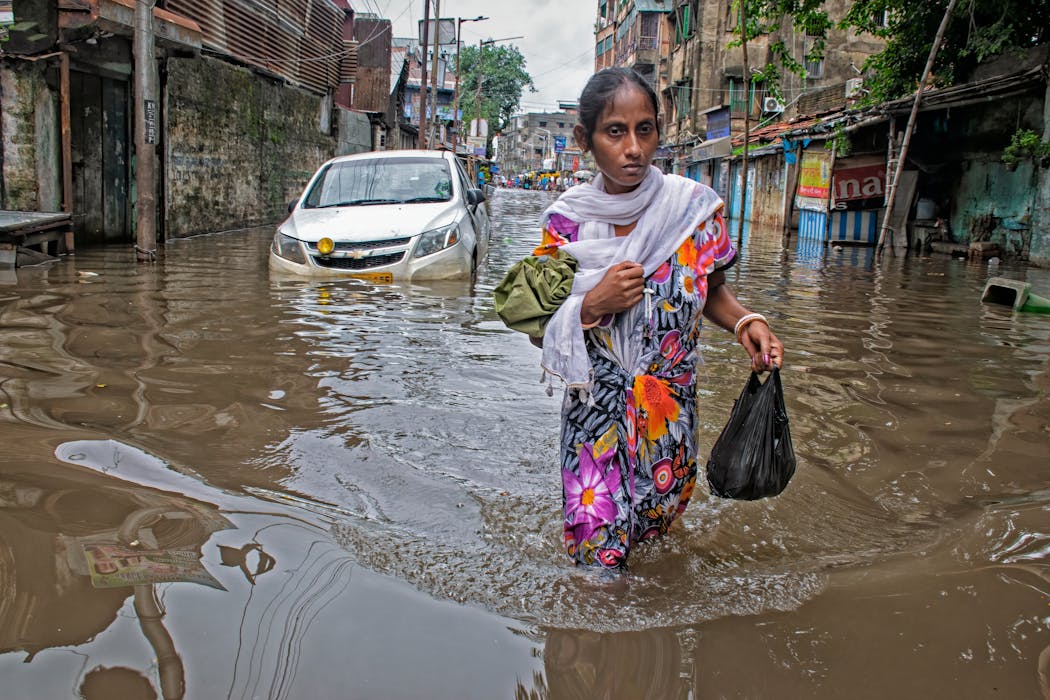
Floods in Kolkata, West Bengal, India in 2019. ABHISHEK BASAK 90/Shutterstock

In Brownsville, Texas, three members of the Galvan family died after a malfunctioning air conditioner left them exposed to extreme heat. Aged between 60 and 82, all three had chronic health conditions, including diabetes and heart disease. This makes it harder for the body to regulate temperature and increases vulnerability to heat stress.

Nobody arrived to check on them until days after they had died in their apartment in 2024. This isolation also increases risk of heat-related deaths.

Although the immediate trigger appears to have been equipment failure, a pathologist attributed the deaths to extreme heat linked to chronic illness. Deaths like these are classified as “heat-related” when ambient temperatures exceed what bodies can safely tolerate.

Climate change is a contributing factor. As heatwaves become more frequent, intense and prolonged, routine failures in cooling, power or housing infrastructure are more likely to turn existing vulnerability into fatal harm.

Around the world, climate-related deaths follow consistent social patterns. People who are older, already ill, economically disadvantaged, or working outdoors are most affected.

The Intergovernmental Panel on Climate Change (the UN’s climate science advisory group) concludes that roughly 3.3 billion to 3.6 billion people – nearly half of the world’s population – are highly vulnerable to climate risks, with limited capacity to cope. Here, vulnerability is not simply exposure to environmental hazards. Who is protected and who is left at risk depends on social and infrastructural conditions.

Research in climate science, public health and social sciences shows these patterns are clear. My own research spans ecosystem ecology and social science. I examine how climate knowledge is produced, interpreted and acted upon in times of ecological emergency.

The evidence points to an uncomfortable conclusion: much of this suffering is preventable.

The necropolitics of climate change

Cameroonian historian Achille Mbembe introduced the idea of “necropolitics” to explain how some lives come to be treated as more expendable than others. This does not imply intent to kill, but rather the routine political acceptance that some people will be exposed to harm.

From this perspective, the Galvans’ deaths were shaped not only by heat, but by structural inequalities and gaps in policy and infrastructure.

This logic is visible globally. In south Asia and the Middle East, heatwaves claim the lives of elderly people and outdoor workers. In sub-Saharan Africa, floods and droughts disproportionately affect subsistence farmers.

In the UK, air pollution is linked to roughly 30,000 deaths annually. People from ethnic minority and low-income communities are more likely to live in the most polluted areas. These deaths are not random. They follow recognisable social patterns.

old woman stands at door of shack, flooded waters
Floods hit villages in the Jhenaigati upazila of Sherpur district, Bangladesh on October 6 2024.
amdadphoto/Shutterstock

Mbembe’s concept helps describe situations where political, economic or social arrangements leave some populations consistently exposed to harm. That includes climate-vulnerable communities, places where resources are being extracted through mining or areas where people are displaced from their homes. In the US, “Drill, baby, drill!” has re-emerged as shorthand for prioritising fossil fuel extraction over emissions reduction.

These political and economic choices create consistent patterns of vulnerability for environmental risks, from extreme heat to floods and air pollution. Structural neglect, not personal behaviour, underlies the distribution of harm.

Yet, vulnerability is not fate. Heat provides a clear example. With early warning systems, targeted outreach, and timely intervention, many such fatalities can be prevented. As epidemiologist Kristie Ebi notes: “Those deaths are preventable … people don’t need to die in the heat”.

The same is true across climate risks. Even with systemic neglect, deliberate and coordinated action can reduce risk. Connecting social, infrastructural, and institutional responses to climate hazards is a crucial step.

Slow violence as a climate process

Environmental humanist Rob Nixon uses the term “slow violence” to describe harms that accumulate gradually and often invisibly over time. Unlike sudden disasters, the effects of rising temperatures, drought and ecological degradation unfold quietly.

You cannot make a disaster movie out of slow violence. Its harm builds incrementally, striking those already most vulnerable. The deaths of the Galvans exemplify this slow burn, as do the lives lost to prolonged heat exposure, crop failure and environmental degradation worldwide.

People least responsible for emissions, primarily in developing countries, are most exposed to escalating climate harms. Viewed through a necropolitical lens, slow violence shows how neglect becomes lethal through the repeated failure to prevent known and predictable harms.

Feminist theorist Donna Haraway coined the term “Chthulucene”, from the Greek chthonic (“of the earth”), to describe an era defined by entangled relationships between humans, other species and the ecosystems they depend on.

Rather than treating environmental harm as separate from social life, this perspective emphasises how vulnerability emerges through the everyday connections between people, institutions and environments. As Haraway argues harm accumulates through these relationships, revealing how exposure to climate risks, political neglect and ecological stress reinforce one another over time.

This dynamic is visible in Vietnam’s Mekong Delta, one of the world’s most productive rice-growing regions. Here, saltwater intrusion is creeping inland, damaging vast areas of farmland and threatening millions of livelihoods.

Rising sea levels and shifting climate patterns could affect up to 45% of the delta’s farmland by 2030, destabilising both local communities and global food systems. Social and ecological harm cannot be separated.

Politics of life, not death

Political choices amplify any existing environmental threat. Neglect is not a neutral absence: it is a political condition that shapes who lives and who suffers.

Addressing this injustice requires a living politics of care. This means a political system that recognises vulnerability as socially produced and demands solidarity, equity and accountability. Through alliances between affected communities, researchers and advocates who expose neglect, plus decision-makers under pressure to act, care can become politically unavoidable.

Neglect is no longer allowed to remain invisible in some parts of the world. Cities like Ahmedabad, India, are expanding heat mitigation and early-warning systems. Communities in the Mekong Delta are working with Vietnamese and international researchers to experiment with salt-tolerant crops.

Globally, ecocide laws that make large-scale destruction of ecosystems illegal are being introduced. This helps embed responsibility for environmental protection into legal and political systems. Even in the face of political neglect, targeted action and emerging legal frameworks can reduce harm and foster a more caring form of politics.


Don’t have time to read about climate change as much as you’d like?

Get a weekly roundup in your inbox instead. Every Wednesday, The Conversation’s environment editor writes Imagine, a short email that goes a little deeper into just one climate issue. Join the 47,000+ readers who’ve subscribed so far.


The Conversation

Aaron Thierry receives funding from ESRC. He is affiliated with Scientists for Extinction Rebellion.

ref. Preventable deaths in a warming world: how politics shapes who lives and who dies – https://theconversation.com/preventable-deaths-in-a-warming-world-how-politics-shapes-who-lives-and-who-dies-273132

États-Unis : les promesses de Trump d’un âge d’or (noir) sont-elles tenables ?

Source: The Conversation – in French – By Patrice Geoffron, Professeur d’Economie, Université Paris Dauphine – PSL

Donald Trump a fait du slogan « Drill, baby, drill ! » l’étendard de son retour à la Maison-Blanche. L’objectif affiché est de dynamiser la production pétrolière, tout en ramenant le prix de l’essence sous les « deux dollars le gallon » pour soulager un électorat populaire et rural frappé par l’inflation. Mais derrière le slogan, les données du secteur pétrolier compliquent l’équation simpliste du président des États-Unis.


Lors de son investiture, le 20 janvier 2025, Donald Trump avait proclamé : « We will drill, baby, drill ! » (en français : « Fore, chéri, fore ! ») Ce slogan résume la nouvelle orientation de la politique énergétique américaine, exploiter l’« or liquide sous nos pieds » pour conforter les États-Unis parmi les premières puissances exportatrices et faire chuter le prix de l’essence en dessous du seuil symbolique de 2 dollars le gallon (soit 1,69 euro les 3,79 litres) – un niveau atteint épisodiquement au cours des vingt dernières années.

Le message a trouvé un écho dans la partie de l’électorat marquée par la flambée des prix sous la présidence Biden, lorsque l’essence a dépassé 3,50 dollars (2,95 euros) le gallon. Mais ces deux objectifs – maximiser la production et minimiser les prix à la pompe – tirent en sens inverse. Obtenir une essence avoisinant 2 dollars le gallon, requiert un baril en dessous de 50 dollars (42,2 euros), alors que les investissements dans de nouveaux projets requièrent… quelques dizaines de dollars de plus.


À lire aussi :
Trump 2.1 : quel bilan économique réel ?


Un pétrole de schiste structurellement coûteux

Contrairement aux grands gisements conventionnels du Moyen-Orient, le pétrole de schiste américain est intrinsèquement coûteux à exploiter. Les estimations convergent aujourd’hui vers un coût moyen de l’ordre de 70 dollars (59 euros) par baril pour les nouveaux projets. Ce chiffre masque toutefois une vaste dispersion :

  • dans les meilleurs sweet spots, certains puits restent rentables autour de 40 dollars (33,7 euros) ;

  • à l’inverse, les zones moins favorables exigent des prix de 80 à 90 dollars (de 67,5 à 75,9 euros) pour couvrir les investissements et rémunérer le capital.

À mesure que les meilleures zones sont exploitées, la production se déplace vers des gisements plus complexes et plus chers. Plusieurs projections indiquent ainsi que la rentabilité du schiste américain pourrait se rapprocher de 95 dollars (plus de 80 euros) le baril d’ici à 2035.

Des prix orientés à la baisse

Cette tendance de fond entre en collision avec l’évolution récente des prix. Pour 2026, les grandes banques et l’Agence d’information sur l’énergie américaine (EIA) anticipent un baril orienté à la baisse, autour de 55 dollars (46,4 euros). Dans un tel scénario, une part croissante des projets de schiste devient non rentable.

Un an après son retour au pouvoir, la promesse de Donald Trump de ramener l’essence sous les 2 dollars le gallon apparaît ainsi très éloignée des perspectives offertes par la géologie. En janvier 2025, le prix moyen national s’élevait à 3,15 dollars (2,66 euros) ; fin janvier 2026, il s’établit encore autour de 2,85 dollars (2,40 euros), soit une baisse limitée à 10 %. Et l’EIA ne prévoit même pas de retour durable sous les 3 dollars (2,5 euros) avant au moins 2027.

Déréglementer massivement ne suffit pas à relancer la production

La nouvelle administration n’a pas ménagé ses efforts pour « libérer » l’offre d’hydrocarbures. Dès son premier jour de mandat, Donald Trump signe un ordre exécutif intitulé « Unleashing American Energy_ », déclarant une « urgence énergétique nationale » afin d’accélérer la délivrance de permis et de lever les moratoires instaurés par Joe Biden sur les forages offshore et les terres fédérales. Des baux pétroliers et gaziers sont également ouverts dans le refuge de l’Arctique et la réserve nationale d’Alaska.

Résultat : les permis de forage augmentent d’environ 55 % en 2025. Mais obtenir un permis ne signifie pas forer. Les compagnies sécurisent des droits pour l’avenir, tout en conservant une grande flexibilité d’investissement : elles ne mettent effectivement les projets en chantier que si les prix anticipés justifient le risque. Et ce n’est pas le cas.

Près de 100 000 barils en moins prévus

Les signaux en provenance du terrain traduisent la prudence. Le nombre de plateformes de forage actives aux États‑Unis a reculé de 30 % en trois ans. En volume, la production a bien atteint un pic de 13,6 millions de barils par jour en 2025, mais l’EIA anticipe déjà un recul d’environ 100 000 barils en 2026, première baisse depuis 2021, avec une poursuite de la tendance en 2027.

Une enquête conduite par la Réserve fédérale de Dallas montre que la grande majorité des pétroliers jugent que les allégements réglementaires ne réduisent leurs coûts que de moins de 2 dollars par baril. Loin de compenser l’épuisement progressif des meilleurs gisements et les hausses de coûts liées à la politique tarifaire.

L’effet boomerang des tarifs douaniers

Si le pétrole brut importé est exempt de droits de douane, les équipements et matériaux nécessaires à la production domestique – notamment l’acier et ses dérivés – sont frappés de tarifs pouvant atteindre 25 à 50 %. Certaines estimations font état d’une hausse d’environ 5 % des coûts de production en 2025, sous cette impulsion.

Face à cette pression, l’industrie mise sur le numérique, l’intelligence artificielle et les drones pour optimiser la localisation des puits, réduire les délais de développement et augmenter la productivité. Ces innovations permettent effectivement de contenir la hausse des coûts : sans elles, le seuil de rentabilité moyen des nouveaux projets se situerait probablement déjà autour de 80 dollars (67,5 euros) par baril, contre environ 70 dollars (59 euros) aujourd’hui.

Implacable arithmétique

Mais, même avec ces gains d’efficacité, l’arithmétique reste implacable : avec des perspectives de prix à moyen terme autour de 55–60 dollars (entre 46 et 50,6 euros), le secteur hésite à lancer un nouveau cycle massif d’investissements dans le schiste. Les investisseurs exigent une gestion rigoureuse des risques, des dividendes et des rachats d’actions plutôt qu’une expansion aventureuse dans ce contexte.

La tension entre volonté politique de prix bas à la pompe et nécessité économique de prix élevés pour rentabiliser le schiste ne se limite pas aux États‑Unis. Elle compliquera également la relance d’autres producteurs à coûts élevés, comme le Venezuela, dont une partie des réserves ne deviendrait rentable qu’avec un baril proche de 100 dollars (84,3 dollars).

Avantage aux consommateurs

À l’échelle mondiale, le tableau à court terme semble favorable aux consommateurs. L’Agence internationale de l’énergie (AIE) anticipe un surplus d’au moins 2 millions de barils par jour en 2026. Cet excédent s’explique par une hausse de la production hors OPEP+ (notamment au Brésil, en Guyana, au Canada ou en Argentine) et une croissance modérée de la demande mondiale (+ 0,9 million de barils par jour seulement), sous l’effet des incertitudes macroéconomiques et des premiers progrès tangibles de la décarbonation, en particulier en Chine dans les transports.

Sous la pression de Washington, l’Arabie saoudite a renoncé à défendre un prix du baril autour de 80 dollars (67,5 euros), pourtant nécessaire à ses équilibres budgétaires, pour éviter de froisser son allié américain. Ce deal implicite – sécurité militaire garantie face à l’Iran en échange de prix relativement bas – structure aujourd’hui une partie du jeu pétrolier mondial. Il permet à court terme de contenir les prix à la pompe pour l’électeur états-uniens, mais il fragilise les producteurs à coûts élevés, au premier rang desquels les producteurs de schiste des États‑Unis. Plusieurs majors, comme Chevron, ExxonMobil ou ConocoPhillips, ont déjà procédé à des milliers de suppressions d’emplois en 2025.

À plus long terme, la perspective est celle d’un sous‑investissement significatif. Les champs pétroliers conventionnels déclinent naturellement à un rythme de 4 à 7 % par an selon leur maturité, au niveau mondial. Autrement dit, l’industrie pétrolière « perd » mécaniquement 4 à 5 millions de barils par jour chaque année du fait de la déplétion géologique. Si les investissements restent déprimés au-delà de 2028, le marché pourrait basculer d’un excédent à un déficit d’offre, avec à la clé un rebond des prix au tournant de la prochaine décennie, selon l’Agence internationale de l’énergie.

Trump, l’industrie pétrolière et la transition climatique : un paradoxe

Le paradoxe fondamental de la séquence actuelle est le suivant : en cherchant à soutenir la production pétrolière américaine par la déréglementation, tout en pesant sur l’OPEP+ pour maintenir des prix bas à la pompe, l’administration Trump affaiblit à moyen terme la rentabilité du schiste et accroît un climat d’incertitude pour l’ensemble de l’industrie pétrolière mondiale.

France 24, 2026.

Ces orientations de politique énergétique sont au cœur de la stratégie de croissance de la Maison‑Blanche. Mais en fragmentant les chaînes de valeur, en renchérissant certains intrants par les tarifs douaniers et en décourageant les investissements de long terme dans l’exploration‑production, elle contribue à une dynamique court-termiste qui mine la stabilité du marché et les espoirs de croissance.

Pour la transition climatique, ce désordre a un double visage. À très court terme, des prix bas de l’essence peuvent freiner les changements de comportements et diluer les signaux incitatifs. Mais, en comprimant les marges des producteurs à coûts élevés et en accroissant le risque de volatilité future, cette politique pourrait accélérer, par contraste, la prise de conscience de la vulnérabilité des économies aux chocs pétroliers.

De ce point de vue, si l’Europe veut réduire sa dépendance à ces aléas, le Green Deal ne peut pas être une variable d’ajustement au gré des cycles du baril et doit rester le cap structurant de la décennie, parce que l’« âge d’or noir » promis par Donald Trump est un mirage et une source majeure d’instabilité.

The Conversation

Patrice Geoffron est membre fondateur de l’Alliance pour la Décarbonation de la Route. Il siège dans différents conseils scientifiques: CEA, CRE, Engie.

ref. États-Unis : les promesses de Trump d’un âge d’or (noir) sont-elles tenables ? – https://theconversation.com/etats-unis-les-promesses-de-trump-dun-age-dor-noir-sont-elles-tenables-274360