There’s enough natural hydrogen in the Earth’s crust to help power the green energy transition

Source: The Conversation – Canada – By Omid Haeri Ardakani, Research scientist at Natural Resources Canada; Andjunct associate professor, University of Calgary

Since their formation billions of years ago, the oldest parts of the Earth’s continental rocks have generated natural hydrogen in massive amounts. Some of this hydrogen may have accumulated within accessible traps and reservoirs under the Earth’s surface. This store has the potential to contribute to the global hydrogen economy for hundreds of years.

This has been demonstrated by the production of near-pure hydrogen from a single gas field in Mali, attracting the attention of governments in the United States, Canada, Australia, the United Kingdom and Europe.

There is also interest from major venture capital investors and international resource companies. By the end of 2023, 40 companies were exploring natural hydrogen globally. That has likely doubled since 2024.


Read more:
Why green hydrogen — but not grey — could help solve climate change


Hydrogen as a resource

Hydrogen resources have long been a multi-billion-dollar market, even before recent interest in hydrogen as a contributor to the green energy transition. The environments and conditions that result in natural hydrogen accumulation occur globally. But one of the barriers to investment in many jurisdictions is regulatory, as hydrogen had not previously been considered as a resource.

Natural hydrogen can be used to decarbonize hard-to-abate but globally critical industries. Industries that use hydrogen include fuel refining (about 44 per cent), ammonia and fertilizer production for food sustainability (about 34 per cent), and steel manufacturing (about five per cent).

According to a recent British government policy briefing document, addressing this requires governments to include hydrogen as a listed natural resource. Future uses for hydrogen may include long-distance transportation and contributions to the decarbonization of the mining industry.

High carbon footprint

Most of the hydrogen used today is produced from fossil fuels. Because of this, hydrogen production contributes about 2.5 per cent of global carbon dioxide emissions. Efforts to produce low-carbon (green) hydrogen from renewable electricity and carbon capture and storage technologies remain expensive.

Natural hydrogen has a carbon footprint comparable to or below that of green hydrogen. The two will likely be complementary, but estimates are uncertain as natural hydrogen is as yet an unproven resource.

Developing strategies could determine whether hydrogen from any source is an economically viable resource. For natural hydrogen, exploration strategies have to be developed to find and extract natural deposits of hydrogen at an economically feasible cost. This also needs incentives that include natural hydrogen in exploration or production licenses.


Read more:
New plan shows Australia’s hydrogen dream is still alive. But are we betting on the right projects?


Hydrogen and helium

The U.S. Geological Survey recently estimated there’s enough accessible natural hydrogen to supply global hydrogen demand for about 200 years.

Hydrogen forms in the Earth’s crust through two natural geological processes: chemical reactions between natural groundwaters and iron-rich minerals and water radiolysis. Water molecules are broken by natural background radioactivity in rocks releasing hydrogen — and helium, a valuable element included in Canada’s Critical Minerals Strategy — as a byproduct.

The search for helium began in Canada in the 1920s, but it is only recently that systematic commercial exploration for helium has restarted. By the 1980s, systematic studies of natural hydrogen began in Canada, Finland and parts of Africa as part of research on subsurface microbial life.

Renewed interest

An unusual coincidence sparked the current global interest in hydrogen. An accidental discovery of the small natural hydrogen gas field in Mali coincided with the publication of extensive historical data from the former Soviet Union, drawing attention to hydrogen’s immense potential as a clean power resource. Australia, France and the U.S. were among the first countries to re-investigate historical natural hydrogen.

Natural hydrogen and helium systems have similarities to petroleum systems, requiring a source rock, a migration pathway and accumulation in a reservoir. The infrastructure for natural hydrogen wells would be comparable to hydrocarbon wells, albeit with changes in well completion and drilling methods.

The footprint of a natural hydrogen production project would take up much less space to deliver the same amount of energy compared to a green hydrogen production facility, which requires solar or wind farms and electrolyzers.

Similarly, natural hydrogen projects do not need to draw on surface water resources, which are scarce in many parts of the world.

bubbles moving through a grey tunnel
Surface release of hydrogen bubbles from the Canadian Shield.
(Stable Isotope Lab/University of Toronto), CC BY

Future policies

Some jurisdictions lack policies regulating hydrogen exploration. In others, regulation falls under existing mining or hydrocarbon policies. The lack of clear regulations in areas with high potential for natural hydrogen exploration — such as the U.S., Canada, India and parts of Africa and Europe — is a major obstacle for exploration.

An absence of regulation slows down exploration and land acquisition, and prevents the decision-making required for developing infrastructure. And critically, it means that no community consultations are undertaken to ensure the social acceptance essential for the success of such projects.

A project in South Australia demonstrates what legislation can accomplish. Once regulation of natural hydrogen exploration and capture was implemented, the government received dozens of applications from companies interested in natural hydrogen exploration.

The appetite for exploration is clearly there, but policy and regulatory solutions are required. New exploration projects will provide critical new data to understand natural hydrogen’s potential to provide green energy.

The Conversation

Omid Haeri Ardakani has received funding from Natural Resources Canada (NRCan).

Barbara Sherwood Lollar receives funding from the Natural Sciences and Engineering Research Council of Canada and the Nuclear Waste Management Organization.

Chris Ballentine is founder of and owns shares in Snowfox Discovery Ltd, a hydrogen exploration company. He receives research funding from the Natural Environment Research Council (U.K.) and the National Science Foundation (U.S.), in a joint grant, as well as the Canadian Nuclear Waste Management Organization and the Canadian Institute For Advanced Research.

ref. There’s enough natural hydrogen in the Earth’s crust to help power the green energy transition – https://theconversation.com/theres-enough-natural-hydrogen-in-the-earths-crust-to-help-power-the-green-energy-transition-256936

How Marvel’s Fantastic Four discovered the human in the superhuman

Source: The Conversation – Canada – By J. Andrew Deman, Professor of English, University of Waterloo

The Fantastic Four: First Steps is the second cinematic reboot of the Fantastic Four franchise, and there’s a lot riding on this film.

While cinema-goers have responded enthusiastically to many of the films in the Marvel Cinematic Universe, the history of the Fantastic Four on the silver screen is less heralded.

All the previous Fantastic Four films have been “commercial and critical failures,” with the 2015 film being an infamous box office bomb.

Yet in comics history, the Fantastic Four have been up to the challenge of driving a popular media enterprise forward — something that the film producers and Marvel fans alike are both now hoping for.

‘The Fantastic Four: First Steps’ trailer.

In the 1960s — the era in which Fantastic Four: First Steps, is notably set — the comics presented a new class of superhero.

From their 1961 debut, Reed Richards/Mr. Fantastic, Sue Storm/the Invisible Girl, Johnny Storm/the Human Torch and Ben Grimm/the Thing were celebrities who rented office space in a Manhattan highrise and found themselves variously beloved and reviled by both the public and the government.

Comic book cover titled the Fantastic Four showing a large green monster grasping a woman while passerby look alarmed and a few figures try to intervene.
Cover of ‘The Fantastic Four’ No. 1, 1961.
(Marvel)

The team also rejected secret identities. Until the third issue of their series, they even eschewed superhero costumes (in part because of a restriction imposed by the owner of Marvel’s then-distributor, DC Comics).

Pushed representational boundaries

The Fantastic Four comics of the 1960s also pushed boundaries in a number of significant ways. They featured the first pair of married superheroes (Reed and Sue wed in 1965) and the first superhero pregnancy (Sue gave birth to her son Franklin in 1968).

In 1966, Fantastic Four No. 52 introduced the Black Panther, who is widely recognized as the first high-profile Black superhero.


Read more:
*Black Panther* roars. Are we listening?


And though not canonical until 2002, it has been suggested by scholars that Ben Grimm was always envisioned as a Jewish superhero by Stan Lee and Jack Kirby, offering another milestone in representation (at least for those readers attuned to the character’s Jewish coding).

These milestones emphasize a dedicated concern for the human aspects of superheroes.

A family with relatable issues

Set amid fittingly fantastic science-fiction landscapes inspired by Space Age optimism was a story about a family who “fought among themselves, sometimes over petty jealousies and insults,” in the words of Christopher Pizzino, an American scholar of contemporary literature, film and television.

This approach of building character dynamics out of internal conflict proved deeply influential.

Famed comics writer Grant Morrison argues that through the example of Fantastic Four, “the Marvel superhero was born: a hero who tussled not only with monsters and mad scientists but also with relatable personal issues.”

In his bestselling book All the Marvels, comics critic and historian Douglas Wolk concurs that the “first hundred issues of Fantastic Four are Marvel’s Bible and manual,” establishing the style, theme, genre and approach of the company’s comics for decades to come.

A crowd of superhero figures.
Marvel’s universe continued to expand following the Fantastic Four debut.
(Marvel)

Defining personal conflicts

In contrast to moral paragons such as Superman, Batman and Wonder Woman (all published by rival DC Comics), each member of Marvel’s Fantastic Four had defining personal conflicts.

Reed Richards, the team’s patriarch, was a world-altering genius who often fell victim to his own hubristic ambition.

Two years before American feminist author Betty Friedan identified “the problem that has no name” in The Feminine Mystique (that post-war suburban housewives faced social expectations of being fully fulfilled as wives and mothers, the Fantastic Four gave audiences Sue Storm, with the superpower to render herself — and others — invisible at will.

Storm, according to scholar Ramzi Fawaz, “made the concept of women’s social invisibility an object of visual critique by making invisible bodies and objects conspicuous on the comic book page.”

Her younger brother, Johnny Storm, a playboy and showboat, had a lot of growing up to do, a journey that was frustrated by his flashy powers.

Ben Grimm, Reed’s college roommate turned best friend turned rock monster, oscillated between childlike rage and world-weary depression, his rocky hide granting him super-strength and invulnerability while burdening him with social isolation.

While none of us are likely to acquire superpowers through exposure to cosmic rays like the Four, we’ve all dealt with anxiety and grief like these heroes.

Origin of the Marvel universe

The world of the Fantastic Four didn’t just feel unusually human. It also felt unusually lived in, partly because the Fantastic Four comics of the 1960s weren’t just the origin of the Marvel style of storytelling — they were also the origin of the Marvel universe.

Fantastic Four began and became the model for Marvel’s shared continuity universe, in which dozens of superheroes passed in and out of each other’s stories and occasionally intersected long enough for whole crossover story arcs and events. For a time, Marvel’s superheroes even aged alongside their readers, with teenage characters like Johnny Storm graduating high school and enrolling in college.

Previous superhero comics hadn’t embraced this shared continuity in a meaningful way, tending to prioritize discrete stories that had no effect on future tales. But Fantastic Four pitched what comics scholar Charles Hatfield calls “intertitle continuity,” which quickly became “Marvel’s main selling tool.”

Case in point, the Fantastic Four shared the cover of 1963’s Amazing Spider-Man No. 1, helping sell the newly created wall-crawler to their adoring readers.

Voluminous, chaotic universe

The 1965 wedding of Reed and Sue in Fantastic Four Annual No. 3 showcased how quickly the Marvel comics universe became vibrantly voluminous and charmingly chaotic.

This event featured at least 19 superheroes fighting 28 supervillains and foregrounded the Fantastic Four’s symbolic mother and father as the progenitors of an extended super-family.

It also featured a cameo by the Fantastic Four’s creators, Stan Lee and Jack Kirby, previously introduced in 1963’s Fantastic Four No. 10 as the official creators of imaginary adventures starring the “real” Fantastic Four, further blurring the boundary between fiction and reality.

Decades later, this sprawling comics universe would become a sprawling cinematic universe. This informs the pressure facing the latest Fantastic Four adaptation.

Phase 6 of universe

Fantastic Four: First Steps marks the start of what Marvel calls “Phase Six” of the Marvel Cinematic Universe, which began in 2008 with the first Marvel Studios film, Iron Man.

Essentially, Fantastic Four: First Steps is meant to launch a new cluster of shared universe stories, just as Fantastic Four No. 1 did for Marvel Comics in the 1960s.

This cluster will culminate in the release of Avengers: Secret Wars in December 2027. Will Marvel’s first family deliver?

This article is co-authored by Anna Peppard, an independent scholar and editor of ‘Supersex: Sexuality, Fantasy, and the Superhero.’

The Conversation

J. Andrew Deman does not work for, consult, own shares in or receive funding from any company or organisation that would benefit from this article, and has disclosed no relevant affiliations beyond their academic appointment.

ref. How Marvel’s Fantastic Four discovered the human in the superhuman – https://theconversation.com/how-marvels-fantastic-four-discovered-the-human-in-the-superhuman-260883

Women’s rugby is booming, but safety relies on borrowed assumptions from the men’s game

Source: The Conversation – Canada – By Kathryn Dane, Postdoctoral associate, University of Calgary

Rugby union, commonly known as just rugby, is a fast-paced and physical team sport. More girls and women in Canada and around the world are playing it now than ever before.

As of 2021, women’s rugby reached a record 2.7 million players globally, a 25 per cent increase over four years, and by 2023, women’s rugby participation was growing at a rate of 38 per cent year-over-year.

Countries including Australia, England, Ireland and the United States offer professional contracts for women’s teams. While these remain modest compared to the men’s game, they still represent a clear step forward.

Canada’s senior women’s XVs team is currently ranked second in the world and heading into the 2025 Rugby World Cup, which kicks off on Aug. 22 in England. The national sevens team also captured silver at the 2024 Paris Olympics — further evidence of the game’s growing competitiveness in Canada.

However, many systems, including coaching and medical support, have not kept pace with the demands of elite competition. With visibility increasing ahead of the 2025 World Cup, stronger institutional support is needed to match the sports’ growing professionalism and popularity.

Safety concerns

Often described as a “game for all”, rugby builds confidence, resilience and lifelong friendships. For girls and women especially, rugby can be empowering in ways few sports can match. It embraces the physicality of tackling, pushes back against traditional gender expectations and fosters solidarity and inclusion by valuing all body shapes and abilities.

But rugby is also a collision sport, and as such, it carries inherent risks. Tackling is the top cause of injury in rugby, and it has one of the highest concussion rates among youth girls’ sports in Canada. Concussions can have long-term effects on players’ health.


Read more:
Concussion is more than sports injuries: Who’s at risk and how Canadian researchers are seeking better diagnostics and treatments


These concerns are especially urgent as the women’s game becomes more physical and professionalized, and players are hit harder and more often. Unlike men’s rugby, women’s teams often operate with fewer medical or coaching support resources, which can lead to inconsistent or absent injury prevention programs.

Compounding the risk is the fact that many women also come to rugby later in life, often with less experience in contact sports. This delayed exposure restricts proper tackle skill development and player confidence in contact. This means safe tackling is even more important.

Without proper supports, the physical risks of the game may outweigh its benefits.

Science is still playing catch-up

While women’s rugby is growing rapidly, the science behind it is has not kept pace. Most of what we know about rugby safety — how to tackle, how much to train or when it’s safe to return to play after injury — largely comes from research on men.

Decisions around coaching and player welfare have been based on male data, leaving female players under-served and potentially at greater risk. While these foundations may well apply to girls and women, the problem is we don’t yet know for sure.

Only four per cent of rugby tackle research has focused on women. Much of the early evidence on girls rugby comes from Canada, underscoring the country’s leadership in this space. Still, most coaches and clinicians rely on a “one-size-fits-all” approach that may not account for menstrual cycles, pregnancy, different injury profiles or later sport entry.

The differences matter because strength, speed and injury risk all vary. Women are 2.6 times more likely than men to sustain a concussion. Gender also shapes access to training, care and facilities, often limiting opportunities for women to develop safe tackling skills, receive adequate support and train in safe, well-resourced environments, factors that impact both performance and safety.


Read more:
Prevention is better than cure when it comes to high concussion rates in girls’ rugby


Even safety tools reflect this gap. World Rugby’s Tackle Ready and contact load guidelines were designed around male athletes. While well-intentioned, we know little about how they work for girls and women. Instead of discarding these tools, we need to adapt and evaluate them in female contexts to ensure they support injury prevention and provide equal protection.

Women’s rugby needs better data

Change is underway. More research and tools are being designed specifically for girls and women. A search of PubMed, a database of published biomedical research, reveals a steep rise in studies on women’s rugby over the past decade, especially in injury surveillance, injury prevention, performance, physiology and sociocultural contexts.

New rule trials, such as testing lower tackle heights, are being evaluated on women athletes. New technologies like instrumented mouthguards and video analysis are also helping researchers understand how girls and women tackle, how head impacts happen and how they can be prevented.

Much of this new research is led by our team at the Sport Injury Prevention Research Centre, a pan-Canadian, multidisciplinary group focused on moving upstream to prevent concussions in adolescent girls’ rugby.

The women’s game is also driving its own innovations. Resources like World Rugby’s Contact Confident help girls and women safely build tackle skills, particularly those new to contact sport.

Researchers are analyzing injury patterns, interviewing players and coaches and studying return-to-play pathways that reflect girls’ and women’s physiology and life stages.

The scope of research is also expanding to pelvic health, breast protection and more tailored injury prevention. Global collaboration is making this work more inclusive, spanning different countries, skill levels and age groups, not just elite competitions.

But this is just the start.

A golden opportunity lies ahead

Girls’ and women’s rugby is experiencing unprecedented growth. Rising participation, media attention and new sponsorships are fuelling momentum. It’s a golden opportunity to build strong, sustainable foundations.

Gold-standard support requires focused, ongoing research and a commitment to sharing that evidence with players, coaches, health-care providers and policymakers. It’s time to build systems for women’s rugby based on women’s data, not borrowed assumptions from the men’s game.

But challenges remain. Some national teams still have to raise funds to attend World Cups. Others train without consistent access to medical or performance staff — clear signs that the women’s game is still catching up.

To sustain and accelerate the growth of girls’ and women’s rugby, the sport deserves more resources and research tailored specifically to participants. A “one-size-fits-all” model no longer works. By investing in systems that are safer, focused on prevention, more inclusive and grounded in evidence, we can build a thriving future for women’s rugby that lasts for generations to come.

The Conversation

Isla Shill has received funding from World Rugby.

Stephen West has previously received funding from World Rugby

Kathryn Dane does not work for, consult, own shares in or receive funding from any company or organisation that would benefit from this article, and has disclosed no relevant affiliations beyond their academic appointment.

ref. Women’s rugby is booming, but safety relies on borrowed assumptions from the men’s game – https://theconversation.com/womens-rugby-is-booming-but-safety-relies-on-borrowed-assumptions-from-the-mens-game-261055

3D printed food: yuck or yes? Researchers ask South African consumers

Source: The Conversation – Africa (2) – By Oluwafemi Adebo, Professor of Food Technology and Director of the Centre for Innovative Food Research (CIFR), University of Johannesburg

Would you eat food that was printed by a machine? 3D printed food is built up by equipment (a 3D food printer), layer after layer, using edible pastes, dough and food slurries in three-dimensional forms. These machines use digital models to produce precise, often personalised food items. Most 3D printed foods are made from nutrient-dense sources (plant and animal), which means they can offer health benefits.

The global market for 3D printed food is growing. It’s been estimated as worth US$437 million in 2024 and projected to reach US$7.1 billion in 2034. But the concept is still emerging in Africa.

Food science and technology researcher Oluwafemi Ayodeji Adebo and marketing academic Nicole Cunningham share what they learnt from a survey about South African consumers’ feelings on the subject.


How is food 3D printed and why?

In 3D food printing, edible food materials are formulated into printable materials (food ink). These inks can be made from pureed vegetables, doughs, or nutrient-rich mixes. The food ink is loaded into a 3D printer and extruded in layers until the selected shape is complete.

After printing, some products are ready to eat, while others need further processing such as baking or freeze-drying. The most common method is extrusion-based printing, valued for its simplicity and versatility.

The technique enables the customisation of food. Meals can be highly personalised in texture, appearance and nutritional content.

It can also transform food waste into food products. For example it can turn imperfect broccoli and carrots into healthy snacks and make noodles from potato peels.

It’s also useful in texture-modified diets for people with swallowing difficulties (dysphagia), especially the elderly. The products available for these patients tend to be bland and unappealing meals such as mashed potato, pumpkin and soft porridge. 3D food printing can produce nutritionally dense meals that are easier to eat and more appetising.


Read more:
How 3D food printers could improve mealtimes for people with swallowing disorders


Food ink can combine various sources with different nutrients to boost the health benefits. Not having to process the product with heat can also result in higher nutritional content.

In South Africa, what sorts of foods might be 3D printed?

Virtually any edible material could be transformed into food inks, although some might require additives to make them printable. The abundance of nutrient-dense and health-promoting food crops in South Africa presents an excellent opportunity for 3D food printing to create novel food.

Sorghum, cowpea and quinoa have been used to make 3D printed biscuits, for example. They are more nutritious than wheat and don’t contain gluten.


Read more:
Africa’s superfood heroes – from teff to insects – deserve more attention


Research at the Centre for Innovative Food Research at the University of Johannesburg has already demonstrated the feasibility of obtaining 3D printed products from different sources (for example whole-grain sourdough and malt biscuits, biscuits from wholegrain and multigrain flours and nutritious and appetising meals for dysphagia patients).


Read more:
3D printing offers African countries an advantage in manufacturing


3D food printing is still in its infancy in South Africa, compared to developed countries such as China, Japan, the US and some European countries. The best-known companies that have adopted this technology include BluRhapsody, based in Italy, which makes 3D-printed pasta, and Open Meals based in Japan, which specialises in personalised sushi.

We carried out a study to understand South African consumers’ attitudes toward 3D-printed foods. Although the technology is not yet in wide use, we found some consumers were fairly knowledgeable about these foods and the associated benefits. These findings lay the foundation for business opportunities to commercialise and market 3D printed products in the region.

Who did you ask about it in your study?

The study surveyed South African consumers aged 18-65 who were familiar with the concept of 3D-printed food. We collected 355 responses, mostly females aged 24 to 44. They provided information and opinions on several aspects, including:

  • their awareness of 3D-printed food

  • their familiarity with 3D-printed food

  • their food neophobia (fear of new foods)

  • the convenience that 3D-printed food offers

  • their perspective on their health needs

  • the perceived benefits that 3D-printed food offers

  • attitudes towards 3D-printed food.

What did they say?

Positive attitudes were strongest among those who recognised the convenience and health-related benefits of this new technology. The potential to reduce waste, customise nutrition, and simplify meal preparation stood out as key motivators.

Interestingly, food familiarity didn’t play a significant role in people’s responses. This means they aren’t necessarily clinging to traditional or childhood meals when forming attitudes about 3D-printed food.

In short, novelty alone isn’t a deal-breaker, it’s more about perceived safety, usefulness, and understanding the benefits.

What does this tell us?

The findings highlight the crucial role of consumer education and awareness in shaping attitudes toward 3D-printed food. While unfamiliarity with the technology can create some hesitation, the research shows that consumers are not necessarily resistant to innovation. They just need to understand it better and be educated about the benefits it offers.

If food manufacturers and marketers invest in increasing public knowledge and offering hands-on experiences such as tastings, demonstrations, or transparent production processes, then consumer attitudes could shift positively.

This approach has shown promise in other markets. For example, educational campaigns in Europe and the US around lab-grown meat and plant-based proteins have improved public perception over time.


Read more:
Nigeria isn’t big on 3D printing. Teaching students how to use it could change this


Marketers should talk about safety, health and sustainability, and demystify the technology through clear, engaging messaging. In countries where such strategies have been used, consumers have shown increased willingness to try novel food technologies. This is significant because of predicted growth in the industry.

If South African consumers see 3D-printed food more positively, this innovation could unlock opportunities to enhance food security, address malnutrition, and support personalised dietary solutions.

The Conversation

Oluwafemi Adebo received funding for this project from the National Research Foundation (NRF) of South Africa Support for Rated and Unrated Researchers (grant number: SRUG2204285188), the University of Johannesburg and Faculty of Science Research Committee Grant, and the South African Medica lResearch Council (SAMRC) Self-Initiated Research (SIR) Grant.

Nicole Cunningham receives funding from the DHET in order to conduct academic research.

ref. 3D printed food: yuck or yes? Researchers ask South African consumers – https://theconversation.com/3d-printed-food-yuck-or-yes-researchers-ask-south-african-consumers-255887

Young Nigerians learn about democracy at school: how it’s shaping future voters

Source: The Conversation – Africa (2) – By Leila Demarest, Associate Professor, Institute of Political Science, Leiden University

Democratic consolidation is a continuing struggle, in Africa as elsewhere. The turn to democracy gained momentum in Africa in the late 1980s and early 1990s but has petered out since. Can new generations turn the tide?

The need to prepare young people to become democratically minded is well established. In western societies, school-based civic education has been considered the means to do it since as early as the 1960s. The assumption is that better knowledge about the democratic functioning of the state promotes stronger democratic values and norms. It is also thought to increase trust in institutions and a willingness to participate in politics in the future.

Research in western settings indeed shows that classroom instruction strengthens political attitudes and behaviour. Yet can we expect civic education to work in the same way in newer democracies? In weak democracies studies have found that civic education could actually lead young people away from political participation. Young people may become more aware of the flaws of their own system and turn away from politics.

Nigeria made the move from military rule to multiparty democracy in 1999 but remains a flawed democracy struggling with political corruption, vote buying and episodic violence. Individual liberties are only weakly protected.

As Africa’s most populous democracy, with a big young population, Nigeria needs young people to participate in democratic politics. And they have done so, as can be seen from events like the #EndSARS protests. Nevertheless many youths also show voter apathy. Or they engage in the country’s well-known cycles of election violence.

As scholars, we have conducted extensive research on how young people in African countries can overcome some dark legacies, like violent conflict, ethnic tensions and authoritarianism. In a recent study, we focused on democratic engagement among young Nigerians and how formal education could strengthen it.

Our research among secondary school students in Lagos state shows promising results. A survey of over 3,000 final year students found that those with greater political knowledge and stronger democratic values were more likely to express intent to vote, contact officials, or protest in the future.

However, these same students rejected party membership and campaigning, which are commonly associated with corruption and violence in Nigeria. In contrast, students with lower levels of knowledge and democratic values remained inclined to participate in party activities. This might be to gain economic benefits.

These findings show that the core objectives of civic education are not likely to lead youth to abandon democratic politics. Fostering knowledge about how the system (ideally) works and strengthening democratic attitudes remains a valuable approach to achieving democracy.

Our findings

Ten years after the transition from military to democratic rule, the Nigerian government made civic education mandatory in primary and secondary schools. The curriculum covers issues such as Nigeria’s independence, the structures of the state, civic rights, political parties and national unity. It also covers corruption and clientelism (the exchange of political support for economic benefits).

After learning how the government works and gaining awareness of civic rights and responsibilities, would young Nigerians remain committed to political participation with all the country’s democratic flaws?

We conducted a survey among final year secondary school students in Lagos state in 2019. About 3,000 students across 36 randomly selected schools answered our questions. The results revealed three political participation profiles:

  • disengaged youth – those who do not wish to take part in any type of political activity

  • non-party activists – intent on voting, contacting politicians or officials and protesting, but they reject party membership and campaigning

  • party activists – interested in joining a political party and campaigning as well as voting, contacting politicians or officials and protesting.

Disengaged youths tended to come from richer socio-economic backgrounds. They showed low trust in institutions. Non-party activists were more informed and held stronger democratic values than party activists. This is likely because they saw political parties as corrupt or violent.

In a democracy where party politics are often tainted by corruption, the youths’ selective engagement may be a sign not of apathy but of a thoughtful and principled rejection of flawed party politics.

Despite a growing distrust in political parties, civic education does not appear to discourage pro-democratic political behaviour overall.

A ‘reverse’ participation gap

Schools are not the only shapers of youths’ political behaviour. Caregivers and peers play a role. In a large number of countries, youth from richer socio-economic backgrounds are more politically informed, more trusting of institutions, and active. This results in a so-called participation gap between richer and poorer citizens.

Where democracy is yet to take root, research shows that middle- and higher-middle class citizens also have higher levels of knowledge and stronger democratic norms. But they have lower levels of institutional trust and are less likely to participate in institutional politics. This presents a “reverse” participation gap, so to speak.

In our research, we found partial evidence of this “reverse participation gap”. Students from wealthier backgrounds were less likely to participate, but not necessarily because they had stronger democratic norms. One possible explanation is that these students were less economically dependent on the state. With no need to rely on public institutions for jobs or welfare, they might feel less of a need to engage with them.

Retreat from political participation

In non-established democracies, research shows that more educated citizens often are more critical of their governments. In Ghana and Zimbabwe, these citizens were less likely to participate in elections.

Concerning civic education programmes specifically, an intervention in the Democratic Republic of Congo showed that these programmes might increase political knowledge and commitment to democratic values, but also decrease satisfaction with democracy in their country.

School-based research from the continent is lacking. But studies examining school-based civic education in electoral democracies elsewhere also show a retreat from institutionalised political participation. This spans voting, party membership, campaigning, and contacting politicians.

Our study finds more optimistic results for civic education programmes in Africa. Youths with high knowledge and values – the core objectives of civic education – remain committed to democratic political behaviour.

The Conversation

Leila Demarest receives funding from Leiden University Fund (grant reference W19304-5-01).

Line Kuppens does not work for, consult, own shares in or receive funding from any company or organisation that would benefit from this article, and has disclosed no relevant affiliations beyond their academic appointment.

ref. Young Nigerians learn about democracy at school: how it’s shaping future voters – https://theconversation.com/young-nigerians-learn-about-democracy-at-school-how-its-shaping-future-voters-261030

Uganda’s land eviction crisis: do populist state measures actually fix problems?

Source: The Conversation – Africa (2) – By Rose Nakayi, Senior Lecturer of Law, Makerere University

Populism is rife in various African countries. This political ideology responds to and takes advantage of a situation where a large section of people feels exploited, marginalised or disempowered. It sets up “the people” against “the other”. It promises solidarity with the excluded by addressing their grievances. Populism targets broad social groups, operating across ethnicity and class.

But how does populism fare when it informs state interventions to address long-standing societal issues under capitalism? Do populist state measures – especially when launched by a politically powerful leader – deliver improvements for the stated beneficiaries?

As academics who have researched populism for years, we were interested in the implementation and outcomes of such policies and programmes. To answer these questions, we analysed a populist intervention by President Yoweri Museveni in Uganda to address rampant land conflicts. In 2013 he set out to halt land evictions.

What good came of this? Did it help the poor?

We analysed land laws, court cases, government statements and media reports and found that, for the most part, the intervention offered short-term relief. Some people returned to the land, but the underlying land conflict was unresolved.

This created problems that continue to be felt today, including land disputes and land tenure insecurity. The intervention also increased the involvement of the president and his agents personally in providing justice.

It didn’t make pro-poor structural changes to address the root of the problem.

Yet, the intervention had several political benefits:

  • it enhanced the political legitimacy of the president and state

  • it offered a politically useful response to a land-related crisis and conflict

  • it addressed broader criticisms over injustice and poverty by sections of the public and opposition leaders, some of whom (like Robert Kyagulanyi) also relied on populist rhetoric.

The promise to deal with land evictions “once and for all” has yet to be realised over a decade later. During Heroes Day celebrations on 9 June 2024, Museveni’s speech repeated his promise to stop evictions.

Such promises of getting a grip on and ending evictions via decisive state actions, including proposed new legal guidelines, were also made more recently, for example during Heroes Day 2025. This indicates that evictions – and state responses to them – remain a top issue on the political agenda ahead of Uganda’s 2026 election.

Persistent evictions

Evictions were rampant in the 2010s, especially in central Uganda’s Buganda region. They were driven by increased demand for land amid a growing population and legal reforms that seemed to protect tenants over landlords. Some landlords, desperate to free their land of tenants, were carrying out the evictions themselves.

The president condemned the evictions, but they continued. Soon, the number of evictees was in the thousands.

In response, Museveni set up a land committee within the presidency. He announced at a press conference in early 2013 that:

all evictions are halted. There will be no more evictions, especially in the rural areas. All evictions involving peasants are halted.

The dynamics of populism-in-practice

Museveni’s attempts to personally deal with evictions illustrate a continued power shift in Uganda, from institutions to the president’s executive units.

Despite its shortcomings, such as case backlogs, the judicial system offers an opportunity to present cases in a more neutral environment. It also allows parties to appeal decisions. This way, higher courts can correct errors where necessary.

The presidential land committee, we found, tended to be biased in favour of tenants, paying less attention to the landlords’ cases.

The president’s intervention wasn’t adequate to address the immediate causes and effects of the evictions, nor the root causes.

Those included land tenure insecurities. Due to legal reforms, land-rich landlords were unable to get rent at market value from tenants. Neither could they evict them lawfully where rent was in arrears.

In some cases, legal options such as land sales between landlords and tenants were applied. This was often to the detriment of tenants, especially where there was no neutral actor to oversee negotiations.

Land reforms need to be institutionalised and funded to deliver the intended outcomes. Otherwise, unlawful sales and evictions become a quick option for landlords.

Museveni’s populist initiative also unleashed new problems for beneficiaries. Some secured land occupancy in the interim but lived in fear of a relapse of conflict. Mistrust and scarred interpersonal relationships hampered cohesion in some communities. Disputes over land put political actors who would ideally be working together to restore calm at loggerheads.

Populism as power

The creation of populist presidential units has become routine in Uganda. More recently, Museveni created a unit to protect investors, which has resolved some investment-related land disputes. Another one was established to fight corruption. Both units remain very active.

Our research finds that the government needs these units and interventions for a number of reasons. It uses them to govern the country’s conflict-ridden economy and society. They allow the government to assemble a politically useful response to crises and to address some on-the-ground problems. They make the state look concerned and responsive to people’s needs. And they allow ruling party political actors to increase their popularity locally.

Museveni and his ruling party, the National Resistance Movement, therefore, benefit from a key aspect of populism. It allows the merging of disparate, competing and contradictory views, interests and demands of members of various societal classes and groups into a significantly simplified and uniform narrative that (potentially) speaks to all. This could mean: end corruption, end evictions, wealth for all, and so on.

A general election is due in early 2026. The steps Museveni has taken on evictions, and the units set up to fight corruption or protect investors, need to be seen with this political context in mind.

Museveni has put protecting people from evictions high on his government’s agenda. Speaking to party members in August 2024, he emphasised

the importance of adhering to the mass line, which prioritises the needs and rights of the masses over those of the elite.

In our view, this pre-election narrative signifies the continued political and social relevance of populism in today’s Uganda. This could result in heightened populist state activity in the run-up to and after the election.

The Conversation

The authors do not work for, consult, own shares in or receive funding from any company or organisation that would benefit from this article, and have disclosed no relevant affiliations beyond their academic appointment.

ref. Uganda’s land eviction crisis: do populist state measures actually fix problems? – https://theconversation.com/ugandas-land-eviction-crisis-do-populist-state-measures-actually-fix-problems-260512

Long-COVID, viruses and ‘zombie’ cells: new research looks for links to chronic fatigue and brain fog

Source: The Conversation – Africa (2) – By Burtram C. Fielding, Dean Faculty of Sciences and Professor in the Department of Microbiology, Stellenbosch University

Millions of people who recover from infections like COVID-19, influenza and glandular fever are affected by long-lasting symptoms. These include chronic fatigue, brain fog, exercise intolerance, dizziness, muscle or joint pain and gut problems. And many of these symptoms worsen after exercise, a phenomenon known as post-exertional malaise.

Medically the symptoms are known as myalgic encephalomyelitis or chronic fatigue syndrome (ME/CFS). The World Health Organization classifies this as a post viral fatigue syndrome, and it is recognised by both the WHO and the United States Centers for Disease Control and Prevention as a brain disorder.

Experiencing illness long after contracting an infection is not new, as patients have reported these symptoms for decades. But COVID-19 has amplified the problem worldwide. Nearly half of people with ongoing post-COVID symptoms – a condition known as long-COVID – now meet the criteria for ME/CFS. Since the start of the pandemic in 2020, it is estimated that more than 400 million people have developed long-COVID.

To date, no widely accepted and testable mechanism has fully explained the biological processes underlying long-COVID and ME/CFS. Our work offers a new perspective that may help close this gap.

Our research group studies blood and the cardiovascular system in inflammatory diseases, as well as post-viral conditions. We focus on coagulation, inflammation and endothelial cells. Endothelial cells make up the inner layer of blood vessels and serve many important functions, like regulating blood clotting, blood vessel dilation and constriction, and inflammation.

Our latest review aims to explain how ME/CFS and long-COVID start and progress, and how symptoms show up in the body and its systems. By pinpointing and explaining the underlying disease mechanisms, we can pave the way for better clinical tools to diagnose and treat people living with ME/CFS and long-COVID.

What is endothelial senescence?

In our review, our international team proposes that certain viruses drive endothelial cells into a half-alive, “zombie-like” state called cellular senescence. Senescent endothelial cells stop dividing, but continue to release molecules that awaken and confuse the immune system. This prompts the blood to form clots and, at the same time, prevent clot breakdown, which could lead to the constriction of blood vessels and limited blood flow.

By placing “zombie” blood-vessel cells at the centre of these post-viral diseases, our hypothesis weaves together microclots, oxygen debt (the extra oxygen your body needs after strenuous exercise to restore balance), brain-fog, dizziness, gut leakiness (a digestive condition where the intestinal lining allows toxins into the bloodstream) and immune dysfunction into a single, testable narrative.

From acute viral infection to ‘zombie’ vessels

Viruses like SARS-CoV-2, Epstein–Barr virus, HHV-6, influenza A, and enteroviruses (a group of viruses that cause a number of infectious illnesses which are usually mild) can all infect endothelial cells. They enable a direct attack on the cells that line the inside of blood vessels. Some of these viruses have been shown to trigger endothelial senescence.

Multiple studies show that SARS-CoV-2 (the virus which causes COVID-19 disease) has the ability to induce senescence in a variety of cell types, including endothelial cells. Viral proteins from SARS-CoV-2, for example, sabotage DNA-repair pathways and push the host cell towards a senescent state, while senescent cells in turn become even more susceptible to viral entry. This reciprocity helps explain why different pathogens can result in the same chronic illness. Influenza A, too, has shown the ability to drive endothelial cells into a senescent, zombie-like state.

What we think is happening

We propose that when blood-vessel cells turn into “zombies”, they pump out substances that make blood thicker and prone to forming tiny clots. These clots slow down circulation, so less oxygen reaches muscles and organs. This is one reason people feel drained.

During exercise, the problem worsens. Instead of the vessels relaxing to allow adequate bloodflow, they tighten further. This means that muscles are starved of oxygen and patients experience a crash the day after exercise. In the brain, the same faulty cells let blood flow drop and leak, bringing on brain fog and dizziness.

In the gut, they weaken the lining, allowing bits of bacteria to slip into the bloodstream and trigger more inflammation. Because blood vessels reach every corner of the body, even scattered patches of these “zombie” cells found in the blood vessels can create the mix of symptoms seen in long-COVID and ME/CFS.

Immune exhaustion locks in the damage

Some parts of the immune system kill senescent cells. They are natural-killer cells, macrophages and complement proteins, which are immune molecules capable of tagging and killing pathogens. But long-COVID and ME/CFS frequently have impaired natural-killer cell function, sluggish macrophages and complement dysfunction.

Senescent endothelial cells may also send out a chemical signal to repel immune attack. So the “zombie cells” actively evade the immune system. This creates a self-sustaining loop of vascular and immune dysfunction, where senescent endothelial cells persist.

In a healthy person with an optimally functioning immune system, these senescent endothelial cells will normally be cleared. But there is significant immune dysfunction in ME/CFS and long-COVID, and this may enable the “zombie cells” to survive and the disease to progress.

Where the research goes next

There is a registered clinical trial in the US that is investigating senescence in long-COVID. Our consortium is testing new ways to spot signs of ageing in the cells that line our blood vessels. First, we expose healthy endothelial cells in the lab to blood from patients to see whether it pushes the cells into a senescent, or “zombie,” state.

At the same time, we are trialling non‑invasive imaging and fluorescent probes that could one day reveal these ageing cells inside the body. In selected cases, tissue biopsies may later confirm what the scans show. Together, these approaches aim to pinpoint how substances circulating in the blood drive cellular ageing and how that, in turn, fuels disease.

Our aim is simple: find these ageing endothelial cells in real patients. Pinpointing them will inform the next round of clinical trials and open the door to therapies that target senescent cells directly, offering a route to healthier blood vessels and, ultimately, lighter disease loads.

The Conversation

Burtram C. Fielding works for Stellenbosch University. He has received funding from the National Research Foundation, South Africa and the Technology Innovation Agency.

Resia Pretorius is a Distinguished Research Professor at Stellenbosch University and receives funding from Balvi Research Foundation and Kanro Research Foundation. She is also affiliated with University of Liverpool as a Honorary Professor. Resia is a founding director of the Stellenbosch University start-up company, Biocode Technologies and has various patents related to microclot formation in Long COVID.

Massimo Nunes receives funding from Kanro Research Foundation.

ref. Long-COVID, viruses and ‘zombie’ cells: new research looks for links to chronic fatigue and brain fog – https://theconversation.com/long-covid-viruses-and-zombie-cells-new-research-looks-for-links-to-chronic-fatigue-and-brain-fog-261108

Comment la modélisation peut aider à mieux gérer la ressource en eau

Source: The Conversation – France (in French) – By André Fourno, Chercheur, IFP Énergies nouvelles

L’aquifère karstique de la source du Lez, dans l’Héraut, assure l’alimentation en eau potable de 74 % de la population des 31 communes de la métropole de Montpellier. Stclementader/Wikimedia commons, CC BY-NC-SA

Alors que les arrêtés de restriction d’usage de l’eau en raison de la sécheresse se multiplient depuis le début du mois de juin 2025, une question se pose : peut-on mieux prévoir l’évolution de ces ressources grâce aux outils numériques ? Les aquifères (roches poreuses souterraines) et la complexité de leurs structures sont difficiles à appréhender pour les chercheurs depuis la surface de la Terre. La modélisation numérique a beaucoup à apporter à leur connaissance, afin de mieux anticiper les épisodes extrêmes liés à l’eau et mieux gérer cette ressource.


Les eaux souterraines, qui représentent 99 % de l’eau douce liquide sur terre et 25 % de l’eau utilisée par l’homme, constituent la plus grande réserve d’eau douce accessible sur la planète et jouent un rôle crucial dans le développement des sociétés humaines et des écosystèmes.

Malheureusement, les activités anthropiques affectent fortement la ressource, que ce soit par une augmentation de la demande, par l’imperméabilisation des surfaces ou par différentes contaminations…

À ces menaces s’ajoutent les perturbations des cycles et des processus naturels. Le changement climatique entraîne ainsi des modifications des régimes hydrologiques, telles que la répartition annuelle des pluies et leur intensité, ainsi que l’augmentation de l’évaporation.

Si remédier à cette situation passe par une adaptation de nos comportements, cela exige également une meilleure connaissance des hydrosystèmes, afin de permettre l’évaluation de la ressource et de son évolution.

Sa gestion pérenne, durable et résiliente se heurte à de nombreuses problématiques, aussi rencontrées dans le secteur énergétique (hydrogène, géothermie, stockage de chaleur, stockage de CO₂

Il s’agit donc de considérer les solutions mises en place dans ces secteurs afin de les adapter à la gestion des ressources en eau. Ce savoir-faire vise à obtenir une représentation 3D de la répartition des fluides dans le sous-sol et à prédire leur dynamique, à l’instar des prévisions météorologiques.

Les aquifères : des formations géologiques diverses et mal connues

Comme l’hydrogène, le CO2 ou les hydrocarbures, l’eau souterraine est stockée dans la porosité de la roche et dans ses fractures, au sein de « réservoirs » dans lesquels elle peut circuler librement. On parle alors d’aquifères. Ces entités géologiques sont par nature très hétérogènes : nature des roches, épaisseur et morphologie des couches géologiques, failles et fractures y sont légion et affectent fortement la circulation de l’eau souterraine.

Aquifères sédimentaires profonds ou karstiques.
Office international de l’eau, CC BY-NC-SA

Pour comprendre cette hétérogénéité du sous-sol, les scientifiques n’ont que peu d’informations directes.L’étude de la géologie (cartographie géologique, descriptions des différentes unités lithologiques et des réseaux de failles et fractures, étude de carottes de forage) permet de comprendre l’organisation du sous-sol.

Les géologues utilisent également des informations indirectes, obtenues par les techniques géophysiques, qui permettent de déterminer des propriétés physiques du milieu (porosité, perméabilité, degré de saturation…) et d’identifier les différentes zones aquifères.

Enfin, grâce à des prélèvements d’échantillons d’eau et à l’analyse de leurs compositions (anions et cations majeurs ou traces, carbone organique ou inorganique, isotopes), il est possible de déterminer l’origine de l’eau (eau météorique infiltrée, eau marine, eau profonde crustale…), les terrains drainés, mais également les temps de résidence de l’eau au sein de l’aquifère.

Ces travaux permettent alors d’obtenir une image de la géométrie du sous-sol et de la dynamique du fluide (volume et vitesse d’écoulement de l’eau), constituant une représentation conceptuelle.

Modéliser le comportement des eaux sous terre

Cependant, les données de subsurface collectées ne reflètent qu’une faible fraction de la complexité géologique de ces aquifères. Afin de confronter les concepts précédemment établis au comportement réel des eaux souterraines, des représentations numériques sont donc établies.

Les modèles numériques du sous-sol sont largement utilisés dans plusieurs champs d’application des géosciences : les énergies fossiles, mais aussi le stockage géologique de CO₂, la géothermie et bien sûr… la ressource en eau !

Dans le domaine de l’hydrogéologie, différentes techniques de modélisation peuvent être utilisées, selon le type d’aquifère et son comportement hydrodynamique.

Les aquifères sédimentaires profonds constitués de couches de sédiments variés sont parfois situés à des profondeurs importantes. C’est, par exemple, le cas des formations du miocène, de plus de 350 mètres d’épaisseur, de la région de Carpentras, qui abritent l’aquifère du même nom. Celles-ci vont se caractériser par une forte hétérogénéité : plusieurs compartiments aquifères peuvent ainsi être superposés les uns sur les autres, séparés par des intervalles imperméables (aquitards), formant un « mille-feuille » géologique.

Représenter la complexité des aquifères

La distribution de ces hétérogénéités peut alors être modélisée par des approches géostatistiques, corrélées à des informations de structure (histoire géologique, déformations, failles…). On parle de « modèles distribués », car ils « distribuent » des propriétés géologiques (nature de la roche, porosité, perméabilité…) de manière spatialisée au sein d’une grille numérique 3D représentant la structure de l’aquifère.

Ces modèles distribués se complexifient lorsque l’aquifère est fracturé et karstique. Ces systèmes hydrogéologiques sont formés par la dissolution des roches carbonatées par l’eau météorique qui s’infiltre, le plus souvent le long des failles et fractures. Ces aquifères, qui sont très largement répandus autour de la Méditerranée (aquifères des Corbières, du Lez, ou des monts de Vaucluse…), ont une importante capacité de stockage d’eau.

Ils se caractérisent par des écoulements souterrains avec deux voire trois vitesses d’écoulement, chacune associée à un milieu particulier : lente dans la roche, rapide au sein des fractures, très rapide dans les drains et conduits karstiques avec des échanges de fluide entre ces différents milieux. Les approches distribuées s’appuient alors sur autant de maillages (représentation numérique d’un milieu) que de milieux contribuant à l’écoulement, afin de modéliser correctement les échanges entre eux.

Anticiper les épisodes extrêmes et alerter sur les risques

Le point fort des approches distribuées est de pouvoir définir, anticiper et visualiser le comportement de l’eau souterraine (comme on le ferait pour un front nuageux en météorologie), mais également de positionner des capteurs permanents (comme cela a été abordé dans le projet SENSE) pour alerter de façon fiable les pouvoirs publics sur l’impact d’un épisode extrême (pluvieux ou sécheresse).

En outre, elles sont le point de passage obligé pour profiter des derniers résultats de la recherche sur les « approches big data » et sur les IA les plus avancées. Cependant, les résultats obtenus dépendent fortement des données disponibles. Si les résultats ne donnent pas satisfaction, il est nécessaire de revoir les concepts ou la distribution des propriétés. Loin d’être un échec, cette phase permet toujours d’améliorer notre connaissance de l’hydrosystème.

Des modélisations dites « globales » assez anciennes reliant par des modèles de type boîte noire (déjà parfois des réseaux neuronaux !) les données de pluie mesurées aux niveaux d’eau et débits observés ont également été mises au point à l’échelle de l’aquifère. Elles sont rapides et faciles d’utilisation, toutefois mal adaptées pour visualiser et anticiper l’évolution de la recharge et des volumes d’eau en place dans un contexte de changements globaux, avec notamment la multiplication des évènements extrêmes.

Loin d’être en concurrence, ces approches doivent être considérées comme complémentaires. Une première représentation du comportement actuel de l’aquifère peut être obtenue avec les approches globales, et faciliter l’utilisation et la paramétrisation des approches distribuées.

Des outils d’aide à la décision

Ces dernières années, la prise en considération des problématiques « eau » par les pouvoirs publics a mis en lumière le besoin d’évaluation de cette ressource. Le développement d’approches méthodologiques pluridisciplinaires couplant caractérisation et modélisation est une des clés pour lever ce verrou scientifique.

De tels travaux sont au cœur de nombreux programmes de recherche, comme le programme OneWater – Eau bien commun, le programme européen Water4all ou l’ERC Synergy KARST et de chaires de recherche telles que GeEAUde ou EACC.

Ils apportent une meilleure vision de cette ressource dite invisible, et visent à alerter l’ensemble des acteurs sur les problèmes d’une surexploitation ou d’une mauvaise gestion, à anticiper les impacts des changements globaux tout en fournissant des outils d’aide à la décision utilisables par les scientifiques, par les responsables politiques et par les consommateurs.

The Conversation

André Fourno a reçu des financements de OneWater – Eau Bien Commun.

Benoit Noetinger a reçu des financements de European research council

Youri Hamon a reçu des financements de OneWater – Eau Bien Commun.

ref. Comment la modélisation peut aider à mieux gérer la ressource en eau – https://theconversation.com/comment-la-modelisation-peut-aider-a-mieux-gerer-la-ressource-en-eau-251408

Which wildfire smoke plumes are hazardous? New satellite tech can map them in 3D for air quality alerts at neighborhood scale

Source: The Conversation – USA (2) – By Jun Wang, Professor of Chemical and Biochemical Engineering, University of Iowa

Smoke from Canadian wildfires prompted air quality alerts in Chicago as it blanketed the city on June 5, 2025. Scott Olson/Getty Images

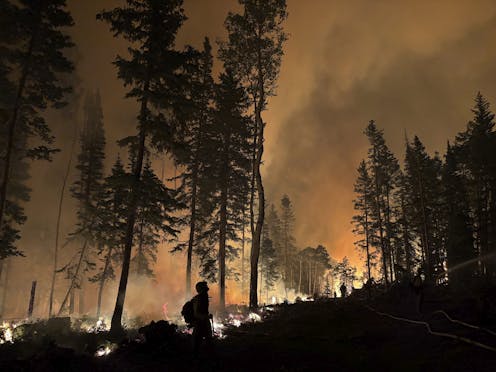
Canada is facing another dangerous wildfire season, with burning forests sending smoke plumes across the provinces and into the U.S. again. The pace of the 2025 fires is reminiscent of the record-breaking 2023 wildfire season, which exposed millions of people in North America to hazardous smoke levels.

For most of the past decade, forecasters have been able to use satellites to track these smoke plumes, but the view was only two-dimensional: The satellites couldn’t determine how close the smoke was to Earth’s surface.

The altitude of the smoke matters.

If a plume is high in the atmosphere, it won’t affect the air people breathe – it simply floats by far overhead.

But when smoke plumes are close to the surface, people are breathing in wildfire chemicals and tiny particles. Those particles, known as PM2.5, can get deep into the lungs and exacerbate asthma and other respiratory and cardiac problems.

An animation shows mostly green (safe) air quality from ground-level monitors. However, in Canada, closer to the fire, the same plume shows high levels of PM2.5.
An animation on May 30, 2025, shows a thick smoke plume from Canada moving over Minnesota, but the air quality monitors on the ground detected minimal risk, suggesting it was a high-level smoke plume.
NOAA NESDIS Center for Satellite Applications and Research

The Environmental Protection Agency uses a network of ground-based air quality monitors to issue air quality alerts, but the monitors are few and far between, meaning forecasts have been broad estimates in much of the country.

Now, a new satellite-based method that I and colleagues at universities and federal agencies have been working on for the past two years is able to give scientists and air quality managers a 3D picture of the smoke plumes, providing detailed data of the risks down to the neighborhood level for urban and rural areas alike.

Building a nationwide smoke monitoring system

The new method uses data from a satellite that NASA launched in 2023 called the Tropospheric Emissions: Monitoring of Pollution, or TEMPO, satellite.

A map shows blue over the Dakotas, Nebraska and western parts of Minnesota and Iowa. Pink is over Pennsylvania up through Maine.
Data from the TEMPO satellite shows the height of the smoke plume, measured in kilometers. Light blue areas are closest to the ground, suggesting the worst air quality. Pink areas suggest the smoke is more than 2 miles (3.2 kilometers) above the ground, where it poses little risk to human health. The data aligns with air monitor readings taken on the ground at the same time.
NOAA NESDIS Center for Satellite Applications and Research

TEMPO makes it possible to determine a smoke plume’s height by providing data on how much the oxygen molecules absorb sunlight at the 688 nanometer wavelength. Smoke plumes that are high in the atmosphere reflect more solar radiation at this wavelength back to space, while those lower in the atmosphere, where there is more oxygen to absorb the light, reflect less.

Understanding the physics allowed scientists to develop algorithms that use TEMPO’s data to infer the smoke plume’s altitude and map its 3D movement in nearly real time.

An illustration shows a satellite, Sun and smoke plume at different heights. Higher plumes reflect more light.
Aerosol particles in high smoke plumes reflect more light back into space. Closer to Earth’s surface, there is more oxygen to absorb light at the 688 nanometer wavelength, so less light is reflected. Satellites can detect the difference, and that can be used to determine the height of the smoke plume.
Adapted from Xu et al, 2019, CC BY

By combining TEMPO’s data with measurements of particles in the atmosphere, taken by the Advanced Baseline Imager on the NOAA’s GOES-R satellites, forecasters can better assess the health risk from smoke plumes in almost real time, provided clouds aren’t in the way.

That’s a big jump from relying on ground-based air quality monitors, which may be hundreds of miles apart. Iowa, for example, had about 50 air quality monitors reporting data on a recent day for a state that covers 56,273 square miles. Most of those monitors were clustered around its largest cities.

NOAA’s AerosolWatch tool currently provides a near-real-time stream of wildfire smoke images from its GOES-R satellites, and the agency plans to incorporate TEMPO’s height data. A prototype of this system from my team’s NASA-supported research project on fire and air quality, called FireAQ, shows how users can zoom in to the neighborhood level to see how high the smoke plume is, however the prototype is currently only updated once a day, so the data is delayed, and it isn’t able to provide smoke height data where clouds are also overhead.

Wildfire health risks are rising

Fire risk is increasing across North America as global temperatures rise and more people move into wildland areas.

While air quality in most of the U.S. improved between 2000 and 2020, thanks to stricter emissions regulations on vehicles and power plants, wildfires have reversed that trend in parts of the western U.S. Research has found that wildfire smoke has effectively erased nearly two decades of air quality progress there.

Our advances in smoke monitoring mark a new era in air quality forecasting, offering more accurate and timely information to better protect public health in the face of these escalating wildfire threats.

The Conversation

Prof. Wang’s group have been supported from NOAA, NASA, and Naval ONR to develop research algorithm to retrieve aerosol layer height. The compute codes of the research algorithm were shared with colleagues in NOAA.

ref. Which wildfire smoke plumes are hazardous? New satellite tech can map them in 3D for air quality alerts at neighborhood scale – https://theconversation.com/which-wildfire-smoke-plumes-are-hazardous-new-satellite-tech-can-map-them-in-3d-for-air-quality-alerts-at-neighborhood-scale-259654

Art, bien-être et cerveau : étudier les effets de visites au musée

Source: The Conversation – in French – By Véronique Agin, Professeur en neurosciences, Université de Caen Normandie

Le rôle de l’art dans la prévention en santé, mais aussi dans l’aide à la prise en charge des malades dans différentes pathologies, est de plus en plus accepté. Mais ses bénéfices doivent encore être validés en respectant les normes des essais cliniques. C’est l’objectif d’un projet de recherche mené au musée des Beaux-Arts de Caen, en Normandie, qui allie neurosciences, psychologie et sciences numériques.


Définir l’art et la santé est une question difficile mais fondamentale avant d’initier une recherche sur les liens entre les arts et la santé.

L’œuvre d’art est valorisée en soi, sa finalité n’est pas d’être utile. Elle incarne la nouveauté, la créativité, l’originalité, le travail de recherche et le savoir-faire de l’artiste. Elle suscite en outre l’imagination et l’expression émotionnelle aussi bien chez l’artiste que chez le spectateur.

La santé, quant à elle, peut être définie comme un état de bien-être mental, physique et social, et non pas seulement comme l’absence de maladie ou d’infirmité, ce qui ancre ainsi fermement la santé dans la société et la culture.

De nombreux articles scientifiques affirment que les arts pourraient améliorer la santé, et donc le bien-être des individus. En 2019, l’Organisation mondiale de la santé (OMS) a répertorié deux grandes catégories d’effets possiblement bénéfiques des arts sur la santé : prévention et promotion de la santé, prise en charge et traitement.

Un projet qui rassemble neurosciences, psychologie et sciences numériques

L’art peut-il améliorer la santé et donc le bien-être ?

Pour contribuer à lever les incertitudes, nous menons un projet pluridisciplinaire « Art, bien-être et cerveau » qui rassemble les neurosciences (laboratoire PhIND : UMR-S Inserm 1237), la psychologie (laboratoire NIHM : UMR-S 1077 ; laboratoire LaPsyDÉ : UMR CNRS 8240) et les sciences numériques (laboratoire GREYC : UMR CNRS 6072).

Cette recherche innovante, menée au musée des Beaux-Arts de Caen, a pour objectif de mesurer, in situ, les effets procurés par la visite d’un musée dédié à la peinture sur le bien-être, chez des adultes en bonne santé âgés de 18 à 65 ans.

Artbienetrecerveau.fr

Il s’agit également d’identifier les mécanismes cérébraux, cognitifs et socioémotionnels associés à ces effets, grâce à des mesures exhaustives et écologiquement adaptées.

Les limites actuelles des publications sur arts et santé

L’analyse critique des études citées dans des revues récentes et des méta-analyses montre des faiblesses méthodologiques (absence de définition de l’art comme agent thérapeutique, manque de randomisation pour l’affectation aux groupes, conditions contrôles inadéquates, effectifs faibles, ou encore analyses statistiques inappropriées) et un manque général de soutien empirique à la notion que l’art influence directement la santé et le bien-être.

En outre, les preuves expérimentales liant l’art à des processus neuronaux ou physiologiques spécifiques restent quasi-inexistantes. Même si des études ont identifié des corrélats neuronaux de l’engagement artistique, elles n’ont pas apporté la preuve que ces mécanismes sont uniques à l’art ou qu’ils ont un impact causal sur les résultats.

Si l’idée que l’art peut améliorer la santé est attrayante et culturellement résonnante, il est aujourd’hui fondamental d’approfondir les recherches sur les arts et la santé en respectant les normes les plus élevées de la méthodologie des essais cliniques.

Prévention santé, prise en charge des malades… des bénéfices potentiels à valider

De nombreux éléments d’études scientifiques sont disponibles et prêtent aux arts de multiples bénéfices pour la santé et le bien-être. Ils sont à considérer avec précaution.

Les arts contribueraient ainsi à la prévention en santé, en réduisant notamment le risque de déclin cognitif et de mortalité prématurée. L’OMS estime qu’ils favoriseraient la prise en charge de maladies non transmissibles telles que le cancer, les maladies respiratoires, le diabète, les maladies cardiovasculaires… Ils pourraient également être un soutien aux soins de fin de vie.


À lire aussi :
Quand l’art-thérapie prend soin des soignants en cancérologie : retour inattendu d’expérience


Les arts aideraient, par ailleurs, les personnes atteintes de troubles neurodéveloppementaux et neurologiques incluant les troubles du spectre autistique (TSA), la paralysie cérébrale, les accidents vasculaires cérébraux (AVC), la sclérose en plaques, les démences…

Les arts favoriseraient en outre le développement de l’enfant en contribuant au lien mère-enfant, à l’acquisition du langage, ou encore à la réussite scolaire.

Il a aussi été rapporté que les arts influenceraient les déterminants sociaux de la santé tels que la cohésion sociale et la réduction des inégalités et iniquités sociales.

Un protocole innovant au sein du musée des Beaux-Arts de Caen

Notre projet « Art, Bien-être et Cerveau » est porté par le groupement d’intérêt scientifique « Blood & Brain @ Caen Normandie » (BB@C), le musée des Beaux-Arts de Caen, le Centre hospitalier universitaire de Caen et le réseau professionnel des arts et des cultures numériques en Normandie (Oblique/s), dans le cadre des festivités du Millénaire de la ville de Caen.

Dans ce projet, nous étudions l’effet de visites au musée chez 200 participants à l’aide d’un protocole expérimental en deux visites au musée des beaux-arts. Les participants seront répartis en trois groupes : deux groupes expérimentaux de 80 participants (l’un avec médiation, l’autre sans médiation) et un groupe contrôle (40 participants).

Lors de la première visite, les groupes expérimentaux effectueront la visite du musée de manière individuelle durant laquelle ils bénéficieront, ou non, d’une médiation culturelle.

Ils seront tous équipés de lunettes d’eye-tracking (pour l’enregistrement des mouvements oculaires), d’un bandeau NIRS (Near InfraRed Spectroscopy, pour l’enregistrement de l’activité cérébrale) et d’un capteur d’activité électrodermale (pour l’analyse des réponses cardiaques et électrodermales, qui correspondent aux variations électriques de la peau liées au fonctionnement des glandes sudoripares).


À lire aussi :
Les enfants voient l’art différemment : ce que nous apprennent les dernières recherches d’« eye-tracking »


Pour la seconde visite, les participants effectueront la visite du musée en binôme, avec ou sans médiation.

Avant et après la visite, ils répondront à différents questionnaires (émotionnel, bien-être et stress) et réaliseront des tâches cognitives mesurant les fonctions exécutives, l’attention visuelle, la mémoire épisodique, l’empathie et la créativité.

Le groupe contrôle effectuera deux visites au musée, comme les groupes expérimentaux, mais sans équipement ni médiation. Ces participants répondront uniquement aux questionnaires et aux tests cognitifs.

Questionnaires, tests cognitifs et enregistrements de l’activité cérébrale

Les questionnaires et les tests cognitifs permettront de déterminer si la découverte des œuvres, ainsi que la médiation proposée, entraînent une augmentation du bien-être et des capacités cognitives.

Afin de recueillir des mesures physiologiques de la réponse émotionnelle, des enregistrements des réponses électrodermales et cardiaques lors de l’exposition aux tableaux seront réalisés à l’aide d’un biocapteur porté au poignet par les participants.

Nous formulons l’hypothèse que les participants présenteront de meilleures capacités exécutives après la visite, avec un gain plus marqué chez les volontaires dans un état émotionnel positif. Nous postulons également que les capacités de traitements visuospatiaux des participants bénéficieront de la médiation du professionnel.

La NIRS, une technique d’imagerie optique non invasive, sera utilisée pour enregistrer l’activité du cortex préfrontal lors de l’analyse de l’œuvre picturale. Elle renseignera sur l’engagement émotionnel et la synchronisation cérébrale entre les participants.

Nous nous attendons, entre autres, à ce que la variation des réponses émotionnelles à toutes les mesures effectuées (questionnaires, capteur d’activité électrodermale) soit en lien avec des variations de l’activation du circuit fronto-limbique. Enfin, les mesures oculométriques (eye-tracking) permettront d’analyser les liens entre la médiation et les stratégies d’exploration visuelle des participants.

Cette recherche, combinée à d’autres, pourrait avoir différentes implications : favoriser la synergie entre politiques culturelles et de santé ; concevoir des expériences muséales au plus près du fonctionnement humain ; ouvrir sur de nouvelles perspectives comme le rôle de l’exposition à l’art dans le maintien en bonne santé, avec la possibilité à plus long terme d’envisager des recherches sur d’autres arts ; ouvrir à d’autres études du même type associant binômes patients-aidants, jeunes-seniors, etc.

The Conversation

Le projet « Art, bien-être, cerveau, une rencontre essentielle ou l’ABC d’une rencontre » est financé par le GIP Millénaire de Caen (à l’occasion du millénaire de la ville de Caen, un Groupement d’intérêt public (GIP) Millénaire a été constitué à l’échelle du territoire avec la volonté d’associer à ce projet la Communauté urbaine Caen la mer, mais aussi le département du Calvados, la région Normandie, l’université Caen Normandie et la Chambre de commerce de l’industrie).

ref. Art, bien-être et cerveau : étudier les effets de visites au musée – https://theconversation.com/art-bien-etre-et-cerveau-etudier-les-effets-de-visites-au-musee-259710