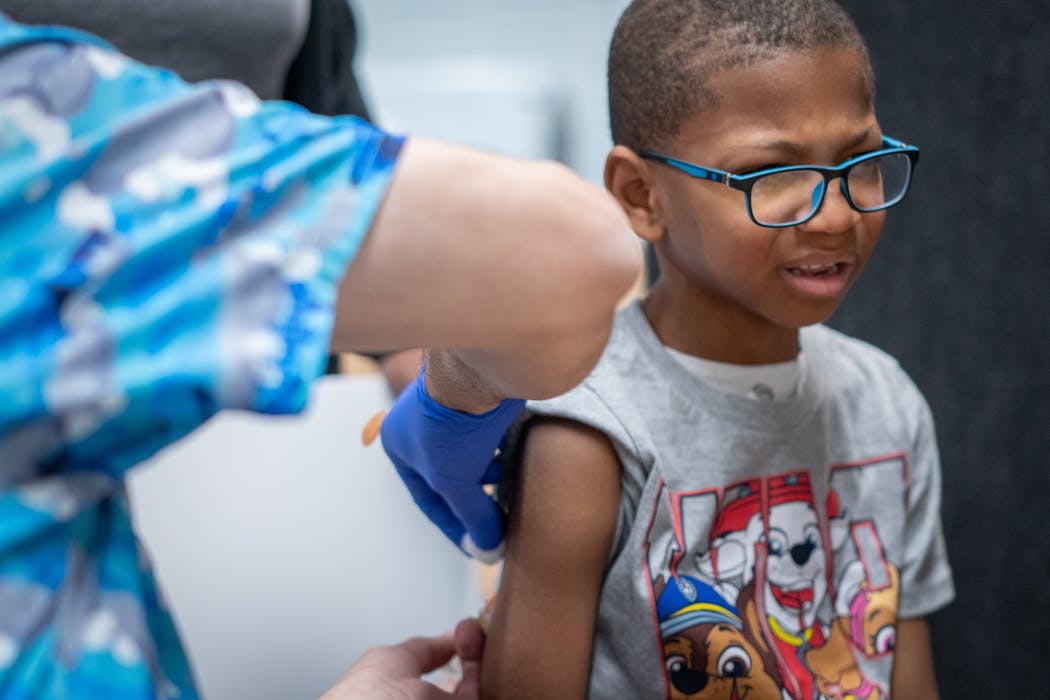
More than three-quarters of U.S. counties and jurisdictions are experiencing declines in childhood vaccination rates, a trend that began in 2019, according to a September 2025 NBC News–Stanford University investigation. The report also found a “large swath” of the U.S. no longer has the “basic, ground-level immunity” needed to stop the spread of measles.
Dr. David Higgins discusses back-to-school vaccinations.
The Conversation has collaborated with SciLine to bring you highlights from the discussion, edited for brevity and clarity.
What vaccines are typically required for schoolchildren, and why?
David Higgins: The vaccine requirements for kids to attend school are set by states, not the federal government. Most states require kindergartners get vaccines for pertussis – that’s whooping cough – and tetanus, measles, mumps, rubella and chickenpox.
For older kids, a booster of the tetanus and pertussis vaccine is typically required, as well as a vaccine for meningococcal disease.
How do scientists track the safety of vaccines over time?
Higgins: Before vaccines are approved, they undergo rigorous trials. During this process, scientists look at the safety and effectiveness of the vaccine, testing it first in small groups to assess safety, then in larger groups to confirm protection and detect uncommon side effects. That process continues after the vaccine is approved. Those systems continually monitor the safety of vaccines, both here in the U.S. as well as around the world.
What are the vaccination coverage trends for kindergartners?
Higgins: What we have seen is a small downward trend since 2019, the year prior to the COVID-19 pandemic. It slipped from 95% of new kindergartners being up to date on many of their routine vaccines to about 92%.
That’s a small percentage decrease, so a great majority of parents are still vaccinating their kids. But at the same time, anything below our target of 95% for diseases like measles becomes a problem, because that’s below the level that’s needed for what we call herd immunity, or community immunity. When that happens, it’s not a matter of if, but when, we see an outbreak of these infectious diseases.
And while nationwide rates are important to look at, outbreaks happen at local community levels. For example, earlier this year, an outbreak of measles in West Texas spread rapidly through communities where vaccination rates had slipped well below the state average.
So, the vaccination rate at your own school or community is much more meaningful than what the national vaccination rate is.
How do non-medical vaccine exemptions work?
Higgins: First, actual medical exemptions are rare, and these occur when the vaccine is unsafe for the child to receive, like when he or she has a known severe allergic reaction to vaccine ingredients.
Additionally, vaccines are victims of their own success. They have worked so well that many diseases like polio aren’t routinely seen anymore. That might lead a parent to think the risk for their child is so low that the vaccine is not necessary. But the fact is, vaccines are simply holding these diseases at bay. And as vaccination rates drop, these diseases will come back and more kids will be at risk.
What advice do you have for parents?
Higgins: The most important thing you can do as a parent is to keep your kids up to date on required vaccines. That includes the annual flu shot. Follow your state’s requirements and current recommendations from trusted sources like the American Academy of Pediatrics and your own personal pediatrician to know which vaccines your child should have.
You also want to reinforce other common sense approaches to keeping your children healthy. Make sure they know how to wash their hands properly and that they stay home when they’re sick. Teach them to sneeze and cough into their elbow instead of into their hands – even though doing so isn’t a perfect solution.
As a pediatrician, I love when my families come and talk to me about their concerns. I help them walk through their worries so they can feel more confident that they’re making a truly informed decision that’s in the best interest of their child’s health.
SciLine is a free service based at the American Association for the Advancement of Science, a nonprofit that helps journalists include scientific evidence and experts in their news stories.
David Higgins is a member of the American Academy of Pediatrics. He is also on the board of directors (volunteer) for Immunize Colorado.
In October 2025, Cecil Roberts will officially retire from his role as president of the United Mine Workers of America. A sixth-generation coal miner, he has led the union for 30 years. Only one man held the role longer: John L. Lewis, whom many consider one of the most important labor leaders of the 20th century.
Roberts has seen the union through an especially difficult period for the coal industry and grew up immersed in it. He was raised in Cabin Creek, West Virginia, where his great-grandmother – an activist in her own right – let miners camp on her property during a legendary strike in 1912. Bill Blizzard, his great-uncle, led miners during the Battle of Blair Mountain, the largest labor uprising in U.S. history. Both of his grandfathers died in mine accidents.
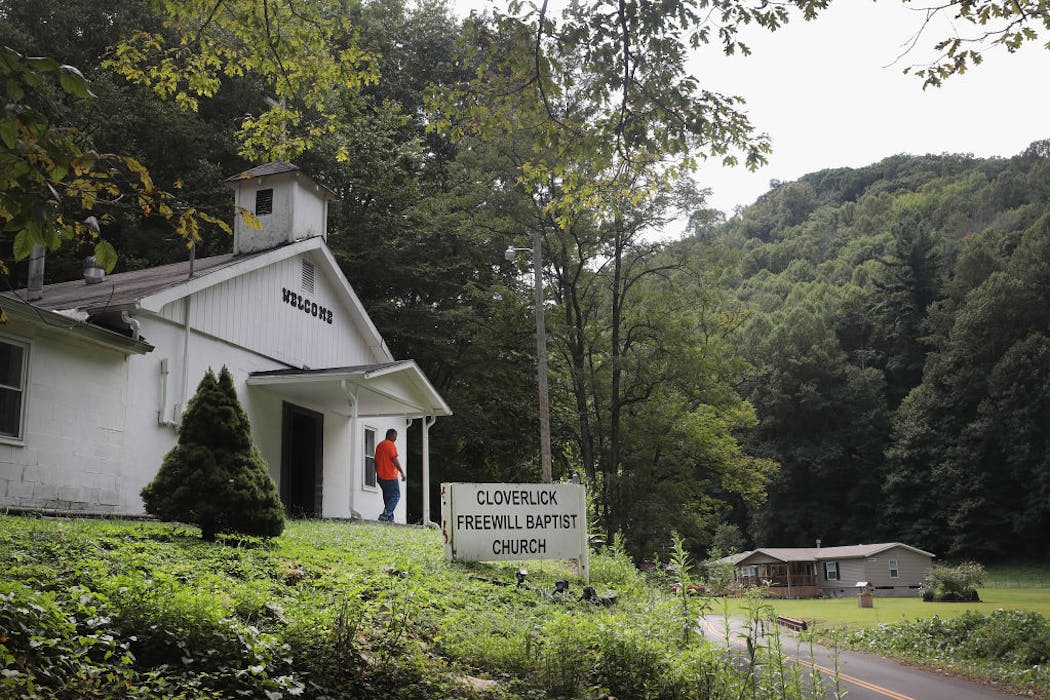
And there’s another way Roberts is steeped in Appalachian history: Before an audience of workers, observers have often noted, he speakslikeapreacher. Roberts likens miners’ struggles to biblical stories, references the power of God and the teachings of Jesus, and speaks in the dynamic cadences found in an Appalachian church.
United Mine Workers of America President Cecil Roberts speaks to about 4,000 retired members in Lexington, Ky., on June 14, 2016. AP Photo/Dylan Lovan
“Be like Jesus,” he told a rally in Charleston, West Virginia, in 2015, opposing a “right to work” bill that allowed workers in union-run shops to opt out of paying dues. “Jesus saw the money changers in the temple, and Jesus drove the money changers from the temple. So let me tell the National Right to Work Committee, the Chamber of Commerce, the Koch Brothers, and all those who gave money: you got your money’s worth, but we’re not for sale in West Virginia.”
“How many of you have been to a Baptist church? We’re going to take up a collection. It is altar call time,” he continued. “Now, I’m going to ask you something: Are you fed up? Let me hear you say, ‘Fed up.’… Are you so fed up that you are now fired up? Let me hear you say, ‘Fired up!’”
Capping off the rousing call-and-response, he shouted, “God bless all of you, you’re the salt of the earth!”
In the 1880s, two groups rushed into the central Appalachian Mountains: industrialists seeking coal, and missionaries seeking moral reform. Both changed the region forever, and their stories were intertwined.
At the time, central Appalachia was widely depicted in the popular press as a backward, ignorant region whose mountainous terrain kept its people isolated, outside the flow of progress – a stereotype still common today. Equating economic progress with moral progress, many Americans assumed that developing industry would lift people out of what they perceived as fatalism and superstition.
The coal industry used this idea to promote its rapid exploitation of mountain resources. Companies built railroads to connect the region to the national market, developed industrial coal mines and reshaped the central Appalachian economy. Missionaries opened churches, schools and camps.
Henry Ford founded Twin Branch, W.Va. – shown here in the 1920s – as a town for coal miners. Bettmann via Getty Images
Company-owned coal towns encompassed miners’ lives. People who had long farmed for themselves and lived, as the Bible told them to, “by the sweat of their brow,” became dependent upon coal companies as mine development shrank the size of family farms. Not only did employers own the miners’ houses, but they also paid workers in “scrip,” which was redeemable only at the company store.
Many company towns included theaters, offered films and music, and even built churches and paid pastors’ salaries. These were typically mainline Protestant churches, such as Methodist or Presbyterian.
To some Appalachian natives, these denominations were known as “railroad religion” because of the way they entered the mountains. And, for many miners, these were the churches of management. When there was labor unrest, the coal town churches tended to side with the companies, advising miners against strikes or agitation.
Pastors preached about the dangers and sacrifices miners faced deep underground, in an age of few regulations. God was on the side of the oppressed and downtrodden, they stressed – and those who gained at others’ expense would ultimately face divine judgment.
Their passionate preaching was meant to inspire action, whether it was committing one’s life to Jesus or to the union. Labor rights were deeply understood as religious issues, rooted in Christian concerns for justice and care.
John Sayles’ 1987 film “Matewan” powerfully depicted the divided role that religion played in West Virginia’s coalfields. One preacher, played by Sayles, equates the union with “the Prince of Darkness.” Another, a young miner, advocates in biblical terms for the union’s righteousness and helps to lead a strike. The result was the Matewan Massacre of 1920: a bloody battle between miners and armed guards hired by the mine owners.
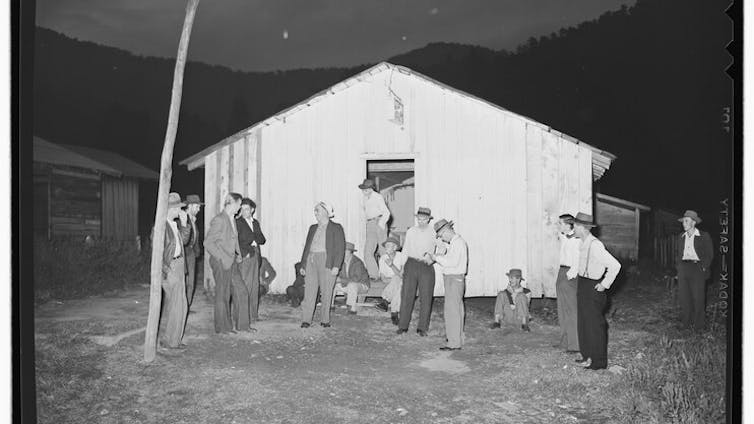
Miner preachers and independent churches were central to the organization of miners in eastern Kentucky in the 1930s, too, during another period of violence between mine operators and miners over conditions, wages and unionization. It was during this time that miner’s wife and singer Sarah Ogan Gunning penned “Dreadful Memories,” turning the traditional hymn “Precious Memories” into a visceral depiction of miners’ struggle and a call for unionization:
“Dreadful memories, how they linger,
How they ever flood my soul.
How the workers and their children
Died from hunger and from cold.”
Today, it is still not surprising to find religious – particularly Christian – rhetoric in labor organizing. United Auto Workers President Shawn Fain is another example of a union leader whose speeches draw from the Bible.
But the dynamics of religion and class forged by industrial mining have shaped central Appalachia’s culture in lasting ways particular to the coalfields. The history of labor struggle, infused with religious idioms, is a source of identity and values evident in everything from union meetings in churches to prayers on picket lines.
Today, the United Mine Workers of America is focused less on coal itself, which miners know cannot last forever. The union represents members in other sectors, too, including public employees, manufacturing, health care and employees of the Navajo Nation. It has also focused its work on an equitable transition to renewable energy: one that accounts for the economic, cultural and environmental destruction that a single-industry economy has wreaked on central Appalachia.
Likewise, the United Mine Workers of America has fought to hold coal companies to their pension and health care obligations toward retired and sick miners whose work fueled the country and made companies rich.
And that struggle, Roberts would say, is a religious one as well.
Richard J. Callahan, Jr. does not work for, consult, own shares in or receive funding from any company or organization that would benefit from this article, and has disclosed no relevant affiliations beyond their academic appointment.
Source: The Conversation – in French – By Jérémy Hamon, Chargé d’études en toxicovigilance – Direction des alertes et des vigilances sanitaires, Agence nationale de sécurité sanitaire de l’alimentation, de l’environnement et du travail (Anses)
Depuis le 1er juillet 2025, 500 intoxications dues à la cueillette et à la consommation de champignons sont déjà à déplorer en France. On observe une augmentation des cas depuis le début du mois de septembre, et un pic est attendu en octobre. Pour identifier les champignons avec certitude, l’Agence nationale de sécurité sanitaire rappelle qu’il ne faut pas se fier aux applications sur smartphone, en raison du risque élevé d’erreurs. On fait le point sur l’ensemble de ces recommandations de l’Anses.
En France, plus de 3 000 espèces de champignons dits « supérieurs » ou « macromycètes » sont recensées. Si les champignons sont des aliments appréciés, certaines espèces sont toxiques voire mortelles pour l’humain. Ainsi la confusion entre une espèce comestible et une espèce toxique peut conduire à une intoxication, parfois grave.
Les intoxications par ingestion de champignons peuvent aussi résulter de la consommation de champignons réputés comestibles contaminés par des microorganismes (bactéries, parasites…), par des polluants chimiques ou bien parce qu’insuffisamment cuits.
Avant la cueillette, les bonnes pratiques à suivre :
Prévoir un panier en osier, une caisse ou un carton pour déposer ses champignons. Sa taille doit être suffisamment grande pour séparer les différentes espèces. Surtout, ne jamais utiliser de sacs en plastique, ils accélèrent le pourrissement ;
Choisir un lieu de cueillette loin des sites pollués (bords de route, aires industrielles, décharges, pâturages) ;
Se renseigner sur les structures qui peuvent aider à identifier une cueillette en cas de doute : certains pharmaciens ou les associations de mycologie de votre région.
Une surveillance saisonnière par les autorités de santé
L’Agence nationale de sécurité sanitaire de l’alimentation, du travail et de l’environnement (Anses) réalise chaque année, depuis 2016, une surveillance des intoxications accidentelles par ingestion de champignons.
Du fait de leur caractère saisonnier, de la température et de l’humidité conditionnant la pousse des champignons, cette surveillance des intoxications a lieu du 1er juillet au 31 décembre. L’Anses suit ainsi chaque semaine, avec l’appui du réseau des centres antipoison (CAP), le nombre d’intoxications qui leur est rapporté.
Chaque saison, entre 11 et 41 personnes intoxiquées ont un pronostic vital engagé, et entre 0 et 5 personnes intoxiquées décèdent.
Près de 4 % des intoxications enregistrées par les centres antipoison
Pour la saison 2024, le nombre d’intoxications (1 363) était légèrement inférieur à celui de 2023, mais sensiblement égal à ceux de 2021, de 2020 et de 2017. Le nombre de cas graves (41) était l’un des trois plus élevés (avec 2021 et 2017) depuis 2016 ; et le pourcentage de cas graves était d’environ 3 %, soit le deuxième pourcentage le plus haut, après 2021, depuis 2016 également. Le pic mensuel d’intoxications pour la saison 2024 est survenu en octobre, comme pour la plupart des années précédentes.
Depuis le début de la surveillance saisonnière en 2016, le nombre d’intoxications par an varie d’une année à l’autre, mais ne suit pas de tendance particulière (figure ci-dessous). Depuis 2017, ce nombre est supérieur à 1 000 et représente environ 4 % de l’ensemble des intoxications accidentelles enregistrées par les CAP.
Intoxications accidentelles par des champignons observés par les centres antipoison (CAP), de 2016 à 2024
Un questionnaire spécifique pour améliorer la prévention
Depuis 2022, un questionnaire de recueil spécifique est soumis à chaque personne appelant un CAP à la suite de la consommation de champignons dans un contexte alimentaire et présentant des symptômes. Ce questionnaire a pour but d’améliorer la connaissance des circonstances des intoxications et de cibler plus efficacement les messages de prévention. Les nouvelles données, ainsi récoltées, concernent le mode d’obtention des champignons, les espèces de champignons recherchées au cours de la cueillette, le mode d’identification, le mode de transport et le temps de conservation des champignons ainsi que le mode de consommation des champignons.
Ce questionnaire a permis de mettre en évidence, entre autres, les champignons les plus souvent recherchés. En 2022 et en 2023, les personnes intoxiquées ont déclaré qu’il s’agissait de cèpes (ou bolets), de coulemelles (ou lépiotes), et d’agarics champêtres (aussi appelés « rosés des prés »).
Pour la saison 2024, et probablement parce que la pousse des bolets et des agarics semble s’être arrêtée plus tôt que d’autres années, les rendant ainsi moins disponibles à la cueillette, ce sont les girolles (ou chanterelles) qui étaient les plus recherchées au cours de l’ensemble de la saison (et, plus particulièrement, à partir de la deuxième semaine d’octobre).
Cette différence a conduit à un nombre plus important de confusions avec des pleurotes de l’olivier (Omphalotus olearius) et des faux clitocybes lumineux (Omphalotus illudens), qui sont toxiques.
Pendant la cueillette, comment bien identifier les champignons ?
Ne pas se fier aux applications de reconnaissance sur smartphone, en raison du risque élevé d’erreurs d’identification ;
Ne ramasser que les champignons que vous connaissez parfaitement. Attention ! Des champignons vénéneux peuvent pousser à l’endroit où vous avez cueilli des champignons comestibles une autre année ;
Cueillir uniquement les spécimens en bon état et prélever la totalité du champignon (pied et chapeau) afin d’en permettre l’identification ;
Éviter de ramasser les jeunes spécimens qui n’ont pas fini de se former, ce qui favorise les confusions, et les vieux spécimens qui risquent d’être abîmés ;
Au moindre doute sur l’état ou sur l’identification d’un des champignons récoltés, ne pas consommer la récolte avant de l’avoir fait contrôler par un pharmacien ou par une association de mycologie.
Ressemblance entre espèces toxiques et espèces réputées comestibles
Depuis 2022, les autres espèces toxiques les plus souvent identifiées par les experts mycologues qui font partie d’un réseau national les mettant en relation avec les centres antipoison, étaient les agarics jaunissants, les lépiotes des jardins (ou lépiotes vénéneuses), les entolomes livides, les bolets Satan ou encore les amanites phalloïdes.
Ces espèces toxiques peuvent être mises en regard des espèces les plus recherchées : les agarics jaunissants et les amanites phalloïdes peuvent, en effet, être confondues avec des agarics champêtres, les bolets Satan peuvent être confondus avec des espèces de bolets comestibles, et les lépiotes des jardins avec des coulemelles.
Liste des espèces recherchées par les cueilleurs versus les espèces toxiques de champignons cueillis (identifiés par un expert mycologue), pour la saison 2024
Source : Sicap. Tableau extrait d’« Intoxications accidentelles par des champignons en France métropolitaine. Bilan des cas enregistrés par les centres antipoison entre le 1er juillet et le 31 décembre 2024 », Rapport d’étude de toxicovigilance, septembre 2025, Anses.
Groupe d’espèces recherchées
Espèce toxique cueillie (identifiée par un expert mycologue)
Agarics champêtres, rosés des prés
Agaric jaunissant (Agaricus xanthodermus)
Amanites des Césars (oronge)
Amanite tue-mouches (Amanita muscaria)
Cèpes ou bolets non précisés
Bolet Satan (Rubroboletus satanas)
Coulemelles, lépiotes
Lépiote des jardins (Chlorophyllum brunneum), amanite phalloïde (Amanita phalloides)
Girolles, chanterelles
Clitocybe de l’olivier (Omphalotus olearius), faux clitocybe lumineux (Omphalotus illudens)
Mousserons, faux mousserons (marasmes des oréades)
Lépiote de Josserand (Lepiota josserandii), galère marginée (Galerina marginata)
Ci-dessous, composition de trois espèces de champignons toxiques, après expertise par des experts mycologues
(Avertissement : ces photographies n’ont pas vocation à être utilisées pour une identification de champignons, ndlr.)
En haut : Amanite phalloïde (Amanita phalloides) ; en bas à gauche : Bolet Satan (Rubroboletus satanas) ; en bas à droite : Clitocybe de l’olivier appelé aussi Pleurote de l’olivier (Omphalotus olearius). (Holger Krisp/Antonio Abbatiello), CC BY
Certaines espèces toxiques de champignons peuvent ressembler fortement à des espèces comestibles. L’identification de l’espèce du champignon cueilli est donc une étape indispensable et très importante pour le cueilleur, et doit être réalisée par des personnes expertes sur le sujet (mycologue ou association de cueilleurs experts, par exemple). Les applications ou les fonctionnalités de reconnaissance d’image directement disponibles sur certains smartphones ne sont actuellement pas suffisamment performantes pour identifier correctement un champignon, et leur utilisation est donc déconseillée car sujette à des erreurs.
Enfin, le questionnaire disponible depuis 2022 a permis de mettre en évidence qu’environ les trois quarts des personnes intoxiquées n’avaient pas fait identifier leur cueillette. Une grande partie de ces intoxications auraient probablement pu être évitées si la cueillette avait fait l’objet d’une identification, idéalement par un expert mycologue ou par une association spécialisée.
Après la cueillette : quels gestes adopter ?
Se laver soigneusement les mains ;
Prendre une photo de votre récolte avant la cuisson : elle sera utile en cas d’intoxication pour décider du traitement adéquat ;
Conserver les champignons en évitant tout contact avec d’autres aliments au réfrigérateur (maximum 4 °C) et les consommer dans les deux jours qui suivent la cueillette ;
Ne jamais consommer les champignons crus, et cuire chaque espèce séparément et suffisamment longtemps : de 20 à 30 minutes à la poêle ou 15 minutes à l’eau bouillante avec rejet de l’eau de cuisson ;
Consommer les champignons en quantité raisonnable, soit 150 à 200 grammes par adulte et par semaine ;
Ne jamais proposer de champignons cueillis à de jeunes enfants ;
Ne pas consommer de champignon identifié au moyen d’une application de reconnaissance de champignons sur smartphone en raison du risque élevé d’erreur.
En moyenne, 2 % des intoxications par des champignons sont graves
Si la plupart des intoxications sont bénignes, reste qu’il est possible d’atteindre jusqu’à 41 « intoxications graves » par saison (soit un maximum de 3,2 % des intoxications saisonnières ; la moyenne étant de 2 % de 2016 à 2024).
Les intoxications sont considérées comme graves lorsque le pronostic vital du patient est engagé. Parmi ces intoxications graves, certaines sont mortelles et d’autres peuvent conduire à des insuffisances rénales ou hépatiques sévères devant parfois nécessiter une transplantation d’organe.
Les espèces toxiques de champignons ne produisent pas toutes les mêmes toxines et conduisent donc à des intoxications présentant des symptômes différents. L’ensemble de ces symptômes permet de déterminer le type de syndrome mycotoxique.
Concernant les intoxications graves, les syndromes mycotoxiques les plus fréquents sont les syndromes phalloïdien, orellanien et sudorien :
Le syndrome phalloïden, principalement causé par les amanites toxiques (amanite phalloïde et amanite vireuse, par exemple) et certaines petites lépiotes toxiques, est caractérisé par des symptômes digestifs suivis d’une atteinte hépatique pouvant être gravissime et conduire à une greffe de foie ;
Le syndrome orellanien, principalement causé par le cortinaire très joli et le cortinaire des montagnes, est caractérisé par des symptômes digestifs inconstants puis une atteinte rénale d’apparition plus tardive (entre 2 et 20 jours après l’ingestion du champignon) ;
Le syndrome sudorien, principalement causé par certains clitocybes blancs (clitocybe blanchi et clitocybe cérusé, par exemple), par un grand nombre d’inocybes et certains mycènes, est caractérisé par des troubles digestifs associés à des sueurs, à des larmoiements, à un myosis (diminution de la taille de la pupille) et à une diminution de la fréquence cardiaque et de la tension artérielle.
Prévention et recommandations
L’Anses diffuse chaque année, au moment des périodes de pousse et de cueillette des champignons, des messages de prévention dans la presse, sur les réseaux sociaux et dans certains établissements (les pharmacies, par exemple).
Si la diffusion de ces messages est nécessaire pour informer la population des recommandations nationales de cueillette et de consommation des champignons, des relais locaux (associations de mycologues, pharmaciens…) restent indispensables pour aider à identifier la cueillette et, ainsi, pour limiter le nombre d’intoxications.
Enfin, pour prendre en compte les intoxications dues aux champignons sauvages conservés au congélateur (et consommés entre janvier et juillet) ainsi qu’à certaines espèces printanières, la surveillance des intoxications aux champignons couvre l’année entière (de janvier à décembre) depuis janvier 2025.
Les auteurs ne travaillent pas, ne conseillent pas, ne possèdent pas de parts, ne reçoivent pas de fonds d’une organisation qui pourrait tirer profit de cet article, et n’ont déclaré aucune autre affiliation que leur organisme de recherche.
Peut-on vraiment faire revenir le dodo ? Colossal Biosciences s’en rapproche grâce à l’édition génétique, mais le projet se heurte à d’énormes défis scientifiques et écologiques.
La société américaine de biotechnologie Colossal Biosciences affirme être enfin parvenue à maintenir en vie, suffisamment longtemps en laboratoire, des cellules de pigeon pour pouvoir en modifier l’ADN – une étape cruciale vers son rêve de recréer le dodo.
Selon Colossal Biosciences, ces cellules, une fois modifiées, pourraient être introduites dans des embryons de poulets eux-mêmes édités génétiquement, transformant ces derniers en mères porteuses pour des oiseaux disparus depuis plus de trois siècles. Cette percée s’accompagne d’un calendrier audacieux. Ben Lamm, le directeur général de Colossal Biosciences, affirme que les premiers « néo-dodos » pourraient éclore d’ici cinq à sept ans.
Il évoque aussi un objectif à plus long terme : relâcher plusieurs milliers d’oiseaux sur des sites de l’île Maurice protégés de tout prédateur, là même où vivaient les dodos avant leur disparition. Cette promesse a contribué à faire grimper la valorisation de la start-up au-delà de dix milliards de dollars, selon le site de l’entreprise.
Presque tout ce que l’on sait sur l’édition génétique des oiseaux vient des recherches menées sur le poulet, dont les cellules germinales – à l’origine des spermatozoïdes et des ovules – se développent sans difficulté dans des cultures de laboratoire classiques. Les cellules de pigeon, elles, meurent généralement en quelques heures en dehors de leur organisme.
Colossal Biosciences affirme avoir testé plus de 300 combinaisons de facteurs de croissance – des substances qui stimulent la multiplication cellulaire – avant d’en trouver une réellement efficace. Ces cellules peuvent désormais être chargées de fragments d’ADN reconstitués et d’interrupteurs moléculaires contrôlant la forme du crâne, la taille des ailes et la masse corporelle.
Des zones manquantes
Si les modifications prennent, ces cellules altérées migreront vers les ovaires ou les testicules d’un embryon de poulet encore à un stade précoce de développement, de sorte que l’animal adulte pondra des œufs ou produira du sperme porteur du génome modifié.
Ce procédé pourrait donner naissance à un oiseau qui ressemble à un dodo, mais la génétique ne raconte qu’une partie de l’histoire. Le génome du dodo a été reconstitué à partir d’os et de plumes conservés dans des musées, et les zones manquantes ont été comblées avec de l’ADN de pigeon ordinaire.
Parce que l’espèce est éteinte et ne peut plus être étudiée, on ignore encore largement les gènes impliqués dans son comportement, son métabolisme ou ses défenses immunitaires. Reconstituer les régions connues de son ADN, lettre par lettre, nécessiterait des centaines de modifications distinctes. Le travail à accomplir serait d’une ampleur sans précédent, bien au-delà de tout ce qui a été tenté dans les programmes de sélection agricole ou de recherche biomédicale, même si Colossal Biosciences semble prête à investir massivement pour y parvenir.
Reste aussi la question du poulet porteur. Un œuf de poule pèse bien moins qu’un œuf de dodo. Dans les collections muséales, il n’existe qu’un seul œuf de dodo connu, d’une taille comparable à celle d’un œuf d’autruche. Même si un embryon parvenait à survivre aux premiers stades, il dépasserait rapidement la taille de la coquille et devrait éclore avant d’être complètement formé – comme un prématuré nécessitant des soins intensifs. Le poussin devrait donc recevoir une surveillance et des soins constants pour atteindre le poids historique du dodo, estimé entre 10 et 20 kilos.
« Remplacement fonctionnel »
Des poules « génétiquement réinitialisées », modifiées par édition du génome, ont déjà pondu avec succès des œufs appartenant à des races rares de poulets, démontrant que la gestation croisée par cellules germinales fonctionne en principe. Mais appliquer cette technique à une espèce disparue et de taille bien supérieure reste totalement inédit.
C’est pour ces raisons que de nombreux biologistes préfèrent parler de « remplacement fonctionnel » plutôt que de « désextinction ». Ce qui pourrait éclore serait un hybride : principalement un pigeon de Nicobar, enrichi de fragments d’ADN de dodo et incubé dans un œuf de poule. Mais parler de résurrection relève davantage du marketing que de la science.
Les promesses et la réalité
La tension entre promesse et réalité a marqué les précédents projets de Colossal Biosciences. Les loups sinistres (Aenocyon dirus) présentés en août 2025 se sont révélés être des clones de loups gris avec quelques modifications génétiques. Des experts en conservation ont averti que ce type d’annonces peut inciter la société à considérer l’extinction comme réversible, réduisant ainsi le sentiment d’urgence à protéger les espèces menacées.
Malgré tout, la percée réalisée sur les pigeons pourrait profiter aux espèces encore vivantes. Environ un oiseau sur huit est aujourd’hui menacé d’extinction, selon l’évaluation mondiale de 2022 de BirdLife International. La culture de cellules germinales offre un moyen de préserver la diversité génétique sans avoir à maintenir d’immenses populations captives, et éventuellement de réintroduire cette diversité dans la nature.
Si la technique s’avère sûre chez les pigeons, elle pourrait aider à sauver des oiseaux en danger critique, comme l’aigle des Philippines ou le perroquet à ventre orange d’Australie. La population sauvage de ce dernier ne compte plus qu’environ 70 individus et avait même chuté à seulement 16 en 2016.
Une porte-parole de Colossal Biosciences a déclaré que l’entreprise respecte ses jalons scientifiques, mais que l’obtention d’éléphants mères porteuses et de cellule-œuf appropriés pour leur projet de mammouth laineux « implique une logistique complexe échappant à notre contrôle direct » et que « nous accordons la priorité au bien-être animal, ce qui signifie que nous ne précipitons aucune étape cruciale ».
Elle a ajouté que, selon les recherches de l’entreprise, les travaux de désextinction accentuent au contraire l’urgence de protéger les espèces menacées. « L’important, c’est que nous ne remplaçons pas les efforts de conservation existants, nous y ajoutons de nouvelles ressources et renforçons l’implication du public », a-t-elle précisé.
Un dodo irrécupérable
« Notre travail apporte des financements entièrement nouveaux à la conservation, provenant de sources qui n’investissaient pas auparavant dans la protection de la biodiversité. Nous avons ainsi attiré plusieurs centaines de millions de dollars de capitaux privés qui n’auraient autrement pas été consacrés à des projets de conservation. De plus, les outils génétiques que nous développons pour la désextinction sont déjà utilisés aujourd’hui pour aider des espèces menacées. »
Pour qu’un retour d’oiseaux proches du dodo soit possible sur l’île Maurice, il faut d’abord qu’y soit réunies les conditions fondamentales pour leur conservation. Il sera nécessaire d’éradiquer les rats, qui s’attaquaient aux dodos, de contrôler les populations de singes et de restaurer la forêt. Ces actions demandent des financements et l’adhésion des populations locales, mais elles bénéficient immédiatement à la faune encore présente. Colossal Biosciences devra respecter son engagement envers une gestion écologique durable.
Mais, au sens strict, le dodo du XVIIe siècle est irrécupérable. Ce que le monde pourrait voir d’ici à 2030 n’est qu’une expérience vivante, illustrant les avancées de l’édition génétique. L’intérêt de cet oiseau ne résidera pas dans la convocation du passé mais dans sa capacité à aider les espèces actuelles à ne pas connaître le destin du dodo.
Timothy Hearn ne travaille pas, ne conseille pas, ne possède pas de parts, ne reçoit pas de fonds d’une organisation qui pourrait tirer profit de cet article, et n’a déclaré aucune autre affiliation que son organisme de recherche.
South Africa’s long history of wrongdoing spans from Willem Adriaan van der Stel’s days of running a corrupt trading monopoly to present-day South Africa. Van der Stel was the second Governor of the Cape Dutch Colony, from 1699 to his removal in 1707.
Whistleblowers have been at the core of exposing these instances of corruption.
Public whistleblowing was rare under apartheid (1948-1994). But with the transition to democracy, the reporting of wrongdoing increased. This can largely be attributed to a new constitution that caters for all the country’s citizens, and new laws that reinforced their rights.
Yet, it has offered inadequate protection. South African whistleblowers have been overwhelmingly subjected to reprisals – from murder to social, work-related, and legal retaliation.
Our academic expertise is concerned with exploring the experiences of whistleblowers in South Africa, and making meaning of their plight.
In a recently published paper we give an account of the stories of a selection of whistleblowers spanning five decades. We selected a few stories that have set precedents in South Africa.
These cases offer only a glimpse into the experiences of South African whistleblowers. But what is clear is that, by fulfilling their public duty, they place themselves at great personal risk.
Adam Klein
Adam Klein was one of the rare whistleblowers who made a disclosure under apartheid rule. In 1980, Klein, a prosecutor in the Bantu Commissioner’s Court, refused to prosecute five black men under the pass regulations. These were a cornerstone of apartheid legislation, serving as an internal passport system to restrict the movement of non-whites and thus racially segregate the country.
Klein immediately faced retaliation. He was arrested under trumped-up charges, faced threats to his physical well-being and became subjected to surveillance.
He then made a public disclosure to the Sunday Times newspaper, exposing severe abuses at the Pretoria Bantu Commissioner’s Court. The disclosure revealed the inhumane nature of the pass laws, like detention of black people who failed to produce passes.
Klein faced further backlash and had to temporarily relocate to Namibia for his safety. On his return to South Africa, he continued to be subjected to surveillance and interrogation. He passed away in 2011, unacknowledged and without posthumous recognition.
Andries Jacobs
Andries Jacobs, an inspector at the Gauteng Provincial Traffic Department in the town of Benoni, would become known as the whistleblower who exposed police dogs being set on migrants. In January 1998, Jacobs recorded six policemen, who were part of the North East Rand Police dog unit, inciting their dogs to attack Mozambican migrants. Jacobs submitted the bombshell video footage to the Police Commissioner, the Minister for Safety and Security, and the South African Broadcasting Corporation.
The six police officers were eventually arrested in November 2000, nearly a full three years after the incident occurred. On the day of their arrest, the video footage was broadcast on national television. The policemen were charged and received prison sentences of four to five years.
Yet, Jacobs was suspended from work two days after the policemen were arrested. After eventually returning to work, he had to spend a year in the witness protection programme. Jacobs never returned to his original work duties, having not received a duty roster or any equipment to fulfil his role obligations.
Jacobs eventually faced dismissal for the unauthorised use of a video camera to record the “police training exercises”. By 2005, his life had been significantly strained. He received death threats, eventually leading to ongoing stress and a divorce.
Tatolo Setlai
One of the landmark cases of disclosure following the implementation of the Protected Disclosures Act in 2000 is that of Tatolo Setlai. In 2001, the Jali Commission of Inquiry revealed widespread corruption in South Africa’s prisons. Setlai, the head of Grootvlei Prison in Bloemfontein, permitted four prisoners to secretly record prison officials engaging in illegal acts – selling a loaded firearm, drugs, and alcohol; and facilitating the sexual exploitation of a juvenile.
This footage was broadcast on national television. The Department of Correctional Services did not adequately address the disclosure. Rather it subjected Setlai to victimisation and harassment. He faced trumped-up charges and was at the mercy of bogus disciplinary hearings.
Setlai was dismissed but eventually returned to his position after an arduous process with his employer at the Labour Court.
‘Stan’ and ‘John’
Under Jacob Zuma’s presidency (2009-2018), South Africa graduated from “ordinary” corruption. Private firms and individuals exploited corrupt public officials to manipulate key state structures for their personal benefit, and this would come to be understood as state capture.
Much of what was detailed during this time was the result of whistleblowers’ disclosures. Two anonymous whistleblowers, “Stan” and “John”, furnished landmark evidence to support the state capture allegations. They provided Brian Currin, a human rights lawyer, with hard drives containing hundreds of thousands of emails that detailed the nefarious relationship between the Gupta family, the Zuma family, ministers, and heads of state-owned enterprises. The Gupta family – three influential siblings and businessmen originating from India – were fingered as the key drivers behind state capture.
The two Gupta Leaks whistleblowers remain anonymous and have relocated abroad for their physical safety.
Paying with their lives
A number of whistleblowers have lost their lives as a consequence of disclosure.
Jimmy Mohlala, the Speaker of the Mbombela Municipality, was murdered in front of his home after he exposed tender irregularities related to the construction of the Mbombela Stadium for the 2010 FIFA World Cup. His son was injured in the attack.
Moss Phakoe, an African National Congress municipal councillor since 2002, was also shot in front of his home. He and a colleague compiled a dossier that exposed corruption in the Bojanala Platinum District Municipality. Phakoe’s report implicated the former mayor of Bojanala, who was convicted of the murder. The conviction was later overturned as several state witnesses retracted their testimonies.
The murder of Babita Deokaran, Acting Chief Financial Officer of the Gauteng Department of Health at the time of her death, attracted nationwide attention. She had uncovered extensive corruption in the Department and submitted evidence of this to the relevant authorities. She would later investigate corruption related to the procurement of personal protective equipment during the COVID pandemic.
Deokaran was on the brink of making a disclosure pertaining to the COVID-related corruption when assassins shot her after she dropped her child off at school. Six hitmen were arrested for the assassination, but the mastermind remains at large.
Lessons
The frequency and severity of retaliation against South African whistleblowers is alarming.
We conclude from our analysis that the problem resides in a failure of the government to recognise the dire situation South African whistleblowers find themselves in, compounded by lacklustre whistleblower protection legislation.
There has, however, been a signal of intent (and some action) in wanting to reinforce (or rebuild) South Africa’s whistleblower protection legislation.
But this has to be accompanied by political will to adequately implement the new legislation. There also has to be steadfast broader governmental sanctioning against those who do wrong.
The authors do not work for, consult, own shares in or receive funding from any company or organisation that would benefit from this article, and have disclosed no relevant affiliations beyond their academic appointment.
Les palmiers embellissent les paysages africains, des déserts jusqu’aux forêts tropicales. L’Afrique centrale en possède la plus grande variété, avec 52 espèces, tandis que l’Afrique occidentale en compte 38 et l’Afrique orientale 18. Ils font partie d’une famille mondiale de 2 600 espèces de palmiers.
L’Afrique abrite relativement peu d’espèces de palmiers par rapport à d’autres régions tropicales du monde. Cependant, les palmiers jouent un rôle central dans la vie sociale et économique des populations du continent. Ils sont consommés comme aliments et boissons par les humains et les animaux, utilisés dans les soins de santé et la médecine, et transformés en matériaux de construction. Ils ont également une importance spirituelle et culturelle.
Nous sommes un groupe de botanistes du Bénin, de Côte d’Ivoire et de Suisse. Ensemble, nous avons accumulé plusieurs décennies d’expérience sur les palmiers africains. Nos recherches visent à élaborer des stratégies appropriées pour leur conservation et des moyens permettant aux communautés de les utiliser de manière durable.
Lors d’une récente conférence sur la flore africaine au Ghana, nous avons lancé un nouveau réseau panafricain destiné aux spécialistes des palmiers du continent afin d’étudier et de protéger les palmiers. Des chercheurs de Guinée, de Sierra Leone, du Nigeria, du Gabon, du Congo, d’Éthiopie et de Tanzanie ont décidé de s’impliquer dans des projets liés à la biologie, aux utilisations et à la conservation des palmiers.
Notre réseau place les palmiers au centre des projets de conservation. Cela est important car les palmiers africains disparaissent en raison de la déforestation, de la surexploitation et de la perte d’habitat induite par l’homme. Certains, comme Hyphaene guineensis ou Sclerosperma profizianum, sont rares. Leur extinction nuirait non seulement aux écosystèmes, mais aussi aux populations qui en dépendent.
Le Réseau africain des scientifiques spécialistes des palmiers vise également à mettre en commun les compétences, à documenter les connaissances traditionnelles sur les palmiers et à former la prochaine génération d’experts en palmiers.
Le cycle de vie lent d’un arbre menacé
Si seules quelques espèces de palmiers en Afrique sont actuellement menacées d’extinction, la plupart sont aujourd’hui en déclin sur le continent. Le Ghana abrite le Sclerosperma profizianum, tandis que la Sierra Leone et le Liberia abritent plusieurs espèces d’Eremospatha particulièrement menacées.
Le palmier à huile (Elaeis guineensis), le palmier dattier (Phoenix dactylifera) et le cocotier (Cocos nucifera) sont cultivés, mais les autres espèces récoltées sont pour la plupart sauvages.
Même dans des conditions normales, la régénération naturelle des palmiers est lente. Les graines peuvent mettre des mois, voire des années, à germer, et les jeunes plants poussent également très lentement. Ils ont besoin de conditions très spécifiques pour se développer, telles qu’une température élevée et une humidité importante. Certaines espèces, comme les palmiers rotin, ont besoin de plusieurs décennies avant d’atteindre la taille nécessaire pour être exploitées.
C’est pourquoi l’un des principaux objectifs de notre recherche est de comprendre combien de temps il faut à chaque espèce pour germer et devenir exploitable de manière durable.
Les pièces manquantes du puzzle des palmiers
Elaeis guineensis (palmier à huile africain), Cocos nucifera (cocotier) et Phoenix dactylifera (palmier dattier) ont été largement étudiés car ils sont très utilisés dans l’alimentation et les cosmétiques.
Cependant, d’autres espèces de palmiers africains telles que le Borassus aethiopum (palmier éventail africain), le Raphia hookeri (palmier raphia), le Hyphaene compressa (palmier doum) ou le groupe des palmiers rotin (Laccosperma, Eremospatha, Calamus) restent peu documentés. Et ce, malgré leur utilisation pour l’amidon, les fibres, l’extraction de vin et les matériaux de construction, ainsi que dans les cultures locales. Les fruits du Borassus aethiopum, par exemple, sont comestibles et ce palmier est exploité pour son vin, mais des techniques d’exploitation non durables pourraient le mettre en danger.
Dans l’ensemble, les scientifiques ne comprennent toujours pas pleinement la diversité des palmiers africains, leur répartition dans différents paysages ou leur capacité à s’adapter aux changements environnementaux. Autrement dit, nous ne sommes pas encore en mesure de déterminer la meilleure façon de les gérer de manière durable.
Avec le changement climatique, certaines espèces pourraient, par ailleurs, ne pas s’adapter. Des températures extrêmement élevées réduiront la disponibilité en eau et augmenteront la teneur en sel du sol au-delà de ce que les palmiers peuvent tolérer.
Les prochaines étapes ?
Tout d’abord, le Réseau africain des scientifiques spécialistes des palmiers évaluera les menaces qui pèsent sur certaines espèces de palmiers. Nous proposerons ensuite des mesures adaptées aux réalités locales afin de promouvoir la conservation des palmiers.
Deuxièmement, il est essentiel de classer toutes les espèces et de répertorier les endroits où ils se trouvent. Nous estimons qu’au moins 15 % des palmiers africains indigènes ne sont pas encore bien documentés : on n’a jamais observé leurs fleurs ni leurs fruits, qui pourraient pourtant être utiles à l’homme ou aux animaux.
Les botanistes africains doivent également mener davantage de recherches sur la reproduction des palmiers africains, les conditions nécessaires à la germination de leurs graines et leur diversité génétique, afin de connaître les meilleurs moyens de préserver ces arbres.
Troisièmement, des recherches supplémentaires sont nécessaires pour déterminer comment les palmiers pourraient contribuer à la sécurité alimentaire, à l’adaptation au climat et à la conservation de la biodiversité. Ils sont importants non seulement pour les humains, mais aussi pour de nombreux herbivores (mammifères, oiseaux) qui dépendent fortement des feuilles et des fruits de palmier pour leur alimentation quotidienne.
Quatrièmement, un plan de domestication est nécessaire. La domestication consiste à planter et à favoriser la croissance des palmiers de manière contrôlée afin d’en tirer des avantages économiques. Cela peut se faire sur des parcelles agricoles. Cependant, nous proposons également que cela se fasse dans des conditions semi-contrôlées en forêt. Cela pourrait réduire la pression exercée sur les palmiers sauvages, améliorer les moyens de subsistance des populations rurales et intégrer ces arbres dans l’agroforesterie (culture d’arbres avec des cultures).
Bien que le nouveau Réseau africain des scientifiques spécialistes des palmiers se concentre uniquement sur la diversité des palmiers africains, les stratégies de conservation que nous développons seront utiles pour la conservation d’autres plantes. La perte de biodiversité bouleverse l’équilibre fragile des écosystèmes dans le monde entier. Protéger les palmiers d’Afrique, c’est aussi préserver la vie des hommes et des animaux qui en dépendent.
Fred Stauffer bénéficie d’un financement du Conservatoire et Jardin botanique de Genève pour ses activités de recherche et ses missions sur le terrain. Il est affilié à cette institution, ainsi qu’à l’Université de Genève, où il est chargé de cours en botanique.
Doudjo Noufou Ouattara bénéficie d’un financement de la Fondation Audemars Piguet pour les arbres. Il est affilié à l’Université Nangui ABROGOUA et au Centre Suisse de Recherches Scientifiques en Côte d’Ivoire.
Kifouli Adéoti bénéficie d’un financement de la Fondation Audemars Piguet pour les arbres. Il est affilié à l’Université d’Abomey-Calavi en République du Bénin.
The result is a standoff that blends fiscal and policy disagreements – a hallmark of contemporary budget politics.
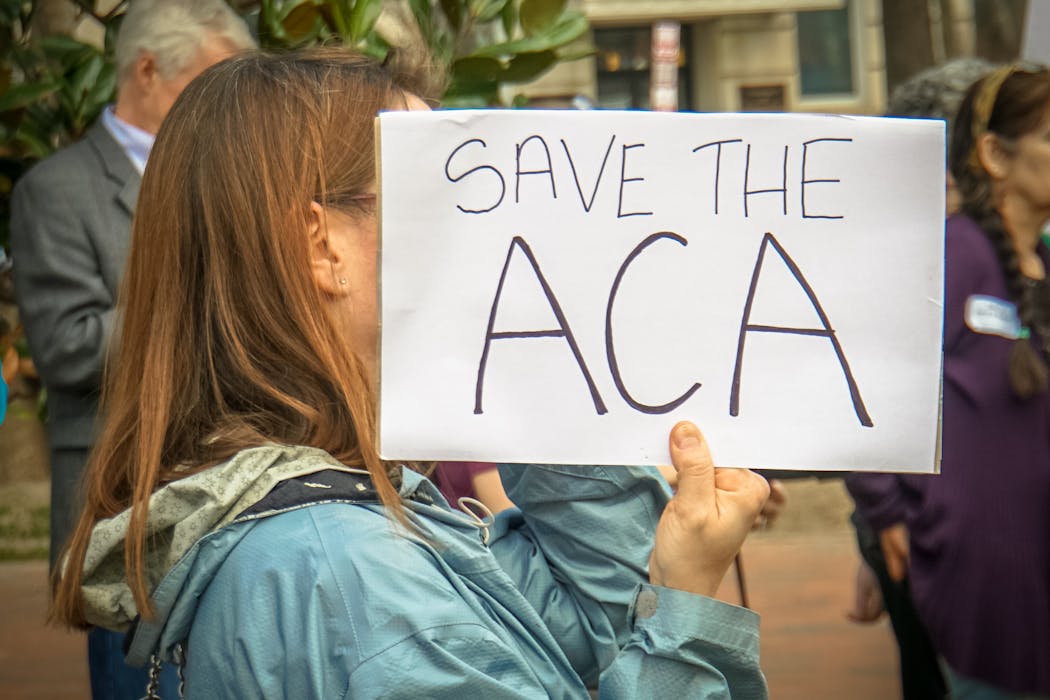
As experts in health law, we see this issue as simple but consequential from a legal standpoint. Congress authorized the enhanced subsidies in 2021, originally to cushion the economic fallout from COVID-19 for families, and extended them through 2025 in the Inflation Reduction Act.
Most Americans under age 65 get insurance through their employers, which the federal government subsidizes by making it tax-free. Medicare, the program for older Americans, and Medicaid, the program that mainly serves low-income Americans, are heavily supported by subsidies too.
But as of 2025, about 1 in 6 people under age 65 do not have access to this coverage, including many small-business owners and tradespeople, as well as part-time workers and those in the gig economy. For them, unsubsidized health insurance can be prohibitively expensive.
To address this affordability problem, the ACA provided for households earning between 100% and 400% of the federal poverty level to receive subsidies for purchasing policies on the ACA marketplace, effectively lowering premiums. The original law limited subsidies only to those making under 400% of the federal poverty level, which is, for a family of four in 2025, around US$128,000 per year. A family making $129,000 a year, however, would have to pay full price.
If the current ACA subsidies expire, almost 5 million people are likely to lose their health insurance coverage. FG Trade/E+ via Getty Images
For many low-income enrollees, mid-level plans – called silver plans in the ACA marketplace – effectively became free. Middle-income families who previously earned just above the cutoff gained meaningful relief, sometimes saving thousands of dollars a year.
What happens if subsidies expire?
Analysts broadly agree that returning to the pre-2021 rules would mean large cost increases and coverage losses. On average, the premiums that Americans will pay for ACA marketplace plans would more than double. The Kaiser Family Foundation estimates that average annual out-of-pocket premiums for an individual would jump from about $888 in 2025 to $1,900 in 2026.
Losses would disproportionately impact low- and middle-income families. Free premium plans would disappear. Those making below 250% of the federal poverty level could see their net premiums rise more than fourfold, while those between 250% and 400% would see their premiums double. What’s more, rural Americans, already under pressure from the state of the economy, face higher risks.
The fiscal and policy trade-offs
On the flip side, making the enhanced credits permanent would add about US$350 billion to federal deficits between 2026 and 2035, according to the Congressional Budget Office’s estimates. Proponents argue that the cost is justified by reduced medical debt, fewer uninsured, greater household stability and ultimately saving lives. Short-term savings from cutting the subsidies would also lead to higher health care costs, longer-term. But critics worry it’s a broad and expensive way to support affordability, benefiting some higher-income households that could otherwise afford coverage, even though it would cost more than 8.5% of their income.
Another concern is how the subsidies affect price competition. Under the ACA, the government pays most of the difference between what a household is expected to contribute and the actual cost of a standard benchmark plan. That means if health insurance companies raise their premiums, those who receive subsidies don’t feel the effect of the premium increases, because the federal subsidy simply grows to cover it. That means companies have fewer reasons to compete on price.
Legal and administrative constraints
Because the subsidies are written into the tax code, only Congress can extend them or make them permanent. The question of whether to renew them was already debated strenuously when Congress passed the big tax and spending package that President Donald Trump signed into law on July 4, 2025. By omitting the subsidies, the bill effectively raised health care costs for millions of middle-income Americans. States that run their own marketplaces may add some aid, but few can match the scale of federal support.
Administrative timing matters too. The IRS, health insurers and the online marketplace all need to know how the subsidy amounts will be calculated – in other words, which income limits and premium caps Congress wants to use. These figures determine how much financial help people get when they sign up for coverage. Late or temporary fixes can create confusion for both consumers and administrators.
Options before Congress
Lawmakers have several options, each with different trade-offs.
A permanent extension would provide stability for consumers and insurers – but at the cost of higher long-term federal spending. A short-term renewal of one to four years could soften the immediate jump in premiums while giving Congress time to reassess the policy, but it would continue the cycle of temporary fixes.
Alternatively, a targeted approach might preserve the larger subsidies for lower-income households but gradually reduce assistance for higher earners so that they aren’t guaranteed a cap of 8.5% of their income for insurance. This would make the policy more fiscally restrained but less universal.
Some legislators have also proposed offsetting the cost of ACA subsidies by pairing an extension with savings elsewhere in the health system. Those savings could come from trimming what the government pays insurers to lower patients’ out-of-pocket costs or by reducing Medicare payments to doctors.
Each of these options reflects a different balance among affordability, fiscal responsibility and administrative simplicity. Together, they highlight how difficult it is to design a policy that meets all three goals at once.
A structural challenge
The problem isn’t just political – it’s built into how time-limited programs like the enhanced ACA subsidies are designed. The subsidies have always reflected partisan divides, but their temporary nature makes those divides even sharper. Lawmakers limited them to a few years to keep costs down, but that choice now means Congress has to reopen the same debate every year.
When deadlines for renewing programs collide with larger funding fights, important benefits can lapse, not because lawmakers chose to end them but because the fights over broader spending leave little room for resolution.
In the end, it’s up to Congress to decide not only whether these subsidies continue, but whether big social policies like this should be settled through last-minute budget showdowns. For now, getting the government running and keeping health insurance affordable are part of the same fight.
Wendy Netter Epstein is a member of the Illinois Health Benefits Exchange Advisory Committee.
Christopher Robertson does not work for, consult, own shares in or receive funding from any company or organization that would benefit from this article, and has disclosed no relevant affiliations beyond their academic appointment.
Source: The Conversation – Canada – By Nadia Hasan, Assistant Professor, School of Gender, Sexuality and Women’s Studies, York University, Canada
In April 2024, a video circulated online showing an Oakville, Ont. high school teacher and a student having an alarming and contentious conversation about his keffiyeh.
The Iroquois Ridge High School educator says mid-way in the clip: “I didn’t call you a terrorist. I said it (the keffiyeh) reminds me of …” When the student pushes her to finish her sentence and suggests “Hamas?” she answers “yes.”
Our findings point to a pattern of unethical use of institutional power to intimidate and alienate those expressing support for Palestine or their identities — what many community organizers in Canada now call “the Palestine exception.”
What is the Palestine exception?
The expression describes how democratic freedoms and multicultural ideals historically meet their limits when it comes to Palestinian human rights, history and identity. Studies in Canada and the United States show systemic silencing and erasure of Palestinian experiences — often through unfounded accusations of antisemitism.
For Palestinians in Canada, this often means hiding their heritage for fear of stigmatization, or facing punishment for expressing pro-Palestinian views.
“It feels that institutions in our society will support all human rights except Palestinian human rights, celebrate all cultures except Palestinian culture, and condemn all forms of racism except anti-Palestinian racism.”
Unfair targeting, censorship and discipline of those speaking out for Palestinian rights — or merely perceived as Palestinian, Arab or Muslim — is a common theme in our report and particularly disturbing in terms of young people’s experiences.
A pattern of targeting young people
According to our research, young people in schools, universities and early careers are facing Islamophobia, anti-Palestinian racism and anti-Arab racism in the form of employment discrimination, doxing, hate-motivated violence, bullying and the suppression of their democratic rights.
The HDSB keffiyeh incident reflects a wider reality: a treatment of suspicion toward Palestinian expressions.
This led to social media backlash from parents who claimed the trip exposed students to pro-Palestinian political activity and compromised safety. The Ontario education minister’s office demanded an investigation — an unusual move that many felt revealed a double standard compared to other incidents.
The TDSB issued an apology for the “harm” caused and pre-emptively cancelled another planned field trip for National Day for Truth and Reconciliation — ironically undermining commitments to decolonization.
Patrick Case, a former Ontario Ministry of Education chief equity officer, conducted an independent review, interviewing 146 parents, students, Indigenous leaders, staff and trustees. His report found that the Grassy Narrows event was not overshadowed by pro-Palestinian activism and that the TDSB’s reaction reflected a broader pattern of erasure and suspicion toward Palestinian identity.
Indigenous leaders also noted that media outrage diverted attention from pressing issues of environmental justice in Indigenous communities.
Despite these findings, the education ministry has not promoted the report and has rejected some of its key recommendations.
Punishment over pedagogy
Our report raises concerns about a growing political culture that punishes rather than engages young people advocating for Palestinian human rights. Instead of fostering critical thinking, institutions are choosing repression.
In an external review, Justice J. Michael MacDonald condemned this response as a “rush to judgment” that unfairly targeted “young idealists motivated by immense human suffering.” He ruled that the students’ actions were a “valid exercise of freedom of speech” and criticized the administration for negatively impacting the students.
Many young people have shown resilience in the face of such repression, but the harm is undeniable. Being punished for expressing solidarity with Palestinians — and witnessing peers being punished — affects young people’s sense of safety, intellectual curiosity and career prospects.
Protecting Canadian multiculturalism
Two years into the brutal genocide in Gaza, there is a notable shift in public discourse and policy related to Palestine. Yet many remain deeply skeptical of the sincerity of this shift.
Earlier this fall, the federal Liberal government introduced the Combating Hate Act, proposing amendments to the Criminal Code.
Critics warn these changes could further curtail civil liberties, particularly around expressions of Palestinian identity and solidarity.
The amendments would ban the public display of “hate symbols” and criminalize protests near places of worship, schools and community centres. The government defines hate symbols as those associated with terrorist entities such as the Nazi swastika and SS (Schutzstaffel) bolts. And so, understandably, questions abound about whether this means that Palestinian flags or the script of the shahada (Muslim declaration of faith) could be deemed hate symbols.
Given recent institutional responses to pro-Palestinian expression, there is little confidence these sorts of laws will not be weaponized to criminalize Palestinian identity, dissent and criticism of the Israeli state.
In large part, this pervasive suspicion stems from the widespread experience of Palestinian identity and pro-Palestinian positions being treated as inherently suspect, even dangerous. Such exceptional treatment exposes the profound fissures — and in fact the limits — of Canadian multiculturalism and its professed commitments to democratic freedoms.
Nadia Hasan receives funding from the Social Sciences and Humanities Research Council of Canada, Canadian Heritage, The Muslim Fund, the Bay Tree Foundation and The Olive Tree Foundation.
Sarah Abou-Bakr does not work for, consult, own shares in or receive funding from any company or organisation that would benefit from this article, and has disclosed no relevant affiliations beyond their academic appointment.
Source: The Conversation – USA – By Aimee Pugh Bernard, Associate Professor of Immunology and Microbiology, University of Colorado Anschutz Medical Campus
Every day, your immune system performs a delicate balancing act, defending you from thousands of pathogens that cause disease while sparing your body’s own healthy cells. This careful equilibrium is so seamless that most people don’t think about it until something goes wrong.
Autoimmune diseases such as Type 1 diabetes, lupus and rheumatoid arthritis are stark reminders of what happens when the immune system mistakes your own cells as threats it needs to attack. But how does your immune system distinguish between “self” and “nonself”?
The 2025 Nobel Prize in physiology or medicine was awarded to Shimon Sakaguchi, Mary Brunkow and Fred Ramsdell.
How immune tolerance works
While the immune system is designed to recognize and eliminate foreign invaders such as viruses and bacteria, it must also avoid attacking the body’s own tissues. This concept is called self-tolerance.
For decades, scientists thought self-tolerance was primarily established in the parts of the body that make immune cells, such as the thymus for T cells and the bone marrow for B cells. There, newly created immune cells that attack “self” are eliminated during development through a process called central tolerance.
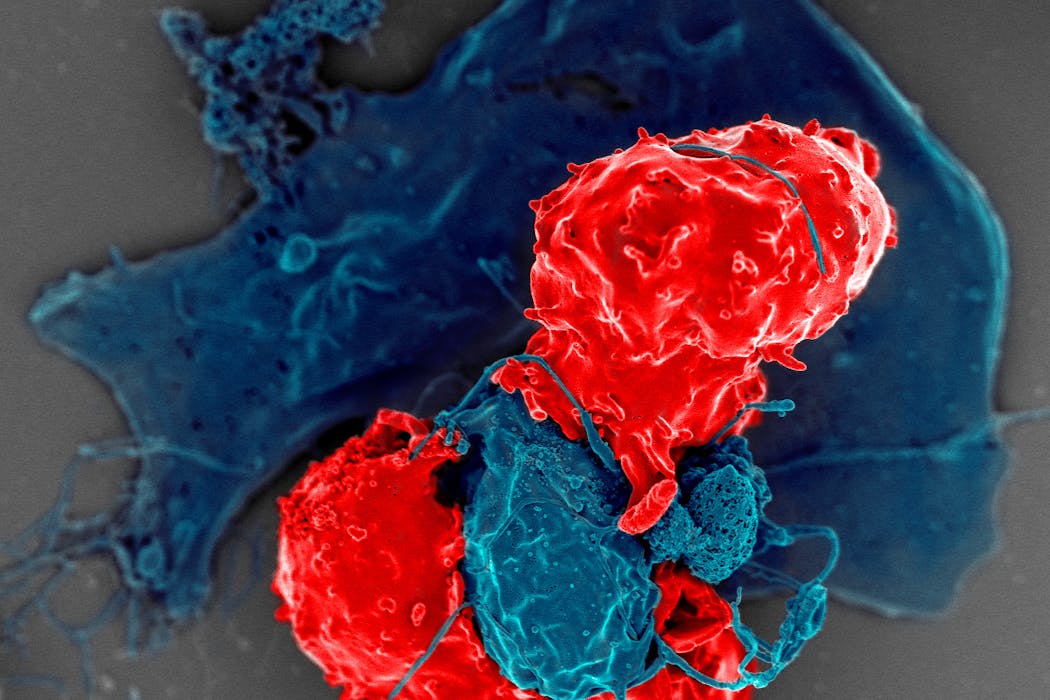
However, some of these self-reactive immune cells escape this process of elimination and are released into the rest of the body. Sakaguchi’s 1995 discovery of a new class of immune cells, called regulatory T cells, or Tregs, revealed another layer of protection: peripheral tolerance. These cells act as security guards of the immune system, patrolling the body and suppressing rogue immune responses that could lead to autoimmunity.
While Sakaguchi identified the cells, Brunkow and Ramsdell in 2001 uncovered the molecular key that controls them. They found that mutations in a gene called FOXP3 caused a fatal autoimmune disorder in mice. They later showed that similar mutations in humans lead to immune dysregulation and a rare and severe autoimmune disease called IPEX syndrome, short for immunodysregulation polyendocrinopathy enteropathy X-linked syndrome. This disease results from missing or malfunctioning regulatory T cells.
In 2003, Sakaguchi confirmed that FOXP3 is essential for the development of regulatory T cells. FOXP3 codes for a type of protein called a transcription factor, meaning it helps turn on the genes necessary for regulatory T cells to develop and function. Without this protein, these cells either don’t form or fail to suppress harmful immune responses.
Harnessing the immune system for medicine
Regulatory T cells can be heroes or villains, depending on the context. When regulatory T cells don’t work, it can lead to disease. A breakdown in immune tolerance can result in autoimmune diseases, where the immune system attacks healthy tissues. Conversely, in cancer, regulatory T cells can be too effective in suppressing immune responses that might otherwise destroy tumors.
Understanding how FOXP3 and regulatory T cells work launched a new era in immunotherapies that harness the immune system to treat autoimmune diseases and cancer. For autoimmune diseases such as rheumatoid arthritis and Type 1 diabetes, researchers are exploring ways to boost the function of Tregs. For cancer, the goal is to inhibit Tregs, allowing the immune system to target tumors more aggressively.
Beyond disease treatment, this research may also improve organ transplantation, where immune tolerance is crucial to prevent rejection. Scientists are exploring how to engineer or expand Tregs to help the body accept transplanted tissues over the long term.
Continuing to unlock the secrets of immune regulation can help lead to a future where the immune system can be precisely tuned like a thermostat – whether to turn it down in autoimmunity or rev it up against cancer.
The 2025 Nobel Prize reminds us that science, at its best, doesn’t just explain the world – it changes lives.
Aimee Pugh Bernard is affiliated with Immunize Colorado as a volunteer and unpaid board member.
Source: The Conversation – (in Spanish) – By Sylvie Pérez Lima, Psicopedagoga. Psicóloga COPC 29739. Profesora tutora de los Estudios de Psicología y Educación, UOC – Universitat Oberta de Catalunya
Entre las múltiples demandas que se le hacen a la escuela del siglo XXI, una de las más relevantes es su papel en la educación sexual. Una educación sexual rigurosa, inclusiva y basada en evidencia, como defiende la UNESCO, es la mejor manera de garantizar o, al menos, contribuir a que los niños y adolescentes puedan tomar decisiones informadas, y puedan cuidar de su salud y de su bienestar afectivo, emocional y social.
Pero ¿cuáles son los contenidos adecuados, según la edad, y qué cuestiones deben dejarse para el ámbito familiar?
Llegar antes que la pornografía
Diversos estudios evidencian que el conocimiento del alumnado favorece el uso de anticonceptivos y reduce las conductas de riesgo. Incluso puede ayudar a retrasar el inicio de las relaciones sexuales, cuya tendencia actual es a adelantarse.
También se ha generalizado la exposición a contenido sexual a través de internet, en muchos casos a edades muy tempranas. Cuando esto sucede sin tener conocimientos previos puede generar reacciones emocionales fuertes como asco, shock o confusión en un primer momento, pero también otras más profundas como síntomas evitación emocional (ocurre en más del 50 % de los casos).
En educación primaria conviene centrarse en habilidades socioemocionales, conocimiento básico del cuerpo, límites y respeto, así como en la prevención del abuso de manera adecuada a la edad.
En primero y segundo (6-8 años), los objetivos son desarrollar la autoestima y seguridad personal, aprender a comprender y expresar emociones y reconocer la importancia de los límites propios y de los otros. Se puede trabajar con cuentos sobre la diversidad familiar, juegos que identifiquen las emociones o actividades que ayuden a conocer las partes del cuerpo.
En tercero y cuarto (8-10 años) los objetivos se amplían a saber pedir ayuda, normalizar los cambios en el cuerpo o identificar situaciones de incomodidad. Podemos trabajar con dinámicas de grupo sobre amistad y respeto, y empezar con las primeras nociones sobre la pubertad.
En ciclo superior (10-12 años) conviene reforzar la prevención del abuso y el conocimiento sobre los cambios físicos y emocionales de la pubertad y adolescencia. A esta edad ya se empiezan a introducir talleres para luego poder trabajar con debates.
En secundaria se incorporan contenidos más concretos sobre anticoncepción, diversidad, pornografía, consentimiento y prevención de la violencia. Los objetivos de trabajo se focalizan en proporcionar conocimientos, pensamiento crítico y competencias socioemocionales que complementen lo aprendido en primaria y acompañen su desarrollo.
Por ejemplo, puede explicarse de manera práctica el uso del preservativo y presentar distintos métodos anticonceptivos, para que, cuando ocurra la relación sexual, sea segura y consentida. También se puede trabajar la diversidad afectivo-sexual y de género con ejemplos cotidianos, sin imponer modelos de vida, sino desnaturalizando la discriminación.
Respecto a la pornografía y el consumo de contenidos sexuales en internet, se trata de favorecer un pensamiento crítico que permita diferenciarla de la sexualidad real y reflexionar sobre estereotipos y consentimiento. En esta etapa educativa, se incorpora el trabajo con dinámicas y debates sobre relaciones sanas y tóxicas, el consentimiento expreso y la prevención de la violencia sexual y de género.
Aprendizaje y educación están condicionados por el desarrollo cognitivo y emocional de los alumnos: no sólo la edad es importante, sino el momento individual de desarrollo y la madurez. Esto es posible si integramos la educación afectiva y emocional en la educación sexual.
Las competencias emocionales son un conjunto de habilidades que permiten identificar, comprender y regular las emociones propias y ajenas, así como utilizar esta información para guiar el pensamiento y la conducta. Están ligadas al bienestar psicológico, el rendimiento académico y la prevención de conductas de riesgo. Desarrollarlas fortalece la autoestima y contribuye tanto a promover relaciones sanas como a prevenir conductas sexuales de riesgo o comportamientos impulsivos o agresivos.
En este sentido, podemos decir que la educación sexual se cimenta en una buena educación emocional. Cuanto mejor sepan los niños y niñas de primaria conocerse, entender sus emociones, expresarlas y gestionarlas y comprender las de los demás, no sólo estaremos favoreciendo un clima de convivencia sano en la escuela, sino que estaremos sentando las bases para una buena educación sexual.
Neurodiversidad y educación sexual
Aunque falta aún investigación relativa al alumnado con discapacidad intelectual, autismo u otras necesidades especiales, crece la evidencia sobre la necesidad de adaptar contenidos de consentimiento, relaciones y derechos a su comprensión. Estudios recientes recuerdan adaptar a esta situación la educación sexual y afectiva. Es crucial reconocer y promover los derechos sexuales de todas las personas, incluyendo a aquellas con necesidades educativas especiales.
Las actuaciones breves y puntuales tienen poco impacto; la recurrencia y la evaluación continua aumentan la efectividad. Un metaestudio de 2023 confirma que los programas con mayor duración, mejor estructura y contenidos diversos (incluyendo afectividad, sexualidad y derechos) tienen efectos más sólidos sobre actitudes, conocimientos y conductas. Por ello no basta con un taller o charla, sino que la educación sexual debe formar parte de los contenidos curriculares.
¿Qué evitar desde la escuela?
Los valores personales, las creencias familiares y la moral individual son espacio de la familia y del entorno cultural o religioso de cada alumno. La UNESCO recuerda que no corresponde a la educación formal transmitir visiones particulares sobre sexualidad o género ni emitir juicios sobre orientación sexual o identidad de género.
Por esta razón se deben evitar discursos de vergüenza, culpa o miedo como método de prevención y eludir aspectos muy íntimos como prácticas sexuales específicas si no hay permiso familiar o el uso de lenguaje muy explícito que no sea apropiado para la edad.
En cualquier caso se trata de un esfuerzo conjunto que no podemos seguir retrasando: una encuesta realizada en noviembre de 2023 en España mostraba que la mitad de los jóvenes de 16 a 29 años no había recibido educación sexual alguna, ni de su familia, ni en su centro educativo.
Todavía es mayor el porcentaje de jóvenes que declaran que no han obtenido una educación afectivo-sexual de calidad. Y sólo poco más del 10 % de ellos se muestra completamente satisfecho con este tipo de educación recibida en el ámbito familiar (11,1 %) o escolar (12,2 %).
Es responsabilidad de todos revertir esta tendencia: la educación sexual no solo contribuye a una vida más informada y plena, sino también a una sociedad más sana e igualitaria.
Sylvie Pérez Lima no recibe salario, ni ejerce labores de consultoría, ni posee acciones, ni recibe financiación de ninguna compañía u organización que pueda obtener beneficio de este artículo, y ha declarado carecer de vínculos relevantes más allá del cargo académico citado.
















.jpg)

