Source: The Conversation – UK – By Natasha R. Hodgson, Senior Lecturer in Medieval History, Nottingham Trent University
Women are largely absent from the questions, sources, and mark schemes that shape how history is taught and assessed in schools in England.
You only have to take a look recent exam papers to see the problem. For example, when my colleague Catherine Gower and I surveyed 219 GCSE, AS and A-level history papers issued in the summer of 2023, we found only 6% of 991 exam questions directed students to discuss women (37% directed students to discuss men).
A report by the charity End Sexism in Schools, which carried out a survey into the teaching of women in history in earlier years at secondary school, found a similar lack.
Surprisingly, the recently released Curriculum and Assessment Review of England’s national curriculum pays scant attention to women and girls. Coverage of gender-related issues in the curriculum as a whole was disappointingly thin.
While the need to recognise a “wider range of perspectives” is cited in the curriculum review, these references are unclear and do not specifically address gender imbalance. There is still no statutory requirement to include women in the teaching of history – even though unrelated government research suggests that misogyny is a serious problem in schools.
No educational system can fully represent the whole of human history. Designing curriculum content is always a matter of choice. Who and what we choose to teach about our shared pasts is critical to the development of young people’s identities and empathy, as well as their awareness of local, national and global connections and life experiences dissimilar to their own.
Without government specification, despite the wealth of academic scholarship produced over the past 50 years on women and gender in history, there has been no corresponding imperative to embed this within secondary schools.
While there are teachers who are keen to incorporate women, they face systemic challenges. The assessments set by exam boards, which are influenced by the national curriculum, play a crucial role here. In an era of league tables there is intense pressure on teachers to prioritise assessment-focused content. If topics relating to women are not going to be assessed, it can be a struggle for teachers to include them.
Missing women
Our research focused on exam papers across England, including primary source extracts and mark schemes. One of the most shocking findings was that over one third of the papers – 34.7% – contained no mention of any women at all. They were not mentioned in questions, in the historical sources provided for students to examine, or in mark schemes. By comparison, only one paper out of 219 made no mention of men.
Of the 991 history exam questions set in 2023, 357 featured a named individual, but only 31 were women – and nine of those were references to Elizabeth I or her reign. In fact, Elizabeth I was the most frequently named woman across all exam content, including sources and mark schemes, appearing in 55 instances. The top 11 most referenced women included nine royal figures, six of whom were queens of England. Non-elite women and those from outside the UK and Europe were almost entirely absent.
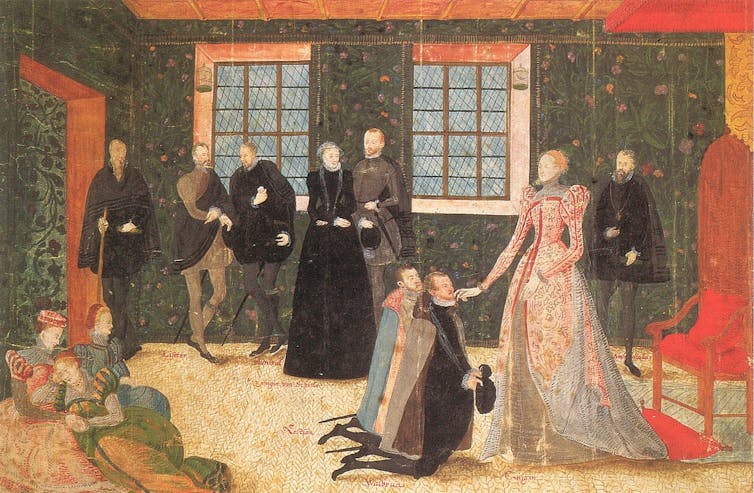
A painting of Elizabeth I receiving Dutch ambassadors, attributed to Levina Teerlinc, a female artist at the Tudor court. Wikimedia Commons
This imbalance is not just about who gets named. It is about who gets seen, studied, remembered and valued. This skewed perspective also shapes the historical understanding of thousands of students across England, year on year.
In mark schemes, where the content needed to achieve marks is specified, women only appeared in possible answers for 22.8% of questions, compared to 83.1% for men. This matters because students are both taught and assessed based on these mark schemes. It’s largely men who are presented as the “right” answer.
History exams also mention historians. Students are asked to respond to a historian’s viewpoint, or expected to refer to historians in their answers. But out of 163 historians mentioned in exams, sources or mark schemes, only 22 were women. This is a problem: 47% of UK academic historians in 2023-24 were women, and female students often outnumber male students in history at every level. Despite the evident popularity of the subject for female students, they cannot see themselves in exam assessments.
The current assessment system in England not only fails to reflect the diversity of historical experience – it actively reinforces distorted, male-centric narratives. If we want students to learn inclusive, representative history, we must start with the exams that often shape what gets taught.
Equipped with a greater understanding of their own and each other’s pasts and the skills to unpack diverse forms of evidence, students would be better informed to deal with conflicts and challenges as well as to reflect on other points of view.
History is not just about kings and wars. It’s about people. And half of those people have been missing from the story for far too long.
Natasha R. Hodgson had in the past received funding for research from the AHRC. The Teaching Medieval Women project which produced the research for the article receives internal funding for research assistance from Nottingham Trent University. Natasha is also part of the History sub group for the charity End Sexism in Schools. She has reviewed a module for Pearson and participates in the OCR History advisory board.
Geoffrey Chaucer’s Miller’s Tale is renowned for its salacious storyline of sexual misadventure. Set in 14th-century Oxford, it tells the tale of John the Carpenter, a husband so terrified that another “Noah’s flood” is coming to drown the world that he sleeps in a basket in the attic – freeing his wife to bed her lover downstairs.
Chaucer’s pilgrims all have a good laugh at John’s expense as they walk together from London towards Canterbury, echoing John’s neighbours who “gan laughen at his fantasye” of Noah’s flood and call John “wood” (mad). The pilgrims listen to this particular tale (one of 24 Canterbury Tales) as they walk along the south bank of the River Thames between Deptford and Greenwich.
That stretch of river was well-known to Chaucer. At the time of writing what remains one of English literature’s greatest works, he had been tasked, in March 1390, with repairing flood damage to the riverbank around Greenwich.
As a poet who swapped his pen for a spade to dig banks and defend the land around Greenwich from inundation, Chaucer knew from experience that flooding was no laughing matter. He – and later Shakespeare – lived through periods of weird weather not unlike what we are seeing today.
Their changing climate was triggered by falling rather than rising temperatures during what’s known as the little ice age. But the net effect was weather extremes like strong winds, storms and flooding – some of which were evoked in plays, prose and poems, offering valuable information on how communities were hit by, and responded to, these extreme events.
For the past two years, I have been scouring historical literature and performances for – now-often forgotten – experiences of living with water and flooding along the shorelines and estuaries of England’s coastlines. Whether in 15th-century “flood plays” in Hull or the “disaster pamphlets” (an early form of newsbook) that rose to popularity in Shakespeare’s lifetime, my research shows we do not only need to look to the future to understand the challenges posed by rising seas and more intense storms.
The River Thames and London borough of Southwark, starting point for Chaucer’s Canterbury Tales. From The Particuler Description of England by William Smith (1588). British Library via Wikimedia
Hull’s medieval flood play
Early in the new year of 1473, a crowd gathered outside Kingston-upon-Hull’s main church to watch the annual flood play performed. The play itself is now lost, but surviving records cast tantalising light on how the play was staged between 1461 and 1531. We know, for example, it was snowing in 1473 because of a payment that year for “makyng playne the way where snawe was”.
We also know from financial records that the play was performed on an actual ship, hauled through Hull’s streets on wheels and hung on ropes for the rest of the year in Holy Trinity church (now Hull Minster). We know from payments to “Noye and his wyff”, “Noyes children” and “the god in the ship” that the play must have told a very similar story to that of two medieval pageants still performed today in the neighbouring east coast city of York.
What is not immediately clear from Hull’s records is why the town’s guild of master mariners chose the snow and ice of early January as the annual date for their flood play’s performance, when biblical plays in York and other northern towns and cities were staged during the warmer months of Easter and midsummer. A payment for Noah’s “new myttens” in 1486 speaks to the challenges of performing outdoor theatre in January, typically the coldest time of year.
In fact, Hull’s flood play was always staged on Plough Monday, the first Monday after the Christian celebration of Epiphany on January 6. This date marked the traditional start of the new agricultural year, and a close reading of Hull’s records shows themes of farming woven into the flood play. The benefits of flooding for haymaking, for example, were signalled on stage through the purchase of agrarian items like a “mawnd” (grain basket) in 1487, “hay to the shype” (ship) in 1530, and plough hales (handles) “to the chylder” (children) in 1531.
Noah, A Mystery Play by Edward Henry Corbould (1858) depicts Hull’s medieval flood play performed outside Holy Trinity Church (now Hull Minster). Ferens Art Gallery via Wikimedia
The advantages of flooding meadows had long been recognised in the Humber villages surrounding Hull – and reflected in the layout of its medieval land. Grass grew well on the well-drained meadows along the River Humber’s banks, and the hay harvested from these floodplains provided winter feed for farm animals including the oxen that pulled ploughs through arable fields in January, at the start of the new agricultural year.
Writing and water management were once familiar bedfellows – and the wisdom of building raised flood banks and making hay on floodplains is reflected throughout medieval and early modern literature.
Writing of Runnymede, an ancient meadow on the banks of the River Thames, in his 1642 poem Coopers Hill, John Denham casts an approving glance on the “wealth” that the seasonal flooding of the Thames brings to the meadows on its river banks: “O’re which he kindly spreads his spacious wing / And hatches plenty for th’ensuing Spring.”
But Denham distinguishes between two types of flood: the benevolent, seasonal kind that brings wealth to the meadows, and the “unexpected Inundations” that “spoile the Mowers hopes” and “mock the Plough-mans toyle”. Floods can bring disaster if they are unexpected (for example, if they occur during the growing season in spring and summer) or out of place (flooding arable fields rather than meadow ground). But literature reminds us they can also bring benefits – if communities learn to live with water and adapt their lives to the rising tide.
Unfortunately, despite renewed interest in nature-based solutions to flood alleviation, floodplain meadows declined sharply in the 20th century and few exist today. Downstream of Runnymede, at Egham Hythe, is Thorpe Hay Meadow. Once part of a thriving medieval economy of haymaking on floodplains, its website announces it is now the “last surviving example of unimproved grassland on Thames Gravel in Surrey”.
Gone too are Hull’s meadows and its flood play, which once celebrated the benefits of flooding for farming in this stretch of north-east English coastline. Some of the meadows in the village of Drypool, directly to the east of Hull, were built on as early as the 1540s for Henry VIII’s new defensive fortifications. Much of the remainder was absorbed into this industrial city’s urban sprawl from the 17th century onwards. Today, the Humber’s banks in urban Hull are heavily defended by a £42 million concrete frontage, protecting all the homes and businesses on the floodplain beyond.
Shakespeare was born in 1564 into one of the coldest decades of the last millennium. Temperatures plunged across northern Europe in the 1560s, and the winter of 1564-5 was especially severe.
The little ice age brought shorter springs and longer winters to northern Europe. Reconstructed temperatures show the climate was on average between 1 and 1.5°C colder during Shakespeare’s lifetime than our own. But it was also an age of weather extremes, bringing heat and drought alongside snow and ice.
The weather diary of Shakespeare’s almost exact contemporary, Richard Shann (1561-1627), now housed in the British Library’s manuscripts department, is an invaluable witness to these fluctuating extremes. Writing from the village of Methley in West Yorkshire, Shann describes “a could and frostie winter” in 1607-8 “the like not seene of manie yeares before”. Indeed, the frost “was so extreame that the Rivers was in a manner dried up”.
At York, Shann writes, people “did playe at the bowles” on the river Ouse, and in London “did builde tentes upon the yse” (ice). Temperatures soared that summer, with July 1608 “so extreame hote that divers p[er]sonnes fainted in the feilde”. But the cold quickly returned. “A verie great froste” was reported as early as September 1608, with Shann reporting that the River Ouse “would have borne a swanne”.
The climate crisis has a communications problem. How do we tell stories that move people – not just to fear the future, but to imagine and build a better one? This article is part of Climate Storytelling, a series exploring how arts and science can join forces to spark understanding, hope and action.
As the weather became more variable, with hot and cold spells more extreme, so the late 16th and 17th centuries saw an increase in the frequency and intensity of storms – such that this era has been dubbed “an age of storms”.
On Christmas Eve 1601, Shann describes “such a monstrous great wynde” in Methley “that manie persons weare at theyr wittes ende for feare of blowinge downe theyre howses”. After the storm causes the River Aire at Methley to flood, he writes of his neighbours that the water “came into theyre howses so high, that it allmost did touch theyre chambers”.
In London, meanwhile, historian John Stow (1525-1605) records extremes of heat and cold leading to storms and floods throughout the 1590s. In his Annals of England to 1603, Stow reports “great lightning, thunder and haile” in March 1598, “raine and high waters the like of long time had not been seene” on Whitsunday 1599 – and in December 1599, “winde … boisterous and great” which blew down the tops of chimneys and roofs of churches. The following June, there were “frosts every morning”.
The storminess of this period also appears to seep into Shakespeare’s work. Several of his later plays use storms at sea as plot devices to shipwreck characters on islands (The Tempest) or distant shores (Twelfth Night). In Pericles, Prince of Tyre, Shakespeare (the co-author, with George Wilkins (died 1618)) tosses his hero relentlessly across the eastern Mediterranean in a play that features no fewer than three storms at sea.
While many of Shakespeare’s storms take place in distant locations and at sea, King Lear sets the storm which rages throughout its central scenes in Kent, on the English east coast. Lear describes “the roaring sea” and “curlèd waters” that threaten to inundate the land. It is a play shaped by the east coast’s long experience of living with the threat of flooding from the North Sea.
Disaster pamphlets
Surviving reports of coastal flooding caused by a series of North Sea surges in 1570-71 describe dramatic inundations in the coastal counties of Norfolk, where “people were constrained to get up to the highest partes of the house”, and Cambridgeshire, where several “townes and villages were ouerflowed”. Meanwhile, the Lincolnshire village of Bourne, on the edge of the Fens, “was ouerflowed to [the] midway of the height of the church”.
These colourful accounts of towns and churches under water were collected and printed in one of the first “disaster pamphlets” in London in 1571. It bore the lengthy title: A Declaration of Such Tempestious and Outragious Fluddes, as hath been in Diuers Places of England.
This pioneering form of news booklet rose to popularity in Shakespeare’s lifetime to cater for popular interest in the increasingly weird weather of those decades. Disaster pamphlets gathered nationwide news of floods, storms and lightning strikes into slim, pocket-sized booklets, printed in London under dramatic titles such as Feareful Newes of Thunder and Lightening (1606) and The Wonders of this Windie Winter (1613).
Of the London booksellers who sold these pamphlets and other “strange news” booklets, Shakespeare’s close contemporary, William Barley (1565-1614), was among the most prolific. Many pamphlets were accompanied by eye-catching illustrations of disaster scenes on their title pages and inside covers.
Natural disasters were by no means confined to the east coast. Two pamphlets – William Jones’s Gods Warning to his People of England, and the anonymous A True Report of Certaine Wonderfull Ouerflowings of Waters – reported on one of Britain’s worst natural disasters, the Bristol Channel flood of January 30 1607.
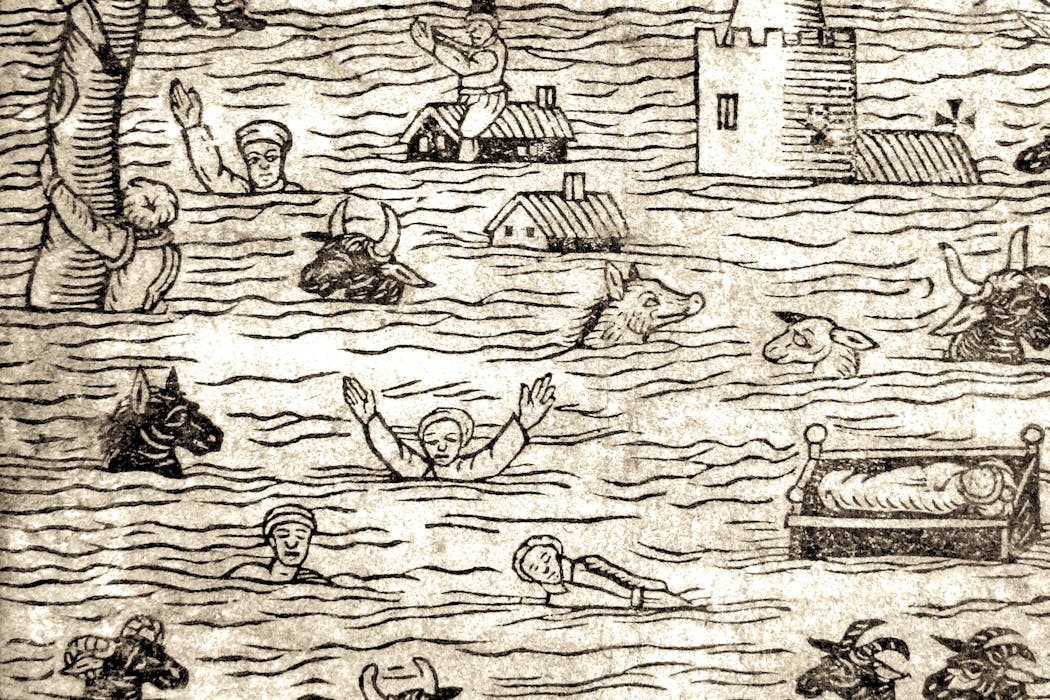
Their cover illustrations depicted scenes of suffering and survival, with submerged churches and steeples featuring prominently. Inside, writers knitted together statistics recording the number of miles of land flooded and cattle drowned with eyewitness accounts of local gentlemen and landowners, who described churches “hidden in the Waters”, the “tops of Churches and Steeples like to the tops of Rockes in the Sea”. Indeed, so high were the floodwaters, Jones wrote, that “some fled into the tops of Churches and Steeples to saue themselves”.
While newsbooks continued to grow in popularity, coming of age in the civil wars of the mid-1600s as a platform for reporting political news and views, disaster pamphlets focused specifically on storms and floods appear to have waned in popularity by the end of the 17th century. Their decline coincided with the rise in the later 1600s of the first local newspapers in England and Wales, which continued to feature news of floods and other weird weather events for centuries to come.
Nonetheless, references to disaster pamphlets lived on in poems such as Jean Ingelow’s High Tide on the Coast of Lincolnshire, 1571 – published in 1863 – which drew on the details of A Declaration to recreate the east coast floods of three centuries earlier from the point of view of a husband who loses his wife to the rising tide.
By focusing on the loss felt by one family, Ingelow draws attention to the human cost of these disasters which, then and now, can be buried beneath faceless figures of fatalities in news reports. The poem’s narrator notes that “manye more than mine and me” lost loved ones in that surge tide.
The concept of climate change was unknown to Shakespeare’s generation, yet the changing climate of the little ice age introduced anxieties into the reporting of weird weather in disaster pamphlets. Their authors would typically couch the causes of local floods as a national issue – as stirrings of divine anger at the sins of the English nation or of its Church.
Jones’s response to the Bristol Channel flood typified this approach. In Gods Warning, he describes the flood as a “watry punishment” – one of several “threatning Tokens of [God’s] heavy wrath extended towards us that had been experienced in recent years. How floods were represented in poems, pamphlets, newspapers and books have long reflected society’s wider anxieties over the question of what these weird, wild weather events might portend.
Lost communities
The English east coast possesses some of the fastest-eroding cliffs in Europe. In East Yorkshire, the Holderness cliffs from Bridlington to Spurn Point are eroding at an astonishing 1.8 metres per year. While erosion has been happening along this coastline since the end of the last (full) ice age approximately 11,700 years ago, it is today being accelerated by the rising seas and more frequent storms of climate change.
We can measure flooding or erosion in some very alarming numbers. According to the Flamborough Head to Gibraltar Point Shoreline Management Plan of 2010, the Holderness coast retreated by around two kilometres over the past thousand years. In the process, 26 villages named in the Domesday Book of 1086 disappeared under water.
An illustration of Old Kilnsea church in 1829, now swallowed up by the North Sea. Henry Gastineau
But literature goes further – revealing the experiences of those who lived on the edge of those crumbling clifftops, preserving fast-vanishing communities and coastlines for future generations.
In the early 20th century, histories of the Holderness coast’s lost villages were painstakingly pieced together from old photos, maps and archival records by Thomas Sheppard, whose Lost Towns of the Yorkshire Coast (1912) includes a map preserving the names and former locations of these shipwrecked villages: Cleton, Monkwell, Monkwike, Out Newton and Old Kilnsea, to name five. What must it have been like to live in these villages? How does their loss haunt today’s coastal communities, who are themselves facing a slow but sure retreat from the advancing sea?
Literature can provide what nature writer Helen MacDonald, in her collection of essays Vesper Flights (2020), calls the “qualitative texture” to enrich the statistics. It can reveal the ways of life and habits of thought of people who lived in these communities, and who adapted to the risks and benefits of living “on the edge”.
Juliet Blaxland’s The Easternmost House (2019) describes a year living in a “windblown house” in coastal Suffolk, “on the edge of an eroding clifftop at the easternmost end of a track that leads only into the sea”. The house – now demolished – was once Blaxland’s home. She wrote the book as “a memorial to this house and the lost village it represents, and to our ephemeral life here, so that something of it will remain once it has all gone”.
But Blaxland conjures more than bricks and mortar. She speaks to the mindset of coast-dwellers who pace out the distance between their houses and the advancing cliff edge, and who find solace, as well as sadness, in the inevitability of coastal loss. “Everyone has a cliff coming towards them, in the sense of our time being finite,” Blaxland writes. “The difference is that we can see ours, pegged out in front of us.”
From Noah to Now. Video by the University of Hull.
From Noah to now
Coastal communities have learnt over centuries to live with uncertainty, and to continue their ways of life despite the risks. This “living with water” mentality shapes east coast communities just as surely as banks, barriers and rock armour shape the east coast’s cliffs, river mouths and beaches. It is in literature that we see this inner life revealed, and hear the voices of the past singing out to the present.
Singing was how we engaged young people with the past on the Noah to Now project. Across six months in 2024-25, colleagues from the University of Hull’s Energy and Environment Institute worked with singers, musicians and more than 200 young people in Hull and north-east Lincolnshire to rehearse and perform Benjamin Britten’s mid-20th century children’s opera, Noye’s Fludde, at Hull and Grimsby minsters.
The opera tells the biblical story of Noah in song, using the text of one surviving medieval flood play from 15th-century Chester as its libretto. Our chorus of school children performed as the animals in the ark, and were joined by other young people who took on solo roles or played in the orchestra.
Rooted in the medieval past, the opera introduced participating schools to the lost flood play from medieval Hull, and to that play’s connections with the longstanding culture of living with water in the Humber region. One of our venues, Hull Minster, was the church in which Hull’s medieval mariners used to hang the ship (or ark) that they hauled through Hull’s streets every January, some 500 years ago.
Britten’s opera also resonates with more recent histories of east coast flooding. Noye’s Fludde was first performed in 1958 near the composer’s coastal home of Aldeburgh in Suffolk – a town devastated five years earlier by the disastrous North Sea flood of 1953.
Water swept into more than 300 houses in Aldeburgh shortly before midnight on January 31 1953 – forcing Britten to abandon 4 Crabbe Street, his seafront home. It was days before he could return to the house to write letters declaring that “we expect to feel less damp to-morrow”, and that “I think we’re going to try sleeping here to-night”. It was another week before Britten could report that “most of the mud’s gone now, thank God!”
The events of 1953 affected the whole Aldeburgh community, and the opportunity for the town to come together five years later to sing and perform an opera about flooding must have seemed especially poignant to all involved.
It was in the spirit of that first Aldeburgh performance that we involved other east coast communities in Hull and north-east Lincolnshire – each with their own long histories of flooding – in the staging of an opera that folds medieval and mid-20th century stories of flooding to address themes rooted in the past that are still relevant today.
Teachers from the participating schools spoke of their children’s enthusiasm for learning through the medium of stories and songs about a serious topic like flooding.
“[They were] so enthralled and so wanting to pass the message on of what they’d learnt,” a teacher from north-east Lincolnshire recalled about the children’s enthusiasm on returning from one of the workshops. “They came back just full of it – and full of the stories they’d been told as well.”
This article features references to books that have been included for editorial reasons, and may contain links to bookshop.org. If you click on one of the links and go on to buy something from bookshop.org The Conversation UK may earn a commission.
China routinely sends astronauts to and from its space station Tiangong. A crew capsule is about to undock from the station and return to Earth, but there’s nothing routine about its journey home.
The Shenzhou-20 capsule will carry no crew, because one of its windows has been struck by space debris. Astronauts noticed an apparent crack on November 5, during pre-return checks.
Space journalist Andrew Jones explained how experts on the ground had studied images of the damage and concluded that a piece of debris smaller than 1mm (roughly 1/25th of an inch) had penetrated from the outer to inner layers of the glass.
Simulations and tests confirmed a low probability that the window could fail during the high-temperature re-entry through Earth’s atmosphere. Although a worst-case scenario, it was one that officials deemed unacceptable. A rescue mission – Shenzhou-22 – was launched to bring the astronauts back from the station.
Experts have been warning about the threat posed by space debris for years. The ever-growing number of space programmes by states and private entities is now contributing to an increasingly congested environment in orbit.
The European Space Agency estimates
that there are more than 15,100 tonnes of material in space that has been launched from Earth. There are 1.2 million debris objects between 1cm and 10cm, and 140 million debris objects between 1mm and 1cm.
In low orbit they will be travelling around 7.6 km/s (roughly 17,000 miles per hour), damaging anything they hit. This is how a piece less than 1mm in size was able to penetrate the thick glass of Shenzhou-20’s capsule.
Given the mounting number of objects in orbit, this is likely to be a more regular occurrence. It’s costly in terms of damage to equipment, and increasingly a threat to life. When a piece of debris hits another object in space, it can also create more space debris, adding to the problem.
A number of countries are able to track what’s in space, but given that these may include classified satellites, there is a reluctance by states to share details. China’s space programme is overseen by its military, in line with a view that space is inherently linked to national security. This only adds to the geopolitical tensions between states around the use of space.
Treaties and responsibilities
The outer space treaty from 1967 sought to outline how space should be governed. But it is outdated and does not account for the increased presence of debris or the proliferation of private space launches. Nor does it address responsibilities when it comes to the sustainable use of space.
A total of 117 states are parties to the treaty, yet while efforts are ongoing to develop new norms around space governance, including the creation of the Inter-Agency Space Debris Coordination Committee, the organisation may offer a platform for cooperation and research but does not result in binding decisions for state action. The lack of any global agreement on space debris, and more importantly repercussions, makes tackling the problem of space debris even harder.
Technology is being developed to address space debris – but this generally appears as concept mission plans with only a few trial tests being launched anywhere globally. Examples include the idea of a harpoon to collect large pieces – although the recoil of such an instrument means the spacecraft that deploys it could become a new piece of debris.
An alternative is the highly technological approach of a big net. This will work in the sense that if you can slow the debris down, it will fall into the atmosphere and burn up.
The problem with these methods is the lack of sustainability, sending one satellite up to bring only a few pieces down uses up fuel, which is adding to climate variation. An appropriate and efficient solution would be a constellation of satellites that stay in orbit and bring debris down. The process, of course, is still something to be researched.
A ground-based solution is the laser broom, which uses laser pulses to slow down objects orbiting Earth, potentially allowing them to re-enter the atmosphere and burn up. However, it is yet to be tested and comes with its own potential problems such as atmospheric warming and missing its target.
Yet without addressing the geopolitics of space governance, the removal of space debris is moot as a focus on national interests, security concerns, and the increasing presence of the private sector means that pollution in Earth orbit is happening faster than we can clean it up.
Any collisions cause many more pieces to be produced than can be collected, some notable examples include the destruction in 2007, by China, of its own Fengyun-1C satellite as part of an anti-satellite weapon test. This added an estimated 3,500 pieces in orbit.
In 2009, a Russian satellite called Kosmos 2251 collided with an Iridium communications satellite, generating roughly 2,400 pieces of debris. In 2021, Russia carried out its own anti-satellite missile test, destroying the Kosmos 1408 satellite and generating a further 1,787 pieces. These mostly came back through the atmosphere, but 400 pieces were left in orbit.
Whether such an anti-satellite weapon could be repurposed for space debris removal is unlikely but has potential.
It will require concerted global cooperation and effort to not only indicate what spacecraft states and private companies have in space, but to commit to de-orbiting every future spacecraft at the end of its life, reducing future debris.
The current space debris mitigation standards by the European Space Agency highlight that any satellites must be de-orbited within 25 years of the end of operations. While this also is intended to apply to miniature “cubesats” – the process of bringing them back down has yet to demonstrated.
Ultimately this debris will cause problems for all space launch agencies and private companies, as there is a limit to our ground-based tracking and warning abilities. This makes addressing the global governance of space critical. However, it may take several high-cost satellites being taken out of commission, or potentially loss of life, for this issue to be taken seriously.
Lesley Masters is affiliated with
Visiting Fellow Institute for Diplomacy and International Affairs, Loughborough London.
Visiting International Fellow, Human Sciences Research Council, South Africa
Ian Whittaker does not work for, consult, own shares in or receive funding from any company or organisation that would benefit from this article, and has disclosed no relevant affiliations beyond their academic appointment.
Source: The Conversation – UK – By Thomas Ruys Smith, Professor of American Literature and Culture, University of East Anglia
It’s December 1985, I’m six years old and I’m sat next to my dad in a small-town cinema in Norfolk. Some might unkindly describe the venue as a fleapit permanently on the brink of closure. Today, though, there’s snow on the ground and magic in the air.
Instead of the usual sparse attendance, the place is packed. It’s already been a legendary festive season for the young cinemagoer: The Goonies and Back to the Future have just been released. But even those Hollywood behemoths have nothing on the excitement that has brought out this record crowd.
We’re crammed together to watch Santa Claus: The Movie, and as the house lights dim there’s a palpable hum. By the time the final credits roll, we’re all true believers. I’m certain I’ve just watched a timeless classic that will take its place in the pantheon of Christmas greats.
Four decades later, six-year-old me might be disappointed. Time and the crushing weight of critical opinion have conspired to prove me painfully wrong. At least in the UK, Santa Claus: The Movie was a massive commercial success, sitting proudly at the top of the box office for all of December and landing as one of the biggest grossing films of the year. The rest of the world? Not so much.
In the US, Santa Claus: The Movie became an infamous flop, failing to make back its hefty production budget. Since I wasn’t a regular subscriber to the New York Times in 1985, I didn’t know that the movie had been panned by Vincent Canby: “elaborate and tacky … It has the manner of a listless musical without any production numbers.” Even in the UK, the critics hardly raved. The Daily Express judged it to be “the kind of film that gives Christmas a bad name”.
The film was even briefly a tabloid sensation when it emerged that ten reindeer had been shot in Norway to provide skins for the animatronic movie versions.
The trailer for Santa Claus: The Movie.
The passing years haven’t done much to moderate critical opinion. When the movie was remastered and briefly re-released in cinemas in 2023, The Guardian’s Peter Bradshaw called it “the filmic equivalent of the uneaten toffee left at the bottom of the Quality Street tin”.
Alonso Durande, author of the definitive guide to festive viewing Have Yourself a Movie Little Christmas, included Santa Claus: The Movie on his list of the worst Christmas movies of all time. He called it “a train-wreck of a Christmas film that’s so very wrong that you won’t be able to tear yourself away from it” – which is, at least, a kind of recommendation.
Even its cast members have added to the pile-on. Anyone who’s seen the movie will recall John Lithgow’s spirited turn as the evil corporate toymaker B.Z. Indeed, even in 1985 he managed to squeeze some begrudging praise out of the otherwise hostile New York Times (“the film’s only remotely stylish performance”). But interviewed by the AV Club in 2019, Lithgow did not have fond festive memories of Santa Claus: The Movie. He described it as “one of the tackiest movies I’d ever been in. It seemed cheesy. It certainly never stuck”.
Except, of course, there was one place that it did stick. Lithgow remains well aware of its popularity in England: “It’s huge over there,” he marvelled, clearly bemused, “it is still, every Christmas”. Apparently, even now British fans routinely approach him to declare their undying love for the film. For Lithgow, rewatching the movie amounts to “a tacky Christmas tradition over there”.
Statistically speaking at least, he’s right. Believe it or not, according to analysis undertaken by The Guardian in 2023, Santa Claus: The Movie holds the title of the most-shown film on UK television at Christmas time, having been screened 21 times since its release. All these years later, despite the derision, Santa Claus: The Movie clings on in the national Christmas consciousness.
Apart from the cumulative effect of repeat screenings, there are undoubtedly other reasons why the film abides in British memories while it’s reviled elsewhere. British cast members abound – and not just the star turn of Dudley Moore as Patch the Elf. Sitcom stalwarts like Judy Cornwell, Don Estelle and Melvyn Hayes help to give proceedings a peculiarly British flavour for a film set largely in New York, and which features notorious product placements for McDonald’s and Coca Cola.
In life as in the film itself, plucky British eccentricity apparently proved more powerful than American corporate might.
Dudley Moore stars as Patch the Elf.
I reached out to Alonso Durande to see if he’d had any further thoughts on the movie since he put it on his naughty list. He had this telling insight into the profound Transatlantic split in the movie’s reception: “If there’s one factor that makes this film beloved in the UK and reviled in the US, it’s John Lithgow’s performance; American audiences think they’re watching a distinguished actor go off the rails, but for Brits, he’s pure panto, and just in time for Christmas.”
Pure panto, a peculiar type of British whimsy, an expression of the festive season that’s as distinctive as Christmas pudding and Christmas crackers and all the other trappings of the season that failed to make a Transatlantic translation. Perhaps that is the secret of the UK’s embrace of this unloved Christmas orphan. For us true believers, the idiosyncratic magic of that first viewing in 1985 has never dimmed.
On its 40th anniversary, maybe it’s time for the UK to fully embrace the curious legacy of Santa Claus: The Movie as a fundamental part of our Christmas landscape.
Looking for something good? Cut through the noise with a carefully curated selection of the latest releases, live events and exhibitions, straight to your inbox every fortnight, on Fridays. Sign up here.
This article features references to books that have been included for editorial reasons, and may contain links to bookshop.org. If you click on one of the links and go on to buy something from bookshop.org The Conversation UK may earn a commission.
Thomas Ruys Smith does not work for, consult, own shares in or receive funding from any company or organisation that would benefit from this article, and has disclosed no relevant affiliations beyond their academic appointment.
Clothing is one of the top categories in online sales worldwide, with expected revenues of more than US$920 billion (£702 billion) this year. And for clothing businesses, like many others, online retail opens the door to a wider customer base.
While there are clear benefits to selling clothing online, many businesses find their return rates are high. This can be as much as one in every five items, which is costly for businesses.
There is also the environmental cost of returns, both from increased transport emissions and wasted packaging. Some returned items even end up in landfill.
Sizing issues are a commonly cited reason for returns – but there are also other key elements. These include the lack of touch and the fact that a consumer can only know what the item feels like after they’ve bought it.
Touch can influence how consumers evaluate products – unsurprisingly, a shopper’s preferred textures tend to generate more positive reactions. Touching the garments can also instil confidence in the quality of the product.
And of course, clothing comes into contact with our largest organ, the skin. So it seems logical that tactile input should help to forge the relationship people have with their clothes. The skin is packed with nerve endings, which give people detailed information about what they are wearing.
Some items might be a joy to wear, while others may feel itchy or restrictive – so much so that they might never be worn again. Through touch, consumers gain formative impressions of garments, which shape perceptions of luxury or cheapness, for example.
But online, consumers can’t touch products before buying. They have to wait for them to arrive before determining whether they satisfy this tactile impression. If it’s a no, the item is likely to be returned.
Overcoming the lack of touch
Even though there is no true substitute for real-life touch, there are things retailers can do to appeal to consumers’ tactile sense.
Verbal (using voiceover or video on the website) and written descriptions of tactile properties can help to compensate for not actually touching the garment. But words can be subjective – when relying on them, retailers need to be specific. Generic wording such as “soft” or “hard” is not ideal. Instead, it is better for retailers to be more specific, perhaps using phrases like “soft as a feather”.
When attributes like fabric and fit are clearly described, it can help consumers to recall past experiences with similar clothing. This in turn can affect how the consumer perceives the quality of the item, overcoming uncertainty and making them more likely to buy.
Even observing another person touching a product, in a video on the website, for example, can help a potential buyer to connect with the item so that it generates a perception of ownership. This “psychological ownership” is known to make consumers evaluate the product more favourably – and makes them more likely to buy.
If a consumer has a high need for touch (and lots of people do) it can help if they can imagine touching the product even though they are only seeing it online. Strong visual touch cues can subconsciously nudge a shopper to do this.
Similar to real-life touch, so-called “imagine touching” is known to alter consumer perception. “Imagine touching” clothing can help a would-be buyer to judge its quality and aesthetic value.
To help with this, retailers can provide clear visuals with close-ups and zoomable images so that the consumer can clearly see the surface of the fabric. It may also help if consumers can see how the fabric moves. The more information the retail site can provide about the material, the more likely it is to reproduce a sensorial situation akin to how a customer would experience in-store shopping.
When online retailers try to make up for the lack of tactile cues, this can help consumers to make better decisions – and ultimately make them less likely to send their purchases back. This should be a win-win for both the consumer and the retailer.
Cathrine Jansson-Boyd does not work for, consult, own shares in or receive funding from any company or organisation that would benefit from this article, and has disclosed no relevant affiliations beyond their academic appointment.
Source: The Conversation – UK – By Roman Birke, Assistant Professor in Modern European History, Dublin City University
Ukraine is facing two scenarios, and both look bleak. For any peace agreement to be accepted by Russia, Ukraine will almost certainly have to give up some of its territory. This would confirm that, in the 21st century, European borders can be redrawn by military force once more. If no deal is reached, the war will drag on.
Whichever outcome emerges, it appears that no position rooted in the defence of core international legal principles can prevail. This position would be the denial of territorial gains achieved through warfare and the prosecution of crimes committed during the conflict. International relations appear to have reverted to raw state power.
The peace negotiations have revealed that parts of the US government are willing to hand Moscow major concessions, including impunity for war crimes. Europe, including neutral countries like Ireland and Austria, now faces a growing obligation to stop what could be the biggest setback for international law since the cold war.
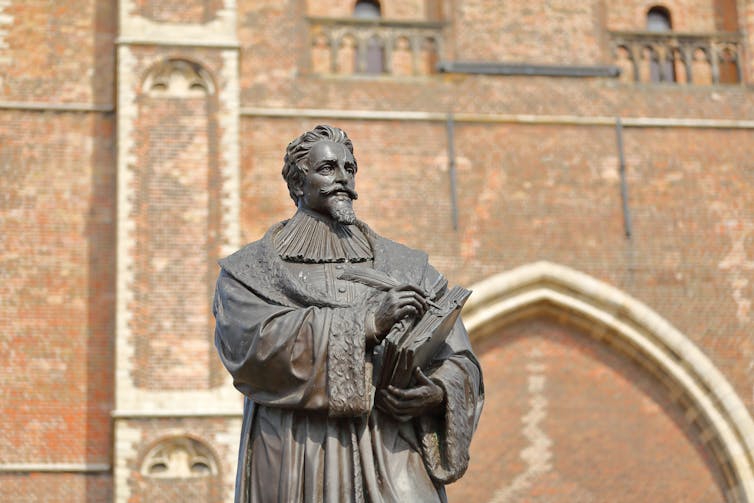
To understand the current state of international law, it is useful to look at the longer historical arc of how warfare has been regulated. Hugo Grotius, a Dutch lawyer born in 1583, became one of the most influential European thinkers on the laws of war.
He argued that only “just” wars – where one side resorts to violence to defend itself or enforce property rights – should be legal.
But after years of work on a list of just and unjust causes for war, Grotius came away disillusioned. He concluded that any state would always claim its wars were just and that such determinations might increase violence overall.
From the outside, other states couldn’t easily judge the real reasons behind a war. And if they chose a side, they would feel obliged to back the state they believed was in the right. Grotius warned that this would only drag more countries into conflict.
Grotius ultimately came to believe that societies had little choice but to accept conflict and treat its results as justified. As Yale University law professors Oona Hathaway and Scott Shapiro show in their 2018 book, The Internationalists, Grotius’s position remained dominant for centuries.
The late-19th and early-20th centuries did bring attempts to regulate warfare. This included the creation of organisations such as the International Committee of the Red Cross that provided medical aid to soldiers. But the fundamental idea that war was legitimate persisted.
Later initiatives seemed to overturn Grotius’s logic. These included the Kellogg-Briand pact of 1928 in which 15 ratifying states promised not to use war to resolve disputes, the UN Charter of 1945 and the establishment of the International Criminal Court (ICC) in 2002.
Despite its obvious later failure, the Kellogg-Briand pact declared that war should be renounced as an “instrument of national policy”. And in 2018, the ICC criminalised the “planning, preparation, initiation or execution” of aggressive wars. The hope was that this definition would deter future invasions, including actions like Russia’s assault on Ukraine.
The return of Grotius
Does the current state of peace negotiations between Russia and Ukraine signal a return of Grotius’s view that military gains, once consolidated, will ultimately be recognised? And might this view even be the wiser position as it acknowledges Russia’s military strength instead of prolonging – and possibly widening – the war in Ukraine?
For a time, such conclusions seemed unnecessary. As Hathaway argued one year into the war, there was no doubt that Russia had blatantly violated international law. But she emphasised that law was not powerless.
The imposition of sanctions, widespread military support for Ukraine and ICC arrest warrants for Vladimir Putin and other senior Russian officials showed that international law can fight back. While conflict could not be prevented, coordinated international action could inflict heavy costs on states like Russia for waging aggressive wars.
However, this argument is now hard to uphold. The Trump administration’s original 28-point peace plan, which was unveiled in November, included not only the acceptance of Russian territorial gains but also the lifting of sanctions and the granting of amnesty for perpetrators of war crimes.
In such a form, it would constitute a Grotian outcome: less powerful states can be attacked with impunity and, without risking wider war, there is little Europe and its partners can do about it. Such a deal would reward perpetrators without inflicting any costs and would be a dangerous signal in a volatile world.
Whatever the outcome of the peace negotiations, Ukraine will need continued European support to defend the remaining parts of its territory. And if a peace deal is signed, Europe must build enough deterrence to ensure that Russia will not attempt another major push to extend its borders.
In the face of the growing detachment of the US, it will also be up to Europe to inflict costs on Russia over its war of aggression when a peace deal is reached. This may include using frozen Russian assets to support the rebuilding of Ukraine and insisting on legal accountability.
Whether a deal is reached or not, these scenarios will require a major overhaul of European security and defence policy – something Europe repeatedly aspired to do after 1945 but failed to implement. As part of this, EU countries like Ireland and Austria that maintain military neutrality need to articulate a clear position regarding what they are willing to contribute.
While there can be space for neutral states within a wider European security framework, the starting point should be unity across European countries about a rejection of the idea that Russia’s actions should go unpunished and that international legal principles can simply be set aside.
With waning US support, Ukraine is pinning its hopes on Europe. In his recent speech to the Irish parliament, Ukrainian president Volodymyr Zelensky emphasised legal accountability and called on Ireland to support “all efforts to make the tribunal for Russia’s aggression a reality”.
Europe should use its weight to keep this point on the agenda. It is in the interest of all European countries to stop the return to the world of Grotius.
Roman Birke does not work for, consult, own shares in or receive funding from any company or organisation that would benefit from this article, and has disclosed no relevant affiliations beyond their academic appointment.
The US health secretary, Robert F. Kennedy Jr, believes that aluminium in vaccines can cause health issues, such as neurological disorders, allergies and autoimmune diseases. This contradicts scientific evidence from many studies that have confirmed the safety of vaccines and aluminium “adjuvants” – substances that boost vaccines’ effectiveness.
In November 2025, RFK Jr“personally ordered” the US Centers for Disease Control and Prevention (CDC) to alter its webpage on autism and vaccines, with several sections now casting doubt on vaccine safety. For example, where it previously stated that “studies have shown there is no link between receiving vaccines and developing autism spectrum disorder”, it now reads “‘vaccines do not cause autism’ is not an evidence-based claim”.
To write this on a public-facing website represents an about-turn for the CDC, whose advice is often sought by people looking for clarity and guidance. It also feeds into the anti-vaccine narrative that is opposed by most scientists.
Pressurising the CDC represents only one of RFK Jr’s strategies to undermine the public’s trust in vaccines. This is extremely concerning, given the influence that he holds in his current position, and the effect this will have on vaccine policy, demand, manufacturing and, ultimately, the spread of infectious diseases.
Adjuvants are a key addition to vaccines and help to increase the body’s response to vaccination, enhancing the level of protection that the recipient gains. Without adjuvants, many vaccines simply wouldn’t work or would provide only short-lasting protection.
Aluminium salts, such as aluminium sulphate and aluminium hydroxide, have been used as adjuvants for almost a century. They are a key component in several vaccines, including those that protect against hepatitis B, diphtheria, tetanus and human papillomavirus. They have enhanced hundreds of millions of vaccine doses worldwide, which saves millions of lives annually.
We are all exposed to aluminium daily in food, water, soil and, for babies, in breast milk. For example, some processed cheese contains up to 15mg per slice. Aluminium ingested in this manner enters the bloodstream and is filtered out via the kidneys. Aluminium salts in vaccines (between 0.25 and 1.2mg of aluminium) also enter the bloodstream and are removed from the body in the same manner.
Studies have shown that the amounts of aluminium that enter the body after vaccination are extremely small, pose no risk of toxicity, and the amount of aluminium in the body is not linked to how many vaccines you’ve had.
A recent study from Denmark examined aluminium exposure in the first two years of life in over 1 million children. This study confirmed that there is no link between exposure and any of 50 diseases that were looked at, including autism.
But what about the other claims – such as the purported link to autoimmune disease?
Autoimmunity is an umbrella term encompassing a broad spectrum of diseases where the body’s immune system attacks itself. Some people have claimed that vaccines can induce autoimmunity. However, studies in vaccine recipients have shown convincing evidence that this is not the case.
Similarly, it is thought highly unlikely that vaccines cause asthma, allergies or other serious harms. Vaccine safety is thoroughly evaluated before any vaccine is approved, and safety monitoring continues for all vaccines after they become available.
Still, it is apparent that diagnoses of autism, asthma and allergies are on the rise. If vaccines are not the reason, then what is?
Too clean?
One idea that has been proposed is the “hygiene hypothesis”. It suggests that society has become too clean. As such, lack of exposure to many germs during childhood may deprive the immune system of essential “training” and therefore it reacts excessively to otherwise harmless particles, such as pollen, dust and nuts.
The hygiene hypothesis is one explanation for the rise in allergies. RomanR/Shutterstock.com
Other factors probably also play a role, including improved detection and diagnosis, environmental and prenatal influences, and, in the case of asthma, increased air pollution.
Increasing vaccine hesitancy and reduced vaccination rates lead to more vulnerable people and more infectious diseases, illnesses and deaths. It is important to question medical interventions, but this questioning should be informed, rational and open.
Vaccines remain one of the most cost-effective, safe and important public health interventions – and we undermine public trust in vaccines at our peril.
Antony Black does not work for, consult, own shares in or receive funding from any company or organisation that would benefit from this article, and has disclosed no relevant affiliations beyond their academic appointment.
Source: The Conversation – UK – By Sterre ter Haar, PhD researcher and lecturer, Industrial Ecology Department of the Institute of Environmental Sciences (CML), Leiden University
Scientists thought they had finally stumbled upon a possibly positive side effect of climate change. While rising CO₂ levels have been linked to various effects, from rising sea levels to changing temperatures, could an increase in CO₂ also be good for something? Plants use carbon dioxide and sunlight for photosynthesis, so more CO₂ could theoretically mean more food.
It sounds almost too good to be true, but science backs part of this up. Plants do grow faster when CO₂ levels increase, but this doesn’t mean we will have more food and less hunger. Other research has shown that where we can grow our food is not only shifting, but also shrinking.
So increasing CO₂ might be good for how fast a plant grows and not so good for where it grows, but what about the effect on the plant itself? The majority of our diets come from crops or from animals that eat (mostly) plants. If plants respond to rising CO₂ levels, that could mean their nutritional value is also changing.
The first studies were inconclusive. The way to test this sounds simple: grow two plants under identical conditions, except one is given more CO₂, and then compare them. Scientists observed differences, but they couldn’t say if the result was significant or merely a coincidence.
Comparing many studies together would help, but that is harder than it sounds. Due to our ever-increasing amount of CO₂ emissions, the study baselines were also increasing, so we couldn’t directly compare studies from different years to each other. We had a lot of data, but few answers.
My new analysis with colleagues shows an interesting picture: each bite of food is becoming comparatively higher in calories but lower in nutrients. We compiled 59,048 measurements from 109 studies and compared results at a baseline of 350 ppm of atmospheric carbon dioxide to an elevated level of 550 ppm.
We looked at 32 nutrients across 43 different crops. For the first time, we could see a clear shift in plant composition across a wide range of species and essential nutrients.
As carbon dioxide increases, so does carbon uptake, and more carbon means more carbohydrates, like sugars and starch. However, critical nutrients such as iron, zinc, and protein all decreased. Our food might have more carbs but fewer essential nutrients. While the average decrease in nutrition was only a few percent, certain foods saw large decreases, such as a 38% zinc reduction in chickpeas (Figure 1).
What also stood out were heavy metals such as lead. They might be increasing in our food – a serious concern because lead is toxic even at very low levels and can harm the brain, heart, and nervous system – but that’s not something we can say for sure based on our study.
Biologists tend to study plants to understand what is happening to the nutrients they need, while researchers who focus on human health examine plants to see what is happening to the nutrients we need. But neither plants nor humans require heavy metals such as lead, so very few studies tracked them.
The few that did recorded a concerning increase. Coincidence? We’re not sure — which is precisely why we need to start taking a closer look.
We might need to reconsider what a healthy diet looks like in the coming decades. Food security will not necessarily imply nutrient security. A healthy diet today might contain too few nutrients in the future due to the shifting composition of our crops, despite still containing enough calories.
Think of our diet like a recipe. Changing the amounts of one ingredient can change the entire outcome. Not only will the nutrient values of our food change, but also our ability to cook with it. The changing plant composition may also affect our ability to bake bread or make pasta.
If our food is becoming more calorific for relatively fewer nutrients, in extreme cases, we could see increases in both average body mass and undernutrition. Scientists are now looking at what this means for our diets, but in the meantime, a good way to buffer these potential effects would be to eat a diverse diet.
Climate change feels like a faraway problem, but it’s already here. A substantial part of our increasing food prices has already been linked to climate change. Certain foods are getting harder to obtain. Weather disasters alone accounted for $20.3 billion in damage to American farmers last year.
Our study looked at the effect of increasing CO₂ from 350 ppm, which is sometimes referred to as the last “safe” level for humans, to 550 ppm. We are currently at around 426 ppm, putting us almost halfway through the modelled effects. Climate change is happening now, and the effects are already on our dinner plates.
This study was supported by the European Union’s Horizon 2020 Research and Innovation program under grant agreement no. 101003880. Sterre ter Haar receives funding from the Frontiers Planet Prize.
El 22 de febrero de 2020, Mad Mike Hughes remolcó un cohete casero hasta el desierto de Mojave y se lanzó al cielo. ¿Su objetivo? Comprobar que la Tierra era plana desde el espacio. Era su tercer intento y, trágicamente, resultó fatal. Hughes se estrelló poco después del despegue y murió.
El apodo de Hughes, Mad Mike, puede parecer muy acertado. ¿Acaso no es una locura arriesgar la vida luchando por una teoría que fue refutada en la antigua Grecia?
Pero la convicción de Hughes, aunque sorprendente, no es única. En todas las culturas registradas, las personas han mantenido creencias firmes que parecían carecer de pruebas a su favor, algo que podríamos denominar “creencias extraordinarias”.
Para los antropólogos evolutivos como yo, la omnipresencia de este tipo de creencias es un enigma. El cerebro humano evolucionó para formar modelos precisos del mundo, y la mayoría de las veces lo hacemos bastante bien. Entonces, ¿por qué las personas también suelen adoptar y desarrollar creencias que carecen de pruebas sólidas que las respalden?
En una nueva reseña publicada en la revista Trends in Cognitive Sciences, propongo una respuesta sencilla: las personas llegan a creer en la Tierra plana, los espíritus y las vacunas con microchips por las mismas razones por las que llegan a creer en cualquier otra cosa. Sus experiencias les llevan a pensar que esas creencias son ciertas.
Teorías de creencias extraordinarias
La mayoría de los científicos sociales han adoptado un punto de vista diferente sobre este tema. Ciertas creencias sobrenaturales, las teorías conspirativas y la pseudociencia han sorprendido a los investigadores por ser totalmente impermeables a las pruebas que las contradicen. En consecuencia, han asumido que la experiencia no es relevante para la formación de esas creencias. En cambio, se han centrado en otros dos factores explicativos.
La primera explicación común son los sesgos cognitivos. Muchos psicólogos sostienen que los seres humanos poseen atajos mentales para razonar sobre cómo funciona el mundo. Por ejemplo, las personas son muy propensas a ver intenciones e inteligencia detrás de acontecimientos aleatorios. Un sesgo de este tipo podría explicar por qué la gente suele creer que las deidades controlan fenómenos como el clima o las enfermedades.
El segundo factor es la dinámica social: las personas adoptan ciertas creencias no porque estén seguras de que son ciertas, sino porque otras personas las tienen o porque quieren transmitir algo sobre sí mismas a los demás. Por ejemplo, algunos teóricos de la conspiración pueden adoptar creencias extrañas porque dichas creencias vienen acompañadas de una comunidad de creyentes leales y solidarios.
Ambos enfoques pueden explicar en parte cómo las personas llegan a tener creencias extraordinarias. Pero descartan tres formas en las que la experiencia, junto con los otros dos factores, puede moldear esas ideas.
En primer lugar, propongo que la experiencia puede actuar como un filtro. Determina qué creencias extraordinarias pueden difundirse con éxito entre la población.
Tomemos como ejemplo la teoría de que la Tierra es plana. Sabemos con absoluta certeza que es falsa, pero no es más o menos errónea que la teoría de que la Tierra tiene forma de cono. Entonces, ¿qué hace que solo el terraplanismo tenga éxito frente a otras alternativas igualmente incorrectas?
La respuesta es tan obvia como parece: la Tierra parece plana cuando estamos sobre ella, no tiene forma de cono. La evidencia visual favorece una creencia extraordinaria sobre las demás. Por supuesto, la evidencia científica muestra claramente que nuestro planeta es redondo, pero resulta extraño que algunas personas prefieran confiar en lo que les dicen sus ojos.
2. La experiencia como chispa
Mi segundo argumento es que la experiencia actúa como chispa para las creencias extraordinarias. Las experiencias extrañas, como las alucinaciones auditivas, son difíciles de explicar y comprender. Por eso, las personas hacen todo lo posible por explicarlas y, al hacerlo, se les ocurren creencias que parecen adecuadamente extrañas.
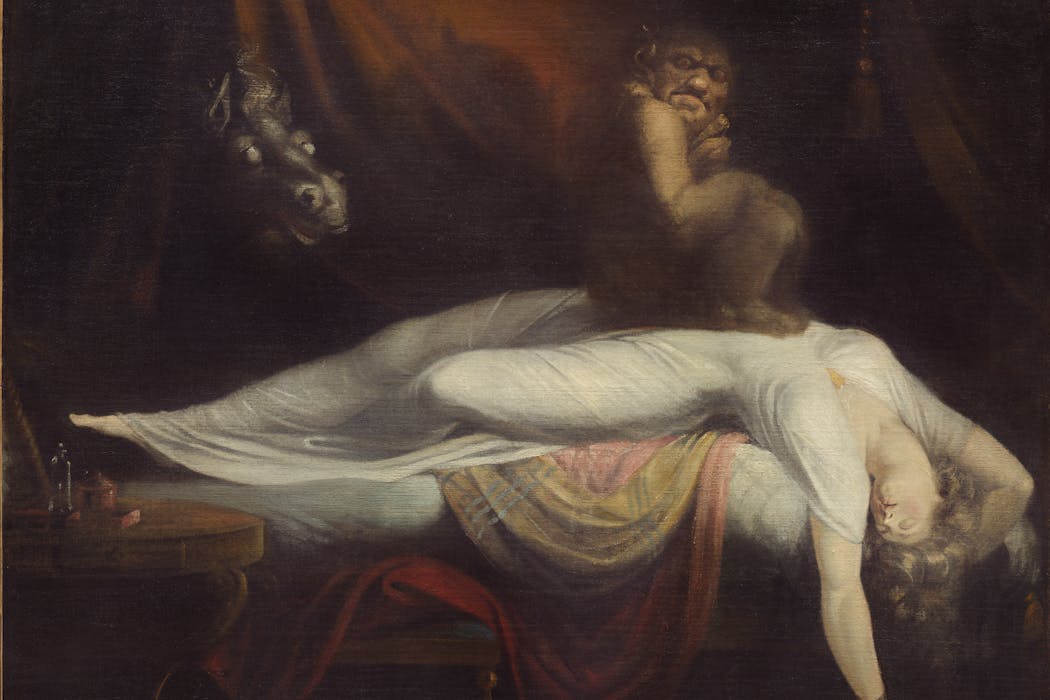
Como científico, interpreto la parálisis del sueño como el resultado de una confusión neuronal. Pero no es difícil imaginar cómo alguien sin formación científica –es decir, casi todos los seres humanos a lo largo de la historia– podría interpretar la experiencia como una prueba de la existencia de seres sobrenaturales.
La experiencia como herramienta
Para mí, la tercera vía potencial hacia creencias extraordinarias es especialmente intrigante. En muchos casos, las personas no solo adoptan dichas creencias, sino que desarrollan prácticas inmersivas que hacen que parezcan verdaderas.
Por ejemplo, imagine que es usted una agricultora que vive en las tierras altas de Lesoto, en el sur de África, donde realiza trabajo de campo etnográfico. Sufre una serie de abortos espontáneos y quiere saber por qué. Así que acude a una curandera tradicional, quien le dice que puede obtener la respuesta de sus antepasados bebiendo una bebida alucinógena. Usted toma la bebida y, poco después, comienza a ver espíritus que le hablan y le explican los motivos de su desgracia.
Un chamán podría administrar una sustancia psicoactiva que afecta la forma en que experimentas el mundo que te rodea. Luis Acosta/AFP vía Getty Images
Es evidente que una experiencia como esta podría reforzar su creencia en la existencia de los espíritus. Estas prácticas inmersivas, como la oración, la danza ritual y el uso religioso de sustancias psicoactivas, crean pruebas que hacen que las creencias asociadas parezcan ciertas.
¿Qué viene después?
Las creencias extraordinarias no son intrínsecamente buenas o malas. En particular, las creencias religiosas proporcionan significado, seguridad y un sentido de comunidad a miles de millones de personas.
Sin embargo, algunas creencias extraordinarias son motivo de gran preocupación. Concretamente, la desinformación sobre ciencia y política es muy peligrosa. Al reconocer cómo esas creencias se forman a partir de la experiencia, los investigadores pueden encontrar mejores formas de combatir su propagación.
No obstante, es igualmente importante que la perspectiva que sugiero pueda fomentar una mayor compasión y afinidad hacia las personas que tienen creencias que parecen muy diferentes a las suyas. No están “locas” ni son insinceras. Como cualquier otro ser humano, consideran que las pruebas están de su parte.
Eli Elster no recibe salario, ni ejerce labores de consultoría, ni posee acciones, ni recibe financiación de ninguna compañía u organización que pueda obtener beneficio de este artículo, y ha declarado carecer de vínculos relevantes más allá del cargo académico citado.
Source: The Conversation – in French – By Laurence Grondin-Robillard, Professeure associée à l’École des médias et doctorante en communication, Université du Québec à Montréal (UQAM)
Que rage bait devienne le mot de l’année, selon le Oxford Dictionary, n’a rien d’un hasard. Après 2025 et ses drames mis en scène en direct, difficile de nier que l’indignation alimente désormais tous les contenus en ligne.
Le décès du diffuseur Raphaël Graven, alias Jean Pormanove, a été particulièrement marquant. Mort en direct sur Kick au bout de 298 heures de diffusion, il avait déjà été exposé à des mises en scène humiliantes et à des violences psychologiques, comme l’a montré une enquête de Médiapart.
Même si l’enregistrement du direct ayant précédé son décès n’est plus accessible, des extraits de diffusions antérieures, où l’on voit Pormanove ridiculisé ou maltraité, continuent de circuler sur Internet.
Une foire aux questions à Jean Pormanove, le 5 juillet 2021. Il révèle une facette de lui parfois maladroite, mais aussi très touchante. (YouTube).
En tant que professeure associée et doctorante à l’École des médias de l’UQAM, j’étudie de près les dynamiques qui façonnent les plates-formes numériques. Une tendance croissante est la montée de cet appât à rage qui transforme l’expression de la colère en une stratégie de captation de l’attention des utilisateurs intégrée aux logiques commerciales de ces espaces en ligne.
L’après Jean Pormanove
La plate-forme Kick, comparable à Twitch en termes d’interface, a été pointé du doigt dans la mort sordide de Raphaël Graven, avec raison. Trop de laxisme, absence de modération et encouragement aux jeux de hasard et d’argent figurent parmi les critiques les plus fréquentes.
À peine quelques jours plus tard, le 22 août, c’est le meurtre d’Iryna Zarutska, 23 ans, poignardée dans le métro de Charlotte, en Caroline du Nord, qui circule massivement sur X, Instagram et TikTok. Les images de surveillance — la jeune femme blessée, seule, sans secours — deviennent virales en quelques heures.
La fascination pour ce meurtre sordide n’a rien de nouveau. Ce qui l’est davantage, et relève du rage bait est sa récupération. Par exemple, le youtubeur conservateur Benny Johnson accuse les médias d’information de passer l’affaire sous silence, affirmant que « si elle était noire et son tueur blanc, les médias en parleraient sans arrêt ». Cette affirmation vise à susciter une réaction émotionnelle forte de part et d’autre.
C’est dans ce contexte plutôt chargé que rage bait devient le mot de l’année du Oxford Dictionary, alors que son utilisation aurait triplé au courant des 12 derniers mois. Le terme est défini comme étant du contenu en ligne délibérément conçu pour susciter la colère ou l’indignation en étant frustrant, provocateur ou offensant, généralement publié dans le but d’augmenter le trafic ou l’engagement vers une page web ou une publication.
Depuis quelques années déjà, le mot de l’année du Oxford Dictionary est lié à la culture numérique. En 2022, c’était goblin mode, en 2023, rizz remportait le vote et, en 2024, c’était brain rot (pourriture cérébrale).
Pour 2025, c’est plus de 30 000 personnes qui ont voté pour élire le mot de l’année du prestigieux dictionnaire. Le terme était en compétition avec aura farming (cultiver son aura) et biohack (ensemble de pratiques visant à optimiser la santé et les performances du corps et de l’esprit par des changements dans le mode de vie, l’alimentation et la technologie).
De click bait à rage bait
Du clickbait (piège à clics) en ligne, on glisse désormais vers le rage bait, autrement dit le piège à indignation, toujours dans le même objectif : obtenir de la visibilité en ligne. Le problème ne réside pas seulement dans les créateurs de contenu qui utilisent ce type d’appât, il concerne également de manière centrale les médias sociaux eux-mêmes. Il y a une dizaine d’années, on décrivait les plates-formes comme des chambres d’écho, des espaces où les utilisateurs étaient exposés presque exclusivement à des contenus confirmant leurs intérêts, opinions et croyances. En dire autant s’avère plus difficile aujourd’hui.
Excluant la plate-forme X, que Elon Musk a déjà considérablement remaniée depuis qu’il a acquis Twitter, on constate que Mark Zuckerberg, PDG de Meta, et Shou Zi Chew, directeur général de TikTok, ont tous deux assoupli leurs conditions d’utilisation en 2025 au nom de la liberté d’expression. Le premier cherche à renouer avec la classe politique américaine républicaine, tandis que le second tente de maintenir l’accès de TikTok au marché américain, qui est menacé par des pressions législatives. Cette nouvelle voie permet l’émergence d’espaces numériques où le contenu polémique, en particulier le rage bait, est acceptable.
Or, ce type de contenu génère de l’engagement. Il circule donc et continue d’être recommandé. Il demeure visible grâce à sa rentabilité. Ce paradoxe se trouve au cœur du problème : les plates-formes disent vouloir limiter la violence, mais elles tirent profit des éléments qui la rendent virale. Nous sommes ainsi pris au piège dans un écosystème où l’indignation devient une ressource économique et où les émotions les plus intenses servent de carburant à la visibilité.
Une mutation profonde du web
En ce sens, le passage du piège à clics au rage bait ne constitue pas uniquement une évolution dans les techniques de visibilisation, il met en évidence une mutation profonde des médias socionumériques. Cette dynamique invite à repenser non seulement les règles de modération, mais aussi les modèles d’affaires qui maintiennent ce cycle d’exposition, d’indignation et de rentabilité.
À la lumière de la commission d’enquête sur les effets psychologiques de TikTok sur les mineurs en France, entre autres travaux, les choix du Oxford Dictionary ressemblent moins à une anecdote lexicale qu’à un constat d’échec avec le web. Ces mots des dernières années décrivent un environnement où l’épuisement mental, l’abrutissement et l’indignation sont devenus monnaie courante. Le décès de Jean Pormanove nous rappelle que des vies humaines sont prises dans des dispositifs qui transforment la vulnérabilité en spectacle et la souffrance en produit.
Laurence Grondin-Robillard ne travaille pas, ne conseille pas, ne possède pas de parts, ne reçoit pas de fonds d’une organisation qui pourrait tirer profit de cet article, et n’a déclaré aucune autre affiliation que son organisme de recherche.














_-_Noah,_a_Mystery_Play_-_KINCM-2005.4842_-_Ferens_Art_Gallery.jpg)
