A few days after Donald Trump boycotted a G20 summit in Johannesburg, he announced South Africa would not be invited to the next G20 meeting, taking place at his resort in Miami in March 2026.
Trump said it was a “total disgrace” that South Africa hosted the November event, citing allegations of a “white genocide” against Afrikaner farmers. This is vigorously denied by the South African government which says such claims are “widely discredited and unsupported by reliable evidence”.
Trump’s fixation on South Africa’s white Afrikaner minority has become a central plank of US refugee policy, with their applications now given priority under a new refugee system.
This preoccupation by some Americans with white Afrikaners has a long history dating back to the publication of a large sociological study focusing on poor white Afrikaners in the 1930s.
In this episode of The Conversation Weekly podcast, we speak to Carolyn Holmes, an assistant professor of political science at the University of Tennessee, Knoxville, to trace the history of the links between white nationalists in the US and South Africa. She says:
South Africa has always been a shadow case for the US. It has been for a century … It’s a way of talking about US politics without ever saying civil rights, without ever saying United States.
This episode of The Conversation Weekly was written and produced by Mend Mariwany, Gemma Ware and Katie Flood. Mixing by Michelle Macklem and theme music by Neeta Sarl.
Listen to The Conversation Weekly via any of the apps listed above, download it directly via our RSS feedor find out how else to listen here. A transcript of this episode is available via the Apple Podcasts or Spotify apps.
Carolyn Holmes has received funding in the past from the Institute for International Education. The Conversation Africa receives funding from the Carnegie Corporation of New York.
Imagen promocional de la quinta temporada de _Stranger Things_.Netflix
Este texto se publicó por primera vez en nuestro boletín Suplemento cultural, un resumen quincenal de la actualidad cultural y una selección de los mejores artículos de historia, literatura, cine, arte o música. Si quiere recibirlo, puede suscribirse aquí.
Hace unas semanas mi padre me preguntó si ya se había estrenado la quinta temporada de Stranger Things. “No, le dije, hasta finales de noviembre nada”. Y, señalándome una lista de Netflix, insistió: “Pero entonces ¿por qué está entre lo más visto de la plataforma?”
No tengo ni idea de la razón real, pero mi primera respuesta, basada en la experiencia personal, fue indicarle que probablemente la gente estaba volviendo a ver la cuarta temporada porque se había estrenado en 2022 y nadie se acordaba del punto en el que habíamos dejado la trama.
Elena Neira y Juan Luis García Fernández explican por qué los nuevos modos de visionado de las series no ayudan nada a que los personajes, las historias y el desarrollo de las mismas se asienten en nuestra cabeza. En una semana vemos una serie del tirón y no volvemos a ella hasta dos años después, cuando nos hemos olvidado incluso de cómo se titulaba. Es inquietante pensar que, si no cambiamos nuestra forma de interactuar con las plataformas, dejaremos de utilizar todo el potencial de nuestra mente y, al final, esta se acabará acostumbrando a trabajar menos.
Yo, por mi parte, antes de abordar la quinta entrega me leí el desglose de capítulos de Stranger Things que estaba en la Wikipedia y vi los últimos dos de la temporada anterior. Así me preparé para volver a Hawkins.
Prima ballerina assoluta
Hace unos meses, en una exposición dedicada al fotoperiodismo de Marisa Flórez, vi una foto que esta le había hecho a la rusa Maya Plisetskaya cuando ella dirigía el Ballet del Teatro Lírico Nacional español.
En la imagen, en blanco y negro, un grupo de bailarinas vestidas con tutús claros rodeaba sobre un escenario a la coreógrafa, que a cambio llevaba un traje negro. La potencia de la imagen en la que se retrataba a unas artistas tan fuertes con apariencia tan delicada se exacerbaba al colocarse, en el montaje expositivo, al lado de una imagen de las primeras mujeres que habían entrado en el ejército.
Confesaré que, para lo enganchada que estuve a la primera edición de Operación Triunfo, estoy bastante desconectada de su formato actual.
No obstante, ayuda mucho tener a autores como José Ángel Baños Saldaña y Guillermo Sánchez Ungidos, capaces de analizar cómo este programa de telerrealidad, además de contar la historia de un grupo de soñadores, es un espejo de la industria musical. Y al verla reflejada en este cristal, con tantas horas de emisión y de retrato generacional, podemos fijarnos en sus puntos fuertes… pero también en los más débiles.
El dictador cinéfilo (pero no tanto)
Y, en unas semanas en las que recordamos los 50 años de la muerte de Franco y, por tanto, del principio del fin del franquismo, me gustaría fijarme en la relación que la dictadura española tuvo con el séptimo arte.
Porque, como cuenta Emeterio Diez Puertas, “el franquismo fue el primer régimen que pensó y practicó una política cinematográfica en España”. Es muy interesante analizar cómo, de la mano de la dictadura, se dio poder a la Iglesia, la patronal y el ejército para controlar lo que se exhibía, distribuía y producía. Estos sectores tenían mano en la censura, el dinero que se movía en la industria, la propaganda que se transmitía (el NO-DO es el ejemplo más claro) y la violencia política que se justificaba en los entornos artísticos.
Por cierto, Francisco Franco “ha sido el único gobernante español que ha escrito un guión y que lo ha rodado, casi por su cuenta, como productor ejecutivo: Raza”.
Si están cerca de un cine que todavía la exhiba, aprovecho para recomendarles La cena, una comedia situada en los primeros días de la dictadura.
In 2024, the global art market hit an estimated $57.5 billion (€49.5 billion) in sales, according to the Art Basel and UBS Art Market Report 2025, underscoring art’s significance as an asset class. Art is traditionally associated with noble motivations and heritage. However, the art market, with its high value per unit transactions, subjective and/or manipulated valuations, and relative opacity, can be exploited as a tool for criminal investment and money laundering, particularly through the purchase and resale of artworks to legitimise illicit funds.
How can the industry protect itself? Are the available tools efficient, and what more can be done? In our recent research, we delve into the forces driving money laundering in the art world and the ways to tackle this growing scourge.
In 2007, a striking example occurred involving a painting by Jean-Michel Basquiat. The artwork passed through customs with an invoice declaring its value at just $100 (€82), despite its actual worth being $8 million (€6.8 million). Behind this transaction was a money-laundering scheme orchestrated by a former Brazilian banker. This case reveals how the art market, by its very nature, can find itself at the heart of illicit activities.
Art serves two key roles in criminal schemes. First, it acts as a direct source of illicit income through the production of counterfeit works or the sale of stolen pieces. Second, it functions as a tool for laundering money: authentic artworks are bought and resold to clean illicit funds.
The money-laundering process unfolds in three stages: investment, layering, and integration. Investment involves converting dirty cash into funds deposited in bank accounts. For example, criminals might purchase artworks with cash and then resell them, demanding payment via bank transfer from the new buyer. This often relies on bribing insiders at galleries, auction houses, or free ports.
Layering is about moving the invested money through multiple accounts to obscure its trail. The art market is of particular interest in this stage of money laundering because of speculation on certain types of artworks and auctions, which can drive up the price of artworks irrationally. This allows criminals to invest large sums of money in a limited number of transactions without attracting attention.
Finally, integration means reinvesting the laundered money into legal assets, often through shell companies, to complete the cycle.
Multiple vulnerabilities
In many ways, the art market is vulnerable to criminal activity. These vulnerabilities are particularly pronounced in areas where opacity and anonymity are common, such as private sales at auction houses, digital transactions involving cryptocurrency payments, and the use of free ports for storage and transfer.
The first link in the chain of illicit activity often involves the production of counterfeit art or the sale of stolen works, both of which generate funds ripe for laundering. A striking example is a major European operation in 2024 spanning Spain, France, Italy, and Belgium. Authorities seized over 2,000 counterfeit contemporary artworks, resulting in an estimated loss of €200 million.
Another critical vulnerability arises when artworks change hands through sales platforms such as galleries or fairs. This risk is especially pronounced in private sales, where the provenance and identity of the seller are rarely made public. The lack of transparency creates prime opportunities for criminals to launder money by obscuring the origin and ownership history of the artwork.
Finally, at the very end of the value chain, shell companies are often used to purchase works of art, thus concealing the true beneficiary and making it difficult for the authorities to trace the origin of the funds.
New, more effective tools?
The regulatory environment governing the art market has recently evolved toward more stringent standards.
In the European Union, the sixth anti-money laundering directive expanded anti-money laundering requirements to include art market professionals. Under this directive, they are now obligated to verify customer identities and monitor any transactions exceeding €10,000.
At the member-state level, national measures have strengthened anti-money laundering sanctions in the art market. For example, in the US, the proposed Art Market Integrity Act aims to impose specific obligations on the art sector concerning anti-money laundering, customer identity verification, detailed record-keeping, monitoring of transactions exceeding $10,000, and reporting of suspicious activities to the US Treasury.
Raising public awareness
Museums also play a crucial role, especially in raising public awareness. For instance, in 2024, an exhibition in Milan featured over 80 artworks tied to organised crime, including pieces by Salvador Dalí and Andy Warhol, to shed light on the issue of international art trafficking.
Due to its complexity and opacity, the art market is a fertile ground for money-laundering activities. While recent regulatory advances mark significant progress, they remain insufficient to overcome the weaknesses in the art value chain: lack of transparency, corruption, and regulatory gaps in free ports, to name only a few. We hope that the importance of art – in itself, in the eyes of citizens, and in terms of its soft power – will encourage public authorities to strengthen their means of action, while establishing a genuine culture of transparency and accountability.
A weekly e-mail in English featuring expertise from scholars and researchers. It provides an introduction to the diversity of research coming out of the continent and considers some of the key issues facing European countries. Get the newsletter!
Les auteurs ne travaillent pas, ne conseillent pas, ne possèdent pas de parts, ne reçoivent pas de fonds d’une organisation qui pourrait tirer profit de cet article, et n’ont déclaré aucune autre affiliation que leur organisme de recherche.
Le 28 novembre, sur Cnews, l’éditorialiste Pascal Praud s’est félicité que l’Arcom ait contesté l’enquête de Reporters sans frontières sur les manquements de la chaîne aux règles du pluralisme politique.Capture d’écran
L’Autorité de régulation de la communication audiovisuelle et numérique a déjà sanctionné Cnews pour des informations ou des contenus problématiques, mais aucune sanction n’a été prononcée pour manquement aux règles de pluralisme. Reporters sans frontière a produit une nouvelle enquête visant à démontrer que ces manquements, avec une orientation clairement marquée à l’extrême droite, existent. Les chiffres de RSF sont contestés par l’Arcom. La chercheuse Camille Broyelle, spécialiste du droit des médias, cherche à comprendre ce qui pourrait conduire le régulateur public à interpréter la loi de façon minimaliste.
Camille Broyelle : Jusqu’en 2024, pour satisfaire l’exigence de pluralisme interne imposée par la loi du 30 septembre 1986 – c’est-à-dire l’expression des différents courants de pensée et d’opinion au sein même des programmes des chaînes de télévision, l’Arcom se contentait d’une répartition équitable du temps de parole des personnalités politiques, c’est-à-dire les personnes rattachées – formellement ou non – à un parti politique.
Tant que seules ces personnalités faisaient de la politique à la télévision, cette obligation d’équité était suffisante pour assurer le pluralisme interne. Elle ne l’était plus, cependant, quand les animateurs, les présentateurs, les chroniqueurs ont commencé eux aussi à militer en faveur de tel ou tel courant politique.
Reporters sans frontières a ainsi demandé à l’Arcom d’aller au-delà du temps de parole des personnalités politiques pour éviter qu’en méconnaissance de la loi, des chaînes de télévision, qui par ailleurs respecteraient l’équité des temps de paroles des personnalités politiques, se muent en médias d’opinion, c’est-à-dire en médias monochromes, militant en faveur d’un courant politique. Le refus opposé par l’Arcom a été contesté par RSF devant le Conseil d’État qui, le 13 février 2024, et a contraint l’Arcom de prendre en compte l’ensemble des programmes, afin que l’exigence de pluralisme interne posée par la loi soit respectée.
À la suite de cette décision, l’Arcom a adopté une délibération, le 17 juillet 2024, où sont énoncés trois critères sur lesquels se fonde désormais le régulateur pour apprécier le respect de la loi : la variété des sujets ou des thématiques abordés à l’antenne ; la diversité des intervenants dans les programmes ; l’expression d’une pluralité de points de vue dans l’évocation des sujets abordés à l’antenne.
Contrairement à ce qui a pu être écrit, il ne s’agit pas d’étiqueter les intervenants sur les plateaux ni de calculer de façon mathématique leur temps d’intervention – la délibération de l’Arcom le précise explicitement. Il s’agit de prendre en compte un faisceau d’indices (Qui parle ? De quoi ? Comment ?) qui, mis bout à bout, indiquent si, manifestement, la chaîne milite ou non en faveur d’un courant politique.
Il faut souligner ce point, explicitement mentionné dans la délibération du 17 juillet 2024 : l’Arcom doit s’assurer que les éditeurs n’avantagent pas « de façon manifeste et durable » un courant de pensée particulier. Contrairement au temps de parole des personnalités politiques, qui doit être distribué équitablement (cette obligation demeure), les chaînes de télévision ne sont pas tenues de représenter de façon équitable les différents courants de pensée et d’opinion. Elles doivent seulement s’abstenir d’en favoriser un de façon manifeste et durable. Cela signifie qu’il y a place pour une ligne éditoriale. En somme, le pluralisme interne imposé par la loi n’interdit pas aux médias d’afficher une tendance politique, il s’oppose seulement à ce qu’ils se muent en médias de propagande, la différence les uns et les autres n’étant pas qu’une différence de degré mais aussi de nature, car un média de propagande, qui s’est mis au service d’un courant de pensée, tend inévitablement à tordre la vérité et à méconnaître l’exigence d’honnêteté de l’information.
À la suite de la nouvelle enquête de RSF concernant Cnews, comment analysez-vous la réaction de l’Arcom ?
C. B. : RSF a souhaité vérifier si, au regard des critères dégagés par l’Arcom en 2024, le pluralisme interne était respecté par les quatre chaînes d’information en continu présentes sur la TNT (FranceinfoTV, LCI, BFMTV et CNews), c’est-à-dire si celles-ci avantageaient ou non « de façon manifeste et durable » un courant particulier de pensée et d’opinion. Tout au long du mois de mars 2025, des relevés systématiques et automatisés ont été effectués sur les quatre chaînes permettant de relever les intervenants et les sujets traités. L’analyse qualitative consistant à déterminer comment les sujets avaient été traités (de façon univoque ou de différents points de vue) a été menée, elle, au regard d’un thème, celui de la condamnation de Marine Le Pen. Au regard de l’ensemble de ces critères, RSF conclut a un avantage manifeste accordé par CNews à l’extrême droite.
Pourtant, dans le journal le Point, l’Arcom a contesté la façon dont RSF a apprécié le critère relatif à la diversité des intervenants à l’antenne et a considéré qu’aucun manquement au pluralisme interne n’avait été relevé. Il faut attendre des précisions de l’Arcom sur ses calculs, mais, l’affirmation est étonnante. Quiconque fait l’expérience de regarder quelques minutes les programmes de la chaîne CNews peut le constater : il s’agit bien évidemment d’une chaîne d’opinion, qui milite en faveur de l’extrême droite, ce que la loi du 30 septembre 1986 interdit, comme le Conseil d’État l’a rappelé.
Que répondre à l’argument selon lequel cette exigence de pluralisme interne constituerait une atteinte à la liberté d’expression ?
C. B. : Il s’agit d’une erreur de perspective, car cette exigence de pluralisme protège la liberté d’expression. La loi du 30 septembre 1986, qui régit le secteur audiovisuel, est destinée à réglementer l’activité des médias audiovisuels afin de protéger l’ordre public et, en priorité, le droit du public à une offre pluraliste de programmes. Ce droit dispose d’une assise constitutionnelle solide.
Comme le Conseil constitutionnel l’a affirmé et comme il continue de l’affirmer, la liberté de communication doit être lue à travers l’exigence de pluralisme, indispensable au fonctionnement de la démocratie : il permet au public d’être informé et, à travers lui, aux électeurs de voter de façon éclairée et libre. La liberté des médias audiovisuels est, selon la jurisprudence constitutionnelle et depuis une décision du 18 septembre 1986, au service du droit du public de disposer d’une offre audiovisuelle pluraliste et respectueuse de l’honnêteté de l’information non seulement dans le secteur public, mais aussi dans le secteur privé.
C’est ce droit à une offre audiovisuelle pluraliste et honnête que met en œuvre la loi du 30 septembre 1986 en interdisant sur la TNT des chaînes d’opinion ; l’expression « chaînes d’opinion » n’est pas inscrite dans la loi, mais ce sont de telles chaînes qui sont prohibées, puisque l’article 13 de la loi impose le « respect de l’expression pluraliste des courants de pensée et d’opinion ». Même si aujourd’hui, d’autres réseaux ont permis à d’autres médias de nourrir le débat public, les chaînes de télévision hertziennes occupent une position dominante pour structurer ce débat – c’est la raison pour laquelle les fréquences hertziennes restent très convoitées. Toutes les opinions ne pouvant être représentées sur le spectre hertzien, en raison de la rareté des fréquences, et surtout toutes les opinions ne bénéficiant pas nécessairement le soutien financier d’un groupe privé consacré à leur promotion, la seule façon d’assurer le pluralisme des idées, c’est-à-dire de permettre au public d’accéder à l’expression d’un large panel de courants de pensée et d’opinion, est d’interdire les chaînes d’opinion. Il n’y a pas là atteinte à la liberté d’expression. Il s’agit au contraire de la protéger en empêchant à un groupe de médias d’étouffer l’expression d’autres idées, du fait de l’avantage exorbitant dans la fabrication du débat public que lui donne le canal hertzien.
En imposant un pluralisme interne aux chaînes hertziennes, la loi du 30 septembre 1986 protège la liberté d’expression sur la TNT. Elle empêche sa capture par des intérêts privés. Aussi, lorsque certains médias dénoncent une atteinte à leur liberté d’expression, ils revendiquent en réalité un droit d’être en situation de position dominante dans la fabrication de l’opinion, comme si l’opinion pouvait constituer un marché, ce que le Conseil constitutionnel a également toujours récusé (CC, 18 sept. 1986) :
« En définitive, l’objectif à réaliser est que les auditeurs et les téléspectateurs qui sont au nombre des destinataires essentiels de la liberté proclamée par l’article 11 de la Déclaration de 1789 soient à même d’exercer leur libre choix sans que ni les intérêts privés ni les pouvoirs publics puissent y substituer leurs propres décisions, ni qu’on puisse en faire les objets d’un marché. »
Comment comprendre la difficulté du régulateur à sanctionner les chaînes qui ne respectent pas leurs obligations légales ?
C. B. : Le régulateur n’est pas très à l’aise avec l’exigence de pluralisme interne. Lorsque la décision du Conseil d’État avait été rendue à la suite de la saisine de RSF, l’Arcom avait réagi sur son site en déclarant qu’il s’agissait d’une interprétation renouvelée de la loi de 1986, alors qu’en réalité, le Conseil d’État se contentait de rappeler au régulateur la nécessité d’assurer l’effectivité de l’article 13 de la loi, selon lequel « l’Arcom assure le respect de l’expression pluraliste des courants de pensée et d’opinion dans les programmes des services de radio et de télévision, en particulier pour les émissions d’information politique et générale ».
Plus récemment, certaines déclarations ont clairement indiqué ce malaise. S’exprimant le 1er octobre 2025, devant la commission de la culture, de l’éducation, de la communication et du sport du Sénat, Martin Ajdari, président de l’Arcom a déclaré : « Le projet de loi relatif aux États généraux de l’information […] devrait apporter des inflexions importantes en matière de modernisation du contrôle des concentrations plurimédias. Il s’agit d’une modernisation du suivi du pluralisme externe qui pourrait être l’occasion pour le législateur de s’interroger sur la portée du pluralisme interne, lequel soulève de nombreuses questions. »
En d’autres termes, une éventuelle évolution de la mesure de concentration, supposée réduire la concentration dans les médias, elle-même censée renforcer le pluralisme, devrait conduire le législateur à restreindre l’exigence de pluralisme interne. Notons que Roch-Olivier Maistre, ancien président de l’Arcom, a défendu la même position quelques jours plus tard.
Outre le fait que ces analyses reposent sur une équation discutable entre diversité des opérateurs et diversité des contenus (équation que la loi du 30 septembre 1986 réfute en distinguant l’une et l’autre, art. 30-1, III, al. 2), cet appel à anticiper sur les effets potentiels d’une règle de concentration qui n’a pas été encore adoptée est significatif de l’embarras du régulateur. Celui-ci ne se limite pas, du reste, à l’exigence de pluralisme interne.
Probablement intimidés par l’argument de la liberté d’expression invoqué par les médias audiovisuels (lire Thomas Hochmann, On ne peut plus rien dire, Anamosa, 2025), probablement influencés par la conception absolutiste de la liberté d’expression énoncée par le premier amendement à la Constitution des États-Unis, diffusée à l’échelle mondiale par les plateformes, parce qu’elle sert leurs intérêts économiques, les régulateurs successifs ont toujours contesté leur qualité de « gendarme » de l’audiovisuel en soulignant que la loi du 30 septembre 1986 était une « loi de liberté », c’est-à-dire une loi de liberté des médias audiovisuels.
Ce n’est pas totalement faux. Mais il est essentiel de ne pas confondre la liberté des médias et la liberté d’expression des individus (Damian Tambini, Media Freedom, éditions Polity, 2021. La liberté des médias plie devant le droit constitutionnel du public à une offre audiovisuelle pluraliste et respectueuse, dans tous les cas, à « l’impératif d’honnêteté de l’information » (selon les termes du Conseil constitutionnel, le 18 septembre 1986).
L’Arcom dispose pourtant des outils permettant de faire respecter le pluralisme interne et l’honnêteté de l’information…
C. B. : Effectivement. D’ailleurs s’agissant d’autres obligations, comme le respect de l’honnêteté de l’information, ou l’interdiction des incitations à la discrimination, l’Arcom n’hésite pas à sanctionner, parfois lourdement. Ce fut le cas, par exemple, en 2021, au sujet des propos tenus par Éric Zemmour sur les mineurs étrangers isolés – « pour la plupart, voleurs, violeurs et assassins » – qui a valu à la chaîne Cnews 200 000 euros de sanctions financières (CSA,décision n°2021-2018 du 17 mars 2021 ou, plus récemment, en 2024, pour des déclarations de chroniqueurs selon lesquelles « l’immigration tue » ou encore pour la présentation d’une pseudo-enquête relative à la sécurité dans les villes.
Pourtant, de toute évidence, l’intervention de l’Arcom est plus que mesurée au sujet du pluralisme. Jamais, depuis la décision RSF du Conseil d’État et l’adoption de sa délibération propre (juillet 2024), l’Arcom n’a sanctionné la chaîne CNews pour méconnaissance du pluralisme interne. Seule, donc, une « mise en garde » a été prononcée par l’Arcom le 31 juillet 2024, à la suite de la décision du Conseil d’État du 13 février 2024 de statuer de nouveau sur la demande de RSF tendant à ce qu’elle mette en demeure la chaîne CNews ; sur l’échelle de la sévérité, la mise en garde est en deçà de la mise en demeure qui seule permet l’ouverture d’une procédure de sanction.
Au-delà du pluralisme, l’extrême prudence du régulateur s’observe désormais dans les modalités d’intervention qu’il s’est fixées. Récemment, devant le Sénat, le président de l’Arcom a déclaré : « Nous nous prononçons uniquement sur saisine, collégialement pour que l’on ne puisse pas nous reprocher de choisir nos cibles… »
La loi du 30 septembre 1986 ne le contraint nullement à un tel ciblage. On peut même douter qu’elle s’accommode de cette forme de renoncement à toute initiative dans les contrôles qu’elle charge l’Arcom d’effectuer. D’autant plus que le législateur a réglé, à un autre stade, la question en confiant à un rapporteur indépendant, et à lui seul, la décision d’engager des poursuites afin précisément de protéger les éditeurs audiovisuels d’une éventuelle partialité de l’Arcom (L. 30 sept. 1986, art. 40-7, 1°). La crainte d’un procès en impartialité : peut-être est-ce l’explication de la réserve de l’Arcom qui la conduit à laisser une chaîne de télévision méconnaître la loi.
Propos recueillis par David Bornstein.
Camille Broyelle ne travaille pas, ne conseille pas, ne possède pas de parts, ne reçoit pas de fonds d’une organisation qui pourrait tirer profit de cet article, et n’a déclaré aucune autre affiliation que son organisme de recherche.
Face à l’une des pires sécheresses de son histoire, l’Iran se retrouve au bord de la « faillite hydrique » : Téhéran, sa capitale de 15 millions d’habitants, pourrait devenir inhabitable.
L’automne marque le début de la saison des pluies en Iran, mais de vastes régions du pays n’ont quasiment pas vu une goutte alors que la nation affronte l’une de ses pires sécheresses depuis des décennies. Plusieurs réservoirs essentiels sont presque à sec et Téhéran, la capitale, se rapproche d’un « Day Zero », le moment où la ville n’aura plus d’eau.
La situation est si grave que le président iranien Massoud Pezeshkian a relancé un projet envisagé de longue date visant à déplacer la capitale, une métropole où vivent aujourd’hui 15 millions de personnes.
Des gouvernements précédents avaient déjà évoqué l’idée d’installer la capitale ailleurs, sans jamais la mettre en œuvre. De fait, l’expansion incontrôlée de Téhéran a généré une série de problèmes, allant du stress hydrique chronique et de l’affaissement des sols aux embouteillages et à une pollution atmosphérique sévère, tout en accentuant les inquiétudes concernant la vulnérabilité de la ville aux risques sismiques majeurs. Cette fois, Pezeshkian présente le déménagement comme une obligation, non comme un choix. Il a averti en novembre 2025 que si rien ne change, la ville pourrait devenir inhabitable.
Comment l’Iran en est arrivé à la faillite hydrique
La sécheresse est une préoccupation dans cette région du monde depuis des millénaires. Une prière du roi perse Darius le Grand, gravée dans la pierre il y a plus de 2 000 ans, demandait à son dieu de protéger la terre des envahisseurs, de la famine et du mensonge.
Aujourd’hui, toutefois, l’aggravation des problèmes hydriques et environnementaux de l’Iran est la conséquence prévisible de décennies durant lesquelles les ressources limitées de la région ont été gérées comme si elles étaient infinies.
L’Iran s’est largement reposé sur une irrigation très consommatrice d’eau pour cultiver des terres arides, tout en subventionnant l’usage de l’eau et de l’énergie, ce qui a entraîné une surexploitation des nappes phréatiques et une baisse des réserves souterraines. La concentration des activités économiques et de l’emploi dans les grands centres urbains, en particulier Téhéran, a également provoqué une migration massive, aggravant encore la pression sur des ressources hydriques déjà sursollicitées.
Ces dynamiques, parmi d’autres, ont conduit l’Iran vers une forme de « faillite hydrique » – un point où la demande en eau dépasse durablement l’offre et où la nature ne peut plus suivre.
L’approche centralisée et verticale de la gestion de l’eau en Iran s’est révélée incapable d’assurer la durabilité des ressources et de maintenir un équilibre entre l’offre renouvelable et une demande qui ne cesse de croître.
Des experts alertent depuis des années : l’absence de stratégie pour traiter la faillite hydrique du pays le rend de plus en plus vulnérable aux conditions climatiques extrêmes. Les Iraniens en font de nouveau l’expérience avec la dernière sécheresse.
Les précipitations ont été largement inférieures à la normale lors de quatre années hydrologiques depuis 2020. Cela a contribué à une chute marquée du niveau des réservoirs. L’automne 2025 a été le plus chaud et le plus sec enregistré à Téhéran depuis 1979, mettant à l’épreuve la résilience de son système d’approvisionnement en eau.
La ville subit une pression croissante sur des réserves d’eaux souterraines déjà réduites, sans véritable perspective d’amélioration en l’absence de précipitations significatives. La diminution du manteau neigeux et la modification des régimes de pluie rendent plus difficile l’anticipation du volume et du calendrier des apports fluviaux. La hausse des températures aggrave encore la situation en augmentant la demande et en réduisant la quantité d’eau disponible dans les cours d’eau.
Il n’existe aucune solution rapide pour résoudre l’urgence hydrique de Téhéran. À court terme, seule une augmentation significative des précipitations et une réduction de la consommation peuvent apporter un soulagement.
Les mesures précipitées visant à accroître les transferts inter-bassins, comme le transfert Taleqan‑Téhéran pour pomper l’eau du barrage de Taleqan, situé à plus de 160 kilomètres, sont non seulement insuffisantes, mais risquent d’aggraver le déséquilibre entre offre et demande à long terme. L’Iran a déjà expérimenté le transfert d’eau entre bassins, et dans de nombreux cas, ces transferts ont alimenté une croissance non durable plutôt qu’une réelle conservation, aggravant les problèmes hydriques tant dans les bassins donneurs que dans les bassins récepteurs.
Au cœur du problème de Téhéran se trouve un déséquilibre chronique entre l’offre et la demande, alimenté par une croissance rapide de la population. Il est très douteux que le déplacement de la capitale politique, comme le suggère Pezeshkian, puisse réellement réduire la population de la ville et donc sa demande en eau.
La région peu peuplée du Makran, dans le sud-est du pays, le long du golfe d’Oman, a été évoquée comme une option possible, présentée comme un « paradis perdu », bien que les détails sur la proportion de la ville ou de la population qui serait déplacée restent flous.
Parallèlement, d’autres grandes villes iraniennes connaissent des tensions hydriques similaires : le stress hydrique est une menace à l’échelle nationale.
La consommation d’eau agricole peut être réduite en cultivant des produits à plus forte valeur ajoutée et moins gourmands en eau, tout en tenant compte de la sécurité alimentaire, du marché du travail et des aspects culturels. Les économies d’eau ainsi réalisées pourraient servir à reconstituer les nappes phréatiques.
S’ouvrir davantage au commerce mondial et importer des produits alimentaires dont la culture implique une forte consommation d’eau, plutôt que les produire localement, permettrait également à l’Iran de consacrer ses terres et son eau à un ensemble plus restreint de cultures stratégiques indispensables à la sécurité alimentaire nationale.
Cette transition ne sera possible que si le pays évolue vers une économie plus diversifiée, réduisant ainsi la pression sur ses ressources limitées, ce qui semble peu réaliste dans le contexte actuel d’isolement économique et international. La demande en eau urbaine pourrait être réduite en renforçant l’éducation du public à la conservation, en limitant les usages très consommateurs comme le remplissage des piscines privées, et en modernisant les infrastructures de distribution pour réduire les fuites.
Prises dans leur ensemble, ces mesures nécessitent une action audacieuse et coordonnée plutôt que des réponses fragmentaires. Les discussions renouvelées sur le déménagement de la capitale montrent comment les pressions environnementales s’ajoutent au puzzle complexe de la sécurité nationale de l’Iran. Cependant, si les causes profondes de la faillite hydrique du pays ne sont pas traitées, un éventuel déplacement de la capitale visant à alléger les problèmes d’eau restera inutile.
Mojtaba Sadegh a reçu des financements de l’US National Science Foundation, de la NASA et du Joint Fire Science Program.
Ali Mirchi, Amir AghaKouchak et Kaveh Madani ne travaillent pas, ne conseillent pas, ne possèdent pas de parts, ne reçoivent pas de fonds d’une organisation qui pourrait tirer profit de cet article, et n’ont déclaré aucune autre affiliation que leur poste universitaire.
Les interventions des dirigeants d’entreprises dans le débat public semblent de plus en plus nombreuses. À l’image d’Elon Musk, qui, après avoir soutenu Donald Trump publiquement, alla jusqu’à accepter un temps une mission gouvernementale que ce dernier lui avait confiée. Le cas du patron de Tesla est-il une exception ou révèle-t-il une tendance de fond chez les dirigeants d’entreprises ? Cette intervention des leaders économiques dans la politique fait-elle courir un risque spécifique à la démocratie ? Au-delà des États-Unis, qu’en est-il en France ?
Pendant la campagne de l’élection présidentielle américaine de 2024, Elon Musk s’est distingué par son soutien public massif à Donald Trump. Le patron de Tesla a cherché à peser de tout son poids dans l’espace public pour faire pencher la balance électorale en faveur du candidat républicain – que ce soit sur sa plateforme X ou lors de rassemblements électoraux.
Après la bruyante rupture de la « bromance » qui unissait les deux hommes, et malgré les conséquences pour le moins mitigées de cet épisode sur l’image du milliardaire et sur les entreprises dont il assure la direction, voilà qu’un autre PDG fortement médiatisé, Marc Benioff, s’est empressé de manifester son soutien à la politique de Donald Trump, estimant que celui-ci faisait un « excellent travail » et se déclarant favorable à l’envoi de la garde nationale à San Francisco (Californie), avant de partiellement revenir sur ses propos.
Phénomène d’ampleur
Assez surprenantes pour des Européens, habitués à ce que les acteurs économiques soient plus frileux à l’idée de s’engager politiquement, ces prises de position sont loin d’être une exception outre-Atlantique. Elles s’inscrivent plutôt dans un phénomène de grande ampleur aux États-Unis, qui a commencé à faire parler de lui il y a une dizaine d’années, et qui s’est accéléré depuis lors : « l’activisme des dirigeants d’entreprises » (« CEO activism »). Le terme « dirigeant » est à comprendre dans un sens large dans ce contexte : il désigne tout cadre assumant la direction globale d’une entreprise, qu’il s’agisse d’un dirigeant-propriétaire, d’un directeur général ou d’un président-directeur général.
Nos récents travaux s’intéressent précisément à ce type d’activisme, et nous nous sommes demandés dans quelle mesure il pouvait influencer, et potentiellement mettre en danger, le bon fonctionnement de la démocratie.
Sujets clivants
Depuis le milieu des années 2010, une part grandissante des dirigeants d’entreprises américaines prend part aux débats politiques de leur pays. Ils le font soit en affichant leur point de vue sur des sujets clivants et souvent éloignés du cœur de métier de leur entreprise, soit en prenant ouvertement la défense de l’un des deux grands partis politiques qui y structurent la vie politique.
Il serait erroné de croire qu’il s’agit là d’un comportement entièrement nouveau de la part des patrons, car il y a déjà eu par le passé des dirigeants d’entreprises que l’on pourrait qualifier « d’activistes ». Dans un passé lointain, on peut citer Henry Ford, fondateur et dirigeant du constructeur automobile du même nom, qui, dans la première moitié du XXe siècle, fit largement connaître ses idées politiques, notamment à travers ses écrits antisémites et en rejoignant le Comité Amérique d’abord (America First Committee), qui milita publiquement contre l’entrée en guerre des États-Unis dans les années 1940.
Dans un passé plus récent, le nom de Ross Perot, vu par certains comme un précurseur du trumpisme, vient à l’esprit. Fondateur de l’entreprise Electronic Data Systems dont il a tiré sa fortune, Perot se lança en politique durant la présidence de Bush père. Se présentant comme un homme en rupture avec les élites de Washington, il se présenta à deux reprises comme candidat indépendant à l’élection présidentielle, en 1992 et 1996.
Les raisons du développement de cet activisme sont multiples. Elles tiennent notamment à l’émergence d’une nouvelle génération de dirigeants ayant visiblement à cœur de faire connaître publiquement leurs opinions politiques (une génération plus vocal et outspoken, comme disent les Américains), notamment dans le but d’accumuler un capital moral, c’est-à-dire d’acquérir une réputation de vertu.
Une autre raison réside dans l’essor des réseaux sociaux et des nouvelles modalités et logiques de communication qu’ils induisent, notamment une préférence pour les messages courts et polarisants, plus susceptibles de générer des clics et des partages.
L’activisme sociopolitique des entreprises
L’activisme patronal n’est qu’une forme d’un phénomène plus large, appelé « activisme sociopolitique des entreprises » (corporate sociopolitical activism), qui désigne la prise de position des acteurs économiques dans des débats sociétaux. En effet, les prises de position sur des sujets controversés ne sont pas uniquement le fait des dirigeants d’entreprise, mais peuvent aussi se faire au nom d’une entreprise ou d’une marque qu’elle commercialise. On parle alors « d’activisme des marques » (brand activism).
Si certaines publicités assimilables à cette forme d’activisme existaient déjà dans les années 1980 et 1990 – on peut notamment songer aux campagnes de Benetton sur des sujets comme le racisme et le sida –, l’activisme des marques n’a pris une ampleur considérable aux États-Unis que durant la dernière décennie, à l’image de l’activisme patronal précédemment évoqué.
Parmi les exemples les plus connus, on peut citer la campagne « Race Together » de Starbucks contre la discrimination raciale en 2015, la campagne « Dream Crazy » de Nike en 2018 en soutien au mouvement Black Lives Matter, et la campagne « The Best Men Can Be » de Gillette en 2019, qui critique des comportements masculins nocifs, tels que le harcèlement ou le sexisme.
Boycott et « buycott »
Ces campagnes trouvent leur explication, d’une part, dans une évolution des attentes d’une partie des consommateurs à l’égard des entreprises auprès desquelles ils se fournissent. Adeptes de la « consommation engagée », ces consommateurs conçoivent l’acte d’achat comme un acte politique à part entière et attendent des entreprises dont ils sont clients qu’elles partagent leurs convictions. Ainsi, des enquêtes menées aux États-Unis tendent à montrer que les jeunes générations sont globalement plus favorables aux prises de position des acteurs économiques que leurs aînés.
Ces campagnes traduisent également un opportunisme économique de la part des entreprises. Dans un contexte de guerre culturelle et de forte polarisation politique, elles peuvent en effet chercher à tirer profit des clivages qui traversent les États-Unis. Les campagnes publicitaires qui véhiculent des messages politiques sont souvent suivies d’un boycott de la part de consommateurs opposés à la cause défendue. Cependant, les entreprises misent sur le fait que ce boycott engendre en réaction un « buycott » plus massif encore de la part des consommateurs acquis à cette cause.
Ainsi, la campagne « Dream Crazy » a d’abord suscité un important backlash, caractérisé par la propagation du hashtag #BurnYourNikes sur les réseaux sociaux, ainsi qu’une baisse temporaire du cours de l’action et de la cote d’approbation de la marque Nike. Toutefois, la contre-réaction des clients favorables à l’initiative a transformé l’opération en un succès, augmentant la profitabilité de l’entreprise. Il semblerait donc que les émotions politiques, telles que l’attachement à une cause sociale ou l’indignation éprouvée à l’égard de ceux qui ne la partagent pas, figurent désormais parmi le panel d’émotions que les acteurs du capitalisme tentent d’exploiter à leur avantage.
Les risques pour la démocratie
Il est important de rappeler que les entreprises ont toujours été des acteurs politiques, c’est-à-dire qu’elles ont de tout temps cherché à influencer l’opinion publique et les décisions politiques. Mais, jusqu’à récemment, elles agissaient principalement « en coulisse », c’est-à-dire en se plaçant hors du regard du public, par le biais de pratiques telles que le lobbying, le financement de campagnes électorales, l’astroturfing ou la désinformation scientifique.
À l’inverse, l’activisme sociopolitique des entreprises est tout sauf discret et vise à être vu. En ce sens, il constitue une modalité d’action politique des entreprises d’un nouveau genre, qui présente également de nouveaux risques pour nos démocraties.
Ainsi, au regard des moyens dont disposent les grandes entreprises pour augmenter la portée de leur discours, on peut craindre que les idées qui servent leurs intérêts économiques ou qui sont en phase avec les idéologies de leurs dirigeants finissent par occuper une place disproportionnée dans l’espace public. Il est également à craindre que l’activisme sociopolitique des entreprises ne vienne aggraver la dégradation de la qualité d’un débat public déjà bien mal en point.
Ces risques devront faire l’objet d’une exploration approfondie à l’avenir, et une réflexion devra être menée pour les contrer efficacement. En effet, contrairement aux pratiques politiques menées de manière plus discrète, telles que le lobbying, qui sont encadrées par la loi (quoique de manière différente et plus ou moins stricte selon les pays), l’activisme sociopolitique des entreprises souffre d’un manque évident de réglementation.
Bientôt en France ?
On pourrait objecter que ce besoin de réglementation est moins pressant en France qu’aux États-Unis. Il est vrai que la méfiance à l’égard de l’ingérence des acteurs économiques dans les affaires politiques est beaucoup plus marquée en France, comme en témoigne la réglementation très stricte du financement des partis politiques. Par conséquent, les entreprises et leurs dirigeants restent, dans leur grande majorité, réticents à l’idée de prendre position politiquement.
L’activisme des marques est pour l’heure quasi-inexistant dans l’Hexagone, et celui des PDG encore très rare. Ainsi, Vincent Bolloré, homme d’affaires désormais à la tête un empire médiatique marqué très à droite et dont l’influence sur l’opinion publique suscite de vives inquiétudes, n’est pas un « PDG activiste » selon l’acception stricte du terme, puisqu’il continue de taire ses orientations et intentions politiques en public. Toutefois, on observe des signes indiquant que l’activisme patronal pourrait se développer dans les années à venir.
L’entrepreneur Pierre-Édouard Stérin, par exemple, ne cache pas l’idéologie sous-jacente à son projet Périclès, et le ton avec lequel des dirigeants d’entreprise, comme Bernard Arnault, participent aux débats politiques français se fait plus explicite et plus virulent que par le passé. L’avenir nous dira si cette tendance se confirme mais, quoi qu’il en soit, il nous semble important d’amorcer dès à présent une réflexion sur les mesures à prendre afin d’en contenir les risques.
Georg Wernicke a reçu des financements de HEC Paris Foundation.
Aurélien Feix ne travaille pas, ne conseille pas, ne possède pas de parts, ne reçoit pas de fonds d’une organisation qui pourrait tirer profit de cet article, et n’a déclaré aucune autre affiliation que son organisme de recherche.
From conflict to prosperity, Nigerian novels trace a history of how Christianity has changed after colonialism.Luis Quintero/Pexels
In African literature, Christianity has usually been shown as a foreign religion brought to the continent by European missionaries and colonisers. But in the past few decades, Nigeria’s writers have dealt with it in a far more complex way as Christianity is rooted in, and transformed by, local realities, ranging from conflict to prosperity.
A new open sourcebook by a scholar of African religion, Adriaan van Klinken, sets out to understand these changes through the eyes of Nigeria’s fiction writers. We asked him five questions.
What made you decide to use fiction to understand religion?
What fiction and religion have in common is that both are works of human imagination and meaning-making. I became interested in literary writing as a commentary on religion. As the late Kenyan writer, Ngũgĩ wa Thiong’o, put it:
The novel, like the myth and the parable, gives a view of society from its contemplation of social life, reflecting it, mirror-like, but also reflecting upon it.
In the book I ask a two-fold question. How do the novels of today’s writers represent religion as a central part of African social life? But also, how do they reflect on religion, critiquing and reimagining it?
I chose Nigeria because the country has become the continent’s major centre of both literary production and Christian growth. (According to researchers, Nigeria’s Christian population grew by 25% to 93 million from 2010 to 2020. The country is projected to have the third largest Christian population in the world by 2060.)
When I started reviewing novels by contemporary Nigerian writers, I discovered that, in many texts, Christianity is a central theme in one way or another.
So, how is Christianity being written about?
The Nigerian classic Things Fall Apart by Chinua Achebe was published in 1958. It’s about the changes and tensions in traditional Igbo society because of colonisation. Christianity is described as a newly arriving religion. At first it has little traction but thanks to its links to colonial institutions, it gradually grows its influence, causing division in society.
But both African literature and African Christianity have developed. The writers I discuss were born after independence and engage with Christianity in the postcolonial period.
Chimamanda Ngozi Adichie’s 2003 novel Purple Hibiscus signals a transition. In it a teenage Igbo girl, Kambili, grows up in a family dominated by a fanatically religious father.
By contrasting how faith is experienced in two Catholic families, Adichie explores the complexity of Nigerian Catholicism and its transformation from a European missionary product into something locally rooted. Towards the end, Kambili has an apparition of the Virgin Mary in a Nigerian landscape. It’s an empowering religious experience for her.
Adichie invokes Christian imagery and symbols in a story about gender issues. Other writers have done something similar in stories about issues of sexuality (Chinelo Okparanta’s Under the Udala Trees) and ecology (Chigozie Obioma’s The Fisherman). Dominant forms of Christianity are critiqued in these novels for their links to colonialism, patriarchy, homophobia, and environmental destruction. But Christian traditions are also creatively reinterpreted.
Nigerian-born sociologist Wale Adebanwi argues that African literary writers are social thinkers. I expand this to argue they’re religious thinkers, too. They think about and with religion, precisely because religion – not only Christianity, but also Islam and indigenous religions – is part of the fabric of society that shapes their own identities.
What can we learn about Christianity and conflict?
In one chapter I focus on the Biafran War (1967–1970). This tragic episode in Nigerian history is still a source of national trauma, especially among the mainly Christian Igbo people in the east. Although far from simply a religious conflict between Christians and Muslims, the civil war shows how religion is enmeshed with other major divisions in Nigerian life. Like ethnicity, economic resources, political power.
The war and its aftermaths are a big theme in Nigerian literature. I discuss two novellas – Chris Abani’s Song for Night and Uzodinma Iweala’s Beasts of No Nation. They don’t mention the war by name but can be seen as a commentary on it.
Both tell of the traumatising impact of brutal violence through the eyes of child soldiers. Both draw on Christian objects, texts, and symbols while processing postwar memory and the complex question of forgiveness. Avoiding simple answers, the books suggest Christianity might offer resources for a much-needed path of healing and reconciliation.
Another chapter is about Christian-Muslim relations. This is important given Nigeria’s religious demographics (both Christian and Muslim populations are growing fast, with Muslims in a slight majority). But also because of the history of tensions and conflicts between Christians and Muslims. This has (geo)political significance (just see US president Donald Trump’s threat of military intervention over alleged “Christian persecution” in Nigeria).
They all complicate simplistic views and offer nuanced insight into inter-religious relations in a time of escalating tensions between Christians and Muslims. Written by authors from Christian backgrounds, they interrogate the tendency among some Nigerian Christians to see Muslims as the enemy. They also suggest that Christian radicalisation is part of the problem.
By including Muslim characters who protect Christians, and other examples of Christians and Muslims living together harmoniously, these novels promote an everyday practice of neighbourliness.
How do writers discuss Pentecostalism?
Nigeria, and Lagos in particular, has been described as the Pentecostal capital of the world. Pentecostalism is a fast-growing form of Christianity. It emphasises the experience of the holy spirit, energetic worship, divine healing, and a gospel of prosperity. Nigeria (and Africa more generally) has become a major centre of Pentecostalism. As such it’s become a prominent theme in Nigerian literature.
By and large, it’s not favourably depicted. The satirical novel Foreign Gods, Inc by Okey Ndibe (2014) is a case in point. Through the character of Pastor Uka, it explores how hypocricy, exploitation and deception could accompany the prosperity gospel. It suggests Pentecostalism could be continuing the colonial project, with its hostility towards indigenous religions.
For my part I agree, but argue that the depiction of Pentecostalism in Nigerian fiction is somewhat one-sided. It fails to consider the diversity and possibilities within this movement.
Pentecostalism also gives hope to impoverished communities. It empowers people socially and economically. It creates local and global networks, and even builds new cities.
What do you hope readers will take away?
Of course, I hope people will go and read these novels (as well as many others I couldn’t include). Then they too can experience the fascinating life-worlds in them that religion is such an intricate part of.
Good literature is able to avoid simplistic accounts of religion and social life, because by including a diverse range of characters, viewpoints and events it adds nuance and complexity to the conversation.
Debates about whether Christianity has been good or bad for Africa, and Nigeria in particular, can probably never be settled, because so much depends on context and perspective. Nigeria’s writers offer just that.
Adriaan van Klinken does not work for, consult, own shares in or receive funding from any company or organisation that would benefit from this article, and has disclosed no relevant affiliations beyond their academic appointment.
South African liberation leader Albert Luthuli died on 21 July 1967 near his home in Groutville, in the South African province of KwaZulu-Natal. A government inquest concluded his death was an accident – that he was hit by a train. This was always disputed by his family and almost 60 years later they were vindicated.
In 2025, a court ruled that Luthuli was murdered, his death the result of “assault by members of the security special branch of the South African police”. The ruling corrects long-standing historical records. It adds Luthuli’s murder to the catalogue of torture and assassination that the apartheid government increasingly relied on to suppress dissent.
Albert John Mvumbi Luthuli was born around 1898. He was an educator, Zulu chief, and religious leader. Africa’s first Nobel Peace Prize winner was also president-general of the African National Congress (ANC) from 1952 until his death at 69.
The ANC resisted white minority rule in South Africa and Luthuli was active in the organisation’s defiance campaign. He became head of the ANC in 1952, four years after apartheid was formalised.
In the last decades of his life, Luthuli was silenced and persecuted. Once democracy was achieved in 1994, honours were heaped on him – his image is the watermark on South African passports.
Much of my research on life writing has focused on autobiography published during apartheid, including analysis of Let My People Go.
It’s a book that deserves to be more widely read. It defies expectations that the autobiographer will offer a candidly personal account of self and life.
Luthuli’s autobiography mostly focuses on the struggle for justice. It depicts a steadfastly moral man whose fight against racist oppression inspired activists within and beyond South Africa, and should still.
Who was Albert Luthuli?
Let My People Go offers a brief sketch of Luthuli’s ancestors and early life. His grandparents were Zulu Christian converts. He was born, he calculated, “in the year 1898, and certainly before 1900” near Bulawayo, in today’s Zimbabwe. He was not born in his ancestral home, Groutville, because his father had left to serve in the Second Matabele War. After the conflict, his parents stayed on at a Seventh Day Adventist mission station.
His father died when Luthuli was a baby. At about 10, he was sent back to Groutville for his schooling. Qualifying as a teacher, he became principal of a small school. A government bursary allowed him to study further at Adams College, where he performed exceptionally well and was invited to join the staff and rose up the ranks. He met Nokukhanya Bhengu there and they married in 1927.
Luthuli loved teaching. However, in 1935, after prolonged urging from tribal elders, he and Nokukhanya decided he was duty-bound to accept nomination as chief of the Umvoti Mission Reserve.
For 17 years, he dedicated himself to improving the lot of the people of Groutville and providing principled leadership in confronting the injustices of racism. He took the “revolutionary step of admitting women” to local meetings. He organised African sugar farmers and held a seat on the Native Representatives Council. In 1938, he was a member of the executive of the Christian Council of South Africa.
In the years that followed he would remain deeply involved in Christian and civic organisations. In 1945 he was elected onto the executive of the ANC’s provincial branch, becoming president of it in 1951 and, in 1952, of the whole organisation.
A young Luthuli. Wikimedia Commons
Overseas travel widened Luthuli’s perspective, whether it was a missionary conference in India (1938) or a nine month church-sponsored lecture tour of the US (1948).
His autobiography recounts in detail his religious, civic and political involvement, weaving in a narrative of increasingly draconian and devastating apartheid policies.
Writing painstakingly and usually without emotion – though disgust and horror sometimes break through – he challenges the “twisted, distorted” versions of history promoted by the regime. He offers meticulous evidence of the irrationality and immorality of racism.
Banned
From 1953, repeated banningorders prevented Luthuli from leaving his home or publishing or distributing any written material. In 1956 he was arrested on a charge of high treason. (Discharged in 1957, he was acquitted in 1961.)
Despite this, Luthuli carried on with his autobiography, dictating his story to his friends Rev Charles Hooper and his wife Sheila Hooper. They compiled the draft which Luthuli then edited.
It was a foregone conclusion that Let My People Go would be banned and Luthuli knew it was unlikely to enlighten apartheid rulers:
There is not really even a common language in which to discuss our agonising problems. (They) cannot speak to Africans except in the restricted language of Baasskap.
The term refers to whites being boss, and anyone classified as non-white adopting a position of subservience.
Nonetheless, the narrator insists that:
If the whites are ignorant of the realities, the fault does not lie with us.
In the book, he repeatedly denies his own importance, reminding readers that much of what he experienced was shared by other oppressed South Africans. This is key to the depiction of his character in the book.
He only briefly mentions his family. He and Nokukhanya have seven children, but he doesn’t share their names and draws a “veil” over any details about their marriage.
From left, statues of Luthuli, Tutu, De Klerk and Mandela, peace prize winners. flowcomm/Flickr, CC BY
Nokukhanya, he writes, “ungrudgingly” assumed full responsibility for their home and smallholding so that he could focus on his public duties. At Adams College, for example, he was also a choirmaster, soccer team administrator and Zulu cultural organiser, and served on an association for African teachers.
Under his leadership, the ANC became a mass organisation. Luthuli had to travel the country in support of the defiance campaign:
I quite literally neglect my family and feel extremely guilty about it.
Luthuli’s reserve is reinforced by his use of the passive voice. For instance, he describes being urged to take leadership roles, rather than seeking these himself.
Nonetheless, even in these apparent self-deflections, Luthuli’s character emerges: his centre of gravity does not lie in the domestic sphere but in service to the community. He is driven by his “desire to serve God and neighbour”.
By refusing the “self-assertion and self-display” that is typical of autobiography, Let My People Go portrays a selfless self.
The humility of a man who cannot be humiliated
Luthuli’s story depicts a humble man who refuses to yield, despite growing persecution. Or, as Charles Hooper observes in the introduction, the “humility of a man who cannot be humiliated”. Luthuli expresses gratitude when outrage might seem more reasonable. He describes his prison cell, when he was ill and isolated, as a prayerful “sanctuary”.
Statue of Luthuli in KwaZulu-Natal, where he was born. J Ramatsui/Wikimedia Commons, CC BY-SA
Accounts of casual racism, police harassment and brutal assault are harrowing. Hard to read, too, is Luthuli’s self-recrimination. He reproaches himself for “having contributed too little” to the political struggle.
This reserve doesn’t obscure his character, it illuminates it. He emerges as a thoughtful, humble man committed to non-racism, non-violence and justice who even tries to understand Afrikaners’ fears of “being swamped”.
Farsighted, he predicted the rise of “terrorism (and) legalised murder by army and police forces”. Yet he retained faith that “the outcome of the struggle” would be justice for all.
After his release from prison, Luthuli, still banned, lived in isolation in Groutville. He was murdered before the banning order expired.
Judith Coullie does not receive funding from any organisation.
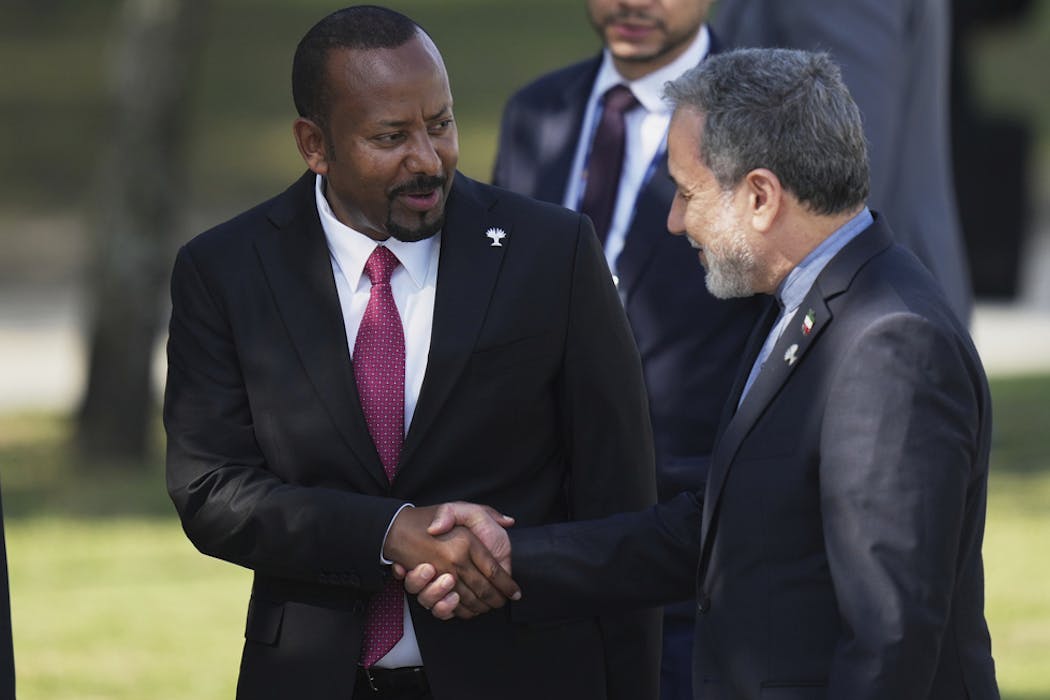
Prime Minister of Ethiopia Abiy Ahmed shakes hands with Iranian Foreign Minister Abbas Araghchi during the 17th annual BRICS summit on July 6, 2025. AP Photo/Silvia Izquierdo
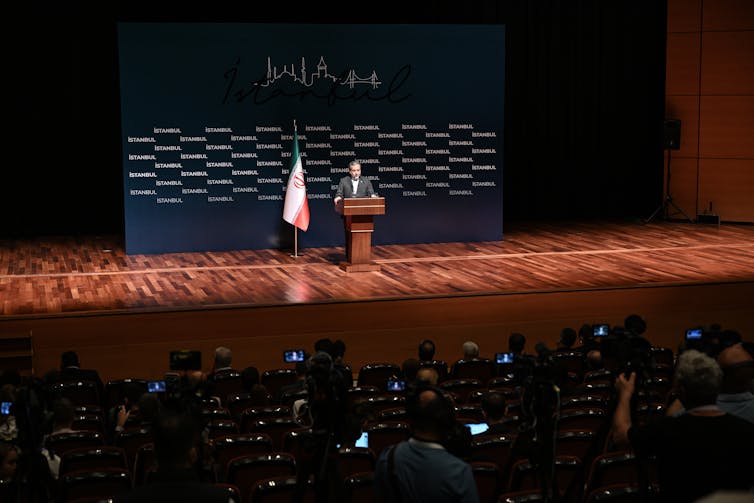
Far from being a routine bilateral diplomatic event for both countries, the trip was part of a broader trend. Since the onset of war in Gaza in late 2023, sparked by the Tehran-aligned and -funded Palestinian group Hamas, Iran has found itself increasingly isolated and facing a number of political and economic crises. Internationally, Tehran’s network of proxy nonstate groups across the Middle East, its so-called axis of resistance, was stretched to a breaking point with Israel’s brutal campaigns against Hamas and Hezbollah, as well as the fall of the Assad regime in Syria in late 2024.
As Iranian officials attempt to weather this rocky new reality, they have looked to advance geostrategic interests elsewhere. As an expert on Iran’s foreign policy, I believe one key emergent area for this is Africa, where Iran has increased its outreach to historically dependable and strategically significant partners such as Burkina Faso. This outreach has created important opportunities for Tehran to engage with countries on issues such as security and critical minerals, while also expanding its market for weapons and other exports while bypassing sanctions.
Security, uranium and economy in West Africa
In addition to Burkina Faso, Iran has intensified its outreach to other African countries in West Africa and the Sahel region, such as Mali and Niger.
Since the early 2020s, these countries have experienced military coups and distanced themselves from the West. They have also confronted serious security threats from rebels, militias and jihadists. Consequently, and as was the case with Ethiopia, they have looked toward Iran as a security partner and a potential supplier of arms, drones and other equipment.
For Iran, expanding relations with these African countries holds the benefit of opening up economically critical markets, including metals and minerals. For instance, Tehran has aspired to access gold from Burkina Faso and Mali, and uranium from Niger. Depending on the extent of the damage and destruction to Iran’s nuclear program during the 12-day war, the potential uranium procured from these countries could be particularly critical if Iran decides to reconstitute or weaponize its program.
After the Iranian and Malian foreign ministers met in May 2024, they did so again the following year in October to discuss reinforcing bilateral and multilateral relations.
To this end, both nations agreed to hold a joint economic commission and to show solidarity and support at meetings of international organizations such as the U.N. and the Non-Aligned Movement.
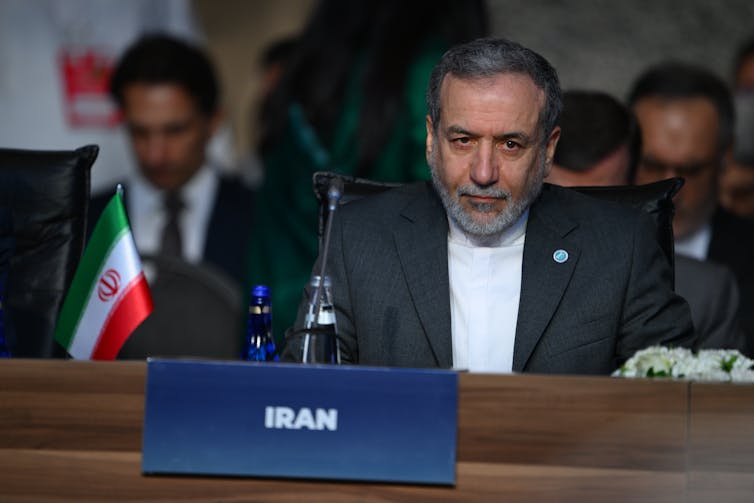
Iranian Foreign Minister Abbas Araghchi delivers a speech at the 51st meeting of the Council of Foreign Ministers of the Organization of Islamic Cooperation on June 22, 2025. Elif Ozturk / Anadolu via Getty Images
In August, Iran sought to strengthen security ties with South Africa – its largest trading partner on the continent by far. At the time, the South African army chief, Gen. Rudzani Maphwanya, made statements supporting Iran and criticizing Israel that created controversy. Between April and October, Iran held meetings and signed agreements with Zimbabwe in the areas of economy, the environment and medical tourism.
While attending the Non-Aligned Movement’s meeting of foreign ministers in Kampala in October, Iranian Foreign Minister Abbas Araghchi met with Ugandan President Yoweri Museveni and thanked him for Uganda’s condemnation of the U.S. and Israel during the 12-day war, during which Uganda evacuated 41 students from Iran. Araghchi also expressed Tehran’s interest and intent on strengthening cooperation with Kampala in agriculture, the economy and commerce.
For Iran, Uganda is strategically important because it possesses not only uranium but also cobalt, which is used to manufacture lithium batteries, superalloys and other industrial products.
While Iran has increased its outreach to reliable and significant African partners across the continent, it has encountered a number of consequential constraints.
For one, there continues to be extensive trade competition from Iran’s Middle East rivals. As recently as 2023, the United Arab Emirates was a top export partner for Burkina Faso, Mali, Niger, Uganda and Zimbabwe, as well as a top import partner of Malawi, Niger, Sierra Leone, Uganda and Zimbabwe. As it had done with several countries in the Horn of Africa in 2016, the UAE, alongside Saudi Arabia, could pressure others on the continent to reduce or eliminate their engagement with Tehran.
Particularly with the U.N. snapback sanctions now back in place, the ongoing reality of global economic pressure on Iran could also give African countries pause when considering stronger bilateral ties with Tehran. Yet before then, and even with the U.S. reimposing sanctions on Tehran after withdrawing from the Iran nuclear deal in 2018, these countries did not simply stop engaging with Tehran.
The final constraint is the transactional nature of Iran’s outreach. This could create distrust among its African partners. In November 2025, for instance, Tehran reportedly supplied drones to Eritrea as tensions escalated between it and Ethiopia. Such a move by Iran could complicate its relationship with Ethiopia and put Tehran in the middle of another conflict between those countries.
Time will tell whether the opportunities outweigh the constraints as Iran attempts to forge closer relations with the continent. Yet for government officials in Tehran weathering sundry crises at home and abroad, it will feel like they have few alternatives than to seek opportunities where they can find them.
Eric Lob receives funding from the Carnegie Endowment for International Peace. He is affiliated with the organization as a non-resident scholar in its Middle East Program.
Si les mers et les océans fonctionnaient comme une immense baignoire, l’eau s’élèverait partout de la même façon. Ce n’est pas ce qui se passe. La fonte des glaces en Antarctique, influencée par le réchauffement climatique, entraîne une élévation inégale du niveau de la mer, notamment du fait de la gravité et du rôle du manteau terrestre.
Quand les calottes polaires fondent, les effets se répercutent dans le monde entier. La fonte de la glace élève le niveau moyen des mers, modifie les courants océaniques et affecte les températures dans des régions très éloignées des pôles. Mais cette fonte n’influence pas le niveau de la mer et les températures de la même manière partout.
Dans une nouvelle étude, notre équipe de scientifiques a examiné comment la fonte des glaces en Antarctique affecte le climat mondial et le niveau de la mer. Nous avons combiné des modèles informatiques de la calotte glaciaire antarctique, de la Terre et du climat global, incluant les processus atmosphériques et océaniques, afin d’explorer les interactions complexes entre la glace en train de fondre et les autres composantes de la Terre.
Comprendre ce qui arrive à la glace de l’Antarctique est essentiel, car elle contient suffisamment d’eau gelée pour élever le niveau moyen des mers d’environ 58 mètres. Lorsque cette glace fond, cela devient un problème existentiel pour les populations et les écosystèmes des communautés insulaires et littorales.
Changements en Antarctique
L’ampleur de la fonte de la calotte glaciaire antarctique dépendra de l’importance du réchauffement de la planète. Réchauffement qui dépend des futures émissions de gaz à effet de serre provenant notamment des véhicules, des centrales électriques et des industries. Des études suggèrent qu’une grande partie de la calotte glaciaire antarctique pourrait subsister si les pays réduisent leurs émissions de gaz à effet de serre conformément à l’objectif de l’accord de Paris de 2015 visant à limiter le réchauffement planétaire à 1,5 °C par rapport à l’ère préindustrielle. Cependant, si les émissions continuent d’augmenter et que l’atmosphère et les océans se réchauffent beaucoup plus, cela pourrait provoquer une fonte importante et des niveaux marins bien plus élevés.
Nos recherches montrent que les fortes émissions présentent des risques non seulement pour la stabilité de la calotte glaciaire de l’Antarctique occidental, qui contribue déjà à l’élévation du niveau de la mer, mais aussi pour la calotte glaciaire de l’Antarctique oriental, beaucoup plus vaste et plus stable. Elles montrent aussi que les régions du monde connaîtront des niveaux différents de montée des eaux à mesure que l’Antarctique fond.
Comprendre l’évolution du niveau de la mer
Si les mers se comportaient comme l’eau dans une baignoire, alors le niveau de l’océan s’élèverait de la même manière partout. Mais ce n’est pas ce qui se passe. Au contraire, de nombreux endroits enregistrent une élévation du niveau de la mer supérieure à la moyenne mondiale, tandis que les zones proches de la calotte glaciaire peuvent même voir le niveau de la mer baisser. La raison principale tient à la gravité.
À mesure que la calotte glaciaire diminue, son attraction gravitationnelle sur l’océan diminue, ce qui entraîne une baisse du niveau de la mer dans les régions proches des banquises et une hausse dans les régions plus éloignées. Mais les variations du niveau de la mer ne dépendent pas uniquement de la distance à la calotte glaciaire en train de fondre. Cette perte de glace modifie également la rotation de la planète. L’axe de rotation est attiré vers cette masse de glace disparue, ce qui redistribue à son tour l’eau autour du globe.
Deux facteurs qui peuvent ralentir la fonte
À mesure que la massive calotte glaciaire fond, le manteau terrestre situé en dessous se soulève. Sous le socle rocheux de l’Antarctique se trouve ce manteau, qui s’écoule lentement, un peu comme du sirop d’érable. Plus la calotte glaciaire fond, moins elle exerce de pression sur la Terre solide. Avec ce poids réduit, le socle rocheux peut se soulever. Cela peut éloigner certaines parties de la calotte glaciaire des eaux océaniques réchauffées, ralentissant ainsi le rythme de la fonte. Ce phénomène est plus rapide dans les régions où le manteau s’écoule plus vite, comme sous la calotte glaciaire de l’Antarctique occidental. Cet effet de rebond pourrait contribuer à préserver la calotte glaciaire – à condition que les émissions mondiales de gaz à effet de serre restent faibles.
Un autre facteur susceptible de ralentir la fonte peut sembler contre-intuitif.
Alors que l’eau de fonte antarctique contribue à l’élévation du niveau de la mer, les modèles montrent qu’elle retarde également le réchauffement induit par les gaz à effet de serre. En effet, l’eau glacée provenant de l’Antarctique réduit la température de surface des océans dans l’hémisphère Sud et le Pacifique tropical, emprisonnant la chaleur dans les profondeurs et ralentissant l’augmentation de la température moyenne globale de l’air.
Mais même si la fonte ralentit, le niveau de la mer continue d’augmenter.
Cartographie de nos résultats sur le niveau de la mer
Nous avons combiné des modèles informatiques simulant ces comportements et d’autres caractéristiques de la calotte glaciaire antarctique, du manteau terrestre et du climat pour comprendre ce qui pourrait arriver au niveau de la mer dans le monde à mesure que les températures globales augmentent et que la glace fond.
Par exemple, dans un scénario modéré où le monde réduit ses émissions de gaz à effet de serre, mais pas suffisamment pour maintenir le réchauffement global en dessous de 2 °C d’ici à 2100, nous avons constaté que l’élévation moyenne du niveau de la mer due à la fonte de la glace antarctique serait d’environ dix centimètres d’ici à 2100. En 2200, elle dépasserait un mètre.
Il faut garder à l’esprit qu’il ne s’agit ici que de l’élévation du niveau de la mer causée par la fonte de l’Antarctique. La calotte glaciaire du Groenland et l’expansion thermique de l’eau de mer due au réchauffement des océans contribueront également à l’élévation du niveau de la mer. Les estimations actuelles suggèrent qu’au total, l’élévation moyenne du niveau de la mer – incluant le Groenland et l’expansion thermique – serait comprise entre 30 centimètres et 60 centimètres d’ici à 2100 dans le même scénario.
Les modèles indiquent la contribution de l’Antarctique à l’élévation du niveau de la mer en 2200, selon un scénario d’émissions moyen (en haut) et élevé (en bas). L’élévation moyenne mondiale du niveau de la mer est en violet. Les zones où le niveau de la mer dépasse la moyenne régionale apparaissent en bleu foncé. Sadai et coll., 2025
Nous montrons également comment l’élévation du niveau de la mer due à l’Antarctique varie à travers le monde. Dans le scénario d’émissions modérées, nous avons ainsi constaté que la hausse la plus importante du niveau de la mer provenant uniquement de la fonte des glaces antarctiques, jusqu’à 1,5 m d’ici à 2200, se produit dans les bassins océaniques Indien, Pacifique et Atlantique occidental – des régions éloignées de l’Antarctique.
Ces régions abritent de nombreuses populations vivant dans des zones côtières basses, notamment les habitants des îles des Caraïbes, comme la Jamaïque, et du Pacifique central, comme les îles Marshall, qui subissent déjà des impacts néfastes liés à la montée des mers.
Dans un scénario d’émissions élevées, nous avons constaté que l’élévation moyenne du niveau de la mer due à la fonte de l’Antarctique serait beaucoup plus importante : environ 30 centimètres en 2100 et près de 3 mètres en 2200.
Dans ce scénario, une large partie du bassin Pacifique au nord de l’équateur, incluant la Micronésie et Palau, ainsi que le centre du bassin Atlantique, connaîtrait la plus forte élévation du niveau de la mer, jusqu’à 4,3 m d’ici à 2200, uniquement en raison de l’Antarctique.
Bien que ces chiffres puissent sembler alarmants, les émissions actuelles et les projections récentes indiquent que ce scénario d’émissions très élevées est peu probable. Cet exercice montre néanmoins les conséquences graves de fortes émissions et souligne l’importance de les réduire.
Nos conclusions
Ces impacts ont des répercussions sur la justice climatique, en particulier pour les nations insulaires qui ont peu contribué au changement climatique mais subissent déjà les effets dévastateurs de l’élévation du niveau de la mer.
De nombreux États insulaires perdent déjà des terres à cause de la montée des eaux et ont été à l’avant-garde des efforts mondiaux pour limiter le réchauffement. Protéger ces pays et d’autres zones côtières nécessitera de réduire les émissions de gaz à effet de serre plus rapidement que ce à quoi les nations s’engagent aujourd’hui.
Shaina Sadai a reçu des financements de la National Science Foundation et de la Hitz Family Foundation.
Ambarish Karmalkar a reçu des financements de la National Science Foundation.