Source: The Conversation – UK – By Martin Moore, Senior Lecturer in Political Communication Education, King’s College London
Brazilians have been strikingly divided in their response to the trial and conviction of their former president Jair Bolsonaro for plotting a coup after his 2022 election defeat. A poll conducted shortly before the September 11 verdict found that 48% wanted to see Bolsonaro imprisoned while an almost equal proportion – 46% – wanted him to remain free.
A separate survey in late August suggested that, were a new presidential election held, 45.4% would vote for Bolsonaro and 44.6% for the incumbent president, Luiz Inácio Lula da Silva. For half of Brazilians, it would appear, the conviction of Bolsonaro was a just end for a would-be dictator. For the other half it was a politically motivated leftwing witch hunt.
The persistent loyalty of so many Brazilians to Bolsonaro seems illogical if one looks at the evidence gathered against him. The former president was shown to have considered numerous alternative ways of staying in power.
These included issuing decrees to stay in office and summoning military leaders to formalise the coup. He was also found to have endorsed a plan to assassinate Lula and his vice-president elect, Geraldo Alckmin, as well as supreme court judge Alexandre de Moraes. This was all covered extensively across Brazil’s mainstream media outlets.
Added to this is the evidence accumulated during Bolsonaro’s term of office (2019-22) that he used “digital militias” to take down his enemies, propagated “fake news” on a vast scale and pursued “antidemocratic acts” against Brazil’s institutions. When taken together, it becomes more surprising that so many Brazilians do not accept his guilt.
However, their denial makes more sense when you look at where Brazilians find their news and information. Many people in Brazil have abandoned legacy media almost entirely and rely on social media, influencers and WhatsApp for their news. Over 90% of Brazil’s adult population are active WhatsApp users.
Conscious of this, Bolsonaro and his administration built and maintained a parallel information ecosystem while in office based around social media and messaging services. This digital ecosystem comprised a vast network of alternative news sites, YouTube channels, social media influencers, Facebook pages, WhatsApp administrators and legions of bots.
Official investigations later revealed that the system was coordinated by the so-called Hate Cabinet, which was run by Bolsonaro’s sons, Carlos and Eduardo, and leading advisers such as Felipe Martins. The Hate Cabinet earned its nickname because the operation’s primary strategy was personal attack.
Whenever anyone criticised the administration, challenged Bolsonaro or showed signs of disloyalty, the Hate Cabinet would orchestrate a vicious campaign against them. This could include false claims about corruption, criminal activity or sexual impropriety, combined with threats of violence.
Joice Hasselmann, a Brazilian politician who fell out with Bolsonaro, was sent a severed pig’s head in November 2018 along with a note reading: “You will suffer and you will die”. These “reputation killings” were used to discredit a wide range of people, from journalists and judges to opposition ministers. The intention was to scare them into silence.
The information operations of the Bolsonaro administration went well beyond reputation killings. With its network of close supporters, the administration sought to undermine public confidence in Brazil’s democratic institutions and processes. This included the judiciary, mainstream media and electoral system.
They smeared supreme court justices whenever the judges made decisions with which they disagreed, while dismissing journalistic investigations as politically motivated “cultural Marxism”. They also questioned the integrity of Brazil’s electronic voting machines.
Bolsonaro’s alternative ecosystem
This parallel information ecosystem was highly sophisticated and carefully coordinated. A “news story” would be given to an alternative news site by the Bolsonaro camp, then quickly reproduced on other sites. This gave the misleading impression that the story was legitimate breaking news rather than a smear campaign by Bolsonaro insiders.
Links were then posted to the articles by a network of influencers, which was amplified by bots. Tens of thousands of WhatsApp groups were also set up, led by Bolsonaristas – unofficial Bolsonaro supporters who organised themselves according to military ranks. They disseminated content to their millions of followers.
The effort was funded largely by regime-friendly business people who wanted to keep Lula’s leftwing Workers’ party (PT) out of power. But funding also came via online advertising, some of it paid for covertly by the Bolsonaro government.
Bolsonaro’s alternative ecosystem failed to get him reelected – just. He lost to Lula by 49% to 51% in the second round of voting in October 2022. But it succeeded in undermining trust in the electoral process and in Brazil’s democratic institutions. It also succeeded in nurturing a society riven in two – where the two halves not only have different political views but live in different political realities.
Moreover, Bolsonaro showed how malleable the new digital information environment could be for those who want to construct alternate realities. And, as we show in our forthcoming book, Dictating Reality: The Global Battle to Control the News, such parallel realities are increasingly evident in democracies across the world.
A growing number of leaders and parties are manipulating the digital communication environment to promote whatever narrative serves them best.
The authors do not work for, consult, own shares in or receive funding from any company or organisation that would benefit from this article, and have disclosed no relevant affiliations beyond their academic appointment.
Reconduit à la Culture et aux Communications le 10 septembre, le ministre Mathieu Lacombe se retrouve aussitôt face à un dossier urgent : le rapport Souffler les braises, qui lui a été remis cinq jours plus tôt par le Groupe de travail sur l’avenir de l’audiovisuel québécois (GTAAQ).
Co-présidé par Monique Simard (productrice, ex-présidente de la SODEC) et Philippe Lamarre (fondateur d’Urbania), ce groupe rassemblait aussi quatre personnes issues de la production, de la diffusion et de la création audiovisuelle. En plus de 200 pages, le rapport formule 20 recommandations et 76 mesures regroupées sous six lignes directrices : renforcer les institutions publiques, mieux arrimer éducation et culture, reconquérir le public, stimuler l’exportation, accélérer la transition numérique et encourager la concertation sectorielle.
Bien en amont de la rédaction du rapport par le groupe de travail, j’ai encadré à l’UQAM l’équipe chargée du dépouillement des études et synthèses des mémoires. Mon commentaire s’appuie sur ce travail, sur mon expérience d’analyste du secteur de l’audiovisuel et sur ma pratique en prospective.
Dépasser la connaissance ancienne des enjeux
Il importe d’abord de rappeler que les problèmes structurels de l’audiovisuel québécois ne sont pas nouveaux. Depuis au moins une décennie, chercheurs, experts et praticiens identifient les fragilités qui pèsent sur l’industrie : déclin des ressources financières, transfert des écoutes vers le « tout-numérique », dépendance grandissante aux plates-formes étrangères, difficultés de mise en valeur des contenus locaux, fragmentation des publics et déficit de littératie numérique.
De ce point de vue, le rapport révèle peu de choses nouvelles, mais a le grand mérite de remettre à l’avant-plan les manques connus et des pistes de solutions souvent ignorées.
Souffler les braises arrive donc in extremis : alors que le secteur paye le prix d’années de négligence et de demi-mesures face aux mutations mondiales des industries de la création.
Tension entre inventaire et invention
L’exhaustivité et la profondeur du rapport, qui compile l’essentiel de 114 mémoires déposés, d’une trentaine d’études dépouillées et de centaines d’heures de rencontres, sont remarquables. C’est aussi ce qui en fait un document consensuel, accueilli avec enthousiasme par le milieu.
Déjà des milliers d’abonnés à l’infolettre de La Conversation. Et vous ? Abonnez-vous gratuitement à notre infolettre pour mieux comprendre les grands enjeux contemporains.
Toutefois, cette même exhaustivité fait courir un risque de dilution des priorités : chacun peut y trouver une mesure favorable à ses intérêts, fournissant de quoi alimenter les agendas particuliers. C’est aussi ce qui rend la longue liste de recommandations vulnérable aux changements de gouvernement, à l’influence des lobbys et aux priorités politiques changeantes.
C’est là que se révèle la tension fondamentale qui traverse l’exercice : d’un côté, le rapport joue un rôle stabilisateur en apportant un inventaire de solutions pragmatiques et attendues à court terme. De l’autre, il laisse en suspens la nécessité de redessiner en profondeur le modèle de l’audiovisuel québécois pour se préparer aux prochaines mutations de l’économie numérique des contenus.
Une question centrale à approfondir
À travers cette tension, le rapport pose néanmoins une interrogation qui mérite toute notre attention : souhaitons-nous être propriétaires de notre culture, ou rester sous-traitants et consommateurs invisibles des grandes industries culturelles étrangères ?
Le rapport privilégie clairement la première option : une stratégie de souveraineté culturelle, présentée comme urgente et un devoir envers les futures générations.
Le rapport avance certaines pistes pour renforcer cet engagement envers la jeunesse : ouverture de studios de création et développement de marques à Télé-Québec, augmentation des budgets d’investissement en jeunesse, élargissement des genres admissibles à la SODEC. Il n’en reste pas moins que ces mesures demeurent enchâssées dans un système qui, jusqu’ici, n’a pas su renouveler ce « lien affectif » avec les nouvelles générations d’auditoires.
Et si « parler aux jeunes », c’était justement d’ouvrir la voie à l’invention de modèles inédits, au-delà de ce qui paraît aujourd’hui possible ?
Éviter le blocage structurel
En éclairant ce qui est déjà visible, mais peinant à préparer ce qui est encore à venir, le rapport touche à sa limite la plus importante : celle du maintien d’un statu quo structurel. Si des ajustements opérationnels et des réaménagements significatifs sont proposés, les fondements de l’architecture institutionnelle et économique du modèle audiovisuel québécois, ainsi que les logiques de gouvernance qui organisent rôles, pouvoirs et privilèges au sein de la chaîne de valeur, demeurent largement inchangés.
L’avenir de l’audiovisuel québécois ne pourra pas se jouer sur la seule capacité à répondre aux crises présentes (et permanentes) du secteur, mais sur l’audace de concevoir collectivement des futurs désirables, au-delà de la seule préservation du modèle existant. Mais cela suppose de créer un espace commun de réflexion et de coconstruction, où puisse se déployer une véritable pensée du devenir.
Le rapport Souffler les braises offre l’occasion d’amorcer ce momentum et d’engager le travail.
Une méthodologie à interroger
La démarche du groupe de travail reposait sur une vaste consultation des personnes travaillant dans le secteur qui, logiquement, ont exprimé des préoccupations liées à leur quotidien et aux menaces immédiates qui pèsent sur leur pratique. Une méthode classique, mais qui enferme le rapport dans un rôle de compromis destiné à rassurer les multiples segments de l’industrie.
Tout le monde a été entendu. La prochaine étape appartient maintenant à l’industrie. Transformer les recommandations en résultats exige de concentrer les efforts sur quelques fronts communs. Le rapport le souligne clairement dans sa conclusion : il faut apprendre à avancer ensemble, mais surtout dans la même direction. Or, viser des résultats différents suppose d’abord de changer nos façons de faire : développer des compétences collectives capables d’anticiper les ruptures, d’explorer des futurs multiples et de renforcer la capacité d’adaptation continue de l’écosystème.
Se réinventer exigera également d’élargir le cercle. Sur plus d’une centaine de mémoires, un seul provenait d’un autre secteur que l’audiovisuel. Les prochaines étapes gagneraient à mobiliser plus largement : population, autres filières culturelles, universités et milieux d’affaires. C’est à cette condition que le Québec pourra dépasser une posture défensive et s’engager dans une véritable coconstruction, afin d’imaginer et de bâtir collectivement les futurs de ses industries créatives.
Pour faire long feu…
Sous cet éclairage, le rapport Souffler les braises doit être compris non comme un aboutissement, mais comme un point de départ. Il propose un ensemble de mesures stabilisatrices susceptibles d’atténuer les tensions actuelles. Cet apaisement au sein de l’industrie audiovisuelle est nécessaire et désiré. Ça ne saurait cependant se substituer à une refonte en profondeur des systèmes qui régissent actuellement ce secteur.
En définitive, le défi n’est pas seulement de préserver l’existant, mais de cultiver une capacité collective à se projeter dans ce qui nous apparaît souhaitable. Pour ce faire, il faut développer une imagination institutionnelle et politique à la hauteur des transformations sociales, culturelles, climatiques et technologiques qui s’annoncent.
C’est important, parce que quiconque a déjà soufflé sur des braises sait qu’on peut augmenter temporairement leur incandescence. Mais que sans l’ajout de bois nouveau, le feu ne reprend pas longtemps.
Catalina Briceno a reçu un financement de recherche partenariale de la part du Ministère de la culture et des communications dans le cadre de la revue de littérature destinée au groupe d’experts sur l’avenir de l’audiovisuel.
A new deal to deport asylum seekers from the US to Uganda was announced in August 2025. The full agreement, already signed by the ambassadors of the two countries at the end of July, set out the terms of the arrangements. Franzisca Zanker and Ronald Kalyango Sebba, who have studied refugee and migration policy in Uganda, unpack its significance.
What deal has Uganda signed with Washington on taking refugees?
Uganda has agreed to take on an unspecified number of third-country nationals who have a pending asylum claim in the US but cannot return home due to safety concerns. In other words, these are people who should likely be protected as refugees, but are no longer wanted in Donald Trump’s America.
Uganda is set to receive development funds in return. It also retains discretion on a case-by-case basis.
According to the official Ugandan statement, the deal, which entered into force with its signing on 29 July 2025, does not include people with a criminal background or unaccompanied minors. The written agreement, however, only mentions minors.
Once in Uganda, each person will go through individual refugee status determination processes.
How does this deal compare with others the US has reached on the continent?
It follows similar bilateral agreements with other African countries from recent weeks. For instance, eight people with a criminal background were deported in July to South Sudan. Five similar cases were deported to Eswatini. In mid-September, Ghana became the latest African country to crumble, taking in 14 deported migrants from the US.
A final example, Rwanda, has a long history of similar agreements. These agreements have usually been accompanied by much fanfare and followed by little in the way of receiving of actual refugees. Most recently Rwanda agreed to take in 250 people from the US. The first seven arrived in late August.
What are the issues with these arrangements?
The US is not alone in its attempts to send asylum seekers to countries in Africa.
Plans – with varying levels of concreteness – have been thrown around by politicians from the UK, Denmark and Germany.
Migration is being demonised by politicians all over the world. So externalising, which basically means moving the location of the problem, may seem like a solution.
But African countries have not always received such offers with open arms. While global asymmetries and aid dependencies mean that African officials may not overtly reject such deal attempts, countries are not keen to take on any deportees, let alone from third countries.
In fact, there is no international convention that provides a legal instrument for deporting people from another nationality to a different country. International agreements, most recently the Samoa Agreement between the European Union and Africa, Caribbean and Pacific states, have removed the potential to deport third nationals.
The deal provides the groundwork for much-needed improvements in bilateral US-Ugandan relationship.
In response to the globally condemned 2023 Anti-Homosexuality Act, the Joe Biden administration terminated Uganda’s eligibility for US trade benefits under the African Growth and Opportunity Act. This policy gave Uganda duty-free access to the American market for a variety of goods.
More recently under the Trump administration, Uganda has suffered the effect of US funding cuts. This includes the loss of an estimated 66% of funding following cuts to the USAID development assistance programme. Uganda also faces a higher tariff of 15%, up from the previously announced 10% that will affect the cost of its agricultural products in the US market. This could potentially lower its sales in a key export market.
While the details of the US-Uganda asylum deal are shrouded in secrecy, as is common with such agreements it could provide Uganda with much needed development funds and lead to better tariff conditions.
Domestically, opposition politicians have criticised the new bilateral deal. However, Museveni has not shown much concern for these misgivings. Uganda is one of the few countries where refugees have not become a major political issue.
The country has a reputation as one of the most generous places towards refugees. Most people entering Uganda are given automatic refugee status. This was set up in the 1969 refugee convention from the then Organisation of African Unity.
The government provides refugees with a plot of land to farm. They have free access to schools and healthcare, and can work. As refugee numbers grow, however, the plots of land are getting smaller.
In practice, refugees are confined to dusty so-called refugee settlements, with few working and educational possibilities. Many refugees – just like the Ugandan host community – live under very high levels of poverty.
Will the refugees from Washington get the same treatment?
We do not know at this stage. However, in August 2021, Uganda agreed to take on up to 2,000 refugees from Afghanistan on behalf of the US. While this was deemed only a temporary move before they were resettled elsewhere, many remain in Uganda to this day.
At the time, the Ugandan foreign minister wrote in an op-ed
our friend, partner and longstanding ally – the US – asked for our support …. when the US asks for our help and we are able to give it, we do.
In the same piece he also noted
Ugandans say refugees are our brothers and sisters. That is why our door will always be open to them.
What this means for the US deportees is unknown.
The agreement reveals no details about their temporary housing or refugee status determination process. Whether they will be sent to the remote settlements where most refugees in Uganda access free housing and humanitarian assistance, or stay in urban Kampala, remains to be determined.
With elections in Uganda scheduled for January 2026, such a deal certainly helps President Yoweri Museveni preempt any US criticism regarding electoral freedom. But it also raises deeper questions about the long-term effects of open-door policies.
Franzisca Zanker receives funding from the European Research Council for the project “The Political Lives of Migrants: Perspectives from Africa” (Grant no: 101161856).
Ronald Kalyango Sebba is affiliated with Kyambogo University, Kampala Uganda.
As the Israeli military advances its ground invasion of Gaza City, Egypt is coming under mounting pressure to accept a mass expulsion of Palestinians.
The Israeli military has already confined Gaza’s 2.2 million Palestinians into a small area of the occupied strip. And the Israeli prime minister, Benjamin Netanyahu, has now accused Egypt of choosing “to imprison residents in Gaza who would prefer to leave the war zone”.
US president Donald Trump has also supported the idea of forcing out the Palestinians. In February, he made the extraordinary proposal that Egypt and Jordan should accept all of Gaza’s population and said the enclave should be rebuilt as a “riviera”.
Egypt responded quickly by drafting an Arab-funded plan to reconstruct Gaza for the Palestinians. The project was soon taken up and advanced by the Arab League, with UK and European support. However, it was rejected by both Israel and the US.
Egypt’s leaders have since hardened their position against Israel over its brutal war, which the UN’s independent international commission of inquiry has just concluded constitutes genocide.
There are three primary reasons why Egypt objects to any expulsion of Palestinians. First, Cairo argues it cannot be complicit in what would amount to the ethnic cleansing of Palestinians, a grave violation of international law.
Forcing Palestinians out of Gaza would erode any remaining prospect of Palestinian statehood. Previous forced expulsions of Palestinians in the Nakba (catastrophe) of 1948, and again in the 1967 war between Israel and its neighbours, proved permanent. Many of the Palestinians in Gaza are already from refugee families who were displaced from their homes in pre-1948 Palestine.
As Egypt’s foreign minister, Badr Abdelatty, warned in early September: “Displacement is not an option and it is a red line for Egypt, and we will not allow it to happen.” Jordan’s King Abdullah has been just as firm in opposing the expulsion of Palestinians into his country.
Second, the sudden arrival of hundreds of thousands of Palestinians, possibly including Hamas fighters, would present an immediate security concern. Egyptian security forces have long confronted a local Islamist insurgency in the northern Sinai desert near Gaza.
Egypt deployed more troops into the Sinai in 2024 after Israeli forces seized control of the Philadelphi Corridor, a narrow strip of land along Egypt’s border with Gaza. Egypt said Israel’s move violated their peace treaty. More Egyptian troops were mobilised ahead of the Gaza City offensive.
Third, a mass influx of refugees would create serious instability and incur heavy costs. Egypt already hosts at least 9 million migrants, including around 150,000 Palestinians.
The state has also suffered economic losses from Houthi attacks on Red Sea shipping and, in 2024, was forced to expand a loan from the International Monetary Fund to as much as US$8 billion (£5.9 billion) to rescue its ailing economy.
Egypt-Israeli relations
Egyptian president Abdel Fattah Al-Sisi, who Trump once described as his “favourite dictator”, has toughened his position against Israel. In July, he called on Trump to use his political influence to end the war and allow humanitarian aid into Gaza. He also accused Israel of mounting a “systematic war of genocide”.
Then, at a recent Arab-Islamic summit in the Qatari capital Doha, Sisi described Israel as “the enemy”. He and other Arab leaders warned their existing peace agreements with Israel were now at risk.
Egypt was the first Arab state to sign a peace treaty with Israel in 1979, after the Camp David Accords. But it has been a cold peace. Former Egyptian president Anwar Sadat was assassinated in 1981 in part because he signed the normalisation deal.
The hardening in Sisi’s rhetoric comes after Israel’s brazen attack on Hamas negotiators in Qatar on September 9, which revealed the hollowness of the US security guarantee for its Gulf allies. The strike raised concerns of further Israeli attacks on Hamas leaders elsewhere in the Middle East, possibly including Cairo.
Meanwhile, the Egyptian government has faced escalating anger at home over the war. In July, protesters attacked a police station in the town of Helwan, south of Cairo, demanding their government open the Egyptian side of the Rafah crossing to allow humanitarian aid into Gaza.
Sisi’s authoritarian regime, which relies on coercion to survive, has moved to stifle pro-Palestinian protests. It has even reportedly forced the leading cleric at Al-Azhar university to withdraw a statement condemning the starvation of Palestinians.
But Egypt’s peace treaty has tied it into complex obligations with both Israel and the US. Egypt relies on US$1.5 billion in annual aid from the US, most of it in military support, in return for upholding the agreement. Egypt and Israel coordinate on security and, for many months, worked together on negotiations with Hamas to establish a ceasefire and an end to the Gaza conflict.
The two states are also economically linked. An Egyptian firm signed a US$35 billion deal in August to import natural gas from Israel to avoid blackouts in hot summer temperatures. That deal alone provides around one-fifth of Egypt’s gas needs. Reports suggest Israel has now threatened to suspend the deal as tensions between the two countries mount.
Egypt will be calculating whether losing this financial aid and these gas imports would be less costly than giving in to an Israeli expulsion of the Palestinians from Gaza.
Rory McCarthy receives funding for his academic research from the British Academy and the Leverhulme Trust.
Daniel Meron, Israel’s ambassador to the UN in Geneva, immediately dismissed the report for “promot[ing] a narrative serving Hamas and its supporters in attempting to delegitimize and demonize the state of Israel.” The report, he said, “falsely accuses Israel of genocidal intent, an allegation it cannot substantiate.”
Let’s imagine that there was no such thing as the legal definition of the crime of genocide. What would be left of the report? A gruesome, horrifying, utterly damning catalogue of Israeli war crimes and crimes against humanity.
“Genocide means any of the following acts committed with intent to destroy, in whole or in part, a national, ethnical, racial or religious group, as such: (a) Killing members of the group; (b) Causing serious bodily or mental harm to members of the group; (c) Deliberately inflicting on the group conditions of life calculated to bring about its physical destruction in whole or in part; (d) Imposing measures intended to prevent births within the group; (e) Forcibly transferring children of the group to another group.”
The prohibition of genocide is what is known in public international law as a peremptory (jus cogens) norm, meaning that it allows for no exceptions. It is one of a handful of jus cogens norms that include prohibitions on slavery, torture, war crimes and crimes against humanity. These are the worst of the worst, legally speaking, none lesser or greater than another.
How genocide is distinct
The crime of genocide stands out from other jus cogens violations in two ways, however — one legal and one sociological.
The legal difference is that genocide is the only jus cogens violation that requires proof of intent (mens rea, “guilty mind”). All the rest require nothing more than proof of a deed (actus reus, “guilty act”).
The sociological difference is that public opinion has come to regard genocide as somehow particularly important. If a state commits atrocities, it is for some reason unsatisfying today to call them crimes against humanity. There is seemingly a palpable urge to label it genocide.
In addition, the public understanding of genocide is much less restrictive than the legal one. The public feels that intent can be presumed and need not be proven, and that members of almost any group can qualify as victims. Sexual and gender minorities are not a protected group under the 1948 convention, for example, and yet it is not unusual to hear about the “genocide of gay people.”
Inviting quibbles and deflection
The UN report will be welcomed by all who understand Israel as guilty of the sociological version of the crime of genocide, because it concludes that Israel is also guilty of the legal version.
But a careful reading of the report will show that it often leaps to conclusions about intentions, drawing from statements or actions that might actually have explanations other than genuinely genocidal intent.
Such explanations, if true, would not be excuses. But they are not the same as an intention to destroy the Palestinian people.
Does this mean that the report is wrong to conclude that Israel is guilty of the legal crime of genocide? Not necessarily. It means only that it left room to quibble and deflect attention from unquestionable crimes.
It also gave Meron an opportunity to try to change the channel and make the conversation about “a narrative serving Hamas” or an attempt to “delegitimize and demonize the state of Israel,” rather than children starving or being shot in the head.
A high bar
None of this would be the case if the crime of genocide had not been defined so narrowly in the first place.
To some extent, its narrowness was the result of its inspiration. The evidence of genocidal intent was clear and overwhelming in Nazi Germany. One reason why there have been so few convictions is that the specific case of the Holocaust both spurred the definition of the crime and set the evidentiary bar so high.
However, its narrowness is also the result of political manoeuvring during the negotiation of the convention itself.
Was there any good reason why sexual orientation or gender identity were not included as protected categories? None whatsoever, unless you just so happened to be a state that wanted to be left in peace to persecute sexual and gender minorities.
Why was the convention silent on cultural genocide, or on forced relocations of Indigenous Peoples to reservations? Perhaps because certain powerful countries had embarrassing histories that they did not want to see criminalized.
Perhaps the biggest error was insisting upon “intent to destroy.” Why not simply go with targeting, or disproportionately impacting, members of a particular group?
As the UN report demonstrates, it’s easy to show conduct (actus reus), but typically very difficult to prove intent (mens rea). Removing intent would have made genocide a subset of crimes against humanity rather than a separate crime. But so what?
Ultimately, none of this should matter. We should not need the word “genocide” to galvanize action to stop the horrors unfolding in Gaza. They are crimes enough in and of themselves — as were the horrors in Cambodia, Bosnia, Rwanda and so many other places — and they should be the sole focus of our attention.
David Welch does not work for, consult, own shares in or receive funding from any company or organisation that would benefit from this article, and has disclosed no relevant affiliations beyond their academic appointment.
AI is entering classrooms quickly, whether through children’s own AI use or lesson plans. The New York Times recently reported on an AI school in Texas that replaced teachers with “guides,” and AI-led lessons. Many apps, meanwhile, promise to diagnose, assess and “optimize” children’s learning.
A recent Organization for Economic Development Report entitled “How’s Life for Children in the Digital Age?” outlines the importance of a “four-pillar” approach to enhancing child well-being that involves parents and guardians, a legal and policy framework, teachers and schools and the voices of children themselves.
Concern over children’s mental health in the digital world is hardly new. Advocacy groups such as FairPlay for Kids and their 5 Rights Foundation have long pushed for stronger monitoring and regulation, urging tech companies to put children’s needs ahead of corporate profit.
They have amassed “overwhelming evidence” that child-targeted marketing, and the excessive screen time it fuels, undermines healthy development. By the time a child turns 13, technology companies may have already amassed up to 72 million data points on them — and there is virtually no regulation governing how that information is used.
OECD data shows that 70 per cent of 10-year-olds in developed countries own a smartphone, and by age 15, at least half of them spend 30 or more hours a week on their devices.
Called “persuasive design,” techniques like infinite scroll, autoplay, intermittent rewards and eye-catching design are used to hook children and keep them glued to screens, reshaping childhood.
From cognitive off-loading to emotional mining
AI, with its growing ability to “think” for us, is accelerating cognitive off-loading, outsourcing mental effort to machines. For young children whose neural pathways for reasoning are still forming, this is especially troubling. If for adults this sounds abstract, ask yourself how many phone numbers you can remember without your device.
What researchers call “emotional AI” goes even further, mining facial expressions, tone of voice, body language, text sentiment and even heart rate to engage children more deeply. The technology is increasingly built into smart toys, wearables and, perhaps most concerning, AI chatbots that children or teens turn to for comfort.
While most children said they weren’t allowed out in public alone, and more than half had never walked down a grocery aisle unaccompanied or used a sharp knife, their online use was remarkably unsupervised.
But when asked how they prefer to spend their leisure time, only a quarter mentioned their devices, favouring free play with their friends. Eighty-seven per cent of surveyed children said they wished they could spend more time with their friends in person outside of school.
Parents and educators are navigating a world where screens, algorithms and AI companions compete for children’s attention and shape their development.
In this context, the humble call from kids for more unstructured play with friends is not nostalgia; it’s a health intervention. Protecting that space may do more to safeguard their cognitive and emotional growth than any app, program or device ever could.
David Philpott does not work for, consult, own shares in or receive funding from any company or organisation that would benefit from this article, and has disclosed no relevant affiliations beyond their academic appointment.
At the Boston waterfront sits the Institute of Contemporary Art, an architectural marvel that gleams against the harbour in a wealthy neighbourhood. My Uber driver, an African immigrant, remarks as I get out: “Be careful, this is an expensive area.” His comment hints at the subtle tensions of race and class in such affluent spaces, where one’s presence as an outsider is immediately registered. I assure him I’ve just come to see the art.
I’d come to see Zimbabwean artist Portia Zvavahera’s first solo museum show in the US, Hidden Battles/Hondo Dzakavanzika. This exhibition is a landmark moment of recognition for one of southern Africa’s leading contemporary artists.
When most artists are grappling with history and archives, Zvavahera is focused on the dreams she has in her sleep, not as a retreat from the past or the urgency of the now, but as a parallel form of knowledge.
As a scholar of African literary histories and archives and how they intersect with visual culture, I find Zvavahera’s work particularly powerful. It uncovers layers of meaning that operate at the subconscious, where personal memory, cultural narratives, and the imagination intersect.
From an archival perspective, the exhibition is compelling because it frames these dreamscapes with materiality – paint, paper, canvas, brushstrokes – making each a document of emotional and cultural knowledge.
Zvavahera engages deeply with the traditional spirituality and African Pentecostal beliefs in which she was raised. She illuminates spirits and revelations. But she alters these dreams with emancipatory gestures: drawing in bodily features, concealing them as they morph into animal-like figures or plants. When looking closely, it’s as if the canvas was cut then sutured back with careful stitches, with each move a restoration of dignity. This is the delicacy of her brushstrokes.
The Boston gallery positions itself as a site for amplifying singular global voices in art, like Zvavahera’s. Her refusal to translate dreams into rational explanation is central to her practice. Boston audiences encounter Zimbabwean perspectives not as illustrative or ethnographic, but as intellectually and aesthetically complex. Zvavahera is placed within transnational conversations while her particular lived experiences are preserved.
The work on the show was made between 2021 and 2025, a time filled with mourning and melancholy, during and after the COVID pandemic. Zvavahera is a prophet who uses the canvas to transform dark dreams into vivid, colourful prayers. She says:
People say their prayers with words, and I’m saying my prayers with a painting.
Who is Portia Zvavahera?
Born in Harare in 1985, Zvavahera channels childhood experiences, ancestral presence, and mystical narratives into her paintings. The work blurs the line between the figurative and the abstract.
Growing up in Harare’s art scene, both modernist and indigenous art inspired her practice. She found mentorship and support from Gallery Delta and formal training from the National Gallery of Zimbabwe.
Her work has earned awards and international acclaim for its emotive force and poetic intensity.
The exhibition
Zvavahera’s canvases are layered with pigment and texture, incorporating printmaking techniques alongside stencilling, delicate lace, batik wax, and even palm fronds from her garden.
The dream paintings on show are all vast in scale, almost overwhelming in their presence. They appear as recurring visions, or fragments from a psyche as troubled as it is fertile.
The imagery conjures a world of vulnerability. Spectres in her dreams besiege her and try to snatch her children, harm her body, make her grandmother sick, unsettle her spirit. But she does not succumb. Instead, she renders them into haunting paintings and drawings, binding them into linen, oil and ink.
Their titles draw from Shona proverbs and folktales. Kurwira vana (fighting for the children). Tinosvetuka rusvingo (jumping over the wall). Hondo yakatarisana naambuya (the battle that grandmother is facing). They aren’t simply explanatory notes but portals, resisting simplification, pulling the viewer into the language of a cosmology not easily domesticated by English.
Zvavahera is an artist of scale, but also of duration. The canvases demand that viewers linger. To stand before the work is to enter a meditative space, one where line and colour pulse with life. In one caption she writes:
I know there’s going to be a battle in the future when I see a bull in my dreams.
The bull, like the angelic and demonic figures in her work, are not allegory but omen, a herald of struggle. This is the artist’s autobiography in colour.
What haunts is not only the possibility of harm, but also the persistence of love. Viewers witness the artist’s insistent refusal to let her children, her spirit, her imagination, be taken over. To dream is to fight; to paint is to protect. Her canvases stage encounters between the forces of good and evil, and transform them into visions of resilience.
Running through this series is a mystical or magical impulse that is especially vivid in her characters. Her paintings and drawings develop a kind of surrealist mystic experience.
Zvavahera’s work matters because it demonstrates how art can navigate the intimate and the ancestral, the personal and the collective. It offers a worldview that’s too often marginalised in art world conversations. She brings to the fore the depth of the African imagination.
Her show is testament to the fact that African artists are not only present on the global art stage, they’re also helping shape the questions, forms and languages of art itself.
Tinashe Mushakavanhu does not work for, consult, own shares in or receive funding from any company or organisation that would benefit from this article, and has disclosed no relevant affiliations beyond their academic appointment.
Source: The Conversation – Africa – By Janet Remmington, Research Associate, Humanities Research Centre (and African Literature Department, University of the Witwatersrand), University of York
For black people living in South Africa during apartheid, simply moving around the country was a fraught activity, let alone crossing its borders. This was especially the case for black women, who were “rock bottom of the racial pile”, as South African writer Lauretta Ngcoboexpressed it.
Coming to power in 1948 and ruling for over 40 years before democracy in 1994, the white-minority apartheid government took various race-based policies to extremes. An emphasis was on trying to control movement, keeping the black majority “in their place”.
From the 1950s, the state extended pass laws, targeting black women. It also complicated overseas travel with extra bureaucratic and financial burdens.
Mobility restrictions caused an outcry, especially among the growing body of black working women in industrialising cities and towns. These women connected their everyday challenges with broader sociopolitical issues. They injected new energy and forms of activism into organisations involved in the liberation struggle, including the African National Congress (ANC).
In a recent study, I explore the stories of black women who refused to stay put in the face of apartheid’s controls. For these women, mobility was a powerful form of anti-apartheid resistance – and of self-assertion.
I highlight how in 1954, a number of these women, working across race lines, founded the Federation of South African Women (Fedsaw) and drafted the Women’s Charter. The pioneering document laid groundwork for the broader Freedom Charter, which enshrined ideas on freedoms of movement and thought:
All shall be free to travel without restriction from countryside to town, from province to province, and from South Africa abroad.
Even though these ideals would only be realised much later, these activist women broke apartheid’s rules by travelling, exchanging ideas and making connections across borders.
The activist-traveller
These women’s high-risk journeys struck me as being characteristic of what journalist and scholar Mahvish Ahmad describes as a musāfir: an activist-traveller in a politically hostile environment who breaks new ground for others so they may be free.
The mobile black women workers I have been researching have not previously been brought into view as travellers with things to say about their journeys and movements. Their travel texts are diverse, many available only in archives. They include speeches, commentaries, handwritten accounts, interviews, letters and memoirs. Some memoirs were officially published, but outside the country.
Their outputs were not the products of high education or stylised writing, but produced in the intensity of the times by working women.
Elizabeth Mafekeng
When Elizabeth Mafekeng, president of the Food and Canning Workers’ Association, was denied a passport in 1955, she boarded a plane in disguise as a domestic helper. That’s how determined she was to get to the World Conference of Workers in Bulgaria. She also took in Poland, Czechoslovakia, the Soviet Union and China, commenting in the press that she “saw the way people should live in the world” where race was not pronounced.
Returning to South Africa, she was punished for her transgressive travel. She became the first woman sentenced to political banishment by the apartheid state. Again she took mobility into her own hands, fleeing with her two-month-old baby to then Basotholand (today’s Lesotho).
Lilian Ngoyi and Dora Tamana
Lilian Ngoyi, leader of the Garment Workers Union and president of the ANC’s Women’s League, travelled to Switzerland, London, Berlin, the Soviet Union, China and Mongolia in 1955.
Ngoyi and Dora Tamana first tried to board a ship under “European names”, only to be arrested. On a second attempt, they succeeded by air using affidavits and a raft of explanations, eventually arriving in London after stopovers in Uganda, Italy and the Netherlands. Their destination was the World Congress of Mothers in Switzerland on behalf of Fedsaw. There they forged powerful solidarity networks.
Tamana reflected in a letter:
When I saw all these things, different nations together, my eyes were opened and I said, I have tasted the new world and won the confidence of our future.
On return, Ngoyi and Tamana played leading roles in the 20,000-strong 1956 women’s anti-pass march to parliament.
Frances Baard
Frances Baard was a domestic worker turned union organiser who presented the Women’s March petition to the apartheid state.
She travelled around South Africa extensively despite police harassment. Her organising work connected domestic workers, factory workers and other exploited labourers, for which she was imprisoned and banished. In her memoir, she spoke of the mind’s ability to travel:
Even though they ban me … my spirit is still there … free.
Florence Mophosho
My research includes those who travelled into exile like Florence Mophosho.
She was one of the few exiled women leaders of the ANC in the 1960s, based for years in Tanzania and travelling far and wide for the Women’s Secretariat. She stressed that travel was vital to advance the work of political freedom as well as global women’s emancipation. This wasn’t always appreciated by male colleagues.
Emma Mashinini
The apartheid government loosened some mobility restrictions in the 1980s. But this didn’t mean moving around was free or unencumbered. Emma Mashinini, who led the Commercial, Catering and Allied Workers Union, undertook “a hundred and one travels” within and beyond South Africa to progress freedom for her people.
In 1981, Mashinini was thrown into solitary confinement for six months. In the eyes of the state, she had “overreached” as a black woman traveller-organiser. She insisted in her memoir that it was her country and she intended to come and go.
Moving to be free
Understanding this travel and writing history helps shine new light on (often unsung) black women trade unionists and organisational leaders as anti-apartheid movers and shakers.
Insisting on mobility came at great personal cost, but in a sense these women never went alone. They travelled to gain ground for the greater cause of freedom, while discovering new versions of themselves along the way.
Janet Remmington does not work for, consult, own shares in or receive funding from any company or organisation that would benefit from this article, and has disclosed no relevant affiliations beyond their academic appointment.
On any street in Lagos, Abuja or Port Harcourt, you’ll find abandoned plastic bottles lying around. Each year, about 2.5 million tonnes of plastic waste are produced in Nigeria and much of it winds up in landfills or in the environment.
But plastic waste can be useful. In some places it’s converted to textiles and clothing. Adidas, a global shoe and apparel maker, uses ocean plastics to produce sneakers, and the clothing brands H&M and Patagonia have put their money into recycled polyester collection. They collect post-consumer plastic waste (like used plastic bottles), clean it, shred it into flakes, melt it down into pellets, and then spin these pellets into polyester yarn, which is used to make new sportswear and footwear.
We’re a team of sustainability researchers and social scientists with expertise in circular economy, ethics and plastic waste management. In a recent study, we reviewed the opportunities and challenges of using recycled polyethylene terephthalate (PET) plastics (the type of plastic used in beverage bottles) in Nigeria’s fashion industry.
Evidence from other regions, such as Europe and North America, shows that producing polyester fibres from recycled PET rather than unused materials can cut carbon emissions by over 45%. But little is known about its potential in Nigeria.
Our review mapped and analysed academic studies, industry reports and policy documents to identify technical, economic, environmental, social and regulatory factors shaping the adoption of recycled PET in Nigerian fashion.
We developed a theoretical model showing how knowledge from local crafts, industrial design, environmental science and policy frameworks interact to influence this emerging practice. And we made some proposals about how to foster a socially inclusive, ethically responsible and environmentally sustainable textile industry in Nigeria.
We believe that incorporating plastic waste into the Nigerian textile industry could reduce pollution, generate employment and cut a niche in the world of sustainable fashion.
Barriers beyond technology
Plastic bottles don’t have to be a social or environmental hassle. They can be a source of economic power. The concept of “waste to wealth” is more than a catchphrase – it has the potential to revive the textile industry.
But there are a number of obstacles.
Poor infrastructure: Nigerians do not have large recycling plants. Recycling tends to be small scale or informal. Recovered PET bottles are typically exported or down-cycled into low-grade products like mats or stuffing.
Consumer perceptions: In a recent survey conducted in Lagos only 18% of consumers had heard about recycled textiles. Nigerians think of recycled clothes as a sign of poverty or as second-hand goods, not as quality clothing.
Comfort: Recycled polyester is often uncomfortable to wear in hot, damp climates, as the fabric tends to retain moisture and heat. Nigeria’s average daily temperatures range from 25°C to 35°C with high humidity. The uptake among consumers will not improve until these technical problems are addressed.
Policy gaps: In Europe, companies must assume responsibility for the end of their products’ lives. In Nigeria there are no comparable regulations, incentives or infrastructure supporting sustainable textiles. This leaves local brands with little motivation to innovate.
Lessons from global and local experiments
Other countries and brands have shown what’s possible. Adidas has transformed thousands of tonnes of plastic taken from the oceans into sneakers and sportswear. H&M operates a take-back programme worldwide which gathered over 14,768 tonnes of worn garments in 2022. Patagonia has a programme called Worn Wear which invites customers to repair and reuse their clothes.
Nigeria can learn from these examples, but also has its own sources of innovation. Startup enterprises such as Chanja Datti in Abuja are testing community-based recycling and recovery. Circular fashion – where clothing is designed to be reused, repaired and recycled instead of discarded – can also be cultural fashion, as designers in Nigeria like Maki Oh are incorporating traditional textures and sustainable practices.
The way forward
At least four changes are essential to transform plastic waste into fashion in Nigeria:
1.) Take a stake in decentralised recycling centres
Regional centres with small but technologically prepared centres could generate, process and upcycle the PET waste into fibres. This would lower transport expenses, provide employment and feed directly into textile manufacturers.
2.) Assist small and medium textile enterprises
Nigeria has a fashion industry dominated by small businesses. They can be given access to finance, sustainable practice training and affordable technology to scale the use of recycled fabrics.
3.) Educate consumers
Recycled fashion needs to be perceived by Nigerians as stylish and of good quality rather than second-hand. Perceptions can be shifted through public education, collaboration with popular designers and influencers.
4.) Create enabling policies
Tax incentives to sustainable producers, recycling start-up grants and procurement policies that focus on recycled textiles would encourage industry players. Laws must not promote waste and excessive dependence on imports.
Why this matters globally
Sustainable fashion is not only a western issue. Nigeria boasts one of the largest young populations in the world, a dynamic fashion industry and a huge plastic waste crisis. Should Nigeria be able to incorporate the use of recycled plastics in its textile industry, it may serve as an example to other poor economies facing similar circumstances.
Solaja Mayowa Oludele does not work for, consult, own shares in or receive funding from any company or organisation that would benefit from this article, and has disclosed no relevant affiliations beyond their academic appointment.
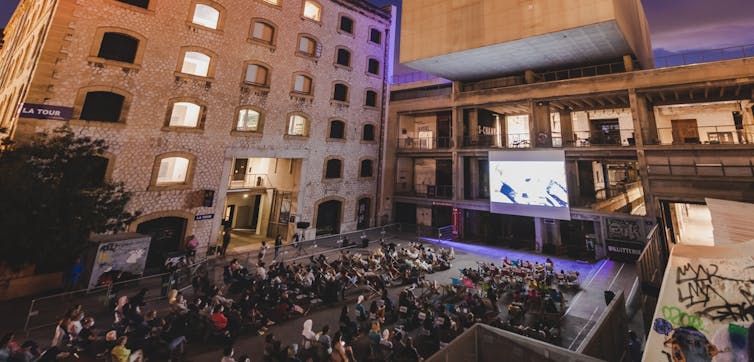
La Friche la Belle-de-Mai, à Marseille (Bouches-du-Rhône), ancienne manufacture de tabac reconvertie en espace culturel, est un lieu emblématique de la scène artistique marseillaise et de la ville. Mais une question se pose depuis sa création : celle des publics à proximité.
Situé dans l’un des quartiers régulièrement présentés comme l’un des plus pauvres de France, cet espace pluridisciplinaire est à la fois un pôle culturel, un territoire de création, un lieu de passage et de convivialité. Sa fréquentation est estimée à 450 000 visiteurs par an. Pourtant, ce qui revient souvent dans les discours qui le présentent est un « paradoxe géographique étonnant » bien identifié par le géographe Boris Grésillon : « Il s’agit d’un lieu perçu comme ouvert à l’échelle nationale et internationale et comme relativement fermé à l’échelle du quartier. » Ce genre de paradoxes n’est pas spécifique à la Friche, mais inhérent au fonctionnement des organisations et notamment de celles qui arrivent à franchir le seuil du « succès » et à s’affirmer comme lieu de référence.
Pourtant, quiconque traverse aujourd’hui la Friche croise bel et bien une diversité d’individus et de groupes aux âges, activités et profils variés. Ceux-ci composent une constellation de publics allant des touristes de passage aux mamans avec leurs enfants, en passant par les « frichistes » (l’ensemble des résidents, près de 400 personnes au quotidien), les publics habitués des lieux culturels, les professionnels des mondes des arts et de la culture, ou les scolaires.
Les étapes de la structuration, de l’ancrage au déploiement
En termes de chronologie, si l’ouverture en 1992 est un temps fort qui marque l’histoire culturelle de la ville, 2013 constitue un tournant sur deux aspects essentiels. C’est l’année de l’ouverture de la tour Panorama, un espace d’exposition qui vient matérialiser la dimension emblématique, symbolique et panoramique du toit-terrasse de la Friche. Dès les années 90, notamment avec les installations du groupe Dune (par exemple, « Vous êtes ici ! »), le toit-terrasse est investi et figure comme un espace public, festif et artistique partagé, qui offre un point de vue spectaculaire sur la ville.
2013 est aussi marquée par la réaffirmation du discours d’inclusion de la part du nouveau directeur, Alain Arnaudet. Ce discours sera ensuite de nouveau repris en 2022 pour l’anniversaire des 30 ans par son successeur, Alban Corbier-Labasse. La Friche, forte d’une reconnaissance accrue dans le monde des arts, de la culture, lieu de référence, remet en avant la volonté de (re)tisser plus de liens avec son environnement social, territorial et d’engager une appropriation plus forte par les habitants :
« C’est peut-être sur la relation au territoire que cette année (2022, NdR) aura vu certaines lignes bouger : un partenariat avec la Fondation de France sur le territoire de proximité, un soutien de la Protection judiciaire de la Jeunesse (PJJ) pour travailler les questions d’éducation spécialisée, la naissance de la Galerie de tous les possibles (ex-galerie de la Salle des Machines), réinventée pour encourager la participation citoyenne à la vie culturelle. Ce projet implique des habitants du quartier et diverses associations dans la cocréation d’événements artistiques. Ou encore l’expérimentation du Labo des désirs dans le petit théâtre, ainsi qu’une première collaboration avec les collectifs de la Belle-de-Mai pour les soirées On Air sur le Toit-terrasse. »
Si la question de l’inclusion figure comme un des éléments fondamentaux du programme de la Friche dès sa création dans les discours et intentions, c’est avec l’année 2013 et les projets de ces dix dernières années que s’enclenche une mise en œuvre très concrète de projets, dispositifs qui y contribuent.
Mixité et jeunesse.
Parallèlement, d’autres pratiques s’installent de manière plus ou moins spontanée : le sport, libre ou encadré (par des collectifs tels que BSM – Board Spirit Marseille, une association fondée en 2002 qui mobilise le skateboard, la pratique du graff comme outils socio-éducatifs et culturels), des actions sociales portées par les Grandes Tables, comme les cours de français langue étrangère et la présence du journal de rue Un autre monde lors du marché paysan du lundi soir. La Friche Belle-de-Mai apparaît alors comme un espace d’écoute des hétérogénéités sociales qui la traversent, et donne à voir des cultures, et une forme extensive de la culture. Les frontières entre les pratiques (arts et de la culture, loisirs, pratiques conviviales et sociales) et entre les usages du lieu se croisent et se mêlent, au profit « d’un accès différentiel et d’expériences plurielles », chacun compose avec ses habitus, ses attentes et ce que la Friche lui offre.
Entre reconnaissance nationale et méconnaissance locale
Cette pluralité, malgré toute sa richesse, ne garantit pas une appropriation homogène des lieux. Si elle est visible dès que l’on s’y arrête, elle n’est pas aussi valorisée et mise en visibilité que l’on pourrait s’y attendre par rapport à d’autres éléments plus valorisants en termes de reconnaissance et de rayonnement (le lien avec les industries culturelles et créatives [ICC], les expositions, les grands événements, etc.). Par exemple, les jeunes du quartier qui fréquentent les terrains de sport en libre accès n’associent pas forcément ces espaces à la Friche en tant qu’institution culturelle. Les mamans avec leurs enfants s’y retrouvent et apprécient que l’espace soit « coupé » du brouhaha et de l’agitation de la ville, mais quelle est leur perception de la vocation de la Friche ? Pour ces usagers du lieu, la Friche est un terrain, une place, une cour, un espace de passage et de rencontre avant tout, et les autres fonctions du lieu demeurent en large partie méconnues.
Cette non-association à la dimension « lieu culturel » révèle moins une méconnaissance qu’une forme d’indifférence, ou encore une forme de « désajustement symbolique » au regard des attentes que les porteurs de projets projettent sur les publics. On vient à la Friche aussi pour des motifs et usages quotidiens, en lien avec sa vie et ses envies, et non pour ce que représente et propose la Friche comme espace emblématique d’une époque et d’un « format » d’offre (le développement des tiers-lieux culturels). Par exemple, pensé comme un espace mimétique de la rue, mais sécurisé et libéré des contraintes urbaines traditionnelles (circulation, densité du trafic, etc.), le skatepark dit « street » de la Friche, constitue un espace et un dispositif socio-éducatif et territorial, favorisant l’inclusion des jeunes du quartier (prêt de matériel, cours gratuits pour des enfants du quartier). De fait, il se superpose à l’offre culturelle, et questionne les modes d’appropriation de l’espace public offert par la Friche. Les pratiques des jeunes se font sur fond d’art et de culture sans que cela soit conscientisé par les usagers, mais sans non plus que ce soit neutre, sans effet, puisqu’ils font très bien la différence avec d’autres lieux et espaces.
Pour comprendre la Friche de la Belle-de-Mai, il faut reconnaître l’infra-politique des usages ordinaires des lieux culturels. C Dutrey/La friche
Si le paradigme de perception des publics au sein de la Friche, notamment par ceux qui lui donnent son identité et construisent l’offre culturelle, est bien en train de suivre un mouvement plus général de questionnement sur la démocratisation et les conditions de l’accès et de l’accessibilité à l’offre culturelle, il reste encore toutefois tributaire d’une vision assez « mécanique » qui considère comme « publics » les destinataires, et suppose que, si l’offre est de qualité, le public va suivre. Or, négliger la connaissance fine de ses publics et non-publics de proximité, entretient ce décalage décrit par Boris Grésillon. La Friche fourmille d’une pluralité de publics au sens de John Dewey, mais ne les connaît pas si bien. Exemple significatif : dans les rapports d’activité « les publics » sont désignés comme tels partout sans autres précisions, sorte d’entité globale et homogène, objectivée. Quid des « frichistes » qui sont le premier cercle de public, des micropublics aux profils divers qui s’inscrivent dans des usages quotidiens des espaces, parfois éloignés des intentions initiales des porteurs de projet ? Ils sont pourtant bien présents. Leurs usages différents, pas toujours bien identifiés, difficile à qualifier, n’est pas à lire en termes de problème (parce qu’ils ne fréquenteraient pas les espaces artistiques et culturels et ne se sentiraient pas concernés par l’offre culturelle), mais plutôt comme un indicateur d’une relation différente, non prescrite, parfois inattendue, mais bien ancrée et appréciée, au lieu.
Un autre « groupe » est à intégrer dans cette constellation des « publics », car il figure comme un des plus impliqués dans le tissage de liens entre la friche et le quartier : celui des médiateurs et médiatrices culturelles. En lien avec les écoles, la Maison pour tous, ou des centres sociaux, ils ou elles assurent un rôle de passeurs (entre les œuvres, les espaces et les enfants, entre les artistes et les habitantes, entre le projet culturel, le professeur relais, le quartier). Peu visibles, en lien avec la fragilité de leur statut et de la profession, ce sont pourtant ils et elles qui permettent aux personnes dites « éloignées de la culture » de trouver un chemin, parfois discret, vers des pratiques nouvelles, et des relations fondées sur la confiance, la familiarité, la proximité.
Un lieu, plusieurs friches ?
Une analyse par l’entrée « public » révèle l’existence d’une friche plurielle. Une friche culturelle, visible, structurée, affichée : espace de création, de production, de diffusion. Mais aussi une friche sociale, souterraine, incorporée dans les habitudes du quartier : les matchs de foot improvisés, les rendez-vous breakdance, les cours de langue vécus comme des moments de sociabilisation, etc. Les usagers les plus réguliers ne sont pas toujours ceux que l’institution met en visibilité ou reconnaît comme légitimes. Leurs paroles, leurs manières de vivre le lieu, leurs récits ne s’articulent que rarement avec la présentation du lieu dans les documents de pilotage ou les bilans culturels.
« Faire venir » les habitants, cet impératif, aussi louable et bienveillant soit-il, révèle en creux un décalage entre des logiques d’usages réels et des publics déjà en présence, mais qui n’appartiennent pas à des catégories identifiées comme « des publics ». Comme cela a été montré pour un événement comme MP2013 : la Friche fait l’objet de différentes modalités d’appropriation, et est en mesure de créer des publics, leur offrant la possibilité de composer différemment avec la culture et de construire de nouvelles cultures.
Au-delà de son rayonnement culturel et symbolique, sa capacité à reconnaître, intégrer et valoriser les usages des habitants de proximité reste donc le véritable défi. Les tensions observées entre ambitions institutionnelles et pratiques ordinaires rappellent que la question des publics engage une réflexion profonde sur les formes d’appropriation et de cohabitation culturelles dans un territoire marqué par de fortes inégalités sociales. En arrière-plan de ce questionnement sur les publics de la Friche, se pose plus largement la question de l’accès et de la manière dont la culture est pensée. Aujourd’hui, les lignes bougent, avec une volonté d’aborder la question de l’accès qui se décentre de l’analyse de l’accès à l’offre – héritée de la démocratisation culturelle classique – pour mieux chercher à comprendre la variabilité des manières d’« être », de « devenir » et de « faire » publics.
Cela suppose de redonner du poids aux pratiques ordinaires, à la texture du réel, aux continuités sociales invisibilisées derrière les vitrines de l’innovation et de concepts (démocratie culturelle, démocratisation, participation, etc.) aux contours devenus si flous qu’ils en sont souvent vidés de leur sens. De ce point de vue, la Friche est un très bel endroit pour creuser et incarner la réflexion actuelle sur les droits culturels.
Sylvia Girel est rapporteuse du groupe de travail Impact Tank, qui mesurer l’impact social de l’accès à la culture.
Maria Elena Buslacchi et Ullauri Lloré Elisa ne travaillent pas, ne conseillent pas, ne possèdent pas de parts, ne reçoivent pas de fonds d’une organisation qui pourrait tirer profit de cet article, et n’ont déclaré aucune autre affiliation que leur poste universitaire.