Protecting the vulnerable, or automating harm? AI’s double-edged role in spotting abuse

Source: – By Aislinn Conrad, Associate Professor of Social Work, University of Iowa
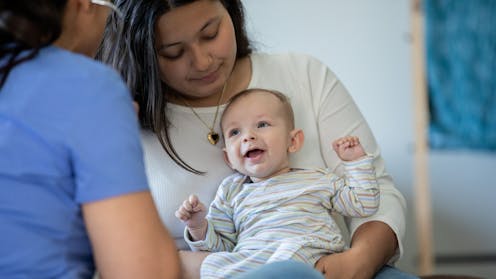
AI can help maximize resources in strapped systems trying to protect vulnerable people – but it can also risk replicating harm or privacy violations. Courtney Hale/E+ via Getty Images

Artificial intelligence is rapidly being adopted to help prevent abuse and protect vulnerable people – including children in foster care, adults in nursing homes and students in schools. These tools promise to detect danger in real time and alert authorities before serious harm occurs.

Developers are using natural language processing, for example — a form of AI that interprets written or spoken language – to try to detect patterns of threats, manipulation and control in text messages. This information could help detect domestic abuse and potentially assist courts or law enforcement in early intervention. Some child welfare agencies use predictive modeling, another common AI technique, to calculate which families or individuals are most “at risk” for abuse.

When thoughtfully implemented, AI tools have the potential to enhance safety and efficiency. For instance, predictive models have assisted social workers to prioritize high-risk cases and intervene earlier.

But as a social worker with 15 years of experience researching family violence – and five years on the front lines as a foster-care case manager, child abuse investigator and early childhood coordinator – I’ve seen how well-intentioned systems often fail the very people they are meant to protect.

Now, I am helping to develop iCare, an AI-powered surveillance camera that analyzes limb movements – not faces or voices – to detect physical violence. I’m grappling with a critical question: Can AI truly help safeguard vulnerable people, or is it just automating the same systems that have long caused them harm?

New tech, old injustice

Many AI tools are trained to “learn” by analyzing historical data. But history is full of inequality, bias and flawed assumptions. So are people, who design, test and fund AI.

That means AI algorithms can wind up replicating systemic forms of discrimination, like racism or classism. A 2022 study in Allegheny County, Pennsylvania, found that a predictive risk model to score families’ risk levels – scores given to hotline staff to help them screen calls – would have flagged Black children for investigation 20% more often than white children, if used without human oversight. When social workers were included in decision-making, that disparity dropped to 9%.

Language-based AI can also reinforce bias. For instance, one study showed that natural language processing systems misclassified African American Vernacular English as “aggressive” at a significantly higher rate than Standard American English — up to 62% more often, in certain contexts.

Meanwhile, a 2023 study found that AI models often struggle with context clues, meaning sarcastic or joking messages can be misclassified as serious threats or signs of distress.

A teen in a tie-dye sweatshirt, hat and white headphones looks down at their cell phone.
Language-processing AI isn’t always great at judging what counts as a threat or concern.
NickyLloyd/E+ via Getty Images

These flaws can replicate larger problems in protective systems. People of color have long been over-surveilled in child welfare systems — sometimes due to cultural misunderstandings, sometimes due to prejudice. Studies have shown that Black and Indigenous families face disproportionately higher rates of reporting, investigation and family separation compared with white families, even after accounting for income and other socioeconomic factors.

Many of these disparities stem from structural racism embedded in decades of discriminatory policy decisions, as well as implicit biases and discretionary decision-making by overburdened caseworkers.

Surveillance over support

Even when AI systems do reduce harm toward vulnerable groups, they often do so at a disturbing cost.

In hospitals and elder-care facilities, for example, AI-enabled cameras have been used to detect physical aggression between staff, visitors and residents. While commercial vendors promote these tools as safety innovations, their use raises serious ethical concerns about the balance between protection and privacy.

In a 2022 pilot program in Australia, AI camera systems deployed in two care homes generated more than 12,000 false alerts over 12 months – overwhelming staff and missing at least one real incident. The program’s accuracy did “not achieve a level that would be considered acceptable to staff and management,” according to the independent report.

A large screen mounted on a wall shows nine scenes around a facility.
Surveillance cameras in care homes can help detect abuse, but they raise serious questions about privacy.
kazuma seki/iStock via Getty Images Plus

Children are affected, too. In U.S. schools, AI surveillance like Gaggle, GoGuardian and Securly are marketed as tools to keep students safe. Such programs can be installed on students’ devices to monitor online activity and flag anything concerning.

But they’ve also been shown to flag harmless behaviors – like writing short stories with mild violence, or researching topics related to mental health. As an Associated Press investigation revealed, these systems have also outed LGBTQ+ students to parents or school administrators by monitoring searches or conversations about gender and sexuality.

Other systems use classroom cameras and microphones to detect “aggression.” But they frequently misidentify normal behavior like laughing, coughing or roughhousing — sometimes prompting intervention or discipline.

These are not isolated technical glitches; they reflect deep flaws in how AI is trained and deployed. AI systems learn from past data that has been selected and labeled by humans — data that often reflects social inequalities and biases. As sociologist Virginia Eubanks wrote in “Automating Inequality,” AI systems risk scaling up these long-standing harms.

Care, not punishment

I believe AI can still be a force for good, but only if its developers prioritize the dignity of the people these tools are meant to protect. I’ve developed a framework of four key principles for what I call “trauma-responsive AI.”

  1. Survivor control: People should have a say in how, when and if they’re monitored. Providing users with greater control over their data can enhance trust in AI systems and increase their engagement with support services, such as creating personalized plans to stay safe or access help.

  2. Human oversight: Studies show that combining social workers’ expertise with AI support improves fairness and reduces child maltreatment – as in Allegheny County, where caseworkers used algorithmic risk scores as one factor, alongside their professional judgment, to decide which child abuse reports to investigate.

  3. Bias auditing: Governments and developers are increasingly encouraged to test AI systems for racial and economic bias. Open-source tools like IBM’s AI Fairness 360, Google’s What-If Tool, and Fairlearn assist in detecting and reducing such biases in machine learning models.

  4. Privacy by design: Technology should be built to protect people’s dignity. Open-source tools like Amnesia, Google’s differential privacy library and Microsoft’s SmartNoise help anonymize sensitive data by removing or obscuring identifiable information. Additionally, AI-powered techniques, such as facial blurring, can anonymize people’s identities in video or photo data.

Honoring these principles means building systems that respond with care, not punishment.

Some promising models are already emerging. The Coalition Against Stalkerware and its partners advocate to include survivors in all stages of tech development – from needs assessments to user testing and ethical oversight.

Legislation is important, too. On May 5, 2025, for example, Montana’s governor signed a law restricting state and local government from using AI to make automated decisions about individuals without meaningful human oversight. It requires transparency about how AI is used in government systems and prohibits discriminatory profiling.

As I tell my students, innovative interventions should disrupt cycles of harm, not perpetuate them. AI will never replace the human capacity for context and compassion. But with the right values at the center, it might help us deliver more of it.

The Conversation

Aislinn Conrad is developing iCare, an AI-powered, real-time violence detection system.

ref. Protecting the vulnerable, or automating harm? AI’s double-edged role in spotting abuse – https://theconversation.com/protecting-the-vulnerable-or-automating-harm-ais-double-edged-role-in-spotting-abuse-256403

Conflicted, disillusioned, disengaged: The unsettled center of Jewish student opinion after Oct. 7

Source: – By Jonathan Krasner, Associate Professor of Jewish Education Research, Brandeis University

Pro-Palestinian students pass the flag of Israel while walking out of commencement in protest at the Massachusetts Institute of Technology on May 30, 2024. AP Photo/Charles Krupa

As commencement season comes to a close, many campuses remain riven by the Israel-Hamas war. At the Massachusetts Institute of Technology, the undergraduate class president was banned from walking at her graduation after delivering a fiery – and unauthorized – speech accusing her school of complicity in Israel’s campaign to “wipe out Palestine off the face of the earth.” Anti-Israel protests broke out at graduation ceremonies across the United States, from Columbia to the University of California at Berkeley.

Since Hamas’ Oct. 7, 2023, attack and Israel’s retaliatory invasion of Gaza, many American campuses have been punctuated by vigils, demonstrations and disruptions. But the loudest voices aren’t necessarily the most representative. Activists’ pronouncements on either side fail to capture the range of student opinion about the war and its reverberations at home, including the documented rise in antisemitism and Islamophobia.

This is certainly true for Jewish students – buffeted by the war, the hostage crisis, campus protests and federal politics. Since January 2025, the Trump administration has used campus antisemitism and anti-Zionism as a pretext to assault higher education and implement hard-line immigration policies.

Indeed, one of the most striking findings of my study
on Jewish undergraduate attitudes, published in May 2025, is how many students described themselves as conflicted, uncertain, disaffected and even detached. Interviews across the country convinced my research team that any attempt to gauge Jewish student opinion with either/or categories are reductive and misleading.

Moving beyond numbers

In the wake of Oct. 7, my office hours quickly became a refuge for distraught Jewish students as they processed their thoughts. Few were content with pat answers.

A large group of young people standing outside at dusk, with some holding candles.
Students at USC attend a vigil on Oct. 10, 2023, days after Hamas’ attack on Israel.
Luis Sinco/Los Angeles Times via Getty Images

I began wondering how representative they were. Tufts researchers Eitan Hersh and Dahlia Lyss found that since Oct. 7, more students were valuing and prioritizing their Jewish identities, even while an increased number were hiding their Jewishness on campus.

My Brandeis colleagues Graham Wright, Leonard Saxe and their research team, meanwhile, found that a clear majority of Jewish students said they felt a connection to Israel but were sharply divided in their views of its government. While most considered statements calling for the country’s destruction to be antisemitic, they differed about where to draw the line between reasonable and illegitimate criticisms of Israel.

These findings were instructive. But I was interested in learning more about the “how” and the “why” behind the numbers. Over the spring 2024 semester, my team and I interviewed 38 students on 24 campuses across 16 states and the District of Columbia. Participants reflected the broad religious, political, economic, geographical, sexual and racial diversity within the American Jewish population, particularly among Jews under 30. Some of the campuses were relatively placid; others were hotbeds of protest.

The ‘missing middle’

As my team analyzed transcripts, we identified six categories.

About one-third of the Jewish students we spoke with were actively engaged on either side of the conflict, whether through demonstrations or online advocacy. “Affirmed” students’ connection to Israel deepened after Oct. 7. “Aggrieved” students, on the other hand, had joined anti-war protests and voiced anger at Jewish organizations for ignoring Israel’s culpability for Palestinian suffering.

Many more of our participants, however, were ambivalent, despondent or even apathetic. As journalist Arno Rosenfeld put it in an article about my research, the majority of Jewish students inhabit a “great missing middle” in Israeli-Palestinian discourse.

Two-thirds of the students we spoke with are in this “missing middle,” divided into four categories:

  • “Conflicted” students were inconclusively grappling with the moral and political complexities of the Israeli-Palestinian conflict.
  • “Disillusioned” students struggled to reconcile their sentimental attachment to Israel with their disappointment – their sense that the country betrayed its own values in its treatment of Palestinians.
  • “Retrenched” students turned inward, fearful of being identified as Jewish on campuses they perceived as hostile to Jews.
  • The last category, “disengaged” students, were detached or actively steering clear of controversy.
Half a dozen students sit and stand around a table where they are lighting thin colored candles.
Students gather at the University of Maryland to celebrate Hanukkah with a menorah lighting ceremony in 2007.
Jahi Chikwendiu/The Washington Post via Getty Images

Out of the fray

The most straightforward of these categories is the “disengaged” students. Some, like Bella, on the West Coast – all of the names in this article are pseudonyms – knew little about the conflict before the war. What they learned since convinced them it was unsolvable and that they were powerless to promote change.

The distance that some students felt from events in Israel and Gaza made it all the more baffling and odious to them when peers protested in ways that implied Jewish Americans were complicit.

“I’m not personally doing anything,” complained Salem, a first-year student in the Midwest. “I don’t have anything to do with this.”

Students whom we classified as “retrenched” reported anxiety, loss of sleep and a sense of isolation. Many of them were concerned that rejecting Zionism – that is, the movement supporting the creation and preservation of Israel as a national homeland for the Jewish people – had become a litmus test in their progressive circles. That was untenable for these students, because they viewed Zionism as a constituent part of being Jewish.

Interviewees like Jack, a junior in the Pacific Northwest, spoke of removing their Star of David necklaces and censoring elements of their biography, because they perceived a social penalty for being Jewish.

Someone wearing a pink shirt cups a small necklace with a six-pointed star in their hand.
Since the start of the war, more students have said they try to hide their Jewish identity at times.
Maor Winetrob/iStock via Getty Images

Rejecting simple narratives

By far, the largest group of Jewish students were struggling with mixed feelings about the war and its reverberations. What united these “conflicted” or “disillusioned” students was wariness of grand narratives and talking points that reduce the Israeli-Palestinian conflict to a contest between good and evil, or the powerful and the powerless. They also eschewed labels such as “Zionist” or “anti-Zionist,” saying they lacked nuance.

Consider Elana, a “conflicted” sophomore in the mid-Atlantic, who told us she was uncomfortable in most Jewish spaces on campus because they effectively demanded that she declare her Israel politics at the door. It seemed to her that activists on both sides were more comfortable retreating into echo chambers than engaging in dialogue across differences.

Then there was Shira, a “disillusioned” first year in the Midwest who viewed Israeli-Palestinian coexistence, however implausible, as the only alternative to mutual destruction. She refused to participate in anti-war demonstrations on her campus because she couldn’t abide the organizers’ confrontational tactics – but also to avoid blowback from pro-Israel family and friends.

Two women in sweaters stand by a table as they light small tea candles.
Students from Bowdoin College light Shabbat candles during a visit to Shaarey Tphiloh Synagogue in Portland, Maine, in 2011.
Gregory Rec/Portland Press Herald via Getty Images

‘Safe spaces’ and ‘groupthink’

One unambiguous finding from our study was how often our interviewees used language prevalent in progressive discourse. They spoke repeatedly about the importance of “safe spaces,” and felt that listeners’ understandings mattered more than speakers’ intentions when evaluating “hate speech” and “microaggressions.”

Leo, a “conflicted” junior in the Deep South who uses they/them pronouns, acknowledged that some protesters who chant slogans such as “Free Palestine” and “Globalize the Intifada” may not recognize how many Jewish students interpret them: as antisemitic calls for Israel’s destruction. But that was no excuse, they insisted. “What I’ve noticed is that the people who are at those demonstrations have created their own definition of antisemitism,” without input from the vast majority of Jews – something progressive protesters would not have stood for if another racial, religious or ethnic minority were being discussed.

The use of provocative and arguably antisemitic language was responsible for keeping Jews like Leo and Shira, who evinced deep sympathy for the plight of the Palestinians, from joining the protests.

Fundamentally, however, many of the Jewish students we spoke with said they’d welcome opportunities to discuss the war and the broader conflict. But the “groupthink” on campus was stifling, they complained, whether in Hillel centers that toe a reflexively pro-Israel line or student organizations that demand unquestioned buy-in to a set of progressive orthodoxies.

Joe, a “disillusioned” student in New England who just received his diploma two weeks ago, reflected, “When my friends complain that the ‘Free Palestine’ stickers on my campus are antisemitic, I think they just don’t want to be uncomfortable.” Discomfort can be productive, he added – as long as it is expressed in an environment that values intellectual risk-taking, dialogue across difference, and empathy.

The Conversation

Research discussed in this article was sponsored by the Mandel Center for Studies in Jewish Education at Brandeis University.

ref. Conflicted, disillusioned, disengaged: The unsettled center of Jewish student opinion after Oct. 7 – https://theconversation.com/conflicted-disillusioned-disengaged-the-unsettled-center-of-jewish-student-opinion-after-oct-7-257521

Why Kinshasa keeps flooding – and why it’s not just about the rain

Source: The Conversation – USA – By Gode Bola, Lecturer in Hydrology, University of Kinshasa

The April 2025 flooding disaster in Kinshasa, the capital of the Democratic Republic of Congo, wasn’t just about intense rainfall. It was a symptom of recent land use change which has occurred rapidly in the city, turning it into a sprawling urban settlement without the necessary drainage infrastructure.

Local rains combined with runoff from torrential rains coming from neighbouring Congo Central Province quickly overwhelmed the city’s small urban tributaries. The Ndjili River and its tributary (Lukaya), which run through the city, overflowed and flooded homes on either side.

This led to the deaths of at least 70 people, 150 injured and the temporary displacement of more than 21,000 people. Floods affected the running of 73 healthcare facilities. Access to water and transport services were disrupted in large parts of the city. People could only move around by dugout canoe or by swimming in flooded avenues.

Floods have become recurrent in the DRC. The last quarter of 2023 and the beginning of 2024 saw the most devastating floods there and in neighbouring countries since the 1960s.

According to UN World Urbanisation Prospects (2025), the reason the floods have become this devastating is the growth of Kinshasa. The city is the most densely populated city in the DRC, the most populous city and third-largest metropolitan area in Africa.

Kinshasa’s 2025 population is estimated at 17,778,500. Back in 1950, it was 201,905. In the past year alone, the city’s population has grown by 746,200, a 4.38% annual change. At least 2% of the population live in areas prone to flooding. Urban infrastructure, especially flood-related, is non-existent or inadequate. Where it exists, drainage systems are blocked by solid waste, itself another sign of the city whose public services such as waste collection have become dysfunctional.

We have been studying the characteristics of flooding and the prediction of risk linked to it in the Congo Basin for five years as part of our work at the Congo Basin Water Resources Research Center in Kinshasa. We study the movement of water in natural and modified environments and its interactions with infrastructure over a range of geographical scales. We argue in this article that understanding why Kinshasa floods means recognising two very different water systems at play – and how urban growth has made the city more vulnerable to both.

Kinshasa faces two distinct flood hazards: first, flooding from the Congo River, which typically peaks around December and January; and, second, urban flood events driven by local rainfall and runoff from the hills south of the city around April and December.

Most of Kinshasa’s flood disasters have come from the second type. And as Kinshasa has urbanised, expanding into the floodplains, but without the necessary urban infrastructure, the impact of urban flood events has become worse.

With more sealed surfaces – because of more urban settlements – and less natural water absorption, more rainwater runs off, and faster. This overwhelms the city’s small urban tributaries and the Ndjili river.

Growth of Kinshasa and flood

As the city has expanded, so has its flood exposure. The city’s tributaries drain steep, densely populated urban slopes and are highly responsive to rainfall.

Of Kinshasa’s two flood risks, the impact of Congo River flooding can be observed in large cities located along major rivers, and typically peaks around January. These are seasonal floods driven by rainfall across the whole Congo Basin.

Research at Congo Basin Water Resources Research Center shows that while Congo River high water levels can cause “backwater effects” – the upstream rise in water level caused by reduced flow downstream – most damaging floods result from intense local rainfall overwhelming the city’s small river catchments. The flood risk analysis indicates that 38 territories are the hotspot of flooding in the Congo basin. Kinshasa is a hotspot due to its double risk sources and extensive urbanisation.


Read more:
Kenya’s devastating floods expose decades of poor urban planning and bad land management


The urban flood events are more challenging. They can happen with less rainfall and cause major destruction. They are driven by local rainfall and rapid growth of informal settlements.

Other cities face similar risks. In 2024, Nairobi suffered deadly floods after prolonged rain overwhelmed informal neighbourhoods and infrastructure.

Across Africa, cities are growing faster than their infrastructure can keep up with. Kinshasa has unique exposure, but also strong local research capacity.

The Congo River’s seasonal peaks are relatively well understood and monitored. But urban tributaries are harder to predict.

DRC’s meteorological agency Mettelsat and its partners are building capacity for real-time monitoring. But the April 2025 floods showed that community-level warning systems did not work.

Climate change is expected to intensify extreme rainfall in central Africa. While annual totals may not increase, short, intense storms could become more frequent.

This increases pressure on cities already struggling with today’s rains. In Kinshasa, the case for climate-resilient planning and infrastructure is urgent.


Read more:
Local knowledge adds value to mapping flood risk in South Africa’s informal settlements


What needs to change?

Forecasting rainfall is not enough. Government agencies in collaboration with universities must also forecast flood impact – and ensure people can act on the warnings. There is a need to put in place systems to achieve this under a catchment integrated flood management plan.

The main elements of such a plan include:

  • Improved early warning systems: Use advanced technologies (such as satellites) to gather real-time data on environmental conditions.

  • Upgraded drainage infrastructure: Identify weaknesses and areas prone to flooding, to manage storm water better.

  • Enforcement of land use planning: Establish clear regulations that define flood-prone areas; outline permissible land uses.

  • Define safety perimeters around areas at risk of flooding: Use historical data, flood maps, and hydrological studies to pinpoint areas that are at risk. Regulate development and activities there.

  • Local engagement in flood preparedness: Educate residents about flood risks, preparedness measures, and emergency response.


Read more:
Nigeria and Ghana are prone to devastating floods – they could achieve a lot by working together


Institutions such as the Congo Basin Water Resources Research Center play a critical role, not just in research but in turning knowledge into action. Rainfall may trigger the flood, but urban systems decide whether it becomes a disaster. And those systems can change.

The Conversation

Gode Bola receives funding support from the Congo River User Hydraulics and Morphology (CRuHM) project (2016-2021), which was entirely funded by The Royal Society-DFID Africa Capacity Building (RS-DFID) under grant number “AQ150005.” He is affiliated with the Regional School of Water (ERE) and the Congo Basin Water Research Center (CRREBaC) of the University of Kinshasa, as well as the Regional Center for Nuclear Studies of Kinshasa.

Mark Trigg received funding support from the Congo River user Hydraulics and Morphology (CRuHM) project (2016-2021), which was wholly funded by The Royal Society-DFID Africa Capacity Building (RS-DFID) under the grant number “AQ150005”. Mark Trigg is affiliated with water@leeds at the University of Leeds and the Global Flood Partnership.

Raphaël Tshimanga receives funding from he Congo River user Hydraulics and Morphology (CRuHM) project (2016-2021), which was wholly funded by The Royal Society-DFID Africa Capacity Building (RS-DFID) under the grant number “AQ150005”. He is affiliated with the Congo Basin Water Resources Research Center and the Regional School of Water of the University of Kinshasa.

ref. Why Kinshasa keeps flooding – and why it’s not just about the rain – https://theconversation.com/why-kinshasa-keeps-flooding-and-why-its-not-just-about-the-rain-254411

South Africa’s ‘working for water’ programme is meant to lead to skills and jobs: why it’s failing

Source: The Conversation – USA – By Sinazo Ntsonge, PhD Graduate, Department of Economics and Economic History, Rhodes University, Rhodes University

South Africa’s Expanded Public Works Programme is part of its social safety net. It complements the country’s social grants system, which has over 28 million recipients.

The public works programme helps fill a gap for people who fall outside the grant system, especially those who need work experience and skills training if they’re to get a job. These include unemployed young people, women and people with disabilities.

One of the programmes under its umbrella is the Working for Water programme, which was launched in 1995. It was intended to control invasive alien plants so as to conserve water resources, and provide short-term employment and training for people not covered by the grants safety net.

Since its inception, the programme, alongside other interventions targeted at the environment, has created over 200,000 person years of employment – the total number of days people were afforded work. More than half of these employment opportunities have been held by women, and more than 60% by young people under the age of 35 years.

In my PhD research, I examined one of its flagship projects to assess its impact on the long-term livelihoods of beneficiaries. My aim was to determine whether the programme was achieving its intended role as a social protection mechanism.

I found that the way the project was designed limited its potential to foster long-term livelihoods for participants. Long-term livelihoods are defined as the ability to achieve lasting economic stability and growth beyond the scope of the project itself.

One key issue was the inconsistency in the number of workdays participants were assigned, as well as the quality and availability of the skills training they received. Specifically, the training lacked regularity and did not always align with market demands. It left participants without the practical, job-ready skills needed for sustained employment.

This problem was compounded by budget cuts.

Based on my findings, I propose key changes to improve the programme’s effectiveness: the provision of consistent funding and training that’s aligned to labour market needs.

The project

The project I looked at tackles the clearing of invasive Prosopis mesquite trees in the Northern Cape. This has involved clearing nearly 314,580 hectares of invaded land in that province.

Spanning from 2004 to 2018, the project supported over 9,000 beneficiaries across three phases. In phase I (2004–2008), 2,411 people participated; in phase II (2009–2013), 2,861; and in phase III (2014–2018), 3,756.

The project targeted youth, women and people with disabilities. Beneficiaries were spread across various age groups: 36–64 years in phase I, 22–35 and 36–64 years in phase II, and 18–35 years in phase III.

Participants were paid monthly stipends which ranged from R2,900 to R5,000, which is equivalent to approximately US$157 to US$271 – higher than most South African social grants. For comparison, the disability social grant is R2,180 (US$118), the older person’s grant is R2,200 (US$119), the foster child grant is R1,180 (US$64), and the child support grant is R530 (US$28).

I developed an evaluation framework to assess the programme’s impact on the long-term livelihoods of beneficiaries.

The study was carried out over 14 days in 2020, coinciding with the height of the COVID-19 pandemic. With health restrictions in place, the research had to pivot from planned in-person interviews and focus groups to virtual interviews with key stakeholders and an online survey of beneficiaries. The survey gathered data from 33 beneficiaries, while interviews provided valuable insights from project managers overseeing the clearing initiative.

The gaps

I found that the project faced a number of challenges.

Firstly, there was inconsistency in the number of workdays participants were assigned. Given that public works projects aim to alleviate poverty – primarily through stipends – budget cuts forced managers to focus on retaining beneficiaries to ensure they could at least feed themselves. This often meant reducing the number of workdays (from the required 230 days to just 100 days) and scaling back skills training.

Secondly, there were shortcomings in the quality and availability of the skills training they received. Many of the courses offered were short-term or specific to invasive plant clearing, including herbicide application, brush cutter operation and firefighting. This meant it wasn’t relevant to the labour market.

In the Northern Cape, the economy hinges on industries like mining, agriculture, manufacturing and construction. In mining, for example, knowledge of machinery operation, safety protocols and mine supervision is vital. Agriculture needs workers skilled in sustainable farming, irrigation techniques and equipment operation. Manufacturing needs expertise in production line management, welding and machinery operation. Construction projects require workers proficient in project management, site safety and heavy machinery operation.

Given the region’s tourism potential, customer service and tour guiding are valuable. Finally, fostering entrepreneurship through business management and financial literacy can empower individuals to create small businesses. In addition, soft skills such as communication, leadership and teamwork are essential across all sectors for long-term employability.

Many beneficiaries reported cycling through the Prosopis mesquite clearing project repeatedly, without gaining the work experience or skills needed to move into more sustainable jobs in the wider labour market.

Thirdly, budget cuts restricted the availability of resources for both training and work opportunities.

As a result, the initiative fell short of providing participants with the tools necessary for long-term economic success. Their prospects were limited after the project’s conclusion.

Given the findings of my research study, the programme requires a shift in focus and changes need to be made.

What needs to be done

Firstly, funding for projects needs to be consistent. Secondly, training needs to be aligned with labour market needs. And thirdly, there needs to be a structured system for tracking long-term outcomes on the beneficiaries’ livelihoods following their participation.

Without a system to track outcomes, it’s difficult to assess whether the project is equipping participants with skills for employment in the sectors that are driving the local economy.

With these changes the programme can transition from a short-term employment solution to a sustainable intervention that equips beneficiaries with useful, transferable skills that are applicable to a range of sectors. This would ultimately improve their prospects for stable employment and long-term economic security, provided those jobs are available.

The Conversation

Sinazo Ntsonge received funding from the NRM WfW programme, which was administered by the Centre of Excellence for Invasion Biology (CIB) at Stellenbosch University.

ref. South Africa’s ‘working for water’ programme is meant to lead to skills and jobs: why it’s failing – https://theconversation.com/south-africas-working-for-water-programme-is-meant-to-lead-to-skills-and-jobs-why-its-failing-248694

Uganda’s lions in decline, hyenas thriving – new findings from country’s biggest ever carnivore count

Source: The Conversation – USA – By Alexander Richard Braczkowski, Research Fellow at the Centre for Planetary Health and Resilient Conservation Group, Griffith University

For nearly 15 years almost no information was available on the population status of Uganda’s large carnivores, including those in its largest national park, Murchison Falls. These species represent a critical part of Uganda’s growing tourism economy. The country is home to the famed tree-climbing lions, which are much sought after for this unique behaviour. Together, lions and leopards generate tens of thousands of dollars annually from safari viewing and allied activities.

Keeping an eye on the proverbial prize could not be more critical for the country. When wildlife isn’t monitored rigorously, populations can disappear within just a few years, as tigers did in India’s Sariska tiger reserve.

But many people working in conservation discourage monitoring. They argue that a “bean counter” approach to conservation overlooks the funds and actions that save animals. Others simply say that it is a hard thing to do at scale and particularly for animals that are naturally shy, have big home ranges (sometimes over multiple countries), and occur in very low numbers.

Even in a comparatively small African country – Uganda ranks 32nd in size out of 54 countries – how does one cover enough ground to see how populations of carnivores are faring? This has been the challenge of our work in Uganda for nearly a decade now, monitoring African lions, leopards and spotted hyenas.

Our two recent studies in Murchison Falls and six protected areas across the country sought to address the problem by drawing on a wide range of local and international experts who live and work in Uganda. Working with the Ugandan government’s Uganda Wildlife Authority research and monitoring team, we set out to identify and bring together independent scientists, government rangers, university students, lodge owners and conservation managers in the country’s major savanna parks.

We hoped to cover more ground with people and organisations that wouldn’t traditionally work together. Doing so exposed many of these individuals for the first time to the science and field skills needed to build robust, long term monitoring programmes for threatened wildlife.

The result is the largest, most comprehensive count of African lions, leopards and spotted hyenas. We found spotted hyenas to be doing far better than we expected. But lions are in worrying decline, indicating where conservation efforts need to be focused. Beyond that, our count proved the value of collaborating when it comes to generating data that could help save animals.

Our unique approach

Inspired by Kenya’s first nationwide, science-based survey of lions and other carnivores in key reserves, the first important step of this study was to secure the collaboration of the Uganda Wildlife Authority’s office of research and monitoring. Together, we identified the critical conservation stakeholders in and around six protected areas. These are Pian Upe Wildlife Reserve, Kidepo Valley, Toro Semliki, Lake Mburo, Queen Elizabeth and Murchison Falls. Leopards and hyenas occur in some other parks (such as Mount Elgon and Rwenzori National Park) but resource constraints prevented us from surveying these sites.

We had no predisposed notions of who could or would participate in our carnivore surveys, only that we wanted people living closest to these species in the room.

We shortlisted lodge owners, government rangers, independent scientists, university students from Kampala, NGO staff and even trophy hunters. All came together for a few days to learn about how to find carnivores in each landscape, build detection histories and analyse data. We delivered five technical workshops showing participants how to search for African lions in the landscapes together with mapping exactly where they drove.

We also taught participants:

  • how to identify lions by their whisker spots in high-definition photographs – these are the small spots where a cat’s whiskers originate on their cheeks

  • how to determine identity in camera trap images of leopard and spotted hyena body flanks

  • post data collection analysis techniques

  • a technique to estimate population densities and abundance.

More than 100 Ugandan and international collaborators joined in the “all hands on deck” survey, driving over 26,000km and recording 7,516 camera trap nights from 232 locations spanning a year from January 2022 to January 2023.


Read more:
Counting Uganda’s lions: we found that wildlife rangers do a better job than machines


Our scientific approach focused on how to achieve the best possible counts of carnivores. In the process we identified some of the biggest shortcomings of previous surveys. These included double counting individual animals and failing to incorporate detection probability. Even worse was simply adding all individual sighted animals and not generating any local-level estimates.

What our results tell us

As expected, our results painted a grim picture in some areas, but marked hope for others.

  • In the majestic Murchison Falls national park, through which the River Nile runs east-west, we estimated that approximately 240 lions still remained across some 3,200km² of sampled area. This is the highest number in Uganda and at least five to 10 times higher than in the Kidepo and Queen Elizabeth parks.

  • In Queen Elizabeth national park, home to the tree-climbing lions, we found a marked decline of over 40% (just 39 individuals left in 2,400km²) since our last survey in 2018.

  • In the country’s north, Kidepo Valley, the best estimate is just 12 individual lions across 1,430km², in stark contrast with the previous estimate of 132 lions implemented nearly 15 years ago.

In contrast, leopards appeared to continue to occur at high densities in select areas, with Lake Mburo and Murchison Falls exhibiting strong populations. Pian Upe and Queen Elizabeth’s Ishasha sector recorded the lowest densities.

Spotted hyenas have proven far more resilient. They occur at densities ranging from 6.15 to 45.31 individuals/100km² across surveyed sites. In Queen Elizabeth, their numbers could be rising as lion populations decline, likely due to reduced competition and ongoing poaching pressure targeting lions.

These findings underscore the urgent need for targeted conservation interventions, particularly for lions in Uganda’s struggling populations.

Value beyond numbers

Our approach shared the load of data collection, and gave people an opportunity and skills to engage in wildlife science. For many emerging conservationists in the country, this was their first chance to be authors on a scientific paper (an increasingly important component of postgraduate degree applications). Even if many of the people we worked with disagree on how to save large carnivores in Uganda, they could at least agree on how many there are as they had a hand in collecting the data and scrutinising it. Since we have embraced a fully science-based approach, we recognise that our surveys too should improve over time.

Aggrey Rwetsiba, senior manager, research and monitoring at Uganda Wildlife Authority, contributed to the research on which this article is based.

The Conversation

Duan Biggs receives funding from Northern Arizona University and is a member of the IUCN (World Conservation Union).

Alexander Richard Braczkowski and Arjun M. Gopalaswamy do not work for, consult, own shares in or receive funding from any company or organisation that would benefit from this article, and have disclosed no relevant affiliations beyond their academic appointment.

ref. Uganda’s lions in decline, hyenas thriving – new findings from country’s biggest ever carnivore count – https://theconversation.com/ugandas-lions-in-decline-hyenas-thriving-new-findings-from-countrys-biggest-ever-carnivore-count-249724

Accra is a tough city to walk in: how city planners can fix the problem

Source: The Conversation – USA – By Seth Asare Okyere, Visiting lecturer, University of Pittsburg and Adjunct Associate Professor, Osaka University, University of Pittsburgh

Humans are walking beings. Walking is intrinsically linked to our physical development from childhood and enables our connections with people and places. We can say it is essential to our physical and mental well-being.

Walking can also help create inclusive and sustainable cities. Most western cities incorporate this need in their spatial planning.

In African countries like Ghana, however, the fact that most people walk doesn’t always mean they prefer to. They need to walk because it’s cheaper than using motor vehicles. But many African cities are not friendly to pedestrians.

More than 70% of the urban population in Africa walk daily for various purposes. To deal with the challenges pedestrians encounter, some African cities have incorporated policies and strategies for walking into their motorised transport policies. For instance, in Nigeria, the Lagos Metropolitan Area Transport Authority has developed a policy that aims to create a safe and pleasant network of footpaths, greenways and other facilities that serve everyone in the city.

In Addis Ababa (Ethiopia), a similar policy was developed. Its objective is to increase the number of people who walk by investing in walking facilities and improving connectivity to public transport.

The strategies in these documents are commendable, but they have met practical challenges like funding, public perception and technical capacity.

Ghana also has several transport and local development planning policies. Yet most urban areas in Ghana don’t have walking infrastructure and a safe walking environment.

As scholars interested in sustainable urban development planning and policy, we reviewed some of these policies to explore how they treat walking as a way of getting around. The research also assessed institutional perspectives and residents’ everyday lived experiences of walkability in Accra, the capital city. We found that both policies and urban plans paid little attention to making the walking experience enjoyable.


Read more:
City streets: why South Africa should design more people-friendly spaces


The study

The Ghana Transport Survey Report indicates that over three-quarters (75.3%) of the country’s population make up to ten daily trips on foot, and most urban areas lack walking infrastructure. Pedestrians account for about 42% of road deaths in Ghana.

We chose two study sites in Accra, the capital, where many come to find work. The sites represented inner-city and suburban areas. The research used in-depth and semi-structured interviews with 80 people to capture the perspectives of institutional representatives and community residents. We explored walking experiences in terms of accessibility, safety and enjoyment.

Findings

Accessibility: The national transport policy seeks to provide dedicated, safe, reliable and appropriate facilities for users across all transport modes. What we found, however, was an absence of infrastructure to enhance pedestrian access to facilities and services.

One resident commented:

The roads are not only in poor condition but they have no sidewalks. It is not hard to assume that these were built for car owners, not pedestrians’ everyday use.

Safety: The research revealed a chasm between policy ambitions for walking and realities at the community level. Municipal development plans don’t say how they will address the frequent crashes that result from commuters, vendors and motorists competing for space. The most at risk are pedestrians, who represent 42% of transport-related fatalities. This is because of noncompliance with bylaws that regulate activities on the roads and pedestrian pathways.

One municipal official said:

Look at the streets: Motorists, street vendors, school children on the same street space. There is encroachment, reckless driving, illegally parked cars on road shoulders. School children and the disabled face constant risks. But the plan aims to make the neighborhoods walkable. Just words as always.

Enjoyment: Enjoyment was the least considered aspect of walkability in both national policy and municipal development plans. The absence of facilities and infrastructure that offer comfort, aesthetics and other pleasures for pedestrians provides a clear indication of this.

A community leader complained:

Flooding and poor sanitation create an unpleasant walking environment. Clogged waste, poor drains, and rubbish along streets and alleyways are a problem. There is nothing pleasant about walking: the smell, the dust, the noise and the heat. You walk because you have no choice.


Read more:
New forms of urban planning are emerging in Africa


Towards cities that are walkable

The deep gulf between what the policies say and everyday experiences in our study calls for new ways of thinking and implementation within the urban transport in Ghana’s development planning regime.

We suggest that there is a need for transport planners, urban and development planners, and policymakers to consider coproduction strategies in identifying, framing, developing, and implementing interventions. This will help harness the potential for walking as a social equaliser and its contribution to healthy, safe, equitable cities and communities.

Here, action-oriented collaborative strategies like workshops that consider communities as partners can transition African urban residents from captive walkers to walkers who enjoy it.

The Conversation

Seth Asare Okyere receives funding from the Volvo Research and Educational Foundations.

Daniel Oviedo receives funding from University College London and the Volvo Research and Educational Foundations.

Louis Kusi Frimpong receives funding from the Volvo Research and Educational Foundations (VREF) funding program

Mariajose Nieto receives funding from Volvo Research and Educational Foundation

Matthew Abunyewah and Stephen Leonard Mensah do not work for, consult, own shares in or receive funding from any company or organisation that would benefit from this article, and have disclosed no relevant affiliations beyond their academic appointment.

ref. Accra is a tough city to walk in: how city planners can fix the problem – https://theconversation.com/accra-is-a-tough-city-to-walk-in-how-city-planners-can-fix-the-problem-253636

Kenya’s decision to make maths optional in high school is a bad idea – what should happen instead

Source: The Conversation – USA – By Moses Ngware, Senior Research Scientist, African Population and Health Research Center

Kenya’s education ministry announced in March 2025 that mathematics would be an optional subject in senior secondary school, which begins in grade 10. Most students in this grade are aged 15 years. The education minister said the mathematics taught from grade 4 to grade 9 was sufficient for foundational “numeracy literacy”.

The change, in January 2026, is part of a shift to a new education system styled as the competence based curriculum. The decision is not to scrap maths altogether but rather to make it optional. However, given the poor performance in this subject, it is expected there will be few takers.

Maths is a compulsory subject in the first 12 years of basic education in many African countries. This is the case in Mauritius, Nigeria and South Africa, which opted for a choice between maths and mathematical literacy for grades 10-12.

The older education system, known as 8-4-4, featured eight years of primary school and four each at high school and university. Under this, core maths, dubbed Alternative A, is compulsory for all schoolgoing children until the second year of high school (form 2). Most students in this grade are aged 16 years. In the final two years of high school, one has the option of switching to Alternative B, a simplified version of Alternative A introduced in 2009. Alternative B is similar to South Africa’s mathematical literacy subject.

@222222The decision has triggered heated debates in the country, in favour and against.

As a researcher who has taught high school maths and researched maths teaching for over 20 years, I have the view that making maths optional is not a good idea. This is because both individuals and society need maths, regardless of the career path they might choose.

It’s been argued that the change applies to the last two senior years of high school, which was the case in the old system too. For the new curriculum, however, this should not have been a problem as it is competence-based. This implies that what matters is the specific skills and knowledge mastered by a student, and not the examination scores.

The Kenyan education department should establish the root causes of the low performance in maths, and fix them. Research shows that chief among these are resource allocation; weak teacher preparation and support for foundational numeracy instruction; a learning disability known as dyscalculia; and the behavioural performance of maths teachers.

Kenya’s maths problem

In the 2022 Kenya Certificate of Secondary Education exams, graded between A (highest) and E (lowest), over half of the 881,416 candidates’ maths scores fell in the lowest two grades, D and E. This improved only marginally in 2023. To put the performance in context, the pass rate in high school certificate maths examinations in Mauritius improved from 81.4% to 91.8% between 2019 and 2022.

There are a number of reasons for this dismal performance in Kenya:

Resource allocation: The better-resourced national schools can only admit a small number of students, leaving out over 70% who join low-resourced day schools. Resources for learning maths range from teachers to interactive teaching and learning materials inside the classroom. With the support of partners such as the Global Partnership for Education, the government aims to achieve a 1:1 textbook-per-student ratio goal. However, the flow of capitation grants to secondary schools has been wanting, jeopardising access to resources at the school level.

Teacher preparation: Teachers aren’t well prepared to support learners in foundational numeracy (maths in early grades). Foundational numeracy skills are critical in creating strong building blocks for future learning and success in later grades.

Teacher behaviour: Classroom observation studies reveal that maths teachers favour boys. Furthermore, above average learners sit in the front closer to the chalkboard, and learners are denied positive reinforcement that would motivate them to learn maths. There are also negative attitudes about maths as a difficult subject, reinforcing the stereotype that it is only suitable for boys and “bright” children.

Dyscalculia: Worldwide, 3%-7% of the general population are affected by a disability known as dyscalculia. In Kenya, 6.4% among primary and secondary school children have the disability. It is a condition that affects a person’s ability to understand numerical concepts. By implication, the number of the 962,512 Kenya Certificate of Secondary Education candidates of 2024 with this disability works out to between 28,000 and 68,000 candidates. But Kenya’s education system doesn’t support teachers in diagnosing learners with dyscalculia, or managing their disability.

Policy options

There are alternatives to making maths an optional subject in senior secondary school.

The system needs to focus on the root causes of low performance, and then on how to fix them.

I suggest the following solutions.

  • Avoid unnecessarily using achievement in maths to determine access to academic and training programmes. This way, one’s career will not solely be determined by performance in maths.

  • Keep a simpler maths alternative, or maths literacy, for senior secondary instead of making maths optional.

  • Teachers should continue to develop their competence in maths, focusing on content knowledge as well as knowledge of how to teach numeracy.

  • The general public should communicate effectively to eliminate negative stereotypes and unhelpful attitudes in society. The aim is to shift mindsets so that maths is perceived as part of life – making it necessary to support all children to succeed in maths.

  • Help learners to overcome dyscalculia, using multisensory teaching approaches – a way of teaching that engages more than one sense at a time: sight, hearing, movement and touch.

The Conversation

Moses Ngware receives funding from the African Population and Health Research Center. He is affiliated with the African Population and Health Research Center.

ref. Kenya’s decision to make maths optional in high school is a bad idea – what should happen instead – https://theconversation.com/kenyas-decision-to-make-maths-optional-in-high-school-is-a-bad-idea-what-should-happen-instead-252965

Teachers in South African schools may be slow to report rape of girls: study shows why

Source: The Conversation – USA – By Ayobami Precious Adekola, Postdoctoral Researcher, University of South Africa

2A Images via Getty Images

In South Africa, the age of consent for sex is 16 years old. Engaging in sexual activity with someone under the age of 16 is considered statutory rape, even if the minor consents as defined under the law that applies to adults.

In December 2021, South Africa’s Department of Basic Education introduced a policy aimed at reducing the country’s high rates of teenage pregnancy and sexual exploitation. It requires educators to report cases where older sexual partners impregnate learners under 16 years of age.

We are researchers in sexual and reproductive health who have been working on a decade-long community engagement project focused on improving HIV prevention and related challenges among learners. The project is in the Vhembe district of Limpopo province, South Africa, bordering Zimbabwe. Sexual health practices among young people here remain a pressing concern, due to high rates of unprotected sex, sexually transmitted infections, HIV and unplanned pregnancies.

As part of the project, we conducted a study of the statutory rape reporting policy for schools. It showed a disconnect between the policy’s intent and implementation. We found that some rural teachers were unaware of the policy, were not sure what they were supposed to do, or faced cultural, social and systemic barriers that left them feeling powerless to act.

The result is that the child protection law is failing the learners it was designed to safeguard.

Because teachers are often some of the first adults to become aware of statutory rape cases, it’s crucial to equip them to deal with disclosures appropriately, navigate reporting protocols confidently, and engage support systems effectively and help prevent future sexual abuse of learners.

Lack of awareness of policy

Our research was conducted at eight public primary and high schools in the Soutpansberg North school circuit of Limpopo. All the schools are in rural, under-resourced and poor communities. There is a high number of HIV infections and unplanned teenage pregnancies in the schools where the study was conducted. The true incidence rate of rape is different because it’s not always reported.

We engaged 19 educators (16 of them female) through group discussions.

Teachers expressed confusion and frustration over the lack of formal communication and training on the statutory rape reporting policy. Some were unaware that such a policy existed. One admitted:

Honestly, I wasn’t even aware that we had a policy on statutory rape. It’s not something we’ve ever discussed in our school.

Another teacher said:

I know there’s a policy, but I’m unsure where to find it or exactly what it says. As educators, we need to be informed about policies, but it feels like no one communicates them effectively to us.

Cultural and socioeconomic barriers

Beyond a lack of awareness, the discussions suggested that socio-cultural norms hinder the implementation of the statutory rape policy in rural areas.

The study highlighted that intergenerational relationships are normalised in some rural communities. In these cases, families may depend financially on the older male partner, making them reluctant to report such relationships as criminal offences.


Read more:
Rape culture in South African schools: where it comes from and how to change it


In some cases, families tacitly support relationships between young girls and older men in exchange for financial support, making such arrangements difficult to challenge.

A participant shared:

It’s difficult because some parents tolerate these relationships as normal and support their kids to sleep with older men, who in turn provide for the family.

Teachers encounter immense social pressure when faced with statutory rape cases. In tight-knit rural communities, reporting a case could mean accusing a neighbour, relative, or local authority figure. This creates a moral dilemma for educators who want to protect learners but fear community backlash.

As one participant put it:

If I report it, they might turn against us.

These socio-cultural dynamics create a culture of silence that protects perpetrators rather than victims.

What’s missing

The study also found that a lack of training on statutory rape policies is a barrier to effective implementation. Teachers reported feeling unprepared to handle the legal and emotional complexities of reporting statutory rape cases.

There’s been no training at all. We hear about the policy, but they don’t teach us how to implement it or what steps to take if something happens.

Another teacher added:

There is no formal memo from the circuit office and from our school governing body meetings; it was never introduced as an agenda item.

The absence of confidential reporting mechanisms further complicates the situation. Teachers fear that reporting cases could lead to retaliation from the community or even threats to their safety. The lack of a standardised anonymous reporting system leaves teachers feeling vulnerable and unsupported.

Teachers indicated that fear of community backlash led them to prioritise managing learner pregnancies over investigating potential rape cases. Some said it was the parents’ responsibility to report rape.


Read more:
South Africa’s stance on teenage pregnancy needs a radical review: what it would look like


Proposed solutions

We recommend a few ways to improve reporting of statutory rape:

Mandatory training for educators: The education department should ensure that all teachers understand their legal obligations and know how to navigate reporting procedures.

Confidential reporting systems: Establishing secure and anonymous reporting channels.

Community awareness campaigns: Programmes to help shift harmful cultural norms and make it easier to report statutory rape. Campaigns should emphasise the importance of protecting minors and the legal consequences of statutory rape.

Interdisciplinary support networks: Schools should collaborate with social workers, legal professionals, and mental health experts to provide educators with the support and resources needed to handle statutory rape cases.

Bridging the gap between South Africa’s statutory rape policy and what actually happens in rural areas is a social justice imperative that affects the most vulnerable members of society.

The Conversation

Azwihangwisi Helen Mavhandu-Mudzusi receives funding from the South African Medical Research Council for this study.

Ayobami Precious Adekola does not work for, consult, own shares in or receive funding from any company or organisation that would benefit from this article, and has disclosed no relevant affiliations beyond their academic appointment.

ref. Teachers in South African schools may be slow to report rape of girls: study shows why – https://theconversation.com/teachers-in-south-african-schools-may-be-slow-to-report-rape-of-girls-study-shows-why-253992

30 years of free basic education in Ghana: a report card

Source: The Conversation – USA – By Pearl S. Kyei, Senior lecturer, University of Ghana

Ghana, like many sub-Saharan Africa countries, began investing substantially in free education three decades ago. This led to an increase in the number of children that attend primary school. But what has the impact been on learning outcomes?

The Conversation Africa spoke to demographer Pearl Kyei, who, with economists Fred Dzanku and Samuel Annim, has researched population literacy and numeracy in Ghana after three decades of free education.

How long has Ghana offered free basic education?

Ghana introduced what it calls the Free Compulsory Universal Basic Education (FCUBE) programme in 1994. This meant that families could send children to public schools without paying school fees. In 2005, it introduced the Capitation Grant Scheme to further reduce financial barriers to education and increase access. The grant was to discourage schools from charging unapproved fees and levies to make up for the lost tuition fees.

Basic education in Ghana currently covers the pre-primary, primary and lower secondary levels. Pre-primary involves two years of kindergarten (for ages 4 and 5 years), primary is six years (for ages 6 to 11 years), and lower secondary is three years of junior high school (for ages 12 to 14 years). After junior high school, students have the option to continue to senior high, technical or vocational school (for ages 15 to 17 years).

Several other countries on the continent, such as Kenya, Malawi, Tanzania, Uganda and Zambia, have put in place free basic education policies too. This is due to the adoption of the Continental Education Strategy for Africa (2016 – 2025) which references the post-2015 commitment of African governments to provide a basic education of 10 to 12 years and to provide at least one year of free pre-primary education.

How is the policy implemented?

Ghana’s 1992 constitution states that “basic education shall be free, compulsory and available to all”. From 1994, primary and junior high schools had to provide fee-free tuition. Financial support from government was later introduced (capitation grants) to compensate public schools for the loss of fees.

The Capitation Grant Scheme provides money to schools each term to help cover costs. The government gives a set amount of money per student to public schools every year. This money is distributed to public schools based on the number of enrolled students, and each student receives a specific amount of money under the grant. This amount is in addition to the main education budget. The 2024 Mid-Year Budget Review reported that the capitation grant was GH₵ 15 per child (approximately US$1) per term in 2024.

Is it working?

Since the introduction of the 1994 free schooling programme, Ghana has recorded substantial increases in enrolment rates at the basic education level.

Research shows there are several problems, however. These include:

All these are likely to affect the quality of education and learning outcomes of students.

What has the impact been on outcomes?

We conducted research to understand whether people’s basic reading and math skills in Ghana had improved over time after many years of expanding education. The study compared groups with similar levels of schooling using two national surveys taken 10 years apart to find out if there had been a meaningful change in basic reading and math skills.

We used data from two nationwide Ghana Living Standards Surveys, conducted in 2006 and 2017. During the data collection, interviewers used flashcards to measure the basic reading and math skills of survey respondents. Persons aged 11 or older were shown flashcards. To answer “yes” to questions about whether they could read or solve written calculations, they had to read a sentence fully and answer a simple math problem correctly.

In the study we defined “basically literate” as being able to read a short English sentence, and “basically numerate” meant being able to solve a simple written math problem. The sample for our study comprised 25,424 and 42,376 persons in 2006 and in 2017 respectively.

We found that the percentage of persons 11 years and older in the sample who have never attended school declined from 28% in 2006 to 16% in 2017. But there was a decline in literacy and numeracy for persons with basic education.

The observed decline was larger for math than for literacy. For instance, those with upper primary education (class 4 to 6) were 14% less likely to be able to correctly read a short sentence in 2017 compared to 2006. For math, the likelihood of persons with upper primary education correctly solving the math problem was 25% lower in 2017.

The study additionally found that basic literacy and numeracy declined more in urban areas than in rural areas at the lower and upper primary levels. Trends for males and females were largely similar.

How can it be improved?

Our findings suggest that without focusing on investments that maintain quality as enrolment increases – like hiring well-trained teachers, providing enough funding, and supplying schools with adequate materials – free education programmes could lead to long-term declines in learning outcomes.

Such declines in basic literacy and numeracy would likely have a negative effect on job productivity, the economy, and social inclusion in the long run.

So there is a need to invest more in quality education to go along with increased access. These investments would help students acquire the foundational skills they need and ensure that free education leads to lasting improvements in skills that are crucial for national growth.

The Conversation

The authors do not work for, consult, own shares in or receive funding from any company or organisation that would benefit from this article, and have disclosed no relevant affiliations beyond their academic appointment.

ref. 30 years of free basic education in Ghana: a report card – https://theconversation.com/30-years-of-free-basic-education-in-ghana-a-report-card-253993

The Conversation Africa’s first 10 years: a story of new media powered by generosity

Source: The Conversation – USA – By Candice Bailey, Strategic Initiatives Editor

Starting from scratch is daunting. And exhilarating. Your heart pounds, you can taste adrenaline, the sense of urgency and anticipation makes you high. I can recall each of these sensations 10 years after the thrilling moment when The Conversation Africa went live, and our first newsletter was sent out. Thanks to some nifty software, we were able to watch readers open their emails in real time in cities and towns in South Africa, Kenya, Nigeria, Ghana, Senegal, Malawi, Zimbabwe as well as beyond in the US, the UK, India, France, Japan and Australia.

We’d gone live. People were reading us. We’d launched and there was no going back.

It was a tiny team that celebrated the moment: nine of us in an office in Johannesburg plus two colleagues from TC Australia who’d flown over to show us the ropes. Our promise when we launched was that we would “work with academics across Africa and internationally to bring informed expertise to a global audience”.

It’s a promise we’ve kept. From a small team in an office in Johannesburg we’ve gone on to open offices in Kenya, Nigeria, Ghana and Senegal. We’ve published 11,775 articles about African research, written by 7,540 academics, attracting over 180 million reads, helped by 935 republishers.

It’s a model that works because of the generosity of donors, universities, academics and readers. And because we offer evidence-based insight you can trust.

In retrospect the whole idea might have seemed mad. The impact of the 2008 financial crisis was still being felt. Nobody was in an expansive mood: governments were cutting budgets, economic growth was slow. At the time the media landscape was in bad shape as more titles hit the wall and those that elected to keep going were shrinking their operations.

What tipped the balance to go for it was that The Conversation offered the opportunity of building – at scale – a partnership between academics and journalists anchored on the simple premise that researchers would be the writers, and the journalists would be the editors.

The second factor was that the prototype had been built and was working extremely well. Four years prior to our launch The Conversation Australia (the mothership) had gone live. This was followed by editions in the UK, then in the US.

All three were incredibly successful. It was clear to me that tapping into the vast world of academic research as the primary source of articles, and coupling this with the skills of journalists trained as editors, was a winning formula. Academics were keen to write (without being paid), there were journalists eager to apply their editing skills, and media outlets were hungry to pick up articles put out under a Creative Commons licence.

The “why” all made sense. The “how” proved to be trickier.

Money was a problem. The university sectors in other regions were the mainstay of the earlier editions. But universities on the continent were cash-strapped and hardly in a position to bankroll our endeavour. The answer was two-fold: find donors that were supporting the higher education sector in the hope that they would see the merits of the project; and secondly, ask universities for support, either in the form of money or by offering us rent-free accommodation.

Both strategies worked. We raised enough cash to pay for the small team based in rent-free offices at the University of the Witwatersrand.

The second tricky bit was fulfilling the promise of being The Conversation Africa. An office in Johannesburg wasn’t going to cut it. We set about finding more money so that we could expand our footprint. By 2017 our team could boast a colleague in Kenya working from an office gifted by the African Population and Health Research Centre. It took another two years to fulfil the promise with colleagues in Lagos (in an office at the Nigerian Academy of Sciences) and a colleague in Accra. The final piece of the puzzle fell into place with the launch of TC Afrique in 2023 with a team of two in Dakar.

I put The Conversation Africa’s success down to generosity. The generosity of spirit of my colleagues. The generosity of donors. The generosity of universities. The generosity of academics who have volunteered to share their knowledge and approached the rigours of our editing with grace and forbearance. And finally the generosity of you, our readers, who express your appreciation in a host of different ways, not least by sharing articles you come across far and wide. Thank you.

It’s been a remarkable and hugely fulfilling 10 years. The Conversation Africa has established itself as the source of articles you can trust. A rare commodity in these tricky times. Please continue to support us. We need you in our corner.

The Conversation

ref. The Conversation Africa’s first 10 years: a story of new media powered by generosity – https://theconversation.com/the-conversation-africas-first-10-years-a-story-of-new-media-powered-by-generosity-256011