Eldest daughters often carry the heaviest burdens – insights from Madagascar

Source: The Conversation – Africa – By Claire Ricard, Research Fellow at CERDI, Université Clermont Auvergne (UCA)

In recent years, the term “eldest daughter syndrome” has gained traction on social media, as many firstborn daughters share how they had to grow up faster. They often took on caregiving and supportive roles in their families.

In high-income countries, research shows that these responsibilities often bring long-term benefits. Firstborn daughters – and sons – tend to have higher educational attainment and stronger cognitive skills. They also enjoy better job prospects and salaries.

Some studies in low- and middle-income countries have found similar positive effects of being the eldest. But others have found the opposite.

In low-income contexts, economic constraints, cultural practices – such as the involvement of extended families in child-rearing – and inheritance norms may produce very different effects.

Our research brings new insights by examining these dynamics in Madagascar. It is one of the world’s poorest countries. Birth order there strongly shapes the transition to adulthood, especially for firstborn children.

Progress in understanding birth order effects in low-income countries is held back by the lack of detailed, sibling-level data. Our study used a dataset that followed individuals from the ages of 10 to 22, capturing their transition from adolescence to adulthood. It collected detailed information on education, work, health, marriage, and migration. The dataset also captured key demographic and educational details for all living full siblings of each respondent.

We found that firstborns in Madagascar transition into adulthood earlier than their younger siblings. They are more likely to leave school early. They enter the workforce sooner and marry at younger ages. For example, fourth-born children are 1.5 percentage points less likely than firstborns to have never attended school, and 1.1 percentage points more likely to complete post-secondary education.
Or, third-borns are 23% less likely to marry at age 19 than firstborns.

Our findings suggest that later-born children benefit from greater parental investment in education. This leads to better schooling outcomes and delayed entry into the labour market.

Birth order and the transition to adulthood

In Madagascar, early marriage can be a way for families to ease financial pressure. This is especially true since daughters typically join their husband’s household.

When it comes to marriage, we find that later-born children are less likely to marry early than their firstborn siblings – especially after age 17. This trend holds for both boys and girls. The difference appears earlier for girls, which aligns with their younger average age at marriage.

Interestingly, second-born girls are not significantly less likely to marry than their older sisters. This suggests that the eldest daughter does not always bear the full brunt of early marriage risk.
Firstborn daughters often take on caregiving and household roles. These responsibilities may delay their marriage slightly, as families rely on them for day-to-day support.

What explains these birth order effects?

We did not observe significant differences in cognitive skills (like reasoning) or non-cognitive traits (like personality) between firstborns and their younger siblings. Cognitive abilities were assessed through oral and written math and French tests administered at home. These findings contrast with evidence from wealthier countries, where firstborns often outperform their siblings in both cognitive and non-cognitive domains. This may result from greater early parental investment.

In Madagascar, child development may rely less on direct parental input and more on interactions within the extended family. This is consistent with the concept of fihavanana, a cultural principle that emphasises solidarity and mutual support within the extended family.
Rather than benefiting mostly from parental quality time, children – especially later-borns – may develop their cognitive and non-cognitive skills through broader social networks. These include relatives and older siblings.

We also explored whether gender preferences might help explain the differences in outcomes. For instance, if later-born children were disproportionately boys, it could suggest that parents continued having children in hopes of having a son. This could lead to more resources being allocated to that later-born boy. However, our data show an even distribution of boys and girls among later-born children. This suggests that gender-based stopping rules are unlikely to explain the patterns we observe.

Instead, our findings point to economic constraints as the main driver for firstborns transitioning into adulthood earlier than their younger siblings.

In poorer households, particularly in rural areas, firstborn children are often asked to help out financially. This often comes at the cost of their own education. Later-born children, by contrast, receive more investment in their schooling. This may compensate for their limited access to other resources, such as land.

We find no birth order advantage in wealthier households or among families where parents have some education. This again highlights poverty as a key factor shaping these patterns.

The double burden of being firstborn

To sum up, our research shows that, in Madagascar, both male and female firstborns face an earlier transition into adulthood. They leave school and enter the labour market sooner. They marry earlier, although firstborn girls may be at slightly lower risk of early marriage than their younger sisters.

This suggests that, in poor countries, the eldest daughter syndrome is not just about emotional and care-giving responsibilities. It may also come with fewer educational opportunities, greater economic pressure, and an earlier end to childhood. A true double burden for disadvantaged girls. Economic constraints within households largely explain this pattern.

But the story is not only one of constraint. The absence of differences in cognitive and non-cognitive skills suggests that broader community ties, rooted in fihavanana and extended kinship networks, help cushion the impact of early responsibility. These collective structures may not erase inequality, but they offer a vital source of resilience.

As policymakers and practitioners look for ways to promote educational equity, it’s worth remembering that some of the most overlooked trade-offs happen within households. Reducing the weight of those trade-offs – through financial support, community-based programmes, or school retention efforts – could help ensure that the future of one child doesn’t come at the expense of another.

The Conversation

Claire’s work was supported by the Agence Nationale de la Recherche of the French government through the program “France 2030” ANR-16-IDEX-0001

Francesca’s work was supported by the Agence Nationale de la Recherche of the French government through the program “France 2030” ANR-16-IDEX-0001.

ref. Eldest daughters often carry the heaviest burdens – insights from Madagascar – https://theconversation.com/eldest-daughters-often-carry-the-heaviest-burdens-insights-from-madagascar-255785

African footballers in China: what’s behind the sport migration trend

Source: The Conversation – Africa – By Wycliffe W. Njororai Simiyu, Professor and Chair of Kinesiology and Health Science, Stephen F. Austin State University

Relations between China and Africa are increasingly important in understanding the dynamics that shape our world. But until now, the role of sport was overlooked.

A new book, Global China and the Global Game in Africa, explores the role of football in relations between China and Africa – culturally, politically and economically.

Wycliffe W. Njororai Simiyu chatted to us about his chapter in the book. It’s a study of African football migration, how players fare in the popular China Super League, and what their experiences of the country are.


What’s the history of African players working in China?

A growing number of African male football players moved abroad to play professionally after the Bosman ruling in 1995. This European Court of Justice decision related to freedom of movement for workers. It triggered sports migration around the globe, and African players were major beneficiaries.


Read more:
The fighting spirit of young African footballers who migrate overseas


Historically, aspiring African professional footballers mostly looked for opportunities in Europe. Leagues in France, England, Belgium, Germany, Spain and Portugal were popular because of their colonial ties to Africa. They offered established footballing structures and higher wages. The Middle East, the US and south-east Asia also became options.

However, China’s sustained economic growth over the last three decades has contributed to an intense and multifaceted global engagement that includes the game of football. The Chinese Super League (CSL) began to invest heavily in attracting international talent. It became a viable and often lucrative alternative for African players. This coincided with China’s growing economic influence in Africa.

African players are sought after for their athleticism and speed. And often they make lower transfer fee and wage demands than players from Europe or South America.

How have the African players performed?

Between 2006 and 2023, over 141 African players played in the Chinese Super League. They came from west Africa (59.57%), central Africa (19.5 %), southern Africa (10.64%), north Africa (8.51%) and east Africa (2.13%). Research shows that these players have generally performed well, often making significant contributions to their teams. Match statistics indicate that many African strikers and attacking midfielders have been key playmakers. Many have emerged as top scorers in the league.

Their physical attributes often give African footballers an edge, and many have quickly adapted to the playing style in China. Chinese players, often lacking international exposure, and constrained athletically, tend to rely on technical finesse. Migrant players bring athleticism, cosmopolitan technical-tactical awareness, and levels of intensity that make the league more exciting.

African players are enriching the Chinese game significantly, just as they have done to the European game. They’ve increased the number of tactical choices and game plans for Chinese teams and, in the process, upped the quality of the league.

Of course, performance can vary greatly depending on individual players, team tactics, and the overall level of competition in the league at different periods.

What are players’ common experiences of China?

Players’ experiences in the CSL vary. Many report positive experiences when it comes to the financial rewards and the opportunity to play professional football at a high level. But cultural and linguistic barriers can present challenges. African players must adapt to Chinese food and social customs. Language and communication within the team can take time and effort.


Read more:
How African diaspora footballers juggle the identity question


Some players have also reported issues of racism or feeling isolated because of these cultural differences and the transient nature of their contracts. Some feel lonely. Research on African football migration generally highlights that the social and cultural integration process is crucial for the overall well-being and success of African players abroad.

How does football fit into labour migration trends?

Sport, particularly football with its global appeal and professional structures, is a significant avenue for transnational movement. Fifa, as the global governing body of football, facilitates this movement through regulations and transfer systems.

It’s the mission of Fifa to establish and grow the game of football into a truly global sport. This, however, continues to be undermined by the enduring global inequalities and disparities that shape the world.

For many African men, professional football represents a pathway to economic advancement and social mobility. These opportunities are often limited in their home countries due to economic constraints or lack of well-developed professional leagues. So, migration to leagues like the Chinese Super League is driven by both push factors (limited opportunities at home) and pull factors (better financial rewards and professional experiences abroad).

What does all this do for China’s image in Africa?

The presence and performance of African players in the Chinese Super League can contribute to China’s soft power and image in Africa. Seeing African athletes succeed in China can foster a sense of connection and goodwill between the two regions.

It showcases China as a global player in the world of football and can be interpreted as a sign of growing ties and mutual engagement beyond economic and political spheres. Apart from being players, African footballers act as cultural ambassadors for their respective countries and the African continent.

At the level of people-to-people exchange, African players interact with their Chinese teammates, fans and communities. This enhances and sustains cultural exchange and understanding.


Read more:
China-Africa relations: new priorities have driven major shifts over the last 24 years – 5 essential reads


However, it’s my considered opinion that, unlike the western countries where many former players settle and raise families, many Africans in China seem not to see it as being a friendly place to settle down.

Even so, the presence of African players in China is helping to develop a greater familiarity and affinity between the people of China and Africa, with the promise of lasting influence socially, economically and culturally.

The Conversation

Wycliffe W. Njororai Simiyu does not work for, consult, own shares in or receive funding from any company or organisation that would benefit from this article, and has disclosed no relevant affiliations beyond their academic appointment.

ref. African footballers in China: what’s behind the sport migration trend – https://theconversation.com/african-footballers-in-china-whats-behind-the-sport-migration-trend-256520

Lagos fashion: how designers make global trends uniquely Nigerian

Source: The Conversation – Africa – By Adwoa Owusuaa Bobie, Research Fellow, Center for Cultural and African Studies, Kwame Nkrumah University of Science and Technology (KNUST)

African fashion has flourished in terms of creativity and innovation in recent years, and is attracting global attention.

Designers and labels are churning out garments that reflect African cities and how they interact with global trends. Think Nigeria’s Ejiro Amos Tafiri and Mai Atafo, Ghana’s Christie Brown and Larry Jay, Kenya’s Ikojn or South Africa’s Boyde.

Cities like Lagos, Accra, Marrakesh, Nairobi and Johannesburg have become global fashion capitals. They’re fashion production hubs that are creating styles that mirror their cosmopolitanism; their vibrant mix of nationalities.


Read more:
West Africa’s fashion designers are world leaders when it comes to producing sustainable clothes


In a recent study I focus on how fashion in Lagos mirrors the bustling Nigerian city’s cosmopolitanism. It reflects a meeting point between global and local influences.

Drawing on interviews with designers, I discuss how cosmopolitanism is produced through clothing – and the gender dynamics that underpin it. African fashion production is drawing from local roots but also responding to global social and cultural developments.

Cosmopolitan Africa

Cosmopolitanism is a global community that transcends national borders. Many cultures inform a big city’s fashions, like they do its cuisines.

But while the conversation on cosmopolitanism has centred mostly on western countries, Africa also has a long history of connection to other parts of the world through trade, migration and the exchange of ideas.

African American philosopher Kwame Anthony Appiah argues that the western idea of cosmopolitanism often assumes a complete embrace of foreign cultures and ideals. But among Africans, cosmopolitanism integrates the local with the global. He calls this rooted cosmopolitanism. It’s seen in various forms in African societies, such as urbanisation or fashion in this case.

Lagos

Lagos is Africa’s most populous city and is home to many migrants. It’s a mix of foreigners and indigenous people with different cultural backgrounds who find meaning in living as Lagosians.

Aerial view of a vast urban development along water, skyscrapers mixing with more informal buildings, set against a cloudy grey sky.
Lagos is an African megacity.
Ben Iwara/Pexels, CC BY

I chose Lagos for my study because of its vibrant creative industries. Even a decade ago, Lagos was judged by one magazine as the world’s fourth-largest fashion city. I interviewed 18 fashion designers living and working there.

Local fabric, western designs for women

I found that fashion in Lagos can be separated into two major trends: fabric and design – the materials clothes are made with and the styles in vogue.

Local fabrics and appropriated fabrics (foreign-produced cloths that have been assimilated into Nigerian cultures) are in vogue today for female fashion.

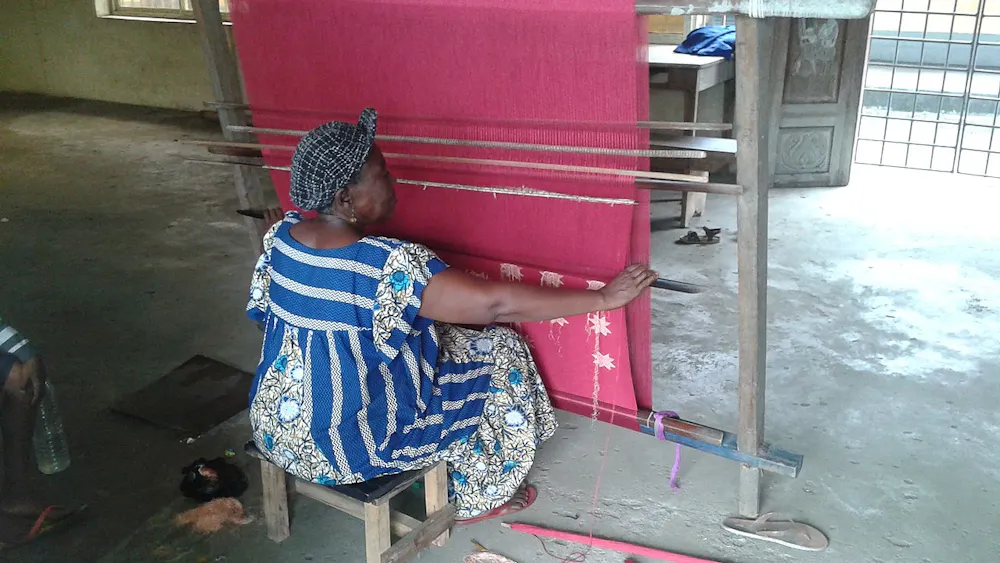
Local fabrics are hand-woven or dyed cloths and stem from various ethnic groups, like Aso oke or Akwete.

A woman in a bright blue dress in traditional fabrics sits at a weave working on a vast drop of bright pink threads.
A woman handweaving Akwete cloth.
Ekekeh Ubadire Obioma/Wikimedia Commons, CC BY-SA

Popular appropriated fabrics are Ankara (wax prints, originally from Indonesia), lace (a delicate, openwork fabric popular on traditional Nigerian attire) and George (a type of Madras cloth popular among Nigeria’s Igbos).

Before the 2000s, the use of these fabrics was at two ends of a spectrum. Indigenous cloth, lace and George were for social and cultural events. Ankara was for everyday functional clothes, iro (a wrap skirt) and buba (a three-piece traditional design for women, mostly the married or elderly), especially among low-income people.

The popularity of local fabrics in today’s fashion didn’t emerge from a vacuum. It was a choice by designers, a social process of acceptance, and government initiative.

Today’s designers are consciously using local fabrics as a way of endorsing their roots and normalising their use. Many faced rejection at first. Zena, a participant in my study, sold only two pieces of her clothing during her first year of business. She spent time convincing people “this is good”:

And, funny enough, they are easy to wear and not expensive. But it took a while for them to appreciate it.

Since the early 1990s the Nigerian government has been committed to promoting local fabrics and locally produced clothes. In 2017, it approved a Monday and Wednesday “Made-in-Nigeria Dress Days” policy.

While local fabrics are today the fabric trend in women’s clothing, the design trend is western. Designers use local fabrics in styles that have global appeal.

Still, they are conscious of maintaining authenticity through either the fabric, a silhouette or a design concept that resonates with their culture.

According to Eji, her western designs still have the African woman in mind:

The African woman is not only situated in Africa, but they are also all over the world. I believe the world is more cosmopolitan now, we have interracial marriages, we can borrow culture from everywhere, we can inter-weave stuff.

Women’s fashion mirrors Lagos society’s complexity and its openness to global trends, as it seeks to globalise its local elements.

It’s the opposite for men

Cosmopolitan men’s fashion in Lagos is the opposite of women’s. The fabric trend is western; the design trend is local.

In Lagos, most men wear the two or three-piece “native”. The buba and sokoto, for example, is for regular wear. (A traditional two-piece top and trouser, normally from the same fabric.) The agbada is for special events. (Trousers, a top and a loose-fitting, wide-sleeved robe over.)

Participants in my study explained that the ethnic background of the president, at any point in time, influences men’s fashion trends. Former president Muhammadu Buhari, for example, hails from the northern part of the country and popularised the wearing of the baba riga (a top, trousers and a big, embroidered over-cover) of the Hausa people.

Current president Bola Ahmed Tinubu extends the dominance of agbada fashion as he is Yoruba. Men’s fashion portrays a unified cultural front, emanating from the ruling president’s ethnic culture and adopted by most men irrespective of their ethnicity. This can allow for the inclusion of groups excluded from dominant national cultures.


Read more:
Kofi Ansah left Ghana to become a world famous fashion designer – how his return home boosted the industry


This study shows Nigerian fashion’s openness to modernity, consciously implementing styles from different parts of the world. But this isn’t detached from the local. As forms of culture disappear (through cultural exchange) new forms are created, and they are created locally. This is ultimately a celebration of the cosmopolitan in Lagos fashion and society.

The Conversation

Adwoa Owusuaa Bobie receives funding from Oumou Dilly Foundation, Basel, Switzerland.

ref. Lagos fashion: how designers make global trends uniquely Nigerian – https://theconversation.com/lagos-fashion-how-designers-make-global-trends-uniquely-nigerian-254227

Not just talk: how dialogue can help address complex problems

Source: The Conversation – Africa – By Ralph Hamann, Professor, University of Cape Town

Societies around the world are confronted with complex problems that defy resolution by any single actor, even well-resourced governments or corporations. Problems like food security, climate change, or biodiversity loss involve a lot of elements and dynamics. A variety of stakeholders need to be involved in creating effective responses to such problems.

The difficulty is not only in creating coordinated responses. There is often also a need to develop a shared understanding of what the problem and its underlying causes actually are.

To foster a shared understanding and coordinated, innovative action, it can help to convene key players in multi-stakeholder dialogue processes.

A first step is to identify and enrol the actors that are either influential in – or directly affected by – the focal problem. These people are then invited to engage in dialogue with each other in a carefully designed, structured process.

Processes can take a variety of forms. But a common feature is that participants have enough time and support to look at the problem from different angles, to interact in ways that break down stereotypes, and to think afresh about new ways of acting.

Fifteen years ago, we were involved in establishing a platform for multi-stakeholder dialogue with a focus on the problem of hunger and food insecurity. It is called the Southern Africa Food Lab. Recently, we analysed the numerous dialogue processes hosted by this initiative over the years to better understand when and how they can make a positive difference.

We found that even though some dialogue processes don’t seem to be obviously successful, they can play an important role in enabling subsequent dialogues to have far-reaching impacts. And for dialogue to have an impact, it needs to involve a “deeper” kind of participant interaction, beyond formal roles, polite facades, and adversarial debate.

What does success look like, and when is it achieved?

Participants and funders are unlikely to remain committed to a dialogue process if they feel it is little more than a series of “talk-shops”. We wanted to achieve tangible changes in government policies and corporate strategies, or collaborative actions that combine resources from different organisations.

Because we had hosted numerous dialogue initiatives over the 15-year lifespan of the Food Lab, in our analysis we were able to compare different processes in terms of their impacts.

We found that some of the dialogue processes – especially the early ones – had relatively limited impacts. Though the participants said they’d gained new insights and formed new relationships, there were few changes in organisational policies or practices.

For example, early on in the initiative, we hosted a dialogue on supporting smallholder farmers. Participants emphasised that they learnt important lessons during this process. During field trips in different parts of the country, they came to appreciate the diverse difficulties encountered by smallholder farmers. And government officials appreciated academics’ analysis of the different kinds of smallholder farmers and corresponding support needs. But these insights and experiences did not yet result in changes in organisational behaviours or strategies.

Other initiatives were more obviously successful in creating new and influential responses to the hunger problem. For example, we convened a second dialogue focused on smallholder farmers 18 months after the first one. It included some of the same participants as the first process, as well as others. This process resulted in more far-reaching changes.

For instance, retail companies agreed to revise their supplier standards so that smallholder farmers’ diverse needs and challenges were better accounted for. Government officials used the dialogue to redesign their agricultural extension services. A farmer training programme was established with links to a more context-sensitive and supportive certification system.

In our analysis, we considered many different explanations for why some dialogue processes were more successful than others. We discovered a pattern: our early dialogue processes were less likely to have impact than subsequent, follow-up dialogues.

The early dialogues played a crucial role, however, in preparing the ground for the subsequent dialogues to be more effective. They helped participants develop the insights and relationships that enabled the deeper engagement necessary to create real changes.

What kind of dialogue is needed?

To create meaningful change, a dialogue needs to move from what we call “shallow” to “deep” dialogue. Shallow dialogue is the more common kind. It is what happens when different people are invited to a workshop and their interactions are shaped by their established views of themselves, the problem at hand, and other actors. Often they hide behind polite facades or blame each other.

Deep dialogue, in contrast, has a distinct flavour and temperament. Participants gain a more multi-faceted understanding of each other. Thabo is not just a government official but also passionate about nature-based farming. John is not just a corporate manager but also volunteers for animal rights.

Participants’ focus shifts from defending their personal views or organisational interests to a more expansive, genuine interest in learning from each other, and to exploring new ways to understand the focal problem and possible responses.

How can this kind of dialogue be achieved?

First, the potential for multi-stakeholder dialogue needs to be carefully assessed and motivated. Participants and funders need to agree that the problem is complex and in need of fresh responses. This rationale needs to be continuously reviewed and communicated to maintain commitment and engagement.

Second, it is important to get the “right people” to participate in the process. This includes actors with influence, such as government officials or leaders. But it also includes people who are most directly affected by the focal problem, not least because they have unique knowledge about it.

Third, convening and facilitating dialogue requires a range of commitments, resources and skills. For a start, as university-based researchers we had some degree of convening power. Participants perceived us to have at least some degree of neutrality. We needed to maintain this perception as much as possible, for example by being careful about what funding to accept. This was important given the controversies in the food security field.

We also had to make sure we had the necessary facilitation competencies. Especially in the early years, we benefited from facilitators who had a lot of experience in this kind of thing. A facilitator needs to be able to make participants feel comfortable but, when necessary, challenge them to move beyond their “comfort zone”.

Finally, it is helpful to recognise the cyclical and longer-term nature of dialogue – earlier processes create the “groundwork” for subsequent ones. This means that, as conveners, we needed to find ways of keeping the initiative alive in the periods in between dialogue processes, even if there was no funding available. In our case, it helped that we were university researchers who did not rely on consulting fees. More generally, conveners and funders should budget for “bridging” resources to enable the longer-term unfolding of dialogue’s true impact.

Rebecca Freeth is a co-author of this article. She is a senior consultant with Reos Partners (Africa office).

The Conversation

Ralph Hamann’s work with the Southern Africa Food Lab has benefited from funding from the African Climate and Development Institute, the University of Cape Town, and the National Research Foundation. The Food Lab’s funders are listed on its website.

Scott Drimie co-directs the Southern Africa Food Lab.

Warren Nilsson is affiliated with the University of Vermont and the Institute for Collective Wellbeing.

ref. Not just talk: how dialogue can help address complex problems – https://theconversation.com/not-just-talk-how-dialogue-can-help-address-complex-problems-256825

Sugary drinks, processed foods, alcohol and tobacco are big killers: why the G20 should add its weight to health taxes

Source: The Conversation – Africa – By Karen Hofman, Professor and Programme Director, SA MRC Centre for Health Economics and Decision Science – PRICELESS SA (Priority Cost Effective Lessons in Systems Strengthening South Africa), University of the Witwatersrand

By 2030, non-communicable diseases will account for 75% of all deaths annually. Eighty percent of these will be in the global south. Most of these diseases are what we call silent killers: type 2 diabetes, high blood pressure and heart disease, as well as certain types of cancer at increasingly younger ages.

The consumption of sugary drinks and processed foods high in sugar, salt and saturated fats is fuelling these pandemics. And increasingly advertising is being seen as the means by which the consumption of unhealthy products is promoted. This translates into the growth of non-communicable diseases in populations across the globe. This rising threat is driven largely by the way in which markets and industries are organised, which, in turn, shapes social norms towards consumption of tobacco, alcohol, food and sugary beverages.

This process is what’s known as commercial determinants of health.

Products that top the list in terms of their risk to health are tobacco, sugary beverages, ultra processed food and alcohol.

These products are heavily advertised. For example, in South Africa from 2013 to 2019, sugary beverage manufacturers spent US$191 million (R3.7 billion) to advertise their products. Many of the TV advertisements for sugary drinks were placed during child and family viewing time, between 3pm and 7pm.

Over the past decade a number of countries have introduced policies in a bid to limit the use and intake of harmful food and beverages. These have ranged from taxes on certain products, such as sugar, alcohol and tobacco, to bans on advertising. Many have proved effective. But there are still big gaps in policies to control these harmful products.

As academics who have researched this field for three decades we believe that the G20 can play a significant role in plugging these gaps. The countries under the G20 umbrella, which represent two thirds of the world’s population, have reason to act: all are experiencing a mounting burden of obesity-related illness such as diabetes, high blood pressure and cancer at ever-younger ages.

One of South Africa’s G20 presidency health priorities is “stemming the tide of non-communicable diseases”. In our view this is an invitation for the G20 to pledge to combat the drivers of non-communicable diseases.

The G20 can acknowledge that these diseases are part of a pathological system in which commercial actors are causing ill health. And G20 leaders can acknowledge that progress enacting health taxes has stagnated in most countries.

By galvanising attention in this way, the G20 can give impetus to a high level United Nations meeting in 2025 at which a new vision for the control and prevention of non-communicable diseases is due to be set. Health taxes and bans on marketing are focus areas.

What stands in the way of progress

Efforts by various countries to curb consumption of these harmful products have shown one thing clearly: there’s no silver bullet.

Nevertheless, evidence shows that consumers are responsive to price. This points to the fact that taxes are a key tool for decreasing demand, especially for young consumers.


Read more:
Sugary drinks are a killer: a 20% tax would save lives and rands in South Africa


There is also mounting evidence that health taxes are progressive for health at a population level – in other words they lead to better health outcomes. Research also shows that they scarcely affect overall employment, if at all.

But advances on alcohol and tobacco taxes are slow. And there has been little progress on taxes on sugary beverages.

These taxes remain far too low because health promotion taxes face tough resistance from industry. When any health promotion taxes are proposed, industries deny harms, promote doubt, divert attention, spread disinformation, create front organisations, and varnish their reputations through corporate social responsibility initiatives.

When taxes do proceed through the legislative or regulatory process, industries influence proposals to make them less effective. They also offer to replace legislation with voluntary commitments. Evidence shows that voluntary commitments do not work.

What would be gained

In 2024, a report by a panel of experts showed that US$3.7 trillion in additional revenue could be generated over five years if all countries increased prices of tobacco, alcohol and sugary beverages by 50%.

This money is sorely needed to boost healthcare. Non-communicable diseases disproportionately affect the most poor and vulnerable and healthcare systems are increasingly unable to cope. Screening, diagnosis, medications and treatment are very expensive for both ministries of finance and at the household level, where health needs can result in catastrophic expenditure.

And taxes that generate a 50% increase in real prices of tobacco, alcohol and sugary beverages would save 50 million lives globally over 50 years.

Where to begin

We believe the G20 platform is a sound one on which to champion efforts to curb the consumption of harmful products. This is because half of the countries in the group have one or two policies for food such as taxes on sweetened beverages. Their experiences can therefore inform debates about how to protect the public from the fatal effects of diet-influenced diseases.

But building a solid foundation won’t be easy. What’s needed is for the G20 to put its weight behind these key points:

  • Promoting good health before people get sick should be an imperative because the cost of inaction in financial and human terms is just too high.

  • Promoting the case for raising tobacco taxes, because tobacco continues to cause the most death and illness. But taxation has stalled. Approximately 90% of smokers live in countries where cigarettes were equally or more affordable in 2022 than they were five years earlier.

  • A renewed focus on alcohol taxes, which have shown little improvement in the last decade. Alcohol excise taxes are not being used effectively.

  • Fresh impetus behind increasing the level of taxes as a percentage of the cost of sugar sweetened beverages. Evidence suggests that to be effective, taxes on sugar sweetened beverages should increase product prices by at least 20%.

  • Champion nutrition regulation when navigating the trade and nutrition policy environment. Trade policies can be inconsistent with health policies.

  • Lastly, push for stronger global monitoring frameworks to track corporate accountability in health. This should include clear conflict of interest policies, information management, and exposing when corporations try to shape their own evidence-base or discredit research that would be supportive of public health policies.

The Conversation

Susan Goldstein receives funding from the SAMRC, the NIHR and UNICEF. She is a Board Member of the Southern African Alcohol Policy Alliance: South Africa,

Karen Hofman does not work for, consult, own shares in or receive funding from any company or organisation that would benefit from this article, and has disclosed no relevant affiliations beyond their academic appointment.

ref. Sugary drinks, processed foods, alcohol and tobacco are big killers: why the G20 should add its weight to health taxes – https://theconversation.com/sugary-drinks-processed-foods-alcohol-and-tobacco-are-big-killers-why-the-g20-should-add-its-weight-to-health-taxes-256024

Most South African farmers are black: why Trump got it so wrong

Source: The Conversation – Africa – By Johann Kirsten, Director of the Bureau for Economic Research, Stellenbosch University

When world leaders engage, the assumption is always that they engage on issues based on verified facts, which their administrative staff are supposed to prepare. Under this assumption, we thought the meeting at the White House on 21 May between South Africa’s president, Cyril Ramaphosa, and US president Donald Trump would follow this pattern.

Disappointingly, the televised meeting was horrifying to watch as it was based on misrepresenting the reality of life in South Africa.

Issues of agriculture, farming and land (and rural crime) were central to the discussions. What is clear to us as agricultural economists is that the skewed views expressed by Trump about these issues originate in South Africa. This includes Trump’s statement: “But Blacks are not farmers.”

In our work as agricultural economists, we have, in many pieces and books (our latest titled The Uncomfortable Truth about South Africa’s Agriculture), tried to present South Africans with the real facts about the political economy policy reforms and structural dimensions of South African agriculture.

Writing on these matters was necessary given that official data – agricultural census 2017, as well as the official land audit of 2017 – all provide an incomplete picture of the real state and structure of South African agriculture. The reason is that the agricultural census, which is supposed to provide a comprehensive and inclusive assessment of the size and structure of the primary agricultural sector, and the land audit, which was supposed to record the ownership of all land in South Africa, are incomplete in their coverage.

The incomplete and inaccurate official data provides fertile ground for radical statements by the left and the right – and novices on social media. This is why South Africa has to deal with falsehoods coming from the US. These include Trump’s statement that black people are not farmers in South Africa.

South Africa is to blame for providing inaccurate data to feed these false narratives.

The facts presented here should allow a more nuanced interpretation of South Africa’s farm structure. Firstly, there are more black farmers in South Africa than white farmers. And not all white commercial farm operations are “large-scale”, and not all black farmers are “small-scale”, “subsistence” or “emerging”. Most farm operations can be classified as micro, or small in scale.

This is important so that one doesn’t view South Africa’s agriculture as mainly white farmers. Indeed, we are a country of two agricultures with black farmers mainly at small scale and accounting for roughly 10% of the commercial agricultural output. Still, this doesn’t mean they are not active in the sector. They mainly still require support to expand and increase output, but they are active.

The facts

In the wake of the circus in the Oval Office, we were amazed by the total silence of the many farmers’ organisations in South Africa. We have not seen one coming out to reject all of Trump’s claims. The only thing we can deduce from this is that these falsehoods suit the political position of some farmer organisations. But at what cost? Will many of their members be harmed by trade sanctions or tariffs against South Africa? The US is an important market for South Africa’s agriculture, accounting for 4% of the US$13.7 billion exports in 2024.

When Ramaphosa highlighted the fact that crime, and rural crime in particular, has an impact on all South Africans and that more black people than white people are being killed, Trump’s response was disturbing, to say the least: “But Blacks are not farmers”. This requires an immediate fact check.

We returned to the text from our chapter in the Handbook on the South African Economy we jointly prepared in 2021. In the extract below, we discuss the real numbers of farmers in South Africa and try to provide a sensible racial classification of farmers to denounce Trump’s silly statement.

As highlighted earlier, the two latest agricultural censuses (2007 and 2017) are incomplete as they restricted the sample frame to farm businesses registered to pay value added tax. Only firms with a turnover of one million rands (US$55,500) qualify for VAT registration.

We were able to expand the findings from the censuses with numbers from the 2011 population census and the 2016 community survey to better understand the total number of commercial farming units in South Africa. The Community Survey 2016 is a large-scale survey that happened between Censuses 2011 and 2021. The main objective was to provide population and household statistics at municipal level to government and the private sector, to support planning and decision-making.

Data from the 2011 population census (extracted from three agricultural questions included in the census) shows that 2,879,638 households out of South Africa’s total population, or 19.9% of all households, were active in agriculture for subsistence or commercial purposes.

Only 2% of these active households reported an annual income derived from agriculture above R307,000 (US$17,000). This translates into 57,592 households that can be considered commercial farmers, with agriculture as the main or only source of household income. This corresponds in some way with the 40,122 farming businesses that are registered for VAT as noted in the 2017 agricultural census report.

If we use the numbers from the agricultural census it is evident almost 90% of all VAT-registered commercial farming businesses could be classified as micro or small-scale enterprises. If the farm businesses excluded from the census are accounted for under the assumption that they are too small for VAT registration, then the fact still stands that the vast majority of all farm enterprises in South Africa are small family farms.

There are, however, 2,610 large farms (with turnover exceeding R22.5 million (US$1.2 million per annum) which are responsible for 67% of farm income and employed more than half the agricultural labour force of 757,000 farm workers in 2017.

Another way to get to farm numbers is to use the 2016 Community Survey. Using the shares as shown in Table 2, we estimate there are 242,221 commercial farming households in South Africa, of which only 43,891 (18%) are white commercial farmers. (This is very much in line with the VAT registered farmers but also acknowledging the fact that many white farm businesses are not necessarily registered for VAT.)

Let’s consider only the agricultural households with agriculture as their main source of income, surveyed in the 2016 community survey. We end up with a total of 132,700 households, of whom 93,000 (70%) are black farmers. This reality is something that policy makers and farm organisations find very difficult to deal with and it seems that Trump also found this too good to be true.

We have tried here in a long winded way to deal with farm numbers and how to get to a race classification of farmers in South Africa. In the end we trust that we have managed to show that there are more black farmers in South Africa than white farmers. Their share in total output is smaller than that of their white counterparts. The National Agricultural Marketing Council puts black farmers’ share of agricultural production as roughly 10%. But these numbers are also incomplete and largely an undercount.

It will always be challenging to get to the real number of black farmers’ share of agricultural output as nobody would ever know whether the potato or the cabbage on the shelf came from a farm owned by a black farmer or a white person but operated by a black farmer, for example. As South Africans know, the labour on farms, in pack houses, distribution systems and retail are all black. So, the sweat and hard work of black South African workers are integral to the food supply chain in South Africa.

Let’s get these facts straight and promote them honestly.

The Conversation

Wandile Sihlobo is the Chief Economist of the Agricultural Business Chamber of South Africa (Agbiz) and a member of the Presidential Economic Advisory Council (PEAC).

Johann Kirsten does not work for, consult, own shares in or receive funding from any company or organisation that would benefit from this article, and has disclosed no relevant affiliations beyond their academic appointment.

ref. Most South African farmers are black: why Trump got it so wrong – https://theconversation.com/most-south-african-farmers-are-black-why-trump-got-it-so-wrong-257668

Kenya has a bold new disability law: now to make it work

Source: The Conversation – Africa – By Amani Karisa, Associate Research Scientist, African Population and Health Research Center

Kenya has long recognised the rights of persons with disabilities in law. The 2010 constitution guarantees access, dignity and inclusion for people living with disabilities.

Two years earlier in 2008, Kenya ratified the UN Convention on the Rights of Persons with Disabilities. And Kenya’s 2003 Persons with Disabilities Act formed the legal foundation for promoting the rights and welfare of persons with disabilities.

But these legal promises remain largely aspirational. Their provisions are rarely translated into everyday realities. Many Kenyans with disabilities still face stigma, inaccessible environments, unequal education opportunities and limited access to employment.

Many schools remain exclusionary due to inaccessible physical infrastructure. This includes classrooms and latrines that lack ramps or hinder mobility for children with disabilities.

Public transport is often unusable for wheelchair users.

Employers continue to overlook applicants with disabilities. Between 2019 and 2023, for instance, persons with disabilities faced higher unemployment rates at around 10.4% against a national average of 5.2%.

The fact that there are disputes over the number of Kenyans with disabilities is also telling. The 2019 census recorded 2.2% of the population – fewer than 1 million people – as having disabilities. This is far below the World Report on Disability’s estimates of an average of around 15%. This undercount reflects both cultural stigma and systemic gaps in how disability is understood and reported.

As someone who has spent more than a decade researching disability in Kenya, I have seen how the promise of rights is often undercut by structural and social barriers. This has come through in my own research and that of others.

The persistent failure to translate rights into tangible outcomes for persons with disabilities created urgency for change.

The Kenyan government has finally acted. In May 2025, the country’s parliament passed the Persons with Disabilities Act 2025.

The new law expands the definition of disability to encompass a broader range of impairments. This ensures more individuals are recognised and protected under the law. The law also mandates accessibility across sectors such as education, employment, healthcare and public services, requiring reasonable accommodations and prohibiting discrimination.

In my view, the new law reflects a broader move from symbolic recognition to legal obligation. But passing a law is just the beginning. Implementation will be the real test.

What’s been missing

In my research, and that of others, the question of why the 2003 law did little to shift everyday exclusion has been addressed. A few things were apparent.

First, employment quotas were suggested but never enforced. Discrimination in hiring and promotions was prohibited in theory, but was common in practice.

Second, there has been little support for caregivers.

Third, there was minimal access to assistive technologies (which are tools designed to help persons with disabilities perform tasks and improve their quality of life, such as mobility aids, communication devices and adaptive software).

Fourth, children with disabilities in Kenya have faced significant barriers to education. Their enrolment and completion rates are consistently lower than those of their non-disabled peers.

Rather than disability being the problem, it is the lack of accommodation, inclusive policies and public understanding that creates exclusion. This is a core insight of the social model of disability, which views disability as arising from the interaction between individuals and an unaccommodating society. This perspective explains that people are disabled not by their bodies but by barriers in society – like stairs without ramps or employers who won’t adapt.

What the new law promises

Some key changes in the new law stand out:

  • Workplace inclusion: public bodies must now ensure that at least 5% of jobs are held by persons with disabilities. This provision, although previously suggested, now comes with clearer oversight requirements. Private employers are both mandated and incentivised to create inclusive workplaces. Reasonable accommodations, such as accessible workstations or flexible hours, can be counted as deductible expenses.

  • Access to public services and spaces: the law requires that buildings, roads and services be made accessible. Hospitals must have trained sign language interpreters. Schools must adapt their admission criteria, curricula and facilities to include learners with disabilities. These requirements signal a move away from treating accessibility as optional or charitable.

  • Tax relief and registration reforms: caregivers can now qualify for tax exemptions. Additionally, persons with long-term disabilities now receive permanent registration, ending the need for repeated reassessments – a process many found tedious, involving hospital visits, missing forms, long delays and limited assessment centres.

  • Stronger institutional framework: the National Council for Persons with Disabilities has been given more robust powers, including enforcement, monitoring and management of disability-related funding. The law also recommends the use of affirming and respectful language in public communication – a subtle but essential step in reducing stigma.

The law incorporates disability considerations into sector-specific practices. For example, the law requires justice sector actors to consider disability when arresting, detaining or trying someone.

What needs to happen now

The government must act swiftly to implement supporting regulations. Funding is needed to retrofit public buildings, hire staff to support individuals with disabilities, and subsidise assistive devices. Without proper budgeting, the law risks becoming another unfulfilled promise.

Employers and institutions must do more than comply: they must transform their attitudes. Disability inclusion should be built into human resources practices, school policies and service design. Training will be key.

Public awareness must improve. Many Kenyans still see disability through a medical or charitable lens. There need to be national campaigns on radio, TV and social media that shift public understanding toward inclusion and equality.

Finally, persons with disabilities must be central to the law’s implementation. Inclusion must be driven by those who live the reality of exclusion. Their insights are essential to making services responsive and respectful.

The 2025 Act is an important step. But if it is not backed by funding, political will and public education, its potential will remain unrealised.

The real question is not whether the law is good enough, but whether Kenya’s institutions, communities and leaders are prepared to make it work for those it was designed to serve.

The Conversation

Amani Karisa works for the African Population and Health Research Center. He receives funding from Gates Foundation and Echidna Giving.

ref. Kenya has a bold new disability law: now to make it work – https://theconversation.com/kenya-has-a-bold-new-disability-law-now-to-make-it-work-256646

1.5 million-year-old bone tools discovered in Tanzania rewrite the history of human evolution

Source: The Conversation – Africa (2) – By Jackson K. Njau, Associate professor, Indiana University

The ancestors of humans started making tools about 3.3 million years ago. First they made them out of stone, then they switched to bone as a raw material. Until recently, the earliest clear evidence of bone tool making was from sites in Europe, dated to 400,000 years ago. But archaeologists have now found and dated bone tools in Tanzania that are a million years older.

The tools are made from the bones of large animals like hippos and elephants, and have been deliberately shaped to make them useful for butchering large carcasses.

The discovery of bone implements that are the oldest ever found, by far, casts light on human evolution. It shows that our hominin ancestors were able to think about and make this technology a lot earlier than anyone realised.

I am a scientist who co-directs a multidisciplinary research project team at the Olduvai Gorge in Tanzania, focusing on hominin evolution. Our project’s main goal has been to investigate the changes in hominin technology and behaviour that happened between 1.66 million and 1.4 million years ago.

We’re interested in this time period because it marks a pivotal change in human technology, from the rudimentary stone knives and cores of the Oldowan culture to the more advanced crafted stone handaxes of the Acheulean culture.

We found the Olduvai bone tools in 2018 and recently described them in the journal Nature. They show that by 1.5 million years ago, our ancestors (Homo erectus) had already developed the cognitive abilities required to transfer skills from making stone tools to making bone tools.

This leap in human history was a game-changer because it allowed early hominins to overcome survival challenges in landscapes where suitable stone materials were scarce.

Tools at Olduvai

Olduvai Gorge is a Unesco World Heritage site. It became well known in 1959 through the pioneering work of palaeontologists Louis and Mary Leakey, whose discoveries of early human remains reshaped our understanding of human evolution. The site offers an unparalleled window into human history, spanning nearly 2 million years.


Read more:
Finds in Tanzania’s Olduvai Gorge reveal how ancient humans adapted to change


Aside from fossilised bones, it has yielded the most detailed record of stone tool cultures in the world. It has documented the evolution from the simple chopping tools and stone knives of the Oldowan industry (about 2 million years ago) to the more advanced Acheulean tools (1.7 million years ago), such as handaxes, cleavers, picks and spheroids and then on – through arrowheads, points and blades (about 200,000 years ago) to the micro-blades of the Later Stone Age (about 17,000 years ago).

All these tools provide a glimpse into the ingenuity and cultural advancements of our early ancestors.

And now the picture has new detail.

Our team uncovered 27 ancient bone tools during excavations at the T69 Complex, FLK West site at Olduvai. We know how old they are because we found them securely embedded underground where they had been left 1.5 million years ago, along with thousands of stone artefacts and fossilised bones. We dated them using geochronological techniques.

Unlike stone, bone shafts crack and break in a way that allows the systematic production of elongated, well-shaped artifacts. Flaking them by hitting them with another object – a process called knapping – results in pointed tools that would be ideal for butchering, chopping and other tasks.

The knapped tools we found were made from large shaft fragments that came from the limb bones of elephants and hippos, and were found at hippo butchery sites. Hominins likely brought elephant bones to the site on a regular basis, and obtained limb bones from butchered hippos at the site itself.

What Homo erectus knew

The find shows that 1.5 million years ago, Homo erectus could apply knapping skills to bone. Homo erectus, regarded as the evolutionary successor to the smaller-brained Homo habilis, left a lasting imprint on history. Its fossils, found at Olduvai, offer a glimpse into a span of about a million years, stretching from 1.5 million to roughly 500,000 years ago.

Now we know that these hominins not only understood the physical properties of bones but also knew about skeletal anatomy. They could identify and select bones suitable for flaking. And they knew which animals had skeletons large enough to craft reliable tools after the animals’ death.


Read more:
Large mammals shaped the evolution of humans: here’s why it happened in Africa


We don’t know exactly why they chose bones as a raw material. It may have been that suitable stone material was scarce, or they recognised that bones provided a better grip and were more durable.

Why haven’t such old bone tools been found before? The answer is likely that they are destroyed by weathering, abrasion from water transport, trampling and scavenger activity. Organic materials don’t always get time to fossilise. Also, analysts were not used to looking for bone tools among fossils.

This discovery will likely encourage researchers to pay closer attention to the subtle signs of bone knapping in fossil assemblages. This way we will learn more about the evolution of human technology and behaviour.

The Conversation

Jackson K. Njau does not work for, consult, own shares in or receive funding from any company or organisation that would benefit from this article, and has disclosed no relevant affiliations beyond their academic appointment.

ref. 1.5 million-year-old bone tools discovered in Tanzania rewrite the history of human evolution – https://theconversation.com/1-5-million-year-old-bone-tools-discovered-in-tanzania-rewrite-the-history-of-human-evolution-251826

First fossil hyena tracks found in South Africa – how expert animal trackers helped

Source: The Conversation – Africa (2) – By Charles Helm, Research Associate, African Centre for Coastal Palaeoscience, Nelson Mandela University

“The art of tracking may well be the origin of science.” This is the departure point for a 2013 book by Louis Liebenberg, co-founder of an organisation devoted to environmental monitoring.

The connection between tracking in nature, as people have done since prehistory, and “western” science is of special interest to us as ichnologists. (Ichnology is the study of tracks and traces.) We learned our skills relatively late in life. But imagine if we had learned as children and if, as adults, we tracked as if our lives depended on it? What additional visual and cognitive talents would we bring to our field work as scientists?

Our mission is to find and document the fossilised tracks and traces of creatures that existed during part of the Pleistocene Epoch, between 35,000 and 400,000 years ago, on the Cape coast of South Africa. Since 2008, through the Cape South Coast Ichnology project, based in the African Centre for Coastal Palaeoscience at Nelson Mandela University, more than 370 vertebrate tracksites have been identified. They have substantially complemented the traditional record of body fossils. Examples include trackways of giant tortoises and giraffe.

Given the challenges inherent in identifying such tracks, we wondered how hunters who’ve been tracking all their lives would view our work, and how age-old indigenous expertise might align with our approach.

Fortunately we could call on experts with these skills in southern Africa. The Ju/’hoansi (pronounced “Juun-kwasi”) San people of north-eastern Namibia are perhaps the last of southern Africa’s indigenous inhabitants who retain the full suite of their ancient environmental skills. The Nyae Nyae conservancy in which they live gives them access to at least some of their historical land with its remaining wildlife. They still engage in subsistence hunting with bow and poisoned arrow and gather food that’s growing wild.

A handful among them have been recognised as Indigenous Master Tracker, a title created by Liebenberg’s CyberTracker initiative in recognition of their top-flight hunter-gatherer status. And so, late in 2023, the Master Trackers #oma (“Komma”) Daqm and /uce (“Tchu-shey”) Nǂamce arrived in Cape Town.

We were not the first to think along these lines. Ju/’hoansi Master Trackers have assisted scientists in the interpretation of hominin tracksites in French caves, and prehistoric tracks in the rock art record in Namibia. However, we knew that our often poorly preserved tracksites in aeolianites (cemented dunes) might present a stiffer challenge.

Our purpose was to compare our own interpretations of fossil trackways with those of the Master Trackers, and possibly find some we had overlooked. As we’ve set out in a recently published paper with the Ju/’hoansi trackers and our colleague Jan De Vynck as co-authors, they did exactly this, confirming the first fossil hyena trackway ever to be found.

Swapping techniques

The Late Pleistocene is not that far distant from the present (a mere 125,000 years), and many of the species that made tracks on the Cape south coast then are still with us. Some are extinct but have recognisable tracks, like the giant long-horned buffalo and giant Cape zebra.

We knew, though, that tracking in Kalahari sand, like the Ju/’hoansi do, is not the same as tracking on Pleistocene rock surfaces. Many of our tracks are preserved on the undersides of ceilings and overhangs, or are evident in profile in cliff exposures. Our track-bearing surfaces are usually small, and present no associated signs. We can’t follow the spoor for any distance. We don’t know at what time of day the tracks were made or the role of dew, and we have never succeeded in actually tracking down our quarry. Coprolites – fossilised droppings – are seldom found conveniently beside the tracks of the depositor.

We showed our new colleagues known fossil tracksites, without providing our own interpretations. #oma and /uce discussed these between themselves and presented their conclusions about what had made the tracks and how the animal had been behaving. We then shared our insights and our 3D photogrammetry data where applicable, and reached joint conclusions.

Soon they were identifying freshly exposed tracksites without our input, and were providing fascinating, new interpretations for sites which had puzzled us. For example, they saw ostrich tracks which we had missed, beside ostrich egg remnants, and concluded that we were probably looking at a fossilised ostrich nest. On another occasion they pointed out the distinctive track pattern of a scrub hare on the hanging wall of an eroded piece of cliff.

First fossilised hyena trackway

One of the most memorable experiences involved a 400,000-year-old trackway on a rock surface at Dana Bay, identified a few years earlier by local geologists Aleck and Ilona Birch. This rock had only been transiently exposed for a few days in the past decade, usually being covered by beach sand.

Our earlier interpretation had been that the trackmaker might have been a hyena, probably the brown hyena.

We were vindicated when our master tracker colleagues independently reached the identical conclusion. Examining our digital 3D images together fortified our collective judgement.

This was a big deal: it was the first fossil hyena trackway to be confidently identified, as previous examples had involved only individual tracks or poorly preserved possible trackway segments. Hyena trackways are distinctive: the forefoot tracks are substantially larger than those of the hindfoot.

Different ways of seeing

Both of us are privileged to have university degrees and institutional affiliations. But there is another way in which acumen can be measured: the ability to use the ancient methods of discernment and pattern recognition to support and feed one’s family and community through tracking, hunting and gathering.

What we have demonstrated, we believe, is a novel confluence of old and new ways to reveal fascinating features of the past. We use geological understanding, satellite technology, paleontological databases, tracking manuals and sophisticated dating methods. But hunter-gatherers see what escapes us and our drones: obscure strokes and enigmatic configurations on time-beaten surfaces. They tap an alternative knowledge base, both culturally received and cultivated from childhood.

The follow-through challenge must be to develop this partnership for mutual discovery and reward, understanding the past to better equip us for our uncertain future.

The Conversation

Clive Thompson is a trustee of the Discovery Wilderness Trust, a non-profit organization that supports environmental conservation and the fostering of tracking skills.

Charles Helm does not work for, consult, own shares in or receive funding from any company or organisation that would benefit from this article, and has disclosed no relevant affiliations beyond their academic appointment.

ref. First fossil hyena tracks found in South Africa – how expert animal trackers helped – https://theconversation.com/first-fossil-hyena-tracks-found-in-south-africa-how-expert-animal-trackers-helped-251377

Discovery of a 4,000-year-old Bronze Age settlement in Morocco rewrites history

Source: The Conversation – Africa (2) – By Hamza Benattia, Prehistory, Universitat de Barcelona

A new archaeological discovery at Kach Kouch in Morocco challenges the long-held belief that the Maghreb (north-west Africa) was an empty land before the arrival of the Phoenicians from the Middle East in around 800 BCE. It reveals a much richer and more complex history than previously thought.

Everything found at the site indicates that during the Bronze Age, more than 3,000 years ago, stable agricultural settlements already existed on the African coast of the Mediterranean.

This was at the same time as societies such as the Mycenaean flourished in the eastern Mediterranean.

Our discovery, led by a team of young researchers from Morocco’s National Institute of Archaeology, expands our knowledge of the recent prehistory of north Africa. It also redefines our understanding of the connections between the Maghreb and the rest of the Mediterranean in ancient times.

How the discovery was made

Kach Kouch was first identified in 1988 and first excavated in 1992. At the time, researchers believed the site had been inhabited between the 8th and 6th centuries BCE. This was based on the Phoenician pottery that was found.

Nearly 30 years later, our team carried out two new excavation seasons in 2021 and 2022. Our investigations included cutting-edge technology such as drones, differential GPS (global positioning systems) and 3D models.

A rigorous protocol was followed for collecting samples. This allowed us to detect fossilised remains of seeds and charcoal.

Subsequently, a series of analyses allowed us to reconstruct the settlement’s economy and its natural environment in prehistoric times.

What the remains revealed

The excavations, along with radiocarbon dating, revealed that the settlement underwent three phases of occupation between 2200 and 600 BCE.

The earliest documented remains (2200–2000 BCE) are scarce. They consist of three undecorated pottery sherds, a flint flake and a cow bone.

The scarcity of materials and contexts could be due to erosion or a temporary occupation of the hill during this phase.

In its second phase, after a period of abandonment, the Kach Kouch hill was permanently occupied from 1300 BCE. Its inhabitants, who probably numbered no more than a hundred, dedicated themselves to agriculture and animal husbandry.

They lived in circular dwellings built from wattle and daub, a technique that combines wooden poles, reeds and mud. They dug silos into the rock to store agricultural products.

Analysis shows that they cultivated wheat, barley and legumes, and raised cattle, sheep, goats and pigs.

They also used grinding stones for cereal processing, flint tools, and decorated pottery. In addition, the oldest known bronze object in north Africa (excluding Egypt) has been documented. It is probably a scrap metal fragment removed after casting in a mould.

Interactions with the Phoenicians

Between the 8th and 7th centuries BCE, during the so-called Mauretanian period, the inhabitants of Kach Kouch maintained the same material culture, architecture and economy as in the previous phase. However, interactions with Phoenician communities that were starting to settle in nearby sites, such as Lixus, brought new cultural practices.

For example, circular dwellings coexisted with square ones made of stone and wattle and daub, combining Phoenician and local construction techniques.

Furthermore, new crops began to be cultivated, like grapes and olives. Among the new materials, wheel-made Phoenician ceramics, such as amphorae (storage jugs) and plates, and the use of iron objects stand out.

Around 600 BCE, Kach Kouch was peacefully abandoned, perhaps due to social and economic changes. Its inhabitants likely moved to other nearby settlements.

So who were the Bronze Age inhabitants?

It’s unclear whether the Maghreb populations in the Bronze Age lived in tribes, as would later occur during the Mauretanian period. They were probably organised as families. Burials suggest there were no clear signs of hierarchy.

They may have spoken a language similar to the Amazigh, the indigenous north African language, which did not become written until the introduction of the Phoenician alphabet. The cultural continuity documented at Kach Kouch suggests that these populations are the direct ancestors of the Mauretanian peoples of north-west Africa.

Why this matters

Kach Kouch is not only the first and oldest known Bronze Age settlement in the Maghreb but also reshapes our understanding of prehistory in this region.

The new findings, along with other recent discoveries, demonstrate that north-west Africa has been connected to other regions of the Mediterranean, the Atlantic and the Sahara since prehistoric times.


Read more:
Discovery of 5,000-year-old farming society in Morocco fills a major gap in history – north-west Africa was a central player in trade and culture


Our findings challenge traditional narratives, many of which were influenced by colonial views that portrayed the Maghreb as an empty and isolated land until it was “civilized” by foreign peoples.

As a result, the Maghreb has long been absent from debates on the later prehistory of the Mediterranean. These new discoveries not only represent a breakthrough for archaeology, but also a call to reconsider dominant historical narratives. Kach Kouch offers the opportunity to rewrite north Africa’s history and give it the visibility it has always deserved.


Read more:
Ancient DNA reveals Maghreb communities preserved their culture and genes, even in a time of human migration


We believe this is a decisive moment for research that could forever change the way we understand not only the history of north Africa, but also its relationship with other areas of the Mediterranean.

The Conversation

Hamza Benattia, director of the Kach Kouch Archaeological Project, received funding from the National Institute of Archaeology and Heritage of Morocco (INSAP), the Prehistoric Society Research Fund, the Stevan B. Dana Grant of the American Society of Overseas Research, the Mediterranean Archaeological Trust Grant, the Barakat Trust Early Career Award, the Centre Jacques Berque Research Grant, the Institute of Ceutan Studies Research Fund and the University of Castilla La Mancha.

ref. Discovery of a 4,000-year-old Bronze Age settlement in Morocco rewrites history – https://theconversation.com/discovery-of-a-4-000-year-old-bronze-age-settlement-in-morocco-rewrites-history-253172