Trump’s love affair with crypto raises worries about presidential conflict and influence

Source: The Conversation – UK – By Thomas Gift, Associate Professor and Director of the Centre on US Politics, UCL

US president Donald Trump’s “meme coin” $TRUMP fell about 8% in five minutes in late September 2025, wiping millions off its value. Users can buy and sell this cryptocurrency, inspired by an internet meme, on the open market.

Shortly before retaking office, Trump had posted on X: “My NEW Official Trump Meme is HERE! It’s time to celebrate everything we stand for: WINNING!” Below the post was a drawing of Trump with the words “FIGHT, FIGHT, FIGHT” – an allusion to his assassination attempt.

Soon after that announcement came the creation of the $MELANIA coin, named after the first lady, which also slid on the markets in late September 2025.

There are concerns that these and other crypto businesses the president and his family are involved with are creating an unprecedented ethical minefield – blurring the line between private profit and public office.

The personal profit Trump might receive from these meme coins is unclear. The website gettrumpmemes.com suggests that while the product is endorsed by the president, it has “nothing to do with any political campaign”. The Trump Organization, a holding company for Trump’s business ventures, and Fight Fight Fight LLC own 80% of the coins, it states.

But critics such as Democratic senator Elizabeth Warren worry that Trump could be leveraging the presidency to add to his family’s wealth. Norman Eisen, a former ethics adviser to President Barack Obama, has argued that Trump’s crypto dealings may be “the single worst conflict of interest in the modern history of the presidency”.

One inquiry by the New York Times into Trump’s budding crypto empire contended that it has “erased centuries-old presidential norms, eviscerating the boundary between private enterprise and government policy in a manner without precedent in modern American history”.

Eric Trump on the benefits of bitcoin.

In response to allegations that Trump has profited off interests while in the Oval Office, his assistant press secretary, Anna Kelly, released a statement saying his assets are “in a trust managed by his children”, and that there was not a conflict of interest.

In May, Democratic senator Jeff Merkeley (Oregon) introduced a bill for an end crypto corruption act, which would ban the president and other senior officials from “issuing, endorsing or sponsoring crypto assets”. The bill is pending with mostly Democrat support, so it is unlikely to pass the Republican-controlled House and Senate.

A family affair

Trump’s forays into crypto are a family affair. His sons Don Jr, Eric and Barron founded World Liberty Financial (WLFI) in September 2024, months before Trump was inaugurated a second time.

The president was originally listed as its “chief crypto advocate”, although his title on the website has since changed to “co-founder emeritus”. The site states this happened when he took office.

Apart from his sons, WLFI includes in the team listed on its website Trump’s chief Middle East envoy and negotiator, Steven Witkoff, and Witkoff’s son Zach.

According to the Trumps, WLFI was founded as “the start of a financial revolution” destined to make crypto more user-friendly. Yet critics say it represents an opportunity for the president to benefit financially, because of his involvement with the firm.

More concerns were raised when its crypto coin, the WLFI token, started trading in September 2025, reaching a high of about 40 cents per coin – hugely expanding the Trump family’s wealth.

Eric Trump also recently founded American Bitcoin. According to a press release, this firm will mine and hoard the world’s most valuable cryptocurrency, bitcoin, as well as capitalise on “opportunistic bitcoin purchases”. Upon its stock debut, estimates were that the Trump sons’ stake in American Bitcoin totalled around US$1.5 billion (£1.12 billion).

Trump’s crypto history

Formerly a crypto sceptic, Trump once said he was “not a fan” of bitcoin. Yet just before re-taking office, he declared that he wanted to make the US “the crypto capital of the planet”.

An early sign of Trump’s interest in crypto came when he spoke to a standing-room only crowd at bitcoin’s annual conference in Nashville, Tennessee in July 2024, becoming the first major presidential candidate to do so.

As America’s chief law enforcement officer, Trump helps set and enforce crypto policy — precisely the arena where his family’s businesses now operate. According to one report, the Trump family’s wealth in crypto, at least on paper, has surpassed US$5 billion – a number that now exceeds Trump’s vast real estate portfolio.

The emoluments clauses were created in the US constitution in 1789 to protect presidents from corrupting influences, and prohibit US leaders from accepting gifts from foreign governments. But they are now considered by some to need updating.

This concern isn’t hypothetical. In May 2025, Freight Technologies (Fr8Tech), a Nasdaq-listed firm based in Mexico, announced it would raise as much as US$20 million to purchase $TRUMP meme coins.

Against the backdrop of the US raising tariffs on Mexico, Fr8Tech CEO Javier Selgas said the deal was both economically and politically advantageous, explaining: “We believe that the addition of the Official Trump tokens [is] an effective way to advocate for fair, balanced, and free trade between Mexico and the US.”

By purchasing Trump’s meme coin, a firm such as Fr8Tech can both support the Trump family’s financial interests and hope to gain favourable treatment on trade policy. More concerns were raised when Trump hosted a black-tie dinner at his club in Virginia for the largest $TRUMP holders.

Trump’s crypto credentials

Trump has been the most crypto-friendly president ever. In March, he signed an executive order to create a national bitcoin strategic reserve – a government stockpile of the asset he has framed as a symbol of US dominance in the digital asset space. Moreover, Trump’s AI and crypto czar, David Sacks, has presided over historic pronouncements to improve the regulatory “rules of the road” for cryptocurrencies.

The US Securities and Exchange Commission, an executive branch agency that regulates markets, has moved to being pro-crypto under Trump, casting aside the approach of the Joe Biden era. This has included dropping legal suits against high-profile crypto firms such as Coinbase.

But while the Trump family benefits financially from its rising investment in crypto, this could yet prove a Pyrrhic victory. If Democrats wrest control of the House of Representatives in the 2026 midterms, they could use it to scrutinise the president’s crypto entanglements – and highlight concerns about presidential conflicts of interest.

The Conversation

Thomas Gift holds shares in Bitcoin financial instruments.

ref. Trump’s love affair with crypto raises worries about presidential conflict and influence – https://theconversation.com/trumps-love-affair-with-crypto-raises-worries-about-presidential-conflict-and-influence-265029
Calling in the animal drug detectives − helping veterinarians help beluga whales, goats and all creatures big and small

Source: The Conversation – USA – By Sherry Cox, Clinical Professor of Biomedical and Diagnostic Sciences, University of Tennessee

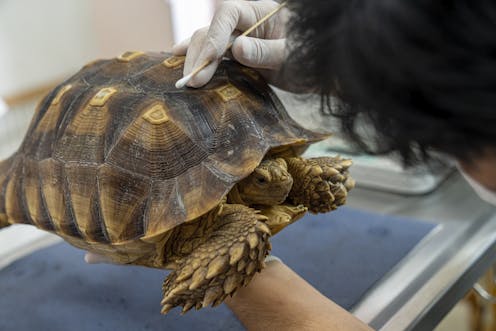
How do you measure the concentration of a drug in a tortoise shell? Thirawatana Phaisalratana/iStock via Getty Images Plus

In my work as a veterinary pharmacologist, I never know exactly what I’m going to get when I open my email. It could be a request from a veterinarian asking my team to determine the concentration of a drug to treat the shell of a turtle infected with fungal disease. Or it could be an inquiry from a researcher wondering whether we can help them figure out the dose of antacid they should give goats and sheep with ulcers.

In one email, a veterinarian wanted to know whether we could determine the concentration of an extended-release antibiotic in tigers to determine how to best treat them. Figuring this out would make the difference between trying to give a sick tiger a pill every 12 hours – a difficult task – or a shot once a month.

At our veterinary pharmacology lab, my colleagues and I analyze drug levels in animals from zoos and aquariums nationwide, from tiny mice to majestic elephants and from penguins to farm animals. Whether it’s a dolphin with an infection or a tiger in pain, we help veterinarians determine the right treatment, including how much medicine is best for each animal.

Here’s a peek behind the scenes to experience a day in the life of a veterinary pharmacologist, and what it takes to ensure these creatures get the care they need to thrive.

Beluga milk and antibiotics

One day, I received an email from an aquarium asking whether my team and I could determine the concentration of an antibiotic in milk – specifically beluga whale milk.

Beluga whales live in cold waters throughout the Arctic and are extremely sociable mammals that hunt and migrate together in pods. They are recognized for their distinctive white color and are known as the “canaries of the sea” for the wide variety of sounds they make. Whales like the beluga are at the top of the food chain and play an important role in the overall health of the marine environment. However, these animals are threatened by extinction. There are roughly 150,000 beluga whales left in the world today, and certain populations are considered endangered.

Close-up of a person cupping the open mouth of a beluga whale calf
Beluga whales are threatened by extinction.
Erin Hooley/AP Photo

The aquarium reached out to us as part of their research on the factors threatening the sustainability of belugas in the wild and what steps can be taken to protect them. The team there works with animals both in human care and in their natural habitats to improve husbandry methods, understanding of the underwater world and the conservation of aquatic life.

We agreed to try to extract the drug from the milk. However, we first needed a sample of whale’s milk. So, the first question: How do you get milk from a whale? Through my decades of working in this field, my team has studied samples from a wide range of species, but this was the first time someone asked us to analyze whale’s milk.

Unfortunately, I never did find out how they actually got the sample. But I cannot imagine it was easy. The sample we received reminded us of a thick buttermilk, very clumpy with a little bit of a blue tint.

The milk sample they gave us came from a whale with an infection who was also nursing a calf. The veterinarians wanted to know whether the antibiotic was crossing into the milk, indicating that the calf may have been exposed to the drug.

Each chemical compound requires its own unique process to extract from a particular sample type. This extraction can range from one to 15 steps and can take from one to six hours to perform. After we devised a method and procedure to extract the antibiotic from milk, we set to analyzing the sample.

We found the presence of drug in the sample, which meant the nursing calf was getting exposed to antibiotic from its mother’s milk. This posed health risks to the calf, including disruption to its gut microbiome that could lead to a weakened immune system, increased susceptibility to infections and antibiotic resistance.

Making a treatment plan

Now that the aquarium knew the beluga milk contained the antibiotic, it could devise a treatment plan. Beluga calves are dependent on nursing for the first year of life until their teeth emerge. So stopping the calf from drinking its mother’s milk wasn’t an option.

When prescribing antibiotics, a veterinarian needs to carefully consider the potential risks and benefits to both the nursing mother and her offspring. The goal is to provide effective treatment for the parent while minimizing the risk of harm to the offspring.

Person wearing white lab coat and nitrile gloves handling lab equipment.
A member of the team at the veterinary pharmacology lab at the University of Tennessee analyzes samples.
Sherry Cox, CC BY-NC-SA

In order to determine whether the nursing calf was at risk, the veterinarian wanted to determine the concentration of antibiotic in the calf.

To measure how much antibiotic the calf was ingesting from the milk, the aquarium sent us a plasma sample from the calf to analyze. While we did find measurable amounts of the drug in the sample, there was not enough to cause harm to the calf.

With this information, the veterinarian decided to continue to give the mother the antibiotic. The veterinarian gave our team samples from both the mother and the calf to continue monitoring the drug concentrations.

Effectively treating animals

For many animals, there is limited information available to guide clinicians when deciding treatment plans. Many dosage regimens are extrapolated from animals with different physiologies and metabolisms compared to the animal receiving the drug. What might cure one species might kill another.

Evaluating how safe and effective a drug is for a particular species is essential to not only properly treat and prevent disease but also to relieve pain. The research we do provides needed information on appropriate doses in vulnerable species for which there is no scientific data available.

I find the work we do rewarding because we provide information to so many veterinarians to help them take care of remarkable creatures great and small.

The Conversation

Sherry Cox does not work for, consult, own shares in or receive funding from any company or organization that would benefit from this article, and has disclosed no relevant affiliations beyond their academic appointment.

ref. Calling in the animal drug detectives − helping veterinarians help beluga whales, goats and all creatures big and small – https://theconversation.com/calling-in-the-animal-drug-detectives-helping-veterinarians-help-beluga-whales-goats-and-all-creatures-big-and-small-265430

Andy Burnham’s leadership ambitions: what is the path to mounting a challenge against Keir Starmer?

Source: The Conversation – UK – By Thomas Caygill, Senior Lecturer in Politics, Nottingham Trent University

Manchester mayor Andy Burnham has triggered a blazing row by telling the Telegraph that MPs want him to mount a leadership challenge against prime minister Keir Starmer.

Starmer’s poll ratings are dire and for some weeks, discussion within some sections of the Labour Party has turned to who is his most likely successor.

Up until early September, the assumption was that it would be Angela Rayner. But her resignation as deputy prime minister and deputy leader of the party over a financial scandal has made that less certain. Attention therefore turned to Burnham.

Burnham is popular within the party – and has been for a long time. A poll of party members conducted by Survation back in June for the website LabourList placed him just above Rayner as the top choice to be the next leader. He is also seen as plain-spoken and direct – a quality that Nigel Farage also has but which Starmer lacks.

However, he does face several hurdles if he does wish to become the leader of the labour party one day, whether through Starmer’s resignation or some other turn of events.

The first challenge is that you must be a Labour MP to stand for the leadership of the party – and Burnham is not an MP. For Burnham to become an MP before the next general election (expected in 2029), there will need to be a vacancy (ideally in his home region, Manchester) and currently there isn’t one. There have been suggestions that a sitting MP in Manchester could stand down triggering a by-election that Burnham could stand in, although none of those MPs currently seem keen.

Burnham would also then need to be shortlisted as a candidate for the seat, which will require approval from the national executive committee (NEC). Starmer currently has a majority on that committee. Given that Burnham is a former MP and the mayor of Greater Manchester, it would be odd if the NEC were to block him, but in theory it is possible. He would then need to win the shortlisting vote in the constituency Labour party where he stood. Again, I would imagine if he was standing in a Manchester seat, that the local party would approve him, but it is a further hurdle nonetheless.

The next hurdle is the need to win the by-election. While Manchester is a Labour stronghold and remains so, given the support for Reform UK in the polls, victory is not guaranteed. Parties can pour resources into by-elections as there is only one vote taking place (as opposed to 650 taking place on the same day in general elections) so activists can be bussed in and campaign finance is not so thin on the ground. You can guarantee that Reform UK will throw the kitchen sink at any by-election where they have a chance of victory, regardless of whether Burnham is standing or not.

If he clears all these hurdles, a further one remains. Currently to challenge Starmer for the leadership of the party, any challenger would need the backing of 80 MPs. This is a high threshold, as we have seen during the deputy leadership election and again there is no guarantee that enough MPs would back him. There has been some backlash to his criticism of Starmer and the party, particularly as the labour party annual conference approaches. Starmer’s allies (and investors) have also been quick to point out that his suggestion to borrow more to fund increased public spending would trigger a similar run on the pound that we saw during Liz Truss’ time as prime minister.

It is for these reasons that a challenge to Starmer from Burnham is unlikely at least in the short term. However, if Labour’s poll ratings do not improve over the course of the next 12 months, discussion of succession will only ramp up further.

Any challenge to Starmer’s leadership in the short term will likely come from within the parliamentary Labour party. The next key moment of danger will be after the 2026 local elections (in England) and devolved parliamentary elections (in Scotland and Wales). However, we should note that Labour is not as regicidal as the Conservative party. It has far less of a history of toppling even unpopular leaders.

Labour MPs should also remember the public’s reaction to the Conservative party going through three leaders in the last parliament – it did play a part in their defeat last year.


Want more politics coverage from academic experts? Every week, we bring you informed analysis of developments in government and fact check the claims being made.

Sign up for our weekly politics newsletter, delivered every Friday.


The Conversation

Thomas Caygill has previously received funding from the British Academy/Leverhulme Trust and the Economic and Social Research Council.

ref. Andy Burnham’s leadership ambitions: what is the path to mounting a challenge against Keir Starmer? – https://theconversation.com/andy-burnhams-leadership-ambitions-what-is-the-path-to-mounting-a-challenge-against-keir-starmer-266160

Could your urine predict your dementia risk?

Source: The Conversation – UK – By Hong Xu, Assistant Professor at Division of Clinical Geriatrics, Karolinska Institutet

My Stockers/Shutterstock.com

A simple urine test could reveal your risk of developing dementia decades before symptoms appear, a new study shows. For the study, my colleagues and I tracked 130,000 people and found that protein in the urine may act as an early warning sign for memory problems.

Our research showed that people with higher levels of protein leaking into their urine – a condition known as albuminuria – had a significantly greater chance of developing dementia. The association was strongest for vascular dementia, the second most common form after Alzheimer’s, and mixed dementia, which combines features of both types.

Crucially, this connection held true regardless of how well participants’ kidneys were functioning overall. In other words, protein in urine appears to predict dementia risk independently, even when standard kidney tests appear normal.

Our findings highlight how closely the kidneys and brain are connected. Both rely on networks of tiny, delicate blood vessels to function properly. When these vessels are damaged – by high blood pressure, diabetes, or other factors – the same damage that causes protein to leak into urine can also reduce blood flow to the brain.

Your kidneys act like filters, keeping useful proteins in your blood while filtering out waste. When those filters are damaged, albumin protein starts leaking through.

The brain has its own protective barrier – the blood-brain barrier – made of tightly packed cells that prevent harmful substances from entering brain tissue. Just as damaged kidney filters become leaky, a compromised blood-brain barrier allows toxins and inflammatory molecules to pass through, potentially triggering the brain changes that lead to dementia.

This discovery opens exciting possibilities for prevention. Several medications already used to protect kidneys may also protect memory. Ace inhibitors and Arbs, blood pressure drugs that reduce protein leakage, could potentially do double duty for brain health.

Even newer drugs show promise. GLP-1 drugs such as semaglutide (better known as Ozempic) and SGLT2 inhibitors such as dapagliflozin were originally developed for diabetes but also reduce protein in urine. Whether they prevent dementia remains to be proved, but early signs are encouraging.

While we cannot yet prove that treating kidney problems will prevent dementia – that would require following participants for decades in controlled trials – the biological pathway makes sense, particularly given how blood vessel damage affects both organs.

Gloved hands holding a urine sample and a dipstick.
One day, a simple urine test might predict dementia.
Lothar Drechsel/Shutterstock.com

An ounce of prevention

So when should you start caring about this? Vascular damage accumulates over years, so earlier intervention is better. For most people, focusing on kidney and heart health from middle age onwards is sensible, especially if you have diabetes, high blood pressure, kidney disease, obesity, or a family history of these conditions.

Currently, doctors mainly test urine protein in people with diabetes or high blood pressure. But our findings raise questions about whether everyone over 50 should be screened, particularly those with multiple risk factors. That is a public health question requiring more research and policy discussion.

The good news is that you do not need to wait for new guidelines to take action. Lifestyle changes that protect kidneys also benefit the brain. Quitting smoking, controlling blood pressure and blood sugar, eating a balanced diet and exercising regularly can reduce your risk of both kidney disease and dementia.


Read more:
Poor sleep may nudge the brain toward dementia, researchers find


If confirmed by future studies, urine protein testing could become a standard part of dementia risk assessments. It is cheap, non-invasive and can be performed with simple dipstick tests in any doctor’s office.

While there is still no cure for dementia, early detection and prevention remain our best tools. By recognising that protein in urine signals more than just kidney trouble, we may be able to identify and protect those at risk long before memory problems begin. Sometimes the most important clues about your brain’s future health are found in the most unlikely places.

The Conversation

Hong Xu receives funding from the Swedish Research Council .

ref. Could your urine predict your dementia risk? – https://theconversation.com/could-your-urine-predict-your-dementia-risk-265262

Sauna competitions have gone from dangerous endurance to therapeutic showmanship

Source: The Conversation – UK – By Daniel Brayson, Lecturer, Life Sciences, University of Westminster

When the British Sauna Society promises “multisensory theatre and dazzling skills” at the national Aufguss championships, you might wonder what on earth they’re talking about. The German word Aufguss means “infusion”, but don’t let that fool you into thinking this is some gentle aromatherapy session.

The idea of a sauna “championship” is likely to conjure visions of stubborn people engaging in dangerous endurance contests. Thankfully, Aufguss is nothing like that. Instead, it’s more akin to figure skating than speed skating – a choreographed performance where infusion masters compete to create the most immersive sauna experience.

These Aufguss meisters combine carefully selected essential oils, which they aerosolise on hot stones, with music and light shows while skilfully manipulating the steam using towels and body movements.

Their ten-to-20-minute performances are judged on professionalism, heat distribution, waving techniques, fragrance usage, theme implementation, atmosphere and team spirit – yes, audience participation is expected.

But is this theatrical sweating actually good for you? The health benefits are surprisingly substantial. Sauna use is a form of passive heat therapy that typically involves multiple sessions of five to 20 minutes followed by cooling activities. Studies often report reduced blood pressure and lower cardiovascular disease risk, along with decreased inflammation throughout the body.

The reason lies in how repeated heat exposure challenges our cardiovascular system in a similar way exercise does. When we’re exposed to extreme temperatures, our bodies redistribute blood from core organs to the extremities, such as the arms and legs, where the increased surface area helps dissipate heat more effectively. Blood vessels in our skin dilate to bring heat closer to the surface, while our hearts work harder to pump blood around this expanded network.

There’s even evidence that regular sauna use prepares us for our warming planet. Heat acclimatisation increases blood volume, creating a sweat reserve we can access at lower core temperatures, promoting better cooling through evaporation – a handy adaptation given the inevitable increase in heatwaves we’ll face, thanks to the climate crisis.

The aromatherapy element adds another layer of benefit. While often dismissed as fringe medicine, there’s growing evidence that essential oils like lavender can be beneficial for mental health by reducing depression and anxiety. Music, too, has demonstrable mood-altering effects, with certain frequencies shown to reduce blood pressure and slow heart and breathing rates.

However, nature gives with one hand and takes with the other. Recent research shows that while heat exposure makes us resilient, it also accelerates biological ageing. Still, this seems a reasonable trade-off compared to the alternative.

UK Aufguss championship 2023.

Old-school sauna championships were less salubrious

The alternative, sadly, was demonstrated at the old competitive sauna world championships. Unlike today’s artistic Aufguss competitions, these events tested pure endurance – whoever stayed longest without collapsing won. This dangerous format inevitably ended in tragedy when a finalist died and another nearly perished at the 2010 championships. Unsurprisingly, it was the last time such an event was held.

The difference is crucial. Our bodies constantly generate heat through metabolism, and in normal temperatures we lose it through radiation, conduction, convection and evaporation.

In extreme heat, most of these mechanisms become ineffective, except evaporation – hence, sweating becomes critical. Curiously, one rule of the old endurance competitions forbade wiping sweat away, essentially sabotaging the body’s primary cooling method.

When heat exposure continues beyond our cooling capacity, core temperature rises above 40°C. Here, the body is on a point of no return as heat generated by metabolism increases. The chemical reactions keeping our cells alive begin breaking down, leading to organ failure and ultimately death.

Which brings us back to the choice between two very different types of competitive sauna. One celebrates skill, artistry and the therapeutic benefits of controlled heat exposure, combined with aromatherapy and music. The other was a deadly test of stubborn endurance that rightfully belongs in the dustbin of history.

I know which type of competitive sauna I prefer.

The Conversation

Daniel Brayson has received funding from The British Heart Foundation and Muscular Dystrophy UK. He was previously on the board of Trustees of the Physiological Society.

ref. Sauna competitions have gone from dangerous endurance to therapeutic showmanship – https://theconversation.com/sauna-competitions-have-gone-from-dangerous-endurance-to-therapeutic-showmanship-265349

Why scientists may be fearful of speaking out about Trump’s autism claims

Source: The Conversation – UK – By Padraig Murphy, Associate Professor in Communications, Dublin City University

“Are you making good health decisions?” reads one Robert F. Kennedy Jr. meme on social media, a slogan printed against an image of a smiling US health secretary. Such social media posts invariably invite lively comments beneath them, but the situation is deadly serious.

On 22 September, Donald Trump and RFK Jr. publicly proposed a link between paracetamol – commonly referred to in the US by the brand name Tylenol – and autism. The paracetamol link has also been shown, through rigorous research, to be false.

It’s far from the first falsehood about science to be presented at the highest levels of the US government. While RFK Jr. denies being anti-vaccination, he has repeatedly stated debunked claims about supposed vaccine harm.

The highly politicised nature of such claims and the current political environment may lead to a reluctance among some scientists to speak out publicly. But it’s imperative that they continue to defend science in the public arena.

With wall-to-wall coverage of such issues, it is easy for the considered views of experts to get drowned out – and headlines rarely lead with the perspectives of researchers. The speed of the news cycle can also mean that the story has moved on by the time they are in a position to comment.

Science communicators weigh up the published evidence on a topic of controversy, factoring in multiple perspectives. They also talk about when science gets it wrong – and when retractions of journal articles are needed.

Toxic environment

But online toxicity and hostility on social media have increased to the extent that both scientists and, indeed, science journalists have a real fear of writing about topics even where they have strong expertise. And with the US government making major cuts to research funding and targeting politicised areas such as climate science in particular, some may be inclined to stay quiet or self-censor to avoid losing their grants.

We’ve also seen government scientists removed from their positions by the Trump administration. In June 2025, RFK Jr. removed all 17 members of a committee that issues official government recommendations on immunisations.

In August 2025, the director of the US Centres for Disease Control and Prevention, Susan Monarez, was fired for what she says was refusing to dismiss vaccine policy officials. The health secretary says it was because he didn’t trust her.

Political decisions such as these and others can have a chilling effect on scientists and the media, where commentators may feel the need to tread carefully. Yet this makes it all the more urgent that everyone involved in communicating science to the public ups their game and defend expertise.

Nevertheless, when the politics are combined with the toxicity of debate in the public sphere, particularly on social media, it can make conveying expert opinions very challenging. Science communicators have often developed valuable and thoughtful methods to put the message across to the public.

Platforms like Bluesky, which give users greater control over their interactions, have been one such attempt for a civil space to discuss science. Yet, on other platforms, it is easy to see how valuable efforts such as these could sour amid the kinds of vitriolic attacks come from anonymous sources who seem to act with impunity online.

There is arguably a place to fight fire with fire, including with the use of ridicule. Examples include California governor Gavin Newsom’s mockery of Trump tweets or South Park satirising the US administration in the basest of fashions.

The longer-term goals in controlling false scientific statements involve increasing media literacy, prebunking– debunking myths and conspiracy theories before they spread rapidly – and setting out “nudge” effects, where there are several choices offered to people that eventual lead to a change of behaviour, as happens in advertising.

If a scientific or innovation programme has the resources, subvertising techniques – where spoofs and parodies of corporate ads are created to critique their messages – have been used effectively against the tobacco lobby and oil companies.

It may help for professional bodies, universities and other institutions involved in communicating science to maintain vigilance on contentious claims so that they are well prepared when these topics blow up in the media. The tylenol-autism claim is not something that had been widely shared in mainstream publications before now. But science communicators should be ready for the next time it comes up.

The Conversation

Padraig Murphy does not work for, consult, own shares in or receive funding from any company or organisation that would benefit from this article, and has disclosed no relevant affiliations beyond their academic appointment.

ref. Why scientists may be fearful of speaking out about Trump’s autism claims – https://theconversation.com/why-scientists-may-be-fearful-of-speaking-out-about-trumps-autism-claims-265985

How sea star wasting disease transformed the West Coast’s ecology and economy

Source: The Conversation – USA (2) – By Rebecca Vega Thurber, Professor of Ecology Evolution and Marine Biology; Director of the Marine Science Institute, University of California, Santa Barbara

A sunflower sea star may be about to snack on some sea urchins in California. Brent Durand/Moment via Getty Images

Before 2013, divers on North America’s west coast rarely saw purple sea urchins. The spiky animals, which are voracious kelp eaters,- were a favorite food of the coast’s iconic sunflower sea stars. The giant sea stars, recognizable for their many arms, kept the urchin population in check, with the help of sea otters, lobsters and some large fishes.

That balance allowed the local kelp forests to flourish, providing food and protection for young fish and other sea life.

Then, in 2013, recreational divers began noticing gruesomely dissolving sea star corpses and living sea stars that were writhing and twisting, their arms dropping and literally walking away. It was the beginning of a sea star wasting disease outbreak that would nearly wipe out all the sunflower sea stars along the coast.

Their disappearance, combined with a massive marine heat wave called “the blob,” set off a cascade of catastrophic ecological changes that turned these kelp biodiverse hot spots into vast sea urchin barrens, devoid of almost any other species.

A sea floor landscape of sea urchins and not much else.
Urchin barrens are the result of losing a main sea urchin predator off California.
Brandon Doheny

This disaster also encouraged human innovation, however. The result has brought an unexpected boost for the local fisheries and restaurants through the development of a new culinary delight, and questions about how best to help kelp forests, and the US$500 billion in economic value they provide, recover for the future.

Losing sea stars disrupted an entire ecosystem

I am the director of the Marine Science Institute in Santa Barbara, California, one of the areas severely hit by the loss of sea stars.

From sea star wasting disease, more than 90% of the sunflower sea stars died along the entirety of North America’s west coast, from Baja to Alaska. In only the first five years of the outbreak, sea star wasting disease become one of the largest epidemics to hit a marine species. By 2017, sunflower sea stars, Pycnopodia helianthoide, were rarely found south of Washington state.

For over a decade, the cause of the devastation was a mystery, until recently, when my colleagues traced sea star wasting disease to a highly infectious vibrio bacteria. Today, sea star wasting disease has spread widely, even as far as Antarctica.

Discovering the cause of sea star wasting disease. Hakai Institute.

As sea stars disappeared, the purple sea urchin population exploded, increasing an astonishing 10,000% from 2014 to 2022.

The urchins ate through kelp forests. The resulting loss of kelp canopy and the understory foliage below it reverberated across the whole ecosystem, affecting the tiniest of zooplankton and giants like gray whales, all of which are linked in the complex kelp forest food web of who eats who.

Large stalks of kelp sea grass rising from the sea floor with fish swimming nearby.
Kelp forests provide food for many species and safety for young fish.
Katie Davis

Ecological cascades – a succession of changes across an ecosystem when habitats are disturbed – can occur when critical populations disappear or change in other significant ways.

Removing the kelp alters light levels below, leading to changes such as turf algae growth in place of filter-feeding invertebrates such as clams and scallops. Turf algae also make it harder for kelp to regrow, exacerbating the problem.

The loss of kelp also resulted in fewer mysids, a zooplankton that relies on kelp for habitat and which makes up a majority of gray whales’ diets. Thus, as urchin populations went up and kelp disappeared, gray whales also had less food.

How California learned to embrace the urchin

The loss of sunflower sea stars to wasting disease has not only altered the kelp ecosystem, but it has also altered the landscape of Pacific fisheries, potentially forever.

When I started research on purple sea urchins in 2001, there were not enough specimens in the whole of the Monterey Bay for me to collect and use for my studies. In fact, I had to order my animals from an East Coast distributor.

Mostly there were red sea urchins, Strongylocentrotus fransiscanus, highly prized for their large and delicious gonads and sold as “uni” to American and Asian markets.

But with the recent purple sea urchin boom, Strongylocentrotus purpuratus, a new and unexpected market on the west coast has blossomed – taking these kelp killers out of the sea and onto plates in restaurants around America.

An urchin split open on a dinner plate with uni inside
Sea urchin on the menu in Japan. The orange-yellow uni are the creature’s gonads.
Sung Ming Whang/Flickr, CC BY

This pivot from reds to purple urchins by fishers and the aquaculture industry took time and creativity. Purple sea urchins tend to be small and lack the rich gonads that make the reds so profitable. To adjust their flavor, texture and size, innovators turned to harvesting these animals from the sea by hand and then moving them to land-based facilities – called “urchin ranches” – where they fatten up by eating seaweeds.

The results have been remarkable. In Santa Barbara, a thriving industry now raises these animals for the culinary market, where the artisanal urchins go for $8 to $10 a pop. In one example, an abalone aquaculture program used its expertise and facility to profit from this new abundance.

Innovative ways to solve kelp decline

You might be asking yourself if we can just eat our way out of this crisis.

It’s not a new idea. The invasion of Pacific lionfish into Florida coasts, the Gulf of Mexico and parts of the Caribbean was slowed down by local divers and recreational fishing groups teaming up to hunt and then market lionfish to restaurants.

It is unlikely that purple sea urchin ranching will make much of a dent in the population, but numerous projects are currently aimed at both recovering kelp forests and keeping the monetary benefits of the urchin boom flowing to the local economy simultaneously. The ingenuity to flip a bad outcome into a productive local aquaculture industry has been so popular that even state agencies are now funding local innovators to expand purple urchin ranching, assisting both the local environment and the local economy.

Two dozen sea stars on the sea floor and not much else.
Purple sea urchins have taken over stretches of sea floor off California and ate down the kelp, leaving little behind.
Ed Bierman via Wikimedia Commons, CC BY

Scientists, state agencies and conservation groups are working on sunflower sea star restoration efforts and kelp recovery programs, and are considering other ways to reduce the urchin population.

One option is to increase otter populations in places like Northern California and Oregon, where they were once abundant. Otters can eat upward of 10,000 urchins per year. But the approach is controversial in Southern California. A similar conservation effort failed before, and there are concerns about the effects a bigger otter population would have on local fisheries, including the now-depleted black abalone.

So where do we go from here?

As the world’s appetite for farmed seafood has expanded, groups like Urchinomics and their investors are using this edible calamity to promote kelp restoration, create jobs and boost local economies.

In a way, sea star wasting disease and the precipitous kelp declines inadvertently created a mutually beneficial alignment of conservation, local artisanal fishing and land-based aquaculture.

A seafloor view with several species.
A sunflower star (blue) with other sea stars (orange) and a sea anemone off the central California coast.
Ed Bierman via Wikimedia Commons, CC BY

In the long term, additional marine heat waves, like the one occurring in 2025, and their associated marine diseases and subsequent habitat losses, require global actions to reduce climate change. Future outbreaks like sea star wasting disease are almost certain to emerge.

Yet, it has also been found that some of the harms of urchin population growth can be lessened when sections of ocean are protected. For example, in some California marine protected areas where urchin predator diversity was high, the impacts of sea star wasting disease and its ecological cascade were reduced. In other words, in areas where there was limited fishing, as sea star numbers dropped, the urchin population was at least partially kept in check by those legally protected predators.

This finding suggests that along with global carbon reductions, local conservation and human innovations – like those bringing purple uni to our plates – can help prevent some ecological cascades that harm our increasingly threatened marine resources.

The Conversation

Rebecca Vega Thurber does not work for, consult, own shares in or receive funding from any company or organization that would benefit from this article, and has disclosed no relevant affiliations beyond their academic appointment.

ref. How sea star wasting disease transformed the West Coast’s ecology and economy – https://theconversation.com/how-sea-star-wasting-disease-transformed-the-west-coasts-ecology-and-economy-263253

Why aren’t companies speeding up investment? A new theory offers an answer to an economic paradox

Source: The Conversation – USA (2) – By David Ikenberry, Professor of Finance, Leeds School of Business, University of Colorado Boulder

For years, I’ve puzzled over a question that seems to defy common sense: If stock markets are hitting records and tech innovation seems endless, why aren’t companies pouring money back into new projects?

Yes, they’re still investing – but the pace of business spending is slower than you’d expect, especially outside of AI.

And if you’ve noticed headlines about sluggish business spending even as corporate profits soar, you’re not alone. It’s a puzzle that’s confounded economists, policymakers and investors for decades. Back in 1975, U.S. public companies reinvested an average of 25 cents for every dollar on their balance sheets. Today, that figure is closer to 12 cents.

In other words, corporate America is flush with cash, but it’s surprisingly stingy about reinvesting in its own future. What happened?

I’m an economist, and my colleague Gustavo Grullon and I recently published a study in the Journal of Finance that turns the field’s conventional wisdom on its head. Our research suggests the issue isn’t cautious executives or jittery markets – it’s about how economists have historically measured companies’ incentives to invest in the first place.

Asking the wrong Q

For decades, economists have relied on a simple but appealing ratio – Tobin’s Q, named after the famous economist James Tobin – to gauge whether companies should ramp up investment.

They calculate this by dividing a company’s market value – what it would take to purchase the firm outright with cash – by its replacement value, or how much it would cost to rebuild the company from scratch. The result is called “Q.” The higher the Q, the theory goes, the more incentive executives have to invest.

But reality hasn’t conformed to fit the theory. Over the past half-century, Tobin’s Q has gone up, yet investment rates have gone down sharply.

Why the disconnect? Our research points to one key culprit: excess capacity. Many U.S. companies already have more factories, machines or service capability than they can use. By not correcting for this issue, the traditional Tobin’s Q will overstate the incentive that companies have to grow.

To see this, consider a commercial real estate company that owns a portfolio of office buildings. In recent years, with the rise of e-commerce and remote work, many of their properties have been running well below capacity. Now suppose a few new tenants start paying rent and begin absorbing a portion of that empty space. Stock prices will rise in response to seeing these new cash flows, which in turn will lead Q to rise.

Traditionally, this increase in Q would suggest that it’s a good time to invest in new buildings – but the reality is quite different with idle capacity still in the system. Why pour money into building another office tower if existing ones still have empty floors?

This key idea is that what matters isn’t the average value of all assets – it’s the marginal value of adding one more dollar of investment. And because capacity utilization has been steadily eroding over the past half-century, many firms see little reason to invest.

That last point may come as a surprise, but the U.S. economy, with all its factories and offices, isn’t nearly as abuzz with activity as it was after, say, World War II. Today, many sectors operate well below full throttle. This growing slack in the system over time helps explain why companies have pulled back on their rate of investment, even as profits and market values climb.

Why has capacity utilization fallen so much over the past half-century? It’s not entirely clear, but what economists call “structural economic rigidities” – things such as regulatory hurdles, labor market frictions or shifts in cost structure – seem to be part of the answer. These factors can drag businesses into a state of chronic underuse, especially after recessions.

Why it matters

This isn’t just an academic debate. The implications are profound, whether you closely follow Wall Street or just enjoy armchair economic policy debates. For one thing, this dynamic might help explain why tax cuts haven’t spurred investment the way supporters have hoped.

Take the 2017 Tax Cuts and Jobs Act, which slashed the top corporate tax rate from 35% to 21% and introduced full expensing for equipment investments. Supporters promised a wave of new investment.

But when my colleague and I looked at the numbers, we found the opposite. In the four years before the tax cuts, publicly traded U.S. firms had an aggregate investment rate, including intangibles, of 13.9%. In the four years after the tax cut, the average investment rate fell to 12.4% – in other words, no evidence of a bump.

Where did those liberated cash flows go? Instead of plowing this newfound cash after the tax cuts into new projects, many companies funneled it into stock buybacks and dividends.

In retrospect, this makes sense. If a company has excess capacity, the incentive to invest should be more muted, even if new machines are suddenly cheaper thanks to tax breaks. If the demand isn’t there, why buy them?

Even with the most generous tax incentives, the core challenge remains: You can’t force-feed investment into an economy already swimming in excess capacity. If companies don’t see real, scalable demand, tax breaks alone aren’t likely to unlock a new era of business spending.

That doesn’t mean tax policy doesn’t matter – it does, especially for smaller firms with real growth prospects. But for the large, well-established firms that make up the lion’s share of the economy, the bigger challenge is demand. Rather than trying to stimulate even more investment, policymakers should prioritize understanding why demand is sagging relative to supply and reducing economic rigidities where they can. That way, the capacity generated by new investment has somewhere useful to go.

The Conversation

David Ikenberry does not work for, consult, own shares in or receive funding from any company or organization that would benefit from this article, and has disclosed no relevant affiliations beyond their academic appointment.

ref. Why aren’t companies speeding up investment? A new theory offers an answer to an economic paradox – https://theconversation.com/why-arent-companies-speeding-up-investment-a-new-theory-offers-an-answer-to-an-economic-paradox-260661

Charlie Kirk and the making of an AI-generated martyr

Source: The Conversation – USA (2) – By Art Jipson, Associate Professor of Sociology, University of Dayton

A makeshift memorial for Charlie Kirk outside the headquarters of Turning Point USA in Phoenix. Joe Raedle/Getty Images

An AI-generated image of Charlie Kirk embracing Jesus. Another of Kirk posing with angel wings and halo. Then there’s the one of Kirk standing with George Floyd at the gates of heaven.

When prominent political or cultural figures die in the U.S., the remembrance of their life often veers into hagiography. And that’s what’s been happening since the gruesome killing of conservative activist and Turning Point USA co-founder Charlie Kirk.

The word hagiography comes from the Christian tradition of writing about saints’ lives, but the practice often spills into secular politics and media, falling under the umbrella of what’s called, in sociology, the “sacralization of politics.” Assassinations and violent deaths, in particular, tend to be interpreted in sacred terms: The person becomes a secular martyr who made a heroic sacrifice. They are portrayed as morally righteous and spiritually pure.

This is, to some degree, a natural part of mourning. But taking a closer look at why this happens – and how the internet accelerates it – offers some important insights into politics in the U.S. today.

From presidents to protest leaders

The construction of Ronald Reagan’s postpresidential image is a prime example of this process.

After his presidency, Republican leaders steadily polished his memory into a symbol of conservative triumph, downplaying scandals such as Iran-Contra or Reagan’s early skepticism of civil rights. Today, Reagan is remembered less as a complex politician and more as a saint of free markets and patriotism.

Among liberals, Martin Luther King Jr. experienced a comparable transformation, though it took a different form. King’s critiques of capitalism, militarism and structural racism are often downplayed in most mainstream remembrances, leaving behind a softer image of peaceful dreamer. The annual holiday, scores of street renamings and public murals honor him, but they also tame his legacy into a universally palatable story of unity.

Even more contested figures such as John F. Kennedy or Abraham Lincoln show the same pattern. Their assassinations were followed by waves of mourning that elevated them into near-mythic status.

Decades after Kennedy’s death, his portrait hung in the homes of many American Catholics, often adjacent to religious iconography such as Virgin Mary statuettes. Lincoln, meanwhile, became a kind of civic saint: His memorial in Washington, D.C., looks like a temple, with words from his speeches etched into the walls.

Why it happens and what it means

The hagiography of public figures serves several purposes. It taps into deep human needs, helping grieving communities manage loss by providing moral clarity in the face of chaos.

It also allows political movements to consolidate power by sanctifying their leaders and discouraging dissent. And it reassures followers that their cause is righteous – even cosmic.

In a polarized environment, the elevation of a figure into a saint does more than honor the individual. It turns a political struggle into a sacred one. If you see someone as a martyr, then opposition to their movement is not merely disagreement, it is desecration. In this sense, hagiography is not simply about remembering the dead: It mobilizes the living.

But there are risks. Once someone is framed as a saint, criticism becomes taboo. The more sacralized a figure, the harder it becomes to discuss their flaws, mistakes or controversial actions. Hagiography flattens history and narrows democratic debate.

After Queen Elizabeth II’s death in 2022, for example, public mourning in the U.K. and abroad quickly elevated her legacy into a symbol of stability and continuity, with mass tributes, viral imagery and global ceremonies transforming a complex reign into a simplified story of devotion and service.

It also fuels polarization. If one side’s leader is a martyr, then the other side must be villainous. The framing is simple but powerful.

Older man wearing white hate and red dress shirt holds two banners featuring the image of a young man in a suit superimposed over Jesus Christ.
A supporter of Charlie Kirk holds banners outside State Farm Stadium in Glendale, Ariz., during Kirk’s public memorial service on Sept. 21, 2025.
Andrew Caballero-Reynolds/AFP via Getty Images

In Kirk’s case, many of his supporters described him as a truth seeker whose death underscored a deeper moral message. At Kirk’s memorial service in Arizona, President Donald Trump called him a “martyr for American freedom.” On social media, Turning Point USA and Kirk’s official X account described him as “America’s greatest martyr to free speech.”

In doing so, they elevated his death as symbolic of larger battles over censorship. By emphasizing the fact that he died while simply speaking, they also reinforced the idea that liberals and the left are more likely to resort to violence to silence their ideological enemies, even as evidence shows otherwise.

The digital supercharge

Treating public figures like saints is not new, but the speed and scale of the process is. Over the past two decades, social media has turned hagiography from a slow cultural drift into a rapid-fire production cycle.

Memes, livestreams and hashtags now allow anyone to canonize someone they admire. When NBA Hall-of-Famer Kobe Bryant died in 2020, social media was flooded within hours with devotional images, murals and video compilations that cast him as more than an athlete: He became a spiritual icon of perseverance.

Similarly, after Ruth Bader Ginsburg’s death, the “Notorious RBG” meme ecosystem instantly expanded to include digital portraits and merchandise that cast her as a saintly defender of justice.

The same dynamics surrounded Charlie Kirk. Within hours of his assassination, memes appeared of Kirk draped in an American flag, being carried by Jesus.

In the days after his death, AI-generated audio clips of Kirk styled as “sermons” began circulating online, while supporters shared Bible verses that they claimed matched the exact timing of his passing. Together, these acts cast his death in religious terms: It wasn’t just a political assassination – it was a moment of spiritual significance.

Such clips and verses spread effortlessly across social media, where narratives about public figures can solidify within hours, often before facts are confirmed, leaving little room for nuance or investigation.

Easy-to-create memes and videos also enable ordinary users to participate in a sacralization process, making it more of a grassroots effort than something that’s imposed from the top down.

In other words, digital culture transforms what was once the slow work of monuments and textbooks into a living, flexible folk religion of culture and politics.

Toward clearer politics

Hagiography will not disappear. It meets emotional and political needs too effectively. But acknowledging its patterns helps citizens and journalists resist its distortions. The task is not to deny grief or admiration but to preserve space for nuance and accountability.

In the U.S., where religion, culture and politics frequently intertwine, recognizing that sainthood in politics is always constructed – and often strategic – can better allow people to honor loss without letting mythmaking dictate the terms of public life.

The Conversation

Art Jipson does not work for, consult, own shares in or receive funding from any company or organization that would benefit from this article, and has disclosed no relevant affiliations beyond their academic appointment.

ref. Charlie Kirk and the making of an AI-generated martyr – https://theconversation.com/charlie-kirk-and-the-making-of-an-ai-generated-martyr-265834

Tibetan Buddhist nuns are getting advanced degrees − and the Dalai Lama played a major role in that shift

Source: The Conversation – USA (3) – By Darcie Price-Wallace, Visiting Scholar in Religious Studies, Northwestern University

Tibetan nuns study during the winter examination period at the Dolma Ling Nunnery in Dharamshala, India, in 2022. Rebecca Conway/Getty Images

In August 2025, 161 Tibetan Buddhist nuns from religious institutions across India and Nepal – a record number – gathered at the Dolma Ling Nunnery in northern India to take various levels of the “geshema” examination. These exams are in preparation for one day receiving the geshema degree, comparable with a doctorate in Tibetan Buddhist philosophy. The nearly four-week gathering was especially notable because until 13 years ago it was completely unavailable to women.

Now, thanks to a greater emphasis on women’s education in recent years, Tibetan Buddhist nuns are increasingly becoming teachers and abbesses. In monastic institutions and in Buddhist centers around the world, nuns are taking on leadership roles and being acknowledged for their religious scholarship, including the geshema degree.

As a scholar of religious studies and gender, I study the changing roles of women in Buddhism. While nuns were long respected in Tibetan Buddhist culture, they were historically not granted access to the same educational or leadership opportunities as monks. But that has changed, in part due to the crucial role played by the 14th Dalai Lama Tenzin Gyatso.

He encouraged nuns to become advanced degree holders as part of his broader goal to increase gender parity. “Biologically there is no difference between the brains of men and women and the Buddha clearly gave equal rights to men and women,” he said in 2013. In addition to nuns reciting prayers and performing rituals, he emphasized they should study classic Buddhist texts, something traditionally reserved for men.

Such guidance has helped challenge historical misconceptions about women’s intellectual abilities that undermined women’s prominence in Buddhism. Indeed, nuns are now teaching philosophy within their own nunneries at home and abroad, becoming principals of their institutions, serving as role models for other nuns and the laity, and entering long retreats – a staple of Buddhist contemplative activities on the path to awakening.

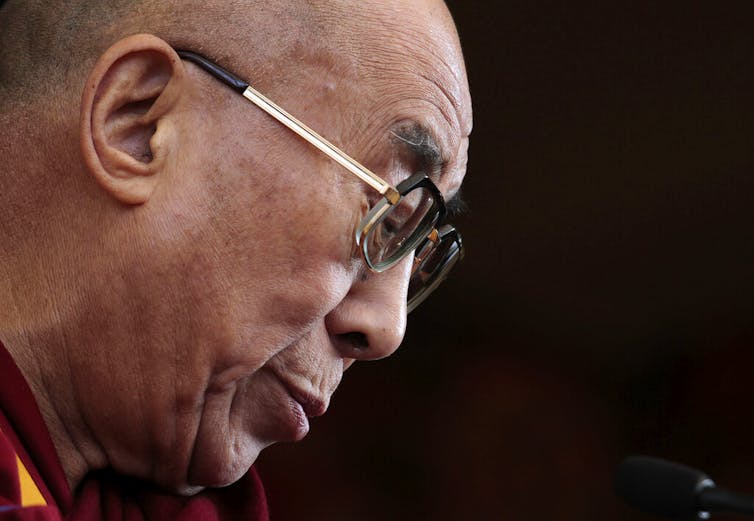
A man with glasses looks down.
The Dalai Lama speaks during a ceremony in 2011 to commemorate the anniversary of the 1959 Tibetan uprising against Chinese rule.
AP Photo/Ashwini Bhatia

Historical roots

The Dalai Lama has resided in exile since 1959, when he fled to northern India following unrest over the Chinese occupation of Tibet. Many Tibetans followed him, and he has remained the key religious and political leader of the Tibetan community and diaspora ever since, though he officially gave up political duties in 2011 to the Tibetan government in exile.

During the Dalai Lama’s decades of leadership, improving education for the diaspora communities of Tibetans in India and Nepal has been a crucial avenue for protecting and preserving Tibetan culture, including Tibetan Buddhism.

Historically, however, the path of formal education was primarily reserved for monks. In Tibet, nuns were primarily ritual specialists, according to Buddhist studies scholars such as Karma Lekshe Tsomo, Mitra Härköken and Nicola Schneider. They performed rituals in temples and homes but rarely had the opportunity to study the Buddhist texts.

And even with the Dalai Lama’s support, developing a systematic course of study for nuns that was equivalent to monks’ curriculum was not easy, especially with only a limited number of nunneries in India and Nepal, according to Schneider’s research.

“When the nuns arrived in India, they were ill, exhausted, traumatized and impoverished,” recalled Lobsang Dechen, co-director of the nonprofit Tibetan Nuns Project, in 2023. “Many nuns had faced torture and imprisonment at the hands of the Chinese authorities in Tibet and endured immense physical and emotional pain. The existing nunneries in the struggling Tibetan refugee community in India were already overcrowded and could not accommodate them.”

Nuns’ education prospects were also hampered by limited literacy and monks who held administrative and decision-making roles over them. The women essentially lived in “masculine institutions inhabited by nuns,” scholar Chandra Chiara Ehm argued in her ethnographic work on the Kopan Nunnery in Nepal. Ehm found monk administrators tended to endorse the Dalai Lama’s calls for gender parity in name without directly supporting nuns’ education.

A new age for educational opportunities

Increased access to education for nuns began to change in the 1980s as more Tibetan nuns migrated to India and Nepal. A network of more developed nunneries followed, such as Gaden Choling and Dolma Ling in Dharamshala, India, where the Dalai Lama lives in exile.

These institutions were funded by organizations such as the Tibetan Nuns Project, part of the broader Tibetan Women’s Association that was established in Tibet in 1959 in response to the Chinese occupation. The TWA was reinstated in India with the blessing of the Dalai Lama in 1984, and the Tibetan Nuns Project was established soon thereafter to educate and support nuns in India from all Tibetan schools.

A group of Tibetan Buddhist guns gather together.
Nuns in Dharamsala, India, organize a special prayer on July 4, 2025, a few days ahead of the Dalai Lama’s 90th birthday.
Elke Scholiers/Getty Images

The Dalai Lama encouraged these organizations to help build nunneries, empower existing nuns and support their further education. “In the beginning when I spoke about awarding Geshema degrees, some were doubtful,” the Dalai Lama recalled in 2018. “I clearly told them that Buddha had given equal opportunity for both men and women.”

Alongside the Dalai Lama’s efforts and more Tibetan nuns coming into the diaspora in India and Nepal, several other factors helped promote women’s advancement.

Those include the advocacy and support of international organizations such as Sakyadhita International Association of Buddhist Women, which has hosted international meetings to empower nuns and lay Buddhist women for nearly 40 years.

Within India, meanwhile, local nonprofits such as the Ladakh Nuns Association have provided opportunities for nuns to work in health care.

Reaching the highest ladder of monastic teaching

The geshema degree that nuns have been able to receive since 2012 is in the Geluk tradition, one of the four schools, or distinct branches, of Tibetan Buddhism. These degrees are the highest level of monastic training but were previously available only to men, whose degree are known as “khenpo” or “geshe.”

Candidates for the geshema degree are tested after having studied Buddhist texts. Nuns must score 75% or higher during their 17 years of study before qualifying to take the geshema examinations.

In 2016, the Dalai Lama presided over and granted 20 Tibetan nuns geshema degrees, four years after he and the Tibetan government in exile recognized the accreditation of higher degrees for nuns. Before the formal development of the geshema program, only one German nun, Kelsang Wango, had received a degree. Now, there are 73 geshemas.

After the Geluk school began granting geshema degrees, nuns within the other schools of Tibetan Buddhism – Nyingma, Sakya and Kagyu – also began pursuing advanced degrees in India and Nepal. Within these other three branches, nuns carry the title of “khenmo,” which like the geshema qualifies them to teach the renowned Buddhist scriptures. In 2022, the Dalai Lama offered blessings to the new khenmo, who received their titles in the Sakya school.

All told, nuns are changing the course for Tibetan Buddhist women – and have had an ally in the Dalai Lama.

As the numbers of women at the highest echelons of learning continue to grow, women will likewise expand their ability to take leadership roles in their monastic and lay communities – helping to improve other nuns’ education and protecting Tibetan culture in the process.

The Conversation

Darcie Price-Wallace received funding from a Fulbright Grant for her dissertation research.

ref. Tibetan Buddhist nuns are getting advanced degrees − and the Dalai Lama played a major role in that shift – https://theconversation.com/tibetan-buddhist-nuns-are-getting-advanced-degrees-and-the-dalai-lama-played-a-major-role-in-that-shift-261824