As the UK plans to introduce digital IDs, what can it learn from pioneer Estonia?

Source: The Conversation – UK – By Alex Hardy, Postdoctoral research associate, University of Liverpool

Prime Minister Sir Keir Starmer has announced that all UK citizens and legal residents are to have a mandatory digital ID to prove their right to live and work in the country.

Starmer and Liberal Democrat leader Sir Ed Davey have cited Estonia as an example of where digital IDs have proven successful. Davey noted that “times have changed” since the unsuccessful ID card plan under the Blair government.

He also enthused about the liberal Estonian government that had delivered digital IDs while maintaining liberal values. He has now chosen to row back on that position due to pressure from within his party.

The government has, driven by political necessity, led with claims about how the digital ID can minimise illegal working and misuse of public services as it seeks to build a consensus with the public for its plans.

Nevertheless, it needs to navigate concerns from both the political left and right. The Estonian case remains perhaps the leading example of digital ID in Europe, and is a particularly mature case, with more than two decades of success to highlight.

I have a long track record researching the politics of digitalisation, and spent several years living in Estonia. Drawing from that experience, there are various opportunities and pitfalls the UK government needs to be aware of.

Opportunities include enhanced public service delivery through efficiency. No more
arduous need to prove who you are with paper bills, driving licences and different
authentication processes for each service. In Estonia, a technology system, dubbed “X-Road”, allows all relevant organisations to securely interact with digital ID holders.

The UK could potentially emulate this model. It can minimise the grey economy (economic activities that are not taxed or monitored by the government). It can also prevent illegal work and tax avoidance, prevent false benefit claims and speed up interactions with the state.

Digital society

Estonia saves around 2% GDP annually thanks to the use of digital signatures to cut bureaucracy. “E-Estonia” (the Estonian term for their “digital society”) is closely associated with stimulating economic growth by empowering business creation.

Estonia has the highest per capita number of start-up unicorns – tech companies now valued at over US$1 billion (£743 million). Given the UK government’s focus on AI and the tech industry as a way to “turbocharge” the economy, there are plenty of reasons to be optimistic about the potential for digital IDs in Britain.

Amid widespread scepticism from the left and right, trust can be built through positive experience. If a service works, evidence from Estonia has suggested that it enhances public trust and can be expanded further.

A popular critique is that digital ID represents a security and privacy risk. Of course, any data can be potentially hacked or leaked. However, security and privacy is built into the system in the form of a decentralised data exchange, the X-Road, that provides timestamps and records of access.

This ensures only appropriate people have access to digital ID data and is designed to reassure the user. In Estonia, people can identify themselves in various ways, for example using a physical ID card inserted into a card reader or SmartID – another system for authenticating users online – using a mobile device.

There’s also plenty of evidence that shows this system works well. It can also be complimented by positive experiences once the system is actually working. General research on technological acceptance shows that users judge any given innovation on its perceived usefulness and attitudes toward it.

In Estonia, the public quickly adapted to services that made a demonstrable positive impact. However, Estonia proved that it could work with and adapt the technology at pace.

The UK government has promised to roll out the scheme by the “end of parliament”, which contrasts with Estonia passing a bill in the Riigikogu – Estonia’s unicameral parliament – in 2000, having a working pilot in 2001 and progressing to national deployment on December 17 2001. Ensuring that development does not run over time and budget could enhance trust, perhaps by adapting existing technology.

Transparency vital

Beyond usefulness, transparency is vital. Transparency in how the digital ID will
work, who will be able to access data and accountability for misuse must be carefully considered, communicated and rules rigorously enforced.

Estonia has established strong legislation to this effect and punished those who have broken these laws. It has also been transparent in events of failure. Ultimately, the devil will be in the detail and the success of Britain’s digital ID may be determined as much by politics as by the technology.

Nevertheless, key questions remain around authentication processes (to ensure people are who they say they are) and systems. Who will develop, implement and maintain the project? Crucially, how much will it cost and when will it be ready? The British state has a poor recent record of project delivery generally, including in the realm of major digital investment.

Public spending has frequently run over schedule and over budget. The NHS track and trace app, for example, was extremely costly, not widely used and marred by claims that it did not actually help prevent the spread of Covid-19.

Estonia is far from the only nation using digital ID, and much criticism in the UK relates to ID in general. Many functioning democracies across Europe and beyond
mandate ID in some form, often digitally. This will increase with the EU’s eIDAs (electronic identification, authentication and trust services) 2.0 regulation – which is designed to ensure secure cross-border monetary transactions, with a focus on electronic identification.

Yet in Estonia, users are not mandated to use it by law. In Estonia, you can throw your card in a drawer and not bother with any aspect of the digital state, if you like. Nor do you need to produce it on command.

The lesson from the Baltic nation is that a functional digital ID will not necessarily turn Britain into a police state. But if implemented quickly, efficiently and transparently, it could modernise the British state.

The Conversation

Alex Hardy does not work for, consult, own shares in or receive funding from any company or organisation that would benefit from this article, and has disclosed no relevant affiliations beyond their academic appointment.

ref. As the UK plans to introduce digital IDs, what can it learn from pioneer Estonia? – https://theconversation.com/as-the-uk-plans-to-introduce-digital-ids-what-can-it-learn-from-pioneer-estonia-266303

Where does the Arab and Muslim world stand on Trump’s Gaza peace plan? Expert Q&A

Source: The Conversation – UK – By Scott Lucas, Professor of International Politics, Clinton Institute, University College Dublin

The US president, Donald Trump, unveiled a 20-point proposal to end the war in Gaza on September 29. The plan proposes an immediate end to the fighting and the release of all Israeli hostages held by Hamas in exchange for hundreds of detained Gazans. It also includes the promise of humanitarian aid for Palestinians and reconstruction in Gaza.

Whether Israel and Hamas ultimately reach a deal remains to be seen. Trump’s proposal has been accepted by the Israeli prime minister, Benjamin Netanyahu, though it has been rejected by hard-right members of Israel’s governing coalition. Hamas is yet to respond.

More unanimous has been the response of leaders elsewhere in the Arab or Muslim world, who say they are ready to engage with the US to finalise and implement the agreement. We spoke to Scott Lucas, a Middle East expert at Dublin City University, about where these states fit into the peace plan.

Which Arab and Muslim countries support Trump’s peace plan?

Most Arab and Muslim countries are backing the 20-point sketch. Officials from these states reportedly met their US counterparts on the sidelines of the UN General Assembly in New York last week to discuss Trump’s framework to end the war.

The foreign ministers of eight states – Saudi Arabia, Jordan, the United Arab Emirates (UAE), Indonesia, Pakistan, Turkey, Qatar and Egypt – then welcomed Trump’s “sincere efforts” towards ending the war in a joint statement on September 29. They asserted their “confidence in his ability to find a path to peace”.

There are multiple reasons for their backing. Arab and Muslim leaders may just want the mass killing of Gaza’s civilians to stop. The Gaza Health Ministry says over 66,000 Palestinians have now been killed since the war began two years ago.

At the same time, they are concerned about regional security. Israel has launched strikes on Lebanon, Syria and Yemen in recent weeks. And it smashed Qatar’s sovereignty on September 9 with an airstrike in the capital, Doha, trying to assassinate Hamas negotiators.

These leaders are not fans of Hamas, with some of them perceiving the organisation as a threat to internal stability in their countries. Privately, they may welcome the degradation of the group. But publicly they have to express solidarity with the Palestinian people.

So, how can these countries curb Israel’s military operations? The approach cannot come directly from them. Even as Qatar was mediating peace talks, Netanyahu’s ministers were declaring that it was a supporter of “terrorism” because of its role in hosting Hamas political leadership. Israel had to be reached through its essential backer: Donald Trump.

Feeding ideas to Trump officials such as his envoy, the real estate developer Steve Witkoff, the Arab and Muslim countries could get some leverage against Netanyahu. And chasing lucrative economic, technological and AI deals with the US, they could play up Trump’s self-declared image of peacemaker.

What role have these states agreed to play as part of the plan?

Like the 20-point sketch, the role of Arab and Muslim states in delivering peace to Gaza is far vaguer than their motives. They would have input into the international “Board of Peace”, nominally headed by Trump, supervising the “temporary, transitional government of Palestinian technocrats”.

They would also be involved in the development of an “international stabilisation force”. The Trump proposal states that this force will train and provide support to vetted Palestinian police forces in Gaza, and will work to secure border areas. But it is unclear if Arab states will contribute security personnel.

There could be economic benefits for these countries from the reconstruction of Gaza with a long-term ceasefire and stability. But those possibilities are unclear in the interim. Trump’s sketch talked only about “the convening of experts with experience in constructing modern Middle East cities” to consider plans “attracting investments and creating jobs”.


Read more:
Trump’s 20-point plan for Gaza is deeply flawed but it may be the best offer Hamas can expect


Are these governments out of step with public sentiment in their countries?

Arab and Muslim governments have been manoeuvring between Israel, the US and Palestine for many years. They have also been walking a tightrope between external relationships and their publics.

Chide Israel too strongly and risk the loss of the “normalisation” project, with its economic and political benefits. Appear weak in the face of the Netanyahu government, and risk discontent and a loss of legitimacy with their constituents.

Those calculations have fed into the sketch. For the first time, there is a specific clause that Gazans should not be displaced for the development of Trump’s envisioned “Riviera of the Middle East” or for the vision of Netanyahu’s hard-right ministers of long-term Israeli occupation.

Arab and Muslim officials recently highlighted the danger of those Israeli ministers – and possibly Netanyahu – declaring annexation of the West Bank in response to the march of countries recognising a Palestinian state. The Trump administration responded by telling their Israeli allies that annexation was a red line which could not be crossed.


Read more:
The UK, France, Canada and Australia have recognised Palestine – what does that mean? Expert Q&A


Does the two-state solution remain a red line for the Arab states?

Historically, Arab States have not necessarily put a priority on a two-state resolution. It was the US that propelled the Oslo process, which was supposed to bring about Palestinian self-determination in the form of a Palestinian state, all the way to failure at the Camp David summit in 2000.

Then, in 2002, King Fahd of Saudi Arabia made a proposal for all Arab states to recognise Israel in exchange for its complete withdrawal from the occupied Palestinian territories. However, it was the US that again led publicly for an Israeli-Palestinian settlement until another failure in 2009 during the Obama administration.

There has also arguably been more emphasis in recent years among some Arab states on “normalisation” rather than the two-state solution. But Israel’s campaign in Gaza, combined with the Trump administration’s fervent backing of the Netanyahu government, may have altered this.

Arab states have to evaluate if they are going to ride the international wave towards an emphasis on recognition of Palestine as a state. Alongside France, Saudi Arabia led a forum in New York in September on a two-state outcome.

Trump wants more states to normalise relations with Israel, naming Syria, Lebanon and Saudi Arabia as candidates. How likely is this?

This one is easy. The Netanyahu government’s military approach towards Hamas, rather than an emphasis on political and economic measures to isolate the group, has put normalisation beyond the acceptable for Middle Eastern states.

As long as Israel is killing, starving, displacing and dehumanising Gaza’s civilians, the UAE and Bahrain will be cautious about their recognition of Israel in 2020. Any talk of expanding that recognition with other states – despite the bluster of Trump and Netanyahu – is a wish at best.

More likely, it is deceptive politics as Netanyahu banks on Hamas accepting the ultimatum – or having the pretext of a Hamas rejection for even more intense Israeli military operations in Gaza and an occupation for the foreseeable future.

The Conversation

Scott Lucas does not work for, consult, own shares in or receive funding from any company or organisation that would benefit from this article, and has disclosed no relevant affiliations beyond their academic appointment.

ref. Where does the Arab and Muslim world stand on Trump’s Gaza peace plan? Expert Q&A – https://theconversation.com/where-does-the-arab-and-muslim-world-stand-on-trumps-gaza-peace-plan-expert-qanda-266393

Labour’s plan for migrants to ‘earn’ permanent residency turns belonging into an endless exam

Source: The Conversation – UK – By Nando Sigona, Professor of International Migration and Forced Displacement and Director of the Institute for Research into International Migration and Superdiversity, University of Birmingham

In her address to the Labour party conference, the new home secretary, Shabana Mahmood, confirmed plans to overhaul the rules for indefinite leave to remain (ILR). These include increasing the time someone must live in the UK to be eligible for ILR from five years to ten.

ILR is the immigration status that grants non-citizens the right to live and work in the UK without time restrictions. For many, it is the final step before naturalisation as a British citizen.

Mahmood said that the government will soon consult on changes to ILR eligibility: “I will be proposing a series of new tests such as being in work, making National Insurance contributions, not taking a penny in benefits, learning English to a high standard, having no criminal record, and finally, that you have truly given back to your community such as by volunteering your time to a local cause.”

Labour is seeking to outflank Reform UK on migration. Nigel Farage’s party has embraced a Trumpian style of anti-migration populism – mixing hardline rhetoric about “taking back control” with attacks on elites and institutions acting against the interests of “ordinary people”.

Labour’s counter is to accuse Reform of racism while adopting restrictive policies of its own, dressed in the language of fairness and contribution. The aim is to reassure voters tempted by Reform that Labour will be just as tough, but without the overt scapegoating of foreigners.

But in doing so, Labour risks a migration politics that divides society into the fully entitled and the permanently probationary. In this hierarchical system of belonging, migrants are kept on extended probation and judged by standards never applied to British nationals.

For decades, integration has been understood as a two-way process: migrants adapt to life in Britain, while institutions and communities adapt to diversity. Mahmood’s proposals change this understanding.


Read more:
Homelessness, fear of starvation and racism – destitute migrant mothers and their children on the reality of life in the UK


Under the current rules, settlement comes after five years of lawful residence. Applicants must meet conditions such as stable residence, English language and passing the “Life in the UK” test.

The new proposals significantly raise the bar, doubling the qualifying period from five to ten years. Eligibility requirements – from avoiding any benefits to volunteering time in the community – would impose a more stringent performance of moral worth.

These changes would have a negative impact on migrants and their families. Doubling the time period prolongs insecurity, leaving parents and children unable to plan their futures with confidence, from buying a home to pursuing education. It risks entrenching precariousness across generations.

It creates a tiered model of membership: citizens at the top, enjoying unconditional rights; long-term migrants below, required to constantly demonstrate they are “good enough” to remain.

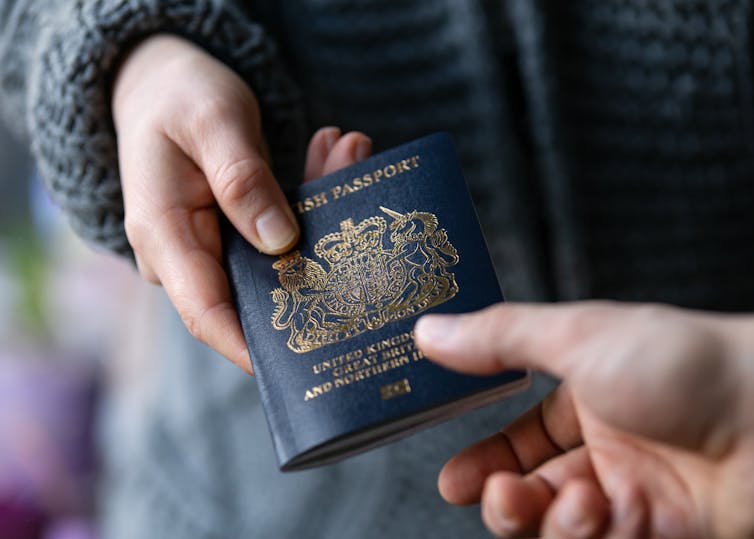
A hand giving a blue British passport to another hand
Earning Indefinite Leave to Remain does not guarantee British citizenship.
Max_555/Shutterstock

As Mahmood’s own words show, some may even be “barred from indefinite leave to remain entirely”. This would create a class of residents allowed to remain only on a lesser tier of permission, never able to settle or feel secure. Politically, this approach may even hand ammunition to Reform, which can claim that if people are not “good enough” to stay permanently, they should not be here at all.

It echoes temporary migration regimes such as those in Asia. In such schemes, migrants are deliberately kept in a state of conditionality – useful as workers, but never recognised as members of society.

Mahmood’s reform moves away from the idea of integration as a two-way process towards a top-down, one-way demand for assimilation: to be accepted, foreigners must become “like us” and behave better than “us”. Yet there is little clarity about who this “us” refers to, or what values it is meant to embody. Such ambiguity allows policymakers to set shifting and arbitrary standards of belonging.

Never good enough

Rather than building cohesion, such insecurity risks producing the opposite: disenfranchisement among those left in limbo, and heightened suspicion among the wider public, who are encouraged to believe that migrants must continually prove themselves. Far from calming anxieties, this strategy risks fuelling them.

Research consistently shows that insecure legal status is one of the greatest barriers to social integration. It limits migrants’ ability to invest in housing, education and long-term community ties, while also feeding mistrust and exclusion.

The proposals also raise serious practical questions. How will a “high standard” of English be measured, and by whom? What counts as “giving back” to a community? Does working double shifts in a hospital carry the same weight as volunteering in a charity shop?

Those who cannot meet every test – because of illness, disability, insecure employment, caring responsibilities, or simply long hours that leave no time for volunteering – may find themselves waiting even longer for settlement, or excluded entirely.

Migrants already contribute in innumerable ways – through taxes, essential labour, caregiving and community life. Non-UK nationals make up 16% of the health and social care workforce, and more than a quarter of NHS doctors. During the pandemic, migrants were disproportionately represented in frontline “essential jobs” that kept the country running.

Experience also suggests that such conditions will be applied inconsistently, producing confusion, costly appeals and injustice. The UK immigration system already generates high rates of error.

For asylum applications submitted between 2019-2022, 54% of asylum appeals were upheld by the tribunal. Adding vague and subjective tests of “contribution” will only multiply these problems.

By shifting the goalposts on ILR, Labour turns integration into an endless exam. Belonging becomes a privilege for the few, rather than recognition of shared life and contribution over time. The cost will be borne not just by migrants but by their children and families – left in prolonged insecurity, unable to plan their futures.

The Conversation

Nando Sigona receives funding from UKRI/ Horizon Europe for “Improving the living and working conditions of irregularised migrant households in Europe” (I-CLAIM).

ref. Labour’s plan for migrants to ‘earn’ permanent residency turns belonging into an endless exam – https://theconversation.com/labours-plan-for-migrants-to-earn-permanent-residency-turns-belonging-into-an-endless-exam-266382

UK expands chemical castration pilot programme for sex offenders – but what are the risks?

Source: The Conversation – UK – By Daniel Kelly, Senior Lecturer in Biochemistry, Sheffield Hallam University

Honcharuk Andrii/Shutterstock.com

The UK government has announced plans to expand its trial of using drugs to reduce the libido of male sex offenders. The approach, often described as “chemical castration”, is controversial. But how does it work – and what are the risks?

Castration traditionally meant removing or disabling the testes, a man’s main source of testosterone, to blunt the hormone’s masculinising effects. Historically, this was done to create castrati – singers castrated before puberty to preserve their high voices – or eunuchs, often used in royal courts and religious institutions to dampen sexual desire.

Modern castration still has a medical role, particularly in prostate cancer. This disease is fuelled by testosterone, and lowering hormone levels can slow its growth. While surgical removal of the testes was once common, doctors now usually rely on drugs to block testosterone production instead – a method known as chemical castration.

Normally, testosterone is regulated by a feedback loop between the brain, pituitary gland and testes called the hypothalamic-pituitary-testicular axis. The brain signals the pituitary to release hormones that stimulate the testes. Once levels rise, the brain senses it and dials production back down.

Anti-androgen drugs disrupt this system, either by blocking testosterone’s effects or by shutting down the brain’s signals. Drugs such as medroxyprogesterone acetate and cyproterone acetate work by switching off the body’s testosterone supply.

Testosterone is central to libido. It acts on brain regions like the hypothalamus and limbic system, which help drive sexual thoughts, desire and arousal. Reducing testosterone can lower these urges, while also affecting physical aspects of sex, such as the ability to achieve and maintain an erection.

The government’s proposals include selective serotonin reuptake inhibitors (SSRIs), drugs more commonly prescribed for depression and anxiety. SSRIs increase serotonin in the brain, which can lift mood, but they also reduce sexual desire and performance as a side-effect by interfering with dopamine.

Dopamine is the brain’s main “reward” chemical, strongly linked to pleasure, motivation and sexual behaviour. Serotonin, on the other hand, tends to calm and regulate emotions, often dampening sexual drive. By boosting serotonin, SSRIs can tip this balance – reducing dopamine activity and lowering sexual interest.

When combined with anti-androgens, the two treatments can act on both hormonal and neurological pathways, blunting both the physical and psychological aspects of sex drive.

This dual approach has already been used in other countries. Poland introduced it as a mandatory punishment for certain offenders in 2009, while in south-west England it has been trialled on a voluntary basis, with “successful outcomes” reported.

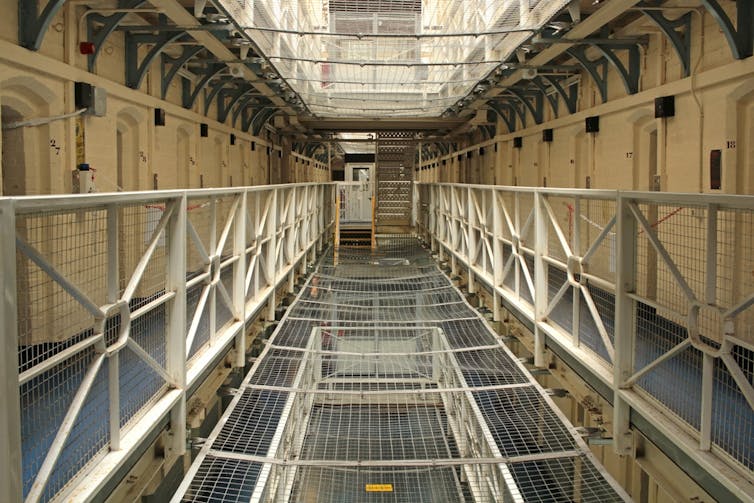
Prison cells.
The chemical castration scheme is voluntary.
Carol Tyers/Shutterstock.com

Not without risks

The UK’s current proposal is also voluntary, aimed at people struggling with persistent and distressing sexual thoughts that they do not want and actively seek help to control. But while it may reduce reoffending, the treatment is not without risks.

Testosterone plays a vital role in many aspects of health. Long-term suppression has been linked to early death, higher risk of heart attacks and strokes, type 2 diabetes, loss of muscle and bone strength, as well as possible links with Alzheimer’s and breast tissue growth in men.

There are also psychological risks. Testosterone influences mood, and its suppression has been associated with higher rates of depression and even suicidal thoughts and behaviour.

Chemical castration may well prove useful in preventing future sexual offences. But policymakers must weigh its benefits against serious health risks. And given the already high rates of mental health problems among offenders, there is concern that some may not fully understand the consequences of long-term testosterone suppression – physically, psychologically and socially.

The Conversation

Daniel Kelly does not work for, consult, own shares in or receive funding from any company or organisation that would benefit from this article, and has disclosed no relevant affiliations beyond their academic appointment.

ref. UK expands chemical castration pilot programme for sex offenders – but what are the risks? – https://theconversation.com/uk-expands-chemical-castration-pilot-programme-for-sex-offenders-but-what-are-the-risks-266026

Labour conference: Starmer takes aim at political opponents but ties his own future to Reform

Source: The Conversation – UK – By Alex Prior, Lecturer in Politics with International Relations, London South Bank University

At Labour’s 2025 conference, Starmer’s chosen political narrative has been to draw a line between himself and Nigel Farage, between Labour and Reform – a choice between “decency and decline”. Labour represents a progressive patriotism and national renewal – and Reform a backwards-facing “politics of grievance”.

Establishing a clear line that separates Reform from Labour (and from as much of the electorate as possible) is all the more urgent a task since the latest polling suggests 29% of voters choose Reform and only 21% Labour. Judging by how often Reform were mentioned in Starmer’s speech, in contrast with the Tories (about whom Starmer quipped, “Remember them?”), Labour appears to have accepted Reform as the main opposition.

While this decision is partly due to polling, it may also derive from a broader perception of Reform as Labour’s biggest existential threat. “The politics of grievance,” Starmer told the audience, clearly referring to Reform, “is the biggest threat we face.”

Starmer’s conference speech welded Labour’s narrative to Reform: for him, victory for the former must come at the expense of the latter. Starmer would probably avoid this terminology personally, but the narrative is very much “us versus them”. Talk of a “dividing line” may be putting it too mildly, after all. Starmer now speaks of a “a fight for the soul of our country”.

And what sort of country does the prime minister want the UK to be? On the morning of Starmer’s speech, his senior minister Darren Jones promised conference attendees that the PM would explain the “journey” that we are all about to go on. Lest we forget – as BBC chief political correspondent Henry Zeffman pointed out – we are only 14 months after an enormous Labour election win.

Keep your enemies close

Labour’s narrative is defined by Reform to a huge extent, not just in electoral strategy but in basic rhetoric. If you saw a transcript of a speech about “national renewal”, and heard a politician attack complacent adherence to a status quo of globalisation and free movement, you’d perhaps assume it came from the political right.

Starmer clearly wants to wrestle a narrative of “renewal”, “patriotism”, “national pride”, away from the right-wing and rebrand them as traditional Labour values. He attached related terms were to the NHS – and presented Reform as an immediate threat to that institution.

It is significant that, for all the abstract talk of a struggle for the soul of the country, the antagonists were specific. A left-right struggle was done away with for a battle on a different front. Starmer took aim at “snake oil merchants on the right, and on the left”, fully aware that threats to his premiership (and to Labour itself) exist on both sides of the political spectrum.

Starmer also argued that he’d heard “enough lectures from self-appointed champions of working people”. Though this was explicitly directed towards figures like former prime ministers Boris Johnson and Liz Truss, it can also be understood as a rebuke to some on the left.

This is, on some level, also a battle for the working class – and class was explicitly mentioned many times. Starmer said he made no apology if his plans “lean towards the working class” and stated that too often, people have been overlooked and ignored by politicians specifically because of their class.

In the past, Starmer has drawn on his own life story when talking about class, but this time pulled away from that, sometimes for comic effect, for example saying that the audience probably already knew what his father did for a living. This was very much a speech about the party’s future, and the country’s future, not about Starmer’s past.

One of the principles of good storytelling is knowing your audience. It is all the more significant that the Labour conference has not been the jubilant atmosphere we might have expected for a party so recently elected to government. Starmer knew that he had to unite the party around a common cause, and in the face of a common threat. We now know exactly who, and what, that is.

The Conversation

Alex Prior does not work for, consult, own shares in or receive funding from any company or organisation that would benefit from this article, and has disclosed no relevant affiliations beyond their academic appointment.

ref. Labour conference: Starmer takes aim at political opponents but ties his own future to Reform – https://theconversation.com/labour-conference-starmer-takes-aim-at-political-opponents-but-ties-his-own-future-to-reform-266003

As mining returns to Cornwall, lithium ambitions tussle with local heritage

Source: The Conversation – UK – By Jamie Hinch, PhD Candidate in Geography and the Environment, University of Oxford

Two remnants of Cornwall’s mining heritage, Flatty and Pointy loom over the village of St Dennis. Jamie Hinch, CC BY-NC-ND

The woman’s eyes blazed as I scanned the feedback form she was showing me. “UN-BELIEVE-ABLE”, read her last word in the form’s final section. It was underlined. An incensed crescendo stabbed and dragged across the page. “Flatty and Pointy are part of us. How could they think about destroying them?” she said, shaking her head in disbelief.

She, like me, had received the form at Cornish Lithium’s recent community consultation. This consultation provided updated details of the mineral exploration company’s plans to reopen Trelavour Pit, a former China clay mine at the top of the Cornish village of St Dennis.

Once mined for kaolin, this time, a new “white gold” is being extracted. Lithium is a critical mineral for the green transition, with demand expected to triple over the next decade due to the increasing electrification of the energy system and the electric vehicles sector.

In west Cornwall, Cornish Lithium are pioneering the mining of lithium from geothermal waters. Pumped from deep in the granite below, the company plans to use a technique known as direct lithium extraction to extract the lithium dissolved in the water, while also capturing the heat for geothermal energy.

Meanwhile, in mid-Cornwall’s Clay Country, Cornish Lithium is proposing more conventional hard rock mining in an existing open pit. However, in revealing the size of the expanded Trelavour Pit, the consultation confirmed the fears of many people in St Dennis: “To enable the proposed development of the site and deliver the economic benefits for Cornwall, these sky tips will need to be removed.”

quarry pit, mound in background, blue sky
A remnant of historic mining known as Pointy, viewed from the inside of Trelavour pit, Cornwall.
Jamie Hinch, CC BY-NC-ND

Sky tips are the sandy waste mounds formed by the China clay industry. But they are heritage as much as waste. Part of the “Cornish Alps”, the sky tips affectionately known as “Flatty” and “Pointy” are emblems for St Dennis, having loomed above the village since the 19th century.

These sky tips have also loomed over my PhD research, which looks at how local communities are experiencing the UK’s new dawn of mining. As the woman’s reaction exemplifies, strong sentiments attached to Flatty and Pointy mean their future is at the core of local responses to the Trelavour Lithium Project. They had been a source of speculation and contention throughout the eight months I lived in St Dennis in 2024.

Outside of the village, critical minerals are the subject of long overdue excitement. As the UK government prepares to release its new critical minerals strategy, there’s renewed enthusiasm for domestic exploration projects for critical minerals such as lithium, tin and tungsten.

Domestic extraction is increasingly considered by western nations as essential for the security and sustainability of mineral supply chains. The return or reshoring of mining to the UK also promises jobs in regions experiencing the decline of employment opportunities through the loss of industry, including Cornwall’s clay country.

As Cornish Lithium highlights, 300 jobs will be created over the Trelavour Lithium Project’s 20-year operation, plus 800 during the construction phase.

Job creation is appreciated in St Dennis, as is Cornish Lithium’s community fund which provides financial support for the vibrant community groups and initiatives in the area. While I lived in the village, locals often lamented the decline of the clay industry, once the primary employer and centre of the community.

This is one of Cornwall’s most deprived areas. Among some, I found a tempered optimism that lithium could rejuvenate the village.

Yet, it is Flatty and Pointy tempering this optimism. While the Clay Country has long been a shifting landscape of pits and tips, blasting and collapsing hills, and villages coming and going, Flatty and Pointy have seemingly transcended this dynamism. In St Dennis residents’ living memory, they have always been there.

mound of land in background, houses and street in cornish village
The sky tip ‘Flatty’, visible from St Dennis, Cornwall.
Jamie Hinch, CC BY-NC-ND

For some, the sky tips are dangerous, unsolicited waste. For others, they are gatekeepers to a valuable lithium resource. But in St Dennis, Flatty and Pointy represent unprotected heritage, iconic monuments, access to nature, and a wild, unruly playground. They may not be natural, but they’ve become naturalised within this clayscape as a much-loved landmark.

Yet, not removing the sky tips would present an “ongoing safety risk and make the project unviable”, Cornish Lithium explain. This justification makes sense.

But so too does the injustice felt by many in this village where “all the shit gets dumped in St Dennis” is an oft-repeated, ironic slogan. Lithium mining certainly presents opportunities, but with the loss of Flatty and Pointy, locals worry that it might contribute to this area’s demise too.

The hype for reshoring critical minerals extraction cannot wash over it’s very real consequences for local communities and landscapes. These need not be negative by default. If the mourning period for Flatty and Pointy can be sensitively navigated, a new, more sustainable, mining industry can be reinvigorated in tandem with local communities.


Don’t have time to read about climate change as much as you’d like?

Get a weekly roundup in your inbox instead. Every Wednesday, The Conversation’s environment editor writes Imagine, a short email that goes a little deeper into just one climate issue. Join the 45,000+ readers who’ve subscribed so far.


The Conversation

Jamie Hinch receives funding from the Economic and Social Research Council’s Grand Union Doctoral Training Partnership.

ref. As mining returns to Cornwall, lithium ambitions tussle with local heritage – https://theconversation.com/as-mining-returns-to-cornwall-lithium-ambitions-tussle-with-local-heritage-260525

A new exhibition explores John le Carré’s writing process and what it says about his political conscience

Source: The Conversation – UK – By Jessica Douthwaite, Historian and curator, University of Oxford

To what do we owe our conscience? John le Carré once stated that all his fictional characters were, one way or another, navigating a world where duty to self is not necessarily duty to society.

A new exhibition at the Bodleian Library in Oxford explores John le Carré’s conscience – his personal, political and professional visions. Taking a global angle, the exhibition draws on an abundance of archival material bequeathed to the Bodleian Library special collections and made available to researchers, of whom I am one of the first.

The exhibition, which I curated with Professor of Criminology Federico Varese, takes le Carré’s methodology as a starting point, exploring how he built fictions from real events, people and places. Of the nine novels chosen for this exhibition, each sits within a broader global context and each – whether implicitly or explicitly – pursues a political or social debate.


Read more:
John Le Carré: authentic spy fiction that wrote the wrongs of post-war British intelligence


Reading le Carré towards the end of his career it’s hard to believe that he was once viewed as a mouthpiece of the British establishment: the upper class, Oxbridge-educated, writerly former spy. And yet, many fondly remember him in nostalgic sepia tones that hark back to an era of plummy post-war accents, tweed suits and quintessentially British (poorly-executed) spy manoeuvres.

However, as he aged, he was increasingly criticised for being too leftwing and outspoken. This was especially the case with Donald Trump’s first presidency and the Brexit referendum.

Le Carré’s privileged position as one of the UK’s best-known, most profitable spy authors made him a ripe target for criticism. Also, with increased publicising of his real past as a spy, working for both MI5 and MI6, came accusations of hypocrisy.

Despite his misdemeanours, le Carré has always questioned how global systems and structures facilitate immorality, profit the richest, exploit the poorest, promote self-interest, and destroy the liberties that are supposed to constitute a “free” society.

This exhibition showcases items and ephemera that have never been on public display. Visitors can see doodles and notes that reveal the inception of his characters and plots, and last minute amendments that chime with the designs of his book covers. Through photography, field notes, handwritten drafts, correspondence, sketches and illustrations it charts le Carré’s life and times through his practices.

Many have speculated on how his own experiences of betrayal, deceit and secrecy fuelled the imagined worlds of his novels. Yet, beyond those interpretations, while curating this exhibition, I realised that le Carré’s method embodied the political points he wanted to make. His worldview is borne out in the idiosyncrasies of his factual research, acute observations, obsession with accuracy, compulsion to travel and interest in the humans behind the news events.


Read more:
John le Carré’s archivist: papers reveal a painstaking literary craftsman


Le Carré embraced ambiguity: tension caused by ideological, political and romantic conflict was at the heart of the interactions between his characters. This blurring of moral lines was produced in part from the research that he did with expert collaborators. These experts were people who may not have agreed with each other, but through whom le Carré chose to accumulate and amalgamate knowledge in the lead up to drafting his novels.

His network comprised diverse informants, from corporate whistleblowers to humanitarian aid workers. Such breadth of intelligence, gave le Carré an unrivalled insight into the contentions and discord produced by topics like healthcare in the or war developing countries in Africa, Asia and Latin America.

Weaving real life events with fantasy, le Carré gave equal weight to academic expertise and ordinary experience. Such an approach suggests that to an extent the realities of everyday life mattered more than theory.

His emphasis on interviewing people who knew more than him allowed their stories to reach a much larger audience. He made field trips to experience events and cultures himself. Travel was an exercise in humility, exposing gaps in his knowledge. The act of sharing his work with people for their thoughts and criticism was similarly humbling. Le Carré was glad to be told a description was wrong, a detail inaccurate or a dialogue phoney. He strove for credibility because it underscored the realities of his themes.

The integrity of le Carré’s writing approach was always consistent with his eye for immorality, injustice and lawlessness. Does it matter, then, that with age le Carré became progressively more passionate about the issues he deemed most threatening to global stability: health inequalities, financial transparency, or ethical resource mining, for example?


Read more:
John le Carré, MI6 and the fact and fiction of British secret intelligence


In 2003, le Carré marched with thousands of protestors against the British government’s decision to support the invasion of Iraq and wrote a polemical article in The Times decrying a new era of paranoid American warfare. For some time after the invasion of Afghanistan in 2004, le Carré even refused to visit the United States.

In a memo written around the same time, le Carré jotted down his thoughts on the purpose of a “political novel”, conversely, he wrote, a “non-political novel accepts the status quo”. Though he was thinking specifically of the contemporary moment of America’s foreign affairs, the status quo has always been under attack in his novels; so, in a sense they have all been political.

John le Carré: Tradecraft is open at The Bodleian Library in Oxford from October 1 2025 to April 6 2026


Looking for something good? Cut through the noise with a carefully curated selection of the latest releases, live events and exhibitions, straight to your inbox every fortnight, on Fridays. Sign up here.


The Conversation

Jessica Douthwaite received funding from the AHRC from 2014-2017 and 2021-2024.

ref. A new exhibition explores John le Carré’s writing process and what it says about his political conscience – https://theconversation.com/a-new-exhibition-explores-john-le-carres-writing-process-and-what-it-says-about-his-political-conscience-264927

Calm in a can? Here’s what the evidence says about the chill-out drink craze

Source: The Conversation – UK – By Dipa Kamdar, Senior Lecturer in Pharmacy Practice, Kingston University

Studio Romantic/Shutterstock

In a world that rarely slows down, a new wave of “functional beverages” is promising to help us do exactly that. So-called “chill-out drinks”, marketed as natural stress relievers, are appearing in supermarkets and online stores as a calming alternative to caffeinated energy drinks or alcohol. But do they work and are they safe?

These drinks typically combine herbal extracts, amino acids and adaptogens – compounds believed to help the body cope with stress. Popular ingredients include L-theanine, a naturally occurring amino acid in green tea, ashwagandha, lion’s mane mushroom and CBD (cannabidiol). Each has a different scientific story.

L-theanine has been shown to promote relaxation and reduce stress without causing drowsiness. Research suggests it influences brain chemicals such as serotonin and dopamine while lowering cortisol, the body’s primary stress hormone, creating a sense of calm that doesn’t blunt alertness.

Magnesium, a mineral essential for healthy heart and brain function, has also been linked to better sleep and reduced insomnia. Studies indicate that it supports melatonin production and binds to Gaba receptors, which help quiet nerve activity and promote relaxation. Low magnesium levels have been associated with a higher risk of depression, and several trials hint that supplementation may ease depressive symptoms, though more research is needed.

Ashwagandha, a traditional ayurvedic herb, has been shown in clinical trials to lower cortisol and reduce anxiety, though long-term safety data remain limited. The amounts used in those studies are also higher than the doses typically found in ready-to-drink products.

Lion’s mane, a mushroom native to east Asia, has demonstrated stress-reducing effects in small clinical studies, but the evidence base is still relatively slim.

Another popular ingredient, CBD, the non-psychoactive compound derived from cannabis, has shown early promise in reducing anxiety and stress scores compared with placebo, although large, high-quality trials are still lacking.

Part of the appeal of chill-out drinks is their branding. They present a natural, non-intoxicating way to unwind; designed for regular use without the crash of caffeine or the fog of alcohol. For young professionals or anyone seeking a midday mental reset, the idea of cracking open a can of calm can be tempting. And sometimes the ritual matters as much as the recipe: the very act of slowing down to enjoy a drink can create its own sense of pause.


Read more:
Why do smart people get hooked on wellness trends? Personality traits may play a role


Despite their wholesome image, these beverages are not risk-free. Herbal compounds can interact with prescription medicines or cause side-effects, especially when consumed in high doses or alongside other supplements.

Ashwagandha can interfere with thyroid medications and immunosuppressants. CBD may alter liver enzyme activity and interact with drugs such as antidepressants.

High intakes of magnesium can lead to diarrhoea and may clash with certain antibiotics or osteoporosis medicines. Lion’s mane appears to be well tolerated so far, but researchers still know little about its long-term effects.

Another concern is quality control. The functional beverage market is only lightly regulated, so the potency and purity of ingredients can vary considerably from brand to brand. That’s a particular worry for people who are pregnant, breastfeeding or managing chronic health conditions, and it underscores the importance of checking labels and seeking medical advice before making chill-out drinks part of a daily routine.


Read more:
Do wellness patches work? How to tell the good from the bad


A can of calm may offer a brief sense of relief, but these drinks are no substitute for professional mental health care. Chronic anxiety, depression or ongoing sleep problems require proper diagnosis and treatment. While chill-out drinks might help take the edge off a hectic day, they cannot address the underlying causes of stress.

These beverages tap into a broader wellness trend that reflects our collective desire to slow down and feel better. Their ingredients show some promise and, when used mindfully and in moderation, they may play a small part in managing everyday stress. Just don’t mistake them for a cure-all: a chilled drink can be a pleasant pause, but lasting calm still depends on the habits and support systems that lie beyond the can.

The Conversation

Dipa Kamdar does not work for, consult, own shares in or receive funding from any company or organisation that would benefit from this article, and has disclosed no relevant affiliations beyond their academic appointment.

ref. Calm in a can? Here’s what the evidence says about the chill-out drink craze – https://theconversation.com/calm-in-a-can-heres-what-the-evidence-says-about-the-chill-out-drink-craze-263934

La taxe Zucman au défi des contraintes économiques et juridiques

Source: The Conversation – in French – By Éric Pichet, Professeur et directeur du Mastère Spécialisé Patrimoine et Immobilier, Kedge Business School

Taxer les très hauts patrimoines pour assurer une meilleure équité de l’effort fiscal, tout le monde devrait être pour. Mais ce n’est pas parce qu’une mesure semble juste, qu’elle sera aussi efficace.


Pour réduire le déficit budgétaire du pays, le plus élevé de la zone euro, mais surtout lutter contre les inégalités de patrimoine en France, l’Assemblée nationale a adopté, le 20 février 2025, un impôt minimal annuel de 2 % sur le patrimoine global (y compris les biens professionnels) des quelque 3 800 « centimillionnaires », ces foyers fiscaux possédant plus de 100 millions d’euros. Les députés favorables au texte ont sans doute été encouragés en cela par un écrasant soutien des électeurs, qui plébiscitent la mesure à plus de 86 %.

Accroissement des inégalités patrimoniales

Cette taxe, aujourd’hui bloquée, car rejetée par le Sénat le 12 juin dernier, a été imaginée par l’économiste franco-américain Gabriel Zucman à partir de ses travaux sur l’évolution des patrimoines aboutissant à un constat incontestable : les inégalités de patrimoine s’accroissent dans les pays riches mais aussi en France.

En outre, les inégalités de patrimoine sont – et ont toujours été – plus fortes que celles des revenus puisque les 10 % les plus riches détiennent 54 % de la richesse contre 25 % des revenus.

La nature de la taxe Zucman

Concrètement, l’Assemblée nationale a adopté la création d’un impôt plancher sur la fortune (IPF), dès le 1er janvier 2026, de 2 % par an sur le patrimoine des foyers fiscaux (au sens de l’ISF, donc hors enfants majeurs) dont le patrimoine net de certaines dettes est supérieur à 100 millions d’euros, soit les 0,01 % des foyers les plus riches, ou environ 3 800 ménages, alors que l’impôt sur la fortune immobilière (IFI) concernait 186 000 ménages en 2024.


À lire aussi :
Les alternatives à l’impôt sur la fortune


La taxe Zucman reprend une bonne partie des principes de l’impôt de solidarité sur la fortune, l’ISF, qui était lui-même aligné sur les règles applicables aux droits de succession, mais s’en écarte par trois nouveautés cruciales. En premier lieu, la base taxable est considérablement élargie à l’ensemble des actifs, y compris les biens professionnels. En second lieu, cet impôt sur le patrimoine ne prévoit aucun plafonnement en fonction du revenu du contribuable. Enfin, il est assorti d’une exit tax puisqu’il continuera à être perçu pendant les cinq années qui suivent une expatriation de l’assujetti.

Une taxe rentable ?

Les soutiens de la taxe Zucman et de la loi qui en découle attendent un rendement de l’ordre de 15 à 25 milliards d’euros par an, calculé sur le montant total global des fortunes concernées. Bien entendu, cette estimation ne prend pas en compte le risque d’une expatriation des contribuables que M. Zucman estime marginal.

La proposition de loi a d’ores et déjà provoqué une levée de boucliers, notamment des entrepreneurs de la French Tech, qui seraient bien incapables de payer 2 % sur la valorisation de leurs start-ups. Ce mouvement rappelle celui des « pigeons », ces entrepreneurs qui avaient protesté avec véhémence contre la loi de finances pour 2013 décidée par François Hollande, lors de son accession à l’Élysée en 2012, et qui alourdissait fortement l’imposition des plus-values. L’ampleur de la contestation avait finalement abouti à une modification substantielle et rétroactive de la réforme. Signalons la tribune – très minoritaire – signée par trois entrepreneurs favorables à cette taxe ou, encore, la position tout en équilibre d’Arthur Mensch, le fondateur et dirigeant de Mistral, qui semble critiquer le mécanisme prévu de la taxe Zucman, tout en reconnaissant qu’une solution doit être trouvée pour remettre un peu d’égalité entre les citoyens.

La taxe Zucman fait également l’objet de vifs débats chez les économistes. Si ses partisans soulignent la nécessaire réduction des inégalités et un surcroît de recettes fiscales bienvenu aujourd’hui, ses détracteurs s’inquiètent d’une baisse des investissements et in fine d’un appauvrissement du pays.

Dans un article publié dans la Revue de droit fiscal, du 5 avril 2007,, j’avais analysé les conséquences économiques de l’ISF.

À partir de données officielles publiées par Bercy, j’avais constaté, sans avoir été sérieusement contesté, une baisse du rendement de l’ISF qui ne pouvait s’expliquer que par une vague d’expatriation. Depuis, il existe un consensus des chercheurs sur l’existence de ces départs, mais un débat des plus vifs sur son ampleur. Une étude récente du conseil d’analyse économique tend à minorer le phénomène d’expatriation et son impact budgétaire et économique. Le champ de cette dernière étude est circonscrit aux années 2012-2017 et, surtout, ses auteurs ont mesuré les départs des plus hauts revenus du patrimoine, et non les départs des plus riches (ils n’auraient donc pas pu intégrer les dirigeants des start-ups fortement valorisées, par exemple).

Pour ma part, j’évaluais la fuite légale des capitaux à l’étranger depuis la création de l’ISF, en 1989, à environ 200 milliards d’euros et estimais que le manque à gagner en recettes fiscales était d’environ 7 milliards d’euros par an, soit près du double de son rapport. En conclusion, dans un monde ouvert, l’ISF appauvrissait le pays et entraînait même un transfert de la charge fiscale des riches assujettis, qui quittent la France vers tous les autres contribuables à l’exact opposé de la justice fiscale. Ces estimations ont depuis été corroborées et même amplifiées par une étude de l’institut Rexecode, parue en 2017, qui estimait que le PIB avait perdu, du fait des expatriations, 45 milliards d’euros en 2017, soit une perte de prélèvements obligatoires de 20 milliards par an.

Le naufrage de la taxe sur les mégayachts

Encore faut-il préciser que ces études ne concernaient que les quelque 360 000 assujettis à l’ISF d’avant sa suppression en 2018, c’est-à-dire un type de contribuables fondamentalement différents des 1 800 ultrariches concernés par la taxe Zucman qui peuvent envisager beaucoup plus efficacement un départ à l’étranger.

C’est pourquoi il est intéressant d’étudier le rendement de la taxe sur les mégayachts instituée par la loi de finances pour 2018. Cette taxe était censée rapporter dix millions d’euros par an. Elle n’a collecté finalement que 135 000 euros en 2023 et 60 000 euros en 2024. Aux dernières nouvelles, seuls cinq mégayachts sont éligibles à la taxe…

Regain de concurrence fiscale entre les pays

Tout comme l’impôt sur la fortune, qui a progressivement disparu des systèmes fiscaux européens des pays riches et dont Gabriel Zucman a l’honnêteté de reconnaître que « dans l’ensemble, ces impôts avaient été un échec », les pays qui ont récemment durci l’imposition des ultrariches font face à un flux de départs. C’est le cas de la Norvège, un des rares États à avoir conservé un impôt sur la fortune et qui l’avait augmenté à 1,1 %, tout en relevant l’imposition des dividendes en 2022.

La mesure, qui devait rapporter 141 millions d’euros, s’est traduite par une perte de 433 millions d’euros et par la fuite des capitaux, principalement en Suisse, estimée à 52 milliards d’euros. À tel point que ses voisins suédois et finlandais – un temps intéressés – en ont abandonné l’idée. Plus près de nous, le Royaume-Uni a supprimé, le 6 avril 2025, le régime de « non-domiciled » (ou, « non dom »), qui datait de George III (1799) et qui imposait forfaitairement les revenus des étrangers installés sur l’île, entraînant dès son annonce un fort mouvement de départ des ultrariches, comme l’industriel Lakshmi Mittal, vers Dubai, Monaco et Milan.

Au moment où la France envisage de durcir la taxation des centimillionnaires, des pays européens attractifs leur font les yeux doux. C’est le cas de l’Italie qui offre aux nouveaux résidents un forfait annuel tous impôts confondus de 200 000 euros (plus 25 000 euros par membre supplémentaire du foyer, conjoint compris) pendant quinze ans, ce qui avait déclenché les foudres de l’encore premier ministre François Bayrou contre Mme Meloni.

Le Figaro, 2025.

On notera d’ailleurs que Portugal, Italie, Grèce et Espagne ont tous cherché, à l’occasion de leur plan de redressement des finances publiques lancé en 2011, à attirer les grandes fortunes par des avantages fiscaux exorbitants du droit commun. La palme revient à la Grèce qui, moyennant un investissement minimal de 500 000 euros, offre pendant quinze ans aux nouveaux résidents qui s’acquittent d’un forfait annuel de 100 000 euros, une exonération de tous leurs revenus étrangers et des droits de succession de leur patrimoine situé hors du pays.

Un obstacle constitutionnel majeur

À supposer que la taxe Zucman, qui n’a été votée que par 116 voix des 577 députés, passe l’épreuve du Sénat et soit définitivement adoptée, ce qui est très loin d’être acquis, elle devra encore passer sous les fourches caudines du Conseil constitutionnel qui sera bien sûr saisi par ses opposants. Or, sa jurisprudence récente n’est pas du tout favorable à la taxe.

En effet, dans sa décision du 9 août 2012 relative à la loi de finances rectificative pour 2012, il précise que le législateur ne saurait établir un barème de l’impôt de solidarité sur la fortune sans l’assortir d’un dispositif de plafonnement, ou produisant des effets équivalents destinés à éviter une rupture caractérisée de l’égalité devant les charges publiques. Enfin, dans sa décision du 29 décembre 2012 relative à la loi de finances pour 2013, le Conseil a précisé que le plafonnement ne peut prendre en compte que les revenus réalisés et disponibles, une solution toujours confirmée jusqu’à présent.

Compte tenu de ces obstacles politiques, économiques et juridiques, il est hautement improbable que la taxe Zucman voie le jour en France sans un accord mondial – encore plus improbable – dans les prochaines années. Pour répondre à la demande croissante de réduction des inégalités tant patrimoniales que de revenus, un gouvernement minoritaire peut être tenté de rétablir le symbole fort qu’est l’ISF, mais cela ne résoudra en rien les deux défis les plus urgents de Bercy : la réduction du déficit et de la dette publique.

The Conversation

Éric Pichet ne travaille pas, ne conseille pas, ne possède pas de parts, ne reçoit pas de fonds d’une organisation qui pourrait tirer profit de cet article, et n’a déclaré aucune autre affiliation que son organisme de recherche.

ref. La taxe Zucman au défi des contraintes économiques et juridiques – https://theconversation.com/la-taxe-zucman-au-defi-des-contraintes-economiques-et-juridiques-266071

Quand la Deutsche Bahn déraille, faut-il craindre pour le rail français ?

Source: The Conversation – in French – By Mathis Navard, Docteur en Sciences de l’information et communication (ISI), Université de Poitiers, Université de Poitiers

Longtemps réputée pour sa fiabilité, la compagnie ferroviaire allemande Deustche Bahn connaît une crise historique : infrastructures obsolètes, ponctualité en chute libre, trains supprimés… Jamais nos voisins germaniques n’avaient connu une telle situation. La France doit elle aussi faire face à des défis similaires. Sommes-nous en train d’emprunter la même voie ?

Cet été, peut-être avez-vous pris le train en Allemagne pour vos vacances. Ou peut-être empruntez-vous le TGV reliant Paris à Strasbourg, qui accuse parfois jusqu’à 6 heures de retard ? Dans ces cas, il est probable que vous ayez subi des perturbations durant votre voyage sur le réseau de la Deutsche Bahn (DB), l’équivalent germanique de la SNCF.

L’Allemagne a beau disposer du plus important réseau européen avec 34 000 kilomètres de voies ferrées, la situation n’en est pas moins alarmante. « La Deutsche Bahn traverse sa plus grande crise depuis 30 ans », reconnaît sans détour le PDG de l’entreprise, Richard Lutz. L’homme est le premier à faire les frais de cette dégradation de service. Le 14 août, le ministre des Transports a fait connaître son intention de le limoger avant la fin de son contrat, évoquant une “situation dramatique”.

En effet, entre l’arrivée de M. Lutz en 2017 et son départ, la Deutsche Bahn a connu certaines de ses pires performances : la ponctualité des trains longue distance est tombée de 78,5 % à seulement 62,5 % en 2024, son plus bas niveau depuis la réforme ferroviaire qui a suivi la réunification. Le ministre allemand des Transports a annoncé, le lundi 22 septembre 2025, la nomination de Evelyn Palla pour le remplacer.

Que se passe-t-il chez nos voisins germaniques ? Pour le comprendre, il faut remonter trois décennies en arrière, dans le contexte de la réunification des deux Allemagnes.

La réunification des deux Allemagne, racine de la crise actuelle

À l’Est, le réseau est alors vétuste. À l’Ouest, il est surendetté. La réforme ferroviaire du rail allemand de 1994 assainit la situation financière – l’État fédéral éponge la dette colossale accumulée jusque-là (plus de 30 milliards d’euros de dettes) – et créée la DB. Son capital est détenu à 100 % par l’État. Il s’agit donc d’une entreprise publique dont le fonctionnement est calqué sur celui du secteur privé.

Mais quête de rentabilité et service public ne vont pas forcément de pair. D’un côté, les infrastructures ferroviaires ont été modernisées et le taux de ponctualité atteint 90 % dans les années 2000. Mais de l’autre, 5 400 kilomètres de ligne ont été fermés – soit un sixième du réseau – et une sombre histoire d’espionnage de salariés a fait couler beaucoup d’encre.

Parallèlement à cela, la réduction des coûts de maintenance et de personnel provoque des problèmes en cascade : les pannes se multiplient, au même titre que les retards et les annulations de trains.

L’État prévoyait de se désengager progressivement de la DB avec la privatisation au moins partielle comme objectif. Mais la crise financière de 2008 est venue interrompre ce processus. Pour ne rien arranger, les problèmes techniques s’accumulent. En 2009, la moitié des trains est supprimée en raison de leur vétusté. La DB doit verser des indemnités à l’État. Au même moment, Rüdiger Grube — ancien président du conseil d’administration du groupe aéronautique et spatial EADS — est nommé PDG de l’entreprise.

Infrastructures vétustes et ponctualité en chute libre

Cette crise n’est donc pas nouvelle, mais elle ne cesse de s’aggraver. En 2015, le plan Avenir du rail promettait déjà d’assainir la situation. Il n’aura pas été suffisant.

L’Allemagne, jadis réputée pour sa ponctualité, n’a eu que 62,5 % de ses trains longue distance à l’heure en 2024, soit une baisse de 1,5 % par rapport à 2023. Et c’est sans compter sur les nombreuses annulations et pannes, en forte hausse en raison de l’absence d’actions préventives et de solutions de remplacement. Pour améliorer les statistiques, il est d’ailleurs devenu plus commode de supprimer certaines circulations que de les déclarer en retard.

Le ministre fédéral des transports Patrick Schnieder (CDU) a fixé des objectifs forts en matière de ponctualité pour le trafic longue distance. D’ici fin 2029, elle devra atteindre au moins 70 %. L’objectif précédent prévoyait déjà ce taux pour 2026.

Trains supprimés en gare de Kassel-Wilhelmshöhe
Trains supprimés en gare de Kassel-Wilhelmshöhe (Hesse).
Fabian318, CC BY-SA

La direction de la DB met en avant la vétusté des infrastructures ferroviaires pour expliquer ces aléas. Cela n’est pas sans conséquence sur les pays voisins. Outre les difficultés rencontrées par les voyageurs du TGV Paris-Strasbourg, les chemins de fer fédéraux (CFF) suisses refusent désormais dans leurs gares tous les trains allemands ayant plus de 15 minutes de retard afin de maintenir leur légendaire ponctualité. Un système de navette géré par les CFF est alors mis en place.

Aide du fédéral et cure d’austérité

Sans surprise, les comptes de la DB ne sont pas bons. En 2024, l’entreprise a enregistré une perte de 1,8 milliard d’euros. Une amélioration d’un milliard d’euros par rapport à 2023 qui vient tout de même alimenter une conséquente dette de 32,6 milliards d’euros.

Seule note d’espoir, la fréquentation – principale source de revenus de la compagnie – a augmenté de 5,9 % l’an passé sur les trains régionaux. Cela s’explique en partie par le succès du Deutschlandticket qui permet de voyager en illimité sur ce réseau pour 58€ par mois. Le fret, quant à lui, recule de 3,2 %.

Face à l’ampleur du problème, la planche de salut ne peut venir que de l’État fédéral. Cela tombe bien. Un plan d’investissement national pour les transports de 500 milliards d’euros sur 12 ans vient d’être adopté par le parlement allemand.

D’ici à 2027, 45 milliards d’euros seront dédiés aux infrastructures ferroviaires, via un fonds notamment alimenté par une taxe sur les poids lourds. Nous restons cependant encore loin des 150 milliards d’investissements nécessaires estimés par l’actuel PDG de la DB.

L’entreprise a elle aussi décidé de faire sa part. Tout d’abord en recentrant ses activités sur le ferroviaire. En septembre dernier, elle a cédé pour 14,3 milliards d’euros le géant de la logistique Schenker. Il en a été de même pour l’entreprise européenne de transport public DB Arriva, marquant ainsi un coup d’arrêt à son internalisation.

En interne, 10 000 postes — essentiellement administratifs — devraient être supprimés d’ici 3 ans. Une filiale non lucrative intitulée DB InfraGO a également vu le jour pour moderniser le réseau ferroviaire et les gares. En 2024, durant sa première année de fonctionnement, 18,2 milliards d’euros ont été investis. Pour la première fois, le vieillissement des installations a pu être arrêté.

Une modernisation à marche forcée

Le bond est spectaculaire. L’Allemagne est passée de 115 euros par habitant dépensés en 2023 pour l’investissement dans le ferroviaire à 198 euros en 2024. Dans le même temps, la France a progressé de 51 euros par habitant à… 65 euros.

Et cela n’est sans doute qu’un début. Il y a quelques mois, la DB a adopté un vaste plan de rénovation des rails, des gares et des ponts. Il faut dire que le défi est immense, à une époque où le train doit lui aussi faire face aux conséquences de plus en plus importantes du changement climatique.

L’accident mortel survenu le 27 juillet dernier sur une petite ligne régionale du Bade-Wurtemberg, causé par un glissement de terrain, l’a tragiquement rappelé.

La France, prochaine sur la liste ?

La situation du ferroviaire allemand fait réagir dans de nombreux pays européens. À commencer par notre pays. Le PDG de la SNCF Jean-Pierre Farandou a d’ailleurs déclaré que la France pourrait suivre la même trajectoire si aucun moyen financier supplémentaire n’était alloué.

Certains indicateurs tricolores sont particulièrement inquiétants. C’est le cas par exemple de l’âge moyen de notre réseau ferré qui est âgé de 30 ans, contre 17 ans chez nos voisins germaniques. Cette situation est le fruit de choix politiques court-termistes qui ont conduit à prioriser le tout-TGV au détriment des lignes dites de “desserte fine du territoire”.

Des petites lignes qui – aujourd’hui encore – continuent de fermer, à rebours des injonctions climatiques à accélérer le report modal vers le ferroviaire et les autres solutions de mobilité bas carbone. Le 31 août dernier et après cent quarante-trois ans d’activité, la gare de Felletin accueillait son dernier TER en raison de la « suspension » de la ligne qui reliait la commune creusoise à son chef-lieu, Guéret. Une décision aussi forte que symbolique qui illustre concrètement le recul des services publics en milieu rural, nourrissant un sentiment d’abandon auprès de la population locale.

Parviendrons-nous à mettre fin à cette dynamique mortifère pour notre réseau ferré et notre territoire ? Avec un bénéfice record de 1,6 milliard d’euros en 2024 et une fréquentation en hausse pour la SNCF, il est encore temps d’agir. La réponse dépendra grandement des orientations décidées par la puissance publique.

Dans ses conclusions, la conférence de financement sur l’avenir des mobilités « Ambition France Transports » indique prévoir d’ajouter annuellement 1,5 milliard d’euros à compter de 2028 en faveur du ferroviaire. Un premier pas vers la bonne direction, mais qui doit en appeler d’autres si nous voulons éviter un scénario à l’allemande.

The Conversation

Mathis Navard ne travaille pas, ne conseille pas, ne possède pas de parts, ne reçoit pas de fonds d’une organisation qui pourrait tirer profit de cet article, et n’a déclaré aucune autre affiliation que son organisme de recherche.

ref. Quand la Deutsche Bahn déraille, faut-il craindre pour le rail français ? – https://theconversation.com/quand-la-deutsche-bahn-deraille-faut-il-craindre-pour-le-rail-francais-264703