Many US states are rethinking how students use cellphones − but digital tech still has a place in the classroom

Source: The Conversation – USA (2) – By Kui Xie, Dean of College of Education and Human Development, University of Missouri-Columbia

States including Michigan and Colorado are restricting the ways students can use digital devices in school. Jim Watson/AFP via Getty Images

Across the United States, more schools are implementing policies restricting cellphones as concerns about digital distraction, mental health and academic performance rise.

The scale of the issue is significant. According to a 2023 report from Common Sense Media, 97% of students between the ages of 11 and 17 use their cellphones at least once during the school day. These students spend a median of 43 minutes online each day during school hours. Social media, YouTube and gaming were the students’ top cellphone uses.

Schools have already begun taking action. Data from the National Center for Education Statistics published in 2025 shows that 77% of public schools ban cellphones during classes. Thirty-eight percent of schools have cellphone policies that restrict use outside of class as well – including during free periods, between classes or during extracurricular activities.

Policymakers in different states and educators in school districts across the country are putting into place a variety of solutions. Some rely on partial restrictions, while others enforce complete bans.

Many are still searching for the balance between technology access and minimizing distraction.

What is clear, however, is that cellphones have become one of the central issues shaping today’s classroom environment.

The role of technology in the classroom

As researchers and professors who study the integration of technology for teaching and learning – and who are also parents of school-aged children – we firmly believe that digital technologies are no longer optional add-ons. They have become indispensable in modern classrooms, acting as versatile instruments for instruction, collaboration and student engagement.

Take, for example, the ongoing shift from traditional paper textbooks to digital ones. This transformation has broadened access and created new opportunities for interactive, personalized learning. Abundant evidence demonstrates the positive effects of technology in supporting students’ engagement in class and their academic performance.

Students’ access to digital devices has improved significantly as schools across the United States continue investing in technology infrastructure. A 2023 report from the National Center for Education Statisitics indicates that 94% to 95% of public schools now provide devices to students who need them – although disparities exist between states.

A growing number of districts are adopting 1:1 initiatives, ensuring that every student has access to a personal device such as a laptop or tablet. These initiatives accelerated after the COVID-19 pandemic made clear the need for reliable access to learning technologies in schools for all students. They highlight the central role technology now plays in shaping everyday classroom instruction.

These technologies hold great educational potential. Yet, when not integrated thoughtfully and regulated effectively, they can inadvertently reduce focus and undermine learning.

Our recent systematic review on digital distraction in classrooms, which synthesized 26 empirical studies, finds three main drivers of distraction among students:

  • Technology-related factors included constant social networking, texting and cellphone addiction. These accounted for over half of the reported distractions.

  • Personal needs, such as entertainment, made up more than one-third.

  • Instructional environment, including classroom instruction that isn’t engaging, poor classroom management and difficult course content, accounted for the rest.

To address these challenges, the authors of the papers we reviewed suggested strategies such as teaching students how to control their own behavior and focus, silencing notifications, issuing clear device policies or banning devices.

The studies in our review also drew a clear distinction between school-provided and personally owned mobile devices. Devices provided by schools are typically equipped for instructional purposes, enhanced with stronger security and designed to restrict distracting uses. Personal devices are far less regulated and more prone to off-task use.

As schools increasingly provide devices designed for learning, the role of personal cellphones in classrooms becomes harder to justify as they present more risks of distraction than educational benefits.

Laws and policies regarding cellphone use

Several states in the U.S. have passed laws banning or restricting cellphone use in schools, with some notable differences.

States vary in how they define wireless communication devices. In Michigan, Senate Bill 234, passed in May 2025, describes a wireless communication device as an “electronic device capable of, but not limited to, text messaging, voice communication, entertainment, navigation, accessing the internet, or producing email.”

While most of the states have several technology types listed under wireless communication devices, a Colorado bill passed in May 2025 clearly identified that laptops and tablets did not fall under the list of restricted wireless communication devices.

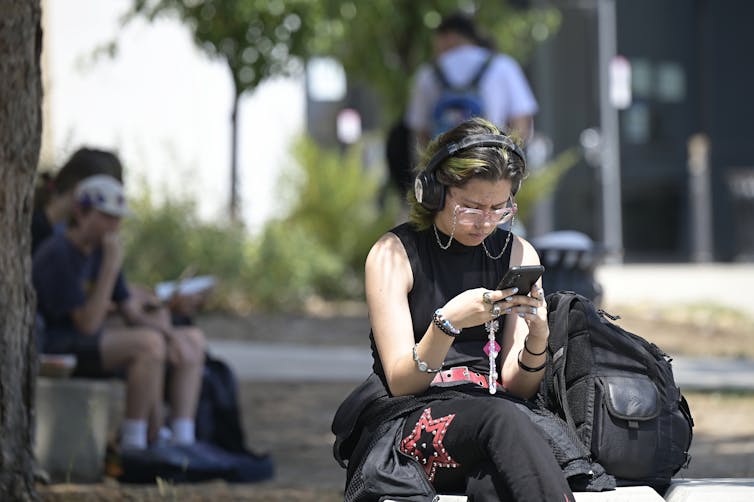
A white teen sits outside absorbed in her phone. She is wearing black clothing, glasses and headphones.
A high school student in Lafayette, Colo., checks her phone.
Hyoung Chang/The Denver Post via Getty Images

Most state laws don’t specify whether the bans apply to both personally owned devices and school-owned devices. One exception is the bill Missouri passed in July 2025, which clearly specifies its ban refers only to personal devices.

North Carolina made exceptions in a bill approved in July 2025, allowing students to use wireless communication devices for instructional purposes. Other exceptions in the North Carolina bill include an emergency, when students’ individual education programs call for it, and a documented medical condition.

In their bills, most states provide recommendations for school districts to create cellphone use policy for their students. To take one typical example, the policy for Wake County in North Carolina, one of the state’s largest school districts, specifically refers to personal wireless communication devices. For elementary and middle school students, they must be silenced and put away between morning and afternoon bells, either in a backpack or locker. For high school students, teachers may allow them to be used for lessons, but they must otherwise be silenced and put away during instructional time. They can be used on school buses with low volume and headphones.

The Conversation

The authors do not work for, consult, own shares in or receive funding from any company or organization that would benefit from this article, and have disclosed no relevant affiliations beyond their academic appointment.

ref. Many US states are rethinking how students use cellphones − but digital tech still has a place in the classroom – https://theconversation.com/many-us-states-are-rethinking-how-students-use-cellphones-but-digital-tech-still-has-a-place-in-the-classroom-256968

From ‘Frankenstein’ to ‘Dracula,’ exploring the dark world of death and the undead offers a reminder of our mortality

Source: The Conversation – USA (2) – By Molly Ryder Granatino, Teaching Assistant Professor, English department, University of Tennessee

Students consider their own mortality in a literature course on death and dying. iStock/Getty Images Plus

Spooky decorations of ghosts and skeletons will soon be returning to people’s doorsteps ahead of Halloween – but year-round, I am thinking about literary representations of death and dying.

I am not alone. For centuries, death has been a topic of fascination for authors and readers alike. My own research focuses on death in the Victorian era, a period of British literature extending from 1837 to 1901, but what is it about the subject of death more broadly that both attracts and repels?

When I had the chance to propose a special topics course in literature in fall 2024, I knew I wanted to craft a course that attempts to unpack why the topic of death is fascinating for people to both write and read about. Happily, my proposal was accepted, and I am currently teaching a course called “Death, Dying, and the Undead.”

What does the course explore?

Grave robbing, premature burial, murder, terror and grief are some of the topics explored through the study of poetry, short stories and novels.

We look at how authors write about death, from the visceral horror of dying in battle depicted by Wilfred Owen in his 1920 poem, “Dulce et Decorum Est,” to the devastating intimacy of loss in Edna St. Vincent Millay’s 1928 poem “Dirge Without Music” – and every death-related theme in between.

Students also explore themes of madness, mayhem and sudden death in 19th century Gothic and 20th century Southern Gothic short stories. In these stories, death is often figured as an interruption, an unexpected event that occurs when characters are busy doing other things.

It is futile to attempt to hide from death, a fact illustrated by Edgar Allan Poe in his 1842 short story “The Masque of the Red Death.” In this story, Prince Prospero, the prince of an unnamed region, tries to evade the “Red Death” by abandoning his people and isolating himself and other noblemen in a fortified abbey. But death finds them there – “And Darkness and Decay and the Red Death held illimitable dominion over all,” as the story goes.

Death is inevitable, but cannot always be anticipated. In Flannery O’Connor’s 1953 short story “A Good Man is Hard to Find,” an entire family is murdered by an escaped criminal called The Misfit in the midst of a mundane family road trip. As they are marched into the woods one by one for execution, their disbelief mirrors the reader’s: This can’t really be happening, can it?

Finally, we end the semester with novels about continued bodily animation after death – including Mary Shelley’s 1818 novel, “Frankenstein,” and Bram Stoker’s 1897 novel, “Dracula.” This unit is particularly interesting to my students majoring in forensic anthropology – meaning the recovery and examination of human remains. Some of these students spend time working at the University of Tennessee’s “body farm,” where they study donated human remains.

The students unite their understanding of inevitable bodily decay with literature that imagines the opposite – bodies that either don’t break down or can be reused. Class conversations here range from how bodies are treated after death to 19th century scientific advancements and how authors creatively imagine the possibility that a body could be reanimated after death.

A black-and-white drawing shows a person with a wide expression in their eyes sitting on what seems to be a skull
An illustration from the second edition of the horror story ‘Frankenstein’ was published in London in 1831.
Fototeca Gilardi/Getty Images

Why is this course relevant now?

As Halloween reminds people annually, everyone is going to die someday. This knowledge, paired with literature attempting to navigate the great unknown that yawns ahead, encourages students to reflect on mortality, personal values, different perspectives and how they want to live. As the poet and novelist D.H. Lawrence writes in his 1932 poem “The Ship of Death,” “We are dying, we are dying, we are all of us dying/and nothing will stay the death-flood rising within us.”

What’s a critical lesson from the course?

While an entire class dedicated to literary representations of death may appear morbid, a focus on death and dying provides an excellent jumping-off point for an exploration of what it means to be human, with all of our worries, hopes, longings and dreads. Ultimately, this dark and foreboding-sounding class is spirited and life-affirming.

A black-and-white photo shows a woman lying in a bed sleeping, while a man wearing a black jacket and white shirt leers over her.
Students in this course read the Gothic novel ‘Dracula,’ as depicted in the 1931 film.
Culture Club/Getty Images

What will the course prepare students to do?

This course prepares students to critically think about challenging subjects, like the literary portrayal of the death of a child or suicidal ideation. I facilitate the class, but the students’ incisive reading and observation drives the discussion. Students offer various interpretations and arguments informed by their own unique perspectives on loss, grief, memory and finite lifespans.

The class also prepares students to boldly tackle any literature assigned to them. Prior to each class session, students annotate the designated text. They mark it up with pens and pencils – or the digital equivalent – defining words, drawing in the margins, noting metaphors and themes.

By practicing close reading and annotating in this way, students gain confidence in engaging with a literary work and offering their own critical arguments in their written assignments.

Uncommon Courses is an occasional series from The Conversation U.S. highlighting unconventional approaches to teaching.

The Conversation

Molly Ryder Granatino does not work for, consult, own shares in or receive funding from any company or organization that would benefit from this article, and has disclosed no relevant affiliations beyond their academic appointment.

ref. From ‘Frankenstein’ to ‘Dracula,’ exploring the dark world of death and the undead offers a reminder of our mortality – https://theconversation.com/from-frankenstein-to-dracula-exploring-the-dark-world-of-death-and-the-undead-offers-a-reminder-of-our-mortality-265153

Many book bans could be judging titles mainly by their covers

Source: The Conversation – USA (2) – By Alex Wermer-Colan, Academic and Research Director, Loretta C. Duckworth Scholars Studio, Temple University Libraries, Temple University

A display at the Hoboken Public Library in Hoboken, N.J., features books that have been targeted or banned in other states. Ana Fernandez/AFP via Getty Images

Over the past decade, a growing movement to restrict access to books in public schools and libraries has spread across the country. Every year, there are hundreds of attempts to challenge or ban books, targeting thousands of titles.

According to the nonprofit free speech advocacy group PEN America, there have been nearly 16,000 book bans in U.S. public schools and libraries since 2021, a number not seen since the 1950s under McCarthyism. The actual number of bans likely is much higher, since not every book ban gets officially reported.

During the 2020s, book banning has become a viral phenomenon. Small, conservative nonprofits such as Moms for Liberty, founded in 2021, have developed and expanded their advocacy for book bans at the local, state and national levels. These groups position themselves as defenders of parental rights against obscenity in education, while interpreting “obscenity” broadly enough to include so-called “woke” ideologies.

And while not all efforts to ban books are successful, these groups have been extremely effective. For example, from July 2021 to June 2022 there were 2,532 instances of books being banned across 32 states, affecting 1,648 different books, according to the “Banned in the USA” report by PEN America.

In early 2023, we were part of a team that researched book bans enacted over the course of the 2021-2022 school year. We found that during this period, the books’ covers appeared just as likely to lead to a ban as the words on the page.

Targeting diversity

Many organizations work to protect books that depict the vibrancy of American culture, including PEN America, the American Library Association, the Authors Guild and the Digital Public Library of America. Their scholarship has consistently shown that the contemporary book banning movement is a transparent effort to suppress depictions of cultural, racial, sexual and gender diversity in public education.

Most media coverage has focused on frequently targeted books, such as George M. Johnson’s memoir “All Boys Aren’t Blue” or Maia Kobabe’s “Gender Queer.” Yet these works represent only a small percentage of the wide range of titles that are being banned.

Looking at the broader array of books challenged and banned during the 2021-2022 school year, our research showed that this organized effort has consistently targeted representations of minorities in children’s and young adult books, both fiction and nonfiction.

Table showing picture books titled 'I Am Jazz,' 'Pride,' and 'and Tango Makes Three.'
Many banned books have cover art that depicts racial, gender, cultural or other forms of diversity.
Kriti Baru, CC BY-ND

Judging books by their covers

Our research team purchased more than 1,600 books that PEN America had reported as challenged or banned in the 2021-2022 school year. We digitized physical copies and converted e-books to create a data set for scholarly analysis.

As we examined each book, clear patterns emerged. The vast majority of the books had been published since 2000. Nonfiction titles, which made up one-fourth of the total, were often written to help children engage with complex topics in age-appropriate ways.

For example, “It’s Perfectly Normal: Changing Bodies, Growing Up, Sex, and Sexual Health” featured illustrations and scientific language to teach children about their changing bodies. Another book, “Peaceful Fights for Equal Rights,” used lyrical writing and cut-paper collages to teach children about civil disobedience.

Other books seemed to be targeted for no discernible reason, beyond having narrators or protagonists who were children of color. Typically, these fictional stories explored uncontroversial topics. Examples include “Lola at the Library” and “Cece Loves Science.”

All of these books’ covers depicted racial, gender or sexual diversity. This made us wonder whether book banishers were simply judging books based on their cover art, rather than the content of their stories.

Who’s in the picture?

When we looked at the 1,648 books banned in the 2021-2022 school year, our qualitative analysis found that the book covers most often depicted women, people of color or LGBTQ identities. Over 80% of books targeted for bans included human figures, and roughly two-thirds of the books with figures on the cover featured nonwhite characters and characters who appear female. Even when book covers displayed white characters, one-third placed them beside people of color.

While 30% of banned books with figures on the cover featured only white characters, more than half of these – over 200 books – exhibited only characters who did not look conventionally male and highlighted feminist or LGBTQ topics and perspectives. Less than 10% – only 98 books – presented solely white, male characters on the cover. Of this group, over 10% still depicted some kind of romantic, same-sex relationship.

Based on the book cover designs alone, our research team determined that the vast majority of the books selected for banning explicitly represented racial, gender and sexual minorities in their cover art. The remainder typically focused on mental health issues, broadly speaking.

Across all the books we examined, the cover art consistently reflected the contents of the books. In addition, most of the banned books also contained language in their titles and summaries visible on the back cover that further signaled topics pertaining to issues of diversity.

While books banned in the U.S. include classics such as George Orwell’s “1984,” content focusing on race, sex and gender accounts for the largest share of banned titles.

A broader attack on libraries

Until 2025, book bans were enacted at the local and state levels. Now, however, the Trump administration is attacking public resources more generally, affecting not just youth but anyone who uses public libraries.

In January 2025, the U.S. Department of Education ended its role investigating book bans. For fiscal year 2026, the administration is proposing to eliminate the federal Institute of Museum and Library Services, which provides about US$211 million annually in grants and support for museums and libraries.

By monitoring and censoring the titles that libraries can carry, book bans ultimately serve to discredit these institutions’ authority and justify defunding them.

As the U.S. observes Banned Books Week from Oct. 5-11, 2025, we believe it is more vital than ever for the public to understand the value of public schools and libraries. One promising development occurred in August 2025, when a federal judge overturned a Florida book ban law on First Amendment grounds. This ruling may offer some hope for similar challenges to book bans in other states.

Banning books doesn’t remove cultural, racial, sexual or gender diversity from U.S. communities. But it can remove depictions of a diverse society from public schools and neighborhood libraries.

Bans also undermine the professional authority of teachers, librarians and authors, all of whom work hard to guide young people to find books that will help them develop and broaden their horizons. Removing books from schools and libraries only jeopardizes these institutions’ mission to promote free and open access to information in the communities where Americans live and learn.

The Conversation

Alex Wermer-Colan received funding from the Mellon Foundation.

Alex Wermer-Colan is the Managing Editor of the Programming Historian in English and the Executive Director of Philly Community Wireless.

SaraGrace Stefan received funding from the Mellon Foundation.

ref. Many book bans could be judging titles mainly by their covers – https://theconversation.com/many-book-bans-could-be-judging-titles-mainly-by-their-covers-255807

Conventional anti-corruption tools often fail to address root causes – but loss of US leadership could still spell trouble for efforts abroad

Source: The Conversation – USA (3) – By Diana Chigas, Professor of the Practice in International Negotiation and Conflict Resolution, Tufts University

President Donald Trump signs a series of executive orders on Feb. 10, 2025, including an order relating to the Foreign Corrupt Practices Act. Andrew Harnik/Getty Images

For nearly half a century, the Foreign Corrupt Practices Act has made it illegal for U.S. citizens and companies to bribe foreign officials. Since 1998, that has been the case for foreign companies listed on U.S. stock exchanges or acting in the U.S., too.

Under the Trump administration, however, expectations are changing. In February 2025, an executive order froze new investigations for 180 days, arguing that the act has been “stretched beyond proper bounds” and “harms American economic competitiveness.” The president ordered a review of enforcement guidelines to ensure they advance U.S. interests and competitiveness.

The Department of Justice’s revised guidelines, issued in June 2025, prioritize cases that are tied to cartels and other transnational criminal organizations, harm U.S. companies or their “fair access to compete,” or involve “infrastructure or assets” important for national security.

Whatever impact the new guidelines will have on anti-corruption prosecutions globally, which is still unclear, the impact on the actual level of corruption will likely be small. Legal rules and sanctions designed to deter, find and punish “bad apples” have had limited success in many parts of the world. Yet the United States’ retreat from leadership could set back momentum for addressing the root causes of corruption.

New anti-corruption norm, but limited change

In 1977, when the Foreign Corrupt Practices Act was signed into law, the U.S. was alone in criminalizing bribery of foreign officials. Since then, and especially since the end of the Cold War, there’s been a paradigm shift.

Today, a global infrastructure of treaties and institutions obligates countries to criminalize corruption, adopt measures to prevent it and cooperate to recover stolen assets. All but a few members of the United Nations have adopted the U.N. Convention Against Corruption. Substantial amounts of international aid have also been allocated to strengthen anti-corruption efforts. In 2021 alone, the Development Assistance Committee of the Organisation for Economic Co-operation and Development invested over US$7.5 billion for reforms related to fighting corruption, from anti-corruption courts to public financial management.

Yet global trends in corruption, widely defined as the “abuse of entrusted power for personal gain,” are not improving. On the 2024 Corruption Perceptions Index, the most widely used global ranking of public sector corruption, two-thirds of countries scored below 50 on a scale where 0 is “very corrupt” and 100 is “very clean.” And while 32 countries had reduced corruption since 2012, 148 had either stayed the same or gotten worse.

Corruption, it turns out, can be stubbornly resistant to “best practices.”

A beige sign with illustrations of one hand holding money reaching out toward another hand signaling 'stop.'
A sign at a Congolese hospital reminds patients that payments directly to staff are not allowed.
BSIP/Universal Images Group Via Getty Images

A few examples illustrate this “whack-a-mole” dynamic. Medical personnel in Ugandan hospitals began to solicit “gifts” and “appreciation” after the government imposed greater oversight and penalties for bribery. A study of World Bank efforts in over 100 developing countries to clean up procurement corruption found that gains in one area were canceled out when government buyers started to use procedures not subject to the new rules. In my own research, my co-authors and I found that civil servants developed innovative ways to avoid enforcing a law requiring public employees convicted of corruption to be fired.

More than ‘bad apples’

I have spent the past 10 years trying to understand this paradox. One key factor we (and many others) found is that most conventional anti-corruption tools are addressing the wrong problem.

The Foreign Corrupt Practices Act and similar measures focus on preventing, detecting and punishing individual acts of corruption. Rules requiring reporting and asset declarations, monitoring and oversight, and criminal penalties for corruption belong to this category. These tools try to limit the power people have over decisions and resources and increase accountability and transparency.

This approach works where corrupt acts are sporadic, opportunistic deviations from the norm by “bad apples” acting to enrich themselves. It also assumes that rule of law and robust institutions exist.

Rows of people sit on the ground and along a cement wall, all facing one way, under a blue sky.
Filipinos protest on Sept. 21, 2025, in Manila after corruption was uncovered in flood control projects that have embroiled officials, engineers, contractors and politicians.
Ezra Acayan/Getty Images

This is not the case in much of the world – especially in fragile and conflict-affected states where corruption is endemic. By “endemic,” I mean not just that corruption is widespread, but that it is embedded in politics and the economy – a “team effort” within broad networks, with informal rules of the game. As an Afghan official reportedly told U.S. Embassy officials in 2010, endemic corruption “is not just a problem for the system of governance … it is the system of governance.”

What makes the conventional anti-corruption tool kit so ineffective in contexts of endemic corruption?

#1. It does not pay to follow the rules. Without trusted leaders and institutions to implement the law, it is difficult for people to behave honestly, as they don’t trust that others will do the same. Corruption, in this sense, is a “collective action” problem. If corruption is the norm, not the exception, the short-term costs of sticking to the rules are too high.

#2. Corruption serves a useful function – even when it undermines the public good. Even when people believe it’s wrong, corruption can solve problems that seem unsolvable in their current system. For example, health workers in Nigeria often ask for bribes because their salaries are low and clinics lack needed supplies. The money helps them fulfill family obligations and make clinics work. Similarly, politicians often practice patronage because it helps them redistribute wealth to retain supporters and stabilize conflict. Unless dysfunction is addressed, incentives to bypass the rules remain.

#3. Informal institutions prevail over formal rules. When a government cannot be relied upon to provide security, services or livelihoods, people rely on their personal networks to survive. As a judge in the Central African Republic told our research team, “If someone [within your social network] asks for a service, you are required to do it, even if it goes against your own ethics. To refuse is to put oneself in opposition [to one’s clan] and this can be dangerous.”

Loss of leadership

This does not mean that conventional anti-corruption approaches are completely ineffective or irrelevant.

But they aren’t enough on their own. They work best hand in hand with interventions that address motivating factors – from low pay to a lack of livelihoods not dependent on corruption, to social norms that motivate people to seek bribes or make them hesitate to enforce the rules.

Over the past few years, momentum has built to develop these new approaches – though it is still early to assess their effectiveness. Some focus on fixing government dysfunction. Others help unite people and groups trying to resist corruption. Some projects support “horizontal” monitoring by peer firms or communities, instead of government regulation, or try to “nudge” behaviors or change social norms.

The limitations of existing anti-corruption approaches suggest that more limited enforcement of the Foreign Corrupt Practices Act is not likely, by itself, to worsen global corruption. But the loss of U.S. leadership may.

The U.S. role in anti-corruption progress cannot be understated – as a leader in “policing” foreign corruption, a model for other countries’ laws and institutions, and a leading donor. It is still unclear whether others – such as the U.K., the most likely and dedicated candidate – can fill the gap.

Equally concerning, in my view, is the danger that the U.S. turn to a more self-serving view of anti-corruption efforts may encourage a corrupt use of anti-corruption enforcement. Many authoritarian governments have weaponized anti-corruption laws to target political opponents through selective prosecutions.

If the Foreign Corrupt Practices Act is used this way, this could not only undermine the legitimacy of global anti-corruption norms but exacerbate conflict and fuel democratic backsliding at home and abroad.

The Conversation

Diana Chigas receives funding for her research from The MacArthur Foundation, Transparency International Canada and the Wellspring Philanthropic Fund through Besa Global, Inc., a social enterprise in Canada dedicated to improving anti-corruption effectiveness in fragile and conflict-affected contexts.

ref. Conventional anti-corruption tools often fail to address root causes – but loss of US leadership could still spell trouble for efforts abroad – https://theconversation.com/conventional-anti-corruption-tools-often-fail-to-address-root-causes-but-loss-of-us-leadership-could-still-spell-trouble-for-efforts-abroad-263894

Violent acts in houses of worship are rare but deadly – here’s what the data shows

Source: The Conversation – USA (3) – By James Densley, Professor of Criminal Justice, Metropolitan State University

A church program lies on the ground near the family reunification area after the shooting in Grand Blanc, Mich., on Sept. 28, 2025. Jeff Kowalsky/AFP via Getty Images

On Sept. 28, 2025, at least four people were killed and eight others injured during a Sunday service at a Church of Jesus Christ of Latter-day Saints chapel in Grand Blanc, Michigan. Just a month earlier, two people died and 21 were injured during a Mass for students at the Catholic Church of the Annunciation in Minneapolis.

These tragedies may feel sudden and senseless, but they are part of a longer pattern that we have been tracking.

We are criminologists who have studied violence for decades. In 2023, we created a public database of homicides that occur in houses of worship across the United States. It now spans nearly 25 years of incidents, documenting how often these attacks happen, who perpetrates them, what weapons are used, when and where they occur, and how deadly they are.

What the numbers show

From 2000 to 2024, the dataset records 379 incidents and 487 deaths at religious congregations and religious community centers. Most involved a single victim, but some – like the recent shootings in Michigan and Minnesota – killed or injured many people.

About 7 in 10 incidents involved firearms, accounting for three-quarters of the deaths. Firearm cases averaged about 1.4 deaths each, compared with 1.1 for nonfirearm cases.

Handguns were the most common weapon, linked to more than 100 incidents and 147 deaths. But semiautomatic rifles, though used in only seven cases, killed 46 people — more than six per attack, on average.

The deadliest year was 2017, when 47 people were killed at places of worship, 42 of them with firearms. Twenty-six of those people were killed in a single catastrophic shooting at First Baptist Church of Sutherland Springs, Texas.

‘Mass shootings’

Mass shootings are often defined as attacks that kill four or more people. Using that threshold, the data shows 10 incidents since 2000 at houses of worship. Lower the bar to three killed, and there are 14; at two killed, 40.

Definitions shape perception. Most people associate mass shootings with high-profile tragedies like the massacres at Charleston’s Emanuel African Methodist Episcopal Church in 2015 or Pittsburgh’s Tree of Life Synagogue in 2018. But many other attacks, like the tragedy at Annunciation in Minneapolis, involve two or three deaths. Each represents a profound loss for a community.

A man with a white beard, wearing a black sports cap and a cross necklace, somberly holds up a lit candle amid a crowd outside.
Attendees attend a vigil at Holy Redeemer Church in Burton, Mich. on Sept. 28, 2025, following a shooting at a nearby chapel of The Church of Jesus Christ of Latter-day Saints.
AP Photo/Jose Juarez

In the cases where four or more people were killed, every perpetrator was a man in his 20s to 40s, with an average age of 32. Compared with other homicides at worship sites, these shooters were far more likely to have a history of mental health problems: 60% vs. 18%. They were also far more likely to have been thinking about or planning suicide – 70% vs. 17% – and to die by suicide during or after the attack: 60% vs. 10%.

There were other similarities, too. Among attackers who killed four or more people, 20% had served in the military, and 60% had a criminal background. Among attackers who killed fewer people, those numbers were 4% and 43%. Deadlier shooters more often leaked their plans or showed signs of being in crisis beforehand.

When and where

Violence is most likely to strike on Sundays – a quarter of all cases – followed by Saturdays. That reflects worship patterns: Sundays are the busiest day for most Christian denominations, while Saturdays are common for Jewish services.

Incidents cluster around mornings and nights, with mornings most common — the prime window for weekly services. And despite headlines about shootings inside sanctuaries, 71% of homicides occurred outside – in parking lots, courtyards or on steps – when people were gathering or leaving.

In two-thirds of cases, it was unclear whether the perpetrator had a connection with the congregation. Most of the other cases, though, involved attackers with clear ties, including members, relatives, pastors and employees. In dozens of cases, domestic disputes spilled into worship settings. Because services are routine, predictable gatherings, they can become flash points for private conflicts that turn deadly.

Attacks happened across the nation, but were concentrated in the South. The region tends to have more frequent attendance at religious services and looser firearm laws – a combination that helps explain the South’s overrepresentation, though no region is untouched.

Which faiths are affected

Ninety-seven percent of deadly incidents occurred at Christian churches, reflecting how many there are in the United States.

But, adjusting for the number of congregations, the data underscores other faiths’ vulnerability to targeted violence. Jewish and Muslim houses of worship, community centers and cemeteries, for example, contend with frequent threats and vandalism.

Only one incident at a gurdwara – a Sikh temple – appears in the dataset. Because there are so few in the U.S., though, that single case translates into the highest rate for any faith tradition, once the total number of congregations are taken into account. Stabbings or shootings also occurred at six Jewish synagogues and community centers, further suggesting disproportionate risk.

Two incidents involved mosques. Yet that contrasts with data showing high levels of Islamophobia in the U.S., suggesting that most violence against Muslims may occur in other settings.

A woman's face is illuminated by the candle she holds, and she and a man beside her stand in a crowd at night.
People attend a vigil on Aug. 5, 2013, to mark the one-year anniversary of a shooting at a Sikh temple in Oak Creek, Wis.
Scott Olson/Getty Images

Why this research matters

Homicides in houses of worship remain rare, but when they occur, firearms make them deadlier. Victims have included pastors, rabbis, imams, monks, congregants, staff and children.

Numbers cannot capture the grief of families in Grand Blanc or Minneapolis, or the trauma that survivors carry. But they can reveal patterns that ground conversations about safety and prevention.

Houses of worship are meant to be open spaces of peace and refuge. The challenge is balancing this higher purpose with practical security. By studying these past tragedies, Americans may better prepare for the future – and prevent more families from enduring the heartbreak of recent weeks.

The Conversation

James Densley has received funding from the National Institute of Justice, Joyce Foundation, and Sandy Hook Promise Foundation.

Jillian Peterson has received funding from the National Institute of Justice, Joyce Foundation, and Sandy Hook Promise Foundation.

ref. Violent acts in houses of worship are rare but deadly – here’s what the data shows – https://theconversation.com/violent-acts-in-houses-of-worship-are-rare-but-deadly-heres-what-the-data-shows-266328

Poor sleep may make your brain age faster – new study

Source: The Conversation – UK – By Abigail Dove, Postdoctoral Researcher, Neuroepidemiology, Karolinska Institutet

Ekaterina Karpacheva/Shutterstock.com

We spend nearly a third of our lives asleep, yet sleep is anything but wasted time. Far from being passive downtime, it is an active and essential process that helps restore the body and protect the brain. When sleep is disrupted, the brain feels the consequences – sometimes in subtle ways that accumulate over years.

In a new study, my colleagues and I examined sleep behaviour and detailed brain MRI scan data in more than 27,000 UK adults between the ages of 40 and 70. We found that people with poor sleep had brains that appeared significantly older than expected based on their actual age.

What does it mean for the brain to “look older”? While we all grow chronologically older at the same pace, some people’s biological clocks can tick faster or slower than others. New advances in brain imaging and artificial intelligence allow researchers to estimate a person’s brain age based on patterns in brain MRI scans, such as loss of brain tissue, thinning of the cortex and damage to blood vessels.

In our study, brain age was estimated using over 1,000 different imaging markers from MRI scans. We first trained a machine learning model on the scans of the healthiest participants – people with no major diseases, whose brains should closely match their chronological age. Once the model “learned” what normal ageing looks like, we applied it to the full study population.

Having a brain age higher than your actual age can be a signal of departure from healthy ageing. Previous research has linked an older-appearing brain to faster cognitive decline, greater dementia risk and even higher risk of early death.

Sleep is complex, and no single measure can tell the whole story of a person’s sleep health. Our study, therefore, focused on five aspects of sleep self-reported by the study participants: their chronotype (“morning” or “evening” person), how many hours they typically sleep (seven to eight hours is considered optimal), whether they experience insomnia, whether they snore and whether they feel excessively sleepy during the day.

These characteristics can interact in synergistic ways. For example, someone with frequent insomnia may also feel more daytime sleepiness, and having a late chronotype may lead to shorter sleep duration. By integrating all five characteristics into a “healthy sleep score”, we captured a fuller picture of overall sleep health.

People with four or five healthy traits had a “healthy” sleep profile, while those with two to three had an “intermediate” profile, and those with zero or one had a “poor” profile.

When we compared brain age across different sleep profiles, the differences were clear. The gap between brain age and chronological age widened by about six months for every one point decrease in healthy sleep score. On average, people with a poor sleep profile had brains that appeared nearly one year older than expected based on their chronological age, while those with a healthy sleep profile showed no such gap.

We also considered the five sleep characteristics individually: late chronotype and abnormal sleep duration stood out as the biggest contributors to faster brain ageing.

A year may not sound like much, but in terms of brain health, it matters. Even small accelerations in brain ageing can compound over time, potentially increasing the risk of cognitive impairment, dementia and other neurological conditions.

The good news is that sleep habits are modifiable. While not all sleep problems are easily fixed, simple strategies: keeping a regular sleep schedule; limiting caffeine, alcohol and screen use before bedtime; and creating a dark and quiet sleep environment can improve sleep health and may protect brain health.

Woman looking at her phone in bed.
Put down that phone!
Ground Picture/Shutterstock.com

How exactly does the quality of a person’s sleep affect their brain health?

One explanation may be inflammation. Increasing evidence suggests that sleep disturbances raise the level of inflammation in the body. In turn, inflammation can harm the brain in several ways: damaging blood vessels, triggering the buildup of toxic proteins and speeding up brain cell death.

We were able to investigate the role of inflammation thanks to blood samples collected from participants at the beginning of the study. These samples contain a wealth of information about different inflammatory biomarkers circulating in the body. When we factored this into our analysis, we found that inflammation levels accounted for about 10% of the connection between sleep and brain ageing.

Other processes may also play a role

Another explanation centres on the glymphatic system – the brain’s built-in waste clearance network, which is mainly active during sleep. When sleep is disrupted or insufficient, this system may not function properly, allowing harmful substances to build up in the brain.

Yet another possibility is that poor sleep increases the risk of other health conditions that are themselves damaging for brain health, including type 2 diabetes, obesity and cardiovascular disease.

Our study is one of the largest and most comprehensive of its kind, benefiting from a very large study population, a multidimensional measure of sleep health, and a detailed estimation of brain age through thousands of brain MRI features. Though previous research connected poor sleep to cognitive decline and dementia, our study further demonstrated that poor sleep is tied to a measurably older-looking brain, and inflammation might explain this link.

Brain ageing cannot be avoided, but our behaviour and lifestyle choices can shape how it unfolds. The implications of our research are clear: to keep the brain healthier for longer, it is important to make sleep a priority.

The Conversation

Abigail Dove receives funding from Alzheimerfonden, Demensfonden, and the Loo and Hans Osterman Foundation for Medical Research.

ref. Poor sleep may make your brain age faster – new study – https://theconversation.com/poor-sleep-may-make-your-brain-age-faster-new-study-265309

Plants are incredibly sensitive – what we learned about their response system could help protect humans

Source: The Conversation – UK – By Miguel de Lucas, Associate Professor in Biosciences, Durham University

mitritatei96/Shutterstock

At first glance, plants may seem passive – but beneath their stillness lies a world of complexity and constant activity. Plants are highly sensitive to their surroundings, continuously monitoring environmental signals to adapt and survive. Think of them as nature’s nosy neighbours, always alert to what’s happening around them.

From subtle shifts in light and temperature to the presence of pollinators, microbes, or changes in soil salinity, plants can detect a range of cues. In response, they can alter growth direction, delay flowering or produce protective chemicals.

My colleagues and I have created a cell-by-cell map of how plants respond to signals from the soil. The map offers insight into plant behaviour in an unprecedented level of detail. It could change our understanding of how living things adapt to their environment and help plants survive climate change.


Many people think of plants as nice-looking greens. Essential for clean air, yes, but simple organisms. A step change in research is shaking up the way scientists think about plants: they are far more complex and more like us than you might imagine. This blossoming field of science is too delightful to do it justice in one or two stories.

This article is part of a series, Plant Curious, exploring scientific studies that challenge the way you view plantlife.


First it’s important to understand how genes work within an organism.

The human genome contains roughly 20,000 genes. But, like other animals and plants, not all these genes are active at the same time or in every cell. It’s called selective gene expression. For years, scientists believed that selective gene expression was the main explanation for why our skin cells differ from muscle cells even though they carry the same genetic blueprint. Each cell type activates a unique set of genes, producing proteins that define its structure and function.

But scientific discoveries over the last decade or so have been revealing that there’s more to the story. It is becoming clearer that the function of a cell is also determined by what happens to those proteins afterwards.

Once a protein is made, it can undergo chemical modifications that alter its behaviour. Think of it like using a tool. If you need to see far away, you might pick up a telescope. You’re still the same person, but now with enhanced vision. Similarly, a protein can be “upgraded” with a tag that boosts its activity. On the flip side, imagine being fitted with a ball and chain – your movement is restricted. Cells do something similar to proteins they produce, attaching molecules that either activate or suppress their function.

This process, known as post-translational modification (PTM), adds a new layer of complexity to biology. The first PTM identified was phosphorylation in 1906. Scientists have since identified over 500 types of these modifications. For example, ubiquitination, a tag that often marks proteins for destruction. It’s the cell’s way of cleaning house, disposing of proteins that are no longer needed, much like washing and storing your coffee mug after use (though some of us are better at that than others!).

These tiny molecular tweaks help cells respond to changing conditions, regulate their internal machinery and maintain the organism’s health.

Most PTMs involve complex processes that take place in different parts of the cell, making them difficult for scientists to track and understand. But sumoylation, a type of PTM, relies on a simpler set of enzymes. And researchers believe this streamlined system is closely tied to its role in helping cells respond to their environment.

This is especially important in plants, where environmental cues like light,
temperature, humidity and drought influence developmental stages such
as germination, flowering and leaf shedding. These cues also affect structure, like root complexity and stem branching. Understanding how plants use sumoylation to interpret and respond to these signals could pave the way for smarter, more sustainable agricultural practices.

To unravel how sumoylation operates in plants, a group of scientists in the
UK – supported by the Biotechnology and Biological Sciences Research Council – formed a research consortium. This initiative brought together experts (including me) from four universities: Durham, Nottingham, Cambridge and Liverpool.

The consortium’s first hurdle was to build a system that could track the
activity of every enzyme involved in SUMO production within the model plant Arabidopsis thaliana. Many people also know this plant as thale cress and it is common to find it in the edge of roads and walking paths. This plant was chosen for its simple structure, well-studied genetic makeup, and predictable responses to environmental changes – making it ideal for studying complex biological processes.

Small white flowers sprouting out of a rock.
Thale cress is often used in research.
Petr Szymonik/Shutterstock

This system allowed my colleagues and I to monitor when and where each component of the SUMO machinery was active, alongside the proteins it modifies. The platform also enabled deeper molecular analysis, such as identifying previously unknown molecular partners.

The next challenge was to explore how each component of the SUMO system
behaves when plants face environmental stress. The team focused on drought, saltiness of soil or water and pathogen attack. Since roots are often the first part of the plant to sense and respond to these threats, we zoomed in on this organ to understand its role in stress adaptation.

Our findings revealed that drought stress triggers SUMO signalling deep within the root’s inner tissues, while salt stress is sensed at the outer layers. And pathogen attacks activate responses in the root’s dividing cells. Dividing cells are those that have just been made and have not reached maturity. All these stress signals appear to converge on a single protein, SCE1. This protein helps attach SUMO to molecular hubs that guide cellular changes.

This makes SCE1 a promising candidate for developing new strategies to boost plant resilience. If we enhance SCE1’s function, it may be possible to help plants respond more swiftly to drought and initiate protective mechanisms to conserve water before damage becomes irreversible.

Understanding how PTMs shape cell adaptation and protein function opens new avenues for tackling stress in plants. But the implications go far beyond agriculture. The same principles apply to animal and human health, where PTMs play critical roles in immunity, development and disease resistance. Unlocking their secrets could change how we approach everything from crop resilience to medical therapies.

The Conversation

Miguel de Lucas receives funding from BBSRC

ref. Plants are incredibly sensitive – what we learned about their response system could help protect humans – https://theconversation.com/plants-are-incredibly-sensitive-what-we-learned-about-their-response-system-could-help-protect-humans-264937

Caffeine pouches deliver a fast hit – and hidden risks

Source: The Conversation – UK – By Dipa Kamdar, Senior Lecturer in Pharmacy Practice, Kingston University

Caffeine pouches contain micro-ground caffeine and flavourings, which dissolve in saliva and release caffeine molecules directly into the bloodstream. Natalia Bohren/Shutterstock

A new caffeine craze is brewing on social media – no kettle required. Caffeine pouches promise a fast, discreet hit of energy without the faff of brewing coffee or cracking open an energy drink. But while they may look like a harmless pick-me-up, experts warn they carry real risks, especially for teenagers and people with underlying health conditions.

Caffeine pouches look and work a lot like nicotine pouches or snus. Each small, pillow-shaped packet contains micro-ground caffeine, flavourings and sometimes herbs or vitamins. Slip one under your lip and the caffeine goes straight into the bloodstream through your gums – bypassing the digestive system. The result? A jolt of energy that lands far quicker than a cup of coffee or tea.

Caffeine perks us up by blocking adenosine, a brain chemical that makes us feel sleepy. People have long used coffee, tea and energy drinks to stay awake, sharpen focus and boost performance. Pouches simply offer a hands-free, no-spill shortcut. Some gym-goers and shift workers like the convenience, while athletes value caffeine’s ability to increase endurance by making the brain register less fatigue and pain.

Their discreet design is also a selling point for teenagers, who may use them to stay alert in class or during exams. That worries experts: some fear caffeine pouches could be a gateway to nicotine or other stimulants, and some young users are even pairing them with nicotine pouches, doubling the stimulant load. TikTok has super-charged their popularity, with influencers showing them off in classrooms, gyms and gaming sessions.


Read more:
Why nicotine pouches may not be the best choice to help you to stop smoking


Potent little packets

Depending on the brand, each pouch delivers 25mg to more than 200mg of caffeine. For comparison, a typical mug of instant coffee contains about 100mg, a mug of tea 75mg and a can of cola around 40mg. Some pouches therefore pack the caffeine punch of two cups of coffee in one hit.

How much is too much? For healthy adults, the recommended daily limit is around 400mg. Pregnant women are advised to stay below 200mg per day because higher intakes can increase the risk of complications such as low birth weight or pregnancy loss.

There’s little data on safe levels for children, but the European Food Safety Authority recommends a lower limit of 3mg of caffeine per kilogram of body weight – roughly 45–150mg per day depending on age and size. Children’s smaller bodies and developing systems make them more sensitive to caffeine’s effects.

A single pouch with 200mg of caffeine can easily push a teenager well beyond that limit. And because the drug is absorbed so quickly, side-effects, such as jitteriness, anxiety, insomnia and heart palpitations, can hit harder. Caffeine may give a short-term buzz, but it can also disturb sleep, create a cycle of fatigue and lead to dependence.

Who’s most at risk

Moderate caffeine is generally safe for most adults, but certain groups are more vulnerable. People with mental health conditions may be especially sensitive.

By blocking adenosine and boosting dopamine activity, caffeine can worsen anxiety or psychosis and even increase the risk of relapse in conditions such as schizophrenia or bipolar disorder. It can also make other addictive substances feel more rewarding, potentially nudging people toward substance use disorders. The science isn’t yet clear enough to set a safe limit for these groups.

Those with heart problems also need to be cautious. Caffeine temporarily raises heart rate and blood pressure, adding stress to the heart. Some people experience palpitations, and athletes who mix high doses of caffeine with intense exercise may face an elevated risk of heart issues.

Extreme cases are rare, but there have been documented caffeine-related deaths, usually involving supplements or highly concentrated products: reminders of how potent this commonplace stimulant can be.

A regulatory blind spot

In the UK, caffeine pouches occupy a legal grey zone. They’re neither food nor medicine, so they escape the usual safety checks and labelling rules. Shoppers can’t always be sure how much caffeine they’re getting – or what other ingredients might be mixed in. Health experts are calling for clearer warnings and age restrictions, particularly as many brands use fruity flavours and bright packaging designed to catch the eye of younger consumers.

Caffeine pouches may be fashionable and convenient, but their rapid absorption and high potency make it easy to overshoot safe limits, especially for teens. An occasional pouch might not be harmful for most adults, but they’re no risk-free substitute for coffee or tea. As with any stimulant, moderation isn’t just sensible, it’s essential.

The Conversation

Dipa Kamdar does not work for, consult, own shares in or receive funding from any company or organisation that would benefit from this article, and has disclosed no relevant affiliations beyond their academic appointment.

ref. Caffeine pouches deliver a fast hit – and hidden risks – https://theconversation.com/caffeine-pouches-deliver-a-fast-hit-and-hidden-risks-263933

Comment débutent les cancers du sein ? Conversation avec Alexandra Van Keymeulen

Source: The Conversation – in French – By Alexandra Van Keymeulen, Maître de recherche FNRS au Laboratoire des Cellules Souches et du Cancer, Université Libre de Bruxelles (ULB)

Alexandra Van Keymeulen est biochimiste et spécialiste du cancer du sein. Avec son équipe, elle explore les étapes extrêmement précoces dans le développement des tumeurs, bien avant que celles-ci ne soient détectables. Elle a reçu Elsa Couderc, cheffe de rubrique Science et Technologie, pour expliquer simplement ce qu’est un cancer, et les avancées de la recherche depuis qu’elle a débuté dans le domaine.


The Conversation France : Aujourd’hui, vous êtes une spécialiste reconnue sur l’origine du cancer du sein, mais vous n’avez pas commencé vos recherches par là.

Alexandra Van Keymeulen : J’ai fait ma thèse, en Belgique, sur la thyroïde. J’étudiais les mécanismes qui font que les cellules thyroïdiennes prennent la décision de se diviser. Comme les cellules ne sont pas immortelles, qu’elles vivent moins longtemps que nous, il y a sans arrêt des cellules qui meurent et, donc, des cellules qui se divisent pour donner naissance à de nouvelles cellules. Dans une thyroïde saine, les cellules prennent en permanence la décision de se diviser ou non pour donner naissance à la prochaine génération de cellules.

Je travaillais sur les thyroïdes saines, mais dans un groupe où d’autres personnes étudiaient le cancer de la thyroïde. En effet, les mécanismes de division cellulaire sont dérégulés dans le cas d’un cancer : les cellules se divisent de manière anarchique, sans contrôle. Elles forment une masse, un peu comme un mini-organe. Elles ne répondent plus aux signaux environnants qui leur indiquent de stopper leur croissance. La division cellulaire incontrôlée est la première étape pour former une tumeur.

Mais une tumeur bénigne n’est pas appelée « cancer ». Un cancer a aussi des caractéristiques invasives, c’est-à-dire que ces cellules migrent et envahissent les autres tissus.

Et justement, après ma thèse, je suis partie cinq années à San Francisco en postdoctorat. Là, j’ai travaillé sur la migration cellulaire. Je ne travaillais toujours pas sur des cellules cancéreuses, mais sur les mécanismes intrinsèques, au sein des cellules, qui font qu’elles se déplacent d’un organe à l’autre ; typiquement, ce sont les cellules du système immunitaire qui se déplacent pour aller au site de l’infection.

Ce sont ces mécanismes-là qui sont piratés par les cellules cancéreuses pour former des métastases. Les cellules cancéreuses migrent moins vite que des cellules du système immunitaire, mais elles arrivent à se déplacer.

Après avoir étudié la division cellulaire et la migration des cellules saines, vous êtes rentrée en Belgique pour étudier les cancers du sein ?

A. V. K. : Oui, je suis rentrée en même temps que Cédric Blanpain et j’ai rejoint l’équipe qu’il était en train de monter. Il est spécialiste du cancer de la peau. Très vite, j’ai décidé de travailler sur le sein, qui n’est pas si différent que ça de la peau, car ces deux organes sont composés de cellules épithéliales. Ils ont des caractéristiques communes et donc on peut utiliser les mêmes souris pour les projets qui ont trait au cancer de la peau ou au cancer du sein.

À ce stade, c’était nouveau pour vous comme organe d’étude ?

A. V. K. : Tout était nouveau ! Travailler sur le sein était nouveau, mais je n’avais jamais travaillé non plus avec des souris.

Et quelles étaient les grandes questions de la recherche sur le cancer du sein à l’époque ? Qu’est-ce que vous cherchiez à savoir, dans ce tout nouveau labo, en 2006 ?

A. V. K. : La grande question, c’était de savoir quelles cellules sont à l’origine des cancers du sein. Il y avait déjà à l’époque deux hypothèses. En vingt ans, on a répondu à certaines choses, mais ces deux hypothèses sont toujours là aujourd’hui. Pourquoi y a-t-il différents types de cancer du sein ? Est-ce parce que les patients ont eu différentes mutations génétiques ou parce que les mutations sont survenues dans différents types de cellules de la glande mammaire ? On pourrait avoir aussi une combinaison de ces deux explications.

En ce qui concerne les mutations, on avait déjà repéré que certaines mutations génétiques sont liées à certains types de cancers du sein chez l’humain : on dit que la mutation a un impact sur l’issue tumorale.

Pour explorer l’autre hypothèse – quelles sont les cellules à l’origine d’un cancer, il a d’abord fallu comprendre comment se renouvellent les cellules dans la glande mammaire. Est-ce que tous les types de cellules de la glande mammaire sont maintenus par un seul type de cellule souche, ou bien est-ce qu’à chaque type de cellule correspond une cellule souche ? On appelle ça la « hiérarchie cellulaire ».

Qu’est-ce qu’une cellule souche ?

  • Une cellule souche adulte est une cellule capable, à la fois, de générer des cellules spécialisées d’un organe et de se régénérer dans l’organe pour une spécialisation ultérieure.

Comment étudiez-vous d’où viennent les cellules de la glande mammaire et comment elles se renouvellent tout au cours de la vie, pendant une grossesse, l’allaitement, etc. ?

A. V. K. : On a fait du « traçage de lignée » (lineage tracing, en anglais), qui est notre grande spécialité au laboratoire. Cette technique consiste à introduire un marqueur fluorescent dans une cellule. Comme ce marqueur fluorescent est dû à une mutation génétique, le marquage est irréversible : une fois que la cellule est fluorescente, elle va le rester toute sa vie. Et surtout, si elle se divise, toute sa progéniture va être fluorescente aussi… ce qui va nous permettre de suivre le devenir d’une cellule ! Si on a ciblé une cellule qui ne se divise plus, elle va être éliminée après quelques semaines et on n’aura plus de fluorescence. Par contre, si on a ciblé une cellule souche, on va voir qu’elle va donner naissance à de nouvelles cellules qui vont également être fluorescentes.

Avec cette technique, on a pu étudier comment les glandes mammaires sont maintenues au cours du temps et démontrer, en 2011, que ce sont différents types de cellules souches qui renouvellent la glande mammaire.

C’était vraiment un changement de paradigme, car on croyait à l’époque qu’en haut de la hiérarchie cellulaire de la glande mammaire, il y avait des cellules souches « multipotentes » (c’est-à-dire, capables de se différencier en plusieurs types de cellules). On sait aujourd’hui qu’il y a trois types de cellules souches dans la glande mammaire, qui se différencient chacune en un seul type de cellule.

Quels sont ces trois types de cellules dans le sein ?

A. V. K. : Les glandes mammaires contiennent un réseau de tuyaux reliés au mamelon, et qui vont produire le lait à l’intérieur du tube pour l’expulser.

Un premier type de cellules est celui des « cellules basales », aussi appelées myoépithéliales, qui ont des propriétés contractiles et vont se contracter au moment de l’allaitement pour expulser le lait.

Puis, à l’intérieur des tubes, se trouve la couche luminale, qui est composée de deux types de cellules : celles qui sont positives aux récepteurs aux œstrogènes et celles qui sont négatives aux récepteurs aux œstrogènes. Les positives vont sentir la présence des hormones et relayer les signaux hormonaux aux autres cellules, pour dire « Maintenant, on se divise tous ensemble ». Les négatives sécrètent du lait pendant l’allaitement.

Donc aux trois types de cellules dans le sein correspondent trois types de cellules souches « unipotentes ». Mais en ce qui concerne la formation de tumeurs cancéreuses : comment étudiez-vous une tumeur avant même qu’elle existe ? Vous avez une machine à remonter le temps ?

A. V. K. : Eh non ! Il faut prédisposer les souris aux tumeurs. Pour cela, on utilise des souris transgéniques, avec une mutation génétique dont on sait qu’elle est favorable à un cancer du sein. On insère la mutation soit dans les cellules luminales, soit dans les cellules basales. Et on a montré que le type de cancer développé n’est pas le même lorsque la mutation est introduite dans les cellules luminales ou basales.

Comment ça se passe en pratique ? Vous induisez une mutation génétique, mais vous ne pouvez pas être sûre que chaque souris va développer un cancer. Est-ce qu’il faut tuer la souris avant qu’elle développe un cancer, ou on peut faire des prélèvements ?

A. V. K. : Effectivement, toutes les souris prédisposées ne développent pas de cancers. Pour savoir comment ça évolue, nous palpons les souris – comme les palpations qui accompagnent les mammographies dans les examens pour les femmes. Il existe aussi des PET-scanners pour souris, mais mon laboratoire n’est pas équipé.

Si on palpe une tumeur, alors on tue la souris afin de prélever la tumeur et d’étudier le type de cancer qui a été provoqué par la mutation que nous avions induite. C’est comme cela que nous avons démontré, en 2015, qu’une même mutation n’a pas le même effet si elle est introduite sur une cellule basale ou sur une cellule luminale.

Ensuite on a développé un outil pour cibler les cellules luminales, qui sont divisées en deux types, comme on l’a vu : celles qui sont positives aux récepteurs aux œstrogènes et celles qui sont négatives aux récepteurs aux œstrogènes. C’est ce que nous avons publié en 2017. On s’est posé la même question que précédemment : est-ce qu’une même mutation génétique provoque des types de cancers différents ?

Ce sont des recherches qui sont encore en cours, mais, à nouveau, nos résultats semblent montrer que l’issue tumorale dépend de la cellule dans laquelle survient la première mutation.

Vous avez étudié plusieurs mutations connues pour favoriser les cancers du sein ?

A. V. K. : On connaît aujourd’hui des dizaines de mutations génétiques responsables de cancers du sein. Les étudier toutes va prendre du temps, d’autant que cette librairie de mutations est peut-être non exhaustive. Pour l’instant, nous avons étudié une seule mutation, qui est l’une des plus courantes dans le cancer du sein chez la femme.


À lire aussi :
Cancer du sein : une nouvelle étude révèle un risque génétique chez les femmes africaines


Est-ce que vous interagissez avec les médecins, avec les patientes ?

A. V. K. : Avec les médecins, oui, bien sûr. On se retrouve aux conférences, et certains de mes collègues sont médecins à l’hôpital universitaire de l’Université libre de Bruxelles, juste à côté de notre laboratoire. Quand j’ai des résultats, je vais en discuter avec un spécialiste du cancer du sein chez l’humain pour essayer de trouver la pertinence pour des cancers chez l’humain.

Je fais aussi partie des experts scientifiques bénévoles pour la Fondation contre le cancer belge – ça fait partie des missions d’un chercheur à l’université que de prendre ce genre de rôle.

Les patientes, je les rencontre plutôt pour de la vulgarisation, avec la Fondation contre le cancer, qui organise tous les ans des visites de laboratoire. Il y a aussi le Télévie, un organisme inspiré du Téléthon, en Belgique francophone et au Luxembourg, où on côtoie des patients et des bénévoles lors d’événements. Ces organismes sont aussi des financeurs de nos recherches.

La prévention est un thème qui me tient à cœur, puisqu’un cancer du sein sur quatre pourrait être évité en éliminant le tabac, l’alcool, le surpoids et en faisant régulièrement de l’activité physique. En particulier, le fait que même une consommation légère d’alcool augmente le risque de cancer du sein est encore très méconnu du grand public, mais démontré scientifiquement.


À lire aussi :
Pourquoi l’alcool augmente le risque de cancer, et ce, dès le premier verre


On entend beaucoup parler de certains cancers du sein qui sont liés à des prédispositions génétiques…

A. V. K. : En fait, il n’y a que 10 % des cancers du sein qui viennent de prédispositions génétiques, c’est-à-dire des mutations présentes depuis la naissance, comme c’est le cas d’Angelina Jolie.

La grande majorité des cancers provient de mutations génétiques qui ont lieu au cours de la vie, par exemple à cause de cassures de l’ADN qui sont liées à la consommation de tabac et d’alcool, et qui ont été mal ou pas réparées par l’organisme.

Or, plus un cancer est pris tôt, plus les chances de guérison sont grandes et plus le traitement sera léger. D’où l’intérêt de notre travail sur les étapes extrêmement précoces dans le développement d’une tumeur… mais aussi l’importance pour le patient de consulter dès l’apparition de symptômes.

Justement, vous disiez tout à l’heure que les grandes questions sur l’origine des cancers du sein, qui prévalaient au début de votre carrière, étaient toujours d’actualité aujourd’hui ?

A. V. K. : Tout à fait. Quand on introduit une mutation dans les souris, on doit attendre plusieurs mois – parfois six mois ou un an – avant d’observer l’apparition d’une tumeur. Mais on ne sait pas encore ce qui se passe dans la glande mammaire pendant ce temps-là.

C’est pour cela que je disais tout à l’heure que la question que nous nous posions il y a vingt ans demeure dans une certaine mesure : on cherche toujours ce qu’il se passe dans les cellules qui sont à l’origine du cancer.

En fait, on observe que la mutation change complètement le comportement de ces cellules. La structure extérieure macroscopique de la glande mammaire reste la même, mais, à l’intérieur, les cellules sont tout à fait reprogrammées. Elles deviennent beaucoup plus plastiques, multipotentes – c’est-à-dire qu’elles peuvent donner lieu aux autres types cellulaires.

L’idée serait d’avoir une « fenêtre de tir » thérapeutique entre la mutation et le développement d’une tumeur ?

A. V. K. : Tout à fait : si on comprend ce qui se passe pendant cette période-là, on pourrait imaginer des outils de diagnostic. Par exemple, pour les femmes qui sont prédisposées génétiquement, comme Angelina Jolie, plutôt que d’enlever les seins et les ovaires, on aimerait pouvoir les surveiller de près et, dès que l’on verrait apparaître certaines de ces étapes précoces, intervenir avec un traitement préventif pour inhiber le développement d’une tumeur cancéreuse.

À l’heure actuelle, ça reste hypothétique : nous sommes un laboratoire de recherche fondamentale. Aujourd’hui, on essaye de comprendre ce qui se passe entre l’introduction de la mutation et le début de la tumeur. Auparavant, on devait se contenter d’étudier les tumeurs elles-mêmes, car nous n’avions pas les outils pour étudier cette fenêtre de six mois – je précise que cette durée est évaluée chez les souris, pas chez les humains.

Pour mener à un cancer, il faut une mutation génétique dans une seule cellule, ou bien la même mutation dans plein de cellules différentes, une accumulation progressive ?

A. V. K. : Il faut plusieurs mutations dans une seule cellule – s’il ne fallait qu’une mutation dans une cellule, tout le monde aurait des cancers partout ! C’est une accumulation de probablement sept ou huit mutations bien spécifiques.

Mais quand une cellule est mutée, souvent ce qu’on observe, c’est que ces mutations donnent un avantage à ces cellules par rapport aux cellules avoisinantes. Des études récentes montrent par exemple des « taches » dans la peau des paupières, invisibles à l’œil nu. Ce sont des zones de la peau où toutes les cellules ont les mêmes mutations. Elles proviennent d’une seule et même cellule, qui s’est divisée, au détriment des cellules avoisinantes : en se divisant, les descendantes de la cellule mutée poussent les autres et propagent les mutations. C’est aussi vrai pour d’autres organes, notamment la glande mammaire.

Aujourd’hui, sur les étapes précoces des cancers du sein, nous cherchons donc à savoir comment les cellules à l’origine du cancer sont reprogrammées génétiquement et comment cela leur confère un avantage par rapport aux cellules saines. On explore ainsi petit à petit les grandes étapes qui mènent à une tumeur.

The Conversation

Alexandra Van Keymeulen est consultant scientifique de Cancer State Therapeutics.
Ses recherches bénéficient du soutien financier du FNRS, Télévie, Fondation contre le Cancer et du Fonds Gaston Ithier.

ref. Comment débutent les cancers du sein ? Conversation avec Alexandra Van Keymeulen – https://theconversation.com/comment-debutent-les-cancers-du-sein-conversation-avec-alexandra-van-keymeulen-265813

Fusion nucléaire : les systèmes d’IA changent déjà la donne

Source: The Conversation – in French – By Waleed Mouhali, Enseignant-chercheur en Physique, ECE Paris

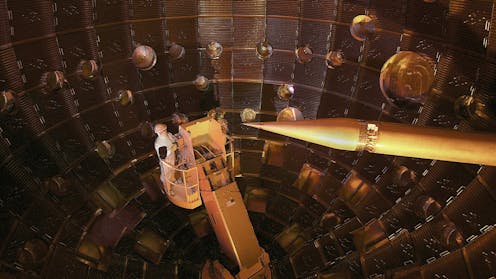
On peut déclencher des réactions de fusion nucléaire en focalisant des lasers ultrapuissants sur une toute petite fraction de cette chambre sphérique. National Ignition Facility, Lawrence Livermore National Laboratory, Lawrence Livermore National Security, LLC, and the Department of Energy, CC BY

La fusion nucléaire, qui alimente notre Soleil, est l’un des plus grands espoirs pour produire une énergie propre, abondante et sûre. Elle consiste à fusionner des noyaux légers, par exemple de l’hydrogène, pour former des noyaux plus lourds, en libérant une énorme quantité d’énergie. Contrairement à la fission, elle ne génère pas de déchets radioactifs de longue durée ni de gaz à effet de serre.

Mais recréer cette réaction sur Terre est un défi technologique et scientifique colossal. Les prototypes sont gigantesques et très coûteux, et le numérique prend une place importante pour faciliter les essais. Depuis le milieu des années 2010, et de manière accélérée depuis 2020, des systèmes d’intelligence artificielle sont utilisés pour contrôler le plasma et améliorer la conception de futurs réacteurs.


Pour atteindre la fusion, il faut chauffer les atomes à des températures de plus de 100 millions de degrés. Les atomes forment alors un plasma, un gaz ionisé ultra-chaud impossible à contenir par des matériaux solides.

Les physiciens doivent donc faire preuve d’imagination et deux grandes approches expérimentales sont poursuivies depuis des décennies : l’une avec des champs magnétiques, l’autre avec des lasers.

La fusion par confinement magnétique confine le plasma par de puissants champs magnétiques dans un réacteur en forme de tore, appelé « tokamak ». Le projet international ITER, un consortium international impliquant l’Union européenne, le Japon, les États-Unis, la Chine, la Russie, l’Inde et la Corée du Sud et installé en Provence, est l’exemple le plus ambitieux, mais il existe de nombreux tokamaks expérimentaux à travers le monde.

schéma 3D d’ITER
Le tokamak ITER, avec le tore au centre et les différents étages de service autour.
Oak Ridge National Laboratory, CC BY
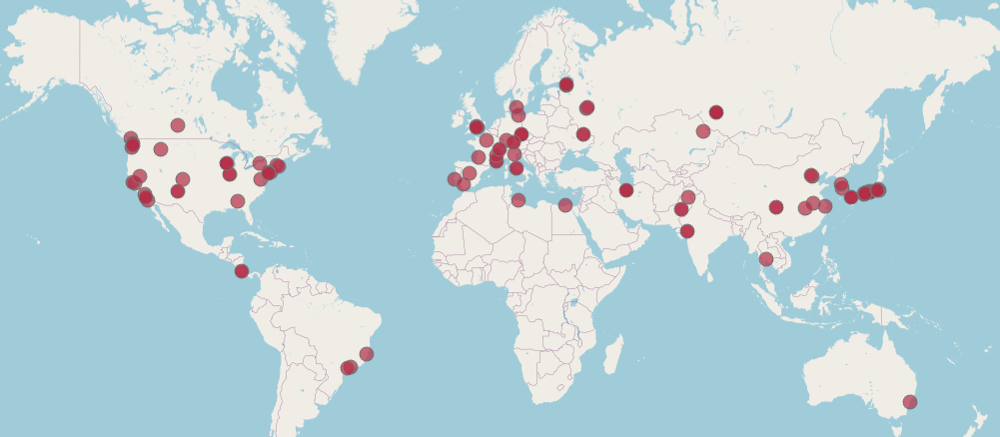
carte du monde
Les installations de fusion nucléaire dans le monde (incluant tokamaks et autres technologies).
Rémi Delaporte Mathurin, MIT, CC BY

La fusion par confinement inertiel utilise des lasers, incarnée par le laboratoire National Ignition Facility aux États-Unis. Au NIF, les scientifiques utilisent 192 lasers géants pour comprimer et chauffer une capsule de combustible en une fraction de seconde, et pendant une minuscule fraction de seconde.

Les deux approches font face à d’énormes défis : maintenir la stabilité du plasma, éviter les instabilités destructrices, prédire les disruptions (par exemple, dans un tokamak, une « disruption thermique » peut brutalement refroidir le plasma et libérer son énergie sur les parois, risquant de les endommager), optimiser les tirs laser ou la forme du plasma.

Et c’est ici que l’intelligence artificielle entre en scène. L’outil numérique a toujours été vital pour saisir les phénomènes complexes, grâce notamment à l’analyse de données massives. Aujourd’hui, l’IA pousse cette capacité encore plus loin.

Fusion magnétique : une IA aux commandes du plasma

Dans les tokamaks, des milliards de données sont générées à chaque tir : images, champs magnétiques, températures, densités. En 2022, une avancée spectaculaire a été réalisée dans le tokamak TCV (Tokamak à Configuration Variable) de l’EPFL à Lausanne, qui est un dispositif expérimental de taille moyenne, dédié aux recherches fondamentales. Une intelligence artificielle développée par DeepMind et le Swiss Plasma Center a été utilisée pour contrôler en temps réel la forme et la position du plasma en utilisant l’apprentissage par renforcement profond. Les ajustements de l’IA se font en temps réel, à l’échelle de la milliseconde, ce qui correspond aux temps caractéristiques de l’évolution des instabilités dans un plasma de tokamak. Ainsi, l’algorithme peut ajuster les champs magnétiques de manière dynamique pour maintenir le plasma stable, une première mondiale publiée dans la revue Nature.

Autre prouesse : la prédiction des disruptions, ces instabilités soudaines qui peuvent endommager les réacteurs. Des modèles d’apprentissage automatique, comme les réseaux de neurones, sont capables d’identifier les signaux précoces de telles instabilités.

Ainsi, sur le tokamak DIII-D aux États-Unis, une IA entraînée uniquement sur des données expérimentales de ce tokamak a pu anticiper une disruption, 300 millisecondes à l’avance, donnant au système le temps de réagir. Cette approche sans modèle physique — c’est-à-dire basée uniquement sur une IA analysant en temps réel les données du réacteur (data-driven) —, a permis d’activer des systèmes d’atténuation (par exemple injection d’impuretés ou modulation des champs) à temps, ce qui a stabilisé le plasma. On conclut qu’une disruption a été évitée non pas parce qu’on l’a « vue » se produire, mais parce que les conditions observées correspondaient à celles qui, dans toutes les campagnes précédentes sans intervention, menaient invariablement à une interruption brutale. Publiés dans Nature en 2024, ces résultats ouvrent la voie à un contrôle plus dynamique des réactions de fusion.

L’IA est aussi utilisée pour améliorer les diagnostics, repérer les anomalies dans les capteurs, analyser les vidéos de turbulence plasma ou encore accélérer les simulations grâce aux jumeaux numériques.

Un jumeau numérique est une réplique informatique d’un système réel, alimentée en continu par des données expérimentales. Dans le cas de la fusion, il s’agit de modèles capables de reproduire l’évolution d’un plasma. L’IA intervient ici pour accélérer ces modèles (par exemple en remplaçant des calculs très lourds de mécanique des fluides par des approximations apprises) et pour combler les manques des équations physiques là où les théories actuelles sont incomplètes.

Alors que, dans le cas précédent, l’IA prédisait un événement critique (une disruption) à partir de données, les jumeaux numériques assistés par IA permettent d’accélérer des simulations complètes de plasma pour des usages plus prospectifs — l’optimisation de l’architecture d’un réacteur par exemple.

Fusion inertielle : concevoir les meilleurs tirs laser avec l’IA

La fusion inertielle, elle, repose sur la compression ultrarapide de capsules de combustible par des lasers. Les tirs sont rares et coûteux, principalement à cause de l’énergie colossale nécessaire pour alimenter les lasers (et leur préparation), mais aussi du coût des capsules de combustible et du temps de recalibrage entre deux tirs. Dans ces conditions, chaque milliseconde compte.

Ici encore, l’IA change la donne. À l’Université de Rochester, aux États-Unis, une IA a été entraînée à optimiser la forme des impulsions laser sur le système OMEGA (le plus puissant laser académique au monde, dédié à la recherche sur la fusion par confinement inertiel). OMEGA génère ces tirs avec précision, et des diagnostics mesurent les résultats à des échelles de millionièmes de mètre et de trillionièmes de seconde.

L’IA est utilisée pour corriger les écarts entre simulations et réalité, optimiser les impulsions laser, et proposer les meilleures configurations expérimentales. Résultat : une augmentation spectaculaire du rendement de fusion, multiplié par trois dans certains cas. Ce type de modèle, publié dans Nature, permet d’explorer rapidement un vaste espace de configurations sans tout tester expérimentalement.

L’IA est aussi utilisée pour corriger les simulations, combler les écarts entre théorie et réalité, et proposer des conceptions inverses : on fixe un objectif (par exemple, atteindre l’ignition) et l’IA propose le meilleur design pour y arriver. C’est ce qui a permis, fin 2022, à NIF d’atteindre pour la première fois un rendement de fusion supérieur à l’énergie injectée par les lasers, un jalon historique.

Enfin, plusieurs types de systèmes d’intelligence artificielle sont utilisés : certains sont spécialisés dans l’analyse d’images pour exploiter les diagnostics, d’autres aident les robots à bien viser et aligner les cibles, et d’autres encore reconnaissent automatiquement quand un tir a échoué. L’objectif à terme est d’automatiser totalement ces expériences, en les rendant adaptatives et intelligentes.

Défis et avenir de l’IA dans la fusion

Alors que d’ici 2035, ITER générera environ 2 pétaoctets de données par jour, on comprend que la science des données se révèlera vitale pour traiter et appréhender toutes les informations.

Intégrer des systèmes d’IA à la fusion n’est pas sans obstacle. Les modèles doivent être rapides (c’est-à-dire capables de donner des résultats quasi en temps réel pour accompagner le pilotage du plasma), robustes (résistants aux erreurs de mesure et aux variations des données), interprétables (leurs décisions doivent pouvoir être comprises par les physiciens et justifiées, et non pas rester une « boîte noire ») et transférables d’une machine à l’autre (un modèle entraîné sur un tokamak donné doit pouvoir être adapté sans repartir de zéro sur un autre dispositif).

Les chercheurs travaillent donc sur des systèmes d’IA informés par la physique, capables d’expliquer leurs décisions et respectueux des lois fondamentales. Les données sont aussi limitées pour certains dispositifs comme NIF, ce qui pousse à combiner expériences et simulations pour enrichir les jeux de données. En effet, plus le volume de données est grand, plus l’IA peut apprendre des régularités complexes du plasma ; tandis qu’un jeu de données limité risque de conduire à des modèles biaisés ou peu généralisables.

Au-delà des limitations techniques actuelles, par exemple la puissance de calcul nécessaire pour traiter en temps réel les données issues de milliers de capteurs, la difficulté à garantir la fiabilité des prédictions face à un plasma chaotique ou encore la rareté de bases de données suffisamment riches pour entraîner correctement les modèles, l’intégration de systèmes d’IA dans des réacteurs de fusion pose aussi des questions de responsabilité. En cas de défaillance d’un algorithme entraînant une perte de confinement ou un dommage matériel, qui serait responsable : les concepteurs du réacteur, les développeurs du logiciel, ou les opérateurs ? Ces enjeux juridiques et éthiques restent encore largement ouverts, mais sont cruciaux au regard des énergies et températures en jeu.

Dans les années à venir, l’intégration de l’IA pourrait accélérer les progrès vers une fusion maîtrisée et commercialement viable. Si la fusion est le rêve énergétique ultime, alors l’intelligence artificielle pourrait bien en être la clé.

The Conversation

Sadruddin Benkadda reçoit des financements de Aix Marseille Université, CNRS et de EUROFUSION.

Collaboration avec ITER Organisation et l’IRFM (CEA)

Thierry Lehner et Waleed Mouhali ne travaillent pas, ne conseillent pas, ne possèdent pas de parts, ne reçoivent pas de fonds d’une organisation qui pourrait tirer profit de cet article, et n’ont déclaré aucune autre affiliation que leur poste universitaire.

ref. Fusion nucléaire : les systèmes d’IA changent déjà la donne – https://theconversation.com/fusion-nucleaire-les-systemes-dia-changent-deja-la-donne-265006