The man who could lead an independent Palestine

Source: The Conversation – UK – By Jonathan Este, Senior International Affairs Editor, Associate Editor, The Conversation

This article was first published in The Conversation UK’s World Affairs Briefing email newsletter. Sign up to receive weekly analysis of the latest developments in international relations, direct to your inbox.


As the world waits for what remains of the Hamas leadership to respond to Donald Trump’s 20-point peace deal – which the US president says they had better accept or “pay in hell” – it’s important to remember that there’s no certainty that the deal, as published this week, will make it past Netanyahu’s cabinet either.

Trump announced on September 29 that the Israeli prime minister, Benjamin Netanyahu, had agreed to the terms of the deal, which includes what on the face of it appears to be a highly conditional reference to Palestinian self-determination. “While Gaza re-development advances and when the PA reform programme is faithfully carried out, the conditions may finally be in place [my italics] for a credible pathway to Palestinian self-determination and statehood, which we recognise as the aspiration of the Palestinian people.”

As they thrash out each clause of this, Hamas negotiators will be mindful of the fact that, on his return to Israel, Netanyahu said he had not agreed to a Palestinian state. He posted on social media saying that a promise of statehood was not written anywhere in the agreement and that Israel would “forcibly resist” such an outcome.

They will also note that according to the terms of the deal, their organisation is supposed to disband and disarm and they will be excluded, as representative of Hamas at least, from taking any further part in the governance of Gaza or indeed a Palestinian state.

Meanwhile, in the West Bank, Hamas’s counterpart Fatah, which runs the Palestinian Authority (PA), has lost the support of most Palestinians (a recent poll found just 6% would vote for Fatah leader Mahmoud Abbas, the PA president). Abbas is 89 years old and has surrounded himself with elderly supporters. The PA has been dogged by corruption scandals for years.

It’s clear that to have any chance of forming a coherent and credible government for a future Palestinian state, a new generation of leaders will be needed. The man who many think should lead that government is currently serving five life sentences in an Israeli jail.

Marwan Barghouti has been called “Palestine’s Mandela”. This is clearly partly for his lengthy spell of incarceration. But it’s also a reference to his preference for peaceful resistance – although, to be clear, he has not renounced violence as a means to political ends, either. Barghouti is respected by both Palestinian secularists and Islamist leaders, many of whom he has become friendly with in prison. Last year, the former head of the Israeli intelligence agency Shin Bet, Ami Ayalon, said releasing Barghouti would be a meaningful step towards constructive negotiations.

But as Leonie Fleischmann notes, powerful people want to keep him locked up. Fleischmann, an expert in Middle East conflict from City St Georges, University of London, says that the PA leadership has repeatedly opposed his release in prisoner swaps. And Netanyahu said, in response to an op-ed by Barghouti that was printed by the New York Times, that: “Calling imprisoned Fatah leader, Marwan Barghouti, a Palestinian leader and parliamentarian is like calling Syrian president, Bashar Assad, a paediatrician.”


Read more:
As Hamas considers a peace deal, the man most Palestinians want to lead them sits in an Israeli jail


It was interesting that, while the peace deal was largely pulled together in the fringes of the recent United Nations general assembly meeting in New York, representatives of the Palestinian authority were not there as the US had cancelled their US visas.

It’s not the first time that the US has undermined the ability of the PA to represent its people. And the irony, as Anne Irfan points out, is that the PA was actually set up as part of the Oslo Accords, the settlement famously signed at the White House by PLO chief Yasser Arafat and Israeli prime minister Yitzhak Rabin, with Bill Clinton presiding.

US president Bill Clinton holds his hands wide as  Israeli prime minister Yitzhak Rabin and Palestinian leader Yasser Arafat shake hands.
US president Bill Clinton with Israeli prime minister Yitzhak Rabin and Palestinian leader Yasser Arafat at the Oslo Accords signing ceremony on 13 September 1993.
Vince Musi/The White House

As Irfan, a historian of the Middle East from UCL, observes that not only did the accords favour Israel, giving Palestinians limited scope for self-governance, the summit that followed at Camp David was stage-managed to ensure a failure to reach an agreement. Successive US administrations, says Irfan, have undermined the ability of the PA to exercise leadership.


Read more:
How America helped create the Palestinian Authority – only to undermine it ever since


Still, the deal as presented – flawed as it is – does offer Palestinians some significant concessions. The violence will stop and the flow of aid into Gaza will resume – significantly, overseen by the UN and the Red Crescent rather than the widely discredited Gaza Humanitarian Foundation (GHF). The GHF has been running the system of aid distribution, which has seen so many Palestinians killed as they wait to get food for their families.

Israel has pledged not to annex Gaza or the West Bank. Nobody will be forced to leave. And the deal offers amnesty to Hamas members who give up their weapons and renounce violence. Julie Norman believes Hamas would be well advised to accept the deal. First, if they don’t, Trump has given the green light to Israel to “finish the job” in Gaza.

Norman, an expert in the Middle East and National Security at UCL and the Royal United Services Institute, also believes this is the best offer Hamas is going to get. As she observes: “Gazans are desperate for the devastation to end.” They may not react well to Hamas prolonging the violence for its own ends.


Read more:
Trump’s 20-point plan for Gaza is deeply flawed but it may be the best offer Hamas can expect


A regional perspective

A big factor in all this is what appears to be an enthusiastic buy-in from Israel’s Arab neighbours. As Scott Lucas says, they also want the killing to stop. There is a considerable economic upside in ending the conflict and pushing for further normalisation with Israel. There will also be money to be made in the reconstruction of post-war Gaza.

But at the same time, they will be aware of the need not to antagonise their own people, who are largely sympathetic to the Palestinian cause. Bringing an end to the violence in Gaza will ease those tensions while at the same time offering the chance to restore a measure of calm to a region that has been riddled with violence over the past two years.

Lucas, an expert in Middle East politics at University College Dublin, thinks that it will take time and the rebuilding of trust for normalisation to resume. But there is no chance of that at all while the killing continues in Gaza.


Read more:
Where does the Arab and Muslim world stand on Trump’s Gaza peace plan? Expert Q&A


Good news from Moldova

There were serious concerns ahead of last weekend’s election in Moldova that Russian interference might affect the result of the poll, which pitted pro-EU president, Maia Sandu, against the pro-Russian Patriotic Electoral Bloc led by Igor Dodon.

In the end, despite reports of widespread attempts to sway voters towards Russia (including recruiting Russian Orthodox clergy to try to persuade their flock to cast their votes for Dodon) it wasn’t even close. Sandu’s Party of Action (PAS) and Solidarity won with more than 50% of the votes cast, compared to the Patriotic Electoral Bloc’s 28.14%.

Stefan Wolff, an expert in international security at the University of Birmingham, pointed to the low turnout and the fact that the vast majority of votes cast by Moldova’s sizeable diaspora in Europe were for PAS is an indication of how deeply divided the country remains over its future direction.


Read more:
Moldova: pro-EU party wins majority in election dominated by Russian interference


Maga’s Viking obsession

There’s been a degree of hilarity over words uttered by the FBI boss, Kash Patel, at a press conference to announce that a suspect in the shooting of the rightwing influencer Charlie Kirk had been apprehended. Assuring Kirk that his work would continue, Patel signed off with the words: “I’ll see you in Valhalla.”

Some of those commenting thought it weird to eulogise a Christian nationalist with a reference to a pagan afterlife. Others pointed out that Viking mythology has long been an obsession with far-right movements and was an important part of Nazi iconography.

Tom Birkett, a professor of Old English and Old Norse at University College Cork, explains where the idea of Valhalla fits within Nordic myth systems and recounts the way it has subsequently been colonised by the far-right. He believes it’s far more likely that Patel was using the reference to elevate Kirk to hero warrior status than sending any kind of coded message to America’s far-right extremists.


Read more:
‘See you in Valhalla’: how the FBI director waded into the far-right’s obsession with the Vikings


Sign up to receive our weekly World Affairs Briefing newsletter from The Conversation UK. Every Thursday we’ll bring you expert analysis of the big stories in international relations.


The Conversation

ref. The man who could lead an independent Palestine – https://theconversation.com/the-man-who-could-lead-an-independent-palestine-266523
Cellphones in schools – more states are taking action to reduce student distraction without eliminating tech access

Source: The Conversation – USA (2) – By Kui Xie, Dean of College of Education and Human Development, University of Missouri-Columbia

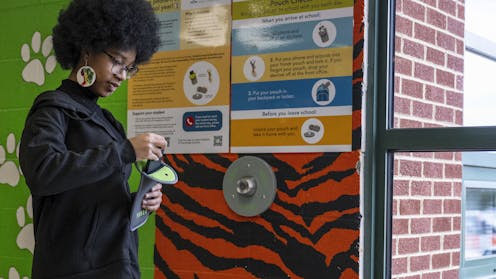
States including Michigan and Colorado are restricting the ways students can use digital devices in school. Jim Watson/AFP via Getty Images

Across the United States, more schools are implementing policies restricting cellphones as concerns about digital distraction, mental health and academic performance rise.

The scale of the issue is significant. According to a 2023 report from Common Sense Media, 97% of students between the ages of 11 and 17 use their cellphones at least once during the school day. These students spend a median of 43 minutes online each day during school hours. Social media, YouTube and gaming were the students’ top cellphone uses.

Schools have already begun taking action. Data from the National Center for Education Statistics published in 2025 shows that 77% of public schools ban cellphones during classes. Thirty-eight percent of schools have cellphone policies that restrict use outside of class as well – including during free periods, between classes or during extracurricular activities.

Policymakers in different states and educators in school districts across the country are putting into place a variety of solutions. Some rely on partial restrictions, while others enforce complete bans.

Many are still searching for the balance between technology access and minimizing distraction.

What is clear, however, is that cellphones have become one of the central issues shaping today’s classroom environment.

The role of technology in the classroom

As researchers and professors who study the integration of technology for teaching and learning – and who are also parents of school-aged children – we firmly believe that digital technologies are no longer optional add-ons. They have become indispensable in modern classrooms, acting as versatile instruments for instruction, collaboration and student engagement.

Take, for example, the ongoing shift from traditional paper textbooks to digital ones. This transformation has broadened access and created new opportunities for interactive, personalized learning. Abundant evidence demonstrates the positive effects of technology in supporting students’ engagement in class and their academic performance.

Students’ access to digital devices has improved significantly as schools across the United States continue investing in technology infrastructure. A 2023 report from the National Center for Education Statisitics indicates that 94% to 95% of public schools now provide devices to students who need them – although disparities exist between states.

A growing number of districts are adopting 1:1 initiatives, ensuring that every student has access to a personal device such as a laptop or tablet. These initiatives accelerated after the COVID-19 pandemic made clear the need for reliable access to learning technologies in schools for all students. They highlight the central role technology now plays in shaping everyday classroom instruction.

These technologies hold great educational potential. Yet, when not integrated thoughtfully and regulated effectively, they can inadvertently reduce focus and undermine learning.

Our recent systematic review on digital distraction in classrooms, which synthesized 26 empirical studies, finds three main drivers of distraction among students:

  • Technology-related factors included constant social networking, texting and cellphone addiction. These accounted for over half of the reported distractions.

  • Personal needs, such as entertainment, made up more than one-third.

  • Instructional environment, including classroom instruction that isn’t engaging, poor classroom management and difficult course content, accounted for the rest.

To address these challenges, the authors of the papers we reviewed suggested strategies such as teaching students how to control their own behavior and focus, silencing notifications, issuing clear device policies or banning devices.

The studies in our review also drew a clear distinction between school-provided and personally owned mobile devices. Devices provided by schools are typically equipped for instructional purposes, enhanced with stronger security and designed to restrict distracting uses. Personal devices are far less regulated and more prone to off-task use.

As schools increasingly provide devices designed for learning, the role of personal cellphones in classrooms becomes harder to justify as they present more risks of distraction than educational benefits.

Laws and policies regarding cellphone use

Several states in the U.S. have passed laws banning or restricting cellphone use in schools, with some notable differences.

States vary in how they define wireless communication devices. In Michigan, Senate Bill 234, passed in May 2025, describes a wireless communication device as an “electronic device capable of, but not limited to, text messaging, voice communication, entertainment, navigation, accessing the internet, or producing email.”

While most of the states have several technology types listed under wireless communication devices, a Colorado bill passed in May 2025 clearly identified that laptops and tablets did not fall under the list of restricted wireless communication devices.

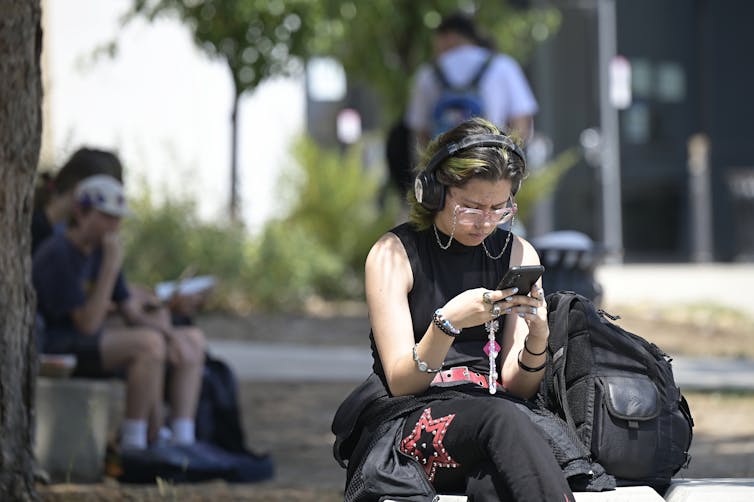
A white teen sits outside absorbed in her phone. She is wearing black clothing, glasses and headphones.
A high school student in Lafayette, Colo., checks her phone.
Hyoung Chang/The Denver Post via Getty Images

Most state laws don’t specify whether the bans apply to both personally owned devices and school-owned devices. One exception is the bill Missouri passed in July 2025, which clearly specifies its ban refers only to personal devices.

North Carolina made exceptions in a bill approved in July 2025, allowing students to use wireless communication devices for instructional purposes. Other exceptions in the North Carolina bill include an emergency, when students’ individual education programs call for it, and a documented medical condition.

In their bills, most states provide recommendations for school districts to create cellphone use policy for their students. To take one typical example, the policy for Wake County in North Carolina, one of the state’s largest school districts, specifically refers to personal wireless communication devices. For elementary and middle school students, they must be silenced and put away between morning and afternoon bells, either in a backpack or locker. For high school students, teachers may allow them to be used for lessons, but they must otherwise be silenced and put away during instructional time. They can be used on school buses with low volume and headphones.

The Conversation

The authors do not work for, consult, own shares in or receive funding from any company or organization that would benefit from this article, and have disclosed no relevant affiliations beyond their academic appointment.

ref. Cellphones in schools – more states are taking action to reduce student distraction without eliminating tech access – https://theconversation.com/cellphones-in-schools-more-states-are-taking-action-to-reduce-student-distraction-without-eliminating-tech-access-256968

Jane Goodall, the gentle disrupter whose research on chimpanzees redefined what it meant to be human

Source: The Conversation – USA (2) – By Mireya Mayor, Director of Exploration and Science Communication, Florida International University

Jane Goodall appears on stage at 92NY in New York on Oct. 1, 2023. Charles Sykes/Invision/AP

Anyone proposing to offer a master class on changing the world for the better, without becoming negative, cynical, angry or narrow-minded in the process, could model their advice on the life and work of pioneering animal behavior scholar Jane Goodall.

Goodall’s life journey stretches from marveling at the somewhat unremarkable creatures – though she would never call them that – in her English backyard as a wide-eyed little girl in the 1930s to challenging the very definition of what it means to be human through her research on chimpanzees in Tanzania. From there, she went on to become a global icon and a United Nations Messenger of Peace.

Until her death at age 91, Goodall retained a charm, open-mindedness, optimism and wide-eyed wonder that are more typical of children. I know this because I have been fortunate to spend time with her and to share insights from my own scientific career. To the public, she was a world-renowned scientist and icon. To me, she was Jane – my inspiring mentor and friend.

Despite the massive changes Goodall wrought in the world of science, upending the study of animal behavior, she was always cheerful, encouraging and inspiring. I think of her as a gentle disrupter. One of her greatest gifts was her ability to make everyone, at any age, feel that they have the power to change the world.

Jane Goodall documented that chimpanzees not only used tools but make them – an insight that altered thinking about animals and humans.

Discovering tool use in animals

In her pioneering studies in the lush rainforest of Tanzania’s Gombe Stream Game Reserve, now a national park, Goodall noted that the most successful chimp leaders were gentle, caring and familial. Males that tried to rule by asserting their dominance through violence, tyranny and threat did not last.

I also am a primatologist, and Goodall’s groundbreaking observations of chimpanzees at Gombe were part of my preliminary studies. She famously recorded chimps taking long pieces of grass and inserting them into termite nests to “fish” for the insects to eat, something no one else had previously observed.

It was the first time an animal had been seen using a tool, a discovery that altered how scientists differentiated between humanity and the rest of the animal kingdom.

Renowned anthropologist Louis Leakey chose Goodall to do this work precisely because she was not formally trained. When she turned up in Leakey’s office in Tanzania in 1957, at age 23, Leakey initially hired her as his secretary, but he soon spotted her potential and encouraged her to study chimpanzees. Leakey wanted someone with a completely open mind, something he believed most scientists lost over the course of their formal training.

Because chimps are humans’ closest living relatives, Leakey hoped that understanding the animals would provide insights into early humans. In a predominantly male field, he also thought a woman would be more patient and insightful than a male observer. He wasn’t wrong.

Six months in, when Goodall wrote up her observations of chimps using tools, Leakey wrote, “Now we must redefine tool, redefine Man, or accept chimpanzees as human.”

Goodall spoke of animals as having emotions and cultures, and in the case of chimps, communities that were almost tribal. She also named the chimps she observed, an unheard-of practice at the time, garnering ridicule from scientists who had traditionally numbered their research subjects.

One of her most remarkable observations became known as the Gombe Chimp War. It was a four-year-long conflict in which eight adult males from one community killed all six males of another community, taking over their territory, only to lose it to another, bigger community with even more males.

Confidence in her path

Goodall was persuasive, powerful and determined, and she often advised me not to succumb to people’s criticisms. Her path to groundbreaking discoveries did not involve stepping on people or elbowing competitors aside.

Rather, her journey to Africa was motivated by her wonder, her love of animals and a powerful imagination. As a little girl, she was entranced by Edgar Rice Burroughs’ 1912 story “Tarzan of the Apes,” and she loved to joke that Tarzan married the wrong Jane.

When I was a 23-year-old former NFL cheerleader, with no scientific background at that time, and looked at Goodall’s work, I imagined that I, too, could be like her. In large part because of her, I became a primatologist, co-discovered a new species of lemur in Madagascar and have had an amazing life and career, in science and on TV, as a National Geographic explorer.
When it came time to write my own story, I asked Goodall to contribute the introduction. She wrote:

“Mireya Mayor reminds me a little of myself. Like me she loved being with animals when she was a child. And like me she followed her dream until it became a reality.”

In a 2023 interview, Jane Goodall answers TV host Jimmy Kimmel’s questions about chimpanzee behavior.

Storyteller and teacher

Goodall was an incredible storyteller and saw it as the most successful way to help people understand the true nature of animals. With compelling imagery, she shared extraordinary stories about the intelligence of animals, from apes and dolphins to rats and birds, and, of course, the octopus. She inspired me to become a wildlife correspondent for National Geographic so that I could share the stories and plights of endangered animals around the world.

Goodall inspired and advised world leaders, celebrities, scientists and conservationists. She also touched the lives of millions of children.

Two women face each other, smiling and holding a book
Jane Goodall and primatologist Mireya Mayor with Mayor’s book ‘Just Wild Enough,’ a memoir aimed at young readers.
Mireya Mayor, CC BY-ND

Through the Jane Goodall Institute, which works to engage people around the world in conservation, she launched Roots & Shoots, a global youth program that operates in more than 60 countries. The program teaches children about connections between people, animals and the environment, and ways to engage locally to help all three.

Along with Goodall’s warmth, friendship and wonderful stories, I treasure this comment from her: “The greatest danger to our future is our apathy. Each one of us must take responsibility for our own lives, and above all, show respect and love for living things around us, especially each other.”

It’s a radical notion from a one-of-a-kind scientist.

The Conversation

Mireya Mayor does not work for, consult, own shares in or receive funding from any company or organization that would benefit from this article, and has disclosed no relevant affiliations beyond their academic appointment.

ref. Jane Goodall, the gentle disrupter whose research on chimpanzees redefined what it meant to be human – https://theconversation.com/jane-goodall-the-gentle-disrupter-whose-research-on-chimpanzees-redefined-what-it-meant-to-be-human-205909

Childhood wealth and social status can help people get leadership roles in adulthood

Source: The Conversation – Canada – By Steve Granger, Assistant Professor, John Molson School of Business, Concordia University

Consider two teenagers searching for summer work. One is offered an opportunity to assist a project manager at their uncle’s construction company. The other submits a dozen retail applications, hoping for a call back. Who is more likely to hold a formal leadership position in their 20s?

Stories like this play out across families of different economic backgrounds every day. Our recent research shows that pathways to leadership often begin much earlier than many assume, and are shaped by social capital that accumulates throughout childhood and adolescence.

We studied more than 6,700 people born in the same week in April 1970 across Great Britain, tracked from birth to age 26 through the British Cohort Study.

Rather than measuring socioeconomic status at just one point in time, we were able to capture it repeatedly: at birth, and ages 5, 10 and 16. This gave us a rare opportunity to see how persistent exposure to either wealth or adversity shaped who went on to take up formal leadership roles as young adults and who did not.

Affluence versus adversity

Our findings revealed a striking pattern. Children who grew up in persistent wealth — whose parents consistently held managerial or professional occupations — were more likely to occupy leadership roles by their mid-20s.

Conversely, those who grew up in persistent adversity — whose parents consistently worked in lower-skilled or semi-skilled occupations, such as routine service, manual or support roles as defined in the U.K. National Statistics Socio-economic Classification — were less likely to hold similar leadership positions.

But what makes these findings particularly revealing is that persistent exposure to wealth or adversity isn’t simply being on opposite ends of one continuum. Instead, they represent two very different paths that result in distinct socialization experiences.

On one hand, persistent wealth creates cumulative benefits by providing repeated access to resources, enriching experiences and better-connected social networks. On the other hand, persistent adversity can compound barriers, limiting opportunities for skill development, access to quality education and early exposure to professional environments.

Both paths land young people at very different career starting points that either open or close doors to leadership opportunities.

Pathways through social networks

For children from affluent families, leadership pathways often run through social networks. Access to what we call “nepotistic opportunities” — job connections through family and friends — partially explained why these children were more likely to emerge as leaders later on.

This isn’t always blatant favouritism. Instead, it reflects how affluent families more easily provide access to “weak ties” — the kinds of looser connections that open doors to new information and opportunities.

Consider again the teenager whose uncle arranges a summer job on a construction site. They don’t just earn money; they also learn about co-ordinating teams in professional environments and they form relationships. These encounters build social capital that can shape their path to leadership.

Not just a lack of connections

By contrast, we expected that children from disadvantaged backgrounds would show the mirror image of this pattern: that missing out on opportunities to build their social network would explain their lower odds of becoming leaders.

But our data told a different story.

Persistent early life adversity was linked to fewer leadership roles in adulthood, but not simply because of missed social opportunities. The teenager cold-applying to retail jobs does indeed face barriers to later leadership, but more complex and deeper-rooted factors are likely at play.

The disadvantages of growing up in persistent adversity may be rooted in other factors not measured in our study, such as reduced access to non-parental mentors, lower quality schooling or the toll of long-term economic stress on well-being.

What organizations can do

Addressing disadvantage requires tackling the deeper, systemic ways persistent economic wealth and adversity shape development. Employers can help level the playing field.

Acknowledging that social class differences exist in organizations is a crucial first step. This lays the groundwork for reducing bias in leadership recruitment, selection, retention efforts and improving access to leadership development.

Recruiting more widely through non-traditional networks and providing employer-sponsored preparation opportunities can make pathways into formal leadership positions more accessible. Dispelling myths about social class, for example through training, can also help reduce bias in selection and improve retention.

Finally, creating developmental networks and mentorship programs can provide the kind of career guidance and connections that affluent families often provide informally.

Leadership isn’t predetermined

The influence of childhood conditions can have lasting effects on career trajectories. In our study, the effects of early socioeconomic status conditions were still visible when participants reached their mid-20s, long after they had finished school and entered the workforce.

Addressing leadership diversity requires not just workplace interventions, but also early investment in supporting childhood development across all socioeconomic backgrounds.

Investments in quality education, mentorship programs and opportunities for young people to build professional networks is crucial for creating more equitable pathways to leadership.

While our findings highlight advantages for affluent youth and barriers for disadvantaged youth, they don’t dictate destiny. Among those who experienced at least some persistent adversity, 34 per cent still rose to leadership positions (compared to 46 per cent of those who experienced at least some persistent wealth).

What our research identifies is how socioeconomic status advantages and disadvantages compound over time, widening the disparity in social experiences that generate leadership opportunities.

Recognizing the distinction between these cumulative effects can help motivate us to create more equitable family and organizational systems where leadership potential is nurtured no matter where you start.

The Conversation

Steve Granger receives funding from the Social Sciences and Humanities Research Council of Canada.

Julian Barling receives funding from the Social Sciences and Humanities Research Council of Canada and the Borden Chair of Leadership.

Nick Turner receives research funding from Cenovus Energy Inc., Haskayne School of Business’s Future Fund, Mitacs, and the Social Sciences and Humanities Research Council of Canada (SSHRC).

ref. Childhood wealth and social status can help people get leadership roles in adulthood – https://theconversation.com/childhood-wealth-and-social-status-can-help-people-get-leadership-roles-in-adulthood-265457

The UK has a regional inequality problem – levelling the playing field for entrepreneurs could help

Source: The Conversation – UK – By Colin Mason, Emeritus Professor of Entrepreneurship and Honorary Senior Research Fellow, Adam Smith Business School, University of Glasgow

Monster Ztudio/Shutterstock

Regional inequality is a long-standing problem in the UK that successive governments haven’t been able to get to grips with. The Labour government is aiming for economic growth, but this will only happen by boosting the UK’s regions and nations along with London and south-east England.

The UK’s economy is the most regionally imbalanced in the industrialised world. This has a damaging effect on productivity and economic performance, both key enablers of rising living standards.

Although “levelling up” is not part of the government’s vocabulary, reducing the wide economic divide between London and the rest of the UK remains high on its agenda. However, levelling-up policies have been criticised for being fragmented and lacking coherence, particularly because of the emphasis on large infrastructure investments. Infrastructure is only one of many factors that play into the long-term productivity differences in the UK.

Entrepreneurship and innovation are also central to regional economic competitiveness. But business start-up and scale-up rates are significantly higher in London and the south of England, particularly along the M4 and M3 corridors. These geographical variations are persistent over time.

The lack of high-growth start-ups in the rest of the UK is particularly important. These businesses are mainly located in and around London, with only a thin spread across the rest of the country. In a list of the UK’s 100 fastest-growing companies, 36 are in London, with a further 15 in south-east England.

These rapidly growing companies make a disproportionate contribution to job creation, innovation and economic growth. A 2009 report found that 6% of high-growth firms create more than 50% of jobs. This proportion has remained stable over the years, even during times of recession.

Entrepreneurship needs the right environment to thrive – places that offer a “fertile soil” with support, talent, finance, markets and connections to start and grow companies. As such, entrepreneur-led levelling up needs an approach that develops these “ecosystems” in the parts of the UK that have fallen behind more prosperous areas.

Entrepreneurial ecosystems are environments that bring together not only those who want to start businesses but also the people and institutions who support them. They need mentors with expertise and experience, employees with the right skills, investors who take calculated risks and intermediaries who can make connections.

Nurturing new businesses

So what does it take to build all of this? Our research on the emergence and maturing of ecosystems offers some important lessons.

It needs foundations. Particularly important are educational institutions that equip students with an entrepreneurial mindset. They support enterprise creation and companies that attract and nurture skilled employees – the kind of people who may be future entrepreneurs or early hires in high-growth companies.

But it takes time. The foundations of today’s successful ecosystems were laid more than a decade ago. Progress is often slow and hard to measure because elements in the ecosystem interact and evolve in unpredictable ways. As such, it is important to focus on long-term indicators of success. This includes those that are difficult to capture – things like willingness to pursue business opportunities despite the risk of failure, for example.

Thriving entrepreneurial ecosystems are characterised by virtuous circles, with success creating the ingredients that drive further success. Successful entrepreneurs, managers and investors frequently reinvest their wealth and experience in their local ecosystem as serial entrepreneurs, business angels, mentors or board members.

And even business failures can have positive effects on the ecosystem. Failures can trigger a recycling process as former employees are hired by other local companies.

Recognising that it takes an ecosystem to raise a start-up means that collaboration is vital. Outcomes will be limited if ecosystem players – companies, investors, experienced entrepreneurs, support organisations and so on – focus only on their own narrow interests. But if they connect and work together for the wider benefit of the ecosystem then everyone can gain from the successes.

a group of people chatting and networking
Connecting with others is a vital part of building entrepreneurial ecosystems.
Rawpixel.com/Shutterstock

Many of the features that underpin successful ecosystems are about building culture and relationships. This includes events, mentoring and networks that enable peer-to-peer learning and celebrate role models.

And it’s not always about having a local focus. Some activities to support high-growth entrepreneurs benefit from being delivered at the national or regional level. For example, public sector venture capital funds (government money that’s invested in start-ups that might struggle to source private investment) are more effective if delivered at scale. Ecosystems also need to develop links with other locations to tap into their knowledge, skills and resources.

As successful ecosystems are typically based around large cities, it is essential that they develop strong connections with the smaller communities around them to prevent inequalities emerging within regions.

Ultimately, building ecosystems requires government funding but not government management. For example, the Scottish government’s Ecosystem Fund provides financial support for grassroots initiatives that may otherwise struggle to get off the ground.

Successful systems are built from the ground up, with community members – typically successful entrepreneurs – taking on the leadership role. The role of government should be funding it, not running it. Public funding can give ecosystems momentum to drive the growth that narrows the UK’s regional inequalities.

The Conversation

Colin Mason received funding from The Regional Studies Association to undertake some of the research on Atlantic Canada’s entrepreneurial ecosystem.

Dr Michaela Hruskova has previously received funding from the Economic and Social Research Council for research underpinning insights in this article.

ref. The UK has a regional inequality problem – levelling the playing field for entrepreneurs could help – https://theconversation.com/the-uk-has-a-regional-inequality-problem-levelling-the-playing-field-for-entrepreneurs-could-help-261822

How different mushrooms learned the same psychedelic trick

Source: The Conversation – UK – By Fabrizio Alberti, Associate Professor in Life Sciences, University of Warwick

Cannabis_Pic/Shutterstock

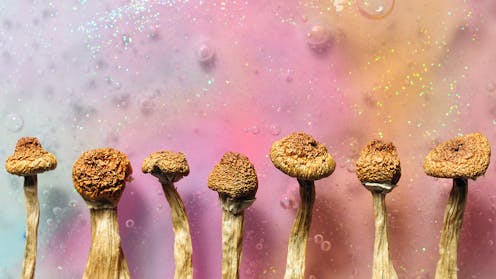
Magic mushrooms have been used in traditional ceremonies and for recreational purposes for thousands of years. However, a new study has found that mushrooms evolved the ability to make the same psychoactive substance twice. The discovery has important implications for both our understanding of these mushrooms’ role in nature and their medical potential.

Magic mushrooms produce psilocybin, which your body converts into its active form, psilocin, when you ingest it. Psilocybin rose in popularity in the 1960s and was eventually classed as a Schedule 1 drug in the US in 1970, and as a Class A drug in 1971 in the UK, the designations given to drugs that have high potential for abuse and no accepted medical use. This put a stop to research on the medical use of psilocybin for decades.

But recent clinical trials have shown that psilocybin can reduce depression severity, suicidal thoughts and chronic anxiety. Given its potential for medical treatments, there is renewed interest in understanding how psilocybin is made in nature and how we can produce it sustainably.

The new study, led by pharmaceutical microbiology researcher Dirk Hoffmeister, from Friedrich Schiller University Jena, discovered that mushrooms can make psilocybin in two different ways, using different types of enzymes. This also helped the researchers discover a new way to make psilocybin in a lab.

Based on the work led by Hoffmeister, enzymes from two types of unrelated mushrooms under study appear to have evolved independently from each other and take different routes to create the exact same compound.

This is a process known as convergent evolution, which means that unrelated living organisms evolve two distinct ways to produce the same trait. One example is that of caffeine, where different plants including coffee, tea, cacao and guaraná have independently evolved the ability to produce the stimulant.

This is the first time that convergent evolution has been observed in two organisms that belong to the fungal kingdom. Interestingly, the two mushrooms in question have very different lifestyles. Inocybe corydalina, also known as the greenflush fibrecap and the object of Hoffmeister’s study, grows in association with the roots of different kinds of trees. Psilocybe mushrooms, on the other hand, traditionally known as magic mushrooms, live on nutrients that they acquire by decomposing dead organic matter, such as decaying wood, grass, roots, or dung.

Mushrooms on brown leaves
Inocybe corydalina.
jimmiev/Wikimedia, CC BY-SA

The observation that mushrooms that inhabit two different niches make the same psychedelic compound raises questions regarding the ecological role of this molecule. A possible explanation as to why both mushrooms produce psilocybin could be that it is intended to deter predators, such as insects, that may be tempted to eat their fruiting bodies. This would be similar to the role of caffeine, which is also known to act as a natural pesticide, deterring insects and other pests from feeding on certain plants.

Turning discovery into opportunity

This study may provide scientists with additional tools to produce psilocybin to use for medical purposes. Mushrooms tend to grow slowly both in nature and in the laboratory. Psilocybe (magic mushrooms) take about two months to grow from spores to mature mushrooms.

If large amounts of psilocybin are needed for testing in clinical trials or for future medical use, quick and sustainable ways of producing it should be investigated. Currently, psilocybin is produced using synthetic material because it is faster than extracting the compound from mushrooms and has higher yields. This has its drawbacks though. The current synthetic extraction methods that scientists use generate hazardous waste and include key steps that can only be carried out on a small scale.

In a separate study published in April 2025, Hoffmeister and his coworkers came up with a new approach to produce psilocybin. His team used enzymes derived from fungi to catalyse the reactions to make psilocybin, rather than a fully synthetic approach, which uses lab-made materials and catalysts. This approach can be carried out on a larger scale than the usual, fully synthetic method. The immobilised enzymes they used are also reusable, making the process more sustainable.

Enzymes are inherently more sustainable than non-biological catalysts because they generally operate in mild conditions (such as low temperature and neutral pH) and are easier to purify, which reduces energy consumption and waste. Also, enzymes are biodegradable, which helps decrease the environmental impact of industrial processes.

Hoffmeisters’ most recent work provides the scientific community with additional enzymes that can be used to make psilocybin.

While we can only speculate as to why different mushrooms would come
up with alternative ways of making the same psychedelic compound, this discovery
opens new avenues for the large-scale production of a promising candidate drug.

The Conversation

Fabrizio Alberti receives funding from UKRI through grants MR/V022334/1, BB/X018369/1 and EP/X039587/1, and from the British Council through grant 1203466293.

ref. How different mushrooms learned the same psychedelic trick – https://theconversation.com/how-different-mushrooms-learned-the-same-psychedelic-trick-266401

An AI tool is trying to predict your risk of getting many diseases years in advance – here’s how it works

Source: The Conversation – UK – By Natalia Levina, Professor, Department of Information Systems Management & Analytics, Warwick Business School, University of Warwick; New York University

The Delphi-2M model seeks to predict a person’s next health event, and when it will happen in the next 20 years. Nan_Got/ Shutterstock

Being able to instantly and accurately predict the trajectory of a person’s health in the years to come has long been seen as the pinnacle of medicine. This kind of information would have a profound effect on healthcare systems as a whole – shifting care from treatment to prevention.

According to the findings of a recently published paper, researchers are promising just that. Using cutting-edge artificial intelligence (AI) technology, the researchers built Delphi-2M. This tool is seeking to predict a person’s next health event and when it’s likely to happen in the next 20 years. The model does this for a thousand different diseases including cancer, diabetes and heart disease.

To develop Delphi-2M, the European research team used data from nearly 403,000 people from the UK Biobank as an input into the AI model.

In the final trained AI model, Delphi-2M predicted the next disease and when it would occur based on a person’s sex at birth, their body mass index, whether they smoked or drank alcohol, and their timeline of prior diseases.

It was able to make these predictions with a 0.7 AUC (area under the curve). AUC aggregates false positive and false negative rates, so can be used as a proxy for accuracy in a theoretical setting. This means the model’s predictions could be interpreted to have about 70% accuracy across all disease categories – although the accuracy of these predictions have not yet been tested in terms of real-world outcomes.

They then applied the model to Danish Biobank data to see whether it was still effective. It was able to predict health outcomes with similar theoretical accuracy rates.

AI tools

The purpose of the paper wasn’t to suggest the Delphi-2M is ready to be used by doctors or in the medical field. Rather, it was to illustrate the power of the team’s proposed AI architecture, and the benefit it could have in analysing medical data.

Delphi-2M uses a “transformer network” to make its predictions. This is the same technology architecture that powers ChatGPT. The researchers modified the GPT2 transformer architecture to use time and disease features to predict when and what will happen.

Although other health prediction models have used transformer networks in the past, these were only designed to make predictions about a person’s risk of developing a single disease. Plus, they were primarily used on smaller-scale hospital record data.

But transformer networks are particularly well-suited for predicting a person’s risk of multiple diseases. This is because they can adapt their focus easily and are able to work out complex interactions between many different diseases from multiple distinct data points.

Delphi-2M has also proven to be slightly more accurate than other multi-disease prediction models which use a different architecture.

For example, Milton uses a combination of standard machine learning techniques and applied them to the same UK Biobank data. This model showed somewhat lower predictive power for most diseases compared with Delphi-2M – and needed to use more data to do so.

Moreover, non-transformer models are hard for others to improve by adding more data layers. This means these models cannot be as easily adapted and improved upon as transformer models for use in different contexts and studies.

A person writes on a tablet using a stylus. There is an anatomical human body popping out from the tablet.
The model can be adapted to other contexts by using different data.
raker/ Shutterstock

What’s special about the Delphi-2M model is that it can be released to the public as an open-source model without compromising patients’ privacy. The authors were able to create synthetic data that mimics the UK Biobank data while removing personally identifiable information – all without a significant drop in predictive power. Moreover, Delphi-2M requires less computing resources to train than typical AI transformer models.

This will allow other researchers to train the model from scratch and possibly tailor the model and information for their needs. This is important for the advancement of open science and is generally difficult to do in medical settings.

Still too early

Whether or not Delphi-2M becomes the foundation model for AI tools that are designed to predict a patient’s future health risks, it demonstrates that models such as this are on the way.

Due to its layered architecture and open-source nature, future models similar to Delphi-2M will continue to evolve by incorporating even richer data – such as electronic health records, medical images, wearable technologies and location data. This would improve its predictive powers and accuracy over time.

But while the ability to prevent diseases and provide early diagnosis holds great promise, there are a few key caveats when it comes to this predictive tool.

First, there are numerous data-related concerns associated with such tools. As we have written before, the quality of data and training that an AI tool receives makes or breaks its predictions.

The UK Biobank dataset used to create Delphi-2M didn’t have sufficient data on diverse races and ethnic groups to allow for in-depth training and performance analysis.

While some analysis was performed by the Delphi-2M researchers to show that adding ethnicity and race didn’t sway the results too much, there was still insufficient data in many categories to even conduct the assessment.

If ever used in the real world, personal healthcare data will probably be used and layered on top of foundation models such as Delphi-2M. While the inclusion of this personal data will improve prediction accuracy, it also comes with risks – for example, around personal data security and out-of-context use of the data.

It may also be difficult to scale the model to countries whose healthcare systems differ from those that are used to design the dataset. For instance, it may be harder to apply Delphi-2M to the US context, where healthcare data is spread around multiple hospital systems and private clinics.

At present, it’s too early for Delphi-2M to be used by patients or doctors. While Delphi-2M provided generalised predictions based on the data that was used to train it, it’s too early to use these predictions for personalised health recommendations for an individual patient.

But hopefully, with continued investment into researching and building Delphi-2M-style models, it will someday be possible to input a patient’s personal health data into the model and get a personalised prediction.

The Conversation

The authors do not work for, consult, own shares in or receive funding from any company or organisation that would benefit from this article, and have disclosed no relevant affiliations beyond their academic appointment.

ref. An AI tool is trying to predict your risk of getting many diseases years in advance – here’s how it works – https://theconversation.com/an-ai-tool-is-trying-to-predict-your-risk-of-getting-many-diseases-years-in-advance-heres-how-it-works-265909

As Hamas considers a peace deal, the man most Palestinians want to lead them sits in an Israeli jail

Source: The Conversation – UK – By Leonie Fleischmann, Senior Lecturer in International Politics, City St George’s, University of London

Since the White House released Donald Trump’s plan to end the Gaza conflict on September 29, the chances of an end to Israel’s war on Gaza is as high as they have ever been. If it succeeds, the idea of a Palestinian state being established alongside Israel will also be on the table for the first time in decades.

Palestinians were notably excluded from drafting the plan, and no measures exist to hold Israel accountable for the destruction it has caused. But the 20-point plan includes clauses that could eventually lead to Palestinian self-determination.

Under the terms of the plan, Palestinians will be allowed to remain in Gaza and there will be an amnesty for militants who commit to peaceful coexistence once the deal is agreed. Israel has committed not to occupy or annex Gaza. The plan also acknowledges the Palestinian people’s aspiration for self-determination and statehood and says a pathway to achieve that may be achievable under certain conditions.

Israeli prime minister Benjamin Netanyahu has said he supports the plan. But on his return to Israel, he said Palestinian statehood was not written into the agreement and that Israel would “forcibly resist” the establishment of a Palestinian state. The US president’s deal will have to be approved in a vote of Netanyahu’s cabinet. It has already come in for severe criticism from at least one cabinet member: Bezalel Smotrich. Smotrich described the deal as a “resounding diplomatic failure” that will “end in tears”.


Read more:
Where does the Arab and Muslim world stand on Trump’s Gaza peace plan? Expert Q&A


For Hamas, too, the plan crosses a number of red lines. Reports suggest that Hamas faces an existential dilemma. On one hand the plan explicitly removes any role for Hamas in the future governance of Gaza. On the other, the US president has said that a Hamas rejection would give Israel the green light to continue their military onslaught.

So, whether the next steps are a ceasefire or the continued destruction of Gaza, what has become clear is that time is running out for Hamas as rulers of the Palestinian people in Gaza. This raises the question of who could take over the reins of government for Palestinians.

The obvious answer is the Palestinian Authority (PA), which holds leadership of the Palestinians in the West Bank. The PA was formed by the Oslo Accords to administer the West Bank and Gaza. Since 2005 it has been led by Mahmoud Abbas of Fatah. In 2007, a brief civil war between Fatah and Hamas left Hamas in power in Gaza, creating a deep division between the two parties and the Palestinian people.

While the PA argues it should be the sole governing authority in Gaza, Fatah and Abbas are deeply unpopular among Palestinians. In a recent poll conducted by the Palestinian Centre for Policy and Survey Research, just 6% of Palestinians said they would vote for Abbas in an election.

The waning legitimacy of the current PA leadership puts into question its ability to rule. Corruption, lack of democracy and Abbas’s age has led for calls for someone new to lead the Palestinians into the next chapter of their history. One name has resounding popularity: Marwan Barghouti.

‘Palestinian Mandela’

Barghouti has long been seen as the key to uniting the Palestinian factions and achieving Palestinian statehood. He was described in a 2009 article in Foreign Policy magazine as “Palestine’s best hope”. More recently, in July 2024, The Economist described him as “the world’s most important prisoner”.

Despite being imprisoned in Israel since 2002, Barghouti has consistently topped polls of potential future PA leaders. His supporters have named him the “Palestinian Nelson Mandela” in the hope that he can emulate the South Africa leader by transitioning from political prisoner to the man who can unify a divided people.

Born in the West Bank in 1959, Barghouti rose to prominence as a youth leader in the years leading up to the first intifada and was elected to the Palestinian Legislative Council in 1996. But in 2002 he was arrested by the Israeli security services at the height of the second intifada and convicted in 2004 for involvement in the murder of five people. Barghouti refused to recognise the authority of the Israeli court and offered no defence at trial. He was subsequently handed five life sentences.

Barghouti’s appeal lies in his ability to garner broad support among different stakeholders – Palestinian, Israeli and international.

He gained respect from militant Palestinian factions for his armed resistance and his incarceration. Hamas reportedly placed him at the top of previous potential prisoner swap deals. Alongside this, his declared preference for unarmed resistance and his vision for democratic Palestinian governance garner him support from the Palestinians who have grown tired of PA corruption.

He is supported by Israeli peace activists as the Palestinian solution to ending the cycle of violence. Veteran activist, Gershon Baskin, explained in the Times of Israel, in April 2025, that Barghouti is “still committed to Palestinian Israeli peace based on the two-state solution”.

Voices in Israel’s security establishment also see the value of Barghouti as the Palestinian leader. Ami Ayalon, the former chief of Israel’s Shin Bet intelligence organisation, argued in January 2024 that it was time to release Barghouti and initiate negotiations with him as the popular leader of the Palestinians.

But it has been reported that PA leaders, mindful of the political threat Barghouti poses to them, have consistently opposed his release as part of potential Israel-Hamas prisoner swaps.

Unsurprisingly, for different reasons, Netanyahu is vehemently opposed to his release, stating in 2017 in response to an opinion piece by Barghouti published by the New York Times that “calling imprisoned Fatah leader, Marwan Barghouti, a Palestinian leader and parliamentarian is like calling Syrian president, Bashar Assad, a paediatrician”.

Barghouti could be an important missing piece in the unfolding puzzle towards Palestinian statehood. And it should be up to the Palestinian people who leads them. But it seems the keys to his cell are held by people who don’t want to see the Palestinian Mandela set free.

The Conversation

Leonie Fleischmann does not work for, consult, own shares in or receive funding from any company or organisation that would benefit from this article, and has disclosed no relevant affiliations beyond their academic appointment.

ref. As Hamas considers a peace deal, the man most Palestinians want to lead them sits in an Israeli jail – https://theconversation.com/as-hamas-considers-a-peace-deal-the-man-most-palestinians-want-to-lead-them-sits-in-an-israeli-jail-266492

The overlooked service that could make plans for a library in every primary school in England a reality

Source: The Conversation – UK – By Lucy Taylor, Lecturer in Education, University of Leeds

Rawpixel.com/Shutterstock

In a speech delivered at the Labour party conference, Chancellor Rachel Reeves committed to “providing a library in every single primary school in England by the end of this parliament”.

This new scheme should help to achieve the goal set by the Libraries for Primaries campaign, established in 2021, to ensure that every primary school in the UK has a library or dedicated library space.

This is a welcome development. Our research focuses on the value well-stocked libraries can provide to schools and pupils.

School libraries are a vital resource for enriching learning across the curriculum. They provide graduated texts to support learners from the very start of their reading journeys and give children access to a wealth of information, ideas, perspectives and stories.

This investment comes at a time when reading for pleasure is rapidly decreasing. According to a 2025 survey by the National Literacy Trust, only a third of children aged eight to 18 enjoy reading in their free time. Government data shows that 25% of pupils leave primary school unable to read at the level expected.

Some school libraries are very well stocked and are inviting spaces for children to read and share books. However, these spaces need constant investment to keep them up to date and relevant with high-quality texts. Doing so can be difficult for many schools whose budgets are tight.

School library services

To keep pace with developments in children’s book publishing is a substantial undertaking. Schools need to ensure that within their staff team there is sufficient knowledge and expertise to manage and maintain a vibrant library collection. It is also important that school libraries are aligned with the curriculum. Libraries should be an inclusive resource for communities of children with diverse cultural and linguistic backgrounds and learning needs.

Many people don’t know that school libraries can draw on the resources and expertise of local School Library Services to keep their stock up to date and changing on a regular basis. They are typically funded and run by local authorities and employ trained librarians who can help schools run their own libraries. However, our research has shown that they are not available in all areas of England, and they are not financially secure in the long term.

School libraries can be refreshed every term by new stock borrowed from the School Library Services, curated by expert librarians. For example, the Leeds School Library Service serves 180 primary schools. It delivered 9,514 boxes of resources throughout the academic year 2022–23.

School Library Services have a wider range of books and resources than a single school could hold. As items borrowed from School Library Services are returned after a set period and then shared with other schools, they offer a model of library resourcing that is more sustainable that a single investment in a school library stock update. One teacher we spoke to said: “You don’t want 30 books to store, you want to use them and send them back and get 30 different ones. I think that’s a huge benefit.”

Some School Library Services help schools to set up their libraries, reorganise them and select great quality texts so that their libraries are current, appealing and easy to manage. School Library Services typically employ specialist children’s librarians with an understanding of the local area, and in some instances can even provide artefacts such as objects and costumes to further stimulate learning. Investment is needed in these services to ensure that they can replenish stock and train new school library specialists.

Boy in wheelchair looking at titles in library
Finding a book they connect with is really important for young readers.
AnnGaysorn/Shutterstock

The wide choice of reading material a library provides gives children more opportunity to find a book they connect with than, for instance, a classroom reading corner. Being able to find a book that they want to read is important to becoming an engaged reader.

Some children will want to read about their favourite video game, others may be more interested in sport, and some will relish the opportunity to delve into a fantasy world of imagination. Talking about the children in their class, a teacher we interviewed said that a good choice of books “spurred some of them on to actually start reading”. Another teacher reported that school libraries “helped promote reading in school because kids have had more access to books”.

The renewed focus on school libraries is long overdue and we look forward to seeing the benefits that schools will reap from this new funding. But in addition to investment directly in primary school libraries in the short term, financial commitment to strengthening School Library Services will also pay dividends for future generations of child readers.

The Conversation

Lucy Taylor has received funding from UK Literacy Association, and the Association of Senior Education Librarians (ASCEL) via Arts Council England (ACE) for projects related to this topic.

Paula Clarke has previously received funding from the UK Literacy Association, and the Association of Senior Education Librarians (ASCEL) via Arts Council England (ACE), for projects related to this topic.

ref. The overlooked service that could make plans for a library in every primary school in England a reality – https://theconversation.com/the-overlooked-service-that-could-make-plans-for-a-library-in-every-primary-school-in-england-a-reality-266394

What the gut microbiome of the world’s oldest person can tell us about ageing

Source: The Conversation – UK – By Rachel Woods, Senior Lecturer in Physiology, University of Lincoln

When María Branyas Morera died in 2024 at the age of 117, she left more than memories. She left science a gift: samples of her microbiome.

Researchers discovered her gut was as diverse as someone decades younger: rich in beneficial bacteria linked to resilience and longevity. Her daily yoghurt habit and Mediterranean diet may have helped. While we can’t all inherit “lucky genes”, nurturing our microbiome may be one way to support lifelong health.

In a recent paper in Cell Reports Medicine, researchers presented what may be the most detailed scientific investigation of a supercentenarian (a person aged 110 or older). Before her death, Branyas agreed to participate in research aimed at uncovering how she lived such a long and healthy life.


Read more:
Centenarian blood tests give hints of the secrets to longevity


When scientists compared her samples with those of people who had not reached such exceptional ages, the genetic results were unsurprising: Branyas carried protective variants that guard against common diseases. But they also looked at something over which we have more control – the gut microbiome.

This microbiome is the vast community of bacteria, fungi and other microorganisms that live in the intestines. They help digest food, produce vitamins, influence our immune system and even communicate with the brain. While our genes play only a small role in shaping our microbiome, diet and lifestyle are far more important.

Normally, as people age, gut microbiomes lose diversity – the variety of microbial species – and beneficial microbes such as Bifidobacterium decline. This reduction in diversity has been linked to frailty.

Branyas’s gut told a different story. Her microbiome was as diverse as that of a much younger adult and was especially rich in the bacterial family Bifidobacteriaceae, including the genus Bifidobacterium. In most older people these bacteria decline, but Branyas’s levels matched previous reports of elevated Bifidobacterium in other centenarians and supercentenarians. The researchers concluded that this unusually youthful microbiome may have supported her gut and immune health, contributing to her extraordinary longevity.

Bifidobacteria are among the first microbes to colonise an infant’s gut and are generally considered beneficial throughout life. Studies link them to supporting immune function, protecting against gastrointestinal disorders and helping regulate cholesterol.

Her diet offered a clue to why she maintained such high levels of Bifidobacterium. Branyas reported eating three yoghurts every day, each containing live bacteria that are known to support the growth of Bifidobacterium. She also followed a largely Mediterranean diet, a pattern of eating consistently linked to gut microbiome diversity and good health.

Other foods that encourage Bifidobacterium include kefir, kombucha and fermented vegetables such as kimchi and sauerkraut. These contain probiotics – live bacteria that can settle in the gut and confer health benefits. But probiotics need fuel. Prebiotics – dietary fibres we can’t digest but that our microbes thrive on – are found in foods like onions, garlic, leeks, asparagus, bananas, oats and legumes. Together, probiotics and prebiotics help maintain a balanced microbiome.

Of course, this was a study of a single individual, and the scientists are not claiming that her microbiome alone explains her long life. Her extraordinary longevity was almost certainly the result of many interwoven factors: protective genes, efficient metabolism, low inflammation – and, quite possibly, the support of a diverse gut microbiome.

Microbiome research is advancing rapidly, but no one yet knows what the “perfect” microbiome looks like. Greater diversity is generally associated with better health, but there is no single recipe for a long life. Even so, Branyas’s case reinforces a growing consensus: nurturing a diverse, beneficial microbiome is linked to better health and resilience.

While we cannot choose our genes, we can support our gut microbes. Simple steps include eating fermented foods, such as live yoghurts, kefir, kimchi and sauerkraut, as well as fruit, vegetables, legumes and whole grains, which supply the prebiotics that healthy microbes need.

Following a Mediterranean-style diet – built around vegetables, fruits and whole grains, with olive oil as the main fat, fish and legumes eaten regularly, and red meat, processed foods and added sugars kept to a minimum – has been repeatedly linked to both microbiome diversity and reduced disease risk.

These habits will not guarantee a lifespan beyond 110, but they are associated with lower risks of cancer, type 2 diabetes and cardiovascular disease.

María Branyas Morera’s life is a reminder that longevity depends on a delicate balance of genetics, lifestyle and biology. We cannot control every factor, but tending to our gut microbiome is one meaningful step toward lasting health.

The Conversation

Rachel Woods does not work for, consult, own shares in or receive funding from any company or organisation that would benefit from this article, and has disclosed no relevant affiliations beyond their academic appointment.

ref. What the gut microbiome of the world’s oldest person can tell us about ageing – https://theconversation.com/what-the-gut-microbiome-of-the-worlds-oldest-person-can-tell-us-about-ageing-266161