
Urban food gardens produce more than vegetables, they create bonds for young Capetonians – study

Source: The Conversation – USA – By Tinashe P. Kanosvamhira, Post-doctoral researcher, African Centre for Cities, University of Cape Town
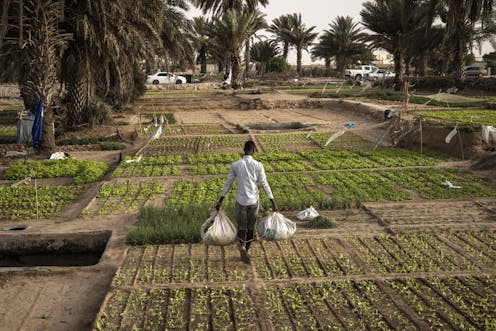
Urban farms like this one in Nouakchott, Mauritania, have many benefits. John Wessels/AFP via Getty Images)

Urban agriculture takes many forms, among them community, school or rooftop gardens, commercial urban farms, and hydroponic or aquaponic systems. These activities have been shown to promote sustainable cities in a number of ways. They enhance local food security and foster economic opportunities through small-scale farming initiatives. They also strengthen social cohesion by creating shared spaces for collaboration and learning.

However, evidence from some African countries (and other parts of the world) shows that very few young people are getting involved in agriculture, whether in urban, peri-urban or rural areas. Studies from Kenya, Tanzania, Ethiopia and Nigeria show that people aged between 15 and 34 have very little interest in agriculture, whether as an educational pathway or career. They perceive farming as physically demanding, low-paying and lacking in prestige. Systemic barriers like limited access to land, capital and skills also hold young people back.

South Africa has a higher rate of young people engaging in farming (24%) than elsewhere in sub-Saharan Africa. However, this number could be higher if young people better understood the benefits of a career in farming and if they had more support.

In a recent study I explored youth-driven urban agriculture in Khayelitsha, a large urban area outside Cape Town whose residents are mostly Black, low-income earners.

The young urban farmers I interviewed are using community gardens to grow more than vegetables. They’re also nurturing social connections, creating economic and business opportunities, and promoting environmental conservation. My findings highlight the transformative potential of youth-driven urban agriculture and how it can be a multifaceted response to urban challenges. It’s crucial that policy makers recognise the value of youth-led urban agriculture and support those doing the work.

The research

Khayelitsha is vibrant and bustling. But its approximately 400,000 residents have limited resources and often struggle to make a living.

I interviewed members of two youth-led gardens. One has just two members; the other has six. All my interviewees were aged between 22 and 27. The relatively low number of interviewees is typical of qualitative research, where the emphasis is placed on depth rather than breadth. This approach allows researchers to obtain detailed, context-rich data from a small, focused group of participants.

The first garden was founded in January 2020, just a few months before the pandemic struck. The founders wanted to tackle unemployment and food insecurity in their community. They hoped to create jobs for themselves and others, and to provide nutritional support, particularly for vulnerable groups like children with special needs.

The second garden was established in 2014 by three childhood friends. They were inspired by one founder’s grandmother, who loved gardening. They also wanted to promote organic farming, teach people healthy eating habits, and create a self-reliant community.

All of my interviewees were activists for food justice. This refers to efforts aimed at addressing systemic inequities in food production, distribution, and access, particularly for marginalised communities. It advocates for equitable access to nutritious, culturally appropriate food.

One of the gardens, for instance, operates about 30 beds. It cultivates a variety of produce: beetroot, carrots, spinach, pumpkins, potatoes, radishes, peas, lettuce and herbs. 30% of its produce is donated to local community centres each month (they were unable to say how many people benefited from this arrangement). The rest is sold to support the garden financially. Its paying clients include local restaurants and chefs, and members of the community. The garden also partners with schools, hospitals and other organisations to promote healthy eating and sustainable practices.

The second garden, which is on land belonging to a local early childhood development centre, also focuses on feeding the community, as well as engaging in food justice activism.

Skills, resilience and connections

The gardens also help members to develop skills. Members gain practical knowledge about sustainable agriculture, marketing and entrepreneurship, all while managing operations and planning for growth.


Read more:
Healthy food is hard to come by in Cape Town’s poorer areas: how community gardens can fix that


This hands-on experience instils a sense of responsibility and gives participants valuable skills they can apply in future careers or ventures. The founder of the first garden told me his skills empowered him to seek help from his own community rather than waiting for government intervention. He approached the management of an early childhood development centre in the community to request space on their land, and this was granted.

Social connections have been essential to the gardens’ success. Bonding capital (close ties within their networks) and bridging capital (connections beyond their immediate community) has allowed them to strengthen relationships between themselves and civil society organisations. They’ve also been able to mobilise resources, as in the case of the first garden accessing community land.

Additionally, the gardens foster community resilience. Members host workshops and events to educate residents about healthy eating, sustainable farming and environmental stewardship.

By donating produce to local early childhood centres, they provide direct benefits to those most in need. These efforts have transformed the gardens into safe spaces for the community.

Broader collaboration has also been key to the gardens’ success. For instance, the second garden has worked with global organisations and networks, like the Slow Food Youth Network, to share and gain knowledge about sustainable farming practices.

Room for growth

My findings highlight the need for targeted support for youth-driven urban agriculture initiatives. Policy and financial backing can enable these young gardeners to expand their efforts. This in turn will allow them to provide more food to their communities, create additional jobs, and empower more young people.

At a policy level, the government could prioritise land access for urban agriculture projects, especially in under-served communities. Cities can foster an environment for youth initiatives to thrive by allocating spaces within their planning for urban farming.


Read more:
Africa’s megacities threatened by heat, floods and disease – urgent action is needed to start greening and adapt to climate change


There’s also a need for educational programmes that emphasise the value of sustainable urban agriculture, and workshops and training on entrepreneurship and sustainable farming techniques. Community organising could further empower young farmers. Finally, continued collaboration with national and international food networks would help strengthen such initiatives.

The Conversation

Tinashe P. Kanosvamhira does not work for, consult, own shares in or receive funding from any company or organisation that would benefit from this article, and has disclosed no relevant affiliations beyond their academic appointment.

ref. Urban food gardens produce more than vegetables, they create bonds for young Capetonians – study – https://theconversation.com/urban-food-gardens-produce-more-than-vegetables-they-create-bonds-for-young-capetonians-study-243500

Southern Africa’s rangelands do many jobs, from feeding cattle to storing carbon: a review of 60 years of research

Source: The Conversation – USA – By Kevin Kirkman, Professor of Grassland Science, University of KwaZulu-Natal

South Africa’s rangelands have always had great value for the country. These areas offer more than just grazing for livestock. They provide services like purifying water, storing carbon and conserving biodiversity.

The grassland biome (28%), along with the savanna (32.5%) and the Nama-Karoo (19.5%), are collectively referred to as rangelands. They make up almost 80% of the land area of South Africa.

Their ecological services haven’t always been fully appreciated. Research into rangelands has evolved in response to environmental changes, human needs and scientific discoveries.

Commercial livestock production was the main concern when academics, researchers and practitioners met for the first congress of the Grassland Society of Southern Africa in 1966. Less than 15% of South Africa’s land surface area is arable. The only agricultural production possible on the balance of the land is livestock production from natural rangeland. Livestock production is thus a cornerstone of agriculture and food production in South Africa.

Six decades on, the Grassland Society has reflected – through a special issue of its journal, the African Journal of Range and Forage Science – on how it has tackled research challenges and adapted to shifting perceptions of rangelands.

Research has explored aspects of global change, bush encroachment and other changes in rangeland composition and function. Land transformation is another research area. Peri-urban sprawl, open-cast mining, timber plantations and other developments reduce and fragment rangeland. The result is increased pressure on the remaining, intact rangelands.

Widening scope

A review of research over the 60 years shows that early efforts focused mainly on forage production to support livestock industries. Research topics included rotational grazing and burning, as well as reinforcing rangelands by adding nutrients, forage grasses and legumes.

By the 1980s, it became clear that rangelands offered more than just grazing – they were vital ecosystems.

In the early 1990s, around the onset of democracy in South Africa, local researchers became part of global conversations around rangeland ecology. In doing so, they started to use the international terminology, instead of the old Dutch-derived word “veld”.

This shift was not just about geography, but about scope. Rangelands were increasingly seen as multifaceted ecosystems critical in the fight against climate change. Increasing temperatures, increasing atmospheric carbon dioxide levels and changing rainfall patterns pose a threat to all ecosystems. Understanding the response of rangelands is increasingly important in devising management strategies to adapt to these changes.

Scientists expanded their attention to preserving soil health, restoring degraded landscapes, and maintaining biodiversity. Issues like overgrazing, soil erosion and invasive species gained recognition in southern Africa. Degradation of rangelands in South Africa was first highlighted in the mid 1700s, and became a “mainstream” issue in the 1930s. Replacing a diverse group of wild animals with a single species of grazer, such as cattle, is the reason generally given for degradation. Fire has also been linked to it (often unfairly).

The Grassland Society responded by promoting ideas like adaptive grazing management (making decisions in response to conditions, rather than following a recipe approach). It also encouraged integrating indigenous knowledge with scientific research to create more sustainable and resilient land-use systems. This has helped shape land management practices across the region.

Many southern African rangelands face the challenge of balancing grazing with biodiversity conservation. Research on conservation agriculture and integrating livestock and wildlife systems is helping farmers and conservationists to find common ground. Wildlife, both in the conservation and the game production contexts, plays a critical role in South Africa’s economy. Tourism is one of the major contributors.

Land management is particularly important in the Mediterranean-climate regions of South Africa, where poor crop farming practices have damaged soil health. The research is guiding the development of more sustainable farming systems focused on soil regeneration and biodiversity.

A key indicator of ecosystem degradation is a decline in grassland forbs (herbaceous plants that are not grasses). They are highly sensitive to grazing pressure. So the role of wildflowers in ecosystem health and animal wellbeing has also become an important research area.

Climate change, fire suppression and overgrazing drive woody plant encroachment, where grasslands are turning into shrublands. This calls for integrated management approaches that consider fire, grazing and even controlled rewilding.

Fire is a natural element in many grassland ecosystems, and research has helped advance understanding of how it can be monitored and controlled to reduce risks while promoting healthy rangelands.

People and grasslands

Rangeland management has important social dimensions. Research is addressing issues such as land tenure, governance, community management systems on communal rangelands and indigenous knowledge in management decisions. These topics are essential for creating sustainable solutions that account for people’s livelihoods and needs.

In addition to these ecological, social and management advances, the Grassland Society of Southern Africa has worked to develop the next generation of rangeland scientists and practitioners. Through its congresses, workshops and journal publications, the society continues to foster dialogue across disciplines and communities. Its 60th congress will be held in July 2025.

The Conversation

Kevin Kirkman receives funding from the National Research Foundation.

Helga van der Merwe receives funding from the National Research Foundation.

Craig Morris does not work for, consult, own shares in or receive funding from any company or organisation that would benefit from this article, and has disclosed no relevant affiliations beyond their academic appointment.

ref. Southern Africa’s rangelands do many jobs, from feeding cattle to storing carbon: a review of 60 years of research – https://theconversation.com/southern-africas-rangelands-do-many-jobs-from-feeding-cattle-to-storing-carbon-a-review-of-60-years-of-research-254736

Do you live near a dam holding mine waste? 6 questions to ask

Source: The Conversation – USA – By Charles MacRobert, Associate Professor, Stellenbosch University

Mining is essential to modern lifestyles. Copper, iron and other mined products are vital to the products many people take for granted, like electronic devices. Being able to buy these goods quite easily may give a person a false sense of how difficult it is to extract the elements they’re made of.

Mining involves the removal of mineral-rich rock from the ground and processing it to extract the high-value minerals. Depending on the mineral, this quantity can be as low as a few grams in a tonne of rock.

For example, removing a tiny quantity of platinum from rock requires finely grinding the rock. The fine material that remains once the platinum is removed is known as tailings.

Every mining operation produces tailings. This can be coarse, like instant coffee granules, or fine, like cocoa powder. Tailings are typically mixed with water to form a liquid slurry that can be pumped and transported easily.

Slurry is kept in specially designed tailings dams. The designs are unique and depend on what is being mined and the local area.

Unfortunately, the history of mining is stained with examples of poorly managed dams that collapse, spilling the slurry, which is sometimes toxic. This can cause serious environmental, social and economic damage.

One such mine disaster happened in February 2025 in Zambia at the Sino-Metals Leach Zambia copper mine. Over 50 million litres of toxic waste flowed over the dam’s wall into the Mwambashi River. From there it flowed into one of the largest and longest Zambian rivers, the Kafue.

The pollution travelled further than 100km from the dam, contaminating the river, and killing fish and livestock on nearby farms. The Zambian government had to shut down municipal water to the city of Kitwe to protect residents from consuming the polluted water.

This should not have happened, because steps have been taken to ensure proactive management of dams. In 2020, the Global Industry Standard on Tailings Management introduced a new set of safety measures and standards.

Many mines are proactively embracing these standards. This enhances community trust in tailings dams. But other mines are not engaging with communities that might be affected by dams. Or communities may feel unsure what to ask the mines.

We are geotechnical engineers who have studied tailings dam collapses. Here, we outline six questions people living near mines should ask mine management to ensure they understand the key hazards and risks in their communities.

1. How far will the slurry flow?

Each tailings dam has a zone of influence. This is determined by analysing what would happen if the slurry breached the dam walls and started to flow out. It is an estimate of the area which would be swamped by tailings if the dam failed.

Generally, tailings disasters have caused significant damage up to a distance of 5km from the dam. If the tailings slurry gets into a river, it can flow hundreds of kilometres downstream.


Read more:
Burst mining dam in South Africa: what must be done to prevent another disaster


Zones of influence are often determined for extreme events, like once in a lifetime storms or large earthquakes. But zones of influence could also include places affected by dust or water pollution from the mine.

If you can see a tailings dam from where you live or work you should consider yourself within the zone of influence.

2. Who is responsible for the dam?

Clearly defined roles and responsibilities for day-to-day operation should be in place in every mine. There should be suitably qualified engineers appointed to carry out monitoring and maintenance of the dam. There need to be enough qualified people to cope with the size of the dam.

The management structure should set out how day-to-day issues related to the tailings dam are discussed between workers on the ground in mines and top management, and how solutions are found. Mines should also keep audit and inspection reports on their tailings dams, and records should be kept over the long term (because tailings dams are often operational for several decades).

3. What about the environment?

Mines should have plans to reduce the impact that tailings dams have on the environment. These would have been informed by public participation. The plans must state what monitoring is in place to measure the impacts of dust and water (groundwater and surface water).

The true extent of impacts only becomes apparent once the mine starts operating. So, the public should hold mines accountable for commitments made. Mines should satisfy communities that monitoring is continuing to identify and track the dam’s environmental impacts.

Closure plans should also be continuously communicated to mining-affected communities. This will assure the community that when the miners leave, they won’t be left with a dangerous dam near their homes, with no one to look after it.

4. Will the tailings dam be safe when it rains?

A common way that tailings dams fail is when water or slurry washes over the dam sidewalls. This washes away the support. It is known as overtopping, and can happen in storms or if too much tailing is pumped into the dam.

Overtopping is best managed by keeping the water a certain distance below the dam wall. Mine management must measure this regularly and control how much tailing they pump to the dam. Their task is to make sure that even in a severe storm the level will stay well below the top of the dam wall.

5. Has the dam always behaved as expected?

Small failure incidents such as sloughs, slides and bulges where dam walls move but no slurry is released can occur. Mines should investigate and report these, detailing likely causes and mitigation measures implemented.

Publicly available satellite imagery can easily show where mine tailings dams are becoming unstable. Mines should be transparent and provide explanations for these to avoid any speculation over whether the dam is stable or not.

6. What alterations have been made?

Sometimes dams must be changed to accommodate changes in mining or the extraction process. These changes could include how fast the dam is being built, moving the position of the dam wall, or placing material at the base of the wall to stabilise it.

The unexpected consequences of alterations to a tailings dam could be water seeping out and creating damp spots, leading to dam walls sagging or cracking. If left unchecked this can lead to structural failure.

When substantial changes are made to a dam’s design, mines need to demonstrate that sufficient consideration has gone into making these changes.

The Conversation

The authors do not work for, consult, own shares in or receive funding from any company or organisation that would benefit from this article, and have disclosed no relevant affiliations beyond their academic appointment.

ref. Do you live near a dam holding mine waste? 6 questions to ask – https://theconversation.com/do-you-live-near-a-dam-holding-mine-waste-6-questions-to-ask-256517

African women entrepreneurs are a smart bet for climate change investment: research shows why

Source: The Conversation – USA – By Kate Gannon, Assistant Professor, London School of Economics and Political Science

Women in Africa are often framed as especially vulnerable to climate change. Our earlier research suggested that women entrepreneurs often face a “triple differential vulnerability” to climate risk compared to men.

What we mean is that there are three possible reasons for their additional vulnerability. First, their livelihoods are often in climate sensitive sectors. Second, they face additional barriers to accessing resources for adaptation in the business environment – such as finance, new adaptation technologies and markets for climate smart goods and services. Last, they also hold primary responsibility for managing climate risk at the household level.

However, our new research also suggests a parallel, more overlooked reality. Women entrepreneurs may also be leading the way in action on climate resilience in Africa.

Through the Women Entrepreneurs in Climate Change Adaptation (WECCA) project we are researching this role of women as strategic actors in inclusive adaptation action.

Women’s entrepreneurship is key to development outcomes in Africa. This is because their businesses make wide ranging contributions to economic activity. They are active in critical agriculture and food processing value chains, which boosts export earnings. And through cooperatives, and savings groups, at the local level, women create access points to finance and markets for others in underserved regions. Studies also suggest women are more likely to use their profits to address the most critical household needs.

Small businesses form the backbone of most African economies. They generate most employment opportunities and provide essential goods and services.

Yet, these businesses are on the frontline of climate impacts. Floods, droughts, and concurrent disruption to power, water and transport networks threaten supply chains, disrupt markets, interrupt livelihood activities and damage business assets.

Businesses must adapt to survive. But how they adapt can make the difference between building long-term resilience and deepening vulnerability.

Results from our study of small businesses in climate vulnerable regions of Kenya and Senegal suggest that businesses with women leaders take a more sustainable approach to adaptation than those with only male leaders. This safeguards long-term business resilience. Our results also found adaptation assistance has a stronger impact on helping women-led small businesses adjust to climate change, compared to those led only by men.

These results suggest that supporting adaptation for women entrepreneurs isn’t just about fairness. It’s also a smart strategy for scaling up climate resilient economies. Building an inclusive business environment for adaptation may deliver bigger returns on investments for governments and donors.

Women entrepreneurs as strategic actors

Our study analysed survey data of small businesses in semi-arid regions of Senegal and Kenya. The aim was to consider how having female owners and managers shaped a business’s adaptation to extreme events.

Our dataset covered the Senegalese regions of Louga, Saint Louis and Kaolack. In Kenya, it covered the county of Laikipia. The regions experience extreme drought and flooding that is expected to increase in the coming decades. Entrepreneurship in these regions is particularly concentrated in agricultural sectors. These are highly exposed to the impacts of these extremes.

We investigated how a business having female leaders impacted the number of sustainable and unsustainable adaptation strategies that they adopted.

Following earlier literature, we classified adaptation strategies as:

  • “sustainable” when they maintain business operations at existing levels

  • “unsustainable” if they help businesses “cope” in the short term but result in a temporary (or sometimes permanent) reduction in business activity. This could reduce the resources that they have to cope with future climate impacts.

We found that businesses which include women within their management and ownership teams adopted fewer unsustainable adaptation measures than those led solely by men. Unsustainable adaptation actions are typically reactive coping strategies that can help businesses address immediate needs to minimise the negative impacts of climate shocks in the short term. These might include selling off business assets or cutting staff.

But these actions often come at a cost. They reduce business activity, undermine future growth, and may limit a business’s ability to recover from subsequent climate impacts.

In contrast, we found that businesses with female leaders were more likely to adopt sustainable adaptation measures that protected the long-term health of the business. These included:

  • diversifying income sources

  • switching to different crops

  • taking out loans or insurance.

Such strategies can help to reduce vulnerability to future climate shocks, and support income stability and recovery during periods of climate stress.

These findings are striking given the additional barriers that women face when trying to adapt.

It is well documented, for example, that women entrepreneurs in Africa face deeper constraints than men in accessing adaptation resources. This includes finance, training and technologies.

Similarly, gendered expectations around domestic responsibilities can limit women’s time and mobility, restricting their ability to attend training sessions or participate in external markets.

Social norms may also limit their decision-making power within households or businesses. This can make it harder to act independently on adaptation investments.

Given these constraints, the use of more sustainable adaptation strategies by women-led businesses deserves careful interpretation. Many of the sustainable measures we analysed – such as switching crops or diversifying income streams – can require less upfront capital than the unsustainable ones. Actions like selling assets or scaling back staff, meanwhile, are only possible if the business owns significant physical or financial resources to begin with.

The lower use of unsustainable strategies by women-led businesses may therefore reflect more limited coping capacity: they may simply have fewer assets to draw on when a shock hits.

Yet this makes the findings even more important. Sustainable strategies can still be highly effective. Our research suggests that women business leaders are often finding ways to adapt that are both practical and forward-looking, even when working with limited capital. In this sense, women entrepreneurs are not just more vulnerable – they are also strategic actors driving adaptation innovation, often with fewer resources.

What’s needed

These findings highlight not only the constraints women entrepreneurs continue to face, but also their untapped potential in adaptation.

What’s more, our study suggests that this potential can be especially powerful when the right support is in place. We found that when adaptation assistance (whether financial or technical) is made available, women-led businesses didn’t just catch up with their male-led counterparts. They often outperformed them.

This points to a highly strategic opportunity: that investing in adaptation for women entrepreneurs could deliver outsized benefits for climate resilience. For their businesses as well as the communities and economies they support.

This finding points to the need for governments to develop a business-enabling environment for adaptation that targets women entrepreneurs. This means designing policies, programmes, and support that address persistent gaps in access to tailored finance, technologies, and adaptation goods and services.

Better data is also needed. Our study used the best available data. But it was based on a relatively small sample from specific regions in Kenya and Senegal and should not be overgeneralised.

To test the strength of our findings, there is an urgent need for additional high-quality, gender-disaggregated datasets on business level adaptation behaviour.

The World Bank Enterprise Surveys could play a vital role, as one of the most extensive sources of data on small and medium-sized enterprises globally.

The Conversation

Kate Gannon receives funding from the UK Government’s Foreign, Commonwealth & Development Office (FCDO) and the International Development Research Centre (IDRC), Ottawa, Canada. She is also supported by funding from the Grantham Foundation for the Protection of the Environment. Kate Gannon is also an Associate of the Walker Institute at the University of Reading.

Shaikh Eskander received funding from IDRC.

ref. African women entrepreneurs are a smart bet for climate change investment: research shows why – https://theconversation.com/african-women-entrepreneurs-are-a-smart-bet-for-climate-change-investment-research-shows-why-252821

What keeps girls from school in Malawi? We asked them and it’s not just pregnancy

Source: The Conversation – USA – By Rachel Silver, Assistant Professor, York University, Canada

Coverage of the impact of the COVID-19 pandemic shutdowns on girls in Malawi emphasised the risks they faced as a result of not attending school. In particular, concerns about pregnancy garnered significant media attention.

The United Nations Children’s Fund, for example, published an article in March 2021 entitled “Schoolgirl shakes off COVID-19 regret: Lucy’s return to school”. Under a glossy photograph of a smiling girl, readers learn about 16-year-old Lucy, one of 13,000 Malawian students who became pregnant during COVID-19 school closures. The story went on to detail the dire consequences of sexual activity to Lucy’s well-being, and the redemptive power of an eventual return to school.

The Unicef piece echoed thousands of similar publications circulated after March 2020 that analysed COVID-19’s unique risk for girls in the global south and lamented lost returns to girls’ education.

In response to COVID-19 surges, Malawian schools closed for over seven months, during which the percentage of pregnancies to young women aged 10-19 did increase from 29% to 35% of total pregnancies.

Yet, our research has demonstrated that international development organisations and media outlets focused mostly on narrow, sexualised framings of risk to African girls and women rather than on the many intersecting and ongoing barriers to their well-being and school retention. These challenges both predate and extend beyond COVID-19.

As scholars of international development education who have conducted research in Malawi for over a decade, we decided to join Malawian educational activist and collaborator Stella Makhuva to research how girls themselves narrated their experiences of the COVID-19 years. What did they consider a risk to their schooling?

Together, we designed a longitudinal study from 2020 to 2023 that included multiple rounds of interviews and participatory journalling methods with 22 upper primary and secondary school girls in southern Malawi.

We found that for girls in our study, COVID-19 was less a rupture – an unusual event that threatened their education in unprecedented ways – than an added variable in the already complex calculations girls and their families made about whether and how to remain in school.

We argue that it was not pregnancy itself, but escalating resource constraints, that kept girls from school. And that interventions must do something about the real problem: inequitable systems.

The stories told by the girls illustrate this. (All the names are pseudonyms.)

Their stories

When Faith joined our study in 2020, she was attending a peri-urban
primary school near her home. She lived in a mud and grass-thatched house with her parents, both subsistence farmers who supported Faith’s and her siblings’ education. During school closures, she studied with friends to keep up with academic content when she was not helping with her parents’ farm.

Yet school costs threatened Faith’s return to school upon reopening. Despite primary school being officially “free” by government mandate, students at her school were required to contribute 800 Malawi kwacha (close to US$1 at the time) per term to a school fund for infrastructure projects and upkeep. Not paying into the fund resulted in exclusion from classes.


Read more:
Does free schooling give girls a better chance in life? Burundi study shows the poorest benefited most


When Faith eventually passed the Primary School Leaving Certificate Exam and enrolled in secondary school, the costs to schooling rose from 5,000 kwacha (about US$6.50 in early 2021) to 20,000 kwacha (about US$19 in late 2022). Faith worried about whether her parents, whose maize and tomato yields suffered from poor rains, would be able to pay.

On top of this, Faith paid other costs, from exam fees and bicycle rental fees to supplemental lessons in which she learned material never covered during school hours. She said she and her family often sacrificed eating sufficiently to save money.

Still, Faith was repeatedly pushed out of school until her fee balance was met. Before, during, and after COVID-19 school closures, girls like her were pushed out of school for a lack of regular fee payments.

Faith’s school-going was also threatened by warming temperatures and new rain patterns that left her family with diminished food and income. Added to this were volatility in government agricultural subsidies to small farmers, inflated school fees, and the increasing privatisation of public education in Malawi.


Read more:
Malawi faces a food crisis: why plans to avert hunger aren’t realistic and what can be done


Like Faith, all of the girls in our study worked to supplement their schooling with part time lessons, holiday classes, or by repeating grades given educational quality concerns. Based in under-resourced schools with low exam pass rates, girls knew that they were provided an incomplete education.

According to Brightness,

We do not learn fully what we are supposed to cover, and some teachers tend to be absent during their lessons. This makes us lag behind … As a result during exams they ask some questions which some of us … did not learn.

Empirical evidence has shown how teacher engagement has long been influenced by the region’s high disease burden, especially due to HIV/Aids. This has left teachers both ill and caring for ill relatives.

While teacher disengagement, therefore, reflected factors such as competing care responsibilities, professional dissatisfaction and stress, girls were deeply frustrated by what felt like abandonment.

Rethinking pregnancy and parenting

Mainstream discourses that missed key barriers to girls’ school retention and performance, such as privatisation and food insecurity, misrepresented student pregnancy as an emergent “crisis”.

Prior to the pandemic, sexuality and school-going already overlapped for many girls in Malawi, where adolescent pregnancy rates were threefold the global average. Still, girls in our study countered the idea that schooling and sex were incompatible. They also challenged the idea that school was inherently safe and that it was pregnancy that kept them from school.


Read more:
Education and gender equality: focus on girls isn’t fair and isn’t enough — global study


Many of the girls’ stories emphasised continuity with what came before the pandemic.

We have found this in past research. Schooling and sexuality are not necessarily opposed; but parents and teachers try to protect girls from sexuality; and parenting and non-parenting girls alike face significant resource-related barriers to schooling.

Conclusion

If girls’ choices, particularly around sexuality, do not represent the greatest or only source of risk for girls’ schooling, interventions must respond to this reality. They should support well-being and address the broader conditions in which girls live and learn. The problem is inequity, not pregnant girls.

The Conversation

Rachel Silver has received funding from the National Academy of Education/Spencer Foundation and the Social Science and Humanities Research Council of Canada.

Alyssa Morley has received funding for this work from the Spencer Foundation and Michigan State University’s Center for Gender in Global Context.

ref. What keeps girls from school in Malawi? We asked them and it’s not just pregnancy – https://theconversation.com/what-keeps-girls-from-school-in-malawi-we-asked-them-and-its-not-just-pregnancy-258401

Can academics use AI to write journal papers? What the guidelines say

Source: The Conversation – USA – By Sumaya Laher, Professor, University of the Witwatersrand

Artificial intelligence (AI) refers to “intelligent machines and algorithms that can reason and adapt based on sets of rules and environments which mimic human intelligence”. This field is evolving rapidly and the education sector, for one, is abuzz with discussion on AI use for writing.

This matters not just for academics, but for anyone relying on trustworthy information, from journalists and policymakers to educators and the public. Ensuring transparency in how AI is used protects the credibility of all published knowledge.


Read more:
AI in education: what those buzzwords mean


In education and research, AI can generate text, improve writing style, and even analyse data. It saves time and resources by allowing quick summarising of work, language editing and reference checking. It also holds potential for enhancing scholarly work and even inspiring new ideas.

Equally AI is able to generate entire pieces of work. Sometimes it’s difficult to distinguish original work written by an individual and work generated by AI.

This is a serious concern in the academic world – for universities, researchers, lecturers and students. Some uses of AI are seen as acceptable and others are not (or not yet).


Read more:
AI can be a danger to students – 3 things universities must do


As editor and editorial board member of several journals, and in my capacity as a researcher and professor of psychology, I have grappled with what counts as acceptable use of AI in academic writing. I looked to various published guidelines:

The guidelines are unanimous that AI tools cannot be listed as co-authors or take responsibility for the content. Authors remain fully responsible for verifying the accuracy, ethical use and integrity of all AI-influenced content. Routine assistance does not need citation, but any substantive AI-generated content must be clearly referenced.

Let’s unpack this a bit more.

Assisted versus generated content

In understanding AI use in academic writing, it’s important to distinguish between AI-assisted content and AI-generated content.

AI-assisted content refers to work that is predominantly written by an individual but has been improved with the aid of AI tools. For example, an author might use AI to assist with grammar checks, enhance sentence clarity, or provide style suggestions. The author remains in control, and the AI merely acts as a tool to polish the final product.

This kind of assistance is generally accepted by most publishers as well as the Committee on Publication Ethics, without the need for formal disclosure. That’s as long as the work remains original and the integrity of the research is upheld.

AI-generated content is produced by the AI itself. This could mean that the AI tool generates significant portions of text, or even entire sections, based on detailed instructions (prompts) provided by the author.

This raises ethical concerns, especially regarding originality, accuracy and authorship. Generative AI draws its content from various sources such as web scraping, public datasets, code repositories and user-generated content – basically any content that it is able to access. You can never be sure about the authenticity of the work. AI “hallucinations” are common. Generative AI might be plagiarising someone else’s work or infringing on copyright and you won’t know.


Read more:
What are AI hallucinations? Why AIs sometimes make things up


Thus, for AI-generated content, authors are required to make clear and explicit disclosures. In many cases, this type of content may face restrictions. Publishers may even reject it outright, as outlined in the Committee on Publication Ethics guidelines.

What’s allowed and what’s not

Based on my readings of the guidelines, I offer some practical tips for using AI in academic writing. These are fairly simple and could be applicable across disciplines.

  • The guidelines all say AI tools can be used for routine tasks like improving grammar, revising sentence structure, or assisting with literature searches. These applications do not require specific acknowledgement.

  • Across the guidelines reviewed, AI generated content is not allowed unless there are clear reasons why this was necessary for the research and the content is clearly marked and referenced as such. Thus, depending on how AI is used, it must be referenced in the manuscript. This could be in the literature review, or in the methods or results section.

  • Sage and the Committee on Publication Ethics emphasise that authors must disclose when AI-generated content is used by citing this appropriately. There are different conventions for citing AI use but all seem to agree that the name of the generative tool used, the date accessed and the prompt used should be cited. This level of transparency is necessary to uphold the credibility of academic work.

  • Other aspects linked to AI assistance like correcting code, generating tables or figures, reducing word count or checking on analyses cannot be referenced directly in the body of the manuscript. In line with current best practice recommendations, this should be indicated at the end of the manuscript.

  • Authors are responsible for checking the accuracy of any AI content, whether AI assisted or AI generated, ensuring it’s free from bias, plagiarism, and potential copyright infringements.

The final word (for now)

AI tools can undoubtedly enhance the academic writing process, but their use must be approached with transparency, caution, and respect for ethical standards.

Authors must remain vigilant in maintaining academic integrity, particularly when AI is involved. Authors should verify the accuracy and appropriateness of AI-generated content, ensuring that it doesn’t compromise the originality or validity of their work.


Read more:
South African university students use AI to help them understand – not to avoid work


There have been excellent suggestions as to when the declaration of AI should be mandatory, optional and unnecessary. If unsure, the best advice would be to include the use of any form of AI (assisted or generated) in the acknowledgement.

It is very likely that these recommendations will be revised in due course as AI continues to evolve. But it is equally important that we start somewhere. AI tools are here to stay. Let’s deal with it constructively and collaboratively.

The Conversation

Sumaya Laher does not work for, consult, own shares in or receive funding from any company or organisation that would benefit from this article, and has disclosed no relevant affiliations beyond their academic appointment.

ref. Can academics use AI to write journal papers? What the guidelines say – https://theconversation.com/can-academics-use-ai-to-write-journal-papers-what-the-guidelines-say-258824

We set out to improve literacy among struggling readers in Kenya – what we learnt

Source: The Conversation – USA – By Fridah Gatwiri Kiambati, Post Doctoral research scientist, African Population and Health Research Center

Literacy – being able to read, write and understand written or spoken language – is a cornerstone of educational achievement. Yet, for millions of children worldwide, acquiring basic literacy skills is a significant challenge.

This is a result of systemic inequalities, poverty, conflict, displacement and gender disparities. A Unicef report on global literacy levels in 2023 found that 89% of 10-year-olds in sub-Saharan Africa were unable to read or comprehend a basic story.

In Kenya, the gap in foundational literacy is stark. A nationwide evaluation of over 44,000 children across 1,973 primary schools in 2023 found that three in 10 grade 6 learners aged 11 struggled to read grade 3-level (age 8) texts.

These numbers highlight the critical need to address reading difficulties in early grades to ensure that learners do not fall behind irretrievably.

When learners aren’t able to read, they are likely to fall behind in literacy and other learning areas. This is because foundational learning skills – which include literacy (reading) and numeracy (basic maths) – are the building blocks for learning in later years of schooling and for lifelong learning.

I am an inclusive education researcher. I was involved in the Developing Readers Study. It set out to design and pilot an intervention to improve literacy skills among grade 2 and 3 learners who are furthest behind in reading.

The study, implemented by the African Population and Health Research Center, was aimed at providing policy-relevant evidence on how support for struggling readers can be formally and systematically incorporated into school timetables and education systems.

In 13 weeks, more than a third of the learners had become fluent readers.

The study

The Developing Readers Study was implemented in 15 schools in Kiambu County, which neighbours the Kenyan capital Nairobi. This was strategic to design, test and refine the intervention before scaling up.

The intervention started with the preparation of instruction materials. These included a teachers’ guide and assessment booklet, as well as homework packets for the learners. Teachers were trained on how to deliver the structured intervention while accommodating individual learner needs.

Learners were assessed to identify those with reading difficulties. Out of 2,805 learners from 15 schools screened, 920 (33%) learners had reading difficulties.

They were then categorised into three groups as per their reading levels at baseline:

  • module 1 for non-readers, who numbered 410 (45%)

  • module 2 for beginning readers, who could read 1-9 correct words per minute (212 learners, or 23%)

  • module 3 for intermediate readers who could read 10-16 correct words per minute (298 learners, or 32%).

The learners were then taken through remedial lessons for English and Kiswahili for 13 weeks. Each lesson lasted 30 minutes. During the intervention period, teachers received support from curriculum support officers, and quality assurance and standards officers in Kiambu County.

In addition, these officers observed the lessons to identify the support needed. Cluster meetings were held to gather teacher feedback on the implementation process.

Parents were also engaged through homework packets. This encouraged a supportive home environment for learning.

The results

The study led to significant improvements in literacy outcomes among participating learners over the 13 weeks.

  1. The proportion of non-readers who couldn’t read any correct word per minute reduced from 43.3% (following a few dropouts) to 18.9% at endline. This improvement highlights the power of targeted instruction to transform learning outcomes for struggling readers.

  2. Both boys and girls benefited from the programme. However, girls consistently outperformed boys in tasks like syllable and oral passage reading. These insights highlight the importance of designing interventions that address gender-specific learning needs.

  3. The programme equipped teachers with practical tools and strategies to give learners individual attention according to their needs. By the endline assessment, 92% of teachers were closely following the structured lesson guides, demonstrating increased confidence and competence.

  4. Parents played a pivotal role in the programme’s success. Weekly homework packets provided opportunities for learners to practise reading at home.

  5. Over a third of the learners (37%) advanced to emergent and fluent reading levels, meaning they no longer required remedial support. This progression was particularly notable among younger learners in grade 2, underscoring the value of early intervention.

The developing readers intervention stands out because it goes beyond addressing literacy challenges at the classroom level. It also brought in education officials, rigorous teacher training and contextualised learning materials.

Its findings demonstrate that structured, targeted interventions can effectively address foundational literacy gaps. This same model can be used elsewhere.

What next

The study provides a roadmap for addressing Kenya’s literacy crisis. Its positive outcomes demonstrate that early, targeted interventions can put struggling readers on the path to success.

Scaling up this programme offers an opportunity to ensure no child is left behind in acquiring foundational literacy skills.

To achieve this, policymakers must make sure remedial interventions take place at schools. They must also provide resources for teacher training and promote home-school collaboration.

With sustained investment and a commitment to evidence-based strategies, Kenya can bridge its literacy gap and pave the way for a brighter future for its learners.

The Conversation

Fridah Gatwiri Kiambati works for the African Population and Health Research Center. The Developing Readers Study, which this article is based was funded by the Gates foundation.

ref. We set out to improve literacy among struggling readers in Kenya – what we learnt – https://theconversation.com/we-set-out-to-improve-literacy-among-struggling-readers-in-kenya-what-we-learnt-253252

AI can be a danger to students – 3 things universities must do

Source: The Conversation – USA – By Sioux McKenna, Professor of Higher Education, Rhodes University, South Africa, Rhodes University

Generative artificial intelligence (AI) is trained on enormous bodies of text, video and images to identify patterns. It then creates new texts, videos and images on the basis of this pattern identification. Thanks to machine learning, it improves its ability to do so every time it is used.

As AI becomes embedded in academic life, a troubling reality has emerged: students are extremely vulnerable to its use. They don’t know enough about what AI is to be alert to its shortcomings. And they don’t know enough about their subject content to make judgements on this anyway. Most importantly, they don’t know what they don’t know.

As two academics involved in higher education teaching, we argue that there are four key dangers facing students in today’s world of AI. They are:

  • blind trust in its abilities

  • using it to side-step actual learning

  • not knowing how it works

  • perpetuating the gap between expertise and uncritical yet confident noise.

Given our experiences as academics who have developed curricula for students and who research generative AI, we think there are three things universities can do. They should teach critical AI literacy, emphasise why developing knowledge is important, and teach students why being an expert matters if they’re going to engage meaningfully with AI.

The four dangers

Blind trust in AI’s false confidence. A recent Microsoft report showed that those who know the least about a topic are the most likely to accept AI outputs as correct. Generative AI programs like ChatGPT and Claude produce text with remarkable confidence. Students lacking domain expertise can’t identify when these systems are completely wrong.

Headlines already demonstrate the consequences of this in the workplace: lawyers submitting fabricated case citations generated by AI, and hospitals using AI transcription tools that invent statements never actually made.

Generative AI can get it wrong because it doesn’t understand anything in the human sense of the word. But it can identify and replicate patterns with remarkable sophistication. These patterns include not only words and ideas but also tone and style.

Missing the power of education. A core purpose of higher education is to give students a new way of understanding the world and their place in it. When students use AI in ways that sidestep intellectual challenges, they miss this essential transformation.

When students simply outsource their thinking to AI, they’re getting credentials without competence. They might graduate with degrees but without knowledge and expertise.

The false confidence trap. Even students who develop critical awareness about AI’s limitations face what Punya Mishra, a learning engineer professor at Arizona State University, calls “the false confidence trap”. They might recognise that AI can produce errors but lack sufficient subject knowledge to correct those errors.

As Mishra puts it:

It’s like having a generic BS detector but no way to separate truth from fiction.

This creates a dangerous half-measure where students recognise AI isn’t perfect but can’t effectively evaluate its outputs.

Perpetuating the knowledge gap. As AI becomes ubiquitous in workplaces, the gap between those with genuine expertise and those relying solely on AI will widen. Students who haven’t developed their own knowledge foundations will be increasingly marginalised in a world that paradoxically values human expertise more, not less, as AI advances.

Answers

There are three steps universities can take.

Integrate critical AI literacy. Students need to understand how generative AI works – how AI is trained on massive databases of human-created texts and images to identify patterns by which to craft new outputs.

It’s not enough to have an “Intro to AI” course. Every discipline needs to show students how AI intersects with their field and, most significantly, empower them to reflect on the ethical implications of its use. This includes engaging in questions around the use of copyrighted materials for the training of generative AI, the biases inherent in AI generated texts and images, and the enormous environmental cost of AI use.

Emphasise knowledge development. Higher education institutions must actively counter the view that university is merely about the provision of credentials. We need to help students see the value of acquiring domain expertise. This is not always self-evident to those students who understand higher education only as a means to a job, which encourages them to engage with knowledge in an instrumentalist way – and thus to use AI in ways that prevent engagement with complex ideas. It is a personal relationship with knowledge that will prepare them for a future where AI is everywhere. Advocating for the power of knowledge needs to be a central part of every academic’s job description.

Model dual expertise. Academics should model what Mishra calls “the dual expertise challenge” — combining domain knowledge with critical AI literacy. This means demonstrating to students how experts engage with AI: analysing its outputs against established knowledge, identifying biases or gaps, and using AI as a tool to enhance human expertise rather than replace it.

As AI becomes increasingly sophisticated, the value of human expertise only grows. Universities that prepare students to critically engage with AI while developing deep domain knowledge will graduate the experts that society needs in this rapidly evolving technological landscape.

We have our work cut out for us, but expertise remains highly valued.

The Conversation

The authors do not work for, consult, own shares in or receive funding from any company or organisation that would benefit from this article, and have disclosed no relevant affiliations beyond their academic appointment.

ref. AI can be a danger to students – 3 things universities must do – https://theconversation.com/ai-can-be-a-danger-to-students-3-things-universities-must-do-255652

10 years ago Kenya set out to fix gender gaps in education – what’s working and what still needs to be done

Source: The Conversation – USA – By Benta A. Abuya, Research Scientist, African Population and Health Research Center

The Kenyan government launched a big attempt in 2015 to promote gender equality in and through the education sector. This was guided by principles of equal participation and inclusion of women and men, and girls and boys in national development.

The Education and Training Sector Gender Policy aligned with national, regional and global commitments. This included the constitution, and Sustainable Development Goals 4 on quality education and 5 on gender equality.

Years later, however, it became clear that the government wasn’t achieving some policy’s objectives. Gaps remained in reducing gender inequalities in access, participation and achievement at all levels of education.

The government decided to review the causes of these challenges and what could be done differently.

This led to a two-year joint study in partnership with the African Population and Health Research Center. The study began in 2022. Its overall objective was to provide evidence for action on mainstreaming gender issues in basic education in Kenya. Gender mainstreaming generally refers to being sensitive to gender when developing policies and curricula, governing schools, teaching and using learning materials.

The study specifically aimed to:

  1. examine how the teacher-training curriculum prepares teachers to implement gender mainstreaming strategies within the basic education sector

  2. examine how gender mainstreaming is practised in classrooms during teaching and learning

  3. assess the relationship between teaching practices and students’ attendance, choice of subjects and academic performance

  4. evaluate the availability of institutional policies, practices and guidelines to mainstream gender issues and the extent to which they influence gender mainstreaming in education.

I’m a gender and education researcher and was part of the team from the African Population and Health Research Center that collected data for the policy review. This data came from 10 counties with high child poverty rates and urban informal settlements. These indicators highlight an inability to access one or more basic needs or services.

The study involved teacher trainers and trainees. We also spoke to education officials, and learners in primary and secondary schools. We carried out classroom observations, knowledge and attitude surveys, questionnaires, key informant interviews and focus group discussions.


Read more:
6 priorities to get Kenya’s curriculum back on track – or risk excluding many children from education


The data showed gaps in teacher training, as well as institutional and teaching practices at the basic education level. Policy wasn’t being carried through in practice.

The gaps

Our study found that Kenya needs to review its teacher education curriculum to make it more gender responsive.

Teachers also need more training to follow practices that are gender responsive. These practices include extending positive reinforcement to girls and boys, maintaining eye contact and allowing learners to speak without interruption.

Deliberate steps should be taken to ensure that schools and teacher training colleges are gender inclusive in their practices, guidelines and programmes.

More specifically, our study found:

  • Teacher trainees had a relatively good understanding of gender-equitable teaching and learning practices. But there was a need to place greater importance on this in lesson planning and in supporting girls in science, technology, engineering and mathematics (STEM).

  • Gender mainstreaming is not built into the teacher training curriculum. It isn’t taught as a standalone unit. Teacher trainees learnt about it mainly from general courses, such as child development and psychology, or private training. And teacher trainees were unaware that they were being tested on this.

  • There were no significant gender differences in how teachers in pre-primary and primary school taught boys and girls. At the secondary level, however, teachers engaged boys more than girls during during literacy and STEM lessons.

  • At both primary and secondary levels, gender-equitable practices positively influenced learning outcomes in English and STEM subjects. These practices improved academic performances in English at the primary level. They led to improvements in biology, English, mathematics and physics at the secondary level.

  • The odds of school attendance increased if teachers treated boys and girls in equitable ways.

  • The odds of boys selecting chemistry and physics at the secondary level increased if the teacher of the subject was approachable and if the subject was considered applicable to future careers.

  • More than 40% of primary and secondary schools didn’t have guidelines on sexual harassment and gender-based violence for teachers and students. And most of the schools that said they had these guidelines couldn’t provide them to the research team. These guidelines help mainstream gender issues in schools and communities.

What next

To advance gender equality, Kenya must move beyond policy awareness. It must be more responsive to gender in teacher training, classroom practices and institutional leadership.

Our study recommends:

  • creating a positive and inclusive learning environment where both boys and girls feel valued, capable, and motivated to learn

  • teaching gender mainstreaming as a standalone unit, or integrating it into the teaching methodology

  • coaching, mentorship and modelling of best practices to trainee teachers

  • financial support for gender mainstreaming in all areas of teacher education

  • encouraging girls to pursue STEM subjects and careers at an early age through formal mentorship programmes

  • encouraging and empowering women teachers and parents to take up leadership positions in schools to provide role models for students.


Read more:
Kenya’s decision to make maths optional in high school is a bad idea – what should happen instead


Our findings offer a critical evidence base for the education ministry and other stakeholders. They should put accountability mechanisms in place.

Only through sustained, data-driven action can Kenya achieve a truly inclusive and equitable education system.

The Conversation

Benta A. Abuya does not work for, consult, own shares in or receive funding from any company or organisation that would benefit from this article, and has disclosed no relevant affiliations beyond their academic appointment.

ref. 10 years ago Kenya set out to fix gender gaps in education – what’s working and what still needs to be done – https://theconversation.com/10-years-ago-kenya-set-out-to-fix-gender-gaps-in-education-whats-working-and-what-still-needs-to-be-done-255400

Nigeria’s economy is growing but rural poverty is rising: 5 key policies to address the divide

Source: The Conversation – USA – By Stephen Onyeiwu, Professor of Economics & Business, Allegheny College

The Nigerian economy grew at a robust rate of 3.4% in 2024, the highest it has been since 2019 (except 2021 when the COVID rebound occurred).

This should have been cheering news, worthy of firecrackers and champagne-popping. Rather it came with a catch: the country’s poverty profile worsened.

In its annual review of the country, the World Bank applauded Nigeria for its economic reforms. These include the removal of fuel subsidies, liberalisation of the foreign exchange market and maintenance of a contractionary monetary policy. This is a policy of raising interest rates, reducing money supply and increasing borrowing costs to rein in inflation.

But the bank also drew attention to the fact that the country’s poverty profile has become grim. About 31% of Nigerians lived in poverty prior to the COVID-19 epidemic. Since then, an additional 42 million have become poor, increasing the poverty rate to about 46% in 2024.

Poverty is even worse in Nigeria’s rural communities: 75.5% live on US$2.15 or less per day (based on 2017 prices). The average poverty rate for sub-Saharan African countries was 36.5% in 2024 and 0.8% for East Asia and the Pacific.

Nigeria’s poverty rate would have been higher if the multidimensional poverty index had been used. In addition to income, the index considers access to education, health, decent housing, nutrition, sanitation, electricity and water. Access to these critical services has worsened for many Nigerians, despite improvements in macroeconomic stability.


Read more:
Poor rural infrastructure holds back food production by small Nigerian farmers


A challenge for policy makers is how to translate impressive macroeconomic outcomes into high-paying jobs, lower poverty rates and access to health, good sanitation, education, electricity and affordable housing. The question is even more acute for people in rural areas.

As an economist who has studied the Nigerian economy for over four decades and lived in a rural community, I believe Nigeria needs a radical shift in its economic policy approach.

One major step should be a change in the country’s growth drivers. Oil, information and communications technology and finance are the major drivers of growth in Nigeria.

These sectors are not employment-intensive, and they require skills that most Nigerians don’t have. Because of the lack of employment opportunities in these sectors, most Nigerians gravitate towards the informal sector, which accounts for about 90% of employment in the country.

By continuing to urge Nigerians to be patient for economic reforms to have a positive impact on their living conditions, the Tinubu administration appears to assume that improvements in macroeconomic performance will eventually manifest in lower unemployment and poverty rates. This notion of “trickle-down economics” is misconceived and illusory.

The government needs to intentionally create transmission mechanisms through which economic growth and macroeconomic stability can raise living standards.

Fostering growth with development

Concerted efforts will be needed to target poverty in general, and rural poverty in particular.

Five key policies could get Nigeria closer to this goal:

Building productive capacities: People who live in rural areas in Nigeria are eager to work and full of creative ideas and entrepreneurial spirit. But they lack the resources and opportunity to fully unleash their potential.

Building their productive capacities would entail giving them access to basic education, technical and managerial skills, and other productive resources such as tools, equipment, finance and land. The government should identify the comparative advantage of different rural communities, and put in place policies that encourage those communities to use their comparative advantage and distinctive competencies.

Opportunity to diversify incomes: In developed countries, many people hold multiple jobs. Most rural dwellers in Nigeria, however, rely on agriculture as their only source of livelihood.

Because of limited access to inputs and modern technology, and outdated agricultural practices, their productivity is often very low. Their low income makes it difficult to save and invest in education, health and housing.

Non-agricultural activities, especially manufacturing, need to be located in rural communities, to give rural dwellers the opportunity to diversify their income sources.

Agriculture-led industrial strategy: This would involve the location of manufacturing plants close to the sources of agricultural raw materials.

Nigerian manufacturers locate their factories in urban areas. The result of urban-biased development strategy in Nigeria has been the lack of employment opportunities in rural communities, and a decline in the rural population, from about 85% in 1960 to 46% in 2023.

Moving manufacturing to rural areas would require massive investment in infrastructure such as electricity, water, roads and health services.


Read more:
Nigeria’s new blue economy ministry could harness marine resources – moving the focus away from oil


Ending patriarchy and male domination: Women disproportionately bear the burden of rural poverty in Nigeria. A study in rural south-east Nigeria found that the poverty rate among women was 98%, compared to 85% for men. Men are often given preference regarding access to land, education, skills acquisition and financial inclusion.

Women are also imbued with the responsibility of caring for children, the elderly and the sick, as well as household chores. This leaves them with little time for paid work or opportunities to acquire marketable skills.

Ability to absorb shocks and vulnerability: Rural poverty is often exacerbated by shocks and vulnerability such as extreme weather conditions, attacks by insurgents and other criminal groups, and illness. With no safety nets, and little or no saving, most rural dwellers are unable to withstand shocks.

The Tinubu administration plans to disburse N25,000 (about US$17) each to 60 million Nigerians. But these kinds of support are too small, non-pervasive, irregular and unpredictable.


Read more:
Nigeria needs to close the financial inclusion gap for women smallholder farmers


What India and China have to teach

Nigeria could do well to borrow from the Indian model of an institutionalised safety net.

India issues “ration cards” to eligible households. The cards enable poor people to purchase essential food items such as grains, milk, eggs, cooking oil and bread at subsidised prices from designated stores.

Nigeria could finance this kind of programme with a special tax on oil companies and financial institutions, which frequently post huge after-tax profits.

China has had an impressive record of poverty reduction. Using the US$1.90 poverty line, China’s poverty rate decreased from 88.1% in 1981 to 0.3% in 2018.

The fall in rural poverty is even more dramatic, from 96% in 1980 to 1% in 2019.

This reduction was accomplished in stages, starting with an increase in agricultural productivity. It then shifted focus to the development of non-agricultural sectors of the economy, including manufacturing. These sectors were able to draw surplus labour from the agricultural sector, giving them skills that led to higher wages and poverty alleviation.


Read more:
Poor rural infrastructure holds back food production by small Nigerian farmers


Next steps

The World Bank in its report noted that addressing pressing social and humanitarian challenges remains critical to ensuring inclusive and sustainable growth in Nigeria.

Cash transfers and social assistance programmes could provide temporary relief for the poor in rural communities. But a long-term solution is to build their productive capacities and transform rural communities in ways that provide opportunities for income diversification.

The Conversation

Stephen Onyeiwu does not work for, consult, own shares in or receive funding from any company or organisation that would benefit from this article, and has disclosed no relevant affiliations beyond their academic appointment.

ref. Nigeria’s economy is growing but rural poverty is rising: 5 key policies to address the divide – https://theconversation.com/nigerias-economy-is-growing-but-rural-poverty-is-rising-5-key-policies-to-address-the-divide-257152