100 years ago, the Social Gospel movement pushed to improve workers’ lives – but also to promote its vision of Christian America

Source: The Conversation – USA (3) – By Christina Littlefield, Associate Professor of Communication and Religion, Pepperdine University

Immigrant children from Central Europe at a settlement house in St. Louis. Thomasa.nagel/Wikimedia Commons

President Donald Trump has praised the Gilded Age, which he believes was a time of immense national prosperity thanks to tariffs, no income tax, and few regulations on business.

Similar to today, the late 19th century was a time where a small group of men enjoyed immense wealth, privilege and power to shape the nation. It was a time of immense inequality, as factory and housing conditions crushed the lives of the poor.

And it was a time of white Christian nationalism.

In Northern cities, reformers saw the wealth gap, the plight of workers and the squalid conditions in tenements as undermining their vision of a Christian America. Fueled by faith, the Social Gospel movement worked to expand labor rights and improve living conditions at the turn of the 20th century.

At the same time, many of these white Protestant activists believed their own culture and race to be superior, and this prejudice hindered their efforts. They often spouted anti-Catholic and anti-immigrant rhetoric, and mostly ignored Black workers’ plight.

A black-and-white photo shows a man, woman and two children in a very simple room with dirty walls and almost no furniture.
One of Jacob Riis’ many photographs of living conditions on New York’s Lower East Side.
Bettmann via Getty Images

Ever since the Puritans landed, white Christian nationalism has informed how many Protestants try to shape their country – a history I trace with church historian Richard T. Hughes in the book “Christian America and the Kingdom of God.” But Christian nationalism has taken dramatically different forms over time. The progressive Social Gospellers of a century ago are a particularly striking contrast to the conservative Christian right that has shaped U.S. politics for half a century, up to today.

Guardians of a Christian nation

There are many differences between Christian nationalism then and now. Like many conservative Christians today, however, the Social Gospellers believed that the United States was uniquely chosen and blessed by God, and called to be a Christian nation. They saw themselves as the rightful guardians of that mission. And though the country was still overwhelmingly Protestant, they feared they were losing influence.

New research explored the history of the Bible – research that many Christians feared would undermine people’s trust in Scripture as the word of God, by emphasizing its human composition. New scientific ideas about the Earth’s creation and human evolution challenged their visions of an all-powerful, all-knowing God. Meanwhile, rapid industrialization and urbanization had created new social challenges, such as workers’ safety and living conditions, leading some to reject faith as irrelevant to their needs.

Social Gospellers wanted to vindicate Christianity and show it was still relevant to modern life. But white leaders’ vision of what a Christian America should look like conflated their Protestant faith with their race and culture.

Josiah Strong, for example, was a Congregationalist minister known for promoting factory safety. But he stoked fear of Catholic immigrants and endorsed the expansion of the U.S. as a benevolent empire. The Anglo-Saxon race “is destined to dispossess many weaker races, assimilate others, and mold the remainder,” Strong argued in his 1885 book, “Our Country.”

A black-and-white portrait of a man with a beard, looking serious, dressed in a suit and tie.
Baptist reformer Walter Rauschenbusch.
Library of Congress/Corbis/VCG via Getty Images

Another Social Gospel reformer, Northern Baptist theologian Walter Rauschenbusch, railed against unrestrained greed, political corruption, militarism and contempt between elites and the working class. But he shared the white supremacy of his age. God was favoring Germanic and Anglo-Saxon people, he claimed, to enact God’s purposes.

“Other races are as dear to God as we and he may be holding them in reserve to carry His banner when we drop it,” he wrote in an undated article. But it was part of God’s plan, he believed, for Northern Europeans to “hold the larger part of the world’s wealth and power in the hollow of their hands and the larger share of the world’s intellectual and spiritual possessions in the hollow of their heads.”

The ‘right’ kind of Christian

Though many white Protestants felt threatened by the challenges of immigration, they were still a clear majority, and they presumed that most Americans would endorse applying Christian ethics to public policy and social reform.

A black-and-white photograph shows a woman sitting outside, while rows of children sit on steps around her.
Jane Addams speaks to visitors in 1935 at Hull House, a settlement house in Chicago that she co-founded in 1889.
National Archives via Wikimedia Commons

What’s more, women gaining the right to vote in 1920 meant Social Gospel leaders expanded Protestants’ power at the ballot box. Many Social Gospel leaders embraced women’s suffrage because women were already leading supporters for their causes: For example, Frances Willard, who promoted temperance and workers’ rights; and Jane Addams, who ran a Christian “settlement house,” or community center, for the poor.

But in another sense, demographics were not on their side. The U.S. might have been a very white and Christian country, but in some Social Gospellers’ minds, the era’s waves of immigrants were not the “right” kind of Christian: Northern European and Protestant. Immigration was shifting from Great Britain, Ireland and Germany to Russia, Poland, Hungary and Italy. While Protestants far outnumbered Catholics nationally, Strong wrote that they were double the Protestant population in major cities like New York, Chicago and Philadelphia.

A black-and-white photograph of a woman in a dress and shawl, standing indoors with her young children, several of whom also wear dresses and shawls.
A Polish mother and her nine children waiting at Ellis Island.
U.S. National Park Service

Strong argued that Catholic immigrants were lazy, prone to alcoholism and criminal activity, and willing to sell their vote to corrupt city politicians. He claimed they would corrupt the morals of Anglo-Saxon Americans, and that if the Catholic population grew, it would undermine Protestants’ religious liberty.

Nativist views like these led to the National Origins Act of 1924, which restricted the number of immigrants. Quotas for each country were based on the profile of the American population in 1890 – an attempt to maintain Protestant dominance against Catholic and Jewish immigration from Southern and Eastern Europe. That distrust also kept Social Gospellers from partnering with Roman Catholic leaders on shared concern for workers.

Flourishing for all, or some?

Still, when it came to workers’ basic needs, reformers cared deeply about improving circumstances for the “least of these.” The movement was strongly influenced by the biblical parable of the sheep and the goats: verses in the Book of Matthew where Jesus promotes feeding the hungry, caring for the sick, clothing the naked and visiting those in prison.

Social Gospellers aimed to prove that Christianity could answer the social challenges caused by industrialization, urbanization and immigration. For the most part, they sought to use their privilege in ways that promoted the flourishing of all Americans, such as expanding labor rights and providing services to the poor through settlement houses.

A black-and-white photo shows several standing men and a seated boy surrounded by piles of fabric.
A photograph by Jacob Riis in a small New York City sweatshop in the 1880s.
Bettmann via Getty Images

In 1908, for example, the Federal Council of Churches adopted a 14-point statement called the “Social Creed,” affirming that churches should support reforms “to lift the crushing burdens of the poor, and to reduce the hardships and uphold the dignity of labor.” While some of the reforms they called for are taken for granted today — like one day off per week — other calls, like a living wage for all, are yet to be realized.

Over the past half-century, the modern Christian right, too, has feared that its vision for the nation is eroding. Conservative churches have seen their influence drop as more Americans move away from organized religion and reject their rejection of LGBTQ+ people.

I — along with other scholars — argue that these fears have helped fuel resurgent Christian nationalism today. Since merging with the tea party movement during the Obama administration, the Christian right has increasingly embraced an anti-immigration and anti-minority stance, fearing the loss of its own standing.

Like the Social Gospellers of a century ago, the Christian nationalists of recent decades are wary of religious and racial change in their country. Yet the movement’s priorities – often focused around its vision of families, sex and gender – are starkly more limited than the broader quality-of-life issues that Social Gospellers addressed.

Both groups desired an America rooted in biblical values. But each interpreted Scripture through its own lens, seeking to remake America in its own, white Protestant image.

The Conversation

Christina Littlefield does not work for, consult, own shares in or receive funding from any company or organization that would benefit from this article, and has disclosed no relevant affiliations beyond their academic appointment.

ref. 100 years ago, the Social Gospel movement pushed to improve workers’ lives – but also to promote its vision of Christian America – https://theconversation.com/100-years-ago-the-social-gospel-movement-pushed-to-improve-workers-lives-but-also-to-promote-its-vision-of-christian-america-255216

A field guide to ‘accelerationism’: White supremacist groups using violence to spur race war and create social chaos

Source: The Conversation – USA (3) – By Art Jipson, Associate Professor of Sociology, University of Dayton

Demonstrators clash with counterdemonstrators at the entrance to Lee Park in Charlottesville, Va., on Aug. 12, 2017. AP Photo/Steve Helber

A man named Regan Prater was charged with arson for the burning of Highlander Center in New Market, Tennessee, on May 7, 2025. The nonprofit has a long history of involvement in the Civil Rights Movement. The FBI stated in a court document that Prater participated in neo-Nazi Telegram group chats online.

Earlier this year, Brandon Clint Russell, founder of Atomwaffen Divison, also known as the National Socialist Resistance Front, a onetime neo-Nazi terrorist organization, according to the Department of Justice, was convicted of conspiracy to damage an energy facility in Baltimore.

In the fall of 2024, a 24-year-old man, Skyler Philippi, targeted the Nashville power grid with an explosive drone. Federal authorities allege that Philippi was motivated by white supremacist ideologies and affiliated with the extremist group the National Alliance.

In my research on right-wing extremism over 30 years, a disturbing pattern has emerged: White supremacists and white nationalists are increasingly willing to use violence targeting critical infrastructure in an effort to destabilize society.

Since the Ku Klux Klan’s resurgence in 1915, white supremacists have pushed for white control of society. In particular, white supremacist and neo-Nazi groups have long advocated violence to establish a white ethnostate, a proposed political entity or nation-state where residency and citizenship are exclusively limited to whites.

In the past several years, extremists have started using the term “accelerationism” to describe their desire to create social chaos and societal collapse that leads to a race war and the destruction of liberal democratic systems, paving the way for a white ethnostate.

What is accelerationism?

The motivating idea behind accelerationism is that social chaos creates an opportunity for extremists to create a racially or ideologically “pure” future.

Scholars who study extremism have used the term “accelerationism” since the 1980s, but it wasn’t widely associated with right-wing extremist violence until the late 2010s. People calling themselves “eco-fascists,” for example, often endorse mass violence as a means to reduce population and spark societal collapse.

Accelerationism is often connected to the white replacement theory, a white nationalist conspiracy theory that falsely asserts that there is a deliberate plot to diminish the influence and power of white people by replacing them with nonwhite populations.

While not all extremists who advocate violent confrontation use the label, the calls for violent disruption strive for the same results. Brenton Harrison Tarrant, the Australian white supremacist who perpetrated the Christchurch mosque shootings on March 15, 2019, in New Zealand, labeled an entire section of his online manifesto Destabilization and Accelerationism: Tactics for Victory.

Men and women standing behind a barricade, holding flags with swastika signs on them.
Members of the neo-Nazi National Socialist Movement salute and shout ‘sieg heil’ during a rally in front of the State House in Trenton, N.J., on April 16, 2011.
AP Photo/Mel Evans

This primer provides an overview of some of the key groups that have embraced accelerationist thinking, posing significant threats to public safety, democratic institutions and social cohesion.

The Order

One of the first American groups to embody this ideology was The Order – also known as Brüder Schweigen, or the Silent Brotherhood – which continues to influence newer generations of extremist organizations, both directly and indirectly.

Robert Jay Mathews, who founded The Order in 1983, was inspired by the apocalyptic vision laid out in the novel “The Turner Diaries.” The 1978 book by William Luther Pierce – under the pseudonym Andrew Macdonald – calls for a violent, apocalyptic race war to overthrow the U.S. government and exterminate Jews, nonwhite people and political enemies. Pierce founded the National Alliance – a neo-Nazi, white supremacist organization advocating for a white ethnostate and violent revolution – in 1974.

The call for violent insurrection and radical societal overhaul has since served as a blueprint for white supremacists and right-wing extremists.

The Order believed the U.S. federal government was under the control of Jews and other minority groups, and it aimed to overthrow it to create a white ethnostate. The Order funded its activities through robberies, including US$3.6 million taken from an armored car near Ukiah, California, on July 19, 1984.

Its criminal and violent actions escalated to murder, most notably the 1984 assassination of Jewish radio host Alan Berg in Denver by Order member Bruce Pierce.

Atomwaffen Division (AWD)

The Atomwaffen Division, one of the most violent neo-Nazi accelerationist groups in the U.S., was officially founded in October 2015 by Brandon Clint Russell, a former Florida National Guardsman.

Russell had been active on a neo-Nazi web forum IronMarch.org since 2014 and announced the group’s formation on the site. He used the handle “Odin” to connect with other far-right extremists.

AWD quickly gained notoriety for its violent, neo-Nazi ideology, advocating for a race war and the collapse of the U.S. government through terrorism. The group drew inspiration from the writings of white supremacist James Mason, particularly his collection of essays titled “Siege.”

AWD’s activities included recruiting members on university campuses and among military personnel, engaging in paramilitary training, and promoting accelerationist violence. The group has been linked to multiple murders and plots in the United States and has inspired offshoots in Europe and other regions.

By 2020, AWD unraveled due to law enforcement pressure, prosecutions and internal splits. Though not fully gone, it effectively stopped operating under its name. Members helped form the National Socialist Order, which continues to promote Mason’s “Siege” and violent accelerationism.

Active Club Network

Active clubs are loosely organized, often regional groups of white supremacists and neofascists who combine fitness, combat training and ideology to promote violence and white nationalist goals. Members protest Pride and multicultual events and recruit members through fighting and combat sports. Active clubs and similar extremist networks use a multipronged recruitment strategy, combining online reach via Telegram and other social media with in-person, fighting-based community-building to attract new members.

Men standing behind a barricade, holding a red flag with a swastika sign on it.
Neo-Nazi counterdemonstrators shout angrily at the marchers from behind police barricades during the Lesbian and Gay Pride March on Fifth Avenue in New York, on June 25, 1995.
AP Photo/Kathy Willens

Emerging in 2017 from the street-fighting “Rise Above Movement” in Southern California and gaining prominence in the 2020s through the rise of The Active Club Network, or ACN, this movement demonstrated a shift from online-only, far-right groups to groups willing to fight.

Beginning in December 2020, The Active Club Network formed as a loosely affiliated, decentralized web of white supremacist, fascist and accelerationist groups that operate under a shared banner promoting physical training, brotherhood and militant white nationalism.

The Base

Founded around 2018, The Base represents one of the most explicit modern expressions of white nationalist accelerationism: as it is known by members, its “Siege Culture.”

Founded by Rinaldo Nazzaro, an American living in Russia who used the name Roman Wolf, the group recruited ex-military and survivalists preparing for collapse through self-sufficiency, aiming to spark a race war. The Base was directly influenced by James Mason’s book “Siege.”

The Base operates as a decentralized network of cells trained in paramilitary tactics, sabotage and guerrilla warfare. Their online propaganda explicitly calls for violent action to destabilize society.

Its members have been involved in plots to murder anti-fascist activists, poison water supplies, derail trains and attack critical infrastructure. In 2020, multiple members were arrested before they could carry out an armed assault at a pro-gun rally in Richmond, Virginia, where they planned to attack police officers and civilians.

Although several members have been arrested and convicted on a variety of crimes, including conspiracy to commit murder, civil disorder, firearm charges, vandalism and other violent crimes, The Base illustrates a fundamental feature of accelerationism: “leaderless resistance,” or a lack of a centralized leadership, which helps it survive and thrive. Its ideology and tactics are spread through online forums dedicated to white supremacist propaganda.

Patriot Front

Founded in 2017 by Thomas Rousseau, Patriot Front is a white supremacist group that emerged from a split with Vanguard America following the Unite the Right rally in Charlottesville, Virginia. Vanguard America was a white supremacist group that opposed multiculturalism and whose members believed America should be an exclusively white nation.

The goals of the organizers of the Unite the Right rally included unifying the American white nationalist movement and opposing the proposed removal of the statue of Robert E. Lee, the general who led the Confederate troops of slave states during the Civil War, from Charlottesville’s former Lee Park. The rally sparked a national debate over Confederate iconography, racial violence and white supremacy.

The Patriot Front defines itself as an organization of “American nationalists.” According to the Anti-Defamation League, since 2019 the Patriot Front has been responsible for a majority of white supremacist propaganda distributed in the United States, using flyers, posters, stickers, banners and the internet to spread its ideology.

The group frequently participates in localized “flash demonstrations” where it marches near city halls. Such demonstrations have also increasingly made it one of the United States’ most visible white supremacist groups. In 2024, Patriot Front held demonstrations on patriotic holidays such as Memorial Day, the Fourth of July and Labor Day.

Although the group claims loyalty to America, the Patriot Front’s ultimate goal is to form a new state that advocates for the “descendants of its creators” – namely, white men.

Understanding the motivations and tactics of accelerationist groups and individuals, I believe, is critical to recognizing and countering the dangers they represent.

The Conversation

Art Jipson does not work for, consult, own shares in or receive funding from any company or organization that would benefit from this article, and has disclosed no relevant affiliations beyond their academic appointment.

ref. A field guide to ‘accelerationism’: White supremacist groups using violence to spur race war and create social chaos – https://theconversation.com/a-field-guide-to-accelerationism-white-supremacist-groups-using-violence-to-spur-race-war-and-create-social-chaos-255699

Sustainable economic growth in South Africa will come from renewables, not coal: what our model shows

Source: The Conversation – USA – By Andrew Phiri, Associate Professor of Economics, Nelson Mandela University

Coal fired power stations produce 85% of South Africa’s electricity, making the country the biggest producer of harmful greenhouse-gas emissions in Africa. To move away from coal and meet its commitment to reaching net zero emissions by 2050, South Africa needs to dramatically increase production of renewable energy. New research by economics associate professor Andrew Phiri looked at the relationship between renewable and non-renewable energy consumption and GDP growth in South Africa to find out which energy source is most compatible with economic development.

Non-renewables, renewables and economic growth: what’s there to know?

We set out to discover whether renewable energy in South Africa, such as wind or solar power, supports sustainable economic growth. We also wanted to find out if renewables can replace non-renewable energy as a source and enabler of economic growth.

Together with student Tsepiso Sesoai, I did research comparing the impact of renewable and non-renewable energy on economic growth in South Africa.

South Africa currently faces a dual challenge when it comes to energy. It is heavily dependent on non-renewable energy (coal), which also worsens global warming and speeds up climate change. But it desperately needs to grow the economy at a faster rate, given very high unemployment, poverty and inequality.

It’s therefore important to find out whether South Africa would be able to make a smooth transition from non-renewable energy to cleaner energy, and grow the economy at the same time.

Past studies have looked into the role of energy in South Africa’s economic growth, but their methods have provided only limited information about whether South Africa can make a smooth transition from dirty to clean energy.


Read more:
African economic expansion need not threaten global carbon targets: study points out the path to green growth


To get a deeper understanding, we conducted a modelling exercise. We used an analytical tool called “continuous complex wavelets” to see how renewable and non-renewable energy influences growth over time.

Our model shows that an increased supply and higher consumption of non-renewable energy causes long-term economic growth over 10-15 year cycles. Renewables, at best, have short-term growth effects over six months to one year.

After 2000, there was a very sharp increase of almost 25% in the use of renewable energy throughout the decade. According to our model, this sharp increase was enough to have an impact on economic growth over the short term but not over the long term.

This is because South African energy regulators have not adopted strong enough measures for renewable energy to enable long-term growth. They have not funded the mass rollout of renewable energy, or connected renewables to the national grid. We found that renewables can only sustain growth over six to 12 month cycles whereas policymakers work towards longer cycles such as the 2030 and 2050 sustainable development goals.

Economic growth and coal consumption: what did you find?

In 2003, the government started taking climate change seriously with the release of the White Paper on Renewable Energy. The government started intentionally trying to increase the use of renewable energy while decreasing the use of dirty energy, such as coal. Before this, South Africa’s economic growth was heavily driven by coal consumption.

Renewable energy saw its biggest surge after the 2010 launch of the Renewable Energy Independent Power Producer Procurement Programme. This opened competitive bidding for renewable energy providers to supply electricity to the grid.

The transition to renewable energy had begun. But coal-fired power, while declining, remained the main source of electricity.

In 2019 carbon taxes were formally introduced. This resulted in a further slowdown in consumption of non-renewable energy. The COVID-19 pandemic in 2020 and 2021 coincided with severe power cuts. These two events combined caused a general slowdown in non-renewable and renewable energy use, and in economic growth.

At this point, the drop in coal consumption was actively dragging down the economy. This in turn reduced society’s income, as measured by the gross national product. And because incomes were constrained, fewer private households purchased renewable energy systems. People didn’t spend on solar panels.

What do your findings mean?

Our research suggests that relying on non-renewable energy, like coal, won’t lead to long-term growth for South Africa. This is because non-renewables are not a reliable source of energy, as shown by loadshedding.

Our research further suggests that renewable energy policies, subsidies and programmes made some positive short-term impacts on economic growth, measured as gross domestic product.

Overall, our findings highlight that policymakers have treated renewables as a “nice-to-have” gesture for humanity, instead of a key driver of long-term economic growth.

This has led to weak policies, poor regulation, and under-investment in renewable energy. These have held the sector back from making a bigger contribution to economic growth.


Read more:
Africa doesn’t have a choice between economic growth and protecting the environment: how they can go hand in hand


For example, the government has not taken renewables seriously enough to include them in the power grid. This has largely limited the use of renewable energy to private homes and businesses. Coal-fired electricity from the country’s power utility, Eskom, is still cheaper for households than leaving the grid and purchasing their own renewable energy infrastructure (solar energy systems). The government has not funded the infrastructure needed to unlock South Africa’s vast renewable energy potential.

The planet is at a critical state with global warming. The government should urgently set up policies and actions to overcome the barriers to using renewable energy. Only then will renewable energy have a permanent, positive influence on economic growth.

South Africa has huge potential in renewables like solar, wind and biomass, thanks to its diverse geography. Yet, when people think about moving away from coal, they worry about job losses in the coal industry. But historically, energy transitions have never been instant. African countries that embraced the change early on reaped the benefits. They became more industrialised and prosperous.

The South African government must act now if it wants to use renewable energy to drive future economic growth and stay ahead in the global shift to clean energy. Climate change affects us deeply. But it also presents a chance for Africa to leap ahead technologically.

The Conversation

Andrew Phiri does not work for, consult, own shares in or receive funding from any company or organisation that would benefit from this article, and has disclosed no relevant affiliations beyond their academic appointment.

ref. Sustainable economic growth in South Africa will come from renewables, not coal: what our model shows – https://theconversation.com/sustainable-economic-growth-in-south-africa-will-come-from-renewables-not-coal-what-our-model-shows-239339

Lake Victoria is turning green – the deadly bacteria behind it

Source: The Conversation – USA – By Lauren Hart, PhD candidate, Michigan Geomicrobiology Lab, University of Michigan

Lakes, natural and man-made, provide water, food and habitats for wildlife, as well as supporting local economies. Around the world, though, there’s a growing threat to lakes: toxic bacteria which turn the water green.

This is the same green as you see on stagnant ponds. It’s caused by tiny organisms called cyanobacteria and can be deadly.

Cyanobacteria thrive in warm, sunny lakes and ponds that contain excess nitrogen and phosphorus nutrients derived from fertiliser, manure and sewage. When conditions are right, cyanobacteria multiply rapidly and form smelly green scums on the water’s surface.

Known to science as cyanoHABs (cyanobacterial harmful algal blooms), the scums are harmful to livestock, wildlife, pets, people and aquatic organisms like fish. Toxins make untreated water unsafe to drink, swim in, or even touch. Sometimes they can become suspended in air and be inhaled. The cyanoHABs also harm ecosystems by depleting oxygen, killing off whatever lives in the water, and disrupting food webs and fisheries.

CyanoHABs are a global threat and receive considerable scientific attention in North America and Europe. Blooms are becoming more widespread worldwide because rising temperatures promote cyanobacterial growth and more intense rainfall delivers nutrients from the landscape. Only effective management of nutrients can reverse this trend.

The problem is understudied in Africa’s main lakes, including its largest – Lake Victoria. Past research on cyanoHABs has mostly used microscopy to study the kinds found there, but microscopy cannot differentiate between toxic and non-toxic cyanobacterial cells.

We are on a large project team of scientists who have been studying the socioeconomic and environmental effects of cyanoHABs in the Winam Gulf region of Lake Victoria in south-western Kenya.

Our latest study identified which cyanobacteria were the most abundant in the gulf and which ones were producing the main toxin of concern.

These findings can improve public safety:

  • local authorities can monitor for specific cyanobacteria and warn residents to stay away when blooms are present

  • cyanoHAB prevention practices (nutrient reduction, land-use practices) can target the cyanobacteria that cause the problem.

Greening of lakes

Lake Victoria now receives large influxes of nutrients because of growing lakeside populations and land-use changes. Nutrients from agriculture, industry and urbanisation fuel the growth of cyanoHABs.

CyanoHABs occur in many basins in Lake Victoria but are highly concentrated in Kenya’s shallow Winam/Nyanza Gulf. Changing nutrient and temperature conditions can also alter which types of cyanobacteria dominate the gulf and the types and levels of toxins in the water. Lakeside communities that rely on the gulf for drinking water and domestic tasks are at risk of exposure to cyanoHAB toxins.

Past research on cyanoHABs has mostly used the oldest of microbiological techniques — microscopy — to classify the types of cyanobacteria in the gulf. This cannot differentiate between toxic and non-toxic cyanobacterial cells.

Modern genome sequencing technologies can identify genes encoding the production of known and novel toxins and other molecules of interest, such as those with medicinal properties. Genomic data from African Great Lakes is scarce, so the chemical capabilities of bacteria in this region are largely unexplored. But this is beginning to change.

Our latest study adds to a growing number of recent studies our team has carried out in and around Lake Victoria. In this study, our research vessel stopped at over 31 sites to collect scientific samples and data. The samples were later analysed for DNA, the biological “instruction manual” inside every living thing. DNA tells an organism how to grow, function, reproduce, and – in the case of cyanobacteria – make deadly toxins. This analysis produced near-complete genome sequences – that is, the set of all genes in the DNA – for organisms at each sampling site.

Past reports identified Microcystis as the dominant cyanobacteria in the Winam Gulf. Our research, however, found Dolichospermum was the most abundant type in major cyanoHAB events there. This finding might be due to recent environmental changes in the region.

But we linked Microcystis to microcystin. This is a liver-damaging toxin that can kill livestock, wildlife and humans, especially those whose immune system isn’t working well. In Winam Gulf, it’s often more abundant than the health limits set by the WHO.

Our study also found that Microcystis occurs mainly in murkier river mouths where green scums are not visible, making scientific monitoring and public alerts even more important.

Local authorities can now monitor for these cyanobacteria and warn residents to stay away when blooms are present.

The findings also mean that authorities know which cyanobacteria to target in prevention efforts like reducing the amount of phosphorus and other nutrients entering the gulf.

Lastly, our genomic study uncovered over 300 uncharacterised genes that may produce novel cyanobacterial molecules. These molecules could have toxic or therapeutic effects, and provide an opportunity for future investigators to explore.

A model for what is to come

Rapid human population growth and settlement around lakes and their watersheds is leading to high levels nutrients in lakes around the world. This results in excessive growth of algae and aquatic plants. This danger is likely to increase with global warming because warm temperatures promote algal blooms.

Our data provides a foundation for remedying this in Lake Victoria – and possibly discovering beneficial properties in cyanoHABs.

The Conversation

Lauren Hart receives funding from National Institute of Health.

George S Bullerjahn receives funding from the National Science Foundation.

Gregory J. Dick receives funding from the National Science Foundation, the National Oceanic and Atmospheric Administration, the National Institutes for Health, and the US Geological Survey.

Kefa M. Otiso receives funding from the US National Science Foundation.

ref. Lake Victoria is turning green – the deadly bacteria behind it – https://theconversation.com/lake-victoria-is-turning-green-the-deadly-bacteria-behind-it-249298

Has finance for green industry had an impact in Africa? What’s happened in 41 countries over 20 years

Source: The Conversation – USA – By Nara Monkam, Associate Professor of Public Economics, Chair in Municipal Finance within the Department of Economics, and Head of the Public Policy Hub at the University of Pretoria, University of Pretoria

The African continent finds itself in a predicament. Advanced economies in the rest of the world developed through industrialisation: their economies transformed from mainly agricultural to industrial. This involved burning fossil fuels like coal, generating greenhouse gas emissions that caused global warming.

African economies have trailed behind industrially. They’re now industrialising at a time when the world is moving away from fossil fuels and towards solar power, wind energy and hydropower.

Africa has 60% of the world’s best solar resources but only 1% of the world’s installed solar power systems. Despite renewable energy capacity nearly doubling in the last decade, only 2% of global investments in renewable energy went to Africa.

Green industrialisation could be the answer: achieving long-term economic growth and industrial development that does not harm the environment. But in most African countries, renewable energy is more expensive than fossil fuels, which are readily available in many parts of the continent. Africa is also one of the world’s poorest regions and cannot easily afford green technologies.

So a key issue in economic development is how to stimulate green industrial productivity. Green finance (funding from banks and investors specifically for environmentally friendly projects) can fund green innovations. These include renewable energy technologies, energy-efficient building designs, or electric vehicles.


Read more:
Africa doesn’t have a choice between economic growth and protecting the environment: how they can go hand in hand


I am an economist who worked with a team of researchers to study the impact of green finance on industrialisation in Africa. We also wanted to find out if green innovation influenced the effect that green finance has on industrialisation. (This was measured in this study as the total industrial value added as a percentage of gross domestic product.)

For example, switching to renewable energy like solar power reduces greenhouse gas emissions, and helps mitigate climate change. But the high costs of renewable energy equipment could harm industrial growth.

The research analysed macroeconomic and energy, green finance and industrialisation statistics from 41 African countries between 2000 and 2020.

Our research found that green finance offers funding opportunities for clean and innovative technologies and creating new jobs in green sectors. However, the potential of green financing to drive industrialisation through green innovation (such as renewable energy projects) is not being realised.


Read more:
How green innovation could be the key to growth for the UK’s rural businesses


This is because renewable energy comes with high costs. There also are not enough skilled people available to run green projects. There’s a lack of proper roads, connectivity or transmission lines to connect renewable energy to the main grid. The basic conditions for industrial growth through renewable energy are not in place.

Governments in Africa should find ways to make green innovation work. This will mean that society can enjoy the benefit of new environmentally friendly projects.

How to make green innovation work

African governments should focus on increasing people’s access to renewable energy projects. For this to happen, they need to put more funding and effort into developing renewable energy infrastructure. Renewable energy technologies must be available and affordable.

Education and capacity building is needed, particularly in rural communities. For example, community-owned solar microgrid projects provide people with the skills needed to manage and look after renewable energy systems.

Governments will need to subsidise local manufacturing of renewable energy components. When these are produced locally, this can help harness the potential of green innovation for industrialisation and also create jobs.

Countries must co-operate regionally on green innovation. This means sharing best practices, pooling resources, and making coordinated efforts towards green industrialisation.

Our research found that it would be useful to set up regional centres of excellence for renewable energy research and development. Regional alliances are also needed, so that countries can work together to negotiate better terms for green finance. This could enhance Africa’s journey towards the kind of green industrialisation that is cost effective and sustainable over time.

What needs to happen next

These steps would boost the impact of green finance on industrialisation in Africa:

  • more climate finance, including finance from the private sector

  • environmental taxation – a policy tool to limit activities, goods or services that have negative environmental impacts

  • reform of multilateral development agencies to make it easier for African countries to access to climate funds

  • development bank funding tailored to the needs of African countries. Nations that invest in renewable energy manufacturing should get tax breaks and other incentives. Green bonds that only fund renewable energy projects should be issued to attract private investors

  • vocational training and higher education programmes that focus on training people in green technologies must get government funding.

Africa has a huge problem with trying to build some resilience to the effects of climate change, such as floods and drought. Economic development is also a challenge on the continent. Both could be addressed by green industrialisation. With the right investments in green finance, innovation and infrastructure, the continent can unlock sustainable growth, reduce poverty and help curb climate change.

The Conversation

Nara Monkam receives funding from the University of Pretoria.

ref. Has finance for green industry had an impact in Africa? What’s happened in 41 countries over 20 years – https://theconversation.com/has-finance-for-green-industry-had-an-impact-in-africa-whats-happened-in-41-countries-over-20-years-244567

Flooding incidents in Ghana’s capital are on the rise. Researchers chase the cause

Source: The Conversation – USA – By Stephen Appiah Takyi, Senior Lecturer, Department of Planning, Kwame Nkrumah University of Science and Technology (KNUST)

Urban flooding is a major problem in the global south. In west and central Africa, more than 4 million people were affected by flooding in 2024. In Ghana, cities suffer damage from flooding every year.

Ghana’s president, John Dramani Mahama, has established a task force to find ways of improving flood resilience in the country. This is partly driven by an increase in flooding incidents in cities such as Accra and Kumasi in the last decade.

We are urban planning and sustainability scholars. In a recent paper we analysed whether flooding in Accra, Ghana’s capital, was caused by climate change or poor land use planning.

We conclude from our analysis that flooding is caused by poor and uncoordinated land use planning rather than climate change. We recommend that the physical planning department and other regulatory agencies are equipped to ensure the effective enforcement the relevant land use regulations.

Mixed push factors

The Accra metropolitan area is one of the 29 administrative units of Ghana’s Greater Accra region. It is the most populous region in Ghana, with over five million residents, according to the 2021 Housing and Population Census.

We interviewed 100 households living in areas such as Kaneshie, Adabraka and Kwame Nkrumah Circle. These areas experience a high incidence of floods. Representatives of agencies such as the Physical Planning Department of the Accra Metropolitan Assembly, the National Disaster Management Organisation and the Environmental Protection Agency were interviewed too, about:

  • the nature and areas most prone to flooding in the study area

  • the frequency of flooding

  • land use planning and regulations and their influence on flooding.

About 40% of the people we interviewed attributed flooding to both weak enforcement of land use regulation and changes in rainfall patterns. Most of the households (52%) said floods in Accra were the result of weak enforcement of land use regulations, while 8% blamed changes in land use regulations.

We also analysed recorded data on flood incidence and rainfall. We found no correlation between increased rainfall and flooding. For example in 2017 there was a decrease in rainfall, but an increase in flooding.

This finding points to the fact that rainfall isn’t the only factor contributing to flooding in the city.

The agencies and city residents reported that between 2008 and 2018, they could see that more people were encroaching on the city’s wetlands by building homes and commercial infrastructure. This has changed the natural flow of water bodies. The Greater Accra Metropolitan and its environs has major wetlands such as Densu Delta, Sakumo Lagoon and Songor Lagoon.

Interview respondents noted that the siting of unauthorised buildings and the encroachment on buffer zones of water bodies in the city could have been averted. They blamed political interference in the enforcement of land use regulation. The government makes the situation worse in two ways, they said:

  • planning standards and regulations are neglected in the development process. The processes involved in acquiring development permits are cumbersome and expensive, so people go ahead and develop without permits.

  • regulatory institutions and authorities are ineffective. This is clear from the fact that planning happens chaotically. No attention is given to the ecological infrastructure that’s needed.

The way forward

We conclude that land use malpractices remain the dominant causes of flooding in Accra. They include:

  • poor disposal of solid waste, which eventually blocks drains and results in water overflow during heavy rains

  • building on wetlands as a result of non-compliance or non-enforcement of land use regulations.

There is an urgent need for Ghana’s cities to adopt best practices in waste management. These include recycling of plastic waste and composting for urban agriculture. An environmental excise tax was introduced in 2011 to fund plastic waste recycling and support waste management agencies.

The increasing encroachment on wetlands should be addressed through the strict enforcement of buffer regulations. Planning authorities and the judiciary can collaborate on this. The city must also encourage green infrastructure, like rain gardens, green roofs, permeable pavement, street trees and rain harvesting systems.
Research has shown these to be environmentally sustainable and cost-effective approaches to managing storm water.

Another suggested approach is the introduction of the polluter pays principle in city management. This is a system where city residents who are involved in the pollution of the environment are made to pay for the cost of mitigating the impact. Residents who dispose of waste indiscriminately and encroach on wetlands would be made to pay for the cost of the environmental degradation. Cities such as Barcelona and Helsinki have applied this principle in the management of their industrial discharge and contaminated waste.

Finally, there should be incentives for city residents to promote environmental sustainability. For example, a deposit refund system has been introduced in several states in the US and Australia. In this system, consumers are made to pay a deposit after purchasing items that can be recycled, such as plastic bottles, and the deposit is reimbursed to the consumer after the return of the empty bottles to a retail store.

The Conversation

The authors do not work for, consult, own shares in or receive funding from any company or organisation that would benefit from this article, and have disclosed no relevant affiliations beyond their academic appointment.

ref. Flooding incidents in Ghana’s capital are on the rise. Researchers chase the cause – https://theconversation.com/flooding-incidents-in-ghanas-capital-are-on-the-rise-researchers-chase-the-cause-254000

Life after school for young South Africans: six insights into what lies ahead

Source: The Conversation – USA – By Gabrielle Wills, Senior researcher at Research on Socio-Economic Policy, Stellenbosch University

Matric exams are a crucial moment in a young person’s educational journey. Fani Mahuntsi/Gallo Images via Getty Images

At the dawn of democracy in 1994, South Africa faced a sobering reality. Fewer than a third of 25- to 34-year-olds had achieved at least a matric (12 years of schooling completed) or equivalent qualification.

Thirty years on, the proportion of individuals in this age group that had completed their schooling had almost doubled to 57%. This figure will be further bolstered by the record-breaking results in the National Senior Certificate (matric) examinations in recent years. South Africa’s school completion rates are now high and comparable to other middle-income countries.

But this good news is tempered by very high youth unemployment and a faltering economy. What are the prospects for young South Africans once they’ve matriculated?

I have aimed to answer this question in my new study. By using the Quarterly Labour Force Survey – a nationally representative, household-based sample survey – and other data sources, I have developed six insights that tell us what the post-matric landscape is like today. For the purposes of the study I defined recent matriculants as 15-24-year-olds with 12 years of completed schooling.

This study highlights how increasingly larger proportions of recent matriculants find they have limited opportunities. The rising number of youth leaving school with a matric, especially in recent years, is not being met with enough opportunities beyond school, whether in work or in post-school education and training.

Conditions in South Africa’s labour market must improve and further expansion in quality post-school education and training is required for the country to realise the benefits of rising educational attainment and progress for national development.

1. Less chance of employment

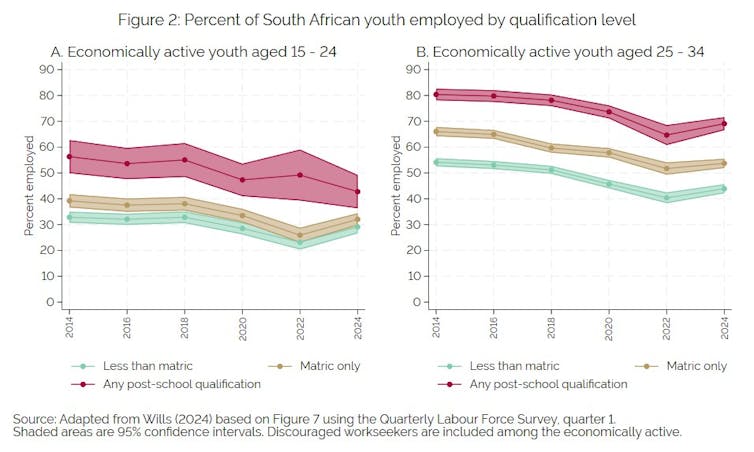
The graph below illustrates a brutal truth: ten years ago finding a job was easier for matriculants than it will be for the matric class who finished school in 2024. Between 2014 and 2018 about 4 of every 10 recent matriculants who were economically active (including discouraged work seekers) were employed. By the start of 2024 this figure was closer to 3 of every 10.

Two graphs, side by side, that show the percent of South African youth employed by qualification level
Percent of South African youth employed by qualification level.
Dr Gabrielle Wills, CC BY-NC-ND

The likelihood of youth with a matric having a job at the start of 2024 roughly resembled the chances of youth without a matric having a job eight to ten years ago.

With more learners progressing to matric, especially due to more lenient progression policy during and just after the COVID-19 pandemic, changes in the composition of the matric group could be driving some of the declines in this group’s employment prospects. But there has been a deterioration in the labour market for all youth over the past decade. Employment prospects have even declined for youth with a post-school qualification.

2. Not in employment, education or training

Proportionally fewer recent matriculants are going on to work or further study.

Before the COVID-19 pandemic (2014-2019), around 44%-45% of recent matriculants were classified as “not in employment, education or training” (NEET). The NEET rate among recent matriculants peaked at 55% in early 2022 and remained high at 49.8% at the start of 2024.

Stated differently, one of every two recent matriculants was not engaged in work or studies in the first quarter of last year. That’s 1.78 million individuals. Coupled with the rising numbers of youth getting a matric, this implies that the number of recent matriculants who were not working or studying rose by half a million from the start of 2015 to the start of 2024.

Among all 15-24-year-olds, the NEET rate rose from 32% in the first quarter of 2014 to 35% in the first quarter of 2024. Even larger increases in the NEET rate occurred among 25-34-year-olds, rising from 45% to 52% over the same period.

This is a worry. But it doesn’t mean the matric qualification has no value.

3. A matric still provides an advantage

In early 2024, nearly half of matriculants aged 15-24 were classified as not in employment, education or training. Almost 8 out of 10 of their peers who had dropped out of school were NEET. In short, you’re still more likely to get a job or further your studies with a matric certificate than without one.

4. A hard road

The road to opportunity beyond school is harder than it was a decade ago.

Among NEET matriculants aged 15-24 at the start of 2014, 27% searched for work for more than a year. By early 2024, this figure had risen to 32%.

It’s even worse for 25-34-year-old NEETs who hold a matric qualification. The percentage searching for work for over a year rose from 37% at the start of 2014 to 50% in early 2024.

The longer young people remain disconnected from employment, education or training, the greater the toll on their mental health. NEET status is associated with worse mental health, particularly among young men.

5. Post-school education and training

The government has made ambitious plans to expand opportunities for young people to study further. But enrolments in post-school education and training are not growing sufficiently to match the rising tide in school completion or to absorb youth who cannot find jobs. And, with projected declines in real per student spending on post-school education as South Africa tries to address escalating national debt servicing costs, this situation is unlikely to improve anytime soon.

The country is not keeping pace with tertiary enrolment rates in other developing nations like Brazil, Indonesia or China. For instance, 2021 estimates from the World Bank identify South Africa’s tertiary enrolment rate at 25%, compared to 41% in Indonesia, 57% in Brazil and 67% in China.

6. Location matters

Where someone lives in South Africa influences their chances for upward mobility. These inequalities are reflected in varying youth NEET rates across provinces. For instance, a third of recent matriculants in the Western Cape were not in employment, education or training in 2023/2024. That figure more than doubles in the North West province to 67%.

How to help

Two things are needed: improving labour market conditions and expanding post-school education and training opportunities.

This is unlikely without improved economic growth.

All of this may sound hopeless. But there are things that ordinary South Africans can do, too:

  • keep encouraging young people in your orbit to complete their schooling

  • where possible, spur them on to obtain a post-school qualification

  • use your social networks to connect youth to work experience opportunities, and help with CVs, referral letters and references.

Young people must also adopt a practical, pragmatic and entrepreneurial mindset. They need to seize every opportunity available to them, whether in the labour market or post-school education.

The Conversation

Gabrielle Wills is a senior researcher with Research on Socio-Economic Policy at Stellenbosch University. This research for the COVID-Generation project was made possible by financial support from Allan and Gill Gray Philanthropies. The findings and conclusions contained within are those of the authors and do not necessarily reflect positions or policies of Allan & Gill Gray Philanthropies.

ref. Life after school for young South Africans: six insights into what lies ahead – https://theconversation.com/life-after-school-for-young-south-africans-six-insights-into-what-lies-ahead-249031

How good are South African kids at maths? Trends from a global study

Source: The Conversation – USA – By Vijay Reddy, Distinguished Research Specialist, Human Sciences Research Council

School mathematics in South Africa is often seen as a sign of the health of the education system more generally. Under the racial laws of apartheid, until 1994, African people were severely restricted from learning maths. Tracking the changes in maths performance is a measure of how far the country has travelled in overcoming past injustices. Maths is also an essential foundation for meeting the challenges of the future, like artificial intelligence, climate change, energy and sustainable development.

Here, education researcher Vijay Reddy takes stock of South Africa’s mathematical capabilities. She reports on South African maths performance at grades 5 (primary school) and 9 (secondary school) in the Trends in International Mathematics and Science Study (TIMSS) and examines the gender gaps in mathematics achievement.

What was unusual about the latest TIMSS study?

The study is conducted every four years. South Africa has participated in it at the secondary phase since 1995 and at the primary phase since 2015. The period between the 2019 and 2023 cycles was characterised by the onset of the COVID-19 pandemic, social distancing and school closures.

The Department of Basic Education estimated that an average of 152 school contact days were lost in 2020 and 2021. South Africa was among the countries with the highest school closures, along with Colombia, Costa Rica and Brazil. At the other end, European countries lost fewer than 50 days.

Some academics measured the extent of learning losses for 2020 and 2021 school closures, but there were no models to estimate subsequent learning losses. We can get some clues of the effects on learning over four years, by comparing patterns within South Africa against the other countries.


Read more:
COVID learning losses: what South Africa’s education system must focus on to recover


How did South African learners (and others) perform in the maths study?

The South African grade 9 mathematics achievement improved by 8 points from 389 in TIMSS 2019 to 397 in 2023. From the trends to TIMSS 2019, we had predicted a mathematics score of 403 in 2023.

For the 33 countries that participated in both the 2019 and 2023 secondary school TIMSS cycles, the average achievement decreased by 9 points from 491 in 2019 to 482 to 2023. Only three countries showed significant increases (United Arab Emirates, Romania and Sweden). There were no significant changes in 16 countries (including South Africa). There were significant decreases in 14 countries.

Based on these numbers, it would seem, on the face of it at least, that South Africa weathered the COVID-19 losses better than half the other countries.

However, the primary school result patterns were different. For South African children, there was a significant drop in mathematics achievement by 12 points, from 374 in 2019 to 362 in 2023. As expected, the highest decreases were in the poorer, no-fee schools.

Of the 51 countries that participated in both TIMSS 2019 and 2023, the average mathematics achievement score over the two cycles was similar. There were no significant achievement changes in 22 countries, a significant increase in 15 countries, and a significant decrease in 14 countries (including South Africa).

So, it seems that South African primary school learners suffered adverse learning effects over the two cycles.

The increase in achievement in secondary school and decrease in primary school was unexpected. These reasons for the results may be that secondary school learners experienced more school support compared with primary schools, or were more mature and resilient, enabling them to recover from the learning losses experienced during COVID-19. Learners in primary schools, especially poorer schools, may have been more affected by the loss of school contact time and had less support to fully recover during this time.

This pattern may also be due to poor reading and language skills as well as lack of familiarity with this type of test.

Does gender make a difference?

There is an extant literature indicating that globally boys are more likely to outperform girls in maths performance.

But in South African primary schools, girls outscore boys in both mathematics and reading. Girls significantly outscored boys by an average of 29 points for mathematics (TIMSS) and by 49 points for reading in the 2021 Progress in International Reading Study, PIRLS.

These patterns need further exploration. Of the 58 countries participating in TIMSS at primary schools, boys significantly outscored girls in 40 countries, and there were no achievement differences in 17 countries. South Africa was the only country where the girls significantly outscored boys. In Kenya, Zimbabwe, Zambia and Mozambique, the Southern and Eastern Africa Consortium for Monitoring Educational Quality (SEACMEQ) reading scores are similar for girls and boys, while the boys outscore girls in mathematics. In Botswana, girls outscore boys in reading and mathematics, but the gender difference is much smaller.

In secondary schools, girls continue to outscore boys, but the gap drops to 8 points. Of the 42 TIMSS countries, boys significantly outscored girls in maths in 21 countries; there were no significant difference in 17 countries; and girls significantly outscored boys in only four countries (South Africa, Palestine, Oman, Bahrain).

In summary, the South African primary school achievement trend relative to secondary school is unexpected and requires further investigation. It seems that as South African learners get older, they acquire better skills in how to learn, read and take tests to achieve better results. Results from lower grades should be used cautiously to predict subsequent educational outcomes.

Unusually, in primary schools, there is a big gender difference for mathematics achievement favouring girls. The gender difference persists to grade 9, but the extent of the difference decreases. As learners, especially boys, progress through their education system they seem to make up their learning shortcomings and catch up.

The national mathematics picture would look much better if boys and girls performed at the same level from primary school, suggesting the importance of interventions in primary schools, especially focusing on boys.

The Conversation

Vijay Reddy received funding from the Department of Science, Technology and Innovation and Department of Basic Education.

ref. How good are South African kids at maths? Trends from a global study – https://theconversation.com/how-good-are-south-african-kids-at-maths-trends-from-a-global-study-251490

New survey explores what people in South Africa expect of publicly visible scientists – why it matters

Source: The Conversation – USA – By Marina Joubert, Science Communication Researcher, Stellenbosch University

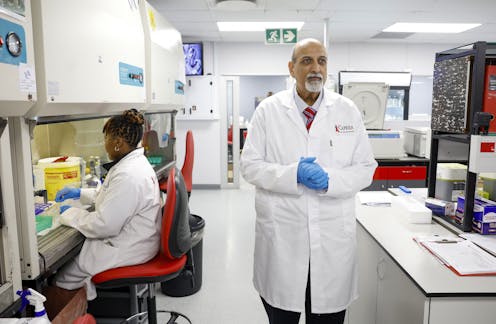
Professor Salim Abdool Karim became one of the most visible scientists in South Africa during the COVID pandemic. Photo by Phill Magakoe/AFP via Getty Images

Whether it’s an astronomical discovery, news of a previously undiscovered disease or a major report about climate change, science is often making headlines.

This means that it’s perhaps more important than ever for scientists to visibly engage with society. By becoming recognisable figures in the media, scientists can share new ideas and influence science policy. They can also shape public opinion, and build public trust in science, offering hope in times of crisis. They’re important players in the fight against misinformation, pseudoscience and anti-science sentiments.

Some scientists have become publicly visible, regularly appearing in the media. Some have become media stars. There are even a few scientific celebrities.

But, as our recently published paper reveals, even these supposedly visible scientists aren’t that recognisable to many. We surveyed 1,000 respondents in South Africa and another 1,000 in Germany, asking people to name up to three living scientists in their own country. More than half in both countries didn’t reply, said they didn’t know or couldn’t remember.

We also asked people to explain what they thought of as a “visible” scientist and what they expected of those scientists.

This kind of research helps to explain the relationship between science and society. It also helps policymakers, science communicators and institutions understand how best to support scientists to play a more prominent role in the public interest.

Not all that visible

When asked to name a living scientist from their own country, more than half of the respondents in both countries did not reply. Or they wrote something like “I don’t know” or “I can’t remember”. Many who did answer listed the names of deceased scientists such as German-born theoretical physicist Albert Einstein, US astronomer Carl Sagan, and South African heart surgeon Christiaan Barnard.

Several South Africans thought of politicians such as former president Jacob Zuma or former health minister Zweli Mkhize as visible scientists. Others named tech entrepreneurs who no longer live in South Africa, like Mark Shuttleworth and Elon Musk. This indicates that whoever publicly talks about science can easily be perceived as a scientist.

Controversial doctor Wouter Basson was mentioned several times. Basson, a cardiologist, headed the apartheid government’s secret chemical and biological warfare project, Project Coast, and was nicknamed “Dr Death” in the media because of his alleged role in the deaths of anti-apartheid activists. (In 2002 he was acquitted of 67 charges related to his involvement in apartheid-era crimes.) A public outcry erupted when it emerged, in 2021, that he had been practising as a cardiologist at a local private hospital since 2005. The fact that he was mentioned by respondents confirms that there’s a link between controversy and perceived public visibility.

Most living scientists mentioned were health researchers who achieved a high media profile during COVID-19, such as the German virologist Christian Drosten and South African HIV/Aids experts Linda-Gail Bekker, Salim Abdool Karim and Glenda Gray.

This demonstrates that, overall, scientists are invisible rather than visible in public. The visible scientist is – and remains – a rare phenomenon despite changing media environments and a recent global pandemic.

Expectations

Echoing other researchers’ earlier findings, the study shows that people expect a visible scientist to have a solid professional reputation. They should also be charismatic leaders who are highly articulate, media-savvy, hard-working and dedicated. Some South Africans emphasised that visible scientists should put the needs of others before their own and that science should serve all citizens equally.

Respondents from Germany and South Africa generally agreed that visible scientists should always base their comments on robust evidence and always tell the truth, even if it was difficult. They should not operate too closely to politics and should serve the public without hidden agendas and vested interests.

Earlier studies have shown that the most visible scientists are usually men in leadership positions. Our survey found that people didn’t mind what a visible scientist looked like, and did not prefer a specific gender or seniority. This suggests that there is scope for younger and female scientists to become more visible in the public sphere.


Read more:
Male voices dominated South African COVID reporting: that has to change


We found only minor differences between South Africa and Germany. Public expectations of scientists are remarkably similar across these two countries from the global north and the global south. The overall similar attitudes towards visible scientists may be explained by a universal public image of science around the world.

Increasing visibility

The study was part of the crowd-sourced Many Labs project “Trust in Science and Science-Related Populism”. The project’s findings on public trust in scientists across 68 countries show that, overall, public trust in science remains high. It also highlighted that people worldwide want scientists to engage more proactively with society and play a more prominent role in evidence-based policymaking.


Read more:
Five golden rules for effective science communication – perspectives from a documentary maker


Scientists who are interested in increasing their media visibility and public profile could start by working with professional communicators in the media or research offices of their universities or similar research organisations. There are also existing resources, like peer-reviewed science communication tips, and even free online courses.

The Conversation

The authors do not work for, consult, own shares in or receive funding from any company or organisation that would benefit from this article, and have disclosed no relevant affiliations beyond their academic appointment.

ref. New survey explores what people in South Africa expect of publicly visible scientists – why it matters – https://theconversation.com/new-survey-explores-what-people-in-south-africa-expect-of-publicly-visible-scientists-why-it-matters-249866

Global crises have hit education hard: 24 years of research offers a way forward for southern Africa

Source: The Conversation – USA – By Emmanuel Ojo, Associate Professor, University of the Witwatersrand

Global crises have shaped our world over the past two decades, affecting education systems everywhere. Higher education researcher Emmanuel Ojo has studied the impact of these disruptions on educational opportunities, particularly in southern Africa.

He looked at 5,511 peer-reviewed articles published between 2000 and 2024 to explore what the research suggests about making education systems more resilient. Here, he answers some questions about his review.


What are the global crises that have undermined education?

In my review I drew up a table documenting how multiple crises have disrupted education systems worldwide.

The cycle began with the 2000-2002 dot-com bubble collapse, which reduced education funding and slowed technological integration. This was followed by the 2001 terrorist attacks, Severe Acute Respiratory Syndrome (SARS) outbreak (2002-2004), Iraq War (2003-2011), Indian Ocean tsunami (2004), and Hurricane Katrina (2005). The Israeli-Palestinian conflict since 2000, global food crisis (2007-2008), financial crisis (2007-2008), and European debt crisis (2010-2012) continued this pattern of disruption.

More recently, the Ebola epidemic, COVID-19 pandemic, and Russia-Ukraine war have destabilised education systems. Meanwhile, the ongoing climate crisis creates challenges, particularly in southern Africa where environmental vulnerability is high.

Who suffers most, and in what ways?

Education has consistently been among the hardest-hit sectors globally. According to Unesco, the COVID pandemic alone affected more than 1.6 billion students worldwide.

But the impact is not distributed equally.

My research shows crises have put vulnerable populations at a further disadvantage through school closures, funding diversions, infrastructure destruction and student displacement. Quality and access decline most sharply for marginalised communities. Costs rise and mobility is restricted. Food insecurity during crises reduces attendance among the poorest students.

In southern Africa, the Covid-19 disruption highlighted existing divides. Privileged students continued learning online. Those in rural and informal settlements were completely cut off from education.

Climate change compounds these inequalities. Unicef highlights that climate disasters have a disproportionate impact on schooling for millions in low-income countries, where adaptive infrastructure is limited.

What’s at stake for southern Africa is the region’s development potential and social cohesion. The widening of educational divides threatens to create a generation with unequal opportunities and capabilities.

What makes southern African education systems fragile?

My review focused on the 16 countries of the Southern African Development Community, revealing what makes them vulnerable to crisis impacts.

Southern Africa’s geographic exposure to climate disasters combines with pre-existing economic inequalities. The region’s digital divide became starkly visible during the Covid-19 pandemic. Some students were excluded from learning by limited connectivity and unreliable electricity.

The region’s systems also rely on external funding. The Trump administration’s sudden foreign aid freeze was a shock to South Africa’s higher education sector. It has affected public health initiatives and university research programmes.

Research representation itself is unequal. Within the region, South African researchers dominate and other nations make only limited contributions. This creates blind spots in understanding context-specific challenges and solutions.

Each successive crisis deepens educational divides, making recovery increasingly difficult and costly. Weaker education systems make the region less able to respond to other development challenges, too.

How can southern Africa build education systems to withstand crises?

One striking finding from my review was the surge in educational research after the Covid-19 pandemic began – from 229 studies in 2019 to nearly double that in 2020, with continued rapid growth thereafter. This indicates growing recognition that education systems must be redesigned to withstand future disruptions, not merely recover from current ones.

Research points to a number of ways to do this:

  • Strategic investment in educational infrastructure, particularly digital technologies, to ensure learning continuity.

  • Equipping educators with skills to adapt teaching methods during emergencies.

  • Innovative, context-appropriate teaching approaches that empower communities.

  • Integration of indigenous knowledge systems into curricula, enhancing relevance, adaptability and community ownership.

  • Interdisciplinary and cross-national research collaborations.

  • Protection of education budgets, recognising education’s role in crisis recovery and long-term stability.

  • Community engagement in education, ensuring interventions are culturally appropriate and widely accepted.

In my view, African philanthropists have a duty to provide the independent financial base that education systems need to withstand external funding fluctuations.

What’s the cost of doing nothing?

The economic and social costs of failing to build resilient education systems are profound and long-lasting. Each educational disruption creates negative effects that extend far beyond the crisis period.

When students miss critical learning periods, it reduces their chances in life. The World Bank estimates that learning losses from the Covid-19 pandemic alone could result in up to US$17 trillion in lost lifetime earnings for affected students globally.

Social costs are equally severe. Educational disruptions increase dropout rates, child marriage, early pregnancy, and youth unemployment. These outcomes create broader societal challenges that require costly interventions across multiple sectors.

Spending on educational resilience avoids those costs.

The question isn’t whether southern African nations can afford to invest in educational resilience, but whether they can afford not to.

The choices made today will determine whether education systems merely survive crises or make society better. Evidence-based policies and regional cooperation are essential for building education systems that can fulfil Southern Africa’s human potential.

The Conversation

Emmanuel Ojo receives funding from National Research Foundation (NRF).

ref. Global crises have hit education hard: 24 years of research offers a way forward for southern Africa – https://theconversation.com/global-crises-have-hit-education-hard-24-years-of-research-offers-a-way-forward-for-southern-africa-251833