Does AI pose an existential risk? We asked 5 experts

Source: The Conversation – Global Perspectives – By Aaron J. Snoswell, Senior Research Fellow in AI Accountability, Queensland University of Technology

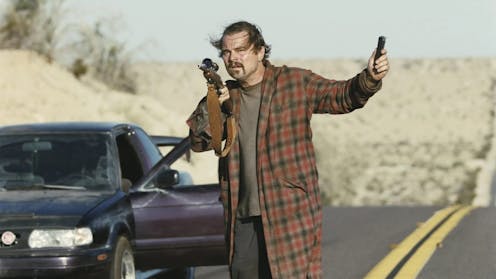
Sean Gladwell/Getty Images

There are many claims to sort through in the current era of ubiquitous artificial intelligence (AI) products, especially generative AI ones based on large language models or LLMs, such as ChatGPT, Copilot, Gemini and many, many others.

AI will change the world. AI will bring “astounding triumphs”. AI is overhyped, and the bubble is about to burst. AI will soon surpass human capabilities, and this “superintelligent” AI will kill us all.

If that last statement made you sit up and take notice, you’re not alone. The “godfather of AI”, computer scientist and Nobel laureate Geoffrey Hinton, has said there’s a 10–20% chance AI will lead to human extinction within the next three decades. An unsettling thought – but there’s no consensus if and how that might happen.

So we asked five experts: does AI pose an existential risk?

Three out of five said no. Here are their detailed answers.

The Conversation

Aaron J. Snoswell was previously part of a research team that competitively won a grant to receive research project funding from OpenAI in 2024–2025 to develop new evaluation frameworks for measuring moral competence in AI agents. The project has now completed and I no longer receive funding from OpenAI.

Niusha Shafiabady, Sarah Vivienne Bentley, Seyedali Mirjalili, and Simon Coghlan do not work for, consult, own shares in or receive funding from any company or organisation that would benefit from this article, and have disclosed no relevant affiliations beyond their academic appointment.

ref. Does AI pose an existential risk? We asked 5 experts – https://theconversation.com/does-ai-pose-an-existential-risk-we-asked-5-experts-266345

Why are the ICJ and ICC cases on Israel and Gaza taking so long?

Source: The Conversation – Global Perspectives – By Melanie O’Brien, Associate Professor of International Law, The University of Western Australia

In September this year, a UN-backed independent commission of inquiry released a report concluding Israel is committing genocide in Gaza. The report said:

Israeli authorities deliberately inflicted conditions of life on the Palestinians in Gaza calculated to destroy, in whole or in part, the Palestinians in Gaza, which is an underlying act of genocide.

This report followed two years of investigation, but it’s not the only investigation underway.

There are two international courts with current proceedings related to the Israel-Palestine conflict.

The first, a case before the International Court of Justice (ICJ), was brought against Israel by South Africa in late 2023.

In the second, International Criminal Court (ICC) prosecutors have been investigating potential crimes allegedly committed by anyone, whether Israeli or Palestinian, on the territory of Palestine since March 2021 – even before Hamas’ October 7 2023 attack.

So, if the UN-backed commission of inquiry could put together their report in two years, why are the cases in the ICJ and ICC taking so long? And where are these proceedings up to now?

The International Court of Justice case

A case before the ICJ often takes many years.

This is because the cases often involve multiple stages, including:

  • provisional measures (the ICJ version of an injunction, which is an interim court order to do or stop doing something)

  • preliminary objections (where a state may object to the ICJ’s jurisdiction in the case)

  • the merits case (where the court decides whether or not a country has violated international law).

Each stage involves the parties to the case making written submissions and undertaking oral proceedings. The court also makes decisions at each stage. States must be afforded due process throughout the proceedings.

Another reason for the lengthy period of cases is that states often ask for extensions for their written submissions.

In the South Africa v Israel case (which focused on the question of whether Israel is in breach of its obligation to prevent and punish genocide as per the Genocide Convention), Israel requested and was granted a six-month extension to file their written submission, which is now not due until January 2026.

This means we may not expect a hearing on the merits of the case until possibly even 2027.

The International Criminal Court case

Cases before the ICC, which are brought against individuals, not states, are not like ordinary criminal cases in a domestic court.

These cases relate to not just one crime, but many crimes. Sometimes, perpetrators are charged with multiple offences.

As an example, Dominic Ongwen – a high-ranking member of the Lord’s Resistance Army operating in Uganda – was convicted of 61 counts of war crimes and crimes against humanity, each of which generally involved multiple victims.

This means the ICC has to collect and present a huge amount of evidence. This can include documents, photographs, and victim and witness testimony. It can take a long time, even years, to collect all this evidence.

Once the case goes to court, it can take many months of hearings, as all the evidence is presented.

The case may also be delayed if either the prosecution or defence asks for an extension at any point in the proceedings.

All of these elements are important to ensure any trial before the ICC is fair and carried out with due process.

In the case relating to Palestine, the ICC prosecutor moved quite quickly with investigations following Hamas’ October 7 2023 attack.

Arrest warrants were issued for Israeli Prime Minister Benjamin Netanyahu and then-Defence Minister Yoav Gallant in November 2024, with charges of crimes against humanity (including murder and persecution) and the war crime of starvation.

At the same time, arrest warrants were also issued for several Hamas leaders for war crimes and crimes against humanity relating to the October 7 atrocities. Only one of those leaders, Mohammed Diab Ibrahim Al-Masri (Deif), remains likely alive, however.

The ICC now stands ready, willing and able to start a prosecution case against Netanyahu, Gallant or Hamas leaders such as Deif. All it needs is to have them in custody in The Hague.

However, the ICC has no police force. It relies on member states to the ICC to arrest and surrender wanted fugitives.

Interpol “Red Notices” may be issued for people wanted by the ICC. Recently, for instance, the Philippines arrested and surrendered its former president, Rodrigo Duterte, to the ICC, where he is now on trial for crimes against humanity.

Unfortunately, states seem less willing to arrest and surrender the Israeli head of state. This creates a challenge for the ICC in its ability to proceed with prosecutions, but also attracts criticism of double standards of states.

Netanyahu has visited Hungary, an ICC member state, but was not arrested. Hungary has since announced it intends to withdraw from the ICC.

Upholding international law

So, it’s clear the ICC and the ICJ already have legal proceedings well underway relating to crimes in Gaza. These international courts are ready to hear legal arguments and make decisions on state responsibility or individual criminal liability for crimes committed in Palestine or against Palestinians.

What we need, however, is commitment from states to uphold international law.

Countries must comply with their international law obligations and cooperate with international courts, including by arresting and surrendering wanted fugitives to the International Criminal Court.

This is what will help speed the slow-turning wheels of justice.

The Conversation

Melanie O’Brien is president of the International Association of Genocide Scholars (IAGS), which in September 2025 passed a resolution declaring that Israel is committing war crimes, crimes against humanity and genocide in Gaza.

ref. Why are the ICJ and ICC cases on Israel and Gaza taking so long? – https://theconversation.com/why-are-the-icj-and-icc-cases-on-israel-and-gaza-taking-so-long-265674

Is Sanae Takaichi Japan’s Margaret Thatcher — or its next Liz Truss?

Source: The Conversation – Global Perspectives – By Sebastian Maslow, Associate Professor, International Relations, Contemporary Japanese Politics & Society, University of Tokyo

Under the slogan “#ChangeLDP”, Japan’s long-ruling Liberal Democratic Party (LDP) has elected Sanae Takaichi as its new leader. Pending a vote in the Diet’s lower house later this month, she is poised to become Japan’s next prime minister — and the first woman ever to hold the post.

At first glance, this appears historic. Takaichi is not only the LDP’s first female leader, but also one of the few postwar politicians to rise without inheriting a family seat. In a political culture dominated by male dynasties, her ascent seems to signal long-overdue change. In a country long criticised for gender inequality, it is a powerful image of progress.

In reality, however, Takaichi’s rise reflects a return to familiar politics. Her predecessor, Shigeru Ishiba, resigned after a year in office following electoral defeats. Those losses were not solely his doing. Ishiba had vowed to reform the LDP after scandals over ties to the Unification Church and slush funds, but he faced entrenched resistance.

As the party’s old factions re-emerged, senior figures rallied behind Takaichi’s leadership bid, reasserting the factional networks that have long defined Japanese conservatism. Takaichi has already signalled a return of the party’s old elite to the centre of power, while moving to end efforts to hold those involved in past scandals accountable.

Takaichi’s victory signals a party operating in crisis mode. In recent months, the LDP has lost voters to new populist right-wing parties such as Sanseito. To stop the bleeding, it has shifted toward a harder conservative line.

This pattern of “crisis and compensation” is not new. In the 1970s, threatened by the left, conservatives adopted welfare and environmental policies to retain power. Today, facing challenges from the populist right, the LDP has leaned on nationalism, anti-immigration rhetoric and historical revisionism.

A self-described social conservative, Takaichi opposes allowing married couples to retain separate surnames and rejects female succession to the imperial throne. She has expressed admiration for former British prime minister Margaret Thatcher, though whether her premiership will prove equally transformative remains to be seen.

A close ally of the late Shinzo Abe, Takaichi is widely viewed as the torchbearer of his political legacy. Economically, she pledges to continue the expansionary fiscal and monetary policies of “Abenomics”, prioritising growth over fiscal restraint.

With Japan’s debt-to-GDP ratio exceeding 260%, Takaichi has remained vague about how she would sustainably finance her plans to ease economic pressures on households.

Politically, she seeks to complete Abe’s project of “taking Japan back” from the constraints of the postwar regime, by revising the pacifist constitution and strengthening national defence.

In foreign policy, Takaichi supports Abe’s vision of a “Free and Open Indo-Pacific”. She advocates deeper cooperation with the United States and within the Quad, comprised of the US, Australia, Japan and India. She also supports stronger regional partnerships to bolster deterrence.

Her hawkish stance on China and North Korea aligns with this agenda. She has vowed to increase defence spending — a move likely welcomed by the Trump administration in the US, which has urged Tokyo to approach NATO’s 5% benchmark. Japan’s defence budget is currently about 1.8% of GDP.

Takaichi also inherits a pending trade deal with Washington involving a Japanese investment package worth US$550 billion (A$832 billion), though many details remain unresolved.

Meanwhile, her record of visiting the controversial Yasukuni Shrine — which honours Japan’s war dead, including convicted war criminals — risks undoing recent progress in relations with South Korea and inflaming tensions with China. Such moves could undercut Japan’s efforts to act as a stabilising force in regional security.

Domestically, Takaichi’s greatest challenge will be to unite a fragmented LDP while addressing an increasingly frustrated electorate. Voters facing stagnant wages and rising living costs may have little patience for ideological battles.

Her incoming cabinet will also face a divided Diet (Japan’s parliament), where the LDP lacks majorities in both chambers. Expanding the ruling coalition is one option, but the LDP’s long-time partner Komeito remains wary of constitutional revision and nationalist policies. Takaichi has already hinted at courting newer populist parties that share her support for an anti-espionage law and tighter immigration controls.

In many respects, Takaichi’s rise encapsulates the LDP’s enduring survival strategy — adaptation without reinvention. The party’s claim to renewal masks a deeper continuity: reliance on charismatic conservative figures to preserve authority amid voter fatigue and opposition weakness. Her leadership may consolidate the LDP’s right-wing base, but offers little sign of institutional reform or ideological diversity.

So whether her premiership brings transformation or merely reinforces old patterns remains uncertain. Her commitment to economic stimulus may buy time, but Japan’s deeper structural challenges — ageing demographics, inequality, and regional decline — demand creativity the LDP has long deferred. If Takaichi focuses instead on constitutional revision and identity politics, she risks alienating centrist voters and exhausting public patience for culture wars.

A visit from US President Donald Trump later this month and series of regional summits will provide her first diplomatic test. It will also offer a glimpse of how she balances assertive foreign policy with domestic credibility. Much will depend on her ability to convince a sceptical electorate that her leadership represents more than another chapter in the LDP’s politics of survival.

If she succeeds, Takaichi could redefine Japanese conservatism and secure a lasting legacy as her country’s first female prime minister. If she fails, the comparison to “Japan’s Margaret Thatcher” may quickly fade — replaced by that of Liz Truss, another short-lived leader undone by party division and unmet expectations.

The Conversation

Sebastian Maslow does not work for, consult, own shares in or receive funding from any company or organisation that would benefit from this article, and has disclosed no relevant affiliations beyond their academic appointment.

ref. Is Sanae Takaichi Japan’s Margaret Thatcher — or its next Liz Truss? – https://theconversation.com/is-sanae-takaichi-japans-margaret-thatcher-or-its-next-liz-truss-266478

Thomas Pynchon’s Vineland, set in 1984, is translated for the Trump era in One Battle After Another

Source: The Conversation – Global Perspectives – By Alexander Howard, Senior Lecturer, Discipline of English and Writing, University of Sydney

Warner Brothers

Perennial Nobel Prize contender Thomas Pynchon’s fourth novel, Vineland (1990) has been loosely adapted by Paul Thomas Anderson as a new film, One Battle After Another. The film is already considered an Oscar contender.

Vineland, at its core, is preoccupied with the fate of America in the age of mass media and creeping authoritarianism. Pynchon’s novel is largely set in 1984, the year president Ronald Reagan was reelected in a landslide – a time when the idealism and revolutionary impulses of the American left had withered.

That sense of defeat speaks directly to now. Anderson’s adaptation lands in a year defined by Donald Trump’s decisive 2024 election victory and a MAGA-driven backlash against diversity and inclusion, trans rights and climate action.

Anderson repurposes Pynchon for our present plight, plunging us into a familiar hellscape of immigration detention centres, white supremacist hideouts and so-called sanctuary cities. One of these cities is a central setting: engulfed in flames, thick with smoke and overrun by state-backed goons kitted out in combat gear – enforcers who seemingly answer to no one, itching to knock a semblance of sense into some “radical left” skulls.

Militarisation of American life

One review of the film points out how the escalation of immigration crackdowns and expansion of ICE under Trump’s second presidency “embodies the militarization of everyday American life” in a way that “feels, in a word, Pynchonian”.

The famously mysterious Pynchon’s last known paid job was a formative stint as a technical writer for Boeing. There, he was “a cog in the US war machine – closely involved in what was the most critical component of the military-industrial complex”, according to American Studies scholar Steven Weisenburger.

Thomas Pynchon.
Wikimedia Commons

Over 100 pages of Pynchon’s Boeing prose survives, including detailed work on intercontinental ballistic missile systems. Tasked with translating the arcane dialect of rocket engineers into readable language for servicemen, Pynchon found himself writing at the very point when the Cuban Missile Crisis brought humanity to the brink of extinction.

This episode left him with a lifelong suspicion of the machinery of mass destruction and the technocratic rationalisations that sustain it.

Vineland: aftershocks of the 1960s

Vineland’s plot focuses on the fallout from the 1960s. It follows washed-up countercultural relic Zoyd Wheeler (Leonardo DiCaprio’s Bob Ferguson in the film) and his teenage daughter Prairie (Chase Infiniti’s Willa), as they navigate the legacy of past betrayals and try to avoid the vice-like grip of state power.

While he changes the names of the characters, Anderson’s film overflows with images and emblems of state repression. In a striking early shot, we see a vast steel wall in the desert, floodlit against the starless night sky. Anderson’s film demonstrates how the shortcomings and failures of past resistance are often replayed, almost note for note, in the present.

Making extensive use of flashbacks and featuring a dizzying array of major and minor characters, Vineland explores the lingering aftershocks of the 1960s and the way they continue to inform personal lives and public culture.

The pot-smoking, welfare-cheque-cashing Zoyd Wheeler is our guide. When we first meet him, Zoyd is scraping by on the margins of Reagan’s America, reminiscing about the old days and trying his best to bring up his daughter.

Looming over them is the absent figure of Frenesi Gates, Prairie’s mother and Zoyd’s former partner, whom they have not seen for years. (In the film, she is represented by the character Perfidia Beverley Hills, played by Teyana Taylor.) Once a member of a militant film-making collective (yes, you read that correctly), her camera trained on the frontlines of protest, Frenesi snitched on her comrades and crossed to the dark side.

Her defection is bound up with Brock Vond, a ruthless federal prosecutor, to whom she is disastrously and inexorably drawn. (Sean Penn’s Colonel Steven J. Lockjaw, a detention centre commander, inhabits this role in the film.) Vond is no mere antagonist: seemingly omnipotent, he stands in for Vineland’s vision of state power. Amoral and obsessive, he is the embodiment of a system that brooks no deviation from predetermined norms.

His pursuit of Frenesi is more than a personal fixation; it is an allegory for how the state seduces, compromises and ultimately devours its subjects. This toxic dynamic animates the action of the novel. Pynchon’s point is not simply that the state corrupted Frenesi, but that the left’s own shortcomings and blind spots made such corruption possible in the first place.

Sean Penn’s detention centre commander Colonel Steven J. Lockjaw replaces the novel’s ruthless federal prosecutor, Brock Vond.
Warner Bros

In this sense, he is suggesting – correctly – that the seeds of the conservative ascendancy of the late 1970s and 80s were in fact sown in the failures of the radical movements that came before. It is an important, if bitter, pill to swallow – and we can identify comparisons with our own era.

MAGA’s rise has been abetted not only by right-wing mobilisation, but also by the left’s fragmentation: its internal conflicts weakening its ability to resist authoritarian drift in meaningful ways.

This, I think, is one of the reasons Vineland still matters today. Pynchon, to his credit, refuses readers the easy fiction of noble idealism set against the backdrop of a corrupt establishment. Instead, the novel collapses those binaries. Vineland reminds us radical energies can be turned against themselves – and that apparatuses of domination thrive on just such lapses.

In other words, the enduring power of the novel, which ends on a highly ambiguous note, has much to do with its unwillingness to let anyone – least of all those who once dreamed of revolution – off the hook.

Pynchon, conflict and coercion

Pynchon’s reputation rests, to a degree, on work that turns distrust and paranoia into a form of cultural critique. That distrust is already present in his exuberant, globetrotting first novel, V (1963). One of Pynchon’s instantly recognisable signatures – his compendious, darkly comedic writing style – was already present.

His second novel, The Crying of Lot 49 (1966), was shorter and, on the face of it, more accessible. With its paranoid vision of secret postal networks and shadowy conspiracies, it resonated with readers shaken by the turbulence of their historical predicament.

Vietnam. The civil rights struggle. Wave after wave of political assassinations. These were at the forefront of public consciousness, deepening the nagging suspicion that hidden networks of power were shaping events in manners ordinary citizens could neither perceive nor determine.

Published in 1973, Gravity’s Rainbow – a postmodern epic about war, rockets and metaphysics – confirmed Pynchon’s standing as one of the century’s most ambitious novelists. A vast World War II narrative, it centred on the German V-2 rocket as a symbol of technological domination.

For some critics, Vineland seemed like an unsatisfactory retreat from the encyclopaedic scale of Gravity’s Rainbow – into a more straightforward engagement with postwar American society.

But, in fact, it was pivotal in Pynchon’s career. Vineland turns from the manufactured cataclysms of mid-century conflict to more insidious forms of coercion. Personal freedom is drastically curtailed and social existence is managed at every level imaginable. Philosopher Theodor Adorno would describe this as the totally “administered world”.


Read more:
Join the Counterforce: Thomas Pynchon’s postmodern epic Gravity’s Rainbow at 50


Numbed by slop

In Pynchon’s book, the radical upheavals of the 1960s and 1970s cast a long shadow, their energies sometimes tipping into outright political extremism. Yet by (the somewhat Orwellian) 1984, what remains is little more than a desiccated husk of ideological dissent.

It’s easily co-opted into the machinery of late capitalist society, numbed on a steady diet of televisual nothing piped into homes via a device known as the Tube. Meanwhile, an expansive security state relentlessly pursues anyone with the temerity to resist.

Today, instead of the Tube, we are bombarded with algorithmic feeds and AI-generated content, a continual flow of slop designed to pacify and distract us. At the same time, Trump’s return to office has brought renewed efforts to enforce censorship, restrict dissent and crack down on immigration: a 21st-century manifestation of the totalitarian reflex Pynchon outlined so presciently.

In a revealing moment late in Pynchon’s novel, we overhear old-timers somewhere in the background

arguing the perennial question of whether the United States still lingered in a prefascist twilight, or whether that darkness had fallen long stupefied years ago, and the light they thought they saw was coming only from millions of Tubes all showing the same bright-colored shadows.

The world Pynchon warned us about

Given the slow-motion catastrophe of contemporary life, these debates go a long way toward explaining the novel’s enduring relevance. Indeed, they could be lifted almost verbatim from today’s news headlines, where commentators continue to argue whether Trump represents a new sort of fascism or the culmination of an authoritarian tendency long embedded in the fabric of American political life.

One Battle After Another, approximately 20 years in the making, amplifies Pynchon’s concern with how power insinuates itself into every aspect of life. It presents us with a narrative about contemporary America that somehow feels both hyperbolic and, depressingly, only a small step removed from reality.

Unlike Pynchon, who had no problem referencing Reagan in Vineland, Anderson pointedly avoids naming Donald Trump.

Given the current political climate in America, it is probably a sensible choice. (One can only imagine the Truth Social tirade were Trump ever to sit through the film. If it happens, I’ll be online, waiting patiently, with a bag of popcorn and a few small beers.) Still, the event horizon of his second administration marks a gravitational pull too strong to ignore.

Welcome to the world Thomas Pynchon warned us about.

The Conversation

Alexander Howard does not work for, consult, own shares in or receive funding from any company or organisation that would benefit from this article, and has disclosed no relevant affiliations beyond their academic appointment.

ref. Thomas Pynchon’s Vineland, set in 1984, is translated for the Trump era in One Battle After Another – https://theconversation.com/thomas-pynchons-vineland-set-in-1984-is-translated-for-the-trump-era-in-one-battle-after-another-266063

Taylor Swift’s Father Figure isn’t a cover, but an ‘interpolation’. What that means – and why it matters

Source: The Conversation – Global Perspectives – By Timothy McKenry, Professor of Music, Australian Catholic University

On Taylor Swift’s highly-anticipated new album The Life of a Showgirl, track four, Father Figure, includes the late George Michael as one of the credited songwriters.

But Swift’s song is not a cover of Michael’s 1987 hit of the same name. Rather, it is an “interpolation”. What does this mean, and how is it different from a cover, or a song that uses sampling?

Cover, sample, remix and interpolation

The vocabulary of popular music can be slippery. Terms such as cover, sample, remix and interpolation all describe ways artists reuse existing material, but they are not interchangeable.

A cover is a new performance of an existing song. From jazz standards, to pub rock tribute bands, the cover reproduces a song recognisably intact, albeit with varying degrees of interpretation.

In his book A Philosophy of Cover Songs, philosopher P. D. Magnus argues a cover is best understood as a re-performance of the same song, albeit open to stylistic variation. Although, he also highlights how chronology and authorship problematise this definition.

For example, although Paul McCartney wrote The Beatles’ Let It Be, the first official released version of the song was sung by Aretha Franklin. Yet no one describes the Beatles as having “covered” Franklin.

A sample involves lifting a fragment of an original sound recording, such as a guitar riff, drum loop, or vocal hook, and inserting it into a new track. The sound itself is borrowed – not just the musical idea.

A remix manipulates the audio of an existing track, often altering tempo, instrumentation or structure, while remaining tethered to the original recording. This practice originated with DJs but has since become a standard part of studio production.

An interpolation sits somewhere between covering and sampling. As Magnus and industry sources note, it means re-performing part of a song, such as a melody, lyric, or riff, within a new composition. The material is recognisable, but newly recorded – not lifted from an existing recording.

In Swift’s case, Father Figure does not re-use George Michael’s recording, but it does quote from his song. That could be why Michael is credited as a writer.

Specifically, Swift interpolates Michael’s original track by echoing the lyrics of his chorus (“I’ll be your father figure”) and uses a melody that resembles – but doesn’t copy – the melody in the original track.

These are more subtle references than substantive quotation. So while the track pays tribute to the past, it still asserts itself as a definitive new work.

Creative practice and copyright

These distinctions matter because United States copyright law separates rights in the song composition (melody, harmony, lyrics) from rights in the sound recording (the particular performance captured on a recording).

To cover a song, an artist must license the underlying composition. This is usually straightforward through mechanical licensing schemes.

To sample a recording, however, permission is needed both from the songwriter and from whoever owns the master recording. This “double clearance” can be costly or impossible if rights-holders refuse.

Interpolation avoids this second hurdle. By re-recording the material, artists only require permission from the original songwriters, or their estates, who then receive royalties. This explains why interpolation has become such an attractive creative strategy. It’s also an example of how the law can shape artistic practice.

One well-known example of an interpolation is Ariana Grande’s 7 Rings (2019), which re-sings the melody of Oscar Hammerstein II and Richard Rodgers My Favourite Things (1959). Because the melody was newly performed, the composers are credited as songwriters, but no use was made of the original recording.

Beyoncé’s track Energy, from her 2022 album Renaissance, re-uses elements of Milkshake, written by Pharrell Williams and Chad Hugo, and performed by Kelis. Again, the original writers are credited, but no part of the original recording is used.

Shifts in authorship and creatvitiy

Prior to the 1930s – back in a time when sheet music drove profits as much, or more, than recordings – different and subsequent performances were not seen in terms of an “original” versus a “copy”. This binary only emerged later with the culture of recorded cover versions.

By the early 1960s, covers and cover bands became a primary means of disseminating popular hits to youth audiences, reflecting both changing social practices and the dominance of recorded music.


Read more:
Why do we ‘like a version’ so much? The history of cover songs, from Elvis to TikTok


Today, the term “cover” often carries connotations of derivativeness. Scholars such as Roy Shuker note covers are frequently equated with a lack of originality, even when the performer substantially reinvents the source material.

An illustrative example is Pat Boone’s 1956 cover of Little Richard’s Tutti Frutti (1955). Boone’s version was seen as a sanitised rendition aimed at accessing a broader, predominantly white audience.

Historically, covers were more about marketability and accessibility than artistic reinterpretation. And this commercial dynamic underscores why they have often been perceived as derivative.

Interpolations enjoy higher cultural capital. Artists who interpolate go beyond reproducing, to create a new work that operates in dialogue with the past.

This distinction is especially salient for an artist of Swift’s stature – a songwriter celebrated for creative agency and influencing large-scale trends in popular music.

The Conversation

Timothy McKenry does not work for, consult, own shares in or receive funding from any company or organisation that would benefit from this article, and has disclosed no relevant affiliations beyond their academic appointment.

ref. Taylor Swift’s Father Figure isn’t a cover, but an ‘interpolation’. What that means – and why it matters – https://theconversation.com/taylor-swifts-father-figure-isnt-a-cover-but-an-interpolation-what-that-means-and-why-it-matters-265583

Birds all over the world use the same sound to warn of threats

Source: The Conversation – Global Perspectives – By William Feeney, Research fellow, Environmental Futures Research Institute, Griffith University; Estación Biológica de Doñana (EBD-CSIC)

An angry Australian Superb Fairy-wren confronting a Horsfield’s bronze-cuckoo. David Ongley

Language enables us to connect with each other and coordinate to achieve incredible feats. Our ability to communicate abstract concepts is often seen as a defining feature of our species, and one that separates us from the rest of life on Earth.

This is because while the ability to pair an arbitrary sound with a specific meaning is widespread in human language, it is rarely seen in other animal communication systems. Several recent studies have shown that birds, chimpanzees, dolphins, and elephants also do it. But how such a capacity emerges remains a mystery.

While language is characterised by the widespread use of sounds that have a learned association with the item they refer to, humans and animals also produce instinctive sounds. For example, a scream made in response to pain. Over 150 years ago, naturalist Charles Darwin suggested the use of these instinctive sounds in a new context could be an important step in the development of language-like communication.

In our new study, published today in Nature Ecology and Evolution, we describe the first example of an animal vocalisation that contains both instinctive and learned features – similar to the stepping stone Darwin envisioned.

A unique call towards a unique threat

Birds have a variety of enemies, but brood parasites are unique.

Brood parasites, such as cuckoos, are birds that reproduce by laying their egg in the nest of another species and manipulating the unsuspecting host to incubate their egg and raise their offspring. The first thing a baby cuckoo does after it hatches is heave the other baby birds out of the nest, claiming the effort of its unsuspecting foster parents all to itself.

A small bird on a branch feeding another bird.
A baby fan-tailed cuckoo (left) being fed by its white-browed scrubwren host (right) in Australia.
Cameryn Brock

The high cost of brood parasitism makes it an excellent study system to explore how evolution works in the wild.

For example, our past work has shown that in Australia, the superb fairy-wren has evolved a unique call it makes when it sees a cuckoo. When other fairy-wrens hear this alarm call, they quickly come in and attack the cuckoo.

During these earlier experiments, we couldn’t help but notice other species were responding to this call and making a very similar call themselves. What’s more, discussions with collaborators who were working in countries as far away as China, India and Sweden suggested the birds there were also making a very similar call – and also only towards cuckoos.

Birds from around the world use the same call

First, we explored online wildlife media databases to see if there were other examples of this call towards brood parasites. We found 21 species that produce this call towards their brood parasites, including cuckoos and parasitic finches. Some of these birds were closely related and lived nearby each other, but others shared a last common ancestor over 50 million years ago and live on different continents.

For example, this is a superb fairy-wren responding to a shining bronze-cuckoo in Australia.

Superb fairy-wren responding to a shining bronze-cuckoo.
William Feeney, CC BY169 KB (download)

And this is a tawny-flanked prinia responding to a cuckoo finch in Zambia.

Tawny-flanked prinia responding to a cuckoo finch.
William Feeney, CC BY160 KB (download)

As vocalisations exist to communicate information, we suspected this call either functioned to attract the attention of their own or other species.

To compare these possibilities, we used a known database of the world’s brood parasites and hosts. If this call exists to communicate information within a species, we expected the species that produce it should be more cooperative, because more birds are better at defending their nest.

We did not find this. Instead, we found that species that produce this call exist in areas with more brood parasites and hosts, suggesting it exists to enable cooperation across different species that are targeted by brood parasites.

Communicating across species to defend against a common threat

To test whether these calls were produced uniquely towards cuckoos in multiple species, we conducted experiments in Australia.

When we presented superb fairy-wrens or white-browed scrubwrens with a taxidermied cuckoo, they made this call and tried to attack it. By contrast, when they were presented with other taxidermied models, such as a predator, this call was very rarely produced.

When we presented the fairy-wrens and scrubwrens with recordings of the call, they responded strongly. This suggests both species produce the call almost exclusively towards cuckoos, and when they hear it they respond predictably.

If this call is something like a “universal word” for a brood parasite across birds, we should expect different species to respond equally to hearing it – even when it is produced by a species they have never seen before. We found exactly this: when we played calls from Australia to birds in China (and vice-versa) they responded the same.

This suggests different species from all around the world use this call because it provides specific information about the presence of a brood parasite.

A small blue bird pecking at a fake bird in a cage.
Superb fairy-wrens attacking a taxidermied shining bronze-cuckoo.
William Feeney, CC BY

Insights into the origins of language

Our study suggests that over 20 species of birds from all around the world that are separated by over 50 million years of evolution use the same call when they see their respective brood parasite species.

This is fascinating in and of itself. But while these birds know how to respond to the call, our past work has shown that birds that have never seen a cuckoo do not produce this call, but they do after watching others produce it when there is a cuckoo nearby.

In other words, while the response to the call is instinctive, producing the call itself is learned.

Whereas vocalisations are normally either instinctive or learned, this is the first example of an animal vocalisation across species that has both instinctive and learned components. This is important, because it appears to represent a midpoint between the types of vocalisations that are common in animal communication systems and human language.

So, Darwin may have been right about language all along.

The Conversation

William Feeney receives funding from the Spanish National Research Council. He has previously received funding from the Queensland Government, Hermon Slade Foundation, Seaworld Research and Rescue Foundation, Fulbright Association, Winston Churchill Memorial Trust, Australian Government Endeavour Award, Alexander von Humboldt Foundation, Australian Geographic. He is CEO of Wildlife Research and Education.

James Kennerley receives funding from the Cornell Lab of Ornithology. He has previously received funding from the University of Cambridge, the Cambridge Philosophical Society, the International Society for Behavioral Ecology and the British Ornithologists’ Union.

Niki Teunissen received funding and support from Monash University, Wageningen University and Research, the Australian Research Council, and Australian Wildlife Conservancy.

ref. Birds all over the world use the same sound to warn of threats – https://theconversation.com/birds-all-over-the-world-use-the-same-sound-to-warn-of-threats-266618

Hamas and Israel are on the verge of a ceasefire. What’s being left unsaid, though, could scupper the deal

Source: The Conversation – Global Perspectives – By Martin Kear, Sessional Lecturer, Department of Government and International Relations, University of Sydney

Hamas announced that it has accepted several parts of the peace plan put forth by US President Donald Trump and Israeli Prime Minister Benjamin Netanyahu to finally end Israel’s war on Gaza.

Hamas has agreed to release the remaining Israeli captives it holds and is willing to hand over administration of Gaza to a technocratic committee proposed by the plan.

However, Hamas did not say it would disarm. Nor did it agree to withdraw from Palestinian politics fully. Instead, it said the future of the Gaza Strip and legitimate rights of the Palestinian people should be decided on the basis of a “collective national position” and relevant international laws and resolutions.

With ceasefire talks resuming in Egypt on Monday, Netanyahu said he expected the hostages to be quickly released and Trump said he believes Hamas is “ready for a lasting peace”.

However, there are many reasons for Hamas to be reticent about supporting a plan that is replete with ambiguity and robs Palestinians of agency to decide their own political fate.

A future governance plan sidelining Palestinians

So, why does Hamas seem reticent?

First, the plan envisages Israel’s continuing military occupation of Gaza until it can hand over responsibility to an “international stabilisation force” at some point in the future.

Then there is the plan’s proposed governance structure.

Under the plan, Gaza would be administered through a transitional period by “a technocratic, apolitical Palestinian committee”. This would be responsible for delivering basic services to millions of starving, traumatised, homeless and jobless Gazans.

Yet, this committee would also include international experts, which will dilute Palestinians’ voices and their ability to decide the fate of Gazans. Again, many details remain unknown, including who will sit on the committee, when it will be formed and how many members would be Palestinian.

A new international transitional body called the “Board of Peace” would also be formed, headed by Trump and purportedly including former British Prime Minister Tony Blair. Importantly, the plan does not specifically say the board would include any Palestinians.

The board would be responsible for the committee’s “oversight and supervision”. It would also oversee the reconstruction of Gaza until the Palestinian Authority (PA), which is currently dominated by the Fatah party, has undergone reforms and is able to take back control of Gaza.

Many questions remain unanswered here, too. These include:

  • a timeline for new elections for the Palestinian Authority
  • whether Gazans can take part in an election
  • which political factions would be permitted to run candidates
  • whether these candidates would be screened by the board, and
  • who decides whether the PA has reformed sufficiently.

This leaves an open-ended political process exposed to differing interpretations that Hamas may fear will take power out of the hands of Palestinians.

After Hamas’ statement was released, a senior Hamas official outright rejected the idea of the “Board of Peace”, saying:

We will never accept anyone who is not Palestinian to control the Palestinians.

The plan also stipulates that Hamas “and other factions” (left unstated and open to interpretation) will not have a role in the future governance of Gaza. And it mandates that Gaza be demilitarised. But how this would be achieved and by whom, again, remains unknown.

What Palestinians say they want

These stipulations not only deprive the Palestinians of agency. They ignore the reality of Palestinian politics and the legitimacy that Palestinians attach to resisting Israeli occupation and the Netanyahu government’s stated goal of denying Palestinian statehood.

This highlights the greatest challenge for the “Board of Peace” – a reformed Palestinian Authority under the control of the Fatah party would struggle to gain legitimacy among Palestinians.

In a poll of 1,270 respondents in the Occupied Territories in May, Fatah garnered only 21% of popular support, compared with 32% for Hamas, and 12% for third parties.

When asked what the PA should be doing, most respondents nominated forming a unity government comprising all Palestinian factions to negotiate with Israel and the international community to rebuild Gaza.

When asked about plans to disarm Hamas, 77% of respondents in both the West Bank and Gaza opposed this action, with 65% of respondents opposed to expelling Hamas leaders from Gaza.

Tellingly, 80% of total respondents believed that if Hamas did disarm, Israel would not end the war and withdraw from Gaza.

The reality is some Palestinians still want Hamas to be a part of any future Palestinian government and remain capable of protecting Gazans from Israel’s military.

The disconnect between the plan’s aspirations and the political reality on the ground means it may have little chance of success, even if Hamas ultimately agrees to it.

It’s also unclear if Netanyahu truly supports the Palestinian Authority running a future Gaza, as the peace plan says. His remarks alongside Trump last week run counter to the plan:

Your plan is consistent with the five principles my government set for the end of the war and the day after Hamas. […] Gaza will have a peaceful civilian administration that is run neither by Hamas nor by the Palestinian Authority.

This suggests that Netanyahu’s primary goal here is dismantling Hamas’ military capabilities and political rule, while also maintaining the political division that currently exists between Gaza and the West Bank and East Jerusalem.

However, this would deny Palestinians the only faction many see as willing to resist Israel’s occupation and its intent of destroying any chance of Palestinians gaining statehood.

Additionally, the establishment of a new civil and military bureaucracy to help Gaza’s transition would take an indefinite period of time. It would also be subject to the political whims of capricious Western leaders.

This would leave the Israeli military occupying Gaza for the foreseeable future. This means there would be nothing to protect the millions of Gazans from further assaults from a military already accused of serious breaches of international humanitarian law.

The Conversation

Martin Kear does not work for, consult, own shares in or receive funding from any company or organisation that would benefit from this article, and has disclosed no relevant affiliations beyond their academic appointment.

ref. Hamas and Israel are on the verge of a ceasefire. What’s being left unsaid, though, could scupper the deal – https://theconversation.com/hamas-and-israel-are-on-the-verge-of-a-ceasefire-whats-being-left-unsaid-though-could-scupper-the-deal-266581

Synagogue attack: the Manchester I know – by antisemitism researcher and Mancunian Jew

Source: The Conversation – Global Perspectives – By Tony Kushner, James Parkes Professor of Jewish/non-Jewish Relations, University of Southampton

On the surface, I am ideally suited to write about the terrorist atrocity on the Heaton Park synagogue. The attack, on the holiest day of the Jewish calendar, Yom Kippur, left two Mancunian Jews dead, several seriously injured and a local (and national) Jewish community traumatised.

Over a 40-year career, I have researched and written about antisemitism in the UK, from the readmission of the Jews to Britain in the mid 17th century through to today. I have also published widely on British Jewish history over the same period. Lastly, I am a Mancunian Jew born and brought up in the city, later working in the Manchester Jewish Museum.

There are, however, limits to my ability to understand what happened. I am an insider because of my roots: my parents bought their first house on the same street as Heaton Park synagogue in the 1950s. But I am also an outsider, having grown up in the south side of the city in one of its leafier suburbs, and spent over half my life some 260 miles away in Southampton.

What follows is an attempt to put the events of October 2 into the historical context of Manchester Jewry and antisemitism in the city. In my view, the horror does not fit into a wider pattern of responses to Jews in Manchester, or the wider British Jewish community.


Read more:
Manchester synagogue attack: why so many people in Britain’s Jewish community felt a sense of inevitability that this day would come


The historian of Manchester Jewry, Bill Williams, insisted that “in no sense can the Jewish community be regarded as ‘alien’ to Manchester. It was not a late addition to an established pattern of urban life, but an integral part of the pattern itself”.

Although Manchester has Roman roots – Mancuniam – it is essentially a modern city. Indeed, it has a justified claim to be regarded as the first modern, industrial city in the world. It has been and remains a city made by migration. The first Jews, pedlars and then shopkeepers, settled in the town in the late 18th century, mainly of German Jewish origin.

Manchester grew slowly in the first half of the 19th century, with Jews coming also from eastern Europe and north Africa. This diversity of origin was reflected in the synagogues and communal organisations. By the 1870s, the community had grown to around 4,000, half of whom were from eastern Europe. It was a trend that would intensify in the period of mass immigration until 1914, when it reached around 25,000.

Even before that influx of Jews with Polish, Lithuanian, Romanian and Ukrainian origin, Manchester Jewry was by far the largest provincial Jewish community in the UK, a status that is increasingly true today.

As part of that pattern, the Heaton Park synagogue was founded in 1935 and moved to its present location in 1967. Its history reflects the growing suburbanisation of Manchester Jewry away from the original settlement areas of Cheetham Hill and Strangeways.

Today, Manchester is one of the few Jewish communities in the UK that is growing, totalling around 28,000 in the 2021 census, a 12% increase from that a decade earlier. Much of that growth is made up of the very orthodox, or Haredi, communities, some of whom came from Hungary as refugees in 1956.

Manchester Jewry has maintained an extraordinarily strong local identity, but is notable in its diversity. This is evident in its different forms of religious practice, geographical origins (including 7,000 who escaped Nazi Germany in the 1930s and the more recent migrants from Israel), socioeconomic profile and politics.

Antisemitism in Manchester

The city has always prided itself on its cosmopolitanism and tolerance, though has not always lived up to the ideal of the latter. There were occasional attacks, in print and in person, on the early Jewish pedlars to the town.

In the late 19th century the Manchester City News described eastern European Jews as an “invading force, foreign in race, speech, dress, ideas and religion”. Another local journal called them “just as desirable as rats”. In contrast, the Manchester Guardian (which became The Guardian) supported the right of asylum for refugees, and praised the respectable middle-class Jews for the contribution they had made to the economy and culture of the city.

During the first world war, Jewish soldiers fought back against slurs that they were avoiding military service. There was an even more militant response from Jews and non-Jews during the 1930s to attempts by the British Union of Fascists to stir up antisemitism in Manchester and other areas of Jewish concentration in Britain.

Until the horror of the Heaton Park synagogue attack, perhaps the most difficult moment for Manchester’s Jews came in 1947 when there were antisemitic riots in Manchester and nearby Eccles following rightwing extremist Zionist terrorism against British soldiers in Palestine. Most of the violence was against Jewish property and not person; it was still shocking to a community still reeling from the impact of the Holocaust.

One thing uniting such articulation of antisemitism is the official response to them. The magistrate who described the 1947 riots as “both un-British and unpatriotic” was very similar to the sentiment from all British religious and political leaders in 2025.

Manchester has recovered from and shown genuine solidarity after acts of terrorism before: the IRA bomb in 1996 and the Islamist terrorist bombing of Manchester Arena in 2017. It is already clear this pride of place and mutual support is present in Manchester today. As one local resident stated: “These people are sent to divide us, but they won’t.”

The attacks of 2017 and 2025 were terrorist acts of individuals, utterly untypical of and denounced by the local Muslim communities. They were hard, if not impossible, to predict. These outrages have and will leave huge scars on those directly impacted, but they run totally against the grain of a place that takes genuine pride in its diversity, including the rich Jewish history which is integral to Manchester.

The Conversation

Tony Kushner does not work for, consult, own shares in or receive funding from any company or organisation that would benefit from this article, and has disclosed no relevant affiliations beyond their academic appointment.

ref. Synagogue attack: the Manchester I know – by antisemitism researcher and Mancunian Jew – https://theconversation.com/synagogue-attack-the-manchester-i-know-by-antisemitism-researcher-and-mancunian-jew-266712

Vieillir chez soi : jusqu’où compter sur sa famille ?

Source: The Conversation – France in French (3) – By Anaïs Cheneau, Chercheur en économie de la santé, Université Paris Cité

Avec l’entrée dans le grand âge des membres de la génération du baby-boom, la France fait face à une augmentation considérable des besoins d’accompagnement. Les politiques publiques misent sur le maintien à domicile, mais cette orientation repose largement sur l’aide des proches (conjoints, enfants, petits-enfants), dont la disponibilité risque de diminuer. Les personnes âgées veulent-elles vraiment dépendre de leur entourage pour rester à domicile ? Et leurs proches le souhaitent-ils ?


Depuis les années 1960, la priorité des politiques publiques est de favoriser le maintien à domicile. En 2015, la loi sur l’adaptation de la société au vieillissement a renforcé cette orientation, désormais appelée le « virage domiciliaire ». Elle répond au souhait d’une majorité de Français de vieillir chez eux, mais aussi à une logique budgétaire : rester chez soi serait moins coûteux qu’un séjour en EHPAD.

Pourtant, cette comparaison oublie un facteur essentiel : l’aide familiale. Celle-ci n’apparaît pas dans les comptes publics alors qu’elle représente une part considérable de l’accompagnement à domicile. Une part qui sera amenée à augmenter dans les années à venir, en raison du vieillissement de la population.

Aujourd’hui, huit personnes âgées en perte d’autonomie sur dix sont aidées par leur entourage, selon la DREES. Or, dès 2023, un rapport de l’Institut des politiques publiques indiquait que ce soutien pourrait devenir plus rare, notamment pour les hommes seuls et sans enfant. Et ce, alors même que le nombre de personnes dépendantes va augmenter dans les années à venir. Faire reposer le maintien à domicile sur la solidarité familiale apparaît donc fragile.

Dans le cadre de la chaire Aging UP ! de l’université Paris Cité, nous avons analysé, en tant que chercheurs, les préférences des personnes âgées et de leurs proches concernant l’accompagnement de la perte d’autonomie. 36 entretiens auprès de personnes âgées et de leurs proches ont été conduits, suivis d’une enquête nationale déployée en 2024 auprès de 6000 personnes de plus de 60 ans et de proches (aidants ou non) (représentatifs de la population française sur les critères sociodémographiques usuels). Voici les premiers enseignements tirés de ces enquêtes.

Une volonté de ne pas devenir un poids pour son entourage

L’analyse des données révèle que 6,7 % des personnes âgées souhaitent une délégation totale de l’ensemble de l’aide et aimeraient ne pas du tout avoir à compter sur leur entourage. Toutefois, cela n’est pas toujours possible. En effet, dans certains cas, les personnes n’ont pas de proches disponibles qui pourraient fournir l’aide : soit le conjoint est en mauvaise santé, soit il n’y a pas d’enfants ou des enfants qui habitent loin ou manquent de temps (parce qu’ils sont en emploi et/ou avec des responsabilités parentales). En outre, même si des proches sont disponibles, les personnes âgées souhaitent majoritairement que l’intervention de leur entourage soit limitée, préférant l’intervention des professionnels.

La volonté de ne pas devenir un poids pour les proches et notamment pour les enfants est très présente chez les personnes âgées interrogées, qui considèrent que « les enfants ont leur vie » et que ce n’est pas à eux de les aider au quotidien. Ainsi que le formule cette personne âgée :

« Si jamais j’avais une dépendance qui nécessite une présence, je préférerais me débrouiller pour trouver une assistance et ne pas peser sur [la] vie [de mes] enfants, leur vie de couple, leur vie professionnelle. »

L’aide des conjoints semble en revanche moins questionnée et plus « naturelle », avec tout de même la volonté de préserver la relation de couple, comme l’indiquent ces deux autres témoignages :

« C’est trop exigeant pour la compagne, donc bon évidemment qu’elle soit là et qu’elle fasse des trucs, mais il faut absolument une aide extérieure sinon ça modifie complètement la relation. Moi je n’ai pas envie de devenir la malade de ma compagne. »

« Dans la limite du faisable, oui, mais un petit coup de main. Je ne veux pas être un poids pour eux et que tout se transforme en corvée. »

Des proches qui accepteraient d’aider encore plus

De leur côté, les proches sont prêts à fournir une aide supérieure par rapport à ce que les personnes âgées accepteraient de recevoir de leur part. Dans les faits, ils apportent plus d’aide qu’ils ne l’auraient souhaité, faute de solution alternative.

Une partie de cette aide fournie est donc « contrainte ». Les enfants déclarent souvent aider au détriment des plus belles années de leurs vies, ne plus avoir assez de temps pour leurs familles, leurs amis et ne plus pouvoir partir en vacances. Une situation pesante, comme en témoignent certains interrogés :

« J’ai travaillé toute ma vie, j’ai droit à ma part aussi de calme. […] C’est peut-être les meilleures années que j’ai. C’est un peu lourd de porter encore ça. […] J’en étais arrivé à un point où je n’avais plus envie de les voir. Parce que c’était synonyme de trop de contrainte. »

Face à cette situation, les conjoints des personnes dépendantes vont chercher à assumer la plus grande part de responsabilité, afin de minimiser le rôle d’aidants de leurs enfants :

« Ce n’est pas la place des enfants [d’être aidants]. Les enfants, ils doivent vivre leur vie. Nous, on a déjà vécu. »

Les soins personnels, une limite pour les personnes âgées et les proches aidants

Les personnes âgées refusent généralement de mobiliser leurs enfants pour les soins personnels, tels que faire la toilette, les soins d’hygiène, donner à manger, lever du lit, etc. 30 % d’entre elles ne préfèrent impliquer les proches que pour une petite partie de ce type d’aide (environ 25 % du temps global), tandis que 29 % préfèrent déléguer l’ensemble de l’aide pour les soins personnels à des professionnels et ne pas faire intervenir leurs proches. Ainsi cette personne, qui affirme :

« Je n’ai pas envie que ça soit [mes enfants] qui viennent me laver les fesses. On n’est pas habitués à ça, c’est gênant. »

Les proches eux-mêmes ne veulent pas non plus réaliser les soins personnels, ou n’acceptent de le faire que lorsque leur implication est faible. C’est en particulier le cas des enfants, qui jugent cette activité d’aide trop intime, comme le soulignent ces aidants interrogés durant l’enquête :

« J’ai dû changer la couche [de mon père] une fois, je vais vous dire, je m’en rappelle encore. Vraiment, là, c’était compliqué. Pour un sexe opposé, c’est encore plus dur. »

« Je ne ferais pas [la toilette de ma mère] pour elle, dans la mesure où c’est son intimité. Parce que je suis son enfant, de toute façon, quel que soit mon âge. »

Par ailleurs, les proches qui ont déjà eu une expérience d’aide sont encore moins enclins que les autres à réaliser les soins personnels : ils sont plus de 50 % à ne vouloir s’impliquer que dans tout au plus 25 % de l’aide, et à affirmer vouloir déléguer le reste.

L’entourage plus présent pour les tâches administratives et domestiques

Si les proches et les personnes âgées ne veulent pas d’une aide familiale pour les soins personnels, d’autres formes d’aide sont plébiscitées. C’est en particulier le cas de l’aide aux démarches administratives, à l’organisation des rendez-vous médicaux et à la coordination des professionnels.

Sur ces points, les personnes âgées sont prêtes à davantage accepter l’aide de leurs proches, en particulier de leurs enfants, qui peuvent être amenés par leurs activités professionnelles à devoir s’y confronter par ailleurs (déclarations fiscales, demande de plans d’aide, coordination des professionnels, etc.). Ces tâches semblent non seulement plus ponctuelles, mais peuvent se réaliser pour une partie à distance.

Ainsi, 60 % des personnes âgées sont favorables à ce que l’entourage fournisse la majeure partie des tâches administratives et la coordination des professionnels et plus de 73 % des proches sont prêts à réaliser eux-mêmes la majeure partie de cette aide.

Sur la liste des aides dans lesquelles les aidants acceptent le plus de s’impliquer figure ensuite l’aide aux tâches domestiques, telles que ménage ou préparation des repas. 57 % des proches qui ne sont pas aidants eux-mêmes et 43 % des aidants sont prêts apporter leur aide pour accomplir la majorité des tâches domestiques (75 % ou plus). De leur côté, les personnes âgées comptent moins sur l’entourage pour les tâches domestiques : moins de 25 % aimeraient que les proches interviennent pour la majorité des tâches domestiques.

Par ailleurs, les entretiens révèlent également que les enfants (et parfois les petits-enfants) sont également attendus pour les petites réparations, ainsi que pour venir en aide en cas de chute ou de besoins ponctuels, comme en témoigne cette personne interrogée :

« Pour faire les papiers, c’est ma fille qui s’en occupe […], elle fait ça tous les jours. […] Si j’avais besoin de quelque chose dans la maison, [mes enfants] seraient là. »

L’enquête met également en avant le rôle des proches dans l’accompagnement à la vie sociale (être présent pour tenir compagnie, emmener au restaurant, etc.) :

« J’aime autant l’aider à chanter plutôt que de changer la couche, c’est sûr. »

Renforcer l’accès aux aidants professionnels et la qualité des aides

Pour que le maintien à domicile réponde aux aspirations des personnes âgées et de leurs proches, il faut renforcer le recours aux professionnels, jugés insuffisants et défaillants dans certaines situations.

Le manque de professionnels compétents et fiables conduit les proches à devoir coordonner les aides, à « surveiller » que tout soit bien fait, et à gérer les absences des professionnels disponibles.

De plus, même si des professionnels se rendent à domicile, les passages sont courts et fragmentés en des tâches circonscrites. Par exemple, les durées moyennes des prestations d’aide et d’accompagnement à domicile (SAAD) sont estimées à 12 minutes pour l’aide au coucher, 20 minutes pour la toilette au lit, 8 minutes pour l’aide au change ou encore 4 minutes pour la prise de médicaments. Cela ne permet pas de développer suffisamment d’interactions sociales pour l’individu aidé, ni d’accorder à l’aidant un temps de répit suffisant.

Selon les personnes interrogées, les dimensions les plus importantes pour assurer la qualité des interventions professionnelles sont en premier lieu l’existence d’une relation de confiance, puis l’empathie et le savoir-vivre des professionnels ainsi que le temps passé aux soins, comme l’illustrent les témoignages suivants :

« J’ai trouvé une personne qui me la prend deux après-midi par semaine, qui l’emmène se promener, […] ça lui permet d’être avec une autre personne que nous, […] ça lui fait du bien. J’ai quand même cette aide-là. »

« Le gros souci, c’était que ponctuellement, surtout les week-ends, j’avais des personnes d’une société d’aide à domicile qui ne venaient pas ou venaient en retard, ou étaient malades. […] Donc je me retrouvais un week-end sur deux à faire des petits déjeuners ou des dîners pour ma maman. »

« Ils me changent les aidants tout le temps. C’est moi qui fais leur éducation à chaque fois. »

Vieillir avec, mais pas au détriment de ses proches

En définitive, on constate que le maintien à domicile ne peut reposer trop fortement sur les familles. Un tel choix politique se ferait en effet au détriment des proches. Pour réussir le « virage domiciliaire », plusieurs changements seront nécessaires.

Il faudra en premier lieu renforcer l’offre professionnelle et sa qualité. Aujourd’hui, on compte en France deux fois moins de professionnels par rapport au nombre de personnes de plus de 65 ans que dans la moyenne des pays de l’OCDE. Selon le récent rapport de l’Institut des politiques publiques, il manquerait plusieurs centaines de milliers d’équivalents temps plein dans le secteur de l’accompagnement des personnes âgées à domicile.

Le soutien aux aidants doit également être amélioré. Cela passe notamment par l’aménagement de temps de répit, une amélioration de leur reconnaissance, ainsi que par leur accompagnement. Sans oublier que la principale façon d’aider les aidants consiste à faciliter la délégation de certaines tâches à des professionnels.

Enfin, et surtout, il est nécessaire d’ouvrir un débat de société sur le sujet de la place respective des solidarités publiques et familiales. C’est notamment l’objet de la Journée nationale des aidants, chaque 6 octobre.

The Conversation

Anaïs Cheneau a reçu des financements dans le cadre des travaux de la Chaire Aging Up! par le Mécénat des mutuelles AXA et de la Caisse des Dépôts et consignations.

Jonathan Sicsic et Thomas Rapp ne travaillent pas, ne conseillent pas, ne possèdent pas de parts, ne reçoivent pas de fonds d’une organisation qui pourrait tirer profit de cet article, et n’ont déclaré aucune autre affiliation que leur poste universitaire.

ref. Vieillir chez soi : jusqu’où compter sur sa famille ? – https://theconversation.com/vieillir-chez-soi-jusquou-compter-sur-sa-famille-266679


CNews contre les médias publics : une mise à mort du journalisme ?

Source: The Conversation – France in French (3) – By Alexandre Joux, Professeur en Sciences de l’information et de la communication, Aix-Marseille Université (AMU)

Le conflit entre les médias du groupe Bolloré et le service public de l’audiovisuel interroge les fondements mêmes du journalisme et d’une « information impartiale ». Aux États-Unis, la montée en puissance de Fox News face à CNN dans les années 2000 avait consacré une culture de médias d’opinon et affaibli la culture journalistique. La France suivra-t-elle le même chemin ?


La vidéo montrant les journalistes de France Inter et de France Télévisions Thomas Legrand et Patrick Cohen en rendez-vous avec des cadres du Parti socialiste (PS) est à l’origine d’une confrontation inédite entre porte-paroles de CNews et d’Europe 1, et les représentants de l’audiovisuel public. Le 16 septembre 2025, Delphine Ernotte, présidente de France Télévisions, a qualifié CNews de « chaîne d’extrême droite ». Pascal Praud, animateur vedette de la chaîne, a immédiatement réagi en soulignant la politisation de l’audiovisuel public à gauche.

Cette séquence interroge les fondements mêmes du journalisme et des médias d’information. Un « journalisme honnête » ou objectif est-il possible ? Les médias sont-ils au contraire condamnés à exprimer des opinions portées par des lignes politiques ? Cette séquence peut être interprétée à l’aune du « moment Fox News » qui a transformé le paysage médiatique américain dans les années 2000.

Le moment Fox News aux États-Unis

Dès 1949, aux États-Unis, les médias audiovisuels, la radio puis la télévision, sont soumis à un devoir de pluralisme interne imposé par l’autorité qui les régule, la Federal Communications Commission (FCC). Les mass media étant suspectés d’exercer une grande influence sur leurs publics, la fairness doctrine (la « doctrine de l’impartialité », en français) limite les possibilités de les mettre au service d’une cause, en exigeant une couverture « fair and balanced » (« juste et équilibrée ») sur les sujets controversés.

La distribution de bouquets de chaînes par le câble, puis par le satellite, en permettant une plus grande diversité de l’offre de chaînes d’information, conduira à l’abrogation de la fairness doctrine en 1987. C’est dans ce contexte que naît Fox News, en 1996.

Dans les années 2000, Fox News va dénoncer un biais libéral dans les médias se revendiquant « fair », notamment CNN. Pour Fox News, ces médias seraient en fait de gauche, mais ils ne l’avouent pas et revendiquent une information impartiale pour mieux faire avancer leur agenda politique. Du point de vue de Fox News, le pluralisme obligatoire à l’antenne de 1949 à 1987 n’a jamais vraiment existé : l’objectivité, c’est les faits, leur interprétation est toujours politique. Le pluralisme va exister désormais, mais autrement : avec la suppression de la fairness doctrine, il est possible de faire du journalisme d’opinion à la télévision.

Fox News souhaite alors « rééquilibrer » le paysage audiovisuel américain en proposant une chaîne d’information très à droite. La chaîne conçoit l’équilibre des points de vue au niveau du paysage médiatique global. C’est ce que nous connaissons en France sous le nom de « pluralisme externe », comme dans la presse par exemple, où des titres aux colorations politiques différentes permettent de couvrir la totalité du spectre des opinions politiques.

Dans les années 2000, Fox News va supplanter CNN et devenir la première chaîne d’information aux États-Unis. Son ton critique, ultraconservateur, va fédérer des audiences très engagées et lui assurer de confortables revenus publicitaires, qui inciteront les autres chaînes à l’imiter. Le niveau de critique va globalement monter, CNN devenir de plus en plus prodémocrate (la chaîne est connue pour son opposition à Trump) quand Fox News deviendra la porte-parole de Trump avant qu’il ne soit élu une première fois en 2016.

La polarisation des médias aux États-Unis se superpose finalement à la polarisation idéologique de la société, au point de rendre le journalisme impossible : la confusion s’est opérée entre ligne éditoriale et exigence journalistique. Les lignes éditoriales marquées des médias d’information finissent par conduire les rédactions à se désintéresser de pans entiers du réel, pour ne retenir que les faits, les propos qui semblent répondre à leur lecture du monde et aux attentes de leurs audiences.

Cnews, Fox News, même combat ?

Finalement, Fox News a lancé aux États-Unis le débat que la polémique CNews/audiovisuel public incarne actuellement. Les médias qui se disent impartiaux seraient en fait de gauche ; les idées de la droite conservatrice seraient sous-représentées dans les médias et un rééquilibrage nécessaire.

Des manifestants protestent contre Fox News devant le siège de la chaîne à New York, le 25 janvier 2025.
Christopher Penler

Reste que la France, contrairement aux États-Unis, a encore, une « fairness doctrine » : pour les chaînes qui disposent d’une fréquence, l’Arcom impose de « faire respecter l’expression pluraliste des courants de pensée et d’opinion à la télévision ». Mais cette exigence est-elle respectée ? On peut en douter, en suivant la décision du Conseil d’État du 13 février 2024 qui a constaté un manquement de l’Arcom relatif au pluralisme interne de certaines chaînes, à la suite d’une plainte de RSF relative à Cnews. Le Conseil d’État a finalement considéré que le pluralisme ne se réduisait pas au temps de parole des politiques à la télévision, et qu’il fallait également considérer les opinions des chroniqueurs et des invités. À l’avenir, cette nouvelle grille d’analyse pourrait permettre de qualifier CNews, et d’autres, de chaînes d’opinion – mais également nous amener à comprendre que notre situation se rapproche de celle des États-Unis.

Réflexions sur le journalisme impartial et ses limites

Le débat initié par Fox News ou par CNews nous amène plus fondamentalement à réfléchir à la possibilité d’un journalisme impartial.

Rappelons que de nombreuses études universitaires des années 1970-1980 ont amené à une réflexion critique concernant les pratiques journalistiques. Ces études ont montré que les rédactions et leurs journalistes ne sont pas vraiment autonomes, qu’ils ont des routines, des « prêts-à-penser », des manières de faire qui leur empêchent souvent de traiter correctement des choses. C’est encore à cette époque que la recherche va questionner de nouveau le rôle des médias dans la fabrique de l’ordre du jour politique, à travers la notion d’agenda setting, c’est-à-dire le processus par lequel certains sujets s’imposent dans les médias et surtout la manière d’en parler.

Mais ces études avaient pour ambition d’améliorer le journalisme en documentant ses limites pour que les rédactions, ensuite, apprennent à se prémunir de leurs propres travers. Il ne s’agissait pas de discréditer l’objectif d’impartialité, mais de dire que le journalisme supposait une vigilance permanente par rapport aux préjugés, aux sources, aux intentions non avouées, aux contextes, etc.

Au-delà de la pratique journalistique et de ses exigences, cette réflexion conduit à distinguer la ligne éditoriale des médias et la manière de traiter les sujets.

L’incarnation de la ligne éditoriale relève de ce que l’on nomme en journalisme le « gate keeping », à savoir le choix des sujets qui seront portés à la connaissance du public parmi tous les faits et déclarations. Ce gate keeping n’est pas sans défauts, l’évaluation de ce qu’est une information importante (newsworthiness, dans le journalisme anglosaxon) est toujours discutable. Ces faits sont ensuite abordés d’une certaine manière, par des accroches, par des angles. C’est le cadrage de l’information (framing) qui n’est pas neutre non plus. Mais cela relève de la liberté éditoriale, qui est garantie aux États-Unis comme en France.

En revanche, une fois un sujet sélectionné, son traitement doit respecter des exigences toutes journalistiques, en se forçant à entendre aussi les lectures de la réalité portées par ceux avec qui l’on n’est pas spontanément d’accord, en donnant finalement la priorité à une exigence de présentation des faits et de leur contexte qui soit la plus complète possible et la plus rationnelle possible – c’est globalement ce que recouvre l’idéal d’objectivité journalistique.

Quand, à l’inverse, les opinions l’emportent, quand les faits sont cadrés à outrance sans prendre en considération la complexité des situations auxquelles ils renvoient, alors il ne s’agit plus d’information ni non plus de journalisme. Ces distinctions permettent de poser le débat non pas au niveau des opinions (chaîne d’extrême droite, audiovisuel public de gauche), mais des exigences journalistiques. Aux citoyens de s’en saisir ensuite pour organiser autrement leur consommation de programmes dits d’information.

The Conversation

Alexandre Joux ne travaille pas, ne conseille pas, ne possède pas de parts, ne reçoit pas de fonds d’une organisation qui pourrait tirer profit de cet article, et n’a déclaré aucune autre affiliation que son organisme de recherche.

ref. CNews contre les médias publics : une mise à mort du journalisme ? – https://theconversation.com/cnews-contre-les-medias-publics-une-mise-a-mort-du-journalisme-265740