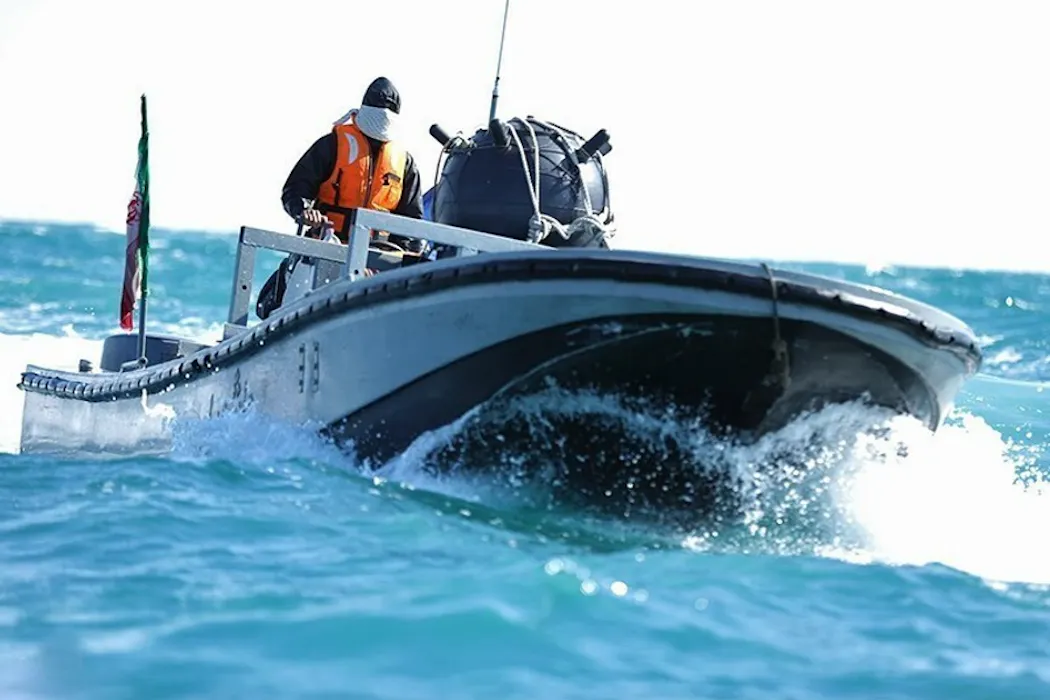
How prepared are the US and its allies for a protracted conflict in Iran?

Source: The Conversation – UK – By Andrew Gawthorpe, Lecturer in History and International Studies, Leiden University

Whether the US and its allies run out of air defences before Iran runs out of airborne projectiles remains to be seen. guruXOX / Shutterstock

If Israel and the US hoped their attack on Iran would force the country to capitulate quickly, they were wrong. Despite the death of the supreme leader, Ayatollah Ali Khamenei, and many other senior figures, Iran has managed to continue firing drones and missiles at targets across the Middle East.

This poses a challenge for the US and its allies, including Israel and the Gulf states. The challenge is that they might run out of air defences before Iran runs out of airborne projectiles.

The US and its allies use a number of weapons platforms to knock down incoming missiles and drones. The most important are Thaad interceptors, Patriot systems and SM-family naval missiles, while Israel also uses longer-range Arrow interceptors. However, the supply of these interceptors has been under severe strain in recent years.

Many have been provided to Ukraine, which faces relentless Russian aerial assault. Others have been used in the Red Sea to protect shipping against attacks by the Iran-aligned Houthis. And more still have been stationed in the Indo-Pacific to defend South Korea and Taiwan from possible North Korean and Chinese attacks.

Despite their importance to modern warfare, US stockpiles of these munitions are dangerously low. There are simply too many competing priorities, and production has only recently been increased. The 12-day war the US and Israel fought with Iran in June 2025 is thought to have consumed around a quarter of the entire US inventory of Thaads.

When stocks of these munitions diminish during a war, choices have to be made about which targets to protect – and which not to protect. This usually means focusing on the defence of strategic military installations, allowing some civilian areas to be hit. Israel is widely believed to have made this choice during the 12-day war.

That moment may be approaching again. However, this time it is not just Israel that is at risk, but half a dozen other Middle East countries. The main problem is in the Gulf states, which are in range both of the sort of long-range missile that Iran fires at Israel and its shorter-range projectiles.

These Arab countries can also be hit more easily by Iran’s Shahed exploding drones. The drones are much easier to launch than missiles, require less risk to do so and can reach some targets in the Gulf within minutes. Iran is estimated to have 80,000 of them.

Ukraine has faced this type of attack mix for years and it has developed complex, multi-layered air defences to counter it. This means using expensive interceptors (each Patriot missile costs US$4 million) to take down ballistic missiles and using a combination of other things – even a machine gun will do – to take down drones.

It’s an effective system that has kept Ukraine in the fight and ensures it does not use too many interceptors. The Gulf states have not done this. Instead, they appear to be using Patriot missiles and other extremely expensive and scarce missiles to take down everything from ballistic missiles to US$20,000 (£15,000) drones.

Missile defence systems are designed to launch several interceptors at each incoming projectile, meaning their stocks can run down quickly. Probably within a few days, the Gulf states are going to have to shift their tactics.

Stocks running low

Even if the Gulf states are the most exposed, the situation is not rosy for Israel or US military forces across the region either. Some US forces are in range of Iran’s Shahed drones and short-range missiles. Others are in range of Iran’s long-range missiles.

The exact size of missile defence stocks is classified. But a look at budgetary and procurement data suggests that US forces will become stretched within a matter of days or several weeks at the very most. At that point, the US will have to begin drawing down missile defence stocks from the rest of the world.

According to South Korean media, discussions are already underway about removing Thaads and Patriot systems from South Korea and sending them to the Middle East. Ukraine will get fewer. And US military readiness will be severely degraded around the world, inviting aggression and the possible opening of a second front.

The other side of the equation is Iran’s capabilities, which are something of an unknown. Long-range missiles are the type of munition it has the least of, and they are also the riskiest to launch. The US and its allies can be fairly confident that over time they will significantly degrade Iran’s ability to launch these missiles. Whether it will be fast enough to happen before a critical interceptor shortage is less certain.

But Iran’s short-range missiles and drones are another matter. The drones, especially, can be launched without large, visible weapons platforms, which make an easy target for US and allied air strikes. Particularly if Gulf air defences become very degraded, there are a host of highly damaging targets for them to hit – ranging from US bases to oil and gas infrastructure to shipping.

Ultimately, the answer to how prepared the US and its allies are for a protracted conflict seems to be “not very”. Even if it runs out of long-range missiles, Iran can probably continue its drone attacks for a very long time, causing chaos throughout the region and spiking energy prices by disrupting production and shipping. Stopping them will not be easy.

The Conversation

Andrew Gawthorpe is affiliated with the Foreign Policy Centre.

ref. How prepared are the US and its allies for a protracted conflict in Iran? – https://theconversation.com/how-prepared-are-the-us-and-its-allies-for-a-protracted-conflict-in-iran-277454

Space launches are changing the chemistry of Earth’s atmosphere, studies warn – here’s what can be done

Source: The Conversation – UK – By Ian Williams, Professor of Applied Environmental Science, University of Southampton

NASA JSC

Look up on a clear night and you’ll see the streaks of our new space age. What you
don’t see is the growing fallout for the atmosphere that keeps us alive.

A wave of satellite launches and reentries is changing the chemistry and physics of the middle and upper atmosphere.

Studies warn of ozone depletion, stratospheric heating and new metal aerosols from burning spacecraft. The pace is accelerating fast and unless we redesign how we use and retire satellites, we risk swapping one environmental problem (congestion in Earth orbit from too many spacecraft) for another (an atmosphere seeded with rocket soot and satellite ash).

The problem is that most satellites are de-orbited when they reach the end of their lives. Essentially, they self-destruct in the Earth’s atmosphere, disintegrating as they are heated to thousands of degrees Celsius. But there is an increasing move to extend the lives of satellites in orbit by, for example, refuelling them. They could also be de-orbited in a gentler manner, so that parts can be reused.

Orbital launches hit fresh records in 2024 and 2025 as companies raced to establish and refresh mega-constellations, which are large networks of many satellites launched to provide a particular service, such as internet access.

SpaceX’s Starlink is one example. Independent estimates report between 259 and 271 launches in 2024 and more than 315 in 2025, driven largely by commercial broadband fleets. That launch pace means unprecedented reentry traffic: thousands of satellites self destructing in the atmosphere.

Researchers estimate that by the 2030s, re-entering satellites could inject thousands to tens of thousands of tonnes of alumina (aluminium oxide) and other metals into the middle atmosphere each year.

Why does that matter? Alumina can catalyse the chemistry that destroys the ozone layer, which protects the Earth’s surface from harmful solar radiation. Meanwhile, rocket exhaust – especially black carbon (soot) from rocket engines powered by hydrocarbon propellants – warms the stratosphere (the layer of the atmosphere immediately above the one where we live) and alters winds.

Modelling suggests that the growth in space launches could measurably thin global ozone and delay its recovery after the success of the Montreal Protocol – the 1987 agreement designed to reduce the use of ozone-harming chemicals.

Crucially, scientists are now detecting the chemical footprints of launches in the atmosphere. Research aircraft have sampled “exotic” metals (aluminium, copper, lithium and more) embedded in stratospheric particles, consistent with rocket and satellite reentries.

Not just a traffic problem

Treating end-of-life space vehicles via “just burn it up” may clear orbits, but it risks trading orbital debris for atmospheric pollution.

One study forecast that by 2040, alumina from reentries could rival meteoric dust, shifting polar temperatures and winds – the same regions most sensitive to ozone chemistry.

Independent analyses show that black carbon emissions from rockets can warm the stratosphere by up to a few degrees and slow jet streams under highgrowth scenarios, raising concerns about undesirable impacts on climate change and ozone chemistry.

Starlink satellite
Recent years have seen a wave of space launches to support large networks of satellites, such as Starlink.
Wikideas1, CC BY

There are terrestrial risks too. While the individual risk from falling debris remains very low, the collective risk is rising as reentries multiply, prompting calls for tighter limits on uncontrolled descents.

Astronomy is already feeling the strain. Simulations indicate that, if constellations reach projected sizes by decade’s end, a large fraction of images from some space and ground-based observatories will be spoiled by satellite streaks – a product of the large number of satellites passing in front of the telescope.

A better path

There is another way forward. A circular economy for space applies the same principles that
aims to transform modern waste policy on Earth. This means designing products to last and keep them in service, eliminate pollution, and recover value at end of life. Our research shows it’s not only technically possible – it’s financially attractive.

It’s something we are exploring at the Southampton Space Institute, which opened in 2025. My colleague and I estimate the reuse and scrap value of orbital debris at US$570 billion (£419 billion) – US$1.2 trillion (£900 billion), spanning between 5,312 and 19,124 tonnes of recoverable material. That economic signal can justify investment in the technologies and markets that turn “junk” into feedstock – raw materials or components that can be used for other purposes.

We can also extend the lives of satellites by servicing them – for example, refuelling them when they are running low on propellant. Northrop Grumman’s Mission Extension Vehicles have already docked with an ageing satellite in geostationary orbit, adding years of service and avoiding premature disposal.

The active removal of space debris could also help. The European Space Agency’s
ClearSpace1 project plans to demonstrate the first capture and de-orbit of space debris in 2029. The UK’s Clear mission will also remove multiple items of space debris – as a kind of “garbage collection” that reduces the risk of them colliding with satellites.

Satellites and rockets should be built for repair, refuelling and gentle de-orbiting, so that parts can be retrieved and reused. The choice of materials used could also minimise ozone damaging residues in the atmosphere.

Policymakers can accelerate this by making manufacturers responsible for their products along the entire life-cycle (so-called extended producer responsibility). Financial incentives such as refundable bonds for companies that de-orbit their satellites could also help, along with licence conditions that favour satellite servicing over disposal in Earth orbit.

The science in this area is still maturing. We need coordinated measurements and modelling of soot, alumina and metals in the middle atmosphere. The direction of travel is clear: under high growth scenarios, space launches and routine burn-ups of satellites can slow ozone healing and reshape the stratosphere. Under smarter, circular economy scenarios, we can have a clean sky.

So the options are: keep launching, burning and polluting the atmosphere or build a circular space economy that extends, services and recovers parts from satellites.

If we get this right, future generations will inherit both a darker, quieter sky and a resilient, circular space industry – and they’ll wonder why we ever thought that leaving satellites in space was a good plan.

The Conversation

Ian Williams receives funding from UK Research Councils, including the Engineering and Physical Sciences Research Council’s Impact Acceleration Account.

ref. Space launches are changing the chemistry of Earth’s atmosphere, studies warn – here’s what can be done – https://theconversation.com/space-launches-are-changing-the-chemistry-of-earths-atmosphere-studies-warn-heres-what-can-be-done-277264

How to understand the post-Gorton and Denton national poll that puts the Greens ahead of Labour

Source: The Conversation – UK – By Matthew Barnfield, Postdoctoral Research Fellow, Department of Politics and International Relations, Queen Mary University of London

Polling by YouGov suggests a surge in support for the Green party across the country following the Gorton and Denton byelection. According to the poll, Zack Polanski’s party now has a national vote share of 21%, leapfrogging the Labour party. The Greens now sit within the margin of error behind Reform’s 23%.

In light of this result, some have claimed that the Green party’s byelection victory has boosted its national polling by making it look like a party that can win in an election. This is a version of what is known among political scientists as the bandwagon effect. The idea is that voters jump on the bandwagon of parties that are very popular with other voters.

But it’s not necessarily the case that voters are now thinking of going Green just because the Greens won in the byelection. Coverage of byelection results has a longstanding tendency to focus too much on which party wins and not enough on trends in vote shares.

Hannah Spencer won the seat for the Greens on a share of the vote fully 28 percentage points higher than her predecessor managed in 2024. Changes in vote shares like this matter because they can give some insight into the scale and direction of shifts in the standing of parties across the country as a whole.

This is true regardless of whether such trends tip a party over the threshold required to win the seat. In other words, had the Greens won Gorton and Denton by a narrow margin, as constituency polling late in the campaign suggested they might, that would not have been quite so seismic a result. What has shaken British politics is that the Greens did so much better than they did in 2024, that they did so much better than Labour – and so much better than expected.

The effects of these two related factors – the victory and the swing – cannot be teased apart. The win itself is not necessarily what has motivated voters to jump on the bandwagon in subsequent polling. It could just as plausibly be the Greens’ improving electoral performance that is doing the important work.

The striking and substantial surge in support in the byelection may be inspiring voters across the country to go Green. That surge just happened to also propel them to victory in the byelection.

Indeed, decades of research on the bandwagon effect has struggled to find any consistent evidence that voters flock to the most popular party or the “winner”. But some evidence suggests that when parties become more popular, regardless of whether that growth propels them into first place, this growth can become self-perpetuating as more voters jump on the bandwagon.

Why this matters

This distinction matters because it can shape the story we tell about why the effect is happening. If we focus on the Greens’ victory as the most important factor driving their subsequent poll boost, we will tend to tell a story about viability: the Greens won this election, so they could win others, and that makes people want to back them.

If instead we focus on the Greens’ growth, we uncover a story about momentum: the Greens have gained ground, so they could gain more ground, and that makes people want to get involved.

Of course, viability and momentum are related. For one thing, we know from primary campaigns in the US that smaller election victories can be seen as generating a kind of momentum that boosts perceptions of viability in bigger elections. For another, my research has shown that when a party’s vote share increases, even if it doesn’t move into first place, this momentum raises expectations of its chances of winning a future election.

These findings suggest something important. Even if voters are now flocking to the Greens because they see the party as viable, that does not mean the byelection victory alone is driving them to jump on the bandwagon. The party’s growth, separate from the victory that growth brought about, also probably matters for these perceptions of viability – and, therefore, helps explain why people are now jumping on the bandwagon in subsequent polling.

What also matters is the way the Green party’s victory is being covered. Voters do not learn about the election result in a vacuum; it is always presented with interpretation. And many of those interpretations are focusing on what the victory means for the Greens’ viability. This understandably superlative coverage of the byelection result contributes significantly to the perception that the party is becoming a viable electoral force.

Indeed, it has long been argued that numerical data representing parties’ performance alone is probably insufficient to produce a bandwagon effect, and that any such effect probably relies on the interpretation of what the results mean. If perceived viability drives people to vote Green, then it is largely the media’s insistence on that viability that is causing this movement.

The Conversation

Matthew Barnfield receives funding from the British Academy.

ref. How to understand the post-Gorton and Denton national poll that puts the Greens ahead of Labour – https://theconversation.com/how-to-understand-the-post-gorton-and-denton-national-poll-that-puts-the-greens-ahead-of-labour-277519

The US is using repurposed Iranian drone technology to attack Iran – a military expert explains why

Source: The Conversation – UK – By Arun Dawson, PhD Candidate, Department of War Studies, King’s College London

Amid the biggest concentration of American military power in the Middle East in decades, the significance – and irony – of one aspect of the US war on Iran has gone largely unnoticed.

In the opening salvoes of the attack, the US quietly introduced its Low-Cost Uncrewed Combat Attack System (Lucas), a one-way attack drone modelled on the cheap technology that Iran itself has been developing since the 1980s. Those Shahed drones were said to have been inspired by technology developed by Israel, which has co-led the assault with the US.

Necessitated by sanctions, Shahed drones have become (along with ballistic missiles) Iran’s primary domestically produced air weapon – a relatively cheap system designed not so much as to outmatch western defences as exhaust them. The original model (Shahed-131) made its operational debut in September 2019, during an attack on a Saudi oil refinery.

But what began as a military workaround has become a global weapon – used first by Iran’s regional proxies such as the Houthis in Yemen, then by Russia in its war on Ukraine. This led Ukrainian president Volodymyr Zelensky to call Iran “Putin’s accomplice” for not only supplying Russia with Shahed drones but also the technology to build its own.

Struck by the battlefield success of large-scale, low-cost drone attacks, the US made covert efforts to capture Shahed-136s for technical analysis. It reverse-engineered these specimens to create replicas for counter-drone training, which in turn were adapted into the current Lucas drone fleet.

The rollout has been swift. Within five months of the programme’s launch, the Pentagon had equipped US forces in the Middle East with Lucas drones. Their ability to be sea-launched was tested using a warship in the Arabian Gulf.

Then on February 28, US Central Command confirmed that Lucas drones had been used in combat for the first time. They were launched from ground positions by Scorpion Strike, a US task force established in December 2025 to “flip the script on Iran” with drone technology, according to one US official.

Lucas drones are also believed to have been used in Venezuela’s capital Caracas on January 3 2026, as part of the US mission to capture the country’s president, Nicolás Maduro. But their official operational debut in Iran signals a shift in the economics, and perhaps even the philosophy, of American air power.

On hearing of the Lucas system in December 2025, a senior Iranian official is reported to have gloated: “There is no greater honour than seeing self-proclaimed superpowers kneel before an Iranian drone and copy it.”

Video: Monitor Pertahanan.

The arithmetic of modern warfare

For decades, western airpower has strived to build machines that go faster, higher and further. But as far back as 1979, Pentagon official Norm Augustine conducted a study of the spiralling costs of US fighter aircraft. This led him to conclude, with tongue firmly in cheek:

In the year 2054, the entire defense budget will purchase just one tactical aircraft. This aircraft will have to be shared by the Air Force and Navy 3½ days each per week except for leap years, when it will be made available to the Marines for the extra day.

But there was an important truth amid Augustine’s humour. These highly advanced war machines are formidable – but they are also scarce, slow to replace, and politically too sensitive to lose.

The answer to this conundrum is “affordable mass”. Military experience in Israel and in Ukraine – where around 75% of battlefield casualties have been attributed to small drones – points to the benefit of having cheap, expendable systems that are complementary to the US’s most advanced aircraft.

At a cost of roughly US$35,000 (£26,000) each, Lucas embodies this logic – and the Trump administration’s “drone dominance” programme aims to have a stock of 340,000 comparable drones by early 2028. This builds on the earlier Replicator Initiative which started under Trump’s predecessor, Joe Biden.

A Lucas drone at the Pentagon in a July 2025 event attended by defense secretary Pete Hegseth.
US Department of Defense

How Iranian and US drones compare

Iran’s Shahed family of drones are built for long-range, one-way attack. The most widely used and effective variant, the Shahed-136, is a 3.5-metre drone made of foam and plywood which carries a 40-50kg explosive warhead.

These “loitering munitions” can fly to a target area more than a thousand miles away at around 115mph, then circle for up to six hours before diving at their target. Propelled by a 50-horsepower piston engine with a distinctive moped-like buzz, these drones use satellite navigation and a pre-programmed route with high accuracy, assuming they can overcome attempts by the enemy to jam their guidance system.

At a cost of upwards of US$20,000 each, they occupy the warfare space between manually piloted quadcopter drones, which are cheaper but cannot carry a large warhead, and costly cruise missiles. The Russian-assembled version known as Geran-2 has extended the drone menace to key national infrastructure, cities and military assets throughout Ukraine.


Read more:
A visual guide to 14 of the drones wreaking havoc in Ukraine, Russia and beyond


Unlike Shahed-136s, the imitation model first used by the US military for counter-drone training codenamed FLM-136 – was lighter. This reduced its range to 400 miles as it could not carry as much fuel, and halved its weapon payload (though at 18kg, it’s still double that of a Hellfire, the US’s primary air-to-ground missile).

The Lucas drones have been observed to possess a nose-mounted gimballed camera system, and modules for satellite connectivity.

The story behind the Lucas drone’s development. Video: Arizona’s Family (3TV / CBS 5)

Compared with most pre-programmed Shahed systems, even intermittent connectivity would allow Lucas operators to re-task drones in flight, update target data or coordinate salvos more dynamically than earlier generations of one-way attack systems. Satellite links could also support AI-powered “swarm” tactics, when drones act as a coordinated attack team.

If used in numbers, Lucas drones could saturate Iran’s radar systems by presenting more objects than its operators can comfortably track. In doing so, they could create corridors through which more capable (but expensive) US and Israeli weapon systems can pass unharmed. These are needed to order to attack heavily protected targets such as strategic bunkers and nuclear facilities.

Low-cost, expendable drones work best in compact theatres such as the Middle East, where distances and logistics are manageable. But Lucas’s full potential in contested, jammed environments will depend on its ability to use AI-driven swarming techniques.

As yet, the US lacks the technology, public appetite and legal framework to introduce a true AI-powered air force. But it may be here before long.

The Conversation

Arun Dawson is affiliated with the Royal United Services Institute.

ref. The US is using repurposed Iranian drone technology to attack Iran – a military expert explains why – https://theconversation.com/the-us-is-using-repurposed-iranian-drone-technology-to-attack-iran-a-military-expert-explains-why-277397

Strength training may be the key to healthy ageing

Source: The Conversation – UK – By Christopher Hurst, Senior Research Associate, Newcastle University

stockpexel/Shutterstock

Healthy ageing is about staying independent, maintaining mobility and continuing to enjoy everyday activities as you get older. For many people, what matters most is being able to get out of a chair without help, carry shopping home, climb the stairs and recover quickly after illness.

One of the most important and well-established factors in healthy ageing is muscle strength. Sarcopenia, the age-related loss of muscle mass and strength, leads to reduced physical function and mobility.

Over time, muscles become smaller and weaker. This matters because muscle does more than move our limbs: it stabilises joints, supports balance and acts as a reserve during illness or injury.

As muscle strength declines, the risk of falls and fractures increases, particularly in later life. Estimates suggest that sarcopenia affects a substantial proportion of older adults, particularly those over the age of 70.

Sarcopenia is also more widespread in certain groups. Work conducted by my colleagues and I has shown that adults living with multiple long-term conditions (multimorbidity) are at an increased risk of sarcopenia. The good news is that the most effective treatment for sarcopenia is exercise training.

Most people know that physical activity benefits health. However, different types of activity have different effects on the body. Activities such as walking or cycling mainly improve heart and lung fitness. Others are better at strengthening muscles.

Research shows that not all types of activity are equally effective for improving muscle strength and physical function. Because muscle plays such a central role in movement, balance and recovery from illness, maintaining it becomes a key target for healthy ageing.

Strength training, also known as resistance exercise, involves working muscles against a force. This can include lifting weights such as dumbbells, using gym machines or resistance bands, or using your own body weight in exercises such as squats, step-ups or press-ups.

Strength training is the most effective way to maintain or improve muscle strength as we age, so should be the foundation of any programme aimed at healthy ageing. It also improves everyday physical abilities such as walking speed, standing up from a chair and overall mobility.

Strength training routines

Effective strength training routines can take many forms. The most important step is getting started and continuing consistently.

Exercises that target the lower body, such as squats or the leg press, are especially important because these muscles allow us to get out of a chair, climb stairs and move confidently. But upper body muscles including the chest, back and arms are also important. They help us carry shopping, lift objects and maintain posture, all of which support independence.

Strength training does not just mean lifting the heaviest weights in the gym. What matters most is that the exercise feels challenging. By the end of a set, your muscles should feel tense and fatigued.

Lighter weights can be just as effective if they are lifted more times. For example, performing 20 to 25 repetitions with a lighter weight can produce similar improvements to lifting a heavier weight ten times, provided the effort is high.

It is also not necessary to train every day. Evidence suggests a single session per week can be enough to produce meaningful gains in strength, particularly in people new to training.


Read more:
Exercise snacks: the best bursts of activity to incorporate into your day


Strength training works best when combined with adequate nutrition, particularly sufficient dietary protein, which provides the building blocks muscles need to repair and grow. Starting gradually and building up over time can reduce the risk of injury.

Exercises can also be adapted for people with joint pain or long-term conditions, and support from qualified professionals can help ensure training is safe and appropriate.

Despite strong evidence for its benefits, participation in strength training remains low. Many people report barriers such as lack of confidence, uncertainty about how to start, fear of injury or the belief that gyms are not for them.


Read more:
How low can you go (and still build muscle)? Why strength training matters at any age


Low participation reflects not only personal barriers but a longstanding emphasis on aerobic activity in public health messaging. For many years, public health guidance focused mainly on aerobic activity such as walking, running or cycling, and gave less emphasis to muscle strengthening.

Although strength training is now included in national and international physical activity guidelines, it remains underused – and adherence to these guidelines remains poor.

But there are signs of change. The UK Health and Social Care select committee is currently examining how physical activity can support healthy ageing, with strength training forming part of the discussion. If acted upon, these MPs’ recommendations could influence future investment in community exercise programmes and support services.

Campaigns such as the Chartered Society of Physiotherapy’s Stronger My Way also aim to increase awareness and confidence around strength training.

The next step is to translate growing awareness into practical action. For most adults, this means aiming to do muscle strengthening activities at least once or twice a week, targeting the major muscle groups of the legs, hips, back, abdomen, chest, shoulders and arms. Many people can begin at home using body weight exercises, then gradually increase the difficulty as their strength improves.


Read more:
Your body can be a portable gym: how to ditch membership fees and expensive equipment


Our work has shown that older people are willing to try strength training, even if they have never done it before, when exercises are tailored to their needs and supervised by qualified professionals. It is never too late to begin. Research shows that even people in their 80s and 90s can build or maintain muscle strength with appropriate support.

Maintaining muscle strength is one of the most accessible, effective and low-cost ways to influence how well we age. The ability to rise from a chair, steady yourself on uneven ground or carry a bag of groceries may seem ordinary, but it is deeply meaningful. These small acts underpin independence and dignity.

Strength training is not about aesthetics or performance. It is about preserving function, confidence and your quality of life for as long as possible.

The Conversation

Christopher Hurst is supported by the National Institute for Health and Care Research (NIHR) Newcastle Biomedical Research Centre (reference: NIHR203309). The views expressed are those of the author and do not necessarily reflect the views of the National Institute for Health and Care Research or the Department of Health and Social Care.

ref. Strength training may be the key to healthy ageing – https://theconversation.com/strength-training-may-be-the-key-to-healthy-ageing-276133

Strait of Hormuz: Gulf states’ food security is at immediate risk but wider shortages could push up consumer prices globally

Source: The Conversation – UK – By Gokcay Balci, Lecturer in Sustainable Freight Transport and Logistics, University of Leeds

Before the crisis began, ports like Jebel Ali in the UAE were seeing millions of containers of goods passing through them every year. Druid007/Shutterstock

The Iranian regime has announced the closure of the strait of Hormuz and threatened to target ships attempting to transit the narrow waterway. Some have already been damaged. While this could seriously harm global energy supply and raise costs, the consequences actually extend far beyond these markets.

The strait of Hormuz, which sits to the south of Iran and connects the Persian Gulf with the Arabian Sea, is one of the most critical chokepoints for international trade. More than 30,000 ships, carrying around 11% of global seaborne trade by volume, transit the strait each year. And around 34% of seaborne oil exports and 19% of seaborne natural gas shipments also pass through it.

However, oil and gas are not the only commodities moving through the strait. The Gulf region serves as a major hub for the transfer of containers carrying consumer goods, particularly between Asia and Europe.

Alongside Jebel Ali in the United Arab Emirates – the world’s ninth-largest container port – the region handles more than 26 million containers annually, around 80% of which are transhipment (cargo containers being transferred between vessels). It is estimated that more than 150 ships, with a combined capacity of about 450,000 containers, are stranded in the region.

Food and agriculture supply is at risk

The strait of Hormuz is central to the global fertiliser trade. More than 30% of urea – the most widely used nitrogen fertiliser produced from natural gas – is exported from Gulf countries by sea.

Urea prices rose by about 14% on March 2 compared with the previous day. Fertilisers account for a significant share of production costs in many agricultural products, just over a third each for both corn and wheat, for example. When increasing fertiliser prices combine with rising energy costs, producing important crops becomes more expensive.

So the availability of agricultural output and food products could also be affected by the crisis. In addition to potential fertiliser shortages, disruptions to shipping may hit supplies. Perishable goods transported in refrigerated containers are already at risk of spoilage as container ships remain stranded near the strait.

Gulf countries face particularly high risks because many depend heavily on imported food. In Qatar, for example, more than 90% of food is imported, with the vast majority arriving by sea. With flights not fully operating across the region, food availability could become a growing concern. Food by road freight from Turkey may provide an emergency alternative, but capacity would be limited and costs significantly higher than maritime transport.

qatari women shopping in a supermarket selling imported fruit and vegetables.
Around 90% of food in Qatar is imported – mostly by sea.
Sebastian Castelier/Shutterstock

Beyond the region, consumer prices may also rise. Higher energy costs are likely to be a major driver, although the overall impact will depend on how long the crisis lasts and what happens to those energy prices in the meantime. Brent crude oil prices increased from about US$72 (£54) before the strikes began to around US$79 as of March 4 – compared with roughly US$66 one month earlier.

A 2023 analysis by the European Central Bank suggested that inflation in Europe could rise by 0.8 points if a third of oil and gas supplies passing through the strait of Hormuz were disrupted. In the current situation, almost all shipping traffic through the strait has been halted.

The price of consumer goods could also be affected by the disruptions. Shipping costs have already increased for containerised shipments to the region, with major container lines imposing war risk surcharges ranging from US$1,500 to US$4,000 per container. For context, the typical cost of moving a container from Shanghai to Europe is around US$2,700-US$3,600 including freight and port cargo handling charges.

Similar surcharges are also applied to shipments between other regions not using strait of Hormuz, as leading container lines bypass the Suez canal, which links the Red Sea and the eastern Mediterranean. Instead, they reroute vessels around the Cape of Good Hope off the southern tip of Africa.


Read more:
How Red Sea attacks on cargo ships could disrupt deliveries and push up prices – a logistics expert explains


This strategy was also adopted during the Red Sea crisis in late 2023, when Houthis in Yemen (backed by Iran) began seizing and attacking passing ships. Freight costs increased by 250% in the first few months of the crisis.

Overall freight rates – the price companies pay to transport goods – may once again increase globally as shipping capacity shrinks. Increases could be limited this time though, because the container sector was actually facing an overcapacity issue.

But perhaps surprisingly, higher shipping costs do not necessarily translate into large increases in consumer prices. For many products, maritime transport accounts for as little as 0.35% of the final retail price. But delayed shipments and unreliable transit times may instead create logistical challenges, including higher inventory costs and temporary shortages of essential goods, which can affect consumers more.

A prolonged crisis, combined with vessels rerouting around the Cape of Good Hope, could intensify pressures on consumer prices, logistics and production costs, and the availability of food and other consumer goods. It’s a reminder that regional tensions happening in strategic locations like the strait of Hormuz have global consequences for consumers.

The Conversation

The authors do not work for, consult, own shares in or receive funding from any company or organisation that would benefit from this article, and have disclosed no relevant affiliations beyond their academic appointment.

ref. Strait of Hormuz: Gulf states’ food security is at immediate risk but wider shortages could push up consumer prices globally – https://theconversation.com/strait-of-hormuz-gulf-states-food-security-is-at-immediate-risk-but-wider-shortages-could-push-up-consumer-prices-globally-277214

Iran is putting pressure on the US-UK ‘special relationship’ – but it has survived worse over the years

Source: The Conversation – UK – By Matt Barr, Senior Lecture in International Relations, Nottingham Trent University

The so-called “special relationship” between the UK and the US appears to be at its lowest ebb for decades. As he sat alongside the German chancellor, Friedrich Merz, at a White House press call on March 3, Donald Trump bitterly criticised Keir Starmer for his refusal to let the US use British bases to launch initial strikes on Iran.

Declaring he was “not happy with the UK”, he added: “This is not Winston Churchill that we’re dealing with.” Churchill was, of course, the first person to talk of a special relationship between the UK and the US in a speech made at Westminster College in Missouri in March 1946.

Over eight decades since then, successive British and US governments have projected an image of exceptional closeness, particularly in matters of defence and foreign policy. But Trump’s return to the US presidency and his pursuit of a more aggressive foreign policy, including most recently his decision to launch, with Israel, a campaign of airstrikes against Iran in pursuit of regime change, has revived an old question for the Starmer administration: how far should the UK publicly diverge from Washington given the significance of this relationship?

Starmer ruled out joining America and Israel in their campaign in a speech in the House of Commons on March 2, saying “the British government does not believe in regime change from the skies”. Having initially refused to allow British airbases to be used by the US in its campaign, he later softened his stance, allowing some UK bases in the Middle East to be used for strictly “defensive purposes”.

The US president and his secretary of defence, Pete Hegseth, have strongly condemned his position. Trump said the prime minister “has not been helpful” and that the special relationship is “obviously not what it was”. Hegseth spoke of “traditional allies who wring their hands and clutch their pearls hemming and hawing about the use of force” in a clear reference to Starmer’s stance on Iran.

But, as Starmer told the Commons: “President Trump has expressed his disagreement with our decision not to join the initial strikes. But it is my duty to judge what is in Britain’s national interest, and that is the judgment I made. I stand by it.”

Starmer: ‘The British government does not believe in regime change from the skies’.

There were shades of his criticism of Trump over his declaration in January that the US must acquire Greenland by force if necessary. Then Starmer said that the world’s largest island “belongs to the people of Greenland and the Kingdom of Denmark alone” and that “applying tariffs on allies for pursuing the collective security of Nato allies is completely wrong”, adding that: “We will of course be pursuing this directly with the US administration.”

The special relationship is often characterised as Britain acting as Washington’s subordinate, sacrificing independent judgement to remain close to the US. This view of the alliance is usefully captured by the caricature of Tony Blair as George W. Bush’s “poodle” over the 2003 Iraq war, blindly following Bush into folly. Indeed, with Iraq, the special relationship was described as having a “vice-like grip”, constraining British foreign policy.

But in important ways, this interpretation is misleading. Understanding why can help give an indication of how Keir Starmer’s government can respond to differing views with the US over foreign policy.

2003: ‘Operation Iraqi Freedom’

Over Iraq, preserving the special relationship unquestionably mattered to British decision-makers – but it was not their primary focus. Instead, British and American leaders were in agreement. Both governments came to believe that regime change through military action was the only viable policy option to disarm and topple the regime of Saddam Hussein.

It was felt that containment and weapons inspections were unworkable to prevent the Iraqi dictator from fulfilling his intention to regain a weapons programme in the future (he had previously used chemical weapons to terrible effect against Iran and his own people, but had destroyed them before the Gulf war).

Blair’s thinking was determined by his exposure to UK intelligence briefings. Analysing declassified briefings shows how the key concern changed over time. Intelligence moved the focus away from existing “weapons of mass destruction” (WMDs) in the aftermath of the 1991 Gulf war to Iraq’s breakout potential. This is having the technological, intellectual and financial resources to acquire them in the future.

Blair was reportedly willing to resign over his support for the invasion. This was nothing to do with pressure from Washington – he was a true believer in regime change in Iraq and was in lockstep with Bush as a result. Interviewed for a Channel 4 documentary in February 2026 – more than two decades later – Blair repeated his passionate belief that a military invasion of Iraq was necessary to prevent Saddam from developing WMDs: “I did it because I thought it was right.”

No longer in lockstep?

But you don’t have to look far to find notable examples of where the UK has not aligned with the US: the Vietnam war was one – then prime minister Harold Wilson refused Lyndon Johnson’s request to send British troops to Vietnam. Previously in 1956, the Suez crisis, when the British prime minister Anthony Eden ignored US president Dwight D. Eisenhower’s warning not to intervene in the Egyptian nationalisation of the Suez canal, but was forced to back down.

So the idea that the UK has acted in lockstep with the US over major foreign policy decisions is far from the truth.

Starmer’s challenge, whether it’s over Greenland, Iran or a future foreign policy issue, is how to manage a relationship in which disagreement is open and rooted in competing views. Trump’s habit of seeking retribution against those he thinks have slighted him is worrying, his condemnation of Starmer for their differences over Iran shows this with some sharp words on both sides.

There’s no doubt that the divergence between the US and Britain over Iran is putting pressure on relations between the two countries. But for a relationship to be “special” implies respect that goes both ways. How that survives the current episode will tell us a lot about the relationship’s future.

The Conversation

Matt Barr does not work for, consult, own shares in or receive funding from any company or organisation that would benefit from this article, and has disclosed no relevant affiliations beyond their academic appointment.

ref. Iran is putting pressure on the US-UK ‘special relationship’ – but it has survived worse over the years – https://theconversation.com/iran-is-putting-pressure-on-the-us-uk-special-relationship-but-it-has-survived-worse-over-the-years-274037

Starmer’s Iran approach may anger Trump, but it fits with his foreign policy philosophy

Source: The Conversation – UK – By Jason Ralph, Professor of International Relations, University of Leeds

Foreign policy doctrines are often forgotten as soon as they are written. Take the November 2025 US National Security Strategy, which told us that “the days in which the Middle East dominated American foreign policy … are thankfully over”.

Keir Starmer, however, has stuck to his promise to “use realist means to pursue progressive ends”, even when placed in a difficult position by Donald Trump. The prime minister’s decision not to take part in offensive military action in the Middle East is, I would argue, consistent with his foreign policy doctrine of progressive realism.

There is, of course, room for debate. Some progressives will point to the Iranian government’s egregious human rights abuses as reason for supporting externally enforced regime change. UK government ministers acknowledge this – they are not mourning the Ayatollah.

But progressivism is also committed to peace between nations. This is because nationalism, as well as a yearning for individual freedom, is a powerful ideology. Foreign intervention can often provoke a nationalist backlash, even if its aims are to advance universal rights. While many Iranians celebrate the death of the Ayatollah, they may be wary of supporting external intervention.

This is the progressive value of an international law that rejects the great power’s right to overthrow other governments. It defends the right of national self-determination, and believes human rights are ultimately more secure when nations live together peacefully. If nations are less suspicious of each other, they are less inclined to crackdown on domestic opposition. That creates the political space – so the theory goes – for gradual, less violent reform.

Labour prime ministers have not always understood progressive foreign policy in these terms. Tony Blair took a more revolutionary approach. His decision to join the Bush administration’s 2003 war to overthrow the Iraqi regime was motivated in part by the progressive’s commitment to improve the lives of those repressed by dictatorships. His case for war centred on the threat of weapons of mass destruction, but his decision to join the US aligned with an American neoconservative view of promoting democracy through regime change. That ended badly, with tens of thousands of civilians killed in the violence that followed.

These “mistakes of the past” were uppermost in Starmer’s thinking when he addressed parliament on March 2. The possibility that the unintended consequence of military action could be deadly chaos, rather than democratic revolution, reflects the realist side of UK foreign policy.

Foreign policy realists have less faith in the progressive value of international law. Yet they are often aligned with progressives in opposition to military-enforced regime change. Realists appreciate that the mobilising force of nationalism makes the foreign intervener’s task much more difficult. A realist ethic focused on a prudent assessment of consequences makes them sceptical toward revolutionary goals and military gambles.

Again, there is room for debate. The current US National Defense Strategy has a different understanding of realism. It throws out utopian idealism and brings in hard-nosed realism. This perspective demands the pursuit of ever more military power to secure the state in a position of undisputed primacy. Consequences still matter when considering when to use force, but priority is given to demonstrating a status of military superiority and political dominance.

This kind of realism is, of course, unavailable to all but a few superpowers. The fact that it has been adopted by the UK’s one-time closest ally is troubling. US power used to be restrained by a combination of classical realist prudence on the one hand, and a liberal internationalism committed to multilateral decision-making on the other.

Trumpian realism, however, seemingly rejects this in favour of demonstrating the president’s power to decide at will which foreign regimes should survive. So long as the UK remains committed to progressive realism, the Trumpian realist pursuit of regime change in states like Venezuela and Iran will put even more pressure on the special relationship.


Read more:
Iran is putting pressure on the US-UK ‘special relationship’ – but it has survived worse


A more authentic realism

Not all foreign policy experts are happy with how the US is now invoking realism. Kevin Maloney of the Carnegie Council, a thinktank dedicated to ethics in international affairs, accuses the Trump administration of “gaslighting” when it describes its foreign policy as “realist”. He points to a more authentic form of realism in the ideas of intellectual giants like German-American political scientist Hans Morgenthau. Morgenthau warned against both ends of the progressive realist spectrum: power detached from progressive values can be just as dangerous as ideals detached from power.

The fusion of progressivism and realism in UK foreign policy led on this occasion to a “deliberate” decision not to support US military action against Iran. That annoyed Trump, but as Maloney’s assessment illustrates, it is not necessarily out of step with a wider tradition of American foreign policy thinking.

One thing that progressives and realists agree on is that the state has a responsibility to protect its own citizens, including those abroad. Starmer’s eventual decision to allow the US to use UK bases for this defensive purpose was, arguably, consistent with his initial policy, and not another U-turn.

Of course, doubts remain that the US will use UK assets for defensive purposes alone. But the decision is understandable in the context of Iran’s widespread retaliation and the risk it poses to the 300,000 UK citizens in the region. One possible scenario is that the UK may need to call on US capabilities to evacuate those citizens, as well as prevent Iranian missile strikes. Maintaining access to those capabilities is a prudent move in line with the national interest.

In the longer term, the UK and other “middle powers” need to develop their own capabilities so that they are less dependent on the US, and more able to maintain their progressive realist stance.

The Conversation

Jason Ralph has previously received funding from Research Councils UK and the European Union. He is a member of the UK Labour Party.

ref. Starmer’s Iran approach may anger Trump, but it fits with his foreign policy philosophy – https://theconversation.com/starmers-iran-approach-may-anger-trump-but-it-fits-with-his-foreign-policy-philosophy-277412

What would Winston Churchill make of war with Iran?

Source: The Conversation – UK – By Richard Toye, Professor of Modern History, University of Exeter

When Donald Trump criticised Keir Starmer for failing to sufficiently support American and Israeli operations against Iran, he did so with a historical flourish. “This is not Winston Churchill that we’re dealing with,” he complained.

The implication was clear: Churchill would have stood shoulder to shoulder with Washington in a confrontation with Tehran. The remark invites an obvious question: what would Churchill have made of war with Iran?

The answer is not as straightforward as Trump’s comparison suggests. Churchill’s record shows a mixture of hawkish rhetoric, strategic caution and a constant concern with maintaining Anglo-American unity. Far from embodying a simple instinct for confrontation, he tended to see war and diplomacy as inextricably linked.

Churchill’s famous 1946 speech in Fulton, Missouri, is a case in point. During this address, he warned that an “iron curtain” had descended across Europe. But the speech – formally titled The Sinews of Peace – was not simply a call to arms against Soviet expansion. Churchill simultaneously emphasised the need for understanding between adversaries and the importance of strengthening the United Nations. His core message was that peace could best be preserved if the western powers demonstrated sufficient unity and strength to deter aggression.

Iran already featured in the geopolitical crisis surrounding that speech. At the time, Soviet troops had failed to withdraw from northern Iran despite wartime agreements. The episode formed part of the early tensions that would harden into the cold war. Churchill therefore already viewed Iran through the lens of great-power rivalry.

That perspective had deep roots. During the second world war, Churchill had travelled to Tehran in 1943 to meet Franklin D. Roosevelt and Joseph Stalin at the first conference of the allied “big three”. The gathering took place in the capital of Iran because the country had become a crucial logistical corridor through which allied supplies flowed to the Soviet Union.

For Churchill, the conference was a sobering experience. Roosevelt increasingly cultivated Stalin’s goodwill, sometimes at Britain’s expense. Afterwards Churchill reflected ruefully that he had sat “between the great Russian bear … and the great American buffalo,” while Britain resembled “the poor little British donkey”. The remark captured his growing awareness that Britain was no longer one of the world’s dominant powers.

Roosevelt, Stalin, and Churchill seated together.
Roosevelt, Stalin, and Churchill in Tehran.
Library of Congress

That realisation reinforced a central element of Churchill’s postwar strategy: the cultivation of an enduring Anglo-American partnership. His call at Fulton for a “special relationship” between the British Commonwealth and the United States was not a mere rhetorical gesture. It was an attempt to anchor Britain’s future security within the emerging American-led order.

The irony of a Churchill reference

But Churchill’s thinking about Iran did not stop with cold war diplomacy. In 1953, during his second premiership, Britain and the US supported a covert operation that overthrew Iranian prime minister Mohammad Mosaddegh and restored the authority of Shah Mohammad Reza Pahlavi. The coup was organised largely by the CIA, under the direction of Kermit Roosevelt Jr., but Churchill enthusiastically backed the plan. When Roosevelt later described the operation to him at Downing Street, the ageing prime minister reportedly declared that he would gladly have served under his command in such a venture.

That episode suggests that Churchill could certainly favour forceful action when he believed western interests were threatened. Yet it also highlights a historical irony. The overthrow of Mosaddegh became one of the central grievances invoked by Iran’s revolutionary leaders after the Iranian revolution. Since 1979, the Islamic Republic has repeatedly invoked foreign intervention – particularly the Anglo-American coup – to legitimise its rule and to portray itself as the defender of Iranian sovereignty against external domination.

In other words, the legacy of western interference in Iran has become one of the regime’s most powerful political weapons.

Churchill was well aware that wars and interventions could produce unintended consequences. Reflecting on his experiences as a young officer during the Boer war, he later wrote that once the signal for conflict was given, statesmen lost control of events. War became subject to “malignant Fortune, ugly surprises, awful miscalculations”. This was not the sentiment of a pacifist. But it was the observation of someone who had seen how quickly political decisions could unleash forces that no government could fully control.

What would Winston do?

How might these instincts translate to the present crisis? Churchill would almost certainly have regarded Iran’s regime with deep suspicion. His cold war mindset inclined him to see international politics in terms of ideological confrontation and strategic balance. He might well have argued that weakness in the face of aggressive regimes invited further challenges.

At the same time, Churchill rarely believed that military action alone could resolve geopolitical disputes. His preferred approach was to combine firmness with diplomacy – to negotiate from strength while maintaining channels of communication with adversaries. Even at the height of the cold war he hoped that a position of western strength might eventually persuade the Soviet leadership to strike a bargain.

‘No Winston Churchill’.

Above all, Churchill believed that Britain’s influence depended on maintaining close alignment with the US. But that alignment, in his mind, was meant to shape American power rather than simply echo it. The “special relationship” was supposed to be a partnership, not a blank cheque.

Trump’s invocation of Churchill therefore rests on a simplified image of the wartime leader as an instinctive advocate of military action. The historical record reveals a more complicated figure: a strategist who believed in strength, certainly, but also in diplomacy, alliances and the careful management of great-power rivalries.

If Churchill were alive today, he might indeed be urging western governments to demonstrate resolve. But he would probably also recognise that Iran’s political system has been forged in the memory of past foreign interventions – and that any new conflict would risk reinforcing the very forces it seeks to weaken.

Churchill once observed that war https://wist.info/churchill-winston/11013/, once unleashed, rarely follows the tidy paths imagined by those who start it. That warning may be as relevant as any of his more famous phrases.

The Conversation

Richard Toye receives funding from The Leverhulme Trust.

ref. What would Winston Churchill make of war with Iran? – https://theconversation.com/what-would-winston-churchill-make-of-war-with-iran-277525

Iran is putting pressure on the US-UK ‘special relationship’ – but it has survived worse

Source: The Conversation – UK – By Matt Barr, Senior Lecture in International Relations, Nottingham Trent University

The so-called “special relationship” between the UK and the US appears to be at its lowest ebb for decades. As he sat alongside the German chancellor, Friedrich Merz, at a White House press call on March 3, Donald Trump bitterly criticised Keir Starmer for his refusal to let the US use British bases to launch initial strikes on Iran.

Declaring he was “not happy with the UK”, he added: “This is not Winston Churchill that we’re dealing with.” Churchill was, of course, the first person to talk of a special relationship between the UK and the US in a speech made at Westminster College in Missouri in March 1946.

Over eight decades since then, successive British and US governments have projected an image of exceptional closeness, particularly in matters of defence and foreign policy. But Trump’s return to the US presidency and his pursuit of a more aggressive foreign policy, including most recently his decision to launch, with Israel, a campaign of airstrikes against Iran in pursuit of regime change, has revived an old question for the Starmer administration: how far should the UK publicly diverge from Washington given the significance of this relationship?

Starmer ruled out joining America and Israel in their campaign in a speech in the House of Commons on March 2, saying “the British government does not believe in regime change from the skies”. Having initially refused to allow British airbases to be used by the US in its campaign, he later softened his stance, allowing some UK bases in the Middle East to be used for strictly “defensive purposes”.

The US president and his secretary of defence, Pete Hegseth, have strongly condemned his position. Trump said the prime minister “has not been helpful” and that the special relationship is “obviously not what it was”. Hegseth spoke of “traditional allies who wring their hands and clutch their pearls hemming and hawing about the use of force” in a clear reference to Starmer’s stance on Iran.

But, as Starmer told the Commons: “President Trump has expressed his disagreement with our decision not to join the initial strikes. But it is my duty to judge what is in Britain’s national interest, and that is the judgment I made. I stand by it.”

Starmer: ‘The British government does not believe in regime change from the skies’.

There were shades of his criticism of Trump over his declaration in January that the US must acquire Greenland by force if necessary. Then Starmer said that the world’s largest island “belongs to the people of Greenland and the Kingdom of Denmark alone” and that “applying tariffs on allies for pursuing the collective security of Nato allies is completely wrong”, adding that: “We will of course be pursuing this directly with the US administration.”

The special relationship is often characterised as Britain acting as Washington’s subordinate, sacrificing independent judgement to remain close to the US. This view of the alliance is usefully captured by the caricature of Tony Blair as George W. Bush’s “poodle” over the 2003 Iraq war, blindly following Bush into folly. Indeed, with Iraq, the special relationship was described as having a “vice-like grip”, constraining British foreign policy.

But in important ways, this interpretation is misleading. Understanding why can help give an indication of how Keir Starmer’s government can respond to differing views with the US over foreign policy.

2003: ‘Operation Iraqi Freedom’

Over Iraq, preserving the special relationship unquestionably mattered to British decision-makers – but it was not their primary focus. Instead, British and American leaders were in agreement. Both governments came to believe that regime change through military action was the only viable policy option to disarm and topple the regime of Saddam Hussein.

It was felt that containment and weapons inspections were unworkable to prevent the Iraqi dictator from fulfilling his intention to regain a weapons programme in the future (he had previously used chemical weapons to terrible effect against Iran and his own people, but had destroyed them before the Gulf war).

Blair’s thinking was determined by his exposure to UK intelligence briefings. Analysing declassified briefings shows how the key concern changed over time. Intelligence moved the focus away from existing “weapons of mass destruction” (WMDs) in the aftermath of the 1991 Gulf war to Iraq’s breakout potential. This is having the technological, intellectual and financial resources to acquire them in the future.

Blair was reportedly willing to resign over his support for the invasion. This was nothing to do with pressure from Washington – he was a true believer in regime change in Iraq and was in lockstep with Bush as a result. Interviewed for a Channel 4 documentary in February 2026 – more than two decades later – Blair repeated his passionate belief that a military invasion of Iraq was necessary to prevent Saddam from developing WMDs: “I did it because I thought it was right.”

No longer in lockstep?

But you don’t have to look far to find notable examples of where the UK has not aligned with the US: the Vietnam war was one – then prime minister Harold Wilson refused Lyndon Johnson’s request to send British troops to Vietnam. Previously in 1956, the Suez crisis, when the British prime minister Anthony Eden ignored US president Dwight D. Eisenhower’s warning not to intervene in the Egyptian nationalisation of the Suez canal, but was forced to back down.

So the idea that the UK has acted in lockstep with the US over major foreign policy decisions is far from the truth.

Starmer’s challenge, whether it’s over Greenland, Iran or a future foreign policy issue, is how to manage a relationship in which disagreement is open and rooted in competing views. Trump’s habit of seeking retribution against those he thinks have slighted him is worrying, his condemnation of Starmer for their differences over Iran shows this with some sharp words on both sides.

There’s no doubt that the divergence between the US and Britain over Iran is putting pressure on relations between the two countries. But for a relationship to be “special” implies respect that goes both ways. How that survives the current episode will tell us a lot about the relationship’s future.

The Conversation

Matt Barr does not work for, consult, own shares in or receive funding from any company or organisation that would benefit from this article, and has disclosed no relevant affiliations beyond their academic appointment.

ref. Iran is putting pressure on the US-UK ‘special relationship’ – but it has survived worse – https://theconversation.com/iran-is-putting-pressure-on-the-us-uk-special-relationship-but-it-has-survived-worse-274037