Source: The Conversation – Africa (2) – By Kawtar Ech-charay, Geologist Faculty of Sciences Dhar El Mahraz of Fez, Université Sidi Mohammed Ben Abdellah
In the heart of the Middle Atlas Mountains in central Morocco, a global team of palaeontologists and geologists has discovered new remains of a very unusual dinosaur. It belonged to the group called ankylosaurs, plant eaters whose bodies were covered in bony plates.
The fossils reveal a heavily armoured dinosaur. It has distinctive outward-pointing spikes along its body. These fossils are now considered to represent the oldest known ankylosaur remains in the world – it lived about 165 million years ago. As geoscientists who were part of the team that discovered and examined them, we had the unique opportunity to study these remarkable specimens firsthand.
This species, named Spicomellus afer, literally meaning a spiky armoured dinosaur from Africa, was first described in 2021 from a single rib discovered at the same site in Morocco. At the time, the discovery was extraordinary because of the rarity of ankylosaur fossils from the Middle Jurassic, around 165 million years ago.
The rib represented the earliest evidence of this dinosaur group, which is otherwise best known from the Late Jurassic and Cretaceous periods, between about 145 million and 66 million years ago. The original rib of Spicomellus afer is housed at the Natural History Museum in London.
The new fossils come from the same Middle Atlas locality and are curated at Sidi Mohamed Ben Abdellah University in Fez.
These additional bones provide new insights into the anatomy of this remarkable dinosaur. Key parts of the new discovery are spiked ribs nearly one metre long, a cervical (neck) half-ring, and parts of the pelvic bones.
These fossils show that this ankylosaur was covered in spikes. These spikes were not just part of the outer covering; some were fused directly to its skeleton. The findings also show that the tail weapons characteristic of ankylosaurs evolved much earlier than scientists had previously believed. The research also suggests that ankylosaur armour may have served a dual purpose early in the group’s evolutionary history: as a defensive shield and as a means of display.
The tail: defence and display
Spicomellus had a stiffened tail with fused vertebrae. This likely served as a defensive shield against predators. Its body spikes added protection and made it a formidable target.
These features push back the origin of ankylosaur tail weapons by millions of years. This evidence shows that complex defensive adaptations evolved much earlier than previously thought.
The tail and armour may also have functioned in display or social signalling. So, defence and communication may have shaped its evolution.
Geological context
The fossils were found in the Jurassic red beds of the Middle Atlas Mountains in Morocco. Red beds are sedimentary rocks, mainly sandstones and mudstones, coloured reddish by iron oxides. They typically form in continental environments such as rivers and floodplains under semi-arid to arid climates.
The Middle Atlas is characterised by high plateaus, forested mountains and many lakes, making it an important ecological region. Geologically, it preserves extensive Jurassic sedimentary successions, including the red beds that record the tectonic and climatic history of the Atlas system.
The sites lie about 150km south of Fez, near Boulemane, at nearly 1,900 metres above sea level. Beyond the town, rough mountain tracks lead to the red sandstone outcrops, and the final approach often requires hiking across steep and rugged slopes. Harsh sun, strong winds and winter snow make fieldwork challenging. So each fossil recovered reflects both its scientific importance and the considerable effort required to reach these remote locations.
The region was once a marginal marine environment, with rivers, floodplains and possibly coastal settings under a warm climate. These conditions shaped both the habitat of the dinosaurs and the preservation of their remains.
Global collaboration
This discovery and its interpretation result from close international collaboration between palaeontologists and geologists from the UK, Morocco and the US.
The fossils were prepared, curated and studied at the Department of Geology in the Faculty of Sciences Dhar El Mahraz in Fez, using equipment provided through the University of Birmingham’s Research England International Strategy and Partnership Fund. Additional support was provided by the British Institute of Libyan and Northern African Studies, the Natural History Museum’s Science Investment Fund, and the University of Birmingham’s International Science Partnerships Fund.
Future work will focus on detailed anatomical (body structure) and histological (tissue) analyses of the material, alongside continued field exploration to identify additional specimens.
These efforts aim to refine our understanding of the early evolution, functional morphology and palaeoecology of armoured dinosaurs in north Africa. We hope to explain why they looked the way they did and how they lived in their ancient environment.
The authors do not work for, consult, own shares in or receive funding from any company or organisation that would benefit from this article, and have disclosed no relevant affiliations beyond their academic appointment.
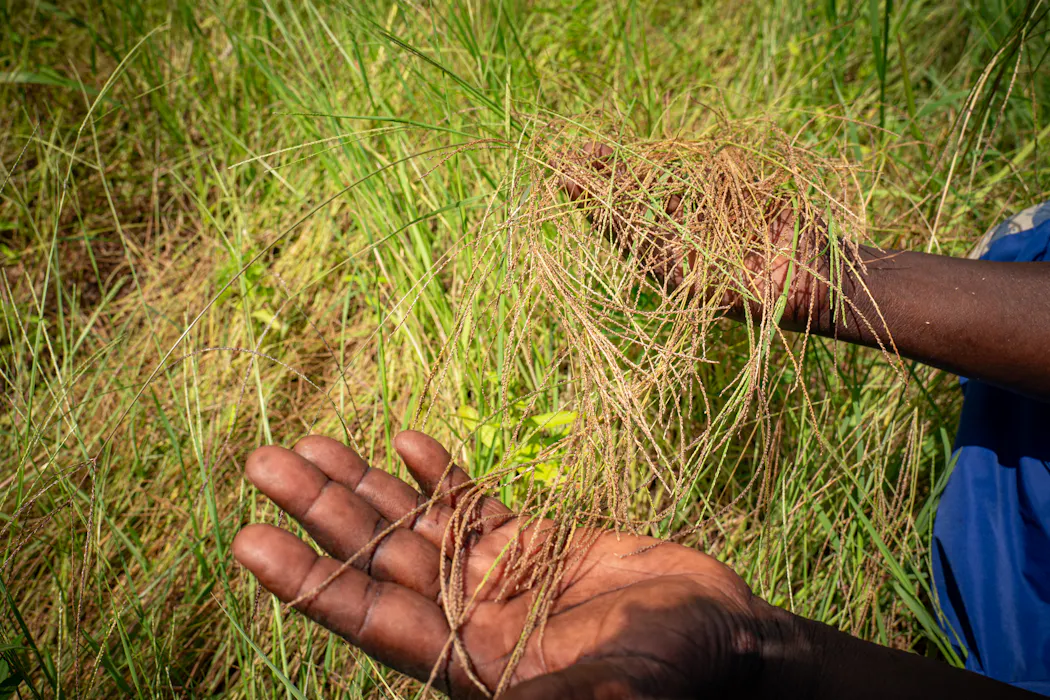
Une culture de fonio en Afrique sub-saharienne. SOS Sahel International, Fourni par l’auteur
Depuis le début du conflit en Iran, le 28 février 2026, le détroit d’Ormuz ne bloque pas seulement le pétrole : il étrangle le commerce des engrais dont dépend une bonne partie de l’agriculture mondiale. Si la crise devait se prolonger, 45 millions de personnes supplémentaires pourraient basculer dans l’insécurité alimentaire qui touche actuellement 2,3 milliards d’individus dans le monde. La clé pour sortir de cette vulnérabilité existe pourtant – elle pousse dans les champs de millions de petits agriculteurs africains et asiatiques. Ce sont les cultures oubliées.
Chaque fois que nous mangeons, nous dépendons d’infrastructures et de flux mondiaux invisibles. Parmi eux, un corridor maritime lointain joue un rôle disproportionné : le détroit d’Ormuz. Sa fragilisation ne menace pas seulement l’approvisionnement énergétique mondial. Elle met aussi en danger un maillon beaucoup moins commenté, mais tout aussi vital : les engrais azotés dont dépend une large part de l’agriculture contemporaine.
Or, c’est là que le problème devient alimentaire car, sans azote, les plantes ne poussent pas normalement. Et, sans engrais azotés, les rendements du blé, du riz ou du maïs chutent fortement dans la plupart des systèmes agricoles intensifs. L’urée, l’un des principaux engrais azotés utilisés dans le monde, est ainsi devenue un intrant central de la production alimentaire mondiale. L’urée n’est pas extraite telle quelle : elle est fabriquée à partir d’ammoniac, lui-même produit en très grande majorité à partir de gaz naturel.
Autrement dit, la géographie des engrais azotés de synthèse reste étroitement liée à celle des grands producteurs de gaz – ce qui explique le rôle décisif du Golfe dans cet équilibre.
Un détroit de 55 km et votre caddie
Le détroit d’Ormuz, large d’à peine 55 km à son point le plus étroit, concentre donc une vulnérabilité bien plus grande qu’il n’y paraît. Ce passage n’est pas seulement stratégique pour le pétrole. Il l’est aussi pour les intrants agricoles : 20 % du pétrole mondial y transitent chaque jour, mais aussi environ un tiers du commerce mondial d’engrais, notamment l’urée, l’ammoniac et les phosphates.
Le résultat est direct : les prix des engrais ont déjà bondi de 30 %. Comme l’a résumé Máximo Torero, économiste en chef de l’Organisation des Nations unies pour l’alimentation et l’agriculture (FAO), il ne s’agit pas seulement d’un choc énergétique, mais d’« un choc systémique affectant les systèmes agroalimentaires mondiaux ». Et les conséquences sont différées : un choc sur les engrais n’apparaît pas immédiatement dans les rayons, mais une ou deux saisons plus tard, lorsque les récoltes diminuent et que les prix alimentaires augmentent à leur tour.
Autrement dit, un choc sur les engrais n’est pas un simple épisode logistique. C’est un choc différé sur l’alimentation mondiale.
Une dépendance construite sur un siècle
Cette dépendance n’a rien d’accidentel. Elle résulte d’un siècle de construction industrielle. Aujourd’hui encore, virtuellement 99 % de l’azote synthétique mondial est produit grâce au procédé Haber-Bosch, qui transforme le gaz naturel en ammoniac. Ce modèle a permis d’accroître massivement les rendements. Mais il a aussi lié notre sécurité alimentaire à quelques ressources fossiles, à quelques grands producteurs, à quelques routes maritimes, et à un petit nombre d’entreprises capables de fournir les intrants à grande échelle.
Pourquoi les solutions « technologiques » ne suffisent pas
La tentation, face à un tel constat, est de chercher une réponse uniquement technologique. L’ammoniac vert, produit à partir d’électricité décarbonée et d’hydrogène issu de l’électrolyse de l’eau, suscite beaucoup d’espoirs. L’agriculture de précision promet, elle, d’ajuster au plus près les apports d’intrants.
Mais ces pistes ne répondent ni à l’urgence du moment ni à la racine du problème : la dépendance structurelle d’une grande partie de l’agriculture mondiale aux engrais azotés de synthèse. Même sur le plan industriel, moins de 1 % de l’ammoniac mondial est aujourd’hui produit par des voies décarbonées. Quant à l’agriculture de précision, elle peut améliorer l’efficience des apports à l’échelle de la parcelle, mais elle ne supprime ni la dépendance structurelle aux engrais de synthèse ni la vulnérabilité des systèmes agricoles lorsque ces intrants deviennent rares ou hors de prix.
La vraie question n’est donc pas seulement de sécuriser l’approvisionnement en engrais. Elle est de réduire la part de notre agriculture qui en dépend mécaniquement.
Les cultures oubliées : une réponse sous nos yeux
Du niébé au Sénégal. Nick Holt/SOS Sahel International, Fourni par l’auteur
C’est ici qu’interviennent des plantes largement absentes des grands débats agricoles : les cultures négligées et sous-utilisées, souvent désignées par l’acronyme anglais NUS (Neglected and Underutilized Species). Fonio, niébé, voandzou, teff, amarante, moringa, espèces sauvages apparentées aux cultures vivrières : beaucoup de ces plantes ont nourri des populations pendant des siècles avant d’être marginalisées par la spécialisation agricole moderne.
Leur intérêt, dans le contexte actuel, est loin d’être marginal.
D’abord, nombre d’entre elles sont des légumineuses. Grâce à une symbiose avec des bactéries du sol, elles sont capables de fixer l’azote atmosphérique au niveau de leurs racines. En pratique, cela signifie qu’elles peuvent réduire substantiellement le besoin en urée de synthèse. Cela signifie également qu’elles peuvent réduire substantiellement le besoin en urée de synthèse, surtout lorsqu’elles sont intégrées dans des rotations avec des céréales, car elles laissent souvent au sol une partie de l’azote bénéfique aux cultures suivantes.
Une récolte de fonio. SOS Sahel International, Fourni par l’auteur
Ensuite, beaucoup de ces cultures sont plus résilientes que les cultures dominantes face à la sécheresse, aux températures élevées et aux sols pauvres. Des études économiques récentes montrent aussi que les exploitations qui les cultivent affichent souvent des coûts d’intrants plus faibles et une plus grande stabilité face aux chocs extérieurs. Dans les régions où les agriculteurs ont peu de marge financière, cette diversification n’a rien d’un luxe : elle relève d’une forme de sécurité agronomique.
En Afrique subsaharienne, où la dépendance aux intrants importés demeure très forte, cette question est particulièrement aiguë. Des initiatives de grande ampleur montrent d’ailleurs que des transitions sont possibles. En Inde, par exemple, le programme Natural Farming d’Andhra Pradesh mobilise déjà plusieurs millions d’agriculteurs dans des trajectoires de réduction ou de sortie des intrants de synthèse.
Ces cultures présentent en outre un autre avantage majeur. La dépendance aux engrais de synthèse n’est pas seulement un problème géopolitique ou économique. C’est aussi un problème écologique. Leur fabrication est énergivore, et 60 % des émissions liées aux engrais se produiraient après leur application au champ, lorsque l’azote apporté au sol est transformé par les processus microbiens en oxyde nitreux, un gaz à effet de serre particulièrement puissant. Réduire cette dépendance, c’est donc agir à la fois sur la vulnérabilité des systèmes alimentaires et sur leur empreinte environnementale.
Mais alors, Si ces cultures sont si prometteuses, pourquoi restent-elles si marginales ? La réponse est connue. Elles ont longtemps été les grandes oubliées des politiques agricoles, de la recherche, de la sélection variétale, des filières semencières et des marchés. Elles souffrent moins d’une faiblesse intrinsèque que d’un déficit massif d’investissement, de reconnaissance et de structuration.
Ce que la crise devrait changer
C’est là que la crise actuelle devrait agir comme un révélateur. Car une réouverture d’Ormuz, si elle se produit, ne résoudra pas le problème de fond. Des travaux du Kiel Institute for the World Economy montrent qu’une fermeture même brève peut suffire à perturber durablement une saison agricole. Le prochain choc viendra d’ailleurs : autre conflit, sécheresse majeure, blocage maritime, restriction à l’exportation, flambée des prix de l’énergie.
Il est donc temps de changer d’échelle et de logique.
Cela suppose ensuite d’investir beaucoup plus sérieusement dans la recherche sur les cultures négligées et sous-utilisées : caractérisation des ressources génétiques, amélioration variétale, sélection participative, agronomie des associations culturales, filières semencières décentralisées, débouchés alimentaires et transformation.
Cela suppose enfin de reconstruire des systèmes alimentaires plus diversifiés, plus territorialisés, moins suspendus à quelques points de passage maritimes et à quelques chaînes d’approvisionnement mondialisées.
La crise d’Ormuz n’est pas une anomalie dans un système alimentaire autrement robuste. Elle révèle, au contraire, la profondeur d’une dépendance construite depuis des décennies. En cherchant partout comment sécuriser les flux, nous avons trop peu réfléchi à la manière de réduire notre exposition. Les cultures que l’on a dites mineures, traditionnelles ou oubliées, pourraient précisément nous aider à le faire.
Il ne s’agit pas de romantiser le passé ni de prétendre que ces cultures oubliées remplaceront à elles seules les grandes cultures mondiales. Il s’agit de reconnaître qu’un système agricole plus diversifié, moins dépendant des engrais de synthèse et mieux enraciné dans les réalités locales serait aussi plus résistant aux crises à venir.
Les cultures oubliées ne régleront pas à elles seules la crise d’Ormuz. Mais elles font partie des rares réponses qui s’attaquent à sa cause profonde : notre dépendance excessive à un modèle agricole intensif, fossile et vulnérable
Cet article a été réalisé avec Rémi Hémeryck, délégué général de l’ONG SOS Sahel International, France.
Michel Edmond Ghanem ne travaille pas, ne conseille pas, ne possède pas de parts, ne reçoit pas de fonds d’une organisation qui pourrait tirer profit de cet article, et n’a déclaré aucune autre affiliation que son organisme de recherche.
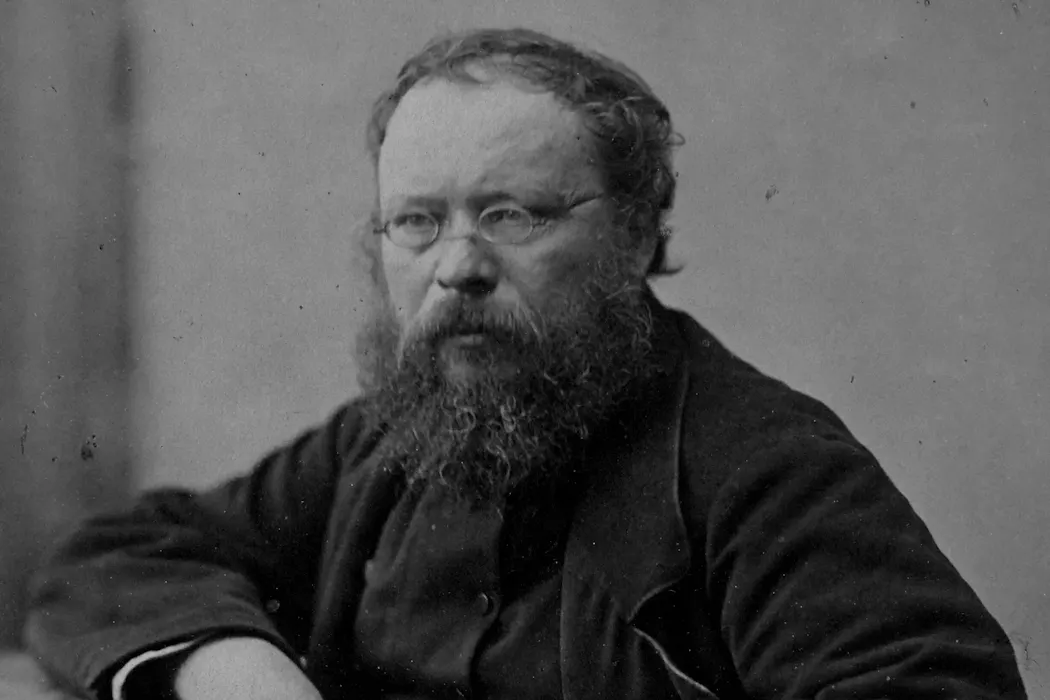
Pierre-Joseph Proudhon met en garde : le travail peut devenir pour « celui qui l’exécute, une chose inintelligible, abrutissante, stupide ».Wikimediacommons
Au-delà de son célèbre essai Qu’est-ce que la propriété ?, Pierre-Joseph Proudhon (1809-1865) est un théoricien de l’entreprise. Concepteur novateur, il souhaite recentrer la société autour du travail : participation salariale face au capital, prévoyance sociale face au chômage ou transformation de l’école en atelier. Explication avec des extraits de ses principaux ouvrages.
Pierre-Joseph Proudhon est né à Besançon en 1809 et mort à Paris en 1865. Il est issu d’un milieu paysan (son père est tonnelier) et devient à 19 ans ouvrier typographe, souvent confronté au chômage. Titulaire d’une bourse, il s’installe à Paris en 1839, où il suit des cours d’économie politique.
Passionné par de nombreux ouvrages d’économie et de philosophie politique, il est considéré comme un fondateur de la sociologie. En 1840, Proudhon rencontre Karl Marx qui apprécie sa critique scientifique de la propriété. Le penseur révolutionnaire arrive en trombe dans le paysage intellectuel mondial.
Que nous enseigne Pierre-Joseph Proudhon sur l’entreprise ?
Salarié co-propriétaire de leur entreprise
Du principe fédératif et de la nécessité de reconstituer le parti de la révolution, 1863. Gallica
Pierre-Joseph Proudhon décrit les relations sociales dans le Manuel du spéculateur à la Bourse, Du principe fédératif… et Théorie de la propriété. L’idée est de faire prévaloir à la place du salariat le « principe de la participation ». La démocratie économique repose sur un principe fédératif qui s’incarne dans une Fédération agricole-industrielle prenant appui sur un Syndicat général de la production et de la consommation.
Du point de vue de la production, la gestion des moyens de production par les compagnies ouvrières permet le « dépassement du salariat ». Dans ce cadre d’une propriété mutualiste et fédérative, chaque salarié est en quelque sorte co-propriétaire de l’entreprise, investi d’une responsabilité dans la gestion envisagée « comme la condition essentielle du travail ».
Respect dû aux personnes
Pour ce penseur révolutionnaire, la société naît du travail.
La division du travail est le principe même de la société comme processus de spécialisation des fonctions et comme communauté d’action. Par le travail, l’individu et la société sont indissolublement liés et « chacun de nous se sent à la fois personne et collectivité ». Dans De la Justice dans la Révolution et dans l’Église, Pierre-Joseph Proudhon précise que l’organisation du travail doit tendre à accorder « le respect dû aux personnes avec les nécessités organiques de la production ».
Dans cette perspective, il faut développer « la science de l’organisation ». Cette partie de l’économie doit considérer « les caractères essentiels du travailleur, les conditions qui rendent la fonction utile et normale ». Plus généralement, le respect de l’homme au travail exige un développement des connaissances scientifiques, en particulier du champ de la science économique.
« L’économie politique est la science de la production humaine, non de la production terrestre : elle commence avec le travail de l’homme, après le travail du créateur », souligne-t-il dans « De la création de l’ordre dans l’humanité ».
L’activité économique a pour finalité l’épanouissement de l’être humain. Il faut repenser l’influence qu’elle exerce sur la division du travail puis considérer la science économique, dont le champ d’observation est le travail, comme partie intégrante d’une science sociale enrichie des apports de la psychologie et de la sociologie.
L’industrialisation crée l’esclavagisme
Lorsque la médiation s’effectue à travers la technique, d’abord outil puis machine, l’efficacité du travail est accrue. Pierre-Joseph Proudhon précise, dans De la création de l’ordre dans l’humanité, que « l’homme substitue [au corps employé comme instrument] des instruments factices… parce qu’il se distingue de tous les êtres vivants par la faculté ou l’industrie qu’il a de multiplier sa puissance au moyen d’organes supplémentaires dont il arme sa nudité ». La machine est « une abréviation de main-d’œuvre qui multiplie la force du producteur » et donc « l’attribut de notre puissance », indique Pierre-Joseph Proudhon dans Système des contradictions économiques.
Dans cet équilibre entre l’humain et l’objet technique, l’activité laborieuse favorise l’apparition d’états affectifs tels que « la délectation qui résulte pour l’esprit et le cœur du travail » et la mise en œuvre de toutes les facultés humaines. Dans ce contexte, le travail devient une « une émission de l’esprit ».
Avec l’industrialisation, le milieu technique provoque une rupture entre les travailleurs et les machines. Progressivement, ils deviennent « des servants, des esclaves ». L’éclatement poussé des tâches industrielles ne requiert que des « travailleurs dégradés », immobilisés, souligne Pierre-Joseph Proudhon dans De la création de l’ordre dans l’humanité, « dans l’une des parties infinitésimales de la production ». Le travail est pour « celui qui l’exécute une chose inintelligible, abrutissante, stupide ».
Prévoyance sociale face au chômage
De la création de l’ordre dans l’humanité ou Principes d’organisation politique, 1843. Gallica
Le progrès des techniques rend possible « l’aggravation du travail », qui peut s’accroître tant en durée qu’en intensité. Le capital productif en s’accumulant provoque du chômage et de la pauvreté. D’où la nécessité d’une « prévoyance sociale », c’est-à-dire d’une politique de formation efficace reposant sur « une organisation intégrale de l’apprentissage… comme loi organique de transition applicable à tous les cas possibles ».
L’élargissement des tâches exige une qualification plus large que celle centrée sur un métier. L’exercice d’une fonction, précise-t-il dans la De la création de l’ordre dans l’humanité, « suppose la connaissance générale et sommaire de plusieurs autres ». Il faut donner une culture technique étendue pour permettre au travailleur de changer de métier et de « circuler dans le système de la production collective comme la pièce de monnaie sur le marché ».
« Chaque homme doit devenir comme un travailleur multiple […] et que partout où un pareil homme passe, il produise », souligne Pierre-Joseph Proudhon dans « Carnets ».
La formation professionnelle doit être comprise comme « une polytechnie de l’apprentissage » englobant des métiers assez proches les uns des autres. Devant l’impossibilité de tout apprendre, il s’agit d’acquérir des schèmes (structures d’ensemble) de pensée qui préparent à l’invention et à la synthèse.
« Tout par méthode et d’ensemble, ou rien : c’est la loi du travail comme du savoir. »
Changer l’école en atelier
Un des aspects originaux de sa réflexion repose sur l’idée que l’éducation par l’objet est éducation par le travail. Les formes matérielles contiennent une quantité d’informations que l’activité réflexive doit dégager en termes clairs pour les traduire en connaissances plus abstraites. Pierre-Joseph Proudhon précise dans De la création de l’ordre dans l’humanité :
« Il faut changer toute école en atelier […] Ainsi le moindre des métiers […] peut servir de point de départ et de rudiment pour élever l’intelligence du travailleur aux plus hautes formules de l’abstraction et de la synthèse. »
En somme, une pensée riche et généreuse admet que le travail ne saurait exister sans une volonté de création. Le travail est une activité qui n’est pas exempte de peine et de fatigue. Mais le travail réalise ses fins lorsqu’il permet d’opérer à propos de chaque œuvre produite la transfiguration de la douleur en joie. De cette façon, il favorise l’épanouissement de l’être humain :
« Force du corps, adresse des mains, prestesse de l’esprit, puissance de l’idée, orgueil de l’âme par le sentiment de la difficulté vaincue, de la nature asservie, de la science acquise, de l’indépendance assurée. »
Bernard Guilhon ne travaille pas, ne conseille pas, ne possède pas de parts, ne reçoit pas de fonds d’une organisation qui pourrait tirer profit de cet article, et n’a déclaré aucune autre affiliation que son organisme de recherche.
Préparer la personne à la gravité potentielle de son état, attendre que la réunion de concertation pluridisciplinaire pour confirmer un diagnostic de cancer… à dessein, les médecins peuvent recourir au silence lors des échanges avec les malades pris en charge.
À l’ère du consentement éclairé, la circulation de l’information joue un rôle crucial dans la relation patient-soignant. Depuis la loi du 4 mars 2002 sur les droits des malades, le patient ne reçoit plus seulement des soins de manière passive, il devient un acteur de sa propre santé. Selon Grégoire Moutel, médecin et spécialiste du droit et de l’éthique en santé, tout acte thérapeutique doit désormais être précédé par un consentement « en toute connaissance de cause ».
Pour que ce consentement soit libre et éclairé, le patient doit disposer de toutes les informations relatives aux options thérapeutiques possibles ainsi qu’à leur rapport bénéfices-risques. Autrement dit, le médecin a la responsabilité de transmettre ses connaissances de manière transparente, claire et compréhensible afin que le patient soit en mesure de consentir à un acte médical.
Le silence, un intrus à l’ère du consentement éclairé ?
Dans un tel contexte, nous pourrions croire que le silence, entendu comme le fait de taire, de retenir ou encore de cacher une information, doit être banni de la consultation. Le silence semble en effet incompatible avec l’idéal de transparence censé faire du patient un acteur de sa maladie.
Ce silence renverrait alors à un modèle pourtant dépassé : le « paternalisme médical », dans lequel le médecin était considéré comme le seul détenteur du savoir et décidait de ce qui devait être dit ou non, au nom de sa compétence scientifique et de la protection du patient. Selon certains textes médicaux, taire certaines informations pouvait alors paraître légitime, voire nécessaire, pour éviter un traumatisme ou ne pas susciter trop d’angoisse.
Le silence, compétence des médecins ou règle institutionnelle ?
Penser le silence comme un acte de dissimulation reviendrait à passer à côté d’une réalité plus complexe et subtile, car un pan de la sociologie du diagnostic, qui étudie précisément la relation patient-médecin et l’annonce de la maladie, montre que les médecins continuent de ne pas tout dire. Plus précisément, la réflexion sur ce qu’il est pertinent de dire ou de taire au patient fait partie des compétences intrinsèques aux médecins.
La sociologue Annemarie Jutel montre en effet que les médecins ne sont pas uniquement les détenteurs d’un savoir scientifique sur la maladie et sur les traitements. Ils détiennent également un ensemble de compétences leur permettant de délibérer sur ce qu’il convient de ne pas dire au patient.
Cette délibération sur ce qu’il convient de dire ou de taire au patient est étroitement liée au statut du médecin comme porte-parole de l’institution médicale. La parole du médecin tire son autorité et sa légitimité scientifique du fait de provenir de l’institution médicale.
Toutefois, cette autorité est elle-même encadrée par les règles institutionnelles. Autrement dit, le médecin ne dispose pas librement de sa parole : l’institution délimite ce qu’il peut dire et ce qu’il doit taire.
Le silence pour protéger le cadre scientifique
En tant que porte-parole, le médecin devient le garant du cadre médico-scientifique de la consultation, en se conformant à des règles institutionnelles qui encadrent l’interaction avec le patient : la suspension de toute divulgation avant validation collégiale (réunion de concertation pluridisciplinaire), la nécessité de s’inscrire dans les limites de spécialité et de ne pas outrepasser son champ d’expertise, l’exigence de ne communiquer que des informations scientifiquement reconnues et validées ou encore l’ajustement du niveau d’informations selon la volonté de connaître et la capacité de compréhension propres à chaque patient.
Le médecin ne peut décrire et expliquer la maladie qu’à partir d’un ensemble de classifications et de recommandations, notamment la Classification internationale des maladies (CIM) ou le DSM-5 en santé mentale, qui définissent des méthodes et des critères reconnus par la communauté scientifique et les institutions médicales, telles que l’Organisation mondiale de la santé (OMS) ou, en France, la Haute Autorité de santé. La parole du médecin doit donc s’enraciner dans le discours qui façonne la nature des interactions avec les patients.
Cette contrainte a un effet direct sur la place donnée à l’expérience du patient. Comme le soulignait déjà le philosophe et médecin Georges Canguilhem, la voix du malade a été « mise entre parenthèses » dans l’élaboration du savoir médical et du diagnostic : ses perceptions, ses émotions ou ses interprétations ne possèdent pas de valeur épistémique pour nommer et rendre compte de la maladie. Dans la Maladie, catastrophe intime (2014), la philosophe Claire Marin déplore la dimension vécue de la maladie, ce qu’elle appelle sa « dimension métaphysique », c’est-à-dire l’atteinte de l’identité et du rapport à soi, largement effacée au profit d’une approche rationnelle centrée sur l’explication scientifique.
Le médecin doit alors veiller à faire taire toutes les autres interprétations de la maladie qui pourraient entrer en concurrence avec le cadre explicatif scientifique en vigueur dans la consultation. Lorsque certaines explications risquent d’entraîner la discussion vers des registres qu’il ne maîtrise pas, qu’ils soient magico-religieux, culturels ou moraux, le médecin réaffirme le cadre biomédical en recentrant la conversation sur des arguments scientifiques.
Dans ces situations, le silence devient une stratégie de maintien du cadre scientifique et des objectifs de la consultation. Il agit comme un filtre qui contrôle ce qui peut être dit et ce qui doit être passé sous silence afin de préserver l’autorité de sa parole de médecin et le cadre explicatif propre à la médecine occidentale.
Le silence face à l’incertitude
Ainsi, le silence est étroitement lié au contexte scientifique qui sous-tend la consultation médicale. Ce contexte ne détermine pas seulement ce qui peut être dit ou tu selon les cadres explicatifs, mais aussi selon la certitude du médecin. Une étude ethnographique menée dans un hôpital spécialisé en pathologies hépatiques montre que, lors de la phase de prédiagnostic, le médecin tait souvent ce qu’il pressent.
Par exemple, selon cette même étude, dans un service d’oncologie hépatique, un oncologue observé refusait de nommer la maladie, et ce, malgré la demande explicite du patient, tant que la réunion de concertation pluridisciplinaire n’avait pas confirmé le diagnostic. Il s’abstenait de partager la moindre information du fait que le protocole institutionnel lui imposait d’attendre l’avis collégial. Son silence témoignait ainsi d’une contrainte organisationnelle : le diagnostic ne pouvait être posé qu’après discussion collective entre les différents experts.
Cet exemple rejoint ce que le médecin Jean Hamburger décrivait dans la Puissance et la fragilité : « La masse des données acquises […] a brusquement dépassé les capacités de préhension et de mémoire du médecin. » La médecine contemporaine est devenue si spécialisée et si complexe qu’aucun praticien ne peut, à lui seul, maîtriser l’ensemble des connaissances nécessaires pour interpréter les examens ou définir un projet thérapeutique aux caractéristiques de chaque patient. Pour répondre à cette complexité, la médecine est devenue une activité sociale fondée sur la rencontre et la coordination d’expertises multiples (infirmières, oncologues, chirurgiens, etc.).
Ainsi, le silence ne renvoie pas seulement à une réticence à dire : il témoigne de l’impossibilité de parler selon son seul jugement clinique et de l’obligation institutionnelle de consulter ses pairs. En oncologie, il est institutionnellement tenu de présenter le dossier en réunion de concertation pluridisciplinaire. Le Plan Cancer (2003–2007) stipule en effet que tout nouveau patient atteint d’un cancer doit bénéficier d’un avis collégial rendu en réunion de concertation pluridisciplinaire.
Ce silence place le patient dans une attente pendant laquelle le diagnostic n’est pas encore formulé. Dans cette phase de prédiagnostic, les médecins recourent souvent à des euphémismes pour préparer psychologiquement le patient à la possibilité d’une mauvaise nouvelle. Ils utilisent des formulations volontairement floues, telles que par exemple « une lésion » ou « un nodule », qui signalent la présence d’une anomalie sans en donner encore le nom.
Ces termes vagues permettent d’orienter progressivement le patient vers la gravité potentielle de son état, en l’aidant à réinterpréter ses symptômes sous un nouveau jour. Ils participent ainsi d’un processus de préparation graduelle, tout en évitant de provoquer une rupture brutale ou une détresse immédiate.
Ce que révèle le silence sur la culture médicale contemporaine
Le silence entre un médecin et son patient ne se résume pas à une question d’informations qu’on révèle ou qu’on dissimule. Il touche à la possibilité même de dire une vérité médicale dans un système où la parole du médecin est contrainte par des règles institutionnelles. Dans un tel cadre, le silence est une manière de naviguer entre l’incertitude, les protocoles, la complexité des maladies et la vulnérabilité des personnes.
Comprendre le silence dans la relation de soin, c’est donc comprendre la culture médicale elle-même : ses règles, ses limites, ses façons de protéger, de préparer, d’éviter ou d’accompagner. C’est saisir à quel point le soin repose aussi sur ce qui ne se dit pas.
Antoine Glauzy est chercheur associé à l’INSERM Unité Mixte 1193 ; Chaire « Valeurs du soin » ; Chaire
« Innovation organisationnelle en santé ».
Quoi de commun entre un séminaire de cadres dirigeants et une performance artistique ? Vous êtes vraisemblablement tenté de répondre d’un définif : « Rien ! » Et pourtant, si les buts n’ont évidemment rien à voir, le monde des performances offre d’intéressants enseignements pour les praticiens du management. Illustration avec les happenings signés Marina Abramović, Li Binyuan et Paula Garcia.
En quoi une telle action peut-elle contenir aussi une leçon pour les managers ? Que peut apprendre d’un tel acte, quelqu’un chargé de diriger une équipe et/ou une organisation complexe ?
L’art de la performance ne concerne pas seulement l’expression per se, mais aussi la perception. Il rend visible l’invisible. Et en ce sens, il peut offrir aux managers quelque chose de profondément pratique et utile pour eux : de nouvelles façons de voir.
En 2010, au Museum of Modern Art de New York, Marina Abramović est restée assise en silence dans l’atrium du musée pendant trois mois. Huit heures par jour. Immobile. En face d’elle se trouvait une chaise vide, et les visiteurs étaient invités à s’asseoir aussi longtemps qu’ils le souhaitaient. Elle ne parlait pas, ne bougeait pas. Elle restait simplement pleinement présente. Les visiteurs ont réagi de manière inattendue. Beaucoup ont pleuré, certains ont souri, d’autres ont tremblé. Dans le silence, des émotions longtemps enfouies (par exemple, le chagrin, la vulnérabilité, le désir, le soulagement) ont refait surface.
Cette performance met en lumière une idée cruciale : l’attention est source de transformation. Lorsqu’une personne se sent véritablement vue, ce qui est caché devient souvent visible. Pour les managers et dirigeants, cette possibilité ouvre des pistes très intéressantes et pertinentes.
Comment rendre visible l’invisible ?
Dans les organisations, les individus cachent souvent non seulement leurs inquiétudes et leurs frustrations, mais aussi leurs idées. Les réunions sont précipitées et les conversations sont décousues. Les managers écoutent d’une oreille distraite tout en consultant leurs smartphones ou en préparant leur prochaine réponse.
Le travail d’Abramović suggère une alternative radicale : offrir une présence sans partage. Créer des espaces où les employés ne sont ni interrompus, ni jugés, ni pressés. Lorsque les managers sont pleinement attentifs, sans agenda, sans être en train de réaliser d’autres tâches, ils commencent à remarquer ce que les systèmes de reporting standard ratent : les tensions subtiles, les courants émotionnels sous-jacents et, surtout, les idées plus ou moins grandes.
Cette présence que l’on peut nommer totale (ou en pleine conscience) peut devenir une pratique analytique. Elle permet alors aux managers et dirigeants de détecter des problèmes latents avant qu’ils ne s’aggravent ou de soutenir les premiers signes de grandes innovations. Ils peuvent aussi voir plus, et plus loin.
Démonter pour comprendre
Dans Breakdown, Li Binyuan grimpe sur un pilier de quatre mètres de haut qui ressemble à un monument. Une fois au sommet, il commence à marteler la structure même qui se trouve sous ses pieds. Morceau par morceau, il démantèle la base qui le soutient. La structure se révèle à travers sa désintégration. En détruisant le pilier par le haut, Li Binyuan en dévoile la construction : ses couches et sa logique interne. Ce qui rend cette performance si puissante, c’est qu’elle illustre le fait que pour comprendre quelque chose, il faut le démonter.
Pour les managers et les dirigeants, c’est une leçon percutante. Les organisations apparaissent souvent comme des entités solides et monolithiques : « la culture », « la stratégie », « la structure ». Mais ces abstractions sont constituées d’éléments plus petits et interconnectés, tels que les routines, les incitations, les normes informelles, les relations de pouvoir et les habitudes quotidiennes. Tant que ces éléments – et d’autres – restent intacts et incontestés, l’organisation peut sembler impénétrable.
Pour vraiment comprendre comment fonctionne une organisation, les managers doivent la démonter – conceptuellement, et parfois concrètement. Cela ne signifie pas une destruction au sens littéral. Cela signifie isoler et examiner ses éléments constitutifs pour mieux la cerner.
Se transformer pour révéler les liens
Dans Noise Body, Paula Garcia commence par se présenter le corps dénudé et visible tel qu’il est. Elle fixe ensuite de puissants aimants sur elle-même. Un à un, des collaborateurs ajoutent des fragments de métal industriel (boulons, éclats, ferraille) jusqu’à ce que son corps soit presque entièrement recouvert de débris mécaniques. À mesure que le métal s’accumule, nous commençons à percevoir des relations jusque-là invisibles : la force magnétique qui lie les éléments entre eux. L’acte de transformation rend visible la structure des liens.
Pour les managers, cette performance comporte une autre leçon. Parfois, on ne comprend les liens entre les éléments de l’organisation que lorsque l’on modifie délibérément leur disposition. Les organisations sont des réseaux de composants interconnectés : rôles, technologies, incitations, flux de communication, espaces physiques.
Ce qui sous-tend la hiérarchie
Pourtant, ces liens restent souvent cachés. Nous voyons des départements ou des services, pas des dépendances. Par exemple, passer de primes individuelles à des récompenses à l’échelle d’une équipe révèle souvent à quel point les tâches sont, en réalité, étroitement interdépendantes. Les employés qui percevaient auparavant leur travail comme autonome se rendent soudain compte dans quelle mesure ils dépendent de la contribution des autres. Cette refonte fait apparaître le réseau qui sous-tend la hiérarchie.
Fondation Beyeler, 2015.
Le travail artistique de Garcia suggère que la compréhension ne vient pas toujours de l’observation d’un système stable. Parfois, nous devons modifier la configuration ou réorganiser les éléments pour mieux voir la façon dont ils s’attirent, se repoussent ou se contraignent mutuellement.
Le management, un art de l’observation
Après tout, l’art de la performance n’est pas si abstrait ni si ambigu, et peut même s’avérer utile aux managers d’organisations contemporaines en leur apprenant à mieux percevoir leur environnement organisationnel.
Le travail de Marina Abramović nous enseigne que lorsque les managers ralentissent le rythme et accordent toute leur attention, des éléments cachés apparaissent. Celui de Li Binyuan démontre que pour comprendre une structure, il faut être prêt à la démonter. Enfin, les performances de Paula Garcia montrent que lorsque l’on réorganise les éléments d’une structure, les liens qui les unissent deviennent visibles.
Si l’art de la performance ne fournit pas de techniques de gestion toutes faites, il met en avant des conseils pratiques pour aider les managers à affiner leur capacité d’observation. Et dans les organisations complexes, cette capacité à voir plus clair pourrait bien constituer l’avantage stratégique par excellence.
Yanina Rashkova ne travaille pas, ne conseille pas, ne possède pas de parts, ne reçoit pas de fonds d’une organisation qui pourrait tirer profit de cet article, et n’a déclaré aucune autre affiliation que son organisme de recherche.
Cozy is a vibe. So much so that even video games have been getting cozy.
“Cozy gaming” — a genre of low-stress, relaxing video games focused on comfort and non-violent gameplay, such as farming or decorating — has grown into one of the medium’s most popular and commercially successful trends.
In 2016, ConcernedApe released Stardew Valley and introduced us to the pastoral pleasures of farming parsnips and foraging for berries. The lightning-in-a-bottle moment for cozy gaming, however, hit in 2020 with Nintendo’s Animal Crossing: New Horizons. It offered players an escape, if only virtually, from the confines of COVID-19 quarantine.
In many ways, this genre subverts typical video game traits by focusing on comfort over high scores, celebrating connection over competition.
But while cozy games offer players the comfort and connection of a social circle, they also structure relationships through systems of exchange where care, friendship and intimacy are earned through repeatable actions.
Rewarding repetition
So, what counts as a cozy video game?
Daniel Cook and other game designers agree that cozy games tend to have high emotional investment: they invite us to care. They also promote a slow pace of play and a focus on sociability, encouraging us to explore these game worlds and pay attention to feelings — not just our own, but also those of the fictional characters we meet.
Repetitive tasks, as the bane of the modern work world, paradoxically make games cozy. Completing small, simple tasks gives us a dopamine rush of satisfaction and achievement, especially when that success isn’t tied to real-world stability.
While video game studies scholars have long argued that repetition helps players master difficult challenges in “hard-core” games, repetitive, easy actions in casual gaming can also make play feel meaningful — just in a different way.
Stardew Valley and Animal Crossing: New Horizons, two of the best known cozy games of the past decade, demonstrate that planting digital crops and harvesting virtual friendships help us feel invested. Seemingly small gestures in these spaces have a big emotional impact: they remind us it’s the little things that matter.
Simulating community
In Stardew Valley — rendered in nostalgic 8-bit graphics — your grandfather bequeaths you his small farm. Settling into the community, you quickly discover how gift-giving, reciprocity and everyday conversation build friendships and potential romances.
Farming, fishing, mining and forestry fit around your daily rounds as you interact with the townsfolk. Each inhabitant of Stardew Valley has their own favourite items, which you can offer to winnow your way into these characters’ hearts.
Similarly, Animal Crossing: New Horizons encourages you to connect with your fellow islanders on a lush, deserted island getaway. Its universe is populated with an array of randomly assigned anthropomorphic characters (who also enjoy gifts). Everything, from bunches of weeds to harvested fruit, will earn positive responses, and you’re likely to receive luxuries like clothing and furniture in return.
Animal Crossing also facilitates a digital community through island visits. Through Nintendo Switch Online, players can hang out on other people’s islands.
Cozy video game ‘Animal Crossing: New Horizons’ encourages a low-stress, relaxing focus on comfort and non-violent gameplay. The genre has grown into one of the medium’s most popular and commercially successful trends. (Nintendo), CC BY
Nintendo has banked on players wanting more of these repetitive tasks and social game play with its recent release, Pokémon Pokopia. As an addition to its lucrative Pokémon franchise, Pokémon Pokopia reframes its capture-and-battle game series about magical creatures through the cozy comforts of gardening, crafting and farming.
Players can curate a charming rural space, befriending Pokémon along the way. Pokémon Pokopia’s promotional material exhorts players to “Get to know your Pokémon pals at your own pace as you all work together to build a cozy utopia,” using the marketable language of community and comfort.
Quantifying connections
Comfort, escapism and community have obvious market and player appeal.
And in this way, the rise of the cozy games genre may seem all positive, but these games also offer social ideals that need to be considered critically. Stardew Valley and Animal Crossing: New Horizons, for example, encourage users to see intimacy and relationships as quantifiable, even transactional.
Players that accrue friendship points in Animal Crossing: New Horizons get interpersonal perks like nicknames and personal visits. While many neighbourly actions have point value, islanders prefer gifts. Friendship points are invisible in game play, but online guides track the six levels of friendship available. Maxing out friendships gets you gifts in return, and this pattern of investment and exchange shapes the player’s activities.
Stardew Valley puts friendship progress on display through bright red heart icons. The game’s “Gift Log” formalizes the expectation that players will buy villagers’ favour, and its catalogue of loves, likes, neutrals and dislikes ensures gifting is impactful and cost-effective. With trackers built directly into the interface, friendships and romances are represented as achievable tasks, gamified to return new conversations, storylines and yet more gifts.
Managing and maximizing cozy community games’ friendship systems may take time, but the end result is material gain.
The Pokémon Pokopia world is no exception. It locks players’ access to valuable game resources behind friendships with particular Pokémon: Scyther has the chops to harvest lumber, and Hitmonchan knows how to smash rocks and might just teach your Ditto. By turning friendships into goals, players approach interpersonal connections as extractive, a way to advance in the game and not just a pleasure in itself.
This kind of cozy gaming is clearly big business. For instance, even with its $99.99 retail price, Pokémon Pokopiasold 2.2 million units in its first four days. The genre’s broad appeal makes community seem accessible (even if the pricetags aren’t).
As a respite from social isolation, economic anxiety or geopolitical instability, cozy games provide players with a soothing fantasy — which might say as much about their anxieties as it does about their needs — one handful of parsnips at a time.
Christina Fawcett does not work for, consult, own shares in or receive funding from any company or organisation that would benefit from this article.This research is funded by a 2025-27 SSHRC Insight Development Grant.
Andrea Braithwaite receives funding from a SSHRC Insight Development Grant. She is the President of the Canadian Game Studies Association.
The tools generating the evidence within western science, however, have changed — from the philosophical and theological arguments of the Ancient Greeks to the development of increasingly sophisticated telescopes and space travel and exploration.
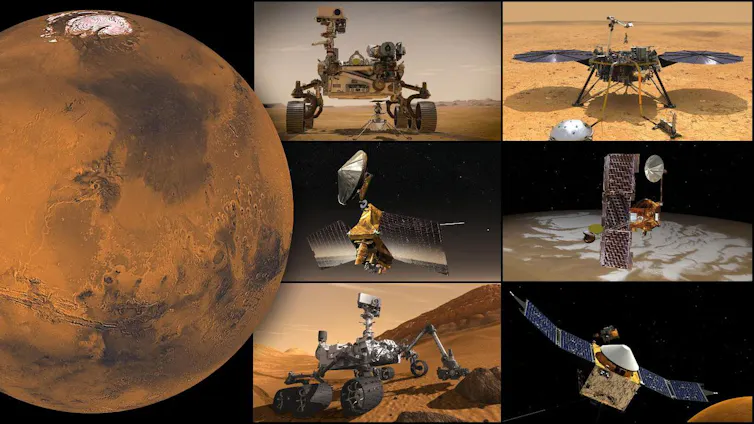
NASA’s Mars missions, clockwise from top left: Perseverance rover and Ingenuity Mars helicopter, InSight lander, Odyssey orbiter, MAVEN orbiter, Curiosity rover, and Mars Reconnaissance orbiter. (NASA/JPL-Caltech)
Philosophy and theology
Aristotle’s views on the nature of the cosmos dominated the Ancient Greek world. He argued that there’s only one world, at the centre of which is an immobile Earth. The planets move around the Earth. Beyond them is the sphere of the stars, or heaven.
“It is clear then that there is neither place, nor void, nor time, outside the heaven,” he wrote in On the Heavens. “Hence whatever is there, is of such a nature as not to occupy any place, nor does time age it.”
Aristotle teaching Alexander the Great. An 1866 engraving by Charles Laplante, a French engraver and illustrator. (Wikimedia Commons)
Aristotle’s teachings later created a storm in the Catholic Church, with various theologians worrying that Aristotle’s ideas were becoming too dominant. Étienne Tempier, bishop of Paris, responded to these criticisms by issuing the Condemnation of 1277, prohibiting the teaching of some 219 propositions — many of them derived from the teachings of Aristotle — and warning that those who disobeyed could be excommunicated.
One theologian who pushed the argument about omnipotence further was Nicholas of Cusa. In his book, Of Learned Ignorance, published in 1440, he explicitly speaks of a plurality of inhabited worlds.
Nicolaus Copernicus’ Heliocentric Solar System. (Wikimedia Commons)
The invention of the telescope in the early 17th century gave this notion further impetus. The telescope revealed, for example, that the moon is not perfectly spherical as Aristotelians believed, but is covered by craters and mountains and so is quite Earth-like.
By the end of the century, Bernard Le Bovier de Fontenelle had penned the first “scientific blockbuster,” Conversations on the Plurality of Worlds. Fontenelle speculated about living beings on all the planets of our solar system, as well as on planets orbiting other stars.
There was, however, little empirical evidence for these claims — a situation that would persist until after the Second World War.
The race to Mars
After the Second World War, national governments started to pour money into science, which was now seen as crucial to national well-being, and both astronomy and planetary science boomed.
Rare film and photos of NASA’s 1964-65 Mariner 4 mission along with thoughts from scientists on the project. (Computer History Archives Program)
In 1964, the U.S. launched the Mariner 4 on a mission to Mars. The spacecraft flew by Mars in July 1965, taking the first photos of another planet from space. Instead of evidence of canals, these 21 photographs revealed the planet to have a cratered, moon-like surface.
The first photograph taken on the surface of Mars, by NASA’s Viking 1 spacecraft, in July 1976. (NASA/JPL)
The James Webb Telescope
We now tackle the question of extraterrestrial life with even more powerful scientific tools. In 1995, astronomers Michel Mayor and Didier Queloz discovered the first planet orbiting a sun-like star, named “51 Pegasi b” or “Dimidium.”
The James Webb Space Telescope, located beyond the moon and some 1.5 million kilometres from Earth, is investigating the atmospheres of some of these exoplanets.
The Earth’s atmosphere blocks most of the infrared light from astronomical objects reaching Earth-bound telescopes. But the James Webb’s location enables its giant mirror to gather infrared light, which the spacecraft’s instruments then analyze, allowing astronomers to learn about the composition of exoplanet atmospheres.
The telescope has also employed instruments that block the light of the star around which an exoplanet is travelling so that the exoplanet itself can be imaged. There is as yet no confirmed evidence of life in an exoplanet’s atmosphere.
In 2025, however, a paper published in Nature claimed that a rock sample taken from an ancient dry riverbed in Jezero Crater on Mars by NASA’s Perseverance Mars rover could contain “potential biosignatures” of ancient microbial life.
Robert William Smith does not work for, consult, own shares in or receive funding from any company or organisation that would benefit from this article, and has disclosed no relevant affiliations beyond their academic appointment.
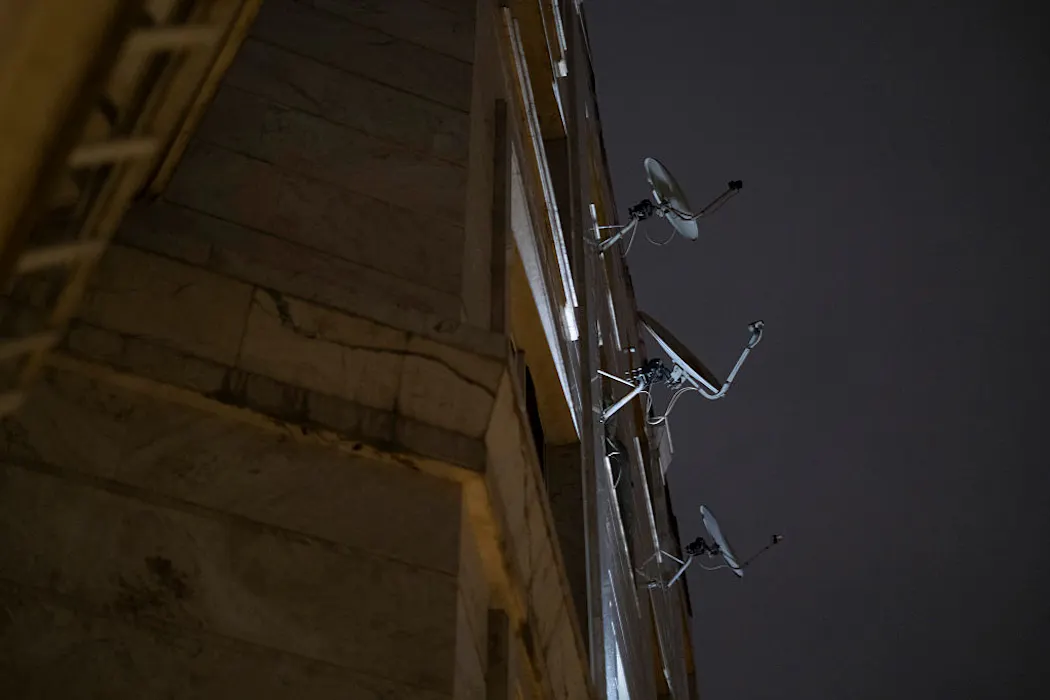
When the United States and Israel began striking Iran on Feb. 28, 2026, images of smoke billowing over Iranian cities began to dominate the news. But another feature of those skylines has remained constant: the thousands of satellite dishes that dot Tehran’s rooftops, picking up signals that originate far beyond Iran’s borders – despite attempts to confiscate them.
For two decades, Christian television channels produced in the United States and Europe have made their way into Iranian homes. Some of this programming echoes apocalyptic ideas from American figures promoting the war, drawing on scriptural interpretations long present in evangelical teachings. Writer Hal Lindsey popularized such ideas in the 1970s with “The Late Great Planet Earth,” a best-selling book that cast Persia as the foretold antagonist in an imminent end-times conflict that would usher in Jesus’ second coming.
Of course, Christianity itself was born in the Middle East, and the region’s deep, diverse traditions long predate any Western missionary activity. Ancient communities such as the Assyrians, Copts, Maronitesand Armenians have preserved their liturgical and theological heritage across generations, and form some of the oldest continuous Christian traditions in the world.
Worshippers attend services at Saint Joseph’s Church, an Assyrian Chaldean Catholic church in Tehran, in 2009. Kaveh Kazemi/Getty Images
But evangelical churches have proselytized in the region for two centuries. Over the past 50 years, evangelical media outlets have flourished during moments of conflict and where weak government control has created openings for proselytism.
During the Lebanese Civil War, which took place from 1975-1991, U.S. evangelicals such as former business executive George Otis and Christian Broadcasting Network founder Pat Robertson established the channel now known as Middle East Television. The Christian network transmitted its signal from Israeli-occupied southern Lebanon from 1981 to 2000, operating in a legal gray area that bypassed Israeli and Lebanese media regulations.
A similar pattern emerged after 9/11 and during the Iraq War that began in 2003. Like many other evangelicals, Paul Crouch, founder of the Trinity Broadcasting Network, believed the U.S. invasion was an opportunity to launch “spiritual warfare” – a battle between good and evil in the Middle East. He visited Iraq and distributed satellite television equipment so locals could receive evangelical programming in Arabic.
This proved to be a powerful fundraising tool among North American donors eager to accelerate what they saw as a divine timetable.
Persian broadcasts
In Iran, Western evangelicalism’s history dates to the 19th century. But arguably its most striking form emerged about two decades ago, when Christian networks began using new technologies to get around decades of restrictions in media and religion.
After the Iranian Revolution in 1979, the Islamic Republic allowed Armenian and Assyrian Christians to practice their ancient faiths in their own languages. The government officially recognizes them as religious minorities. However, it effectively criminalized Protestant activities in Persian, which it associated with Western missions.
Because evangelicals – a small fraction of Iran’s Christian believers – relied on Persian for worship, the prohibition led to church closures, the persecution of their leaders and a strict ban on missionary activities. Converting from Islam to another religion is illegal in Iran, and converts risk punishment.
By 2006, Christian organizations abroad turned to satellite broadcasts as an easier way of reaching Iranian audiences. Satellite dishes, though officially prohibited, were widespread and difficult for authorities to control. Tracking who actually watches these channels is extremely difficult, but producers claim that Christian broadcasts helped foster secretive house churches across Iran.
Huddled in living rooms, often guided by television programs and companion WhatsApp groups, believers held Bible studies and group prayers. Many converts kept their beliefs hidden to avoid persecution.
While precise numbers are difficult to confirm, Western governments and human rights groups have reported a rise in arrests of converts over the years. Some of those organizations say the Islamic Republic has accused converts of collaborating with foreign agents.
3 channels
As I discuss in my book, three major Persian Christian channels illustrate different approaches to this digital mission work.
SAT-7 PARS, founded by British missionary Terence Ascott and a coalition of Western evangelical organizations, adopted a cautious strategy that, according to the channel’s slogan, aimed to “make God’s love visible.” It emphasized children’s programming and shows highlighting Western ideas about women’s rights and family life. Even this softer approach faced resistance: In its early years, SAT-7’s translation offices in Tehran were repeatedly raided, staff members were detained, and translation operations were relocated to England and Cyprus.
Trinity Broadcasting Network’s Nejat, which means “salvation,” and the Christian Broadcasting Network’s Mohabat TV, which means “love,” embraced a more confrontational stance. Reza Safa, an Iranian convert who became a Pentecostal preacher in Sweden and the United States, partnered with Crouch to launch Nejat. Safa portrayed Christianity as locked in a struggle with what he called the “demonic” forces of extremist Islam.
Mohabat TV also emphasized elements of this spiritual warfare, as well as miraculous “signs and wonders.” The channel documented secret baptisms of Iranian converts.
Perhaps the most provocative development has been the introduction of Christian Zionist teachings into Iranian satellite feeds. Christian Zionism teaches that the modern state of Israel plays a central role in biblical prophecy. In recent years, Mohabat TV has aired high-production documentaries such as “In the Footsteps of Jesus,” a Persian-language film about the “Holy Land” that portrays Israel not as a political adversary, but as a nation all Christians must cherish.
Language of war
At the start of the 2026 war, the Yahsat satellite service – an Emirati carrier that hosts Persian-language Christian channels, among other feeds – experienced disruptions. The Iranian government has often been accused of jamming satellite signals.
Since the early 1980s, evangelical TV ministries in the region have advanced a similar message about politics, religion and the end times – under the banner of conversion.
Febe Armanios does not work for, consult, own shares in or receive funding from any company or organization that would benefit from this article, and has disclosed no relevant affiliations beyond their academic appointment.
Source: The Conversation – UK – By Aris Politopoulos, Assistant Professor in Archaeology and Cultural Politics, Leiden University
Humans have always been playful. But for much of our history, play has left little trace. Unlike tools or bones, games rarely preserve and the fleeting pleasures they produce are even harder to recover.
The recent discovery of 12,000-year-old dice, published in American Antiquity, however, sheds new light on the playfulness of human societies in the deep past.
Archaeologist Richard J. Madden identified 565 dice from sites across North America including Wyoming, Colorado and New Mexico. They dated from the 19th century all the way back to 12,000 years ago. The recognition of these artefacts as dice pushes back the material evidence for human play by thousands of years, which Madden interprets as evidence of games of chance and gambling. He believes that his study shows that Native Americans were gambling with dice 6,000 years earlier than anyone else.
To identify these objects as dice, Madden gathered data on comparable objects from archaeological publications and databases of remains, building on an earlier, comprehensive study of Native American play objects.
These objects do not resemble the six-sided dice we use today. Instead, they are binary: flat, round, or rectangular pieces marked on one side and blank on the other. If you are a Dungeons and Dragons geek like us, you might call such a casting device a d2. In effect, you can compare throwing one of these ancient dice to a coin toss – although this discovery also underscores that dice are much older than coins.
Richard Madden talks about his discovery.
When evaluating groundbreaking research of this kind it is crucial to think about the nature of the archaeological record in this very deep past. We are dependent on a very limited range of objects, since many do not survive in the ground. Many times when we play, even in the present, we don’t use any material objects at all. Think of a game of tag or hide and seek. Now consider a similar game taking place 12,000 years ago. Could an archaeologist ever find evidence for that?
Even when play requires materials, such as in board games, the evidence is often not preserved. Indeed, ethnographicstudies have shown that people frequently play board games in ways that archaeologists would almost never detect. For many games people scoop out holes and draw lines in the ground as boards and use stones, seeds, shells and even dried animal droppings as pawns.
Natural objects also work: two-sided sticks and cowry shells can be used as binary dice. This is not only a thing of the past or of foreign places. Around the world, play takes place every day that makes creative use of all sorts of objects – bottle caps, tin cans, twine, sticks and stones and other titbits – that are not easily identifiable as playthings. That is why to us, archaeologists who study play, dice are particularly special finds, because they are unambiguously playthings.
Ancient dice
Archaeologists find dice more often than you may think, in all sorts of interesting forms. One of the most famous examples are astragalus bones, the ankle bones of hooved animals (mostly sheep and goat). They have four distinct sides and have been commonly used as dice.
One of the oldest games in human history, the game of 20 squares (a later version of the Royal Game of Ur), is known to have used such dice because astragalus bones have been found in the drawers of game boxes. In many cases, rather than harvesting these bones from butchered animals, people replicated them in other materials such as stone, glass or metal. Ivory examples were found with the games in the Egyptian tomb of Tutankhamun. This suggests that people began making dice-like objects only after they had already been using naturally occurring objects suited to the same purpose.
In his study, Madden argues that dice are a continuous evolution of the type of economic transactions that underpin gambling. We would like to take the argument in a different direction. Play exists outside of gambling and the contextual analysis required to truly identify gambling in the past is absent from this study. Moreover, this study positions play exclusively in functionalist terms, particularly evolutionary and economic frameworks.
We have argued elsewhere that studies like these rarely consider a fundamental point: that play frequently exists for play’s sake. Sometimes you flip the coin to win it, but often you flip it just for fun.
Though we are not convinced these ancient Native American people were running prehistoric gambling rings, this is an exciting find. What these and other dice in archaeological contexts worldwide point to is the fascinating beauty of play, now and in the past. So the next time you roll some dice, realise you are taking part in the same sense of play – the suspense, the joy, the sting of a bad throw – that people also felt 12,000 years ago.
Aris Politopoulos receives funding from the Starting grant Archaeological Futures and the Ammodo Science Award for Groundbreaking Research for the Past♥Play project. Aria is a board member of Stichting VALUE.
Angus Mol receives funding from the Dutch Research Council (NWO) under the NWO-VIDI Playful Time Machines grant and the Ammodo Science Award for Groundbreaking Research for the Past♥Play project. He is a board member of Stichting VALUE.
Walter Crist receives funding from European Cooperation in Science and Technology (COST) for GameTable: Computational Techniques for Tabletop Games Heritage, and from Game-in-Lab for the project Play and the City: Investigating the Cultural Heritage of Games of the City of Rome. He is on the board of trustees of the Cyprus American Archaeological Research Institute (CAARI).
On a chilly yet beautifully clear evening last November, I sat on a video call with colleagues and happened to mention the live feed from the International Space Station – a real-time broadcast from onboard cameras as the station orbits earth.
Several people hadn’t heard of it, and so I dug out the link and sent it over. We then turned to Nasa’s spot the station smartphone app, which shows you the ageing satellite’s orbital track and provides a countdown to when you can next see it. Again, I found the link and shared it on the chat.
I suddenly realised the station was going to pass directly overhead – in just a few minutes. Video beamed from the station as it advanced over the Atlantic, crossed the terminator (the line that separates day from night), and hurtled towards the southwestern tip of the UK, where I live.
Running outside, I took my phone and the live feed with me. And as I looked up at the bright, impossibly fast-moving smudge traversing the sky above, the feed showed the station’s birdseye view – and perhaps the view of the astronauts aboard – looking down on me, too.
Just 25 years ago, this kind of experience would have been hard to imagine. Yet as our lives have become increasingly interwoven with technology, so too have our encounters with the world around us. And nowhere is this more true than when it comes to viewing the night sky.
On May 11 2024, residents marvelled at the aurora borealis (northern lights) across parts of the UK including in southern England where they are rarely seen. The sightings made headlines across Europe, an excitement that was made possible by digital technology and heightened by digital shares and updates.
Public interest began with the National Oceanic and Atmospheric Administration’s Deep Space Climate satellite picking up particularly strong solar winds. This triggered an alert to users of Lancaster University’s Aurorawatch app. These stargazers started taking photos of the northern lights, which they promptly shared via social media.
The display happened close to midnight when most people in the UK were in bed – but still scrolling. And as real-time images of the aurora quickly circulated online, masses of people went outside to see it for themselves. But, as one witness reported, many people struggled to make out the display: “I could see nothing by eye, but it was there on the camera screen, and on my phone camera too.” And so images of the sky were captured through ultra-sensitive smartphones.
From webcams in bird boxes to big-budget nature documentaries, these digital connections have come to define modern interactions with the natural world. They are now interwoven into everyday routines.
Ten million people watched the first episode of BBC’s Planet Earth III in 2023 – the same number who visit the Peak District in a year. Nature-based “relaxation” videos have achieved viral status on YouTube, amassing hundreds of millions of views each. Spotify, Audible and Netflix have made nature content a core offering to their combined half a billion subscribers. Instagram is home to pictures of 346 million sunsets – and counting.
Online relationships
Being online can also have serious consequences for mental health, but when it comes to the natural world, digital connections could also provide exciting opportunities to bolster wellbeing. Growing research has shown that engaging with digital forms of nature can lead to improvements in emotion regulation, stress reduction and attention restoration – a pathway that is already being explored by apps hoping to boost wellbeing for people who spend large amounts of time online.
Harnessing technology to “rewild” our digital lives could be especially relevant when it comes to an emerging generation of young people. Take for example, the perspectives of generation alpha, the first wave of which are entering their late teens, and who, after gen Z, represent the second cohort of digital natives – hyper-connected visual learners who have never known a world without smartphones, social media, instant access to information, and for some, artificial intelligence.
Perhaps, as some have suggested, modern and digital tools could even mean that young people’s opportunities to connect with nature are unprecedented.
And so, as with some other innovations, these technological connections might enhance human experience, understanding and capability.
It could be time to recognise and embrace digital tools as part of the dynamic, evolving, and exciting way we interact with the natural world – approaches that might bring us closer to nature at a time when its future hangs in the balance.
Alex Smalley is scientific advisor to Portal Labs Ltd. He has received funding from the Wellcome Trust via the Centre for Cultures and Environments of Health.