Strait of Hormuz: Iran’s ‘nuclear deterrent’

Source: The Conversation – UK – By Jonathan Este, Senior International Affairs Editor, Associate Editor, The Conversation

This is the text from The Conversation UK’s World Affairs Briefing email. Sign up here to receive weekly analysis of the latest developments in international relations, direct to your inbox.


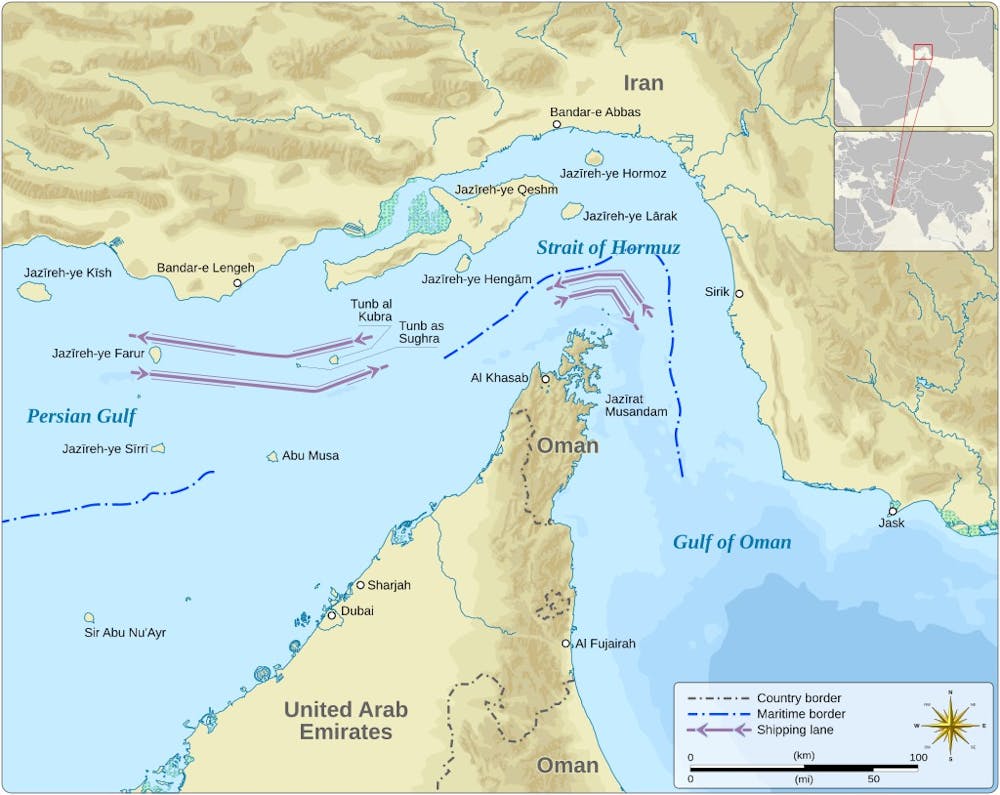
Napoleon Bonaparte is said to have commented in connection with his invasion of Russia that “geography is destiny”. Take a look at a live maritime tracker to see how Napoleon’s aphorism is playing out in the Middle East today. There are presently hundreds of vessels either side of the Strait of Hormuz, idling in either the Persian Gulf or the Gulf of Oman. But nothing is passing though.

In normal times, 20% of the world’s oil flows through this waterway. But since the US and Israel began to launch attacks at the end of February, Iran has effectively closed down the Strait, both by depositing mines and by threatening to board any ships trying to pass without their permission.

The US has countered with its own blockade. And both sides have demonstrated how serious they are in recent days by threatening, boarding or forcing vessels to reroute.

That Iran would close the Strait of Hormuz should have come as no surprise to anyone. The leaders of the Islamic Republic have threatened to do so every time they have felt under threat over more than four decades. Christian Emery, an expert in US-Iran relations and Persian Gulf security at University College London, believes this is why no previous US president has chosen to launch a full-scale attack on Iran.

As we’ve already seen, the ability of Iran to hugely disrupt the global economy by shutting down the Strait was obvious: “The only person who seems not to have understood this is Donald Trump,” Emery concludes.


Read more:
Has the Strait of Hormuz emerged as Iran’s most powerful form of deterrence?


So now there appears to be a deadlock. It’s an unwinnable war, write Bamo Nouri and Inderjeet Parmar, experts in international security at City St George’s, University of London. The US and Israel may enjoy massive military superiority over Iran, but this is beside the point, Nouri and Parmar believe.

While both the US president, Donald Trump, and Israeli prime minister, Benjamin Netanyahu, need to be able to demonstrate to their voters that they have emerged triumphant, Iran isn’t looking to win. It is looking to endure – while making sure that the cost of this conflict becomes unsustainable. And not just for the US and Israel, but for pretty much everybody else besides.

We’re already seeing that. Oil prices have surged and reserves are coming under strain. Supply chains are disrupted. And political friction is stressing relationships, not just between the US and its Nato allies, but – more ominously – with China, which typically buys between 80% and 90% of Iran’s oil exports and said this week that the Strait must be opened without delay.

Iran, our experts conclude, “does not need to win. It only needs to prevent its adversaries from achieving their aims. So far, it has done exactly that.”


Read more:
Middle East conflict looks increasingly like a war nobody can win


There’s a principle in classical game theory which explains why Iran’s position is so strong. It’s known as Rubinstein bargaining, writes Renaud Foucart, an economist at Lancaster University. As Foucart explains it, this holds that in a conflict the respective strength of adversaries each depends on two things: “how badly off it would be without a resolution, and how impatient it is to get things resolved”.

As we’ve heard, all the pressure is on the US, while the leverage is mainly in Iran’s hands. “The US’s position is much weaker than first thought because of a stretch of water the world can’t do without,” he concludes.


Read more:
The Strait of Hormuz shows how everything is now about leverage


On Tuesday, as we waited to see what might happen if the 14-day deadline imposed by Trump on April 8 expired without Tehran opening the Strait, it was clear that both the US and Iran, to varying degrees, were looking for an off-ramp. The blockade is financially ruinous for Iran – whether it is losing US$500 million (£370 million) a day, as Trump claims, we don’t know. But the shutting down of its oil exports is hitting an already parlous economy and this week the social security minister said 2 million people had lost their jobs since the beginning of the war.

For Trump, it’s soaring prices at the gas pumps and the prospect of rising inflation angering voters ahead of November’s midterm elections. The war is very unpopular with Americans – and, significantly, it’s beginning to fracture the Maga coalition which brought Trump to power in the 2024 election.

But there are ways both sides can find off-ramps, writes David Galbreath of the University of Bath. The key thing is to find a settlement that the leaders of both sides can sell as a “win”.

For Iran, this could be an easing of sanctions and access to some of the many billions of dollars of frozen assets held overseas. It could be a recognition of its right to enrich uranium to the level needed for medical uses – particularly given the recent assertion by the Chinese president, Xi Jinping, that such a solution would “safeguard its [Iran’s] national sovereignty”.

We know a little about what Iran is prepared to offer because a great deal of it was on the table in February when the US and Israel launched their strikes. But one of the stumbling blocks for the US president appears to be that Iran’s proposals may too closely resemble the deal struck in 2015 by his predecessor, Barack Obama.

But Galbreath concludes that as things stand, some combination of opening the Strait of Hormuz, acceptance of limits on uranium enrichment and agreeing to stringent inspections could be made to appear a “win” for Trump. This could be a starting point, writes Galbreath, in what is known in conflict resolution as “sequenced de‑escalation”. It could deliver an initial settlement and allow negotiators on both sides to get to work and hammer out the details. Obama’s treaty took 20 months to agree. It’s early days yet.


Read more:
Middle East conflict: how the US and Iran could step back from the brink


One stumbling block is likely to be that there appears to be something of a power struggle raging at the top of Iranian politics. This was seen very clearly last weekend, when Iran’s foreign minister, Abbas Araghchi, announced that the Strait of Hormuz was completely open, only to be swiftly overruled by the Islamic Revolutionary Guard Corps (IRGC), which said it would decide when and how the Strait would be opened.

Since then, a new figure has emerged at the head of the IRGC: a longtime guards member and hardline former commander of its elite Quds force, Ahmad Vahidi. And it seems that with Iran’s freshly minted supreme leader, Mojtaba Khamenei, badly injured after the attack that killed his father on February 28, Vahidi is now calling the shots in Iran. Andreas Krieg, an expert in Middle East politics at King’s College London explains the power struggle that has led to Vahidi assuming control.


Read more:
Who is calling the shots in Iran?


Sign up to receive our weekly World Affairs Briefing newsletter from The Conversation UK. Every Thursday we’ll bring you expert analysis of the big stories in international relations.


The Conversation

ref. Strait of Hormuz: Iran’s ‘nuclear deterrent’ – https://theconversation.com/strait-of-hormuz-irans-nuclear-deterrent-281376

Why the Southeast is burning – extreme drought is only part of the reason

Source: The Conversation – USA (2) – By Zachary Handlos, Atmospheric Science Educator, Georgia Institute of Technology

Fire crews responded to dozens of wildfires burning in Georgia and northern Florida on April 23, 2026. Georgia Department of Natural Resources via AP

Large parts of the southeastern U.S. are in the midst of an exceptional drought, and it is fueling dozens of wildfires in Florida and Georgia.

One of those wildfires, in southeastern Georgia’s Brantley County, had destroyed more than 50 homes by April 23, and state officials said about 1,000 other homes were at risk. Another fire near the Georgia-Florida border had burned almost 30,000 acres and was only about 10% contained. The smoke from the blazes triggered air quality alerts in Atlanta, in the north-central part of the state.

So why is a region of the U.S. more often known for thunderstorms and humidity in spring seeing so many wildfires?

A forested area with a burned-out vehicle, burned trees and gray ash covering everything.
A fire near the Florida-Georgia line had burned nearly 30,000 acres by April 23, 2026, leaving ash behind.
Georgia Department of Natural Resources via AP

I teach meteorology at the Georgia Institute of Technology, including how weather patterns can lead to conditions conducive to wildfires. Here’s what’s happening to drive these conditions:

Key ingredients for a wildfire

Wildfires need a few key ingredients to spread: low relative humidity, dry fuels and strong winds.

Much of the Southeast has been in a drought since July 2025. From mid-March to mid-April 2026, the region saw less than a quarter of its normal precipitation for that time of year.

A U.S. map showing very dry conditions over much of the eastern U.S., the Southwest and the Great Plains.
A map showing how far above or below average precipitation has been in each region from mid-March to mid-April 2026 shows just how dry much of the U.S. Southeast has been.
Drought.gov

As a result, the U.S. Drought Monitor classified most of this region in “extreme” or “exceptional” drought by mid-April.

In the map of the Southeast, an area of exceptional drought stretches from the Florida Panhandle to central coastal Georgia. much of the rest of the two states are extreme drought.
A map of the U.S. Southeast as of April 21, 2026, shows exceptional drought across the Georgia-Florida border area and extreme drought in many other areas.
Brian Fuchs, National Drought Mitigation Center/U.S. Drought Monitor

Part of the reason for the lack of rainfall has been a persistent high-pressure system over the Southeast.

High-pressure systems are areas where air aloft sinks toward the surface, preventing clouds and precipitation from forming. The Southeast high-pressure system resulted from the presence of a “ridge” in the jet stream, a northward bend in this fast current of air several miles above Earth’s surface.

Another consequence of this high pressure has been the presence of generally southeast winds, which have transported warm and fairly dry air into the area.

The relative humidity – a measure of the amount of moisture in the air relative to the maximum amount the air can contain at its actual air temperature – has also been very low due to warmer-than-usual temperatures and lower-than-usual moisture.

A weather map shows the high-pressure system over the Southeast keeping conditions dry.
A weather map from the Global Forecast System shows the forecasted low-pressure (red L) and high-pressure (blue H) systems.
Pivotal Weather

As a result of these conditions, trees, grass and leaves dry out and can quickly become fuel for wildfires. That kind of dry fuel is widespread throughout rural areas of Georgia and north Florida.

Once a fire starts, whether from lightning, power lines or other human sources, strong winds can spread it rapidly in these conditions.

What’s ahead for the region?

As global temperatures rise, the frequency of drought conditions in the Southeast will increase. This, in combination with less soil moisture content in the summer, could be conducive for increased wildfire activity.

Wildfires do eventually burn out. It takes a combination of help from the atmosphere, with moisture to douse them, and firefighters clearing away dry fuel to stop their spread.

Georgia and Florida may get a reprieve soon from the weather, as multiple low-pressure systems are forecast for the region in late April and early May that could bring rainfall. In the meantime, more than half of Georgia’s counties are under a state of emergency, as several agencies battle the flames to protect homes with helicopters in the air and firefighters on the ground.

The Conversation

Dr. Zachary Handlos receives funding from the U.S. National Science Foundation. He is affiliated with the Georgia Institute of Technology (i.e., “Georgia Tech”) School of Earth and Atmospheric Sciences (EAS) and is the Director of their Atmospheric and Oceanic Sciences (AOS) undergraduate degree program. He is also currently the chair of the American Meteorological Society (AMS) Board on Higher Education (BHE).

ref. Why the Southeast is burning – extreme drought is only part of the reason – https://theconversation.com/why-the-southeast-is-burning-extreme-drought-is-only-part-of-the-reason-281392

Supreme Court’s ‘shadow docket’ brings hasty decisions with long-lasting implications, outside of its usual careful deliberation

Source: The Conversation – USA – By Wayne Unger, Associate Professor of Law, Quinnipiac University

The U.S. Supreme Court is being criticized for decisions that are made quickly and outside of public view. Al Drago/Bloomberg via Getty Images

The recent publication of confidential Supreme Court memoranda by The New York Times has brought to light a pivotal moment in the court’s history. “The birth of the Supreme Court’s shadow docket has long been a mystery,” wrote reporters Jodi Kantor and Adam Liptak. “Until now.”

Originally coined by legal scholar William Baude, the term “shadow docket” refers to the Supreme Court’s emergency docket, which, as Baude wrote, includes “a range of orders and summary decisions that defy its normal procedural regularity.”

That’s law professor-speak for cases that are given abbreviated consideration and accelerated review by the justices, all out of public view – what The New York Times story referred to as the court “sprinting.” These cases aren’t included in the annual list of cases the justices have chosen to consider and that are presented by attorneys in public sessions, called “oral argument,” at the court.

During the second Trump administration, such shadow docket cases have proliferated as President Donald Trump has continued to push boundaries, challenge precedents and expand executive power. These cases have typically involved a request by the presidential administration “to suspend lower court orders” that temporarily block “an administration policy from taking effect,” according to liberal legal advocacy group the Brennan Center for Justice at New York University School of Law.

The lack of transparency in considering and ruling on the shadow docket, combined with the weight of the issues presented to the court via that docket, mean that the practice has come under strong criticism by many court watchers. Here’s how the process works and what you need to know to evaluate it.

A man with short hair, wearing a black robe over a white shirt and blue tie.
Supreme Court Chief Justice John Roberts played a key role in pressing for the court to consider a major case first through the shadow docket.
Leah Millis-Pool/Getty Images

The merits docket

The emergency docket is different from the court’s merits docket, which is the customary path for cases to reach the Supreme Court.

Ordinarily, in federal courts, a case begins in a federal district court. An appeal of the decision in the case is made to a federal appeals court. If a party in the case wants to appeal further, they can aim for U.S. Supreme Court review. That requires filing a “petition for writ of certiorari” to the court.

The Supreme Court does not take all the cases for which it has been petitioned. The court holds complete discretion to choose which cases to consider each term and always rejects the vast majority of petitions that it receives. By custom, the court agrees to consider a case if at least four justices vote to grant the writ of certiorari.

For the cases that the court agrees to consider, the parties to that case file briefs – written legal arguments – with the Supreme Court. Third parties can also file briefs with the court to assert their own arguments; these are known as “friend of the court” or amicus curiae briefs.

The justices then read those briefs and hear oral arguments in the case in a public session, during which they can question attorneys for both sides, before they meet and confer. At the end of this conference, the justices vote on the outcome in the case before assigning an author to draft the opinions.

The merits docket – the ordinary process – is methodical. It promotes deliberation and reasoned decision-making resulting in lengthy opinions that explain the justices’ rationale and provide guidance for lower courts in future cases.

The emergency docket

On the other hand, the emergency docket is a process whereby the court makes quick decisions without full briefing and deliberation, and it produces orders and rulings that almost always present little to no explanation.

As Baude wrote, “Many of the orders lack the transparency that we have come to appreciate in its merits cases.”

Most of the court’s rulings and orders in cases on the emergency docket go without explanation. On occasion, however, the court produces short opinions that provide some explanation in emergency docket cases, albeit these are often dissents from the justices who disagree with the ruling.

Transparency is important, especially for the Supreme Court, because it builds trust and legitimacy. According to Gallup, as of September 2025, 42% of respondents approve, 52% disapprove and 6% have no opinion of the Supreme Court. A 2025 Pew Research Center poll found that 48% of Americans have a favorable view of the court, down from 70% five years earlier.

As a constitutional law scholar, I’ve written elsewhere that the low approval might be attributable to the court’s undisciplined overruling of landmark cases regarding individual rights, such as the abortion rights case Roe v. Wade. In my view, it is reasonable to conclude that the court’s lack of transparency, specifically with its growing emergency docket, contributes to distrust in the court.

As the late Justice Sandra Day O’Connor stated, “The Court’s power lies … in its legitimacy, a product of substance and perception that shows itself in the people’s acceptance of the Judiciary as fit to determine what the Nation’s law means and to declare what it demands.”

Conversely, a lack of transparency breeds distrust and erodes institutional legitimacy.

Unprecedented action

The 2016 case at the center of the memoranda published by The New York Times –West Virginia v. EPA – concerned environmental regulation. As the justices’ memoranda illustrate, West Virginia, North Dakota and several energy companies sued the Obama administration over its Clean Power Plan and sought to block the new, transformative regulation from going into effect.

The Clean Power Plan would have required states and energy companies to shift electricity production from higher-emitting to lower-emitting production methods to reduce carbon dioxide emissions.

After losing at the trial court, the states and energy companies filed an emergency appeal to the Supreme Court asking the justices to pause the Obama regulation from going into effect while the parties litigated the case in the lower courts.

This was a highly unusual request because, as Taraleigh Davis at SCOTUSblog confirms, “nobody had previously asked the court to halt such a major executive regulatory action before any appellate court had ruled on it.”

The court granted the unprecedented stay on Feb. 9, 2016, without any explanation as to why it temporarily blocked the Clean Power Plan. It eventually struck down the plan on June 22, 2022.

Defenders of the emergency docket frequently claim that the court’s conduct is permissible because its orders are temporary. In West Virginia v. EPA, the court temporarily blocked the Clean Power Plan from going into effect until it eventually struck it down after hearing the case on its merits docket.

What is overlooked, however, is that even temporary orders from the court can have lasting implications that are difficult, and in some cases impossible, to undo.

Damage done

A group of people holding signs and speaking in front of a large, white building with pillars.
Advocates for Haitians holding temporary protected status appear at a press conference on March 16, 2026, in front of the Supreme Court, which has agreed to rule through its shadow docket on whether they can remain in the U.S.
Roberto Schmidt/AFP via Getty Images

Consider the example of one of Trump’s immigration actions.

The administration seeks to terminate the temporary protected status for Haitian nationals, which had shielded them from deportation. But a federal district court temporarily blocked the president from doing so as the litigation continued.

The administration then filed an emergency appeal to the Supreme Court – still pending as of this writing – asking the court to overrule the district court. If granted, the court effectively would allow the administration to revoke TPS for Haitian nationals.

As an amicus brief in the case articulated, if TPS is revoked, Haitians “will be forced to face the untenable options of leaving behind their citizen children and/or partners, bringing family members with them to a country submerged in crisis, violence, and food insecurity, or staying in the U.S. without any legal status or work authorization and facing the constant threat of deportation.”

In other words, if the Supreme Court overrules the district court in this case on its emergency docket, then the Trump administration could deport the Haitian nationals even as their cases challenging the revocation of their TPS continue.

If the Haitian nationals ultimately prevail, reversing their deportation would be exceptionally difficult to do.

The Conversation

Wayne Unger does not work for, consult, own shares in or receive funding from any company or organization that would benefit from this article, and has disclosed no relevant affiliations beyond their academic appointment.

ref. Supreme Court’s ‘shadow docket’ brings hasty decisions with long-lasting implications, outside of its usual careful deliberation – https://theconversation.com/supreme-courts-shadow-docket-brings-hasty-decisions-with-long-lasting-implications-outside-of-its-usual-careful-deliberation-281212

World Immunization Week: Why postal codes shouldn’t determine RSV protection in Canada

Source: The Conversation – Canada – By Sophie Webb, Postdoctoral Fellow,  Bridge Research Consortium, Simon Fraser University

Respiratory syncytial virus (RSV) is a familiar seasonal illness, but the tools to prevent it are new. Canada has recently approved vaccines for older adults and pregnant people, along with a long-acting monoclonal antibody that can protect infants through their first RSV season.

These innovations offer new ways to reduce hospitalizations and severe illness. Yet whether Canadians can access them still depends largely on where they live.

Across the country, provincial RSV programs vary widely in eligibility, scope and public funding — see, for example, Ontario RSV program updates and Alberta immunization program information.


Read more:
RSV FAQ: What is RSV? Who is at risk? When should I seek emergency care for my child?


An infant eligible for publicly funded protection in one province may not be eligible in another. Seniors with similar health risks may face different access depending on their province. These differences are often dismissed as routine features of federalism.

But with World Immunization Week upon us, RSV provides the opportunity to ask a broader question: who’s responsible for delivering equitable access to vaccines in Canada?


Immunity and Society is a new series from The Conversation Canada that presents new vaccine discoveries and immune-based innovations that are changing how we understand and protect human health. Through a partnership with the Bridge Research Consortium, these articles — written by experts in Canada at the forefront of immunology, biomanufacturing, social science and humanities — explore the latest developments and their impacts.


New tools, uneven access

RSV prevention now includes vaccines for older adults and pregnant people, and a monoclonal antibody (nirsevimab) that offers season-long protection for infants with a single dose.

National guidance exists. The National Advisory Committee on Immunization recommends universal infant RSV immunization, but allows provinces to phase this in based on supply and cost. But these recommendations are advisory. Provinces ultimately decide what is publicly funded and for whom.

The result is a patchwork. Some provinces have expanded infant coverage, while others have limited access to those considered high risk. Adult and maternal programs also vary in eligibility, delivery and funding.

Cost plays a key role in these decisions. RSV therapies are expensive, and provinces must weigh them against competing health priorities. Epidemiological differences also matter, as do variations in disease burden and the additional challenges of vaccination in northern and remote communities.

Not all variation is inherently problematic. But together, these factors mean that access to protection is shaped as much by provincial priorities as by medical need.

When equity’s a goal but not a guarantee

In immunization policy, equity generally means ensuring that those at higher risk, or facing barriers to access, are protected first, and financial or geographic differences don’t determine who receives care.

RSV programs often emphasize protecting those at highest clinical risk, such as very young infants and people with underlying conditions. This approach is understandable. But it also narrows how equity operates in practice.

In a system where provinces determine their own budgets and priorities, equity can become something negotiated rather than guaranteed. One province may fund broader access; another may limit eligibility based on cost-effectiveness or capacity. The same intervention is therefore available to some populations and not others.

This shifts responsibility downward. Families must determine eligibility, navigate different rules, and sometimes absorb costs or logistical barriers to access. Equity becomes something people experience unevenly, rather than a guarantee built into the system.

COVID-19 offers a cautionary example. Communities identified as highest risk were often vaccinated later than wealthier neighbourhoods during early rollout phases. This prompted provinces to introduce reactive “hotspot” strategies that in some cases replicated the same effect. Simply naming groups as “equity-deserving” did not ensure timely access.

People in masks are vaccinated by health-care workers in protective gear inside a tent
A pop-up vaccine clinic in a Toronto hotspot neighbourhood in April 2021.
THE CANADIAN PRESS/Cole Burston

Governance and accountability

Canada’s immunization system involves multiple entities. Federal bodies approve products and issue recommendations. Provinces decide what to fund. Public health systems implement programs within local constraints.

While each level plays an essential role, none is clearly responsible for national equity, creating a governance gap.

Equity is widely endorsed, but no single body is accountable for delivering it nationally. RSV demonstrates how this plays out in practice — variation in immunization is accepted as a feature of federalism, rather than treated as a policy problem to be addressed.

Procurement adds another layer. Vaccine pricing and contract terms are not routinely disclosed in Canada, and negotiations with manufacturers are often confidential.

During COVID-19, federal vaccine contracts were released only after parliamentary pressure, with key details heavily redacted. Limited transparency makes it difficult to assess whether differences in access reflect pricing, negotiation leverage or policy choices.


Read more:
Consulting firms are the ‘shadow public service’ managing the response to COVID-19


Why it matters

RSV is one of the first major post-pandemic tests of Canada’s immunization system. It’s unlikely to be the last. New vaccines and antibody-based therapies are increasingly tailored to specific populations, making decisions about access more complex.

As these technologies evolve, governance matters more, not less. Without clearer accountability, innovations risk reinforcing variation rather than reducing it.


Read more:
Flu, RSV and COVID-19: Advice from family doctors on how to get through this winter’s ‘tripledemic’


RSV highlights a broader challenge in Canadian immunization policy — equity is widely invoked, but responsibility for delivering it remains diffuse. Without clearer co-ordination, transparency and shared expectations, access to protection will continue to depend on where people live.

For families of infants and seniors, that distinction is not abstract. It determines whether immunity is treated as a public good, or as a matter of postal code.

The Conversation

Cora Constantinescu receives funding from bioMerieux, GSK, merck, Pfizer, Sanofi, with funds being transferred to her University organisation

Sophie Webb does not work for, consult, own shares in or receive funding from any company or organisation that would benefit from this article, and has disclosed no relevant affiliations beyond their academic appointment.

ref. World Immunization Week: Why postal codes shouldn’t determine RSV protection in Canada – https://theconversation.com/world-immunization-week-why-postal-codes-shouldnt-determine-rsv-protection-in-canada-278717

Why I celebrate Black graduation magic: An anti-racist perspective

Source: The Conversation – Canada – By Clare Warner, Director, Equity, Inclusion and Anti-Racism, Student Affairs, McMaster University

There is a rich history of Black graduation ceremonies in the United States focused on celebrating the unique experiences and achievements of Black university students.

In Canada, the tradition gained attention with the University of Toronto’s 2017 celebration.

Since then, annual Black graduation ceremonies have been embraced by many other institutions, including McMaster University, Toronto Metropolitan University and Concordia University.

These optional celebrations are complementary to faculty-based convocation ceremonies where students are awarded their degrees. As in the case of Toronto’s event, many are initiated by students seeking to celebrate their achievements in a culturally affirming way.

Their emergence are part of the introduction of Black-focused programs, services and spaces on Canadian campuses, which according to the available evidence, positively impact the well-being and academic success of Black students.

The principle of ‘Ubuntu’

The celebrations embody the principle of Ubuntu, a South African philosophy about interdependence.

Students, parents and family members are often joined by staff, faculty, alumni and community members in a communal celebration of achievement.

These community celebrations remind graduates they are powerfully networked and supported as they embark on their careers or further studies. They also offer a moment to reflect on the personal, familial and ancestral sacrifices, which have enabled the long-awaited day.

During the celebrations, students are often presented with a Kente Stole. The stole is a scarf-like garment inspired by kente cloth, a vibrant textile created in the 17th century by the Akan people of Ghana drawing on their longstanding traditional weaving practices.

Historically associated with royal gatherings, today kente-inspired stoles are featured in important community celebrations as a symbol of ancestry and cultural pride. Visually stunning, many students proudly wear their stoles during their formal convocation event, reinforcing their undeniable presence and contribution to the university.

Typically, Black graduation celebrations also incorporate cultural attire, music, speeches and awards, which together create the “magic” I’m so fond of.

Accusations of segregation

These celebrations are not without their critics, however, as accusations of segregation are not uncommon. Notably, predominantly white gatherings on campuses evade this criticism because whiteness is often constructed in non-racial terms, preserving for itself the privilege of being seen as simply human.

Accusations of segregation fail to acknowledge that Black graduation celebrations exist in the context of, and are an antidote to, the well-documented barriers Black students experience in the pursuit of higher education.

They are also troubling when situated within the history of segregationist policies in North America and South Africa, which systematically deprived Black communities of vital resources and opportunities as part of state-sanctioned efforts to maintain racial hierarchies.

Fostering belonging

In reality, Black graduation celebrations are inclusive, frequently welcoming non-Black campus allies and graduates’ family members and partners, suggesting accusations of segregation are rooted in ideological opposition rather than evidence.

Other criticisms focus on the potential for Black graduation celebrations to reduce the participation of Black students in their formal convocations.

This claim runs contrary to available evidence that Black-focused programming at Canadian universities increases students’ sense of belonging, which is a prerequisite for greater institutional engagement.

Based on this logic, Black graduation ceremonies are more likely than not to empower Black students to take up space in their formal convocations alongside peers from their programs.

Celebrating Black achievement

Black graduation ceremonies have also attracted negative comments in popular forums like Reddit threads. Amid the deliberations, profiles from different racial backgrounds sometimes demand equivalent ceremonies in the name of fairness.

This stance is disappointing because it denies the necessity of celebrating Black achievement in a world plagued by a specific, longstanding and deeply entrenched anti-Blackness. It’s also illogical because Black graduation celebrations do not occur at the expense of other communities.

Celebrating Black achievement does not preclude other, also valid, celebrations of success — which can and often do co-exist.

In fact, as is so often the case with innovation born out of Black resistance and creativity, Black graduation celebrations provide both precedent and a model for culturally grounded recognition events and celebrations on campuses.

Repairing reputations, building bridges

It would be a mistake to judge Black graduations as a single celebratory day, as their impact far exceeds one day. Months-long in the planning, they can nurture cross-campus relationships as departments and faculties collaborate in support of the proceedings.

It’s not an exaggeration to say Black graduation ceremonies, which symbolize inclusion, can enhance a university’s reputation among prospective students.

For enrolled students, Black graduation ceremonies provide motivation to continue working towards that long-awaited moment of proudly crossing the stage in the presence of community.

They also have less visible, but no less meaningful, effects. As an outward-facing symbol of institutional commitment to Black students, Black graduations contribute to the repair or enhancement of a university’s reputation with local Black communities. This can lead to meaningful partnerships with community organizations and attract donors who want to augment support for Black students.

Overall, Black graduation ceremonies demonstrate how far we have come since the days of discriminatory admission policies, which excluded Black students from some programs in higher education in Canada. They represent progress and should be a source of pride for universities.

The Conversation

Clare Warner does not work for, consult, own shares in or receive funding from any company or organisation that would benefit from this article, and has disclosed no relevant affiliations beyond their academic appointment.

ref. Why I celebrate Black graduation magic: An anti-racist perspective – https://theconversation.com/why-i-celebrate-black-graduation-magic-an-anti-racist-perspective-279917

Here’s what to expect from the first Conference on Transitioning Away from Fossil Fuels

Source: The Conversation – Canada – By Kyla Tienhaara, Canada Research Chair in Economy and Environment, Queen’s University, Ontario

Delegates from more than 50 countries are gathering in Santa Marta, Colombia, from April 24 to 29 at the first-ever Conference on Transitioning Away from Fossil Fuels.

The conference’s stated aim is to “initiate a concrete process through which a coalition of committed countries, subnational governments, and relevant stakeholders can…implement a progressive transition away from fossil fuels creating sustainable societies and economies.”

Emissions from fossil fuels are at the heart of the climate crisis. Coal, oil and gas are the largest contributors to climate change by a wide margin. This has been well understood throughout the three decades of multilateral negotiations at annual Conferences of the Parties (COPs) to the United Nations Framework Convention on Climate Change (UNFCCC).

Yet, the words “fossil fuels” do not appear in the text of the 2015 Paris Agreement — the global pact meant to steer the world to a cleaner and safer future. Petrostates and fossil fuel lobbyists have been effectively blocking serious consideration of fossil fuel phaseouts in global talks for decades.

Can the coalition of governments and other stakeholders gathering in Santa Marta make progress where other international efforts have failed? That is the key question for those attending the conference.

How did we get here?

The first mention of fossil fuels in an official UNFCCC output did not arise until the 2023 COP28 conference. The call to transition “away from fossil fuels in energy systems, in a just, orderly and equitable manner” was heralded as the “beginning of the end” of the fossil fuel era.

However, there was backsliding at COP29 in Azerbaijan, marked by controversies over the host’s promotion of fossil fuels. In the end, governments could not even agree to reaffirm the commitment to transition away from fossil fuels made the previous year. Frustration at the lack of progress boiled over at the most recent conference, COP30 in Brazil.

This led a group of countries to sign the Belém Declaration on the Transition Away from Fossil Fuels, with Colombia and the Netherlands co–hosting the first conference to further this initiative.

What should we expect from Santa Marta?

Unlike UN-organized COPs, the conference in Santa Marta is a smaller gathering of 53 countries and the European Union with no official negotiations. It includes an academic conference, a people’s summit and two days of high-level government meetings. Private sector representatives can attend, but only if they are “aligned” with the conference’s objectives and principles.

The main output from Santa Marta will be a report from the co-hosts, based on discussions structured around three pillars. The first pillar focuses on overcoming economic dependence on fossil fuels. It’s particularly relevant for countries in the Global South that face high debt, higher costs of capital and limited capacity to finance their energy transitions.

Many of these countries, including Colombia, rely on fossil fuels as a critical source of revenue to fund social programs. This pillar is essential to ensuring the energy transition is feasible and fair.

The theme of the second pillar is “transforming supply and demand.” On the supply side, the most contentious issue is the phaseout of fossil fuel production. Fossil fuel subsidies, which may increase as governments respond to the current energy crisis, are also up for discussion.

On the demand side, discussions revolve around scaling up renewable energy while ensuring energy security and universal access to energy. The petrochemical sector is also highlighted for its problematic role in driving future demand for oil and gas, which is supported by recent research.

The third pillar covers “international co-operation and climate diplomacy.” One issue where concrete progress could be made is on investor-state dispute settlement (ISDS). This mechanism in many international treaties allows foreign investors to sue governments for policies they see as harming their investments.

The conference hosts have identified ISDS as a legal barrier to the energy transition because companies use it to undermine climate action.

In late March, more than 220 experts — including Nobel Prize-winning economist Joseph Stiglitz — sent a letter to Colombian President Gustavo Petro urging him to use the opportunity in Santa Marta to build “a coalition of countries working towards a world free of ISDS.” Soon after, Petro announced that Colombia would pull out of the system.

What does it mean for future climate talks?

The Santa Marta co-hosts have stressed that the conference is not meant to be an alternative or replacement for multilateral negotiations. Instead, it’s envisioned as complementary.

The Brazilian COP30 presidency, which is running a parallel process to create a road map for fossil fuel phaseouts that will be delivered at COP31 in November 2026, has indicated that it will consider the outcomes from Santa Marta.

This isn’t the first time governments have experimented with “minilateralism” in the climate policy sphere. Initiatives like the Clean Energy Transition Partnership have proven to be successful. Canada is a member of this partnership and a leader in the Powering Past Coal Alliance, another group of “early movers” coming together on a key issue.

Prime Minister Mark Carney has indicated he values these kinds of coalitions. In a speech to the World Economic Forum in January, he laid out a vision for middle powers like Canada to play a key role in building a new values-based global order.

Santa Marta is a critical moment for the government to begin enacting this vision. The closure of the Strait of Hormuz has shown just how fragile global dependence on fossil fuels can be. Accelerating the energy transition could decouple our daily lives from volatile international markets.

Joining the efforts in Santa Marta is an opportunity for Canada to commit to transitioning away from fossil fuels while building environmental and economic resilience.

The Conversation

Kyla Tienhaara receives funding from the Canada Research Chairs program. She occasionally consults for/works with (on a not-for-profit basis) with a number of non-governmental organizations but is not currently working in such a capacity with any group.

Christina Frendo receives funding from Mitacs and the Flight 302 Scholarship (Transport Canada).

ref. Here’s what to expect from the first Conference on Transitioning Away from Fossil Fuels – https://theconversation.com/heres-what-to-expect-from-the-first-conference-on-transitioning-away-from-fossil-fuels-280894

‘Bombing our little hearts out’ — How Trump taps into America’s enduring appetite for destruction

Source: The Conversation – Canada – By Ronald W. Pruessen, Emeritus Professor of History, University of Toronto

Donald Trump still has the capacity to shock. The American president’s unauthorized war against Iran finds him in a vicious destructive mode, recently threatening to push Iran “into the Stone Ages” and to end Iranian civilization if Iran did not agree to “unconditional surrender.”


Read more:
Donald Trump’s apocalyptic and profane threats against Iran expose the unhinged language of war


Even as the passing weeks have left Iran still standing, Trump’s words and deeds have already inflicted severe damage on the global economy and regional peace in the Middle East.

Trump’s turn toward a wartime posture is striking, but not entirely unexpected. His second-term conduct shows a growing tendency to push an earlier taste for disruption toward outright destruction — at home and abroad.

He now routinely acts in the belief that those who dare to resist his plans deserve the severest forms of punishment that imperial presidential power can deliver.

But Trump’s conduct is grounded in centuries of American experience. The United States has an enduring tendency toward retribution and destruction.

Trump 2.0

Trump’s scorched-Earth proclivity was obvious before the war with Iran. Warning shots came on Jan. 6, 2021, with the assault on both the Capitol and constitutional provisions for presidential succession. Similarly bold efforts began in 2025.

Globally, Trump has been sweeping away leaders, regimes and multilateral systems, using both military and political weaponry: the special operations extraction of Venezuelan President Nicolás Maduro, for example, as well as the launch of illegal attacks on purportedly drug-running fishing boats in the Caribbean and Eastern Pacific (now tallying more than 50 obliterating strikes and 163 deaths).

International ravaging has been a hallmark of Trump 2.0: dismantling highly integrated global trading networks; fuelling a surge in military recruits in allied countries like Canada and Denmark/Greenland; denouncing NATO.

There’s been destruction on the home front too: Elon Musk’s DOGE chain-sawed through congressionally authorized agencies and funding, for example, including the Environmental Protection Agency and 5,800 research projects at the National Institutes of Health. The anti-woke Trump administration has eviscerated diversity, equity and inclusion programs in government, the private sector and academia.

Trump has also literally bulldozed the White House East Wing.

American roots

Centuries of American history foreshadow Trump’s strategy of destruction. The precedents are complex for two reasons.

First, American personal and national interests have often mixed admirable aims with a more basic drive for wealth and power — combining genuine pursuits of democracy and civil liberties and ambitions for social welfare and community with less noble impulses.

Second, the scope and settings in which Trump-like behaviour appears have changed dramatically over more than three centuries — from a chain of Atlantic colonies to a continental nation and, ultimately, a global economic, military and cultural power. Yet across these shifting arenas, similar patterns of destructive and tragic outbursts have repeatedly surfaced.

Among countless examples, the most profound involved the treatment of Indigenous populations. White colonial appetites for land and resources always paired negotiation and repression, with superior weaponry leading to episodes of genocidal annihilation when forced migrations and “reservations” were deemed insufficient.

The names of ruthless slaughters pockmark American history: the Apalachee Massacre (Florida, 1704), the Sand Creek Massacre (Colorado, 1864), the Wounded Knee Massacre (South Dakota,1890), among numerous others.

Estimates suggest that in 1492, five million Indigenous people lived in what would become American territory, declining to 300,000 by 1900.

While the histories of Canada, Mexico and broader Latin America are also replete with such tragedies, the evidence of deep and specifically American roots beneath Trump’s virulent destructive impulses is clear.

Slaves and free men

The history of Black Americans is another heinous example of the American capacity for carnage. The experiences of Black slaves and their descendents are soaked in blood.

Prior to the Civil War, estimates suggest the brutality of chattel labour meant life expectancy that was half that of white Americans (21 years versus 43). When freedom came, life remained perilous as violence supplemented Jim Crow segregation laws.

Black homes and businesses burned — the 1921 Tulsa massacre, for example, saw 35 square blocks of Black businesses and residential neighbourhoods destroyed.


Read more:
A forgotten coup in the American heartland echoes Trump


Shotguns and hanging ropes for lynchings also ended lives, stretching from the post-Reconstruction era of the 1880s to 1968.

Racialized people were the most common targets of an American appetite for total destruction — but not the only one. The U.S. Civil War remains one of the most catastrophic in world history, with Union and Confederate deaths now estimated at 698,000.

Destruction abroad

American power in the 20th century saw the periodic unleashing of destructive impulses abroad, some within living memory. Examples include:

No restraints

American episodes of wanton destruction are part of a broader global history marked by the cruelties of many nations and groups.

At the same time, U.S. leaders and citizens have often been guided — if not fully constrained — by countervailing ideals: respect for human rights, adherence to the laws of war and a desire for the security and opportunity that peace provides.

But how strong are those restraints in 2026? And how vulnerable are hard-won ethical and political norms to Trump’s chilling rhetoric and actions, especially alongside Republican conduct in U.S. Congress and a Supreme Court that has weakened limits on presidential power?

Rising gas prices may prove the least of the consequences.

The Conversation

Ronald W. Pruessen has received funding from the Social Sciences and Humanities Research Council of Canada

ref. ‘Bombing our little hearts out’ — How Trump taps into America’s enduring appetite for destruction – https://theconversation.com/bombing-our-little-hearts-out-how-trump-taps-into-americas-enduring-appetite-for-destruction-280699

Mandelson vetting: Starmer’s reluctance to engage with the details shows a lack of political leadership

Source: The Conversation – UK – By Stefan Stern, Visiting Professor of Management Practice, Bayes Business School, City St George’s, University of London

For all of Keir Starmer’s undoubted abilities, steady nerve and top-level experience in the legal profession, his tenure as prime minister has been fraught with difficulty. This is no doubt partly due to his limited enthusiasm for the (at times banal) realities of political leadership.

It is also due to his reluctance to engage sufficiently with the details of important decisions. At key moments, he has chosen to look the other way and defer to others to execute.

The most recent and consequential example of this is the appointment of Peter Mandelson as ambassador to Washington DC, which we now know was driven primarily by former chief of staff Morgan McSweeney. A quick refresh on recent Labour party history should have been enough to deter this decision. Instead, Starmer outsourced political judgment to others. Now that it has backfired, he is attempting to deflect the blame for his own misjudgments, perhaps not realising – or not accepting – that the buck ultimately stops with him.

He has lost goodwill by removing a range of colleagues, including two cabinet secretaries, two chiefs of staff, and now a top civil servant. He has not focused enough on the detail of policy, but has rather made broad and vague calls for change and asked others to deliver it. Good leaders delegate with clear instructions to people who are capable of fulfilling specific tasks.

A strong sense of leadership from the centre is needed to make the UK government system work. This was understood by the last Labour government with the introduction of the Delivery Unit, a mechanism to provide performance management across key departments.

The Starmer government got off to a false start in the summer of 2024 and has never really recovered. There was misalignment, to put it mildly, between Starmer’s original (and short-lived) chief of staff, Sue Gray, and other colleagues. A clumsily introduced cut to winter fuel allowance had to be reversed, raising no extra revenue but costing a good deal of political goodwill.

There have been other missteps. Starmer sparked anger among some MPs with his speech warning about the UK becoming “an island of strangers”, only to concede subsequently that he was uneasy with that phrase. He was opposed to his own speech.

Welfare reform was necessary until backbenchers rebelled. A harsher line on immigration did nothing to halt Reform’s rise. A seeming reluctance to criticise Israel’s assault on Gaza cost the Labour party support and helped drive the Green party’s new popularity.

And while Starmer did not know and had no particular fondness for Mandelson, he was persuaded McSweeney that he would be the right person to send to Washington DC as a new ambassador. Hence the rushed process to appoint him, and the subsequent political mess that afflicts Starmer now.

All of these suggest a disengagement with the nitty gritty of politics, the consequences of which are now being made clear.

Understanding the job

Amanda Goodall, a professor of leadership at Bayes Business School, has long argued that “domain knowledge” (or professional expertise) is a vital requirement for those in a leadership position. It pays to have someone in charge who understands and has a profound feel for the world in which they are operating.

Credibility among colleagues is established by being good at the core elements of a job and having proven experience. This was always going to be difficult to achieve for a latecomer to politics like Starmer.

In Westminster, Starmer has always been a fish out of water. He has only been a member of parliament since 2015. He emerged as a viable leadership candidate in the aftermath of Labour’s 2019 election defeat. He succeeded as a figure with calm authority, in contrast to the uncertainty created by Boris Johnson and Liz Truss.

Even under the steadier figure of Rishi Sunak, and undermined by the rise of Reform, the Conservative government was doomed to defeat. In July 2024, the quirks of the UK’s voting system gifted Labour a massive 170-seat majority on a vote share of 34% – a “loveless landslide”. The government was never really all that popular even at the outset. A more politically savvy prime minister might have recognised this and led the new government differently.

Starmer became prime minister without ever having established a distinct political identity or programme. He proudly said that there was no such thing as Starmerism, and never would be. That sort of modesty may have been authentic and appealingly British, in a way. But it left the new government without a song to sing.

Politics, it has been said, is “show business for ugly people”. Charisma is overrated, and after Boris Johnson I suspect the country has had enough of performative prime ministers. The PM does not have to be a stand-up comedian or a “celebrity”. But there should be a purpose to what he or she is doing. A more politically engaged prime minister would have weighed up the risks in appointing Mandelson more carefully, and been aware of warnings that the appointment was being “weirdly rushed”.

Effective political leaders have a coherent and compelling story to tell. They strengthen and give credibility to this story when they make important political decisions with conviction and a sense of ownership. This is what Starmer has lacked all along, and it will be his undoing.

The Conversation

Stefan Stern does not work for, consult, own shares in or receive funding from any company or organisation that would benefit from this article, and has disclosed no relevant affiliations beyond their academic appointment.

ref. Mandelson vetting: Starmer’s reluctance to engage with the details shows a lack of political leadership – https://theconversation.com/mandelson-vetting-starmers-reluctance-to-engage-with-the-details-shows-a-lack-of-political-leadership-281191

AI has crossed a threshold – what Claude Mythos means for the future of cybersecurity

Source: The Conversation – UK – By Gerald Mako, Research Affiliate, Cambridge Central Asia Forum, University of Cambridge

The limit of what artificial intelligence can achieve, known as frontier AI, has crossed another threshold. AI can now plan and execute sophisticated cyber operations with minimal guidance at speeds far beyond human capability.

That, at least, is the evidence from an independent test of Claude Mythos Preview, the latest and most advanced model in the Claude family of AI systems, developed by US tech firm Anthropic. Similar to ChatGPT, these can understand and generate human-like text, analyse information, and solve complex problems.

The finance sector is alarmed. It relies on highly interconnected digital systems that are especially attractive targets for sophisticated cyber-attacks. A successful breach could disrupt payments, freeze access to funds, and erode public trust in the banking system.

Major UK and US banks are preparing controlled trials under strict safeguards. They will be granted secure, supervised access to the Mythos Preview model in isolated environments, to evaluate its ability to detect vulnerabilities in their systems while minimising any risk of misuse. It’s a bit like dangerous viruses being examined in high-security laboratories.

The UK’s AI Security Institute, a research organisation within the government’s Department for Science, Innovation and Technology, has already tested Mythos Preview on a demanding benchmark known as The Last Ones. As the name suggests, this series of challenges has been designed as the final hurdle AI systems need to complete before being deemed able to fully automate complex, real-world cyber-attacks from start to finish.

In the controlled test, Mythos Preview autonomously surfaced thousands of “zero day” vulnerabilities – flaws unknown even to the software’s own developers – across every major operating system and popular web browser. Some of these had remained undetected for up to 27 years, even though the software had been carefully checked millions of times.

Under controlled conditions, a skilled human operator would typically need around 20 hours to complete the exercise. In ten independent runs, Mythos achieved full success three times, making this preview version the first AI model to solve the entire attack chain end-to-end.

Video: Bloomberg TV.

The results show genuine autonomous chaining of complex sequential actions. Mythos Preview thus represents a major leap in the ability of an AI to act as a truly autonomous agent, planning and executing complex, multi-step tasks over extended periods with minimal human intervention.

But the significance of this technological breakthrough extends well beyond cyber-attacks. The same capability could soon allow AI to autonomously manage software development, scientific research, supply chains or financial operations. Mythos Preview signals a shift from powerful assistant to genuinely autonomous operator, with wide-reaching implications across many industries.

The dual-use dilemma

Rather than releasing it publicly, Anthropic has so far restricted access through its Project Glasswing, an initiative that gives selected technology companies and critical infrastructure providers including Apple, Google, Microsoft, Cisco and Amazon controlled access to the model.

Anthropic’s stated idea is to “to secure the world’s most critical software” by identifying and fixing security weaknesses in the operating systems, browsers and critical libraries that underpin virtually all modern digital systems, before they can be exploited. Only after that will Mythos see wider deployment as a general-purpose AI system.

Traditional vulnerability management is the process of identifying, assessing and fixing weaknesses in software and systems before attackers can exploit them – a slow, labour-intensive task performed by experts. Mythos could change this process dramatically – in both positive and negative ways.

Its emergence creates a classic dual-use dilemma: the same breakthrough that strengthens cyber defence can also lower the barrier for offensive operations.

On the positive side, it could enable defenders to discover and patch thousands of previously unknown vulnerabilities at unprecedented speed and scale, potentially making critical software far more secure and reducing the window for attacks.

Many current cybercrimes such as ransomware succeed by exploiting known or easily discoverable weaknesses in unpatched systems. These could be significantly reduced if Mythos-class models are widely used for defensive vulnerability discovery.

However, more sophisticated or targeted ransomware attacks – especially those using stolen credentials, social engineering, or already-compromised accounts – are far less likely to be affected, as they often bypass traditional software vulnerabilities altogether.

On the negative side, the same capabilities could dramatically lower the barrier for malicious actors, allowing them to find and chain weaknesses much faster than human teams. This would accelerate sophisticated cyber-attacks if the technology spreads beyond controlled environments.

There is no public evidence that Mythos Preview has reached criminal groups or nation-state adversaries – yet. But the history of cybersecurity technology suggests that well-resourced actors, either state-sponsored or criminal, may develop comparable systems or gain indirect access within the near future.

The future of cybersecurity

In the short term, governments are likely to revise their cybersecurity protocols and incident-response frameworks to incorporate mandatory AI-assisted vulnerability scanning. This would require organisations to continuously scan their systems using AI, rather than relying on occasional human checks.

While this could dramatically improve security by finding flaws faster, it is likely to raise costs significantly and carries the risk of system slowdowns, false alarms, or brief operational disruptions when fixes are applied.

Cyber insurers will almost certainly begin demanding evidence of such defences as a condition of coverage, driving up insurance premiums, while critical-infrastructure operators accelerate deployment of automated monitoring and response systems. This change will impact not only banks and financial institutions, but also critical infrastructure operators in energy, healthcare, telecoms, and transport.

Of course, Mythos is not the final chapter. Future models developed by Anthropic and other leading AI companies are being designed to function as highly autonomous AI agents, capable of independently planning, adapting and executing long, complex sequences of tasks. As well as discovering vulnerabilities, this could mean coordinating large-scale operations or managing sophisticated real-world workflows – all with minimal human guidance.

Moments like this demand both urgency and measured action. Careful governance, international cooperation, and sustained investment in defensive applications will be essential. The genie is out of the bottle – the challenge now is ensuring it serves security rather than chaos.

The Conversation

Gerald Mako does not work for, consult, own shares in or receive funding from any company or organisation that would benefit from this article, and has disclosed no relevant affiliations beyond their academic appointment.

ref. AI has crossed a threshold – what Claude Mythos means for the future of cybersecurity – https://theconversation.com/ai-has-crossed-a-threshold-what-claude-mythos-means-for-the-future-of-cybersecurity-281308

Has the Strait of Hormuz emerged as Iran’s most powerful form of deterrence?

Source: The Conversation – UK – By Christian Emery, Associate Professor in International Politics, UCL

One of the US and Israel’s justifications for launching the war on Iran was to ensure the regime in Tehran could never possess nuclear weapons, the ultimate deterrent against external attack. But the main lesson that has been taken from the war, according to some commentators, is that Iran’s own geography already provides it with all the deterrent it needs.

The US-Israeli strikes have inflicted massive damage on Iran’s leadership and have destroyed billions of US dollars worth of military and civilian infrastructure. However, this display of force has proved unable to stop Iran from controlling who enters the Strait of Hormuz, a maritime chokepoint through which around 20% of the world’s oil supply flows.

This has led to the suggestion that Iran could emerge from the conflict with a new blueprint for shielding itself against future threats, regardless of whether it agrees to US demands to dismantle or severely limit its nuclear programme.

Geography is arguably Iran’s greatest strategic asset. The Strait of Hormuz is shallow and narrow, with just two-mile-wide navigable shipping channels. There are also a huge number of coves and inlets along Iran’s southern coastline, providing cover for launching small boats to attack shipping or lay mines, as well as anti-ship missiles and drones.

And there is a vast belt of rugged mountains running from Iran’s north-western border with Turkey all the way down to the Strait of Hormuz. Iran can store, conceal, produce and launch more drones and missiles here than it would ever need to threaten Gulf shipping.

A rural road winding through Iran's Zagros mountain range.
Iran’s Zagros mountain range provides the space to store, conceal, produce and launch the drones and missiles needed to threaten Gulf shipping.
Peter Chovanec / Shutterstock

However, Iran’s capacity to close the strait is not new. For decades, Iran has repeatedly threatened to respond to any external attack by closing the strait. It has also, albeit in a more measured way, demonstrated the capability to make the strait commercially unusable.

In response to Donald Trump’s “maximum pressure” policy across both his first and second terms as US president, Iran has harassed shipping with fast boats, rehearsed loading mines on to vessels, test-fired anti-ship ballistic missiles and even seized a British tanker. These are all classic forms of deterrence signalling.

Multiple analysts had warned of the catastrophic economic consequences of full-scale war with Iran precisely because of Iran’s ability to close the Strait of Hormuz. The only person who seems not to have understood this is Trump.

When pressed in March on whether Trump had been briefed before the war that Iran would seek to block Hormuz, his director of national intelligence, Tulsi Gabbard, would not be drawn. But she acknowledged that it “has long been an assessment of the intelligence community that Iran would likely hold the Strait of Hormuz hostage”.

Another challenge to the claim that geography may replace nuclear weapons as Iran’s primary source of deterrence is that its nuclear programme was never a core part of its deterrence. A 2019 report by Chatham House determined that Iran saw its asymmetric capabilities – particularly ballistic missiles and its ability to mobilise its proxy groups in the region – as essential to its national security. Iran’s ability to exercise control of the Strait of Hormuz is another pillar of this strategy.

There is ample reason to believe Iran was engaged in nuclear “hedging” – preserving the option to build a weapon at some point without crossing the line in a verifiable way. But if nuclear deterrence was the core aim, it is unlikely that Iran would have committed to a 2015 nuclear deal that most of the international community argued blocked its path to a bomb.

Regional implications

If a country is attacked, by definition its deterrence has failed. But the perception of restored deterrence can help create conditions for deescalation by justifying an end to the fighting and convincing an adversary that costs can still be imposed. In this sense, Iran’s control of Hormuz may help bring the current war to an end.

Iran’s confidence in having proven its ability to blockade Hormuz may also provide cover for dialling down its nuclear ambiguity posture. And it could compensate for the degradation of its network of proxies that has enabled Iran to project influence across Lebanon, Syria, Iraq, Yemen and Gaza.

The weakening of this so-called “Axis of Resistance” in recent years has reduced (though far from eliminated) Tehran’s ability to raise the regional cost of any direct attack on Iran. And Hezbollah, which is widely considered the strongest group in this proxy network, has paid a high price for defending Iran since the start of the war.

Iran is highly unlikely to abandon its proxies completely. However, it may now conclude that using them as a form of forward deterrence to avoid being directly attacked has manifestly failed and roll back on the strategy. This would be an extremely positive move for regional stability.

Iran’s demonstrated capacity to close the strait is likely to shape the regional order for some time. But Iran is unlikely to be willing to rely on this single pillar of deterrence.

Its sustained missile strikes on neighbouring Gulf states, and damage to critical infrastructure, had already created an appetite for a negotiated end to the conflict among the US’s Arab allies. Trump himself admitted he did not anticipate this reaction.

This makes forcing Iran to suspend its ballistic missile capability extremely difficult in upcoming negotiations, which will leave its neighbours nervous and anxious about their own lack of any deterrence capacities.

The Conversation

Christian Emery does not work for, consult, own shares in or receive funding from any company or organisation that would benefit from this article, and has disclosed no relevant affiliations beyond their academic appointment.

ref. Has the Strait of Hormuz emerged as Iran’s most powerful form of deterrence? – https://theconversation.com/has-the-strait-of-hormuz-emerged-as-irans-most-powerful-form-of-deterrence-281284