Conflit Cambodge–Thaïlande : cinq jours de combats, des siècles de tensions

Source: The Conversation – France in French (3) – By David Camroux, Senior Research Associate (CERI) Sciences Po; Professorial Fellow, (USSH) Vietnam National University, Sciences Po

Cinq jours d’escarmouches entre le Cambodge et la Thaïlande en juillet 2025 ont fait près de 40 morts et déplacé environ 300 000 personnes, révélant l’ampleur des tensions frontalières et nationalistes entre les deux pays. Derrière ce conflit, vieux de plusieurs siècles, se mêlent calculs politiques internes, rivalités irrédentistes et enjeux économiques cruciaux, tandis que l’Asean tente de contenir la crise et d’éviter un nouveau bras de fer régional.


Le 7 août 2025, le Cambodge et la Thaïlande se sont mis d’accord pour renforcer le cessez-le-feu conclu le 28 juillet à Kuala Lumpur entre le premier ministre cambodgien Hun Manet et le premier ministre thaïlandais par intérim Phumtham Wechayachai. Dans l’attente du déploiement officiel de la mission d’observation de l’Asean, des attachés de défense d’autres États membres seront envoyés le long de la frontière disputée.

Malgré des incidents impliquant des mines antipersonnels, qui a blessé quatre soldats thaïlandais, la trêve a mis fin à cinq jours d’escarmouches ayant fait environ 35 morts et déplacé près de 300 000 personnes. L’implication de l’Asean rappelle son rôle dans la résolution d’affrontements similaires en 2011.

Le 22 août, Thaksin Shinawatra, de retour après quinze ans d’exil, connaîtra le verdict d’une affaire de lèse-majesté, suivi le 9 septembre par la décision de la Cour suprême sur sa détention en hôpital. Ces affaires judiciaires, liées à Hun Sen et aux anciennes alliances, se mêlent aux tensions frontalières, reflétant d’anciennes rivalités nationalistes et irrédentistes.

Dynamiques irrédentistes croisées

Le drapeau cambodgien, représentant Angkor Wat, évoque un âge d’or impérial. Adopté lors du retour de la monarchie en 1993, il reprend presque à l’identique celui de 1863, lorsque le roi Norodom demanda la protection française pour se prémunir des ambitions siamoises. Unique au monde, il arbore un monument existant comme élément central, symbole des gloires de l’Empire khmer (IXe–XIIIe siècles).

Le Trairong thaïlandais, quant à lui, date de 1917, adopté par décret royal et porté fièrement par le corps expéditionnaire siamois lors du défilé de la victoire à Paris en 1919, puis à Genève lorsque le Siam rejoignit la Société des Nations. Il célèbre la modernité et le statut unique de la Thaïlande, seul État d’Asie du Sud-Est à n’avoir jamais été colonisé.

Au fil de mes voyages et de mes échanges dans ces deux pays, j’ai eu l’impression, de manière anecdotique, que ces symboles reflètent des visions du monde opposées : les Cambodgiens, attachés à leur grandeur passée, considèrent les Thaïlandais comme des parvenus, tandis que ces derniers perçoivent leurs voisins comme soumis à l’influence étrangère et en retard sur le plan de la modernité.

Les différends frontaliers remontent aux traités franco-siamois de 1904 et 1907. Sur les 817 km de frontière terrestre, 195 km restent non délimités. Des désaccords sur les échelles cartographiques – projection Mercator pour le Cambodge, sinusoïdale pour la Thaïlande – bloquent toute avancée.

Les tensions de 2025 trouvent leur origine dans divers incidents, comme celui de février, lorsque des soldats cambodgiens ont entonné leur hymne national au temple Ta Muen Thom (situé à la frontière entre les deux pays), provoquant des protestations thaïlandaises.

Les différends maritimes jouent aussi un rôle, notamment autour de l’île de Koh Kood, cédée au Siam en 1907 mais toujours revendiquée par des nationalistes cambodgiens, y compris dans la diaspora. Les négociations sur la zone de revendications superposées dans le golfe de Thaïlande (27 000 km2 riches en gaz) ont par le passé déclenché une réaction hostile des conservateurs thaïlandais, contribuant à la chute de Thaksin en 2006. Début 2025, sa fille, la Première ministre Paetongtarn, a tenté de relancer les discussions avec Hun Manet, ravivant des tensions similaires.

Cinq jours de démonstrations de force

Les combats de juillet ont impliqué l’artillerie cambodgienne et des frappes aériennes et de drones thaïlandaises, avec peu d’engagements au sol. Les forces cambodgiennes, moins précises, semblaient chercher à forcer des négociations, tandis que les Thaïlandais visaient à « les remettre à leur place ». Des images satellites montrent que le Cambodge se préparait depuis février. L’étincelle du conflit a été l’explosion d’une mine à la mi-juillet, qui a blessé huit soldats thaïlandais. Les affrontements ont duré cinq jours, entraînant moins de 40 morts et le déplacement temporaire d’environ 300 000 personnes le long de la frontière.

Sur le plan diplomatique, Hun Manet a sollicité l’arbitrage de la CIJ sur les sites disputés, bien que la Thaïlande refuse sa compétence obligatoire. Plus provocateur encore, Hun Sen a divulgué un appel téléphonique de Paetongtarn au ton jugé déférent, entraînant sa suspension politique. La police thaïlandaise a ensuite ciblé des réseaux d’arnaques liés au Cambodge, menaçant des flux financiers illicites cruciaux pour l’élite au pouvoir à Phnom Penh. Ces opérations ont cessé après le cessez-le-feu, le Cambodge se contentant de quelques actions internes limitées.


À lire aussi :
La Thaïlande en crise politique et diplomatique


Manœuvres politiques convergentes

Le régime autoritaire cambodgien, dépendant des revenus issus de la cybercriminalité, a utilisé le conflit pour détourner l’attention de ses activités illicites, réprimer l’opposition de la diaspora via des modifications de la loi sur la nationalité, et renforcer ses références nationalistes.

Selon certaines estimations, la cybercriminalité représenterait entre 12,5 et 19 milliards de dollars par an, soit jusqu’à 60 % du PIB, surpassant largement le secteur formel le plus important du pays, celui du textile. Jacob Sims décrit le parti au pouvoir comme une « entreprise criminelle sophistiquée drapée dans un drapeau », où « la gouvernance passe par la criminalité »**

En Thaïlande, l’establishment conservateur-militaire, jamais vraiment réconcilié avec l’accession de Paetongtarn au pouvoir, a exploité la crise pour l’affaiblir. La configuration politique thaïlandaise combine un Parlement partiel élu, un Sénat puissant non élu en partie désigné par l’armée, une monarchie influente, un pouvoir judiciaire complaisant et un establishment politico-économique conservateur. L’armée thaïlandaise, qui a réalisé douze coups d’État depuis la fin de la monarchie absolue en 1932, conserve des instruments historiques de pouvoir, notamment les régiments de la Garde royale récemment réorganisés sous le contrôle personnel du roi. Cette structure a limité les risques de coups, mais permet à l’armée et aux élites conservatrices de peser fortement sur la scène politique. L’exploitation de la crise frontalière par ces acteurs pourrait conduire à l’éviction du clan Shinawatra, même si les revendications pour une réforme démocratique restent importantes.

Et maintenant ?

Il existe des raisons objectives pour que les deux pays cherchent une solution durable. Selon Nikkei Asia (6 août 2025), le conflit a provoqué en Thaïlande des dommages directs d’au moins 10 milliards de baht, soit environ 300 millions de dollars. Si les points de passage frontaliers restent fermés, le commerce annuel pourrait chuter de 1,85 milliard de dollars. Entre 1 et 1,2 million de travailleurs cambodgiens se trouvent en Thaïlande, dont 400 000 sont déjà rentrés au Cambodge, ce qui risque de provoquer des pénuries de main-d’œuvre dans des secteurs exigeants tels que la construction et l’agriculture. Du côté cambodgien, les transferts d’argent en provenance de Thaïlande, estimés entre 1,4 et 1,9 milliard de dollars, constituent une ressource essentielle pour l’économie formelle. Moins médiatisée, l’intervention discrète du gouvernement japonais visait à mettre fin au conflit : pour Tokyo, comme pour Pékin, sa poursuite aurait représenté une menace pour les chaînes de production régionales fortement intégrées.

Les récentes taxes américaines de 19 % risquent de fragiliser encore davantage ce secteur, poussant au chômage et au retour à l’économie informelle et illicite. Les touristes thaïlandais, qui représentent environ un tiers des visiteurs étrangers au Cambodge, ne devraient pas revenir de sitôt.

Politiquement, chaque camp a atteint certains de ses objectifs : l’armée thaïlandaise a renforcé son rôle incontournable, tandis que le leadership cambodgien a mobilisé le soutien nationaliste. Cependant, les dynamiques sous-jacentes, notamment en Thaïlande, restent intactes : le mouvement générationnel incarné par le parti Move Forward (rebaptisé People’s Party) pourrait raviver les demandes pour une monarchie constitutionnelle plus classique, un pouvoir judiciaire indépendant et un parlement représentatif. Au Cambodge, l’avenir après Hun Sen demeure incertain : Hun Manet pourrait se heurter à des rivalités au sein de son propre appareil, et toute pression internationale, y compris chinoise, pour fermer les centres de cybercriminalité risquerait d’affaiblir l’élite dirigeante, offrant à l’opposition en exil une opportunité de mobiliser le nationalisme.


À lire aussi :
Au Cambodge, une base militaire comme outil d’influence pour Pékin


Et la communauté internationale ?

La Commission mixte de délimitation des frontières, créée en 1997, a peu progressé. Après sa cinquième réunion en 2012, il a fallu treize ans pour convoquer une sixième réunion en 2024, au cours de laquelle les responsables ont indiqué que la démarcation n’était achevée que dans 13 zones et que 11 autres faisaient encore l’objet de désaccords.

En théorie, les différends frontaliers relèvent d’une arbitrage international neutre. La partie la plus faible, le Cambodge, a déjà sollicité par le passé l’arbitrage de la Cour internationale de justice, qui a statué en 1962 et 2013 que le temple de Preah Vihear appartenait au Cambodge. L’appel de Hun Manet à un nouvel arbitrage de la CIJ avait peu de chances de succès, mais il a attiré l’attention des États-Unis. Quelques jours avant une hausse tarifaire annoncée de 36 %, Donald Trump a appelé les deux dirigeants, s’attribuant le mérite du cessez-le-feu et réduisant la hausse à 19 %.

La médiation de l’Asean offre une lueur d’espoir. Les deux parties sont sous pression pour montrer qu’elles sont des membres responsables de la « famille Asean » et respectent la « voie Asean » fondée sur la souveraineté et le consensus. L’Asean, éventuellement avec l’appui technique d’autres partenaires régionaux, pourrait jouer le rôle d’arbitre indépendant, jusque-là absent. Toutefois, sans engagement durable, les différends irrédentistes resteront une menace récurrente pour la stabilité régionale, et leur résolution dépendra en grande partie de la capacité des dirigeants à dépasser les enjeux politiques immédiats et les rivalités historiques.

The Conversation

David Camroux ne travaille pas, ne conseille pas, ne possède pas de parts, ne reçoit pas de fonds d’une organisation qui pourrait tirer profit de cet article, et n’a déclaré aucune autre affiliation que son organisme de recherche.

ref. Conflit Cambodge–Thaïlande : cinq jours de combats, des siècles de tensions – https://theconversation.com/conflit-cambodge-tha-lande-cinq-jours-de-combats-des-siecles-de-tensions-263129

Ghana’s war on illegal mining has failed – we set out to find out why

Source: The Conversation – Africa (2) – By Gordon Crawford, Professor of Global Development, Coventry University

Early in his eight-year tenure, in 2017, then Ghanaian president Nana Akufo-Addo declared a moratorium on all small-scale gold mining. He established an inter-ministerial committee on illegal mining and a joint military-police taskforce – Operation Vanguard – to enforce the ban.

The tough measures aimed to reduce the severe environmental degradation caused by illegal small-scale gold mining, known as “galamsey”. Initially for six months, the ban lasted for 20 months until December 2018, when it was lifted for newly registered miners.

But illegal mining continued unabated. A statement made in Ghana’s parliament by the country’s lands minister outlined the scale and gold production from small-scale mining increased during the period of its ban.

As political scientists, we investigated why the government-declared “war” on illegal small-scale gold mining and associated environmental degradation failed so spectacularly.

We conducted our investigations through field visits to communities in mining areas in the western and central regions of Ghana. We interviewed small-scale miners, community residents and people affected by illegal mining. We followed this up with a review of official reports, published scientific research and media reports.

We concluded from findings that the involvement of government officials and business elites in illegal mining practices was behind the failure of the interventions. We describe this as “democracy capture”. We argue that, despite Ghana’s much-vaunted electoral democracy, the country’s democratic processes and institutions have been captured by political and economic elites for their own personal enrichment.

Scandals

By mid-2023 a series of corruption scandals had emerged around Ghana’s attempt to curb illegal mining. These included the release of an undercover investigation by journalist Anas Aremeyaw Anas. Machinery seized by the military from illegal mining sites went missing under mysterious circumstances. Also, military personnel assigned to protect forest reserves were accused of becoming a protection racket for illegal miners.

In April 2023, the scandals peaked. A report on the work of the inter-ministerial committee by its former chair, Kwabena Frimpong-Boateng, was leaked. It detailed the involvement of high-level government and ruling party officials in illegal and environmentally destructive mining at a time when all mining was banned.

The report was submitted to government in 2021 but didn’t become public until it was leaked. No clear official statement was issued about the report, but some government officials attempted to discredit and challenge its findings.

The scandals brought fresh attention to the fact that the government’s policies to curb illegal mining had failed. This failure is indicated by the official gold production figures from small-scale mining during the moratorium period. In 2017, production held steady at almost 1.5 million ounces and then in 2018 increased to its highest level ever at almost 2 million ounces, precisely when the ban was in place. Small-scale output in 2018 was 41.4% of total gold production, higher than any previous year. These figures question the extent to which the moratorium on mining was enforced. It indicates that mining continued throughout the purported ban.

Democracy capture and elite enrichment

The objective of democracy capture is to appropriate the benefits of state control for purposes of personal enrichment. It goes beyond individual acts of opportunistic corruption. It entails systematic processes of capture by political elites organised in established political parties who act alongside associated business elites. Importantly, the benefits go beyond the appropriation of state resources. It include private financial gains from illicit activities with state protection.

Although we focus on the government under Akufo-Addo (2017-2024), our contention is that “democracy capture” in Ghana extends to the two main political parties.

We analyse how this has come about. We also set out the implications for democracy in Ghana, and what can be done to reverse the trend.

Elements of democracy capture are evident in the various scandals and corrupt practices that were exposed during the government’s ostensible campaign against illegal mining. The scandals expose an organised network at the highest level of government. It includes politicians, officials and senior ruling party members.

How democracy capture works

First, the presidency and its chief of staff appear to have played a role in controlling operations and protecting those exposed. The chief of staff as a political appointee from the ruling party, rather than a career civil servant, is crucial to strengthening the link between the executive and the ruling party. Additionally, senior party members are appointed to key roles within the presidency.

Second, there is tight party control over relevant state agencies. For example, a former general secretary of the governing party was appointed as CEO of the Forestry Commission (a key regulator in the issuance of mining licences).

Third, the loyalty between members of the party elite has been highlighted by the high-level protection from prosecution and conviction when criminal activities are exposed. The case of Charles Bissue is an example. A top official of the inter-ministerial committee on illegal mining and prominent member of the governing party, he was caught on camera in the undercover investigation. He was charged with corruption but six years later the case still hasn’t been concluded.

Fourth, the military and law-enforcement agencies are allowed to benefit from illicit activities. They can sell confiscated equipment and take bribes to protect illegal mining sites. An official investigation found that the police also habitually did this.

What next?

Ghanaians value political stability and civil liberties. However, the capture of democracy has become a path to personal wealth for the political elite and their business associates.

Elites have been able to act outside the law with relative impunity. The consequence of democracy capture is that socio-economic development is sidelined. Wealth cascades upwards and inequalities intensify. Our study clearly identifies these elements.

Combating democracy capture will require a major effort from civil society organisations and the media, to expose government and state involvement in these illegal activities. This must go hand in hand with a stronger legal and judicial regime committed to prosecutions.

The current attorney general has ordered an investigation into Frimpong-Boateng’s report, but we await to see what action, if any, will be taken.

The Conversation

The authors do not work for, consult, own shares in or receive funding from any company or organisation that would benefit from this article, and have disclosed no relevant affiliations beyond their academic appointment.

ref. Ghana’s war on illegal mining has failed – we set out to find out why – https://theconversation.com/ghanas-war-on-illegal-mining-has-failed-we-set-out-to-find-out-why-262644

La technologie, carburant du surtourisme… et possible frein ?

Source: The Conversation – France (in French) – By Adrian Palmer, Professor of Marketing, University of Reading

C’est un facteur qu’on oublie souvent pour expliquer le développement du tourisme de masse. Plutôt que de pointer des groupes sociaux, il peut être intéressant d’analyser l’influence du progrès technologique sur le développement du voyage pour tous – ou presque. Quel impact la technologie pourrait-elle avoir dans les années à venir~ ?


Le touriste n’est plus toujours le bienvenu parmi les habitants des lieux que beaucoup d’entre nous rêvent de visiter. Si un nombre important de visiteur peut apporter des avantages économiques, il peut aussi avoir un coût pour les locaux et causer des dommages environnementaux.

Airbnb est visé du doigt par certains. D’autres accusent les opérateurs de navires de croisière, les « baby-boomers » désormais à la retraite ou les classes moyennes en pleine croissance à travers le monde, avec leurs revenus disponibles et leur appétit insatiable pour les selfies. Reste un élément souvent négligé : le rôle de la technologie.

Déjà à Bournemouth ou Blackpool

En effet, historiquement, les nouveaux modes de transport ont été un moteur important de l’industrie du tourisme. Au Royaume-Uni, par exemple, l’expansion des chemins de fer au XIXe siècle a produit le tourisme de masse dans les villes côtières, notamment dans les villes de Bournemouth et de Blackpool. Dans les années 1960, les voyages aériens moins chers ont fait de même pour les destinations à l’étranger. Des endroits comme Majorque et la Costa del Sol espagnole sont alors devenus accessibles à des masses de nouveaux visiteurs.


À lire aussi :
Un tourisme durable est-il possible ?


Mais les nouveaux modes de transport ne sont plus le principal facteur pour expliquer la croissance actuelle et future du tourisme de masse. À court terme, de nouvelles façons de voyager par terre, air ou mer qui alimenteraient la croissance comme le firent le train ou l’avion, ne sont pas anticipées.

Un impact plus subtil

Aujourd’hui, les effets de la technologie sont plus subtils : le monde en ligne transforme la façon dont nous voyageons dans le monde réel. Ainsi, Internet a rendu plus floue la distinction entre résidents et touristes. L’essor du télétravail, rendu possible par Internet, permet à certaines personnes de vivre là où elles aiment passer leur temps libre, plutôt que de privilégier la proximité de leur lieu de travail ou des transports en commun.

À cette catégorie s’ajoutent les « nomades numériques » qui poussent plus loin le concept de télétravail : dès lors qu’ils ont une connexion Internet décente, ils peuvent vivre (et travailler) n’importe où dans le monde.

Quand TikTok nuit à la tranquillité d’un lieu

L’essor des réseaux sociaux a également eu un impact considérable sur le tourisme, en diffusant des récits et des images sur des attractions jusqu’alors peu connues. Quelques vidéos virales peuvent rapidement transformer des coins perdus en destinations touristiques très prisées. Il suffit de demander aux habitants de la station de ski italienne de Roccaraso, autrefois tranquille. Depuis janvier 2025, ils ont été submergés par un afflux de visiteurs, à la suite de vidéos TikTok de l’influenceuse italienne Rita De Crescenzo.

Le monde en ligne a également comblé un fossé qui existait auparavant entre les destinations touristiques et leurs clients éloignés. Avant l’avènement d’Internet, l’industrie mondiale du tourisme dépendait des agences de voyage et de la presse écrite. Aujourd’hui, tous les hôtels et complexes touristiques sont accessibles en quelques clics, avec des plates-formes comme Airbnb (qui a accueilli 5 millions de locations en 2024) transformant en profondeur le secteur.

Des vacances virtuelles ?

Les effets de l’intelligence artificielle sur le tourisme sont moins certains pour le moment. Mais elle pourrait peut-être faire partie de la solution. L’IA pourrait être utilisée pour aider à créer des expériences touristiques personnalisées dans des endroits qui ont vraiment besoin de touristes, réduisant ainsi les dommages causés aux sites surpeuplés ou aux écosystèmes fragiles.

L’industrie du voyage pourrait également l’utiliser pour faire des prédictions plus précises sur les habitudes de voyage, aidant ainsi des villes comme Barcelone et Venise à gérer leur nombre de visiteurs.

La réalité virtuelle améliorée par l’IA a également le potentiel de permettre aux gens de vivre des expériences de destinations touristiques à distance. Des études suggérent que les « vacances virtuelles » pourraient bouleverser le secteur du tourisme.

France 24 – 2025.

Après tout, nous sommes nombreux à avoir troqué d’autres expériences réelles, comme le shopping ou les réunions de travail, contre des activités que nous pratiquons désormais sur un écran. Il y a même des preuves d’une préférence émergente pour la pratique de sports en ligne par rapport aux versions réelles.

Quelle attractivité pour le tourisme virtuel ?

Mais le tourisme virtuel pourrait-il devenir assez attrayant pour réduire sensiblement le tourisme réel ? Les touristes du futur se contenteront-ils vraiment d’une version virtuelle d’un chef d’œuvre ou d’un lieu exceptionnel, au lieu de faire la queue pendant des heures pour une expérience au sein d’une foule ?

La question a été posée dans des termes assez similaires lorsque la télévision couleur s’est développée dans les années 1960. Par exemple, certains estimaient que la représentation vivante de la faune sauvage dans les réserves africaines réduirait la nécessité pour les touristes de s’y rendre. Qui se donnerait la peine de dépenser de l’argent pour aller au Kenya ou au Botswana, alors qu’il est possible de voir ces animaux de près, en restant confortablement assis dans son canapé ?

Le résultat a toutefois été exactement le contraire. Il est prouvé que les programmes consacrés à la faune sauvage ont en fait stimulé la demande pour voir les animaux « en vrai ». De même, les films et les séries télévisions populaires tournés dans des lieux magnifiques donnent envie aux gens de les visiter. L’anticipation et l’attente de la « vraie » visite ajoutent même de la valeur à l’expérience touristique finale.

Ainsi, bien que nous puissions être à peu près sûrs que l’IA affectera le tourisme – comme elle le fera pour toutes les industries – nous ne savons pas encore si son impact global sera de réduire la pression sur les lieux les plus populaires du monde ou de stimuler davantage la demande. Et ce n’est peut-être pas la technologie qui aura le dernier mot. Les préoccupations concernant le changement climatique et les pressions économiques pourraient influencer les habitudes de voyage mondiales avant tout. Mais une chose est sûre : la fin du surtourisme n’est pas pour demain.

The Conversation

Adrian Palmer a reçu un financement de la British Academy pour une étude sur le rôle des médias sociaux dans les visites touristiques. Il est membre non rémunéré du Collège d’experts du ministère britannique de la Culture, des Médias et des Sports, un organisme de recherche consultatif non politique.

ref. La technologie, carburant du surtourisme… et possible frein ? – https://theconversation.com/la-technologie-carburant-du-surtourisme-et-possible-frein-263212

La technologie, carburant du sourtourisme… et possible frein ?

Source: The Conversation – France (in French) – By Adrian Palmer, Professor of Marketing, University of Reading

C’est un facteur qu’on oublie souvent pour expliquer le développement du tourisme de masse. Plutôt que de pointer des groupes sociaux, il peut être intéressant d’analyser l’influence du progrès technologique sur le développement du voyage pour tous – ou presque. Quel impact la technologie pourrait-elle avoir dans les années à venir~ ?


Le touriste n’est plus toujours le bienvenu parmi les habitants des lieux que beaucoup d’entre nous rêvent de visiter. Si un nombre important de visiteur peut apporter des avantages économiques, il peut aussi avoir un coût pour les locaux et causer des dommages environnementaux.

Airbnb est visé du doigt par certains. D’autres accusent les opérateurs de navires de croisière, les « baby-boomers » désormais à la retraite ou les classes moyennes en pleine croissance à travers le monde, avec leurs revenus disponibles et leur appétit insatiable pour les selfies. Reste un élément souvent négligé : le rôle de la technologie.

Déjà à Bournemouth ou Blackpool

En effet, historiquement, les nouveaux modes de transport ont été un moteur important de l’industrie du tourisme. Au Royaume-Uni, par exemple, l’expansion des chemins de fer au XIXe siècle a produit le tourisme de masse dans les villes côtières, notamment dans les villes de Bournemouth et de Blackpool. Dans les années 1960, les voyages aériens moins chers ont fait de même pour les destinations à l’étranger. Des endroits comme Majorque et la Costa del Sol espagnole sont alors devenus accessibles à des masses de nouveaux visiteurs.


À lire aussi :
Un tourisme durable est-il possible ?


Mais les nouveaux modes de transport ne sont plus le principal facteur pour expliquer la croissance actuelle et future du tourisme de masse. À court terme, de nouvelles façons de voyager par terre, air ou mer qui alimenteraient la croissance comme le firent le train ou l’avion, ne sont pas anticipées.

Un impact plus subtil

Aujourd’hui, les effets de la technologie sont plus subtils : le monde en ligne transforme la façon dont nous voyageons dans le monde réel. Ainsi, Internet a rendu plus floue la distinction entre résidents et touristes. L’essor du télétravail, rendu possible par Internet, permet à certaines personnes de vivre là où elles aiment passer leur temps libre, plutôt que de privilégier la proximité de leur lieu de travail ou des transports en commun.

À cette catégorie s’ajoutent les « nomades numériques » qui poussent plus loin le concept de télétravail : dès lors qu’ils ont une connexion Internet décente, ils peuvent vivre (et travailler) n’importe où dans le monde.

Quand TikTok nuit à la tranquillité d’un lieu

L’essor des réseaux sociaux a également eu un impact considérable sur le tourisme, en diffusant des récits et des images sur des attractions jusqu’alors peu connues. Quelques vidéos virales peuvent rapidement transformer des coins perdus en destinations touristiques très prisées. Il suffit de demander aux habitants de la station de ski italienne de Roccaraso, autrefois tranquille. Depuis janvier 2025, ils ont été submergés par un afflux de visiteurs, à la suite de vidéos TikTok de l’influenceuse italienne Rita De Crescenzo.

Le monde en ligne a également comblé un fossé qui existait auparavant entre les destinations touristiques et leurs clients éloignés. Avant l’avènement d’Internet, l’industrie mondiale du tourisme dépendait des agences de voyage et de la presse écrite. Aujourd’hui, tous les hôtels et complexes touristiques sont accessibles en quelques clics, avec des plates-formes comme Airbnb (qui a accueilli 5 millions de locations en 2024) transformant en profondeur le secteur.

Des vacances virtuelles ?

Les effets de l’intelligence artificielle sur le tourisme sont moins certains pour le moment. Mais elle pourrait peut-être faire partie de la solution. L’IA pourrait être utilisée pour aider à créer des expériences touristiques personnalisées dans des endroits qui ont vraiment besoin de touristes, réduisant ainsi les dommages causés aux sites surpeuplés ou aux écosystèmes fragiles.

L’industrie du voyage pourrait également l’utiliser pour faire des prédictions plus précises sur les habitudes de voyage, aidant ainsi des villes comme Barcelone et Venise à gérer leur nombre de visiteurs.

La réalité virtuelle améliorée par l’IA a également le potentiel de permettre aux gens de vivre des expériences de destinations touristiques à distance. Des études suggérent que les « vacances virtuelles » pourraient bouleverser le secteur du tourisme.

France 24 – 2025.

Après tout, nous sommes nombreux à avoir troqué d’autres expériences réelles, comme le shopping ou les réunions de travail, contre des activités que nous pratiquons désormais sur un écran. Il y a même des preuves d’une préférence émergente pour la pratique de sports en ligne par rapport aux versions réelles.

Quelle attractivité pour le tourisme virtuel ?

Mais le tourisme virtuel pourrait-il devenir assez attrayant pour réduire sensiblement le tourisme réel ? Les touristes du futur se contenteront-ils vraiment d’une version virtuelle d’un chef d’œuvre ou d’un lieu exceptionnel, au lieu de faire la queue pendant des heures pour une expérience au sein d’une foule ?

La question a été posée dans des termes assez similaires lorsque la télévision couleur s’est développée dans les années 1960. Par exemple, certains estimaient que la représentation vivante de la faune sauvage dans les réserves africaines réduirait la nécessité pour les touristes de s’y rendre. Qui se donnerait la peine de dépenser de l’argent pour aller au Kenya ou au Botswana, alors qu’il est possible de voir ces animaux de près, en restant confortablement assis dans son canapé ?

Le résultat a toutefois été exactement le contraire. Il est prouvé que les programmes consacrés à la faune sauvage ont en fait stimulé la demande pour voir les animaux « en vrai ». De même, les films et les séries télévisions populaires tournés dans des lieux magnifiques donnent envie aux gens de les visiter. L’anticipation et l’attente de la « vraie » visite ajoutent même de la valeur à l’expérience touristique finale.

Ainsi, bien que nous puissions être à peu près sûrs que l’IA affectera le tourisme – comme elle le fera pour toutes les industries – nous ne savons pas encore si son impact global sera de réduire la pression sur les lieux les plus populaires du monde ou de stimuler davantage la demande. Et ce n’est peut-être pas la technologie qui aura le dernier mot. Les préoccupations concernant le changement climatique et les pressions économiques pourraient influencer les habitudes de voyage mondiales avant tout. Mais une chose est sûre : la fin du surtourisme n’est pas pour demain.

The Conversation

Adrian Palmer a reçu un financement de la British Academy pour une étude sur le rôle des médias sociaux dans les visites touristiques. Il est membre non rémunéré du Collège d’experts du ministère britannique de la Culture, des Médias et des Sports, un organisme de recherche consultatif non politique.

ref. La technologie, carburant du sourtourisme… et possible frein ? – https://theconversation.com/la-technologie-carburant-du-sourtourisme-et-possible-frein-263212

Alaska summit: no deal agreed at Trump-Putin meeting but land swap for ceasefire still on the table

Source: The Conversation – Global Perspectives – By Olena Borodyna, Senior Geopolitical Risks Advisor, ODI Global

Hours before meeting Russia’s leader Vladimir Putin in Alaska, Donald Trump said he wanted to see a ceasefire in Ukraine and was “not going to be happy” if it wasn’t agreed today. The US president appears to have left Alaska with no such agreement in place.

“We didn’t get there”, Trump told reporters, before later vaguely asserting that he and Putin had “made great progress”. Trump is likely to return to the idea of engaging Putin in the coming weeks and months, with the Russian leader jokingly suggesting their next meeting could be held in Moscow.

A land-for-ceasefire arrangement, an idea Trump has repeatedly raised as an almost inevitable part of a peace settlement between Russia and Ukraine, could still reemerge as a possible outcome. In fact, in an interview with Fox News after the summit where Trump was asked how the war in Ukraine might end and if there will be a land swap, Trump said: “those are points that we largely agreed on”.

Securing territorial concessions from Ukraine has long been one of Moscow’s preconditions for any negotiations on a peace deal. Putin is likely betting that insisting on these concessions, while keeping Ukraine under sustained military pressure, plays to his advantage.

Public fatigue over the war is growing in Ukraine, and Putin will be hoping that a weary population may eventually see such a deal as acceptable and even attractive. Russia launched a barrage of fresh attacks against Ukrainian cities overnight, involving more than 300 drones and 30 missiles.

Ukrainian president Volodymyr Zelensky, who was excluded from the Alaska summit, has maintained that Kyiv will not agree to territorial concessions. Such a move would be illegal under Ukraine’s constitution, which requires a nationwide referendum to approve changes to the country’s territorial borders.

The assumption behind a land-for-ceasefire deal is that it would enhance Ukrainian and European security. Trump sees it as the first step in bringing Putin to the negotiation table for a broader peace deal, as well as unlocking opportunities for reconstruction. In reality, such a deal would do little to diminish the longer-term Russian threat.

Moscow’s efforts to shore up and modernise its defence capabilities and neo-imperial ambitions would remain intact. Its hybrid attacks on Europe would also continue, and Ukraine’s capacity to secure meaningful reconstruction would be weakened.

A map showing control of terrain in Ukraine
Russia currently occupies almost one-fifth of Ukraine’s land.
Institute for the Study of War

Whether or not Russia ever opts for a direct military strike on a European Nato member state, it has no need to do so to weaken the continent. Its hybrid operations, which extend well beyond the battlefield, are more than sufficient to erode European resilience over time.

Russia’s disinformation campaigns and sabotage of infrastructure, including railways in Poland and Germany and undersea cables in the Gulf of Finland and Baltic Sea, are well documented. Its strategic objectives have focused on deterring action on Ukraine and sowing disagreement between its allies, as well as attempting to undermine democratic values in the west.

Europe is under pressure on multiple fronts: meeting new defence spending targets of 5% of GDP while economic growth is slowing, reducing the dependence of its supply chains on China and managing demographic challenges.

These vulnerabilities make it susceptible to disinformation and have deepened divisions along political and socioeconomic fault lines – all of which Moscow has repeatedly exploited. A land-for-ceasefire deal would not address these threats.

For Ukraine, the danger of such a deal is clear. Russia might pause large-scale physical warfare in Ukraine under a deal, but it would almost certainly continue destabilising the country from within.

Having never been punished for violating past agreements to respect Ukraine’s territorial integrity, such as when it annexed Crimea in 2014, Moscow would have little incentive to honour new ones. The government in Kyiv, and Ukrainian society more broadly, would see any accompanying security guarantees as fragile at best and temporary at worst.

The result would probably be a deepening of Ukraine’s vulnerabilities. Some Ukrainians might support doubling down on militarisation and investment in defence technologies. Others, losing faith in national security and reconstruction, could disengage or leave the country. Either way, in the absence of national unity, reconstruction would become far more difficult.

Making reconstruction harder

Ukraine’s reconstruction will be costly, to the tune of US$524 billion (£387 billion) according to the World Bank. It will also require managing a web of interconnected security, financial, social and political risks.

These include displacement and economic challenges brought on by the war, as well as the need to secure capital flows across different regions. It will also need to continue addressing governance and corruption challenges.

A permanent territorial concession would make addressing these risks even more difficult. Such a deal is likely to split public opinion in Ukraine, with those heavily involved in the war effort asking: “What exactly have we been fighting for?”

Recriminations would almost certainly follow during the next presidential and parliamentary elections, deepening divisions and undermining Ukraine’s ability to pursue the systemic approach needed for reconstruction.

Ongoing security concerns in border regions, particularly near Russia, would be likely to prompt further population flight. And how many of the over 5 million Ukrainians currently living abroad would return to help reconstruct the country under these conditions is far from certain.

Financing reconstruction would also be more challenging. Public funds from donors and international institutions have helped sustain emergency energy and transport infrastructure repairs in the short term and will continue to play a role. But private investment will be critical moving forward.

Investors will be looking not only at Ukraine’s geopolitical risk profile, but also its political stability and social cohesion. Few investors would be willing to commit capital in a country that cannot guarantee a stable security and political environment. Taken together, these factors would make large-scale reconstruction in Ukraine nearly impossible.

Beyond fundamental issues of accountability and just peace, a land-for-ceasefire deal would be simply a bad bargain. It will almost certainly sow deeper, more intractable problems for Ukraine, Europe and the west.

It would undermine security, stall reconstruction and hand Moscow both time and a strategic advantage to come back stronger against a Ukraine that may be ill-prepared to respond. Trump would do well to avoid committing Ukraine to such an arrangement in further talks with Putin over the coming months.

The Conversation

Olena Borodyna does not work for, consult, own shares in or receive funding from any company or organisation that would benefit from this article, and has disclosed no relevant affiliations beyond their academic appointment.

ref. Alaska summit: no deal agreed at Trump-Putin meeting but land swap for ceasefire still on the table – https://theconversation.com/alaska-summit-no-deal-agreed-at-trump-putin-meeting-but-land-swap-for-ceasefire-still-on-the-table-263208

Air Canada flight attendants have issued a strike notice: Here’s what you need to know

Source: The Conversation – Canada – By John Gradek, Faculty Lecturer and Academic Program Co-ordinator, Supply Network and Aviation Management, McGill University

The union representing Air Canada flight attendants issued a 72-hour strike notice to the company, setting the stage for a potential work stoppage on Aug. 16.

In response, the airline issued a 72-hour lock-out notice to Air Canada flight attendants, stating it had begun preparations to suspend flights in anticipation of the strike.

Taken together, these actions have effectively set the stage for the first complete shutdown of Air Canada due to labour strife since Air Canada pilots held an 11-day strike in 1998.

A shutdown would have a significant impact on Air Canada’s passenger travel plans during the height of the summer travel season.

Impact on passengers during peak travel

Air Canada and Air Canada Rouge carry approximately 130,00 passengers a day, and about 25,000 of these travellers include those returning to Canada from abroad.

All of these passengers are covered by Canada’s Air Passenger Protection Rights, which airlines are obligated to implement in the event of flight cancellations. These regulations are intended to ensure passengers are treated fairly and have recourse when things go wrong.

The concern during this peak travel season is the availability of seats on other carriers that Air Canada is obligated to secure for passengers on its cancelled flights.

The resulting shortage of capacity will undoubtedly result in cancelled vacations or family gatherings, with Air Canada offering refunds to those passengers for whom it will be unable to find acceptable travel arrangements.

Negotiations at an impasse

The airline and the Canadian Union of Public Employees (CUPE) have been negotiating a new collective agreement since March. Air Canada said recently negotiations have reached an “impasse” over issues like wages and labour conditions.

The wages issue has been highlighted as a major negotiation item by CUPE, with examples of junior flight-attendant salaries that are substantially below the Canadian minimum wage.

Based on my analysis of collective agreement wage rates for Air Canada CUPE flight attendants, I estimate current wages would need to rise by about 32 to 34 per cent to match the 2025 purchasing power of what flight attendants earned in 2014, after adjusting for inflation.

According to CUPE, Air Canada only pays flight attendants when the aircraft’s brakes are released at departure until the brakes are applied on arrival, meaning any work they do before boarding and after deplaning isn’t compensated.

The union says flight attendants in Canada perform about 35 hours of unpaid duties every month.

Efforts to address unpaid work

Several attempts have been made by labour groups over the years to address the practice of unpaid duties for flight attendants. This culminated with the introduction of private member’s Bill C-415 in October 2024 by NDP MP Bonita Zarrillo.

The bill proposed amending the Canada Labour Code to require employers to pay flight attendants for all time spent on pre-flight and post-flight duties, as well as for mandatory training programs at their full rate of pay.

Bill C-415 received First Reading in Parliament, but did not progress beyond, expiring at the end of the parliamentary session in January 2025.

But support for such legislation remains strong, as demonstrated by a letter sent by the Leader of the Opposition to the Minister of Labour on Aug. 5.

A February 2025 article in The Conversation Canada noted the efforts of organized labour in obtaining ground pay for flight attendants and concluded:

“With contract negotiations underway, CUPE’s airline division has an opportunity to push for better working conditions and pay structures that reflect all hours worked. Canadian airlines must address the issue of unpaid labour and, ultimately, implement more equitable workplace standards for flight attendants.”

A number of airlines have implemented flight attendant pay that goes beyond the traditional “flight pay.” Delta Airlines was the first carrier to introduce the practice in 2022, followed by American Airlines in 2024.

United Airlines has included a similar provision in a proposed contract now awaiting ratification. In Canada, both Porter Airlines and Pascan Aviation offer flight attendants pay for work performed during the boarding process.

High stakes for both sides

It is worth noting the collective agreement negotiation strategies of both CUPE and Air Canada. CUPE has been quite transparent in its goals for its Air Canada members, citing wage increases needed to return to a living wage — for junior flight attendants, in particular — and the need to obtain pay for currently uncompensated work.

These goals have remained steadfast through the eight months of dialogue with Air Canada, and have been supported by a 99.7 per cent vote in favour of a strike if negotiations fail.

Air Canada’s negotiation strategy mirrors its 2024 negotiations with pilots, when it relied on government intervention to pressure them to reach an agreement, but ultimately yielded late in the process to most of the pilots’ demands.


Read more:
Potential Air Canada pilot strike: Key FAQs and why the anger at pilots is misplaced


This may yet be Air Canada’s plan this time as well, with a strike deadline looming in the early hours of Saturday, Aug. 16.

Is is worth noting that previous collective agreement negotiations with Air Canada and its flight attendants have been characterized by significant political intrigue, which many in the industry had believed to be a thing of the past. It remains interesting reading.

If a strike does proceed, Air Canada could face financial losses in the range of $50 to $60 million a day — a sum that will undoubtedly have Air Canada back at the negotiation table within the week.

The Conversation

John Gradek does not work for, consult, own shares in or receive funding from any company or organisation that would benefit from this article, and has disclosed no relevant affiliations beyond their academic appointment.

ref. Air Canada flight attendants have issued a strike notice: Here’s what you need to know – https://theconversation.com/air-canada-flight-attendants-have-issued-a-strike-notice-heres-what-you-need-to-know-263171

Ultra-processed foods might not be the real villain in our diets – here’s what our research found

Source: The Conversation – UK – By Graham Finlayson, Professor of Psychobiology, University of Leeds

JeniFoto/Shutterstock

Ultra-processed foods (UPFs) have become public enemy number one in nutrition debates. From dementia to obesity and an epidemic of “food addiction”, these factory-made products, including crisps, ready meals, fizzy drinks and packaged snacks, are blamed for a wide range of modern health problems. Some experts argue that they’re “specifically formulated and aggressively marketed to maximise consumption and corporate profits”, hijacking our brain’s reward systems to make us eat beyond our needs.

Policymakers have proposed bold interventions: warning labels, marketing restrictions, taxes, even outright bans near schools. But how much of this urgency is based on solid evidence?

My colleagues and I wanted to step back and ask: what actually makes people like a food? And what drives them to overeat – not just enjoy it, but keep eating after hunger has passed? We studied more than 3,000 UK adults and their responses to over 400 everyday foods. What we found challenges the simplistic UPF narrative and offers a more nuanced way forward.

Two ideas often get blurred in nutrition discourse: liking a food and hedonic overeating (eating for pleasure rather than hunger). Liking is about taste. Hedonic overeating is about continuing to eat because the food feels good. They’re related, but not identical. Many people like porridge but rarely binge on it. Chocolate, biscuits and ice cream, on the other hand, top both lists.

We conducted three large online studies where participants rated photos of unbranded food portions for how much they liked them and how likely they were to overeat them. The foods were recognisable items from a typical UK shopping basket: jacket potatoes, apples, noodles, cottage pie, custard creams – more than 400 in total.

We then compared these responses with three things: the foods’ nutritional content (fat, sugar, fibre, energy density), their classification as ultra-processed by the widely used Nova systema food classification method that groups foods by the extent and purpose of their processing – and how people perceived them (sweet, fatty, processed, healthy and so on).

Perception power

Some findings were expected: people liked foods they ate often, and calorie-dense foods were more likely to lead to overeating.

But the more surprising insight came from the role of beliefs and perceptions. Nutrient content mattered – people rated high-fat, high-carb foods as more enjoyable, and low-fibre, high-calorie foods as more “bingeable”. But what people believed about the food also mattered, a lot.

Perceiving a food as sweet, fatty or highly processed increased the likelihood of overeating, regardless of its actual nutritional content. Foods believed to be bitter or high in fibre had the opposite effect.

In one survey, we could predict 78% of the variation in people’s likelihood of overeating by combining nutrient data (41%) with beliefs about the food and its sensory qualities (another 38%).

In short: how we think about food affects how we eat it, just as much as what’s actually in it.

This brings us to ultra-processed foods. Despite the intense scrutiny, classifying a food as “ultra-processed” added very little to our predictive models.

Once we accounted for nutrient content and food perceptions, the Nova classification explained less than 2% of the variation in liking and just 4% in overeating.

That’s not to say all UPFs are harmless. Many are high in calories, low in fibre and easy to overconsume. But the UPF label is a blunt instrument. It lumps together sugary soft drinks with fortified cereals, protein bars with vegan meat alternatives.

Some of these products may be less healthy, but others can be helpful – especially for older adults with low appetites, people on restricted diets or those seeking convenient nutrition.

The message that all UPFs are bad oversimplifies the issue. People don’t eat based on food labels alone. They eat based on how a food tastes, how it makes them feel and how it fits with their health, social or emotional goals.

Relying on UPF labels to shape policy could backfire. Warning labels might steer people away from foods that are actually beneficial, like wholegrain cereals, or create confusion about what’s genuinely unhealthy.

Instead, we recommend a more informed, personalised approach:

• Boost food literacy: help people understand what makes food satisfying, what drives cravings, and how to recognise their personal cues for overeating.

• Reformulate with intention: design food products that are enjoyable and filling, rather than relying on bland “diet” options or ultra-palatable snacks.

• Address eating motivations: people eat for many reasons beyond hunger – for comfort, connection and pleasure. Supporting alternative habits while maximising enjoyment could reduce dependence on low-quality foods.

It’s not just about processing

Some UPFs do deserve concern. They’re calorie dense, aggressively marketed and often sold in oversized portions. But they’re not a smoking gun.

Labelling entire categories of food as bad based purely on their processing misses the complexity of eating behaviour. What drives us to eat and overeat is complicated but not beyond understanding. We now have the data and models to unpack those motivations and support people in building healthier, more satisfying diets.

Ultimately, the nutritional and sensory characteristics of food – and how we perceive them – matter more than whether something came out of a packet. If we want to encourage better eating habits, it’s time to stop demonising food groups and start focusing on the psychology behind our choices.

The Conversation

Graham Finlayson has received funding from Horizon Europe, UKRI and Slimming World, UK.

James Stubbs consults to Slimming World UK. He receives funding from UKRI.

ref. Ultra-processed foods might not be the real villain in our diets – here’s what our research found – https://theconversation.com/ultra-processed-foods-might-not-be-the-real-villain-in-our-diets-heres-what-our-research-found-261867

Iran’s nature is under threat – here’s how better environmental stewardship can save it

Source: The Conversation – UK – By Shooka Bidarian, Media and Journalism Fellow, Sustainability and Climate at United Nations University Institute of Water Health and Environment, United Nations University

From arid deserts and alpine meadows to dense wetlands and temperate forests, Iran’s natural landscapes give rise to rich native wildlife. This country is home to over 8,000 species of plants, nearly 500 bird species and 194 mammals. The UN has listed 13 special ecological areas, including salt lakes and marshlands, that support huge numbers of migratory birds.

But this rich natural heritage is under growing threat. The Asiatic cheetah, once widespread across west Asia, is now confined to desert reserves in central Iran, with fewer than 50 remaining.

The Persian onager, a wild ass native to Iran’s deserts, struggles on with just 600–700 animals remaining, displaced by both water scarcity and livestock. And the Siberian crane, once a seasonal visitor, has vanished from the Iranian landscape entirely. The last known individual, a male named Omid, was last spotted over three years ago.

Iran’s accelerating biodiversity crisis is a warning sign, but it does not exist in isolation. The country’s ecosystems are under siege not only from species loss, but also from deeper, systemic environmental pressures.

Chief among these is a worsening water crisis. This is now widely recognised by researchers as a case of “water bankruptcy”, where unsustainable demand has long outstripped the country’s renewable water resources.

Due to the Iran-Iraq war, international isolation and sanctions since the 1980s, the government has driven policies to make the country’s food system more self-sufficient. They have promoted growing crops such as wheat and rice, which are water-intensive and ill-suited to Iran’s arid climate.

Today, more than 90% of Iran’s water is allocated to agriculture, primarily to grow these water-hungry crops in some of the driest parts of the country. The consequences have been stark: land degradation, the erosion of rural livelihoods and a deepening cycle of poverty and environmental decline.

Poor water governance and inappropriate farming have driven the depletion of aquifers (underground layers of porous rock saturated with groundwater) and the drying out of rivers and wetlands. This has placed mounting stress on communities and local economies.

These challenges are compounded by entrenched interests and fragmented institutions’ oversight, and bureaucracies that are competing for control of the limited water supplies. In such a landscape, meaningful reform and equitable distribution become difficult, if not impossible.

Poverty, migration and dysfunctional institutions are causing widespread food insecurity. Without coherent, transparent governance and a long-term vision for environmental stewardship, Iran’s water crisis threatens to undermine both public welfare and national economic stability.

Environmental advocacy in Iran faces formidable legal and political barriers. Civil society organisations have confidentially told us they often struggle to formally register due to restrictive state permitting systems. This limits their ability to operate independently or engage in effective community mobilisation. Meanwhile, independent conservation efforts have come under increasing scrutiny by the Iranian government.

In 2018, several conservationists from the Persian Wildlife Heritage Foundation, a not-for-profit organisation, were arrested on national security charges, despite no credible evidence. This move was widely condemned by international human rights organisations.

These arrests were central to the documentary Tears of Extinction (written and presented by one of us, Shooka Bidarian) that highlighted how, without these conservation efforts, the Asiatic cheetahs would face extinction within a few years.

From challenge to reform

The prosecutions and prolonged detentions have contributed to a chilling effect, discouraging other scientists and conservation organisations from engaging in environmental work due to fears of surveillance and reprisal. This concern was publicly echoed by Issa Kalantari, then vice-president and head of Iran’s Department of Environment, who stated that “if we knew they were spies, we would have treated them differently” and admitted the arrests caused environmental activities across the country to freeze.

Despite the severity of Iran’s environmental challenges, experts from the United Nations University and colleagues have outlined actionable reforms. These range from modernising irrigation systems and adjusting water pricing to enhancing data transparency and embracing participatory, decentralised governance.

Long-term resilience also requires adaptive planning that integrates climate variability and social vulnerability into national water strategies. These aren’t radical ideas. These approaches have been proven to work well in other water-stressed regions such as Australia.

To protect Iran’s ecosystems and ensure their survival for future generations, the country needs new approaches to environment governance. This needs to include sustained, science-led conservation, supported by international collaboration and local participation.


Don’t have time to read about climate change as much as you’d like?

Get a weekly roundup in your inbox instead. Every Wednesday, The Conversation’s environment editor writes Imagine, a short email that goes a little deeper into just one climate issue. Join the 45,000+ readers who’ve subscribed so far.


The Conversation

Shooka Bidarian is affiliated with United Nations University and The Climate Reality Project

Mark Maslin is Pro-Vice Provost of the UCL Climate Crisis Grand Challenge and Founding Director of the UCL Centre for Sustainable Aviation. He was co-director of the London NERC Doctoral Training Partnership and is a member of the Climate Crisis Advisory Group. He is an advisor to Sheep Included Ltd, Lansons, NetZeroNow and has advised the UK Parliament. He has received grant funding from the NERC, EPSRC, ESRC, DFG, Royal Society, DIFD, BEIS, DECC, FCO, Innovate UK, Carbon Trust, UK Space Agency, European Space Agency, Research England, Wellcome Trust, Leverhulme Trust, CIFF, Sprint2020, and British Council. He has received funding from the BBC, Lancet, Laithwaites, Seventh Generation, Channel 4, JLT Re, WWF, Hermes, CAFOD, HP and Royal Institute of Chartered Surveyors.

ref. Iran’s nature is under threat – here’s how better environmental stewardship can save it – https://theconversation.com/irans-nature-is-under-threat-heres-how-better-environmental-stewardship-can-save-it-260458

The ‘third nuclear age’ is a politically motivated label that seeks to justify a renewed arms race

Source: The Conversation – UK – By Tom Vaughan, Lecturer in International Security, University of Leeds

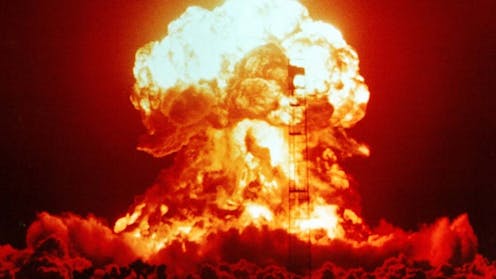
US nuclear weapons testing in Nevada, 1953. National Nuclear Security Administration

In August 1945 the United States dropped atomic bombs on the Japanese cities of Hiroshima and Nagasaki, killing more than 200,000 people, overwhelmingly civilians. Eighty years on from this slaughter – which the then US army commander and later president Dwight D. Eisenhower called “completely unnecessary” – is an apt time to ask how the world has changed since Japan’s skies lit up with atomic fire.

Many in the military as well as academics and nuclear theorists argue that a “third nuclear age” has begun. By this they mean that a new and different set of nuclear threats are emerging which fundamentally challenge the existing tenets of nuclear “deterrence”. The response, some argue, is to invest heavily in our nuclear weapons systems to secure ourselves against this new age of uncertainty.

To understand this claim, it’s worth looking back at the history of the nuclear era. Most (but not all) scholars working on “nuclear ages” accept that the first nuclear age, between 1945 and 1991, was characterised by the cold war nuclear stand-off between the world’s two nuclear armed superpowers: the US and the Soviet Union.

The second nuclear age, from 1991 to 2014, is usually understood to have started when the cold war ended. Policymakers worried about “proliferation” – the spread of nuclear weapons to new states and even non-state terrorist groups. Western policy focused on countering this process, often through military means.

The third nuclear age, which is thought to have begun in 2014, it thought to reflect a new set of challenges. This will involve the entry of more nuclear-armed states into the fray, erosion of longstanding non-proliferation and arms control agreements and the development of so-called “strategic non-nuclear weapons”. This term refers to non-nuclear technologies, including artificial intelligence (AI) command and control networks, hypersonic missiles and advanced missile defence systems.

There are fears that non-nuclear armed “adversaries” might use these systems to directly attack other states’ nuclear arsenals, undermining their ability to deliver a retaliatory nuclear strike. This is likely to pose a challenge to established practices on which the doctrine of nuclear deterrence is based.

But how much has really changed in the past decade? No new nuclear powers have emerged – the most recent was North Korea in 2006. China, often seen as the bogeyman of the third nuclear age, has had a nuclear weapons capability since 1964. AI integration into nuclear command and control systems, while extremely risky, has yet to happen.

Reliable missile defence against modern nuclear warheads is still widely considered to be technologically impossible. The impact of hypersonic missiles on the calculus of nuclear deterrence is debated, since intercontinental ballistic missiles (ICBMs) are already very fast.

In short, what’s different this time around?

Western-centric thinking

A more penetrating line of questioning is to ask about the politics underlying the idea of a third nuclear age. Ideas are never neutral, and they shape our understanding of the world. The third nuclear age concept (like that of the second nuclear age before it) came out of the US defence establishment, which was trying to understand how it could remain globally dominant against challenges to its supremacy from China.

The idea has since been filtered through academia and back into the policy world, where it has started to gaincommon sense status”: as night follows day, the dawn of the third nuclear age is around the corner. But this is neither objective nor inevitable. It’s a conceptual tool for thinking about nuclear politics in a particular way.

It’s a US-centric perspective reflecting a fear that western dominance of the nuclear arena is under threat. US and allied militaries need to progressively integrate new technologies into their nuclear systems and modernise their arsenals to deal with a “more uncertain” world, ignoring the fact that massive risk and uncertainty have always been a built-in feature of nuclear deterrence strategies.

Here, the biggest threats to nuclear stability come not from the thousands of nuclear warheads held by the established nuclear weapons states, but from would-be disruptors who can threaten nuclear arsenals with non-nuclear systems – echoing old second nuclear age fears about proliferation.

This is why Iran remains a villain of the story alongside China, as we can see from the hyperbole about Iran’s “hypersonic” missile capabilities and how its behaviour gave Israel and the US the excuse to launch “counter-proliferation” strikes against its nuclear facilities in June this year.

Graphic showing nuclear stockpiles 2025.
Nuclear stockpiles, 2025.
Federation of American Scientists, CC BY-NC

It bears repeating that Iran is still not a nuclear-armed state. But the new emphasis placed on non-nuclear technologies in third nuclear age thinking also puts states which don’t even have nuclear programmes in the crosshairs of Iraq-style wars of aggression in the name of “counter-proliferation”.

New arms race

To be crystal clear: the nuclear world is as dangerous as ever. The problem is that third nuclear age thinking, with its focus on supposedly unprecedented disruptions, leads us to think that new solutions are necessary. “Old” ideas about nuclear disarmament become irrelevant, because the instabilities introduced by new technologies supposedly make it impossible for nuclear weapons states to give up their arsenals.

The third nuclear age becomes a conceptual stalking horse for a fresh nuclear arms race.

When the British armed forces chief Admiral Sir Tony Radakin warned of a dawning third nuclear age in December 2024, he was not making a neutral observation. He was arguing for resources to be funnelled into nuclear modernisation at the expense of welfare and healthcare programmes. Today, before any modernisation, Britain maintains a first-strike deliverable total of 31 megatons of nuclear explosive power. That’s more than 2,000 Hiroshimas’ worth of destruction.

So we should be sceptical of this concept. The threat of nuclear annihilation has been with us since August 1945 and comes – as always – from nuclear weapons and the states who operate them.

The Conversation

Tom Vaughan does not work for, consult, own shares in or receive funding from any company or organisation that would benefit from this article, and has disclosed no relevant affiliations beyond their academic appointment.

ref. The ‘third nuclear age’ is a politically motivated label that seeks to justify a renewed arms race – https://theconversation.com/the-third-nuclear-age-is-a-politically-motivated-label-that-seeks-to-justify-a-renewed-arms-race-263009

Three reasons plastic pollution treaty talks ended in disagreement and deadlock (but not collapse)

Source: The Conversation – UK – By Steve Fletcher, Professor of Ocean Policy and Economy, University of Portsmouth

New Africa/Shutterstock

The latest round of negotiations for a UN global plastics treaty has ended without a deal. After more than three years of talks, deep divisions remain. Agreement is only marginally closer than before talks began. For many countries, campaigners and observer organisations, the outcome is deeply disappointing.

After the final intense meetings which went through the night in Geneva, the chair of the intergovernmental negotiating committee that governs the treaty discussions formally closed the session on August 15 without agreement on the treaty text. This is not the end. The process has not collapsed.

However, there is no confirmed date or venue for the next round of negotiations and no mandate for formal intersessional activities. Many delegates called for a period of reflection and even a reset of the process to allow for a refreshed approach.

As in previous negotiation rounds, progress was slow. Talks were hampered by procedural ambiguity, deliberate delay tactics from fossil fuel and petrochemical countries opposing an ambitious treaty, and the sheer complexity of the issues on the table. Time ran out before a consensus could be reached.

As the talks wrap up, we reflect on three aspects that contributed to this ongoing deadlock:

1. Chair’s efforts fell short

Ambassador Luis Vayas Valdivieso took a more active role than in earlier sessions, pushing the pace and producing two draft treaty texts to focus debate. The first draft omitted key provisions, including limits on plastic production, global rules for regulating plastic products, controls on harmful chemicals and strong financing arrangements.

Many high-ambition countries pushing for strong measures and outcomes, rejected the first draft as imbalanced, unambitious and unfit for further discussion. A second draft, issued just before 1am on the final night after intense consultations, included some improvements but still left out these core elements. Many nations again saw it as one-sided, tilted towards the demands of lower-ambition countries and petrostates.

2. Entrenched positions remain

Throughout the negotiations, lower-ambition states gave little ground. They refused to compromise on their “red lines” while expecting others to give up on theirs.

This repeated familiar arguments over the purpose and scope of the treaty, despite these having been outlined in the UN mandate to deliver the treaty three years ago. Many believe a different approach is needed that focuses more time on points of disagreement, rigorously tests opposing arguments, and actively seeks areas of compromise.

microplastics in sand, with metal spoon
Plastic pollution is ubiquitous.
chayanuphol/Shutterstock

3. Reluctance to vote

The process still relies on consensus for decision-making. In the final plenary, many delegates, particularly those with economic interests in plastics, stressed that consensus is essential. Yet over the past three years, some delegations have urged the chair to break deadlocks by moving to a vote – a rule of UN negotiations that must be applied when consensus cannot be reached.

Voting is seen as politically explosive, with serious implications for multilateralism. So far, the chair has resisted calling a vote, and higher-ambition countries have not pressed for it either, despite their repeated statements about urgency and ambition. Beyond rejecting treaty texts they considered weak, many did not use the tools available to them to push for a stronger outcome. As a result, stalemates have persisted.

The road ahead

The intersessional period – the time between now and the next formal meeting – is critical. Without a fixed date for the next stage of the process, this is the time to reset and prepare for decisive progress. One key focus must be to bridge political divides. High-ambition countries need to build broader alliances and find shared ground with those who may not fully back their vision but are open to stronger action.

Key details such as financing mechanisms, monitoring and reporting systems, and legal models for compliance should be developed now, outside formal negotiations, to save time later. And higher-ambition nations such as those in the EU, Panama, Colombia, Australia, the UK and small island states should coordinate more closely and be willing to use procedural tools such as voting when needed, even if politically uncomfortable.

The goal set by the UN in 2022 to end plastic pollution across its full life cycle is still achievable. But it will require governments to use the coming months to regroup, have frank political discussions and commit to a more decisive approach when they next meet.

The world cannot afford another round lost to procedural deadlock. The plastics crisis is worsening. The science is clear. The solutions are well known. What is missing is not knowledge, but the will to match words with binding action.


Don’t have time to read about climate change as much as you’d like?

Get a weekly roundup in your inbox instead. Every Wednesday, The Conversation’s environment editor writes Imagine, a short email that goes a little deeper into just one climate issue. Join the 45,000+ readers who’ve subscribed so far.


The Conversation

Steve Fletcher receives funding from the World Economic Forum, Natural Environment Research Council (NERC), Economic and Social Research Council (ESRC), Aquapak Ltd, Defra, and the Flotilla Foundation. He is a member of the United Nations International Resource Panel and is the NERC Agenda Setting Fellow for Plastic Pollution.

Antaya March receives funding from the Flotilla Foundation, Defra, World Economic Forum, and the British Academy.

ref. Three reasons plastic pollution treaty talks ended in disagreement and deadlock (but not collapse) – https://theconversation.com/three-reasons-plastic-pollution-treaty-talks-ended-in-disagreement-and-deadlock-but-not-collapse-261327