AI has passed the aesthetic Turing Test − and it’s changing our relationship with art

Source: The Conversation – USA (2) – By Tamilla Triantoro, Associate Professor of Business Analytics and Information Systems, Quinnipiac University

It may not have a soul, but AI has learned the mathematical recipe for the sights and sounds that most people find moving. Jacob Wackerhausen/iStock via Getty Images Plus

Pick up an August 2025 issue of Vogue and you’ll come across an advertisement for the brand Guess featuring a stunning model. Yet tucked away in small print is a startling admission: She isn’t real. She was generated entirely by AI.

For decades, fashion images have been retouched. But this isn’t airbrushing a real person; it’s a “person” created from scratch, a digital composite of data points, engineered to appear as a beautiful woman.

The backlash to the Guess ad was swift. Veteran model Felicity Hayward called the move “lazy and cheap,” warning that it undermines years of work to promote diversity. After all, why hire models of different sizes, ages and ethnicities when a machine can generate a narrow, market-tested ideal of beauty on demand?

I study human-AI collaboration, and my work focuses on how AI influences decision-making, trust and human agency, all of which came into play during the Vogue controversy.

This new reality is not a cause for doom. However, now that it’s becoming much harder – if not impossible – to tell whether something is created by a human or a machine, it’s worth asking what’s gained and what’s lost from this technology. Most importantly, what does it say about what we truly value in art?

The forensic viewer and listener

In 1950, computer scientist Alan Turing wondered whether a machine could exhibit intelligent behavior indistinguishable from that of a human.

He proposed his famous imitation game. In it, a human judges whether they’re conversing with a person or a computer. If the human can’t tell the difference, the computer passes the test.

Black and white portrait of young man with combover, wearing a jacket and tie.
In 1950, British scientist Alan Turing wondered how and when the outputs of a computer would be indistinguishable from those of humans.
Pictures From History/Universal Images Group via Getty Images

For decades, this remained a theoretical benchmark. But with the recent explosion of powerful chatbots, the original Turing Test for conversation has arguably been passed. This breakthrough raises a new question: If AI can master conversation, can it master art?

The evidence suggests it has already passed what might be called an “aesthetic Turing Test.”

AI can generate music, images and movies so convincingly that people struggle to distinguish them from human creations.

In music, platforms like Suno and Udio can produce original songs, complete with vocals and lyrics, in any imaginable genre in seconds. Some are so good they’ve gone viral. Meanwhile, photo-realistic images are equally deceptive. In 2023, millions believed that the fabricated photo of Pope Francis in a puffer jacket was real, a stunning example of AI’s power to create convincing fiction.

Why our brains are being fooled

So why are we falling for it?

First, AI has become an expert forger of human patterns. These models are trained on gigantic libraries of human-made art. They have analyzed more paintings, songs and photographs than any person ever could. These models may not have a soul, but they have learned the mathematical recipe for what we find beautiful or catchy.

Second, AI has bridged the uncanny valley. This is the term for the creepy feeling we get when something looks almost human but not quite – like a humanoid robot or a doll with vacant eyes.

That subtle sense of wrongness has been our built-in detector for fakes. But the latest AI is so sophisticated that it has climbed out of the valley. It no longer makes the small mistakes that trigger our alarm bells.

Finally, AI does not just copy reality; it creates a perfected version of it. The French philosopher Jean Baudrillard called this a simulacrum – a copy with no original.

The AI model in Vogue is the perfect example. She is not a picture of a real woman. She is a hyperreal ideal that no living person can compete with. Viewers don’t flag her as fake because she is, in a sense, more “perfect” than real.

The future of art in a synthetic world

When art is this easy to generate – and its origin this hard to verify – something precious risks being lost.

The German thinker Walter Benjamin once wrote about the “aura” of an original artwork – the sense of history and human touch that makes it special. A painting has an aura because you can see the brushstrokes; an old photograph has an aura because it captured a real moment in time.

AI-generated art has no such aura. It is infinitely reproducible, has no history, and lacks a human story. This is why, even when it is technically perfect, it can feel hollow.

When you become suspicious of a work’s origins, the act of listening to a song or viewing a photograph is no longer simply about feeling the rhythm or wondering what may have existed outside the frame. It also requires running a mental checklist, searching for the statistical ghost in the machine. And that moment of analytical doubt pulls viewers and listeners out of the work’s emotional world.

To me, the aesthetic Turing Test is not just about whether a machine can fool us; it’s a challenge that asks us to decide what we really want from art.

If a machine creates a song that brings a person to tears, does it matter that the machine felt nothing? Where does the meaning of art truly reside – in the mind of the creator or in the heart of the observer?

We have built a mirror that reflects our own creativity back at us, and now we must decide: Do we prefer perfection without humanity, or imperfection with meaning? Do we choose the flawless, disposable reflection, or the messy, fun house mirror of the human mind?

The Conversation

Tamilla Triantoro does not work for, consult, own shares in or receive funding from any company or organization that would benefit from this article, and has disclosed no relevant affiliations beyond their academic appointment.

ref. AI has passed the aesthetic Turing Test − and it’s changing our relationship with art – https://theconversation.com/ai-has-passed-the-aesthetic-turing-test-and-its-changing-our-relationship-with-art-262997

The Orwellian echoes in Trump’s push for ‘Americanism’ at the Smithsonian

Source: The Conversation – USA – By Laura Beers, Professor of History, American University

Erasing history is a deeply Orwellian thing to do. Elen11, iStock/Getty Images Plus

When people use the term “Orwellian,” it’s not a good sign.

It usually characterizes an action, an individual or a society that is suppressing freedom, particularly the freedom of expression. It can also describe something perverted by tyrannical power.

It’s a term used primarily to describe the present, but whose implications inevitably connect to both the future and the past.

In his second term, President Donald Trump has revealed his ambitions to rewrite America’s official history to, in the words of the Organization of American Historians, “reflect a glorified narrative … while suppressing the voices of historically excluded groups.”

This ambition was manifested in efforts by the Department of Education to eradicate a “DEI agenda” from school curricula. It also included a high-profile assault on what detractors saw as “woke” universities, which culminated in Columbia University’s agreement to submit to a review of the faculty and curriculum of its Middle Eastern Studies department, with the aim of eradicating alleged pro-Palestinian bias.

Now, the administration has shifted its sights from formal educational institutions to one of the key sites of public history-making: the Smithsonian, a collection of 21 museums, the National Zoo and associated research centers, principally centered on the National Mall in Washington, D.C.

On Aug. 12, 2025, the Smithsonian’s director, Lonnie Bunch III, received a letter from the White House announcing its intent to carry out a systematic review of the institution’s holdings and exhibitions in the advance of the nation’s 250th anniversary in 2026.

The review’s stated aim is to ensure that museum content adequately reflects “Americanism” through a commitment to “celebrate American exceptionalism, [and] remove divisive or partisan narratives.”

On Aug. 19, 2025, Trump escalated his attack on the Smithsonian. “The Smithsonian is OUT OF CONTROL, where everything discussed is how horrible our Country is, how bad Slavery was…” he wrote in a Truth Social post. “Nothing about Success, nothing about Brightness, nothing about the Future. We are not going to allow this to happen.”

Such ambitions may sound benign, but they are deeply Orwellian. Here’s how.

A social media post excoriating the Smithsonian for being 'OUT OF CONTROL, where everything discussed is how horrible our Country is, how bad Slavery was...'
A screenshot of President Donald Trump’s Aug.19, 2025 Truth Social post about the Smithsonian.
Truth Social Donald Trump account

Winners write the history

Author George Orwell believed in objective, historical truth. Writing in 1946, he attributed his youthful desire to become an author in part to a “historical impulse,” or “the desire to see things as they are, to find out true facts and store them up for the use of posterity.”

But while Orwell believed in the existence of an objective truth about history, he did not necessarily believe that truth would prevail.

Truth, Orwell recognized, was best served by free speech and dialogue. Yet absolute power, Orwell appreciated, allowed those who possessed it to silence or censor opposing narratives, quashing the possibility of productive dialogue about history that could ultimately allow truth to come out.

As Orwell wrote in “1984,” his final, dystopian novel, “Who controls the past controls the future. Who controls the present controls the past.”

Historian Malgorzata Rymsza-Pawlowska has written about America’s bicentennial celebrations that took place in 1976. Then, she says, “Americans across the nation helped contribute to a pluralistic and inclusive commemoration … using it as a moment to question who had been left out of the legacies of the American Revolution, to tell more inclusive stories about the history of the United States.”

This was an example of the kind of productive dialogue encouraged in a free society. “By contrast,” writes Rymsza-Pawlowska, “the 250th is shaping up to be a top-down affair that advances a relatively narrow and celebratory idea of Americanism.” The newly announced Smithsonian review aims to purge counternarratives that challenge that celebratory idea.

The Ministry of Truth

The desire to eradicate counternarratives drives Winston Smith’s job at the ironically named Ministry of Truth in “1984.”

The novel is set in Oceania, a geographical entity covering North America and the British Isles and which governs much of the Global South.

Oceania is an absolute tyranny governed by Big Brother, the leader of a political party whose only goal is the perpetuation of its own power. In this society, truth is what Big Brother and the party say it is.

The regime imposes near total censorship so that not only dissident speech but subversive private reflection, or “thought crime,” is viciously prosecuted. In this way, it controls the present.

But it also controls the past. As the party’s protean policy evolves, Smith and his colleagues are tasked with systematically destroying any historical records that conflict with the current version of history. Smith literally disposes of artifacts of inexpedient history by throwing them down “memory holes,” where they are “wiped … out of existence and out of memory.”

At a key point in the novel, Smith recalls briefly holding on to a newspaper clipping that proved that an enemy of the regime had not actually committed the crime he had been accused of. Smith recognizes the power over the regime that this clipping gives him, but he simultaneously fears that power will make him a target. In the end, fear of retaliation leads him to drop the slip of newsprint down a memory hole.

The contemporary U.S. is a far cry from Orwell’s Oceania. Yet the Trump administration is doing its best to exert control over the present and the past.

A light-haired man in a suit holding a pen at a desk covered with folders.
President Donald Trump signed an executive order to determine whether ‘public monuments, memorials, statues, markers, or similar properties … have been removed or changed to perpetuate a false reconstruction of American history.’
Anna Moneymaker/Getty Images

Down the memory hole

Even before the Trump administration announced its review of the Smithsonian, officials in departments across government had taken unprecedented steps to rewrite the nation’s official history, attempting to purge parts of the historical narrative down Orwellian memory holes.

Comically, those efforts included the temporary removal from government websites of information about the Enola Gay, the plane that dropped the atomic bomb over Hiroshima. The plane was unwittingly caught up in a mass purge of references to “gay” and LGBTQ+ content on government websites.

A screenshot of a headline and photo for a story about how US Defense Secretary Pete Hegseth has ordered the removal of gay rights advocate Harvey Milk's name from a Navy ship.
As part of efforts to purge references to gay people, U.S. Defense Secretary Pete Hegseth has ordered the removal of gay rights advocate Harvey Milk’s name from a Navy ship.
Screenshot, Military.com

Other erasures have included the deletion of content on government sites related to the life ofHarriet Tubman, the Maryland woman who escaped slavery and then played a pioneering role as a conductor of the Underground Railroad, helping enslaved people escape to freedom.

Public outcry led to the restoration of most of the deleted content.

Over at the Smithsonian, which earlier in the year had been criticized by Trump for its “divisive, race-centered ideology,” staff removed a temporary placard with references to President Trump’s two impeachment trials from a display case on impeachment that formed part of the National Museum of American History exhibition on the American presidency. The references to Trump’s two impeachments were modified, with some details removed, in a newly installed placard in the updated display.

Responding to questions, the Smithsonian stated that the placard’s removal was not in response to political pressure: “The placard, which was meant to be a temporary addition to a 25-year-old exhibition, did not meet the museum’s standards in appearance, location, timeline, and overall presentation.”

Repressing thought

Orwell’s “1984” ends with an appendix on the history of “Newspeak,” Oceania’s official language, which, while it had not yet superseded “Oldspeak” or standard English, was rapidly gaining ground as both a written and spoken dialect.

According to the appendix, “The purpose of Newspeak was not only to provide a medium of expression for the worldview and mental habits proper to the devotees of [the Party], but to make all other modes of thought impossible.”

Orwell, as so often in his writing, makes the abstract theory concrete: “The word free still existed in Newspeak, but it could only be used in such statements as ‘This dog is free from lice’ or ‘This field is free from weeds.’ … political and intellectual freedom no longer existed even as concepts.”

The goal of this language streamlining was total control over past, present and future.

If it is illegal to even speak of systemic racism, for example, let alone discuss its causes and possible remedies, it constrains the potential for, even prohibits, social change.

It has become a cliché that those who do not understand history are bound to repeat it.

As George Orwell appreciated, the correlate is that social and historical progress require an awareness of, and receptivity to, both historical fact and competing historical narratives.

This story is an updated version of an article originally published on June 9, 2025.

The Smithsonian is a member of The Conversation U.S.

The Conversation

Laura Beers does not work for, consult, own shares in or receive funding from any company or organization that would benefit from this article, and has disclosed no relevant affiliations beyond their academic appointment.

ref. The Orwellian echoes in Trump’s push for ‘Americanism’ at the Smithsonian – https://theconversation.com/the-orwellian-echoes-in-trumps-push-for-americanism-at-the-smithsonian-263304

Trump administration has proven no friend to organized labor, from attacking federal unions to paralyzing the National Labor Relations Board

Source: The Conversation – USA – By Jake Rosenfeld, Professor of Sociology, Washington University in St. Louis

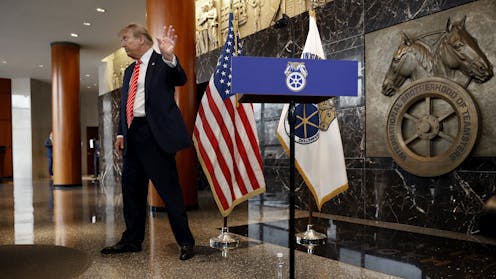
President Donald Trump waves goodbye to reporters following a meeting with the Teamsters in 2024. Chip Somodevilla/Getty Images

During the 2024 election campaign, the Republican Party’s historically fraught relationship with organized labor appeared to be changing. Several influential Republicans reached out to unions, seeking to cement the loyalties of the growing ranks of working-class Americans who have been backing Donald Trump’s presidential runs and voting for other members of his party.

During Trump’s first bid for the White house, the percentage of votes in households where at least one person belongs to a union fell to its lowest level in decades. In 2021, Marco Rubio, a U.S. senator at the time, wrote a USA Today op-ed supporting a unionization drive at an Amazon facility. Sen. Josh Hawley, a Missouri Republican, walked a United Auto Workers picket line in 2023 in solidarity with striking workers.

As the 2024 GOP presidential nominee, Trump spotlighted International Brotherhood of Teamsters President Sean O’Brien with a prominent speaking slot at the Republican National Convention – rewarding the union for staying neutral in that campaign after endorsing Joe Biden four years earlier.

Yet O’Brien shocked many in the convention crowd by lambasting longtime GOP coalition partners such as the Chamber of Commerce and Business Roundtable for hurting American workers.

Once in office, Trump continued to signal some degree of solidarity with the blue-collar voters who backed him. He chose former Rep. Lori Chavez-DeRemer, a Teamsters ally, to be his second-term labor secretary.

I’m a sociologist who has been researching the U.S. labor movement for over two decades. Given conservatives’ long-standing antipathy toward unions, I was curious whether the GOP’s greater engagement with labor portended any kind of change in its policies.

Fumbled at the starting line

The GOP’s various outreach efforts during the 2024 campaign led University of Chicago law professor Eric Posner, a scholar of declining labor power, to write, “Is a pro-labor Republican Party possible?”

More than six months into Trump’s second term, I would say that based on the evidence thus far the answer to Posner’s question is a resounding no.

In late March 2025, Trump issued an executive order stripping hundreds of thousands of federal workers of their collective bargaining rights.

Overnight, twice as many federal employees lost their union protections as there are members of the United Auto Workers union, making the action “the largest and most aggressive single act of union-busting in U.S. history,” according to Georgetown University labor historian Joseph McCartin.

While affected unions have challenged that action and similar subsequent ones in court, the Trump administration is moving onto other agencies. In August, over 400,000 federal employees at the Department of Veterans Affairs and Environmental Protection Agency saw their union contracts terminated and their collective bargaining rights dissolved.

Everett Kelley, the American Federation of Government Employees president, described the attacks on federal workers as a “setback for fundamental rights in America.”

Protesters hold signs in solidarity with the American Federation of Government Employees outside of a big building.
Protesters hold signs in solidarity with the American Federation of Government Employees of District 14 at a rally in support of federal workers at the Office of Personnel Management in Washington on March 4, 2025.
Alex Wroblewski/AFP via Getty Images

Tariffs, other policies aren’t helping

The Trump administration has pitched its erratic tariff policies as a boon to U.S.manufacturing, including in the automotive industry, once the foundation of the U.S. labor movement.

In reality, U.S. car producers are struggling to keep up with rising tariff-related costs of raw materials and parts. The number of factory jobs has fallen to the lowest level since the COVID-19 pandemic.

Even United Auto Workers President Shawn Fain, a supporter of targeted tariffs to buttress the domestic auto industry, criticized the administration’s trade policy in April 2025, saying, “We do not support reckless tariffs on all countries at crazy rates.”

Other administration actions cast as relief for struggling workers are unlikely to deliver as advertised. The “no tax on tips” provision in Trump’s huge tax-and-spending package excludes the nearly 40% of tipped workers whose earnings fall below the federal income tax threshold. Tipped workers make up a tiny share of the low-wage workforce.

Culinary Workers Local 226, a powerful Nevada union representing many tipped workers in Las Vegas and Reno, supported the provision. Yet it blasted the overall package, calling it a “big, horrible bill” for its windfalls to the rich instead of the working class.

Removing the watchdogs

The National Labor Relations Board is responsible for ensuring management and labor adhere to provisions of the National Labor Relations Act. Passed in 1935, that law established workers’ fundamental rights to collective bargaining. The board is responsible for conducting union elections, investigating allegations of unfair labor practices and outright abuses by employers, and enforcing court orders when employers or unions are found to have broken labor laws.

Presidents regularly use vacancies to tilt the ideological balance of the board to a more or less labor-friendly position. Trump, however, went further.

Soon after he was sworn in for a second term, Trump fired the National Labor Relations Board’s general counsel along with board member Gwynne Wilcox, who was only halfway through her five-year term. Wilcox’s dismissal was unprecedented and violated the National Labor Relations Act provision on board personnel changes.

Wilcox’s removal left the body without a quorum, preventing it from responding to appeals or requests for review and allowing employers accused of violating workers’ rights to delay any settlement. The Trump administration has left those important NLRB jobs vacant for months, although it has nominated two management-friendly replacements, both of whom awaited Senate approval in mid-August.

In the meantime, the agency is unable to hear labor disputes.

Disempowering the NLRB is a long-standing Republican tactic, suggesting more continuity with past GOP attacks on labor than a new era of partnership.

Hawley standing out

To be sure, Republicans don’t all agree with one another on the importance of supporting workers and labor rights. One who has stood out so far is Hawley. The relatively pro-labor Republican senator’s stance led him to partner with Sen. Corey Booker, a New Jersey Democrat, to co-sponsor the Faster Labor Contracts Act.

This new bill would force employers to negotiate a contract in a reasonable time frame with employees once they have voted in favor of forming a union.

Hawley also joined with Democrats to reintroduce a bill that would ban dangerous work speed requirements in warehouses. Hawley said, when summarizing his efforts on behalf of working people, “It’s time we deliver for them.”

The Missouri senator is not completely alone. Sens. Bernie Moreno of Ohio and Roger Marshall of Kansas, both Republicans, have backed some labor-friendly legislation in the spring and summer of this year.

GOP leaders in Congress are not moving those bills forward so far, likely in part due to pushback from Republicans and their allies outside Congress.

And there are limits to Hawley’s labor friendliness. He voted for Trump’s tax-and-spending package, despite publicly airing his misgivings about the harm it may cause his blue-collar constituents.

Meanwhile, his past partners in the more labor-friendly wing of the GOP now occupy prominent administration posts. Yet they have largely fallen silent on union issues – except, in Rubio’s case, to oversee the firing of well over 1,000 State Department employees, many of them members of the American Foreign Service Association union.

JD Vance, in a suit and tie, poses for a photo with a man in a United Auto Workers t-shirt.
U.S. Vice President JD Vance, left, poses for a photo with a member of the United Auto Workers union during a tariff announcement event at the White House on April 2, 2025.
Chip Somodevilla/Getty Images

Trump labor approach echoes Reagan’s style

Another GOP presidential administration courted segments of the labor movement to divide a key Democratic constituency, only to take actions that weakened unions.

In 1980, for example, Ronald Reagan sought and won the endorsement of the Professional Air Traffic Controllers Organization. A year later, he fired 13,000 striking members of that union.

The Teamsters union also backed Reagan – twice. It endorsed him in 1980 after he pledged during the 1980 campaign not to pursue anti-labor policies. Although he broke his promise, personal outreach from Vice President George H.W. Bush in the lead-up to the 1984 election earned him the Teamsters endorsement a second time.

What seems clear in my view is that whenever the GOP has tried to cast itself as a labor-friendly political party, it has emphasized symbolism over substance, favoring using rhetoric embracing workers who belong to unions versus taking actions to strengthen labor rights.

The Conversation

To support his research, Jake Rosenfeld has received funding from the Economic Policy Institute, Washington Center for Equitable Growth, Urban Institute, and the National Science Foundation.

ref. Trump administration has proven no friend to organized labor, from attacking federal unions to paralyzing the National Labor Relations Board – https://theconversation.com/trump-administration-has-proven-no-friend-to-organized-labor-from-attacking-federal-unions-to-paralyzing-the-national-labor-relations-board-263176

In a closely divided Congress, aging lawmakers are a problem for Democrats

Source: The Conversation – USA – By Charlie Hunt, Associate Professor of Political Science, Boise State University

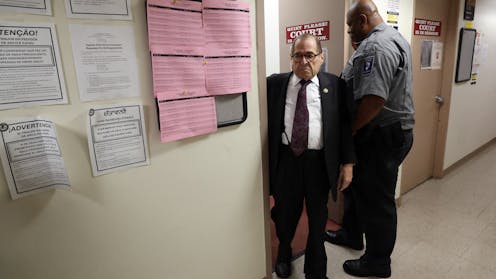
Rep. Jerry Nadler, the 18-term Democratic incumbent running for reelection in New York, began his political career more than 20 years before Liam Elkind, his primary opponent, was born. Timothy A. Clary/AFP via Getty Images

The 2026 midterms are more than a year away, but some high-profile primary election battles in the Democratic Party are gaining national attention. Much of that attention is focused on the age of the candidates.

Thanks to Texas’ proposed mid-decade redistricting, a showdown is looming between two Democrats serving in the U.S. House of Representatives from that state: 36-year-old Rep. Greg Casar has made clear his intention to run against a colleague, Rep. Lloyd Doggett, despite Doggett’s public pressure on Casar to run in a different district. Doggett is 78 years old and has served in the House since 1994.**

An even more stark generational divide has emerged in New York’s 12th district, where 26-year-old political organizer Liam Elkind is making a similar challenge in a Democratic primary. The 18-term incumbent in that race, Rep. Jerry Nadler, will be 79 years old by next year’s midterm election. He began his political career as a New York state assemblyman in 1977 — more than 20 years before Elkind was born.

These generational matchups have become common in the Democratic Party. They have also gained significant attention, particularly since the 2018 upset of another veteran Democratic leader, Rep. Joe Crowley of New York, in a primary challenge from Alexandria Ocasio-Cortez, who was 28 at the time.

Organizer Liam Elkind announces his candidacy for Congress in New York’s 12th District.

These challengers often criticize the seniority of older lawmakers. They say seniority is not a benefit but a hindrance to effective representation because the longtime incumbents are out of touch with the needs of their districts and the country, and that remaining in office crowds out crucial younger perspectives.

As generational challenges have become more common, they’ve also become sharper in their explicit appeals to age as a key candidate quality. And candidates like Elkind have made the argument that the stakes go beyond generational “vibes.”

A geriatric Congress can also have demonstrable effects on the policymaking that happens on Capitol Hill.

Slim majorities make age a bigger issue

Why is candidate age so prominent in the current election cycle?

One big reason is that razor-thin majorities in Congress make every seat count.

Slim margins create legislative and institutional uncertainty that has very real consequences for how Congress is run and how policy gets made.

In his candidacy announcement video, Elkind makes this point explicitly: “In the last five months, three House Democrats passed away, allowing Trump’s billionaire bill, gutting health care and food stamps for millions of people, to go through by one vote.”

Although it’s likely that Trump’s “big, beautiful bill” would have passed even without these vacancies, the Democratic absences undoubtedly made Speaker Mike Johnson’s job of passing the bill a little bit easier.

Elkind also notes that the last eight members of Congress who passed away in office were Democrats. In essence, Elkind is arguing that Democrats must elect more young members not just as a matter of representation but as a way of preserving power in Congress.

How do vacancies occur?

Seat vacancies caused by the early departures of members of Congress happen regularly, and in a variety of ways.

The 118th Congress, which met from Jan. 3, 2023, to Jan. 3, 2025, set a modern record with 17 vacancies, a rate unmatched going back to the 1950s. This was partly because of four member deaths, including Rep. Sheila Jackson Lee, D-Texas.

Other high-profile vacancies in the 118th Congress were due to different causes. Some members were forced to resign or even expelled from Congress because of scandal, like GOP Rep. George Santos of New York, who was convicted in 2024 for a range of crimes and subsequently sentenced to several years in prison.

Others cut short their current term due to political defeats: House Speaker Kevin McCarthy, a Republican from California, resigned after being ousted from his leadership post in 2023. The current 119th Congress has seen additional resignations from members who took positions in the second Trump administration.

Resignation is the most common reason for departure in recent Congresses. However, at least one member – and often more than one – has died in all but one Congress in the past 70 years. The number of deaths that regularly occur among members is more than sufficient to change how the majority party functions in a closely contested Congress like this one.

And for Democrats, three member deaths in the first nine months of the current Congress is far ahead of previous years’ paces, making incumbents’ advanced age a relevant issue on the campaign trail.

How are vacancies filled?

Although U.S. Senate vacancies are often – though not always – filled through an appointment by the governor of that state, the Constitution mandates that House vacancies be filled by special elections scheduled by the governor.

These elections usually happen within a few months of the vacancy. What this means is that there are real possibilities for the size of a party’s majority to shrink, or grow, between election years, in ways that have profound impacts on policymaking. And even if a majority party shift doesn’t happen, a district could still replace a moderate departing representative with an extremist, or vice versa.

Former Speaker of the House Kevin McCarthy, a Republican, announced his resignation from Congress in December 2023.

What does this mean for the 2026 midterms?

Whether younger candidates’ message will resonate with primary election voters remains an open question. Longer-serving incumbents hold major advantages like deeper campaign experience. Younger candidates traditionally lack the name recognition and donor bases that older incumbents have built up over decades.

But given the public concern over the high-profile declines of candidates for president – like former President Joe Biden – and for Congress, like Sens. Dianne Feinstein and Mitch McConnell, generational politics may be more important than ever, and help reverse this trend.

This story contains material from a previous article published on Jan. 3, 2023.

The Conversation

Charlie Hunt does not work for, consult, own shares in or receive funding from any company or organization that would benefit from this article, and has disclosed no relevant affiliations beyond their academic appointment.

ref. In a closely divided Congress, aging lawmakers are a problem for Democrats – https://theconversation.com/in-a-closely-divided-congress-aging-lawmakers-are-a-problem-for-democrats-262914

Period pain and heavy bleeding linked with lower school attendance and GCSE results – new study

Source: The Conversation – UK – By Gemma Sawyer, PhD Candidate, Bristol Medical School, University of Bristol

michaeljung/Shutterstock

Menstrual cycles are experienced by roughly half of the population for half of their lives. The experiences of menstruation on teenagers are incredibly important, especially as young people are starting periods earlier. Our research shows that this impact extends to their school attendance – and GCSE results.

Previous studies have reported that many young people take time off school and struggle to concentrate in school because of difficult experiences related to menstruation.

However, the role of specific period symptoms and their effect on exam performance and attainment are not well understood. Our recent study examined whether menstrual pain and heavy bleeding – an under-researched symptom – may have implications for school attendance and attainment.

Menstrual-related pain and heavy bleeding are commonly experienced menstrual symptoms. For many, these symptoms may be minor and have few consequences. For others they can be severe and have a significant impact on daily life.

Normalisation of these symptoms makes it difficult for people, especially young people, to identify whether their symptoms are problematic. Societal pressures to hide or conceal menstruation and menstrual stigma also foster feelings of shame, making it challenging to have conversations about periods or ask for help. As a result, many people struggle with menstrual symptoms that affect their health and wellbeing.

Girl holding stomach in classroom
Menstrual symptoms can affect life at school.
Rawpixel.com/Shutterstock

We conducted research using data from the Children of the 90s study, which has followed a group of children in the UK from birth into adulthood. In this study, 2,698 teenagers who experienced periods between the ages of 13 and 16 were asked about their experiences of heavy or prolonged bleeding and menstrual-related pain.

We linked this information with data from the Department for Education about the amount of school absences the young people in the study had in year 11. This is the final year of compulsory schooling in the UK, when 15- and 16-year-olds take their GCSE exams. We also linked it with their GCSE results.

Over a third of the teenagers (36%) reported heavy or prolonged bleeding. We found that participants reporting heavy or prolonged bleeding were absent from school 1.7 additional days across year 11. They scored roughly one grade lower in their GCSEs, and were 27% less likely to achieve five A*-C passes including maths and English compared to those without heavy bleeding.

More than half (56%) of the teenagers reported menstrual pain. We found that those with pain were absent from school 1.2 additional days in year 11. They were 16% less likely to achieve five A*-C passes compared to those without pain. These relationships were observed after accounting for other possible causes including ethnicity, socioeconomic position, childhood adversity, age at first period, mother and child mental health, body mass index and intelligence quotient (IQ).

Wider implications

The results from this study fit with many previous studies that have shown menstrual issues can result in more absences and difficulties focusing and concentrating. They also provide further evidence that qualifications can be affected. This shows that menstrual difficulties can restrict the ability of young people to reach their full potential, with possible implications on access to further education or employment prospects.

A recent report from the Higher Education Policy Institute, a higher education thinktank, has found similar effects on absences at university: it estimates that an average student could miss up to six weeks across a three-year university course.

Other studies have shown these effects can persist in the workplace, including a large-scale study in the Netherlands and research on endometriosis by the Office for National Statistics.

The findings that those with heavy or painful periods, on average, were absent from school more and scored lower in their GCSEs are not due to different capabilities among these teenagers. Better treatments and support are needed for people who suffer with these symptoms, as they can lead to issues such as worse sleep quality, fatigue and iron-deficiency anaemia. This can make it more challenging to attend and perform well in school.

Society in general is also not designed to provide enough support to those who menstruate, especially those who suffer with problematic symptoms. Menstrual health literacy is generally low in teenagers. However, this also persists in adults and even medical professionals.

This means it is challenging for young people to identify symptoms. If they do identify them and seek help, they may often be met with attitudes that invalidate their symptoms, discouraging them from continuing to seek help.

Teenagers can face challenges managing menstruation at school. These may include restrictions on when they can go to the toilet, or inaccessibility of period products.

This can lead to many feeling that school is not a safe and supportive environment when menstruating. They may end up missing school entirely, or struggling to concentrate if they do attend school due to worries about managing and coping with menstruation and associated symptoms. Better support is needed for young people who menstruate and who struggle with problematic menstrual symptoms, so they are able to achieve their full academic potential.

The Conversation

Gemma Sawyer is supported by a Wellcome Trust PhD studentship in Molecular, Genetic and Lifecourse Epidemiology (ref: 218495/Z/19/Z). The funders had no role in study design or analysis.

Gemma Sharp receives funding from the Medical Research Council (MR/Z504634/1).

ref. Period pain and heavy bleeding linked with lower school attendance and GCSE results – new study – https://theconversation.com/period-pain-and-heavy-bleeding-linked-with-lower-school-attendance-and-gcse-results-new-study-262761

Environmental antibiotic resistance unevenly addressed despite growing global risk, study finds

Source: The Conversation – UK – By Gianni Lo Iacono, Senior Lecturer in Biostatistics and Epidemiology, School of Veterinary Medicine, Faculty of Health and Medical Sciences, University of Surrey

RR photographer/Shutterstock

In his 1941 novel The Library of Babel, Jorge Luis Borges imagines a universe made entirely of books – every possible 410-page combination of 22 letters, a period, a comma and a space. Somewhere within are all the meaningful works ever written, but the vast majority are nonsense.

That’s how it felt when our team began a systematic evidence map on antibiotic resistance, screening over 13,000 manuscripts to find the few relevant ones to our scope. All solid research, but it was a number that could make even our most enthusiastic collaborators go pale. We were wandering our own virtual Babel.
The scale reflects the urgency of tackling antimicrobial resistance (AMR) – a global threat to human health, food security and agriculture that could cause 10 million deaths annually by 2050, outstripping cancer’s current toll of 8.2 million.

The long fight against resistance

Focusing on antibiotics, Nobel laureate Selman Waksman defined them as “a compound made by a microbe to destroy other microbes”. Humans have understood and used this principle for millennia, from applying mouldy bread poultices to wounds to the antibiotic “golden age” of the 1940s–1960s, when an explosion of new drugs fuelled optimism that infectious diseases might soon be a relic of the past in high-income countries.

This was the era that spawned the much-repeated (and much-misquoted) declaration attributed to US Surgeon General Dr William Stewart: “It is time to close the book on infectious diseases and declare the war against pestilence won.” In truth, Stewart never claimed infectious diseases were “conquered”. He was urging greater attention to chronic illnesses, a sensible priority at the time. But with AMR rising, perhaps the balance must shift again.

The growing problem of antibiotic resistance, ABC News In-depth.

Antibiotic resistance is often described as an arms race. When a new antibiotic is deployed, disease rates initially drop, until bacteria evolve resistance. Old threats reappear, while our supply of new antibiotics dwindles.

Agriculture faces a similar battle. Overused pesticides and insecticides, even disease-resistant crop varieties, all lose their effectiveness as pathogens adapt. This leads to “boom and bust” cycles that force the creation of stronger chemicals or new crop varieties.

Researchers are exploring alternative strategies, including ways to harness natural epidemic fluctuations to push harmful species toward collapse. AMR researchers (including me) and agricultural scientists could learn a great deal from one another.

Beyond misuse: the environment’s role

While the misuse and overuse of antibiotics remain major drivers of AMR, environmental factors – from wastewater discharge and pollution to pesticides, fertilisers, industrial proximity and climate – also play a role. The picture is complicated by differences in what is tested (river water, soil, air) and the type of contamination, such as wastewater and heavy metals. Drawing meaningful conclusions from such scattered evidence is daunting. The first step is to gather, organise and share it through a rigorous mapping process.


Read more:
How to detect more antimicrobial resistant bacteria in our waterways


Our own evidence map revealed surprising gaps. Of the 738 studies reviewed, only 16 examined the atmospheric environment. Airborne microbes are harder to detect than those in water or soil, but the imbalance still raises questions. Most research focused on freshwater, probably because it is easier to access and more directly linked to human and agricultural use.

How does antimicrobial resistance impact our environment? Royal Society of Chemistry.

This prompts a provocative question: do scientists sometimes choose research topics not purely for their societal relevance, but because of logistical ease or publishing pressures that make “safe” studies more appealing than riskier or inconclusive ones?

Such decisions can skew research priorities toward what is convenient to study rather than what is most urgent, biasing the evidence base toward positive findings and leaving critical gaps — particularly in regions hardest hit by antibiotic resistance. For example, researchers might favour easily accessible freshwater sites over remote or politically unstable regions, even if the latter face greater threats, simply because fieldwork there is cheaper, safer, and more likely to produce publishable results.

Inequality in research

We also found a stark imbalance in where AMR research is led. The countries most vulnerable to resistance – low- and middle-income nations – accounted for only a small fraction of studies. Limited surveillance, less-regulated antibiotic use, higher disease burdens and poorer waste management all play a role.

Around 91% of research came from high-income countries, with nearly half led by scientists in China and the US. In recent years, China and India – the world’s biggest antibiotic producers – have published far more AMR-related research than their research and development spending alone would predict. This suggests a strategic emphasis on AMR that goes beyond budget size, perhaps reflecting the countries’ manufacturing dominance, national health priorities, and recognition that antibiotic resistance has direct economic and public health consequences at home.

Few studies have explored how climate change interacts with AMR, though this is now an accelerating field of inquiry. Recent evidence suggests the link is growing stronger. Similarly, until 2021, almost no research examined the role of microplastics in spreading resistance – but interest is now growing rapidly, with new studies investigating how these tiny plastic particles can act as surfaces for bacteria to exchange resistance genes and travel through water, soil and food chains.


Read more:
Scientists reviewed 7,000 studies on microplastics. Their alarming conclusion puts humanity on notice


Borges’ library may, in theory, hold a perfect index to every meaningful book. But no one will ever find it. An evidence map is less romantic, but far more useful: it organises what we know, exposes the gaps, and highlights the patterns. In the fight against antibiotic resistance, it’s a way to bring order to chaos, guiding the next chapters of research and policy.

The Conversation

Gianni Lo Iacono receives funding from from the European Union’s Horizon 2020 Research and Innovation programme under grant agreement No 773830: One Health European Joint Programme (FED-AMR project) and the European Union’s Horizon Europe Project 101136346 EUPAHW.

ref. Environmental antibiotic resistance unevenly addressed despite growing global risk, study finds – https://theconversation.com/environmental-antibiotic-resistance-unevenly-addressed-despite-growing-global-risk-study-finds-262819

Four key health risks for racehorses – and how they can be minimised

Source: The Conversation – UK – By Chris Proudman, Professor of Veterinary Clinical Science, University of Surrey

slowmotiongli/Shutterstock

Chasemore Farm stretches across 340 acres of leafy Surrey countryside just outside London. On a warm midsummer day, small groups of foals and their mothers graze peacefully in the sunshine, flicking their tails lazily at flies. It’s an idyllic scene – but these aren’t just any foals. Bred for speed, stamina and glory, they’re future competitors in some of the world’s most prestigious horse races, where the stakes are high and the prize money even higher.

Like elite human athletes, these young thoroughbreds face significant health risks as part of their sporting careers. So, what exactly are the key risks for racehorses – and how can they be minimised?

1. Bones, joints and muscles

It’s no surprise that the health of bones, joints, and muscles is critical for a racehorse, especially one built to run fast and jump far. Injuries to these systems are the most common threat to their performance, often limiting their careers or ending them entirely.

Bone, in particular, plays a central role – and it’s far more dynamic than many people realise. It isn’t inert; it adapts constantly to the forces it encounters. Modern training programmes for horses reflect this, delivering short bursts of maximal strain followed by low intensity exercise, allowing time for the bone to adapt before subjecting it to the intense demands of racing.

There’s also strong evidence supporting the early introduction of exercise in young horses. Bone and muscle adapt best during early growth. Starting gentle activity in foals can significantly strengthen bones and tendons, reducing the risk of injury later in life.

2. Respiratory infections

Like children in nursery school, young foals often pick up coughs and colds. Their immature immune systems and the close contact with other young horses make respiratory infections common. The consequences can be serious: disrupted training schedules and lingering lung issues can compromise their athletic potential.

Fortunately, coordinated efforts in vaccination and disease surveillance have been highly effective in controlling these infections. International cooperation has helped prevent major outbreaks of equine influenza, safeguarding horse populations around the world.

3. Irregular heartbeats

Irregular heart rhythms, caused by electrical disturbances in the heart, are another concern for racehorses. They can reduce performance and, in rare cases, lead to collapse or sudden death. To address this, screening and treatments adapted from human sports medicine are being deployed, and cutting-edge technologies are being developed to aid early detection. Understanding the underlying causes of these irregularities could unlock more effective prevention strategies.

4. Microbiome and performance

Every racehorse – like every human – is home to trillions of gut bacteria. These microbial communities are increasingly linked to overall health, and now, to future performance. New research from the University of Surrey has found associations between foals’ gut microbiota and their later risk of respiratory and musculoskeletal disease.

While this study didn’t prove a direct cause, the connections are compelling. Perhaps most strikingly, the gut microbiome of a foal at just one month old appears to be critical in shaping future health outcomes.

The research also uncovered links between gut bacteria and future athletic performance, reinforcing the idea of a “gut-muscle axis” – a biological relationship between the microbes in our intestines and the development of muscle tissue.

More than genes?

For over 300 years, the thoroughbred breeding industry has focused on genetic potential: the fastest, strongest, healthiest horses come from elite bloodlines. But this research hints at another form of inheritance that may have been overlooked. A foal inherits much of its gut bacteria from its mother – so microbiota, too, could be a predictor of future performance.

Back in the fields of Chasemore Farm, the foals bask in the sun, unaware of their potential. What they’ve inherited isn’t just good genes – but perhaps good gut bacteria, too. And that invisible inheritance could be just as valuable in the making of a champion.

The Conversation

Chris Proudman consults to The Jockey Club. He receives research funding from the Horserace Betting Levy Board and Hong Kong Jockey Club Equine Welfare Research Foundation.

ref. Four key health risks for racehorses – and how they can be minimised – https://theconversation.com/four-key-health-risks-for-racehorses-and-how-they-can-be-minimised-262684

Why wind farms attract so much misinformation and conspiracy theory

Source: The Conversation – UK – By Marc Hudson, Visiting Fellow, SPRU, University of Sussex Business School, University of Sussex

northlight / shutterstock

When Donald Trump recently claimed, during what was supposed to be a press conference about an EU trade deal, that wind turbines were a “con job” that “drive whales loco”, kill birds and even people, he wasn’t just repeating old myths. He was tapping into a global pattern of conspiracy theories around renewable energy – particularly wind farms. (Trump calls them “windmills” – a climate denier trope.)

Like 19th century fears that telephones would spread diseases, wind farm conspiracy theories reflect deeper anxieties about change. They combine distrust of government, nostalgia for the fossil fuel era, and a resistance to confronting the complexities of the modern world.

And research shows that, once these fears are embedded in someone’s worldview, no amount of fact checking is likely to shift them.

A short history of resistance to renewables

Although we’ve known about climate change from carbon dioxide as probable and relatively imminent since at least the 1950s, early arguments for renewables tended to be seen more as a way of breaking the stranglehold of large fossil-fuel companies.

golf course with wind farm in background
Donald Trump owns this golf course in Scotland. He recently described these wind turbines as ‘the ugliest he’s ever seen’.
richardjohnson / shutterstock

The idea that fossil companies would delay access to renewable energy was nicely illustrated in a classic epidode of The Simpsons when Mr Burns builds a tower to blot out the sun over Springfield, forcing people to buy his nuclear power.

Back in the real world, similar dynamics were at play. In 2004, Australian prime minister John Howard gathered fossil fuel CEOs help him slow the growth of renewables, under the auspices of a Low Emissions Technology Advisory Group.

Meanwhile, advocates of renewables – especially wind – often found it difficult to build public support wind, in part because the existing power providers (mines, oil fields, nuclear) tend to be out of sight and out of mind.

Public opposition has also been fed by health scares, such as “wind turbine syndrome”. Labelled a “non-disease”
and non-existent by medical experts, it continued to circulate for years.

The recent resistance

Academic work on the question of anti-wind farm activism is revealing a pattern: conspiracy thinking is a stronger predictor of opposition than age, gender, education or political leaning.

In Germany, the academic Kevin Winter and colleagues found that belief in conspiracies had many times more influence on wind opposition than any demographic factor. Worryingly, presenting opponents with facts was not particularly successful.

In a more recent article, based on surveys in the US, UK and Australia which looked at people’s propensity to give credence to conspiracy theories, Winter and colleagues argued that opposition is “rooted in people’s worldviews”.

If you think climate change is a hoax or a beat-up by hysterical eco-doomers, you’re going to be easily persuaded that wind turbines are poisoning groundwater, causing blackouts or, in Trump’s words, “driving the whales loco”.

Wind farms are fertile ground for such theories. They are highly visible symbols of climate policy, and complex enough to be mysterious to non-specialists. A row of wind turbines can become a target for fears about modernity, energy security or government control.

This, say Winter and colleagues, “poses a challenge for communicators and institutions committed to accelerating the energy transition”. It’s harder to take on an entire worldview than to correct a few made-up talking points.

What is it all about?

Beneath the misinformation, often driven by money or political power, there’s a deeper issue. Some people – perhaps Trump among them – don’t want to deal with the fact that fossil technologies which brought prosperity and a sense of control are also causing environmental crises. And these are problems which aren’t solved with the addition of more technology. It offends their sense of invulnerability, of dominance. This “anti-reflexivity”, as some academics call it, is a refusal to reflect on the costs of past successes.

It is also bound up with identity. In some corners of the online “manosphere”, concerns over climate change are being painted as effeminate.

Many boomers, especially white heterosexual men like Trump, have felt disorientated as their world has shifted and changed around them. The clean energy transition symbolises part of this change. Perhaps this is a good way to understand why Trump is lashing out at “windmills”.

The Conversation

Marc Hudson was employed as a post-doctoral researcher on two occasions on projects funded by the UKRI-funded Industrial Decarbonisation Research and Innovation Centre.

ref. Why wind farms attract so much misinformation and conspiracy theory – https://theconversation.com/why-wind-farms-attract-so-much-misinformation-and-conspiracy-theory-262192

Who was Jane Austen’s best heroine? These experts think they know

Source: The Conversation – UK – By Julie Taddeo, Research Professor, History Affiliate Faculty, School of Languages, Literatures, and Cultures, University of Maryland

To mark the 250th anniversary of Jane Austen’s birth, we’re pitting her much-loved heroines against each other in a battle of wit, charm and sass. Seven leading Austen experts have made their case for her ultimate heroine, but the winner is down to you. Cast your vote in the poll at the end of the article, and let us know the reason for your choice in the comments. This is Jane Austen Fight Club – it’s bonnets at dawn…

Elinor Dashwood, Sense and Sensibility

Championed by Julie Taddeo, research professor of history, University of Maryland

At just 19, Elinor Dashwood is wise beyond her years – and she must be. Like many of Austen’s young women, she suffers the consequences of a father’s careless disregard for his daughters’ futures.

Sensible and reserved, Elinor may seem less exciting than her emotional younger sister, Marianne, but who would you trust in a crisis? A drama queen who nearly grieves herself to death over an unworthy lover, or her sister who quietly endures heartbreak with maturity and grace? When Elinor believes she must accept “the extinction of all her dearest hopes”, we realise that she loves as deeply as Marianne but chooses restraint. She is, in fact, both sense and sensibility.

When Marianne marries the dependable Colonel Brandon, we suspect she believes she has “settled”. Elinor, by contrast, is rewarded with the man she has loved all along (although whether Edward truly deserves Elinor is the subject of a separate debate).


This article is part of a series commemorating the 250th anniversary of Jane Austen’s birth. Despite having published only six books, she is one of the best-known authors in history. These articles explore the legacy and life of this incredible writer.


Emma Woodhouse, Emma

Championed by James Smith, senior lecturer in literature and theory, Royal Holloway University of London

Emma nonchalantly insists that reality conform to her intentions, however outlandish or arbitrary. For one, she is determined to arrange a noble marriage for her friend Harriet Smith, despite her lack of high birth. She hilariously attributes reality’s disappointing deviations to a vulgar lack of decorum – “of judgement, of knowledge, of taste”.

Whereas in other novels such as Don Quixote, Northanger Abbey, and Madame Bovary the principal character flaws are born of reading too much, Emma has been shaped by reading decidedly too little.

Does she feel guilt for her more outlandish whims, including convincing Harriet Smith to decline a real love match? Yes, Austen’s depiction of her mortification is a realistic masterpiece. Does reality get Emma in the end? Sure. She’s ashamed of the way she behaved and endeavours to right her wrongs.

But great comedies let us have it both ways: taking satisfaction in a conciliatory solution to the crazy discrepancies between dream and reality, while transgressively allowing us to feel as though the discrepancy is with us still.

Fanny Price, Mansfield Park

Championed by Emma Sweeney, senior lecturer in creative writing, The Open University

Jane Austen’s mother wrote off the heroine of Mansfield Park as “insipid”, and she’s been dismissed by countless readers since as mousy, unlovable and priggish. Sure, Fanny Price has none of Emma Woodhouse’s wit. She lacks Elizabeth Bennet’s charm. And yet, I’ve never rooted for any of Austen’s heroines as much as I root for Fanny: the Cinderella figure, the frightened child, the poor relation.

Fanny endures real cruelty and neglect. Her place in the Bertram household is genuinely precarious. Fanny cannot afford the jauntiness of life’s Emmas and Elizabeths. Despite having been taught always to consider herself “the lowest and last”, Fanny is the bravest and most subversive of all Austen’s heroines. She resists intense pressure to marry a wealthy suitor and even dares to question her plantation-owning uncle about slavery.

Fanny might have been deprived of a fire in her room, but she certainly has fire in her belly.

Lady Susan Vernon, Lady Susan

Championed by Leigh Wetherall Dickson, associate professor in 18th and 19th-century English literature, Northumbria University, Newcastle

Possessed of an “uncommon union” of beauty, brilliance and “captivating deceit,” Lady Susan
is the most audaciously amoral of all Austen’s characters. She pursues sexual gratification and financial security with equal vigour, while taking “exquisite pleasure” in making those “pre-determined to dislike, acknowledge one’s superiority”.

That she does so while wearing the full mourning apparel of “four months a widow” demonstrates a ruthless manipulation of social surfaces and expectations of behaviour.

To her public, Lady Susan “talks vastly well” to convince of an emotional sincerity that is revealed in private to her co-conspirator, Mrs Johnson, to be false. None of this is admirable but what makes Lady Susan worthy of admiration, a response all heroines must elicit, is how quickly her vexation when thwarted turns into brazen defiance of the forces that work against her.

We can’t help but cheer her resilience when it is declared in her rallying cry “I am again myself, gay and triumphant”.

Anne Elliot, Persuasion

Championed by Katherine Halsey, professor of English studies, University of Stirling

Austen herself called Anne Elliot “almost too good for me” in a letter to her niece, Fanny Knight, in March 1817 – just after she told Fanny that “pictures of perfection … make me sick and wicked”.

Anne isn’t a picture of perfection, but she is a delight, and of all Austen’s heroines, she’s my personal favourite. I love Austen’s description of Anne’s “elegant and cultivated mind”, as well as her occasional self-mockery. Anne is intelligent, loyal, self-aware and kind. She bears her considerable trials with fortitude and generosity, and she is, above all, quietly and steadfastly brave.

She has a strong sense of justice, advocating for what is right. She’s “on the side of honesty against importance”, as Austen puts it. And she knows how to survive suffering without becoming bitter. Anne epitomises grace under pressure, and is therefore a much-needed role model in today’s world.

Catherine Morland, Northanger Abbey

Championed by Victorina Gonzalez-Diaz, reader in English language, University of Liverpool

Catherine Morland is a heroine for every modern woman who has ever felt too ordinary for the spotlight. She isn’t exceptionally beautiful or comfortably wealthy like Emma. She doesn’t duel with language the way quick-witted Lizzy Bennet does.

Instead, Catherine is wonderfully average. No practising concertos, no embroidery tournaments, no long-winded diary entries: her chief accomplishments are a nosy naivety and a vivid imagination that can transform a draughty corridor into a murder mystery.

In the end, Catherine still bags herself Henry Tilney (one of the youngest Austenian heroes) and in Eleanor she gains a sister-in-law who keeps Henry’s verbal pedantry in check. Catherine shows that you don’t need riches, brilliance or carefully-catalogued talents to claim happiness: the best way forward is to be “nice” and wish for your life to be a never-ending gothic novel.

Elizabeth Bennet, Pride and Prejudice

Championed by Nada Saadoui, PhD candidate in English literature, University of Cumbria

Elizabeth Bennet’s wit is legendary, but her true power lies in her refusal to conform. She declines her cousin Mr Collins not with coyness but as a “rational creature”, asserting her right to choose. She speaks her mind, laughs at pretension, learns from error, and demands love founded on equality. She’s an “obstinate, headstrong girl” who best embodies Austen’s radical heart.

Elizabeth does not drift into gothic fantasy like Catherine Morland, nor does she suffer the destructive excesses of sensibility like Marianne Dashwood. Instead, she strides through Austen’s landscapes with perceptiveness, humour and growth. Her rejection of Mr Darcy’s first proposal is as revolutionary as her refusal of Collins – she demands respect, not rescue.

Flawed yet gloriously self-aware, Elizabeth moves with purpose, defying social expectations to forge her own path. In her, Austen crafted not just a spirited protagonist but a timeless symbol of thoughtful rebellion. Two centuries on, Lizzy remains unapologetically sharp, delightfully human and utterly unforgettable.

Now the experts have made their case, it’s your turn to decide which of Austen’s heroines is her best. Vote in our poll below, and see if our other readers agree with you.

This article features references to books that have been included for editorial reasons, and may contain links to bookshop.org. If you click on one of the links and go on to buy something from bookshop.org The Conversation UK may earn a commission.

The Conversation

Emma Claire Sweeney received funding from Arts Council England to help with the research and writing of A SECRET SISTERHOOD: THE HIDDEN FRIENDSHIPS OF AUSTEN, BRONTE, ELIOT AND WOOLF.

James Smith, Julie Taddeo, Katherine Halsey, Leigh Wetherall Dickson, Nada Saadaoui, and Victorina Gonzalez-Diaz do not work for, consult, own shares in or receive funding from any company or organisation that would benefit from this article, and have disclosed no relevant affiliations beyond their academic appointment.

ref. Who was Jane Austen’s best heroine? These experts think they know – https://theconversation.com/who-was-jane-austens-best-heroine-these-experts-think-they-know-253085

Carte d’identité universelle et un dollar par jour : une utopie réaliste pour vaincre l’invisibilité et la faim

Source: The Conversation – France in French (3) – By Ettore Recchi, Professeur des universités, Centre de Recherche Sur les Inégalités Sociales (CRIS), Sciences Po

Créer un registre universel recensant toutes les personnes qui le souhaitent, ce qui leur permettra de bénéficier de nombreux services à ce stade inaccessibles ; et verser un dollar par jour à toutes celles qui vivent sous le seuil de pauvreté. Cette double mesure, qui peut paraître utopique, n’est pas aussi irréaliste que cela, comme le démontre un article paru dans une revue à comité de lecture, dont les auteurs nous présentent ici les principaux aspects.


Que signifie être invisible ? Pour plusieurs centaines de millions de personnes à travers le monde, cela veut dire ne posséder aucune preuve légale d’identité : ni passeport ni acte de naissance – aucun moyen de prouver son existence aux yeux d’un État. Et que signifie être incapable de mener une vie digne ? C’est gérer son quotidien avec moins de 6,85 $ par jour, ce qui correspond au seuil de pauvreté fixé par la Banque mondiale. Dans un monde plus riche que jamais, ces deux situations définissent ce que nous appelons des « inégalités scandaleuses ».

Notre proposition, détaillée dans un article récemment publié dans Humanities and Social Sciences Communications, vise à s’attaquer simultanément à ces deux problèmes : l’absence d’identité légale et la faim. L’idée est simple : garantir une carte d’identité pour chaque personne vivant sur Terre (Humanity Identity Card, HIC) et un complément de revenu de base de 1 dollar (USD) par jour (Basic Income Supplement, BIS) pour la moitié la plus pauvre de la population mondiale.

Cette politique sociale globale contribuerait à garantir des droits humains fondamentaux comme le droit à l’égalité devant la loi, un niveau de vie suffisant et une protection sociale. Elle devrait également encourager un nouveau sentiment de solidarité internationale : les pays, les entreprises et les individus les plus riches soutiendraient les plus vulnérables, non pas par charité, mais dans le cadre d’un engagement structuré et partagé.

Des inégalités vitales et existentielles

En nous appuyant sur les travaux d’Amartya Sen et de Göran Therborn, nous nous concentrons sur deux dimensions de l’inégalité : l’existentielle et la vitale.

L’inégalité existentielle concerne la reconnaissance. Près de 850 millions de personnes, selon une étude de la Banque mondiale, n’ont aucune pièce d’identité reconnue légalement. Cela signifie que, dans la plupart des pays du monde, elles ne peuvent pas ouvrir de compte bancaire, accéder à des services publics, inscrire leurs enfants à l’école ou s’inscrire elles-mêmes dans des établissements d’enseignement, ou encore enregistrer une carte SIM à leur nom. Sans identité légale, on n’est pas seulement exclu : on est aussi invisible.

L’inégalité vitale concerne les ressources nécessaires à la survie. L’insécurité alimentaire demeure l’un des problèmes les plus persistants et mortels aujourd’hui. Alors que la production alimentaire mondiale atteint des sommets historiques, environ 735 millions de personnes souffrent encore de la faim et des millions d’enfants sont malnutris. Ceci n’est pas dû à une pénurie de nourriture, mais à une véritable exclusion économique, faute tout simplement d’avoir les moyens d’accéder à la nourriture disponible.

Ces deux problèmes vont souvent de pair : les plus pauvres sont aussi ceux qui ont le moins de chances d’être officiellement enregistrés auprès des administrations. Surtout, dans les pays les moins développés, en l’absence de filet de sécurité national, ils passent entre les mailles des systèmes censés les protéger.

Une carte pour chaque être humain

La carte d’identité universelle (HIC) est au cœur de la proposition.

Elle serait délivrée par une instance mondiale – très probablement sous l’égide des Nations unies – et proposée à chaque personne, quels que soient sa nationalité ou son statut migratoire. La carte inclurait des données biométriques telles qu’une empreinte digitale ou un scan de l’iris, ainsi qu’une photo et des informations de base comme le nom et la date de naissance de l’individu.

Avec une HIC, les habitants des zones rurales dans les pays à faible revenu pourraient s’inscrire à des services téléphoniques, à travers lesquels ils pourraient recevoir de l’aide par « mobile money » ; ce qui est actuellement sujet à un enregistrement préalable avec carte d’identité. De même, migrants et voyageurs pourraient demander de l’aide, des soins ou simplement une chambre d’hôtel sans s’exposer à des refus ou à des discriminations en raison d’une nationalité stigmatisée.

Cette carte ne serait liée à aucun gouvernement. Sa seule fonction serait de vérifier l’existence de la personne et ses droits en tant qu’être humain. Les données sensibles seraient stockées dans un système sécurisé géré par l’ONU, inaccessible aux gouvernements sauf autorisation explicite du titulaire. Cela distingue notre proposition d’autres programmes, comme l’initiative Identification for Development (ID4D) de la Banque mondiale, qui est censée fonctionner dans les limites des systèmes d’identification nationaux, exposés aux changements d’agenda des gouvernements.

Un dollar par jour pour la moitié de la population mondiale

Le second pilier de la proposition est un complément de revenu de base (BIS). Toute personne disposant d’un revenu inférieur à 2 500 dollars par an – soit environ la moitié de la population mondiale – recevrait un paiement inconditionnel de 1 dollar par jour. Ce montant est suffisamment faible pour rester abordable à l’échelle mondiale, mais assez élevé pour changer concrètement la vie quotidienne des plus pauvres.

Contrairement à de nombreux systèmes d’aide sociale existants, ce revenu serait versé directement aux individus, et non aux ménages, ce qui permettrait de réduire les inégalités de genre et de garantir que les enfants et les femmes ne soient pas exclus. L’argent pourrait être distribué par l’intermédiaire des systèmes de paiement mobile, déjà largement utilisés avec une efficacité remarquable dans de nombreux pays à faible revenu.

Les conclusions tirées de l’examen d’autres programmes de transferts monétaires montrent que ce type de soutien peut réduire significativement la faim, améliorer la santé des enfants, augmenter la fréquentation scolaire et même encourager l’entrepreneuriat. Les personnes vivant dans l’extrême pauvreté dépensent généralement ce revenu supplémentaire de manière avisée : elles savent mieux que quiconque ce dont elles ont en priorité besoin.

Mais qui finance ?

Un programme mondial de cette ampleur n’est pas bon marché. Nous estimons que le complément de revenu de base coûterait environ 1 500 milliards de dollars par an. Mais nous avons aussi esquissé son plan de financement.

La proposition prévoit une taxe mondiale de seulement 0,66 % sur trois sources :

  • sur le produit intérieur brut (PIB) de chaque État souverain ;

  • sur la capitalisation boursière des entreprises valant plus d’un milliard de dollars ;

  • sur la richesse totale des ménages milliardaires.

Au total, cela générerait suffisamment de ressources pour financer le complément de revenu et administrer la carte d’identité, avec un petit surplus pour les coûts opérationnels.

La participation serait obligatoire pour tous les États membres de l’ONU, ainsi que pour les entreprises et individus concernés. Le non-respect entraînerait des sanctions, telles que la dénonciation publique, des conséquences commerciales ou l’exclusion de certains avantages internationaux.

Ce système s’inspire de précédents existants, comme l’objectif fixé aux États de consacrer 0,7 % de leur budget annuel à l’aide au développement ou l’accord récent de l’OCDE sur un impôt minimum mondial pour les entreprises. Plusieurs dirigeants du G20 ont d’ailleurs déjà exprimé leur soutien à une taxation mondiale de la richesse. Ce qui manque, c’est la coordination – et la volonté politique.

Pourquoi le mettre en œuvre maintenant ?

Pour beaucoup, la proposition semblera utopique. Les inégalités mondiales sont profondément ancrées, et les intérêts nationaux priment souvent sur les responsabilités globales, comme l’illustrent les développements politiques récents (le 1er juillet, le gouvernement des États-Unis a officiellement cessé de financer l’USAID). Mais nous avons aussi vu à quelle vitesse le monde peut mobiliser des ressources en temps de crise – comme lors de la pandémie de Covid-19, où des milliers de milliards ont été injectés dans l’économie mondiale en quelques semaines.

La technologie, elle aussi, a suffisamment progressé pour que la délivrance et la gestion d’une carte d’identité universelle ne relèvent plus de la science-fiction. Les systèmes biométriques sont répandus, et les services de paiement mobile sont des outils éprouvés pour distribuer efficacement l’aide. Ce qu’il faut aujourd’hui, c’est de l’imagination – et de la détermination.

En outre, la proposition repose sur un argument moral puissant : dans un monde aussi interconnecté que le nôtre, pouvons-nous continuer à accepter que certains n’aient aucune existence légale ni aucun moyen de se nourrir ? Pouvons-nous nous permettre de ne rien faire ?

Un pas possible vers la citoyenneté mondiale

Au-delà de ses bénéfices pratiques, la carte d’identité universelle et le complément de revenu de base représentent quelque chose de plus profond : un nouveau modèle de protection sociale mondiale.

Ils considèrent l’identité et le revenu de base non comme des privilèges de citoyenneté, mais comme des droits inhérents à la personne. Ils offrent ainsi une alternative à une vision nationaliste de l’organisation sociale.

C’est une vision radicale mais pas irréalisable – une politique proche de ce que le sociologue Erik Olin Wright appelait « une utopie réaliste » : un monde où naître au mauvais endroit ne condamne plus à une vie de souffrance et d’exclusion.

Que ce plan soit adopté ou non, il ouvre la voie à une réflexion sur la manière dont nous prenons soin les uns des autres au-delà des frontières. À mesure que les défis mondiaux s’intensifient – changement climatique, déplacements, pandémies –, le besoin de solutions globales devient plus urgent. Le projet confère aussi un rôle nouveau et véritablement supranational à l’ONU, à un moment où l’organisation – qui fête cette année son 80e anniversaire – traverse l’une des crises existentielles les plus profondes de son histoire.

Une carte et un dollar par jour peuvent sembler des outils modestes. Mais ils pourraient suffire à rendre visible l’invisible et à sauver les affamés. Et à nous rendre fiers d’être humains.


Pour une version détaillée de cet article, lire Recchi, E., Grohmann, T., « Tackling “scandalous inequalities”: a global policy proposal for a Humanity Identity Card and Basic Income Supplement », Humanities & Social Sciences Communications, 12, art. no : 880 (2025).

The Conversation

Les auteurs ne travaillent pas, ne conseillent pas, ne possèdent pas de parts, ne reçoivent pas de fonds d’une organisation qui pourrait tirer profit de cet article, et n’ont déclaré aucune autre affiliation que leur organisme de recherche.

ref. Carte d’identité universelle et un dollar par jour : une utopie réaliste pour vaincre l’invisibilité et la faim – https://theconversation.com/carte-didentite-universelle-et-un-dollar-par-jour-une-utopie-realiste-pour-vaincre-linvisibilite-et-la-faim-260466