African migration: 5 trends and what’s driving them

Source: The Conversation – Africa (2) – By Kevin J.A. Thomas, Distinguished Professor of Sociology, Rice University, Rice University

The Donald Trump administration issued an executive order in June 2025 banning nationals from 12 countries from travelling to the United States. It also imposed entry restrictions on nationals from seven others.

About half of the countries affected by these measures are in Africa. This raises concerns about the future of African migration to the US.

The restrictions are among several new threats and opportunities that affect the dynamics of African migration.

I am a social demographer and in a recent study my co-author and I identified trends that will shape the future of African migration flows and are different from migration patterns of the past. There are at least five emerging trends:

  • Migration between African countries is not following colonial labour migration patterns.

  • Africans are migrating to new destinations (for example in South America and Asia).

  • There’s more diversity in the types of African migrants, based on who they are, why they are migrating and how they are doing it.

  • There is significant migration to Africa from non-African countries (like China).

  • Institutions (such as municipal and traditional authorities) have an expanding role in migration.

I argue that these trends are likely to be accelerated by changes in Africa’s demography. For example, the continent is expected to have the world’s largest population of youth by 2050.

The tendency to migrate is typically concentrated in younger age groups. So Africa’s large youth population is likely to shape the course of future international migration flows more than migrant populations elsewhere.

Shaping the trends

One factor shaping the trends is the expansion of efforts to regulate African international migration. Trump’s executive order is only one example of these strategies.

Many western countries have developed new policies that directly or indirectly restrict the opportunities available for migration from Africa.

For example, there is Canada’s Strong Borders Act, tabled as a bill in June 2025. There are fears it will restrict refugee protections and cause refugee applicants in Canada without legal status to live in hiding. These consequences could negatively affect the resettlement of African refugees in the country.

As part of the tighter controls, countries in the west are restricting Africans’ access to visas. Africans applying for visas to travel to Europe experience disproportionately high rates of visa rejections.


Read more:
Africans who apply for Schengen visas face high rejection rates – migration scholar explains why


Such restrictions are not accounted for in major theories of migration, most of which focus on the influence of economic, social and political factors. It’s possible that these restrictions by themselves will negatively affect overall African migration flows.

The second driver of trends in African migration is the changing patterns within the continent.

The number of Africans migrating to other African countries has always been higher than the number migrating to the west. In the past, these intra-continental migrations revolved around the movement of labour migrants to facilitate the colonial extraction of resources in countries such as Côte d’Ivoire and South Africa.

In recent years, however, the dynamics of these movements have been changing. For example, the fastest growing destinations for Africans on the continent are now in Central Africa. The United Nations’ estimates of international migrants living in African countries indicates that between 1990 and 2020, the number of migrants increased from 2,740 to 230,618 in Equatorial Guinea; from 33,517 to 656,434 in Angola; and from 74,342 to 547,494 in Chad.

Other new destinations are also emerging on the continent. According to the International Organisation for Migration, these include Egypt, Morocco, Burkina Faso and Ethiopia.

These changes suggest that factors like better economic opportunities and the search for safe havens from conflict are causing many Africans to migrate to destinations that are different from those that were most attractive to African migrants during the colonial period.

A third important driver of trends has been a change in the global destinations to which Africans now migrate. As opportunities for migration to the west decline, African migrants are increasingly exploring opportunities for migration to Asia, South America and Australia.

Africans have been arriving in Asian countries such as China and Japan in significant numbers over the past three decades to study or pursue business opportunities.

For example, it’s estimated there are now around 500,000 Africans living in China.

Many are entrepreneurs in business hubs such as Guangzhou. But they also include Africans who have settled in large numbers in places such as Hong Kong, Shanghai and Beijing.

The African-born populations living in Australia, Israel, Japan and Russia are also increasing. For example, although there were very few African immigrants in Japan before 1980, by 2015 there were about 12,000.

African migrants are also increasingly travelling to Central and South American countries, either as transit destinations in their efforts to migrate to the US or as countries of permanent settlement.

Migrants from Africa are also increasingly willing to take risks while migrating to high-income countries. This has resulted in the loss of thousands of lives among migrants attempting to travel to Europe by crossing the Saharan desert and the Mediterranean Sea.

There is no doubt that policy restrictions that affect African migration to western countries will have many negative consequences. However, migration flows always adapt to support the welfare of communities around the world.

The Conversation

Kevin J.A. Thomas does not work for, consult, own shares in or receive funding from any company or organisation that would benefit from this article, and has disclosed no relevant affiliations beyond their academic appointment.

ref. African migration: 5 trends and what’s driving them – https://theconversation.com/african-migration-5-trends-and-whats-driving-them-261511


Swimming in the Seine: an old pastime resurfaces in the age of global warming

Source: The Conversation – France – By Julia Moutiez, Doctorante en Architecture et Enseignante à l’École d’architecture de Paris Val-de-Seine, Université Paris Nanterre – Université Paris Lumières

Bathing on a hot day in Paris, 1932. Agence Rol / Gallica / BNF

As the 2024 Olympic Games drew near, the promise of being able to swim in the Seine turned into a media countdown: first as part of the official sporting events and then for the general public. As bids for the Olympic and Paralympic Games have become less and less popular due to the staggering costs involved and the difficulty of justifying them in terms of benefits for local communities, allowing Parisians to swim in the river flowing through Paris was heavily promoted ahead of last summer’s Games.

This kind of media framing, however, has overlooked current and historical realities. River bathing was widely practised over the last few centuries, and in the Seine, it has survived to the present day despite bans on swimming. Additionally, the practice does not only include recreational or sporting dimensions – it is also climate-related, at a time when rising temperatures suggest that compliance with the Paris Agreement will be a difficult, if not impossible task.

A centuries-old bathing tradition

While bathing in the Seine in 2024 was sometimes presented as a novel project, it is key to remember that swimming in Paris is a centuries-old practice. Traces of bathing facilities have been found in the capital dating back to the 13th century. However, the practice is difficult to document in detail as such traces are few, except in cases of major pieces of infrastructure. Over the centuries, swimming continued for hygiene, refreshment and leisure purposes, gradually spreading beyond the city limits.

It was not until the 17th century that the first documented boom in bathing practices in the Seine took place, as evidenced by the introduction of the first prohibitions on bathing and the emergence of the first facilities specifically designed for river bathers. Whether for washing, relaxing or socialising, these facilities were primarily set up to keep bathers safe from the current, and to conceal their nudity on the riverbanks. From the end of the 18th century onwards, these facilities became more complex: additional services were added to improve the comfort of swimmers and the first swimming schools appeared on the Seine.

At the end of the 19th century, floating baths became increasingly popular on the Seine and the Marne outside Paris, while the first-heated swimming pools were built in the capital.

A long-standing practice despite bans

Bans on swimming in the Seine have been numerous over the centuries, though they never completely eradicated the practice.

Historians Isabelle Duhau and Laurence Lestel trace the first restrictions back to the 17th century, when the provosts of merchants and aldermen expressed concern about public nudity on the banks of the river. Until the end of the 19th century, restrictions on swimming in the capital were always based on concerns about nudity. A second reason, that of hindering navigation, appeared in an ordinance of 1840. This was regularly amended until the prefectural decree of 1923, which is still in force today and prohibits bathing in rivers and canals throughout the former département (administrative unit) of the Seine.

However, these bans did not put an end to swimming. After 1923, bathing establishments continued to operate. They even experienced a boom in the interwar period, especially in the suburbs. Photos show that swimming was quite popular during heatwaves.

It was not until the second half of the 20th century that swimming in the Seine became less common, mainly due to the spread of public swimming pools, which offered a more artificial and controlled environment for this form of leisure.

And it was not until 1970, with the ban on swimming in the Marne, that the issue of water quality was raised, even though water quality was already being measured and questioned before then.

Indefatigable bathers

Even today, however, there are still occasional, activist, or even regular swimmers taking to Paris’s waterways. Sporting competitions have brought athletes to the Seine, for example in 2012 for the Paris triathlon, and in a more gradual way in recent years.

In amateur sports, cold-water swimmers also began training in the canals a few years ago, despite the ban. To deal with the risks posed by water temperatures, and possibly police surveillance, these swimmers set their own safety rules: they watch out for each other from the bank and wear life jackets and caps so they are always clearly visible. To date, none of these swimmers has ever been fined by the police.

In recent years, others have also taken a dip for more political reasons. In 2005, members of the Green Party (including its future leader Cécile Duflot) swam in the Seine on World Water Day to raise awareness about how polluted it was.

Diving in the Seine to raise awareness about river pollution also isn’t a new idea. It’s actually the trademark of the NGO European River Network, founded in 1994 and known for its Big Jump events, annual group swims calling for better water quality. Around the same period in the Paris region, the Marne Vive union was created to make the river swimmable again and protect its flora and fauna. In association with local elected officials, it has also been organising Big Jumps since the early 2000s.

In recent times, members of the Bassines Non Merci collective also took dips in Paris to protest against the appropriation of water resources, ahead of planned demonstrations against schemes for large agricultural water reservoirs in the Poitou region.

Other activists have also taken action to make Parisian waterways more suitable for swimming again. The Laboratoire des baignades urbaines expérimentales (Laboratory for Experimental Urban Swimming) organized collective “pirate” swims and shared them on social media and in the press to get local authorities to take up the issue.

Finally, despite the general ban on swimming throughout Paris, it should be noted that swimming is, once again, permitted under certain conditions in the Bassin de la Villette and the Canal Saint-Martin in the summer. For several years, the city has been organising its own collective swimming events, which are supervised and limited in terms of space and time. This is one of the paradoxes of urban swimming in Paris: on the one hand, public authorities are making efforts to improve water quality, in particular by opening sites where people can swim; on the other, they are reinforcing the general ban on swimming in the Seine, for example through more prominent signposting.

The many European versions of urban bathing

Looking at urban swimming practices in Europe, there are many cities where residents already bathe within city limits. These include Basel, Zurich, Bern, Copenhagen, Vienna, Amsterdam, Bruges, Munich and others. That said, putting together a comprehensive list remains tricky because of differences in how urban regulations are applied across Europe, where swimming might be allowed, tolerated, banned, or just accepted.


A weekly e-mail in English featuring expertise from scholars and researchers. It provides an introduction to the diversity of research coming out of the continent and considers some of the key issues facing European countries. Get the newsletter!


In these different cities, the widespread practice of swimming may have been a goal, or it may be a byproduct of water sanitation policies. Copenhagen, for example, isn’t crossed by a river but by an inlet. In the 1990s, the city renovated its aging sanitation system and restored the port, in particular to prevent overflowing. It is also building on national policies, implemented since the 1970s, aimed at preserving water quality and aquatic biodiversity.

These developments, carried out by separate departments and for sometimes different purposes, gradually improved the water quality in the Danish capital, which then sought to highlight the new environmental standards it had achieved. The initial focus was on developing water-based leisure activities. Ideas included areas for fishing and wildlife observation, and plans for an aquarium and the development of canoeing. Ultimately, the focus shifted to a swimming area inaugurated in the early 2000s called Harbour Bath. The site was initially intended as temporary but was made permanent due to its success. Some 20 years later, urban swimming has become an asset that Copenhagen is keen to promote, for example by distributing maps of swimming areas to tourists.

The links between open water swimming and improved water quality are varied. The practice may be used to raise awareness of the need to improve water quality, or to gain support from the general public and elected officials for sanitation projects.

In Europe, numerous directives aimed at preserving biodiversity and water quality have prompted municipalities to clean up the waterways running through areas under their jurisdiction. In this context, then Paris Mayor Jacques Chirac pledged in 1988 to swim in the Seine following reports of the return of numerous fish species, indicating an improvement in the river’s condition. In this video, however, Chirac was not claiming to make the Seine swimmable again for all Parisians. Rather, he was just trying to demonstrate that its water quality had improved.

River bathing in the age of global warming

Another motivation is becoming increasingly important in the creation of urban waterways: providing people with access to cool places in the face of increasingly frequent heatwaves.

Another motivation for allowing swimming in urban waterways is becoming increasingly important: providing people with access to cool places during frequent heatwaves. Paris is particularly vulnerable to climate change due to its dense landscape. A recent scientific study ranks it as one of Europe’s most dangerous cities in the event of a heatwave.

The urban heat-island effect is particularly strong in Paris, and the city’s housing is not well suited to cope with heatwaves. Waterways are seen as a potential solution to the problem of cooling off outside the home. But riverbanks are often very exposed to the sun, which means that only direct contact with water can effectively cool the body – at least to a certain extent. Paris has therefore set up temporary swimming areas, initially in the form of removable pools, before allowing direct access to canals. The Bassin de la Villette, for example, is part of the city council’s Parcours Fraîcheur (Cooling Route) plan, and is also included in its heatwave plan.

Swimming in the Seine was also mentioned in 2015 in the city’s adaptation strategy, in the context of a general overhaul of municipal water policies that was initiated with the decision to take over Eau de Paris, the company responsible for the city’s water supply and wastewater collection.

A decade later, and after the success of the Paris Olympics where swimmers competed in the Seine, the future of swimming in Paris is still uncertain. But one thing is clear: rarely has the subject of urban bathing generated so much discussion, interest, and media coverage.

The Conversation

Julia Moutiez ne travaille pas, ne conseille pas, ne possède pas de parts, ne reçoit pas de fonds d’une organisation qui pourrait tirer profit de cet article, et n’a déclaré aucune autre affiliation que son organisme de recherche.

ref. Swimming in the Seine: an old pastime resurfaces in the age of global warming – https://theconversation.com/swimming-in-the-seine-an-old-pastime-resurfaces-in-the-age-of-global-warming-263386

Conflit du Sahara : les ressorts de la stratégie symbolique du Maroc

Source: The Conversation – in French – By Azeddine Hannoun, enseignant-chercheur, Ibn Tofail University

Le conflit du Sahara oppose le Maroc aux indépendantistes du Front Polisario, soutenus par l’Algérie, autour du statut de ce vaste territoire désertique. Rabat revendique sa souveraineté sur cette région, tandis que le Polisario milite pour l’indépendance de la « République arabe sahraouie démocratique ». Ce différend, hérité de la décolonisation espagnole, cristallise des rivalités géopolitiques régionales.

La question du Sahara – territoire qui s’étend du Sud du Maroc jusqu’à la frontière mauritanienne – met en évidence les limites du réalisme classique face aux nouvelles dynamiques de politique étrangère. Le néoréalisme est une doctrine des relations internationales qui ajoute une dimension structurelle au réalisme de la politique étrangère en y greffant d’autres éléments en dehors des considérations classiques comme la puissance ou la sécurité. Une nouvelle étude démontre en effet que ce conflit ne relève plus seulement d’enjeux de puissance ou de sécurité. Il engage des dimensions identitaires, historiques et symboliques. Le néoréalisme permet d’éclairer la stratégie marocaine, dans ce conflit, comme une diplomatie de projection intégrant développement et influence régionale.

L’universitaire Azeddine Hannoun, auteur de l’étude, explique à The Conversation Africa comment cette stratégie fonctionne.


Comment la question du Sahara illustre-t-elle les limites du réalisme classique ?

La question du Sahara met en lumière les limites du réalisme classique dans sa capacité à appréhender la complexité des dynamiques actuelles de politique étrangère au sens large. Le réalisme traditionnel postule que les États agissent de manière rationnelle pour maximiser leur puissance dans un environnement anarchique, en poursuivant leurs intérêts nationaux définis essentiellement par la sécurité.

Or, dans le cas marocain, cette vision est réductrice. Le Sahara ne se réduit plus à une question de puissance ou de sécurité : il est aussi un vecteur identitaire, historique, et civilisationnel. Dans mon article, je montre que le réalisme classique ne permet pas de saisir la dimension immatérielle et symbolique de la question saharienne, notamment le rôle du lien d’allégeance (Beia), la centralité de la souveraineté, et le lien entre légitimation interne et positionnement externe.

C’est là qu’intervient le néoréalisme, évoqué dans l’article : un réalisme repensé, davantage tourné vers la structure du système international et les contraintes géopolitiques, mais qui cherche également à intégrer des objectifs économiques et de rayonnement stratégique, en rupture avec la vision axée uniquement sur la sécurité du réalisme classique. Ce néoréalisme permet au Maroc de dépasser une diplomatie de réaction pour adopter une diplomatie de projection.

J’ai évoqué, dans l’article, la question de la transformation fonctionnelle du bloc réaliste de la politique étrangère marocaine à travers un équilibre voire une complémentarité trouvée et entretenue entre le prisme de la question du Sahara en l’intégrant dans d’autres objectifs à caractère stratégique.

En effet, la priorisation de la question du Sahara et de l’intégrité territoriale de manière générale consistait dans une orientation remettant en seconde zone
toutes les autres dimensions. Ainsi, la sortie du Maroc de l’OUA en était un
témoin. La politique de la chaise vide consistait dans la dogmatisation de la
politique étrangère. Or, depuis quelques années la nouvelle politique africaine
du Maroc consistait à pénétrer mêmes les pays classés comme des soutiens du
Polisario comme l’Ethiopie ou le Nigéria…


Read more:
La France soutient le plan marocain d’autonomie du Sahara : les dessous d’un ralliement


Comment les paradigmes ont-ils évolué dans l’approche diplomatique de ce conflit ?

L’approche diplomatique du Maroc vis-à-vis du Sahara a connu une évolution
paradigmatique majeure, passant d’un réalisme classique marqué par une
politique de retrait et d’affirmation univoque de souveraineté (exemple politique de la chaise vide à l’OUA, rupture automatique des relations avec les pays
reconnaissant la «RASD»), à une diplomatie néoréaliste offensive, pragmatique et multidimensionnelle.

Cette évolution est notamment le fait des orientations du Roi Mohammed VI qui dispose d’une vision plus pragmatique consistant à mettre en place une approche équilibrée entre les nécessité du développement économique, le rayonnement stratégique et la place prioritaire de la question du Sahara. Cette évolution est également une résultante logique de la longévité du conflit du Sahara qui ne devrait pas commencer à pénaliser les intérêts économiques du Royaume et ses ambitions stratégiques.

En effet, l’absence du Maroc de l’OUA et ensuite de l’UA pouvait notamment
éloigner le Maroc des logiques de partenariat et d’intégration régionale et
continentale

Le tournant majeur apparaît à partir des années 2000, avec une volonté de créer des convergences entre l’objectif de l’intégrité territoriale et celui du développement économique. Cette évolution s’observe à travers :

• la diversification des alliances (partenariats Sud-Sud, BRICS (groupe de pays réunissant Brésil, Russie, Inde, Chine, Afrique du Sud et d’autres),

• le réinvestissement de l’Union africaine,

• la valorisation géoéconomique du Sahara (modèle de développement des provinces du Sud, port Dakhla Atlantique, Initiative Atlantique).

• une logique de création d’interdépendances stratégiques avec les puissances régionales et mondiales.

Ce redéploiement diplomatique obéit à une stratégie d’adaptation dynamique : le Maroc ne sacrifie pas la priorité du Sahara, mais il la fonctionnalise. Il l’articule avec d’autres objectifs pour renforcer sa position tout en répondant aux défis globaux (développement, sécurité régionale, intégration continentale).


Read more:
Conflit du Sahara occidental : pourquoi l’Algérie soutient le Front Polisario


Cette stratégie est-elle payante de votre point de vue ?

À un certain égard oui. Il ne faut pas oublier que depuis quelques années le Maroc
n’arrête pas d’engranger les fruits de cette nouvelle approche. Des dizaines de
pays ont ouvert des représentations diplomatiques et consulaires dans les villes
de la zone contestée (provinces du sud) comme laayoune et Dakhla..(presque
une trentaine.

Ceci représente une avancée majeure dans la mesure où même les soutiens classiques du Royaume préféraient renvoyer l’affaire au cadre de l’ONU. Le plan marocain d’autonomie est soutenu par des dizaines de pays en Afrique en Europe en Asie et même en Amérique latine.

Votre analyse ouvre-t-elle la voie à une lecture plus normative du réalisme ?

Mon analyse vise justement à dépasser une lecture strictement matérialiste du
réalisme pour ouvrir la voie à une interprétation normative et stratégique.
En effet, le réalisme marocain ne se réduit pas à la recherche simple de gains
en apport avec le contexte géopolitique. Il est structuré par une vision
historique, un récit national et une quête de continuité étatique.

Cela signifie que l’intérêt national, s’il est central, n’est pas défini de manière strictement utilitariste, mais à partir de valeurs, d’un héritage civilisationnel et d’un projet collectif.

Ce projet consiste dans l’arrimage à un espace africain voué à l’intégration. Le Maroc ambitionne de créer un leadership prenant source dans l’histoire et dans les facteurs civilisationnels. Le Maroc se voit en tant que relais géostratégique entre l’Europe et l’Afrique, en tant que terre de paix et de dialogue entre les civilisations et les religions.

Ce réalisme « contextualisé » est aussi un réalisme éthique, dans la mesure où il prend en compte la stabilité régionale, la coopération Sud-Sud, et l’intégration africaine comme éléments d’un intérêt national élargi.

Autrement dit, on assiste à l’émergence d’un réalisme à vocation transformationnelle : non plus seulement réactif, mais constructif, capable d’orienter un ordre régional plus stable, plus interconnecté, et plus juste. C’est cette lecture qui peut renouveler le réalisme, notamment pour les pays du Sud, en le détachant de ses origines occidentales et de sa froideur stratégique, au profit d’une réappropriation par les États porteurs de projets historiques comme le Maroc.

Le paradigme de l’intérêt national ici ne devrait plus être prisonnier d’une dimension matérialiste voire de survie, mais devrait épouser une logique de codéveloppement et de développement. L’exemple type dans ce cadre est l’initiative Atlantique lancée par le Roi Mohammed VI.

Cette initiative fait du Sahara un atout géostratégique permettant au Maroc de construire un leadership dans la région du Nord-Ouest africain. Le fait de permettre un accès maritime des pays de la région sahélo-saharienne à l’océan atlantique à travers notamment le grand port de Dakhla (qui se trouve dans le Sahara, territoire objet de conflit) est un moyen en quelque sorte de joindre l’utile à l’agréable.

The Conversation

Azeddine Hannoun does not work for, consult, own shares in or receive funding from any company or organisation that would benefit from this article, and has disclosed no relevant affiliations beyond their academic appointment.

ref. Conflit du Sahara : les ressorts de la stratégie symbolique du Maroc – https://theconversation.com/conflit-du-sahara-les-ressorts-de-la-strategie-symbolique-du-maroc-263214

Mutation de l’ordre mondial : l’Afrique peut redessiner les relations de pouvoir

Source: The Conversation – in French – By Carlos Lopes, Professor at the Nelson Mandela School of Public Governance, University of Cape Town

Pendant trop longtemps, l’Afrique a exercé son pouvoir de manière défensive : gérer les attentes, préserver la stabilité, réagir aux pressions extérieures. Le continent a reproduit les systèmes politiques d’autres pays et privilégié des choix économiques visant surtout à honorer ses obligations extérieures, comme le remboursement de la dette.

Cette posture était compréhensible au lendemain des indépendances des africaines. À l’époque, le monde était marqué par les contraintes de la guerre froide et par les conditions imposées par les bailleurs de fonds, notamment à travers les programmes d’ajustement structurel.


Read more:
Les pays africains ne peuvent pas résoudre leur crise de la dette dans un système qui leur est défavorable


Mais nous sommes aujourd’hui dans une période différente. L’ordre international évolue rapidement. Le multilatéralisme s’effrite. Ceux qui faisaient les règles les contournent désormais. Par exemple, celles de l’Organisation mondiale du commerce ne sont plus respectées, tandis que le droit international est remis en question par les puissances mêmes qui ont contribué à la façonner.

Le discours sur « l’ordre » s’est effondré pour laisser place à une lutte pour la survie et l’influence. Les principaux moteurs de la création de valeur (la transformation des ressources brutes en biens plus précieux) sont concentrés dans quelques pays puissants. Ils utilisent leur influence pour imposer des règles aux pays plus vulnérables sur des questions aussi diverses que les régimes fiscaux, le contrôle des données ou la taxonomie verte (qui définit ce qui est un investissement vert).

Je suis économiste spécialisé dans le changement climatique et la gouvernance, avec une longue expérience au sein des Nations unies et de l’Union africaine. Je pense que ce désordre ouvre une brèche suffisamment large dans le système pour permettre l’émergence de nouvelles formes d’initiative.

C’est un moment qui exige de la clarté, pas un consensus. Il exige que l’Afrique rompe enfin avec l’héritage de la dépendance sous tutelle et emprunte un chemin plus chaotique, plus difficile, mais finalement plus libérateur: tracer sa propre voie.

L’Afrique doit transformer ce nouveau départ en atout

Contrairement à de nombreuses régions, l’Afrique n’est pas prisonnière d’un pouvoir hérité. Elle n’a guère d’intérêt institutionnel à défendre l’ordre ancien. Elle n’est pas surinvestie dans un système financier mondial qui la pénalise injustement. Par exemple, le Programme des Nations unies pour le développement a constaté que 16 pays africains ont payé 74,5 milliards de dollars supplémentaires en intérêts entre 2000 et 2020 à cause d’évaluations de risque exagérées par les agences de notation.


Read more:
L’Afrique au Conseil de sécurité des Nations unies : pourquoi le continent devrait avoir deux sièges permanents


L’Afrique n’est pas soumise aux verrous post-industriels qui lient les économies aux combustibles fossiles et empêchent la croissance de l’industrie verte. Elle n’est pas freinée par une population en déclin, ni paralysée par la nostalgie d’un passé géopolitique.

À l’heure actuelle, cela constitue un avantage discret : lorsque les anciennes normes s’effondrent, ceux qui ont appris à les contourner sont les mieux placés pour en définir de nouvelles. Longtemps marginalisée dans la gouvernance économique et technologique mondiale, l’Afrique n’a donc pas grand-chose à perdre en expérimentant. C’est une forme de liberté. Mais seulement si elle s’en saisit activement au lieu de la subir.

Au cœur de cette transition se trouve la technologie, non pas comme un outil neutre, mais comme une force qui remodèle activement le pouvoir.

L’intelligence artificielle, l’informatique quantique, la biologie synthétique et les systèmes blockchain redéfinissent ce qui est possible. Elles aggravent également les inégalités et augmentent le risque de nouvelles formes d’exclusion. L’Afrique ne peut pas se permettre de rester en marge de cette transformation. Le continent ne peut pas non plus prétendre faire un bond en avant sans investissements fondamentaux dans les infrastructures, la gouvernance des données et les compétences.

Une fois de plus, le tabula rasa de l’Afrique constitue un atout. Seuls environ 40 % des Africains sont aujourd’hui connectés à Internet, contre 66 % au niveau mondial. La politique numérique peut donc encore être façonnée. L’Afrique a l’opportunité de définir sa propre approche en matière d’éthique de l’IA, de fiscalité numérique, de cybersécurité et de contenu local.

Il est temps d’arrêter d’imiter le Nord

En période d’incertitude, on est tenté de s’accrocher à ce qui nous est familier. Pour l’Afrique, cela signifie souvent imiter les « meilleures pratiques » de systèmes qui sont aujourd’hui en perte de vitesse. Ce à quoi nous assistons dans de nombreuses régions du Nord n’est pas une bonne pratique, mais un épuisement structurel.


Read more:
Réforme du Conseil de sécurité des Nations unies : les obstacles que les pays africains doivent surmonter


Les États-Unis traversent une période de polarisation politique intense. Ils risquent de nouveaux blocages gouvernementaux et des remises en cause de leurs institutions démocratiques. La politique consensuelle de l’Europe est mise à rude épreuve par la montée de l’extrême droite et des politiques migratoires incohérentes.

Le G20, censé être un pilier stabilisateur, peine désormais à s’accorder même sur des communiqués de base. Les États membres de l’Union européenne concluent un accord commercial avec les États-Unis, pour se diviser entre eux dès le lendemain.

Dans ce contexte, il n’est pas dans l’intérêt de l’Afrique de chercher la validation des centres de pouvoir traditionnels.

Continuer à chercher une place à la table des négociations, sans se demander qui a construit cette table et pourquoi elle ne remplit plus son rôle, c’est passer à côté de l’occasion qui se présente.

L’Afrique doit aller de l’avant en tant que bloc

Cela ne signifie pas pour autant rejeter l’engagement mondial. Au contraire, cela signifie s’engager avec plus de clarté, de sélectivité et d’ambition. Cela signifie concevoir des instruments financiers qui correspondent aux priorités de l’Afrique, de la résilience climatique à la définition d’un type d’industrialisation qui ajoute de la valeur aux matières premières africaines. Cela signifie investir dans la capacité à réglementer, taxer et façonner les économies numériques.

Cela signifie que les pays africains doivent négocier collectivement sur le commerce et tout le reste, de la politique industrielle verte à l’espace extra-atmosphérique.

Exercer son pouvoir d’action ne consiste pas simplement à dire « non ». Il s’agit de construire. C’est là que réside la difficulté. Construire demande du temps, des alliances, des expérimentations et une grande tolérance à l’imperfection.


Read more:
600 millions d’Africains n’ont pas d’électricité : la transition vers l’énergie verte doit commencer par eux


L’Afrique doit imaginer ses propres institutions, puis les construire. Cela inclut des institutions financières qui recyclent les capitaux nationaux, telles que le fonds d’infrastructure Africa50 ou les stratégies de fonds souverains (fonds d’investissement publics) afin de tirer le meilleur parti des minéraux critiques, plutôt que de les laisser être extraits pour être transformés ailleurs.

Pour ce faire, de nouveaux types de capacités sont nécessaires, telles que l’expertise en matière d’arrangements juridiques, d’évaluation des actifs ou de structuration des infrastructures.

À l’heure actuelle, seuls 17 pays africains disposent de banques nationales de développement suffisamment importantes pour avoir un impact. Il ne s’agit pas seulement d’un déficit institutionnel, mais aussi d’un déficit d’action.

Cela signifie que les pays africains n’exercent pas leur pouvoir d’action sur leur propre développement. Au contraire, leurs économies sont trop souvent enfermées dans des logiques exctractives : exportation de matières premières, exportation de main-d’œuvre et exportation de discours sur la résilience, tels que les programmes spéciaux de lutte contre la pauvreté.


Read more:
Les banques de développement d’Afrique sont mises à mal : le continent en paiera le prix


Une nouvelle forme d’autonomie consiste à se tourner vers l’intérieur, non pas en isolant l’Afrique du monde, mais en définissant ce que signifie le succès pour le continent.

Les jeunes Africains n’attendent pas. Des start-ups fintech aux innovateurs en matière d’énergie hors réseau, en passant par les artistes et les militants politiques, ils redéfinissent déjà les aspirations du continent. Mais leur leadership a besoin de plus que de la visibilité. Il a besoin du soutien de systèmes de gouvernance qui n’étouffent pas sous la bureaucratie, mais qui ne considèrent pas la créativité comme de la naïveté.

Dans ce contexte, le leadership ne consiste pas à monter sur des estrades mais à les repenser. L’action ne se limite pas à être représenté dans les débats mondiaux. Il s’agit de pouvoir : la capacité à influer sur les résultats et non simplement les subir.

Le désordre mondial actuel offre l’occasion d’exercer ce pouvoir autrement. Mais cette fenêtre ne restera pas ouverte éternellement. Les règles seront réécrites. La seule question est : l’Afrique sera-t-elle l’un des auteurs ?

The Conversation

Carlos Lopes does not work for, consult, own shares in or receive funding from any company or organisation that would benefit from this article, and has disclosed no relevant affiliations beyond their academic appointment.

ref. Mutation de l’ordre mondial : l’Afrique peut redessiner les relations de pouvoir – https://theconversation.com/mutation-de-lordre-mondial-lafrique-peut-redessiner-les-relations-de-pouvoir-263237

Colorado’s subalpine wetlands may be producing a toxic form of mercury – that’s a concern for downstream water supplies

Source: The Conversation – USA (2) – By Eve-Lyn Hinckley, Associate Professor of Biogeochemistry, University of Colorado Boulder

The drinking water used in many of Colorado’s cities passes through mountain wetlands. Eve-Lyn Hinckley

The wetlands found across the Rocky Mountains of Colorado just below tree line are magical places. Dripping with mosses and deep green sedges, these open expanses flanked by evergreens are a breathtaking sight for passing hikers. Moose graze there, and elk gather during their mating season.

These subalpine wetlands are also crucial for regulating the supply of clean water from the highlands to metropolitan regions downslope, including Denver.

However, new research shows the wetlands also harbor a health risk. In a new study, my research group found that just below the surface of subalpine wetland soils, the perfect conditions exist for the production of methylmercury, a potent, toxic form of the heavy metal mercury that can threaten the health of wildlife and people.

As rising temperatures thaw ice and erode the mountain rocks, and mercury pollution from power plants around the world falls with rain, this toxic form of mercury can be produced in the wetlands.

The Goldilocks problem

Methylmercury is a neurotoxin that biomagnifies and bioaccumulates, meaning it becomes more concentrated as it moves up the food chain. Predatory birds and fish high on the food chain are most susceptible to its devastating effects on the nervous and reproductive systems, as are the human populations that consume them.

In the 1950s, hundreds of people in Minamata and Niigata, Japan, died from methylmercury poisoning connected to ingesting water, fish and shellfish from near where chemical plants were discharging mercury into the water.

Mercury methylation is a fickle process. The bacteria involved require sources of inorganic mercury and energy, as well as oxygen-free conditions.

Sulfate concentrations are particularly important. Like in “Goldilocks and the Three Bears,” too much or too little sulfate is unsatisfactory to the methylating microbes – those creating methylmercury. Too little sulfate, and they won’t stimulate mercury methylation. Too much sulfate, and mercury gets sequestered in mineral form, minimizing its risk to living organisms.

Yet, when moderate sulfate concentrations mix with inorganic mercury and organic carbon in a low-oxygen environment, the conditions are dangerously “just right,” as Goldilocks would say, and methylmercury production is high.

New evidence of methylmercury

Prior to our study, most wetlands found to have methylmercury pollution were in lowland areas, such as the Florida Everglades, where the process is fed by sulfate runoff from agriculture fields. However, our study demonstrates that methylmercury production occurs in seemingly remote mountain locations, too.

There are a few reasons why conditions in Colorado’s subalpine wetlands are just right.

First, the soil has ample organic matter, providing a deep store of energy in the form of carbon to fuel methylation. In Colorado’s subalpine wetlands, thick soils are rich in layer upon layer of ancient organic matter that saturates with snowmelt flowing from the highest peaks.

Second, mercury pollution from industrial centers reaches the Rocky Mountains. Most of the mercury that enters subalpine wetlands has actually traveled all the way from China and India. Eventually, it falls out of the atmosphere in rain or dust, and high elevations receive more of it than low elevations.

Third – and this is the key stimulating effect for methylating bacteria – subalpine wetlands receive excess sulfate from warming alpine areas in elevations above them. As rising air temperatures drive the thawing of ice and quicker rates of mineral weathering, more sulfate than was already in the ground flows into streams to the subalpine region.

The result is that these ingredients mix in the flooded, often oxygen-free environment of the wetland soils, and bacteria have everything they need to produce methylmercury.

Our study showed that the concentrations of methylmercury are higher at the outlet than the inlet of subalpine wetlands that we studied in the Colorado Rockies, providing further evidence that wetlands can be a source of the contaminant.

Apart from the local effects of methylmercury on wildlife, our discovery highlights a concern for water supplies. Over 3 million people in the Boulder-Denver metropolitan area rely on clean, fresh water from the mountains. Contamination of the source area by methylmercury may have large-scale ramifications, such as costly treatment measures, for the entire Colorado Front Range’s drinking water supply.

How to lower the risk

High-elevation ecosystems around the world are experiencing many effects that can feed the production of methylmercury.

In every state in the U.S., there is at least one mercury toxicity warning for surface waters, typically urging people not to eat fish or shellfish caught there or to limit the amount they eat. Greater production of methylmercury, and its threat to food and water sources, is now a part of our changing world.

So, what can be done to avoid the risk?

Lowering mercury deposition requires curbing industrial emissions. In 2013, over 140 nations, including the U.S., signed the Minamata Convention on Mercury, committing to regulate and monitor industrial mercury sources. Remaining committed to this agreement is critical.

Reducing the flow of sulfate from ice and rock weathering in the mountains – another key ingredient to this process – requires addressing climate change.

People, governments and industries can take many steps to slow the rise of air temperatures that are increasing ice thaw, from not driving gas-powered vehicles as much to regulating carbon dioxide emissions from power plants and factories. Our new research on methylmercury shows another reason why taking steps to slow climate change are worth the effort.

The Conversation

Eve-Lyn Hinckley receives funding from The National Science Foundation.

ref. Colorado’s subalpine wetlands may be producing a toxic form of mercury – that’s a concern for downstream water supplies – https://theconversation.com/colorados-subalpine-wetlands-may-be-producing-a-toxic-form-of-mercury-thats-a-concern-for-downstream-water-supplies-259008

Before celebrating big gifts, charities must watch out for fake donors

Source: The Conversation – USA (2) – By Sarah Webber, Associate Professor of Accounting, University of Dayton

A New York philanthropist and personal assistant to billionaires, Matthew Christopher Pietras, allegedly stole millions from his employers and donated large sums to prominent charities to maintain a facade of status, wealth and generosity.

Those schemes came to light when the Metropolitan Opera became aware that a US$10 million donation Pietras made in his own name used funds he had allegedly pilfered from a member of the Soros family which was among his employers.

The next day, May 30, 2025, Pietras was found dead. An investigation into the origin of his donations is underway.

The 40-year-old belonged to many prominent nonprofit boards, attended galas, rubbed shoulders with elite donors, and lived a lavish lifestyle filled with luxury goods and private plane travel. He often made charitable gifts under his own name, and he frequently requested public recognition for them – a practice that helped build his persona.

I research nonprofit fraud. Previously, I’ve written about the importance of researching charities before donating to make sure charitable gifts are not wasted on swindlers. The Pietras case exposes the flip side of donor fraud.

Sometimes, people give stolen funds or find other fraudulent means to pretend to give their own money to a legitimate charity. This cautionary tale can remind nonprofits of the importance of checking out any donors who make large or unusual gifts.

What happens after the fraud is exposed

If Pietras’ crimes are proven, the Metropolitan Opera, Manhattan’s Frick Collection and the other charities that received money from Pietras will most likely have to issue refunds to the people he swindled. Even if the charity was acting in good faith, it should prepare to return those funds, according to laws that pertain to fraudulent transfers.

There is a narrow exception to this rule.

When a charitable nonprofit unwittingly accepts a donation made with stolen money and spends it before the theft is discovered, a court may recognize the charity as an innocent recipient.

In legal terms, this is known as the “good faith purchaser” defense.

This recognition may limit or eliminate the charity’s legal obligation to issue a refund, particularly if the money has already been spent on the charity’s mission, the organization reasonably believed the donation was legitimate, and giving it back to the victim of theft could significantly harm the charity.

But if that happens, fraudsters can’t claim a tax deduction for making that gift, and they may retroactively owe extra tax penalties.

If a charity hasn’t yet spent the fraudulently given funds, a court could require a refund – especially if victims or insurers file lawsuits to recover that money.

In most cases, if donations are proven to come from stolen funds, the charity may be legally required to return them. The fact that a donation was received in good faith doesn’t automatically allow the charity to keep the money once it is identified as stolen.

How snookered charities should respond

It is often in a charity’s best interest to be proactive about returning the stolen funds rather than awaiting a court order forcing them to do so.

The Metropolitan Opera took this route. It returned the $10 million to Gregory Soros, the youngest son of billionaire investor and philanthropist George Soros, that it received the day before Pietras’ scheme was discovered.

Taking that step is a good look. But charities don’t really have a choice because they cannot quickly spend any funds that are identified as potentially stolen. Once they’re stuck in this legal limbo, nonprofits must hang onto the funds and await a legal resolution .

Some similarities with Madoff scandal

I believe that the Pietras case mirrors the Bernard Madoff scandal in that both men donated to charities to burnish their social status.

Madoff, the disgraced financier who died in prison in 2021, operated a massive Ponzi scheme that deceived his clients with too-high-to-be-true returns and then depleted their savings once it collapsed.

Madoff also used stolen funds to make large charitable donations through his family foundation. His philanthropy made his fake image as an ace investor appear legitimate and it expanded his access to the wealthy people he preyed upon.

Man in a suit and tie, shown in profile, looks forlorn.
Bernard Madoff exits federal court in March 2009 in New York City, prior to being convicted of swindling tens of billions of dollars in a massive Ponzi scheme that harmed charities as well as individual investors.
Mario Tama/Getty Images

As with Madoff, Pietras’ illusion of generosity allegedly became a tool for his deception, allowing him to move comfortably among the wealthy and well connected while avoiding getting caught.

Madoff defrauded investors of an estimated $50 billion to $64 billion. The 2008 revelations about his scheme’s shocking scale shook confidence in financial and charitable institutions.

In the aftermath, numerous nonprofits that had invested their own assets with Madoff either lost significant sums or were forced to return past donations as part of legal clawback efforts to compensate victims.

When being wary is warranted

Charities must exercise due diligence before accepting a gift. This means they have a duty to investigate any unusually large donations – such as one that’s the biggest they’ve ever received.

Regardless of a gift’s size, this duty also applies when a gift seems to be larger than the donor could be reasonably expected to afford.

Charities don’t need to act like banks or lenders, which are required to verify the financial assets of clients. But they should ask questions when the circumstances require. Acting in good faith requires charitable institutions to be reasonably certain that donated funds are not stolen.

In Pietras’ case, he reportedly began by donating sums that were small enough to not raise suspicion.

Too-good-to-be-true giving

The consequences of not exercising due diligence can be costly and embarrassing.

For example, consider what happened to Florida A&M University in May 2024, when it announced a record-breaking $237 million gift from Texas entrepreneur Gregory Gerami. The donation consisted of 14 million shares in Gerami’s privately held Batterson Farms Corp.

An investigation later determined that Gerami couldn’t afford to make that gift and that Florida A&M had failed to check into his finances. The university’s president and other top leaders were forced to resign in the embarrassing fallout.

Orange and green letters spell out FAMU on a college campus.
When Gregory Gerami, a young entrepreneur, promised to give Florida A&M University in Tallahassee, Fla., a $237 million donation with money he didn’t have, it did real damage to the school and its leaders.
AP Photo/Mark Wallheiser

Asking donors hard and even uncomfortable questions before celebrating any huge gift can help charities avoid the headaches that come with being deceived by fraudulent donations.

Thorough vetting at the outset ensures that a celebrated gift enhances the charity’s work without entangling it in future disputes or negative publicity from a fraudulent gift.

The Conversation

My employer, University of Dayton, is a partner organization with The Conversation.

ref. Before celebrating big gifts, charities must watch out for fake donors – https://theconversation.com/before-celebrating-big-gifts-charities-must-watch-out-for-fake-donors-262470

Most air cleaning devices have not been tested on people − and little is known about their potential harms, new study finds

Source: The Conversation – USA (3) – By Amiran Baduashvili, Associate Professor of Medicine, University of Colorado Anschutz Medical Campus

Some portable air cleaners generate chemicals such as ozone, formaldehyde and hydroxyl radicals to kill microbes. ArtistGNDphotography/E+ via Getty Images

Portable air cleaners aimed at curbing indoor spread of infections are rarely tested for how well they protect people – and very few studies evaluate their potentially harmful effects. That’s the upshot of a detailed review of nearly 700 studies that we co-authored in the journal Annals of Internal Medicine.

Many respiratory viruses, such as COVID-19 and influenza, can spread through indoor air. Technologies such as HEPA filters, ultraviolet light and special ventilation designs – collectively known as engineering infection controls – are intended to clean indoor air and prevent viruses and other disease-causing pathogens from spreading.

Along with our colleagues across three academic institutions and two government science agencies, we identified and analyzed every research study evaluating the effectiveness of these technologies published from the 1920s through 2023 – 672 of them in total.

These studies assessed performance in three main ways: Some measured whether the interventions reduced infections in people; others used animals such as guinea pigs or mice; and the rest took air samples to determine whether the devices reduced the number of small particles or microbes in the air. Only about 8% of the studies tested effectiveness on people, while over 90% tested the devices in unoccupied spaces.

We found substantial variation across different technologies. For example, 44 studies examined an air cleaning process called photocatalytic oxidation, which produces chemicals that kill microbes, but only one of those tested whether the technology prevented infections in people. Another 35 studies evaluated plasma-based technologies for killing microbes, and none involved human participants. We also found 43 studies on filters incorporating nanomaterials designed to both capture and kill microbes – again, none included human testing.

Why it matters

The COVID-19 pandemic showed just how disruptive airborne infections can be – costing millions of lives worldwide, straining health systems and shutting down schools and workplaces. Early studies showed that the COVID-19 virus was spreading through air. Logically, improving indoor air quality to clear the virus from air became a major focus as a way to keep people safe.

Finding effective ways to remove microbes from indoor air could have profound public health benefits and might help limit economic damage in future pandemics. Engineering infection controls could protect people from infection by working in the background of daily life, without any effort from people.

Young girl reading in classroom
Installing effective air cleaners in schools, health care facilities and other public spaces has a potential to protect people from infections.
Bruce Ayres/Stockbyte via Getty Images

Companies producing portable air cleaners that incorporate microbe-killing technologies have made ambitious claims about how effectively they purify air and prevent infections. These products are already marketed to consumers for use in day care centers, schools, health care clinics and workplaces. We found that most of them have not been properly tested for efficacy. Without solid evidence from studies on people, it’s impossible to know whether these promises match reality. Our findings suggest that consumers should proceed with caution when investing in air cleaning devices.

The gap between marketing claims and evidence of effectiveness might not be surprising, but there is more at stake here. Some of these technologies generate chemicals such as ozone, formaldehyde and hydroxyl radicals to kill microbes – substances that can potentially harm people if inhaled. The safety of these products should be the baseline requirement before they are widely deployed. Yet, of the 112 studies assessing many of these pathogen-killing technologies, only 14 tested for harmful byproducts. This is a stark contrast to pharmaceutical research, where safety testing is standard practice.

What still isn’t known

Over 90% of all studies tested these technologies by looking at the air itself – for example, measuring how well experimental gases, dust particles or microbes were cleared from the air. The idea is that cleaner air should mean lower chances of infection. But when it comes to air cleaning, researchers don’t yet know how strongly these air measurements reflect actual reduction in infections for people.

Identifying the safest and most effective options will require assessing these technologies for toxic byproducts and evaluating them in real-world settings that include people. Also, standardizing how effectiveness and potential harms are measured will help inform evidence-based decisions about improving air quality in homes, schools, health care facilities and other indoor spaces.

The Research Brief is a short take on interesting academic work.

The Conversation

Amiran Baduashvili, MD, through the University of Colorado, received funding from the National Institute of Occupational Safety and Health for the study discussed in this article.

Lisa Bero, through the University of Colorado, received funding from the National Institute of Occupational Safety and Health for the study discussed in this article.

ref. Most air cleaning devices have not been tested on people − and little is known about their potential harms, new study finds – https://theconversation.com/most-air-cleaning-devices-have-not-been-tested-on-people-and-little-is-known-about-their-potential-harms-new-study-finds-262913

Do big gigs alter economies? What the Oasis tour reveals about how we spend

Source: The Conversation – UK – By Marcel Lukas, Senior Lecturer in Banking and Finance and Vice-Dean Executive Education, University of St Andrews

ComposedPix/Shutterstock

When Oasis returned to British stadiums this summer, hotel prices around venues jumped and flights filled fast. Commentators predicted that economic figures could show an “Oasis bump” – and indeed, air fares were the biggest driver of July’s inflation rise to 3.8% from 3.6% in June.

The idea is simple: a sudden wave of visitors meets fixed capacity, so prices rise. But, in truth, the more useful story is what this says about how people choose to spend, and how we should read one noisy month in the data.

Start with the mechanics. The UK consumer prices index is a weighted basket. Most of this “shopping basket” of things we all spend our money on – which includes things such as food, clothing and housing – moves slowly. A few small categories, such as accommodation and air travel, move a lot from month to month because they are priced in the month people travel.

Schedule a stadium show on a weekend during the school holidays and you get a tidy, temporary lift in those sub-indices. That can nudge the national figure for a month before easing back when the calendar quietens.

What did people actually spend? Industry and banking estimates suggest the Oasis tour drove very large ancillary outlays. Barclays anticipated total spend across the 17 UK dates would be roughly £1 billion, with an average around £766 per fan once tickets, travel, accommodation, food and drink, and merchandise are included.

In other words, most of the economic footprint sits in event tourism and hospitality rather than in the ticket itself. That is exactly where we see price spikes around concert weekends.

Do fans simply pay whatever it costs? Not quite. People do “pay up” for the event and associated expenses on the day, but most do not treat this as an impulse purchase. The pattern described in recent spending surveys and analyses is one of ring-fencing. Plan months ahead, set a budget, book early to manage risk and trim lower-priority items before and after the trip. Think of it less as a night out and more as a short break.

Three ideas help explain why this pattern holds. First, the economics of a rare event: stadium capacity is fixed and for dedicated fans a reunion is not easily substituted. So demand is less sensitive to price in the short term. That encourages dynamic pricing and a lively resale market, which can push some seat prices well above face value.

Second, the “experience economy”: many consumers now prioritise shared, memorable experiences over goods, and say they are willing to spend more for them.

Third, nostalgia: reviews framed these shows as a return to a formative time for many of the band’s fans from the first time around. Research on nostalgia and consumer choice suggests that nostalgia can lower how sensitive consumers are to prices because the purchase is tied to identity and memory, not just entertainment.

Demographics matter too. Oasis’s core audience is now mostly middle-aged: generation X and older millennials. They are in peak earning years, value convenience, and tend to bundle spend on travel, accommodation and eating out around a big night.

That mix increases certainty for venues and host cities, and it flattens the demand curve around the event itself. The result is a bigger, more predictable local footprint during the tour window, followed by a return to normal once the tour moves on.

Keep perspective

There are tensions though. Dynamic pricing can help artists capture value that would otherwise leak to resellers, yet it risks alienating fans if it feels opaque or unfair.

For host cities, the main effect is indirect. When shows sell out, pricing mostly changes who attends and when they book. Higher face values tilt audiences toward out-of-town, higher-spending fans, which pushes up hotel demand and average room rates, as well as lifting food and drink takings near venues.

Earlier ticket sales also let hotels set higher prices further in advance. Only if pricing deters enough buyers to shift the mix toward day-trippers – or leaves seats unsold – do you tend to see a smaller spike in accommodation and travel prices.

And we should be careful with “impact” headlines. Economic development researchers have long warned that some event-impact studies overstate benefits by ignoring substitution – money that would have been spent locally anyway – or by using multipliers that are too generous.

Even so, two features strengthen the case that large tours leave a visible mark. Many attendees travel from outside the host city, bringing in genuinely new money. And the price spikes in accommodation and air travel during event weekends are real enough to show up in the monthly statistics, even if only briefly.

So how should we read these statistics? Keep perspective. One month of higher services inflation such as air fares can reflect the calendar more than a change in underlying momentum. The data often show a partial “payback” in the following month as prices normalise.

For cities and businesses, the lesson is practical. Tours are scheduled long in advance. Planning for transport, staffing and clear pricing helps visitors spend well without overwhelming residents.

And for consumers, the advice is simple. If a special event matters to you, treat it like any other big purchase. Set a budget early, book with a plan and decide in advance what you will trim before or after. The evidence suggests most fans already do just that.

Will a reunion tour change the path of inflation? No. Will it show up as a blip for a month? Quite possibly. The deeper lesson is about how culture and money meet in 2025. Shared experiences carry a premium because people judge them to be “worth it” and plan around them. That is not reckless spending. It is the experience economy at work.

The Conversation

Marcel Lukas is a fellow of the ONS Economic Expert Working Group. He received funding from the British Academy, UKRI and Interface in the past. Marcel Lukas is Vice-Dean of Executive Education at the University of St Andrews. All opinions expressed are solely his own and do not express the views or opinions of his employers or the ONS.

ref. Do big gigs alter economies? What the Oasis tour reveals about how we spend – https://theconversation.com/do-big-gigs-alter-economies-what-the-oasis-tour-reveals-about-how-we-spend-263474

How climate change is making Europe’s fish move to new waters

Source: The Conversation – UK – By Sevrine Sailley, Senior Scientist, Marine Ecosystem Modelling, Plymouth Marine Laboratory

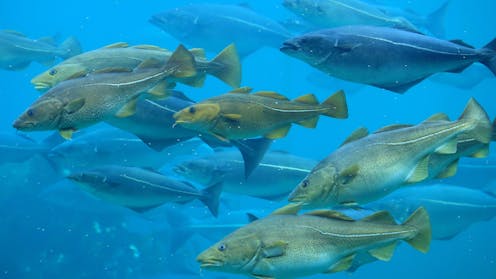
Atlantic cod and pollock andrzej_67/Shutterstock, CC BY-NC-ND

Climate change is reshaping fish habitats. Some fish are winners, others are losing out.

Fish already face plenty of pressure from overfishing and pollution. Climate change is adding more: warmer waters and shifting food supplies cause what’s known as a predator-prey mismatch. This means prey and predator are not in the same place at the same time, which not only affects our diets but also fishing industries and ocean health more widely.

As the ocean heats up, fish try to stay in the conditions they’re best suited to. Some species will move, but others can’t relocate so easily – for example, if they need to live in a certain habitat at a particular life-stage, such as in kelp that offers shelter for breeding. So, depending on the species and location, climate change could create new fishing opportunities for some countries, and big losses for others.

Fisheries managers typically group fish into “stocks”. These are populations of the same species in a defined region, often based on national borders. But those human-made boundaries don’t matter to fish. As they shift in response to climate change, managing their populations will become more complex and will need to be flexible and responsive.

By 2050, waters around the UK are expected to warm by about 1°C if we follow a “moderate” emissions path. If emissions continue to rise unchecked, the increase could reach 2-3°C by the end of the century. At the same time, the food that fish eat (such as tiny plankton) could drop by as much as 30%.

My team and I used advanced computer modelling to predict how 17 key commercial species such as mackerel, cod, plaice, tuna and sardines might respond to two future climate scenarios. Our results show a patchwork of winners and losers.

ball of sardines.
Sardines.
Martin Prochazkacz/Shutterstock, CC BY-NC-ND

Take sardines and mackerel. These species live in the upper ocean and are sensitive to temperature. Both are expected to shift northward. This shift would be around 20 miles in the North Sea and up to 80 miles in the north-east Atlantic by 2100 under a moderate emissions scenario.

While sardines may thrive, with a 10% boost in Atlantic abundance, our model suggests mackerel could decline by 10% in the Atlantic and 20% in the North Sea. Consequently, the type and quantity of fish available will change.

Warm-water species like bluefin tuna may benefit within UK waters. Tuna is projected to shift only slightly (by approximately 4 miles) under the same scenario, but their abundance could rise by 10%, potentially bringing more of them into UK waters. That’s good news for fishers already targeting this high-value catch, or those looking to change their main target species.

But bottom-dwelling species like cod and saithe (pollock) face a tougher future. These fish prefer colder, deeper waters and have fewer options to escape warming seas due to depth limitations.

In the North Sea, they’re projected to shift southward by around 9 miles because that’s where the remaining cool, deep water is. But this won’t be enough to avoid a significant decline in their numbers: their populations are expected to drop by 10-15% under a moderate scenario by 2050.


Do the seasons feel increasingly weird to you? You’re not alone. Climate change is distorting nature’s calendar, causing plants to flower early and animals to emerge at the wrong time.

This article is part of a series, Wild Seasons, on how the seasons are changing and what they may eventually look like.


Changing tides

And if climate change accelerates, the declines become far more severe. By the end of the century, North Sea cod and saithe could fall by 30-40%, according to our model. Mackerel abundance could drop by 25% in the Atlantic, while sardines might see only a modest 5% increase, despite moving 155 miles northward. Bluefin tuna could see a 40% rise in numbers, shifting 27 miles further north.

We’ve estimated how species will shift their locations – but computer models can’t account for every interaction between marine species. For example, predator-prey relationships can be crucial in shaping an ecosystem. Bluefin tuna is a predatory species which hunts shoals of herring, mackerel and other fish.

Other predators including dolphins, seals and seabirds will all be influenced differently by climate change, with varying responses in terms of eating their favourite fish snacks.

Our projections also don’t account for continued fishing pressure – for example, 24% of north-east Atlantic fisheries are not sustainable. Further overfishing will compound the strain on fish populations.

To keep stocks healthy, fishery managers need to start planning for these changes now by factoring climate into their stock assessments. Industry regulators will also need to reconsider who gets to fish where as species move.

Fish don’t carry passports. Their shifting habitats will challenge longstanding fishing agreements and quotas. Nations that once relied on particular species might lose access. Others may find new, unexpected opportunities.

With smart management and serious action on climate, seafood can thrive in the future. Doing nothing now isn’t an option — unless we want familiar favourites like cod to vanish from our plates.


Don’t have time to read about climate change as much as you’d like?

Get a weekly roundup in your inbox instead. Every Wednesday, The Conversation’s environment editor writes Imagine, a short email that goes a little deeper into just one climate issue. Join the 45,000+ readers who’ve subscribed so far.


The Conversation

Sevrine Sailley receives funding from UKRI and Horizon Europe.

ref. How climate change is making Europe’s fish move to new waters – https://theconversation.com/how-climate-change-is-making-europes-fish-move-to-new-waters-254650

Child eyewitnesses can be unreliable, but new techniques can support them

Source: The Conversation – Canada – By Shaelyn Carr, PhD Student in Psychology, University of Regina

There is often a dramatic scene in crime shows where an eyewitness points to a suspect in a police lineup. This identification looks convincing on television, and it is also convincing in real-world investigations. But here’s the problem: eyewitnesses can often be wrong. Their mistakes are a leading cause of wrongful convictions.

This risk is even greater when the eyewitness is a child. Although children can correctly identify the perpetrator when they are present in the police lineup, they are more likely than adults to identify an innocent person when the perpetrator is not included in the police lineup.

For instance, in 1990, a three-year-old girl was abducted from her Mississippi home. Her body was found two days later in a nearby pond, showing signs of sexual assault and drowning. The only eyewitness to the child’s abduction was her six-year-old sister.

The sister picked a man named Levon Brooks from the police lineup — and this identification sealed his fate. Brooks was sentenced to life in prison. After 16 years behind bars, DNA evidence led to his exoneration.

So, how do these mistakes happen? One major issue is that we have no way of knowing whether an eyewitness picked the right person. There is no built-in system to tell us whether the identification that is made is correct or not.

As forensic psychology researchers, we have spent several years studying how to improve the reliability of eyewitness evidence, especially when children are involved.

We have developed and tested a promising new police lineup technique that reflects how likely it is that the person identified by a child eyewitness is guilty.

Why eyewitnesses make mistakes

Crime shows are the most watched TV genre in the world. They often portray police investigations as fast, clean and fool-proof. This has led to what experts call the “CSI effect,” a phenomenon where people expect real investigations to include clear-cut evidence, like perfect DNA matches or eyewitness accounts.

But real-life investigations are rarely this tidy.

In courtrooms and police investigations, eyewitness testimony is often treated as one of the most powerful pieces of evidence.

Jurors and judges tend to believe someone who states with confidence: “That’s the person I saw.” Identifying someone seen for only a brief moment, often during a stressful or emotional moment, is incredibly challenging. And despite their best intentions, eyewitnesses can mistakenly identify an innocent suspect from a police lineup.

a hand holding an evidence bag
Crime shows offer a convenient and sanitized version of forensic investigations.
(Nik/Unsplash), CC BY

Child eyewitnesses

These mistaken identifications are especially likely when the eyewitness is a child, particularly those under the age of eight. Even more concerning is that an eyewitness’s confidence in reporting is often mistaken as a sign of their accuracy. However, children are documented to be overconfident in their identification decisions.

This means their mistaken identifications can appear particularly convincing in court, where there is no way to actually verify whether the person identified in the lineup is actually the perpetrator.

As a potential solution, we developed the multiple independent lineup (MIL) technique to gauge the reliability of a child eyewitness’s identification by providing insight into the likelihood of guilt.

Assessing child eyewitness identifications

The MIL technique involves showing the child eyewitness multiple, separate lineups, each focused on a different feature of the suspect. For example, one set of lineups might feature different faces, another of different bodies, a third would play different voices, and so on.

Instead of relying on a single identification, the child eyewitness makes several independent identification decisions across these lineups.

By having child eyewitnesses make multiple independent identification decisions, we can use the number of lineups in which they identify the suspect as a reflection of how likely it is that the suspect is guilty. The idea behind this technique is that the more lineups that a suspect is selected in, the more likely it is that the person that the child has selected is guilty.

In our study, we asked children aged six to 11 to make identification decisions for a person they had met the previous day. The children were shown six independent lineups, which included a face, body, shirt, voice and two object lineups. Regardless of age, if a child identified the suspect only in the face lineup, this strongly suggested the suspect was innocent.

a boy on a scooter stands next to a police officer pointing
Children are documented to be overconfident in their identification decisions.
(Kindel Media/Pexels), CC BY

When children identified the suspect in the face lineup and any two other lineups, there was a 96 per cent chance that the suspect was guilty. And if the suspect was identified in the face lineup and three or more lineups, the chance of guilt rose to 100 per cent.

We conducted this research in several different situations with more than 900 children, including repeated exposure to an innocent suspect. Overwhelmingly, all the results suggest we can use the number of lineups in which a suspect is identified to reflect the likelihood that they are guilty.

Reducing wrongful convictions

These results are encouraging. But more research is needed to test the parameters of the MIL technique and whether it should be used with real eyewitnesses. In the future, we plan to continue exploring ways to better reflect the likely accuracy of child eyewitness identifications.

Child eyewitnesses can be accurate eyewitnesses, but they are also more likely than adults to identify innocent suspects from police lineups. That’s why it is essential to develop a technique that can help investigators distinguish between accurate and mistaken identifications. Doing so might help reduce the number of wrongful convictions.

It is also important to educate the public about the limits of eyewitness memory, especially with children, to reduce the influence of the CSI effect, and encourage more informed expectations in the courtrooms.

The Conversation

Shaelyn Carr receives funding from the Social Sciences and Humanities Research Council of Canada (SSHRC) and the University of Regina.

Kaila C. Bruer receives research funding from Luther College, the University of Regina, Social Sciences and Humanities Research Council of Canada (SSHRC), and the Natural Sciences and Engineering Research Council of Canada (NSERC).

ref. Child eyewitnesses can be unreliable, but new techniques can support them – https://theconversation.com/child-eyewitnesses-can-be-unreliable-but-new-techniques-can-support-them-257764