As National Park System visitor numbers hit record highs, here’s how visitors can adapt for a better experience

Source: The Conversation – USA (2) – By Allie McCreary, Assistant Professor of Parks and Recreation, Auburn University
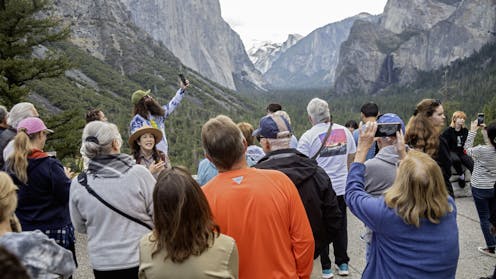
Crowds often form at popular places in U.S. national parks, like the entrance to Yosemite Valley in California. Jim West/UCG/Universal Images Group via Getty Images)

Visiting America’s national parks is a treasured public pastime. The wetlands of Congaree in South Carolina, the depths of the Grand Canyon in Arizona and the vistas provided by peaks in Yosemite in California are iconic American experiences for residents and for people who travel from other countries to vacation.

There are lots of benefits of visiting national parks, or parks in general. Spending time in nature is good for people’s mental health. Moving in the outdoors – walking, biking, running, paddling – benefits people’s physical health. Sharing experiences with others helps build social connections with old friends or newfound ones. Visitors also learn about ecosystems and cultural history, developing their own relationship to the landscape.

National park visitation is growing, with record-high visitor numbers in 2024 across the entire 398-property system, as well as at the 63 formally designated national parks. And there has been a general trend of people gravitating to Instagram-popular parks, and even specific spots within popular parks.

Reductions in federal funding and staffing at national parks means visitors may see longer lines to enter parks or popular locations within them, fewer visitor services and educational programs, and fewer rangers to ask for advice or assistance.

As scholars of parks and recreation, we know crowded conditions make it harder to enjoy national parks. But we also know that if you plan carefully, you can create a great experience.

What gets in the way of fun?

In general, research identifies three main barriers to recreational fun.

One is how confident people are in their own physical abilities and how safe they feel in the park. For example, someone may want to go kayaking in Florida’s Everglades or Minnesota’s Voyageurs National Park but doesn’t know where to rent a boat, where to put it in the water, or which stretches of water are best for a beginner.

Another is the presence – or absence – of people to enjoy the space with, or family obligations or relationships that might preclude them from an activity. Culture can also play a role in where people visit and what they do there. For instance, a national park may be a source of escape where individuals seek autonomy and independence. For others, a national park visit can be a focal point for social gatherings and a time to reconnect with family and friends.

A large group of people stand in a line looking at an area where steam is rising from the ground.
For many years, Old Faithful in Yellowstone National Park in Wyoming has drawn massive crowds to witness the natural phenomenon of an erupting geyser.
Joe Sohm/Visions of America/Universal Images Group via Getty Images

There are also external factors, like how much free time a person has for recreation and how easy it is to get to a national park from their home. Someone may live a short drive from a national park but not visit simply because they do not know what they can do there, or how to have a positive experience.

More recently, research has also identified environmental barriers outside visitors’ control. Thin ice or lack of snow prevents many winter activities in Colorado’s Rocky Mountain National Park and Maine’s Acadia National Park, just as excessive heat can decrease the attractiveness of summer recreation in parks like the Everglades or California’s Death Valley. Extreme weather events such as inland flooding and coastal hurricanes can block roads and damage parks, posing both physical and logistical barriers in parks such as Cape Lookout National Seashore in North Carolina.

Wildlife habits also affect visitors, who may flock to an area where they can see wildlife. Or they may avoid – or may be restricted from – areas with dangerous wildlife.

Adapting to find enjoyment anyway

If the national park places you want to visit seem too busy, think about your options. You could change your travel dates to a less busy time. People who want to visit Yellowstone in Wyoming, Idaho and Montana could find campground reservations unavailable for some weeks but plentiful for other weeks – or they could choose to stay in a local hotel instead of camping.

You could try a different park or activity. For example, an angler who typically visits Great Smoky Mountains National Park in North Carolina and Tennessee to fish for trout may find that some streams are warming and no longer support this activity. They might go fishing elsewhere or stay in the Smokies and bird-watch, hike or read by a stream.

If you really want to visit during a busy time, you can also simply change your expectations, like not expecting Old Faithful to be a quiet place with only a few visitors.

Park personnel often seek to manage visitor numbers to protect the park from too much traffic, but also so everyone who visits can enjoy the experience. For example, implementing reservations for Acadia’s Cadillac Mountain at sunrise means at least some people get a relatively serene experience, as opposed to lots of people having an overcrowded experience.

Park staff also design park amenities so roads, boat ramps, trailheads and parking are in useful locations that work well for the number of visitors expected. And park workers provide advance information for visitors, in brochures and on websites, charge fees for entry, conduct tours or other programs at the location – and ticket or arrest people who are in places or doing activities they’re not supposed to – to reduce the effects of overcrowding.

A group of people stand on a mountaintop looking at a bay with islands as the sun rises over the horizon.
The National Park Service requires advance reservations to see the sunrise atop Cadillac Mountain in Acadia National Park in Maine.
AP Photo/Robert F. Bukaty

Planning is key

We have found that the most effective way for people to have the park experiences they want, and enjoy them as much as they hope, is to plan ahead.

Planning can include looking at parks’ websites for ideas and considering the best time to visit – both for your own schedule and what you want to do.

Understanding the weather and climate of the region will help you determine what to bring, but also what conditions will be like if you’re hiking, paddling or driving.

Advance preparation definitely includes finding lodging – and making reservations whenever possible. If reservations aren’t possible, see whether you can increase your chances of finding a place to sleep when you arrive by choosing lesser-visited parts of the park or identifying nearby backup options, such as state parks and private campgrounds, that might provide a break from the crowds.

And you can make sure you’re prepared for whatever you’re going to do, whether it’s getting used to walking long distances before a big hike or learning about local flora and fauna before you arrive.

Thinking ahead also means you can share your itinerary with friends and family – either as invitations to join you or for periodic safety check-ins.

It is also helpful to talk to park personnel. Park staff will have great insights into hidden gems that might be slightly off the beaten path but away from the crowds and able to provide a unique visitor experience. Rangers or other staff can help you determine the best choices for settings and activities that match your abilities, interests, time and needs.

And finally, don’t forget to be considerate of other visitors. Have patience in the parking lots, visitor centers, trailheads and lookout points. Others in the park seek the same awe-inspiring views and heart-pumping recreation activities as you. In many cases, it’s not the number of people but the attitudes and behaviors of those people that can make a place either feel crowded or like a community of like-minded outdoor enthusiasts.

The Conversation

Allie McCreary receives funding from the Public Lands Service Coalition and New Frontiers in Research Fund (Government of Canada).

Michael Brunson is affiliated with The Appalachian Trail Conservancy and the National Association for Interpretation .

ref. As National Park System visitor numbers hit record highs, here’s how visitors can adapt for a better experience – https://theconversation.com/as-national-park-system-visitor-numbers-hit-record-highs-heres-how-visitors-can-adapt-for-a-better-experience-262407

American capitalism is being remade by state power

Source: The Conversation – USA (2) – By H. Sami Karaca, Professor of Business Analytics, Questrom School of Business, Boston University

Is the Trump administration trying to reshape American capitalism? Recent moves by Washington, such as taking a 10% share of semiconductor maker Intel, point to a shift in that direction. For decades, Washington has supported free-market capitalism. Today, the government appears to be supporting a new direction – state-directed capitalism.

As a professor at the Questrom School of Business who studies different economic systems, I find this reversal striking. My research is supported by the Ravi K. Mehrotra Institute, which is trying to understand how business, markets and society interact. My previous research – finding, for example, that U.S. news coverage of capitalism was far more negative in the 1940s than it is now – suggests capitalism isn’t in retreat but is rather evolving.

In what direction is the Trump administration pushing it?

Types of capitalism

While many people bandy around the term “capitalism,” it actually comes in many different forms. The most basic definition of capitalism is when the means of production – such as factories, farms and offices – are owned by private individuals.

Capitalism is driven by profit. Some of the earliest descriptions of the profit motive that drives the whole system come from Adam Smith. As he wrote in 1776, “It is not from the benevolence of the butcher, the brewer or the baker that we expect our dinner, but from their regard to their own interest.”

Who gets the profits and who controls the means of production determine the specific forms of capitalism. While there are many types, I want to focus on three of the most important.

Free-market capitalism, also called laissez-faire capitalism, is when the government takes a hands-off approach to the economy. The U.S. after the Civil War is a good example of free-market capitalism. During the late 1800s, the federal government imposed few regulations on businesses.

State-guided capitalism is when the government chooses industries or companies to support. Favored sectors are given money and face looser regulations than nonfavored sectors. China today is an example of state-guided capitalism, where the state provides support for industries such as shipbuilding, steel and AI.

Oligarchic capitalism is when a very small part of the population owns key industries and controls the economy. Russia today is an example of this type of capitalism.

Each form of capitalism has its strengths and weaknesses. For example, free-market capitalism provides the most incentives to grow the economy, but the lack of rules often leads businesses to run roughshod over consumers. U.S. historians describe the late 1800s as the era of robber barons.

State-guided capitalism can dramatically boost the output of favored industries. However, if the government invests in the wrong industries, huge amounts of money can be wasted propping up dying firms.

Oligarchic capitalism can rapidly invest in new areas and shift resources, but the profits enrich only a tiny elite.

Recent changes

The U.S. currently appears to be operating under a hybrid model of capitalism, blending free-market principles with elements of state capitalism.

One of the most recent changes is the Trump administration’s decision to take a 10% stake in Intel. Congress passed the multibillion-dollar CHIPS and Science Act in 2022 to bolster U.S. computer chipmakers. Intel is slated to receive US$11.1 billion in grants from the program and other government funding. The current administration has converted that public support into a 10% ownership of the semiconductor maker.

Intel isn’t alone. The government has recently become a shareholder in other companies it views as strategically important – a trend that seems likely to continue and possibly result in the creation of a “sovereign wealth fund.” In July 2025, the Department of Defense agreed to buy $400 million of convertible preferred stock in MP Materials. MP Materials is the only U.S. rare-earth minerals mine with integrated production capacity. The company said the Department of Defense would be positioned to become its largest shareholder.

The government is also requiring a share of revenue from large computer chip manufacturers. Nvidia and AMD will have to remit 15% of revenue from certain chip sales to China as a condition for export licenses.

Why the US change is important

The CHIPS and Science Act has already funneled billions into U.S. semiconductor manufacturing via grants, tax credits and R&D support. MP Materials and Intel could serve as pilot models for further strategic intervention. However, the U.S. government spends trillions each year, and the amounts invested in American industries and companies represent only a small percentage of total spending.

While the CHIPS and Science Act was passed in 2022 under the Biden administration, the implementation relied on traditional tools of industrial policy such as grants, tax credits and milestone-based funding. In contrast, the Trump administration has converted these grants into equity arrangements, with officials stating the government should get a return on its investment.

This shift from an incentive-based approach to a direct ownership model represents one of the most fascinating experiments in modern American capitalism. The real question is what happens if – or when – this strategy expands. The government could become more involved in energy, biotech and AI, or any place where markets show signs of lagging or supply chains are geopolitically fragile.

The U.S. isn’t rejecting capitalism but recalibrating its boundaries. The next few years will show exactly how Washington’s interventions will reshape U.S. capitalism.

The Conversation

H. Sami Karaca receives funding from the Ravi K. Mehrotra Institute.

ref. American capitalism is being remade by state power – https://theconversation.com/american-capitalism-is-being-remade-by-state-power-263881

We’ve been tracking the number of Americans who identify as transgender – soon, there will be no reliable way to measure them

Source: The Conversation – USA (2) – By Jody L. Herman, Senior Scholar of Public Policy at the Williams Institute, University of California, Los Angeles

Researchers have traditionally had a difficult time tracking the number of Americans who identify as transgender.

But over the past decade, our work has become easier, largely thanks to federal data. In 2014, for the first time, the federal government included a question on transgender identity in the Centers for Disease Control and Prevention’s Behavior Risk Factor Surveillance System. It subsequently added gender identity questions to other surveys, like the National Crime Victimization Survey. Since 2016, we’ve been able to use federal datasets to estimate the number of people who identify as transgender at the national and state levels.

Our recently published analysis suggests that 2.1 million U.S. adults identify as transgender. In our prior study, published in 2022, we found that 1.3 million U.S. adults identified this way. In our new report, we also found that 724,000 youth age 13 to 17 identified as transgender.

To arrive at these estimates, we drew from the CDC’s Youth Risk Behavior Survey and Behavior Risk Factor Surveillance System, which provide the most comprehensive data on the gender identity of Americans. Though these datasets are the best available to make these estimates, we lack state-level data in certain cases. So we used a statistical technique called multilevel regression and poststratification to fill in those gaps.

This information is important. It allows policymakers, educators, judges, the media and others to understand the size and characteristics of this population, as well as who will be affected by public policies, such as nondiscrimination laws that aim to protect transgender people or bans on transgender people’s use of public bathrooms. The U.S. Supreme Court has even cited our estimates in decisions that impact transgender people.

But our work is about to become a lot harder, if not impossible.

At the directive of the Trump administration, federal surveys will no longer collect data about gender identity. Questions that aim to identify transgender respondents will be removed, while binary sex questions with only “male” or “female” response options will remain.

Though data sources are being erased, the transgender population will not be. And yet it will likely be at least a decade before we can publish updated figures on the estimated number of people living in the U.S. who identify as transgender.

Age group differences persist

But first, let’s highlight what the new report reveals.

One consistent pattern across our reports from 2017, 2022 and 2025 is that younger people are more likely to identify as transgender than older adults.

In our new report, however, we were able to see significant differences among different age groups of adults for the first time.

Those 18 to 34 are now significantly more likely to identify as transgender than those 65 and older, and those 18 to 24 are significantly more likely to identify as transgender than those 35 to 64.

When considering population changes over time, our estimates for the youngest age group – those 13 to 17 – have utilized different data sources and methodologies. Therefore, we can’t make direct comparisons across years. Among adults overall, we haven’t seen any significant changes over the past decade or so.

However, our estimate for the youngest adult age group – those 18 to 24 – is now significantly higher. Using 2014-15 data, we estimated that 0.7% of U.S. adults aged 18 to 24, or 205,850 people, identified as transgender. The data we analyzed from 2021-23 puts that figure at 2.7%, or 827,200 Americans.

This uptick doesn’t support the idea that there is a sudden, rapid growth in the transgender youth population, however. In fact, our findings are consistent with the idea that acceptance of gender and sexuality is generational and shaped by your social surroundings.

These generational differences likely impact whether someone will disclose their transgender identity on a survey. Our own analysis of CDC data found that young people are more likely than older adults to answer questions about their gender identity. This also means the real percentage of older adults who identify as transgender may be higher.

As younger transgender people grow older, we expect observed differences between age groups to diminish over time.

Disappearing data sources

More research is required to determine the reasons for this growth among young adults identifying as transgender. Yet future efforts to better identify and understand transgender population trends will likely be delayed for the foreseeable future.

Should gender identity data collection be reinstituted under a new presidential administration in 2029, federal surveys will need to be updated and administered. Once data collection resumes, three years of new data are required before we can update our estimates.

While we and other researchers will look to other data sources in the interim, there’s nothing that can fully replace federal data sources.

In the end, no amount of data suppression can erase the reality on the ground. Millions of transgender youth and adults will continue to live in communities across the U.S. – in cities and small towns, in red states and blue states. They’ll continue to enroll in schools, get hired for jobs and navigate health care systems.

This population will not vanish simply because some of those in power wish it would. But in order for us to continue to shed light on the characteristics and needs of the transgender population – whether it’s assessing impacts of gender-affirming care bans to changes in U.S. passport gender marker policies – we’ll need these questions to be added back on federal surveys.

The Conversation

Andrew Ryan Flores receives funding from The Williams Institute at the UCLA School of Law to conduct research that fulfills the Institute’s mission of independent research. He is affiliated with American University, the Public Religion Research Institute, and the World Bank.

Jody L. Herman does not work for, consult, own shares in or receive funding from any company or organization that would benefit from this article, and has disclosed no relevant affiliations beyond their academic appointment.

ref. We’ve been tracking the number of Americans who identify as transgender – soon, there will be no reliable way to measure them – https://theconversation.com/weve-been-tracking-the-number-of-americans-who-identify-as-transgender-soon-there-will-be-no-reliable-way-to-measure-them-263599

Pregnant women face tough choices about medication use due to lack of safety data − here’s why medical research cuts will make it worse

Source: The Conversation – USA (3) – By Almut Winterstein, Distinguished Professor of Pharmaceutical Outcomes & Policy, University of Florida

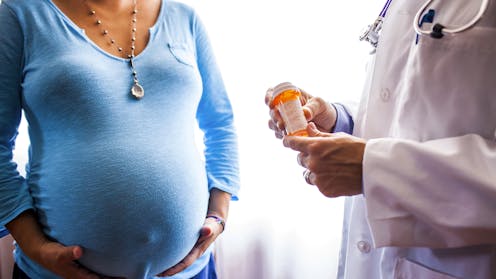
More than 9 in 10 women take at least one medication during pregnancy, yet data on prescription drugs’ effects on the fetus are sparse. Adam Hester/Tetra images via Getty Images

A panel convened in July 2025 by the Food and Drug Administration sparked controversy by casting doubt about the safety of commonly used antidepressants during pregnancy. But it also raised the broader issue of how little is known about the safety of many medications used in pregnancy, considering the implications for both mother and child – and how understudied this topic is.

In the U.S., the average pregnant patient takes four prescription medications, and more than 9 in 10 patients take at least one. But most drugs lack conclusive evidence about their safety during pregnancy. About 1 in 5 women uses a medication during pregnancy that has some preliminary evidence that it could cause harm but for which conclusive studies are missing.

We are researchers in maternal and child health who evaluate the safety of medications during pregnancy. In our work, we identify medications that might raise the risk for birth defects or pregnancy loss and compare the safety of different treatments.

While progress has been slow, researchers and federal agencies have built monitoring systems, databases and tools to accelerate our understanding of medication safety. However, these efforts are now at risk due to ongoing cuts to medical research funding – and with them, so is the knowledge base for determining whether sticking with a therapy or discontinuing it offers the safest choice for both mother and child.

How pregnant women got sidelined

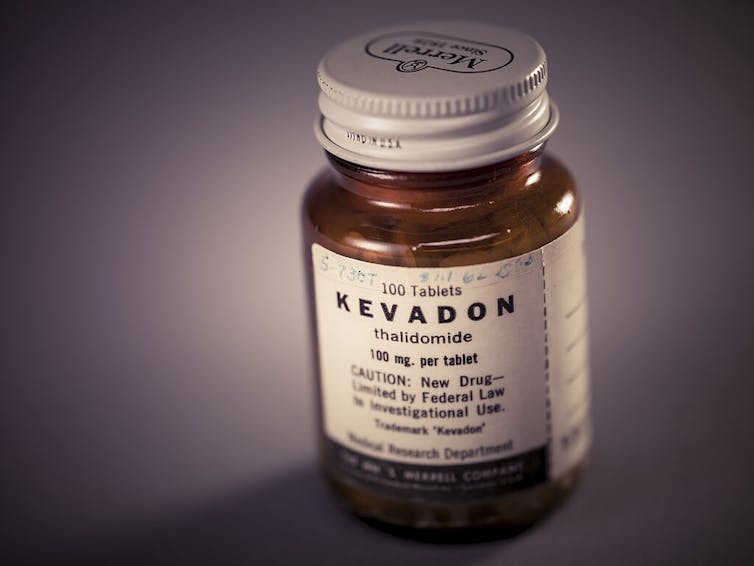
One big reason why so little is known about the effects of medications during pregnancy stretches back more than half a century. In the 1960s, a drug called thalidomide that was widely prescribed to treat morning sickness in pregnant women caused severe birth defects in over 10,000 children around the world. In response, in 1977 the FDA recommended excluding women of childbearing age from participating in early stage clinical trials testing new medications.

A pill bottle with a label carrying the drug's brand name, Kevadon, and its generic name, thalidomide.
Thalidomide, sold under several brand names including Kevadon, was used in many countries to treat morning sickness, though the Food and Drug Administration never approved it for that purpose in the United States.
U.S. Food and Drug Administration

Ethically, there is long-standing tension between concerns about fetal harm and maternal needs. Legal liability and added complexities when conducting studies in pregnant women serve as additional barriers for drug manufacturers.

When drugs are approved, studies about whether they might cause birth defects are typically done only in animals, and they often don’t translate well to humans. So when a new medication comes on the market, nothing is known about how it affects people during pregnancy. Even if animal studies or the medication’s mode of action raised concerns, the drug can still be approved, though companies may be required to conduct studies observing its effects when taken during pregnancy.

Cause and effect

Of 290 drugs approved by the FDA between 2010 and 2019, 90% contain no human data on the risks or benefits for pregnant patients. About 80% of some 1,800 medications in a national database called TERIS, which summarizes evidence on medications’ risks during pregnancy, lack or have limited evidence about the risks for birth defects. Researchers have estimated that it takes 27 years to pin down whether a medication is safe to use in pregnancy.

As a result, many pregnant women stop treating their chronic diseases. In a U.S. study published in 2023, over one-third of women stopped taking a medication during pregnancy, and 36.5% of those did so without advice from a health care provider. More than half cited concerns about birth or developmental defects as the reason.

Yet uncontrolled chronic disease comes with its own toll on both the mother’s and the baby’s health. For example, some medications used to treat seizures are known to cause birth defects, but stopping them may increase seizures, which themselves raise the risk of fetal death.

Women with severe or recurrent depression who abruptly stop their antidepressants risk their depression returning, which is in turn associated with increased risk of substance use, inadequate prenatal care and other negative effects on fetal development. Stopping the use of medications
for treating high blood pressure also causes adverse effects – specifically, a greater risk of pregnancy-related high blood pressure that can cause organ damage, called preeclampsia; a condition called placental abruption, when the placenta detaches from the wall of the uterus too early; preterm birth; and fetal growth restriction. An online resource called Mother to Baby, created by a network of experts on birth defects, provides an excellent summary of the available data on medication safety during pregnancy.

The FDA in some cases requires drug companies to establish registries to track the outcomes of pregnancies exposed to certain medications. These registries can be useful, but they have shortcomings. For example, recruiting pregnant patients into them takes time and considerable effort, resulting in small sample sizes that may not capture rare birth defects. Also, registries typically follow a single medication and rarely include comparisons to alternative treatment approaches – or to no treatment.

What’s more, following the 2022 Dobbs v. Jackson Supreme Court decision overturning the constitutional right to abortion, women might be reluctant to add their names to a pregnancy registry or to provide data on prenatal detection of birth defects due to concerns about privacy and legal risks.

Decades of underfunding

In 2019, a task force established by the 21st Century Cures Act identified a major gap in knowledge about drug safety and effectiveness in pregnant and lactating women and recommended a boost in funding to fill it.

However, little has changed. A 2025 review by the National Academies of Sciences, Engineering and Medicine pointed out that research funding for women’s health topics has remained flat over the past decade, while the overall budget of the National Institutes of Health has steadily increased. The review recommended doubling the NIH funding allocated for such research, but this seems unlikely in light of the recent proposals to cut the overall NIH budget by 40%.

The National Institute of Child Health and Human Development funds the bulk of research on the safety of medications during pregnancy across federal agencies, although the institute has an appreciably smaller budget than most of its sister institutes such as the National Cancer Institute. Grants awarded are typically broad and take four to five years to complete, but they allow the more comprehensive assessments that are needed to support informed decisions considering outcomes for mother and child. For example, NIH-funded researchers have established a clear link between autism and prenatal use of valproate, a potent teratogen used to treat epilepsy and several mental health disorders.

The Centers for Disease Control and Prevention as well as the FDA have also funded specific pregnancy-related research. For example, following the COVID-19 epidemic, the CDC renewed its funding for studies that help expedite pregnancy safety studies for treatments that might be used for newly emerging infections. In response to emerging concerns about a substance called gadolinium, which is often used during MRI procedures, the FDA funded our own work on a study of almost 6,000 pregnant women, which found no elevated risk.

For healthy pregnancies, more research is critical

These efforts have laid a crucial foundation for evaluating medication safety and effectiveness during pregnancy. But keeping pace with the release of new medications and new ways they are used, as well as addressing the backlog of missing evidence for medications that were approved in the past millennium, remain a challenge.

Recent terminations of NIH-funded studies have focused on topics presumably relating to diversity, equity and inclusion. But research on safe and healthy pregnancies and on maternal health – for example, on the safety of COVID-19 vaccines during breastfeeding – has been affected as well.

The NIH has scaled back new grant awards by nearly US$5 billion since the beginning of 2025, and the odds for receiving NIH funding have plummeted. Proposed sweeping budget cuts for the CDC and FDA leave their role in supporting research on healthy pregnancies similarly uncertain.

In our view, removing or reducing ongoing investments in healthy pregnancies poses a danger to much-needed efforts to reduce excessive rates of stillbirths as well as infant and maternal deaths.

The Conversation

Almut Winterstein consults on medication safety issues to Merck, Syneos, Lykos and Novo Nordisk. She receives funding for pregnancy-related research from NIH, CDC, FDA, and the Gates Foundation.

Sonja Rasmussen receives funding from Harmony Biosciences, Axsome Therapeutics, Biohaven (acquired by Pfizer), Lundbeck, Novo Nordisk, and Myovant Sciences to serve on pregnancy registry scientific advisory committees. She also receives or has received funding from NIH, CDC, and FDA.

ref. Pregnant women face tough choices about medication use due to lack of safety data − here’s why medical research cuts will make it worse – https://theconversation.com/pregnant-women-face-tough-choices-about-medication-use-due-to-lack-of-safety-data-heres-why-medical-research-cuts-will-make-it-worse-260783

When surgical tools don’t fit: how gender bias in design puts female surgeons at risk

Source: The Conversation – UK – By Gráinne Tyrrell, Doctoral Researcher in Biomedical Device Design, School of Architecture and Product Design, University of Limerick

S Eirich/Shutterstock

“If you can’t handle this, you’ll never keep up with your peers.”

That’s what a young vascular surgeon in training reported hearing from a senior colleague during interviews for our study, after she needed two hands to hold a medical device her male peers could operate with one.

Another cardiologist, more than ten years into her career, must regularly hand over part of a procedure because she doesn’t have the grip strength for a particular surgical task. The problem isn’t her skill, focus, or stamina – it’s that the tools were never built for her hands.

Stories like these are sometimes misused to reinforce outdated stereotypes: that women aren’t physically capable of performing certain high-skill roles like heart surgery.

In reality, female surgeons are often working harder – and sometimes risking their own health – to achieve the same results as their male colleagues. The barrier isn’t ability. It’s the long shadow of gender bias in both medicine and design.

Our research team is working to change that. We’ve developed a test rig equipped with sensors and 3D scanning technology to capture precise measurements of grip strength and hand size across a variety of simulated surgical scenarios. So far, we’ve gathered data from 42 cardiologists and vascular surgeons worldwide.

The study involved 24 female vascular surgeons from across the globe, the response was overwhelmingly positive. Many participants shared personal accounts of the strain they endure, describing aching wrists and fear of long-term joint issues – all exacerbated by tools that demand more strength than their bodies can comfortably deliver. For some, the motivation to take part was personal: they want the next generation of surgeons to face fewer barriers.

This data is already being used to inform the design of new cardiovascular devices. Handles are being resized to fit a wider range of hand shapes, and the grip strength required to operate them is being lowered. The aim is simple but critical: reduce injury risk, improve surgeon wellbeing and extend careers.

Built for men, used by everyone

The operating theatre is full of devices designed to fit the “average” surgeon and, for decades, that average has been male. Handle diameters tend to be optimised for larger hands, while buttons and sliders are calibrated to force ranges comfortable for male grip strength.

In vascular and cardiac surgery, precision and power go hand in hand. These procedures require surgeons to maintain awkward positions for extended periods, often in high-pressure situations. Even without design flaws, the risk of muscle and joint strain is significant. But when a handle is too big to grip securely, or a control requires more force than a surgeon can comfortably exert, that risk increases sharply and disproportionately for women.

The impact isn’t only on the surgeon. Fatigue, strain and discomfort can affect concentration and precision, which in turn can influence patient outcomes. In a profession where the margin for error is vanishingly small, ergonomics aren’t a luxury — they’re a safety requirement.

When engineers develop new biomedical devices, they rely on design guidance: technical data on ideal handle sizes, optimal button placement and the comfortable grip force a surgeon should be able to apply.

But these guidelines are built on incomplete data. Historically, women were excluded from research studies, meaning their measurements never made it into the datasets that shape design.

Even when designers look for female-specific data, there either are no data or the sample sizes in studies are very small. One common shortcut is to scale down men’s measurements by 30-40% to “estimate” women’s — a crude approach that doesn’t reflect real-world variation in hand anatomy or grip strength.

The problem isn’t just gender. Ethnicity and age matter too. People of colour have long been underrepresented in health research, compounding the challenges faced by women of colour. The differences can be striking: the average grip strength of a European man is about 49kg, while for an Asian woman it’s around 24kg — yet both may be expected to perform identical surgical tasks with identical tools.

A changing profession needs changing tools

In 2025, women made up the majority of doctors in the UK for the first time — a milestone that signals a profession in transition. But the tools they will use are still rooted in outdated assumptions. The lack of inclusive design isn’t just an equity problem. It’s a practical one, affecting career longevity, workplace safety and ultimately patient care.

Calls to improve ergonomics for women in surgery have been growing louder. Professional organisations, research groups and individual surgeons have all pushed for better-fitting, more adaptable tools. Yet progress has been slow, partly because gathering detailed ergonomic data has traditionally been time-consuming and expensive.

New technologies are changing that. With 3D scanning, advanced sensors, and more sophisticated modelling, it’s now possible to collect accurate, relevant data far more efficiently. This opens the door to design that accounts for the diversity of the surgical workforce — not just in gender and ethnicity, but in body size, strength and working style.

By integrating grip strength and hand size data from a truly representative group of surgeons, designers can move away from the “one-size-fits-all” mindset that has dominated for decades. Lowering the physical demands of surgical tools won’t just help women – it will improve comfort for all surgeons, from smaller men to older practitioners whose grip strength changes over time.

Heart surgery techniques have advanced rapidly in recent years, driving remarkable innovation and design. However, while technological progress has surged ahead, the data guiding these designs remains outdated and exclusionary, oftentimes leaving women in surgery an afterthought.

As today’s operating rooms evolve in diversity, we’re advocating for surgical instrument design to evolve with it – ensuring inclusivity is built into every medical device.

The Conversation

Gráinne Tyrrell’s PhD research is funded by Research Ireland and Medtronic under the Enterprise Partnership Scheme. The authors acknowledge Donna Curley for her contributions to the research as an industry mentor.

Eoin White and Leonard O Sullivan do not work for, consult, own shares in or receive funding from any company or organisation that would benefit from this article, and have disclosed no relevant affiliations beyond their academic appointment.

ref. When surgical tools don’t fit: how gender bias in design puts female surgeons at risk – https://theconversation.com/when-surgical-tools-dont-fit-how-gender-bias-in-design-puts-female-surgeons-at-risk-262743

Être grand-parent à distance : ce qui se perd lorsque les familles sont séparées et comment combler le fossé

Source: The Conversation – in French – By Sulette Ferreira, Transnational Family Specialist and Researcher, University of Johannesburg

Devenir grand-parent est souvent perçu comme une expérience profondément intime et concrète : tenir un nouveau-né dans ses bras, partager ses premiers sourires, assister à ses premiers pas hésitants. Cette expérience repose traditionnellement sur la présence physique et sur des visites spontanées.

Pour de nombreux grands-parents dont les enfants ont émigré, ces moments précieux ne se vivent plus avec le contact physique. Ils se déroulent désormais à travers des écrans et sont soumis aux contraintes des décalages horaires. Ils sont aussi marqués par un sentiment d’éloignement.

C’est le cas en Afrique du Sud, un pays où l’émigration est en hausse, en particulier parmi les jeunes familles. Plus d’un million de Sud-Africains vivent aujourd’hui à l’étranger. Cela a des effets profonds et durables et touche plusieurs générations.

Dans une étude récente, j’ai exploré l’impact de l’émigration mondiale sur les relations entre les grands-parents sud-africains et leurs petits-enfants nés à l’étranger. J’ai examiné ce que signifie endosser le rôle de grand-parent à distance, souvent pour la première fois, et comment l’absence de proximité physique remodèle les relations entre générations.

J’ai publié divers articles sur la migration et les relations entre générations dans les familles qui vivent entre deux pays. Je dirige également un cabinet privé qui se concentre sur les défis émotionnels liés à l’émigration.

Dans le cadre de ma thèse de doctorat, j’ai mené des entretiens approfondis avec 24 parents sud-africains dont les enfants adultes avaient émigré. Ce projet a jeté les bases de mon programme de recherche plus large sur les effets émotionnels de la migration. Cet article de recherche est basé sur les expériences de 44 participants.

Pour ces grands-parents, l’émigration représente plus qu’une simple séparation géographique. Le rythme familier de la vie avec leurs petits-enfants, des visites spontanées aux fêtes communes, est bouleversé. Il en résulte un sentiment de perte profond et permanent, non seulement lié à l’absence des interactions quotidiennes avec leurs petits-enfants, mais aussi à la disparition progressive d’un rôle cher à leur cœur, autrefois ancré dans la présence physique et les liens quotidiens.

Les résultats montrent que l’absence de proximité physique engendre de profondes barrières émotionnelles, particulièrement durant les premières années de la vie d’un petit-enfant, qui sont déterminantes. Pourtant, malgré la distance, les grands-parents parviennent à trouver des moyens créatifs et significatifs de rester émotionnellement présents.

Dans les familles transnationales, les grands-parents jouent un rôle de gardiens de la continuité culturelle et de soutien émotionnel, mais aussi d’acteurs actifs qui redéfinissent ce que signifie être grand-parent dans le contexte de la migration mondiale.

Témoignages des grands-parents

La question centrale de ma recherche était de savoir comment la distance avait redéfini le rôle de certains grands-parents dans les familles sud-africaines. Elle a également examiné comment les grands-parents s’adaptent et négocient leurs rôles à différentes étapes de la vie de leurs petits-enfants.

Les critères de sélection étaient les suivants : être citoyen sud-africain, parler couramment l’anglais, vivre en Afrique du Sud, être parent d’un ou plusieurs enfants adultes ayant émigré et vécu à l’étranger pendant au moins un an, et être de toute origine ethnique, culture, sexe, statut socio-économique et âgé de 50 à 80 ans.

J’ai complété les entretiens par des enquêtes qualitatives distribuées via mon groupe de soutien en ligne.

Les grands-parents ont fait état de diverses difficultés, telles que la perte de leur implication quotidienne, la charge émotionnelle liée à la séparation et les difficultés de communication numérique qui nécessitaient des stratégies d’adaptation continues pour maintenir le lien.

L’étude montre que la distance n’affaiblit pas nécessairement les liens intergénérationnels, mais oblige les grands-parents à redéfinir leur présence.

Mes recherches ont clairement montré que le lieu de naissance est un facteur déterminant dans la formation du lien entre grands-parents et
petits-enfants.

Les grands-parents d’enfants nés en Afrique du Sud et qui déménagent ensuite dans un autre pays sont souvent impliqués dès le début. Ils aident à prendre soin des enfants au quotidien, célèbrent les étapes importantes et profitent de visites spontanées. Ces interactions quotidiennes nourrissent des liens émotionnels forts.
Comme l’a confié Annelise, une participante :

Quand votre petit-enfant naît ici, vous le connaissez depuis sa naissance, vous le voyez tous les jours, vous partagez tout.

Lorsque ces petits-enfants émigrent, la rupture peut être profonde. Les grands-parents perdent non seulement un contact régulier, mais aussi leur rôle de soutiens actifs.

Lorsque les petits-enfants naissent à l’étranger, un parcours émotionnel différent se dessine. La joie et l’excitation sont souvent tempérées par la nostalgie et la tristesse.

La réalité des relations transfrontalières oblige les grands-parents à redéfinir leur rôle. Pour de nombreuses familles, la grossesse renforce les liens entre les générations, en particulier entre les mères et les filles. Cette phase est généralement marquée par des rituels communs, qui façonnent l’identité de mère et de grand-parent. Ces rituels favorisent les liens affectifs et le sentiment d’appartenance.

Mais pour les grands-parents qui sont séparés, ces moments peuvent être remplacés par des captures d’écran et des messages vocaux, rendant les étapes importantes lointaines et intangibles.

Cette absence précoce peut être ressentie comme une exclusion de la grand-parentalité elle-même, comme si ce rôle était refusé avant même d’avoir commencé. Ce phénomène correspond étroitement au concept de « perte ambiguë » développé par la psychologue américaine Pauline Boss, qui désigne un deuil sans fin.

Malgré cela, de nombreux grands-parents restent activement impliqués. Certains deviennent ce que les sociologues américaines Judith Treas et Shampa Mazumdar appellent des « seniors en mouvement » : ils se déplacent plus, et organisent leur vie autour de billets d’avion, des renouvellements de visa et des séjours temporaires consacrés aux petits-enfants.

Mais les défis sont de taille.

Rester proche malgré la distance

Il est difficile de maintenir une relation au-delà des frontières.

Deux stratégies clés sont ressorties de mes recherches : la communication virtuelle et les visites transnationales.

Toutes les personnes que j’ai interrogées utilisaient largement la technologie : lecture hebdomadaire d’histoires sur Zoom, enregistrements de lectures ou « colis » remplis de lettres, de recettes ou d’objets artisanaux.

Les visites physiques étaient limitées par un ensemble d’obstacles financiers, logistiques, émotionnels et relationnels.

Les vols sont tout simplement trop chers, et avec ma santé, je ne pense pas pouvoir supporter le voyage. Cela me brise le cœur, mais ce n’est tout simplement pas possible. Je ne pense pas que je le reverrai un jour.

J’ai également constaté que le rôle des parents était essentiel. En partageant des photos, en prenant l’initiative d’appeler et en faisant en sorte que les grands-parents soient présents dans les conversations quotidiennes, certains parents ont contribué à renforcer les liens affectifs.

Ma fille et mon gendre sont tous deux très doués pour m’envoyer régulièrement des photos et des vidéos… Ils savent tous les deux à quel point mes deux petits-enfants me manquent, alors ils me tiennent au courant… Ils m’appellent également chaque semaine et encouragent les enfants à se concentrer sur nos appels.

Conclusions

Le rôle des grands-parents transnationaux remet en question le modèle traditionnel d’implication active. Il nécessite de repenser la notion de présence.

Mes recherches montrent que les grands-parents y parviennent grâce à leur créativité, leur souplesse émotionnelle et leur amour indéfectible. Ils sont en train de forger un nouveau type de grands-parents à travers les continents, où les liens transcendent la distance.

The Conversation

Sulette Ferreira est chercheuse à l’université de Johannesburg.

ref. Être grand-parent à distance : ce qui se perd lorsque les familles sont séparées et comment combler le fossé – https://theconversation.com/etre-grand-parent-a-distance-ce-qui-se-perd-lorsque-les-familles-sont-separees-et-comment-combler-le-fosse-263875

Why the magic mushroom anti-ageing claims are overblown

Source: The Conversation – UK – By Mikael Palner, Associate Professor, Neurobiology, University of Southern Denmark

How can we live longer? The eternal question, and one that scientists have long been trying to answer.

We know that diet, exercise, and genes play a big role in the ageing process and how long each of us might be alive for. We also know that certain drugs or medicines have the potential to increase our lifespan. Though there’s still a lot we don’t know about what makes one person live to 102 and another only make it to 72.

But one new study seems to suggest that psilocybin, found in so-called “magic mushrooms”, could have potential as a longevity drug. In a new study, researchers found that psilocin – the compound your body makes after ingesting psilocybin – helped human cells live longer in the lab and that psilocybin boosted survival rates in older mice.

The study has led to numerous headlines claiming that magic mushrooms could be the secret to living longer. But as someone who’s been studying psychedelic compounds like psilocybin, for the past 20 years – with a specific focus on human and rodent psychedelic dosing – I think the claims have been massively overhyped and that applying the findings to humans is deeply problematic.

A closer look

The research took place in two stages. The first part was a simple experiment, where researchers treated human lung cells with psilocin. They found that over time, these cells grew slightly faster than the cells that didn’t receive psilocin and survived longer – on average, the psilocybin treated cells lived 28.5% longer.

They also examined markers of cellular health, specifically looking at how many cells showed signs of ageing, and found fewer age-related markers in the psilocin-treated cells.

Next, the researchers carried out a study using older mice that received either a placebo or psilocybin. The mice receiving the psilocybin were first given a dose of five milligrams for every kilogram they weighed to help them acclimatise to the drug, then for the following nine months, they received a higher dose of 15 milligrams (for every kilogram) once a month. The mice were then monitored until they died.

Psilocybin was found to extend the lifespan in mice, with treated animals beginning to die around 25 months of age compared with 21 months for those who didn’t receive it.

After ten months of treatment, 80% of the psilocybin group was still alive, while only half of the untreated mice had survived. The treated mice also appeared younger, with healthier fur showing less greying and more new growth, suggesting the drug may have slowed some aspects of ageing.

High doses, high risk

So why is this happening? Well, scientists already know that psilocin activates many serotonin receptors in the brain and acts as an antioxidant (a substance that can prevent or slow down cell damage), both of which promote cell survival and growth. So this could be playing a part.

Another thing to consider is that one of these brain receptors – the 2C receptor – which isn’t linked to psychedelic effects, controls appetite and metabolism.

And here’s the thing: we already know that eating less can reliably extend lifespan. So, at the very least, the study should have told us how much the mice were eating and how their weight changed throughout the study – just to make sure their longer lives weren’t simply because they were eating less.

But here’s the real issue, a dose of 15 milligrams per kilogram in mice reflects an extremely high psychedelic dose. Administering this dose monthly for up to nine months has never been done in human studies. In fact, rodents exposed to repeated high doses of psychedelics have, in previous studies, displayed signs of schizophrenia.

It´s worth adding that in terms of animal to human dosage, it’s not quite as straightforward as adjusting for weight, as smaller animals have a faster heart rate and metabolise drugs faster. But even taking these things into account, the amount of psilocybin given to the mice would be equal to a human taking more than seven grams of mushrooms. For context, that’s more than double what’s considered a strong or “heroic” dose for most people – a typical dose is between one and three grams.

Magic mushrooms.
The human equivalent would have been a ‘heroic’ dose of psilocybin.
Fotema/Shutterstock.com

Psychedelic boom

So where does this leave us? Well, psilocybin and other psychedelics have received a lot of attention over the past few years, particularly so in the world of mental health research, with numerous studies (and individuals) reporting positive effects.

Some US states, like Oregon and Colorado have eased access to recreational psilocybin and other countries like Germany, the Czech Republic and Australia have bypassed regulatory systems altogether to provide psilocybin in cases of severe depression.

This is concerning though, because when misused or taken in very high doses, magic mushrooms, or psilocybin, can sometimes lead to long-term psychological issues, such as persistent anxiety and paranoia and in rare cases, visual disturbances can continue long after the drug has worn off. Indeed, during the 1960s and 1970s, some studies were carried out on patients in dubious settings and with high doses that led to bad experiences.

These effects are more common in those with underlying mental health vulnerabilities or people who use psychedelics irresponsibly, and are less likely to occur when used within the safety of a therapeutic or clinical setting. But still, we need to be very careful about how we have such conversations and report psychedelic research, given that there is the potential for misuse and dangerous side effects.

This article was commissioned by Videnskab.dk as part of a partnership collaboration with The Conversation. You can read the Danish version of this article, here.

The Conversation

Mikael Palner consults to BrandarisTx and owns shares in Compass Pathways. He receives funding from The Danish Free Research Foundation / Lundbeck Foundation / Novo Nordisk Foundation.

ref. Why the magic mushroom anti-ageing claims are overblown – https://theconversation.com/why-the-magic-mushroom-anti-ageing-claims-are-overblown-263928

Pollution, un mot qui permet aussi d’opérer un classement social

Source: The Conversation – France (in French) – By Camille Dormoy, Docteure en sociologie, spécialiste des politiques publiques de gestion des déchets/économie circulaire, Université de Picardie Jules Verne (UPJV)

Le mot « pollution n’est pas neutre, loin de là. Emprunté, d’un point de vue étymologique, au vocabulaire du sacré pour désigner ce qui « souille » ce dernier, le mot n’est pas aussi factuel qu’il y paraît. Ce qu’on considère comme polluant n’est pas seulement défini par des critères scientifiques ou sanitaires, mais également de règles sociales implicites. Il revêt aujourd’hui des enjeux de pouvoir : qui peut désigner la pollution peut non seulement désigner ce qui pollue, mais également « qui » pollue.


Tout le monde s’accorde sur l’objectif : réduire la pollution. Au-delà des discussions sur la ou les meilleures façons d’agir, dès qu’il s’agit de désigner ce qui pollue et, surtout, qui pollue, les désaccords éclatent. Loin d’être purement techniques, les conflits liés à la pollution révèlent des fractures sociales, culturelles et politiques.

Il faut dire que l’étymologie du mot n’est pas neutre : pollution est emprunté du latin pollutio, qui signifie « souillure », « profanation », est lui-même dérivé de polluere, (souiller). Un terme qui souligne la distinction entre le sacré et ce qui ne l’est pas, c’est-à-dire le profane.

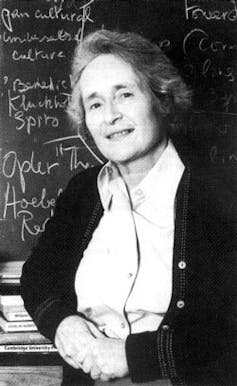
Mary Douglas, en 2002.
United Nations International School (UNIS).

L’anthropologue britannique Mary Douglas (1921-2007) s’est intéressée à cette distinction entre acceptable et inacceptable, profane et sacrée qui donne à la pollution sa portée symbolique et politique, dans une perspective anthropologique.

Son ouvrage de 1966 De la souillure. Essai sur les notions de pollution et de tabou (dans son titre original, Purity and Danger: An Analysis of Concepts of Pollution and Taboo) est devenu un classique. Elle y explique que la pollution n’est pas seulement un effet secondaire de nos modes de vie, mais aussi une question de pouvoir.

Quand « sale » veut surtout dire « hors norme »

Mary Douglas propose une idée aussi simple que subversive : la saleté, c’est, d’abord, ce qui dérange l’ordre des choses. Autrement dit, ce qu’on considère comme polluant n’est pas toujours seulement défini par des critères scientifiques ou sanitaires.

Cela dépend avant tout des règles implicites de chaque société, de ce qu’elle juge acceptable ou non. Ce n’est pas l’objet ou le geste en soi qui est « sale », c’est le fait qu’il transgresse des règles, des normes. Dès qu’il ne rentre pas dans la bonne case, il devient suspect, dérangeant, indésirable.

Un sac plastique dans un marché bio choque, mais dans un supermarché discount, il passe inaperçu. Des poules dans un jardin de campagne symbolisent l’autonomie alimentaire, mais dans une résidence de centre-ville, elles deviennent un problème de voisinage. Dans une piscine municipale, le chlore est associé à la propreté et à la désinfection, mais dans l’eau du robinet, il est soupçonné d’empoisonner ou de perturber le goût, en particulier dans les milieux qui valorisent l’eau « pure » (de source, filtrée, ou encore osmosée).

À travers ces quelques exemples, on voit que ce n’est pas tant la matière qui fait la pollution, mais le contexte dans lequel elle survient. Ce qu’on considère comme propre, polluant ou sain ne dépend pas seulement de critères scientifiques, mais aussi de normes sociales souvent invisibles.

La pollution ne désigne donc pas seulement une nuisance matérielle, elle fonctionne comme un révélateur de frontières symboliques : ce qui dérange, ce qui transgresse, ce qui fait éclater les catégories établies et qui menace un ordre social donné.


À lire aussi :
L’écologie, un problème de riches ? L’histoire environnementale nous dit plutôt le contraire


La pollution, un langage du pouvoir pour désigner les bonnes façons d’habiter ?

Transposée à nos sociétés industrielles, la grille d’analyse de Mary Douglas permet de relire autrement les conflits écologiques contemporains. Ceux-ci ne se limitent pas à des désaccords techniques ou à des niveaux de risque mesurables : ils renvoient à des visions du monde incompatibles, à des manières d’habiter et de cohabiter dans un espace donné.

Ce que l’on nomme polluant – ou sale, ou incivique – n’est que rarement et seulement une substance ou un comportement objectivement problématique. C’est une manière de désigner ce qui dérange un ordre établi et, surtout, ceux qui sont perçus comme menaçant cet ordre.

À Étouvie, un quartier populaire d’Amiens, mon enquête ethnographique a mis en lumière la façon dont certaines pratiques ordinaires, comme la mécanique de rue (c’est-à-dire, le fait de réparer son véhicule directement dans l’espace public), le nourrissage d’animaux ou les dépôts d’encombrants sont régulièrement qualifiées de polluantes, souvent bien au-delà de leur impact réel.

Ces gestes, chargés d’un jugement moral, deviennent les marqueurs d’un écart à la norme. Dans le contexte local que j’ai étudié, ce sont souvent les habitants de longue date – ceux qui se perçoivent comme « autochtones » – qui en sont les auteurs désignés. Progressivement, ils se trouvent disqualifiés au profit d’un groupe de nouveaux arrivants ou d’habitants extérieurs, plus actifs dans les instances locales et plus légitimes aux yeux des institutions.

Ces plaintes sur la « propreté du quartier » ne relèvent pas de simples préférences esthétiques ou de velléités écologiques : elles sont productrices de pouvoir. En désignant ce qui est sale ou polluant, certains habitants acquièrent une légitimité pour s’imposer dans les comités de quartier, dans les associations ou dans les réunions publiques.

C’est là que se négocient non seulement les règles de propreté, les formes de contrôle local, mais aussi les grandes lignes des politiques et des aménagements à venir. Nommer ce qui est polluant devient ainsi une manière de gouverner les manières d’habiter.

Un phénomène urbain, mais aussi rural

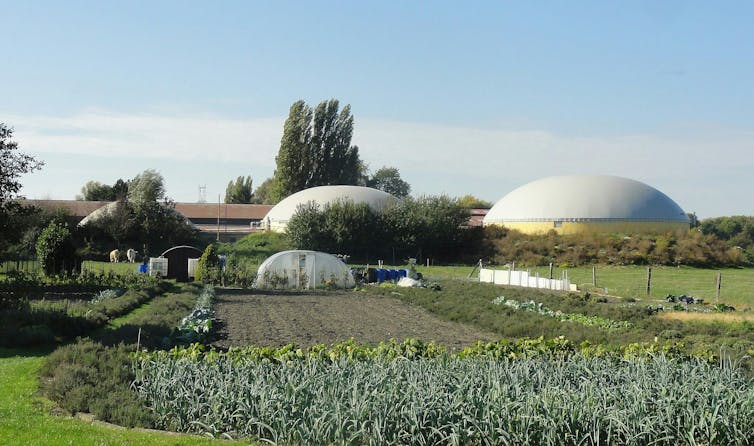
Ces mécanismes ne se jouent pas uniquement en milieu urbain ou populaire. Dans certaines communes rurales, j’ai observé un phénomène comparable entre des habitants récemment installés en périphérie et des agriculteurs en place. Ces néoruraux, souvent porteurs d’une sensibilité écologique affirmée, rejettent fortement les pratiques agricoles dites conventionnelles, et s’opposent, par exemple, à l’implantation d’un méthaniseur.

Pour disqualifier leurs voisins agriculteurs, ils mobilisent un vocabulaire de la pollution, non pas en invoquant la contamination des sols ou de l’air, mais en désignant une forme de trouble paysager et sensoriel : « les tracteurs qui pourrissent la rue », « les traînées de boue sur les trottoirs » ou « les buttes de terre jusque devant les portails ». Ce n’est pas tant la matière elle-même qui pose ici problème, mais ce qu’elle incarne : une manière de produire, de circuler, d’habiter le territoire, perçue comme incompatible avec l’idée que ces habitants se font du « bon » rural.

Unité de méthanisation agricole.
Jérémy-Günther-Heinz Jähnick, CC BY-NC-SA

Dans les deux cas, urbain et rural, la pollution devient un levier de classement social et spatial. Elle ne désigne pas uniquement ce qui salit, mais ce qui déborde d’un cadre attendu, d’un paysage imaginé, d’une norme implicite. Elle permet de dire : ceci est hors de sa place. Et donc, ceci n’a pas lieu d’être ici.


À lire aussi :
Au nom du paysage ? Éoliennes, méthaniseurs… pourquoi les projets renouvelables divisent


Penser la pollution autrement : ne pas moraliser mais politiser

Associée à l’industrie, aux fumées, aux déchets toxiques, la pollution a longtemps désigné des atteintes massives à l’environnement, portées par des acteurs identifiables.

Mais, depuis quelques années, le mot a glissé vers d’autres usages. Aujourd’hui, il s’applique aussi à des comportements individuels et à des gestes jugés « inappropriés » : mal trier ses déchets, entreposer des objets sur le trottoir, laisser des traces de son passage. Ce glissement n’est pas anodin.

Comme l’a montré Mary Douglas, la pollution n’est jamais seulement une affaire de substances. C’est un langage : une manière de dire ce qui dérange, ce qui déborde, ce qui n’est pas « à sa place ». Elle sert à dessiner les frontières entre le propre et le sale, le légitime et l’inacceptable.

Dans les quartiers populaires comme dans les villages périurbains, les conflits autour des déchets ou des pratiques agricoles ne parlent pas seulement de propreté ou d’écologie. Ils révèlent des luttes pour définir ce qui est normal, pour dire qui a sa place et qui ne l’a pas.

Cette lecture éclaire aussi un paradoxe : certaines pollutions massives, chimiques ou diffuses, restent invisibles dans l’espace public. Trop silencieuses, trop abstraites, elles échappent aux radars symboliques. On repère un sac plastique mal trié. On perçoit l’odeur d’un méthaniseur. Mais un perturbateur endocrinien ou un seuil dépassé (par exemple la pollution aux oxydes d’azote, aux particules fines, à l’ozone…) en termes de qualité de l’air passent davantage inaperçus, non parce qu’ils sont inoffensifs – ce qu’ils ne sont pas –, mais parce qu’ils ne troublent pas immédiatement notre ordre sensible.

Ainsi, les conflits écologiques ne portent pas seulement sur des substances à éliminer ou sur des comportements à corriger. Ils engagent une lutte plus fondamentale, celle du pouvoir de nommer ce qui dérange, de désigner ce qui – objets, gestes ou populations – est « hors de place ». Car celui qui définit la saleté définit aussi l’ordre. La vraie question est ainsi de savoir qui détient ce pouvoir.

The Conversation

Camille Dormoy ne travaille pas, ne conseille pas, ne possède pas de parts, ne reçoit pas de fonds d’une organisation qui pourrait tirer profit de cet article, et n’a déclaré aucune autre affiliation que son organisme de recherche.

ref. Pollution, un mot qui permet aussi d’opérer un classement social – https://theconversation.com/pollution-un-mot-qui-permet-aussi-doperer-un-classement-social-262724

FDA approves updated COVID-19 vaccines with new restrictions, potentially limiting access for healthy children

Source: The Conversation – USA (3) – By David Higgins, Assistant Professor of Pediatrics, University of Colorado Anschutz Medical Campus

The FDA’s move comes as, for the first time in decades, guidance from federal health authorities and pediatric experts diverge. PeopleImages/iStock via Getty Images Plus

Guidance around COVID-19 vaccines has once again shifted after the Food and Drug Administration on Aug. 27, 2025, approved updated shots for the fall season, but for a more limited group than in prior seasons.

These changes, announced on X by Secretary of Health and Human Services Robert F. Kennedy Jr., raise new questions about eligibility and availability of COVID-19 vaccines for children.

As a pediatrician and researcher who studies vaccine delivery and health policy, I foresee these changes adding to the confusion facing parents and providers, just as this summer’s COVID-19 wave continues to rise.

How does the new guidance differ from before?

The FDA revoked the emergency use authorizations for COVID‑19 vaccines, a status used during public health emergencies that made it possible to provisionally approve vaccines swiftly during the pandemic. The agency also limited their approval to only people at higher risk of serious illness from COVID-19 infection, such as those over 65 or with underlying health conditions. But for children it is even more complicated.

The FDA approved two updated mRNA-based vaccines – Moderna’s vaccine for children 6 months and older and Pfizer’s vaccine – both targeting a new variant called LP.8.1, for children 5 years and older. The agency also approved an updated version of the the protein-based Novavax vaccine targeting a strain of the virus called JN.1 for children 12 years and older. But all three approvals are limited to children at higher risk of serious illness from COVID-19 infection.

Previously, all children 6 months and older were able to receive either the Pfizer and Moderna vaccines, with the Novavax vaccine available for anyone 12 years and older. These changes mean it may be significantly more difficult for infants and young children to get vaccinated, even though they remain at higher risk for complications from COVID-19 compared with the general population.

The decision comes as, for the first time in decades, guidance from federal health authorities and pediatric experts diverge. The Centers for Disease Control and Prevention no longer routinely recommends COVID-19 vaccines for healthy children ages 6 months to 17 years. The decision to take this approach bypassed the CDC’s normal independent review panel, creating concerns about credibility.

In contrast, the American Academy of Pediatrics recently issued its own guidance based on its review of the evidence. The AAP recommends that all children 6 months to 23 months old and children 2 to 18 years old at higher risk receive vaccines. They also emphasize that COVID-19 vaccines should be available for all children whose parents want them.

The FDA’s new guidance on vaccines may make it difficult for families to obtain vaccines for healthy children.

The AAP’s review of the evidence showed COVID-19 remains a serious risk for young children and kids with certain high-risk conditions. It also found that children are still being hospitalized and dying at rates similar to those with other illnesses for which vaccines are routinely recommended, such as influenza. And an independent expert group called the Vaccine Integrity Project confirmed that no new safety concerns have emerged relating to COVID-19 vaccines and that the vaccines remain effective.

How might access to COVID-19 vaccines for kids change?

Despite young children remaining particularly vulnerable, changes to FDA approval and conflicting recommendations will mean access to vaccines could be challenging.

Children under 5 years of age can now only receive Moderna’s vaccine. Providers who had planned to use Pfizer’s vaccine need to quickly pivot, and Moderna will need to fill supply gaps. Also, providers may not be able to use any Pfizer vaccine stock they still hold now that the emergency use authorizations is no longer in effect. Families who already face barriers to vaccination, such as those who live in rural areas or who lack health insurance, may be especially affected by these new limitations.

If providers give healthy children a COVID-19 vaccine, they would be doing this “off-label,” meaning different than what the FDA label says. This practice is legal and common, with an estimated 1 in 5 medications prescribed off-label. However, while physicians can give vaccines off-label, in many states, pharmacists and other non-physicians may not be able to do so for any age.

Even if it is legal, some providers may be hesitant to give COVID-19 vaccines off-label. After the AAP released its own recommendations, Kennedy warned that vaccine recommendations that diverge from the CDC’s official list are not protected from liability, though legal experts argue that this is misleading.

The AAP published a list of high-risk health conditions or characteristics to guide parents and providers in deciding whether a child should receive the vaccine.

At the federal level, the only current list is on the CDC website and is not specifically related to COVID-19 vaccine recommendations. For example, it includes pregnancy, even though federal health leaders have previously stated the vaccines would no longer be recommended in pregnancy. In contrast, the American College of Obstetricians and Gynecologists strongly recommends updated COVID-19 vaccination during pregnancy, when planning pregnancy, in the postpartum period and while lactating, noting benefits for both patients and their newborns.

What might happen next?

Unfortunately, the confusion may deepen as the CDC’s recommendations, including who is at high risk, may be revised after an upcoming meeting of the Advisory Committee on Immunization Practices, a panel of independent experts that advises the agency.

In June 2025, in an unprecedented move, Kennedy disbanded the entire committee and hand-picked new members. The new committee has yet to weigh in on COVID-19 vaccines for children. The chair of the COVID-19 vaccine work group, which will make recommendations to all committee members, is led by an outspoken critic of COVID-19 vaccines who does not have a biomedical degree or medical experience. Also, on Aug. 27, 2025, federal officials attempted to oust the CDC’s director just a few weeks after she was confirmed, and multiple top officials resigned.

The bottom line is that with these FDA changes, fewer vulnerable children may end up vaccinated against COVID-19 because of supply constraints, parental confusion or provider uncertainty. The best thing a family can do is talk with their pediatrician about what options remain and what is best for their child.

The Conversation

David Higgins volunteers as Vice President of the Colorado Chapter of the American Academy of Pediatrics and as a board member of Immunize Colorado. He was not involved in the development or publication of the American Academy of Pediatrics’ immunization guidelines. The views and opinions expressed in this article are solely his own and do not represent those of the American Academy of Pediatrics.

ref. FDA approves updated COVID-19 vaccines with new restrictions, potentially limiting access for healthy children – https://theconversation.com/fda-approves-updated-covid-19-vaccines-with-new-restrictions-potentially-limiting-access-for-healthy-children-264098

See Earth’s seasons in all their complexity in a new animated map

Source: The Conversation – Global Perspectives – By Drew Terasaki Hart, Ecologist, CSIRO

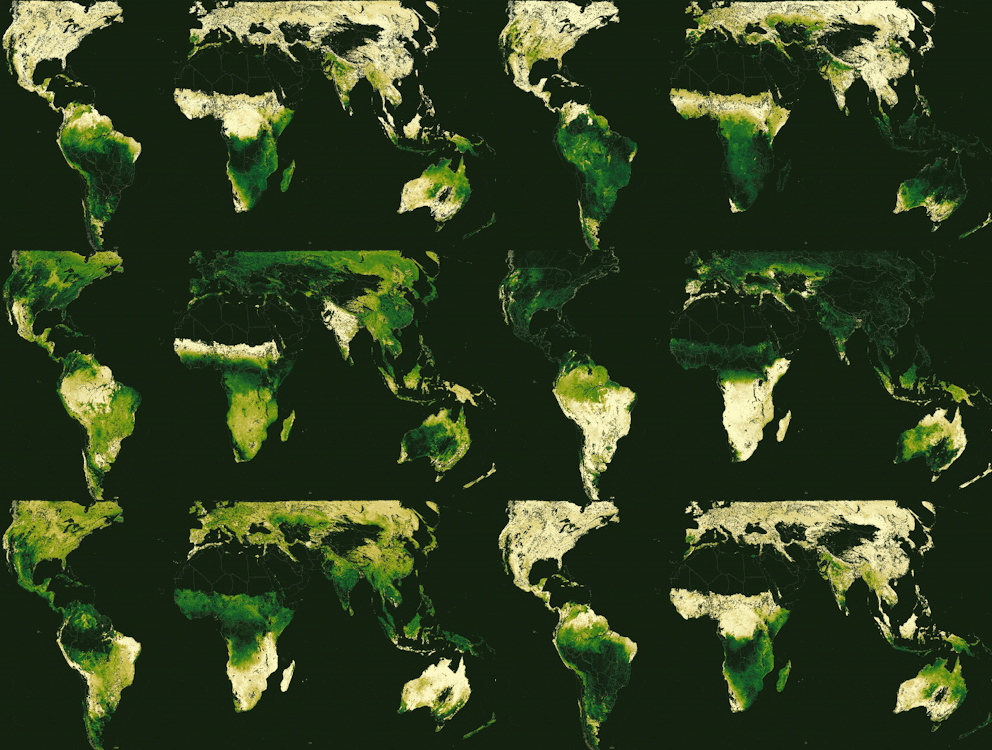
The average seasonal growth cycles of Earth’s land-based ecosystems, estimated from 20 years of satellite imagery. Terasaki Hart et al. / Nature

The annual clock of the seasons – winter, spring, summer, autumn – is often taken as a given. But our new study in Nature, using a new approach for observing seasonal growth cycles from satellites, shows that this notion is far too simple.

We present an unprecedented and intimate portrait of the seasonal cycles of Earth’s land-based ecosystems. This reveals “hotspots” of seasonal asynchrony around the world – regions where the timing of seasonal cycles can be out of sync between nearby locations.

We then show these differences in timing can have surprising ecological, evolutionary, and even economic consequences.

Watching the seasons from space

The seasons set the rhythm of life. Living things, including humans, adjust the timing of their annual activities to exploit resources and conditions that fluctuate through the year.

The study of this timing, known as “phenology”, is an age-old form of human observation of nature. But today, we can also watch phenology from space.

With decades-long archives of satellite imagery, we can use computing to better understand seasonal cycles of plant growth. However, methods for doing this are often based on the assumption of simple seasonal cycles and distinct growing seasons.

This works well in much of Europe, North America and other high-latitude places with strong winters. However, this method can struggle in the tropics and in arid regions. Here, satellite-based estimates of plant growth can vary subtly throughout the year, without clear-cut growing seasons.

Surprising patterns

By applying a new analysis to 20 years of satellite imagery, we made a better map of the timing of plant growth cycles around the globe. Alongside expected patterns, such as delayed spring at higher latitudes and altitudes, we saw more surprising ones too.

Average seasonal cycles of plant growth around the world. Each pixel varies from its minimum (tan) to its maximum (dark green) throughout the year.

One surprising pattern happens across Earth’s five Mediterranean climate regions, where winters are mild and wet and summers are hot and dry. These include California, Chile, South Africa, southern Australia, and the Mediterranean itself.

These regions all share a “double peak” seasonal pattern, previously documented in California, because forest growth cycles tend to peak roughly two months later than other ecosystems. They also show stark differences in the timing of plant growth from their neighbouring drylands, where summer precipitation is more common.

Spotting hotspots

This complex mix of seasonal activity patterns explains one major finding of our work: the Mediterranean climates and their neighbouring drylands are hotspots of out-of-sync seasonal activity. In other words, they are regions where the seasonal cycles of nearby places can have dramatically different timing.

Consider, for example, the marked difference between Phoenix, Arizona (which has similar amounts of winter and summer rainfall) and Tucson only 160 km away (where most rainfall comes from the summer monsoon).

Map of the world showing patterns of light and dark
Hotspots of seasonal asynchrony: brighter colours show regions where the timing of seasonal activity varyies a lot over short distances.
Terasaki Hart et al. / Nature

Other global hotspots occur mostly in tropical mountains. The intricate patterns of out-of-sync seasons we observe there may relate to the complex ways in which mountains can influence airflow, dictating local patterns of seasonal rainfall and cloud. These phenomena are still poorly understood, but may be fundamental to the distribution of species in these regions of exceptional biodiversity.

Seasonality and biodiversity

Identifying global regions where seasonal patterns are out of sync was the original motivation for our work. And our finding that they overlap with many of Earth’s biodiversity hotspots – places with large numbers of plant and animal species – may not be a coincidence.

In these regions, because seasonal cycles of plant growth can be out of sync between nearby places, the seasonal availability of resources may be out of sync, too. This would affect the seasonal reproductive cycles of many species, and the ecological and evolutionary consequences could be profound.

One such consequence is that populations with out-of-sync reproductive cycles would be less likely to interbreed. As a result, these populations would be expected to diverge genetically, and perhaps eventually even split into different species.

If this happened to even a small percentage of species at any given time, then over the long haul these regions would produce large amounts of biodiversity.

Back down to Earth

We don’t yet know whether this has really been happening. But our work takes the first steps towards finding out.

We show that, for a wide range of plant and animal species, our satellite-based map predicts stark on-ground differences in the timing of plant flowering and in genetic relatedness between nearby populations.

Our map even predicts the complex geography of coffee harvests in Colombia. Here, coffee farms separated by a day’s drive over the mountains can have reproductive cycles as out of sync as if they were a hemisphere apart.

Understanding seasonal patterns in space and time isn’t just important for evolutionary biology. It is also fundamental to understanding the ecology of animal movement, the consequences of climate change for species and ecosystems, and even the geography of agriculture and other forms of human activity.

Want to know more? You can explore our results in more detail with this interactive online map, which we also include below.

The Conversation

This work was completed under affiliations with the University of California (UC), Berkeley, The Nature Conservancy (TNC), and the Commonwealth Scientific and Industrial Research Organisation (CSIRO). Drew Terasaki Hart received funding for this work from UC Berkeley, the UC Berkeley Center for Latin American Studies, the Organization for Tropical Studies, IdeaWild, and the Bezos Earth Fund (via The Nature Conservancy).

ref. See Earth’s seasons in all their complexity in a new animated map – https://theconversation.com/see-earths-seasons-in-all-their-complexity-in-a-new-animated-map-262935