From intention to impact: 3 ways men in leadership can build equitable workplaces that work for everyone

Source: The Conversation – USA (2) – By Lisa Kaplowitz, Associate Professor & Executive Director, Center for Women in Business, Rutgers University

Many top-performing companies say they are committed to supporting women in the workplace, and there’s reason to believe most men want to be better allies to women as well. They just don’t know how.

We are business professors who recently surveyed more than 400 managers about gender equity. We found that while men and women agree on what gender equity means in principle, they often disagree on what it takes to achieve it. Bridging that gap matters – without it, well-meaning leaders may take actions that do nothing or even backfire.

For our analysis, we interviewed 227 male managers and 209 female managers. When we asked them to name three words they associated with gender equity, they responded with remarkably similar answers.

Word clouds show that both men and women associate the word 'fair' with gender equity.
The top three words men and women associate with gender equity, in green and purple, respectively.
Source: Rutgers Center for Women in Business (CWIB)

But when it came to naming specific actions, clear differences emerged. Male managers were more than twice as likely as their female counterparts to think gender equity requires “extreme” sacrifice. What’s more, men were less likely than women to connect everyday workplace behaviors – such as challenging misogynistic behavior, taking paternity leave and offering a flexible work environment – with advancing equity.

This suggests a problem: If men and women envision the path to equity differently, progress will stall. That’s why it’s important to remember that gender equity isn’t a zero-sum game. Great leadership means building equity into daily practices to create a workplace that works for everyone. Research points to three practical moves leaders can make right now.

Speak up without speaking over

One of the biggest perception gaps has to do with challenging misogynistic behavior at work. Research shows that when men call out bad behavior, it benefits women’s well-being and reduces the likelihood of future incidents.

However, men often weigh the potential social costs before speaking up, which can lead them to not engage or to reinforce gender stereotypes. For example, they may worry about alienating other men or being seen as “too judgmental.”

Clear, shared workplace standards can help. Setting explicit expectations about respectful communication can reduce uncertainty and encourage collaboration. It can also relieve the hidden cognitive burden men may feel about saying the wrong thing. It’s important to avoid creating a “gotcha” mentality and instead use mistakes as growth opportunities.

Establishing team norms that include speaking from one’s own experience and beginning with inquiry instead of scrutiny can help encourage fruitful dialogue. Reminding employees of shared values and encouraging everyone to seek to understand before jumping to conclusions is helpful. When managers hear out employee hesitations and verbally reward inclusive behavior, norms are reinforced.

This is especially important in a climate where high-profile CEOs are promoting narrow, stereotypical visions of leadership – for example, by calling for more “masculine energy” in corporate settings. Even male allies who disagree might be reluctant to challenge such views. But confronting those norms is crucial – not only for women’s benefit, but also men’s.

That’s because rhetoric that reinforces a single idea of masculinity sets unattainable standards for how men should act in the workplace. It also discourages them from expressing stereotypically “feminine” qualities such as empathy, collaboration and emotional intelligence that are also critical for leaders to succeed. When men speak up, it can broaden the definition of leadership for everyone.

Take paternity leave

Another gap we found had to do with how managers viewed men taking paternity leave. The majority of female managers we surveyed considered it vital to gender equity, but many male managers didn’t see the connection.

The evidence, however, is clear: Ample research suggests that paternity leave creates more gender-inclusive environments. Paternity leave normalizes the role of men in sharing the caregiving responsibilities from the start, which not only enables increased female participation in the workforce but has also been shown to reduce sexist attitudes, result in a more equitable division of labor at home, and may even help to increase women’s wages.

One reason men avoid taking paternity leave is fear of social judgment. Research shows that most Americans support paid leave for both mothers and fathers, but that value doesn’t translate to practice – 76% of fathers return to work one week after the birth of their child. It’s not uncommon for men to approve of paternity leave and want to take it themselves, but to hold back because of what they think other men think. This phenomenon – where you base your actions on what you think others think, not what you actually think – is known as pluralistic ignorance.

Facing pressure to be the breadwinner, fear of career setbacks, and stereotypes that say men aren’t as good at caregiving, lead many men to worry that taking paternity leave may not be seen as “manly.” If men were more open about their desire to take paternity leave, it could create a domino effect, reducing the stigma associated with leave for all parents.

Advocate for flexibility

The same principle applies to flexible work environments, which reduce fatigue and burnout for caregivers and noncaregivers alike. Men and women say that flexible work, which includes both flexible hours and flexible work locations, is a top-three employee benefit and critical to a company’s success.

However, men may be concerned about asking for a more flexible schedule, especially for caregiving, because it violates norms about masculinity and the ideal worker. For instance, men may be hesitant to admit they prefer a 7 a.m. to 3 p.m. schedule to handle school pickups, because they may consider that “a woman’s job” or because they think it will make them seem less committed to their job.

The more everyone uses flexible work practices, the less stigmatized they become for all employees, regardless of gender or caregiving status. Encouraging their use can be as simple as providing models to men of high-status workers who incorporate flexible work practices.

For example, the financial services firm Moody’s has been implementing a “PurposeFirst” approach to flexible work, in which teams decide when in-person collaboration is essential and when remote work is more efficient. If one team needs time for more “heads-up” or collaborative work, then they have set times and office space to make sure that happens. Teams that spend more hours on “heads-down work” may not need the office space but might need more virtual check-ins.

This is crucial, since research has shown that the biggest downside of hybrid or remote work is lost opportunities to connect with colleagues. However, hybrid work was not associated with lower performance or increased work-family conflict. This shows that you can achieve the overarching goals of flexibility without also increasing isolation.

Our findings suggest that men and women often share the same values around gender equity but differ in which actions they prioritize. This gap can leave even well-intended leaders unsure of how to act. That’s why it’s important they know that benefits for women don’t come at men’s expense – they create healthier, more sustainable workforces for everyone.

The Conversation

The authors do not work for, consult, own shares in or receive funding from any company or organization that would benefit from this article, and have disclosed no relevant affiliations beyond their academic appointment.

ref. From intention to impact: 3 ways men in leadership can build equitable workplaces that work for everyone – https://theconversation.com/from-intention-to-impact-3-ways-men-in-leadership-can-build-equitable-workplaces-that-work-for-everyone-263403

No credit history? No problem − new research suggests shopping data works as a proxy for creditworthiness

Source: The Conversation – USA (2) – By Joonhyuk Yang, Assistant Professor of Marketing, Mendoza College of Business, University of Notre Dame

No credit history? That need not be a problem for first-time borrowing. AP Photo/Mark Humphrey

If you didn’t know much about someone, would you lend them a whole lot of money? Probably not – and banks are the same way. That’s why people with no credit history often have trouble getting loans. Banks and credit bureaus look at people’s past borrowing to predict how likely they are to repay. And when there’s no history, they tend to assume the worst.

That invisibility leaves many people in limbo. A young worker applying for her first credit card, a shopkeeper who has always relied on cash, or a recent migrant without local records may all be responsible borrowers. But without a file, lenders typically can’t tell the difference between them and someone at truly high risk of defaulting.

As marketing professors studying consumer finance, we wanted to know: Are there alternative sources of information that can help identify safe borrowers? And in our new study in Peru, we found a potential answer in everyday shopping habits.

By linking loyalty-card data from a large retailer with Peru’s national credit registry, we tested whether retail information – what people buy, when they shop, how they pay – could improve lenders’ ability to distinguish safe first-time applicants from risky ones.

The results were striking. Applicants with no credit history saw approval rates of only 16% when lenders judged them solely by traditional indicators such as income. But adding shopping data almost doubled approvals to 31%, and in some cases tripled them to 48% – with only a modest increase in defaults.

Without this retail data, newcomers look almost identical. But with it, safe borrowers emerge from the crowd. We found that people who bought items on sale, shopped at regular times and used noncash payment methods consistently had lower default risk than those who did not.

Why it matters

The World Bank estimates that about 1.4 billion adults remain unbanked, and billions more struggle to access formal credit because they lack sufficient history. In Peru, for example, less than a quarter of adults reported borrowing from a financial institution in the past year.

That gap matters. Access to credit lets households invest in education, launch businesses, buy homes and weather financial shocks. People who can’t borrow from established lenders may turn to informal lenders who charge punishingly high interest rates. Others simply go without, unable to smooth income swings or seize opportunities to improve their lives.

Our findings point to a practical way forward. Retailers and banks could work together to expand access by using shopping data – with consumer consent – as a second look for applicants who would otherwise be rejected. This extra layer of information doesn’t penalize those who already qualify. Instead, it helps identify safe borrowers among the invisible.

In a previous article, we showed that even a grocery basket could help predict repayment. This new research goes further by drawing on a much broader retail footprint that includes clothing, household goods and more. It also tracks what happens to people after rejection, following them into the national credit registry to see whether they eventually borrowed elsewhere and repaid. (Both studies were done with consumers’ consent and used anonymized data.)

What’s next

Our study relied on simulations of scenarios in which lenders incorporated retail data into their scoring models – so the next step is to test these models in practice. A field experiment could compare retail-based scoring with traditional methods head-to-head, tracking not just approvals and defaults but also the longer-term effects on borrowers. Do first-time borrowers who gain access go on to build healthy credit histories? Do they invest in education, businesses or housing, improving their financial well-being over time?

For lenders, too, there are open questions. How should banks adapt their customer service for people brand-new to credit – for example, by starting with lower limits and raising them gradually? For policymakers, the challenge is to ensure that these new tools expand access without compromising privacy or fairness. Strong guardrails and consumer protections will be critical so that broader credit access leads not just to more loans but to fair and sustainable financial inclusion.

The Research Brief is a short take on interesting academic work.

The Conversation

The authors do not work for, consult, own shares in or receive funding from any company or organization that would benefit from this article, and have disclosed no relevant affiliations beyond their academic appointment.

ref. No credit history? No problem − new research suggests shopping data works as a proxy for creditworthiness – https://theconversation.com/no-credit-history-no-problem-new-research-suggests-shopping-data-works-as-a-proxy-for-creditworthiness-263103

What is AI slop? A technologist explains this new and largely unwelcome form of online content

Source: The Conversation – USA – By Adam Nemeroff, Assistant Provost for Innovations in Learning, Teaching, and Technology, Quinnipiac University

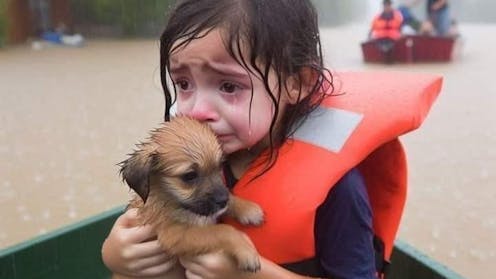
This AI-generated image spread far and wide in the wake of Hurricane Helene in 2024. AI-generated image circulated on social media

You’ve probably encountered images in your social media feeds that look like a cross between photographs and computer-generated graphics. Some are fantastical – think Shrimp Jesus – and some are believable at a quick glance – remember the little girl clutching a puppy in a boat during a flood?

These are examples of AI slop, low- to mid-quality content – video, images, audio, text or a mix – created with AI tools, often with little regard for accuracy. It’s fast, easy and inexpensive to make this content. AI slop producers typically place it on social media to exploit the economics of attention on the internet, displacing higher-quality material that could be more helpful.

AI slop has been increasing over the past few years. As the term “slop” indicates, that’s generally not good for people using the internet.

AI slop’s many forms

The Guardian published an analysis in July 2025 examining how AI slop is taking over YouTube’s fastest-growing channels. The journalists found that nine out of the top 100 fastest-growing channels feature AI-generated content like zombie football and cat soap operas.

This song, allegedly recorded by a band called The Velvet Sundown, was AI-generated.

Listening to Spotify? Be skeptical of that new band, The Velvet Sundown, that appeared on the streaming service with a creative backstory and derivative tracks. It’s AI-generated.

In many cases, people submit AI slop that’s just good enough to attract and keep users’ attention, allowing the submitter to profit from platforms that monetize streaming and view-based content.

The ease of generating content with AI enables people to submit low-quality articles to publications. Clarkesworld, an online science fiction magazine that accepts user submissions and pays contributors, stopped taking new submissions in 2024 because of the flood of AI-generated writing it was getting.

These aren’t the only places where this happens — even Wikipedia is dealing with AI-generated low-quality content that strains its entire community moderation system. If the organization is not successful in removing it, a key information resource people depend on is at risk.

This episode of ‘Last Week Tonight with John Oliver’ delves into AI slop. (NSFW)

Harms of AI slop

AI-driven slop is making its way upstream into people’s media diets as well. During Hurricane Helene, opponents of President Joe Biden cited AI-generated images of a displaced child clutching a puppy as evidence of the administration’s purported mishandling of the disaster response. Even when it’s apparent that content is AI-generated, it can still be used to spread misinformation by fooling some people who briefly glance at it.

AI slop also harms artists by causing job and financial losses and crowding out content made by real creators. The placement of this lower-quality AI-generated content is often not distinguished by the algorithms that drive social media consumption, and it displace entire classes of creators who previously made their livelihood from online content.

Wherever it’s enabled, you can flag content that’s harmful or problematic. On some platforms, you can add community notes to the content to provide context. For harmful content, you can try to report it.

Along with forcing us to be on guard for deepfakes and “inauthentic” social media accounts, AI is now leading to piles of dreck degrading our media environment. At least there’s a catchy name for it.

The Conversation

Adam Nemeroff does not work for, consult, own shares in or receive funding from any company or organization that would benefit from this article, and has disclosed no relevant affiliations beyond their academic appointment.

ref. What is AI slop? A technologist explains this new and largely unwelcome form of online content – https://theconversation.com/what-is-ai-slop-a-technologist-explains-this-new-and-largely-unwelcome-form-of-online-content-256554

‘What you feel is valid’: Social media is a lifeline for many abused and neglected young people

Source: The Conversation – USA – By Morgan E. PettyJohn, Assistant Professor of Social Work, University of Texas at Arlington

Seeking support online can help young people recognize abusive situations. MementoJpeg via Getty images

As a teen growing up in an abusive household, Morgan coped daily with physical and emotional harm from her mother. However, she felt safe and supported when she posted about her experiences on a fake Instagram account – widely referred to as a Finsta – which disguised her true identity.

Morgan (no relation to the co-author of this article) used her Finsta to tell peers what she was going through, and to send and receive encouraging words. Without that lifeline, she told us in an interview at age 21, “I probably would not have made it out.”

We are social work and public health researchers who study how people use digital technologies to seek help after they experience violence. We’ve found that social media has become a crucial outlet for young people to disclose abuse, connect with peers who’ve had similar experiences, and learn about safety strategies.

Every year in the United States, it’s estimated that more than 1 in 7 children face violence or neglect in their home. These experiences often go unreported. Some children don’t recognize their experiences as abuse. Others are ashamed. Many fear what will happen next if they speak out.

Child abuse and neglect can include acts of commission, such as physical violence, or omission, such as neglecting a child’s safety or health.

When young people reveal neglect or abuse, they are more likely to turn to informal support systems, such as friends, rather than authorities. In today’s digital world, those disclosures are increasingly happening online. In the midst of growing concerns about social media harming young people, its platforms offer important benefits for some vulnerable youth.

Sharing difficult stories

To understand how and why young people talk about maltreatment online, we began by analyzing posts about “family issues” made on a peer-to-peer support website called TalkLife. We found many examples of young people describing maltreatment.

They wrote about people in their households withholding food from them, sexually abusing them or physically harming them, leaving them with bruises or dislocated limbs. Usually these harms were inflicted by a caregiver – a parent, stepparent, grandparent or other guardian. The young people who shared these experiences typically were venting their feelings, asking questions or seeking support.

We also analyzed over 1,000 responses to these posts. Peers were overwhelmingly sympathetic, offering emotional support and advice, or commiserating about their own abuse or neglect. Responses that joked about and minimized the posters’ experiences, or were unsupportive in other ways, were comparatively rare.

To understand these dynamics more deeply, we next surveyed 18– to 21-year-olds across the U.S. Among 641 respondents, about one-third reported experiencing abuse or neglect during their childhoods. Of this group, more than half – 56% – had talked about their maltreatment on social media.

We interviewed a subsample of these participants to learn what motivated them to share their experiences on social media, and how these interactions affected them. Eva, age 21, said:

“…(it’s) a place where other people like me, who wanted attention and wanted to feel validated and wanted to talk about it in sort of a low stake situation, they’d come to that place. So, all of us together, we’re sort of supporting each other and saying like, hey, what you feel is valid.”

Why seek help online?

Most young people use social media to interact, express themselves and learn new things. Some users are exposed to new information that helps them identify their experiences as abuse or neglect.

One 20-year-old participant who posted about their experiences in a Reddit forum dedicated to support for mental health issues said: “I was born into (the abuse), right? So this was my normal, this was my everyday … the more that I started to get older, the more that I started to hear other people’s experiences. I went ‘ohh, something about this that I grew up with, I don’t think that’s normal.’”

Maltreated young people also turn to social media because they lack other options. Minors don’t typically have the legal or financial power to move out of an abusive home or start seeing a therapist without parental involvement.

“When you’re a kid, you don’t really have a lot of agency over things in your life … if all you have access to is social media and people online to talk to, that’s really the only way you can vent and express that you’re fed up and that you need help,” Kara, age 20, told us.

Even when resources such as school counselors are available, many young people avoid them because those people or agencies are subject to mandatory reporting requirements. Posting on social media allows youth to talk about their experiences, often anonymously, without fearing that the situation will escalate out of their control.

“It’s a very dangerous position to ask children to put themselves in to report their abuse, especially knowing the flaws in our (child protective services) system,” Dos, age 21, told us.

Participants in our study described supportive online relationships between individual users, as well as within broader social media communities. Eva, age 21, found that when she posted about her experiences, people online were “more willing to discuss it and have empathy for you than you would see in the average person on the street.”

But turning to social media also can have serious downsides for young people struggling with abuse or neglect. Lacking offline support systems, these users are highly vulnerable to online harm. Social media can expose them to misinformation, traumatic content or predatory behavior disguised as support.

Without safe adults to help them navigate these spaces, young abuse victims face a paradox: The internet may be their only option for connection, but it is not always safe or reliable.

The role of adults

Drawing from our interviews, we see three key takeaways for educators, policymakers and technology platforms:

– Young people need better access to safe, reliable information and resources about dealing with abuse and neglect that offer anonymity and do not trigger mandatory reporting. While reporting laws are designed to protect children, they can discourage disclosure if young people fear that seeking help will trigger an immediate and unwanted intervention.

In our view, creating resources that balance safety with autonomy is critical. Confidential hotlines, like the National Child Abuse Hotline, are among the only places where children can talk with an adult anonymously.

– Policies that ban social media or require parental permission for minors may unintentionally increase risks for maltreated youth. Creating safer pathways for internet use is a more effective way to protect young people online.

– Since caregivers and other adults aren’t always available or willing to protect children online, we believe that platforms should be held accountable for design features, such as algorithms, privacy controls and moderation strategies, that can make sites unsafe for vulnerable youth seeking support.

Social media can’t replace offline resources for children who are being maltreated. But for many young people, these platforms have become a first step toward recognition, connection and survival. By learning how and why abused youth share their experiences digitally, adults can better understand their needs and build systems that meet them where they are.

Editor’s note: All names quoted in this article are pseudonyms that were chosen by the research participants.

The Conversation

Morgan E. PettyJohn receives funding from the Kalman & Ida Wolens Foundation. She is a member of the Society for Social Work and Research, the American Association for Marriage and Family Therapy, and the Society for the Scientific Study of Sexuality. She also serves on the editorial board for the American Psychological Association journal, Psychology of Men and Masculinities.

Laura Schwab Reese receives funding from the Centers for Disease Control and Prevention, Eunice Kennedy Shriver National Institute of Child Health and Human Development, North Central Health Services, Childhelp Inc, Administration on Children, Youth and Families, and Robert Wood Johnson Foundation. She is a member of the American Public Health Association, Society for Advancement of Violence and Injury Research, International Society for the Prevention of Child Abuse & Neglect, Association for Computing Machinery, Association of Internet Researchers, and American Communication Association. She serves as Associate Editor for Journal of Family Violence and Journal of Multidisciplinary Healthcare, and on the editorial boards of Child Abuse & Neglect and the American Journal of Public Health.

ref. ‘What you feel is valid’: Social media is a lifeline for many abused and neglected young people – https://theconversation.com/what-you-feel-is-valid-social-media-is-a-lifeline-for-many-abused-and-neglected-young-people-263174

How Europe’s deforestation law could change the global coffee trade

Source: The Conversation – USA (2) – By Paul Mwebaze, Research Economist at the Institute for Sustainability, Energy and Environment, University of Illinois at Urbana-Champaign

The beans that created this cup of coffee had a long journey. Guido Mieth/Moment via Getty Images

If your morning can’t begin without coffee, you’re in good company. The world drinks about 2 billion cups of coffee a day. However, a European Union law might soon affect your favorite coffee beans – and the farmers who grow them.

Starting in 2026, companies selling coffee on the European Union market will have to prove that their product is “deforestation-free.” That means every bag of beans, every jar of ground coffee and every espresso capsule must trace back to coffee plants on land that hasn’t been cleared of forest since Dec. 31, 2020.

The new rules, found in what’s known as the EU Deforestation Regulation, are part of a wider effort to ensure European consumption doesn’t drive global deforestation.

However, on the ground – from the coffee hills of Ethiopia to the plantations of Brazil – the rule change could transform how coffee is grown, traded and sold.

Why the EU is targeting deforestation

Deforestation is a major driver of biodiversity loss and accounts for about 10% of global greenhouse gas emissions. And coffee plantations, along with cocoa, soy and palm oil production, which are also covered by the new regulations, are known sources of forest loss in some countries.

Under the new EU Deforestation Regulation, companies will be required to trace their coffee to its exact origin – down to the farm plot where the beans were grown – and provide geolocation data and documentation of supply chain custody to EU authorities.

They will also have to show proof, often through satellite imagery, that any open land where coffee is grown was forest-free before the 2020 cutoff date.

The rules were initially set to go into effect in early 2025 but were pushed back after complaints from many countries. Governments and industry groups in Latin America, Africa and Southeast Asia warned of trade friction for small farms, and the World Trade Organization has received complaints about the regulations.

Most companies must now comply by Dec. 30, 2025. Small enterprises get until June 30, 2026.

Potential winners and losers

The coffee supply chain is complex. Beans are grown by millions of farmers, sold to collectors, then move through processors, exporters, importers and roasters before reaching grocery shelves. Adding the EU rules means more checkpoints, more paperwork and possibly new strategies for sourcing coffee beans.

Small farms in particular could be vulnerable to losing business when the new rules go into effect. They could lose contracts or market access if they can’t provide the plot-level GPS coordinates and nondeforestation documentation buyers will require. That could prompt buyers to shift toward larger estates or organized co-ops that can provide the documentation.

If a farm can’t provide precise plot coordinates or pay for mapping services, it could end up being excluded from the world’s largest coffee market.

Larger coffee growers already using systems that can trace beans back to specific farm plots could gain a competitive edge.

Map showing tropical forests mostly in Africa, South America, Southeast Asia and Indonesia, and boreal and temperate forests across Canada, Russia and parts of Europe.
Global forest area by type and distribution in 2020, according to a U.N. Food and Agriculture Organization assessment.
FAO

The new regulations also include stricter oversight for countries considered most likely to allow deforestation, which could slow trade from those regions. As a result, buyers may shift to regions with lower deforestation risk.

Even outside Europe, big buyers are likely to prioritize beans they can trace to nondeforested plots, potentially dropping small farms that can’t provide plot-level proof. That could reduce availability and raise the price of some coffee types and put farms out of business. In some cases, the EU regulations could reroute undocumented coffee beans into markets such as the U.S.

Helping small farms succeed

For small farms, succeeding under the new EU rules will depend on access to technical support and low-cost tools for tracing their crop’s origin. Some countries are developing national systems to track deforestation, and they are pushing the EU to invest more in helping them.

Those small farms that can comply with the rules, often through co-ops, could become attractive low-risk suppliers for large buyers seeking compliant crops.

The change could also boost demand for sustainability certifications, such as Rainforest Alliance, 4C Common Code or Fairtrade, which certify only products that don’t contribute to deforestation. But even certified farms will still need to provide precise location data.

Agroforestry’s potential

Arabica coffee, the most common variety sold globally, naturally evolved as an understory shrub, performing best in cooler tropical uplands with good drainage and often partial shade. That points to a way farmers can reduce deforestation risk while still growing coffee: agroforestry.

Two women examine beans on a coffee plant.
Farmers check on coffee beans at a small agroforestry operation in Kenya. The coffee bushes were planted among trees that provide shade.
World Agroforestry Centre/Joseph Gachoka via Flickr, CC BY-NC-SA

Agroforestry involves planting or conserving shade trees in and around coffee plots to maintain the tree canopy.

In agroforestry systems, shade trees can buffer heat and drought, often reducing evaporation from soil and moderating plants’ water stress. Several field studies show lower evaporative losses and complementary water use between coffee and shade trees. In some contexts, this can lower irrigation needs and reduce fertilizer demand. Practical tools such as World Coffee Research’s Shade Catalog help farmers choose the right tree species for their location and goals.

Agroforestry is common in Ethiopia, where Arabica originated, and in parts of Central America, thanks to long traditions of growing coffee in shade and specialty demand for the products.

Under the new EU rules, however, even these farms must prove that no forest was cleared after 2020.

Why this matters to coffee drinkers

For European coffee drinkers, the new EU rules promise more sustainable coffee. But they may also mean higher prices if compliance costs are passed down the supply chain to consumers.

For coffee lovers elsewhere, changes in global trade flows could shift where beans are sold and at what price. As EU buyers bid up beans that can be traced to nondeforested plots, more of those “fully verified” coffees will flow to Europe. U.S. roasters may then face higher prices or tighter supply for traceable lots, while unverified beans are discounted or simply avoided by brands that choose to follow EU standards.

The Conversation

Paul Mwebaze does not work for, consult, own shares in or receive funding from any company or organization that would benefit from this article, and has disclosed no relevant affiliations beyond their academic appointment.

ref. How Europe’s deforestation law could change the global coffee trade – https://theconversation.com/how-europes-deforestation-law-could-change-the-global-coffee-trade-264011

Personal power v. socialized power: What Machiavelli and St. Francis can tell us about modern CEOs

Source: The Conversation – USA (3) – By William D. Spangler, Associate Professor Emeritus of Management, Binghamton University, State University of New York

Power can be a motivator – but not everyone wants the same kind of power. Klaus Vedfelt/DigitalVision via Getty Images

Niccolò Machiavelli, the infamous author of “The Prince,” wrote in the 1500s that the ideal leader makes and breaks solemn agreements. He creates alliances with weak allies to defeat a powerful enemy and then eliminates them one by one. He blames his next-in-charge for his own mistakes, and he executes opponents in public.

St. Francis of Assisi was the antithesis of a Machiavellian leader. Born in 1181, the future saint renounced his father’s wealth, then spent the remainder of his life wandering around northern Italy as a beggar and preacher. Francis gained a reputation for extreme humility – but certainly he was not weak. He dealt with popes, nobles and even an Egyptian sultan. He founded a religious order, the Franciscans, that survives today.

In modern times, Machiavellian leaders abound in the corporate world. Perhaps more surprisingly, many other business leaders resemble Francis: humble and self-effacing, but by no means weak. In our research, we argue that two types of motivation help to explain these vast and enduring differences in leadership.

‘Two faces of power’

Psychologists have long been fascinated by people’s nonconscious motives – and how to measure them. One influential assessment, developed in the 1930s, is the Thematic Apperception Test, or TAT. People write short stories about ambiguous pictures, and researchers then analyze the stories to see which themes emerge: what the writer cares or worries about, and how they see the world.

In 1970, psychologist David McClelland coined the phrase “the two faces of power” to describe two different types of power that motivate people, based on his TAT analyses: personal power and socialized power. Personal power is the motivation to dominate others. McClelland noted that people with a desire for personal power tend to use imagery that evokes “the ‘law of the jungle’ in which the strongest survive by destroying their adversaries.” Socialized power, on the other hand, aims to benefit others.

McClelland noted that personal power was associated with behavior like heavy drinking, gambling, aggressive impulses and collecting “prestige supplies,” like convertibles. People concerned with the more socialized aspect of power, meanwhile, join more organizations and are more apt to become officers in them, including sports teams.

A few years later, McClelland and consultant David Burnham published an article titled “Power is the Great Motivator,” elaborating on this basic link between power motivation and leader effectiveness. Through a series of biographical vignettes and an analysis of a large company, they showed that managers exhibiting a high degree of socialized power were more effective than managers motivated by personal power.

Measuring motivation

It seemed to us that personal power, the “law of the jungle,” motivates the kinds of behavior approvingly described by Machiavelli. Likewise, socialized power seemed to underlie the forceful but altruistic behavior of St. Francis and modern so-called humble leaders.

But we faced a problem: how to measure motivation. Powerful people such as world-class CEOs have little inclination to take TATs or answer questionnaires for admittedly humble scholars.

In the 1990s, psychologist David Winter showed that speeches, interviews and diplomatic texts reveal nonconscious motivation in the same way as the Thematic Apperception Test – demonstrating a way to study leaders’ views of power. For example, someone driven by a desire for personal power often tries to control or regulate people around them; attempts to persuade and convince; and is concerned with fame, status and reputation.

A brunette woman in a blue button-up shirt gestures as she speaks to a room of people.
Language can give insight into what’s driving a leader.
PeopleImages/iStock via Getty Images Plus

However, Winters’ procedures for analyzing texts are manual and complex; it is difficult to process a large number of documents. Also, he focused on personal power; socialized power was not included in his coding procedures.

Words and action

In order to overcome these limitations, we used computer-aided text analysis to analyze the language of CEOs in interviews and conference calls.

In a series of 2019 studies, which were peer-reviewed and summarized in the Academy of Management Proceedings, our team identified 40 Machiavellian and 40 humble CEOs. First, we took a close look at the types of words and phrases that distinguished the two groups, shedding light on the kind of power that motivates each one.

Using these patterns, we created two “dictionaries” of words and phrases that expressed personal power and socialized power. Language about strong, forceful actions, control, managing impressions, punishment and fear of failure, to name a few themes, constituted the personal power dictionary. “Defeat,” “overrun” and “strafe,” for example, appeared among the words on the personal power list. Themes such as rewards, mentoring and positive relationships characterized the socialized power dictionary.

Then, we used a computer program to scan hundreds of interviews and quarterly conference calls. The computer program calculated personal and socialized power scores for each of the CEOs.

Our team also developed indexes of Machiavellian and humble leader behavior – such as smearing competitors and backing out of agreements, or making significant donations to charity, respectively – and measured all 80 CEOs.

We found very high correlations between power motivation and CEO behavior. CEOs with high personal power scores, based on our analysis of their interviews and conference calls, also tended to show Machiavellian behavior. CEO humble behavior was positively related to socialized power.

A man with white hair and brown glasses, dressed in a suit and tie, smiles as he sits on a blue chair.
Berkshire Hathaway CEO Warren Buffet, shown here at the White House in 2011, is known for his frugality and philanthropy.
AP Photo/Pablo Martinez Monsivais

People and profits

Do these abstract statistical results really mean anything? Evidently.

Numerous CEOs from our list of humble executives have founded or managed exceptionally successful and people-oriented companies, including Warren Buffet of Berkshire Hathaway, Danny Wegman of Wegmans, and James Goodnight of the SAS Institute. Several of the “humble” CEOs have appeared multiple times on Fortune’s annual Best Companies to Work For list.

The Machiavellian CEO list included Kenneth Lay of Enron fame and John Rigas, one of the founders of Adelphia Communications Corporation, who was convicted of fraud. Mark Hurd, one-time CEO of Hewlett Packard, appeared on Complex’s list of the worst chief executive officers in tech history. In general, criticisms of “profits over people,” poor treatment of employees, scandals, lavish spending, lawsuits and accusations or convictions of fraud characterize many of our Machiavellian CEOs.

McClelland and Burnham were right. Power really is the “great motivator,” but it’s the type of power that makes the difference.

The Conversation

The authors do not work for, consult, own shares in or receive funding from any company or organization that would benefit from this article, and have disclosed no relevant affiliations beyond their academic appointment.

ref. Personal power v. socialized power: What Machiavelli and St. Francis can tell us about modern CEOs – https://theconversation.com/personal-power-v-socialized-power-what-machiavelli-and-st-francis-can-tell-us-about-modern-ceos-258016

Adding more green space to a campus is a simple, cheap and healthy way to help millions of stressed and depressed college students

Source: The Conversation – USA (3) – By Chanam Lee, Professor of Landscape Architecture and Urban Planning, Texas A&M University

Green space at schools can benefit generations of students. AzmanL/E+ via Getty Images

Stress on college students can be palpable, and it hits them from every direction: academic challenges, social pressures and financial burdens, all intermingled with their first taste of independence. It’s part of the reason why anxiety and depression are common among the 19 million students now enrolled in U.S. colleges and universities, and why incidents of suicide and suicidal ideation are rising.

In the 2024 National College Health Assessment Report, 30% of the 30,000 students surveyed said anxiety negatively affected their academic performance, with 20% at risk for symptoms that suggest severe psychological distress, such as feelings of sadness, nervousness and hopelessness. No wonder the demand for mental health services has been increasing for about a decade.

Many schools have rightfully responded to this demand by offering students more counseling. That is important, of course, but there’s another approach that could help alleviate the need for counseling: Creating a campus environment that promotes health. Simply put, add more green space.

We are scholars who study the impact that the natural environment has on students, particularly in the place where they spend much of their time – the college campus. Decades of research show that access to green spaces can lower stress and foster a stronger sense of belonging – benefits that are particularly critical for students navigating the pressures of higher education.

Making campuses green

In 2020, our research team at Texas A&M University launched a Green Campus Initiative to promote a healthier campus environment. Our goal was to find ways to design, plan and manage such an environment by developing evidence-based strategies.

Our survey of more than 400 Texas A&M students showed that abundant greenery, nature views and quality walking paths can help with mental health issues.

More than 80% of the students we surveyed said they already have their favorite outdoor places on campus. One of them is Aggie Park, 20 acres of green space with exercise trails, walking and bike paths and rocking chairs by a lake. Many students noted that such green spaces are a break from daily routines, a positive distraction from negative thoughts and a place to exercise.

Our survey confirms other research that shows students who spend time outdoors – particularly in places with mature trees, open fields, parks, gardens and water – report better moods and lower stress. More students are physically active when on a campus with good walkability and plenty of sidewalks, trails and paths. Just the physical activity itself is linked to many mental health benefits, including reduced anxiety and depression.

Outdoor seating, whether rocking chairs or park benches, also has numerous benefits. More time spent talking to others is one of them, but what might be surprising is that enhanced reading performance is another. More trees and plants mean more shaded areas, particularly during hot summers, and that too encourages students to spend more time outside and be active.

A bird’s eye view of the turquoise lakes and greenery at Aggie Park.
Aggie Park, a designated green space on the campus of Texas A&M University, opened in September 2022.
Texas A&M University

Less anxiety, better academic performance

In short, the surrounding environment matters, but not just for college students or those living or working on a campus. Across different groups and settings, research shows that being near green spaces reduces stress, anxiety and depression.

Even a garden or tree-lined street helps.

In Philadelphia, researchers transformed 110 vacant lot clusters into green spaces. That led to improvements in mental health for residents living nearby. Those using the green spaces reported lower levels of stress and anxiety, but just viewing nature from a window was helpful too.

Our colleagues discovered similar findings when conducting a randomized trial with high school students who took a test before and after break periods in classrooms with different window views: no window, a window facing a building or parking lot, or a window overlooking green landscapes. Students with views of greenery recovered faster from mental fatigue and performed significantly better on attention tasks.

It’s still unclear exactly why green spaces are good places to go when experiencing stress and anxiety; nevertheless, it is clear that spending time in nature is beneficial for mental well-being.

Small can be better

It’s critical to note that enhancing your surroundings isn’t just about green space. Other factors play a role. After analyzing data from 13 U.S. universities, our research shows that school size, locale, region and religious affiliation all make a difference and are significant predictors of mental health.

Specifically, we found that students at schools with smaller populations, schools in smaller communities, schools in the southern U.S. or schools with religious affiliations generally had better mental health than students at other schools. Those students had less stress, anxiety and depression, and a lower risk of suicide when compared with peers at larger universities with more than 5,000 students, schools in urban areas, institutions in the Midwest and West or those without religious ties.

No one can change their genes or demographics, but an environment can always be modified – and for the better. For a relatively cheap investment, more green space at a school offers long-term benefits to generations of students. After all, a campus is more than just buildings. No doubt, the learning that takes place inside them educates the mind. But what’s on the outside, research shows, nurtures the soul.

The Conversation

The authors do not work for, consult, own shares in or receive funding from any company or organization that would benefit from this article, and have disclosed no relevant affiliations beyond their academic appointment.

ref. Adding more green space to a campus is a simple, cheap and healthy way to help millions of stressed and depressed college students – https://theconversation.com/adding-more-green-space-to-a-campus-is-a-simple-cheap-and-healthy-way-to-help-millions-of-stressed-and-depressed-college-students-251461

AI has a hidden water cost − here’s how to calculate yours

Source: The Conversation – USA (2) – By Leo S. Lo, Dean of Libraries; Advisor to the Provost for AI Literacy; Professor of Education, University of Virginia

How many AI queries does it take to use up a regular plastic water bottle’s worth of water? kieferpix/iStock/Getty Images Plus

Artificial intelligence systems are thirsty, consuming as much as 500 milliliters of water – a single-serving water bottle – for each short conversation a user has with the GPT-3 version of OpenAI’s ChatGPT system. They use roughly the same amount of water to draft a 100-word email message.

That figure includes the water used to cool the data center’s servers and the water consumed at the power plants generating the electricity to run them.

But the study that calculated those estimates also pointed out that AI systems’ water usage can vary widely, depending on where and when the computer answering the query is running.

To me, as an academic librarian and professor of education, understanding AI is not just about knowing how to write prompts. It also involves understanding the infrastructure, the trade-offs, and the civic choices that surround AI.

Many people assume AI is inherently harmful, especially given headlines calling out its vast energy and water footprint. Those effects are real, but they’re only part of the story.

When people move from seeing AI as simply a resource drain to understanding its actual footprint, where the effects come from, how they vary, and what can be done to reduce them, they are far better equipped to make choices that balance innovation with sustainability.

2 hidden streams

Behind every AI query are two streams of water use.

The first is on-site cooling of servers that generate enormous amounts of heat. This often uses evaporative cooling towers – giant misters that spray water over hot pipes or open basins. The evaporation carries away heat, but that water is removed from the local water supply, such as a river, a reservoir or an aquifer. Other cooling systems may use less water but more electricity.

The second stream is used by the power plants generating the electricity to power the data center. Coal, gas and nuclear plants use large volumes of water for steam cycles and cooling.

Hydropower also uses up significant amounts of water, which evaporates from reservoirs. Concentrated solar plants, which run more like traditional steam power stations, can be water-intensive if they rely on wet cooling.

By contrast, wind turbines and solar panels use almost no water once built, aside from occasional cleaning.

Large concrete towers emit vapor into the atmosphere.
Cooling towers, like these at a power plant in Florida, use water evaporation to lower the temperature of equipment.
Paul Hennessy/SOPA Images/LightRocket via Getty Images

Climate and timing matter

Water use shifts dramatically with location. A data center in cool, humid Ireland can often rely on outside air or chillers and run for months with minimal water use. By contrast, a data center in Arizona in July may depend heavily on evaporative cooling. Hot, dry air makes that method highly effective, but it also consumes large volumes of water, since evaporation is the mechanism that removes heat.

Timing matters too. A University of Massachusetts Amherst study found that a data center might use only half as much water in winter as in summer. And at midday during a heat wave, cooling systems work overtime. At night, demand is lower.

Newer approaches offer promising alternatives. For instance, immersion cooling submerges servers in fluids that don’t conduct electricity, such as synthetic oils, reducing water evaporation almost entirely.

And a new design from Microsoft claims to use zero water for cooling, by circulating a special liquid through sealed pipes directly across computer chips. The liquid absorbs heat and then releases it through a closed-loop system without needing any evaporation. The data centers would still use some potable water for restrooms and other staff facilities, but cooling itself would no longer draw from local water supplies.

These solutions are not yet mainstream, however, mainly because of cost, maintenance complexity and the difficulty of converting existing data centers to new systems. Most operators rely on evaporative systems.

A simple skill you can use

The type of AI model being queried matters, too. That’s because of the different levels of complexity and the hardware and amount of processor power they require. Some models may use far more resources than others. For example, one study found that certain models can consume over 70 times more energy and water than ultra‑efficient ones.

You can estimate AI’s water footprint yourself in just three steps, with no advanced math required.

Step 1 – Look for credible research or official disclosures. Independent analyses estimate that a medium-length GPT-5 response, which is about 150 to 200 words of output, or roughly 200 to 300 tokens, uses about 19.3 watt-hours. A response of similar length from GPT-4o uses about 1.75 watt-hours.

Step 2 – Use a practical estimate for the amount of water per unit of electricity, combining the usage for cooling and for power.

Independent researchers and industry reports suggest that a reasonable range today is about 1.3 to 2.0 milliliters per watt-hour. The lower end reflects efficient facilities that use modern cooling and cleaner grids. The higher end represents more typical sites.

Step 3 – Now it’s time to put the pieces together. Take the energy number you found in Step 1 and multiply it by the water factor from Step 2. That gives you the water footprint of a single AI response.

Here’s the one-line formula you’ll need:

Energy per prompt (watt-hours) × Water factor (milliliters per watt-hour) = Water per prompt (in milliliters)

For a medium-length query to GPT-5, that calculation should use the figures of 19.3 watt-hours and 2 milliliters per watt-hour. 19.3 x 2 = 39 milliliters of water per response.

For a medium-length query to GPT-4o, the calculation is 1.75 watt-hours x 2 milliliters per watt-hour = 3.5 milliliters of water per response.

If you assume the data centers are more efficient, and use 1.3 milliliters per watt-hour, the numbers drop: about 25 milliliters for GPT-5 and 2.3 milliliters for GPT-4o.

A recent Google technical report said a median text prompt to its Gemini system uses just 0.24 watt-hours of electricity and about 0.26 milliliters of water – roughly the volume of five drops. However, the report does not say how long that prompt is, so it can’t be compared directly with GPT water usage.

Those different estimates – ranging from 0.26 milliliters to 39 milliliters – demonstrate how much the effects of efficiency, AI model and power-generation infrastructure all matter.

Comparisons can add context

To truly understand how much water these queries use, it can be helpful to compare them to other familiar water uses.

When multiplied by millions, AI queries’ water use adds up. OpenAI reports about 2.5 billion prompts per day. That figure includes queries to its GPT-4o, GPT-4 Turbo, GPT-3.5 and GPT-5 systems, with no public breakdown of how many queries are issued to each particular model.

Using independent estimates and Google’s official reporting gives a sense of the possible range:

  • All Google Gemini median prompts: about 650,000 liters per day.
  • All GPT 4o medium prompts: about 8.8 million liters per day.
  • All GPT 5 medium prompts: about 97.5 million liters per day.
A small black spigot spews a stream of water over a green grass lawn.
Americans use lots of water to keep gardens and lawns looking fresh.
James Carbone/Newsday RM via Getty Images

For comparison, Americans use about 34 billion liters per day watering residential lawns and gardens. One liter is about one-quarter of a gallon.

Generative AI does use water, but – at least for now – its daily totals are small compared with other common uses such as lawns, showers and laundry.

But its water demand is not fixed. Google’s disclosure shows what is possible when systems are optimized, with specialized chips, efficient cooling and smart workload management. Recycling water and locating data centers in cooler, wetter regions can help, too.

Transparency matters, as well: When companies release their data, the public, policymakers and researchers can see what is achievable and compare providers fairly.

The Conversation

Leo S. Lo does not work for, consult, own shares in or receive funding from any company or organization that would benefit from this article, and has disclosed no relevant affiliations beyond their academic appointment.

ref. AI has a hidden water cost − here’s how to calculate yours – https://theconversation.com/ai-has-a-hidden-water-cost-heres-how-to-calculate-yours-263252

How to poop outdoors in a way that won’t harm the environment and other hikers

Source: The Conversation – USA (2) – By Shari Edelson, Ph.D. Candidate in Recreation, Park and Tourism Management, Penn State

A pilot program to distribute waste bags to hikers on Mount Elbert in Colorado successfully cut down the amount of human waste on the massive mountain. Shari Edelson, CC BY-ND

If you’re one of the 63 million Americans who went hiking last year, chances are you’ve found yourself needing to go, with no toilet in sight.

Aside from personal inconvenience, why is this such a big deal?

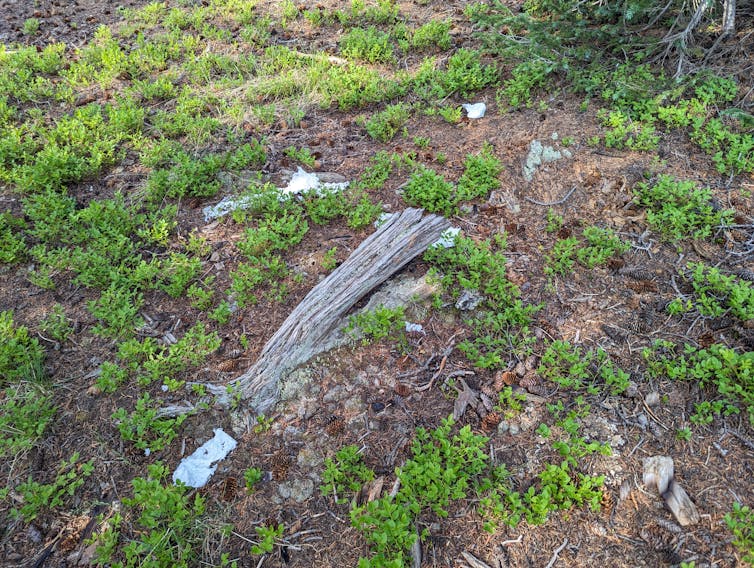
Human fecal contamination is a public health concern in natural areas. Pathogens in human poop can remain active for a long time – over a year in outdoor environments – meaning that waste left behind today can cause severe gastrointestinal disease and other sicknesses for future visitors. Fecal waste can enter waterways after storms or snowmelt, harming water quality. Finally, it can be upsetting – or at the least, unpleasant – to encounter someone else’s poop and used toilet paper in nature.

Used and tattered toilet paper is scattered throughout the forest floor near grasses, logs and sticks.
Toilet paper waste on Mount Elbert in the San Isabel National Forest in Colorado.
Shari Edelson, CC BY-ND

As a researcher and a Ph.D. candidate who study human impacts on parks and protected areas, we have been thinking quite a lot about poop and ways people can tread more lightly on the landscape. Our focus is on Leave No Trace, an environmental education framework – created by an organization with the same name – that helps people implement minimal-impact practices in the outdoors.

Poop is causing problems in parks and protected areas

From the Appalachian Trail and Mount Everest – known as Sagarmatha in Nepali – to national parks in Norway and Aotearoa – known as New Zealand to English speakers, researchers have documented the negative impacts our bodily wastes are causing in the sensitive environments where we seek recreation and restoration.

In Colorado, the problem has gotten so bad that land managers have decided to take action. In the Eagle-Holy Cross District of the White River National Forest, for example, the U.S. Forest Service now requires visitors to take their human waste out with them.

A raging river courses alongside a rocky shoreline within a verdant forest. A wooden bridge crosses over the water.
A footbridge on the Chimney Tops Trail in the Great Smoky Mountains near the Appalachian Trail.
Shari Edelson, CC BY-ND

Best practices for dealing with your poo in the great outdoors

One of us – Derrick Taff – works as a science adviser to Leave No Trace, an organization that has educated outdoor recreationists on this issue for more than 30 years and has provided concrete guidance based on scientific research.

The first rule of thumb is to avoid the possibility of contamination entirely by not leaving waste in natural areas to begin with. Toilet facilities are regarded as the most effective method to reduce human waste in the backcountry. If there’s a toilet at the trailhead, use it before you head out.

Current research we’re doing in Grand Teton National Park in Wyoming and San Isabel National Forest in Colorado confirms that hikers prefer to use trailhead toilets when they’re available.

But as anyone who’s been out in the woods is aware, remote wilderness areas do not necessarily offer such infrastructure. Access for maintenance and waste removal costs are major barriers for land management agencies considering installing backcountry toilets.

And then there’s the very real likelihood that even when trailhead facilities do exist, you may be far away when nature calls. In our own research, pending publication, we surveyed hikers on Colorado’s Mount Elbert. Up to 70% of those needing to poop ended up doing so in the backcountry despite the presence of a trailhead toilet.

Issues develop because hikers aren’t prepared

This issue may persist because people aren’t aware of the current rules. In our soon-to-be-published study of Grand Teton hikers, 66% of backcountry trail visitors reported that they had not received any information on how to dispose of human waste in the park.

A wide, peaceful river flows into a thick forest. Imposing jagged peaks pierce the sky. Snow is visible within the mountain's crevices.
The view from String Lake in Grand Teton National Park.
Shari Edelson, CC BY-ND

Other reasons why people may not follow the rules are because they may consider them onerous or unimportant.

Research shows that clear, actionable messaging including relevant environmental and moral appeals does make a difference in shifting people’s behaviors in the outdoors. Although individual choices may seem inconsequential, they add up to big impacts in the aggregate.

How to poop in the backcountry

So what to do when there really is no potty? Leave No Trace advises us of two main options.

The first is to dig a little pit, commonly called a cat hole, and deposit your poop in there. Can’t aim? No worries – Just poop next to the hole and scoop it in afterward.

The use of cat holes is recommended in areas where it’s possible to dig roughly the length of your hand deep in the soil, where moist ground indicates that material buried there will decompose, and where digging is not likely to disturb fragile environments. Make sure you’re about 70 steps away from any water source, trail or campsite to avoid water contamination and reduce the likelihood that someone else will accidentally come upon your waste.

You can typically leave toilet paper in a cat hole, but check local regulations and carry it out in a sealed bag if not. Never leave wet wipes behind. They don’t biodegrade.

Outdoor companies are now making lightweight trowels designed for digging cat holes in the backcountry. But there are also places where it’s difficult if not impossible to dig a cat hole because of snow, frozen ground, shallow soil or exposed bedrock, or where leaving human waste in the outdoors is not recommended due to environmental conditions. These typically include high-mountain zones above tree line, alpine environments inhabited by delicate and slow-growing flora, and deserts and other arid places characterized by low soil moisture.

In places like this, it’s best to remove all poop and toilet paper and dispose of it in a proper location such as a trash can at the trailhead or even back at your home. Before you recoil in horror, remember that dog owners do this with their pets’ waste when on a walk.

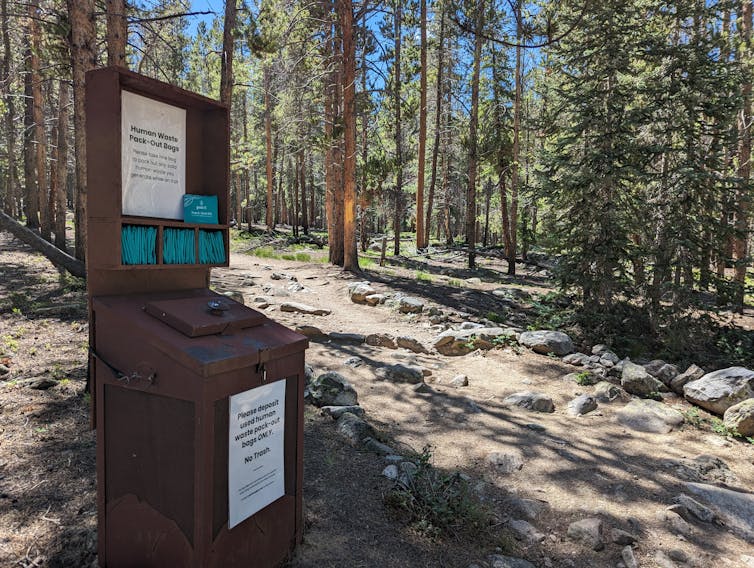
Wag bags – short for waste aggregation and gelling – are used to pack out poop. Wag bag kits typically include an inner and an outer bag as well as a drying agent to prevent odor and leakage. Our current research, as well as a recent study of Norwegian park users, has demonstrated that people are willing to use them.

A brown box stands near a trail in the forest. Numerous turquoise bags are folded and placed on shelves. A sign, with black lettering on white laminated paper, is attached to the kiosk. One reads:
A kiosk offers free wag bags at the beginning of the Mount Elbert summit trail near Leadville, Colo. Wag bags are commonly used by hikers as self-contained receptacles for feces.
Shari Edelson, CC BY-ND

Our study found that among people who defecated while on a hike to the summit of Mount Elbert, 30% used a wag bag to carry their waste off the mountain, and 87% expressed willingness to use one on future trips.

These results suggest that people are willing to do the right thing when given the proper tools and information, and that it’s possible to effectively teach people how to care for our wild spaces.

The Conversation

Shari Edelson has received research funding from the National Park Service, the National Science Foundation and PACT Outdoors.

B. Derrick Taff is an Assistant Dean of Research and Graduate Education in the College of Health and Human Development, and an Associate Professor in the Department of Recreation, Park and Tourism Management at Penn State University; he also serves as the Leave No Trace organization’s science advisor. Derrick is the Suzie and Allen Martin Professor through Penn State University.

ref. How to poop outdoors in a way that won’t harm the environment and other hikers – https://theconversation.com/how-to-poop-outdoors-in-a-way-that-wont-harm-the-environment-and-other-hikers-262426

Are high school sports living up to their ideals?

Source: The Conversation – USA (2) – By Jedediah Blanton, Assistant Professor of Kinesiology, Recreation and Sport Studies, University of Tennessee

Most coaches want to be able to do more than teach their athletes to win faceoffs and dodge defenders. Hannah Foslien/The Washington Post via Getty Images

Coach Smith was an easy hire as the head coach of a new high school lacrosse team in Tennesseee: She had two decades of coaching experience and a doctorate in sport and exercise science.

After signing the paperwork, which guaranteed a stipend of US$1,200, Smith – we’re using a pseudonym to protect her identity – had four days to complete a background check, CPR and concussion training and a Fundamentals of Coaching online course. After spending $300 to check all these boxes, the job was hers.

The Tennessee Secondary School Athletic Association’s mission statement highlights how high school athletes should be molded into good citizens and have their educational experiences enhanced by playing sports.

Yet Coach Smith hadn’t received any guidance on how to accomplish these goals. She didn’t know how a high school coach would be evaluated – surely it went beyond wins, losses and knowing CPR – or how to make her players better students and citizens.

Over the past 15 years, our work has focused on maximizing the benefits of high school sports and recognizing what limits those benefits from being reached. We want to know what high school sports aspire to be and what actually happens on the ground.

We have learned that Coach Smith is not alone; this is a common story playing out on high school fields and courts across the country. Good coaching candidates are getting hired and doing their best to keep high school sports fixtures in their communities. But coaches often feel like they’re missing something, and they wonder whether they’re living up to those aspirations.

Does the mission match reality?

Dating back to the inception of school-sponsored sport leagues in 1903, parents and educators have long believed that interscholastic sports are a place where students develop character and leadership skills.

Research generally backs up the advantages of playing sports. In 2019, high school sports scholar Stéphanie Turgeon published a review paper highlighting the benefits and drawbacks of playing school sports. She found that student-athletes were less likely to drop out, more likely to be better at emotional regulation and more likely to contribute to their communities. While athletes reported more stress and were more likely to drink alcohol, Turgeon concluded that the positives outweighed the negatives.

The governing body of high school sports in the U.S., the National Federation of State High School Associations, oversees 8 million students. According to its mission statement, the organization seeks to establish “playing rules that emphasize health and safety,” create “educational programs that develop leaders” and provide “administrative support to increase opportunities and promote sportsmanship.”

Digging deeper into the goals of sports governing bodies, we recently conducted a study that reviewed and analyzed the mission statements of all 51 of the member state associations that officially sponsor high school sports and activities.

In their missions, most associations described the services they provided – supervising competition, creating uniform rules of play and offering professional development opportunities for coaches and administrators. A majority aimed to instill athletes with life skills such as leadership, sportsmanship and wellness. Most also emphasized the relationship between sports and education, either suggesting that athletics should support or operate alongside schools’ academic goals or directly create educational opportunities for athletes on the playing field. And a handful explicitly aspired to protect student-athletes from abuse and exploitation.

Interestingly, seven state associations mentioned that sports participation is a privilege, with three adding the line “and not a right.” This seems to conflict with the National Federation of State High School Associations, which has said that it wants to reach as many students as possible. The organization sees high school sports as a place where kids can further their education, which is a right in the U.S. This is important, particularly as youth sports have developed into a multibillion-dollar industry fueled by expensive travel leagues and club teams.

We also noticed what was largely missing from these mission statements. Only two state athletic associations included a goal for students to “have fun” playing sports. Research dating back to the 1970s has consistently shown that wanting to have fun is usually the No. 1 reason kids sign up for sports in the first place.

Giving coaches the tools to succeed

Missions statements are supposed to guide organizations and outline their goals. For high school sports, the opportunity exists to more clearly align educational initiatives and evaluation efforts to fulfill their missions.

If high school sports are really meant to build leadership and life skills, you would think that the adults running these programs would be eager to acquire the skill set to do this. Sure enough, when we surveyed high school coaches across the country in 2019, we found that 90% reported that formal leadership training programs were a good idea. Yet less than 12% had actually participated in those programs.

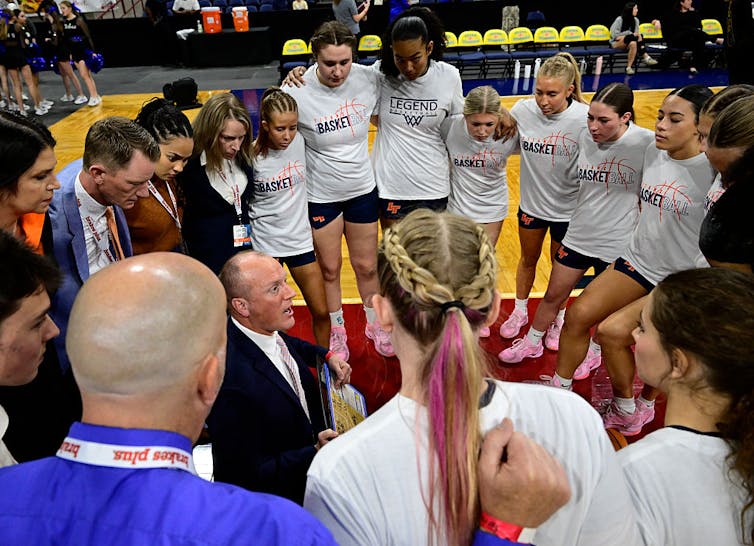
High school girl basketball players stand in a circle around a male coach who's crouching and speaking to them.
Few high school coaches are required to complete leadership training.
Andy Cross/MediaNews Group/The Denver Post via Getty Images

A recent study led by physical education scholar Obidiah Atkinson highlighted this disconnect. While most states require training for coaches, the depth and amount of instruction varied significantly, with little emphasis on social–emotional health and youth development. In another study we conducted, we spoke with administrators. They admitted that coaches rarely receive training to effectively teach the leadership and life skills that high school sports promise to deliver.

This type of training is available; we helped the National Federation of State High School Associations create three free courses explicitly focused on developing student leadership. Thousands of students and coaches have completed these courses, with students reporting that the courses have helped them develop leadership as a life skill. And it’s exciting to see that the organization offers over 60 courses reaching millions of learners on topics ranging from Heat Illness Prevention and Sudden Cardiac Arrest, to Coaching Mental Wellness and Engaging Effectively with Parents.

Yet, our research findings suggest that if these aspirational missions are to be taken seriously, it’s important to really measure what matters.

Educational programs can be evaluated to determine whether and how they are helping coaches and students, and coaches ought to be evaluated and retained based on their ability to help athletes learn how to do more than kick a soccer ball or throw a strike. Our findings highlight the opportunity for high school athletic associations and researchers to work together to better understand how this training is helping coaches to meet the promises of high school sports.

Taking these steps will help to make sure coaches like Coach Smith have the tools, support and feedback they need to succeed.

The Conversation

Jedediah Blanton received funding from the Michigan High School Athletic Association. The contract was to build online courses for the NFHS Learn platform.

Scott Pierce has consulted with the Michigan High School Athletic Association and Illinois High School Association to support student leadership initiatives. He has received funding from the Michigan High School Athletic Association. The contract was to build online courses for the NFHS Learn platform.

ref. Are high school sports living up to their ideals? – https://theconversation.com/are-high-school-sports-living-up-to-their-ideals-256770