Balancing kratom’s potential benefits and risks − new legislation in Colorado seeks to minimize harm

Source: The Conversation – USA (3) – By David Kroll, Professor of Natural Products Pharmacology & Toxicology, University of Colorado Anschutz Medical Campus

Kratom, an herbal supplement, is now being regulated in Colorado. AR30mm/iStock via Getty Images

David Bregger had never heard of kratom before his son, Daniel, 33, died in Denver in 2021 from using what he thought was a natural and safe remedy for anxiety.

By his father’s account, Daniel didn’t know that the herbal product could kill him. The product listed no ingredients or safe-dosing information on the label. And it had no warning that it should not be combined with other sedating drugs, such as the over-the-counter antihistamine diphenhydramine, which is the active ingredient in Benadryl and other sleep aids.

As the fourth anniversary of Daniel’s death approaches, a recently enacted Colorado law aims to prevent other families from experiencing the heartbreak shared by the Bregger family. Colorado Senate Bill 25-072, known as the Daniel Bregger Act, addresses what the state legislature calls the deceptive trade practices around the sale of concentrated kratom products artificially enriched with a chemical called 7-OH.

The Daniel Breggar Act seeks to limit potency and underage access to kratom, an herbal supplement.

7-OH, known as 7-hydroxymitragynine, has also garnered national attention. On July 29, 2025, the U.S. Food and Drug Administration issued a warning that products containing 7-OH are potent opioids that can pose significant health risks and even death.

As kratom and its constituents are studied in greater detail, the Centers for Disease Control and Prevention and university researchers have documented hundreds of deaths where kratom-derived chemicals were present in postmortem blood tests. But rarely is kratom deadly by itself. In a study of 551 kratom-related deaths in Florida, 93.5% involved other substances such as opioids like fentanyl.

I study pharmaceutical sciences, have taught for over 30 years about herbal supplements like kratom, and I’ve written about kratom’s effects and controversy.

Kratom – one name, many products

Kratom is a broad term used to describe products made from the leaves of a Southeast Asian tree known scientifically as Mitragyna speciosa. The Latin name derives from the shape of its leaves, which resemble a bishop’s miter, the ceremonial, pointed headdress worn by bishops and other church leaders.

Small capsules are full of a green powder made from the dried kratom leaves which are also in the picture.
People report buying kratom powder from online retailers and putting it into capsules or making it into tea for consumption.
Everyday better to do everything you love/iStock via Getty Images

Kratom is made from dried and powdered leaves that can be chewed or made into a tea. Used by rice field workers and farmers in Thailand to increase stamina and productivity, kratom initially alleviates fatigue with an effect like that of caffeine. In larger amounts, it imparts a sense of well-being similar to opioids.

In fact, mitragynine, which is found in small amounts in kratom, partially stimulates opioid receptors in the central nervous system. These are the same type of opioid receptors that trigger the effects of drugs such as morphine and oxycodone. They are also the same receptors that can slow or stop breathing when overstimulated.

In the body, the small amount of mitragynine in kratom powder is converted to 7-OH by liver enzymes, hence the opioid-like effects in the body. 7-OH can also be made in a lab and is used to increase the potency of certain kratom products, including the ones found in gas stations or liquor stores.

And therein lies the controversy over the risks and benefits of kratom.

Natural or lab made: All medicines have risks

Because kratom is a plant-derived product, it has fallen into a murky enforcement area. It is sold as an herbal supplement, normally by the kilogram from online retailers overseas.

In 2016, I wrote a series of articles for Forbes as the Drug Enforcement Administration proposed to list kratom constituents on the most restrictive Schedule 1 of the Controlled Substances Act. This classification is reserved for drugs the DEA determines to possess “no currently accepted medical use and a high potential for abuse,” such as heroin and LSD.

But readers countered the DEA’s stance and sent me more than 200 messages that primarily documented their use of kratom as an alternative to opioids for pain.

Others described how kratom assisted them in recovery from addiction to alcohol or opioids themselves. Similar stories also flooded the official comments requested by the DEA, and the public pressure presumably led the agency to drop its plan to regulate kratom as a controlled substance.

Kratom is under growing scrutiny.

But not all of the stories pointed to kratom’s benefits. Instead, some people pointed out a major risk: becoming addicted to kratom itself. I learned it is a double-edged sword – remedy to some, recreational risk to others. A national survey of kratom users was consistent with my nonscientific sampling, showing more than half were using the supplement to relieve pain, stress, anxiety or a combination of these.

Natural leaf powder vs. artificially concentrated extracts

After the DEA dropped its 2016 plan to ban the leaf powder, marketers in the U.S. began isolating mitragynine and concentrating it into small bottles that could be taken like those energy shots of caffeine often sold in gas stations and convenience stores. This formula made it easier to ingest more kratom. Slowly, sellers learned they could make the more potent 7-OH from mitragynine and give their products an extra punch. And an extra dose of risk.

People who use kratom in the powder form describe taking 3 to 5 grams, the size of a generous tablespoon. They put the powder in capsules or made it into a tea several times a day to ward off pain, the craving for alcohol or the withdrawal symptoms from long-term prescription opioid use. Since this form of kratom does not contain very much mitragynine – it is only about 1% of the powdered leaf – overdosing on the powder alone does not typically happen.

That, along with pushback from consumers, is why the Food and Drug Administration is proposing to restrict only the availability of 7-OH and not mitragynine or kratom powder. The new Colorado law limits the concentration of kratom ingredients in products and restricts their sales and marketing to consumers over 21.

Even David Bregger supports this distinction. “I’m not anti-kratom, I’m pro-regulation. What I’m after is getting nothing but leaf product,” he told WPRI in Rhode Island last year while demonstrating at a conference of the education and advocacy trade group the American Kratom Association.

Such lobbying with the trade group last year led the American Kratom Association to concur that 7-OH should be regulated as a Schedule 1 controlled substance. The association acknowledges that such regulation is reasonable and based in science.

Benefits amid the ban

Despite the local and national debate over 7-OH, scientists are continuing to explore kratom compounds for their legitimate medical use.

A $3.5 million NIH grant is one of several that is increasing understanding of kratom as a source for new drugs.

Researchers have identified numerous other chemicals called alkaloids from kratom leaf specimens and commercial products. These researchers show that some types of kratom trees make unique chemicals, possibly opening the door to other painkillers. Researchers have also found that compounds from kratom, such as 7-OH, bind to opioid receptors in unique ways. The compounds seem to have an effect more toward pain management and away from potentially deadly suppression of breathing. Of course, this is when the compounds are used alone and not together with other sedating drugs.

Rather than contributing to the opioid crisis, researchers suspect that isolated and safely purified drugs made from kratom could be potential treatments for opioid addiction. In fact, some kratom chemicals such as mitragynine have multiple actions and could potentially replace both medication-assisted therapy, like buprenorphine, in treating opioid addiction and drugs like clonidine for opioid withdrawal symptoms.

Rigorous scientific study has led to this more reasonable juncture in the understanding of kratom and its sensible regulation. Sadly, we cannot bring back Daniel Bregger. But researchers can advance the potential for new and beneficial drugs while legislators help prevent such tragedies from befalling other families.

The Conversation

David Kroll does not work for, consult, own shares in or receive funding from any company or organization that would benefit from this article, and has disclosed no relevant affiliations beyond their academic appointment.

ref. Balancing kratom’s potential benefits and risks − new legislation in Colorado seeks to minimize harm – https://theconversation.com/balancing-kratoms-potential-benefits-and-risks-new-legislation-in-colorado-seeks-to-minimize-harm-261914

How does your body make poop?

Source: The Conversation – USA (3) – By Brian Robert Boulay, Associate Professor of Medicine, University of Illinois Chicago

Your small intestine is lined with tiny protrusions called villi that play a big role in digestion. Sebastian Kaulitzki/Science Photo Library via Getty Images

Curious Kids is a series for children of all ages. If you have a question you’d like an expert to answer, send it to CuriousKidsUS@theconversation.com.


How does your body make poop? Owen, 4, Wakefield, Massachusetts


Much of the food you eat is absorbed by your digestive system, which includes your stomach and your intestines.

But some of what you eat makes it all the way through those twists and turns and comes out the other end as poop. How does that happen?

Imagine you start your day by eating a bowl of crunchy cereal with milk. The process of digestion begins as you start to chew.

Your teeth grind up the cereal into smaller particles, making it easier to swallow and digest. Your saliva contains an enzyme, a kind of chemical, called amylase that starts breaking down the cereal on a molecular level.

I’m a doctor who regularly treats children and adults with digestive problems. Some of my patients have problems absorbing nutrients from their food and others poop too often or not often enough. When they describe their symptoms, I consider the process of how our bodies make poop and which steps can go wrong.

Your stomach is full of enzymes and acid

Everything you eat contains three types of molecules that provide your body with the energy you need to live: carbohydrates, fats and proteins.

Amylase, an enzyme in saliva, begins breaking down the starches, a kind of carbohydrate, while the cereal is still in your mouth.

After you swallow, the milky cereal travels down your esophagus, a tube that carries swallowed food from your mouth to your stomach. That’s where digestion really gets going.

Your stomach contains hydrochloric acid, which breaks the food down into much smaller pieces. Over several hours, that acid and additional enzymes continue to pulverize the carbohydrates and protein from your bowl of cereal.

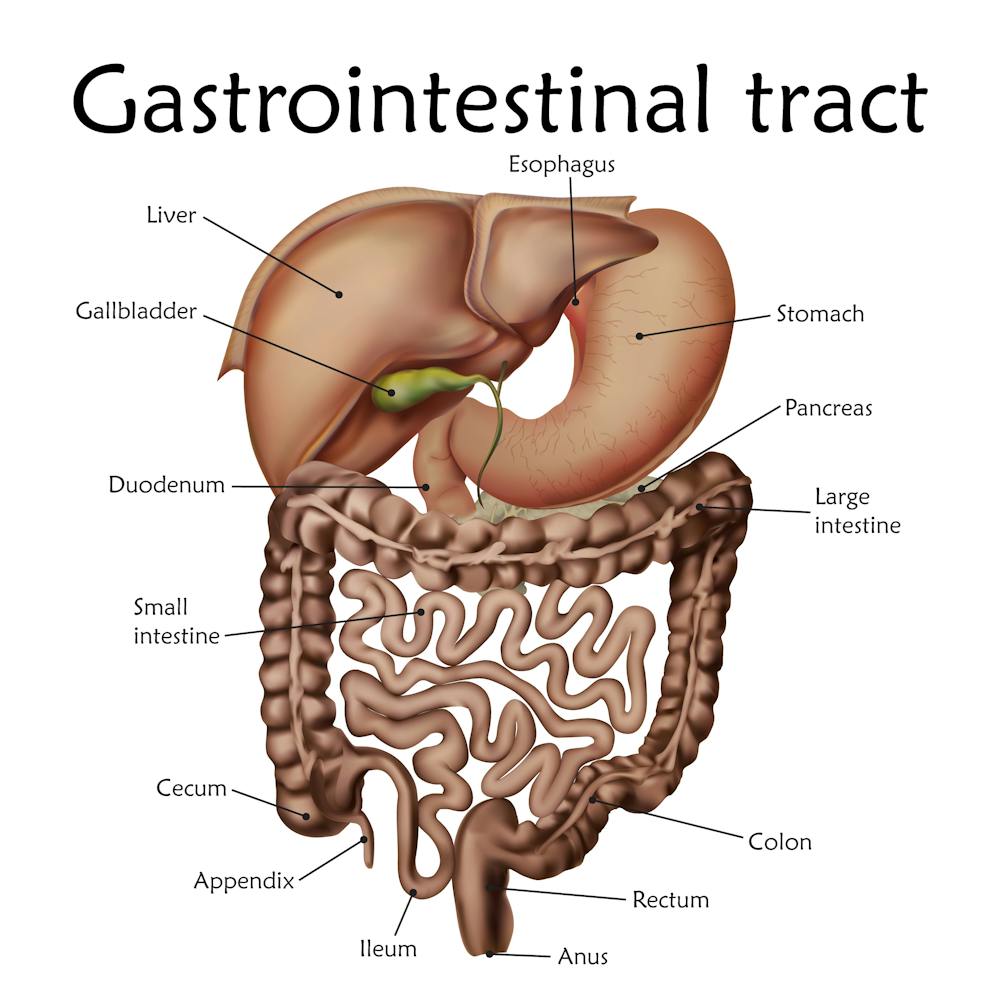
Diagram of the human gastrointestinal tract
What you ingest travels a long way before what’s left makes an exit.
Veronika Zakharova/Science Photo Library via Getty Images

Your long and winding small intestine

Two or three hours later, your breakfast will leave your stomach and enter the small intestine, which is a long and coiled tube that is contained in your abdomen behind your belly button. By that point, the digestive process will have turned those big chunks of cereal into tiny particles that are small enough for your body to absorb.

By coursing through your bloodstream, these teeny particles will deliver energy and the building blocks for growth to the cells all over your body.

The small intestine is perfectly suited to perform the job of absorbing nutrients partly because it’s gigantic. Regardless of your height, it can be over 20 feet (6 meters) long, and its surface is covered with villi, tiny protrusions with a texture that resembles a shag carpet.

Those millions of villi create a huge amount of surface area, which is ideal for absorbing the nutrients in what you’ve eaten once it has been digested. The small intestine also contains many types of bacteria, which assist in breaking down the food particles.

The small intestine also produces more enzymes to help break down the carbohydrates in breads and pasta into simple sugars that are easily absorbed. As food enters into the small intestine, other organs also contribute their digestive juices to the mix.

The liver and gallbladder mix a greenish liquid called bile into the food.

Bile helps break down fats contained in food. Pancreatic enzymes help break down the carbohydrates, fats, proteins and the other nutrients in the food you eat.

Pink picture of the intestines.
Your small intestine and large intestine both have important jobs.
Dmytro Lukyanets/iStock via Getty Images Plus

Your slow and short colon

The journey through your small intestine takes between two and six hours to complete. By this point, your bowl of cereal is unrecognizable. It has turned into chyme, a greenish liquid. Chyme gets its color from the bile made in the liver.

As the chyme reaches the end of the small intestine, it enters into your large intestine, also known as the colon. The large intestine gets its name due to being wider than the small intestine, even though it is much shorter.

The colon is about 5 feet (1.5 meters) long. Unlike the villi-lined small intestine, it doesn’t absorb any nutrients. Instead it does another important job: It absorbs water from the slimy green chyme your digestive system made from your breakfast. The small intestine also absorbs water into the bloodstream, where it is delivered to your kidneys to make urine.

So the intestines also play a small part in making your pee, as well as your poop.

This process is much slower than those earlier steps. It can take a whole day, and up to three days, to complete. By the time the chyme reaches the end of the colon, it has solidified and probably turned from green to brown.

The brown color of poop comes from the bile that is added by the liver to your bowl of cereal as it makes its way through the small intestine. The bile is changed by bacteria from green to brown. Without bile your poop would be a pale silver or clay color.

Lots of bacteria

What’s in your poop?

When it leaves your body, poop contains some leftover water, as well as undigested food such as plant fiber, as well as some dead intestinal cells. And, it may surprise you to learn, almost half of it, measured by weight, consists of bacteria.

Your intestines contain trillions of these bacteria, which help you digest what you eat. Unlike some other kinds of bacteria, they do not make you sick. The ones that come out as part of your poop give it that stinky smell.

Each part of your digestive system, from your mouth to your colon, plays an important role in extracting from what you eat the energy and water that your body needs. They all work together to help you absorb most of that energy and water, while eliminating what you do not need.


Hello, curious kids! Do you have a question you’d like an expert to answer? Ask an adult to send your question to CuriousKidsUS@theconversation.com. Please tell us your name, age and the city where you live.

And since curiosity has no age limit – adults, let us know what you’re wondering, too. We won’t be able to answer every question, but we will do our best.

The Conversation

Brian Robert Boulay does not work for, consult, own shares in or receive funding from any company or organization that would benefit from this article, and has disclosed no relevant affiliations beyond their academic appointment.

ref. How does your body make poop? – https://theconversation.com/how-does-your-body-make-poop-261911

Like Reagan, Trump is slashing environment regulations, but his strategy may have a far deeper impact

Source: The Conversation – USA (2) – By Barbara Kates-Garnick, Professor of Practice in Energy Policy, The Fletcher School, Tufts University

When the Trump administration announced it was moving to eliminate dozens of U.S. climate policies, Environmental Protection Agency Administrator Lee Zeldin said he was sending “a dagger straight into the heart of the climate change religion.”

That drive – to both repeal environmental regulations and cast doubt on science – reflects the Trump administration’s approach to environment policy.

Deregulation has long been a key theme in Republican environmental policy. The conflict between the obligation to protect public health and the desire to boost markets traces back to Ronald Reagan’s presidential administration. Reagan’s perspective that government is not a solution to problems, but is the problem instead, set the stage for Republican administrations that followed.

Reagan, standing in a reception line, shakes Trump's hand. Trump is wearing a tuxedo. Reagan a suit.
President Ronald Reagan shakes Donald Trump’s hand during a reception that Trump, then a real estate developer, attended at the White House in 1987.
White House Photographic Collection via Wikimedia Commons

Reagan argued that the growth of government spending and business regulation had stymied economic prosperity. Environmental regulations were a prime target.

Forty years later, America is seeing many of the same concepts in the Trump administration. However, its strategy could have a greater effect than Reagan ever envisioned.

Slashing budgets and staffing

There are many ways to kneecap government agencies: Instituting massive budget cuts, cutting staff with critical functions and appointing leadership whose goal is limiting the reach and effectiveness of the very agencies they direct are just a few.

In these efforts, Reagan and Trump had similar approaches to the EPA, although with different levels of intensity.

Trump’s EPA budget plan for 2026 includes a draconian 50% cut from the previous year and the lowest budget proposal, when adjusted for inflation, since Reagan. Staff cuts in just the first six months of the second Trump administration put the agency’s total employment at 12,448, down from 16,155 in January.

Reagan dissolved the EPA Office of Enforcement to limit “unnecessary regulation,” which resulted in a 80% decline in actions to enforce environmental regulations. Trump is also stopping enforcement actions, dismantling the EPA’s Science and Research Office and politicizing the agency’s science by putting political appointees in charge, moves that undermine EPA’s independence and expertise.

Both cut EPA’s budget, but that alone does not reduce an agency’s effectiveness.

Politicizing EPA leadership

When the EPA was founded in 1970 during the Nixon administration, it represented a bipartisan consensus: After decades of auto exhaust, polluted waterways and smog-filled air, environmental protection had become a national policy priority.

But industries that EPA regulated argued that the costs of implementing the agency’s mandates were too high. That created tension between economics and science and enforcement.

As part of his “government is not the solution” approach, Reagan issued an executive order shortly after taking office in 1981 requiring federal agencies to submit all proposed rules to the White House Office of Management and Budget before making them public. In Reagan’s eyes, this approach centralized power in the White House and was a way to eliminate burdensome regulations before the agencies announced them to the public.

He also appointed an EPA administrator who shared his anti-government perspective. Anne Gorsuch Burford was a lawyer and state legislator from Colorado, where she routinely voted against toxic waste cleanup and auto pollution controls.

A woman sits in a chair next to the president's desk. Reagan is smiling as he talks with her.
President Ronald Reagan meets with EPA Administrator Anne Gorsuch in the Oval Office in May 1982.
HUM Images/Universal Images Group via Getty Images

Once in Washington, she appointed several people to the EPA’s leadership team with direct ties to industries the EPA regulated. An example was Rita Lavelle, head of the EPA’s toxic waste programs, who was later convicted of perjury for lying to Congress about when she knew her former employer, a defense contractor, was disposing of toxic waste at a now notorious dump site.

These appointments were an example of regulatory capture by the industries EPA was in charge of overseeing. Anne Gorsuch Burford was held in contempt of Congress for not turning over records related to the Superfund cleanup of the same hazardous waste site, which led to her resignation. The Superfund program to clean up toxic waste dumps was new and one of EPA’s largest programs at the time.

The scandals, broken staff morale, stripped budgets and fights over policy discredited the agency.

Going after government scientists

Anne Gorsuch Burford’s deregulation efforts weren’t fully successful, in part because EPA staff experts rallied to preserve science and regulatory functions. They leaked materials about delays in the Superfund site cleanup to sympathetic congressional staff, who in turn found support from Republican and Democratic senators.

That history may have influenced the Trump administration’s strategy toward the federal bureaucracy’s staff experts, who Trump calls “the Deep State.”

The Department of Government Efficiency, an unofficial group Trump set up in early 2025 headed by Elon Musk, directed the firing of tens of thousands of government scientists and other staff with expertise that government agencies rely on. Thousands more have resigned amid intimidation tactics such as surveillance.

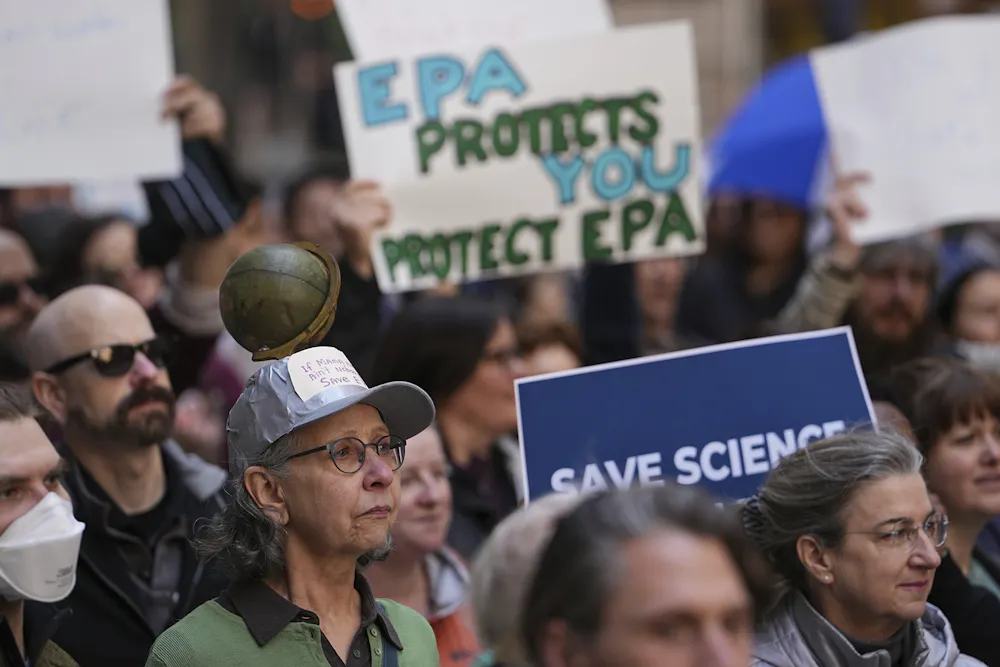
A group of people hold science reading 'EPA protects you, protect EPA' and 'Science saves'
EPA employees and supporters held a rally in Philadelphia on March 25, 2025, to call attention to the impact of the Trump administration’s job cuts.
AP Photo/Matt Rourke

Trump’s head of the Office of Management and Budget, Russell Vought, has been clear about targeting bureaucrats. He said in 2023: “We want their funding to be shut down so that the EPA can’t do all of the rules against our energy industry because they have no bandwidth financially to do so. We want to put them in trauma.”

There is a clear focus today on EPA programs that don’t align with the administration’s views. Programs related to environmental justice for low-income communities are in the line of fire. The appointment of people from the chemical, fossil fuel and corporate industries to high-level regulatory and legal positions raises questions about regulatory capture – whether their focus will be more on the health of the industries they oversee than on the health of the public.

An example is decision-making related to who bears the costs of cleaning up pollution from PFAS “forever chemicals” − persistent, harmful chemicals that are now found in drinking water and in people’s bloodstreams. Steven Cook, a Trump appointee who once represented chemical companies that are fighting the rule, has proposed shifting what are expected to be billions of dollars in costs from the companies to taxpayers, The New York Times reports. That would be a significant shift away from the 45-year Superfund mantra that “the polluter pays.” Such actions blur the lines between ethics, policymaking and consumer and company interests.

The first Trump administration had a focus on reforming permitting and bureaucracy. While appearing radical at the time, the revamping of scientific boards to include more industry representatives, the undoing of power plant rules and the lessening of enforcement hobbled but did not completely undo the agency.

The second Trump administration, in actively supporting fossil fuel “energy dominance,” is taking steps to not just eliminate regulations but to ensure future administrations can’t bring the regulations back, by using a complex set of legal arguments related to the regulation of greenhouse gases.

At the same time, the administration is trying to discredit scientific research to downplay the risks of a warming planet.

EPA Administrator Lee Zeldin announces plans in March 2025 to reconsider dozens of regulations that affect the fossil fuel industry and human health.

The Reagan administration, while it also pushed for deregulation and expanded permitting of oil, gas and coal leases, embraced some elements of environmental protection. Reagan designated more than 10 million acres as protected wilderness and signed the Coastal Barriers Resources Act, which helped protect 3.5 million acres of shoreline from development. When Reagan signed the Montreal Protocol in 1988 to help protect the ozone layer, he cited scientific data showing the growing risks of ozone-depleting substances.

When Congress doesn’t push back

There is another critical difference between the first and second Trump administrations: The current Republican-controlled Congress is consenting to almost every request the president makes.

Congress has a constitutional responsibility to be a check on the executive branch, and a bipartisan Congress has long taken an active role in oversight and investigation involving environmental issues.

In 2025, however, Congress has approved most of Trump’s demands, including voting to repeal much of the Inflation Reduction Act, a package of pro-environment spending it had just passed two years earlier and that included many projects in Republican districts.

The administration’s effort to eliminate U.S. climate policies will take time and face lawsuits.

In an irony of history, Anne Gorsuch Burford’s son Neil Gorsuch now sits on the Supreme Court. His vote when those cases come before the court may be the ultimate Reagan legacy on the Trump EPA.

This article, originally published Aug. 26, 2025, has been updated with a recommendation within EPA to shift PFAS cleanup costs from companies to taxpayers.

The Conversation

Barbara Kates-Garnick does not work for, consult, own shares in or receive funding from any company or organization that would benefit from this article, and has disclosed no relevant affiliations beyond their academic appointment.

ref. Like Reagan, Trump is slashing environment regulations, but his strategy may have a far deeper impact – https://theconversation.com/like-reagan-trump-is-slashing-environment-regulations-but-his-strategy-may-have-a-far-deeper-impact-262929

Earth-size stars and alien oceans – an astronomer explains the case for life around white dwarfs

Source: The Conversation – USA – By Juliette Becker, Assistant Professor of Astronomy, University of Wisconsin-Madison

White dwarf stars, like this one shown shrouded by a planetary nebula, are much smaller than stars like our Sun. NASA/R. Ciardullo (PSU)/H. Bond (STScI)

The Sun will someday die. This will happen when it runs out of hydrogen fuel in its core and can no longer produce energy through nuclear fusion as it does now. The death of the Sun is often thought of as the end of the solar system. But in reality, it may be the beginning of a new phase of life for all the objects living in the solar system.

When stars like the Sun die, they go through a phase of rapid expansion called the Red Giant phase: The radius of the star gets bigger, and its color gets redder. Once the gravity on the star’s surface is no longer strong enough for it to hold on to its outer layers, a large fraction – up to about half – of its mass escapes into space, leaving behind a remnant called a white dwarf.

I am a professor of astronomy at the University of Wisconsin-Madison. In 2020, my colleagues and I discovered the first intact planet orbiting around a white dwarf. Since then, I’ve been fascinated by the prospect of life on planets around these, tiny, dense white dwarfs.

Researchers search for signs of life in the universe by waiting until a planet passes between a star and their telescope’s line of sight. With light from the star illuminating the planet from behind, they can use some simple physics principles to determine the types of molecules present in the planet’s atmosphere.

In 2020, researchers realized they could use this technique for planets orbiting white dwarfs. If such a planet had molecules created by living organisms in its atmosphere, the James Webb Space Telescope would probably be able to spot them when the planet passed in front of its star.

In June 2025, I published a paper answering a question that first started bothering me in 2021: Could an ocean – likely needed to sustain life – even survive on a planet orbiting close to a dead star?

An illustration showing a large bright circle, with a very small white dot nearby.
Despite its relatively small size, a white dwarf – shown here as a bright dot to the right of our Sun – is quite dense.
Kevin Gill/Flickr, CC BY

A universe full of white dwarfs

A white dwarf has about half the mass of the Sun, but that mass is compressed into a volume roughly the size of Earth, with its electrons pressed as close together as the laws of physics will allow. The Sun has a radius 109 times the size of Earth’s – this size difference means that an Earth-like planet orbiting a white dwarf could be about the same size as the star itself.

White dwarfs are extremely common: An estimated 10 billion of them exist in our galaxy. And since every low-mass star is destined to eventually become a white dwarf, countless more have yet to form. If it turns out that life can exist on planets orbiting white dwarfs, these stellar remnants could become promising and plentiful targets in the search for life beyond Earth.

But can life even exist on a planet orbiting a white dwarf? Astronomers have known since 2011 that the habitable zone is extremely close to the white dwarf. This zone is the location in a planetary system where liquid water could exist on a planet’s surface. It can’t be too close to the star that the water would boil, nor so far away that it would freeze.

A diagram showing a sun, with three planets at varying distances away. The closest one is labeled 'too hot' the next 'just right' and the farthest 'too cold'
Planets in the habitable zone aren’t so close that their surface water would boil, but also not so far that it would freeze.
NASA

The habitable zone around a white dwarf would be 10 to 100 times closer to the white dwarf than our own habitable zone is to our Sun, since white dwarfs are so much fainter.

The challenge of tidal heating

Being so close to the surface of the white dwarf would bring new challenges to emerging life that more distant planets, like Earth, do not face. One of these is tidal heating.

Tidal forces – the differences in gravitational forces that objects in space exert on different parts of a nearby second object – deform a planet, and the friction causes the material being deformed to heat up. An example of this can be seen on Jupiter’s moon Io.

The forces of gravity exerted by Jupiter’s other moons tug on Io’s orbit, deforming its interior and heating it up, resulting in hundreds of volcanoes erupting constantly across its surface. As a result, no surface water can exist on Io because its surface is too hot.

A diagram showing Jupiter, with four Moons orbiting around it. Io is the Moon closest to Jupiter, and it has four arrows pointing to the planet and other moons, representing the forces exerted on it.
Of the four major moons of Jupiter, Io is the innermost one. Gravity from Jupiter and the other three moons pulls Io in varying directions, which heats it up.
Lsuanli/Wikimedia Commons, CC BY-SA

In contrast, the adjacent moon Europa is also subject to tidal heating, but to a lesser degree, since it’s farther from Jupiter. The heat generated from tidal forces has caused Europa’s ice shell to partially melt, resulting in a subsurface ocean.

Planets in the habitable zone of a white dwarf would have orbits close enough to the star to experience tidal heating, similar to how Io and Europa are heated from their proximity to Jupiter.

This proximity itself can pose a challenge to habitability. If a system has more than one planet, tidal forces from nearby planets could cause the planet’s atmosphere to trap heat until it becomes hotter and hotter, making the planet too hot to have liquid water.

Enduring the red giant phase

Even if there is only one planet in the system, it may not retain its water.

In the process of becoming a white dwarf, a star will expand to 10 to 100 times its original radius during the red giant phase. During that time, anything within that expanded radius will be engulfed and destroyed. In our own solar system, Mercury, Venus and Earth will be destroyed when the Sun eventually becomes a red giant before transitioning into a white dwarf.

For a planet to survive this process, it would have to start out much farther from the star — perhaps at the distance of Jupiter or even beyond.

If a planet starts out that far away, it would need to migrate inward after the white dwarf has formed in order to become habitable. Computer simulations show that this kind of migration is possible, but the process could cause extreme tidal heating that may boil off surface water – similar to how tidal heating causes Io’s volcanism. If the migration generates enough heat, then the planet could lose all its surface water by the time it finally reaches a habitable orbit.

However, if the migration occurs late enough in the white dwarf’s lifetime – after it has cooled and is no longer a hot, bright, newly formed white dwarf – then surface water may not evaporate away.

Under the right conditions, planets orbiting white dwarfs could sustain liquid water and potentially support life.

Search for life on planets orbiting white dwarfs

Astronomers haven’t yet found any Earth-like, habitable exoplanets around white dwarfs. But these planets are difficult to detect.

Traditional detection methods like the transit technique are less effective because white dwarfs are much smaller than typical planet-hosting stars. In the transit technique, astronomers watch for the dips in light that occur when a planet passes in front of its host star from our line of sight. Because white dwarfs are so small, you would have to be very lucky to see a planet passing in front of one.

The transit technique for detecting exoplanets requires watching for the dip in brightness when a planet passes in front of its host star.

Nevertheless, researchers are exploring new strategies to detect and characterize these elusive worlds using advanced telescopes such as the Webb telescope.

If habitable planets are found to exist around white dwarfs, it would significantly broaden the range of environments where life might persist, demonstrating that planetary systems may remain viable hosts for life even long after the death of their host star.

The Conversation

Juliette Becker does not work for, consult, own shares in or receive funding from any company or organization that would benefit from this article, and has disclosed no relevant affiliations beyond their academic appointment.

ref. Earth-size stars and alien oceans – an astronomer explains the case for life around white dwarfs – https://theconversation.com/earth-size-stars-and-alien-oceans-an-astronomer-explains-the-case-for-life-around-white-dwarfs-262301

How the conservative Federalist Society will affect the Supreme Court for decades to come

Source: The Conversation – USA – By Paul M. Collins Jr., Professor of Legal Studies and Political Science, UMass Amherst

Supreme Court Justices Samuel Alito and Clarence Thomas look on during the 60th presidential inauguration on Jan. 20, 2025, in the U.S. Capitol in Washington. Chip Somodevilla/Pool Photo via AP

During the 2016 presidential election campaign, candidate Donald Trump took the unprecedented move of releasing a list of his potential Supreme Court nominees.

But Trump didn’t assemble this list himself. Instead, he outsourced the selection of his judicial appointments to leaders of the Federalist Society, an organization in the conservative legal movement.

As Trump explained in a 2016 interview, “We’re going to have great judges, conservative, all picked by the Federalist Society.”

This was a strategic decision by Trump. By turning to the Federalist Society, he was able to court conservative and evangelical voters who may have been otherwise uneasy with supporting the former New York City real estate mogul.

In his first presidential term, Trump appointed three justices affiliated with the Federalist Society – Neil Gorsuch, Brett Kavanaugh, and Amy Coney Barrett – in addition to hundreds of lower federal court judges. Federalist Society affiliates are current or former members of the organization, as well as individuals who interact with the group, such as by attending Federalist Society events, but who may not claim membership.

We are political science scholars who recently published research in a peer-reviewed journal showing that Supreme Court justices affiliated with the Federalist Society are more conservative and more consistently conservative than other justices, meaning they seldom deviate from their conservative voting behavior.

Our research suggests that, despite Trump’s recent criticism of the organization and its leadership, justices affiliated with the Federalist Society will advance the conservative legal agenda decades into the future. But this won’t always involve supporting Trump’s agenda.

Here’s what you should know, and why it matters.

The Federalist Society

The Federalist Society for Law and Public Policy Studies was founded in 1982 with the goal of providing intellectual spaces for conservative law students who felt their views were dismissed by the legal field. It has grown tremendously over the past 40 years. Today, it boasts more than 200 chapters and over 70,000 members.

Unlike other conservative public interest groups, it does not advocate for specific issue positions. Instead, it promotes its goals primarily through education and networking.

The Federalist Society’s educational mission is pursued chiefly in law schools. That’s where it trains the next generation of lawyers in the approaches and goals of the conservative legal movement. This includes promoting the judicial philosophy of originalism – the idea that the best way to interpret the U.S. Constitution is according to how it was understood at the time of its adoption.

Originalism is often used to justify conservative outcomes.

For example, Justice Clarence Thomas, a prominent member of the Federalist Society, has called for using originalism to reconsider Supreme Court precedents involving the right to contraception, same-sex marriage and same-sex consensual relations.

A woman, her image projected on a big screen, speaks to an audience.
Supreme Court Justice Amy Coney Barrett speaks at the 2023 Antonin Scalia Memorial Dinner, part of the Federalist Society’s National Lawyers Convention, on Nov. 9, 2023, in Washington, D.C.
Jahi Chikwendiu/The Washington Post via Getty Images

The Federalist Society network also connects junior members with more senior members, helping young lawyers obtain prestigious clerkships and positions in government and the legal profession. These lawyers tend to associate with the Federalist Society throughout their careers.

Federalist Society affiliates learn that promoting the group’s interest is also a way of promoting their self-interests as they move up in the legal world.

For Supreme Court justices, this networking has tangible benefits. For instance, Justice Samuel Alito accepted a luxury fishing vacation in 2008 organized by Leonard Leo, the former executive vice president and current co-chair of the Federalist Society. The estimated cost of the fishing trip was more than $100,000.

And Thomas was treated to decades of high-end vacations and private school tuition for his grandnephew – whom he raised as a son – by billionaire businessman Harlan Crow, a Federalist Society donor.

In short, the Federalist Society is a network of lawyers and judges who share a conservative outlook on the world and aspire to etch the conservative agenda into law through judicial decisions.

Our research

Our research sought to answer two interrelated questions. Are justices affiliated with the Federalist Society more conservative than nonaffiliated justices, and are they more consistently conservative?

To illustrate this, consider former Justice David Souter, whom President George H.W. Bush appointed in 1990 and who had no connections to the Federalist Society. Despite being a Republican appointee, Souter often voted with the court’s liberal members, such as upholding abortion rights in 1992. In 2005, he wrote the majority opinion in a ruling that prevented the Ten Commandments from being displayed in courthouses and public schools.

A man in a suit and tie places his left hand on a bible and raises his right hand as he receives an oath.
President George H.W. Bush appointed David Souter to the Supreme Court in 1990.
Mark Reinstein/Corbis via Getty Images

To determine whether justices affiliated with the Federalist Society are different from even other judges appointed by Republican presidents, we examined almost 25,000 votes cast by Supreme Court justices between 1986 and 2023. We started with 1986 because that’s when the first justice affiliated with the Federalist Society – Antonin Scalia – joined the high court.

We classified votes as conservative or liberal according to a well-established methodology. For example, conservative votes support the restriction of reproductive freedom, are anti-business regulation and generally disfavor policies that promote the rights of vulnerable populations, such as the LGBTQ+ community. Liberal votes do the opposite.

We found that justices connected to the Federalist Society are about 10 percentage points more likely to cast a conservative vote than other justices, even other justices appointed by Republican presidents. And they are more consistent in their voting behavior, seldom casting votes that go against their conservative values.

The Federalist Society’s lasting impact

These findings have important implications. Justices on the modern Supreme Court serve for about a quarter century on average. And every current Republican-appointed member of the court is affiliated with the Federalist Society.

This means that Americans are likely to see justices affiliated with the Federalist Society advance the agenda of the conservative legal movement for decades to come. This has already happened in recent decisions that curtailed reproductive freedom, eliminated affirmative action in college admissions and expanded the powers of the president, including immunizing the president from criminal prosecution.

President Trump has recently had a high-profile breakup with the Federalist Society, calling Leo a “sleazebag” and expressing his disappointment with the organization.

Trump’s outburst followed a ruling by the U.S. Court of International Trade that blocked his sweeping tariff program against China and other nations. This happened despite one of Trump’s first-term judicial appointees sitting on the panel.

Notwithstanding this acrimony, this term will give justices affiliated with the Federalist Society the opportunity to further solidify the conservative agenda. Cases involving LGBTQ+ rights and federal elections are on the docket. And the court will be adding other important issue areas as it fills out its caseload for the 2025-26 term, which starts on the first Monday in October.

The Conversation

The authors do not work for, consult, own shares in or receive funding from any company or organization that would benefit from this article, and have disclosed no relevant affiliations beyond their academic appointment.

ref. How the conservative Federalist Society will affect the Supreme Court for decades to come – https://theconversation.com/how-the-conservative-federalist-society-will-affect-the-supreme-court-for-decades-to-come-263397

As National Park System visitor numbers hit record highs, here’s how visitors can adapt for a better experience

Source: The Conversation – USA (2) – By Allie McCreary, Assistant Professor of Parks and Recreation, Auburn University

Crowds often form at popular places in U.S. national parks, like the entrance to Yosemite Valley in California. Jim West/UCG/Universal Images Group via Getty Images)

Visiting America’s national parks is a treasured public pastime. The wetlands of Congaree in South Carolina, the depths of the Grand Canyon in Arizona and the vistas provided by peaks in Yosemite in California are iconic American experiences for residents and for people who travel from other countries to vacation.

There are lots of benefits of visiting national parks, or parks in general. Spending time in nature is good for people’s mental health. Moving in the outdoors – walking, biking, running, paddling – benefits people’s physical health. Sharing experiences with others helps build social connections with old friends or newfound ones. Visitors also learn about ecosystems and cultural history, developing their own relationship to the landscape.

National park visitation is growing, with record-high visitor numbers in 2024 across the entire 398-property system, as well as at the 63 formally designated national parks. And there has been a general trend of people gravitating to Instagram-popular parks, and even specific spots within popular parks.

Reductions in federal funding and staffing at national parks means visitors may see longer lines to enter parks or popular locations within them, fewer visitor services and educational programs, and fewer rangers to ask for advice or assistance.

As scholars of parks and recreation, we know crowded conditions make it harder to enjoy national parks. But we also know that if you plan carefully, you can create a great experience.

What gets in the way of fun?

In general, research identifies three main barriers to recreational fun.

One is how confident people are in their own physical abilities and how safe they feel in the park. For example, someone may want to go kayaking in Florida’s Everglades or Minnesota’s Voyageurs National Park but doesn’t know where to rent a boat, where to put it in the water, or which stretches of water are best for a beginner.

Another is the presence – or absence – of people to enjoy the space with, or family obligations or relationships that might preclude them from an activity. Culture can also play a role in where people visit and what they do there. For instance, a national park may be a source of escape where individuals seek autonomy and independence. For others, a national park visit can be a focal point for social gatherings and a time to reconnect with family and friends.

A large group of people stand in a line looking at an area where steam is rising from the ground.
For many years, Old Faithful in Yellowstone National Park in Wyoming has drawn massive crowds to witness the natural phenomenon of an erupting geyser.
Joe Sohm/Visions of America/Universal Images Group via Getty Images

There are also external factors, like how much free time a person has for recreation and how easy it is to get to a national park from their home. Someone may live a short drive from a national park but not visit simply because they do not know what they can do there, or how to have a positive experience.

More recently, research has also identified environmental barriers outside visitors’ control. Thin ice or lack of snow prevents many winter activities in Colorado’s Rocky Mountain National Park and Maine’s Acadia National Park, just as excessive heat can decrease the attractiveness of summer recreation in parks like the Everglades or California’s Death Valley. Extreme weather events such as inland flooding and coastal hurricanes can block roads and damage parks, posing both physical and logistical barriers in parks such as Cape Lookout National Seashore in North Carolina.

Wildlife habits also affect visitors, who may flock to an area where they can see wildlife. Or they may avoid – or may be restricted from – areas with dangerous wildlife.

Adapting to find enjoyment anyway

If the national park places you want to visit seem too busy, think about your options. You could change your travel dates to a less busy time. People who want to visit Yellowstone in Wyoming, Idaho and Montana could find campground reservations unavailable for some weeks but plentiful for other weeks – or they could choose to stay in a local hotel instead of camping.

You could try a different park or activity. For example, an angler who typically visits Great Smoky Mountains National Park in North Carolina and Tennessee to fish for trout may find that some streams are warming and no longer support this activity. They might go fishing elsewhere or stay in the Smokies and bird-watch, hike or read by a stream.

If you really want to visit during a busy time, you can also simply change your expectations, like not expecting Old Faithful to be a quiet place with only a few visitors.

Park personnel often seek to manage visitor numbers to protect the park from too much traffic, but also so everyone who visits can enjoy the experience. For example, implementing reservations for Acadia’s Cadillac Mountain at sunrise means at least some people get a relatively serene experience, as opposed to lots of people having an overcrowded experience.

Park staff also design park amenities so roads, boat ramps, trailheads and parking are in useful locations that work well for the number of visitors expected. And park workers provide advance information for visitors, in brochures and on websites, charge fees for entry, conduct tours or other programs at the location – and ticket or arrest people who are in places or doing activities they’re not supposed to – to reduce the effects of overcrowding.

A group of people stand on a mountaintop looking at a bay with islands as the sun rises over the horizon.
The National Park Service requires advance reservations to see the sunrise atop Cadillac Mountain in Acadia National Park in Maine.
AP Photo/Robert F. Bukaty

Planning is key

We have found that the most effective way for people to have the park experiences they want, and enjoy them as much as they hope, is to plan ahead.

Planning can include looking at parks’ websites for ideas and considering the best time to visit – both for your own schedule and what you want to do.

Understanding the weather and climate of the region will help you determine what to bring, but also what conditions will be like if you’re hiking, paddling or driving.

Advance preparation definitely includes finding lodging – and making reservations whenever possible. If reservations aren’t possible, see whether you can increase your chances of finding a place to sleep when you arrive by choosing lesser-visited parts of the park or identifying nearby backup options, such as state parks and private campgrounds, that might provide a break from the crowds.

And you can make sure you’re prepared for whatever you’re going to do, whether it’s getting used to walking long distances before a big hike or learning about local flora and fauna before you arrive.

Thinking ahead also means you can share your itinerary with friends and family – either as invitations to join you or for periodic safety check-ins.

It is also helpful to talk to park personnel. Park staff will have great insights into hidden gems that might be slightly off the beaten path but away from the crowds and able to provide a unique visitor experience. Rangers or other staff can help you determine the best choices for settings and activities that match your abilities, interests, time and needs.

And finally, don’t forget to be considerate of other visitors. Have patience in the parking lots, visitor centers, trailheads and lookout points. Others in the park seek the same awe-inspiring views and heart-pumping recreation activities as you. In many cases, it’s not the number of people but the attitudes and behaviors of those people that can make a place either feel crowded or like a community of like-minded outdoor enthusiasts.

The Conversation

Allie McCreary receives funding from the Public Lands Service Coalition and New Frontiers in Research Fund (Government of Canada).

Michael Brunson is affiliated with The Appalachian Trail Conservancy and the National Association for Interpretation .

ref. As National Park System visitor numbers hit record highs, here’s how visitors can adapt for a better experience – https://theconversation.com/as-national-park-system-visitor-numbers-hit-record-highs-heres-how-visitors-can-adapt-for-a-better-experience-262407

American capitalism is being remade by state power

Source: The Conversation – USA (2) – By H. Sami Karaca, Professor of Business Analytics, Questrom School of Business, Boston University

Is the Trump administration trying to reshape American capitalism? Recent moves by Washington, such as taking a 10% share of semiconductor maker Intel, point to a shift in that direction. For decades, Washington has supported free-market capitalism. Today, the government appears to be supporting a new direction – state-directed capitalism.

As a professor at the Questrom School of Business who studies different economic systems, I find this reversal striking. My research is supported by the Ravi K. Mehrotra Institute, which is trying to understand how business, markets and society interact. My previous research – finding, for example, that U.S. news coverage of capitalism was far more negative in the 1940s than it is now – suggests capitalism isn’t in retreat but is rather evolving.

In what direction is the Trump administration pushing it?

Types of capitalism

While many people bandy around the term “capitalism,” it actually comes in many different forms. The most basic definition of capitalism is when the means of production – such as factories, farms and offices – are owned by private individuals.

Capitalism is driven by profit. Some of the earliest descriptions of the profit motive that drives the whole system come from Adam Smith. As he wrote in 1776, “It is not from the benevolence of the butcher, the brewer or the baker that we expect our dinner, but from their regard to their own interest.”

Who gets the profits and who controls the means of production determine the specific forms of capitalism. While there are many types, I want to focus on three of the most important.

Free-market capitalism, also called laissez-faire capitalism, is when the government takes a hands-off approach to the economy. The U.S. after the Civil War is a good example of free-market capitalism. During the late 1800s, the federal government imposed few regulations on businesses.

State-guided capitalism is when the government chooses industries or companies to support. Favored sectors are given money and face looser regulations than nonfavored sectors. China today is an example of state-guided capitalism, where the state provides support for industries such as shipbuilding, steel and AI.

Oligarchic capitalism is when a very small part of the population owns key industries and controls the economy. Russia today is an example of this type of capitalism.

Each form of capitalism has its strengths and weaknesses. For example, free-market capitalism provides the most incentives to grow the economy, but the lack of rules often leads businesses to run roughshod over consumers. U.S. historians describe the late 1800s as the era of robber barons.

State-guided capitalism can dramatically boost the output of favored industries. However, if the government invests in the wrong industries, huge amounts of money can be wasted propping up dying firms.

Oligarchic capitalism can rapidly invest in new areas and shift resources, but the profits enrich only a tiny elite.

Recent changes

The U.S. currently appears to be operating under a hybrid model of capitalism, blending free-market principles with elements of state capitalism.

One of the most recent changes is the Trump administration’s decision to take a 10% stake in Intel. Congress passed the multibillion-dollar CHIPS and Science Act in 2022 to bolster U.S. computer chipmakers. Intel is slated to receive US$11.1 billion in grants from the program and other government funding. The current administration has converted that public support into a 10% ownership of the semiconductor maker.

Intel isn’t alone. The government has recently become a shareholder in other companies it views as strategically important – a trend that seems likely to continue and possibly result in the creation of a “sovereign wealth fund.” In July 2025, the Department of Defense agreed to buy $400 million of convertible preferred stock in MP Materials. MP Materials is the only U.S. rare-earth minerals mine with integrated production capacity. The company said the Department of Defense would be positioned to become its largest shareholder.

The government is also requiring a share of revenue from large computer chip manufacturers. Nvidia and AMD will have to remit 15% of revenue from certain chip sales to China as a condition for export licenses.

Why the US change is important

The CHIPS and Science Act has already funneled billions into U.S. semiconductor manufacturing via grants, tax credits and R&D support. MP Materials and Intel could serve as pilot models for further strategic intervention. However, the U.S. government spends trillions each year, and the amounts invested in American industries and companies represent only a small percentage of total spending.

While the CHIPS and Science Act was passed in 2022 under the Biden administration, the implementation relied on traditional tools of industrial policy such as grants, tax credits and milestone-based funding. In contrast, the Trump administration has converted these grants into equity arrangements, with officials stating the government should get a return on its investment.

This shift from an incentive-based approach to a direct ownership model represents one of the most fascinating experiments in modern American capitalism. The real question is what happens if – or when – this strategy expands. The government could become more involved in energy, biotech and AI, or any place where markets show signs of lagging or supply chains are geopolitically fragile.

The U.S. isn’t rejecting capitalism but recalibrating its boundaries. The next few years will show exactly how Washington’s interventions will reshape U.S. capitalism.

The Conversation

H. Sami Karaca receives funding from the Ravi K. Mehrotra Institute.

ref. American capitalism is being remade by state power – https://theconversation.com/american-capitalism-is-being-remade-by-state-power-263881

We’ve been tracking the number of Americans who identify as transgender – soon, there will be no reliable way to measure them

Source: The Conversation – USA (2) – By Jody L. Herman, Senior Scholar of Public Policy at the Williams Institute, University of California, Los Angeles

Researchers have traditionally had a difficult time tracking the number of Americans who identify as transgender.

But over the past decade, our work has become easier, largely thanks to federal data. In 2014, for the first time, the federal government included a question on transgender identity in the Centers for Disease Control and Prevention’s Behavior Risk Factor Surveillance System. It subsequently added gender identity questions to other surveys, like the National Crime Victimization Survey. Since 2016, we’ve been able to use federal datasets to estimate the number of people who identify as transgender at the national and state levels.

Our recently published analysis suggests that 2.1 million U.S. adults identify as transgender. In our prior study, published in 2022, we found that 1.3 million U.S. adults identified this way. In our new report, we also found that 724,000 youth age 13 to 17 identified as transgender.

To arrive at these estimates, we drew from the CDC’s Youth Risk Behavior Survey and Behavior Risk Factor Surveillance System, which provide the most comprehensive data on the gender identity of Americans. Though these datasets are the best available to make these estimates, we lack state-level data in certain cases. So we used a statistical technique called multilevel regression and poststratification to fill in those gaps.

This information is important. It allows policymakers, educators, judges, the media and others to understand the size and characteristics of this population, as well as who will be affected by public policies, such as nondiscrimination laws that aim to protect transgender people or bans on transgender people’s use of public bathrooms. The U.S. Supreme Court has even cited our estimates in decisions that impact transgender people.

But our work is about to become a lot harder, if not impossible.

At the directive of the Trump administration, federal surveys will no longer collect data about gender identity. Questions that aim to identify transgender respondents will be removed, while binary sex questions with only “male” or “female” response options will remain.

Though data sources are being erased, the transgender population will not be. And yet it will likely be at least a decade before we can publish updated figures on the estimated number of people living in the U.S. who identify as transgender.

Age group differences persist

But first, let’s highlight what the new report reveals.

One consistent pattern across our reports from 2017, 2022 and 2025 is that younger people are more likely to identify as transgender than older adults.

In our new report, however, we were able to see significant differences among different age groups of adults for the first time.

Those 18 to 34 are now significantly more likely to identify as transgender than those 65 and older, and those 18 to 24 are significantly more likely to identify as transgender than those 35 to 64.

When considering population changes over time, our estimates for the youngest age group – those 13 to 17 – have utilized different data sources and methodologies. Therefore, we can’t make direct comparisons across years. Among adults overall, we haven’t seen any significant changes over the past decade or so.

However, our estimate for the youngest adult age group – those 18 to 24 – is now significantly higher. Using 2014-15 data, we estimated that 0.7% of U.S. adults aged 18 to 24, or 205,850 people, identified as transgender. The data we analyzed from 2021-23 puts that figure at 2.7%, or 827,200 Americans.

This uptick doesn’t support the idea that there is a sudden, rapid growth in the transgender youth population, however. In fact, our findings are consistent with the idea that acceptance of gender and sexuality is generational and shaped by your social surroundings.

These generational differences likely impact whether someone will disclose their transgender identity on a survey. Our own analysis of CDC data found that young people are more likely than older adults to answer questions about their gender identity. This also means the real percentage of older adults who identify as transgender may be higher.

As younger transgender people grow older, we expect observed differences between age groups to diminish over time.

Disappearing data sources

More research is required to determine the reasons for this growth among young adults identifying as transgender. Yet future efforts to better identify and understand transgender population trends will likely be delayed for the foreseeable future.

Should gender identity data collection be reinstituted under a new presidential administration in 2029, federal surveys will need to be updated and administered. Once data collection resumes, three years of new data are required before we can update our estimates.

While we and other researchers will look to other data sources in the interim, there’s nothing that can fully replace federal data sources.

In the end, no amount of data suppression can erase the reality on the ground. Millions of transgender youth and adults will continue to live in communities across the U.S. – in cities and small towns, in red states and blue states. They’ll continue to enroll in schools, get hired for jobs and navigate health care systems.

This population will not vanish simply because some of those in power wish it would. But in order for us to continue to shed light on the characteristics and needs of the transgender population – whether it’s assessing impacts of gender-affirming care bans to changes in U.S. passport gender marker policies – we’ll need these questions to be added back on federal surveys.

The Conversation

Andrew Ryan Flores receives funding from The Williams Institute at the UCLA School of Law to conduct research that fulfills the Institute’s mission of independent research. He is affiliated with American University, the Public Religion Research Institute, and the World Bank.

Jody L. Herman does not work for, consult, own shares in or receive funding from any company or organization that would benefit from this article, and has disclosed no relevant affiliations beyond their academic appointment.

ref. We’ve been tracking the number of Americans who identify as transgender – soon, there will be no reliable way to measure them – https://theconversation.com/weve-been-tracking-the-number-of-americans-who-identify-as-transgender-soon-there-will-be-no-reliable-way-to-measure-them-263599

Pregnant women face tough choices about medication use due to lack of safety data − here’s why medical research cuts will make it worse

Source: The Conversation – USA (3) – By Almut Winterstein, Distinguished Professor of Pharmaceutical Outcomes & Policy, University of Florida

More than 9 in 10 women take at least one medication during pregnancy, yet data on prescription drugs’ effects on the fetus are sparse. Adam Hester/Tetra images via Getty Images

A panel convened in July 2025 by the Food and Drug Administration sparked controversy by casting doubt about the safety of commonly used antidepressants during pregnancy. But it also raised the broader issue of how little is known about the safety of many medications used in pregnancy, considering the implications for both mother and child – and how understudied this topic is.

In the U.S., the average pregnant patient takes four prescription medications, and more than 9 in 10 patients take at least one. But most drugs lack conclusive evidence about their safety during pregnancy. About 1 in 5 women uses a medication during pregnancy that has some preliminary evidence that it could cause harm but for which conclusive studies are missing.

We are researchers in maternal and child health who evaluate the safety of medications during pregnancy. In our work, we identify medications that might raise the risk for birth defects or pregnancy loss and compare the safety of different treatments.

While progress has been slow, researchers and federal agencies have built monitoring systems, databases and tools to accelerate our understanding of medication safety. However, these efforts are now at risk due to ongoing cuts to medical research funding – and with them, so is the knowledge base for determining whether sticking with a therapy or discontinuing it offers the safest choice for both mother and child.

How pregnant women got sidelined

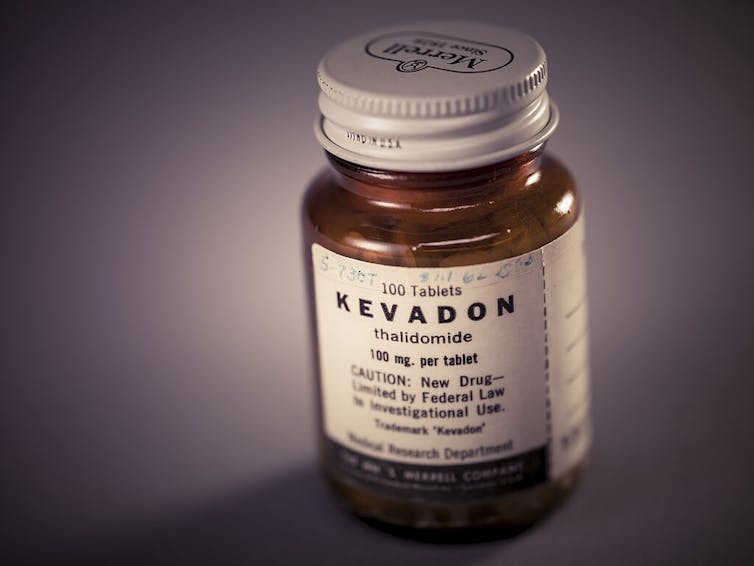
One big reason why so little is known about the effects of medications during pregnancy stretches back more than half a century. In the 1960s, a drug called thalidomide that was widely prescribed to treat morning sickness in pregnant women caused severe birth defects in over 10,000 children around the world. In response, in 1977 the FDA recommended excluding women of childbearing age from participating in early stage clinical trials testing new medications.

A pill bottle with a label carrying the drug's brand name, Kevadon, and its generic name, thalidomide.
Thalidomide, sold under several brand names including Kevadon, was used in many countries to treat morning sickness, though the Food and Drug Administration never approved it for that purpose in the United States.
U.S. Food and Drug Administration

Ethically, there is long-standing tension between concerns about fetal harm and maternal needs. Legal liability and added complexities when conducting studies in pregnant women serve as additional barriers for drug manufacturers.

When drugs are approved, studies about whether they might cause birth defects are typically done only in animals, and they often don’t translate well to humans. So when a new medication comes on the market, nothing is known about how it affects people during pregnancy. Even if animal studies or the medication’s mode of action raised concerns, the drug can still be approved, though companies may be required to conduct studies observing its effects when taken during pregnancy.

Cause and effect

Of 290 drugs approved by the FDA between 2010 and 2019, 90% contain no human data on the risks or benefits for pregnant patients. About 80% of some 1,800 medications in a national database called TERIS, which summarizes evidence on medications’ risks during pregnancy, lack or have limited evidence about the risks for birth defects. Researchers have estimated that it takes 27 years to pin down whether a medication is safe to use in pregnancy.

As a result, many pregnant women stop treating their chronic diseases. In a U.S. study published in 2023, over one-third of women stopped taking a medication during pregnancy, and 36.5% of those did so without advice from a health care provider. More than half cited concerns about birth or developmental defects as the reason.

Yet uncontrolled chronic disease comes with its own toll on both the mother’s and the baby’s health. For example, some medications used to treat seizures are known to cause birth defects, but stopping them may increase seizures, which themselves raise the risk of fetal death.

Women with severe or recurrent depression who abruptly stop their antidepressants risk their depression returning, which is in turn associated with increased risk of substance use, inadequate prenatal care and other negative effects on fetal development. Stopping the use of medications
for treating high blood pressure also causes adverse effects – specifically, a greater risk of pregnancy-related high blood pressure that can cause organ damage, called preeclampsia; a condition called placental abruption, when the placenta detaches from the wall of the uterus too early; preterm birth; and fetal growth restriction. An online resource called Mother to Baby, created by a network of experts on birth defects, provides an excellent summary of the available data on medication safety during pregnancy.

The FDA in some cases requires drug companies to establish registries to track the outcomes of pregnancies exposed to certain medications. These registries can be useful, but they have shortcomings. For example, recruiting pregnant patients into them takes time and considerable effort, resulting in small sample sizes that may not capture rare birth defects. Also, registries typically follow a single medication and rarely include comparisons to alternative treatment approaches – or to no treatment.

What’s more, following the 2022 Dobbs v. Jackson Supreme Court decision overturning the constitutional right to abortion, women might be reluctant to add their names to a pregnancy registry or to provide data on prenatal detection of birth defects due to concerns about privacy and legal risks.

Decades of underfunding

In 2019, a task force established by the 21st Century Cures Act identified a major gap in knowledge about drug safety and effectiveness in pregnant and lactating women and recommended a boost in funding to fill it.

However, little has changed. A 2025 review by the National Academies of Sciences, Engineering and Medicine pointed out that research funding for women’s health topics has remained flat over the past decade, while the overall budget of the National Institutes of Health has steadily increased. The review recommended doubling the NIH funding allocated for such research, but this seems unlikely in light of the recent proposals to cut the overall NIH budget by 40%.

The National Institute of Child Health and Human Development funds the bulk of research on the safety of medications during pregnancy across federal agencies, although the institute has an appreciably smaller budget than most of its sister institutes such as the National Cancer Institute. Grants awarded are typically broad and take four to five years to complete, but they allow the more comprehensive assessments that are needed to support informed decisions considering outcomes for mother and child. For example, NIH-funded researchers have established a clear link between autism and prenatal use of valproate, a potent teratogen used to treat epilepsy and several mental health disorders.

The Centers for Disease Control and Prevention as well as the FDA have also funded specific pregnancy-related research. For example, following the COVID-19 epidemic, the CDC renewed its funding for studies that help expedite pregnancy safety studies for treatments that might be used for newly emerging infections. In response to emerging concerns about a substance called gadolinium, which is often used during MRI procedures, the FDA funded our own work on a study of almost 6,000 pregnant women, which found no elevated risk.

For healthy pregnancies, more research is critical

These efforts have laid a crucial foundation for evaluating medication safety and effectiveness during pregnancy. But keeping pace with the release of new medications and new ways they are used, as well as addressing the backlog of missing evidence for medications that were approved in the past millennium, remain a challenge.

Recent terminations of NIH-funded studies have focused on topics presumably relating to diversity, equity and inclusion. But research on safe and healthy pregnancies and on maternal health – for example, on the safety of COVID-19 vaccines during breastfeeding – has been affected as well.

The NIH has scaled back new grant awards by nearly US$5 billion since the beginning of 2025, and the odds for receiving NIH funding have plummeted. Proposed sweeping budget cuts for the CDC and FDA leave their role in supporting research on healthy pregnancies similarly uncertain.

In our view, removing or reducing ongoing investments in healthy pregnancies poses a danger to much-needed efforts to reduce excessive rates of stillbirths as well as infant and maternal deaths.

The Conversation

Almut Winterstein consults on medication safety issues to Merck, Syneos, Lykos and Novo Nordisk. She receives funding for pregnancy-related research from NIH, CDC, FDA, and the Gates Foundation.

Sonja Rasmussen receives funding from Harmony Biosciences, Axsome Therapeutics, Biohaven (acquired by Pfizer), Lundbeck, Novo Nordisk, and Myovant Sciences to serve on pregnancy registry scientific advisory committees. She also receives or has received funding from NIH, CDC, and FDA.

ref. Pregnant women face tough choices about medication use due to lack of safety data − here’s why medical research cuts will make it worse – https://theconversation.com/pregnant-women-face-tough-choices-about-medication-use-due-to-lack-of-safety-data-heres-why-medical-research-cuts-will-make-it-worse-260783

FDA approves updated COVID-19 vaccines with new restrictions, potentially limiting access for healthy children

Source: The Conversation – USA (3) – By David Higgins, Assistant Professor of Pediatrics, University of Colorado Anschutz Medical Campus

The FDA’s move comes as, for the first time in decades, guidance from federal health authorities and pediatric experts diverge. PeopleImages/iStock via Getty Images Plus

Guidance around COVID-19 vaccines has once again shifted after the Food and Drug Administration on Aug. 27, 2025, approved updated shots for the fall season, but for a more limited group than in prior seasons.

These changes, announced on X by Secretary of Health and Human Services Robert F. Kennedy Jr., raise new questions about eligibility and availability of COVID-19 vaccines for children.

As a pediatrician and researcher who studies vaccine delivery and health policy, I foresee these changes adding to the confusion facing parents and providers, just as this summer’s COVID-19 wave continues to rise.

How does the new guidance differ from before?

The FDA revoked the emergency use authorizations for COVID‑19 vaccines, a status used during public health emergencies that made it possible to provisionally approve vaccines swiftly during the pandemic. The agency also limited their approval to only people at higher risk of serious illness from COVID-19 infection, such as those over 65 or with underlying health conditions. But for children it is even more complicated.

The FDA approved two updated mRNA-based vaccines – Moderna’s vaccine for children 6 months and older and Pfizer’s vaccine – both targeting a new variant called LP.8.1, for children 5 years and older. The agency also approved an updated version of the the protein-based Novavax vaccine targeting a strain of the virus called JN.1 for children 12 years and older. But all three approvals are limited to children at higher risk of serious illness from COVID-19 infection.

Previously, all children 6 months and older were able to receive either the Pfizer and Moderna vaccines, with the Novavax vaccine available for anyone 12 years and older. These changes mean it may be significantly more difficult for infants and young children to get vaccinated, even though they remain at higher risk for complications from COVID-19 compared with the general population.

The decision comes as, for the first time in decades, guidance from federal health authorities and pediatric experts diverge. The Centers for Disease Control and Prevention no longer routinely recommends COVID-19 vaccines for healthy children ages 6 months to 17 years. The decision to take this approach bypassed the CDC’s normal independent review panel, creating concerns about credibility.

In contrast, the American Academy of Pediatrics recently issued its own guidance based on its review of the evidence. The AAP recommends that all children 6 months to 23 months old and children 2 to 18 years old at higher risk receive vaccines. They also emphasize that COVID-19 vaccines should be available for all children whose parents want them.

The FDA’s new guidance on vaccines may make it difficult for families to obtain vaccines for healthy children.

The AAP’s review of the evidence showed COVID-19 remains a serious risk for young children and kids with certain high-risk conditions. It also found that children are still being hospitalized and dying at rates similar to those with other illnesses for which vaccines are routinely recommended, such as influenza. And an independent expert group called the Vaccine Integrity Project confirmed that no new safety concerns have emerged relating to COVID-19 vaccines and that the vaccines remain effective.

How might access to COVID-19 vaccines for kids change?

Despite young children remaining particularly vulnerable, changes to FDA approval and conflicting recommendations will mean access to vaccines could be challenging.

Children under 5 years of age can now only receive Moderna’s vaccine. Providers who had planned to use Pfizer’s vaccine need to quickly pivot, and Moderna will need to fill supply gaps. Also, providers may not be able to use any Pfizer vaccine stock they still hold now that the emergency use authorizations is no longer in effect. Families who already face barriers to vaccination, such as those who live in rural areas or who lack health insurance, may be especially affected by these new limitations.

If providers give healthy children a COVID-19 vaccine, they would be doing this “off-label,” meaning different than what the FDA label says. This practice is legal and common, with an estimated 1 in 5 medications prescribed off-label. However, while physicians can give vaccines off-label, in many states, pharmacists and other non-physicians may not be able to do so for any age.

Even if it is legal, some providers may be hesitant to give COVID-19 vaccines off-label. After the AAP released its own recommendations, Kennedy warned that vaccine recommendations that diverge from the CDC’s official list are not protected from liability, though legal experts argue that this is misleading.

The AAP published a list of high-risk health conditions or characteristics to guide parents and providers in deciding whether a child should receive the vaccine.

At the federal level, the only current list is on the CDC website and is not specifically related to COVID-19 vaccine recommendations. For example, it includes pregnancy, even though federal health leaders have previously stated the vaccines would no longer be recommended in pregnancy. In contrast, the American College of Obstetricians and Gynecologists strongly recommends updated COVID-19 vaccination during pregnancy, when planning pregnancy, in the postpartum period and while lactating, noting benefits for both patients and their newborns.

What might happen next?

Unfortunately, the confusion may deepen as the CDC’s recommendations, including who is at high risk, may be revised after an upcoming meeting of the Advisory Committee on Immunization Practices, a panel of independent experts that advises the agency.

In June 2025, in an unprecedented move, Kennedy disbanded the entire committee and hand-picked new members. The new committee has yet to weigh in on COVID-19 vaccines for children. The chair of the COVID-19 vaccine work group, which will make recommendations to all committee members, is led by an outspoken critic of COVID-19 vaccines who does not have a biomedical degree or medical experience. Also, on Aug. 27, 2025, federal officials attempted to oust the CDC’s director just a few weeks after she was confirmed, and multiple top officials resigned.

The bottom line is that with these FDA changes, fewer vulnerable children may end up vaccinated against COVID-19 because of supply constraints, parental confusion or provider uncertainty. The best thing a family can do is talk with their pediatrician about what options remain and what is best for their child.

The Conversation

David Higgins volunteers as Vice President of the Colorado Chapter of the American Academy of Pediatrics and as a board member of Immunize Colorado. He was not involved in the development or publication of the American Academy of Pediatrics’ immunization guidelines. The views and opinions expressed in this article are solely his own and do not represent those of the American Academy of Pediatrics.

ref. FDA approves updated COVID-19 vaccines with new restrictions, potentially limiting access for healthy children – https://theconversation.com/fda-approves-updated-covid-19-vaccines-with-new-restrictions-potentially-limiting-access-for-healthy-children-264098