COVID-19 variant BA.3.2 is spreading quickly across US – a doctor explains what you need to know

Source: The Conversation – USA (3) – By Kyle B. Enfield, Associate Professor of Medicine, University of Virginia

The BA.3.2 variant of SARS-COV-2, nicknamed Cicada, is gaining ground across the U.S. and globally. Grafissimo/iStock via Getty Images Plus

A variant of COVID-19 called BA.3.2, which has circulated under the radar since late 2024, is now spreading quickly across the United States.

As a pulmonary and critical care doctor, I see many patients who are at high risk for severe COVID-19 due to chronic lung disease, as well as patients living with long COVID. All of them ask me how worried they should be about new variants of the virus.

There’s no sign so far that BA.3.2, nicknamed Cicada, is any more dangerous or causes more severe disease than the variants that were circulating in the winter of 2025-26. But because it’s significantly different from them, the current COVID-19 vaccine may not be as effective against it.

Where did the BA.3.2 variant come from?

BA.3.2 is descended from the omicron variant, which emerged in late 2021.

Compared to the current predominant strains of SARS-CoV-2, the virus that causes COVID-19, BA.3.2 carries 70 to 75 genetic changes in its spike protein, the part of the virus that helps it get into cells. The spike protein is also the part of the virus that vaccines rely on to coax people’s immune systems into recognizing the virus.

Researchers first identified BA.3.2 in November 2024 in Africa. It started its global trek in 2025 and had made it to 23 countries as of February 2026.

The first U.S. case was detected in a traveler coming into the U.S. in June 2025. Since then, it has been detected in patients and the wastewater systems of 29 states.

Wastewater monitoring is one of the best early methods of detecting strain shift, though the number of states submitting wastewater data to the CDC has declined since around 2022, after the height of the pandemic.

The Cicada variant was first detected in November 2024.

What makes BA.3.2 variant different?

All viruses change over time – and the type of virus that causes COVID-19 does so especially quickly. Every time the virus copies itself inside a cell, its DNA mutates. Most of these changes disappear, but occasionally one gives the virus an advantage over other variants, allowing that version to spread.

These changes make it harder for the immune system to recognize the virus.

Think of it like showing up to your 25th high school reunion and seeing people who have put on weight, dyed their hair and started wearing tinted contacts. You will recognize them, but it might take longer. Had you seen them every month or so for those 25 years, you would recognize them right away.

Similarly, changes to a virus’ DNA also affect how well vaccines work. Vaccines prime people’s immune systems by reminding them of what the virus looks like. Scientists design vaccines based on the most common versions of a virus circulating at a given time.

Current COVID-19 vaccines are made to protect against strains from the JN.1 lineage of the virus, which have been the most common strains in the U.S. since January 2024. However, BA.3.2 is the new kid in the block − it’s almost a complete stranger to residents of the U.S. It is different enough from the JN.1 strains that the vaccine may not do as good a job of priming the immune system against it, allowing it to evade detection.

This doesn’t mean you shouldn’t get a vaccine – a large body of evidence shows that they reduce hospitalizations and deaths from COVID-19. But a poorly matched vaccine simply won’t recognize the new variant as quickly, which means it takes longer for the immune system to mount its defense.

What dangers does the BA.3.2 variant pose?

Because people’s immune systems aren’t as good at detecting BA.3.2, this variant may infect people more widely, potentially leading to a spike in COVID-19 cases.

But even though BA.3.2 is spreading quickly, there’s no indication that it’s any more dangerous or that it causes more severe disease than the COVID-19 variants that have circulated widely over the past few years.

Pills, medicin and thermometer and a positive rapid COVID-19 test on a nightstand,with a sleeping person in the background
The immune systems of people in the U.S. are not familiar with the new variant.
Guido Mieth/DigitalVision via Getty Images

However, especially given that current vaccines may not be as effective against it, protection remains important. That’s particularly true for people with chronic health conditions, who can experience severe illness from a COVID-19 infection.

And while the number of people who develop long COVID has declined as the virus has changed since early in the pandemic, it still occurs in about 3 in 100 cases.

Protecting yourself and your community

People can take these commonsense steps to avoid getting or spreading COVID-19:

  • First, wash your hands after using the bathroom, before preparing food or eating, and after being in contact with a sick person. Hand-washing decreases the chance of a respiratory infection by 16% to 21%.

  • Second, if you feel unwell, stay home – not just to take care of yourself, but to prevent spreading disease. You may be hesitant to miss work or school, but the person sitting next to you might have a condition, such as cancer or chronic lung disease, that puts them at risk for severe infection, or they might live with someone who does.

  • Third, get outside. Reducing your time in crowded environments reduces your chance of exposure.

  • Finally, if you have concerns about your risk of developing a severe infection due to your own health conditions, talk to a trusted clinician who can offer advice that’s specific to your circumstances.

The Conversation

Kyle B. Enfield does not work for, consult, own shares in or receive funding from any company or organization that would benefit from this article, and has disclosed no relevant affiliations beyond their academic appointment.

ref. COVID-19 variant BA.3.2 is spreading quickly across US – a doctor explains what you need to know – https://theconversation.com/covid-19-variant-ba-3-2-is-spreading-quickly-across-us-a-doctor-explains-what-you-need-to-know-279447

What Americans can learn from other civil activism movements against authoritarian regimes

Source: The Conversation – USA – By John Shattuck, Professor of Practice in Diplomacy, Fletcher School of Law & Diplomacy, Tufts University

The United States, alongside other countries, has a growing pro-democracy and nonviolent civil movement. Oliver Helbig/Getty Images

On Feb. 24, The Conversation hosted a webinar titled, “What Americans can learn from other nonviolent civil activism movements.”

Executive editor and general manager Beth Daley interviewed John Shattuck, professor of practice at The Fletcher School of Law and Diplomacy at Tufts University, and Oliver Kaplan, associate professor at Josef Korbel School of Global and Public Affairs at the University of Denver and a visiting scholar at Stanford University.

Shattuck is the former president of Central European University in Hungary, where he defended academic freedom against a rising authoritarian government. Kaplan is the author of “Resisting War: How Communities Protect Themselves.” This interview has been condensed and edited for print.

Beth Daley: What is an authoritarian regime, and what are their characteristics?

John Shattuck: The authoritarian, often referred to as a “king,” is the ideal role from the point of view of the king, but certainly not from the point of view of the people. Authoritarian characteristics include centralized unlimited power, the opposite of democracy; no accountability and no rule of law; no independent courts; no checks and balances on how the king operates; rule by fear and coercion, and when necessary, in order to carry out the king’s orders, rule by by force. There are no individual rights or civil liberties except those the king decides to allow those who are loyal to him to have, at least until he decides to take them away.

John Shattuck defines authoritarian regimes in a sound bite from The Conversation’s webinar on nonviolent civil movements.

That’s a nutshell informal description of an authoritarian regime. A special threat today is that an authoritarian can emerge from a democratic election, and, indeed, a democratic election can be used to turn a weak democracy into an authoritarian regime. But when this happens, it opens the door to challenge the authoritarian in a subsequent election if civic activism can defend the electoral process by which the authoritarian was elected.

BD: What are we seeing and not seeing in the U.S. that other countries have gone through in terms of authoritarian government?

Oliver Kaplan: I think we are heading toward an autocracy, if not there already. In their 2026 report, the Varieties of Democracy Project writes that the U.S. is no longer a liberal democracy and is moving into “competitive authoritarianism,” marked by executive overreach and erosion of judicial and legislative checks. The report notes that U.S. democracy is being dismantled at a speed that is “unprecedented in modern history.”

We are seeing shifts in terms of concentration of power to the executive branch and a disregard of the rule of law, things like ignoring court orders and difficulty with holding the executive branch accountable. We are also seeing the militarization of law enforcement, monitoring of U.S. citizens, and what some refer to as the dual state – that the state is working for some people while causing more challenges for or oppressing other people.

One of the things we’re not seeing at full force yet is a complete shutdown of civic space. We’re able to hold this kind of conversation, and people are still able to dialogue and go out on the street. There are some efforts at curtailing free speech, and I think there’s some self-censorship possibly happening. But there’s still this open space and a powerful mass movement growing in this country.

BD: John, you were on the front lines, particularly in Hungary as the head of Central European University. What did you see there that has parallels today to the U.S.?

JS: There’s certainly a parallel between Hungary and the U.S., even though the countries are very different in size, history and background. What I saw in Hungary when I became president of Central European University in 2009 was a weak, new democracy that was only established in 1990 after 70 years of fascism and communism.

I was in Hungary from 2009 to 2016 and, despite the differences, I could begin to see some parallels. Many people had grievances in Hungary about how their economy was operating, particularly after the global financial crisis that affected Hungary more than any other Eastern European country. Then there was an urban-rural divide, the urban elite versus the rural majority in the country.

Viktor Orban speaking at a podium in front of the Hungarian flag
Hungary’s Prime Minister Viktor Orban speaks at a press conference.
Janos Kummer/Stringer via Getty Images News

Along came a cynical populist-nationalist politician, Viktor Orbán. Orban started manipulating these grievances, and did so to significantly divide Hungarian society. He attacked many of the institutions of democracy, which were increasingly unpopular because of people’s grievances. He went after elites, and foreigners, and migrants, and the media. And he blamed all of them for the country’s problems. He then was able to ride these grievances into office.

Once in office, Orban amended the constitution and laws relating to the parliament. He undermined the independence of the media and the judiciary so as to centralize power. All of this happened while I was running an international university in Budapest, which remained independent because it received no funding from the Hungarian government. We were able to resist the increasingly authoritarian regime over issues of academic freedom. The government tried to shut down our programs of migration studies and gender studies, and tried to censor aspects of our history department.

These authoritarian attacks are similar to what we’ve seen happening in the U.S., and in fact, Viktor Orban was greatly admired by Donald Trump, and a lot of the playbook that Orban has followed was mirrored in Project 2025 in the U.S. under Trump.

BD: How do communities respond in different ways to authoritarian regimes?

OK: Pro-democracy movements and protection types of movements at the local level often co-occur. For example, in Colombia there have been various leftist movements and political parties that have pushed for greater democratic opening while communities mobilize to keep people safe and help them cope with repressive conditions. In places like Chile, El Salvador and Guatemala, communities built trust and support networks to provide aid, such as for people who needed food assistance. This provides space to independently operate and preserve the community.

The U.S. has parallels, such as innovating early warning networks to get advance notice of risks and threats, by communicating using the Signal app. In the Democratic Republic of Congo, villages set up radio networks, and in Ukraine they have sophisticated early warning networks to get word of airstrikes and drone attacks.

Fact-finding and countering stigma are important, and in the U.S. we’re seeing that in the form of the video recording and publicizing of harmful actions. This has played out similarly in Syria with fact-finding to protect nongovernment organizations.

There’s also accompaniment where outside actors come in to provide support to communities. Around the world, church organizations play important accompaniment roles. We’re seeing clergy in the U.S. step up and visit places that are at risk.

Four masked individuals directing traffic around a makeshift barricade in the road.
Anti-ICE protestors in Minneapolis built a barricade to monitor federal law enforcement vehicles traveling through the neighborhood.
Star Tribune via Getty Images

And then, there are protests, the most visible kind of action. In Minnesota, we’ve seen communities actually setting up community barricades, which has also happened in Mexico, Colombia and Northern Ireland. Communicating the nonviolent nature of these movements is important to avoid any pretext for additional crackdowns.

I think Americans have been taking similar actions to places around the world in part because there are some similar background conditions: repression and strong social capital networks. Those two things come together to produce these strategies.

BD: Could you speak more about the need to build a clear narrative and a positive one?

JS: There are two basic rules for how to resist authoritarianism that I’ve learned from experience: Build a diverse coalition and develop a unifying theme. You need a diverse coalition in order to appeal to a broad range of the public, and in order to do that, you need agreement on the goal and values of what you’re trying to accomplish. You need a clear and unifying narrative. The narrative often involves economic issues and issues of corruption, since there’s often a great deal of corruption in authoritarian regimes.

Hungary will have its next parliamentary election in April in which Orban will seek his fifth term as prime minister. The opposition has developed a broad coalition and a unifying theme, while Orban is using the centralized instruments of government and media that he controls to try to manipulate public opinion. The opposition coalition is headed by Peter Magyar, who was once a major supporter of Orban’s government. Magyar’s name can be magical in Hungary – sort of like a “Joe America” in the U.S.

With Magyar as its head, the opposition is aiming to peel off supporters of the regime. It’s campaigning on economic grounds, with a positive message and on moderate terms. And most importantly, it includes parties from the left, right and center.

Feb. 26, 2026, webinar led by The Conversation U.S. executive editor Beth Daley, examining what we can learn from other nonviolent civil resistance movements.

Poland has succeeded in doing what the Hungarian opposition is attempting. It managed to vote out an authoritarian government by putting together a broad coalition to defend the independence of the Polish judiciary. That became a coalition to elect parliamentarians in 2023, and that succeeded in changing the government.

BD: How important is the preexisting social fabric of a community to the success of a protest movement?

JS: It’s important, but complicated. Hungary had a very weak civil society after 70 years of totalitarian fascism and communism. When I was there, the very word to “volunteer,” which we think of as the essence of community action and service, was seen to be a bad word in Hungarian because it was closely associated with collaborating with the regime.

In the U.S., we’re the opposite in a sense, although the U.S. is now slipping on this. We have a long history of volunteerism, we have all these civil society organizations, we have a tradition of barn raising, people getting together with their neighbors and doing things in their communities. This is very much a part of the American spirit and a core value.

But today, I would say a combination of consumerism and economic individualism coming out of decades of economic deregulation has caused our civil society to fray. But the authoritarian challenge that we face now, and the way in which we are beginning to respond to it, is in fact bringing communities back together again. I think what happened in Minneapolis is an example of that. And this may reflect a growing capacity to resist an authoritarian regime.

The Conversation

Former President, Central European University (2009-2016)

Oliver Kaplan does not work for, consult, own shares in or receive funding from any company or organization that would benefit from this article, and has disclosed no relevant affiliations beyond their academic appointment.

ref. What Americans can learn from other civil activism movements against authoritarian regimes – https://theconversation.com/what-americans-can-learn-from-other-civil-activism-movements-against-authoritarian-regimes-277344

Ultralightweight sonar plus AI lets tiny drones navigate like bats

Source: The Conversation – USA – By Nitin Sanket, Assistant Professor of Robotics Engineering, Worcester Polytechnic Institute

This small drone is using sonar, similar to bats’ echolocation, to navigate through a grove of trees. Nitin Sanket

To help small aerial robots navigate in the dark and other low-visibility environments, my colleagues and I developed an ultrasound-based perception system inspired by bat echolocation.

Current robots rely heavily on cameras or light detection and ranging, known as lidar, or both. But these sensors fail in visually challenging conditions, such as smoke, fog, dust, snow or complete darkness.

I’m a scientific engineer who develops bio-inspired microrobots. To solve this challenge, my research team looked at nature’s experts at navigating in poor visibility: bats. They thrive in dark, damp and dusty caves and can detect obstacles as thin as a human hair using echolocation while weighing as little as two paper clips. They emit sound waves and listen to weak echoes reflected from objects.

However, enabling this sensing on aerial robots is extremely challenging because propellers generate a lot of noise. It is a bit like trying to listen to your friend while a jet engine is taking off next to you.

To overcome this issue, we present two key ideas. First, a physical acoustic shield inspired by bat’s ear cartilage reduces propeller noise around the acoustic sensors, which act like the robot’s ears. Second, a neural network called Saranga recovers weak echo signals from very noisy measurements by learning patterns over time, inspired by how bats process sound.

Together, these enable the robot to estimate obstacle locations in 3D and navigate safely using milliwatt-level sensing power.

a small boxy device with lights surrounded by small white particles
The drone navigates around an obstacle in a test with simulated snowfall.
Nitin Sanket

Why it matters

These types of drones are very useful for search and rescue, especially in confined, dynamic and dangerous environments, because they are small and inexpensive. Search-and-rescue operations often happen in environments where visibility is very poor, such as forest fires, collapsed buildings, caves or dusty outdoor conditions. In these scenarios, traditional sensors like cameras and lidar often become unreliable.

Bats do not rely only on vision and instead use echolocation to perceive the world. Ultrasound sensing doesn’t depend on lighting conditions and works in smoke, dust and darkness.

Our work shows that it is possible to bring this capability to aerial robots despite strong onboard propeller noise. Sonar boosted by noise shielding and machine learning promises to enable a new class of small, low-cost robots that can operate in environments where current systems fail.

This research can enable highly functional, autonomous, tiny aerial robots for critical humanitarian applications, such as search and rescue, combating poaching and cave exploration. AI-enabled sonar navigation could lead to safer, faster and more cost-effective robots for time-sensitive operations where human or larger helicopter access is limited. This is a step toward being able to deploy swarms of aerial robots, much like groups of bats, to explore hazardous environments and search for survivors.

Breakthroughs in mathematical modeling, neural network design and sensor characterization will enable other low-power applications for these drones, such as environmental monitoring. Our work can reduce power by 1,000 times, weight by 10 times and cost by 100 times compared to current solutions.

What other research is being done

Most aerial navigation systems rely on cameras, depth sensors or lidar, which degrade in low visibility. Radar works in these conditions but is power-intensive for small drones. Prior work has explored ultrasound sensing mainly on ground robots, but applying it to aerial robots has been difficult due to propeller noise and weak signals.

What’s next

We are working on improving flying speed, sensing range and system size. We are also exploring new bio-inspired designs and combining ultrasound with other types of sensing.

Ultimately, our goal is to build reliable, low-power aerial robots that can operate reliably in dynamic environments and enable real-world deployment in search and rescue.

The Research Brief is a short take on interesting academic work.

The Conversation

Nitin Sanket receives funding from the National Science Foundation under CMMI 2516439 (https://www.nsf.gov/awardsearch/show-award?AWD_ID=2516439).

ref. Ultralightweight sonar plus AI lets tiny drones navigate like bats – https://theconversation.com/ultralightweight-sonar-plus-ai-lets-tiny-drones-navigate-like-bats-279287

War on Iran during nuclear negotiations undermines the US’s ability to talk peace around the world − and the effects won’t end when Trump leaves office

Source: The Conversation – USA – By Debak Das, Assistant Professor, University of Denver

On Feb. 7, 2026, Iranian newspapers featured headlines on the resumption of nuclear talks between Iran and the United States, following their suspension after Israeli and U.S. attacks on Iran in June 2025. Fatemeh Bahrami/Anadolu via Getty Images

Operation Epic Fury – the latest round of military strikes against Iran – began when Iran was engaged in negotiations with the United States to renew restrictions on its nuclear program.

This is not the first time the United States has bombed Iran during nuclear negotiations.

In June 2025, while its representatives were in talks with Iran over that country’s ability to produce nuclear weapons, Washington launched Operation Midnight Hammer, targeting three Iranian nuclear facilities in Fordow, Natanz and Isfahan.

Washington has been broader in its selection of targets in Iran this time around, even though one stated U.S. goal has been to ensure that Iran does not gain nuclear weapons capability.

Conducting military strikes against a country that is engaged in negotiations to reduce its nuclear capacity sets a dangerous precedent. As a scholar of the global nuclear order, I believe that the conflict has jeopardized all future diplomacy to limit the spread of nuclear weapons.

The U.S. military action during negotiations has also undermined Washington’s ability to conduct diplomacy to end the war. Iranian officials negotiating with mediators have expressed their concern that they “don’t want to be ‘fooled again,’” according to a report in Axios, and that any new set of negotiations might just be a ruse to conduct more attacks.

An American flag and an Iranian flag, separated by flames.
The conflict between the U.S. and Iran has jeopardized future negotiations to limit the spread of nuclear weapons.
wildpixel, iStock/Getty Images Plus

Breaking trust

The key components of any negotiations are trust and good faith.

Parties coming to a negotiating table to discuss their nuclear programs must trust that those across the table are acting in good faith. Past negotiations on nuclear arms control and risk-reduction measures between entrenched enemies, such as the U.S. and the Soviet Union or even India and Pakistan, have seen trust as a key component of coming to the table.

Trust has its own diplomatic cachet. It allows negotiating states to be a little more vulnerable, thus facilitating the possibility of softened positions leading to landmark agreements.

In the 1960s, negotiations were held to establish a global agreement – the Treaty on the Non-proliferation of Nuclear Weapons – to prevent the spread of nuclear weapons. Nations without nuclear weapons had to trust that countries with them would not use their atomic arsenals to gain military advantage over them as they committed to forswear the possession and development of these weapons. Today all but one of the nonnuclear countries of the world – South Sudan – are signatories to the treaty.

The consequences of Washington’s military strikes would be even more grave if a new nuclear deal between Iran and the United States was truly within reach in the negotiations in Geneva days before the conflict started. This is because the reported concessions from Iran were substantial enough to have warranted a pause in Washington’s military strategy.

A day before Operation Epic Fury began, Oman foreign minister Badr bin Hamad al Busaidi, the principal mediator in the talks, announced that Iran had agreed to zero stockpiling. That is, Tehran would give up its enriched uranium, would down-blend – nuclear-speak for diluting – all material that was previously highly enriched to a neutral level, and be subject to “full and comprehensive verification” by the International Atomic Energy Agency.

If true, these terms could have made any new agreement between the U.S. and Iran as consequential as the Joint Comprehensive Plan of Action negotiated between the United States and Iran under President Obama’s administration.

The violation of trust by the U.S. will be keenly observed by North Korea. In early March 2026, that country conducted tests of what it called “strategic cruise missiles” – missiles it suggests could have nuclear capability – stating that its ability to attack from under and above water was growing and that it was arming its navy with nuclear weapons.

Any possibility of bilateral negotiations between the United States and North Korea on its nuclear and missile programs will now be marked by the unreliability of the U.S. as a good faith negotiator.

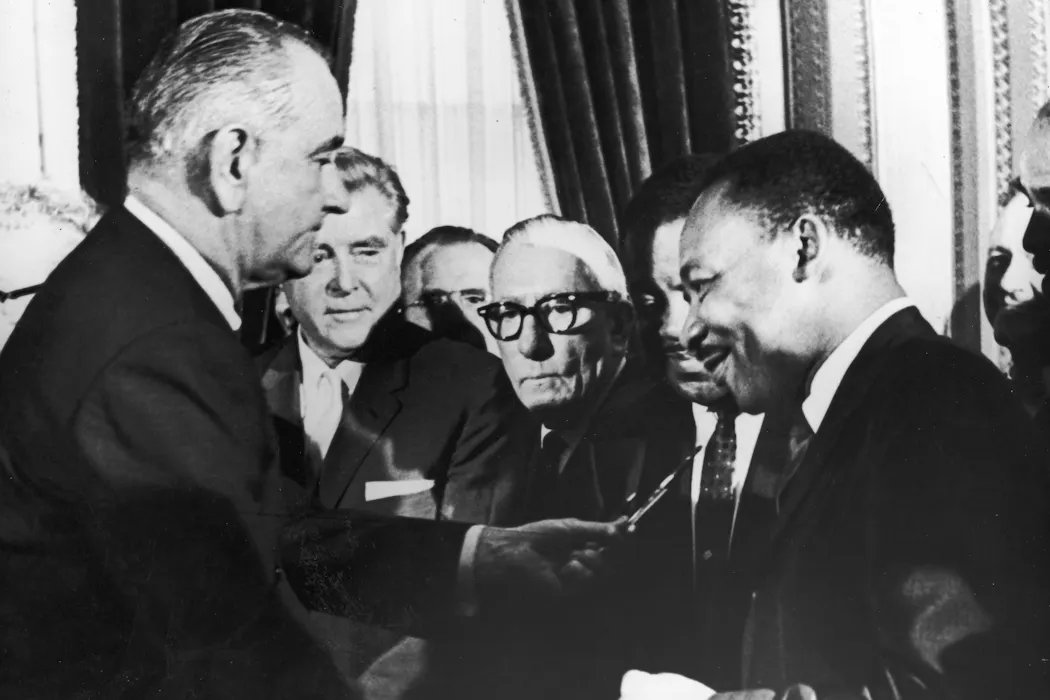
President Lyndon B. Johnson looks on as the Nuclear Non-Proliferation Treaty is signed on July 1, 1968.

Imperiled future

With its actions in Iran, the U.S. has lost credibility as a leading international interlocutor in service of global nonproliferation diplomacy.

Key to a nation’s credibility during negotiations is the reputation that it builds from its past actions. Both instances of the U.S. bombing Iran while negotiating with it will make it very unlikely that other countries will engage with Washington in future nuclear diplomacy.

Those countries that want to take part in nuclear diplomacy involving the U.S. will likely ask that other, trusted countries participate as well. They will also likely seek security guarantees before engaging in negotiations. This will mean that China and the European Union – countries, alliances or institutions that might help keep the United States accountable – will likely have to be a part of any such diplomacy.

Loss of trust in the United States’ good faith will likely continue across future U.S. administrations after the Trump presidency. This will be because of uncertainty over the credibility of international commitments made by the United States. An agreement made by one administration could be reneged on by the next.

Another area of concern is that in the future a country on the threshold of gaining nuclear weapons might not arrive at the negotiating table fully ready to give up all parts of its nuclear program. Even if a country does make concessions, it might choose to hold on to some part of its nuclear or missile program as a guarantee against a future American military strike.

The future of negotiations over nuclear proliferation may yet expand beyond that focus to ballistic missiles as well. Recall that Trump began the latest conflict saying that Iran’s ballistic missiles were an “imminent threat” to the U.S. and its bases abroad. Nuclear weapons programs and ballistic missile programs often go together. Countries with such missile programs that are not allied with the U.S. might also be future targets of bilateral diplomatic and military action.

The loss of trust and good faith has substantially reduced the ability of the U.S. to diplomatically address not only broader nuclear and missile nonproliferation concerns but also its own national security needs. Under these circumstances, military action might be the most tempting option for Washington to secure these goals – and that is dangerous.

The Conversation

Debak Das does not work for, consult, own shares in or receive funding from any company or organization that would benefit from this article, and has disclosed no relevant affiliations beyond their academic appointment.

ref. War on Iran during nuclear negotiations undermines the US’s ability to talk peace around the world − and the effects won’t end when Trump leaves office – https://theconversation.com/war-on-iran-during-nuclear-negotiations-undermines-the-uss-ability-to-talk-peace-around-the-world-and-the-effects-wont-end-when-trump-leaves-office-279079

From ‘Project Hail Mary’ to Artemis II, spaceflight captures audiences when it centers on people because human space travel is hazardous

Source: The Conversation – USA – By Scott Solomon, Teaching Professor of BioSciences, Rice University

The Artemis II crew poses during a ground systems test ahead of launch. NASA/Frank Michaux

The central premise of the blockbuster film “Project Hail Mary” is a long-shot mission with a familiar goal: Save humanity from extinction. While the details of the threat facing humanity are new to this story, moviegoers are used to bingeing on popcorn while watching a heroic quest to save the Earth from certain doom. And like so many popular movies of this genre, from “Armageddon” to “Interstellar,” the hero’s journey involves a seemingly impossible mission into space.

The film’s release is well timed for the new era of space exploration. NASA’s Artemis II mission, scheduled to launch in early April, will send four astronauts around the Moon on a path that will take them deeper into space than any humans have ever traveled.

A rocket on a launchpad with a rising sun in the background
NASA’s Space Launch System rocket stands ready at the launchpad ahead of the Artemis II launch, planned for early April.
Gregg Newton/AFP via Getty Images

The flyby mission is primarily about testing equipment for a lunar landing in 2028. But the broader plan was outlined in detail in March 2026 by NASA officials: to establish a permanent base on the Moon.

NASA is not alone in its lunar ambitions. Private space companies SpaceX and Blue Origin are developing next-generation spacecraft, rovers and drones to facilitate the American Moon base. And other nations, notably China, are working toward their own lunar outposts.

These nations and corporations see the Moon as a stepping stone toward more ambitious goals: a major human migration into deep space, including Mars.

Given the moment, it’s worth reflecting on what those investing billions in human space exploration, whether tax dollars or private funds, are trying to accomplish. As a biologist, I recognize the limitations of humans as space explorers. As I explain in my book, “Becoming Martian: How Living in Space Will Change Our Bodies and Minds,” while biologists have learned a lot about how the conditions of space affect the human body and mind, sending people on longer missions deeper into space will expose people to unknown health risks.

Boldly going

Plans to send people to the Moon and beyond are accelerating. NASA’s new administrator, Jared Isaacman, has argued that beating China to the Moon is a matter of national security, calling the Moon “the ultimate high ground.” He has also promoted the economic benefits of establishing a space economy that includes mining and manufacturing on the Moon.

A diagram showing the three phases on NASA's lunar base plan, with phase 1 securing access, phase 2 establishing a base and phase 3 a semi-permanent crew presence
NASA’s Artemis program seeks to establish a long-term human presence on the lunar surface.
NASA TV

Subcommittees in both the House and Senate have passed bills to codify these initiatives into law – making the goal of creating a permanent base on the Moon official U.S. policy. They appear to have bipartisan support, and votes in both houses of Congress are expected soon.

The United States and China are targeting landing humans on Mars in the 2030s, with the intention of building infrastructure that enables long-term habitation.

In March 2026, NASA also announced that the agency intends to test nuclear propulsion during an uncrewed flight to Mars in 2028. Nuclear-powered rockets have the potential to substantially reduce the time it takes to reach Mars, which would make crewed flight to the red planet more feasible.

Humans or robots?

But why do people need to go to Mars? As with the Moon, the purported motivations for both the U.S. and China establishing a human presence on Mars are scientific, economic and geopolitical. Yet these are distinct objectives that are often conflated.

In terms of science, NASA has had dramatic success with its Mars rovers, including the discovery last year of a potential biosignature that could be the best evidence yet that the planet was once home to microbial life.

Robotic missions also have a lower price tag and a higher acceptable risk margin than human missions. While Isaacman remains publicly committed to the Artemis program and its human spaceflight goals, the agency’s plan also includes a suite of robotic missions to the Moon’s surface it hopes to develop in partnership with companies, universities and international partners.

Likewise, some economic objectives, such as establishing mining and manufacturing facilities, could be accomplished using AI-equipped robots, such as those Tesla is developing. Robots are a long way from being able to accomplish the full range of tasks that a human can do, but prioritizing robotic activities could lower the exposure that people have to the hazards of space.

If having people on the Moon and Mars is indeed necessary to achieve these objectives, let’s be clear about the risks that the people undertaking these missions will be assuming.

Space and the human body

While scientists have learned a lot about how space affects the body during the six decades of human spaceflight, there are still significant blind spots. Among them are the effects of deep-space radiation.

Astronauts need to exercise every day on the International Space Station to keep their muscles and bones strong, yet their bodies are still affected in various ways by the conditions of space.

The 24 Apollo astronauts who traveled to the Moon are the only people who have ever been past the Van Allen radiation belts, an area of space surrounding our planet formed by Earth’s magnetic field.

By trapping radiation from the Sun and from deep space, our planet’s magnetic field is part of what makes Earth habitable for us and other life forms. The Moon and Mars lack magnetic fields, so radiation levels on their surfaces are substantial. NASA researchers are now conducting experiments on rodents using simulated galactic cosmic rays, which are largely blocked by Earth’s magnetic fields. Preliminary results suggest that this type of radiation may impair cognitive abilities, but the actual effects on people are unknown.

Similarly, while medical researchers know that floating in a zero-g environment causes muscle atrophy and bone density loss during long stays on the International Space Station, they know relatively little about how partial gravity affects muscles and bones. The Moon has one-sixth the gravity of Earth, and Mars has a little over one-third.

Pilots on Earth can simulate partial gravity for up to 30 seconds at a time during parabolic flights, but only the 12 Apollo astronauts who walked on the Moon have ever experienced it for longer than that. The longest they stayed was about three days. Scientists can only speculate about whether prolonged exposure to the partial gravity of the Moon or Mars would have consequential health effects.

Human interest

Sending robots to space avoids having to deal with risks to human health. But there are downsides. Not only do robotic space missions have fewer capabilities than crewed missions, they often fail to capture interest and imagination and demonstrate national prestige in the same way that human missions can.

The four members of the Artemis crew will captivate people worldwide watching their daring mission around the Moon, much like moviegoers root for Ryan Gosling’s character in “Project Hail Mary” as he boldly seeks to save humanity from certain doom on the big screen.

That human interest is the common link that ties together public and private space ambitions worldwide. While robotic missions are more practical and cost effective, they simply don’t inspire the masses the way a human crew can. Beyond achieving any economic, political or scientific goals, space exploration is ultimately about people doing difficult things.

The Conversation

I am the author of the book Becoming Martian published by MIT Press

ref. From ‘Project Hail Mary’ to Artemis II, spaceflight captures audiences when it centers on people because human space travel is hazardous – https://theconversation.com/from-project-hail-mary-to-artemis-ii-spaceflight-captures-audiences-when-it-centers-on-people-because-human-space-travel-is-hazardous-279147

New study measures titanium in Apollo rock to uncover Moon’s early chemistry

Source: The Conversation – USA – By Advik D. Vira, Graduate Student in Physics, Georgia Institute of Technology

The Camelot crater in the Moon’s Taurus-Littrow Valley is where the sample containing trivalent titanium was found. NASA/Apollo 17: AS17-145-22159

The Earth and the Moon may look very different today, but they formed under similar conditions in space. In fact, a dominant hypothesis says that the early Earth was hit by a Mars-sized object, and it was this giant impact that spun off material to form the Moon. But unlike Earth, the Moon lacks plate tectonics and an atmosphere capable of reshaping its surface and recycling elements such as oxygen over billions of years.

As a result, the Moon preserves a record of the geological conditions that helped shape it and can give scientists insight into the world we live in today. Rocks that were formed during early volcanic activity on the Moon offer a window into events that occurred nearly 4 billion years ago. By uncovering the conditions under which the Moon’s rocks formed, scientists move closer to understanding the origins of our own planet.

In a study published March 2026 in the journal Nature Communications, our team of physicists and geoscientists investigated ilmenite, a mineral composed of iron, titanium and oxygen, in a Moon rock crystallized from an ancient lunar magma. We used cutting-edge electron microscopy to probe the chemical signature of titanium in this ilmenite, finding that about 15% of the titanium carries less of an electrical charge than expected.

An illustration of the rock on the Moon, an atomic image of the sample, and of trivalent titanium chemical signature.
This illustration shows the rock on the Moon, as well as an atomic image of the sample’s crystal structure and a representation of the chemical signature of trivalent titanium.
August Davis

Implications of trivalent titanium

In ilmenite, an atom of titanium typically loses four electrons when bonding with oxygen, resulting in a positive charge of 4+, known as the atom’s oxidation number. From the sample we studied, a rock collected during the Apollo 17 mission, we found that some of the titanium in ilmenite actually has a charge of only 3+, referred to as trivalent titanium. Our measurement of trivalent titanium confirms what geologists had long suspected: that some titanium in lunar ilmenite exists in a lower charge state.

Trivalent titanium occurs only when the amount of oxygen available for chemical reactions is low. Thus, the abundance of trivalent titanium in ilmenite could tell us about the relative availability of oxygen in the Moon’s interior when the rock formed, around 3.8 billion years ago.

A link to the Moon’s early chemistry

Since it is the ilmenite, not the study, that contained trivalent titanium, I would recast the previous sentence as follows: “Our team has closely studied only one Moon rock so far, but from published studies we have identified more than 500 analyses of lunar ilmenite that could contain trivalent titanium. Studying these samples could reveal new details about how the Moon’s chemistry varies across different locations and time periods.

While our work highlights a link based on prior studies, the relationship between trivalent titanium in ilmenite and oxygen availability has not yet been quantified with targeted experimental data.

By conducting experiments that explore that link, ilmenite could reveal more details about the Moon’s interior. We also expect this relationship to apply to other planets and asteroids that don’t contain much chemically available oxygen, relative to Earth.

What’s next?

These methods can be used to study many Moon rocks collected during the Apollo missions over 50 years ago, as well as future samples from upcoming Artemis missions, or rocks collected from the far side of the Moon, returned in 2024 by China’s Chang’e-6 mission.

One of our team members plans to use their new experimental lab to explore how oxygen availability in magma affects the abundance of trivalent titanium in ilmenite. With experiments like this that build off our findings, we could potentially use ilmenite to reconstruct the history of ancient magmas from the Moon.

We believe future studies of lunar rocks using advanced scientific methods are essential for revealing the chemical conditions present on the ancient Moon. They could offer clues not only to its own history but also to the earliest chapters of Earth’s past – records that have since been erased from Earth.

The Conversation

Advik D. Vira receives funding from the NASA Solar System Exploration Research Virtual Institute (SSERVI) under cooperative agreement number NNH22ZDA020C (CLEVER, Grant number: 80NSSC23M022).

Emily First receives funding from the Heising-Simons Foundation (grant # 2023-4485) and from a Macalester College faculty start-up fund.

ref. New study measures titanium in Apollo rock to uncover Moon’s early chemistry – https://theconversation.com/new-study-measures-titanium-in-apollo-rock-to-uncover-moons-early-chemistry-278721

War in the Middle East made the case for renewables – what’s happening in each country tells a harder story

Source: The Conversation – USA (2) – By Ezgi Canpolat, Visiting Postdoctoral Scholar, Center for Middle Eastern Studies, Harvard University

Saudi Arabia has built large solar power plants while continuing to invest heavily in fossil fuels. Giuseppe Cacace/AFP via Getty Images

The oil-dependent world is in crisis. Ship traffic in the Strait of Hormuz – through which more than a quarter of global seaborne oil trade and a fifth of the world’s liquefied natural gas flow – is at a virtual standstill. Oil prices have climbed, briefly topping US$119 a barrel.

The largest release of oil from countries’ strategic reserves in history is under way, in an effort to ease prices. But even so, billions of people are dealing with surging energy prices and spiking food and fertilizer costs. Governments are scrambling for alternatives, too. To reduce energy demand, Sri Lanka has declared every Wednesday a holiday for public officials, Myanmar is limiting private vehicle use to every other day, and Bangladeshi colleges have canceled classes.

Leaders of South Korea and the European Commission have used the current energy crisis to call for accelerating the shift away from fossil fuels and toward homegrown renewable sources. U.N. Secretary-General António Guterres put it plainly in a March 10, 2026, social media post: “There are no price spikes for sunlight and no embargoes on the wind.”

I grew up in a coal-mining town in Turkey. I now study energy transitions across the Middle East and North Africa in a research project I co-lead at Harvard University. I have seen that a country’s desire to increase renewable energy is not the same as a plan to do so.

The very region embroiled in this war reveals that there is not a linear shift from fossil fuels to renewable sources. Rather, there are distinct trajectories, driven by energy dependence, fiscal pressures, governance and stability. Disruption at the Strait of Hormuz does not mean the same thing in Riyadh, Saudi Arabia, as it does in Ankara, Turkey, or Baghdad, Iraq.

The petrostates hedging both sides

For Saudi Arabia, the United Arab Emirates and Qatar, this crisis is a warning dressed as a windfall.

Oil prices have surged, which in theory means higher revenues. But the very infrastructure that produces and delivers that wealth is under direct attack. Iran has targeted oil refineries and shipment centers across the Gulf. The Strait of Hormuz closure is simultaneously choking off their ability to get product to market, exposing how vulnerable the infrastructure of fossil fuel wealth can be.

All three countries have also committed to boosting renewable energy production. In Saudi Arabia, for example, the government aims for renewable energy sources to account for 50% of electricity generation by 2030, up from just 3% at the end of 2023.

Saudi Arabia’s biggest group of clean energy companies has pledged to spend $17 billion on solar and wind – across all their projects, spread out over several years.

But those efforts sit alongside vastly larger investments in fossil fuel production. In 2025 alone, the country’s nationally owned oil company, Saudi Aramco, spent $52.2 billion building new oil and gas infrastructure.

This is not a contradiction. It is a strategy built on the assumption that the world will keep buying fossil fuels for decades to come. The current crisis reinforces that assumption, but it also exposes its vulnerability: As war drives up oil prices, every oil-importing country is feeling the cost of continuing oil dependence. And every stranded export proves the energy transition can’t wait.

A large farm seen from the air, including a group of buildings with solar panels on their roofs.
Renewable energy helps drive this farm in Turkey.
Muhammed Enes Yildirim/Anadolu via Getty Images

Price shock and necessity

Energy-importing countries such as Jordan, Morocco and Turkey are investing in renewable energy for a different reason: Fossil fuel dependence is bankrupting them.

Turkey imports over 70% of its fossil fuels, including virtually all of its natural gas, 17% of which comes from Iran. Natural gas accounts for less than a fifth of electricity generation, but it is the backbone of the country’s heating and industrial sectors and a major concern if supply falters. Turkey’s energy import bill is climbing at a time when the economy is already under strain from rising borrowing costs and weakening currency value.

Jordan, which historically has imported over 90% of its energy, faces similar pressure.

But these countries would be in far worse positions had they not already been investing in alternatives.

More than half of Turkey’s installed electricity capacity now comes from renewable energy sources. Morocco built one of the world’s largest concentrated solar facilities, and renewable sources now supply 25% of the country’s electricity. Similarly, Jordan has gone from virtually no renewable electricity to renewable sources providing more than a quarter of its power in roughly a decade.

The current war has vindicated their investments in renewable energy – though the vindication has limits. The same crisis that proves the value of renewable energy investment also raises inflation, tightens credit and strains the very public finances these countries need to keep building.

Every kilowatt-hour generated by a Turkish wind turbine or a Moroccan solar panel is one that does not depend on a tanker passing through the Strait of Hormuz. But the financial pressure means building the next renewable generating project just got harder.

Crisis upon crisis

Then there are countries where this war lands on top of existing emergencies.

Iraq, the second-largest oil producer in the region and in the Organization of the Petroleum Exporting Countries, depends on Iranian gas imports to generate much of its electricity – a supply line now directly threatened by the war. Oil exports through the southern port of Basra, on the Persian Gulf, fund roughly 90% of Iraq’s government revenue. If those revenues are disrupted, the government may be unable to function. Iraq already suffers chronic electricity shortages and has virtually no renewable energy capacity to fall back on.

In Yemen, Libya and Syria, energy infrastructure has been damaged or destroyed by years of conflict. These countries import fuel at global prices to run generators and keep hospitals lit. Every dollar added to the price of oil makes that harder. For them, this war is not pointing out reasons to shift to renewable sources: It is threatening energy access itself.

A view down a dusty road, with wind turbines in the distance.
In war-torn Syria, renewable energy is a lifeline.
Ed Ram/Getty Images

An international challenge

In November 2026, the U.N.’s annual climate summit comes to the region at the center of this crisis, with Turkey as host.

The war in the Middle East has made a powerful case for the economic, political and humanitarian benefits of transitioning from fossil fuels to renewable energy sources. But it has also exposed something the global conversation consistently misses: Different countries are heading in different directions, based on their own circumstances, many of which predate this war.

Understanding those paths matters because it reveals what countries’ promises cannot: where the real barriers are, where the incentives already exist, and where support would make a difference – before the next disruption hits. In my view, this war has helped win the argument about whether to shift to renewable energy, but it has also highlighted a harder question: What does it actually take to build those sources, country by country?

The Conversation

Ezgi Canpolat received funding from The Salata Institute for Climate and Sustainability at Harvard University for the research referenced in this article. The findings, interpretations, and conclusions expressed herein are entirely those of the author and should not be attributed to any institution with which the author is or has been affiliated.

ref. War in the Middle East made the case for renewables – what’s happening in each country tells a harder story – https://theconversation.com/war-in-the-middle-east-made-the-case-for-renewables-whats-happening-in-each-country-tells-a-harder-story-278759

Birutė Galdikas: The last of the ‘angels’ in primatology’s most extraordinary chapter

Source: The Conversation – USA (2) – By Mireya Mayor, Director of Exploration and Science Communication, Florida International University

Birute Galdikas carries an orangutan named Isabel in Borneo, Indonesia. The 2011 film ‘Born To Be Wild 3D’ followed her work. AP Photo/Irwin Fedriansyah

Primatologist Birutė Galdikas died on March 24, 2026, and an era of science that began in the forests of Tanzania, Rwanda and Borneo studying humanity’s closest living relatives more than half a century ago is coming quietly to a close. Her passing marks more than the loss of a scientist – it’s the end of one of the most extraordinary chapters in modern science.

For more than half a century, primatology had three central figures: Jane Goodall, Dian Fossey and Galdikas — often called Leakey’s Angels, after their mentor — who transformed how we understand primates and, in many ways, how we understand ourselves.

A young woman sits with orangutans playing around her in the jungle.
Birutė Galdikas, shown in 1965.
Universal Archive/Universal Images Group via Getty Images

They were sent into the field by paleoanthropologist Louis Leakey, who believed that if we understood other primates, we might better understand human evolution and human nature. It was a radical idea at the time, not only scientifically but culturally. Leakey did not send large research teams or established professors. Instead, three young women went into forests, often alone, for years at a time.

What they discovered changed science and the public imagination.

Seeing chimpanzees and apes as individuals

Before the scientists’ work, primates were often described as creatures of instinct, their behavior explained largely through simple drives for food and reproduction. After their work, people began to talk about individuals with personalities, alliances, rivalries, friendships and grief.

Goodall, Fossey and Galdikas showed that chimpanzees make tools and wage political struggles, that gorillas live in complex family groups, and that orangutans raise their young with a patience and investment that rivals that of humans. The line between humans and other primates did not disappear, but it became harder to draw cleanly.

They also changed who could be a scientist.

Three women living for years in remote forests in the 1960s and ‘70s was not normal. By succeeding, they quietly expanded the boundaries of who could lead expeditions, run field sites, publish major research and become the public face of science. Many primatologists of my generation entered a field that these women forced open.

Birutė Galdikas talks about her career.

Each of these extraordinary women shaped my life in different ways. I never met Fossey, who died in Rwanda in 1985. But watching “Gorillas in the Mist,” a movie about her work, changed the course of my life and sent me toward primatology instead of law school. Years later, as a young primatologist studying lemurs, I met Goodall at a conference; she later wrote the foreword to my book and became a mentor and friend as I navigated my own path in conservation science. I met Galdikas, a scientist at Canada’s Simon Fraser University, professionally and immediately recognized a kindred spirit – another woman who had devoted her life to the study and protection of humans’ closest animal relatives.

With their deaths – Goodall died in 2025 – it falls to those of us who were inspired by them to continue and evolve their work at a time when it has never been more difficult or more important.

But the field today’s primatologists inherited is not the same one they began.

The next generation and primates’ struggle for survival

The first generation of field primatologists went into forests full of animals to discover how primates lived. They were explorers as much as scientists, and their work had the feel of discovery in the classic sense – new behaviors, new social structures, new understandings of intelligence and culture in animals.

Their research helped reshape anthropology, psychology and evolutionary biology. They helped answer one of the oldest questions humans ask about themselves: What makes us different from other species?

Birutė Galdikas talks about the documentary ‘Born to be Wild 3D’ and her work rescuing and returning orangutans to the wild.

By the time my generation began working in the field, many of those questions had already been answered. We knew primates used tools, formed political alliances, reconciled after fights and mourned their dead. We knew they had personalities and social strategies.

The question was no longer whether primates were like us, but whether they would survive us.

This is the quiet shift that defines modern primatology. My generation now goes into forests that are smaller, more fragmented and quieter, and the work is increasingly focused on making sure those animals are still there at all.

I have spent much of my career studying lemurs in Madagascar, where this shift is impossible to ignore. Lemurs are among the most endangered group of mammals on Earth, with more than 90% of species threatened with extinction. In many parts of Madagascar, forests now exist only as isolated fragments surrounded by agriculture and human settlement. Some lemur populations survive in forest patches so small that a single fire or logging operation could eliminate them entirely.

Conservation begins with caring

These primates that captured the world’s attention are also the species most like us. They have long childhoods, complex societies, intelligence, and emotional lives that feel familiar to us. Their similarity is what made people care. And that caring, in many cases, is what has kept them from disappearing entirely.

The great achievement of Leakey’s Angels was not only what they discovered, but that they made the world care about primates.

Before the three scientists’ work, chimpanzees, gorillas and orangutans were largely abstract animals to most people – zoo exhibits, textbook illustrations, evolutionary symbols. After their work, these creatures became individuals with names, families, histories and personalities. Each of the women’s work was celebrated in films and books, including the Morgan Freeman-narrated documentary “Born to Be Wild 3D” that followed Galdikas’ orangutan rescues.

Conservation begins with caring, and caring begins with stories. They gave the world those stories.

But caring is no longer enough. We are now in an era where the most important breakthroughs in primatology may not be new discoveries about behavior, but new ways to protect habitats, connect fragmented forests, preserve genetic diversity and help humans and primates survive on the same increasingly crowded landscapes.

The work has shifted from observation to intervention, from discovery to responsibility.

Every generation of scientists inherits a different world. The generation of Jane Goodall, Dian Fossey and Birutė Galdikas inherited a world full of primates we did not yet understand. My generation has inherited a world where we understand primates very well, but are in danger of losing them anyway.

The forests are quieter now than when these three young women went into them more than half a century ago. The responsibility, however, has only grown louder.

The central question of primatology is no longer what makes us human. It is whether a species intelligent enough to understand extinction will choose to prevent it in our closest living relatives.

The Conversation

Mireya Mayor does not work for, consult, own shares in or receive funding from any company or organization that would benefit from this article, and has disclosed no relevant affiliations beyond their academic appointment.

ref. Birutė Galdikas: The last of the ‘angels’ in primatology’s most extraordinary chapter – https://theconversation.com/birute-galdikas-the-last-of-the-angels-in-primatologys-most-extraordinary-chapter-279398

Why do some people treat the Magic Kingdom and Disney adults like cultural abominations?

Source: The Conversation – USA (2) – By Adam Kadlac, Teaching Professor of Philosophy, Wake Forest University

People railing against the phoniness of Disney World may be putting on a show of their own. Ian Langsdon/AFP via Getty Images

If you’ve ever expressed even a passing desire to visit Walt Disney World, you may have had friends who raised their eyebrows, groaned or even sneered.

The heart of their criticism isn’t just that they think Disney is for kids, or that it’s so expensive. It’s what I call the “authenticity objection” – the belief that there’s something fundamentally inferior about visits to theme parks like the Magic Kingdom because they occur in a wholly manufactured environment. The artificial mountains and rivers, the rides that provide nothing more than mindless distraction, the people dressed up as fictional characters …

It’s all so fake.

While people sometimes express this view in jest, others believe the fake environment borders on a cultural abomination. One online forum explicitly cites the manufactured nature of Disney World as a reason not to go, noting that the “smiling staff, the piped-in music, the perfect landscaping” can feel “creepy and overly controlled.”

Journalist EJ Dickson, herself a Disney fan, admits that visitors to Disney parks “willingly spend thousands of dollars on an authentic emotional experience that they know, at least on some level, isn’t really authentic at all.” And a representative Trip Advisor review dismisses Disney World as “a hot, commercialized, fake experience.”

If you’re anti-consumption and dislike warm weather, those criticisms of Disney World are fair enough: The weather in Florida is warm, and Disney is certainly trying to make money.

But as a philosopher who recently published a book, “The Magic Kingdom and the Meaning of Life,” I find criticisms of the parks as fake a bit more difficult to understand.

Disney isn’t shy about what it is

Marketing professors George Newman and Rosanna Smith note that philosophers have tended to think about authenticity through the lens of whether “entities are what they are purported to be.”

Apply that standard to Disney World: Does it represent itself as something other than a Disney-themed amusement park?

A group of men gathering around a model of a castle and chatting with one another.
Walt Disney, far left, discusses plans for Disneyland with a few of his company’s engineers – known as ‘imagineers.’
Earl Theisen/Getty Images

There are legitimate reasons to complain about the authenticity of some experiences. If you buy a ticket to a Van Gogh exhibition, you could rightfully complain if you discovered that only reproductions had been on display. The fact that you hadn’t been able to tell the difference while viewing the paintings wouldn’t matter – you hadn’t received the authentic experience of seeing Van Gogh’s original works.

By contrast, Disney attractions don’t pretend to be anything other than what they are.

When people at Disney’s Hollywood Studios ride Mickey and Minnie’s Runaway Railway, they know they are not actually on a runaway train being incompetently driven by a talking dog named Goofy. If Disney had marketed the attraction as something else – say, an Amtrak trip for kids – perhaps there would be grounds for complaining about its fakeness.

That clearly isn’t the expectation of anyone who waits in line for the experience. Riding the Runaway Railway might not be how you prefer to spend time, but there’s nothing fake about what it purports to be.

Who are you to judge?

If the initial form of the authenticity objection is relatively easy to handle, another concern lurks in the vicinity: the idea that Disney fans are somehow fake, due to their willingness to turn themselves over to the trappings of an artificial world.

The precise nature of this concern is a bit difficult to characterize. But it involves the belief that people who spend a lot of time in manufactured environments tend to delude themselves in ways that evade understanding and engaging with their true selves. Terms like “existential authenticity” or “self-authenticity” seem to capture what’s at stake.

Media scholar Idil Galip has pointed to the fact that the parks are highly “engineered and focus-grouped; there’s a whole lot of work that goes into selling this sort of experience.” This can, at a certain point, signal “a break from regular society or real life.”

This supposed connection between the fake world of Disney and the corruption of one’s authentic self is on full display in descriptions of so-called Disney Adults.

Dickson characterizes this view in her Rolling Stone article about Disney Adults: “Being a Disney fan in adulthood is to profess to being nothing less than an uncritical bubblehead ensconced in one’s own privilege, suspended in a state of permanent adolescence … refusing to acknowledge the grim reality that dreams really don’t come true.”

A large number of Disney cosplayers – dressed in outfits ranging from Buzz Lightyear to Captain Hook – pose for a group photo.
The internet loves to mock grown fans of Disney as unserious and inauthentic.
Daniel Knighton/FilmMagic via Getty Images

But I would strongly push back on the idea that a love of Disney World renders people fake or inauthentic in any meaningful way.

As journalist and blogger A.J. Wolfe argues in her 2025 book, “Disney Adults,” even the most passionate Disney devotees resist simple categorization. None of them, she explains, seem to be running from their true selves or even trying, in the slightest, to live in an imaginary world.

For example, Wolfe profiles Lady Chappelle, a British tattoo artist who relocated to San Diego, where she exclusively inks Disney-themed tattoos. Then there’s Brandon, a Hollywood drag queen who designed a Carousel of Progress-themed kitchen in honor of the attraction that now resides at Disney’s Magic Kingdom in Orlando, Florida.

These people are representative of pretty much all Disney Adults: They’re passionate about Disney, but they’re also passionate about tattooing and drag and myriad other pursuits.

For Disney Adults, Wolfe writes, an affection for Disney mostly adds “extra color and brightness – maybe definition, motivation, or inspiration if you’re lucky – to the complex and evolving masterpiece that is [their] life.”

And if that complexity applies to the most committed Disney fans, it’s that much harder to cast casual visitors in such a negative light.

The virtues of the Magic Kingdom

If theme parks aren’t your thing, that’s perfectly fine. You can have a wonderful life without setting foot in Epcot or the Animal Kingdom.

But as I point out in “The Magic Kingdom and the Meaning of Life,” Disney World has a number of virtues that its critics often miss.

I think it’s as good a place as any for people of all ages, backgrounds and abilities to come together and create valuable memories. When I ride Tiana’s Bayou Adventure with my wife and our intellectually disabled daughter, there is a little something for everyone: just enough thrill and storytelling for the adults, while not being overwhelming for my daughter. It’s a combination that can be difficult to find in many other places.

Moreover, because we are transported out of our daily routines, the parks can also present surprising opportunities for reflection. For example, I’ve thought a lot about cultural expectations around happiness while at Disney. Should I try to maximize my pleasure during this short trip? Or simply take each day as it comes? I’ve learned to embrace the latter.

I’ve also come to appreciate the value of anticipatory pleasure, which is the positive feeling you get from looking forward to something before it happens. This happened while reflecting on all the time people spend standing in line at theme parks.

Yes, there are many people who simply want to use the worlds of Disney – theme park, films or otherwise – to escape the grind of everyday life. But is seeking such an escape a greater threat to authenticity than checking out by playing video games, watching sports, reading smutty novels or using drugs and alcohol?

Is it possible for people to lose themselves in fantasy? Of course – just as it’s possible for anyone to lose themselves in their careers, relationships or hobbies. But in an age of curated social media accounts, influencer marketing and political doublespeak, the manufactured worlds of Disney might offer more authenticity than you would think.

The Conversation

Adam Kadlac does not work for, consult, own shares in or receive funding from any company or organization that would benefit from this article, and has disclosed no relevant affiliations beyond their academic appointment.

ref. Why do some people treat the Magic Kingdom and Disney adults like cultural abominations? – https://theconversation.com/why-do-some-people-treat-the-magic-kingdom-and-disney-adults-like-cultural-abominations-273191

Cameras have quietly appeared in thousands of US cities – now, their integration with AI is sounding alarms

Source: The Conversation – USA (2) – By Jess Reia, Assistant Professor of Data Science, University of Virginia

A small, black license plate recognition camera is mounted on a light pole in Boulder, Colo. Matthew Jonas/MediaNews Group/Boulder Daily Camera via Getty Images

For decades, cars dictated urban planning in the United States.

Few could have predicted that they would one day also double as nodes for surveillance.

In thousands of towns and cities across the U.S., automatic license plate readers have been installed at major intersections, bridges and highway off-ramps.

These camera-based systems capture the license plate data of passing vehicles, along with images of the vehicle and time stamps. More recently, these systems are using artificial intelligence to create a vast, searchable database that can be integrated with other law enforcement data repositories.

As a scholar of technology policy and data governance, I see the expansion of automatic license plate readers as a source of deep concern. It’s happening as government authorities are seeking ways to target immigrant and transgender communities, are already using AI to monitor protests, and are considering deploying AI systems for mass surveillance.

Eyes on the road

Using cameras to track license plates dates to the 1970s, when the U.K. was embroiled in a long-simmering conflict with the Irish Republican Army.

The Met, London’s police force, developed a system that used closed-circuit television cameras to monitor and record the license plates of vehicles entering and exiting major roads.

The system and its successors were seen as useful crime fighting tools. Over the next two decades, they expanded to other cities in the U.K. and around the world. In 1998, U.S. Customs and Border Protection implemented this technology. By the 21st century, it had started appearing in cities across the U.S.

There are different ways for a jurisdiction to implement these systems, but local governments usually sign contracts with private companies that provide the hardware and service.

These companies often entice authorities with free trials of surveillance equipment and promises of free access to their data in ways that bypass local oversight laws.

AI thrown into the mix

Recently, AI has been incorporated into these camera systems, significantly increasing their reach.

The vehicle information that’s captured is typically stored in the cloud, creating a massive web of data repositories. If a camera collects information from a suspect’s car or truck – say, one also listed in the National Crime Information Center – AI can flag it and send an instant alert to local law enforcement.

In fact, that’s a selling point of Flock Safety, one of the biggest providers of automatic license plate readers. The company uses infrared cameras to capture images of vehicles. AI then analyzes the data to identify subjects and quickly alert local authorities.

On the surface, automatic license plate readers seem like a logical way to fight crime. More information about the whereabouts of suspects can potentially help law enforcement. And why worry about cameras if you’re following the law?

But there are few peer-reviewed studies on their effectiveness. Those that exist find little evidence that they’ve led to reductions in violent crime rates, though they seem to be helpful in solving some crimes, like car thefts.

Furthermore, installation and maintenance are costly.

For example, Johnson City, Tennessee, signed a 10-year, US$8 million contract with Flock in 2025. Richmond, Virginia, paid over $1 million to the company between October 2024 and November 2025 and recently extended its contract, despite opposition from some residents.

The Conversation reached out to Flock for comment and did not hear back.

Young man wearing a polo shirt uses his smartphone to take a photograph of a camera affixed to a poll at dusk.
A Houston resident photographs a Flock license plate reader in his neighborhood in October 2025.
AP Photo/David Goldman

Erosion of civil liberties in plain sight

The technology seems to highlight the pitfalls of what scholars call “technosolutionism,” the belief that complex issues like crime, poverty and climate change can be solved by technology.

Even more disquieting, to me, is the fact that these camera systems have created a mass location tracking infrastructure knitted together by artificial intelligence.

The U.S. doesn’t have a federal law like the European Union’s General Data Protection Regulation that meaningfully limits the collection, retention, sale or sharing of location and mobility data.

As a result, data gathered through surveillance infrastructure in the U.S. can circulate with limited transparency or accountability.

License plate readers can easily be accessed or repurposed beyond their original goals of managing traffic, meting out fines or catching fugitives. All it takes is a shift in enforcement priorities – or a new definition of what counts as a crime – for the original purpose of these cameras to recede from view.

Civil liberties groups and digital rights organizations have been sounding the alarm about these cameras for over a decade.

In 2013, the American Civil Liberties Union published a report titled “You are Being Tracked: How License Plate Readers Are Being Used To Record Americans’ Movements.” And the Electronic Frontier Foundation has decried them as “street-level surveillance.”

A counter-camera movement emerges

The promise of these cameras was simple: more data, less crime.

But what followed has been murkier: more data, and a significant expansion of power over the public.

Without robust legal safeguards, this data can possibly be used to target political opposition, facilitate discriminatory policing or chill constitutionally protected activities.

This has already happened during the current administration’s aggressive deportation efforts. Automatic license plate reader databases were shared with federal immigration agencies to monitor immigrant communities. Recently, Customs and Border Protection was granted access to over 80,000 Flock cameras, which have also been used to surveil protests.

Then there’s reproductive health care. After the Supreme Court overturned Roe v. Wade in 2022, there were fears that people traveling across state lines to get an abortion could potentially be identified through automatic license plate reader databases. In Texas, authorities accessed Flock’s surveillance data as part of an abortion investigation in 2025.

Flock told NPR in February 2026 that cities control how this information is shared: “Each Flock customer has sole authority over if, when, and with whom information is shared.” The company noted that it has made efforts to “strengthen sharing controls, oversight and audit capabilities within the system.” But NPR also reported that many city officials around the U.S. didn’t realize how widely the data was being shared.

In response, some states have sought to regulate the technology.

Washington state lawmakers are deliberating the Driver Privacy Act. The legislation would prohibit agencies from using the surveillance technology for immigration investigations and enforcement, and from collecting data around certain health care facilities. Protests would also be shielded from surveillance.

Meanwhile, grassroots initiatives such as DeFlock have also emerged.

DeFlock’s online platform documents the spread of automatic license plate reader networks in order to help communities resist their deployment. The movement frames these systems not merely as traffic technologies, but also as linchpins of an expanding government data dragnet – one that demands stronger democratic oversight and community consent.

The Conversation

Jess Reia receives funding from the Carnegie Corporation of New York. They are affiliated with the UVA Digital Technology for Democracy Lab.

ref. Cameras have quietly appeared in thousands of US cities – now, their integration with AI is sounding alarms – https://theconversation.com/cameras-have-quietly-appeared-in-thousands-of-us-cities-now-their-integration-with-ai-is-sounding-alarms-276928