Dinosaur ‘mummies’ help scientists visualize the fleshy details of these ancient animals

Source: The Conversation – USA – By Paul C. Sereno, Professor of Paleontology, University of Chicago

A mummy of a juvenile duck-billed dinosaur, _Edmontosaurus annectens_, preserved as a dried carcass. Tyler Keillor/Fossil Lab

Dinosaur “mummies” couldn’t have been further from my mind as I trudged up a grassy knoll on the Zerbst Ranch in east-central Wyoming, followed by University of Chicago undergraduates on a field trip linked to my “Dinosaur Science” course.

As a university professor, I realized early that to understand paleontology, students would need to see first-hand where fossils are born. And that field experience had to be real, a place I wanted to be – somewhere where we had a shot at discovery.

I chose outcrops of the Lance Formation, a rock formation composed largely of sandstones laid down during last few million years of the dinosaur era. These rocks are well exposed in the parched badlands of Wyoming, crisscrossed for more than a century by dinosaur hunters. Yet, perhaps they missed something.

Then I saw it.

At the top of the hill lay a massive concretion – a hardened, iron-stained rock the size of a compact car – surrounded by some fossil bone fragments. Poking from its side were a series of small rod-shaped bones I recognized as the stomach ribs of the giant predator Tyrannosaurus rex.

Mummies nearby

But T. rex wasn’t alone among the amazing finds that field season. That same field trip, colleagues working nearby uncovered two fossilized duckbills – a plant-eating dinosaur that roamed in herds and grew to the length of T. rex. They showed signs of extraordinary preservation.

Poking out of the vertical wall of a cutbank in a seasonally dry river was a vertebra – part of the backbone – and some ossified tendons.

“What do you think?” asked my colleague Marcus Eriksen, who counts paleoartistry, science education and environmentalism as his other mainstays alongside paleontology. “You’ve got the back half of a duckbill,” I said, referring to Edmontosaurus annectens, the formal name for the dinosaur most likely to be on T. rex’s dinner menu.

It would take Marcus two field seasons to remove 15 feet of rock overlying the skeleton. To his surprise, the tail bones were covered with large areas of scaly skin and topped by a row of spikes. When I visited the exposed skeleton and took a look at its feet, I saw a hairline around the final toe bone. “Pull back, take more,” I said, wide-eyed at what I saw. “I think it has the hooves.”

A rock showing the outline of several bones and a hoof.
A juvenile duckbill dinosaur’s hoof preserved as a thin layer of clay.
Tyler Keillor/Fossil Lab

Yet another group of bone hunters in the area found a Triceratops skeleton next to a large slab of its scaly skin. Finding even a patch of skin on a skeleton merits celebration in paleontological circles. Discovering large areas of the outer fleshy surface of a dinosaur is the find of a lifetime.

Mummification mystery

How is the skin of a dinosaur “mummy” preserved? What composes the “skin impressions”?

Are these dinosaur “mummies” preserved like the human mummies from Egypt, where salt and oils applied after someone died were used to desiccate and then preserve skin, hair, internal organs and, as recently shown, their genomes?

No. Dinosaur “mummies” don’t preserve dehydrated skin. But many researchers thought that, just maybe, traces of tissue structure or even original organic materials might remain.

A hand touching a beige rock with a lined, crest pattern and dimpled texture.
A fossil preserves the scaly skin of a crest over the back of a juvenile duck-billed dinosaur.
Tyler Keillor/Fossil Lab

To lift the veil on dinosaur mummification, I needed expertise and digital savvy beyond my own. I recruited Evan Saitta to rigorously determine the composition of the ancient scaly skin, after learning he was cooking reptile skin to mimic fossilization.

I brought others on board: Dan Vidal, a Spanish paleontologist able to digitally capture surface detail in 3D; Nathan Myhrvold, a polyglot scientist fresh off studying the chemistry of barbecue; Stephanie Baumgart, a paleontologist steeped in the CT scans of living vertebrates; María Ciudad Real and Lauren Bop, the first skilled at analyzing CT scans and the latter at combining them into composite figures; Tyler Keillor, who would invent new methods to clean ancient skin tissue; and Dani Navarro, a superb Spanish paleoartist who reimagines prehistoric scenes.

Clay mask, crests, hooves and scales

We used a diamond blade to section the skin, spikes and hooves, and found that all were made of a very thin bounding layer of clay – a clay mask or template – one-hundredth of an inch (less than 1 millimeter) thick. The sand on both sides of the clay layer was indistinguishable, suggesting that when the carcass was buried, the same sand that pressed against the outside also entered the dried, hollowed carcass through many cracks and holes, filling all of the internal spaces. Even the spaces inside the spikes and hooves were sand-filled.

We found no evidence of tissue structures inside the clay layer, whether looking at scaly skin, a spike or a hoof. And we could not find any trace of original organic materials. In other words, the original skin inside the clay layer must have decayed and washed away, while the same groundwater saturated the bones en route to their fossilization.

The very real-looking skin, spikes and hooves of our duckbill are actually a mask of clay, a thin layer applied to the outside that captured all of the original form and texture of the fleshy body surface.

To test out the digital rendering we’d created, we compared the digital version of the duckbill’s hoofed foot with a fossilized duckbill footprint on a museum shelf in Canada, discovered in beds of the same age as those of the Lance Formation. We adjusted our foot up slightly in size, to see it was a snug fit. Together, the foot and footprint generated the first complete view of a duckbill’s fleshy foot.

The only duckbill alive at this time was Edmontosaurus annectens, the likely track-maker. The footprint was preserved so perfectly that it showed the scales on the sole of the foot.

The ‘mummy’ zone

The Lance Formation’s unique geology allowed many of these dinosaur mummies to be preserved under clay, in a small area.

Drilling in pursuit of natural gas and oil in Wyoming has shown that the sandstone rock composing the Lance Formation is very deep beneath the mummies, measuring more than 1,000 meters (over 3,200 feet). This is five times thicker than anywhere else in the West, suggesting that the formation subsided more quickly in the mummy zone, with periodic floods covering up dried dinosaur carcasses.

In this last epoch of the dinosur era in western North America, a monsoonal climate took hold. Severe droughts brought death to vast herds of duck-billed dinosaurs – for some, right as they looked for the last bit of water in a dry riverbed before succumbing. Flash floods followed, bringing tons of sandy sediment that would cover a sun-dried dinosaur carcass in an instant.

Only rarely do scientists have the chance to accurately visualize what any large dinosaur looked like when alive, because all we normally have are bones to reconstruct beasts with no close living analog. Dinosaur “mummies” give us that extraordinary opportunity through a fluke of preservation.

The dream research team I assembled was able to clean, scan, resize, combine and otherwise restore the life appearance of a duck-billed dinosaur from rare dinosaur mummies – breathing life back into the fossils, and allowing all to appreciate the grandeur of past life.

The Conversation

Paul C. Sereno is President of the Scitopia Foundation, a 501c3 organization dedicated to science education in out-of-school time, with operations and a founding facility in planning in Chicago (Scitopia Chicago).

ref. Dinosaur ‘mummies’ help scientists visualize the fleshy details of these ancient animals – https://theconversation.com/dinosaur-mummies-help-scientists-visualize-the-fleshy-details-of-these-ancient-animals-267619

Navigating mental illness in the workplace can be tricky, but employees are entitled to accommodations

Source: The Conversation – USA (3) – By Julie Wolfe, Assistant Professor of Psychiatry, University of Colorado Anschutz Medical Campus

Coping with mental illness can make starting and completing simple tasks at work more difficult. Fiordaliso/Moment via Getty Images

Mental health challenges can affect anyone, regardless of background or circumstance, and they are becoming more common across the United States.

In 2022, a national survey found that about 60 million American adults – approximately 23% of the U.S. adult population – were living with a mental illness, defined as a diagnosable mental, emotional or behavioral disorder.

This translates to a nearly 37% increase over the past decade.

These conditions can have a profound and lasting effect on patients’ lives, including their ability to engage meaningfully and sustainably in the workforce.

Globally, depression and anxiety are estimated to lead to 12 billion lost working days annually, costing an estimated US$1 trillion per year in lost productivity worldwide and $47 billion in the United States.

I am a medical director and practicing psychiatrist. I work with graduate students, residents, faculty and staff on a health science campus, supporting their mental health – including when it intersects with challenges in the workplace.

I often meet with patients who feel unsure about how to approach conversations with their schools, programs or employers regarding their mental health, especially when it involves taking time off for care. This uncertainty can lead to delays in treatment, even when it’s truly needed.

Mental health by the numbers

Anxiety and depression are the most common mental health conditions in the U.S.. Nineteen percent of American adults suffer from an anxiety disorder, and more than 15% have depression.

Meanwhile, about 11% of Americans experience other conditions such as post-traumatic stress disorder, commonly known as PTSD, bipolar disorder, borderline personality disorder or obsessive-compulsive disorder.

Rates of anxiety and depression increased worldwide during the COVID-19 pandemic. But one positive consequence of the pandemic is that talking about mental health has become more normalized and less stigmatized, including in the workplace.

Struggling at work

For those with mental illness, the traditional expectation of maintaining a strict separation between personal and professional life is not only unrealistic, it may even be detrimental. The effect of mental illness on a person’s work varies depending on the type, severity and duration of their symptoms.

For instance, severe depression can affect basic self-care, making it difficult to complete tasks such as bathing, eating or even getting out of bed. Severe anxiety can also be profoundly debilitating and limit a person’s ability to leave the house due to intense fear or panic. The symptoms of such severe mental illness may make it difficult even to show up to work.

On the other hand, someone struggling with mild depression or anxiety may have a hard time initiating or completing tasks that they would typically manage with ease and find it difficult to interact with colleagues. Both depression and anxiety may affect sleep, which can contribute to cognitive lapses and increased fatigue during the work day.

Someone with PTSD may find that certain environments remind them of traumatic experiences, making it difficult to fully engage in their work. And a person experiencing a manic episode related to bipolar disorder might need to take time away from work entirely to focus on their stabilization and recovery.

Knowing when to ask for help

Identifying a trusted colleague, supervisor or human resources representative can be an important first step in managing your mental health at work. While selecting the right person to confide in may be challenging, especially given the vulnerability associated with disclosing mental health concerns, doing so can open pathways to appropriate resources and tailored support services.

For instance, it might encourage an employer to consider offering access to free or low-cost mental health care if it’s not already available, or to provide flexible scheduling that makes it easier for employees to get mental health treatment.

It’s also important to be aware of changes in your mental health. The earlier you can recognize signs of decline, the sooner you can get the support that you need, which might prevent symptoms from worsening.

On the other hand, sharing sensitive information with someone who is not equipped to respond appropriately could lead to unintended consequences, such as workplace gossip, unmet expectations and increased frustration due to perceived lack of support. However, even if your supervisor or manager is not understanding, that doesn’t change the fact that you have rights in the workplace.

In 2022, U.S. Surgeon General Vivek Murthy warned that American workplaces needed to change to better support employees’ well-being.

Consider exploring accommodations

The Americans with Disabilities Act provides critical protections for individuals with disabilities in the workplace. Under the act, it is unlawful for employers to discriminate against qualified individuals based on a disability.

The law also requires employers to provide reasonable accommodations so that people who qualify are able to participate fully in the workplace provided that they do not impose undue burden on the place of employment.

There are many reasonable accommodations for workers with mental illness. These can include protected time to attend mental health appointments and flexibility in work schedules and workplace.

For instance, if your job allows for it, working from home can be helpful. If your job requires being on site, a private work space is another reasonable accommodation. Someone with anxiety might find that working in a quiet, private space helps reduce distractions that trigger their symptoms, making it easier for them to stay focused and get things done.

Other possible accommodations include providing sick leave or flexible vacation time to use for mental health days or appointments, or allowing an employee to take breaks according to their individual needs rather than a fixed schedule. Employers can also provide support by offering equipment or technology such as white noise machines or dictation software.

The role of the workplace

An organization’s commitment to supporting employee mental health can play a large role in shaping how well employees perform at work – and, ultimately, the organization’s success.

Relying on individual employees to manage their mental health is not a sustainable long-term strategy for employers and may lead to significant workplace disruptions, such as more missed work days and lower productivity.

Studies show that when employers lead targeted initiatives promoting mental health, overall workplace functioning and resilience improve. These initiatives might include educating employees on mental health, providing accessible care, helping employees have better work-life balance and designing supportive workplace policies for those who are struggling. These steps help reduce stigma and signal to employees that it’s safe to seek support.

The Conversation

Julie Wolfe does not work for, consult, own shares in or receive funding from any company or organization that would benefit from this article, and has disclosed no relevant affiliations beyond their academic appointment.

ref. Navigating mental illness in the workplace can be tricky, but employees are entitled to accommodations – https://theconversation.com/navigating-mental-illness-in-the-workplace-can-be-tricky-but-employees-are-entitled-to-accommodations-259802

Demolishing the White House East Wing to build a ballroom embodies Trump’s heritage politics

Source: The Conversation – USA – By R. Grant Gilmore III, Director, Historic Preservation and Community Planning Program, College of Charleston

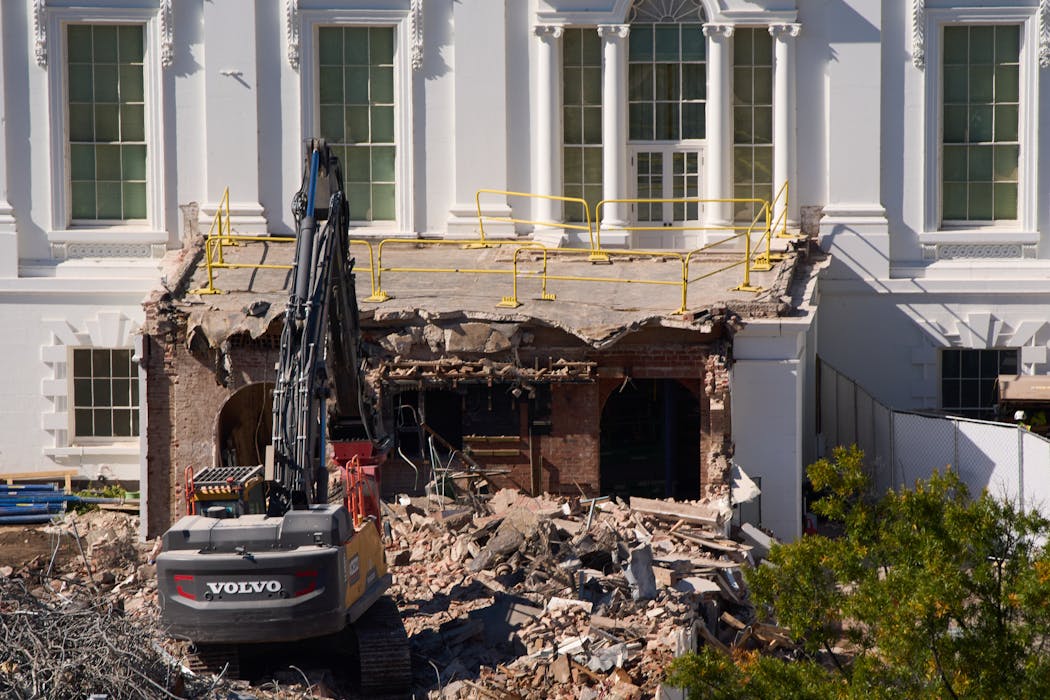
Demolition in process on the East Wing of the White House, Oct. 23, 2025. AP Photo/Jacquelyn Martin

From ancient Egypt to Washington, D.C., rulers have long used architecture and associated stories to project power, control memory and shape national identity. As 17th-century French statesman Jean-Baptiste Colbert observed:

“In the absence of brilliant deeds of war, nothing proclaims the greatness and spirit of princes more than building works.”

Today, the Trump administration is mobilizing heritage and architecture as tools of ideology and control. In U.S. historic preservation, “heritage” is the shared, living inheritance of places, objects, practices and stories – often plural and contested – that communities value and preserve. America’s architectural heritage is as diverse as the people who created, inhabited and continue to care for it.

As an archaeologist with three decades of practice, I read environments designed by humans. Enduring modifications to these places, especially to buildings and monuments, carry power and speak across generations.

In his first term as president, and even more so today, Donald Trump has pushed to an extreme legacy-building through architecture and heritage policy. He is remaking the White House physically and metaphorically in his image, consistent with his long record of putting his name on buildings as a developer.

In December 2020, Trump issued an executive order declaring classical and traditional architectural styles the “preferred” design for new federal buildings. The order derided Brutalist and modernist structures as inconsistent with national values.

Now, Trump is seeking to roll back inclusive historical narratives at U.S. parks and monuments. And he is reviving sanitized myths about America’s history of slavery, misogyny and Manifest Destiny, for use in museums, textbooks and public schools.

Yet artifacts don’t lie. And it is the archaeologist’s task to recover these legacies as truthfully as possible, since how the past is remembered shapes the choices a nation makes about its future.

The Trump administration tore down much of the White House East Wing without either consulting historians and preservation experts or opening the project to public comment.

Architecture as political power and legacy

Dictators, tyrants and kings build monumental architecture to buttress their own egos, which is called authoritarian monumentalism. They also seek to build the national ego – another word for nationalism.

Social psychologists have found that the awe we experience when we encounter something vast diminishes the “individual self,” making viewers feel respect and attachment to creators of awesome architecture. Authoritarian monumentalism often exploits this phenomenon. For example, in France, King Louis XIV expanded the Palace of Versailles and renovated its gardens in the mid-1600s to evoke perceptions of royal grandeur and territorial power in visitors.

Many leaders throughout history have built “temples to power” while erasing or overshadowing the memory of their predecessors – a practice known as damnatio memoriae, or condemnation to oblivion.

In the ancient world, the Sumerians, Babylonians, Egyptians, Romans, Chinese dynasties, Mayans and Incas all left behind architecture that still commands awe in the form of monuments to gods, rulers and communities. These monuments conveyed power and often served as instruments of physical and psychological control.

In the 19th century, Napoleon fused conquest with heritage. Expeditions to Egypt and Rome, and the building of Parisian monuments – the Arc de Triomphe and the Vendôme Column, both modeled on Roman precedents – reinforced his legitimacy.

Albert Speer’s and Hermann Giesler’s monumental neoclassical designs in Nazi Germany, such as the party rally grounds in Nuremberg, were intended to overwhelm the individual and glorify the regime. And Josef Stalin’s Soviet Union suppressed avant-garde experimentation in favor of monumental “socialist realist” architecture, projecting permanence and centralized power.

Now, Trump has proposed building his own triumphal arch in Arlington, Virginia, just across the Potomac River from the Lincoln Memorial, as a symbol to mark the 250th anniversary of the Declaration of Independence.

Four men in military uniforms with swastika arm bands inspect a large model of a stadium.
German Chancellor Adolf Hitler and architect Albert Speer in 1932, inspecting Speer’s model for a huge stadium to be built at Nuremberg.
Corbis via Getty Images

An American alternative

Born of Enlightenment ideals of John Locke, Voltaire and Adam Smith, the American Revolution rejected the European idea of monarchs as semidivine rulers. Instead, leaders were expected to serve the citizenry.

That philosophy took architectural form in the Federal style, which was dominant from about 1785 to 1830. This clear, democratic architectural language was distinct from Europe’s ornate traditions, and recognizably American.

Its key features were Palladian proportions – measurements rooted in classical Roman architecture – and an emphasis on balance, simplicity and patriotic motifs.

James Hoban’s White House and Thomas Jefferson’s Monticello embodied this style. Interiors featured lighter construction, symmetrical lines, and motifs such as eagles, urns and bellflowers. They rejected the opulent rococo styles associated with monarchy.

Americans also recognized preservation’s political force. In 1816, the city of Philadelphia bought Independence Hall, which was constructed in 1753 and was where the Declaration of Independence and the Constitution were debated and signed, to keep it from being demolished. Today the building is a U.S. National Park and a UNESCO World Heritage Site.

Early preservationists saved George Washington’s home, Mount Vernon, Jefferson’s Monticello, and other landmarks, tying democracy’s endurance to the built environment.

Architecture, memory and Trump

In remaking the White House and prescribing the style and content of many federal sites, Trump is targeting not just buildings but the stories they tell.

By challenging narratives that depart from white, Anglo-Saxon origin myths, Trump is using his power to roll back decades of work toward creating a more inclusive national history.

These actions ignore the fact that America’s strength lies in its identity as a nation of immigrants. The Trump administration has singled out the Smithsonian Institution – the world’s largest museum, founded “for the increase and diffusion of knowledge – for ideological reshaping. Trump also is pushing to restore recently removed Confederate monuments, helping to revive “Lost Cause” mythology about the Civil War.

Trump’s 2020 order declaring classical and traditional architectural styles the preferred design for government buildings echoed authoritarian leaders like Adolf Hitler and Stalin, whose governments sought to dictate aesthetics as expressions of ideology. The American Institute of Architects publicly opposed the order, warning that it imposed ideological restrictions on design.

Trump’s second administration has advanced this agenda by adopting many recommendations in the Heritage Foundation’s Project 2025 blueprint. Notably, Project 2025 calls for repealing the 1906 Antiquities Act – which empowers presidents to quickly designate national monuments on federal land – and for shrinking many existing monuments. Such rollbacks would undercut the framework that has safeguarded places like Devils Tower in Wyoming and Muir Woods in California for over a century.

Trump’s new ballroom is a distinct departure from the core values embodied in the White House’s Federal style. Although many commentators have described it as rococo, it is more aligned with the overwrought and opulent styles of the Gilded Age – a time in American history, from about 1875 through 1895, with many parallels to the present.

In ordering its construction, Trump has ignored long-standing consultation and review procedures that are central to historic preservation. The demolition of the East Wing may have ignored processes required by law at one of the most important U.S. historic sites. It’s the latest illustration of his unilateral and unaccountable methods for getting what he wants.

A man in a suit at a podium holds out a model of a white arch topped with a gilded statue.
At a press conference on Oct. 15, 2025, President Donald Trump holds a model of a proposed arch to be built across the Potomac River from the Lincoln Memorial.
Kevin Dietsch/Getty Images

Instruments of memory and identity

When leaders push selective histories and undercut inclusive ones, they turn heritage into a tool for controlling public memory. This collective understanding and interpretation of the past underpins a healthy democracy. It sustains a shared civic identity, ensures accountability for past wrongs and supports rights and participation.

Heritage politics in the Trump era seeks to redefine America’s story and determine who gets to speak. Attacks on so-called “woke” history seek to erase complex truths about slavery, inequality and exclusion that are essential to democratic accountability.

Architecture and heritage are never just bricks and mortar. They are instruments of memory, identity and power.

The Conversation

R. Grant Gilmore III does not work for, consult, own shares in or receive funding from any company or organization that would benefit from this article, and has disclosed no relevant affiliations beyond their academic appointment.

ref. Demolishing the White House East Wing to build a ballroom embodies Trump’s heritage politics – https://theconversation.com/demolishing-the-white-house-east-wing-to-build-a-ballroom-embodies-trumps-heritage-politics-264947

Influencers could learn a thing or two from traditional journalism about disclosing who’s funding their political coverage

Source: The Conversation – USA – By Edward Wasserman, Professor of Journalism, University of California, Berkeley

When influencers accept money and don’t disclose it, then they’re being influenced. Bambu Productions, Getty Images

Online influencers, through their postings on Instagram, Threads, TikTok and elsewhere, have created an exuberant universe of news and commentary that often outruns mainstream media in reach and even impact. They work the same waterfront as journalism and public relations, but their relationship with those mainstay practices built around fact and advocacy is an uneasy one.

And when it comes to the rules that are supposed to keep communicators honest, they have been slow to step up, as a raging controversy over undisclosed payments to freelance influencers shows.

For the past month, social media has been ablaze with postings about a provocative story alleging improper political influence among left-leaning online commentators. Headlined “A Dark Money Group is Secretly Funding High-Profile Democratic Influencers,” it ran in Wired, the San Francisco-based magazine that specializes in tech, and was written by Taylor Lorenz, a high-profile reporter who has built a stormy career of tech coverage for outlets including The Washington Post, The New York Times and The Atlantic.

The 3,600-word article focused on Chorus, described as a secretive arm of the Sixteen Thirty Fund, whose wide-ranging support for progressive causes totals more than US$100 million a year. Starting in spring 2025, Lorenz reported, Chorus quietly recruited and supported a coterie of liberal political influencers, with monthly stipends of anywhere from $250 to $8,000.

Just how tightly Chorus sought to control what the 90-some freelancers actually produce is somewhat unclear, and was sharply disputed in the reaction to the article.

But what is clear to me, as a journalist and student of media ethics, is that any creators who conceal financial support while weighing in on matters of interest to their funders are, by implication, falsely presenting themselves as independent voices. They are no less deceitful than the business journalist who covers a company they secretly invest in.

Furious response misses the point

The Wired story declared that the program supporting influencers, called the Chorus Creator Incubator Program, “was aimed at bolstering Democratic messaging on the internet.” Funded commentators got regular briefings with lawmakers and others, organized by Chorus, on newsworthy issues.

The paid influencers also allegedly agreed to forewarn Chorus about interviews with prominent sources, Lorenz wrote, saying “creators in the program must funnel all bookings with lawmakers and political leaders through Chorus. Creators also have to loop Chorus in on any independently organized engagements with government officials or political leaders.”

And, a big red flag for anyone concerned with ethical communications practices: Participating influencers were also prohibited from telling anybody about the money they were getting.

The Wired story plainly hit a nerve and triggered a spasm of angry postings on Instagram, TikTok, Bluesky, YouTube, X, Facebook and other social media sites. But for all their passion, the comments brought to light the disheveled state of online ethics.

Ad hominem attacks predominated. Posts denounced Lorenz as a liar and a hypocrite who had no business exposing the program because she herself admittedly receives similar funding. Some said her real motive was sabotaging the left. Others praised the Chorus program as a valuable attempt to sharpen the skills of participants and enrich their reporting. Still others asserted that Chorus is not hands-on, never assigns or edits anybody’s stories and is an overdue corrective that gives left-leaning influencers just the kind of support the political right has had for years.

Only rarely did the commentary touch on what should have been the white-hot core of the problem: The absence of a shared understanding of the basic responsibilities that online influencers have to the people they serve. Those responsibilities are no different from those of journalists or professional advocates – to come clean.

As Don Heider, head of the Markkula Center for Applied Ethics at Santa Clara University, told Lorenz with admirable clarity: “If the contract for getting money from a particular interest group says you can’t disclose it, then it’s pretty simple, you can’t take the money.” Or, said the influencer Overopinionatedbrit3 on TikTok: “If you are getting paid disclose or you are an influencer being influenced.”

An obligation to disclose

The principle of disclosure is one that is widely accepted by professional communicators.

From their earliest iterations a century ago, journalism codes have recognized that conflict of interest is perhaps the most toxic threat to the credibility of reporters and the trust they seek from audiences.

The Public Relations Society of America has based its efforts to professionalize advocacy in part on an insistence that practitioners not conceal support or withhold information about whose message they are conveying – prohibitions that, sadly, are not universally observed. One notorious breach was the use of on-air “military analysts” by CNN and other networks during the Iraqi invasion. They were typically former high-ranking officers now employed by arms contractors whose paychecks depended on cordial relations with the Pentagon, but who nevertheless proffered supposedly independent expert appraisals of the U.S. military campaign to CNN viewers. None of that was disclosed to the public.

Femi Redwood, who chairs the National Association of Black Journalists LGBTQ+ task force, was one of the few respondents among the flood of comments on the Wired story who zeroed in on the absence of online standards. Redwood defined the problem as “the intersection of news and influencing without the ethics of journalism,” and called for a code that would make the ethical obligations of influencers explicit.

The world of influencers is, admittedly, a bit of a Wild West. How universally ethical guidelines would be embraced and whether platforms might find the stomach to consider enforcement remain open – but pivotal – questions.

The lure of the high road

But the social media commentariat may be receptive.

Online practitioners have long claimed greater intellectual independence and cleaner hands than the legacy newspeople they challenge, who they say are trapped in the cobwebs of institutional bias and material thralldom. Much of their claim to the high road has rested on their greater candor – renamed transparency and hailed as the “new objectivity” – which calls for influencers to fess up about their predispositions and biases rather than go the traditional mainstream route and imply they have none. Secrecy over funding, plainly, is incompatible with such transparency.

Indeed, in the current moment, when colossal news organizations have been brought to heel by an administration in Washington that uses their owners’ financial ambitions to enforce ideological discipline, the influencers’ potential ability to claim moral superiority seems even stronger.

But the freelance model doesn’t ensure independence. It may only create a shifting roster of dependencies and allegiances that are wholly invisible to the audience being served and a potent source of corruption.

Disclosure is an imperfect remedy. But failing to adopt it as a minimum expectation leaves the robust online universe with a moral taint that is lethal to trust.

The Conversation

Edward Wasserman does not work for, consult, own shares in or receive funding from any company or organization that would benefit from this article, and has disclosed no relevant affiliations beyond their academic appointment.

ref. Influencers could learn a thing or two from traditional journalism about disclosing who’s funding their political coverage – https://theconversation.com/influencers-could-learn-a-thing-or-two-from-traditional-journalism-about-disclosing-whos-funding-their-political-coverage-267905

You’ve just stolen a priceless artifact – what happens next?

Source: The Conversation – USA (2) – By Leila Amineddoleh, Adjunct Professor of Law, New York University

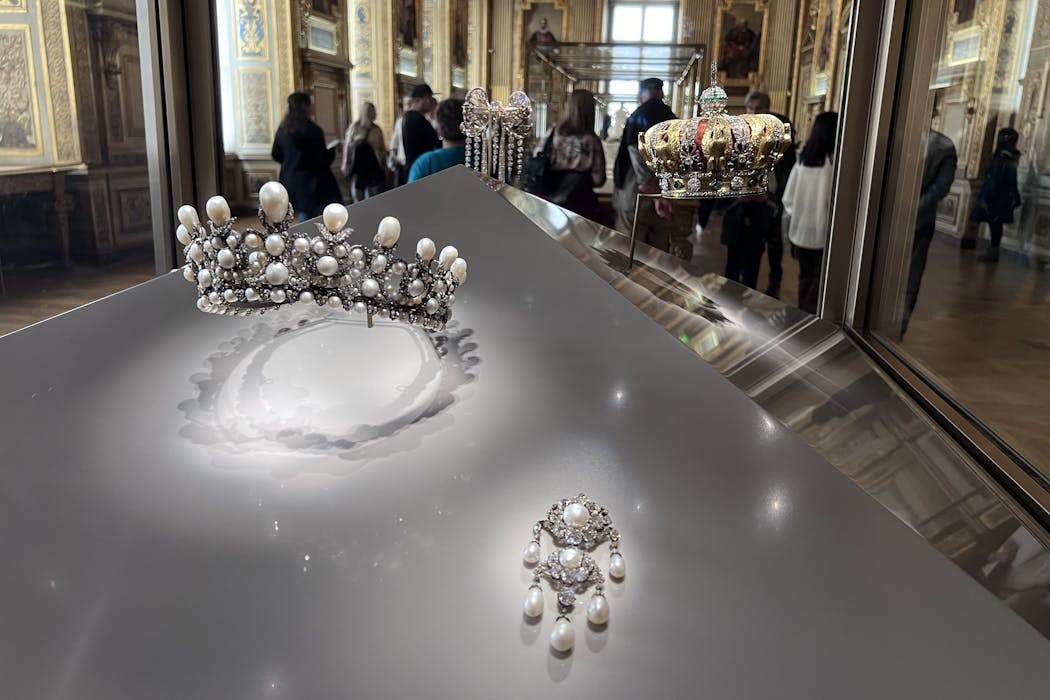
The tiara of Empress Eugénie was one of eight priceless pieces of jewelry stolen from the Louvre in Paris on Oct. 19, 2025. Zhang Mingming/VCG via Getty Images

The high-profile heist at the Louvre in Paris on Oct 19, 2025, played out like a scene from a Hollywood movie: a gang of thieves steal an assortment of dazzling royal jewels on display at one of the world’s most famous museums.

But with the authorities hot in pursuit, the robbers still have more work to do: How can they capitalize on their haul?

Most stolen works are never found. In the art crime courses I teach, I often point out that the recovery rate is below 10%. This is particularly disturbing when you consider that between 50,000 and 100,000 artworks are stolen each year globally – the actual number may be higher due to underreporting – with the majority stolen from Europe.

That said, it’s quite difficult to actually make money off stolen works of art. Yet the types of objects stolen from the Louvre – eight pieces of priceless jewelry – could give these thieves an upper hand.

A visual of a museum in the middle of a city with text describing the seven-minute chain of events for the heist that took place on Oct. 17.
At 9:30 a.m. local time on Oct. 19, 2025, four thieves reportedly used a lift mounted on a vehicle to enter the Louvre’s Apollo Gallery.
Murat Usubali/Anadolu via Getty Images

A narrow market of buyers

Pilfered paintings can’t be sold on the art market because thieves can’t convey what’s known as “good title,” the ownership rights that belong to a legal owner. Furthermore, no reputable auction house or dealer would knowingly sell stolen art, nor would responsible collectors purchase stolen property.

But that doesn’t mean stolen paintings don’t have value.

In 2002, thieves broke into Amsterdam’s Van Gogh Museum through the roof and departed with “View of the Sea at Scheveningen” and “Congregation Leaving the Reformed Church in Nuenen” in tow. In 2016, Italian police recovered the relatively unscathed artworks from a Mafia safehouse in Naples. It isn’t clear whether the Mafia actually purchased the works, but it’s common for criminal syndicates to hold onto valuable assets as collateral of some sort.

Oil painting of a group of people with a church in the background.
Van Gogh’s 1884-85 oil on canvas painting ‘Congregation Leaving the Reformed Church in Nuenen’ was one of two of the artist’s works stolen from Amsterdam’s Van Gogh Museum in 2002.
Van Gogh Museum

Other times, stolen works do unwittingly end up in the hands of collectors.

In the 1960s in New York City, an employee of the Guggenheim Museum stole a Marc Chagall painting from storage. But the crime wasn’t even discovered until an inventory was taken years later. Unable to locate the work, the museum simply removed it from its records.

In the meantime, collectors Jules and Rachel Lubell bought the piece for US$17,000 from a gallery. When the couple requested that an auction house review the work for an estimate, a former Guggenheim employee at Sotheby’s recognized it as the missing painting.

Guggenheim demanded that the painting be returned, and a contentious court battle ensued. In the end, the parties settled the case, and the painting was returned to the museum after an undisclosed sum was paid to the collectors.

Some people do knowingly buy stolen art. After World War II, stolen works circulated on the market, with buyers fully aware of the widespread plunder that had just taken place across Europe.

Eventually, international laws were developed that gave the original owners the opportunity to recover looted property, even decades after the fact. In the U.S., for example, the law even allows descendants of the original owners to regain ownership of stolen works, provided they can offer enough evidence to prove their claims.

Jewels and gold easier to monetize

The Louvre theft didn’t involve paintings, though. The thieves came away with bejeweled property: a sapphire diadem; a necklace and single earring from a matching set linked to 19th-century French queens Marie-Amélie and Hortense; an opulent matching set of earrings and a necklace that belonged to Empress Marie-Louise, Napoleon Bonaparte’s second wife; a diamond brooch; and Empress Eugénie’s diadem and her corsage-bow brooch.

These centuries-old, exquisitely crafted works have unique historic and cultural value. But even if each one were broken to bits and sold for parts, they would still be worth a lot of money. Thieves can peddle the precious gemstones and metals to unscrupulous dealers and jewelers, who could reshape and sell them. Even at a fraction of their value – the price received for looted art is always far lower than that received for legitimately sourced art – the gems are worth millions of dollars.

A display case featuring an emerald-and-diamond necklace and a pair of emerald-and-diamond earrings.
An emerald-and-diamond necklace that belonged to Napoleon’s second wife, Empress Marie Louise, was among the items stolen from the Louvre on Oct. 19, 2025.
Maeva Destombes/Hans Lucas/AFP via Getty Images

While difficult to sell stolen goods on the legitimate market, there is an underground market for looted artworks. The pieces may be sold in backrooms, in private meetings or even on the dark web, where participants cannot be identified. Studies have also revealed that stolen – and sometimes forged – art and antiquities often appear on mainstream e-commerce sites like Facebook and eBay. After making a sale, the vendor may delete his or her online store and disappear.

A heist’s sensational allure

While films like “The Thomas Crown Affair” feature dramatic heists pulled off by impossibly attractive bandits, most art crimes are far more mundane.

Art theft is usually a crime of opportunity, and it tends to take place not in the heavily guarded halls of cultural institutions, but in storage units or while works are in transit.

Most large museums and cultural institutions do not display all the objects within their care. Instead, they sit in storage. Less than 10% of the Louvre’s collection is ever on display at one time – only about 35,000 of the museum’s 600,000 objects. The rest can remain unseen for years, even decades.

Works in storage can be unintentionally misplaced – like Andy Warhol’s rare silkscreen “Princess Beatrix,” which was likely accidentally discarded, along with 45 other works, during the renovation of a Dutch town hall – or simply pilfered by employees. According to the FBI, around 90% of museum heists are inside jobs.

In fact, days before the Louvre crime, a Picasso work valued at $650,000, “Still Life with Guitar,” went missing during its journey from Madrid to Granada. The painting was part of a shipment including other works by the Spanish master, but when the shipping packages were opened, the piece was missing. The incident received much less public attention.

To me, the biggest mistake the thieves made wasn’t abandoning the crown they dropped or the vest they discarded, essentially leaving clues for the authorities.

Rather, it was the brazen nature of the heist itself – one that captured the world’s attention, all but ensuring that French detectives, independent sleuths and international law enforcement will be on the lookout for new pieces of gold, gems and royal bling being offered up for sale in the years to come.

The Conversation

Leila Amineddoleh does not work for, consult, own shares in or receive funding from any company or organization that would benefit from this article, and has disclosed no relevant affiliations beyond their academic appointment.

ref. You’ve just stolen a priceless artifact – what happens next? – https://theconversation.com/youve-just-stolen-a-priceless-artifact-what-happens-next-267947

Relying heavily on contractors can cut attendance by 27% for museums, theaters and other arts nonprofits – new research

Source: The Conversation – USA (2) – By Hala Altamimi, Assistant professor of Public Administration, University of Kansas

Two researchers used attendance as a way to measure the groups’ success. MediaNews Group/Orange County Register via Getty Images

Many nonprofits face growing pressure from their donors and other funders to do more with less as their costs rise and their budgets don’t keep up. One way these organizations are responding is by trying to save money on their staffing by hiring contractors, consultants and temporary staff instead of full-time employees.

But those flexible labor arrangements can have drawbacks.

We are two nonprofit management scholars. We analyzed data collected from 2008-2018 that was drawn from 7,838 museums, theaters, community arts centers and other arts and cultural nonprofits across the country. As explained in studies published in two peer-reviewed journals around the same time, we identified a gap between the promise of flexible labor arrangements and their actual outcomes for arts and culture nonprofits.

First, we assessed the nonprofits’ operational performance using in-person attendance at theatrical performances, museum exhibits and other live events as a proxy for how well these nonprofits were delivering services and reaching their target audiences.

In one of the studies, published in July 2025 in the journal Public Management Review, we found that attendance for the groups that relied entirely on flexible labor was about 27% lower compared to those that relied instead on permanent, full-time employees. The attendance problem was more pronounced when nonprofits used contractors and other such arrangements for their core activities, including program delivery.

Operational performance was less affected when nonprofits used contractors only for administrative roles, such as IT or fundraising. In those cases, attendance was about the same as when the nonprofits employed permanent staff members for those jobs.

A big crowd gathers to hear musicians perform.
A crowd gathers at the ribbon-cutting ceremony of the Go-Go Museum & Cafe in Washington, D.C.’s Anacostia district on Nov. 18, 2024. The venue is a nonprofit.
Jahi Chikwendiu/The Washington Post via Getty Images

The picture wasn’t much better in terms of the nonprofits’ financial performance.

Our other study, published in June 2025 in Nonprofit Management & Leadership, found that while flexible labor may temporarily ease cash flow, it doesn’t improve long-term financial health.

In other words, while it may offer short-term relief, relying on flexible labor arrangements does not provide lasting financial benefits. It’s more of a Band-Aid than a cure.

We suspect that many nonprofits need employees with long-term commitments to their causes, communities and partners to succeed.

Why it matters

Flexible labor models are common in the private sector, where efficiency and cost-cutting are key performance metrics. Nonprofits, by contrast, generate value through trust, continuity and deep community relationships.

It takes time to build the necessary institutional knowledge and commitment required of strong nonprofit staff members.

Temporary staff members may not stick around long enough to build relationships or understand, let alone share, a nonprofit’s mission. When the person leading a youth program or managing community outreach is here today and gone tomorrow, that program’s quality will probably suffer.

The trust between a nonprofit and the people who benefit from it gets built through repeated, positive interactions. Because that trust can erode quickly, relying on flexible labor can be less useful for nonprofits than for-profit employers.

For most nonprofits, personnel costs are typically the largest part of a nonprofit’s budget, making them tempting to cut. But replacing permanent employees with contractors to save money risks cutting into the muscle of the organization, not just the fat.

What still isn’t known

We focused on arts and cultural nonprofits, which make up a majority of all arts groups. Almost 9 in 10 museums and visual arts institutions, 3 in 4 dance companies and about 6 in 10 theaters are nonprofits.

The advantages and disadvantages of using flexible labor arrangements may differ for other kinds of nonprofits, such as those engaged in health care or providing social services.

There could be other variables. Contractors who freely choose to not be a full-time, permanent employee – and are already familiar with the organization’s work and mission – may do their job much better than people with little relevant experience.

And because of data limitations, we grouped all flexible labor into a single category. Hiring independent contractors, on-call workers and temporary staff via contracting firms may have different effects on an organization’s performance.

The Conversation

The authors do not work for, consult, own shares in or receive funding from any company or organization that would benefit from this article, and have disclosed no relevant affiliations beyond their academic appointment.

ref. Relying heavily on contractors can cut attendance by 27% for museums, theaters and other arts nonprofits – new research – https://theconversation.com/relying-heavily-on-contractors-can-cut-attendance-by-27-for-museums-theaters-and-other-arts-nonprofits-new-research-266560

Navigating mental illness in the workplace can be fraught, but employees are entitled to accommodations

Source: The Conversation – USA (3) – By Julie Wolfe, Assistant Professor of Psychiatry, University of Colorado Anschutz Medical Campus

Coping with mental illness can make starting and completing simple tasks at work more difficult. Fiordaliso/Moment via Getty Images

Mental health challenges can affect anyone, regardless of background or circumstance, and they are becoming more common across the United States.

In 2022, a national survey found that about 60 million American adults – approximately 23% of the U.S. adult population – were living with a mental illness, defined as a diagnosable mental, emotional or behavioral disorder.

This translates to a nearly 37% increase over the past decade.

These conditions can have a profound and lasting effect on patients’ lives, including their ability to engage meaningfully and sustainably in the workforce.

Globally, depression and anxiety are estimated to lead to 12 billion lost working days annually, costing an estimated US$1 trillion per year in lost productivity worldwide and $47 billion in the United States.

I am a medical director and practicing psychiatrist. I work with graduate students, residents, faculty and staff on a health science campus, supporting their mental health – including when it intersects with challenges in the workplace.

I often meet with patients who feel unsure about how to approach conversations with their schools, programs or employers regarding their mental health, especially when it involves taking time off for care. This uncertainty can lead to delays in treatment, even when it’s truly needed.

Mental health by the numbers

Anxiety and depression are the most common mental health conditions in the U.S.. Nineteen percent of American adults suffer from an anxiety disorder, and more than 15% have depression.

Meanwhile, about 11% of Americans experience other conditions such as post-traumatic stress disorder, commonly known as PTSD, bipolar disorder, borderline personality disorder or obsessive-compulsive disorder.

Rates of anxiety and depression increased worldwide during the COVID-19 pandemic. But one positive consequence of the pandemic is that talking about mental health has become more normalized and less stigmatized, including in the workplace.

Struggling at work

For those with mental illness, the traditional expectation of maintaining a strict separation between personal and professional life is not only unrealistic, it may even be detrimental. The effect of mental illness on a person’s work varies depending on the type, severity and duration of their symptoms.

For instance, severe depression can affect basic self-care, making it difficult to complete tasks such as bathing, eating or even getting out of bed. Severe anxiety can also be profoundly debilitating and limit a person’s ability to leave the house due to intense fear or panic. The symptoms of such severe mental illness may make it difficult even to show up to work.

On the other hand, someone struggling with mild depression or anxiety may have a hard time initiating or completing tasks that they would typically manage with ease and find it difficult to interact with colleagues. Both depression and anxiety may affect sleep, which can contribute to cognitive lapses and increased fatigue during the work day.

Someone with PTSD may find that certain environments remind them of traumatic experiences, making it difficult to fully engage in their work. And a person experiencing a manic episode related to bipolar disorder might need to take time away from work entirely to focus on their stabilization and recovery.

Knowing when to ask for help

Identifying a trusted colleague, supervisor or human resources representative can be an important first step in managing your mental health at work. While selecting the right person to confide in may be challenging, especially given the vulnerability associated with disclosing mental health concerns, doing so can open pathways to appropriate resources and tailored support services.

For instance, it might encourage an employer to consider offering access to free or low-cost mental health care if it’s not already available, or to provide flexible scheduling that makes it easier for employees to get mental health treatment.

It’s also important to be aware of changes in your mental health. The earlier you can recognize signs of decline, the sooner you can get the support that you need, which might prevent symptoms from worsening.

On the other hand, sharing sensitive information with someone who is not equipped to respond appropriately could lead to unintended consequences, such as workplace gossip, unmet expectations and increased frustration due to perceived lack of support. However, even if your supervisor or manager is not understanding, that doesn’t change the fact that you have rights in the workplace.

In 2022, U.S. Surgeon General Vivek Murthy warned that American workplaces needed to change to better support employees’ well-being.

Consider exploring accommodations

The Americans with Disabilities Act provides critical protections for individuals with disabilities in the workplace. Under the act, it is unlawful for employers to discriminate against qualified individuals based on a disability.

The law also requires employers to provide reasonable accommodations so that people who qualify are able to participate fully in the workplace provided that they do not impose undue burden on the place of employment.

There are many reasonable accommodations for workers with mental illness. These can include protected time to attend mental health appointments and flexibility in work schedules and workplace.

For instance, if your job allows for it, working from home can be helpful. If your job requires being on site, a private work space is another reasonable accommodation. Someone with anxiety might find that working in a quiet, private space helps reduce distractions that trigger their symptoms, making it easier for them to stay focused and get things done.

Other possible accommodations include providing sick leave or flexible vacation time to use for mental health days or appointments, or allowing an employee to take breaks according to their individual needs rather than a fixed schedule. Employers can also provide support by offering equipment or technology such as white noise machines or dictation software.

The role of the workplace

An organization’s commitment to supporting employee mental health can play a large role in shaping how well employees perform at work – and, ultimately, the organization’s success.

Relying on individual employees to manage their mental health is not a sustainable long-term strategy for employers and may lead to significant workplace disruptions, such as more missed work days and lower productivity.

Studies show that when employers lead targeted initiatives promoting mental health, overall workplace functioning and resilience improve. These initiatives might include educating employees on mental health, providing accessible care, helping employees have better work-life balance and designing supportive workplace policies for those who are struggling. These steps help reduce stigma and signal to employees that it’s safe to seek support.

The Conversation

Julie Wolfe does not work for, consult, own shares in or receive funding from any company or organization that would benefit from this article, and has disclosed no relevant affiliations beyond their academic appointment.

ref. Navigating mental illness in the workplace can be fraught, but employees are entitled to accommodations – https://theconversation.com/navigating-mental-illness-in-the-workplace-can-be-fraught-but-employees-are-entitled-to-accommodations-259802

2 iconic coral species are now functionally extinct off Florida, study finds – we witnessed the reef’s bleaching and devastation

Source: The Conversation – USA (2) – By Carly D. Kenkel, Associate Professor of Biological Sciences, University of Southern California

Healthy staghorn coral were crucial builders of Florida’s coral reef. Today, few survive there. Maya Gomez

In early June 2023, the coral reefs in the lower Florida Keys and the Dry Tortugas were stunning. We were in diving gear, checking up on hundreds of corals we had transplanted as part of our experiments. The corals’ classic orange-brown colors showed they were thriving.

Just three weeks later, we got a call – a marine heat wave was building, and water temperatures on the reef were dangerously high. Our transplanted corals were bleaching under the heat stress, turning bone white. Some were already dead.

Two photos show staghorn coral before after bleaching of a few weeks. The live coral is a mustard color. The bleached corals are a ghostly bone white.
Staghorn corals in a lower Florida Keys transplant experiment that were healthy in June 2023 had bleached white in July.
Erich Bartels, Joe Kuehl/Mote Marine Laboratory

That was the start of a global mass bleaching event. As ocean temperatures rose, rescuers scrambled to relocate surviving corals to land-based tanks, but the heat wave, extending over 2023 and 2024, was lethal.

In a study published Oct. 23, 2025, in the journal Science, we and colleagues from NOAA, the Shedd Aquarium and other institutions found that two of Florida’s most important and iconic reef-building coral species had become functionally extinct across Florida’s coral reef, meaning too few of them remain to serve their previous ecological role.

No chance to recover

In summer 2023, the average sea-surface temperature across Florida’s reef was above 87 degrees Fahrenheit (31 degrees Celsius) for weeks. We found that the accumulated heat stress on the corals was 2.2 to 4 times higher than it had ever been since modern satellite sea-surface temperature recordings began in the 1980s, a time when those two species – branching staghorn and elkhorn corals – were the dominant reef-builders in the region.

A map showing Florida Keys sea surface temperature more than 7 degrees Fahrenheit (4 degree Celsius) warmer than average
A sea-surface temperature map from mid-July 2023 shows the extraordinary heat around the Florida Keys.
NOAA Coral Reef Watch

The temperatures were so high in the middle and lower Florida Keys that some corals died within days from acute heat shock.

Everywhere on the reef, corals were bleaching. That occurs when temperatures rise high enough that the coral expels its symbiotic algae, turning stark white. The corals rely on these algae for food, a solar-powered energy supply that allows them to build their massive calcium carbonate skeletons, which we know as coral reefs.

How coral bleaching occurs. Great Barrier Reef Marine Park Authority

These reefs are valuable. They help protect coastal areas during storms, provide safety for young fish and provide habitat for thousands of species. They generate millions of dollars in tourism revenue in places like the Florida Keys. However, the symbiotic relationship between the coral animal and the algae that supports these incredible ecosystems can be disrupted when temperatures rise about 2 to 3 degrees Fahrenheit (1 to 2 degrees Celsius) above the normal summer maximum.

By the end of summer 2023, only three of the 200 corals we had transplanted in the Lower Keys to study how corals grow survived.

In the Dry Tortugas, corals’ bone-white skeletons were already being grown over by seaweed. That’s a warning sign of a potential phase shift, where reefs change from coral-dominated to macroalgae-dominated systems.

Time lapse of a coral branch bleaching under heat stress over a month. Each tiny polyp is one appendage of the coral animal. The structure turns white as the corals lose their symbiotic algae. Reefscapers Maldives

Our colleagues observed similar patterns across the Florida Keys: Acroporid corals – staghorn and elkhorn – suffered staggering levels of bleaching and death.

Of the more than 50,000 acroporid corals surveyed across nearly 400 individual reefs before and after the heat wave, 97.8% to 100% ultimately died. Those farther north and offshore in cooler water fared somewhat better.

But this pattern of bleaching extended to the rest of the Caribbean and the world, leading NOAA to declare 2023-2024 the fourth global bleaching event. This type of mass bleaching, in which stress and mortality occur almost simultaneously across locations around the world, points to a common environmental driver.

Ghost-white coral branches among darker ones with fish swimming above.
A bleached and dead staghorn coral thicket in the Dry Tortugas, already being overgrown by seaweed in September 2023. The corals had been healthy a few months earlier.
Maya Gomez

In the summer of 2023, that environmental driver was clearly soaring water temperatures caused by climate change.

Becoming functionally extinct

Even before the 2023 marine heat wave, staghorn and elkhorn numbers had been dwindling, with punctuated declines accelerated by a diverse array of stressors – hurricane damage, loss of supporting herbivore species, disease and repeated bleaching.

The 2023-2024 event was effectively the final nail in the coffin: The data from our new study shows that these species are now functionally extinct on Florida’s coral reef.

Caribbean acroporids have not entirely disappeared in Florida, but those left are not enough to fulfill their ecological role. When populations become too small, they lose their capacity to rebound – in conservation biology this is known as the “extinction vortex.” With so few individuals, it becomes harder to find a mate, and even when one is found, it’s more likely to be a relative, which has negative genetic consequences.

Golden colored corals shaped like an elk's antlers
Live elkhorn coral, Acropora palmata, off Florida before the marine heat wave.
NOAA Fisheries
A side view of bleached-white elkhorn coral
A bleached colony of elkhorn coral in Dry Tortugas National Park off Florida on Sept. 11, 2023.
Shedd Aquarium/Ross Cunning

For an ecosystem-builder like coral, many individuals are required to build an effective reef. Even if the remaining corals were the healthiest and most thermally tolerant of the bunch – they did survive, after all – there are simply not enough of them left to recover on their own.

Can the corals be saved?

Florida’s acroporids have joined the ranks of the California condor – they cannot recover without help. But unlike the condor, there are still pockets of healthy corals scattered throughout their broader range that could be used to help restore areas with localized extinctions.

The surviving corals in Florida could be bred with other Caribbean populations to boost their numbers and increase genetic diversity, an approach known as assisted gene flow.

A diver with a camera and a box around a small coral branch.
Maya Gomez, one of the authors of this article and the study, takes photos of transplanted corals off Florida.
Jenna Dilworth

Advancements in microfragmentation, a way to speed up coral propagation by cutting them into smaller pieces, and cryopreservation, which involves deep-freezing coral sperm to preserve their genetic diversity, have made it possible to mass produce, archive and exchange genetic diversity at a scale that would not have been possible just 10 years ago.

Restoration isn’t easy, though. From a policy perspective, coordinating international exchange of endangered species is complex. There is still disagreement about the capacity to scale up reef restoration to recover entire ecosystems. And the question remains: Even if we could succeed in restoring these reefs, would we be planting corals just in time for the next heat wave to knock them down again?

This is a real risk, because ocean temperatures are rising. There is broad consensus that the world must curb the carbon emissions contributing to increased ocean temperatures for restoration to succeed.

Climate change poses an existential threat to coral reefs, but these advancements, in concert with effective and timely action to curb greenhouse gas emissions, could give them a fighting chance.

The Conversation

Carly D. Kenkel has received funding from NSF, NOAA, The Paul G. Allen Frontiers Group, the Mary Gard Jameson Foundation and the Alfred P. Sloan Foundation. She serves on the Genetics Working Group of the Coral Restoration Consortium, the US Acropora Recovery Implementation Team and the Intervention Risk Review Group for Australia’s Great Barrier Reef Restoration and Adaptation Program.

Maya Gomez is affiliated with the Perry Institute for Marine Science.

Jenna Dilworth does not work for, consult, own shares in or receive funding from any company or organization that would benefit from this article, and has disclosed no relevant affiliations beyond their academic appointment.

ref. 2 iconic coral species are now functionally extinct off Florida, study finds – we witnessed the reef’s bleaching and devastation – https://theconversation.com/2-iconic-coral-species-are-now-functionally-extinct-off-florida-study-finds-we-witnessed-the-reefs-bleaching-and-devastation-267958

Japan’s sumo association turns 100 – but the sport’s rituals have a much older role shaping ideas about the country

Source: The Conversation – USA (3) – By Jessamyn R. Abel, Professor of Asian Studies and History, Penn State

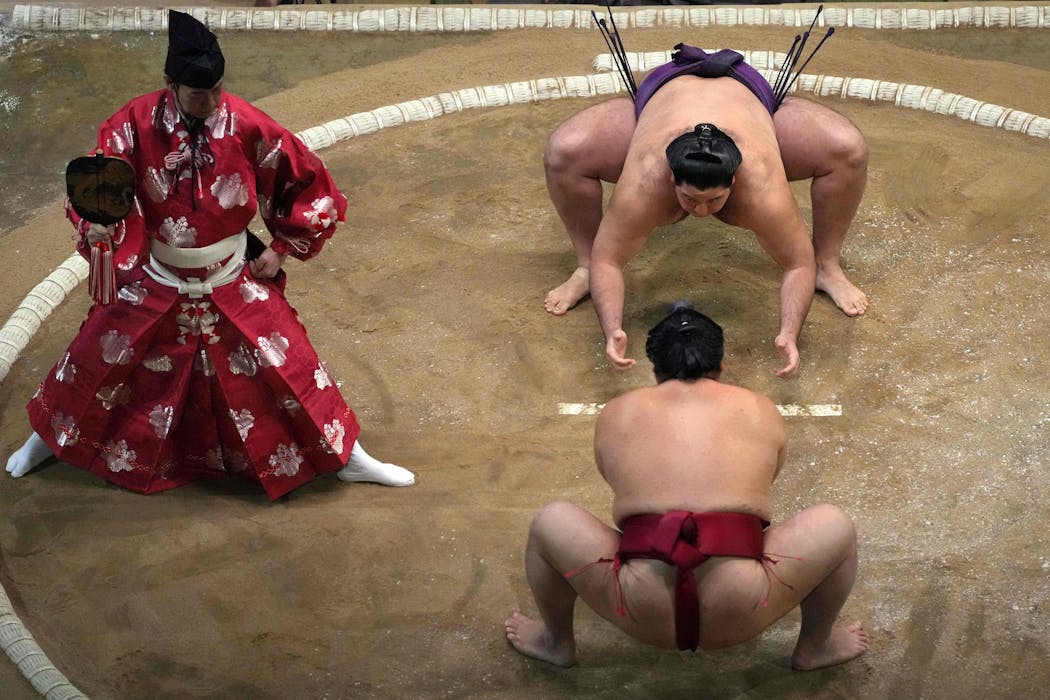
Sumo wrestlers Daieisho and Roga compete in a Grand Sumo Tournament bout at the Royal Albert Hall in London on Oct. 19, 2025. AP Photo/Frank Augstein

A visitor to Japan who wanders into a sumo tournament might be forgiven for thinking they had intruded upon a religious ceremony.

Tournaments begin with a line of burly men wearing little more than elaborately decorated aprons walking in a line onto a raised earthen stage. Their names are called as they circle around a ring made of partially buried bales of rice straw. Turning toward the center, they clap, lift their aprons, raise their arms upward, and then exit without a word.

Then two of those men face each other, crouching, clapping their hands together and stomping on the ground. They pause repeatedly to rinse their mouths with water and toss salt into the ring.

Overseeing their movements is a man outfitted in a colorful kimono and a black hat resembling that of a Shinto priest and holding a tasseled fan. After a subtle gesture with his fan, they finally grapple – and only then would the uninformed observer realize that the performance was an athletic event.

Every sport has its rituals, from the All Blacks rugby team’s pregame haka to the polite handshake between victor and vanquished over the tennis court net. Some, like many sumo rituals, have roots in religious practices. A few hundred years ago, competitions were frequently held at temples and shrines as part of festivals.

Two men in white robes bow, standing on the side of a dirt ring, as another man in white robes sits between them.
Sumo referees perform the Shinto ritual to purify and bless the ring ahead of a tournament at the Royal Albert Hall in London on Oct. 15, 2025.
AP Photo/Frank Augstein

Today, sumo is a modern sport with records, rules and a governing institution that celebrated its 100th anniversary in October 2025. But those religious roots are still visible. The salt the wrestlers throw, for example, is a purifying element. The clapping is a way of drawing the attention of the gods.

As a historian of modern Japan and a scholar of sports and diplomacy, I have seen many ways in which sports are much more than “just a game.” Sport rituals are an important part of those wider meanings. In fact, sumo and its rituals have helped shape foreign perceptions of Japan for at least 170 years.

First impressions

The first sumo tournament known to have been observed by American spectators was held in March 1854, in honor of a treaty establishing diplomatic relations between the United States and Japan. Described in the personal journal kept by Commodore Matthew Perry, the leader of the mission to Japan, the exhibition before gawking American sailors seemed designed to impress.

Before the matches began, the athletes put on a performance of strength, loading the American ships with a gift of some 200 bales of rice from the Japanese government. Perry describes how two dozen huge men, “naked with the exception of a narrow girdle around the loins,” paraded before the American crew before getting to work, each shouldering two 135-pound bales.

If the actual sumo competition was intended to inspire appreciation of Japanese culture, it backfired. Perry’s descriptions of the wrestlers were full of unflattering animal metaphors. He wrote that they resembled “stall-fed bulls” more than human beings and made noises like “dogs in combat.”

At the time, sports as we know them today were just emerging in England and the United States. Some of the earliest rules of soccer were recorded in the 1840s, and baseball’s growing popularity led to the development of professional leagues after the U.S. Civil War.

With this American idea of sports in Perry’s mind, the sumo tournament did not impress him. He called the bouts a “farce” and judged the wrestlers’ physique as one that “to our ideas of athletic qualities would seem to incapacitate him from any violent exercise.”

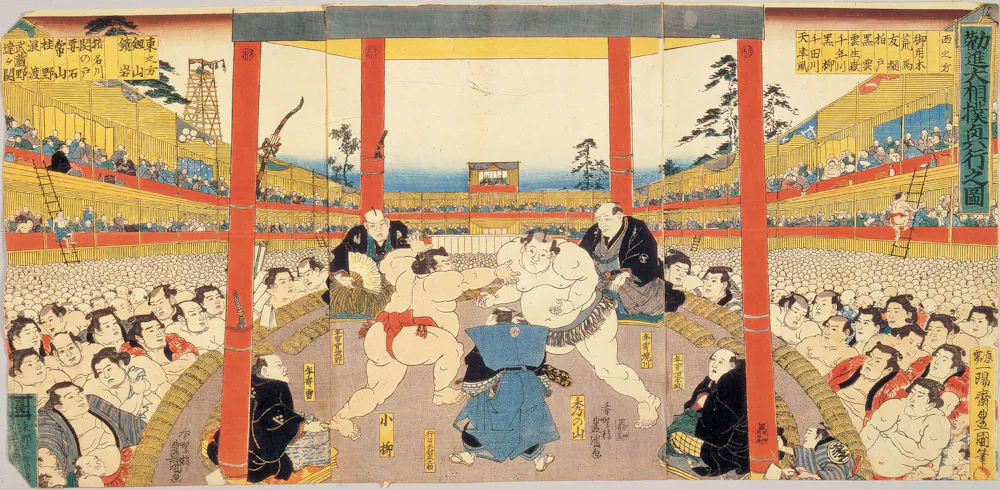
An illustration in muted colors shows two large men wrestling on a platform between red posts, as a large audience watches.
An illustration of an 1846 sumo tournament by Utagawa Kunisada.
Chunichi.co.jp/Wikimedia Commons

In the mid-19th century, Japan was relatively isolated from the Western world. Most Americans knew almost nothing about the country and considered it backward, even barbaric. The two cultures’ differing ideas of sports meant that sumo only added to American views of Japan as strange and uncivilized.

A competing sport

Sports diplomacy had a more positive impact on American views of Japan in the early 20th century, thanks to a different game: baseball.

After the fall of the shogunate in 1868, the new Japanese government – made up of oligarchs ruling in the name of the Meiji Emperor – employed Americans to help implement reforms. Some of them brought along America’s pastime, which became very popular within a few decades.

By the 1910s and ‘20s, Japanese college teams were regularly traveling to the U.S., where newspapers praised their skills and their sportsmanship.

A black and white photo shows two rows of men in suits posing outside a large white building.
The Osaka Mairuchi baseball team from Japan visits the U.S. White House in 1925.
National Photo Company Collection/Library of Congress/Wikimedia Commons

Some of the rituals in a Japanese baseball game, like a ceremonial first pitch, were familiar to American observers. Others, like a team bow toward the umpire, were quite a contrast, but struck them as superior to the rowdiness of American players and fans.

At the time, Japan’s Westernizing reforms and recent military victories over China and Russia had already improved Americans’ impressions of the country. Former baseball player Harry Kingman, writing about a game he watched during a 1927 stint coaching a Tokyo college team, explained the Japanese turn toward baseball as part of the nation’s modernization.

Sumo, however, continued to be the most popular sport in Japan until the 1990s, when baseball took that title. But the initial popularity of this American import caused some anxiety within the sumo world: A foreign game seemed to be taking over and stealing sumo’s fans.

Amid these changes, professional sumo’s governing institutions, which were divided into competing associations based in Tokyo and Osaka, joined forces. They officially unified in 1925 as the organization that would become today’s Japan Sumo Association.

Can sumo be cool?

Japanese popular culture now captivates people around the world. In 2002, journalist Douglas McGray wrote about the soft power conferred by what he called the nation’s “gross national cool.” But he noted sumo as an exception, blaming its leadership’s insular attitudes.

Perhaps sumo’s biggest hurdle to building an international fan base is its attitude toward foreigners. Immigration is controversial in Japan. The population is relatively homogeneous, and barriers to naturalization are high.

A man in a blue suit shakes hands with a much larger man in a gray suit.
Thomas Foley, then the U.S. ambassador to Japan, presents sumo grand champion Akebono with a letter of appreciation from Secretary of State Colin Powell in 2001.
AP Photo/Tsugufumi Matsumoto

In contrast to sports like baseball, soccer and rugby, where “imported” players abound, there are few foreign sumo wrestlers, and their success seems to rankle. In 1993, a Hawaiian named Akebono became the first foreigner to reach the top rank of “yokozuna,” sparking a temporary hold on recruiting sumo wrestlers from outside Japan.

Constraints were gradually softened, and the number of non-Japanese professional wrestlers has been rising. They still represent a small minority, but their success often sparks discussions about the place of foreigners in the sport.

Though sumo has gained some traction outside of Japan, its rituals still occasionally create negative impressions of Japanese culture. At a tournament in 2018, for example, a local official collapsed while giving a speech. Female medics who rushed to help him were told to leave the sumo ring, considered a sacred space polluted by a woman’s presence. The chairman of the Japan Sumo Association later apologized, but the incident brought criticism that the sumo world was clinging to anachronistic traditions.

Sumo continues to change. A 1926 Tokyo government ban on women’s sumo is no longer in force, and there are now some female wrestlers in amateur clubs. But women are still barred from professional competition.

Tournaments are certainly popular with tourists, but they generally go for a one-time experience. One might ask if sumo can change enough to play an effective role in Japan’s sports diplomacy. The answer depends on whether sumo leaders are more interested in maintaining the sport’s Japanese identity or building global connections.

The Conversation

Jessamyn R. Abel has received funding from the National Endowment for the Humanities, the Japan Foundation, the Northeast Asian Council of the Association for Asian Studies, and the McCourtney Institute for Democracy at Penn State University. She is currently a member of the Board of Directors of the Association for Asian Studies.

ref. Japan’s sumo association turns 100 – but the sport’s rituals have a much older role shaping ideas about the country – https://theconversation.com/japans-sumo-association-turns-100-but-the-sports-rituals-have-a-much-older-role-shaping-ideas-about-the-country-263093

Building a stable ‘abode of thought’: Kant’s rules for virtuous thinking

Source: The Conversation – USA (3) – By Alexander T. Englert, Assistant Professor of Philosophy, University of Richmond

Virtuous thinking, Kant wrote, is like good carpentry: It builds strong ideas in harmony with one another. Jackyenjoyphotography/Moment via Getty Images

What makes a life virtuous? The answer might seem simple: virtuous actions – actions that align with morality.

But life is more than doing. Frequently, we just think. We observe and spectate; meditate and contemplate. Life often unfolds in our heads.

As a philosopher, I specialize in the Enlightenment thinker Immanuel Kant, who had volumes – literally – to say about virtuous actions. What I find fascinating, however, is that Kant also believed people can think virtuously, and should.

To do so, he identified three simple rules, listed and explained in his 1790 book, “Critique of the Power of Judgment,” namely: Think for yourself. Think in the position of everyone else. And, finally, think in harmony with yourself.

If followed, he thought a “sensus communis,” or “communal sense,” could result, improving mutual understanding by helping people appreciate how their ideas relate to others’ ideas.

Given our current world, with its “post-truth” culture and isolated echo chambers, I believe Kant’s lessons in virtuous thinking offer important tools today.

Rule 1: Think for yourself

Thinking can be both active and passive. We can choose where to direct our attention and use reason to solve problems or consider why things happen. Still, we cannot completely control our stream of thought; feelings and ideas bubble up from influences outside our control.

One kind of passive thinking is letting others think for us. Such passive thinking, Kant thought, was not good for anybody. When we accept someone else’s argument without a second thought, it is like handing them the wheel to think for us. But thoughts lie at the foundation of who we are and what we do, thus we should beware of abdicating control.

A formal painting of a man with a gray powdered wig, looking down and wearing a dark suit jacket.
A late 18th-century portrait of Immanuel Kant, possibly by Elisabeth von Stägemann.
Norwegian Digital Learning Arena via Wikimedia Commons

Kant had a word for handing over the wheel: “heteronomy,” or surrendering freedom to another authority.

For him, virtue depended on the opposite: “autonomy,” or the ability to determine our own principles of action.

The same principle holds true for thinking, Kant wrote. We have an obligation to take responsibility for our own thinking and to check its overarching validity and soundness.

In Kant’s day, he was especially concerned about superstition, since it provides consoling, oversimplified answers to life’s problems.

Today, superstition is still widespread. But many new, pernicious forms of trying to control thought now proliferate, thanks to generative artificial intelligence and the amount of time we spend online. The rise of deepfakes, the use of ChatGPT for creative tasks, and information ecosystems that block out opposing views are but a few examples.

Kant’s Rule 1 tells us to approach content and opinions cautiously. Healthy skepticism provides a buffer and leaves room for reflection. In short, active or autonomous thinking protects people from those who seek to think for them.

Rule 2: Think in the position of everyone else

Pride often tempts us to believe that we have everything figured out.

Rule 2 checks this pride. Kant recommends what philosophers call “epistemic humility,” or humility about our own knowledge.

Stepping outside our own beliefs isn’t just about opening up new perspectives. It’s also the bedrock of science, which seeks shared agreement about what is and is not true.

Suppose you’re in a meeting and a consensus is taking shape. Strong personalities and a quorum support it, but you remain unsure.

At this point, Rule 2 does not recommend that you adopt the view of the others. Quite the opposite, in fact. If you simply accept the group’s conclusion without further thought, you’d be breaking Rule 1: Think for yourself.

Instead, Rule 2 prescribes temporarily detaching yourself from even your own way of thinking, especially your own biases. It’s an opportunity to “think in the position of everyone else.” What would a fair and discerning thinker make of this situation?

Kant believed that, while difficult, a standpoint can be achieved in which biases all but vanish. We might notice things that we missed before. But this requires appreciating our own limitations and seeking a wider, more universal view.

Again, Kant’s idea of virtue depends on autonomy, so Rule 2 isn’t about letting others think for us. To be responsible for how we shape the world, we must take responsibility for our own thinking, since everything flows from that point outward.

But it emphasizes the “communal” part of the “sensus communis,” reminding us that it must be possible to share what is true.

Rule 3: Think in harmony with yourself

The final rule, Kant maintained, is both the most difficult and profound. He said that it was the task of becoming “einstimmig,” literally “of one voice” with ourselves. He also uses a related term, “konsequent” – coherent – to express the same idea.

Blue neon lights illuminate a courtyard outside a large stone building, seen at night.
Immanuel Kant’s tomb at the Konigsberg Cathedral in Kaliningrad, Russia.
Denis Gavrilov/iStock via Getty Images Plus

To clarify, a metaphor that Kant employed can help – namely, carpentry.

Constructing a building is complex. The blueprint must be sound, the building materials must be high quality, and craftsmanship matters. If the nails are hammered sloppily or steps performed out of order, then the edifice might collapse.

Rule 3 tells us to construct our abode of thought with the same care as when constructing a house, such that stability between the parts results. Each thought, belief and intention is a building block. To be “einstimmig” or “bündig” – to be in “harmony” – these building blocks should fit well together and support each other.

Imagine a colleague who you believe has impeccable taste. You trust his opinions. But one day, he shares his secret obsession with death metal music – a genre you dislike.

A disharmony in thought might result. Your reaction to his love of death metal reveals a further belief: Your belief that only people with disturbed taste could love something you perceive to be so grating to the spirit. But he seems, otherwise, like such a thoughtful and pleasant person!

Rather than immediately change your belief about him, Kant’s third rule commands you to investigate the world and your own thoughts further. Perhaps you have never listened to death metal with a discerning spirit. Maybe your original beliefs about your colleague were inaccurate. Or could it be that having good taste is more complex than you originally thought?

Rule 3 leads us to do a system check of our mental architecture, whether we’re considering music, politics, morality or religion. And if that architecture is stable, Kant thinks that rewards will follow.

Sure, harmony is satisfying; but that’s not all. A sturdy system of thought might equip us better for integrated, creative thinking. When I understand how things connect, my own control over them can improve. For example, insight about human psychology will open up new ways to think about morality, and vice versa.

But ultimately, Kant found harmony important because it supports the construction of a coherent “worldview.” The English language gained that term through the translation of a German word, “Weltanschauung,” which Kant coined and which has been a focus of my own work. At its most basic, a harmonious worldview allows us to feel more at home in the world: We gain a sense of how it hangs together, and see it as imbued with meaning.

How we think ultimately determines how we live. If we have a stable abode of thought, we take that stability into everything we do and have some shelter from life’s storms.

The Conversation

Alexander T. Englert does not work for, consult, own shares in or receive funding from any company or organization that would benefit from this article, and has disclosed no relevant affiliations beyond their academic appointment.

ref. Building a stable ‘abode of thought’: Kant’s rules for virtuous thinking – https://theconversation.com/building-a-stable-abode-of-thought-kants-rules-for-virtuous-thinking-263597