Fed struggles to assess state of US economy as government shutdown shuts off key data

Source: The Conversation – USA (2) – By Jason Reed, Associate Teaching Professor of Finance, University of Notre Dame

The shutdown has closed off some of the Fed’s key economic data taps. picture alliance/Getty Images

When it comes to setting monetary policy for the world’s largest economy, what data drives decision-making?

In ordinary times, Federal Reserve Chair Jerome Powell and voting members of the Federal Open Market Committee, which usually meets eight times a year, have a wealth of information at their disposal, including key statistics such as monthly employment and extensive inflation data.

But with the federal shutdown that began Oct. 1, 2025, grinding on, government offices that publish such information are shuttered and data has been curtailed. Now, Powell and his Fed colleagues might be considering the price of gas or changes in the cost of coffee as they meet on Oct. 29 to make a judgment on the strength of the U.S. economy and decide where to take interest rates.

The Federal Reserve’s mandate is to implement monetary policy that stabilizes prices and promotes full employment, but there is a delicate balance to strike. Not only do Powell and the Fed have to weigh domestic inflation, jobs and spending, but they must also respond to changes in President Donald Trump’s global tariff policy.

As an economist and finance professor at the University of Notre Dame, I know the Fed has a tough job of guiding the economy under even the most ideal circumstances. Now, imagine creating policy partially blindfolded, without access to key economic data.

But, fortunately, the Fed’s not flying blind – it still has a wide range of private, internal and public data to help it read the pulse of the U.S. economy.

Key data is MIA

The Fed is data-dependent, as Powell likes to remind markets. But the cancellation of reports on employment, job openings and turnover, retail sales and gross domestic product, along with a delay in the September consumer price information, will force the central bank to lean harder on private data to nail down the appropriate path for monetary policy.

Torsten Slok, chief economist for the Apollo asset management firm, recently released his set of “alternative data,” capturing information from a wide range of sources. This includes ISM PMI reports, which measure economic activity in the manufacturing and services sectors, and Bloomberg’s robust data on consumer spending habits.

“Generally, the private data, the alternative data that we look at is better used as a supplement for the underlying governmental data, which is the gold standard,” Powell said in mid-October. “It won’t be as effective as the main course as it would have been as a supplement.”

But at this crucial juncture, the Fed has also abruptly lost one important source of private data. Payroll processor ADP had previously shared private sector payroll information with the central bank, which considered it alongside government employment figures. Now, ADP has suspended the relationship, and Powell has reportedly asked the company to quickly reverse its decision.

espresso falls from a coffee machine into a blue cup
With some key data unavailable, the Fed may pay more attention to the price of a cup of coffee to help determine how to set interest rates.
AP Photo/Julio Cortez

Internal research

Fortunately for the Fed, it has its own sources for reliable information.

Even when government agencies are working and producing economic reports, the Federal Reserve utilizes internal research and its nationwide network of contacts to supplement data from the U.S. Census Bureau, the Bureau of Labor Statistics and the Bureau of Economic Analysis.

Since the Fed is self-funded, the government shutdown didn’t stop it from publishing its Beige Book, which comes out eight times a year and provides insight into how various aspects of the economy are performing.

Its Oct. 15 report found that consumer spending had inched down, with lower- and middle-income households facing “rising prices and elevated economic uncertainty.” Manufacturing was also hit by challenges linked to higher tariffs.

Leading indicators

And though no data is being released on the unemployment rate, historical data shows that consumer sentiment can act as a leading indicator for joblessness in the U.S.

According to the most recent consumer confidence reports, Americans are significantly more worried about their jobs over the next six months, as compared to this time last year, and expect fewer employment opportunities during that period. This suggests the Fed will likely see an uptick in the unemployment rate, once the data resumes publishing.

And if you did notice an increase in the price of your morning coffee, you’re not mistaken – both private and market-based data suggest inflation is a pressing concern, with expectations that price increases will remain at about the 2% target set by the Fed.

It’s clear that there is no risk-free path for policy, and a wrong move by the Fed could stoke inflation or even send the U.S. economy spiraling into a recession.

Uncertain path ahead

At the Fed’s September monetary policy meeting, members voted to cut benchmark interest rates by 25 basis points, while one member advocated for a 50-point cut.

It was the first interest rate cut since December – one that Trump had been loudly demanding to help spur the U.S. economy and lower the cost of government debt. Markets expect the Fed to cut interest rates by another quarter of a percentage point at its Oct. 28-29 meeting and then again in December. That would lower rates to a range of 3.5% to 3.75%, from 4% to 4.25% currently, giving the labor market a much-needed boost.

After that, the near-certainty ends, as it’s anyone’s guess where interest rates will go from there. At quarterly meetings, members of the Federal Open Market Committee give projections of where they think the Fed’s benchmark interest rate will go over the next three years and beyond to provide forward guidance to financial markets and other observers.

The median projection from the September meeting suggests the benchmark rate will end 2026 a little lower than where it began, at 3.4%, and decline to 3.1% by the end of 2027. With inflation accelerating, Fed officials will continue to weigh the weakening labor market against the threat of inflation from tariffs, immigration reform and their own lower interest rates – not to mention the ongoing impact of the government shutdown.

Unfortunately, I believe these risks will be difficult to mitigate with just Fed intervention, even with perfect foresight into the economy, and will need help from government immigration, tax and spending policy to put the economy on the right path.

The Conversation

Jason Reed does not work for, consult, own shares in or receive funding from any company or organization that would benefit from this article, and has disclosed no relevant affiliations beyond their academic appointment.

ref. Fed struggles to assess state of US economy as government shutdown shuts off key data – https://theconversation.com/fed-struggles-to-assess-state-of-us-economy-as-government-shutdown-shuts-off-key-data-267204
AI chatbots are becoming everyday tools for mundane tasks, use data shows

Source: The Conversation – USA – By Jeanne Beatrix Law, Professor of English, Kennesaw State University

The average person is more likely to use AI to come up with a meal plan than program a new app. Oscar Wong/Moment via Getty Images

Artificial intelligence is fast becoming part of the furniture. A decade after IBM’s Watson triumphed on “Jeopardy!,” generative AI models are in kitchens and home offices. People often talk about AI in science fiction terms, yet the most consequential change in 2025 may be its banal ubiquity.

To appreciate how ordinary AI use has become, it helps to remember that this trend didn’t start with generative chatbots. A 2017 Knowledge at Wharton newsletter documented how deep learning algorithms were already powering chatbots on social media and photo apps’ facial recognition functions. Digital assistants such as Siri and Alexa were performing everyday tasks, and AI-powered image generators could create images that fooled 40% of viewers.

When ChatGPT became publicly available on Nov. 30, 2022, the shift felt sudden, but it was built on years of incremental integration. AI’s presence is now so mundane that people consult chatbots for recipes, use them as study partners and rely on them for administrative chores. As a writer and professor who studies ways that generative AI can be an everyday collaborator, I find that recent usage reports show how AI has been woven into everyday life. (Full disclosure: I am a member of OpenAI’s Educator Council, an uncompensated group of higher education faculty who provide feedback to OpenAI on educational use cases.)

Who’s using ChatGPT and why?

Economists at OpenAI and Harvard analyzed 1.5 million ChatGPT conversations from November 2022 through July 2025. Their findings show that adoption has broadened beyond early users: It’s being used all over the world, among all types of people. Adoption has grown fastest in low- and middle-income countries, and growth rates in the lowest-income countries are now more than four times those in the richest nations.

Most interactions revolve around mundane activities. Three-quarters of conversations involve practical guidance, information seeking and writing. These categories are for activities such as getting advice on how to cook an unusual type of food, where to find the nearest pharmacy, and getting feedback on email drafts. More than 70% of ChatGPT use is for nonwork tasks, demonstrating AI’s role in people’s personal lives. The economists found that 73% of messages were not related to work as of June 2025, up from 53% in June 2024.

Claude and the geography of adoption

Anthropic’s economic index paints a similar picture of uneven AI adoption. Researchers at the company tracked users’ conversations with the company’s Claude AI chatbot relative to working-age population. The data shows sharp contrasts between nations. Singapore’s per-capita use is 4.6 times higher than expected based on its population size, and Canada’s is 2.9 times higher. India and Nigeria, meanwhile, use Claude at only a quarter of predicted levels.

In the United States, use reflects local economies, with activity tied to regional strengths: tech in California, finance in Florida and documentation in D.C. In lower-use countries, more than half of Claude’s activity involves programming. In higher-use countries, people apply it across education, science and business. High-use countries favor humans working iteratively with AI, such as refining text, while low-use countries rely more on delegating full tasks, such as finding information.

It’s important to note that OpenAI reports between 400 million and 700 million weekly active users in 2025, while third-party analytics estimate Claude at roughly 30 million monthly active users during a similar time period. For comparison, Gemini had approximately 350 million monthly active users and Microsoft reported in July 2025 more than 100 million monthly active users for its Copilot apps. Perplexity’s CEO reported in an interview that the company’s language AI has a “user base of over 30 million active users.”

While these metrics are from a similar time period, mid-2025, it’s important to note the differences in reporting and metrics, particularly weekly versus monthly active users. By any measure, though, ChatGPT’s user base is by far the largest, making it a commonly used generative AI tool for everyday tasks.

Everyday tool

So, what do mundane uses of AI look like at home? Consider these scenarios:

  • Meal planning and recipes: A parent asks ChatGPT for vegan meal ideas that use leftover kale and mushrooms, saving time and reducing waste.
  • Personal finance: ChatGPT drafts a budget, suggests savings strategies or explains the fine print of a credit card offer, translating legalese into plain language.
  • Writing support: Neurodivergent writers use ChatGPT to organize ideas and scaffold drafts. A writer with ADHD can upload notes and ask the model to group them into themes, then expand each into a paragraph while keeping the writer’s tone and reasoning. This helps reduce cognitive overload and supports focus, while the writer retains their own voice.

These scenarios illustrate that AI can help with mundane decisions, act as a sounding board and support creativity. The help with mundane tasks can be a big lift: By handling routine planning and information retrieval, AI frees people to focus on empathy, judgment and reflection.

From extraordinary to ordinary tool

AI has transitioned from a futuristic curiosity to an everyday co-pilot, with voice assistants and generative models helping people write, cook and plan.

Inviting AI to our kitchen tables not as a mysterious oracle but as a helpful assistant means cultivating AI literacy and learning prompting techniques. It means recognizing AI’s strengths, mitigating its risks and shaping a future where intelligence — human and artificial — works for everyone.

The Conversation

Jeanne Beatrix Law serves on the OpenAI Educator Council, an uncompensated group of higher education faculty who provide feedback to OpenAI on educational use cases and occasionally tests models for those use cases.

ref. AI chatbots are becoming everyday tools for mundane tasks, use data shows – https://theconversation.com/ai-chatbots-are-becoming-everyday-tools-for-mundane-tasks-use-data-shows-266670

Solar storms have influenced our history – an environmental historian explains how they could also threaten our future

Source: The Conversation – USA – By Dagomar Degroot, Associate Professor of Environmental History, Georgetown University

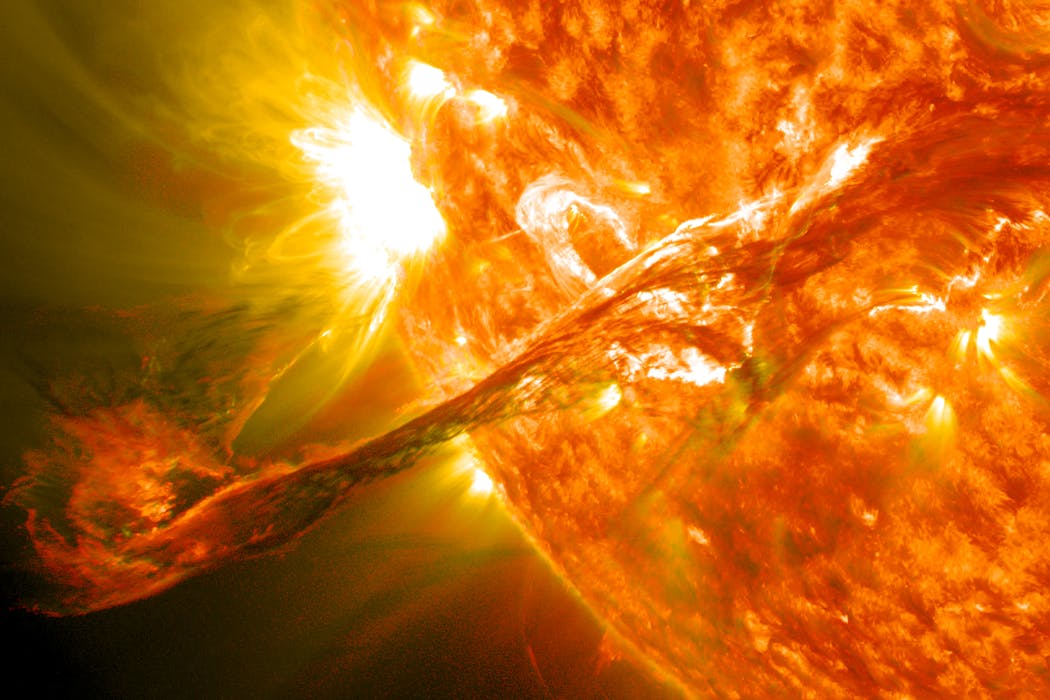
Coronal mass ejections from the Sun can cause geomagnetic storms that may damage technology on Earth. NASA/GSFC/SDO

In May 2024, part of the Sun exploded.

The Sun is an immense ball of superheated gas called plasma. Because the plasma is conductive, magnetic fields loop out of the solar surface. Since different parts of the surface rotate at different speeds, the fields get tangled. Eventually, like rubber bands pulled too tight, they can snap – and that is what they did last year.

These titanic plasma explosions, also known as solar flares, each unleashed the energy of a million hydrogen bombs. Parts of the Sun’s magnetic field also broke free as magnetic bubbles loaded with billions of tons of plasma.

These bubbles, called coronal mass ejections, or CMEs, crashed through space at around 6,000 times the speed of a commercial jetliner. After a few days, they smashed one after another into the magnetic field that envelops Earth. The plasma in each CME surged toward us, creating brilliant auroras and powerful electrical currents that rippled through Earth’s crust.

A coronal mass ejection erupting from the Sun.

You might not have noticed. Just like the opposite poles of fridge magnets have to align for them to snap together, the poles of the magnetic field of Earth and the incoming CMEs have to line up just right for the plasma in the CMEs to reach Earth. This time they didn’t, so most of the plasma sailed off into deep space.

Humans have not always been so lucky. I’m an environmental historian and author of the new book “Ripples on the Cosmic Ocean: An Environmental History of Our Place in the Solar System.”

While writing the book, I learned that a series of technological breakthroughs – from telegraphs to satellites – have left modern societies increasingly vulnerable to the influence of solar storms, meaning flares and CMEs.

Since the 19th century, these storms have repeatedly upended life on Earth. Today, there are hints that they threaten the very survival of civilization as we know it.

The telegraph: A first warning

On the morning of Sept. 1, 1859, two young astronomers, Richard Carrington and Richard Hodgson, became the first humans to see a solar flare. To their astonishment, it was so powerful that, for two minutes, it far outshone the rest of the Sun.

About 18 hours later, brilliant, blood-red auroras flickered across the night sky as far south as the equator, while newly built telegraph lines shorted out across Europe and the Americas.

The Carrington Event, as it was later called, revealed that the Sun’s environment could violently change. It also suggested that emerging technologies, such as the electrical telegraph, were beginning to link modern life to the extraordinary violence of the Sun’s most explosive changes.

For more than a century, these connections amounted to little more than inconveniences, like occasional telegraph outages, partly because no solar storm rivaled the power of the Carrington Event. But another part of the reason was that the world’s economies and militaries were only gradually coming to rely more and more on technologies that turned out to be profoundly vulnerable to the Sun’s changes.

A brush with Armageddon

Then came May 1967.

Soviet and American warships collided in the Sea of Japan, American troops crossed into North Vietnam and the Middle East teetered on the brink of the Six-Day War.

It was only a frightening combination of new technologies that kept the United States and Soviet Union from all-out war; nuclear missiles could now destroy a country within minutes, but radar could detect their approach in time for retaliation. A direct attack on either superpower would be suicidal.

Several buildings on an icy plain, with green lights in the sky above.
An aurora – an event created by a solar storm – over Pituffik Space Base, formerly Thule Air Base, in Greenland in 2017. In 1967, nuclear-armed bombers prepared to take off from this base.
Air Force Space Command

Suddenly, on May 23, a series of violent solar flares blasted the Earth with powerful radio waves, knocking out American radar stations in Alaska, Greenland and England.

Forecasters had warned officers at the North American Air Defense Command, or NORAD, to expect a solar storm. But the scale of the radar blackout convinced Air Force officers that the Soviets were responsible. It was exactly the sort of thing the USSR would do before launching a nuclear attack.

American bombers, loaded with nuclear weapons, prepared to retaliate. The solar storm had so scrambled their wireless communications that it might have been impossible to call them back once they took off. In the nick of time, forecasters used observations of the Sun to convince NORAD officers that a solar storm had jammed their radar. We may be alive today because they succeeded.

Blackouts, transformers and collapse

With that brush with nuclear war, solar storms had become a source of existential risk, meaning a potential threat to humanity’s existence. Yet the magnitude of that risk only came into focus in March 1989, when 11 powerful flares preceded the arrival of back-to-back coronal mass ejections.

For more than two decades, North American utility companies had constructed a sprawling transmission system that relayed electricity from power plants to consumers. In 1989, this system turned out to be vulnerable to the currents that coronal mass ejections channeled through Earth’s crust.

Several large pieces of metal machinery lined up in an underground facility.
An engineer performs tests on a substation transformer.
Ptrump16/Wikimedia Commons, CC BY-SA

In Quebec, crystalline bedrock under the city does not easily conduct electricity. Rather than flow through the rock, currents instead surged into the world’s biggest hydroelectric transmission system. It collapsed, leaving millions without power in subzero weather.

Repairs revealed something disturbing: The currents had damaged multiple transformers, which are enormous customized devices that transfer electricity between circuits.

Transformers can take many months to replace. Had the 1989 storm been as powerful as the Carrington Event, hundreds of transformers might have been destroyed. It could have taken years to restore electricity across North America.

Solar storms: An existential risk

But was the Carrington Event really the worst storm that the Sun can unleash?

Scientists assumed that it was until, in 2012, a team of Japanese scientists found evidence of an extraordinary burst of high-energy particles in the growth rings of trees dated to the eighth century CE. The leading explanation for them: huge solar storms dwarfing the Carrington Event. Scientists now estimate that these “Miyake Events” happen once every few centuries.

Astronomers have also discovered that, every century, Sun-like stars can explode in super flares up to 10,000 times more powerful than the strongest solar flares ever observed. Because the Sun is older and rotates more slowly than many of these stars, its super flares may be much rarer, occurring perhaps once every 3,000 years.

Nevertheless, the implications are alarming. Powerful solar storms once influenced humanity only by creating brilliant auroras. Today, civilization depends on electrical networks that allow commodities, information and people to move across our world, from sewer systems to satellite constellations.

What would happen if these systems suddenly collapsed on a continental scale for months, even years? Would millions die? And could a single solar storm bring that about?

Researchers are working on answering these questions. For now, one thing is certain: to protect these networks, scientists must monitor the Sun in real time. That way, operators can reduce or reroute the electricity flowing through grids when a CME approaches. A little preparation may prevent a collapse.

Fortunately, satellites and telescopes on Earth today keep the Sun under constant observation. Yet in the United States, recent efforts to reduce NASA’s science budget have cast doubt on plans to replace aging Sun-monitoring satellites. Even the Daniel K. Inouye Solar Telescope, the world’s premier solar observatory, may soon shut down.

These potential cuts are a reminder of our tendency to discount existential risks – until it’s too late.

The Conversation

Dagomar Degroot has received funding from NASA.

ref. Solar storms have influenced our history – an environmental historian explains how they could also threaten our future – https://theconversation.com/solar-storms-have-influenced-our-history-an-environmental-historian-explains-how-they-could-also-threaten-our-future-258668

The Glozel affair: A sensational archaeological hoax made science front-page news in 1920s France

Source: The Conversation – USA – By Daniel J. Sherman, Lineberger Distinguished Professor of Art History and History, University of North Carolina at Chapel Hill

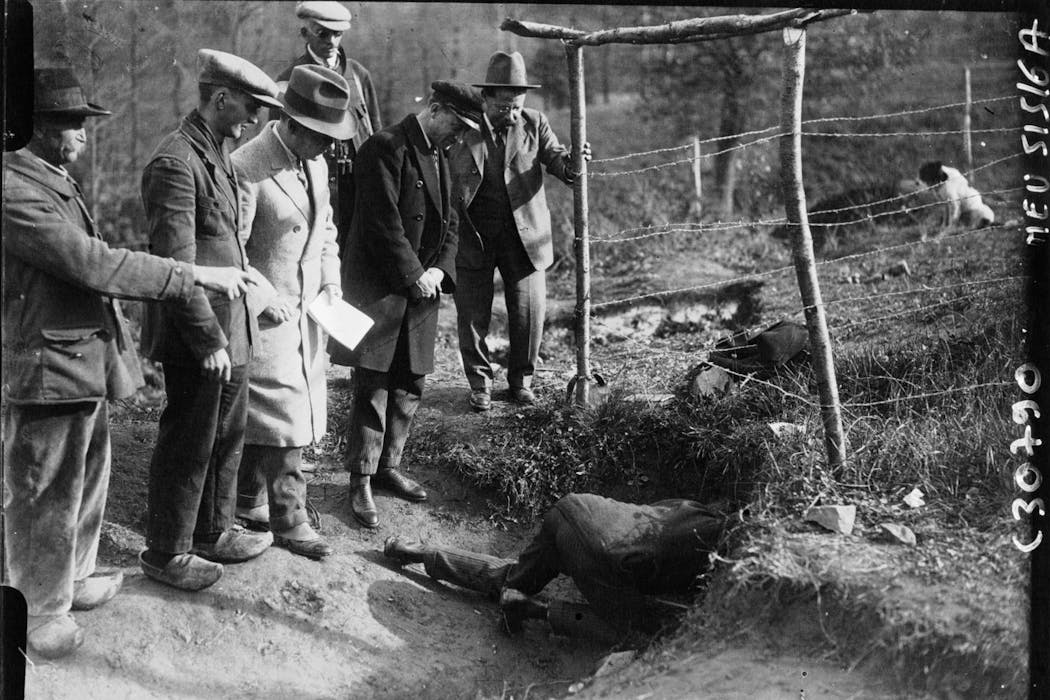
All eyes were on a commission of professional archaeologists when they visited Glozel. Agence Meurisse/BnF Gallica

In early November 1927, the front pages of newspapers all over France featured photographs not of the usual politicians, aviators or sporting events, but of a group of archaeologists engaged in excavation. The slow, painstaking work of archaeology was rarely headline news. But this was no ordinary dig.

yellowed newspaper page with photos of archaeologists at dig site
A front-page spread in the Excelsior newspaper from Nov. 8, 1927, features archaeologists at work in the field with the headline ‘What the learned commission found at the Glozel excavations.’
Excelsior/BnF Gallica

The archaeologists pictured were members of an international team assembled to assess the authenticity of a remarkable site in France’s Auvergne region.

Three years before, farmers plowing their land at a place called Glozel had come across what seemed to be a prehistoric tomb. Excavations by Antonin Morlet, an amateur archaeologist from Vichy, the nearest town of any size, yielded all kinds of unexpected objects. Morlet began publishing the finds in late 1925, immediately producing lively debate and controversy.

Certain characteristics of the site placed it in the Neolithic era, approximately 10,000 B.C.E. But Morlet also unearthed artifact types thought to have been invented thousands of years later, notably pottery and, most surprisingly, tablets or bricks with what looked like alphabetic characters. Some scholars cried foul, including experts on the inscriptions of the Phoenicians, the people thought to have invented the Western alphabet no earlier than 2000 B.C.E.

Was Glozel a stunning find with the capacity to rewrite prehistory? Or was it an elaborate hoax? By late 1927, the dispute over Glozel’s authenticity had become so strident that an outside investigation seemed warranted.

The Glozel affair now amounts to little more than a footnote in the history of French archaeology. As a historian, I first came across descriptions of it in some histories of French archaeology. With a bit of investigating, it wasn’t hard to find first-person accounts of the affair.

sketch of seven lines of alphabet-like notations on two rectangles
Examples of the kinds of inscriptions found at the Glozel site, as recorded by scholar Salomon Reinach.
‘Éphémérides de Glozel’/Wikimedia Commons

But it was only when I began studying the private papers of one of the leading contemporary skeptics of Glozel, an archaeologist and expert on Phoenician writing named René Dussaud, that I realized the magnitude and intensity of this controversy. After publishing a short book showing that the so-called Glozel alphabet was a mishmash of previously known early alphabetic writing, in October 1927 Dussaud took out a subscription to a clipping service to track mentions of the Glozel affair; in four months he received over 1,500 clippings, in 10 languages.

The Dussaud clippings became the basis for the account of Glozel in my recent book, “Sensations.” That the contours of the affair first became clear to me in a pile of yellowed newspaper clippings is appropriate, because Glozel embodies a complex relationship between science and the media that persists today.

Front page of a newspaper with images of people digging and holding up finds
The newspaper Le Matin, which vigorously promoted Glozel’s authenticity, even sponsored its own dig near the site, led by a journalist.
Le Matin/BnF Gallica

Serious scientists in the trenches

The international commission’s front-page visit to Glozel marked a watershed in the controversy, even if it did not resolve it entirely.

In a painstaking report published in the scholarly Revue anthropologique just before Christmas 1927, the commission recounted the several days of digging it conducted, provided detailed plans of the site, described the objects it unearthed and carefully explained its conclusion that the site was “not ancient.”

shelves with various clay vessels and shards piled on them
Recovered objects displayed in the Fradins’ museum in 1927.
Agence de presse Meurisse/Wikimedia Commons

The report emphasized the importance of proper archaeological method. Early on, the commissioners noted that they were “experienced diggers, all with past fieldwork to their credit,” in different chronological subfields of archaeology. In contrast, they noted that the Glozel site showed clear signs of a lack of order and method.

In their initial meeting in Vichy, the assembled archaeologists agreed that they would give no interviews during their visit to Glozel and would not speak to the press afterward. But, aware of “certain tendentious articles published by a few newspapers,” the visitors issued a communiqué stating that they would neither confirm nor deny any press reports. Their scholarly publication would be their final word on the “non-ancientness” of the site.

The distinction between true science – what the archaeologists were practicing – and the media seemed absolute.

Sensationalist coverage, but careful details, too

And yet matters were not so simple.

Many newspapers devoted extensive and careful coverage to Glozel. They offered explanations of archaeological terminology. They explained the larger stakes of the controversy, which, beyond the invention of the alphabet, involved nothing less than the direction of the development of Western civilization itself, whether from Mesopotamia in the east to Europe in the west or the reverse.

Even articles about seemingly trivial matters, such as the work clothes the archaeologists donned to perform their test excavations at Glozel, served to reinforce the larger point the commissioners made in their report. In contrast to the proper suits and ties they wore for formal photographs marking their arrival, the visitors all put on blue overalls, which for one newspaper “gave them the air of apprentice locksmiths or freshly decked-out electricians.”

The risk, apparent in this jocular reference, of losing the social standing afforded them by their professional degrees and education was worth taking because it drove home these archaeologists’ devotion to their discipline, which their report described as “a daily moral obligation.”

seven people dressed formally standing against a building
Morlet, far left, and the international commission in front of the Fradins’ museum in November 1927. Garrod is third from the left.
Agence Meurisse

Skeptical scientists did rely on journalism

If archaeologists continued to mistrust the many newspapers that sensationalized Glozel, its stakes and their work in general, they could not escape the popular media entirely, so they confided in a few journalists at papers they considered responsible.

Shortly after the publication of the report, which was summarized and excerpted in the daily press, original excavator Morlet accused Dorothy Garrod, the only woman on the commission, of having tampered with the site. A group of archaeologists responded on her behalf, explaining what she had actually been doing and defending her professionalism – in the press.

At the most basic level, media coverage recorded the standard operating procedures of archaeology and its openness to outside scrutiny. This was in contrast to Morlet’s excavations, which limited access only to believers in the authenticity of Glozel.

Under the watchful eyes of reporters and photographers, the outside archaeologists investigating Glozel knew quite well that they were engaged in a kind of performance, one in which their discipline, as much as this particular discovery, was on trial.

Like the signs in my neighborhood proclaiming that “science is real,” the international commission depended on and sought to fortify the public’s confidence in the integrity of scientific inquiry. To do that, it needed the media even while expressing a healthy skepticism about it. It’s a balancing act that persists in today’s era of “trusting science.”

The Conversation

This article draws on research funded by the Institut d’Études Avancées (Paris), the Institute for Advanced Study (Princeton), and the National Endowment for the Humanities, as well as Daniel Sherman’s employer, the University of North Carolina at Chapel Hill.

ref. The Glozel affair: A sensational archaeological hoax made science front-page news in 1920s France – https://theconversation.com/the-glozel-affair-a-sensational-archaeological-hoax-made-science-front-page-news-in-1920s-france-260967

AI reveals which predators chewed ancient humans’ bones – challenging ideas on which ‘Homo’ species was the first tool-using hunter

Source: The Conversation – USA – By Manuel Domínguez-Rodrigo, Professor of Anthropology, Rice University

If *Homo habilis* was often chomped by leopards, it probably wasn’t the top predator. Made with AI (DALL-E 4)

Almost 2 million years ago, a young ancient human died beside a spring near a lake in what is now Tanzania, in eastern Africa. After archaeologists uncovered his fossilized bones in 1960, they used them to define Homo habilis – the earliest known member of our own genus.

Paleoanthropologists define the first examples of the genus Homo based largely on their bigger brains – and, sometimes, smaller teeth – compared with other, earlier ancestors such as the australopithecines – the most famous of these being Lucy. There were at least three types of early humans: Homo habilis, Homo rudolfensis and the best documented species, Homo erectus. At least one of them created sites now in the archaeological record, where they brought and shared food, and made and used some of the earliest stone tools.

These archaeological sites date to between 2.6 to 1.8 million years ago. The artifacts within them suggest greater cognitive complexity in early Homo than documented among any nonhuman primate. For example, at Nyayanga, a site in Kenya, anthropologists recently found that early humans were using tools they transported over distances of up to 8 miles (13 kilometers). This action indicates forethought and planning.

Traditionally, paleoanthropologists believed that Homo habilis, as the earliest big-brained humans, was responsible for the earliest sites with tools. The idea has been that Homo habilis was the ancestor of later and even bigger-brained Homo erectus, whose descendants eventually led to us.

This narrative made sense when the oldest known Homo erectus remains were younger than 1.6 million years old. But given recent discoveries, this seems like a shaky foundation.

In 2015, my team discovered a 1.85 million-year-old hand bone at Olduvai Gorge, the same place the original Homo habilis had been found. But unlike the hand of that Homo habilis juvenile, this fossil looked like it belonged to a larger, more modern, fully land-based rather than tree-based human species: Homo erectus.

Over the past decade, new finds have continued to push back the earliest dates for Homo erectus: about 2 million years ago in South Africa, Kenya and Ethiopia. Taken together, these discoveries reveal that H. erectus is slightly older than the known H. habilis fossils. We cannot simply assume that H. habilis gave rise to H. erectus. Instead, the human family tree looks far bushier than we once thought.

What do all these finds suggest? Only one Homo species is our likely ancestor, and probably only one can be responsible for the complex behaviors revealed at the Olduvai Gorge sites. My colleagues and I hit on a way to test whether Homo habilis was top dog at Olduvai Gorge, so to speak, based on whether they were the hunters or the hunted.

Who was hunting who?

At Olduvai Gorge, there is overwhelming evidence that early humans were consuming animals as big as a gazelle or even a zebra. Not only did they hunt, but they repeatedly brought these animals back to the same location for communal consumption. This is the concept of a “central provisioning place,” much like a campsite or home today. Dating to 1.85 million years ago, this is the oldest evidence of frequent meat-eating – and of early humans regularly acting as predators rather than prey.

All animals occupy a position on a food web, from top to lower ranks. Top-ranking predators, such as lions, are usually not preyed upon by lower ranking carnivores, such as hyenas.

If Homo habilis was acquiring large animal carcasses, either by hunting or by chasing lions away from their own kills, it seems logical that these hominids could effectively cope with predation risks. That is, a hunter usually isn’t hunted.

In African savannas, apex predators like lions do not usually die from other predator attacks. Humans today also occupy a top predatory niche: For example, Hadza hunter-gatherers in Tanzania not only hunt game, but also fend off lions from their kills, and successfully defend themselves from attacks by other predators, such as leopards.

But, if Homo habilis was not yet a top predator, then you would expect them to have occasionally been prey to lower-on-the-food-chain carnivorous cats – such as leopards – who often hunt primates.

Most known human fossils at this stage of evolution do bear traces of carnivore damage, including the two best preserved H. habilis fossils from Olduvai Gorge. Was it caused after death, by a scavenging carnivore? Or did a big cat at the top of the food chain kill these early humans?

My colleagues and I set out to address the question of which predators were getting their teeth on H. habilis and presumably whether before or after the ancient humans died.

AI suggests H. habilis wasn’t an apex predator

Here’s where artificial intelligence comes in. Using computer vision, we trained AI on hundreds of microscopic images showing tooth marks left by the main carnivores in Africa today: lions, leopards, hyenas and crocodiles. The AI learned to recognize the subtle differences between the marks made by the different predators and was able to classify the marks with high accuracy.

four different magnified craters on brownish backgrounds
Tooth marks left by the four types of carnivores recorded. A: crocodile tooth pit; B: hyena tooth pit; C: lion tooth pit; and D: leopard tooth pit.
Domínguez-Rodrigo, M., et al. Sci Rep 14, 6881 (2024)

When we combined different AI approaches, they all pointed to the same result: The tooth marks on the Homo habilis bones matched those made by leopards. The size and shape of the marks on the fossils from those two early Homo habilis individuals line up with what leopards leave today when feeding on prey.

Our discovery challenges the long-standing view of Homo habilis as the first skilled toolmaker, hunter and meat-eater.

But maybe it shouldn’t be too surprising. The only complete skeleton of this species found at Olduvai Gorge belonged to a very small individual – just about 3 feet tall (less than 1 meter) – with a body that still showed features suited for climbing trees. That hardly matches the image of a hunter able to bring down large animals or steal carcasses from lions.

If it wasn’t Homo habilis performing these feats, maybe it was Homo erectus, a species with a larger body and more modern anatomy. But that opens up other mysteries for future researchers: What was Homo habilis doing at the archaeological sites of Olduvai Gorge if it was not responsible for the tools and signs of hunting we find there? Where exactly did Homo erectus come from, and how did it evolve?

My team and others will be returning to places like Olduvai Gorge to ask these questions in the years to come.

The Conversation

Manuel Domínguez-Rodrigo receives funding from the Spanish Ministry of Science and Universities

ref. AI reveals which predators chewed ancient humans’ bones – challenging ideas on which ‘Homo’ species was the first tool-using hunter – https://theconversation.com/ai-reveals-which-predators-chewed-ancient-humans-bones-challenging-ideas-on-which-homo-species-was-the-first-tool-using-hunter-266561

Why the Trump administration’s comparison of antifa to violent terrorist groups doesn’t track

Source: The Conversation – USA – By Art Jipson, Associate Professor of Sociology, University of Dayton

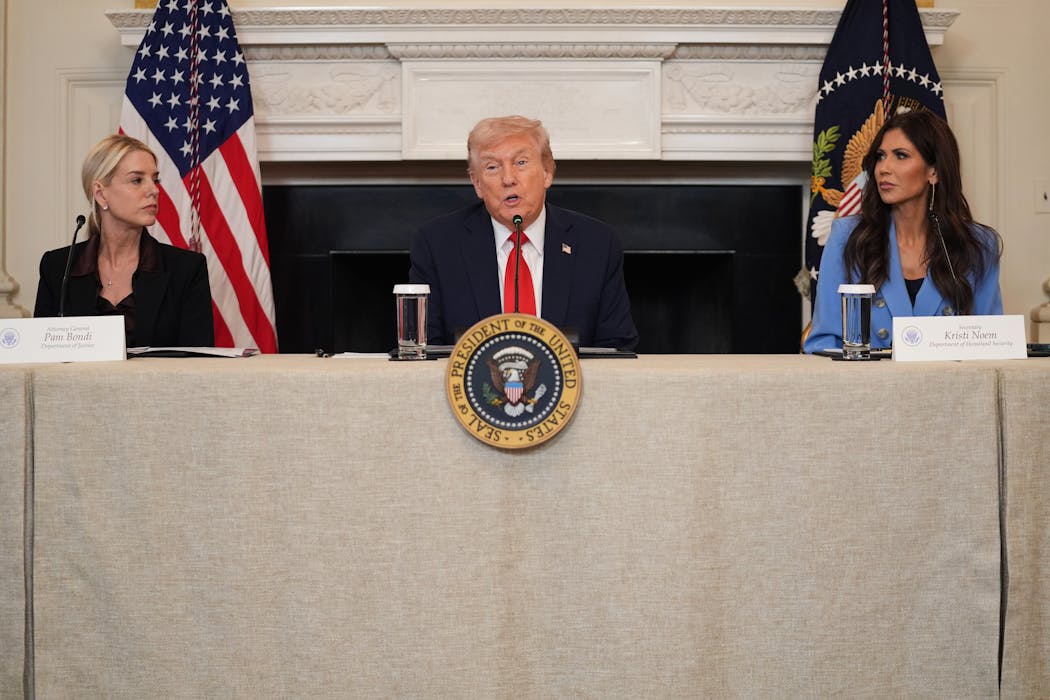
President Donald Trump speaks at the White House during a meeting on antifa, as Attorney General Pam Bondi, left, and Homeland Security Secretary Kristi Noem listen, on Oct. 8, 2025. AP Photo/Evan Vucci

When Homeland Security Secretary Kristi Noem compared antifa to the transnational criminal group MS-13, Hamas and the Islamic State group in October 2025, she equated a nonhierarchical, loosely organized movement of antifascist activists with some of the world’s most violent and organized militant groups.

Antifa is just as dangerous,” she said.

It’s a sweeping claim that ignores crucial distinctions in ideology, organization and scope. Comparing these groups is like comparing apples and bricks: They may both be organizations, but that’s where the resemblance stops.

Noem’s statement echoed the logic of a September 2025 Trump administration executive order that designated antifa as a “domestic terrorist organization.” The order directs all relevant federal agencies to investigate and dismantle any operations, including the funding sources, linked to antifa.

But there is no credible evidence from the FBI or the Department of Homeland Security that supports such a comparison. Independent terrorism experts don’t see the similarities either.

Data shows that the movement can be confrontational and occasionally violent. But antifa is neither a terrorist network nor a major source of organized lethal violence.

Antifa, as understood by scholars and law enforcement, is not an organization in any formal sense. It lacks membership rolls and leadership hierarchies. It doesn’t have centralized funding.

As a scholar of social movements, I know that antifa is a decentralized movement animated by opposition to fascism and far-right extremism. It’s an assortment of small groups that mobilize around specific protests or local issues. And its tactics range from peaceful counterdemonstrations to mutual aid projects.

For example, in Portland, Oregon, local antifa activists organized counterdemonstrations against far-right rallies in 2019.

Antifa groups active in Houston during Hurricane Harvey in 2017 coordinated food, supplies and rescue support for affected residents.

No evidence of terrorism

The FBI and DHS have classified certain anarchist or anti-fascist groups under the broad category of “domestic violent extremists.” But neither agency nor the State Department has ever previously designated antifa as a terrorist organization.

The data on political violence reinforces this point.

A woman holds a yellow sign while walking with a group of people.
A woman holds a sign while protesting immigration raids in San Francisco on Oct. 23, 2025.
AP Photo/Noah Berger

A 2022 report by the Counter Extremism Project found that the overwhelming majority of deadly domestic terrorist incidents in the United States in recent years were linked to right-wing extremists. These groups include white supremacists and anti-government militias that promote racist or authoritarian ideologies. They reject democratic authority and often seek to provoke social chaos or civil conflict to achieve their goals.

Left-wing or anarchist-affiliated violence, including acts attributed to antifa-aligned people, accounts for only a small fraction of domestic extremist incidents and almost none of the fatalities. Similarly, in 2021, the George Washington University Program on Extremism found that anarchist or anti-fascist attacks are typically localized, spontaneous and lacking coordination.

By contrast, the organizations Noem invoked – Hamas, the Islamic State group and MS-13 – share structural and operational characteristics that antifa lacks.

They operate across borders and are hierarchically organized. They are also capable of sustained military or paramilitary operations. They possess training pipelines, funding networks, propaganda infrastructure and territorial control. And they have orchestrated mass casualties such as the 2015 Paris attacks and the 2016 Brussels bombings.

In short, they are military or criminal organizations with strategic intent. Noem’s claim that antifa is “just as dangerous” as these groups is not only empirically indefensible but rhetorically reckless.

Turning dissent into ‘terrorism’

So why make such a claim?

Noem’s statement fits squarely within the Trump administration’s broader political strategy that has sought to inflate the perceived threat of left-wing activism.

Casting antifa as a domestic terrorist equivalent of the Islamic State nation or Hamas serves several functions.

It stokes fear among conservative audiences by linking street protests and progressive dissent to global terror networks. It also provides political cover for expanded domestic surveillance and harsher policing of protests.

Protesters, some holding signs, walk toward a building with a dome.
Demonstrators hold protest signs during a march from the Atlanta Civic Center to the Georgia State Capitol on Oct. 18, 2025, in Atlanta.
Julia Beverly/Getty Images

Additionally, it discredits protest movements critical of the right. In a polarized media environment, such rhetoric performs a symbolic purpose. It divides the moral universe into heroes and enemies, order and chaos, patriots and radicals.

Noem’s comparison reflects a broader pattern in populist politics, where complex social movements are reduced to simple, threatening caricatures. In recent years, some Republican leaders have used antifa as a shorthand for all forms of left-wing unrest or criticism of authority.

Antifa’s decentralized structure makes it a convenient target for blame. That’s because it lacks clear boundaries, leadership and accountability. So any act by someone identifying with antifa can be framed as representing the whole movement, whether or not it does. And by linking antifa to terrorist groups, Noem, the top anti-terror official in the country, turns a political talking point into a claim that appears to carry the weight of national security expertise.

The problem with this kind of rhetoric is not just that it’s inaccurate. Equating protest movements with terrorist organizations blurs important distinctions that allow democratic societies to tolerate dissent. It also risks misdirecting attention and resources away from more serious threats — including organized, ideologically driven groups that remain the primary source of domestic terrorism in the U.S.

As I see it, Noem’s claim reveals less about antifa and more about the political uses of fear.

By invoking the language of terrorism to describe an anti-fascist movement, she taps into a potent emotional current in American politics: the desire for clear enemies, simple explanations and moral certainty in times of division.

But effective homeland security depends on evidence, not ideology. To equate street-level confrontation with organized terror is not only wrong — it undermines the credibility of the very institutions charged with protecting the public.

The Conversation

Art Jipson does not work for, consult, own shares in or receive funding from any company or organization that would benefit from this article, and has disclosed no relevant affiliations beyond their academic appointment.

ref. Why the Trump administration’s comparison of antifa to violent terrorist groups doesn’t track – https://theconversation.com/why-the-trump-administrations-comparison-of-antifa-to-violent-terrorist-groups-doesnt-track-267514

Future of nation’s energy grid hurt by Trump’s funding cuts

Source: The Conversation – USA (2) – By Roshanak (Roshi) Nateghi, Associate Professor of Sustainability, Georgetown University

Large-capacity electrical wires carry power from one place to another around the nation. Stephanie Tacy/NurPhoto via Getty Images

The Trump administration’s widespread cancellation and freezing of clean energy funding is also hitting essential work to improve the nation’s power grid. That includes investments in grid modernization, energy storage and efforts to protect communities from outages during extreme weather and cyberattacks. Ending these projects leaves Americans vulnerable to more frequent and longer-lasting power outages.

The Department of Energy has defended the cancellations, saying that “the projects did not adequately advance the nation’s energy needs, were not economically viable and would not provide a positive return on investment of taxpayer dollars.” Yet before any funds are actually released through these programs, each grant must pass evaluations based on the department’s standards. Those included rigorous assessments of technical merits, potential risks and cost-benefit analyses — all designed to ensure alignment with national energy priorities and responsible stewardship of public funds.

I am an associate professor studying sustainability, with over 15 years of experience in energy systems reliability and resilience. In the past, I also served as a Department of Energy program manager focused on grid resilience. I know that many of these canceled grants were foundational investments in the science and infrastructure necessary to keep the lights on, especially when the grid is under stress.

The dollar-value estimates vary, and some of the money has already been spent. A list of canceled projects maintained by energy analysis company Yardsale totals about US$5 billion. An Oct. 2, 2025, announcement from the department touts $7.5 billion in cuts to 321 awards across 223 projects. Additional documents leaked to Politico reportedly identified additional awards under review. Some media reports suggest the full value of at-risk commitments may reach $24 billion — a figure that has not been publicly confirmed or refuted by the Trump administration.

These were not speculative ventures. And some of them were competitively awarded projects that the department funded specifically to enhance grid efficiency, reliability and resilience.

Grid improvement funding

For years, the federal government has been criticized for investing too little in the nation’s electricity grid. The long-term planning — and spending — required to ensure the grid reliably serves the public often falls victim to short-term political cycles and shifting priorities across both parties.

But these recent cuts come amid increasingly frequent extreme weather, increased cybersecurity threats to the systems that keep the lights on, and aging grid equipment that is nearing the end of its life.

These projects sought to make the grid more reliable so it can withstand storms, hackers, accidents and other problems.

National laboratories

In addition to those project cancellations, President Donald Trump’s proposed budget for 2026 contains deep cuts to the Office of Energy Efficiency and Renewable Energy, a primary funding source for several national laboratories, including the National Renewable Energy Laboratory, which may face widespread layoffs.

Among other work, these labs conduct fundamental grid-related research like developing and testing ways to send more electricity over existing power lines, creating computational models to simulate how the U.S. grid responds to extreme weather or cyberattacks, and analyzing real-time operational data to identify vulnerabilities and enhance reliability.

These efforts are necessary to design, operate and manage the grid, and to figure out how best to integrate new technologies.

A group of solar panels sits next to several large metal containers, as a train rolls past in the background.
Solar panels and large-capacity battery storage can support microgrids that keep key services powered despite bad weather or high demand.
Sandy Huffaker/AFP via Getty Images

Grid resilience and modernization

Some of the projects that have lost funding sought to upgrade grid management – including improved sensing of real-time voltage and frequency changes in the electricity sent to homes and businesses.

That program, the Grid Resilience and Innovation Partnerships Program, also funded efforts to automate grid operations, allowing faster response to outages or changes in output from power plants. It also supported developing microgrids – localized systems that can operate independently during outages. The canceled projects in that program, estimated to total $724.6 million, were in 24 states.

For example, a $19.5 million project in the Upper Midwest would have installed smart sensors and software to detect overloaded power lines or equipment failures, helping people respond faster to outages and prevent blackouts.

A $50 million project in California would have boosted the capacity of existing subtransmission lines, improving power stability and grid flexibility by installing a smart substation, without needing new transmission corridors.

Microgrid projects in New York, New Mexico and Hawaii would have kept essential services running during disasters, cyberattacks and planned power outages.

Another canceled project included $11 million to help utilities in 12 states use electric school buses as backup batteries, delivering power during emergencies and peak demand, like on hot summer days.

Several transmission projects were also canceled, including a $464 million effort in the Midwest to coordinate multiple grid connections from new generation sites.

Long-duration energy storage

The grid must meet demand at all times, even when wind and solar generation is low or when extreme weather downs power lines. A key element of that stability involves storing massive amounts of electricity for when it’s needed.

One canceled project would have spent $70 million turning retired coal plants in Minnesota and Colorado into buildings holding iron-air batteries capable of powering several thousand homes for as many as four days.

Two large yellow buses are parked next to each other.
Electric school buses like these could provide meaningful amounts of power to the grid during an outage.
Chris Jackson for The Washington Post via Getty Images

Rural and remote energy systems

Another terminated program sought to help people who live in rural or remote places, who are often served by just one or two power lines rather than a grid that can reroute power around an interruption.

A $30 million small-scale bioenergy project would have helped three rural California communities convert forest and agricultural waste into electricity.

Not all of the terminated initiatives were explicitly designed for resilience. Some would have strengthened grid stability as a byproduct of their main goals. The rollback of $1.2 billion in hydrogen hub investments, for example, undermines projects that would have paired industrial decarbonization with large-scale energy storage to balance renewable power. Similarly, several canceled industrial modernization projects, such as hybrid electric furnaces and low-carbon cement plants, were structured to manage power demand and integrate clean energy, to improve grid stability and flexibility.

The reliability paradox

The administration has said that these cuts will save money. In practice, however, they shift spending from prevention of extended outages to recovery from them.

Without advances in technology and equipment, grid operators face more frequent outages, longer restoration times and rising maintenance costs. Without investment in systems that can withstand storms or hackers, taxpayers and ratepayers will ultimately bear the costs of repairing the damage.

Some of the projects now on hold were intended to allow hospitals, schools and emergency centers to reduce blackout risks and speed power restoration. These are essential reliability and public safety functions, not partisan initiatives.

Canceling programs to improve the grid leaves utilities and their customers dependent on emergency stopgaps — diesel generators, rolling blackouts and reactive maintenance — instead of forward-looking solutions.

The Conversation

Roshanak (Roshi) Nateghi does not work for, consult, own shares in or receive funding from any company or organization that would benefit from this article, and has disclosed no relevant affiliations beyond their academic appointment.

ref. Future of nation’s energy grid hurt by Trump’s funding cuts – https://theconversation.com/future-of-nations-energy-grid-hurt-by-trumps-funding-cuts-267504

Children learn to read with books that are just right for them – but that might not be the best approach

Source: The Conversation – USA (2) – By Timothy E Shanahan, Distinguished Professor Emeritus of Literacy, University of Illinois Chicago

Children and an adult read books at the Altadena Main Library in Altadena, Calif., in March 2025. Hans Gutknecht/MediaNews Group/Los Angeles Daily News via Getty Images

After decades of stagnating reading performance, American literacy levels have begun to drop, according to the National Assessment of Educational Progress, a program of the Department of Education.

The average reading scores of 12th graders in 2024 were 3 points lower than they were in 2019. More kids are failing to even reach basic levels of reading that would allow them to successfully do their schoolwork, according to the assessment.

There is much blaming and finger-pointing as to why the U.S. isn’t doing better. Some experts say that parents are allowing kids to spend too much time on screens, while others argue that elementary teachers aren’t teaching enough phonics, or that schools closing during the COVID-19 pandemic has had lingering effects.

As a scholar of reading, I think the best explanation is that most American schools are teaching reading using an approach that new research shows severely limits students’ opportunities to learn.

A person's hands partially cover a stack of children's books.
Students often learn to read with books that are preselected so they can easily understand most of the words in them.
Jacqueline Nix/iStock/Getty Images Plus

A Goldilocks approach to books

In the 1940s, Emmett Betts, a scholar of education and theory, proposed the idea that if the books used to teach reading were either too easy or too hard, then students’ learning would be stifled.

The thinking went that kids should be taught to read with books that were just the right fit for them.

The theory was backed by research and included specific criteria for determining the best books for each child.

The idea is that kids should work with books they could already read with 95% word accuracy and 75% to 89% comprehension.

Most American schools continue to use this approach to teaching reading, nearly a century later.

A popular method

To implement this approach, schools usually test children multiple times each year to determine which books they should be allowed to read in school. Teachers and librarians will label and organize books into color-coded bins, based on their level of difficulty. This practice helps ensure that no child strays into a book judged too difficult for them to easily follow. Teachers then divide their class into reading groups based on the book levels the students are assigned.

Most elementary teachers and middle school teachers say they try to teach at their students’ reading levels, as do more than 40% of high school English teachers.

This approach might sound good, but it means that students work with books they can already read pretty well. And they might not have very much to learn from those books.

New research challenges these widely used instructional practices. My July 2025 book, “Leveled Reading, Leveled Lives,” explains that students learn more when taught with more difficult texts. In other words, this popular approach to teaching has been holding kids back rather than helping them succeed.

Many students will read at levels that match the grades they are in. But kids who cannot already read those grade-level texts with high comprehension are demoted to below-grade-level books in the hopes that this will help them make more progress.

Often, parents do not know that their children are reading at a level lower than the grade they are in.

Perhaps that is why, while more than one-third of American elementary students read below grade level, 90% of parents think their kids are at or above grade level.

What’s in a reading level?

The approach to “just right” reading has long roots in American history.

In the 1840s, U.S. schools were divided into grade levels based on children’s ages. In response, textbook publishing companies organized their reading textbooks the same way. There was a first grade book, a second grade book and so on.

These reading levels admittedly were somewhat arbitrary. The grade-level reading diet proposed by one company may have differed from its competitors’ offerings.

That changed in 2010 with the Common Core state standards, a multistate educational initiative that set K-12 learning goals in reading and math in more than 40 states.

At the time, too many students were leaving high school without the ability to read the kinds of books and papers used in college, the workplace or the military.

Accordingly, Common Core set ranges of text levels for each grade to ensure that by high school graduation, students would be able to easily handle reading they will encounter in college and other places after graduation. Many states have replaced or revised those standards over the past 15 years, but most continue to keep those text levels as a key learning goal.

That means that most states have set reading levels that their students should be able to accomplish by each grade. Students who do this should graduate from high school with sufficient literacy to participate fully in American society.

But this instructional level theory can stand in the way of getting kids to those goals. If students cannot already read those grade level texts reasonably well, the teacher is to provide easier books than adjusting the instruction to help them catch up.

But that raises a question: If children spend their time while they are in the fourth grade reading second grade books, will they ever catch up?

Two young children sit at a desk and read books.
New research suggests that children could benefit more from reading books that are slightly advanced for them, even if they cannot immediately grasp almost all of the words.
Jerry Holt/Star Tribune via Getty Images

What the research says

For more than 40 years, there was little research into the effectiveness of teaching reading with books that were easy for kids to follow. Still, the numbers of schools buying into the idea burgeoned.

Research into effectiveness – or, actually, ineffectiveness – of this method has finally begun to accumulate. These studies show that teaching students at their reading levels, rather than their grade levels, either offers no benefit or can slow how much children learn.

Since 2000, the federal government has spent tens of billions of dollars trying to increase children’s literacy rates. State expenditures toward this goal have been considerable, as well.

Despite these efforts, there have been no improvements in U.S. reading achievement for middle school or high school students since 1970.

I believe it is important to consider the emerging research that shows there will not be considerable reading gains until kids are taught to read with sufficiently challenging and meaty texts.

The Conversation

Timothy E Shanahan does not work for, consult, own shares in or receive funding from any company or organization that would benefit from this article, and has disclosed no relevant affiliations beyond their academic appointment.

ref. Children learn to read with books that are just right for them – but that might not be the best approach – https://theconversation.com/children-learn-to-read-with-books-that-are-just-right-for-them-but-that-might-not-be-the-best-approach-267510

How the Philadelphia Art Museum is reinventing itself for the Instagram age

Source: The Conversation – USA (2) – By Sheri Lambert, Professor of Marketing, Temple University

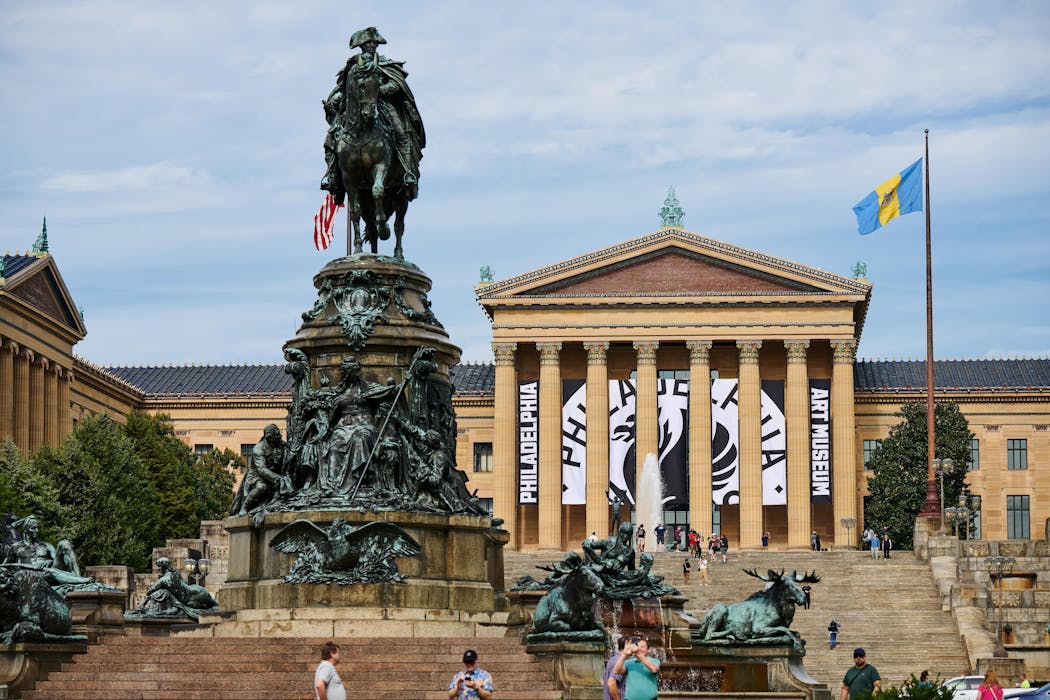
Modernizing a century-old cultural brand in Philly can be risky. Rob Cusick/Philadelphia Art Museum

On Philadelphia’s famed Benjamin Franklin Parkway, where stone, symmetry and civic ambition meet, something subtle yet seismic has happened.

The city’s grandest temple to art has shed a preposition.

After nearly a century as the Philadelphia Museum of Art, or PMA, the institution now calls itself simply the Philadelphia Art Museum – or PhAM, as the new logo and public rollout invite us to say.

The change may seem cosmetic, but as a marketing scholar at Temple University whose research focuses on branding and digital marketing strategy, I know that in the tight geometry of naming and branding, every word matters.

The museum’s new identity signals not just a typographic update but a transformation in tone, purpose and reach. It’s as if the museum has taken a long, deep breath … and decided to loosen its collar.

Insta-friendly design

For decades, the museum’s granite facade has represented permanence. Its pediments crowned with griffins – mythological creatures that are part lion and part eagle – have looked out across the parkway like silent sentinels of culture. The rebrand dares to make those sentinels dance.

In its new form, PhAM is deliberately more flexible, less marble, more motion. The logo revives the griffin but places it with a bold, circular emblem that is unmistakably digital. The new logo is chunkier, more assertive and designed to hold its own on a phone screen.

Like the 2015 Metropolitan Museum of Art’s digital overhaul in New York, the Philadelphia Art Museum is leaning into an era where visitors first encounter culture through screens, not doors. As the Met’s former chief digital officer Sree Sreenivasan stated, “Our competition is Netflix and Candy Crush,” not other museums.

The PhAM’s visual language is redesigned for environments filled with scrolling, swiping and sharing. Through this marketer’s lens, the goal is clear: to ensure that the museum lives not only on the parkway but in the algorithm.

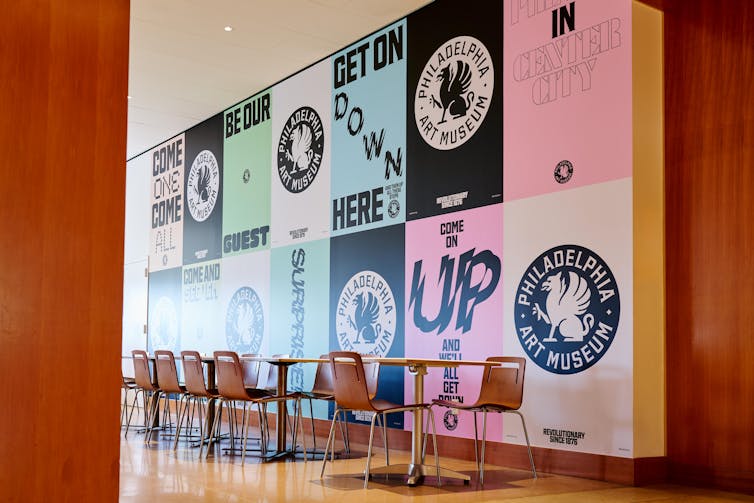
A wall with colorful white, pink, blue, teal and black signs with modern graphic designs
The museum’s new branding and signage aims to appeal to younger and more diverse audiences.
Rob Cusick/Philadelphia Art Museum

A little younger, more cheeky

There is something refreshing about a legacy institution willing to meet its existing or future audience where they already are. The museum’s leadership frames the change as a broader renewal – a commitment to accessibility, community and openness.

The rebrand showcases “Philadelphia” and it takes center stage in the new name and logo, a subtle but potent reminder that the museum’s roots are here. In the previous design, the word “Art” was much larger and more bolded than “Philadelphia.”

And then there’s the nickname: PhAM. It’s playful – think, “Hey, fam!” or a Batman comic-style Pow! Bam! PhAM! – compact, easy to say and just cheeky enough to intrigue a new generation. It’s Instagrammable and hashtaggable. It’s got trending power. I asked a lecture hall full of marketing students in their 20s what they thought of it, and they generally loved it. They thought it was “fun,” “hip” and had enough “play” in the name to make them want to visit.

It’s also a nod to the way folks from Philly actually talk about the place. No one in Philadelphia ever says, “Let’s go to the Museum of Art.” They call it “the Art Museum.” The brand finally caught up with the vernacular.

A balancing act

Rebrands in the cultural sector are rarely simple makeovers. They are identity reckonings.

The Tate Modern in London mastered this dance in 2016 when it modernized its graphics and digital outreach while keeping the weight of its bones intact.

Others have stumbled.

When the Whitney Museum in New York debuted a minimalist “W” in 2013, reactions were mixed. To me, it felt more like a tech startup than a place of art.

PhAM now faces that same paradox. How does the cultural institution appear modern without erasing its majesty? Museums, after all, trade in authority as much as accessibility.

The new name carries subtle risks. Some longtime patrons may bristle at the casual tone. And the phrase “Museum of Art” carries an academic formality that “Art Museum” softens.

And the more flexible a brand’s logo or voice becomes, the more it risks dissolving into the noise of digital sameness. While brands must adapt their visuals and tone to fit different social media platforms and audiences, there is a fine line between flexibility and dilution. The more a brand’s logo, voice or visual identity bends to accommodate every digital trend or platform aesthetic, the greater the risk that it loses its edge.

For example, when too many brands adopt a minimalistic sans-serif logo – as we’ve seen with fashion brands such as Burberry and Saint Laurent – the result is a uniform aesthetic that makes it difficult for any single identity to stand out.

Flexibility should serve differentiation, not erode it.

In the end, I appreciate how PhAM’s revival of the griffin, steeped in the building’s history, keeps the brand tethered to its architectural DNA.

For now, the rebrand communicates both humility and confidence. It acknowledges that even icons must learn to speak new languages. The gesture isn’t just aesthetic; it’s generational. By softening its posture and modernizing its voice, the Philadelphia Art Museum appears intent on courting a new cohort of museumgoers used to stories unfolding on screens. This is a rebrand not merely for the faithful but for those who might never have thought of the museum as “for them” in the first place.

A billboard on urban street reads 'Art for all, All for art'
Philadelphia Art Museum’s new branding on display on N. 5th Street in North Philadelphia.
Sheri Lambert, CC BY-NC-SA

Read more of our stories about Philadelphia and Pennsylvania, or sign up for our Philadelphia newsletter on Substack.

The Conversation

Sheri Lambert does not work for, consult, own shares in or receive funding from any company or organization that would benefit from this article, and has disclosed no relevant affiliations beyond their academic appointment.

ref. How the Philadelphia Art Museum is reinventing itself for the Instagram age – https://theconversation.com/how-the-philadelphia-art-museum-is-reinventing-itself-for-the-instagram-age-267945

Why you can salvage moldy cheese but never spoiled meat − a toxicologist advises on what to watch out for

Source: The Conversation – USA (3) – By Brad Reisfeld, Professor Emeritus of Chemical and Biological Engineering, Biomedical Engineering, and Public Health, Colorado State University

Molds on foods produce a range of microbial toxins and biochemical byproducts that can be harmful. JulieAlexK/iStock via Getty Images

When you open the refrigerator and find a wedge of cheese flecked with green mold, or a package of chicken that smells faintly sour, it can be tempting to gamble with your stomach rather than waste food.

But the line between harmless fermentation and dangerous spoilage is sharp. Consuming spoiled foods exposes the body to a range of microbial toxins and biochemical by-products, many of which can interfere with essential biological processes. The health effects can vary from mild gastrointestinal discomfort to severe conditions such as liver cancer.

I am a toxicologist and researcher specializing in how foreign chemicals such as those released during food spoilage affect the body. Many spoiled foods contain specific microorganisms that produce toxins. Because individual sensitivity to these chemicals varies, and the amount present in spoiled foods can also vary widely, there are no absolute guidelines on what is safe to eat. However, it’s always a good idea to know your enemies so you can take steps to avoid them.

Nuts and grains

In plant-based foods such as grains and nuts, fungi are the main culprits behind spoilage, forming fuzzy patches of mold in shades of green, yellow, black or white that usually give off a musty smell. Colorful though they may be, many of these molds produce toxic chemicals called mycotoxins.

Two common fungi found on grains and nuts such as corn, sorghum, rice and peanuts are Aspergillus flavus and A. parasiticus. They can produce mycotoxins known as aflatoxins, which form molecules called epoxides that can trigger mutations when they bind to DNA. Repeated exposure to aflatoxins can damage the liver and has been linked to liver cancer, especially for people who already have other risk factors for it, such as hepatitis B infection.

Mold on corn cobs
Fusarium molds can grow on corn and other grains.
Orest Lyzhechka/iStock via Getty Images Plus

Fusarium is another group of fungal pathogens that can grow as mold on grains such as wheat, barley and corn, especially at high humidity. Infected grains may appear discolored or have a pinkish or reddish hue, and they might emit a musty odor. Fusarium fungi produce mycotoxins called trichothecenes, which can damage cells and irritate the digestive tract. They also make another toxin, fumonisin B1, which disrupts how cells build and maintain their outer membranes. Over time, these effects can harm the liver and kidneys.

If grains or nuts look moldy, discolored or shriveled, or if they have an unusual smell, it’s best to err on the side of caution and throw them out. Aflotoxins, especially, are known to be potent cancer-causing agents, so they have no safe level of exposure.

Fruits

Fruits can also harbor mycotoxins. When they become bruised or overripe, or are stored in damp conditions, mold can easily take hold and begin producing these harmful substances.

One biggie is a blue mold called Penicillium expansum, which is best known for infecting apples but also attacks pears, cherries, peaches and other fruit. This fungus produces patulin, a toxin that interferes with key enzymes in cells to hobble normal cell functions and generate unstable molecules called reactive oxygen species that can harm DNA, proteins and fats. In large amounts, patulin can injure major organs such as the kidneys, liver, digestive tract and immune system.

P. expansum’s blue and green cousins, Penicillium italicum and Penicillium digitatum, are frequent flyers on oranges, lemons and other citrus fruits. It’s not clear whether they produce dangerous toxins, but they taste awful.

Green and white mold on an orange
Penicillium digitatum forms a pretty green growth on citrus fruits that makes them taste terrible.
James Scott via Wikimedia Commons, CC BY-SA

It is tempting to just cut off the moldy parts of a fruit and eat the rest. However, molds can send out microscopic, rootlike structures called hyphae that penetrate deeply into food, potentially releasing toxins even in seemingly unaffected bits. Especially for soft fruits, where hyphae can grow more easily, it’s safest to toss moldy specimens. Do it at your own risk, but for hard fruits I do sometimes just cut off the moldy bits.

Cheese

Cheese showcases the benefits of controlled microbial growth. In fact, mold is a crucial component in many of the cheeses you know and love. Blue cheeses such as Roquefort and Stilton get their distinctive, tangy flavor from chemicals produced by a fungus called Penicillium roqueforti. And the soft, white rind on cheeses such as Brie or Camembert contributes to their flavor and texture.

On the other hand, unwanted molds look fuzzy or powdery and may take on unusual colors. Greenish-black or reddish molds, sometimes caused by Aspergillus species, can be toxic and should be discarded. Also, species such as Penicillium commune produce cyclopiazonic acid, a mycotoxin that disrupts calcium flow across cell membranes, potentially impairing muscle and nerve function. At high enough levels, it may cause tremors or other nervous system symptoms. Fortunately, such cases are rare, and spoiled dairy products usually give themselves away by their sharp, sour, rank odor.

Cheesemaker examining cheeses
Mold is a crucial component of blue cheeses, adding a distinctive, tangy taste.
Peter Cade/Photodisc via Getty Images

As a general rule, discard soft cheeses such as ricotta, cream cheese and cottage cheese at the first sign of mold. Because these cheeses contain more moisture, the mold’s filaments can spread easily.

Hard cheeses, including cheddar, Parmesan and Swiss, are less porous. So cutting away at least one inch around the moldy spot is more of a safe bet – just take care not to touch the mold with your knife.

Meat

While molds are the primary concern for plant and dairy spoilage, bacteria are the main agents of meat decomposition. Telltale signs of meat spoilage include a slimy texture, discoloration that’s often greenish or brownish and a sour or putrid odor.

Some harmful bacteria do not produce noticeable changes in smell, appearance or texture, making it difficult to assess the safety of meat based on sensory cues alone. That stink, though, is caused by chemicals such as cadaverine and putrescine that are formed as meat decomposes, and they can cause nausea, vomiting and abdominal cramps, as well as headaches, flushing or drops in blood pressure.

Spoiled meats are rife with bacterial dangers. Escherichia coli, a common contaminant of beef, produces shiga toxin, which chokes off some cells’ ability to make proteins and can cause a dangerous kidney disease called hemolytic uremic syndrome. Poultry often carries the bacterium Campylobacter jejuni, which produces a toxin that invades gastrointestinal cells, often leading to diarrhea, abdominal cramps and fever. It can also provoke the body’s immune system to attack its own nerves, potentially sparking a rare condition called Guillain–Barré syndrome, which can lead to temporary paralysis.

Salmonella, found in eggs and undercooked chicken, is one of the most common types of food poisoning, causing diarrhea, nausea and abdominal cramps. It releases toxins into the lining of the small and large intestines that drive extensive inflammation. Clostridium perfringens also attacks the gut, but its toxins work by damaging cell membranes. And Clostridium botulinum, which can lurk in improperly stored or canned meats, produces botulinum toxin, one of the most potent biological poisonslethal even in tiny amounts.

It is impossible for meat to be totally free of bacteria, but the longer it sits in your refrigerator – or worse, on your counter or in your grocery bag – the more those bacteria multiply. And you can’t cook the yuck away. Most bacteria die at meat-safe temperatures – between 145 and 165 degrees Fahrenheit (63-74 C) – but many bacterial toxins are heat stable and survive cooking.

The Conversation

Brad Reisfeld does not work for, consult, own shares in or receive funding from any company or organization that would benefit from this article, and has disclosed no relevant affiliations beyond their academic appointment.

ref. Why you can salvage moldy cheese but never spoiled meat − a toxicologist advises on what to watch out for – https://theconversation.com/why-you-can-salvage-moldy-cheese-but-never-spoiled-meat-a-toxicologist-advises-on-what-to-watch-out-for-263908