Oscar contenders and women of substance – what to watch, read and see this week

Source: The Conversation – UK – By Anna Walker, Senior Arts + Culture Editor, The Conversation

I just finished watching The Studio, Seth Rogen’s hilarious Apple TV satire of life inside an old school Hollywood production company. One of the standout episodes was set in the audience at the Golden Globes. It perfectly captures the peculiar theatre of awards shows: stars smiling and clapping furiously while hoping the person next to them loses.

It got me thinking about this weekend’s Oscars – who will be taking the big prizes, and who will be applauding graciously while quietly gnashing their teeth. In anticipation, I asked the arts team who or what they’d like to see winning on Sunday night.

I’d personally love to see Michael B. Jordan take home best actor. It’s a supremely competitive category this year, but his dual performance as identical twin brothers Smoke and Stack in Sinners blew me away. It’s testament to his talent that while watching I so easily forgot that such a recognisable actor wasn’t in fact two different people.

Naomi Joseph, arts and culture editor:

I would love to see The Secret Agent win. It’s a stylish and smart film that challenges its audiences while keeping them gripped. I baulked at the two-hour 40-minute length, but watching it, I was absorbed. The structure is inventive, the music is brilliant and the costume and set design are immaculate. It’s incredibly ambitious, and there are many things that shouldn’t work – like the meandering narrative and the abrupt tonal shifts – but everything comes together to make a complex yet coherent film. It is truly a masterpiece.

Jane Wright, commissioning arts editor:

An exquisite, wonderfully slow film, watching Hamnet is like walking through a painting. The pleasure is in the unfolding of its story, leading you in with visual delights, rich historical detail and moving performances. You could not help but weep at the final scene when the soaring strings of Max Richter’s On The Nature of Daylight rise as the camera fixes on Jessie Buckley’s face. She says nothing, but you are acutely aware of every thought going through her head. I think she’s extraordinary. Best film and best actress for me.

Life in the aftermath

No doubt some of the filmmakers and stars in attendance will use the opportunity to spotlight the ongoing conflict in Iran.

Now available for the first time in English, Women Without Men by Shahrnush Parsipur is an innovative feminist story set in Iran. The novel follows five women and the circumstances that lead them to leave their lives and begin again in a garden on the outskirts of Tehran.

Written in the immediate aftermath of the 1979 revolution, it was immediately banned on publication. Shortly afterwards, Parsipur was arrested and jailed for her frank and defiant portrayal of women’s sexuality.

The novel insists that authoritarianism doesn’t begin in the halls of power; it begins in the household, within layered patriarchal systems that confine women’s autonomy. Parsipur’s blending of realism and magical elements mirrors the instability of a society in crisis.


Read more:
Women Without Men: a novella that tells the history of Iran through women’s bodies


The legacy of another conflict is the subject of director Kei Ishikawa’s new adaptation of Kazuo Ishiguro’s first novel, A Pale View of the Hills.

The story unfolds across two timelines. England in the 1980s, where a mother and daughter struggle to come to terms with the suicide of the latter’s older half-sister; and Nagasaki in the 1950s, as the city grapples with the trauma of the atomic bomb.

Our reviewer, professor of Japanese studies Jennifer Coates, found the film to be a rich exploration of the atomic bombings of Japan and their continuing impact. She writes that the “subtle performances and beautiful cinematography of Ishikawa’s film create an inviting and nostalgic atmosphere that allows the disturbing themes of this important book to be gently drawn out”.


Read more:
A Pale View of Hills: the legacy of atomic bombings in Japan is explored in this adaptation of Kazuo Ishiguro’s first novel


Women of substance

A couple of weeks ago I went to the press preview of A Woman of Substance in Leeds. It was a treat to see the screening in my own city, especially as the series was largely set and filmed in Yorkshire.

Some subscribers may remember the first adaptation of Barbara Taylor Bradford’s novel, which aired on Channel 4 in 1985. The saga of Emma Harte – the Yorkshire maid who becomes one of the richest women in the world – was a ratings juggernaut.

The trailer for A Woman of Substance.

This new eight-part remake arrives with a curious mix of nostalgia and reinvention: an attempt to revive the glossy melodrama of the 1980s bonkbuster while reframing its heroine for a contemporary audience.

We asked television expert Beth Johnson, herself based in Leeds, what she made of the first episode. She thought the new adaptation looked well poised to replicate the addictive pacing that made Bradford’s novel such a phenomenon.

A Woman of Substance is streaming now on Channel 4


Read more:
A Woman of Substance: Channel 4’s lavish remake revives the pleasures – and contradictions – of the bonkbuster


The first photograph by Catherine Opie I ever saw was Self-Portrait/Cutting (1993). It’s a large print showing a child-like doodle: two stick women holding hands in front of a simple square house. What carved it into my memory was that this doodle was scratched into her skin. It remains one of the most evocative images of longing for a family that I have ever seen.

A new exhibition of Opie’s work – To Be Seen at the National Portrait Gallery – includes this print. The show places Opie’s portraits “in dialogue with the permanent collection” by hanging them side by side. For our reviewer, the curation “reminded me that the National Portrait Gallery was one of the first galleries I remember enjoying at 15 or 16. I loved it because there were faces everywhere. [And] the faces on the walls began to change how I saw the faces of the visitors in the gallery.”

Catherine Opie: To Be Seen is at the National Portrait Gallery until May 31


Read more:
Catherine Opie: To Be Seen at The National Portrait Gallery – a reminder of why we go to exhibitions in the first place


This article features references to books that have been included for editorial reasons, and may contain links to bookshop.org. If you click on one of the links and go on to buy something from bookshop.org The Conversation UK may earn a commission.

The Conversation

ref. Oscar contenders and women of substance – what to watch, read and see this week – https://theconversation.com/oscar-contenders-and-women-of-substance-what-to-watch-read-and-see-this-week-278229

Russia’s relentless interference since start of Ukraine war has failed to break Moldova

Source: The Conversation – UK – By Stefan Wolff, Professor of International Security, University of Birmingham

When Russia launched its full-scale invasion of Ukraine in February 2022, the prospects for Moldova did not look good. But four years have now passed and, despite a relentless Russian campaign to destabilise the country, Moldova has survived and made significant progress.

It has, for example, progressed on its path to EU membership. Moldova transitioned from applicant to candidate status several months after the outbreak of the war and formally opened accession negotiations two years later. The government is now carrying out reforms to align with EU standards.

Such progress was not a foregone conclusion given the many challenges Moldova has faced as a result of the war in Ukraine. The country was an early destination for Ukrainian refugees, which put significant pressure on already stretched public services and resources.

With a decades-old foothold in Transnistria, a breakaway region in eastern Moldova, Russia also seemed to have a springboard for conflict escalation in Ukraine’s rear. This foothold gave Moscow a possible destination to push westwards along the Black Sea coast, too.

Russian false-flag operations in April 2022 seemingly provided further evidence that Moscow planned to destabilise Moldova. And one year later, the so-called soccer plot underscored Moscow’s intention to continue its efforts against Moldova. This was a Russian-planned and sponsored attempt to infiltrate Moldova with saboteurs from Russia, Montenegro, Belarus and Serbia.

A map of Moldova, with the breakaway republic of Transnistria located in the east of the country.
Transnistria, which is home to around 450,000 people, declared its independence from Moldova in 1990.
Peter Hermes Furian / Shutterstock

Perhaps the most serious challenge for Moldova came in January 2025, when Ukraine stopped the transit of Russian gas through its territory. Transnistria, which had for decades been kept completely dependent by Moscow on Russian gas supplies, was plunged into an immediate crisis.

The authorities there cut off central heating and hot water to all residential buildings. They also ordered the closure of industrial enterprises not involved in making critical food products. The impending humanitarian disaster and ensuing information war between Russia, Moldova, Transnistria and the EU over who was to blame posed a serious threat to stability in Moldova yet again.

In addition, two Moldovan elections in recent years presented the Kremlin with an opportunity for interference. Yet, despite Russian meddling, Moldova’s incumbent pro-Europe president, Maia Sandu, secured a second term in 2024. Her party then won another absolute majority in parliamentary elections the following year.

So, how has a small country wedged between Ukraine and Romania with a decades-old conflict of its own managed to withstand Russian pressure?

Countering Russian destabilisation

Early in the war, the most serious danger for Moldova was an escalation of the conflict in Transnistria. While this may have served Moscow’s interests, politicians in Moldova and Transnistria were keen to preserve stability in their relations.

On the Transnistrian side, this was mainly driven by economic interests. The region has been part of the deep and comprehensive free trade area between Moldova and the EU since 2016, and 80% of all exports from Transnistria now go to EU countries.

Economic stability also helps ensure the continuation of the ruling Transnistrian regime. Business and political interests there are often one and the same, embodied in the all-dominant Sheriff conglomerate.

Sheriff dominates Transnistria’s economy, operating a network of supermarkets, gas stations, construction companies, hotels, radio and TV stations and a mobile phone network. It also controls the Obnovlenie political party that runs the government in the regional capital, Tiraspol.

At the same time, stability reduces the risk of a humanitarian crisis and a refugee wave that could destabilise Moldova. Maintaining the relatively substantial levels of confidence that has been built between the two sides was therefore high on the agenda of politicians in Chișinău and Tiraspol.

The ability of Moldovan and Transnistrian politicians (helped by EU assistance) to avoid a major escalation of the energy crisis in 2025, as well as keeping relations generally stable and predictable over the past four years despite Russian disruption efforts, bodes well for the future.

The Moldovan state budget continues to earmark resources for joint projects involving communities on both banks of the Nistru River, which separates Moldova and Transnistria. This included €1.5 million (£1.3 million) for 30 projects in 2025, bringing the total investment to over €11 million across more than 600 projects since 2011.

However, while Moldova has weathered storms over recent years effectively, there are still threats to its stability. For example, challenges to the reintegration of Transnistria into Moldova remain. After more than three decades of separation, there are significant social, political, economic and legal hurdles to overcome.

On the one hand, the fact that chief negotiators from both sides met again face-to-face in late February after a 15-month hiatus indicates their commitment to making progress and resolving their differences peacefully and through dialogue. But, on the other hand, there are some signs that trust between the two sides remains fragile.

On the eve of the meeting, Sandu signed a decree revoking the Moldovan citizenship of nine people who serve in the governmental structures of Transnistria. Two of them had also fought against Moldova during the brief civil war in 1992 that created Transnistria. The timing of the decree was condemned by the Transnistrian side as putting undue pressure on Tiraspol.

As Sandu acknowledged recently on the anniversary of Russia’s full-scale invasion of Ukraine, her country’s survival is due to the heroism of Ukrainians in defending their country and thereby keeping Russia away from Moldova. But beyond simple survival, Moldova seems to have emerged stronger from the challenges it has faced.

At a time when the narrative of inevitable Russian victory against Ukraine is beginning to crumble, it is important to remember the limits of the Kremlin’s power. Russia’s neighbours, through their own efforts and with support from their European partners, are not the helpless pawns that Moscow wishes them to be.

The Conversation

Stefan Wolff is a past recipient of grant funding from the Natural Environment Research Council of the UK, the United States Institute of Peace, the Economic and Social Research Council of the UK, the British Academy, the NATO Science for Peace Programme, the EU Framework Programmes 6 and 7 and Horizon 2020, as well as the EU’s Jean Monnet Programme. He is a Trustee and Honorary Treasurer of the Political Studies Association of the UK and a Senior Research Fellow at the Foreign Policy Centre in London.

Marina Gorbatiuc does not work for, consult, own shares in or receive funding from any company or organisation that would benefit from this article, and has disclosed no relevant affiliations beyond their academic appointment.

ref. Russia’s relentless interference since start of Ukraine war has failed to break Moldova – https://theconversation.com/russias-relentless-interference-since-start-of-ukraine-war-has-failed-to-break-moldova-276653

Hormone therapy and dementia risk: what a new study says about menopause treatment

Source: The Conversation – UK – By Eef Hogervorst, Professor of Biological Psychology, Loughborough University

Dmytro Zinkevych/Shutterstock

Hormone therapy is widely used to treat menopausal symptoms such as hot flushes and night sweats. But scientists have long debated whether it affects dementia risk.

A new study adds another piece to this puzzle. It suggests that an Alzheimer’s biomarker may help identify which women are more vulnerable to dementia with certain hormone therapies.

Researchers analysed blood samples from 2,766 women recruited into a clinical trial in 1996 to 1999. They then followed participants until 2021 to examine whether levels of plasma p-tau217 at the start of the study were linked to people developing dementia, and whether this relationship differed depending on whether participants had used hormone therapy.

Plasma p-tau217 is a biomarker for Alzheimer’s disease, a measurable biological signal of the condition. Higher levels in the blood are linked to brain changes associated with Alzheimer’s.

Alzheimer brain comparison in axial view showing differences between a healthy and affected brain, with cortical atrophy and neurodegeneration, displayed on a black background
Differences between a healthy and Alzheimer’s affected brain,
VisualMediaHub/Shutterstock

The study compared women who received a placebo or two types of hormone therapy. One was combined hormone therapy containing oestrogen and progesterone, usually prescribed for women who still have their womb. The other was oestrogen-only therapy, typically given after hysterectomy.

Women with higher levels of the Alzheimer’s biomarker had a substantially greater risk of developing dementia. In the study’s main analysis, higher baseline p-tau217 levels were associated with about three times the risk.

However, the relationship differed depending on the type of hormone therapy used. Among women assigned to combined hormone therapy, higher biomarker levels were linked to roughly four times the risk of dementia. This pattern was not seen among women using oestrogen-only therapy.

The association was strongest in certain groups, including women aged over 70, white women and those carrying the APOE4 genotype, a genetic variant that increases a person’s risk of developing Alzheimer’s disease.

Scientists think the difference between therapies may relate to how hormones interact with Alzheimer’s biology. Oestrogen may help protect brain cells and influence how the brain processes amyloid and tau proteins that accumulate in Alzheimer’s disease. Progesterone may modify these effects in ways that are not yet fully understood.

Colleagues and I earlier found that carriers of this genetic risk factor who used hormone therapy also had worse dementia-related biomarkers than those not using hormones or not carrying the genetic risk.

Earlier evidence

Data for the new analysis came from the Women’s Health Initiative studies, a large programme of clinical trials examining the long-term health effects of hormone therapy.

One component of this programme, the Women’s Health Initiative Memory Study, examined whether hormone therapy influenced dementia risk. The 2003 study found that combined hormone therapy roughly doubled the risk of dementia among women aged 65 and older. The wider hormone therapy trial was later stopped earlier than planned because overall risks, including breast cancer, stroke and blood clots, outweighed the benefits.

These findings applied to women who began hormone therapy after age 65. At the time, hormone therapy was often prescribed long-term to prevent conditions such as osteoporosis. Today it is usually started earlier, around menopause, which occurs at about age 50.

After these results were published, many women stopped taking hormone therapy, including those near menopause.

Later research suggested a more nuanced picture. Follow-up analyses of women who started hormone therapy between the ages of 50 and 54 found no evidence that treatment affected cognitive function when assessed six to seven years after the trial ended.

Woman standing by window with hand on heart, looking worried
The 2003 WHIMS study linked combined hormone therapy to dementia risk in women over 65. The findings led many women to stop HRT, even though most begin treatment around menopause.
SpeedKingz/Shutterstock

Similar findings have been reported in other clinical trials of relatively healthy women who began hormone therapy close to menopause. These studies suggest that up to ten years of combined hormone therapy appears generally safe but does not provide measurable cognitive benefits.

The picture looks different when hormone therapy is started later in life.

Different results in older women

Among women who began hormone therapy after age 65 in the Women’s Health Initiative studies, overall cognitive performance declined when tested around age 70. This decline was particularly noticeable in women who already had lower cognitive function at the start of the study.

Further evidence came from a 2010 analysis of the same group of women. Eight years after joining the study, MRI scans showed trends towards smaller volumes in the hippocampus and frontal lobes among older women using combined hormone therapy.

Shrinking in the hippocampus is commonly seen in Alzheimer’s disease and may indicate that combined hormone therapy could worsen existing brain vulnerability in some older women.

New findings

The new analysis adds further evidence and is consistent with meta-analyses by my colleagues and me of national registry data showing increased Alzheimer’s risk in older women using combination hormone therapy but not oestrogen alone. A smaller increase was also seen in women nearer menopause when treatment lasted more than five years.

Menopausal symptoms themselves may also play a role. Severe hot flushes and night sweats have been linked to a higher risk of dementia when they occur later in life. Women with these symptoms are also more likely to use hormone therapy, making the effects of symptoms harder to separate from treatment.

Symptom severity is also associated with other dementia risk factors, including smoking and obesity, poor sleep, and stress and alcohol use.

What does this mean for women?

Importantly, this study does not show that hormone therapy itself causes dementia. Instead, it suggests that biological risk markers may help identify women who could be more vulnerable when treatment begins later in life.

Overall, the relationship between hormone therapy and dementia risk appears to depend on when treatment starts, whether someone already has underlying risk factors, and how long therapy is used.

Starting combined hormone therapy later in life, particularly after age 65, may increase the risk of cognitive decline in some women. But studies have generally not found the same risks when treatment begins around menopause and is used for shorter periods.

Taking hormone therapy for five years or less when started around menopause has not been linked to increased cognitive decline or Alzheimer’s disease in clinical trials or in most national registry studies.

Because most women use hormone therapy for a limited time to manage menopausal symptoms, it is unlikely to increase dementia risk when started around menopause.

The Conversation

Eef Hogervorst receives funding from various funding bodies including RST, ISPF, ARUK, ESRC for her research but this is not directly related to this paper. She acted as expert for hormones and dementia risk for NICE 2024 Guidelines and ESHRE 2016 EU Guidelines

ref. Hormone therapy and dementia risk: what a new study says about menopause treatment – https://theconversation.com/hormone-therapy-and-dementia-risk-what-a-new-study-says-about-menopause-treatment-277987

Why the Chagos Islands deal is delayed – and Mauritius is threatening to sue the UK

Source: The Conversation – UK – By Sue Farran, Professor of Comparative and Plural law, Newcastle University

More than a year ago, the UK agreed to grant Mauritius sovereignty over the Chagos Archipelago, which Britain has governed as the British Indian Ocean Territory since 1965. But the treaty to transfer sovereignty has hit choppy waters. The deal has stalled in the UK parliament and Mauritius has now threatened legal action against the UK over the delay.

For years, successive UK governments played the interests of the Chagossians off against those of Mauritius, to deflect potential threats to its control of the Chagos Islands. But just as that strategy has run out of road, the international legal order is under extreme pressure.

Last month, the US president, Donald Trump, declared that the UK was “making a big mistake” in relinquishing the Chagos Islands, one of which, Diego Garcia, hosts a US-UK military base. This appears to have been prompted by Keir Starmer’s reluctance to let the US use Diego Garcia for preemptive strikes against Iran. Starmer later changed his position, with the caveat that any strikes should be defensive. How that distinction is to be monitored, however, is debatable.

Trump long accepted the proposed UK-Mauritius treaty, even if it sat uncomfortably with his own desire for US territorial expansion. But he first appeared to change his tune in January, calling the deal “an act of great stupidity”.

Under the pressure of international politics and domestic opposition, the legislation supporting the deal to return the Chagos Islands to Mauritius has stalled. In January, a debate on the bill was pulled in the final stages, after the Conservative opposition tabled an amendment calling for a pause “in light of the changing geopolitical circumstances”. Its return for further debate is not yet scheduled.

Trump and Starmer speaking closely to each other at the White House
Trump has said that Starmer would be ‘making a big mistake’ by ceding sovereignty of the Chagos Islands to Mauritius.
Joshua Sukoff/Shutterstock

The treaty between the UK and Mauritius, which was ratified in May 2025, allows the UK to exercise control over the Diego Garcia base for a period of 99 years, with an option for a further 40-year extension. In exchange, the UK will pay Mauritius “an annual average of £101 million for 99 years in 2025-26 prices, totalling around £3.4 billion”. Under the deal Mauritius can also allow for the settlement of the islands apart from Diego Garcia.

The UK’s 1966 agreement with the US over Diego Garcia requires the UK to have sovereignty over the islands. Politically, this means the UK government must get the US administration back on side before the deal with Mauritius can be completed. Legally it has been suggested that the treaty complies with international law.

Having anticipated the financial gains from leasing the base back to the UK as part of the treaty, the delay means that the Mauritian government is unable to address its budget deficits or deliver on promises made to the electorate. This is why Mauritius is now exploring legal options to sue the UK over the delay.

How we got here

During the cold war, the US and UK agreed that the UK government would detach the Chagos Archipelago from its then colony of Mauritius to provide a base “for future US and UK military use”. Alongside the detachment, the islands’ population, the Chagossians, were forcibly removed to ensure the security of the base on Diego Garcia. This base enables the US to project military power across Africa, Asia and the Middle East.

In 2019, after a campaign by Mauritius in the UN general assembly, the International Court of Justice found that The UK’s retention of the Chagos islands as a colony was unlawful, and it was obliged to end the colonisation “as rapidly as possible”.

UK ministers responded that they did not consider the decision binding, as it was only an advisory opinion. Nonetheless, because it provides an authoritative statement on the relevant law, the consequences started to bite. In 2021, a special chamber of the International Tribunal for the Law of Sea held that the opinion had legal effect.

In 2022, the Conservative government under Liz Truss began negotiations with Mauritius. Two years later, the two governments agreed to enter into a treaty supported by legislation.

Under the Diego Garcia Military Base and British Indian Ocean Territory bill, sovereignty of the archipelago will be transferred to Mauritius. This includes Diego Garcia. The current UK government regards the deal as the best means of securing the military base, given the weakness of its sovereignty claims.


Read more:
Chagos islands: what the UK-Mauritius agreement means for displaced Chagossians


Many Chagossians opposed the deal on the grounds that they had been insufficiently consulted. This opposition has been highlighted by some of the deal’s detractors in the UK parliament, particularly in the Conservative party. But no UK government has ever taken steps to facilitate resettlement for the Chagossians. This sudden vocal support for their cause is opportunistic.

The high court has also comprehensively rejected a legal challenge to the government’s plans mounted by some Chagossians. The judge assessed multiple claims to be unarguable, not least because the security and foreign relations issues at stake are policy areas where ministers enjoy broad discretion. Notwithstanding plans for an appeal, it would mark a startling change in the courts’ approach to formally recognise the Chagossians as having litigable interests in the islands.

The UK has repeatedly asserted its support for a rules-based international order in the face of wars of aggression and territorial expansion by states such as Russia. It would be acutely embarrassing for it to simultaneously maintain its own territorial claims. This dispute thus determines the extent to which the UK considers its rhetorical commitments to international law to be binding when its own interests are at stake.

The Conversation

Sue Farran has previously received funding from UKRI (UK Research and Innovation) and the British Academy. She is affiliated with RESI (Resilient and Sustainable Islands Initiative)

Colin Murray has previously received funding from UKRI (UK Research and Innovation).

ref. Why the Chagos Islands deal is delayed – and Mauritius is threatening to sue the UK – https://theconversation.com/why-the-chagos-islands-deal-is-delayed-and-mauritius-is-threatening-to-sue-the-uk-278130

What you study in school shapes your voting choices in adulthood

Source: The Conversation – UK – By Nicole Martin, Lecturer in Politics, University of Manchester

Shutterstock/Triff

Across Europe, education has become one of the biggest dividing lines in politics, and educational qualifications are now one of the best predictors of vote choice in Britain. This is particularly the case for new parties that compete more on cultural issues, including Reform and the Greens, who attract voters from different ends of the educational spectrum.

In the most recent UK general election in July 2024, 18% of voters with no formal qualifications voted for Reform – two and half times as many as among those with a degree. On the flip side, degree-holders were three times as likely to vote for the Green party than those without qualifications.

Our study shows that the link between education and politics starts far earlier than degree level, however. We’ve found that what you study at school affects your political choices both in adolescence and adulthood.

We looked at the political views of young people aged ten to 18, and then followed them into their 20s. Young people who were studying humanities subjects in school, namely history and art, became more likely to support more socially liberal parties.

Those studying a technical GCSE subject, such as design and technology, became more supportive of more radical right parties. Given that we see this pattern before students leave school, it can’t only be explained by socialisation in the workplace, which makes us think that at least part of the association emerges in school.

Taking a GCSE in business studies meanwhile meant that someone became more economically rightwing in their vote intention. When they were 16 and had finished their GCSE in business studies, these young people were two percentage points more likely to say they’d vote for the Conservatives than when they’d started at age 14. This might seem small, but small differences add up over the course of a person’s life.

People develop their political orientations during adolescence, so parental socialisation of course matters a great deal. But much of those formative years is also spent in the classroom. And a student of history encounters different ideas and develops different skills to one studying physics – even if they both eventually end up with the same number of GCSEs or A-levels, or a university degree.

For instance, a physics class might focus on the scientific marvel of splitting the atom and nuclear power, whilst a history student would consider the catastrophic effects of these weapons in the second world war. As a result, the history student and the physics student might emerge from their studies with different perspectives on the world, which might ultimately lead them to support different parties.

Two students studying, one looking into a microscope.

Shutterstock/Monkey Business Originals

It’s unlikely that these findings relate to teachers indoctrinating students into supporting particular parties or ideologies. It’s more likely that certain subjects that focus on different human experiences – such as history or art – might lead students to recognise the importance of a variety of perspectives, and so be more favourable towards socially liberal parties. Likewise, studying economics might incline a young person to support a party that champions free markets.

Alternatively, it could be explained by the differing peer groups across these subjects, whereby the attitudes held when students select into these subject are mutually reinforced.

We also found that the differences we identified persisted in early adulthood, long after school had finished. Adults who had taken drama, music, art or history were more likely to vote for socially liberal parties such as the Greens or Liberal Democrats.

Some of these differences were very large in adulthood, even when we adjusted for other factors that might explain them, like overall educational attainment and income. For example, an adult who had taken an A-level in economics or business studies was 14 percentage points more likely to support the Conservative Party and six points less likely to support Labour than someone who had not.

It’s also notable that students who took any of history, geography, foreign languages or religious studies were more engaged in politics. They were more likely to name a party they would vote for, rather than saying they wouldn’t vote.

Our findings may add a different angle to debates about curriculum reform. Recent governments have favoured increasing participation in STEM subjects, often to the detriment of subjects like the creative arts and languages. Our study suggests that this might in turn have consequences for young people’s politics.

Either way, our results show that what you learn in school is likely to shape your world view beyond the classroom.

The Conversation

Ralph Scott currently receives funding from the Leverhulme Trust and his research was previously funded by the ESRC.

Nicole Martin and Roland Kappe do not work for, consult, own shares in or receive funding from any company or organisation that would benefit from this article, and have disclosed no relevant affiliations beyond their academic appointment.

ref. What you study in school shapes your voting choices in adulthood – https://theconversation.com/what-you-study-in-school-shapes-your-voting-choices-in-adulthood-273942

The nine worst mothers in literature – according to our experts

Source: The Conversation – UK – By Alison Taft, Course Director of Creative Writing, Leeds Beckett University

For Mother’s Day, we asked nine of our academic experts to tell us who they think is the worst mother in literature. From serious villains to children’s book baddies, these mothers subvert every maternal instinct.

1. Mummy, Eleanor Oliphant is Completely Fine by Gail Honeyman (2017)

Isolated, broken and wedded to routine, 30-year-old Eleanor avoids mirrors, not due to the physical scars she bears, but because she sees “too much of Mummy’s face there”.

Readers meet “Mummy” only through her weekly conversations with Eleanor, but as a critical voice she is unsurpassed: “You’re not smart, Eleanor. You’re someone who lets people down. Someone who can’t be trusted. Someone who failed.” We soon learn there are no depths to which this mother hasn’t sunk.

The novel serves as a stark reminder that a mother’s reach goes far beyond childhood. “The two of us are linked forever, you see – same blood in my veins that’s running through yours. You grew inside me, your teeth and your tongue and your cervix are all made from my cells, my genes.”

The novel’s message – that recovering from an experience so embodied is possible – offers hope to all those with less than ideal mothers.

Alison Taft is a senior lecturer in creative writing

2. Edith Stoner, Stoner by John Williams (1965)

Stoner was the first novel that gave me a book hangover with its devastating family dynamics and tragic ending. Edith is a chilling example of maternal dysfunction. I only realised in later readings that her emotionally repressed upbringing and potential abuse result in her perpetuating familial dysfunction.

Edith is initially indifferent and cold towards her daughter Grace, but her interest awakens when a bond develops between Grace and her husband. Grace then becomes a weapon: Edith systematically isolates the girl from her father by controlling her time and manipulating her affections. Over time, she manages to place a wedge between them.

Grace eventually grows into a struggling young woman. She’s an alcoholic and escapes her troubled home when she accidentally falls pregnant and marries. She becomes a distant, unavailable mother herself. The novel’s engagement with trauma cycles left me feeling heartbroken for days.

Christina Hennemann is a PhD candidate in English

3. Arabella Don, Jude the Obscure by Thomas Hardy (1895)

The conniving Arabella Donn from Thomas Hardy’s Jude the Obscure illustrates the uncomfortable truth that being a bad mother can sometimes be essential for self preservation.

Hardy shows Arabella bathed in blood as she cheerfully slaughters a long-suffering pig, signalling her pragmatic refusal of feminine sentimentality. She approaches marriage, pregnancy and motherhood with similarly callous logic; as strategies for survival in a world offering women woefully little security. Arabella initially fakes pregnancy to trap Jude, and then blithely abandons her son when he proves inconvenient.

By conventional standards, Arabella’s maternity appears monstrous. Yet Hardy’s portrayal reflects a far more monstrous reality; selfless maternity is a dangerous liability in a society that neither protects women nor meaningfully supports motherhood. Arabella survives precisely because she is an appalling mother. Yet if we were to cast blame for her maternal failures, it lies less with Arabella than with the social conditions that make motherhood such a profoundly vulnerable predicament.

Angela Dunstan is a reader in English literature and visual culture

4. Samira, The Beginning and the End by Naguib Mahfouz (1949)

Egyptian Nobel laureate Naguib Mahfouz’s novel The Beginning and the End presents widowed mother Samira as a figure often praised for her strength and virtue. After losing her husband, she takes on the challenge of holding together a family reduced to poverty. She is strict and disciplined and expects her four children to sacrifice for one another.

For me, however, she is a deeply flawed mother. Like other neglectful maternal figures in Mahfouz’s work, she cloaks her selfishness and emotional blindness in the language of duty and sacrifice.

Nefisa, the plain member of the family, is pushed into making sacrifices for her brothers. Samira directs all her concern and ambition toward her sons, while remaining blind to her daughter’s needs.

Nefisa becomes a seamstress, starved of love and deprived of any prospect of marriage. Left unprotected, she encounters unsavoury characters on her way to and from work, and eventually becomes a sex worker.

Samira may seem a paragon of virtue, but her rigid morality and refusal to see her daughter’s suffering make her complicit in Nefisa’s tragic end.

Wen-chin Ouyang is a professor of Arabic and comparative literature

5. Mrs Wormwood, Matilda by Roald Dahl (1988)

Before “phubbing” – snubbing your child in favour of interacting with your phone – there was Mrs Wormwood, the mother of Roald Dahl’s Matilda.

Wormwood is in thrall to TV shows and TV dinners, looks not books. She is uninterested in her preschooler’s safety, let alone pastimes. While she plays bingo on weekday afternoons, four-year-old Matilda walks across town to the public library.

Mrs Phelps, a kindly librarian, is the first of two substitute mothers. She watches over Matilda while she reads, with concern but without interference, guiding her reading only when asked. Miss Honey – a mild, quiet and exceptionally empathetic teacher – stretches her clever little charge, while teaching the rest of the juniors to read.

When Matilda’s equally awful father gives her half-an-hour to pack for a permanent move to Spain, she arranges to be adopted by Miss Honey – with her mother’s blessing: “It’ll be one less to look after.”

Sarah Olive is a senior lecturer in English literature

6. Adora Crellin, Sharp Objects by Gillian Flynn (2006)

The struggle for maternal perfection turns monstrous in Gillian Flynn’s novel Sharp Objects.

Adora, matriarch of the Crellin family, has Munchausen by Proxy Syndrome, a psychological disorder where, as the book explains: “The caregiver, usually the mother, almost always the mother, makes her child ill to get attention for herself.”

Adora is monstrous because she takes the cultural ideal of the devoted mother too far. She harms her children so that they must blindly accept her medicines and perverse care, telling them it is only then that she will love them forever. For rejecting Adora’s toxic remedies, her daughter Camille is emotionally neglected.

Both girls act out against this suffocating mothering through risky sexual behaviour, self-harm and crime. Flynn’s portrayal of Adora as the “perfect mother” undercuts the ideal that motherhood is a natural role for all women.

Ailish Brassil is a PhD candidate in English literature

7. The ‘new’ Bobbie, The Stepford Wives by Ira Levin (1972)

In the suburb of Stepford, Connecticut, local women’s husbands conspire to murder their wives and replace them with compliant robot duplicates. Bobbie Markowe becomes one such replaced woman.

The “new” Bobbie’s children appear happy with their changed mother who “doesn’t shout any more” and “makes hot breakfasts”. But the Stepford wives are not built for the complex demands of motherhood. These wife replacement robots are designed by their husbands to please and appease them, and this treatment is extended by Bobbie to her sons.

Although not as obviously harmful as physical or verbal abuse, this dynamic of constant indulgence warps the children’s understanding of mothers and of women in general. And despite her supposed gentleness, in “new” Bobbie’s garden the family dogs have been chained up – an ominous warning to any dependants who become too messy or inconvenient.

Faye Lynch is a PhD candidate in English literature

8. Tamora, Titus Andronicus by William Shakespeare (circa 1558)

There are few mothers in Shakespeare’s dramas, but Tamora in Titus Andronicus is one of the most memorable – for all the wrong reasons.

Tamora seeks revenge for the death of her eldest son at the hands of Titus. She is cunning and ruthless, scheming to wreak bloody havoc on Titus and his family. But this is Shakespeare’s take on ancient Rome, where might and masculinity rule, so violence breeds violence and the war hero Titus gets the last word.

In retaliation for Tamora’s crimes, Titus kills her wicked sons and, in the tragedy’s spectacular finale, serves them up to her baked in a pie. After this, Rome’s new emperor symbolically marks the regime change by expelling Tamora’s corpse from the city. Though Tamora has some maternal virtues – she is fiercely loyal at least – her vindictiveness, power and lust mean that she is destined for an unforgettable Shakespearean death.

Edel Semple is a senior lecturer in Shakespeare studies

9. Undine Spragg, The Custom of the Country by Edith Wharton (1913)

Undine Spragg is a strong candidate for the worst mother in literature. Ruthless, ignorant and narcissistic, this anti-heroine marries four times in a self-absorbed project of social climbing and celebrity seeking.

When her son Paul is born, Undine’s reaction is so unimportant that it is missing from the novel. When he’s a toddler, she forgets about his birthday because she is at a party (although Paul’s father also fails to turn up on time).

The final chapter of the novel opens on a description of the timid and tender nine-year-old Paul wandering alone through her latest residence. Undine’s lack of maternal feeling stands as an example of ultra-rich folly that has long thrilled and horrified Wharton’s largely middle-class readership.

Stephanie Palmer is a senior lecturer in English literature

Who do you think is the worst mother in literature? Let us know in the comments below.

This article features references to books that have been included for editorial reasons, and may contain links to bookshop.org. If you click on one of the links and go on to buy something from bookshop.org The Conversation UK may earn a commission.

The Conversation

The authors do not work for, consult, own shares in or receive funding from any company or organisation that would benefit from this article, and have disclosed no relevant affiliations beyond their academic appointment.

ref. The nine worst mothers in literature – according to our experts – https://theconversation.com/the-nine-worst-mothers-in-literature-according-to-our-experts-275252

A Woman of Substance: Channel 4’s lavish remake revives the pleasures – and contradictions – of the bonkbuster

Source: The Conversation – UK – By Beth Johnson, Professor of Television & Media Studies, University of Leeds

When Channel 4 premiered its adaptation of Barbara Taylor Bradford’s A Woman of Substance in 1985, the saga of Emma Harte – the Yorkshire maid who becomes one of the richest women in the world – was a ratings juggernaut. The new eight-part remake arrives with a curious mix of nostalgia and reinvention: an attempt to revive the glossy melodrama of the 1980s bonkbuster, while reframing its heroine for a contemporary audience.

Episode one establishes the drama’s central tension through a double timeline. In 1970s New York, the elderly Emma Harte (Brenda Blethyn) presides over a vast retail empire, but faces betrayal from within her own family. Meanwhile, the narrative flashes back to 1911 Yorkshire, where the young Emma (Jessica Reynolds) works as a maid at the aristocratic Fairley Hall. She begins a forbidden romance with Edwin Fairley (Ewan Horrocks), the master’s youngest son.

It is a structure that foregrounds destiny: we know Emma will triumph, but the question is how.

Taylor Bradford’s 1979 novel is one of the great rags-to-riches fantasies of late-20th-century popular fiction. Its appeal lies partly in the audacity of Emma’s rise: from impoverished servant girl to international business titan.

The new Channel 4 version leans heavily into that mythology. The opening sequence places Blethyn’s Emma in 1970s New York, where young journalist Jim Fairley (Toby Regbo) intercepts her with news that leaked medical records have sent the share price of her Harte Stores empire tumbling. By the end of the episode, she tells him her entire life has been revenge for the way his family once treated her.

The trailer for A Woman of Substance.

The first episode lays the emotional groundwork for this transformation. At Fairley Hall, Emma is intelligent, observant and acutely aware of the rigid class system that constrains her life – a reality underscored by her mother’s dying advice to “get out and get on”. Her attraction to Edwin is therefore not merely romantic; it is a transgressive crossing of class boundaries.

The drama emphasises how precarious this relationship is within the Edwardian household, where servants and masters inhabit carefully maintained social worlds.

The episode also introduces the toxic atmosphere within the Fairley family, including a simmering love triangle between Adam Fairley (Emmett J. Scanlan), his wife Adele (Leanne Best) and her sister Olivia (Lydia Leonard). These aristocratic intrigues function as a mirror to Emma’s story, highlighting the moral hypocrisies of the ruling class she both envies and resents.

Melodrama with a modern sheen

Visually, the episode is sumptuous. Shot largely in Yorkshire, the landscapes and interiors evoke a heritage-drama aesthetic: sweeping moorland vistas, candlelit halls and meticulously detailed period costumes. The result is an unapologetically glossy period world.

Yet the storytelling retains the unabashed melodrama that made the original so popular. Affairs, rivalries and social scandal are introduced at a brisk pace, suggesting that the series intends to deliver the kind of sprawling, soap opera-style storytelling that once dominated Sunday night television.

Critics have already noted the show’s willingness to embrace these conventions. A Guardian review described the remake as “a lavishly absurd, cliche-packed tribute to simpler times”, acknowledging both its excesses and its entertainment value.

But there is also an attempt to frame Emma’s journey in more explicitly feminist terms. Her ambition is not portrayed as a moral failing but a necessary response to a system designed to exclude her. The rigid class hierarchy of Edwardian Britain defines the social boundaries Emma is determined to cross.

Much of the first episode’s success rests on Reynolds’ portrayal of the young Emma. She gives the character a mixture of vulnerability and steely determination, hinting at the formidable matriarch she will eventually become. Blethyn, meanwhile, lends the older Emma a commanding presence: sharp-tongued, elegant and clearly accustomed to power.

The interplay between these two performances helps ground the drama’s expansive narrative. In young Emma, we see both a hopeful-but-unconfident servant and the calculating mogul she will become.

Why Emma is returning now

Revisiting A Woman of Substance more than four decades after Taylor Bradford’s novel first appeared is not simply about nostalgia. While the 1985 TV adaptation became a landmark of glossy 1980s drama, the story’s appeal has always rested on something more durable: the scale of Emma’s transformation from servant to tycoon.

Episode one leans into that sense of narrative sweep. It offers spectacle, romance and simmering scandal, but also something slightly rarer: the slow construction of a life story.

Emma’s rise will unfold across decades, continents and generations, giving this drama a scope that foregrounds long-term ambition, rather than the tighter arcs typical of contemporary television storytelling.

By juxtaposing elderly Emma’s immense power with the precarious position of her younger self at Fairley Hall, the series foreshadows the distance she will travel – socially, economically and emotionally.

Whether the remake fully captures the addictive pacing that made Taylor Bradford’s novel such a phenomenon remains to be seen. But its first episode demonstrates why the story still has traction. Emma is a heroine defined not by romance but by determination, and the drama of watching her build – and defend – her business empire remains a compelling one.

The Conversation

Beth Johnson receives funding from the AHRC.

ref. A Woman of Substance: Channel 4’s lavish remake revives the pleasures – and contradictions – of the bonkbuster – https://theconversation.com/a-woman-of-substance-channel-4s-lavish-remake-revives-the-pleasures-and-contradictions-of-the-bonkbuster-278219

To win freedom from Trump’s America, Europe needs to overcome its ‘downward coping syndrome’

Source: The Conversation – UK – By Richard Youngs, Professor of International and European Politics, University of Warwick

The US military operation against Iran has demonstrated in the most dramatic terms the need for EU autonomy in global affairs. Responding to the situation, European Commission president Ursula von der Leyen has called for a new EU foreign policy to guide the bloc towards “European independence”.

But it is not enough for the EU simply to set itself against the Trump administration. It also needs to resolve a muddled “illiberal liberalism” that afflicts the way it has begun to pursue European autonomy. The EU can’t currently seem to decide whether it seeks independence so that it can preserve the liberal order or so that it can move beyond it.

The second Trump administration has supercharged the EU’s push for independence. It has prompted European governments to get far more serious about reducing their military and security dependence on the US and to reduce their broader external trade vulnerabilities. This is now the unrivalled driving force behind most European foreign and security policies.

But criticising the current US administration does not in itself amount to a vision for the EU’s place in the radically changed international order. Current debates have become unduly narrowed down to a focus on decoupling from and standing up to the US. This creates a false sense of comfort, as reacting against Trumpian excess is more straightforward than defining a coherent order-based geopolitical vision. The EU needs to ask not just what it is against but what it is for, and this remains unclear – at least, beyond rhetorical cliches.

An overly self-satisfied celebration of incipient EU resolution against the US – over Iran, Venezuela, Greenland, tariffs – draws the bloc away from clarifying the ultimate goal of toughened European autonomy.

In all this, the EU shows signs of what in psychology is known as “downward coping syndrome”. It seems to be feeling unjustifiably righteous about itself in comparison with the abominably low-standards of predatory diplomacy and illegality set by the Trump administration.

French president Emmanuel Macron’s speech at the Munich security conference, in which he merely ran through all the ways in which Europe stands in favourable contrast to the US, was an especially egregious case of this. Commentators also repeatedly celebrated the superiority of European rhetoric on peace, freedom, and rules and democracy compared to Maga’s civilisational chauvinism. These perspectives set a very low bar and do not interrogate whether European policies actually follow through on their own stated principles.

An illiberal turn

In practice, the EU is itself retreating from the very same liberal norms that it rightly excoriates the US for having jettisoned. Even if this policy drift is, of course, far more subtle than what is occurring in US foreign policies, it raises questions about what the EU really seeks to do with its emerging strategic autonomy.

At present, contradictory logics abound as the bloc advances towards greater independence. The EU is striking partnerships with illiberal regimes like the Gulf states and autocracies in Asia ostensibly in the name of preserving liberalism. It courts other powers with desperate neediness apparently as a way of showing it has less need of others. It is adopting hard power supposedly to contain hard power. It is adopting distortionary trade preferences in the name of defending free trade.

In many ways, as the EU resists illiberal powers, it is becoming more like them and yet frames such resistance as a way of defending its traditional liberal identity. In this, it increasingly conflates two aims that are quite distinct: protecting itself and protecting progressive values in international politics.

While military capability is needed to dissuade territorial invasion, the EU needs other kinds of resources and action to wield influence over other powers for non-military aims. There is a risk of the military-defence turn becoming so predominant that it draws effort away from these other forms of leverage. It may be that ultra-realpolitik is what some people want from Europe, but then it cannot convincingly pitch its geostrategy as a defence of liberal order, peace and democracy.

These conundrums can clearly be seen in European responses to events in Iran. European governments are entirely correct to defend international law against military intervention. Spain’s prime minister Pedro Sanchez has been especially impressive in setting out this position. But they have failed to map out policies that lie in the vast ground between illegal military attacks, on the one hand, and indulgent inaction towards repressive regimes on the other. Repeating fealty to international law and standing back in moral self-satisfaction does little to help citizens who are suffering under regimes like those in Iran and Venezuela. A liberal European autonomy would surely entail more proactive engagement for democratic change, even as the bloc stands back from US military actions.

The complex and spiralling crises in Iran and elsewhere require the EU to show firm resolve against Trump but also a critical self-reflection. European governments need to define whether EU autonomy is to be measured in terms of a conceptually distinctive “alternative power” or the more visceral power politics that other powers are now adopting. Without this, European independence is a ship setting sail with no destination set.

The Conversation

Richard Youngs receives project funding from EU bodies through Carnegie Europe.

ref. To win freedom from Trump’s America, Europe needs to overcome its ‘downward coping syndrome’ – https://theconversation.com/to-win-freedom-from-trumps-america-europe-needs-to-overcome-its-downward-coping-syndrome-277981

Cancer deaths fall to historic low in UK – this is probably why

Source: The Conversation – UK – By Ahmed Elbediwy, Senior Lecturer in Cancer Biology & Clinical Biochemistry, Kingston University

Roman Chekhovskoi/Shutterstock.com

Good news: cancer death rates in the UK have fallen to their lowest level on record.

According to the latest statistics from Cancer Research UK, between 2022 and 2024 around 247 people per 100,000 died from cancer each year in the UK. This is down from a peak of 355 deaths per 100,000 in 1989 – a decline of nearly 29%. Researchers say the long-term drop reflects decades of investment in cancer research, prevention and treatment.

Much of this progress comes from major improvements in several common cancers. Over the past ten years, deaths from stomach cancer have fallen by 34%, while lung cancer deaths have dropped by 22%. Ovarian cancer deaths declined by 19%, breast cancer by 14% and prostate cancer by 11%.

These gains reflect several factors working together. Advances in cancer screening, a growing range of new and effective treatments, and earlier diagnosis have all played a role in improving survival.

In prostate cancer, for example, breakthroughs in hormone-based therapies have helped slow tumour growth. Perhaps the most dramatic improvement has been in cervical cancer, where deaths have fallen by 75% since the 1970s. This is largely due to national screening programmes and the introduction of the HPV vaccine.

A major driver of falling cancer deaths has been screening. The NHS cervical screening programme has been particularly effective, detecting cancers at very early stages, and often identifying pre-cancerous changes before cancer develops.

The success of the HPV vaccine, introduced in 2008 and now given to millions of people, has strengthened this progress by preventing infections that can trigger the cellular mutations leading to cervical cancer.

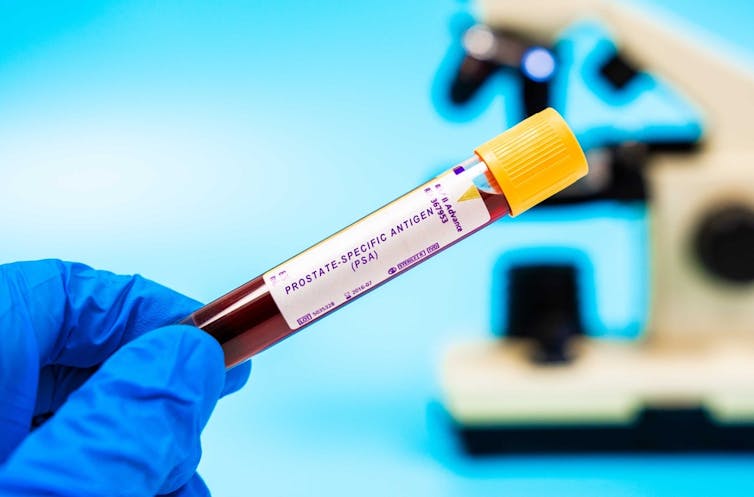
Screening has also improved outcomes in other cancers. Programmes for breast and colorectal cancer help detect disease earlier, when treatment is more likely to succeed. Similarly, the introduction of PSA testing has improved detection of prostate cancer.

A gloved hand holding a phial of blood.
PSA tests have helped detect prostate cancer before symptoms become apparent.
luchschenF/Shutterstock.com

At the same time, advances in cancer research have transformed treatment options. Targeted therapies and personalised medicine are increasingly common, allowing doctors to tailor treatment to the biology of an individual patient’s tumour. Hormone therapies that block testosterone, for instance, have significantly improved outcomes in prostate cancer.

Immunotherapy is also advancing rapidly. Researchers are exploring preventive vaccines for cancers such as lung and ovarian cancer, raising the possibility that some cancers could eventually be prevented before they even develop.

Public health measures have also played a role. Policies such as smoking bans, alongside greater awareness of cancer risk factors, have contributed to falling death rates for several major cancers.

However, it is worth noting that while cancer death rates are falling, the total number of people dying from cancer is still rising. This is largely because the UK population is growing and people are living longer.

As we age, mutations and cellular damage accumulate, increasing the risk of cancer. The rise in deaths from some cancer types is now prompting researchers to focus more attention on these diseases. Many are linked to late-stage diagnosis, because symptoms often appear only once the disease is advanced. Expanding research and clinical trials in these areas could make a significant difference.

The cancers bucking the trend

Some cancers have actually seen deaths rise over the past decade. Deaths from skin, intestinal, bone, gallbladder and eye cancers have increased by 46%, 48%, 24%, 29% and 26%, respectively. Liver cancer deaths have risen by 14%, while kidney cancer deaths are up by 5%.

There are probably several reasons for these increases. Some cancers are harder to detect early, while others have fewer effective treatments. Lifestyle factors may also be contributing, including greater use of tanning beds and diets high in ultra-processed food. Meanwhile, mortality rates for cancers such as thyroid and pancreatic cancer, as well as some skin cancers, have remained largely unchanged.

Even so, the overall trend remains encouraging. Experts believe that with continued investment in research, clinical trials and NHS capacity, cancer mortality could fall further. Current projections suggest a decrease in death rates of around 6% between 2024-26 and 2038-40 within the next two decades.

While challenges remain, the latest figures highlight what sustained investment in research, prevention and treatment can achieve. As screening improves, therapies advance and prevention expands, further progress against cancer may be within reach.

The Conversation

The authors do not work for, consult, own shares in or receive funding from any company or organisation that would benefit from this article, and have disclosed no relevant affiliations beyond their academic appointment.

ref. Cancer deaths fall to historic low in UK – this is probably why – https://theconversation.com/cancer-deaths-fall-to-historic-low-in-uk-this-is-probably-why-277883

Difficult friends and relatives could be making you age faster – new study

Source: The Conversation – UK – By Ann Marie Creaven, Associate Professor, Psychology, University of Limerick

Antonio Guillem/Shutterstock.com

Our relationships shape our health in many ways. Friends and family can provide support during difficult times and encourage healthy habits. But not all relationships are positive – some can be a persistent source of stress.

A new study published in the journal PNAS asked what happens when the stress in our lives comes from the people around us. The researchers focused on difficult ties in people’s social networks – individuals they called “hasslers”.

The researchers wondered whether difficult relationships might affect ageing in the same way as other chronic stressors.

Stress is not always bad for us. Short bursts of stress can help us learn coping skills, become more adaptable and trigger hormone and brain changes that prepare us for future challenges. But long-term stress – such as poverty, discrimination or unemployment – can wear down the body and speed up ageing.

Participants were asked to name people they spent time with, talked to about personal or health matters, or who influenced their health habits. Crucially, participants were also asked whether there were people in their network who often caused them stress or made life difficult – the hasslers.

Only those reported as often causing stress were classified as hasslers. People who only occasionally caused stress were not considered hasslers. Importantly, the same person could be nominated in multiple categories, meaning that a single relationship could serve several social roles.

People taking part also provided saliva samples to calculate two complementary measures of biological ageing. The first measures your biological age relative to your age in years. In other words, is your body older or younger than your numerical age? The second measures how quickly you are ageing right now.

Almost 30% of participants had at least one hassler in their social network, with about 10% reporting at least two hasslers, confirming that hasslers are reasonably common and “negative” ties are part of our social worlds.

This is certainly worth noting since negative ties and their effects are understudied in comparison to positive or neutral ties. Each additional hassler was associated with roughly nine months higher biological age, and with a slightly faster pace of biological ageing (1.5% faster).

Since the saliva samples were only measured once, we can’t be sure how this builds up over time, but if the pace of ageing is faster for the rest of your life, it certainly feels worth reflecting on.

This effect was strongest when the difficult relationship was between family members, rather than between friends or acquaintances. This might reflect the challenges in extricating oneself from family relationships.

Family ties are the hardest to cut

It’s a lot easier to slowly distance oneself from an acquaintance than to discard a relationship that may have existed for your entire lifetime and which is embedded in other close relationships. Besides, most relationships aren’t purely positive or negative. Even the most stressful family relationships can have some positive aspects – and vice versa.

Only 3.5% of friendships were classified as hasslers, compared with almost 10% of parents and of children, supporting the notion that hasslers are more difficult to discard when they are part of our families.

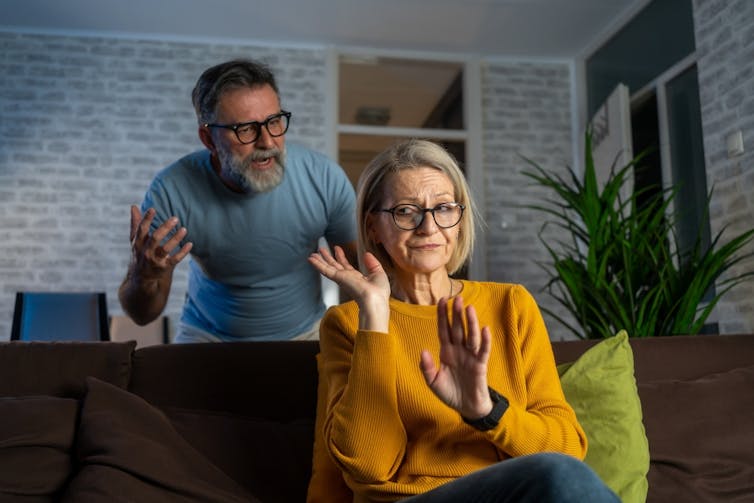
Interestingly, negative relationships with spouses and partners did not show the same association with accelerated ageing. One possible explanation is that occasional conflict or stress within these partnerships happens alongside substantial support, which could mitigate the physiological consequences of these negative interactions.

Man arguing with his wife.
Arguing with a spouse does not appear to have the same effect on ageing.
Nenad Cavoski/Shutterstock.com

Also, hasslers were less likely to appear across multiple domains of interaction – such as both a confidant and a companion. In contrast, supportive relationships often spanned several domains of social life.

Once relationships become difficult, people might gradually reduce the number of ways they interact. Or, high-conflict relationships may be less likely to develop into deeply embedded ties that we engage with in multiple ways.

Nonetheless, it’s worth considering alternative explanations before we ditch our hassler ties. Experiencing accelerated ageing could make people feel more poorly, and perhaps more irritable.

Irritable people might more easily interpret interactions as “hassling”, meaning that accelerated ageing could be contributing to perceptions of hasslers, rather than the other way around.

Similarly, depression can both accelerate the ageing process and contribute to generally negative evaluations of different aspects of life, including relationships. Not all of us are equally likely to have hasslers in our networks. Women, smokers and those with greater histories of life stress in childhood tended to report more hasslers.

Extra hasslers were also associated with poorer evaluations of one’s own health, more anxiety and depression symptoms, more long-term health conditions and higher body weight, suggesting that difficult ties are relevant across several aspects of health.

Negative social ties might act similarly to other chronic stressors in our lives, influencing health and wellbeing, with accelerated ageing as one potential pathway identified in this study.

Although it’s important to nurture our social connections, these findings suggest we should also reflect on those connections that often bring “hassle” to our daily lives.

The Conversation

The authors do not work for, consult, own shares in or receive funding from any company or organisation that would benefit from this article, and have disclosed no relevant affiliations beyond their academic appointment.

ref. Difficult friends and relatives could be making you age faster – new study – https://theconversation.com/difficult-friends-and-relatives-could-be-making-you-age-faster-new-study-277925