Treasure the emotional connections to the clothes you have and style could be a whole lot more sustainable

Source: The Conversation – UK – By Lee Mattocks, Senior Lecturer, Fashion, Knitwear and Textile design, Nottingham Trent University

Anton Vierietin/Shutterstock

With January sales around the corner, another flood of unwanted clothes risks drowning our wardrobes and the planet.

The average person now discards around 16kg of textile waste annually and a mountain of fabric equivalent to thousands of landfills accumulates each year.

But the EU is bringing in new laws surrounding fast fashion. More responsibility is being put on manufacturers to reduce material waste and it’s becoming more important to invest in clothes we’ll cherish.

That’s why the emotional value of fashion plays a crucial role in creating a more sustainable wardrobe.

By understanding why we keep certain garments, we can extend their lifespans and rethink sustainability. Designing fashion to be emotionally durable and less likely to be dumped will not just benefit personal connections to cherished items but also the brand’s bottom line because companies will be fined for non-compliance with regulations (for example, for the destruction of unsold textiles).

Emotional attachments could be as influential as sustainability regulations if they help us make more informed choices about what’s in our wardrobes.

After years of working in fashion, experiencing sample sales and loving the buzz of the Christmas bargain, I had my own mountain of clothes to confront during an unexpected house move last Christmas. Overwhelmed by clutter and house full of garments that didn’t “feel” good anymore I began Welcome to Our Wardrobe, a project exploring the reasons why people keep some items for longer than others.

Fashion professionals, designers, psychotherapists and everyday wearers contributed to my studies and reflected on the garments they kept the longest and shared personal stories and revelations through social media.

Each garment became a portal to an often candid story and an opportunity for self rediscovery through these hanged and folded moments. Very few items survived my own wardrobe study as most were redirected to charity shops after realising they were impulse buys or mostly ill-considered purchases that didn’t meet my needs. Most garments held strong family connections or were linked to a personal memory.

My own worn out but emotionally durable t-shirt held memories of a friendship that felt like a hug on those relentless days, reminding me my friend is always there at the end of the phone. Reflecting on these attachments shifted my own shopping habits. By focusing on meaningful purchases and connections rather than just this year’s must-have colour or trouser style, I felt better too.

Fast fashion, slow attachments

It’s not just about making clothes that last but about making clothes that matter. Jonathan Chapman, a leading professor of sustainable design, puts it simply: “We are consumers of meaning, not matter.” His theory of emotionally durable design suggests waste is not merely material problem but a symptom of a missing personal connection.

When our clothes have a deep emotional resonance they often endure. One participant reflected on a handmade gifted jumper that initially made her feel “too fat” and “too old” – she discovered she still loved it because it symbolised trust and important connections to a meaningful past relationship. Once she acknowledged her attachment to this jumper, she decided to wear it more often. That extended the garment’s life.

Otto von Busch, a Swedish professor of integrated design argues in his book The Psychopolitics of Fashion that clothing functions as a psychological tool through which people express identity, negotiate belonging and make sense of who they are.

Fashion designer and author Orsola de Castro co-founded Fashion Revolution, a fashion activism movement, in the wake of the 2013 Rana Plaza factory collapse in Bangladesh which killed more than 1,100 garment workers.

Fashion Revolution not only advocates for greater transparency in the fashion system but also endorses “radical mending” – the treasuring, reuse, rewearing and repairing of favourite items – to promote slow fashion. According to De Castro’s philosophy, the more we wear a garment, the more it becomes part of our lives.

Her call to mend and care for clothes while resisting fast fashion trends and production cycles echoes the findings of Welcome to Our Wardrobe. My research shows that inherited, classic or custom-handcrafted clothes were the most enduring pieces, not swayed by fast fashion or new sustainability strategies. Emotional attachment relies on items being present for a reason and not just a season. That can transform clothes into treasures that can be passed down through the generations.

To reduce consumption and encourage emotionally durable design, it’s important to consider how attachment between customers and clothing can increase a garment’s lifespan. Emotional durability may even underpin future legislation if adopted as a design principle rather than a post-purchase phenomenon.

Perhaps you own a top you just can’t throw away or a dress worn to a milestone moment that represents a happy memory. These garments often survive not just because they were well crafted but because they hold some emotional resonance relating to love, connection, comfort and friendship.

Reflecting on the clothes that we already treasure is the first step towards slowing down fashion. By understanding why certain pieces endure, the wardrobe begins to hold more meaning than just an unsustainable dumping ground for passing trends.


Don’t have time to read about climate change as much as you’d like?

Get a weekly roundup in your inbox instead. Every Wednesday, The Conversation’s environment editor writes Imagine, a short email that goes a little deeper into just one climate issue. Join the 47,000+ readers who’ve subscribed so far.


The Conversation

Lee Mattocks runs Mattocks, a small sustainable leather bag company.

ref. Treasure the emotional connections to the clothes you have and style could be a whole lot more sustainable – https://theconversation.com/treasure-the-emotional-connections-to-the-clothes-you-have-and-style-could-be-a-whole-lot-more-sustainable-270927

Do marathons damage your heart? Decade-long study finally settles the debate

Source: The Conversation – UK – By David C. Gaze, Senior Lecturer in Chemical Pathology, University of Westminster

mikecphoto/Shutterstock.com

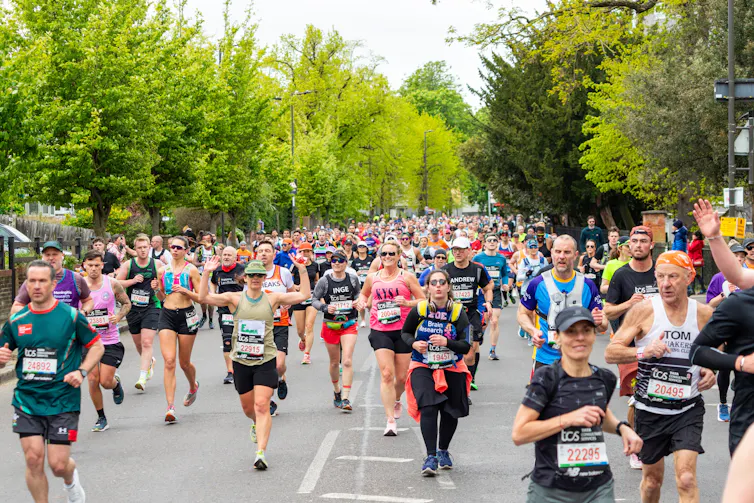
A marathon pushes the human body close to its limits. Legs tire, lungs burn and the heart works hard for hours on end. For years, that strain has raised an uncomfortable question: does running 26 miles actually damage the heart?

The strongest reassurance comes from a new ten-year study of 152 recreational marathon runners, published in the journal Jama Cardiology. Researchers checked the runners’ hearts before and after races, then tracked their heart health over the next decade.

They found that although the heart’s right ventricle – the chamber that pumps blood to the lungs – showed a short-term drop in pumping ability straight after races, it recovered within days. Crucially, over the ten-year follow-up period, there was no sign of lasting damage to heart function in these runners.

This finding is important because earlier studies had raised worries that long-distance exercise might damage the heart. Much of that concern came from blood tests taken after endurance events.

After a marathon, many runners show higher levels of a substance called troponin in their blood. Troponin is released when heart muscle cells are put under strain.

Doctors normally use troponin levels to help diagnose a heart attack. So seeing these levels rise after a race can look worrying and sometimes make it harder to tell whether someone is having a genuine medical emergency.

When troponin levels mislead

But context matters. In hospitals, raised troponin levels are only judged alongside symptoms, heart tests and scans. After long-distance endurance exercise, troponin often rises even when there is no sign of blocked arteries, a heart attack or lasting heart damage.

Studies show that many healthy marathon runners have troponin levels above the usual medical cut-offs after a race, despite normal heart scans and no symptoms of a heart attack.

This rise seems to reflect temporary strain on heart muscle cells, rather than permanent damage. Heart scans using ultrasound or MRI show that these changes are usually linked to short-term changes in how the heart fills or pumps blood, which settles with rest.

The right side of the heart seems particularly affected during marathons. It pumps blood through the lungs, where pressure rises sharply during sustained exercise. Several studies have shown that the right ventricle becomes temporarily enlarged and less efficient immediately after long races, before returning to normal.

What the new ten-year outcome study adds is reassurance that these repeated short-term stresses do not inevitably lead to long-term damage in most recreational runners. Over a decade of marathon running, heart structure and pumping ability remained within normal ranges.

That does not mean endurance running is without risk. Marathon running can expose hidden heart disease, particularly coronary artery disease. A tragic example was reported recently in the UK press, where a 42-year-old runner with chest pain was initially reassured and later died from a heart attack. In that case, the problem was not exercise-related troponin release but underlying coronary disease that was not identified as the cause of the elevated troponin.

This distinction is vital. Chest pain, breathlessness or collapse during or after exercise cannot be dismissed simply because someone is fit. In people with symptoms, raised troponin levels usually signal a very different process than the benign rises seen after a marathon in otherwise well runners.

Deaths during marathons are very rare. Large studies suggest there is about one death for every 100,000 runners, and this risk has fallen over time as medical support at races has improved. When a sudden cardiac arrest does happen, it is usually linked to an undiagnosed heart condition, rather than damage caused by running itself.

Very high-level endurance exercise

There is still a debate about very high-level endurance exercise. While most recreational runners show no lasting harm, some studies have found signs of scarring in the heart – called fibrosis – in athletes who have trained at very high volumes for many years.

Heart MRI scans have shown that many older endurance athletes have small areas of scar tissue in their heart muscle. In the recent Ventoux study – named after Mont Ventoux, one of the toughest climbs in the Tour de France – researchers looked at 106 male cyclists and triathletes over 50. Almost half of these athletes had detectable scarring, compared with very few in non-athletic participants.

High-level endurance exercise is linked to scar tissue in the heart
What about ultra-endurance?
Obatala-photography/Shutterstock.com

This scarring was linked to a higher chance of abnormal heart rhythms, including some that can be deadly. But serious problems are still rare, and results differ a lot between people, suggesting factors like genetics, training intensity and how long someone has trained all matter.

Taken together, the evidence suggests that for most recreational marathon runners, the heart adapts rather than deteriorates. Temporary changes after races and short-term rises in troponin reflect stress, not injury.

Being fit doesn’t mean you can’t develop heart disease, and test results only make sense when considered alongside symptoms and medical checks. The marathon runner’s heart is strong, but it still needs careful assessment.

For most recreational runners, the evidence is reassuring. The heart adapts to marathon running rather than breaking down under it. Those temporary spikes in troponin after races reflect hard work, not damage, and decade-long studies confirm that with proper training, the heart stays healthy.

But fitness isn’t immunity. Chest pain, unusual breathlessness or feeling faint during exercise always needs proper medical attention. The marathon runner’s heart is resilient – but it still deserves respect and careful monitoring.

The Conversation

David C. Gaze does not work for, consult, own shares in or receive funding from any company or organisation that would benefit from this article, and has disclosed no relevant affiliations beyond their academic appointment.

ref. Do marathons damage your heart? Decade-long study finally settles the debate – https://theconversation.com/do-marathons-damage-your-heart-decade-long-study-finally-settles-the-debate-272371

The Room in the Tower: the ‘real’ hauntings that inspired this year’s BBC Ghost Story for Christmas adaptation

Source: The Conversation – UK – By Alice Vernon, Lecturer in Creative Writing and 19th-Century Literature, Aberystwyth University

This year’s BBC Ghost Story for Christmas is an adaptation of E. F. Benson’s 1912 tale of vampiric horror and haunted sleep, The Room in the Tower.

The unnamed narrator begins the story by relating a recurring nightmare he has suffered for 15 years. In the dream, he has been invited to the mansion of the Stone family. The dream begins pleasantly, with card games, cigarettes and light conversation. But it always takes a turn when the family’s fearsome matriarch, Mrs Stone, tells the narrator that he’ll now be shown to his room for the night – the titular room in the tower. Upon entering the room, he is overwhelmed with abject horror, and wakes up before he sees the object of his fear.

While visiting a friend one stormy summer’s day, the narrator finds himself at the very home he saw at least once a month in his dreams. Sure enough, he’s led to the room in the tower, where he finds a hideous portrait of the demonic Mrs Stone. The portrait is removed from the room at his request, but leaves curious bloodstains on the narrator and his friend’s hands. During the night, however, the narrator’s sleep is once again disturbed by the nightmare made manifest.

E. F. Benson in a suit, with a moustache
E. F. Benson ‘grew up with ghosts’.
The New York Public Library

Many ghost stories take place in bedrooms. One of the BBC’s first ghost stories adapted for television was M. R. James’ Oh Whistle, and I’ll Come to You, My Lad, which features a bumbling academic terrorised in his hotel room by a ghost quite literally wearing a bed sheet. Horror comes from a twisted reversal of what we expect to see and experience, and since the bed should be the place of utmost safety, it is ripe to be distorted into a place of existential dread.

Sleep, too, is a state of pure vulnerability. Those few breathless seconds after waking from a nightmare remind us just how defenceless we are. No tale of the supernatural from the early 20th century examines the way our troubled sleep can haunt us quite like The Room in the Tower.

Benson grew up with ghosts. His father, Edward Benson, was the archbishop of Canterbury. He was good friends with novelist Henry James, and allegedly told his son a spooky story he’d heard that James later turned into The Turn of the Screw (1898).

Benson’s mother was Mary Sidgwick, whose brother Henry was a founding member and first president of the Society for Psychical Research (SPR). The SPR’s aim was to investigate strange and paranormal phenomena, with particular interests in thought transference (or telepathy), visions and hallucinations, and ghosts and hauntings.

Begun in 1882, the SPR almost immediately set about collecting a massive amount of data under their Census of Hallucinations. They sent out a questionnaire to the public, and received thousands of responses over several years, some with fascinating anecdotes about being terrorised by ghosts and monsters in the middle of the night. The SPR compiled these in an issue of their periodical in 1894.

A man with a long white beard in a black and white photo
Henry Sidgwick, first president of the SPR in 1894.
WikiCommons

To read them in light of The Room of the Tower, it seems that Benson, too, knew what it feels like to be haunted by hallucinatory sleep disorders. Indeed, perhaps he even took direct influence from some of the anecdotes. The narrator in The Room in the Tower, being visited by a vampiric monster at the end of the story, describes himself as being “paralysed” – a typical sensation of sleep paralysis, which is often accompanied by a terrifying hallucination.

In Benson’s story, the narrator sees a “figure that leaned over the end of my bed”. In the SPR’s Census, a respondent referred to as Miss H. T. describes a horrifying visitation similar to the experience of Benson’s narrator. She wrote that she had seen the same figure three times, just as the narrator has the same nightmare over and over again. It would happen the same way every time; she would believe herself to be awake, and she would see a shimmer in the air that gradually solidified. Paralysed, she couldn’t move or scream to defend herself as the shape “took the form of mist and then developed into a dark veiled figure, which came nearer to me” and bent over the bed. Finally, the paralysis would lift, and the figure disappeared just as Miss H. T. threw her hands out towards it.

What both the Census and The Room in the Tower show is that ghosts don’t need to come from graveyards, gothic houses, or local legends. Often the most terrifying encounters, the experiences that prove most fruitful for ghost stories, are those our sleeping minds conjure up on the ethereal boundary between dreaming and waking.

The Room in the Tower will air on BBC One on Christmas Eve at 10pm, and will star Joanna Lumley as the terrifying Mrs Stone. For those of us prone to experience troubled sleep, it may well summon a nightmare of our own.


Looking for something good? Cut through the noise with a carefully curated selection of the latest releases, live events and exhibitions, straight to your inbox every fortnight, on Fridays. Sign up here.


This article features references to books that have been included for editorial reasons, and may contain links to bookshop.org. If you click on one of the links and go on to buy something from bookshop.org The Conversation UK may earn a commission.

The Conversation

Alice Vernon does not work for, consult, own shares in or receive funding from any company or organisation that would benefit from this article, and has disclosed no relevant affiliations beyond their academic appointment.

ref. The Room in the Tower: the ‘real’ hauntings that inspired this year’s BBC Ghost Story for Christmas adaptation – https://theconversation.com/the-room-in-the-tower-the-real-hauntings-that-inspired-this-years-bbc-ghost-story-for-christmas-adaptation-272309

What Renaissance readers left behind in haircare books

Source: The Conversation – UK – By Stefan Hanß, Senior Lecturer in Early Modern History, University of Manchester

Still life with a ledger, a skull and other objects. Oil painting, 1766. Wellcome Collection

What if the pages of an old book could tell us who touched them, what medicines they made, and even how their bodies responded to treatment?

Renaissance medical recipe books are filled with handwritten notes from readers who tested cures for everything from baldness to toothache. For years, historians have studied these annotations to understand how people experimented with medicine in the past. Our recent research goes a step further. My colleagues and I have developed a way to read not only the words on these pages, but also the invisible biological traces left behind by the people who used them.

Thousands of handwritten manuscripts and printed books survive from Renaissance Europe that record medical recipes used in everyday life. These were not rare or elite volumes. Many were printed medical “bestsellers” that circulated widely, then personalised by readers who added notes in the margins. Which recipes worked best? Which ingredients could be swapped or improved? Far from being static texts, these books were working documents. The Renaissance was an age of medical innovation, shaped by hands-on experimentation and repeated trials.

For the first time, we were able to sample and analyse invisible proteins left behind on the pages of these books by the people who handled them.

This work is a form of biochemical detective work. Every time a 16th-century reader touched a page, they deposited tiny traces of amino acids, the building blocks of proteins. These traces can now be sampled using specialised film diskettes produced by SpringStyle Tech Design, which gently lift material from the surface of paper without damaging it. We sampled printed German medical books from the 16th century now held at The John Rylands Research Institute and Library at The University of Manchester. The protein samples were analysed in laboratories at the Universities of York and Oxford, while the Rylands Imaging Laboratory used advanced imaging techniques to recover faded or obscured text.

Focusing on printed books matters. Because these volumes were produced in multiple copies, we can compare biochemical traces across similar texts, helping us distinguish between what the book prescribed and what individual readers actually did with it.

This combined approach allowed us to recover remarkable information about the people who used these books, the substances they handled and the remedies they prepared. When read alongside archival sources, it offers new insight into how Renaissance medicine worked in everyday life.

On pages recommending specific remedies, we identified protein traces from the ingredients named in the recipes themselves. Watercress, European beech and rosemary appeared alongside instructions for treating hair loss or encouraging the growth of head hair and beards.

This focus on hair is not surprising. With the rise of portraiture and the expanding trade in combs and mirrors, the cultivation of beards and new hairstyles became fashionable in the Renaissance. Hair was highly visible, socially meaningful and deeply connected to ideas of health and masculinity.

Wasteful recipes

Some findings were more startling. Near a recipe proposing an extreme treatment for baldness, we detected traces of human excrement.

This closely reflects Renaissance ideas about hair. In medieval and early modern medical thought, hair was understood as a bodily excretion, grouped with substances such as sweat, faeces and nails. As scholars have bluntly put it, “hair was shit”. From this perspective, using human waste to treat hair was not grotesque but logically consistent.

We also identified proteins from bright yellow flowering plants near recipes for dyeing hair blond. These plants were not listed among the written ingredients. We cannot identify the species with certainty, but their presence suggests readers were experimenting beyond the instructions on the page, guided by colour symbolism and perceived medicinal properties. Here, experimentation becomes visible not just in marginal notes, but in the biological record itself.

Other protein traces point to the use of lizards in haircare remedies. Lizards were classified in Renaissance natural philosophy as poikilothermic animals, meaning their body temperature changes with the environment. Hair growth was believed to depend on internal bodily heat. Increasing heat was thought to stimulate hair growth, while excessive heat could destroy it. The presence of lizard proteins suggests practitioners were actively testing these competing theories by processing animal materials into remedies.

Hippo teeth

Then there is the hippopotamus. We recovered proteins consistent with hippopotamus material on pages discussing dental problems. In the margins, readers complained about foul-smelling teeth, toothache and tooth loss. In Renaissance medicine, hippopotamus bone was believed to strengthen teeth and gums and was sometimes used to make dentures. Its presence suggests that readers in 16th- and 17th-century Germany had access to exotic medical materials traded across long distances.

Our methods combine close historical reading with laboratory analysis, allowing historians to study medical practice in ways that were not previously possible. They bring together forms of evidence that are usually kept separate: texts, bodies and materials.

Perhaps most intriguingly, we also identified proteins with antimicrobial functions, including molecules commonly found in human immune responses, such as those associated with inflammation and defence against bacteria. These proteins help the body fight infection. Their presence suggests that the people handling these books were not only preparing remedies but were themselves experiencing illness or healing, leaving traces of immune activity behind.

In this sense, we can glimpse immune systems reacting to disease and treatment on the pages themselves. We are only beginning to understand what this evidence can reveal, but this work opens up entirely new ways of studying how Renaissance medicine was practised, tested and lived.

The Conversation

This research has been generously funded by a John Rylands Research Institute Pilot Grant 2020–21 (PI Stefan Hanß) and is a result of interdisciplinary conversations that originated at the British Academy-funded event ‘Microscopic Records: The New Interdisciplinarity of Early Modern Studies, c. 1400–1800’ (British Academy Rising Star Engagement Award BARSEA 19190084, PI Stefan Hanß, https://sites.manchester.ac.uk/microscopic-records/).

ref. What Renaissance readers left behind in haircare books – https://theconversation.com/what-renaissance-readers-left-behind-in-haircare-books-271561

The magic of maths: festive puzzles to give your brain – and imagination – a workout

Source: The Conversation – UK – By Neil Saunders, Senior Lecturer in Mathematics, Department of Mathematical Sciences, City St George’s, University of London

Mathematics is a “science which requires a great amount of imagination”, said the 19th-century Russian maths professor Sofya Kovalevskaya – a pioneering figure for women’s equality in this subject.

We all have an imagination, so I believe everyone has the ability to enjoy mathematics. It’s not just arithmetic but a magical mixture of logic, reasoning, pattern spotting and creative thinking.

Of course, more and more research also shows the benefits of doing puzzles like these for brain health and development. Canadian psychologist Donald Hebb’s theory of learning has come to be known as “when neurons fire together, they wire together” (which, by the way, is one of the guiding principles behind training large neural networks in AI). New pathways start to form which can build and maintain strong cognitive function.

What’s more, doing maths is often a collaborative endeavour – and can be a great source of fun and fulfilment when people work together on problems. Which brings me to these festive-themed puzzles, which can be tackled by the whole family. No formal training in maths is required, and no complicated formulas are needed to solve them.

I hope they bring you some moments of mindful relaxation this holiday season. We’ll publish the answers on Monday December 29 and add a link to them here. Good luck!

Festive maths puzzlers

Illustration of balance scales with gold coins in each basket.

nestdesigns/Shutterstock

Puzzle 1: You are given nine gold coins that look identical. You are told that one of them is fake, and that this coin weighs less than the real ones. You are also given a set of old-fashioned balance scales that weigh groups of objects and show which group is heavier.

Question: What is the smallest number of weighings you need to carry out to determine which is the fake coin?


Puzzle 2: You’ve been transported back in time to help cook Christmas dinner. Your job is to bake the Christmas pie, but there aren’t even any clocks in the kitchen, let alone mobile phones. All you’ve got is two egg-timers: one that times exactly four minutes, and one that times exactly seven minutes. The scary chef tells you to put the pie in the oven for exactly ten minutes and no longer.

Question: How can you time ten minutes exactly, and avoid getting told off by the chef?


Illustration of two barrels of win with a bottle and glass standing on one.

Dasha Efremova/Shutterstock

Puzzle 3: Having successfully cooked the Christmas pie, you are now entrusted with allocating the mulled wine – which is currently in two ten-litre barrels. The chef hands you one five-litre bottle and one four-litre bottle, both of which are empty. He orders you to fill the bottles with exactly three litres of wine each, without wasting a drop.

Question: How can you do this?


Puzzle 4: For the sake of this quiz, imagine there are not 12 but 100 days of Christmas. On the n-th day of Christmas, you receive £n as a gift, from £1 on the first day to £100 on the final day. In other words, far too many gifts for you to be able to count all the money!

Question: Can you calculate the total amount of money you have been given without laboriously adding all 100 numbers together?

(Note: a variation of this question was once posed to the German mathematician and astronomer Carl Friedrich Gauss in the 18th century.)


Puzzle 5: Here’s a Christmassy sequence of numbers. The first six in the sequence are: 9, 11, 10, 12, 9, 5 … (Note: the fifth number is 11 in some versions of this puzzle.)

Question: What is the next number in this sequence?

Twelve Days of Christmas illustration

Garashchuk/Shutterstock

Puzzle 6: Take a look at the following list of statements:

  • Exactly one statement in this list of statements is false.

  • Exactly two statements in this list are false.

  • Exactly three statements in this list are false.

    … and so on until:

  • Exactly 99 statements in this list are false.

  • Exactly 100 statements in this list are false.

Question: Which of these 100 statements is the only true one?


Puzzle 7: You are in a room with two other people, Arthur and Bob, who both have impeccable logic. Each of you is wearing a Christmas hat which is either red or green. Nobody can see their own hat but you can all see the other two.

You can also see that both Arthur’s and Bob’s hats are red. Now you are all told that at least one of the hats is red. Arthur says: “I do not know what colour my hat is.” Then Bob says: “I do not know what colour my hat is.”

Question: Can you deduce what colour your Christmas hat is?


Puzzle 8: There are three boxes under your Christmas tree. One contains two small presents, one contains two pieces of coal, and one contains a small present and a piece of coal. Each box has a label on it that shows what’s inside – but the labels have got mixed up, so every box currently has the wrong label on it. You are now told that you can open one box.

Question: Which box should you open, in order to then be able to switch the labels so that every label correctly shows the contents of its box?


Puzzle 9: Just before Christmas dinner, naughty Jack comes into the kitchen where there is one-litre bottle of orange juice and a one-litre bottle of apple juice. He decides to put a tablespoon of orange juice into the bottle of apple juice, then stirs it around so it’s evenly mixed.

But naughty Jill has seen what he did. Now she comes in, and takes a tablespoon of liquid from the bottle of apple juice and puts it into the bottle of orange juice.

Question: Is there now more orange juice in the bottle of apple juice, or more apple juice in the bottle of orange juice?


Puzzle 10: In Santa’s home town, all banknotes carry pictures of either Santa or Mrs Claus on one side, and pictures of either a present or a reindeer on the other. A young elf places four notes on a table showing the following pictures:

    Santa   |   Mrs Claus   |   Present | Reindeer

Now an older, wiser elf tells him: “If Santa is on one side of the note, a present must be on the other.”

Question: Which notes must the young elf must turn over to confirm what the older elf says is true?


Bonus puzzle

If you need a festive tiebreaker, here’s a question that requires a little bit of algebra (and the formula “speed = distance/time”). It’s tempting to say this question can’t be solved because the distance is not known – but the magic of algebra should give you the answer.

Santa travels on his sleigh from Greenland to the North Pole at a speed of 30 miles per hour, and immediately returns from the North Pole to Greenland at a speed of 40 miles per hour.

Tiebreaker: What is the average speed of Santa’s entire journey?

(Note: a non-Christmassy version of this question was posed by the American physicist Julius Sumner-Miller.)

The Conversation

Neil Saunders is a supporter of the Campaign for Mathematical Sciences.

ref. The magic of maths: festive puzzles to give your brain – and imagination – a workout – https://theconversation.com/the-magic-of-maths-festive-puzzles-to-give-your-brain-and-imagination-a-workout-272498

We analysed 73,000 articles and found the UK media is divorcing ‘climate change’ from net zero

Source: The Conversation – UK – By James Painter, Research Associate, Reuters Institute, University of Oxford

Zerbor / shutterstock

In October 2024, Conservative leader Kemi Badenoch declared herself a “net zero sceptic”, but “not a climate sceptic”. Most recently she doubled down, announcing plans to scrap the 2030 ban on new petrol cars in a 900-word Sunday Telegraph article that did not mention climate change once.

Badenoch is not an outlier. She’s following a similar script to one increasingly found in the British press.

My new research reveals a surprising trend: the linguistic divorcing of “net zero” from “climate change”. My colleague Will Vowell and I analysed more than 73,000 articles across nine UK media outlets and found that the two terms – once closely linked – are becoming more detached.

In 2018, when our data begins, the link was explicit. In that year, 90% of articles mentioning “net zero” also included the phrase “climate change” or a similar term like “global warming”. By 2024, this figure had fallen to just 42%.

line graph
The reduction in climate change mentions in net zero articles is particularly marked in the Sun, Mail and Express compared to the Guardian.
Painter & Vowell / ECIU, CC BY-SA

We then looked at those articles where net zero appeared in the headline and at least two (other) mentions in the text. This was a more robust measure of whether the article included an important discussion about net zero, rather than a passing mention.

Here there was a similar pattern of a gradual decline. In 2018 – a year before the Conservative government brought a net zero target into law – 100% of net zero discussions also mentioned climate change. That dropped to 75% in 2022 and to 59% in 2024.

This trend was replicated in articles where net zero appeared in the headline along with at least four other mentions in the text. In this category, out of the broadsheet papers, the Times – often regarded as the UK’s paper of record – had the lowest percentage of articles referencing climate change, at 64%. Four articles in 2024 – across the Telegraph, Sunday Telegraph and Express – had as many as eight mentions of net zero, but no mention at all of the climate emergency it is designed to solve.

In 2018-19, there appeared to be a reasonable amount of support in newspapers for the net zero policy. For example, the Daily Mail published an article around the time of the 2019 youth climate strike headlined: “Net zero hero! How being carbon neutral will help the planet”. Fast forward to 2024, and in September the Mail published the headline “Bonkers’ net-zero target could cost 1 MILLION jobs, union chief warns”, which included four mentions of net zero but no mention of climate change.

The rise of ‘response scepticism’

Our new report was commissioned by thinktank Energy and Climate Intelligence Unit (ECIU). Its director Peter Chalkley notes there is a “strong case” that certain papers or editors are driving an agenda to “divide climate change (an issue that the public greatly care about) from net zero (its solution, which is less understood)”.

This is part of a wider trend of “response scepticism” over the past decade in parts of the UK media. I co-authored a report published in early 2025 which found that scepticism of climate science has largely disappeared from opinion pieces and editorials, but criticism of the policies required to tackle climate change is pervasive.

“By removing the scientific and policy context,” argues Chalkley, “net zero risks being reframed – no longer the solution to stopping climate change, but part of a green culture war.”

A confused public

Despite the UK having a net zero target for more than six years, public understanding remains disappointing.

Awareness of the term is high (around 90%), but actual knowledge is low: around 50% say they knew a little, hardly anything or nothing at all about it.

In April 2025, Climate Barometer, an organisation that tracks public opinion on climate change, found 22% of people wrongly thought net zero meant “producing no carbon emissions at all”, a figure which rose to 41% among Reform supporters. The organisation argues that public confusion around the meaning of net zero and its implications for the country reflected attacks on net zero in the media and political debates.

Given these levels of public confusion and misunderstanding, reporters should remind audiences more frequently of why net zero is a necessity. At the very least, a simple statement outlining that scientists view net zero as essential to stopping global warming should be standard practice.


Don’t have time to read about climate change as much as you’d like?

Get a weekly roundup in your inbox instead. Every Wednesday, The Conversation’s environment editor writes Imagine, a short email that goes a little deeper into just one climate issue. Join the 47,000+ readers who’ve subscribed so far.


The Conversation

James Painter receives funding from the Energy and Climate Intelligence Unit. He is a senior visiting fellow at the Grantham Research Institute on Climate Change and the Environment.

ref. We analysed 73,000 articles and found the UK media is divorcing ‘climate change’ from net zero – https://theconversation.com/we-analysed-73-000-articles-and-found-the-uk-media-is-divorcing-climate-change-from-net-zero-272527

England now has a plan to end homelessness – here’s how to test whether it will work

Source: The Conversation – UK – By Michael Sanders, Professor of Public Policy, King’s College London

Yau Ming Low/Shutterstock

The UK has proved before that it can end homelessness. The Everyone In scheme during COVID lockdowns accommodated tens of thousands of people in emergency and supported housing, who would otherwise have continued sleeping rough.

But this was only temporary. Nearly six years later, the scale of the challenge is immense. In June 2025, 132,410 households were living in temporary accommodation, almost two-thirds of which were families with children.

The UK government has published a new homelessness strategy for England. The strategy speaks to different forms of homelessness, from rough sleeping to more hidden forms of homelessness, like sofa surfing.

This is a wide-ranging plan, bringing in approaches from different government departments. The £3.5 billion strategy aims to “address the root causes” of homelessness, firstly through a number of universal approaches.

Some of these have already been announced. The plan emphasises the government’s plan to build 1.5 million new homes during this parliament, reforms to renters’ rights, ending the two-child benefit cap and the youth guarantee to get more young people into work or education. It introduces a new commitment to update social housing allocation guidelines, and a legal “duty to collaborate” for public services to address homelessness.

Several more targeted measures look at specific at-risk populations. This includes care leavers, of whom a worrying proportion still go on to experience homelessness. It also includes people leaving institutions including healthcare settings and prisons. These targeted approaches are essential to move from a crisis-based approach to managing homelessness towards a more proactive approach to preventing it.

How do we know what works?

Our research focuses on methods such as randomised trials to evaluate policies across a range of topics, including homelessness. This is why we were pleased to see an emphasis on the government’s “test and learn” approach to technology and AI being applied to the homelessness strategy:

We want to adopt a test and learn approach to evidence, where local areas trial innovative practice, roll this out where it is effective, and subsequently share learning with others.

Given the UK government’s precarious financial situation, it’s important that policies work for the people who need them, without wasting money on untested approaches.

Randomised controlled trials, most common in medicine, are the gold standard method to show simply what the effect of an intervention or policy is. They work by assigning who gets an intervention (such as a vaccine or targeted homelessness support) at random, and comparing those that do to a control group.

A randomised trial in Canada has shown that modest, unconditional cash transfers for people experiencing homelessness can significantly reduce the number of days the average participant spent homeless in a year.

New studies are evaluating whether this approach can have the same kinds of effects in the UK. We are leading the evaluation of one project – administered by the charity Greater Change – which will test how giving people a personalised budget of around £4,000 can help them change their trajectory in life. We are looking forward to having results next summer.

Another trial already underway in the UK involves local councils working with data science company Xantura to give early warnings of households at risk of homelessness. In this trial, households identified by algorithm as being high-risk are randomly assigned either to receive proactive support, or not to. The outcomes of both groups are followed up later.

The evidence for this kind of approach is mixed. There is a burden of proof that companies selling these tools, and governments purchasing them, bear before making their use widespread. Randomised trials, while not perfect, are arguably the most rigorous and efficient way to test them.

Close up hand holding a stack of 20 pound notes
Randomised trials can test the effects of approaches like giving people grants or housing.
Alexey Fedorenko/Shutterstock

Sometimes, randomisation is not possible. But we can still use experimental approaches or evaluations to test the effects of policies.

In recent projects, we’ve seen that two approaches have statistically meaningful effects on reducing homelessness for these young people. These are Staying Put, a policy that allows young people to remain with their foster carers after they turn 18, and Lifelong Links, an approach that supports young people in care to build and maintain relationships with people from their birth families. The government has continued to fund the expansion of these programmes, which the evidence suggests will have substantial effects on reducing homelessness for care leavers.

Of course, research evaluations can and do find when interventions are not successful – or are even actively harmful. For example, we found that a model of “extended families” for young people in foster care actually increased the rate at which they go on to experience homelessness.

It’s a positive sign that the government is embracing testing and learning. But this should mean making use of rigorous methods like randomised trials. Shying away from them risks imperilling the UK’s ability to actually end homelessness.

The Conversation

Michael Sanders receives funding from the Centre for Homelessness Impact.

Julia Ellingwood receives funding from the Centre for Homelessness Impact.

ref. England now has a plan to end homelessness – here’s how to test whether it will work – https://theconversation.com/england-now-has-a-plan-to-end-homelessness-heres-how-to-test-whether-it-will-work-272377

Martin Parr: an astute and uniquely British photographer

Source: The Conversation – UK – By Mark Durden, Emeritus Professor, University of South Wales

The kitsch, the gaudy, the banal, the common, the superficial, the cheap: Martin Parr – who has died at the age of 73 – embraced and celebrated them all in his extraordinary pictures.

Born in Epsom in 1952 to solidly middle-class Methodist parents, Parr’s suburban childhood was dominated by his parents’ church going and passionate interest in ornithology. He was a keen trainspotter. His interest in photography was kindled by his grandfather George Parr, an amateur photographer, with whom Parr spent his childhood holidays in Yorkshire.

“I make serious photographs disguised as entertainment,” he once said, but the very nature of his photography saw some in his profession deny him the respect and acknowledgement he deserved.

His work chimed with elements of pop art and its obsession with consumerism, but in the photography world – certainly within the UK – there still seemed to be a certain cultural snobbery and unease about consciously engaging with this subject matter.

Part of that unease is to do with how the kitsch and the common are, certainly in Britain, bound up in questions of taste and class. Parr’s exhibition and book The Last Resort (1983-1986) brought him important recognition, including a show at London’s Serpentine Gallery, but also much criticism for its harsh portrayal of working-class people holidaymaking in New Brighton, Merseyside.

A life in pictures

Inspired by what was then the new American colour photography and the work of photographers such as Stephen Shore and William Eggleston, as well the British colour photographer John Hinde, Parr’s pictures broke with the more sober and gloomy black and white British documentary photography tradition.

Exploring the life and work of Martin Parr.

Deploying similar colour saturation to the summer holiday postcard, Parr countered its idealism by focusing on scenes of slovenliness, notably through pictures showing the consumption of food – chips, hot dogs, ice creams – with all the ensuing spillage.

Both the beach and lido were crowded and littered, and people seemed oblivious to the mess around them. As a result, some saw such pictures as presenting a degraded vision of the working-class people of this popular northern seaside resort. But despite its critics, Last Resort has remained in print since it was published and is his bestselling book.

The Cost of Living (1986-1989) offered a counterpoint to The Last Resort, concentrating on a more appearance-driven and aspirational culture: the uptight realm of the comfortable middle classes, exemplified through vivid, cutting and critical portraits of people at social gatherings, shopping or keeping fit.

For Small World (1987-1994), his photography took on the bigger subject of worldwide travel. His critical and comical response to tourism often rested upon a witty interplay between the people and the attractions they had come to consume, many of them shown carrying cameras or videos or taking photographs.

Here the comedy is bathetic, as we sense the shortfall between the sublime nature of what the masses have come to see and the plethora of tourist tat that filters that encounter.

The tourists’ clothing also became a recurring focus and point of irony – such as the back of a yellow t-shirt with the single word “Bali”, worn by a tourist as they contemplate Gaudí’s Sagrada Familia in Barcelona, or a man in a loud summer shirt bearing an image of a tropical sunset in the Piazza della Signoria, Florence.

Parr’s remarkable and most significant book, Common Sense (1999) conveyed an apocalyptic vision of humanity’s over-consumption, a global binge presented through a glut of images, all in close up. It is a crazed delirious montage, as if replaying fragments drawn from all his past work, but with the colour saturation racked up.

Common Sense also marked a shift in the form of the photo book in its use of full-bleed images (where the images extend to the edges of the page) throughout, from front cover to back, and the only text, the title, author and publisher imprint. Parr had been a passionate collector of photo books since the beginning of his career and saw the photo book as the ideal way of both presenting and disseminating photographs.

Publishing multi-volumes on the photo book with various authors, his work in this field is an important part of his legacy. His collection of over 12,000 photo books was part gifted to and purchased by the Tate galleries in 2017.

In 2014, he established the Martin Parr Foundation which opened as a dedicated photography space in 2017 in Bristol. As well as providing an archive of his photography, the foundation shows and collects the work of photographers who make work focused on Britain and Ireland. It also seeks to support and promote younger, emerging photographers.

When travelling the world, Parr started having his picture taken by local street and studio photographers, as well as in photo booths. The resulting portraits constitute his most comic book, Autoportrait, (2000; expanded and revised in 2016) with Parr deadpanning amid a carnival of possible and other selves created for him.

Rooted in the passion and joy of the tradition of photographic portraiture, Autoportrait is also an important document of less-feted photographic practices, such as the humble photo booth, as well as a testimony to the creativity and imaginings of others.

It also bears comparison with the collaborative photobook Julie Bullard (2025) for which Parr “documented” scenarios reflecting the creative imaginings of another, this time the artist and filmmaker, Nadia Lee Cohen.

Cohen hired Parr to take pictures of tableaux she created, as she and family members played out a fictional version of the life and death of the glamorous babysitter she idolised as a child in in the 1990s.

Cohen’s stylised and over the top fantasy about a working-class life, was already imbued with Parr’s now distinctive aesthetic. To be asked to photograph her project meant he was in effect also photographing himself. As one of his last significant projects, it seems a beautifully absurd and comic ending to an extraordinary and exceptional artistic life and career.

This article features references to books that have been included for editorial reasons, and may contain links to bookshop.org; if you click on one of the links and go on to buy something, The Conversation UK may earn a commission.


Looking for something good? Cut through the noise with a carefully curated selection of the latest releases, live events and exhibitions, straight to your inbox every fortnight, on Fridays. Sign up here.


The Conversation

Mark Durden does not work for, consult, own shares in or receive funding from any company or organisation that would benefit from this article, and has disclosed no relevant affiliations beyond their academic appointment.

ref. Martin Parr: an astute and uniquely British photographer – https://theconversation.com/martin-parr-an-astute-and-uniquely-british-photographer-272316

Worried about statins? Here’s what the evidence shows

Source: The Conversation – UK – By Dipa Kamdar, Senior Lecturer in Pharmacy Practice, Kingston University

pimpampix/Shutterstock

Few medicines have sparked as much debate as statins. Cardiologists often describe them as life-saving, while some patients remain wary of side effects or uneasy about taking a daily pill.

Statins sit at the intersection of medical treatment and everyday lifestyle because high cholesterol is strongly influenced by factors such as diet, physical activity, weight and smoking. Although statins are prescribed based on clinical evidence, their use often prompts questions about whether cardiovascular risk should be reduced primarily through medication, lifestyle change, or a combination of both.

Statins are a group of drugs that block an enzyme called HMG-CoA reductase. This enzyme plays a central role in the liver’s production of cholesterol. Cholesterol is a fatty substance the body needs to build cell membranes, produce hormones, make vitamin D and generate bile, which helps digest fats.

Cholesterol travels through the bloodstream attached to proteins, forming particles known as lipoproteins. The most familiar are low density lipoprotein (LDL) and high density lipoprotein (HDL).

LDL is often labelled “bad cholesterol” because high levels can lead to fatty build-ups inside arteries, while HDL helps transport excess cholesterol back to the liver. Another important blood fat is triglycerides, which, when elevated, also increase cardiovascular risk.

Cholesterol itself is not harmful. Problems arise when LDL and triglyceride levels remain too high for too long. This can lead to atherosclerosis, a condition in which fatty deposits narrow and stiffen arteries, increasing the risk of heart attacks and strokes. By lowering LDL cholesterol and triglycerides, statins reduce the likelihood of these deposits forming.

Large clinical trials have consistently shown statins to be effective. A major review found that statins significantly reduce the risk of heart attacks and stroke.

The size of the benefit depends on a person’s underlying cardiovascular risk and how much their LDL cholesterol is lowered. Reflecting this evidence, national guidelines recommend statins for primary prevention in people at higher risk who have not yet had cardiovascular disease, and secondary prevention for those with established disease.

Given this strong evidence, why do statins still generate so much hesitation?

Like all medicines, statins have side effects. Common ones include headache, digestive upset and dizziness. More serious but uncommon or rare effects include liver inflammation and muscle problems.

One such condition is myopathy, meaning muscle pain or weakness with raised levels of creatine kinase, an enzyme released when muscle tissue is damaged. In very rare cases, severe muscle breakdown known as rhabdomyolysis can occur.

Large datasets show that most people tolerate statins well. When patients report muscle symptoms while taking statins, there is less than a 10% chance that the statin is actually the cause. Rhabdomyolysis is extremely rare, affecting only a few people per million users. The risk increases at very high doses or when statins are taken alongside medicines that interfere with how they are broken down.

Statins can also cause a small rise in blood glucose, mainly affecting people with prediabetes or diabetes. However, because statins substantially reduce heart attack risk in these groups, the overall benefit outweighs this modest increase. Most side effects are reversible once treatment is stopped, whereas damage from heart attacks or strokes can be permanent.

Drug interactions are another concern. Statins such as simvastatin and atorvastatin are broken down in the liver by enzymes known as CYP enzymes, particularly CYP3A4. When other medicines block these enzymes, statin levels in the blood can rise, increasing the risk of muscle-related side effects.

Important interactions include antifungal medications such as ketoconazole, certain antibiotics like erythromycin, immunosuppressants such as ciclosporin, and some heart drugs including amiodarone and diltiazem.

Even grapefruit can interfere with statin metabolism. It contains chemicals called furanocoumarins, which block CYP3A4 enzymes in the gut, allowing more statin to enter the bloodstream. Not all statins are affected to the same extent, so switching to a different statin could reduce this risk.

While statins are effective, they are not the only tool for managing cholesterol. Lifestyle measures play a central role and are recommended alongside medication. Obesity is a major cardiovascular risk factor.

A review found that combining diet and exercise reduced body weight, improved cholesterol levels and lowered cardiometabolic risk: it reduces factors linked to heart disease and type 2 diabetes.

Dietary changes are particularly important. National guidelines recommend reducing saturated fat intake to help lower LDL cholesterol. Saturated fats are commonly found in butter, fatty meats and processed foods.

Replacing them with unsaturated fats, such as those found in olive oil, nuts and seeds, can improve cholesterol levels. Shifting towards plant-based proteins like beans, lentils and soy may also reduce reliance on red and processed meats.

Fibre intake matters too. Research shows that higher fibre consumption is associated with better cholesterol levels and lower heart disease risk.

A large 2019 review found that people with high fibre intake had a 15 to 30% lower risk of dying from heart disease or developing coronary heart disease. Whole grains, fruits and vegetables provide fibre alongside vitamins and antioxidants that support heart health.

Regular physical activity raises HDL cholesterol and lowers triglycerides. Current guidelines recommend 150 minutes of moderate-intensity exercise per week, but even smaller amounts offer meaningful benefits.

The choice between statins and lifestyle change is not an either-or decision. For people at high risk, including those with previous heart attacks, inherited cholesterol disorders or multiple risk factors, statins are often essential.

For others with mildly raised cholesterol, lifestyle changes may delay or prevent the need for medication. Healthy total cholesterol levels are usually below 5 mmol/L, but targets vary depending on individual risk.

Ultimately, treatment decisions should be personalised, balancing cardiovascular risk, the proven benefits of statins, potential side effects and what lifestyle change is realistically achievable.

Statins have transformed cardiovascular care and saved millions of lives. Yet they remain controversial. Addressing poor diet, physical inactivity and obesity remains central to reducing the burden of heart disease in the long term.

The Conversation

Dipa Kamdar does not work for, consult, own shares in or receive funding from any company or organisation that would benefit from this article, and has disclosed no relevant affiliations beyond their academic appointment.

ref. Worried about statins? Here’s what the evidence shows – https://theconversation.com/worried-about-statins-heres-what-the-evidence-shows-269524

The politics of the hyper-polluting private transport used by the world’s super-rich is hotting up

Source: The Conversation – UK – By Rowland Atkinson, Professor and Research Chair in Inclusive Societies, University of Sheffield

Roman Abramovich’s super-yacht Eclipse. Bulent Demir/Shutterstock

While millions of people make the effort to sort their recycling, buy fewer clothes and generally make greener choices, the world’s wealthiest can emit the same amount of carbon as the average person does in a year by going on holiday just once.

Among the many things worrying the climate-conscious is the question of the carbon-intensive movements of the super-rich – classed as those with more than US$30 million (£23 million) in disposable assets. This phenomenon, characterised by the use of private jets, fossil-fuelled yachts, heavy cars and space rockets, represents an enormous, and unnecessary, environmental impact.

It is estimated that the 125 wealthiest billionaires alone emit three million tonnes of carbon annually. This is close to the carbon footprint of Madagascar, a country of 30 million people.

Recent attention on the super-emitters has focused on jets, but private super-yachts are also major contributors. Despite their names, these vessels lack sails and require gigalitres of fuel to transport only a small number of crew and passengers.

Large yachts can consume hundreds of litres of fuel per hour, while super-yachts may use thousands of litres per hour even when just cruising. Yacht engines must “idle” at anchor to maintain heating and energy systems, consuming thousands of litres per week.

The yacht owned by former Chelsea FC owner Roman Abramovich, Eclipse, reportedly has a 1,000,000-litre fuel tank, while Google’s Sergey Brin’s super-yacht uses enough power to supply 580 homes, even when it is simply moored in port.

The emerging trend of private rockets also involves burning vast quantities of fuel – with no current limits on use. Former Amazon CEO Jeff Bezos’ first trip to the edge of the atmosphere reportedly produced around 93 metric tons of CO².

It has been calculated that there are 41.3 million high net worth individuals in the world, and, within this group, 510,000 ultra-high net worth individuals. Together, they are thought to possess liquid wealth of nearly US$60 trillion.

More money, more travel

This growth in private wealth has directly translated into an increase in jets and yachts and their use over time. For example, the global private super-yacht fleet has grown by 50% in about ten years and continues to see strong demand. The number of private jets has also increased substantially, leading to greater use and expansion of ground facilities at numerous airports.

The data shows the massive carbon footprints associated with the most luxurious (and unnecessary) forms of mobility utilised by the world’s wealthiest people. While many may scoff at the prospect of a human exit to Mars, this does not prevent a ramping-up of exploratory and carbon-intensive trial flights in pursuit of this mission.

Compared to the essential carbon emitted by everyday citizens going about their work and lives, the contrast is stark. It highlights how luxury and entitlement combine to create a new class of hyper-mobile carbon-emitting groups.

private jets lined up on the apron at an airport at night time.
The proliferation of private jets is creating a new class of hypermobility.
Thierry Weber/Shutterstock

The expansion of the super-rich and their carbon footprint poses significant challenges to curbing emissions and fostering social unity. Inequality threatens social cohesion and has undermined the effectiveness of the political sphere, both of which are crucial for climate action.

The primary “winners” in the global political economy have been positioned as legitimate users of private jets by the aero industry on the basis that they save time that is critical to business activity. But it seems that something else is blocking action, given how publicly unpopular the use of private jets by the rich has become.

In 2024 Oxfam reported that 80% of the public support higher passenger duties on private jets and yachts. Another survey the same year showed that more than 40% of people in six European nations (UK, Germany, France, Spain, the Netherlands and Belgium) supported an outright ban on the use of private jets.

It is increasingly clear that the global climate emergency outweighs the need for “Instagram sunsets” of private super-yacht and jet users in public opinion. For brave leaders, there could be real political capital to be gained from reducing this mobility as feelings run high over waste, pollution and emissions.

Social cohesion and collective action are necessary to reduce emissions. But efforts to discourage unnecessary mobility will be challenged by powerful voices celebrating choice, individual freedoms to move and consume, and life experiences that entail massive carbon costs. The planet cannot support this outdated growth and status-conscious economic model – it must be challenged for all our sakes.

The Conversation

Rowland Atkinson does not work for, consult, own shares in or receive funding from any company or organisation that would benefit from this article, and has disclosed no relevant affiliations beyond their academic appointment.

ref. The politics of the hyper-polluting private transport used by the world’s super-rich is hotting up – https://theconversation.com/the-politics-of-the-hyper-polluting-private-transport-used-by-the-worlds-super-rich-is-hotting-up-270343