The shot that could stop cancer before it begins – and why getting it early matters

Source: The Conversation – UK – By Jiayao Lei, Assistant Professor in Epidemiology, Karolinska Institutet

Halfpoint/Shutterstock

When 12-year-olds receive a letter from the school nurse about the HPV vaccine, their reactions are often mixed. Some students worry about the needle. Others wonder why they need a vaccine for something they have never heard of.

What many of them may not realise is that this routine school vaccination protects against a virus that can cause cancer later in life. For many students, the letter is the first time they encounter a remarkable idea: that a vaccine can help prevent cancer before it even starts.

The evidence for that protection is now becoming clear. In our recent study, we analysed long-term health data from girls and young women followed for nearly two decades and found that the HPV vaccine greatly reduces the risk of cervical cancer.

This matters because cervical cancer remains one of the most common cancers affecting women worldwide, despite being largely preventable. Importantly, the protection does not appear to weaken over time.

Human papillomavirus (HPV) is one of the most common viruses in the world. Most people will get it at some point in their lives, often without knowing it. In many cases, the body clears the virus naturally. But some types of HPV can remain in the body for years and gradually damage cells. Over time, this can lead to cancer.

How the HPV vaccine prevents cancer

HPV causes almost all cervical cancers and can also lead to other cancers in both men and women, including cancers of the throat, anus, penis, vagina and vulva. Because these cancers usually develop slowly, often many years after infection, preventing the virus early is the most effective way to stop them.

That is exactly what the HPV vaccine is designed to do.

To understand how well the vaccine works in real life, we followed 926,362 girls and young women in Sweden over 18 years in a nationwide population study. Some had received the HPV vaccine, while others had not.

Over time, far fewer people who were vaccinated developed cervical cancer compared with those who were not vaccinated. This shows that the vaccine helped protect many people from getting cervical cancer.

We also found that the age at vaccination matters. Girls who received the vaccine before the age of 17 were much less likely to develop cervical cancer later in life. In fact, their risk was about four times lower than girls who had not been vaccinated. People vaccinated later still gained some protection, but the benefit was smaller.

The reason is straightforward. The vaccine prevents HPV infection, but it cannot remove an infection that has already occurred. Vaccinating earlier, ideally before exposure to the virus, allows the immune system to build protection in advance. This is why HPV vaccination is often offered to young teenagers through school vaccination programmes.

Lasting protection

A common question about vaccines is whether their protection fades over time. The results of our study are reassuring.

We followed participants for up to 18 years after vaccination and found no evidence that protection declined over time. Once the vaccine created protection, it continued working year after year. Long-lasting protection means the vaccine can guard against the virus during the years when it matters most.

Many countries now recommend HPV vaccination for both girls and boys, usually in early adolescence. Vaccinating boys protects them from HPV-related cancers and also helps reduce the spread of the virus.

For many adults today, the HPV vaccine did not exist when they were teenagers. Younger generations now have a powerful opportunity: they can prevent certain cancers before they begin.

A future where cancers caused by HPV can largely be prevented may begin with a simple vaccine given in adolescence.

The Conversation

The authors do not work for, consult, own shares in or receive funding from any company or organisation that would benefit from this article, and have disclosed no relevant affiliations beyond their academic appointment.

ref. The shot that could stop cancer before it begins – and why getting it early matters – https://theconversation.com/the-shot-that-could-stop-cancer-before-it-begins-and-why-getting-it-early-matters-277006

From the strait of Hormuz to Malacca, global trade relies almost entirely on these five narrow waterways

Source: The Conversation – UK – By Gokcay Balci, Lecturer in Sustainable Freight Transport and Logistics, University of Leeds

The conflict in Iran has disrupted energy and commodity markets. Iran has effectively closed the narrow strait of Hormuz, a vital oil transit point, attacking more than a dozen ships over the past two weeks that have tried to sail through the waterway.

Donald Trump has been pressing US allies in Europe to help secure the strait, warning on March 15 that it will be “very bad for the future of Nato” if they do not support American efforts to reopen Hormuz. But Iran has vowed to keep the waterway closed.

The disruption to Gulf shipping has caused Brent crude oil prices to jump sharply from around US$70 (£53) a barrel before the crisis began to more than US$100. Global trade in a wide range of other goods – from consumer products to agricultural raw materials – is being affected too.

But the crisis has also highlighted a broader issue: that global trade depends on a surprisingly small number of narrow waterways, which are often called maritime “chokepoints”. Here is a guide to the chokepoints that matter most for global trade, and how vulnerable each one is to disruption.

1. Strait of Hormuz

Hormuz is the world’s most critical energy chokepoint. Connecting the Persian Gulf to the Arabian Sea, it carries around 39% of the seaborne crude oil trade and 19% of natural gas. Unlike most trade chokepoints, there is no viable alternative to Hormuz for Gulf states to export their energy.

Iran has periodically threatened to close the strait of Hormuz since the 1980s. But the disruption caused to shipping since late February, when the US and Israel first launched airstrikes across Iran, is the most serious escalation in decades. It has caused the largest oil supply disruption in history and soaring global oil prices.

The consequences of the current disruption to Gulf shipping extend beyond energy. The Gulf region handles over 26 million containers annually, with major fertiliser exports passing through here too. Prolonged shipping disruption will therefore have a direct effect on global food production costs.

A map of the strait of Hormuz in the Gulf region.
The strait of Hormuz, which has effectively been closed since the outbreak of the war in Iran, is the only sea passage from the Persian Gulf to the Arabian Sea.
Peter Hermes Furian / Shutterstock

2. Suez canal

The Suez canal links the Red Sea with the Mediterranean, cutting at least ten days off journey times between Asia and Europe. The waterway handles 10% of global seaborne trade, including 22% of container traffic, 20% of car shipments and 10% of crude oil.

Controlled by Egypt, it is not easily threatened directly. But the waterway is not immune to accidents, as demonstrated by the grounding of the Ever Given container ship in 2021. The vessel blocked the canal for six days, disrupting nearly US$10 billion in trade.

The bigger vulnerability of this chokepoint is the Bab el-Mandeb, the strait at the southern tip of the Red Sea. Attacks on commercial shipping by the Iran-backed Houthi group in Yemen between 2023 and 2025, which it carried out in response to Israel’s war against Hamas in Gaza, forced many operators to reroute around Africa.

This cut traffic through the Suez canal from over 26,000 vessels in 2023 to around 13,000 in 2024. Houthi leaders have recently threatened to resume attacks on commercial shipping in retaliation for the Israeli and US attacks on Iran, warning in official communications that their “fingers are on the trigger”.

3. Panama canal

Connecting the Pacific and Atlantic oceans, the Panama canal handles around 2.5% of global seaborne trade – a modest share, but concentrated in high-value and strategic cargo such as containerised goods, cars and grain. The canal carries around 40% of all US containerised shipments, valued at US$270 billion annually.

Its vulnerability stems both from the climate and geopolitics. In 2023 and 2024, severe droughts caused water levels in the canal’s freshwater reservoirs to fall sharply, forcing restrictions on vessel numbers and size. Then, in early 2025, Trump threatened to take control of the canal. He cited concerns over the operation of some of its ports by Hutchison, a Hong Kong-based company.

4. Strait of Malacca

The Malacca strait is the busiest shipping lane on Earth. It carries 24% of all global seaborne trade, including 45% of seaborne crude oil and 26% of cars. The waterway is also home to Singapore, which hosts the second-busiest container port in the world.

Malacca is the primary gateway through which China, Japan and South Korea receive their energy imports. Nearly 80% of China’s oil imports pass through here, a dependence Beijing calls the “Malacca dilemma”.

Piracy remains a persistent concern, with over 130 incidents reported in the Malacca strait in 2025. But the greater risk is geopolitical. Any escalation in tensions between China and the US or India over maritime dominance in the region could severely disrupt passage through the strait.

Malacca is also exposed to natural disasters, including tsunamis and volcanic activity. The Boxing Day tsunami in 2004, for example, caused significant damage to coastal infrastructure at the strait’s southern entrance.

A map showing the strait of Malacca between Malaysia and Indonesia.
China refers to its heavy reliance on the narrow strait of Malacca for energy imports and trade as the ‘Malacca dilemma’.
Peter Hermes Furian / Shutterstock

5. Turkish straits

The Turkish straits – the Bosphorus and Dardanelles – are the only sea route between the Black Sea and the Mediterranean. They carry 3% of global seaborne trade. While this share may appear small, it includes around 20% of global wheat exports from Ukraine, Russia and Romania.

At just 700 metres wide at its narrowest point, running through the centre of Istanbul in Turkey, navigation is complex and minor collisions are common. Under the Montreux convention, Turkey controls military access to the straits, a power Ankara has used since Russia’s 2022 invasion of Ukraine to restrict the movement of warships while keeping commercial traffic open.

Further escalation in the Black Sea area could disrupt this balance and shake global grain markets. The region’s high seismic activity adds another layer of risk.

The current crisis in the strait of Hormuz has thrown into sharp relief just how vulnerable global trade is to disruption due to its reliance on a handful of narrow waterways. But the five waterways mentioned above are not the only trade chokepoints.

There are as many as 24 maritime chokepoints in the world, including other major waterways like the Taiwan, Dover and Bering straits. Each of these waterways are exposed to their own combination of geopolitical tension, climate change, piracy, accidents or natural disasters.

The Conversation

The authors do not work for, consult, own shares in or receive funding from any company or organisation that would benefit from this article, and have disclosed no relevant affiliations beyond their academic appointment.

ref. From the strait of Hormuz to Malacca, global trade relies almost entirely on these five narrow waterways – https://theconversation.com/from-the-strait-of-hormuz-to-malacca-global-trade-relies-almost-entirely-on-these-five-narrow-waterways-278329


Why harmful content keeps reaching children online – and what advertising has to do with it

Source: The Conversation – UK – By Karen Middleton, Senior Lecturer in Marketing and Advertising, University of Portsmouth

Matryoha/Shutterstock

Children today can encounter harmful material online with alarming ease, including violent, sexual and self-harm content. While this is often treated as a moderation failure, the deeper cause is economic.

Much of the internet is built on a business model that rewards attention above all else. In simple terms, algorithms that recommend content do not meaningfully distinguish between helpful, neutral and harmful material. Described as “topic agnostic”, their primary task is to keep users watching, scrolling and clicking.

Why? Because attention drives advertising revenue.

Most online platforms appear free to use, but they are largely funded through advertising. The longer users stay online, the more adverts they see and the more valuable they become to advertisers. As a result, platform design is shaped by what scholars call the “attention economy” – a system in which human attention is the resource being bought and sold.

Harvard scholar Shoshana Zuboff describes this model as “surveillance capitalism”: platforms collect behavioural data, predict what users will do next, and optimise systems to influence behaviour in ways that generate profit.

This matters because research consistently shows that emotionally charged content – material that provokes fear, outrage, anxiety or shock – generates higher engagement. Studies of recommender systems have found that algorithmic ranking tends to amplify content that keeps users emotionally activated, regardless of its social value (or otherwise).

For adults this can distort public debate and political discourse. For children, the consequences can be more serious because their online habits and emotional responses are still developing. Young people are more sensitive to social comparison, distressing narratives and emotionally intense material. When recommendation systems detect that a young user pauses on, searches for or engages with such content, they often respond by delivering more of it.

The result is what media researchers describe as a feedback loop. Engagement signals drive recommendations; recommendations increase exposure; exposure deepens engagement. Users are rarely targeted by a person. They are targeted by optimisation.

Public debate often assumes the solution is faster removal of harmful posts. Moderation is important, but there is a deeper issue. Harmful content continues to spread because the underlying incentives remain unchanged.

If platform revenue depends on attention, systems will always prioritise content that captures it most effectively. Removing individual posts does little if the algorithmic logic promoting engagement remains intact.

This helps explain why controversies around online harms keep resurfacing despite new safety tools and policies – and why proposed social media bans are unlikely to address the root cause. Researchers in platform governance increasingly argue that safety requires addressing system design and incentives, not just individual pieces of content.

The role of advertising – and why it matters now

Advertising rarely features in public conversations about online safety, yet it sits at the centre of the ecosystem. Advertising revenue funds recommendation systems, data collection practices and engagement optimisation strategies.

This does not mean advertisers intend harm. In fact, many brands are unaware of where their adverts appear within complex programmatic advertising supply chains. But the economic reality remains: engagement – including engagement with harmful material – generates value.

Teenagers on phones
Engagement drives revenue.
Drazen Zigic/Shutterstock

Scrutiny is growing. In the UK, regulators are implementing the Online Safety Act, lawsuits concerning social media harms are emerging internationally, and researchers are gaining access to internal platform documents through litigation. Together, these developments are lifting what has long been described as a “black box” surrounding platform decision-making.

The digital environment did not evolve naturally. It was built through choices – technical, economic and political – made over decades. And because it was designed, it can be redesigned.

The conversation now moving into public view is not simply about banning phones or blaming young users. It is about incentives. What kinds of online environments do current business models reward? And what alternatives might prioritise wellbeing alongside innovation?

For people working inside advertising and technology industries, this moment may feel particularly significant. Greater public awareness means fewer opportunities to claim that online systems are too complex to understand or influence.

If safer digital spaces are the goal, the debate must move beyond individual content towards the structures that determine why that content spreads in the first place. Understanding how advertising, data and algorithms interact is not a technical detail. It is the key to building an internet that protects children rather than profiting from their attention.

The Conversation

Karen Middleton is affiliated with Conscious Advertising Network

ref. Why harmful content keeps reaching children online – and what advertising has to do with it – https://theconversation.com/why-harmful-content-keeps-reaching-children-online-and-what-advertising-has-to-do-with-it-277527

Kent meningitis outbreak: what students need to know

Source: The Conversation – UK – By Manal Mohammed, Senior Lecturer, Medical Microbiology, University of Westminster

Prostock-studio/Shutterstock

If you are a student in the UK, news of an outbreak of meningitis affecting university students in Kent may be causing you alarm.

The UK Health Security Agency has confirmed 13 cases of invasive meningococcal disease, a severe infection that can cause meningitis and septicaemia (blood poisoning), and is providing antibiotics and guidance to students and their close contacts. Two young people, a year 13 school pupil and a university student, have died. Others are seriously ill.

Why meningitis outbreaks happen at universities

Meningococcal disease is caused by Neisseria meningitidis bacteria. Although many people can carry the bacteria harmlessly in their nose or throat, very occasionally it invades the bloodstream or central nervous system and causes life-threatening illness. Meningitis is an inflammation of the membranes around the brain and spinal cord.

Meningococcal disease spreads through close contact with respiratory droplets. This could be through kissing, sharing drinks or utensils, and coughing and sneezing. This is what makes the risk higher in settings where people live, study and socialise closely together, such as university campuses.

Outbreaks such as the recent one in Kent, especially in communal settings like universities or schools, are less common than individual sporadic cases. While the overall risk remains low, the proportion of cases among young adults and students is higher than in older age groups simply because of the social mixing and living arrangements typical of school and university life.

How to reduce your risk

There is no guaranteed way to eliminate risk entirely, but several practical steps can help.

The first is vaccination. In the UK, there are routine immunisation programmes against key meningococcal strains. The MenACWY vaccine is usually offered in school to protect against four common meningococcal groups and can be given up to age 25 if missed. The MenB vaccine is given to infants. Whether older teenagers have had it varies because the risk profile and vaccine history differ. The MenB vaccine is available privately for teenagers and adults.

So check your vaccination history. You can do this by looking over your vaccination records, asking your GP practice, checking the NHS app or looking at your university or travel clinic records. If you can’t find a record of having a vaccination against meningitis, doctors may recommend vaccinating again – receiving an extra dose is generally safe.

Talk to your friends about their vaccination history, too. People can carry meningococcal bacteria without symptoms. Awareness of your own vaccination status and encouraging friends to be up to date increases community protection.

Even if someone has been vaccinated, they may still be advised to take preventive antibiotics if they were a close contact of a case of meningococcal disease.

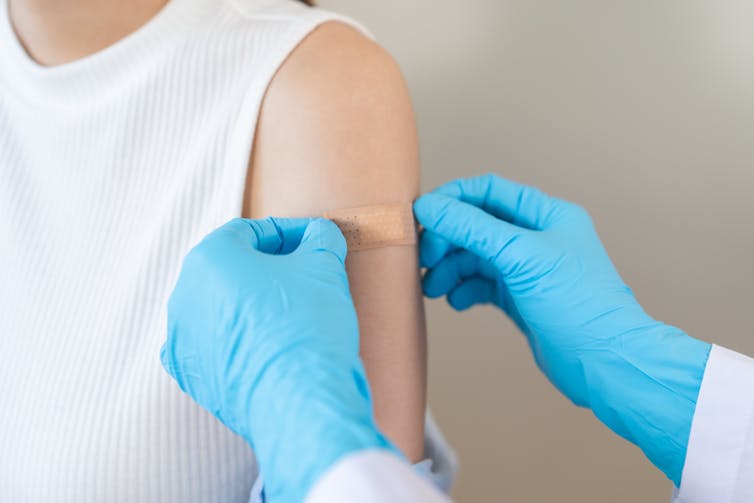
Hands in blue gloves putting plaster on woman's upper arm
It’s a good idea to check your vaccination status.
Kmpzzz/Shutterstock

Good hygiene is important. Simple measures like covering your mouth when coughing, not sharing drinks or utensils, washing hands regularly and avoiding close face to face contact when someone is ill can help reduce transmission.

What to look out for

One of the biggest challenges with meningococcal disease is that its early symptoms can look like flu or a bad cold, making it easy to overlook until it becomes severe. According to UK public health guidance, early symptoms can include fever or high temperature, a very bad headache, vomiting or nausea, muscle and joint pain, cold hands and feet, and rapid breathing. Symptoms can develop in different sequences and progress quickly.

As the disease progresses, more specific and serious “red flag” symptoms may appear. These include a stiff neck, confusion or delirium, dislike of bright lights, severe sleepiness or difficulty waking, seizures, and a rash that does not fade under pressure. This last is a key sign of septicaemia, and you can use the “glass test” to help identify it. Press a clear glass firmly against the glass. If it doesn’t fade under this pressure, contact a doctor straight away.

It’s crucial to stress that not all cases will show a rash, and no single symptom alone proves meningitis. But the combination of severe headache with fever, stiff neck, rash or rapid deterioration should prompt urgent suspicion.

If a friend shows symptoms

If you notice a friend exhibiting any concerning signs – especially rapid worsening over hours – take them seriously. Public health advice is clear: if symptoms are worrying or escalating, seek medical help immediately. In the UK, that means contacting NHS 111 for advice, or calling 999 if they are seriously unwell.

Check on your friend regularly, don’t dismiss symptoms as “just a hangover” and err on the side of urgency when in doubt. Early treatment with antibiotics can be lifesaving.

Acting quickly is vital

The Kent outbreak is a stark reminder that although meningococcal disease is uncommon, when it does occur it can progress rapidly and have devastating consequences. Students and young people, in particular, should be aware that illness can be serious even in previously healthy individuals. Early recognition and rapid medical response are vital and vaccination and awareness are primary tools for prevention.

While public health authorities work to contain outbreaks, the first line of defence is individuals and communities. Knowing the symptoms, acting quickly if someone becomes ill, and encouraging vaccination can make the difference between a contained case and a fatal outcome. In meningitis, the disease can escalate within hours. Early recognition and immediate action can save lives.

The Conversation

Manal Mohammed does not work for, consult, own shares in or receive funding from any company or organisation that would benefit from this article, and has disclosed no relevant affiliations beyond their academic appointment.

ref. Kent meningitis outbreak: what students need to know – https://theconversation.com/kent-meningitis-outbreak-what-students-need-to-know-278449

How big data is transforming what we know about the universe

Source: The Conversation – UK – By Muiris MacCarthaigh, Professor of Politics and Public Policy, Queen’s University Belfast

NSF-DOE Rubin Observatory/AURA/B. Quint

Science in the modern era is increasingly reliant on enormous datasets and automated analysis. In astronomy, the Vera C. Rubin Observatory’s Legacy Survey of Space and Time (LSST) – a ten-year survey covering the entire southern sky almost a thousand times over the next decade – will test the limits of this reliance.

The Rubin observatory, located on a mountaintop called Cerro Pachón in Chile, is expected to catalogue the night sky in exquisite detail. The observatory aims to answer a number of questions about the universe by studying different phenomena in the sky, including supernovae (exploding stars), asteroids, dark matter and the properties of our own galaxy.

What it will also answer is a question dominating all areas of science in the 21st century: how is discovery viewed in the age of big data?

Although primarily funded by the US Department of Energy and National Science Foundation (NSF), the Rubin telescope is the product of a collaborative effort by astronomers spanning six continents and over a dozen countries.

Assistance in setting up its data processing systems was provided by the UK, France, Spain, Italy, Japan, Brazil, Australia, South Africa and Canada, among others. These in-kind contributions provide researchers from these countries with data rights for the LSST.

Alerts providing scientific data are forwarded to seven “brokers” scattered around the world. The brokers are websites or software that astronomers use to access the data from LSST.

The alerts provide information on a new astronomical object, such as its likelihood of being real, its type, the galaxy it belongs to and how its brightness has changed over time. With this data, astronomers are able to select the best candidates for follow-up research.

However, even with the efforts of the software teams and brokers, there is still too much transient data for any research team to sift through. The final stage of data processing from the Rubin telescope will involve scientists using machine learning and AI techniques to identify the best data.

These techniques may be for identifying real cosmic objects among the terabytes of false alerts received, or for classifying the ones most interesting to scientists.

Noir Lab Computer Room
The Rubin observatory will generate huge amounts of data, requiring large numbers of personnel to analyse it.
NOIRLab/NSF/AURA/T. Slovinský

Astronomy is increasingly code-heavy and focused on in-house development. Given the huge amounts of data generated with every night of telescope observations, it is, unsurprisingly, one of the first sciences to turn to machine learning as a solution.

LSST’s Informatics and Statistics Science Collaboration (ISSC), for example, is a group of over 150 data scientists who work on developing tools for astronomy, focusing on the survey’s data science goals.

Astronomy has led the charge in regard to big data, with funding provided by companies such as Amazon and Microsoft for a number of major projects. Indeed, the namesake of the 8.4-metre Simonyi Survey Telescope at the Rubin observatory, Charles Simonyi, is known for software development in the early days of Microsoft, as well as his philanthropic work.

The volume of data produced by the observatory will not only produce opportunities for scientists, software developers and tech workers, but also for volunteers with an interest in astronomy via citizen science projects.

LSST’s partnership with the citizen science platform Zooniverse will ask volunteers to look through data and provide additional context to what they’re shown – identifying interesting objects, discarding garbage data and classifying various types of phenomena.

Future lessons

What does the Rubin observatory tell us about modern astronomy? The 20th century saw a greater push for international collaboration in exploring the skies. The increased sophistication of the resulting observatories means that more and more astronomers are working in the service of enabling science, rather than making discoveries themselves.

The huge amounts of data generated by the survey, and the huge number of personnel required to analyse it, is not novel to Rubin. Other contemporary surveys such as Euclid and the Ligo-Virgo-Kagra collaboration, as well as the next decade’s even larger Square Kilometer Array, each consist of thousands of collaborators worldwide leveraging huge amounts of data.

What is clear is that AI will dominate the scientific discovery space of the Rubin observatory to meet these big data challenges. With more funding from industry to develop AI tools to analyse astronomy data, astronomy is becoming deeply embedded within the tech-sphere that dominates modern life.

Rubin will produce 10 terabytes of data every night, with the aim of a final database size of 15 petabytes at the end of its ten-year survey. With the majority of the 10 million alerts produced each night expected to be false, advanced machine learning and AI tools are required to filter out all but the most promising candidates for follow-up.

By reducing the amount of time spent by astronomers reviewing this data, more time can be spent carrying out new and exciting astrophysics research.

Ownership of both the tools of discovery and the discovery itself is now disseminated among scientists, big tech and the citizens who label data. The unresolved question is whether the cosmos will remain a shared public frontier, or become a domain shaped by the priorities of Silicon Valley.

The Conversation

The authors do not work for, consult, own shares in or receive funding from any company or organisation that would benefit from this article, and have disclosed no relevant affiliations beyond their academic appointment.

ref. How big data is transforming what we know about the universe – https://theconversation.com/how-big-data-is-transforming-what-we-know-about-the-universe-278115

Two people have died from bacterial meningitis in the UK. An expert answers your questions

Source: The Conversation – UK – By Rebecca A. Drummond, Professor, Immunology and Immunotherapy, University of Birmingham

Tunatura/Shutterstock.com

An outbreak of invasive bacterial meningitis at the University of Kent has left two people dead and 11 seriously ill in hospital, prompting the UK Health Security Agency to distribute antibiotics to students in the Canterbury area. Here’s what you need to know about the disease and how to protect yourself.

What is meningitis?

Meningitis is an inflammation of the tissue lining that surrounds your brain and spinal cord (the meninges). Any type of harmful microbe, including viruses, bacteria, fungi and parasites, can invade the meninges and cause an infection. (The current outbreak at the University of Kent is caused by bacteria.) This can be very dangerous since the meninges function as a protective layer around your brain. When it becomes damaged, your brain and spinal cord become at risk too.

What is invasive meningococcal disease, and why is it so dangerous?

The bacteria that cause meningitis are called Neisseria meningitidis, and the disease can quickly spread from person to person if they have close contact. The bacteria invade blood vessels in the meninges, damaging them, and this causes immune cells to enter the meninges and produce molecules that trigger inflammation. When the meninges become inflamed like this, the brain can stop functioning properly, leading to serious illness and brain damage.

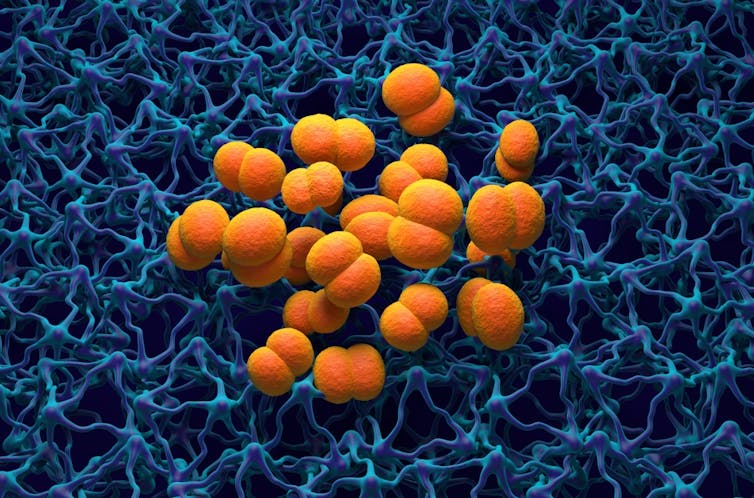
Neisseria meningitidis bacteria.
Neisseria meningitidis bacteria (orange).
Nemes Laszlo/Shutterstock.com

What are the symptoms, and how do I know if it’s meningitis rather than flu or a hangover?

Meningitis can look different in different people. Symptoms typically include a high fever (but with cold hands and feet), vomiting, headache, joint pain, a stiff neck and feeling unusually sleepy. Some people may become confused or distressed by bright lights and sounds. Some people may also develop a rash that won’t disappear when you press a glass against it. Babies may develop an unusual cry.

If you suspect you have meningitis, particularly if your symptoms are not typical when compared to previous hangovers or flu-like illnesses, then go to your nearest hospital or call for help. It’s better to get checked out than wait and see, as meningitis tends to progress very quickly.

Who is most at risk?

Anyone can get meningitis, but the risk is higher for very young babies and older people. Immune-compromised people – such as those undergoing chemotherapy – are also at higher risk for the infections that can cause meningitis. Outbreaks in younger adult populations, like we are seeing at the University of Kent, tend to happen because of the increased exposure and spread of the bacteria that can cause meningitis.

How does the infection spread?

The bacteria that cause meningitis can spread by close contact, such as kissing and sharing drinks, or through coughing and sneezing. Large events that bring lots of people together can therefore be associated with outbreaks of meningitis, because of the increased likelihood that people become exposed to the bacteria. This is one of the reasons why university students can be at increased risk for meningitis, because there is a lot of social mixing in this group.

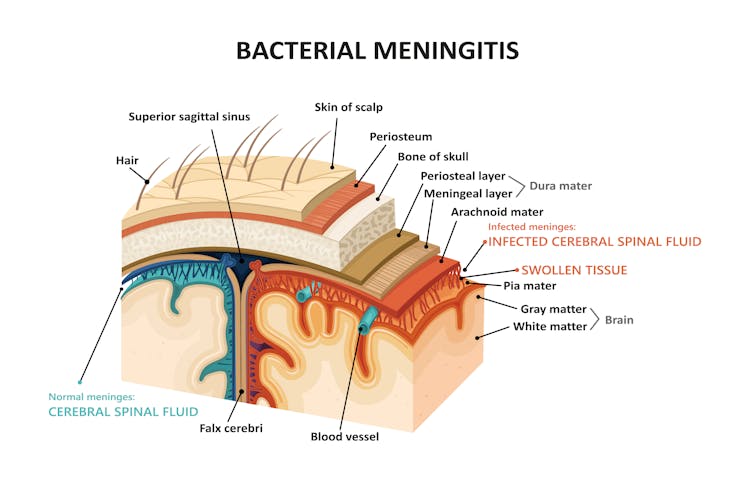
A graphic showing where the bacteria infect in bacterial meningitis.
Where the bacteria are found in bacterial meningitis.
logika600/Shutterstock.com

Why are healthy students at the University of Kent being given antibiotics?

This is a precautionary measure to ensure that anyone who has been exposed to the bacteria, but perhaps hasn’t developed symptoms yet, is protected. The antibiotics will help kill the bacteria, hopefully before it has a chance to establish an infection or invade the meninges and brain.

Is there a vaccine against meningitis and should I get one?

Several vaccines are available to protect against the most common causes of bacterial meningitis. These are effective and safe medicines that prevent you from getting seriously ill if you do become exposed to meningitis-causing bacteria. The MenB, MMR and pneumococcal vaccines are all recommended for babies in the UK because they protect against bacteria that cause meningitis infections in young children in particular.

How is bacterial meningitis treated, and what happens if it’s caught late?

Antibiotics are the main course of treatment for bacterial meningitis. The earlier these drugs are given, the more likely the infection will be stopped in time before any serious damage occurs.

However, some bacteria can become resistant to antibiotic treatment. When this happens, antibiotics are no longer effective at preventing meningitis. This is why vaccines are very important for protecting yourself against these infections as they can work to protect you even against antibiotic-resistant bacteria.

What should I do if I think I or someone I know has meningitis?

Meningitis symptoms typically come on rapidly. If you suspect meningitis, act quickly. The faster that antibiotic treatment is started, the better the outcome is likely to be.

The Conversation

Rebecca A. Drummond receives funding from the Medical Research Council, the Wellcome Trust and the Lister Institute for Preventative Medicine.

ref. Two people have died from bacterial meningitis in the UK. An expert answers your questions – https://theconversation.com/two-people-have-died-from-bacterial-meningitis-in-the-uk-an-expert-answers-your-questions-278434

Saint Patrick’s Day and the mystery of the second Patrick

Source: The Conversation – UK – By Chris Doyle, Lecturer in Ancient and Medieval History, University of Galway

Celebrated every year with swathes of green and pints of Guinness, Saint Patrick is the most famous of Ireland’s trio of patron saints (the others are Brigid and Colm Cille, aka Columba).

Saint Patrick’s story is well known. Not just because of the annual global phenomenon his feast day has become, but also thanks to a considerable body of original written evidence. Chief among this are his personal writings – the Confession and Letter to the Soldiers of Coroticus. But there are also many others – annals, biographies, hymns, poems – written centuries after his lifetime.

The standard story of Patrick goes like this. At some undetermined date in the 5th century AD, while the western Roman Empire collapsed politically, the teenage Patrick was kidnapped from his home in Britain, or possibly Gaul, by Irish raiders. He was then sold into slavery for six years where he tended sheep somewhere in Ireland until, with divine help, he escaped home to his family. Eventually, he felt compelled to return to Ireland and proselytise the Christian faith there. The rest is history, so some say.

But a lesser known story exists concerning not one, but two 5th century characters named (or assumed to be named) Patricius, or Patrick. According to one tradition, both men knew one another closely and were each involved in promulgating Christianity in Ireland.

The two Patricks

One of the earliest references to two Patricks is Saint Fiacc’s Hymn on the Life of Patrick. It was written in the 5th or 6th century but survives in an 8th-century manuscript. Fiacc, a professional royal poet turned bishop, wrote: “When Patrick departed [died], he went to visit the other Patrick and together they ascended to Jesus Son of Mary.”

Painting of an elderly man pointing to the sky
St Patrick by William Orpen (1905).
The Potteries Museum & Art Gallery

The Martyrology of Tallaght, an 8th or 9th century calendar of saints’ feast days, gives August 24 as the commemorative date for “Old Patrick … beloved foster father/mentor”. The Annals of Ulster, meanwhile, records the “repose of the elder Patrick, as some books state” in 457.

There are also Irish and continental references to an official papal mission to Ireland in AD431, led by a man named Palladius. But, to further complicate matters, another annular entry, albeit retrospectively added, says that Patrick came to Ireland in AD432, the year after Palladius.

Researchers have tentatively investigated whether this Palladius was either surnamed Patricius, or had had his life and work conflated with the later Patricius.

An even later entry in the 9th century Book of Armagh states that Palladius was “Patrick by another name”.

This small sample of evidence for another Patrick is by no means conclusive. But it makes a good case for two original Patricks operating in Ireland about the same time – a father figure mentoring his younger charge perhaps.

Such relationships were common in early Ireland. Long before Christianity’s arrival on Irish shores, fosterage had been an integral and widespread social institution. The early Irish church adapted the custom to its own organisation, thereby allowing senior clerics, men and women, to assume parental roles for their novices.

Even the Latin name Patricius, with its paternal connotations, suggests this. However, there are other meanings for such a name, including a predecessor. In the Roman world, though, Patricius could be a personal name or an honorific title indicating senior political or military rank. Any of these definitions of the name go some way to understanding the interchangeability of Patricius and Palladius in the early written record.

Why do we only celebrate one Patrick?

So, if there is evidence for two distinct Patricks, each with their own cult following and feast day, how did they merge into one singular tradition? The transition really begins in late 7th century Armagh, a powerful Christian establishment in the north of Ireland.

Armagh’s ecclesiastic authorities sought control over all the Irish churches. Arguing for the legitimacy of its claim, Armagh propagandists, like Muirchú, enhanced its Patrician connections by incorporating all Patrician traditions into one cohesive story. Essentially, enter the official Patrick, with a March 17 feast day, ready to banish snakes.

Historically, scholarly opinion over the two Patricks’ story has been mixed. In 1942, Thomas F. O’Rahilly revived a much earlier theory arguing coherently for the existence of two Patricks. His thesis, while attracting supporters, ignited a controversy that descended into rancour and farce, culminating in a libel case taken against a popular journalist who poked fun at the debate. To some extent, the argument over an original dual Patrician tradition has still not gone away.

Today, however, there is a general openness among modern scholars to at least the possibility of two Patricks. Though, sadly, it probably won’t give the world an extra Saint Patrick’s Day every year.

The Conversation

Chris Doyle does not work for, consult, own shares in or receive funding from any company or organisation that would benefit from this article, and has disclosed no relevant affiliations beyond their academic appointment.

ref. Saint Patrick’s Day and the mystery of the second Patrick – https://theconversation.com/saint-patricks-day-and-the-mystery-of-the-second-patrick-277404

Eight tips for introverts who want to get ahead at work

Source: The Conversation – UK – By Maura McAdam, Professor of Management, Dublin City University

Nicoleta Ionescu/Shutterstock

Networking is so often presented as a kind of performance – confident handshakes and quick conversations in crowded rooms. But for many people, particularly introverts, these situations feel more draining than energising.

Building contacts and generating opportunities in this way may sound like something that extroverts are naturally better at. But this assumption, and the idea that introverts must therefore be at a disadvantage, is misleading.

Networking does not have to mean being the most visible person in the room. It can simply be about building relationships in a way that feels genuine and sustainable. In my research on women entrepreneurs, including interviews for my new book, Permission Granted, I have seen introverts thrive when they lean into their natural strengths rather than trying to put on an outgoing persona.

Of course men can be introverts too, and face the same misconceptions. Whoever you are, and wherever you are on your career ladder, here are my top tips for succeeding at work as an introvert.

1. Understand your introverted strengths

Introversion is not shyness or a lack of confidence. It is about how you process energy and information. Many introverts are deep thinkers, strong listeners and thoughtful communicators; qualities that can help to build meaningful professional relationships.

You do not need to work the room. Focusing on one or two deeper conversations is often more powerful than spreading your energy too thinly. When introverts approach networking with curiosity rather than performance, it often becomes more natural and far more effective.

2. Understand why networking feels harder for introverts

Across my research and developed further in my book, I emphasise that networking is work. It uses cognitive and emotional energy, after all. Busy rooms can be overstimulating and small talk can be draining. And the expectation to perform socially can create pressure long before an event even begins.

3. Redefine what networking is

At its core, networking is about connection. When you think of it as an opportunity to learn from others rather than to impress them, the pressure lifts. A single sincere exchange might be remembered far longer than a flurry of rushed introductions. People respond to warmth, attentiveness and genuine interest.

4. Prepare in ways that suit your temperament

Preparation is one of the great advantages introverts bring to networking. Being clear about why you are attending an event can help shape the experience and reduce the sense of overwhelm. Identifying a couple of people you would like to meet can help you feel more anchored. And having a few conversation-openers ready (perhaps about the topic of the event or shared interests) can create a sense of ease. A simple, one-sentence introduction is often all you need to start a conversation without forcing anything.

group of four young professionals having a breakfast meeting over coffees.
Smaller, more structured work events can feel more comfortable for introverts.
PeopleImages/Shutterstock

5. Choose environments that work for you

Not every setting suits every temperament. Introverts often thrive in more structured or intimate settings: roundtables, smaller workshops, breakfast events or even one-to-one coffee chats. Large, unstructured rooms can feel overwhelming, and choosing alternatives is not avoidance, it is strategy.

6. Follow up in your own way

Introverts often shine in the quiet, reflective stage of relationship-building: the follow-up. A personalised LinkedIn note or a brief invitation to continue the conversation can go a long way. This deliberate, thoughtful style of nurturing professional relationships is something introverts often do better than they realise.

7. Protect your energy

Networking uses real energy. Feeling drained afterwards is not a flaw; it is biology. Planning downtime before and after events, limiting the number of events per week, and taking breaks during busy sessions helps to maintain balance. Introverts need energy management. Building in recovery time, protecting your quiet and giving yourself permission to rest is essential for maintaining any kind of sustainable networking practice.

8. Depth over volume

Professional culture often celebrates the loudest voice in the room. But long-term relationships grow from listening, curiosity and your presence – all qualities that introverts naturally bring. That is a core theme I return to in my research: you do not need to dominate a room to make meaningful connections. You just need to network in a way that works for you.

Start small. Protect your energy. Trust your quieter strengths. Depth, not volume, is where introverts shine.

The Conversation

Maura McAdam does not work for, consult, own shares in or receive funding from any company or organisation that would benefit from this article, and has disclosed no relevant affiliations beyond their academic appointment.

ref. Eight tips for introverts who want to get ahead at work – https://theconversation.com/eight-tips-for-introverts-who-want-to-get-ahead-at-work-277677

Could paraxanthine replace caffeine? What we know about the new stimulant appearing in coffee and energy drinks

Source: The Conversation – UK – By Mayur Ranchordas, Professor of Applied Sport Nutrition and Sport Nutrition Consultant, Sheffield Hallam University

Berit Kessler/Shutterstock

Paraxanthine, a compound the body naturally produces when it breaks down caffeine, is starting to appear in energy drinks and even some coffee products as a potential caffeine alternative.

Brands claim that using this compound directly can provide a steadier form of alertness, promising “focused, clean energy” and no jitters or crash.

A small number of beverage and supplement companies are now exploring paraxanthine as an alternative stimulant. Some coffee brands have also begun experimenting with the compound, positioning it as a different way to deliver alertness without relying on caffeine.

The ingredient is part of a broader search for caffeine alternatives as drink companies try to differentiate themselves in a crowded market. It also reflects the wider growth of “functional” drinks that promise sharper focus, sustained energy or other performance benefits.

The idea is simple: because paraxanthine is responsible for many of caffeine’s stimulant effects once it has been metabolised, using the compound directly might produce similar alertness with fewer unwanted effects. However, the scientific evidence behind these claims is still developing. Much of what we know about paraxanthine comes from small studies or research originally designed to understand how the body processes caffeine.

Paraxanthine is the primary compound the body produces when it metabolises caffeine. Like caffeine, it promotes alertness by blocking adenosine, a chemical messenger in the brain that helps build sleep pressure during the day. When adenosine signalling is reduced, people often feel more awake. Attention and reaction time can temporarily improve.

Some early research suggests paraxanthine may sharpen mental performance. Small studies report improvements in attention, reaction time and short-term memory compared with placebo, with effects sometimes lasting up to six hours after a 200mg capsule.

A recent study suggests paraxanthine may even outperform caffeine for cognitive performance after exercise. However, the evidence base remains limited and independent replication is sparse. Additional trials testing doses of 200 to 300mg are under way or recently completed, which should help clarify how these findings translate to everyday use.

Limited research

Beyond its potential effects on alertness and performance, how safe paraxanthine is remains an open question. Early laboratory work suggests the compound does not damage DNA and appears relatively safe in standard animal toxicology tests. These findings are encouraging. However, they are still based largely on animal studies rather than long-term research in people, and far fewer human studies exist compared with the decades of research available for caffeine.

Regulators are also still evaluating it. In Europe, paraxanthine is currently being assessed as a “novel food”. The public summary of that review notes that small, short-term studies in adults involving doses of up to 200mg a day for a week were well tolerated. At the same time, regulators emphasise that paraxanthine has no long history of use in foods and should carry the same cautions as caffeine. This means it is not recommended for children or during pregnancy.

Some paraxanthine-based drinks contain around 200 to 300mg per serving. This is broadly comparable to the stimulant dose found in strong coffee or high-caffeine energy drinks and should be considered part of a person’s total daily stimulant intake.

Clean and smooth

Companies often describe paraxanthine-based products as providing “clean” or smoother energy. However, such terms have no formal scientific meaning. Some users may find paraxanthine feels smoother than caffeine in terms of producing less of a sudden “jolt” of energy, yet large, independent head-to-head trials comparing the two are lacking.

Research examining paraxanthine directly suggests its effects on attention and alertness can last several hours, broadly consistent with the timings reported in small experimental trials. But these trials were conducted under tightly controlled conditions rather than in everyday settings where people consume caffeinated or stimulant drinks.

So does paraxanthine offer a better kind of energy?

Possibly for some people, but the evidence is still developing. What paraxanthine does not yet have is caffeine’s extensive record of human research on safety and performance. Scientists have studied caffeine for decades across a wide range of doses, populations and everyday settings. For paraxanthine, long-term human research is still scarce.

Animal toxicology studies are broadly reassuring, and short human studies suggest the compound is tolerated in the short term. But we do not yet have robust evidence on what happens when people consume large amounts regularly, such as multiple drinks containing 300mg per day.

Because many people consume stimulants daily through coffee, tea or energy drinks, even small differences in how these compounds affect sleep, heart rate or metabolism could matter over time.

For now, it is sensible to treat paraxanthine much like caffeine. Use the lowest effective dose, avoid it late in the day, do not combine it with other stimulants, and protect sleep and recovery.

However, the promise that paraxanthine can eliminate jitters and crashes currently runs ahead of the available science, and long-term safety data for doses around 300mg are still limited.


Read more:
Kim Kardashian’s new caffeine-free energy drink relies on paraxanthine – here’s what the science says


The Conversation

Mayur Ranchordas does not work for, consult, own shares in or receive funding from any company or organisation that would benefit from this article, and has disclosed no relevant affiliations beyond their academic appointment.

ref. Could paraxanthine replace caffeine? What we know about the new stimulant appearing in coffee and energy drinks – https://theconversation.com/could-paraxanthine-replace-caffeine-what-we-know-about-the-new-stimulant-appearing-in-coffee-and-energy-drinks-276923

Marathon training: why hot baths might help you run faster

Source: The Conversation – UK – By Mike Stembridge, Professor of Cardiovascular and Environmental Physiology Cardiff School of Sport & Health Sciences, Cardiff Metropolitan University

For decades, elite runners have travelled the world to train at high altitude. When oxygen levels in the air are low, the body responds by producing more red blood cells – the cells responsible for carrying oxygen around the body. When athletes return to sea level, this greater oxygen-carrying capacity can enhance endurance performance.

But altitude training comes at a cost. It requires time away, financial investment and long-haul travel. For the vast majority of runners lining up at this year’s London Marathon, it is simply not an option.

So for our research, we began searching for a more accessible alternative. Our attention turned to another environmental stressor: heat.

Athletes commonly use short periods of heat exposure – typically seven to 14 days – to prepare for competition in hot climates. But we wanted to know whether longer-term heat exposure, over four to five weeks, could trigger physiological changes similar to those seen at altitude.

We recruited a group of well-trained endurance runners and asked them to continue their normal training. The only addition? Five hot baths per week for five weeks.

The baths were not high-tech laboratory grade equipment. They were standard home bathtubs. Water temperature was maintained at 40°C using an inexpensive thermometer, with warm water added when needed. Each session lasted 45 minutes and was completed shortly after training.

Before and after the five-week period, we measured several markers of endurance physiology, including red blood cell volume, heart structure and maximal oxygen uptake (VO₂max) – widely regarded as the gold standard measure of aerobic fitness.

What we found

After five weeks of regular hot baths, our runners had significantly increased their red blood cell volume. In other words, they had more oxygen-carrying cells in their bloodstream.

At first glance, this might seem surprising. At altitude, red blood cell production increases because there is less oxygen in the air. With heat, oxygen availability is not limited. However, heat affects the blood in a different way.

After even a single heat session, the liquid component of blood, plasma, expands. This expansion dilutes the red blood cells, temporarily lowering the amount of oxygen carried in the blood. The body senses this change and responds by producing more red blood cells to restore balance.

Over time, this results in both greater plasma volume and more red blood cells overall – meaning more total blood, and more capacity to carry oxygen.

Groups of people running in the London Marathon.
Taking a hot bath may be a straightforward way to help prepare for a marathon.
mikecphoto/Shutterstock

We also observed changes in the heart. Endurance training is known to enlarge the heart’s main pumping chamber, the left ventricle, allowing it to eject more blood with each beat. Following the heat intervention, the volume of this chamber increased further. The additional blood created through heat exposure likely contributed to this expansion.

Together, these changes improved aerobic capacity. On average, the runners’ VO₂max increased by around 4%, and they were able to reach higher speeds during maximal treadmill tests.

While laboratory measures are not the same as race results, improvements of this magnitude are meaningful for trained athletes, particularly given that these gains occurred without increasing training intensity or mileage.

Why this matters for marathon training

For runners and coaches, the implications are intriguing.

First, heat exposure could offer a low-impact way to trigger beneficial changes in the body without the added strain of more exercise. Increasing mileage or intensity always carries a risk of injury. Hot baths, in contrast, place stress on the cardiovascular system without additional pounding on muscles and joints.

Second, this approach is relatively accessible. Most people have access to a bath, so compared with altitude camps, the financial and environmental costs are minimal. That opens the possibility of more equitable access to performance-enhancing (and entirely legal) training strategies.


Read more:
Jeffing: how this run-walk method could help you train for a marathon


As with all research, there are limitations. Our study used a specific protocol: 40°C water, 45 minutes per session, five times per week, for five weeks. We do not yet know whether shorter sessions, lower temperatures or other heat sources – such as steam rooms or saunas – would produce the same results.

There are also safety considerations. Prolonged heat exposure can increase the risk of dehydration, dizziness and heat illness. Anyone attempting a similar approach should ensure adequate hydration, avoid overheating and undertake sessions with appropriate supervision. People with underlying health conditions should seek medical advice before attempting this type of protocol.

Finally, we measured physiological markers and treadmill performance, not actual marathon race times. Although improvements in VO₂max are strongly linked to endurance performance, future studies will need to confirm how these changes translate to real-world competition.

Even so, our findings suggest that performance gains do not always require more miles or international travel. Sometimes, adaptation can be stimulated in surprisingly simple ways.

For marathon runners looking for a practical way to support their training, passive heat exposure may represent a surprisingly straightforward tool worth exploring.

The Conversation

The authors do not work for, consult, own shares in or receive funding from any company or organisation that would benefit from this article, and have disclosed no relevant affiliations beyond their academic appointment.

ref. Marathon training: why hot baths might help you run faster – https://theconversation.com/marathon-training-why-hot-baths-might-help-you-run-faster-276796