How a new plan for protein could transform the UK’s national security

Source: The Conversation – UK – By Chris Macdonald, Lab Director and Fellow, University of Cambridge
Maciej Olszewski/Shutterstock

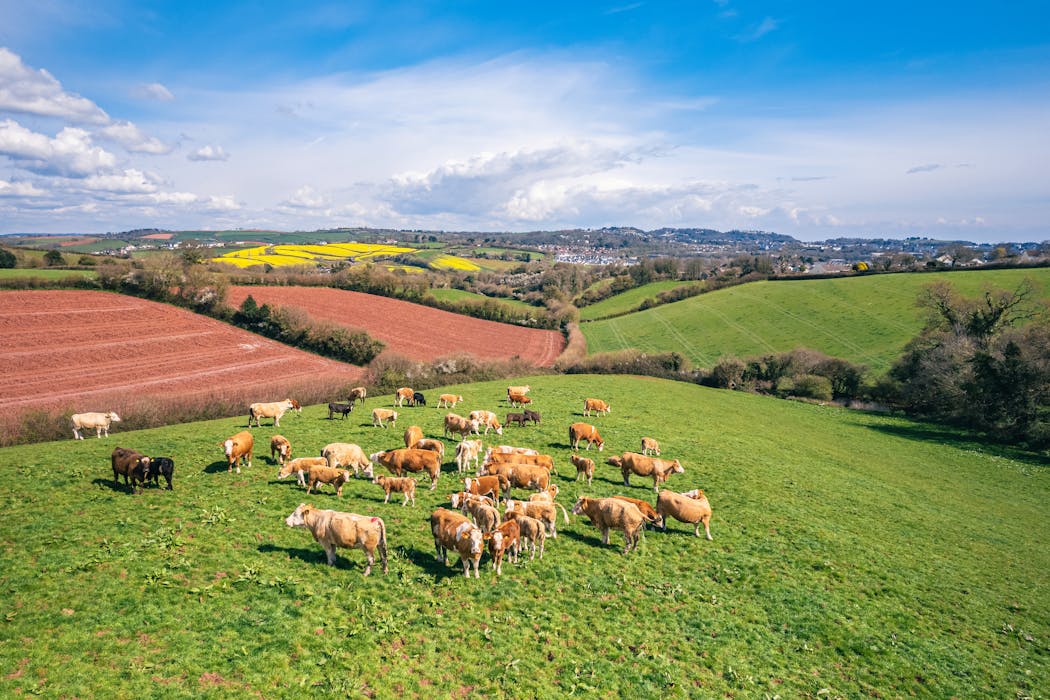
The UK’s use of land is indefensibly inefficient. Roughly 5% is used for buildings and roads, 10% for forest and woodland, plus 20% for arable crops. But the largest share, around 50% of our country, is dedicated to livestock.

Producing protein by raising, feeding and slaughtering animals can consume ten times more land than extracting the protein directly from crops. In other words, the UK is dedicating the largest share of its land to the least efficient form of protein production.

Better still, emerging technologies such as cell cultivation and precision fermentation could produce the same quality and quantity of protein on hundreds of times less land.

Despite devoting roughly half the country to raising and feeding livestock, the UK produces only around 60% of the food it consumes. This leaves it dependent on imports and vulnerable to climate shocks and disruptions of global supply chains. The UK also still has to rely heavily on millions of tonnes of imported animal feed, often sourced from regions where forests have been cleared or ecosystems degraded.

Animal agriculture is a major environmental and ethical burden. It contributes disproportionately to greenhouse gas emissions, water pollution and nature loss.

In a lose–lose trade-off, more land-efficient livestock systems can clash profoundly with public sentiment: intensive farming means many dairy cows never set foot outside and many hens spend their entire lives indoors, often confined to spaces no bigger than a single sheet of A4 paper.

Emerging technologies such as cell cultivation and precision fermentation offer a transformative alternative. Protein grown from cells or microbes programmed to produce certain proteins can be made hundreds of times more efficiently, while delivering the same or better nutritional quality.

Research shows that increased protein intakes have significant health benefits, especially for older people. For example, high-protein diets help prevent sarcopenia, the age-related loss of muscle mass and strength that reduces mobility and independence.

My latest study shows that high-protein content is now a key driver of meal choice among UK consumers. So, securing and expanding sustainable protein supply aligns with both consumer preferences and the growing evidence on optimal health outcomes.


Read more:
New food technologies could release 80% of the world’s farmland back to nature


Some nations are already motoring ahead with this protein transition. In the US, for example, companies such as Upside Foods, Good Meat and Wild Type are using cell cultivation technology to grow animal meat cells such as chicken and beef.

Other companies in the US such as Perfect Day, The Every Company and Triton Algae Innovations are applying precision fermentation technology — a process in which microorganisms are programmed with instructions to produce specific animal proteins — to manufacture animal-identical proteins such as whey, egg white and other dairy proteins.

Rather than resembling factory farms or slaughterhouses, these facilities look like breweries, with rows of stainless-steel tanks where microbes or animal cells convert simple nutrients into proteins (just like yeast converts sugars into alcohol during brewing).

woman in white lab coat and holding clipboard looks at big metal vat inside factory
Precision fermentation uses much less space to produce protein than farming livestock.
DG FotoStock/Shutterstock

While the US has already approved and begun limited sales of cultivated meat, the UK remains in the regulatory development phase, with no products yet authorised for human consumption.

Indoor and controlled-environment farming could similarly revolutionise fruit and vegetable production. For example, automated vertical farms provide predictable, year-round yields, insulated from droughts, floods, seasonal volatility, trade wars and global supply chain disruptions because they aren’t subject to external variables.

Powering protein

An energy transition underpins such a food transition. The UK would need to expand renewable energy and develop its nuclear capacity to meet the needs of this energy-intensive form of food production. Renewables provide scale; nuclear provides stability. Together, they could power innovative protein facilities, indoor farms and electrified heating and transport, enabling a fully domestic, self-sufficient food-energy system.


Read more:
Four myths about vertical farming debunked by an expert


The benefits of this land-use shift could be transformative. The masses of land freed up could be used for more trees and national parks; more biodiversity and leisure spaces; cleaner air and water. More predictability, less suffering.

The great protein transition won’t be easy. It will involve challenging negotiations and significant investment. It will take time and forward-thinking leadership. But the prize is well worth it: a national-scale protein transition would strengthen independence and national security.

The UK stands at a crossroads. By embracing the protein transition, it could one day feed and power itself, building resilience against increasing climate and geopolitical uncertainty.

The Conversation

Chris Macdonald does not work for, consult, own shares in or receive funding from any company or organisation that would benefit from this article, and has disclosed no relevant affiliations beyond their academic appointment.

ref. How a new plan for protein could transform the UK’s national security – https://theconversation.com/how-a-new-plan-for-protein-could-transform-the-uks-national-security-277661

How did the courts backlog get so bad?

Source: The Conversation – UK – By Daniel Alge, Senior Lecturer in Criminology & Criminal Justice, Brunel University of London

Across England and Wales, delays in the Crown Courts have become an endemic feature of the justice system. Criminal trials are scheduled years after alleged offences, with some in London now being listed as far ahead as 2029.

The most recent official statistics show that as of autumn 2025, the backlog in the Crown Court, which deals with the most serious criminal cases, had reached nearly 80,000 outstanding cases. That’s more than double the pre-pandemic figure of around 38,000 in 2019 (which itself represented a substantial backlog).

The scale of the backlog is what has prompted the government’s contentious proposals to reduce the use of jury trials. The courts and tribunals bill recently passed its second reading in the Commons, with dozens of Labour MPs abstaining.

Delays are significantly longer in the Crown Court than in the magistrates’ courts, which deal with lower-level offending. Magistrates deal with high-volume, relatively straightforward offences such as motoring offences, minor assaults or low value thefts, with higher rates of guilty pleas and no juries.

Court delays have consequences for all parties involved. Research suggests that prolonged criminal proceedings can worsen victims’ trauma and increase the likelihood that they withdraw from the prosecution process.

Delays also place a significant strain on the lives and mental health of defendants. This is particularly true for those held on remand awaiting trial. The number of people on remand increased by 84% between 2019 and 2024, partly because of court backlogs, placing additional pressure on the prison estate.

How did we get here?

Although the pandemic undoubtedly worsened the situation, the roots of the backlog run deeper. The current crisis reflects several pressures that have built up over more than a decade.

One widely cited factor is reduced court capacity. Following the 2008 financial crisis, the Ministry of Justice experienced some of the largest spending reductions in Whitehall. Over the 2010s, its budget fell by around 12% in real terms. Dozens of courts were closed across England and Wales as part of efforts to reduce costs.

Infrastructure problems have also taken courtrooms out of use. A 2022 Law Society survey reported that 64% of solicitors had experienced delays caused by the poor condition of court buildings. There is a £1.3 billion maintenance backlog in the courts estate.

At the same time, the number and type of cases being sent to the Crown Court has changed. For “either-way” offences – crimes that can be tried either in the magistrates’ court or the Crown Court depending on severity – a growing proportion are now sent to the Crown Court for trial.

These include violence against the person, handling stolen goods, supply of Class B or C drugs and some less serious sexual offences. The share of these cases going to the Crown Court rose from 19% in 2016 to 24% in 2024.

Crown Court trials typically require juries and take longer to complete. As more cases move into this part of the system, pressure on court time increases.

The pandemic temporarily suspended most jury trials, and by 2022 the backlog had already nearly doubled compared with pre-pandemic levels. So limiting the use of juries may have some impact, but would not solve the wider crisis, and the proposals have faced strong criticism from the legal community.

The composition of cases has also shifted. Serious sexual and violent offences now make up a larger share of the Crown Court caseload than before the pandemic. The backlog of sexual offence cases increased by 40% between 2023 and 2025. These cases are often contested and require longer trials, further slowing the system.

A reduced legal system

Another structural pressure has been the reduction in lawyers and judges, linked to wider funding cuts across the legal system since 2008. For much of the past decade, legal aid rates for criminal work were largely frozen. Many lawyers argued that the work became financially unsustainable, particularly for junior barristers. Some left criminal practice entirely. In 2022, criminal barristers took the unprecedented step of going on strike over legal aid funding.

England and Wales also have comparatively few professional judges – around three per 100,000 people – compared with a European average of about 22 per 100,000. This partly reflects the extensive use of magistrates (lay judges) for less serious offending, but fewer judges and lawyers inevitably limits how many cases can be heard.

Most jurisdictions experienced pandemic-related backlogs, but England and Wales appear unusual in how strongly pre-existing structural pressures contributed to the crisis. Across the European court system, the median criminal case clearance rate post-COVID is about 95-100%, depending on court type and level. This means that cases are resolved at a similar pace to new cases entering the system. In Germany, the clearance rate is over 100%, meaning that backlogs are being reduced year on year. The clearance rate for England and Wales is 91%, meaning that the backlog continues to grow.

In the US, COVID also created significant case backlogs. However, at the federal level, case backlogs had returned to pre-pandemic levels by March 2022 (though longer delays remain at local and state levels). Even the highest average disposition times for felony cases in the US sit at around 350 days from offence to outcome, compared with 695 days on average from offence to completion of the case in the Crown Court.


Read more:
The legal aid sector is collapsing and millions more may soon be without access to justice – new data


The US, along with Canada, New Zealand, Australia and several European jurisdictions, continued to use more remote or hybrid hearings post-pandemic, which helped reduce backlogs. England and Wales reverted more heavily to in-person hearings. Retired senior judge Brian Leveson’s review into the courts’ backlog recommends more widespread use of remote hearings as part of the solution.

Recent governments have introduced measures aimed at reducing delays, including increasing the number of court sitting days and recruiting more judges. Sitting days in 2024-25 were the highest for a decade. Even so, the government has said it could take a decade to reduce the backlog to pre-COVID levels. Even with increased investment and efficiency reforms, or indeed reducing the use of jury trials, delays are likely to remain a long-term challenge for the justice system.

The Conversation

Daniel Alge does not work for, consult, own shares in or receive funding from any company or organisation that would benefit from this article, and has disclosed no relevant affiliations beyond their academic appointment.

ref. How did the courts backlog get so bad? – https://theconversation.com/how-did-the-courts-backlog-get-so-bad-278111

The graduate jobs market is tough right now. An entrepreneurship expert explains how to go it alone

Source: The Conversation – UK – By Spinder Dhaliwal, Reader in Entrepreneurship, Westminster Business School, University of Westminster

Jacob Lund/Shutterstock

For entrepreneurs, something that starts out as a simple idea can transform into a thriving business that brings financial rewards, confidence and personal growth. These days, graduates may look at forecasts for a tightening jobs market and decide their future is as an entrepreneur rather than an employee.

The business world is brimming with opportunity. I have researched entrepreneurship for years, and have found that rapid technological evolution, shifting consumer preferences and a growing focus on sustainability are creating an exciting landscape for bold graduates.

However, success is never guaranteed – like anyone else they’ll need to understand their market, and know their competitors, target audience and growth potential. This is where graduates should put the research skills they honed as a student to good use. This can help them to avoid costly mistakes – things like overestimating demand for their business idea or underestimating the level of competition, for example.

My book, The Millennial Millionaire, demonstrates that successful young entrepreneurs tend to share certain traits: resilience, calculated risk-taking and a willingness to learn from failure. These characteristics remain essential in 2026, particularly as markets become more volatile with persistent inflation, shifting interest rate expectations and growing geopolitical tensions.

Graduate entrepreneurship has evolved over the years, and the traditional linear career where someone stayed with one employer, moving up through the ranks through their working life, is a thing of the past. My book highlights how younger entrepreneurs increasingly pursue business ownership not only for financial independence but also for autonomy, creativity and social impact.

However, it can still be tricky for graduates to make a mark. And entrepreneurship is not a level playing field, either. Rising costs for utilities and essential overheads, competitive markets and unequal access to capital disproportionately affect certain groups. Women generally have less access to capital compared to men, and this is more pronounced for some ethnic minority women. Young people may not have enough personal savings.

Entrepreneurship cannot be separated from questions of diversity and inclusion. Graduate entrepreneurs can face both opportunity and inequality when starting a venture. In this context, migrant communities often have a wealth of valuable “rags to riches” stories that they can share.


No one’s 20s and 30s look the same. You might be saving for a mortgage or just struggling to pay rent. You could be swiping dating apps, or trying to understand childcare. No matter your current challenges, our Quarter Life series has articles to share in the group chat, or just to remind you that you’re not alone.

Read more from Quarter Life:


According to some of my other research, many Asian entrepreneurs in the UK started with virtually no money but used determination and family resources to build multimillion-pound businesses.

For example, the billionaire owner of a string of airport hotels Surinder Arora came from the Punjab as a child. He worked for British Airways and dreamed of being a pilot – but instead invested in a B&B to serve airline crews.

These lessons remain highly relevant: entrepreneurship does not occur in isolation – it is shaped by relationships, identity and experience.

A unique time to go it alone

AI is clearly a game-changer, making this a unique time to launch a business that can be built with AI in mind rather than struggling to keep up. Today’s market is more connected, tech-driven and socially conscious than ever, and tech-savvy graduates are well-positioned to seize these opportunities. Sustainability is no longer optional – consumers expect brands to align with their values and demonstrate social responsibility.

Budding entrepreneurs should use technology to their advantage. This could be for crowdfunding, market research or accessing support networks. My research suggests that entrepreneurs who want to give back to the community and who care about how their business affects the environment are more likely to build long-term trust with their customers.

For graduates, this means aligning business goals with broader societal needs such as poverty reduction or environmental challenges. The resulting venture could take the form of a social enterprise, ethical startup or inclusive business. But these enterprises will still need to generate money and be profitable – you can only give if you have.

Networking is a secret weapon. A strong network is essential, and graduates already have a foundation – they just need to build on it. They should attend industry events, stay informed about economic trends and learn from professionals. A supportive community can help to overcome challenges and accelerate growth.

Securing funding is often the biggest hurdle for new entrepreneurs. What’s key is the ability to start lean – “bootstrapping” (that is, having to start with the bare minimum of capital) is a challenge entrepreneurs are often forced to overcome. Many businesses begin with personal savings or family support. But graduates can also explore competitions and grants. Then eventually, a compelling pitch may attract investors.

Starting a business offers graduates unparalleled opportunities, from harnessing technology to tackling global challenges such as climate change. Success lies in identifying a passion, using resources well and building a strong support network. The future belongs to those who innovate, adapt and take calculated risks. With determination and the right mindset, graduates can turn a vision into a thriving venture.

The Conversation

Spinder Dhaliwal does not work for, consult, own shares in or receive funding from any company or organisation that would benefit from this article, and has disclosed no relevant affiliations beyond their academic appointment.

ref. The graduate jobs market is tough right now. An entrepreneurship expert explains how to go it alone – https://theconversation.com/the-graduate-jobs-market-is-tough-right-now-an-entrepreneurship-expert-explains-how-to-go-it-alone-276580

Pets & their People explores the long, strange history of human-animal companionship

Source: The Conversation – UK – By Philip Howell, Professor of Geography, University of Cambridge

Pets play an important role in many people’s lives. In the UK, six out of ten households have at least one pet, dogs being our most common companions (assuming we don’t count fish individually). But it isn’t easy to be precise.

The 2025 figure of 13.5 million pet dogs has recently been bumped up to correct for a significant undercounting in previous UK estimates. This compares with around 11 million pet cats, although there are similar problems in trying to count these ungovernable beasts and their stray cousins.

Another point of debate is why we have these relationships at all. What motivates pet owners – and when did we start the process of turning wild animals into the “fur babies” of the family?

Equally importantly, what’s in it for the animals? Were their wild ancestors lured in by the promise of a warm fire, perhaps on some kind of contract to kill mice or protect sheep? Or did they purposefully inveigle themselves into our homes and affections to offer companionship, comfort, even therapy?

All these questions are raised by a wonderful new exhibition, Pets & their People, in Oxford’s Bodleian Library.

Pets and people

The exhibition is curated by Charles Foster, who is a noted naturalist but otherwise pleasingly difficult to pigeonhole. As the author of both Being a Beast (2016) and Being a Human (2022), Foster’s intention has long been to show how those statuses are inseparable.

In his work, Foster suggests that far back in our human history, shamans and other spiritual figures attempted to enter the lifeworlds of other animals. But then, as hunter-gatherers gave way to Neolithic farmers, people came to imagine themselves as members of a distinct species – lonely lords of creation.

Medieval Ashmole Bestiary illumination of Adam naming the creatures of earth.
Medieval Ashmole Bestiary illumination of Adam naming the creatures of Earth.
Bodleian Libraries University of Oxford

There is a glorious image on display from the Ashmole Bestiary (an illuminated 13th-century manuscript containing descriptions of real and mythical animals) of Adam giving names to the animals. This image exemplifies, for Foster, human power and privilege, with these newly christened critters placed in their separate enclosures – cages that would contain them hereafter.

Pets, this exhibition suggests, similarly aided human beings in the achievement of selfhood, even if the distinctiveness of humans from beasts is always tested and troubled, now just as much as in the distant past.

The power of human beings to shape pets for their variously selfish reasons is acknowledged. The show explores the results of breeding in brachycephalic snouts and other defects to best-in-breed winners.

On the theme of mixing and muddling, we are also reminded of companion animals being thoroughly anthropomorphised, and of humans being transformed as if in sympathy into beasts.

One example is poet Philip Larkin’s doodle of himself as a rabbit ensconced in a chintzy armchair, extremely Larkin-esquely watching snooker on cable TV with a measure of spirits to hand. The pets of authors Raymond Chandler and Patricia Highsmith unexpectedly get a look in too, alongside the more familiar examples of Lord Byron’s Boatswain (a Newfoundland dog) and poet Christopher Smart’s Jeoffry (a cat).

Nineteenth-century photographic calling cards, or cartes de visite, remind visitors that when asked to display ourselves (now on social media, dating sites, even on Zoom calls), many of us hold up our pets to the camera – which is to say, pets are us.

The age of selfies only confirms this long history of entanglement. The idea is that (a little like Larkin) we lean on our pets to tell stories about ourselves.

Virtual pets like Tamagotchis or the current fad for robot pets seem harder to explain, and pet rocks even more so (there is a specimen on show, a triumph of 1970s marketing chutzpah). But the emphasis is on our millennia-long lockstep with nonhuman animals.

Pets, ancient and modern

Visitors are encouraged to think that love for pets and grief at their loss are the same, whether we are considering ancient Egypt or early modern England.

The argument that the concept of “pets” is a more recent phenomenon (I’ve contributed to this idea with my research) is a fainter refrain. But there are still plenty of surprises in this exhibition to back up its stress on continuities.

Two extraordinary papyri records for the purchase of dog bowls make the point. There are other instances of commercial opportunism on display – from the production of mummified cats in ancient Egypt to the advent of the pet industry in our day. The lesson is that animal companions break the bank as well as break our hearts.

I understand that attempts to secure examples of celebrity dog bling for this exhibition were to no avail, but once more the conclusion is quite secure: when it comes to pets, contemporary excess has a long history.

However, what pets are and what they mean is still a puzzle for researchers – we don’t even have an accepted definition of pet. While the term “companion animal” doesn’t have much poetry about it, scholars tend to use this more neutral language to account for the variety of relationships people have had with animals, over the course of thousands of years and in innumerably different cultures.

Researchers don’t know quite why some of us love pets and some of us don’t. Or why love for pets is sanctioned at times and denounced at others. Still, this exhibition reminds us that head-wrangling questions are more satisfying than rote answers. Perhaps being human is indeed about looking at our pets and asking what separates us from them.

Pets & their People is at the Bodleian Library until September 27

The Conversation

Philip Howell does not work for, consult, own shares in or receive funding from any company or organisation that would benefit from this article, and has disclosed no relevant affiliations beyond their academic appointment.

ref. Pets & their People explores the long, strange history of human-animal companionship – https://theconversation.com/pets-and-their-people-explores-the-long-strange-history-of-human-animal-companionship-278153

Formula 1: new sustainability rules are changing the way races are won

Source: The Conversation – UK – By Paolo Aversa, Professor of Strategy, King’s College London

The first races under Formula 1’s new regulations delivered exactly what the sport’s rule-makers had hoped for: more overtaking. At the recent Australian Grand Prix in Melbourne, passes on track nearly tripled compared with the previous year. At the Chinese Grand Prix over the weekend the increase was less extreme, but still noticeable.

This revealed something unexpected about Formula 1’s new generation of cars. Many of the passes did not come from the classic ingredients of racing – a driver braking later into a corner, carrying more speed through the apex, or finding a daring line. Instead, they often happened when one car temporarily ran out of electrical power.

Under one of the most significant rule changes in the sport’s history, roughly half of a Formula 1 car’s output now comes from its electric motor. Drivers must carefully manage when their batteries deploy or regenerate energy. When the battery runs low, the car temporarily becomes vulnerable. Once the battery is recharged by recovering energy from braking, the driver can attack again. These cycles can create sudden swings in performance within a race.

This is raising questions about whether Formula 1’s push for sustainability is changing how races are won.

A greener engine era

Under the new regulations, the cars still look like Formula 1 machines. But the way they generate and deploy power is very different. The familiar turbocharged combustion engine remains, but it now shares power almost equally with the electric system.

The combustion engine also now runs on 100% sustainable fuel, designed to be carbon-neutral over its lifecycle. The cars themselves are smaller and lighter, with new active aerodynamic systems aimed at reducing air resistance on straights.

Major rule changes often trigger waves of experimentation as teams search for new advantages, and managing energy has suddenly become central to racing strategy. In a study published in Organization Science, my colleagues and I showed that Formula 1 teams face a classic strategic trade-off: incremental improvements are safe but rarely transformative, while radical innovations can produce breakthrough performance – or spectacular failure.

A new kind of racing

The Australian Grand Prix offered an early glimpse of how racing is being affected. Early in the race, Mercedes driver George Russell and Ferrari’s Charles Leclerc repeatedly overtook each other within a few laps. But the pattern was unusual: neither driver was consistently faster. Instead, their cars were alternating between phases of energy depletion and recharge. The result looked less like traditional racing and more like a strategic ebb and flow of electrical power.

In the new hybrid era, drivers may need to adjust braking points or racing lines to regenerate electricity efficiently. They may even need to lift their foot from the throttle when in past seasons the same situation would have called for flat-out acceleration.

Some drivers have already expressed concerns that the new cars could feel less instinctive if energy constraints become too restrictive. If success increasingly depends on managing software systems and electrical energy flows, some drivers may feel that the essence of their craft is shifting. After the Chinese Grand Prix, veteran racer Fernando Alonso called this the “battery world championships”, and recent champion Max Verstappen likened it to Mario Kart.

The F1 sustainability paradox

Formula 1 has long argued that it operates like a moonshot laboratory, where extreme competition accelerates development. Technologies refined in racing have later appeared elsewhere, from advanced braking and handling systems in road cars to sensor technologies now used in hospitals. Even the choreography of Formula 1 pit stops has inspired procedures used by emergency medical teams.

The new generation of engines aims to extend that tradition by demonstrating sustainable innovation through advanced hybrid systems and sustainable fuels. But there is a paradox here. Early estimates suggest Formula 1’s new synthetic, net-zero fuel could cost hundreds of dollars per litre, more than ten times the cost of conventional racing fuel – and a hundred or more times the cost of regular petrol.

While this shows what is technically possible, unless production costs fall dramatically these fuels may remain confined to racing or high-performance supercars. In other words, the sport may develop impressive sustainable technologies – but ones that remain too expensive for everyday mobility.

Racing for the future

None of this means the regulations have failed. Formula 1 has a long history of dramatic rule changes producing awkward early seasons before engineers unlock their potential. Previous technological revolutions such as ground-effect aerodynamics in the late 1970s or the hybrid power units introduced in 2009 and then in 2014 required years of refinement before teams fully mastered them. Something similar may happen this year.

The first two races of the new season offered a first hint of tension facing the sport, but whether it ultimately produces better racing remains uncertain. At times, the difference between new and old F1 resembles the contrast between choreographed WWE matches and Olympic wrestling: more visually dramatic, yet less about raw athletic contest.

What is clear is that the 2026 regulations have already begun to reshape Formula 1 in ways few expected.

The Conversation

Paolo Aversa does not work for, consult, own shares in or receive funding from any company or organisation that would benefit from this article, and has disclosed no relevant affiliations beyond their academic appointment.

ref. Formula 1: new sustainability rules are changing the way races are won – https://theconversation.com/formula-1-new-sustainability-rules-are-changing-the-way-races-are-won-278342

Why universities still struggle to make degrees accessible for disabled students

Source: The Conversation – UK – By Holly Louise Parrott, PhD Candidate, access and participation in higher education, The Open University

Zoriana Zaitseva/Shutterstock

The higher education sector is more aware of disability than it was a few years ago. Universities are more willing to provide support, and attitudes have improved. What students describe day to day, however, tells a different story.

A recent report on accessibility for disabled students in UK universities, produced by Disabled Students UK in partnership with charity The Snowdon Trust, shows that access continues to break down. This is not because support is never agreed, but because it is not consistently delivered.

Disabled students’ ability to attend, participate in, and complete their studies depends less on what exists on paper and more on how well institutional systems work in practice. This pattern is also the focus of my ongoing PhD research, which examines how accessibility support systems operate in UK higher education and how reliably agreed adjustments are delivered in practice.

Most disabled students who disclose their disability to their university receive some form of support. However, fewer than half of the over 1,000 disabled students surveyed by Disabled Students UK report that all of their agreed adjustments are consistently delivered. This can mean lecture recordings that are promised but unavailable, flexibility that varies between modules, or adjustments that depend on individual staff awareness rather than clear processes.

These gaps are rarely the result of hostility or unwillingness. Instead, they reflect systems where responsibility for delivery is unclear and monitoring is weak. When adjustments fail, it is often the student who must notice the problem, pursue it, and escalate it. This places the burden of access on the very people those systems are meant to support.

These findings align with what research across the higher education sector has been showing for some time. There is a persistent gap between universities’ commitments to accessibility and what students experience day to day. Responsibility for delivering adjustments is often spread across departments and services.

The report also shows that fewer disabled students now have formal support plans, alongside reduced contact with disability advisers. This suggests a shift towards more informal or automated approaches, often driven by capacity pressures.

In practice, this can look like students being asked to select standard adjustments through an online system, with little or no followup. Support may be approved without a meeting with a disability adviser, and responsibility for putting adjustments in place is left to individual departments or staff. For students with complex or fluctuating conditions, this often means support that appears adequate on paper but breaks down when teaching formats change or difficulties arise.

Group of students, including one with a visual impairment
The burden of pointing out poor access often falls on students.
PintoArt/Shutterstock

For some students with straightforward needs, this can reduce friction. For others it leads to less reliable access and fewer opportunities to influence how support is provided. Formal support plans do more than list adjustments. They give students a structured opportunity to explain their needs, ensure those needs are clearly recorded, and make the support process more transparent. They also provide continuity, clarify responsibility, and provide a shared reference point when things go wrong. As these structures weaken, access becomes increasingly dependent on individual persistence and the ability to navigate complex systems.

During the pandemic, measures such as lecture recording and remote participation improved access for many disabled students. In recent years, this flexibility has begun to decline. This retreat has not been neutral. For students who cannot always attend in person, reduced flexibility can mean missing teaching altogether. These decisions are often framed as restoring normality or the campus experience. Their effect, however, is to remove forms of access that were already shown to work. The result is a return to systems that assume all students can participate in the same way.

One of the report’s clearest findings is that administrative complexity itself acts as a barrier to access. Disabled students describe delays between departments and services, repeated explanations of their needs, and frequent requests for evidence. When systems are fragmented, access depends on a student’s ability to navigate bureaucracy rather than on the adjustments they are entitled to.

Many students report going without support because the effort required to secure it is too high, particularly when they are unwell. This also helps explain why many access failures go unrecorded. Escalation is often seen as risky, time-consuming, or ineffective.

These patterns matter beyond individual experience. When access is unreliable, the consequences include disrupted study, poorer outcomes and higher withdrawal rates. There are also wider implications for regulation and public trust.

As institutions make decisions about resourcing, delivery models and teaching formats, the reliability of access becomes a test of how those pressures are managed. Treating accessibility as local or optional rather than as essential infrastructure increases the likelihood of repeated failure. In this context, accessibility is not a specialist concern. It is a matter of system reliability and public accountability.

The report does not suggest that universities lack awareness or goodwill. Instead, it shows that culture has moved faster than systems. Disabled students are not asking for special treatment but for support that is delivered consistently and without personal cost. The challenge now is to move from intent to reliability. Until accessibility is embedded as a baseline expectation within institutional systems, disabled students’ access to higher education will continue to depend on where they study and on how well those systems work.

The Conversation

Holly Louise Parrott does not work for, consult, own shares in or receive funding from any company or organisation that would benefit from this article, and has disclosed no relevant affiliations beyond their academic appointment.

ref. Why universities still struggle to make degrees accessible for disabled students – https://theconversation.com/why-universities-still-struggle-to-make-degrees-accessible-for-disabled-students-275130

Iran war shows how AI speeds up military ‘kill chains’

Source: The Conversation – UK – By Craig Jones, Senior Lecturer in Political Geography, Department of Geography, Newcastle University

The US-Israel war on Iran has been described as “the first AI war”. But recent deployments of artificial intelligence are, in fact, the latest in a long history of technological developments that prize a need for speed in the military “kill chain”.

“Sixty seconds – that’s all it took,” claimed a former Israeli Mossad agent of the strikes that killed Iran’s supreme leader, Ayatollah Ali Khamenei, on February 28 2026, the first day of the US-Israel war on Iran.

The speed and scale of war have been significantly enhanced by use of AI systems. But this need for speed brings serious risks for civilians and military combatants alike.

Modern military operations produce and rely on an enormous amount of intelligence. This includes intercepted phone calls and text messages, the mass surveillance of the internet (known as “signals intelligence”), as well as satellite imagery and video feeds from loitering drones. We can think of all this intelligence as data – and the problem is, there’s too much of it.

As early as 2010, the US Air Force was concerned about “swimming in sensors and drowning in data”. Too many hours of footage, and too many analysts manually reviewing this intelligence.

AI systems can dramatically speed up the analysis of military intelligence. Brad Cooper, head of US Central Command (CentCom), recently confirmed the use of AI tools in the war against Iran, saying:

These systems help us sift through vast amounts of data in seconds, so our leaders can cut through the noise and make smarter decisions faster than the enemy can react … Advanced AI tools can turn processes that used to take hours and sometimes even days into seconds.

In 2024, an investigation by Georgetown University found that the US Army’s 18th Airborne Corps had employed AI to assist with intelligence processing – reducing a team of 2,000 to just 20.

The allure of speed

In the second world war, the aerial targeting cycle – from collecting images to assembling target packages complete with intelligence reports – could take weeks or even months. But over the ensuing decades, the US military set about what it called “compressing the kill chain” – shortening the time between the identification of a target and use of force against it.

During the first Gulf war of 1991, Iraq’s president Saddam Hussein made use of mobile missile launchers that would roam the desert firing Scud missiles. By the time US radar identified its location, the launcher could be miles away. This “shoot and scoot” tactic required new technology to track these mobile targets.

Mobile Scud missile launchers proved a new challenge for the US military during the first Gulf war.

A key breakthrough came shortly after the September 11 attacks in the form of an armed Predator drone.

In November 2002, the CIA targeted and killed Al Qaeda’s leader in Yemen, Qaed Salim Sinan al-Harithi. This heralded a new era of warfare in which drones piloted from military bases in the US flew remotely over the skies of Yemen, Somalia, Pakistan, Iraq, Afghanistan and elsewhere.

The drones’ powerful cameras could take high-resolution video and beam it back to the US via satellite in a matter of seconds, enabling the drone operators to track mobile targets. The same drone which had eyes on the target could fire missiles to kill or destroy the target.

With greater speed comes greater risk

Two decades ago, it was easy to dismiss as hyperbole the idea that the coming age of cyberwarfare might bring about “bombing at the speed of thought”, a phrase coined by American historian Nick Cullather in 2003. Yet with the advent of AI warfare, the unthinkable has become almost antiquated.

Part of the push to employ AI tools is the sense that human thought is no match for the processing speeds enabled by AI systems. The US Department of Defense’s artificial intelligence strategy states: “Military AI is going to be a race for the foreseeable future, and therefore speed wins … We must accept that the risks of not moving fast enough outweigh the risks of imperfect alignment.”

While the precise uses of AI by US and other military is shrouded in secrecy, information has been made public that highlights the risks of its use on civilian populations.

In Gaza, according to Israeli intelligence sources, the AI systems Lavender and Gospel have been programmed to accept up to 100 civilian casualties (and occasionally even more) for a strike on a single suspected Hamas combatant. More than 75,000 people are estimated to have been killed there since October 7 2023.

In February 2024, a US airstrike killed a 20-year-old student, Abdul-Rahman al-Rawi. At the time, a senior US official admitted the strikes had used AI targeting – although confusingly, the US military now says it has “no way of knowing” whether it used AI in specific airstrikes.

The risk is that AI could lower the threshold or cost of going to war, as people play an increasingly passive role in reviewing and rubber-stamping the work of AI.

The embedding of AI into military kill chains intersects with other alarming developments. After years of inaction, the US military spent more than a decade developing an infrastructure to avoid civilian casualties in war, but it has been almost totally dismantled under the Trump administration.

The lawyers who give advice to the military on targeting operations, including compliance with international law and rules of engagement, have been sidelined and fired.

Meanwhile, since the start of the war in Iran, more than 1,200 civilians have been killed, according to the Iranian Health Ministry. On February 28, the US military struck an elementary school in the south of Iran, killing at least 175 people, most of them children.

The US secretary of defense, Pete Hegseth, has been clear that the military’s aim in Iran is for “maximum lethality, not tepid legality. Violent effect, not politically correct”.

With such an attitude, and by privileging speed over deliberation, civilian casualties become inevitable, and accountability ever more elusive.

The Conversation

Craig Jones receives funding from United Kingdom Research and Innovation (UKRI). He is author of The War Lawyers: US, Israel and Spaces of Targeting’ (Oxford University Press, 2020).

Helen M Kinsella does not work for, consult, own shares in or receive funding from any company or organisation that would benefit from this article, and has disclosed no relevant affiliations beyond their academic appointment.

ref. Iran war shows how AI speeds up military ‘kill chains’ – https://theconversation.com/iran-war-shows-how-ai-speeds-up-military-kill-chains-278492

What the 2026 Oscars revealed about the current political mood in Hollywood

Source: The Conversation – UK – By Luis Freijo, Research Associate in Film Studies, King’s College London

The 2026 Academy Awards revealed a striking contradiction. Many of the winning films grapple with urgent contemporary issues, or difficult questions of historical memory. Yet their makers avoided following up on that political character in their acceptance speeches.

This paradox is revealing of the current political mood in Hollywood: filmmakers are willing to engage with politics in their work, but reluctant to raise their own voices.

It makes for a puzzling irony that contrasts with the attitude of, for instance, the music industry in the Grammy Awards. In a year of tariffs, Epstein files, US Immigration and Customs Enforcement (Ice) shootings and military interventions in Venezuela and Iran, the show’s host, comedian Conan O’Brien, kept the political references contained to harmless jokes.

For instance, O’Brien mentioned the tighter security for the gala, appearing to reference the FBI’s warning of possible drone attacks against the US west coast. But the nod quickly revealed itself as a pun about actor Timothée Chalamet’s recent declaration that “no one cares” about ballet and opera.

Even some of the more political speeches, such as Michael B. Jordan’s mention of the Black actors that preceded him when accepting the best actor Oscar, kept to industry boundaries.

Michael B. Jordan’s acceptance speech mentioned the Black actors he felt pathed the way for him.

Only comedian Jimmy Kimmel, whose show Jimmy Kimmel Live! has become strongly critical of President Donald Trump, obliquely mentioned his looming presence when presenting the best feature documentary award.

Politics of the nominated films

This attitude is glaringly detached from what this year’s nominees communicate in their films.

Bugonia, directed by Yorgos Lanthimos, poked at conspiracy theories through its kidnapping plot. The constant ping-pong hustle of Marty Supreme returned to the foundational moment of US capitalism in the 1950s and pointed out that it was already rotten way before Reaganomics and Trump. The Secret Agent, meanwhile, set its thriller story against the historical memory of the dictatorship in Brazil.

The two main winners of the night were also the most political films. Joyfully disguised behind the vampire film conventions and musical performances of Sinners lies a condemnation of ongoing racism in the US. But the film also proposes blues music as an alternative way to experience the world and create loving and protective connections between its inhabitants.


Read more:
Sinners: how real stories of Irish and Choctaw oppression inform the film


In this sense, Delroy Lindo’s performance as ageing blues singer Delta Slim centres the political core of the film. His retelling of a friend’s murder by lynching is first a lament, then rhythm and finally blues.

Lindo competed for best supporting actor against Sean Penn, whose winning work in One Battle After Another became relevant when it started to overlap with the media presence of Greg Bovino, commander-at-large of the US Border Patrol. Under Bovino’s command two US citizens were shot by Ice in Minneapolis in January.

Paul Thomas Anderson wins best director for One Battle After Another.

One Battle After Another recaptures the political spirit of 1970s US films such as The Three Days of the Condor (1975), Network (1976) and All the President’s Men (1976). These films reacted against the consequences of the Vietnam War and President Richard Nixon’s resignation in the 1970s. One Battle After Another brings to the present their activist attitude to oppose our contemporary political challenges.

The film’s chilling depiction of state violence against its own citizens connected with the events in Minneapolis and showed how relevant cinema can be when aimed at those in power. But the film had to speak for itself: its director, writer and producer, Paul Thomas Anderson, carefully avoided any direct mention of Trump, Ice or Minneapolis in his three acceptance speeches (for best adapted screenplay, director and film). And Sean Penn, whose political activism as a friend of Hugo Chávez or in favour of Ukraine has often made Hollywood uncomfortable, chose not to attend the ceremony.

Why nominees stayed silent

The reasons for the lack of politics at the awards may be found in the current industrial climate in the US. In September 2025, the Federal Communications Commission took Jimmy Kimmel Live! off the air for a few days, and continues to threaten to do it again. The industry chatter also believes Trump to be responsible for CBS’ decision to not renew The Late Show with Stephen Colbert, another critical outlet.

The possible acquisition, meanwhile, of Warner Bros. by Paramount, presided over by Trump’s ally David Ellison, follows Amazon’s purchase of MGM and Disney buying Twentieth Century Fox. The industrial landscape is concentrating in a handful of technological tycoons. They may may not take kindly to political activism when funding future projects.

The only political voice that was pointedly raised in the Oscars this year belonged to Spanish actor Javier Bardem.

Bardem appeared on stage to present the best international picture award sporting a lapel that said: “No a la Guerra” – no to war. He had worn the same lapel over 20 years ago when the Spanish Film Academy Awards in 2003 became a loud and clear indictment to Spain’s involvement in the Iraq war.

Bardem left a clear message as he introduced the award: “No to war and Free Palestine.” While films such as this year’s extraordinary intake can and do speak for themselves, the gravity of the moment requires that those who make them join with their own voices.

Bardem’s dissonant appeal reveals where Hollywood’s politics currently lie. They are caught between making committed films and a fear of what the country’s politics will bring.

The Conversation

Luis Freijo currently receives funding from the Volkswagen Foundation. He has previously received funding from the Arts and Humanities Research Council.

ref. What the 2026 Oscars revealed about the current political mood in Hollywood – https://theconversation.com/what-the-2026-oscars-revealed-about-the-current-political-mood-in-hollywood-278495

Can animals sense earthquakes?

Source: The Conversation – UK – By Rachel Grant, Senior Lecturer in Bioscience, London South Bank University

Roomanald/Shutterstock

For centuries, unusual animal behaviour before earthquakes has been reported worldwide. Livestock becoming restless, wildlife disappearing and snakes emerging from hibernation in the middle of winter. For a long time, scientists dismissed such observations as folklore.

In recent years, however, systematic research has begun to explore whether animals genuinely respond to environmental changes preceding major earthquakes. Although earthquakes are hard to predict even for humans, several studies suggest intriguing patterns in animal behaviour before seismic events.

As the world population increases, more people will be affected when earthquakes happen, making this research more important than ever.

My own research journey began with a serendipitous observation in Italy. I was studying the effects of moon phases on toad reproduction at San Ruffino Lake in 2009, when the toads disappeared for five days. They returned only after a magnitude 6.3 earthquake struck the city of L’Aquila, about 50 miles away.

This observation formed the basis of my 2010 study showing that 96% of common toads abandoned their breeding site five days before the 2009 L’Aquila earthquake. It was one of the first studies to quantify a shift in wild amphibian behaviour before seismic activity. Amphibians’ permeable skin makes them especially sensitive to changes in water chemistry which could make their behaviour a potential early warning of seismic activity.

I also conducted a multi-species study of Yanachaga National Park, Peru, before a major earthquake in 2011. A charity called Wildlife Insights (formerly Team Network) places cameras in many locations in national parks for conservation monitoring. I looked for parks where a large earthquake had occurred and analysed the charity’s photographs for Yanachaga National Park.

The motion-activated cameras recorded a sharp decline in animal activity in the weeks leading up to the quake. Daily counts fell from typical values of around five to 15 separate animal records per day to fewer than five, across all seven orders of vertebrates in the forest. In the final 24 hours before the quake, animal movements completely ceased.

I compared records from around the time of the earthquake to seismically quiet periods in the same season. I found that during less seismically active times, animal numbers stayed constant.

In Peru, the steep decline in activity was pronounced not only in small and medium sized rodents such as pacas and capybaras but also in bigger animals like long nosed armadillos. This “silencing” of the forest suggests that earthquake-related cues affect entire animal communities rather than just one species.

It’s not just wildlife

Research has shown that livestock around the world, particularly cows, also show signs of pre-seismic behavioural and physiological change.

Close up of brown and white cows
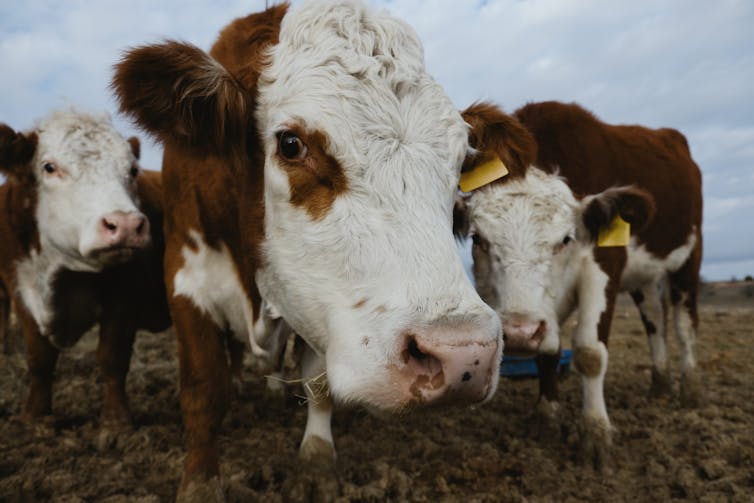
Cows seem particularly prone to unusual behaviour before an earthquake.
cctm/Shutterstock

There are numerous reports of cows panicking and wandering around in areas where they would not normally be seen. For example, stories that cows converged on San Francisco’s Chinatown in 1906 prior to a large earthquake which killed 3,000 people. In 2012, a blog post circulated on the internet showing photographs of cows entering a suburb of Malaysia’s capital city, Kuala Lumpur, and feeding in gardens, two days prior to a magnitude 8.6 earthquake off the coast of Sumatra.

Several Japanese studies have monitored dairy cows using automated milking and activity systems. These studies have reported modest but statistically significant reductions in milk yield and changes in rumination or restlessness in the days preceding some local earthquakes.

Pets seem to be affected too. In 2011, a massive magnitude 9.1 earthquake struck off the northeast coast of Honshu in Japan, generating a tsunami that disabled three nuclear reactors. Post earthquake questionnaires surveyed 1,259 dog owners and 703 cat owners about their pet’s behaviour before the earthquake. About 19% of dog owners and 16% of cat owners reported unusual behaviour. Restiveness was a dominant behaviour in both species, usually within one day prior to the quake. It’s important to note though, that post-event recollections are not considered as scientifically robust as data collected in real time.

What might animals be sensing?

The key question is not whether animals behave differently, but why.

One leading hypothesis, proposed by Friedemann Freund (a scientist for NASA), focuses on environmental changes caused by stress building up in rocks as tectonic plates shift, prior to large earthquakes, releasing electrically charged particles.

These particles can alter the properties of air and soil in the area by increasing the number of positive airborne ions (electrically charged molecules) and appear to affect stress levels and behaviour in animals (including humans). More research is needed but the phenomenon may help explain the changes in animal behaviour before the Italian and Peruvian earthquakes.

However there are many other cues which could contribute to unusual animal behaviour before earthquakes. For example vibrations, disturbances to the local electromagnetic field or sounds outside of human hearing range. We still don’t know exactly which signals, or combination of cues, explains the behaviour.

Despite growing evidence that animals can sense environmental changes preceding earthquakes, the scientific community remains cautious. Several studies have found unusual animal behaviour before earthquakes could later be explained by normal seasonal activity.

Then there’s the fact that earthquakes are rare, which makes the phenomenon difficult to study. I believe animals simply move away from unpleasant or unusual environmental changes, rather than “predicting” earthquakes.

Of ants and earthquakes

There are ongoing studies that may help us learn more about animal behaviour and earthquakes. A systematic trial called Animal Alerts is underway in Lima, Peru, an area with a high level of seismic activity. Researchers have fitted dogs with smart collars which record their heart rate, movement and other parameters in real time.

A 2013 study carried out long-term observations of red wood ant mounds on active faults (cracks in the Earth’s crust that have recently moved and may cause earthquakes). The researchers reported alterations in daily activity rhythms of the ants living on these fault lines. Building on this work, my postgraduate research student, Shanza, is studying earthquake precursors for her master’s degree. She aims to identify which animal species are most likely to respond to early earthquake signals such as positive ions or magnetic field fluctuations. She then plans to simulate some of these conditions in the lab, using ants as a model species.

Animal data alone are unlikely to give reliable earthquake warnings. But the more we can combine animal data with environmental measurements, the closer we will come to reliable forecasts of earthquake hazard risk.

The Conversation

Rachel Grant does not work for, consult, own shares in or receive funding from any company or organisation that would benefit from this article, and has disclosed no relevant affiliations beyond their academic appointment.

ref. Can animals sense earthquakes? – https://theconversation.com/can-animals-sense-earthquakes-275464

Formula 1’s 2026 rules: new sustainability rules are changing the way races are won

Source: The Conversation – UK – By Paolo Aversa, Professor of Strategy, King’s College London

The first races under Formula 1’s new regulations delivered exactly what the sport’s rule-makers had hoped for: more overtaking. At the recent Australian Grand Prix in Melbourne, passes on track nearly tripled compared with the previous year. At the Chinese Grand Prix over the weekend the increase was less extreme, but still noticeable.

This revealed something unexpected about Formula 1’s new generation of cars. Many of the passes did not come from the classic ingredients of racing – a driver braking later into a corner, carrying more speed through the apex, or finding a daring line. Instead, they often happened when one car temporarily ran out of electrical power.

Under one of the most significant rule changes in the sport’s history, roughly half of a Formula 1 car’s output now comes from its electric motor. Drivers must carefully manage when their batteries deploy or regenerate energy. When the battery runs low, the car temporarily becomes vulnerable. Once the battery is recharged by recovering energy from braking, the driver can attack again. These cycles can create sudden swings in performance within a race.

This is raising questions about whether Formula 1’s push for sustainability is changing how races are won.

A greener engine era

Under the new regulations, the cars still look like Formula 1 machines. But the way they generate and deploy power is very different. The familiar turbocharged combustion engine remains, but it now shares power almost equally with the electric system.

The combustion engine also now runs on 100% sustainable fuel, designed to be carbon-neutral over its lifecycle. The cars themselves are smaller and lighter, with new active aerodynamic systems aimed at reducing air resistance on straights.

Major rule changes often trigger waves of experimentation as teams search for new advantages, and managing energy has suddenly become central to racing strategy. In a study published in Organization Science, my colleagues and I showed that Formula 1 teams face a classic strategic trade-off: incremental improvements are safe but rarely transformative, while radical innovations can produce breakthrough performance – or spectacular failure.

A new kind of racing

The Australian Grand Prix offered an early glimpse of how racing is being affected. Early in the race, Mercedes driver George Russell and Ferrari’s Charles Leclerc repeatedly overtook each other within a few laps. But the pattern was unusual: neither driver was consistently faster. Instead, their cars were alternating between phases of energy depletion and recharge. The result looked less like traditional racing and more like a strategic ebb and flow of electrical power.

In the new hybrid era, drivers may need to adjust braking points or racing lines to regenerate electricity efficiently. They may even need to lift their foot from the throttle when in past seasons the same situation would have called for flat-out acceleration.

Some drivers have already expressed concerns that the new cars could feel less instinctive if energy constraints become too restrictive. If success increasingly depends on managing software systems and electrical energy flows, some drivers may feel that the essence of their craft is shifting. After the Chinese Grand Prix, veteran racer Fernando Alonso called this the “battery world championships”, and recent champion Max Verstappen likened it to Mario Kart.

The F1 sustainability paradox

Formula 1 has long argued that it operates like a moonshot laboratory, where extreme competition accelerates development. Technologies refined in racing have later appeared elsewhere, from advanced braking and handling systems in road cars to sensor technologies now used in hospitals. Even the choreography of Formula 1 pit stops has inspired procedures used by emergency medical teams.

The new generation of engines aims to extend that tradition by demonstrating sustainable innovation through advanced hybrid systems and sustainable fuels. But there is a paradox here. Early estimates suggest Formula 1’s new synthetic, net-zero fuel could cost hundreds of dollars per litre, more than ten times the cost of conventional racing fuel – and a hundred or more times the cost of regular petrol.

While this shows what is technically possible, unless production costs fall dramatically these fuels may remain confined to racing or high-performance supercars. In other words, the sport may develop impressive sustainable technologies – but ones that remain too expensive for everyday mobility.

Racing for the future

None of this means the regulations have failed. Formula 1 has a long history of dramatic rule changes producing awkward early seasons before engineers unlock their potential. Previous technological revolutions such as ground-effect aerodynamics in the late 1970s or the hybrid power units introduced in 2009 and then in 2014 required years of refinement before teams fully mastered them. Something similar may happen this year.

The first two races of the new season offered a first hint of tension facing the sport, but whether it ultimately produces better racing remains uncertain. At times, the difference between new and old F1 resembles the contrast between choreographed WWE matches and Olympic wrestling: more visually dramatic, yet less about raw athletic contest.

What is clear is that the 2026 regulations have already begun to reshape Formula 1 in ways few expected.

The Conversation

Paolo Aversa does not work for, consult, own shares in or receive funding from any company or organisation that would benefit from this article, and has disclosed no relevant affiliations beyond their academic appointment.

ref. Formula 1’s 2026 rules: new sustainability rules are changing the way races are won – https://theconversation.com/formula-1s-2026-rules-new-sustainability-rules-are-changing-the-way-races-are-won-278342