How adults can help children move from climate anxiety to resilience

Source: The Conversation – UK – By Sanae Okamoto, Senior Researcher in Behavioural Science and Psychology, United Nations University – Maastricht Economic and Social Research Institute on Innovation and Technology (UNU-MERIT), United Nations University

Rawpixel.com/Shutterstock

Children have the least control over the planet’s future, but will also be the most affected as it changes. They may well feel the mental toll of the “futility gap”: when individual actions feel meaningless against broader societal inaction on the climate crisis.

Promoting healthy psychological agency – the belief that we are in control of our lives – is fundamental here. There are things that we can do to combat the climate crisis. Children should be supported so they don’t lose hope.

Together with our colleague Kariũki Werũ, we’ve created a guide to how adults can help support their healthy psychological development.

Our approach acknowledges the severity of climate change while grounding children in hope. We aim to transform feelings of helplessness into self-efficacy – a belief that they can take action.

At home

To protect a child’s emotional wellbeing and talk about climate facts, adults also need to learn how to talk about climate change with children. This should involve adults listening, learning together and using language appropriate to their child’s age and comprehension. Schools and communities could help parents by providing tips for these conversations.

Monitoring a child’s online activity can safeguard them from traumatic news. Parents can emphasise progress and solutions, and help their children spend time experiencing and enjoying changing weather and the environment.

At school

Schools, educational methods and children’s relationships with teachers and their classmates are core influences on the development of their psychological agency. To promote climate resilience, this could mean moving beyond traditional rote learning towards age-appropriate “critical climate education”. This means empowering students to question existing systems and imagine fundamental transformations, rather than feeling defeated by the status quo.
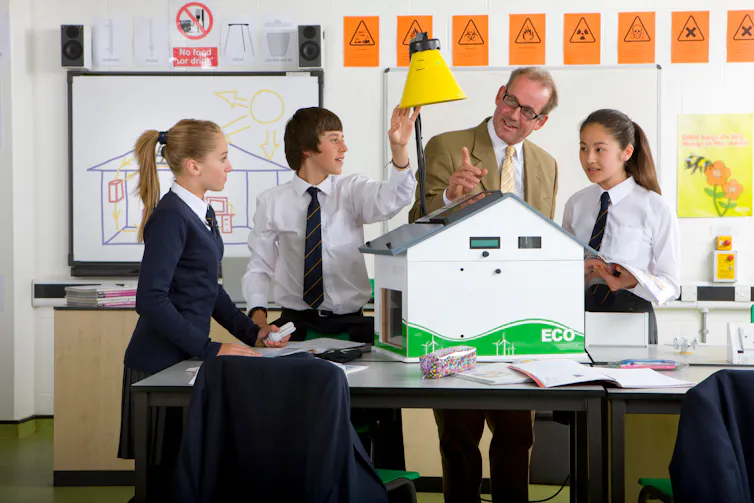
Teacher and pupils work on solar power project
Young people can be empowered to focus on solutions.
Air Images/Shutterstock

Nature-based outdoor learning can further strengthen this development. It can both boost mental health and transform abstract climate concepts into tangible experiences. Learning outdoors can stimulate constructive climate conversations, and directly link human actions to environmental and sustainable solutions. Outdoor observations and investigative projects bridge the gap between learning and action.

The world online

Digital climate learning is a powerful catalyst for modern education. It offers interactive and global perspectives on the climate crisis. But it must be managed to address internet “filter bubbles” – when algorithms show viewers only information that aligns with their past interests. This can risk isolating and overwhelming children with repetitive content that affects their wellbeing. When used correctly, digital tools can expand a child’s perspective on climate solutions beyond their local environment.

Blended together

Effective climate education can combine digital learning with hands-on, real-world experiences. When this is supported by educators and caregivers who act as guides – while also leaving enough space for children to explore and create independently – children are able to benefit from both realistic and balanced education. Pioneering programs are blending classroom science with digital tools and outdoor experiments to turn student ideas into tangible community projects.

On a wider scale, climate education needs to bridge the gap between personal responsibility and collective power. The climate narrative should shift its focus from asking “what is wrong?” to “what can we do?” This will empower children with a sense of agency rather than climate anxiety. Social media is a key place where this change can happen.

When used with adult guidance and digital literacy, it can lead to constructive dialogues and evidence-based action. A moderated and positive use of digital tools can help children connect their own awareness to the world around them and drive action on a larger scale to truly tackle the climate crisis.

This can ultimately allow children to share their climate change knowledge and inspire actions among family and friends. They can go on to become influential at school and in their community.

In order to address the climate crisis and support wellbeing, we need to help children recognise their agency. Children can become agents of change who can counter misinformation and foster long-term psychological resilience.

Schools can work together with families, communities and leaders to create a supportive environment for learning about climate. _ Such approach could bridge the gaps between scientific climate facts and real-life experiences by providing the emotional care and practical skills needed to empower_ the climate generations to build a sustainable future together.

The Conversation

The authors do not work for, consult, own shares in or receive funding from any company or organisation that would benefit from this article, and have disclosed no relevant affiliations beyond their academic appointment.

ref. How adults can help children move from climate anxiety to resilience – https://theconversation.com/how-adults-can-help-children-move-from-climate-anxiety-to-resilience-274141

The meningitis vaccine now sits at the centre of two health crises

Source: The Conversation – UK – By Charlie Firth, PhD Candidate, Paediatrics, University of Oxford

The UK has recently seen a resurgence of meningococcal B (MenB) disease, with a cluster of cases in Kent described as “unprecedented” by the health secretary, Wes Streeting. As attention turns from the current MenB outbreak to how to prevent future outbreaks, another challenge is also growing: gonorrhoea is becoming harder to treat as antibiotic resistance rises. These two challenges might seem unrelated, but they are now linked by a single vaccine.

Some sexual health services are using a vaccine originally designed to prevent MenB disease as part of efforts to reduce gonorrhoea. At first glance, that might sound surprising. But the bacteria that cause meningitis and gonorrhoea are closely related, meaning a vaccine targeting one may offer some protection against the other.

This kind of scientific overlap is drawing increasing attention. Developing brand new vaccines from scratch takes years – sometimes decades – and is costly. Repurposing existing ones could offer a faster, more practical route.

The MenB vaccine itself already has a strong public profile in the UK. Campaigns calling for wider access became one of the most signed petitions in UK history. It has helped bring attention to meningococcal disease and shaping public expectations around vaccine availability.

Recommendations about how vaccines are used in the UK are made by the Joint Committee on Vaccination and Immunisation, which operates within a government-defined framework. Their advice takes into account the burden of disease, vaccine safety and effectiveness, as well as the cost-effectiveness of different immunisation strategies.

Repurposing vaccines

The evidence is still evolving when it comes to gonorrhoea. While earlier studies suggested the MenB vaccine might offer some “cross-protection”, a more recent randomised control trial – the gold standard in medical research – indicates that protection may be lower in people who have previously had gonorrhoea.

This raises important questions about who might benefit the most. If protection is stronger, or longer lasting, in people who have never had the infection, vaccination strategies may need to focus on these groups instead.

Our recent research suggests that people are open to this kind of complexity. In a survey of sexual health service users in the UK, more than 98% supported the introduction of a gonorrhoea vaccine. Many were willing to accept that the vaccine might not be perfect, as long as its benefits were explained clearly and transparently.

A hospital sign pointing to a sexual health clinic.
Ninety-eight per cent supported the introduction of a gonorrhoea vaccine.
Stephen Barnes/Shutterstock.com

That willingness matters. Repurposed vaccines are unlikely to offer complete protection, especially in the early stages. But even partial protection could reduce cases and ease pressure on healthcare systems, particularly for infections like gonorrhoea, where treatment options are narrowing.

At the same time, the context in which this vaccine is being used is changing. The UK is seeing renewed concern about MenB disease, including clusters of cases that have spread quickly. This places the MenB vaccine in an unusual position: it is being deployed simultaneously against a rare but severe infection and a common, increasingly drug-resistant one.

These overlapping pressures may shift how we think about its value. Traditionally, decisions about a national MenB programme have been based on the burden of meningococcal disease alone. But if the same vaccine can also contribute – even partially – to controlling gonorrhoea, the calculation becomes more complex.

In that light, the question is no longer just whether the MenB vaccine is cost-effective for one disease, but whether its combined impact across multiple infections changes the equation altogether.

There are also practical considerations. Vaccine supply, delivery capacity and prioritisation all come into play when a single product is expected to address more than one public health challenge. Expanding its use would require careful planning to avoid displacing more effective or cost-effective interventions.

Not just single-purpose tools

At the same time, this approach highlights a broader shift in biomedical thinking. Vaccines are increasingly being understood not just as single-purpose tools, but as tools that may have wider effects than originally anticipated. As our understanding of pathogens and immune responses deepens, opportunities to reuse or adapt existing drugs and vaccines are likely to grow.

With rising levels of antibiotic-resistant gonorrhoea alongside renewed concern about MenB, and strong public support for vaccination, the case for wider use of this vaccine may look different to before.

Whether that ultimately leads to routine immunisation will depend on the evolving evidence. But this moment may mark the beginning of a broader shift in how we evaluate vaccines, not just in terms of single diseases, but in terms of their potential to address multiple threats at once.

The Conversation

Charlie Firth receives funding from the National Institute for Health Research

ref. The meningitis vaccine now sits at the centre of two health crises – https://theconversation.com/the-meningitis-vaccine-now-sits-at-the-centre-of-two-health-crises-278931

How Brexit reduced the City of London’s financial clout – new research

Source: The Conversation – UK – By Amr Saber Algarhi, Senior Lecturer in Economics, Sheffield Hallam University

Sven Hansche/Shutterstock

The whole point of Brexit was to change the UK’s relationship with Europe. And one of the less visible shifts has occurred in the financial markets, affecting pension funds and the cost of borrowing.

Before the referendum, when London’s stock market sneezed, Europe caught a cold. Now though, our research suggests that the financial relationship between the UK and the EU has flipped.

The change came after decades of London being the focus of European finance – and what’s known as a “net transmitter” of financial shocks. This meant that changes in London’s stock exchange had an immediate impact on investors in Paris, Frankfurt and Milan. London’s institutional ties to the European single market served as the foundation for this financial leadership.

To see if this level of influence remained after Brexit, we observed daily movements of the stock markets in nine European countries, comparing two five-year periods: before the Brexit vote (2011–2016) and after the UK left the EU (2020–2025).

Our comparison featured a specialist financial metric called a “net volatility spillover score” which measures the difference between the amount of risk (volatility) a specific market transmits and receives from other markets.

The results were stark. Before Brexit, the UK had a net volatility spillover score of +11.8, meaning it sent far more financial turbulence into Europe than it received. After Brexit, that score fell to –5.5. The UK now absorbs more shocks from Europe than it sends, making it a net recipient of volatility.

This is largely down to the fact that European investors stopped reacting to UK market signals as strongly as they once did. The UK’s financial shocks still happen – they just matter less to the rest of the continent.

Meanwhile, over the same period, Germany’s transmitting influence grew by nearly 50%, and Italy transformed from a shock absorber into the second most influential market in the system.

When London was a financial leader in Europe, its market signals shaped how continental investors valued risk across borders. This gave the City extra influence over capital flows, borrowing costs and investment decisions.

Now that influence has weakened, the consequences go far beyond the offices of City traders.

UK firms seeking to raise capital from European investors may face higher costs, because European markets are now less attuned to British price signals. A UK pension fund invested in European equities, for instance, now finds its returns shaped more by what happens in Frankfurt or Milan than by signals from the London market it sits alongside.

And the UK has less sway over the financial conditions that govern cross-border trade and investment – conditions that ultimately feed into jobs, mortgages and the cost of living.

Trading places

The physical infrastructure tells a similar story. After Brexit, more than 440 financial firms moved at least some of their operations from the UK to the EU, taking with them more than £900 billion in bank assets – such as business loans, investment portfolios and cash reserves – worth around 10% of the UK’s banking system.

As part of this transition, London was not replaced by a single city, but by a range of European centres (including Frankfurt, Paris and Dublin) which all absorbed enough activity to reshape the network. And although London is still a major international financial hub, its cross-border ties with Europe have been weakened.

So can London win back its influence? It’s unlikely. This was not a temporary dip caused by market panic. Overall connectivity across European markets barely changed. The European financial network did not shrink – it just reorganised. Countries such as Germany and Italy simply stepped into the space that the UK had vacated.

The new system, driven by legal changes, relocations and regulatory divergence in financial services now shows no sign of changing.

And although the recent UK-EU summit suggests both sides want closer ties, so far that effort has centred on trade in goods and security rather than financial services. Until the reset reaches the City, London’s diminished role in European markets looks set to stay.

None of this means London is finished as a financial centre. But within the European network, the UK’s role has fundamentally changed.

It has gone from setting the tempo to following the beat from elsewhere. And for a country which built much of its post-industrial economic power around financial services, that’s quite a shift.

The Conversation

The authors would like to acknowledge the contribution of Archie Hill, a final year economics student at Sheffield Hallam University, who was a co-author of the original peer-reviewed research on which this article is based.

Adeola Y. Oyebowale does not work for, consult, own shares in or receive funding from any company or organisation that would benefit from this article, and has disclosed no relevant affiliations beyond their academic appointment.

ref. How Brexit reduced the City of London’s financial clout – new research – https://theconversation.com/how-brexit-reduced-the-city-of-londons-financial-clout-new-research-277107

What learning English means to migrants

Source: The Conversation – UK – By Sharon Freeman, PhD Candidate, School of Education, University of Leicester

Anna Stills/Shutterstock

It is widely accepted that learning English is essential for many adult migrants who move to the UK. Yet in the last census, over 1 million residents in England and Wales reported not speaking English well or at all.

Over the years, governments have firmly placed the duty to learn English on the newcomer, framing English proficiency as a requirement of integration. Recent migration reform proposals increase the emphasis on English proficiency and progress in deciding who can come to the UK and stay long term.

Experts argue that language learning is not always linear, and that these policies risk turning English into a surveillance tool, rather than a pathway to integration.


Read more:
Esol English classes are crucial for migrant integration, yet challenges remain unaddressed


Meanwhile, English classes for migrants have become increasingly politicised. In my ongoing PhD research, I have been speaking to learners in English for speakers of other languages (Esol) courses, across a devolved city region in the north of England, to find out what learning English means to them.

I found that, beyond needing English to fulfil immigration requirements, learning the language has helped them build confidence as they navigate public services and their new life in Britain.

Noor* is a qualified civil engineer and maths tutor, originally from Syria and seeking asylum in the UK. She attends a volunteer-led Esol class, as well as courses at a local college, and volunteers in a local charity shop. When I asked her what learning English meant to her, she told me:

English language is in my heart and in my mind, because it is the language of the country that took me in with respect and gave me hope and education and in working in the future … it will enable me to live a good life. And English is the key to our life here.

She felt like she was integrated into her community after attending classes, saying: “I belong. I quickly felt I belong here. Guess why? Because I found peace here.”

Belonging, confidence and family

Belonging was mentioned frequently. Soo-Ah arrived more than ten years ago, moving with her husband’s job from South Korea. She said: “I’m living in England, and I always think English is very important for me.” She explained that her class was not just about learning English as a language, but also as a culture. “I feel like I’m belonging to this country, I feel like connected with it,” she told me.

Bisrat, an Eritrean man seeking asylum after arriving on a small boat, explained, “It’s very safe to live here. Everything is nice here. They welcomed us very well.” He told me that he felt he belonged, and that he hopes to study social work at a university one day.

Improving confidence was mentioned by many interviewed. Learners told me how their class helped them to independently access services such as healthcare. Efehi explained it “helped me a lot, and I’m grateful because I have more confidence in so many things I can do, like speaking, spelling and going for my appointment, so I don’t need anyone to interpret for me”.

Lucia told me: “Since I started in this class, I have grown massively in confidence. Absolutely amazing.”

A smiling woman attending a doctor's appointment alone.
Some migrants are more confident attending healthcare appointments alone after learning English.
Studio Romantic/Shutterstock

Mothers discussed moving to the UK for their children’s education and wanting to support them. Zainab explained that parents’ evening at school, was “so easy for us if we speak English”. Bushra told me she needed to learn English now she lived here, not just for herself, but “for my kids’ future”.

Learners talked about their aspirations, including going to college or wanting to become a teaching assistant, teacher, social worker, sewing machinist or hospital domestic assistant. Shabana told me: “Now I am a housewife, but later on, after finish my courses and better my English, then I definitely want to do job.” Lucia too said: “I need to improve my English. And I found this class which give it a great support to all people like me. I just think [it is] amazing, what they doing for us … helping us to get these levels, which is important to get a job.”

These conversations with learners show that they are not choosing to learn English just because they are told they should. They are not passive. They are actively and pragmatically claiming a voice by adding English to their multilingual repertoires. They accept the importance of learning the dominant language in their new home.

Welcoming new neighbours with empathy and conviviality is key to helping them build a good life in a new country. And understanding their needs, wants and aspirations is fundamental to providing appropriate language support. Rather than just telling them what they should do, we should ask them what they need.

*All names have been changed

The Conversation

Sharon Freeman receives Future 50 Scholarship funding from University of Leicester.

ref. What learning English means to migrants – https://theconversation.com/what-learning-english-means-to-migrants-278232

Chopping down areas of tropical rainforest is causing rising temperatures linked to thousands of deaths

Source: The Conversation – UK – By Dominick Spracklen, Professor of Biosphere-Atmosphere Interactions, University of Leeds

Dominick Spracken, CC BY-ND

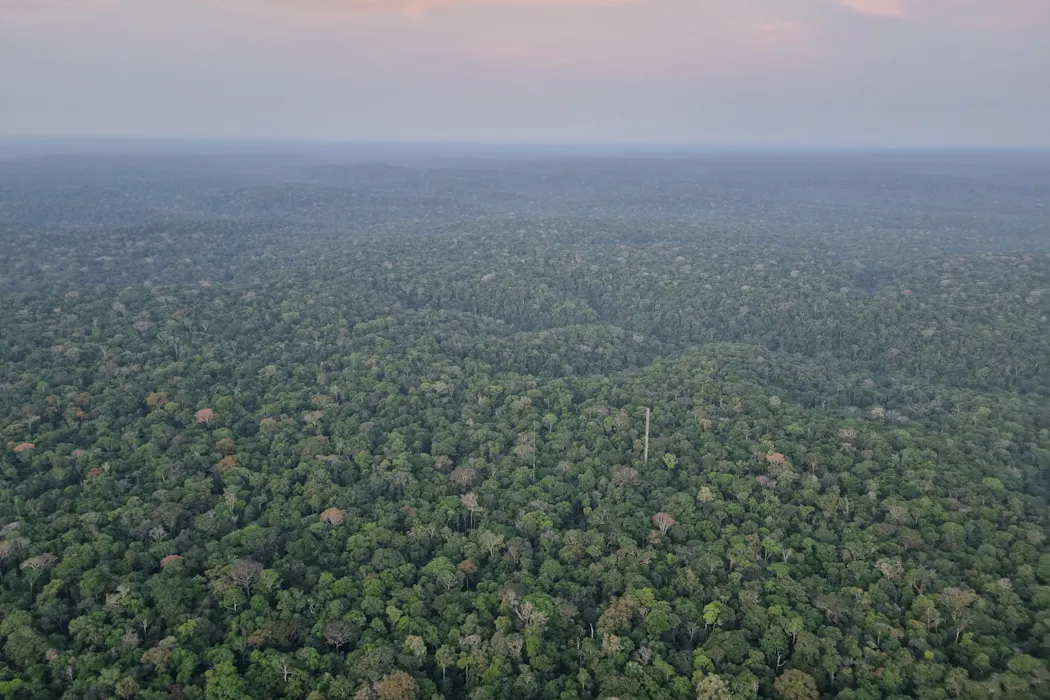
Tropical forests are hot, steamy places. But when large numbers of trees are cut down, they get even hotter. Our recent research shows that clearing large areas of the rainforest exposes hundreds of millions of people to higher temperatures, increasing heat stress (when the body’s way of controlling temperature fails) and, in some cases, contributing to death.

Research suggests that this could be contributing to 28,000 heat-related deaths each year across the tropics every year.

Apart from the shade that the rainforest canopy provides, trees also cool their surroundings by pumping water from the soil into the atmosphere – a process known as evapotranspiration. Like sweat evaporating from our skin, this uses energy and cools the air.

A single large tropical tree provides as much cooling as several air conditioners running continuously. Across the billions of trees in the Amazon or Congo, this “sweating” cools entire regions.

People living in or near tropical forests recognise these cooling benefits. When villagers in rainforest regions in Kalimantan, Indonesia, were interviewed about the benefits tropical forests provide, the most common answer was their ability to keep local temperatures cool.

Despite these benefits, tropical forests are being destroyed at an alarming rate. In 2024, more than 6 million hectares of primary tropical forests (nearly the size of Panama) were destroyed, the fastest rate since records began.

A chart showing how trees create cooler air.

Nike Doggart, CC BY

Tropical deforestation reduces the cooling effect forests provide, leading to local warming – a pattern well documented by previous studies. But how is this warming affecting the lives of people living near tropical forests?

Deforestation is amplifying heat

To answer this, we used satellite data to track how deforestation has affected temperatures over the past 20 years. Over this period, large areas of forest in the Amazon, Congo and south-east Asia were cleared. We compared temperature changes in deforested regions with nearby areas that retained their forests. Tropical regions that retained their forest cover warmed by an average of 0.2°C. In nearby areas where forests were cleared, temperatures rose by 0.7°C – more than three times as fast. This shows that deforestation results in a dramatic regional amplification of climate warming.

An illustration showing temperature rises in South America based on data collated by the researchers.
An illustration showing temperature rises based on data collated by the researchers.
Author’s own research., CC BY-SA

To understand the impact on local people, we mapped this warming onto information on where people live across the tropics. We found that more than 300 million people were exposed to higher temperatures caused by deforestation. Exposure occurred right across the tropics: 67 million people in Central and South America, 148 million people in Africa and 122 million people in south-east Asia were exposed to warming.

Some countries with rapid rates of deforestation were particularly affected: 49 million people in Indonesia, 42 million people in the Democratic Republic of Congo and 22 million people in Brazil were exposed to hotter temperatures caused by deforestation.

A hidden public health crisis

Exposure to high temperatures has a range of negative effects on health. For instance, it can reduce the productivity of farmers and reduce the time it is safe to work outdoors. Exposure to high temperatures also causes heat stress that can be lethal. Heat waves in the Amazon are associated with a higher risk of mortality from cardiovascular diseases.

Infographic showing difference in temperature in tropical forest with deforestation, and where there hasn't been, based on author's research.

Author’s own., CC BY

We combined information on the number of people exposed to deforestation-induced warming with region-specific heat vulnerability information and non-accidental death rates. We used this to estimate that the heating from deforestation is linked to around 28,000 heat-related deaths each year across the tropics. This means that over the past 20 years more than half a million people have died from heat-related causes as a result of deforestation.

It is well known that tropical deforestation releases carbon dioxide and this contributes to global climate change. Indeed, arguments for reducing deforestation are often focused on carbon. But despite numerous international pledges, tropical deforestation continues to accelerate.

Recognising the public health impact of deforestation could help broaden support for forest protection. Although the local warming effects of deforestation are well recognised by local people, communities and decision-makers often lack precise data on how much deforestation is increasing temperatures in their area. To address this, we developed an online tool that provides information at province level on the warming linked to deforestation. We hope this locally relevant data will help communities and decision-makers make more informed decisions about managing their forests.

There are some promising new initiatives that recognise the value of tropical forests. Brazil is setting up a new fund that will pay tropical nations to keep their forests intact. It recognises the public services provided by tropical forests – including their ability to regulate local climate – and it rewards countries for protecting them. Some European countries supported the development of this facility but other than Norway, few have yet committed substantial funding. Perhaps given the current global crisis they think it is too far away to affect them, or are prioritising other areas. In doing so they are ignoring potential effects on migration flows, global air quality, loss of biodiversity and food supply chains.

For many years, tropical deforestation has been viewed as an environmental issue. Our research shows that it is also an urgent public health issue. Protecting tropical forests is not just about conserving nature or storing carbon. It is about protecting the health – and lives – of hundreds of millions of people.

The Conversation

Dominick Spracklen receives research funding from the European Research Council and from UK Research and Innovation.

ref. Chopping down areas of tropical rainforest is causing rising temperatures linked to thousands of deaths – https://theconversation.com/chopping-down-areas-of-tropical-rainforest-is-causing-rising-temperatures-linked-to-thousands-of-deaths-278737

Heat shield safety concerns raise stakes for Nasa’s Artemis II Moon mission

Source: The Conversation – UK – By Ed Macaulay, Lecturer in Physics and Data Science, Queen Mary University of London

The astronauts Reid Wiseman, Victor Glover, Christina Koch and Jeremy Hansen are preparing to launch into space on a trajectory that will make them the first humans to travel to the Moon in over half a century.

Their 10-day mission, known as Artemis II, loops around the Moon but will not land. It will see them travel 4,700 miles (7,600 kilometres) beyond the lunar far side in Nasa’s Orion spacecraft. As such, the four astronauts will travel further from Earth than any humans before them.

The quarter-of-a-million mile Artemis II expedition is audacious, but it’s the last five minutes of the mission that might be the most cause for concern for the safety of the astronauts.

An uncrewed test of the Orion spacecraft in 2022 first highlighted problems with the heat shield. This is the part of Orion that bears the brunt of the searing heat the capsule experiences during re-entry through Earth’s atmosphere.

When engineers examined the Orion heat shield from 2022’s Artemis I mission, they found large chunks of material had been lost. The worry was that, should this happen again on the crewed Artemis II mission, it could expose the interior of the capsule to dangerously high temperatures.

Technicians at Kennedy Space Center applied more than 180 blocks of ablative material to Orion’s heat shield.
NASA/Isaac Watson

Since the earliest days of human spaceflight, engineers have protected capsules from the extreme heat of re-entry with so-called “ablative” heat shields, made from material that’s designed to burn away evenly as the capsule scorches its way through the atmosphere.

To meet the demands of the reusable space shuttle, Nasa developed an incredible heat shield system made from ultra-light tiles of glass-coated silica fibres. While this heat shield had extraordinary thermal properties, it was also exceptionally fragile, and required exhaustive maintenance after every shuttle mission.

It was damage to this fragile and exposed protection system that caused the tragic loss of space shuttle Columbia in 2003. For the Artemis programme, Nasa has returned to the concept of an ablative heat shield.

Artist’s impression of Orion re-entering Earth’s atmosphere.
Nasa

The heat shield for the Orion capsule is composed of a material called Avcoat, based on the material originally developed for the Apollo programme. Although Nasa considered other, newer materials for the Orion heat shield, they ultimately decided on the material that had been proven in flight by the Apollo missions.

However, the structure of Orion’s heat shield differs from those used during Apollo. The Apollo heat shield comprised a singular honeycomb matrix of about 320,000 individually filled hexagonal segments. To make the heat shield for Orion more efficient and reproducible to manufacture, Nasa has opted for a configuration of around 180 individual blocks.

This heat shield was first tested in 2014 when an uncrewed Orion capsule was launched to an apogee of 3,600 miles by a Delta IV rocket. The capsule blazed through the atmosphere on its return at a temperature of about 2,200°C (4,000°F), but the heat shield proved itself capable of withstanding such an inferno.

Large chunks of the heat shield were lost (red circles) during the Artemis I mission in 2022.
Nasa

The next test of the Orion capsule was the Artemis I mission in 2022. This was the first flight of the powerful Space Launch System rocket, and an uncrewed demonstration of the mission planned for Artemis II. Hurtling through Earth’s atmosphere from a far greater distance than the first test, the spacecraft reached temperatures of around 2,800°C (5,000°F). It’s here that the first concerns about the Avcoat heat shield were raised.

Instead of burning away evenly over the whole surface, parts of the Artemis I heat shield were lost unexpectedly in uneven chunks. This uneven ablation makes modelling the thermal loads of re-entry more unpredictable, and raises the possibility that the Orion capsule could be exposed to dangerous levels of heating.

The Artemis II crew members (left to right): mission specialist Jeremy Hansen CSA (Canadian Space Agency), mission specialist Christina Koch, pilot Victor Glover, and commander Reid Wiseman (Nasa).
Nasa/Isaac Watson

On investigation, the cause of this uneven ablation was found to be irregular releases of gases trapped within the heat shield material, compounded by the “skip re-entry” profile adopted by the mission.

In the skip profile, Orion first grazes the edge of the atmosphere to slow down. It then uses the aerodynamic lift of the capsule to skip back out of the atmosphere, before re-entering for its final descent to Earth. The skip profile is so named because it somewhat resembles a stone skipping across a pond.

Nasa investigators found that, when heating rates decreased during the period between dips into the atmosphere, thermal energy accumulated inside the Avcoat material. This led to the build up of gases and, in turn, the internal pressure – causing cracks and the uneven shedding of material.

Based on the lessons from Artemis I, Nasa has adopted a number of measures to protect the crew of Artemis II. For the first crewed mission of the programme, Nasa has kept the Avcoat heat shield material, but updated the design of the blocks to help the gases to escape during re-entry.

Furthermore, instead of the skip profile, Nasa has now opted for a more direct re-entry mode for the Orion capsule. This reduces the uncertainty in the heating profile and means less time at peak temperatures for trapped gases to damage the heat shield, but also means that the crew will be subjected to increased deceleration on re-entry.

Ex-Nasa engineers’ concerns about the Artemis II heat shield (ABC News)

Safety first

At the height of the drama in the film Apollo 13, flight director Gene Kranz famously declares to the team at mission control that “failure is not an option”.

Although the line was in fact the product of the film’s screenwriters, it’s become not just the second-most quotable line from the film, but also somewhat of a mantra at Nasa itself.

Nowhere is this more true than with the heat shield of Artemis II. During the final phase of the Artemis II mission, there’s no backup, no contingency, and no chance of escape. The four astronauts on board will be depending on a few inches of resin-coated silica to shield themselves from temperatures approaching half that of the surface of the Sun.

Human spaceflight has always brought with it calculated risks, but it has also provided a uniquely human perspective on our place in the cosmos. The Artemis II mission will make its crew the first humans in over half a century to observe the blue marble of planet Earth in its entirety with their own eyes.

The crew will carry with them the hopes and aspirations of a whole new generation of explorers. They will be depending on the meticulous work of thousands of scientists and engineers for their safe return, bringing with them a renewed human perspective on not just the Moon, but the planet we all call home.

The Conversation

Ed Macaulay does not work for, consult, own shares in or receive funding from any company or organisation that would benefit from this article, and has disclosed no relevant affiliations beyond their academic appointment.

ref. Heat shield safety concerns raise stakes for Nasa’s Artemis II Moon mission – https://theconversation.com/heat-shield-safety-concerns-raise-stakes-for-nasas-artemis-ii-moon-mission-275853

Apple at 50: eight technology leaps that changed our world

Source: The Conversation – UK – By Nick Dalton, Associate Professor in the School of Computer Science, Northumbria University, Newcastle

In the early 1970s, the idea of an ordinary person owning a computer sounded absurd. Computers back then were more like aircraft carriers or nuclear power plants than household appliances – vast machines housed in data centres operated by teams of specialists, serving governments, universities and large corporations.

Then came Apple.

Founded on April 1 1976 by “college dropouts” Steve Jobs and Steve Wozniak, the Silicon Valley startup did not invent computing. What it did was arguably more important: it helped turn computing into a personal technology.

Before Apple, computers were largely sold in kit form. Jobs saw that people wanted them pre-assembled and ready to run. The earliest Apple I units, featuring handmade koa wooden cases, now sell for hundreds of thousands of dollars.

As an early Apple adopter and app developer, here’s my selection of the company’s (and Jobs’s) most significant technological achievements over the last 50 years.

Apple II – beige yet distinctive

Early personal computers were more curiosities than practical tools. The Apple II, launched in June 1977, introduced something new: style. Even its colour – beige! – was distinctive, contrasting with the black metal boxes common at that time.

The use of colour graphics was both new and exciting, and the keyboard felt satisfying to use. A simple speaker, with only a single-bit output, was ingeniously coaxed into producing tones and even speech-like sounds. The design revolution stretched as far as the packaging: Jerry Manock, Apple’s first in-house designer, placed the machine in a moulded plastic case which looked sleek and professional.

The mouse – a whole new way of interacting

By 1979, the 24-year-old Jobs – sensing that tech giant IBM was catching up with Apple – went looking for the next big thing. The photocopier company Xerox, wanting pre-IPO shares in Apple, offered a visit to its nearby research labs as an inducement. Jobs realised that researchers such as Alan Kay at Xerox’s Palo Alto research centre were creating the next generation of computing interfaces.

Central to this was a device invented by Kay’s mentor, Douglas Engelbart, at Stanford University in the mid-1960s and nicknamed “the mouse”. Engelbart’s vision of computers as machines to augment the human mind inspired Kay and colleagues to create graphical displays in which users interacted with scrollbars, buttons, menus and windows.

Macintosh – dawn of the modern product launch

Jobs thought anyone should be able to use a computer. In January 1984, the first Apple Mac pushed this idea to new extremes. The traditional need for obscure computer commands (and manuals) vanished. Early adopters such as myself felt we just knew how to do everything.

But the Mac’s launch was not just another technological leap for Apple. It also inspired the now-familiar cultural moment of the modern product launch. Following a teasing Super Bowl advert directed by Ridley Scott, Jobs used a 1,500-seat theatre on January 24 to create a stage performance centred on a single charismatic presenter. Jobs let a small, square and still-beige computer (then known as Macintosh) out of its bag – and it began speaking for itself, to rapturous applause.

Video: MacEssentials.

Pixar – Jobs’s side hustle

In its first decade, Apple grew at an exceptional rate – but it also came close to financial collapse on several occasions. This led to one of the most dramatic moments in Apple’s history when, in May 1985, the company forced Jobs out.

A year later and now in charge of the startup NeXT Inc, Jobs bought a division of George Lucas’s film company which was soon rebranded as Pixar. Its RenderMan software generated images by distributing processing across multiple machines simultaneously.

Pixar, jokingly referred to as Jobs’s “side hustle”, would become one of the world’s most influential (and valuable) animation production companies, having released the first fully computer-animated feature film in Toy Story (1995).

Toy Story (1995) official trailer.

iMac – a meeting of minds

After a failed attempt to develop a new operating system with IBM, Apple eventually bought Jobs’s company NeXT. In September 1997, he returned to Apple as interim CEO with the company “two months from bankruptcy”. The move, though welcomed by many Apple users, terrified some of its employees. Jobs quickly began firing staff and shutting down failed products.

During this restructuring, he visited Apple’s design studio and immediately hit it off with young British designer Jony Ive. Their meeting of minds led to the 1998 candy-coloured translucent iMac. Essentially smaller, cheaper NeXT machines, iMac (the i stood for internet) also kicked off another Apple habit: abandoning ageing technology. The floppy disk drive was ditched in favour of a CD drive – a move heavily criticised at the time, but later widely copied.

Video: TheAppleFanBoy – Apple & Computer Archives.

iPod – 1,000 songs in your pocket

For Apple, computing was always about more than, well, computing. In 2001, the company began focusing on processing sound and video, not just text and pictures. By November that year, it had released the iPod – a personal music player capable of storing “1,000 songs in your pocket”, compared with a maximum of 20-30 on each cassette tape in a Sony Walkman.

The iPod used an elegant “click wheel” to operate the screen. Music was synced through a new application called iTunes. By 2005, people were using iTunes to manage audio downloaded automatically from the internet using a process called RSS. This in turn put the pod in podcasting.

Video: xaviertic.

iPhone – a computer in everyone’s hands

By 2007, many mobile phone companies had approached Apple about merging the iPod with their phones. Instead, on January 9, Jobs unveiled Apple’s most ambitious product yet: a combined phone, music player and Mac computer – all at the size of a handset with no physical keyboard and huge screen.

Most media “experts”, from TechCrunch to the Guardian, predicted the iPhone would bomb. Steve Ballmer, then CEO of Microsoft, mocked the US$500 price tag, saying nobody would buy it. In fact, 1.4 million iPhones were sold by the end of the year – and over 3 billion more since then. This truly put a computer into everyone’s hands – and opened the door to social media as we know it today.

Video: Mac History.

App Store’s software revolution

By mid-2008, the iPhone enabled third-party developers the chance to to create a dizzying range of new applications. At the same time, the App Store – launched on July 10 2008 – addressed one of the most complex problems: how to distribute and commercialise these “apps”. Historically, they were often copied and distributed freely. The App Store changed this, using strong encryption to ensure the copy sold could only be used by that specific user, thus eliminating software piracy.

By establishing the first (eponymous) App Store, Apple changed the way people discover and purchase software. This led to an explosion of apps and a simple but powerful idea: whatever you wanted to do, someone, somewhere, had already built it. Apple captured this shift in a slogan that became part of everyday language: “There’s an app for that”.

Time and again, this extraordinary company has anticipated the value of opening up computing to everyone. Happy birthday, Apple.

The Conversation

Nick Dalton does not work for, consult, own shares in or receive funding from any company or organisation that would benefit from this article, and has disclosed no relevant affiliations beyond their academic appointment.

ref. Apple at 50: eight technology leaps that changed our world – https://theconversation.com/apple-at-50-eight-technology-leaps-that-changed-our-world-279541

Despite massive casualties in Ukraine, Russia is unlikely to run out of soldiers anytime soon – here’s why

Source: The Conversation – UK – By Charlie Walker, Associate Professor of Comparative Sociology, University of Southampton

Russia has begun a spring offensive in Ukraine, launching a major assault on the “fortress belt” of heavily defended cities in Ukraine’s eastern Donetsk region. At the same time, a wave of nearly 1,000 drones and missiles targeted civilian, energy, and transport infrastructure across a wide swath of territory in a bid to overwhelm Ukraine’s air defences.

Ukraine’s technology-driven tactical nous has enabled it to kill or wound more Russian troops than are being recruited, month on month. But reports from Ukraine’s military commander Oleksandr Syrskyi that the Kremlin plans to add more than 400,000 new recruits in 2026, suggest that Russia intends to continue with its “meat grinder” strategy of attempting to overwhelm Ukraine along the front lines with sheer weight of numbers while undermining national morale by destroying its energy infrastructure.

Of course, the meat grinder involves a high level of casualties on the Russian side. This has led some western observers to suggest that Vladimir Putin might be forced to the negotiating table simply because his military can’t get enough troops to continue in this way.

The idea that Russia will have trouble recruiting enough soldiers is a hangover from some of its past wars, where the dire treatment of its soldiers and veterans led at times to considerable disillusionment. This idea has been raised in the current war against Ukraine.

During the Soviet-Afghan War in the 1980s and the first Russian-Chechen War in the 1990s, soldiers’ mothers organisations across Russia placed the conditions under which their sons served their country under the spotlight. Poor service conditions, hazing and corruption – and the state’s failure to provide adequate support and recognition to veterans and the families of fallen soldiers – eroded the image of the Russian military. This led to a breakdown in society-military relations and serious problems in the recruitment and retention of soldiers.

This theme remains ever-present in western reporting of the war. There has been a great deal of media focus on draft avoidance, low morale and discipline in the field and, the poor treatment of veterans. And the enlistment of people serving prison terms as well as troops from allies such as North Korea and Serbia are also a big focus of attention in western media coverage.

Advertising soldiering as a “real job” for “real men” appeared to signal desperation. And the fact that soldiers appeared only to be fighting for money – or because they were coerced – implied that genuine support either for the war or the regime was weak. Evgeny Prigozhin’s attempted mutiny in 2023 was a more concrete and spectacular example of the potential for Russia’s military mobilisation to implode.

Rebuilding military citizenship in Russia

But in one important respect, this war is being waged differently from earlier wars in Chechnya and Afghanistan. Putin has been determined to prevent any kind of breakdown in society-military relations. He has made a concerted effort to re-engineer the relationship between the army, the state and Russian society since the 2000s – precisely to avoid a repetition of this outcome.

Both the Afghan and first Chechen wars were marked by a breakdown in the social contract between soldiers and the state, or what we call “military citizenship”. This is the reciprocal relationship whereby the state provides soldiers with forms of social and legal recognition – living wages, access to housing and decent healthcare, family support, and a degree of social respect. In exchange they carry out military service.

These forms of reciprocity clearly collapsed after the Afghan and first Chechen wars. It created a rift between the military and the state that was personified in soldiers’ social and political marginalisation and dissent and disillusionment in senior military ranks. In response to this, Russia has made significant long-term changes. A civic council was established in 2006 under the control of the Ministry of Defence – chaired by patriotic film-maker Nikita Mikhalkov – specifically to guide this process.

This was followed in 2008 by the Strategy for the Development of the Russian Armed Forces. As part of this, Russia has introduced extensive material benefits relating to housing, pensions, salaries and social guarantees for soldiers. The in-house newspaper of Russia’s defence ministry, Krasnaya Zvezda, trumpeted that, under these reforms, “contract soldiers are becoming the country’s middle class”. This is, of course, the government line, but it reflects the importance the Kremlin places in being at least seen to address this historic problem.

This programme of reforms has been accompanied by work to rebuild military patriotism. Civil society organisations such as the Immortal Regiment, a massive and highly active organisation of veterans, are helping to mobilise Russia’s proudly held military tradition from the second world war (known in Russia as the “great patriotic war”).

These forms of material and symbolic recognition will not, of course, appeal to all Russian men. Putin has been forced over the course of the war to introduce stringent rules and severe punishments to prevent draft dodging and the mass emigration of military-aged men.

But on the other hand, many Russians still live in hardship as a result of the country’s shaky economic transition after the collapse of the Soviet Union in the 1990s. For many young and older men in deindustrialising parts of provincial Russia, the army is still seen as the only prospect of social mobility. And this has been reinforced by the benefits provided to the military in recent years.

This does not mean that there are no concerns about conditions in the military, the quality of social protection for soldiers and their families, and – ultimately – about the legitimacy of the war in Ukraine. The relationship the Russian state has attempted to reestablish with society, and with its men in particular, remains problematic. It is still marked by tensions that Putin is either trying to address or attempting to hide. And desertion remains a significant problem for the Russian military.

But the high military salaries and sign-on bonuses continue to attract a steady stream of recruits. So we need to question this idea that relations between military and society will fall apart now and force Russia to the negotiating table. Given the boost to Russia’s economy provided by the current war in the Middle East, the west would do better to focus on how it can assist Ukraine on the battlefield.

The Conversation

Charlie Walker currently receives funding from Economic and Social Research Council and Russia Strategic Initiative

Bettina Renz has previously received funding from the Russia Strategic Initiative

ref. Despite massive casualties in Ukraine, Russia is unlikely to run out of soldiers anytime soon – here’s why – https://theconversation.com/despite-massive-casualties-in-ukraine-russia-is-unlikely-to-run-out-of-soldiers-anytime-soon-heres-why-278119

First European case of H9N2 bird flu reported in Italy – what you need to know

Source: The Conversation – UK – By Ed Hutchinson, Professor, MRC-University of Glasgow Centre for Virus Research, University of Glasgow

Aschmidtyphotographer/Shutterstock.com

The first human case of H9N2 influenza virus (bird flu) has been reported in Europe. A human infection was recorded by the Italian Ministry of Health on March 25, 2026.

As an influenza virologist, I can explain what this means and why I am not particularly worried by it – yet.

What do we know about this case?

The patient was infected outside of Europe before travelling to the Lombardy region of northern Italy. Lombardy’s welfare councillor Guido Bertolaso has reported that the patient is a boy with underlying health conditions who was diagnosed after returning from a visit to Africa.

Fortunately, his infection hasn’t made him seriously unwell, but he has been placed in hospital isolation in the San Gerardo hospital in Monza. Italian public health authorities diagnosed H9N2 influenza virus infection using laboratory tests that detect the virus’s genetic material.

What is H9N2 influenza virus?

H9N2 influenza viruses are influenza A viruses. This large group of viruses includes two of the viruses causing human seasonal influenza (H1N1 and H3N2) as well as many other viruses that infect birds.

H9N2 influenza viruses are classified as “low pathogenicity avian influenza viruses”. “Low pathogenicity” refers to their ability to cause disease in poultry (avian influenza is a major threat to poultry farming), but it is unusual for H9N2 to cause anything other than mild illness in humans.

H9N2 is not well suited to infecting humans, and when it does manage to do so it tends to be through direct contact with poultry in heavily contaminated environments. Although this was the first human case in Europe, hundreds of human H9N2 cases have been recorded previously, mainly in China, but also in other countries across Asia and Africa.

People in protective suits attending a turkey farm where avian influenza had broken out.
There are regular outbreaks of avian influenza on poultry farms.
TLF/Shutterstock.com

What is the level of risk to humans?

Hopefully, the infected patient will make a good recovery. At the moment, the wider risk to humans is very low.

Why is this? Virologists look for multiple factors when assessing if an isolated human infection with an animal virus is likely to cause wider problems – in the worst case a pandemic, which avian influenza viruses have caused repeatedly in the past. This case of H9N2 currently shows no signs of this.

We know that this particular strain of influenza virus would need to acquire mutations in order to become well adapted to growing in humans. As a precaution, Italian public health authorities have traced contacts of the patient to confirm there was no onwards transmission. At the moment, it seems very unlikely that this will go any further.

However, there is a wider picture. There are many influenza viruses out there that are much more unpleasant than H9N2. Most troubling is the ongoing worldwide outbreak of H5N1 avian influenza viruses, which are much more pathogenic and are showing a troubling tendency to infect mammals.

An isolated case of H9N2 influenza in Europe may not be a major problem itself, but it is a reminder that we need to remain vigilant in monitoring the unpredictable behaviour of avian influenza viruses.

The Conversation

Ed Hutchinson receives funding from UKRI and the Wellcome Trust. He is the Chair of the Microbiology Society’s Virus Division, a Board Member of the European Scientific Working Group on Influenza, an unpaid scientific advisor to Pinpoint Medical, and has sat on an advisory board for Seqirus.

ref. First European case of H9N2 bird flu reported in Italy – what you need to know – https://theconversation.com/first-european-case-of-h9n2-bird-flu-reported-in-italy-what-you-need-to-know-279574

The challenge of delivering evidence-based medicine in children’s care

Source: The Conversation – UK – By Andrew Booth, Professor in Evidence Synthesis, University of Sheffield

Anna Litvin/Shutterstock.com

It is easy to overlook the fact that over 90% of medical treatments are not backed by strong evidence. People can find it frustrating – even infuriating – when a review concludes that the evidence for a treatment is too weak to say whether it helps or harms.

This has been the case with the NHS England’s recent decision to restrict new prescriptions of cross-sex hormones for 16- and 17-year-olds.

The struggle to base clinical decisions on solid evidence is not new, nor is it unique to gender medicine. Archie Cochrane, a pioneering Scottish researcher, awarded obstetrics and gynaecology a wooden spoon in 1979 for the worst use of scientific evidence in clinical practice – a damning verdict that prompted the field to overhaul how it evaluated and applied research. It led to the first evidence-based textbook, a global movement and an online library.

Other medical fields have also struggled to meet this challenge, often through no fault of their own. Paediatrics, for example, faces a difficult balancing act when trying to produce clear, reliable studies.

To understand the complexities involved, look no further than your medicine cabinet. Paracetamol (acetaminophen) is considered the pain relief and antifever medicine of choice for infants and children. Weight-adjusted doses are scaled down safely from adult quantities, making it a versatile and trusted option across all age groups.

Aspirin, by contrast, occupies a more cautionary position. Its use in children and adolescents – particularly for viral illness, such as influenza or chickenpox – carries a well-documented risk of Reye’s syndrome – a rare but potentially fatal condition. Authorities actively advise against prescribing aspirin to anyone under 16, unless there is a specific clinical reason to do so.

These differences show that doctors cannot treat children as if they are just small adults. Evidence in children’s medicine is built up slowly. It includes treatments that work for all ages, some just for children, some with weak evidence, and some that cannot be fully studied for ethical or legal reasons.

The contents of a medicine cabinet.
Ninety per cent of medical treatments are veiled in uncertainty.
Patrick Thomas/Shutterstock.com

In 2023, my colleagues and I at the University of Sheffield synthesised evidence on child and adolescent obesity to inform World Health Organization guidelines. While evidence on obesity treatments is generally plentiful, we faced challenges identifying published experiences of children regarding medical treatments.

Data for adolescents was limited and the experience of children of ten or under was entirely lacking. Without evidence, policymakers avoid “risky” options. But without policy support, researchers have little reason to study them.

How a verdict is reached

Looking beyond the complete absence of evidence, how does a health organisation decide evidence is “too weak”? Rather than a snap judgment, their verdict usually factors in four related concerns, each one lowering confidence a little further.

The first, most obvious reason is that studies may not have been designed or carried out very well. If parents know which children received the real medicine and which received the dummy version during a cough syrup trial, they may consciously or unconsciously report that the treatment looked better — or worse — than it really was. This design flaw makes it difficult to trust its conclusions.

Much of what medicine thinks it knows about treatments in children comes from observational data — records of what happened to patients in real-world clinical settings. Although valuable, these studies carry a trap. Children who receive a particular treatment are rarely typical. A rule of thumb is to ask whether a comparison is fair: were children who received the treatment genuinely similar to those who didn’t? If that question can’t be answered clearly, the finding deserves healthy scepticism.

A second concern arises when different studies asking the same question arrive at different conclusions. It is not enough to trust the majority verdict or the larger studies. It takes time to build a picture for each age group one study at a time — gathering enough to answer the question for an “average” child, if such a child ever exists.

Third, evidence may not match the question being asked. In the early 2000s, antidepressants were prescribed to children and teenagers with depression, largely based on evidence from adult studies. Close examination revealed that children taking some antidepressants showed higher rates of suicidal thoughts than those on a dummy pill.

Finally, studies need sizeable numbers of participants to narrow down uncertainty. Small studies of these antidepressants found that they appeared to reduce suicidal thinking. However, the true benefit of antidepressants lay somewhere between substantial and negligible – undermining confidence in study findings. Larger studies were needed.

Regulators in the US and the UK faced a dilemma: act on uncertain evidence or wait for better data while children continued to receive a potentially harmful treatment. Decisions still needed to be made. The regulators could not truly know when they decided to withdraw some of the antidepressants whether they had ultimately saved lives or denied young people much-needed treatment.

Thankfully, the evidence base in medicine, including paediatrics, is continually improving. Obsolete treatments are squeezed out of the health system, uncertainties about established treatments are reduced and new treatments are evaluated. A verdict for now is not a verdict forever. Identifying the causes of uncertainty helps direct attention to where future tipping points lie.

The Conversation

Andrew Booth receives funding from the World Health Organization and the National Institute for Health Research (UK). He is a co-convenor of the Cochrane Qualitative and Implementation Methods Group.

ref. The challenge of delivering evidence-based medicine in children’s care – https://theconversation.com/the-challenge-of-delivering-evidence-based-medicine-in-childrens-care-278255