Why measuring pain could reveal more about wellbeing than GDP

Source: The Conversation – UK – By Lucía Macchia, Lecturer in Psychology (Education and Research), City St George’s, University of London

Asier Romero/Shutterstock

Anna spends most of her workday typing on her laptop. After a few hours, she starts rubbing her wrists as her pain sets in. A glance at her desk reveals the painkillers that she uses to ease her discomfort. And for John, his neck pain sets in every time he listens to the news about a potential economic crisis and his stress levels start to rise.

These experiences of pain are not unique. Nearly 35% of people worldwide experience pain every day, and in the UK alone, almost 20 million people live with it.

Pain used to be thought of purely as a symptom of a physical problem: you break a leg, experience pain, see a doctor and the injury is treated. However, research has shown that pain can arise not only from physical injuries but also from emotional or psychological circumstances. This suggests that people can experience pain even in the absence of a physical injury.

In light of this understanding, other research conceptualised pain as something that can be related to a person’s socioeconomic situation, their thoughts and their behaviour. This perspective suggests that pain does not simply originate and stay in the body but influences and is influenced by other aspects of people’s lives.

For example, one study I was involved in found that people living in countries with higher unemployment rates reported greater levels of pain than those in countries where there was less joblessness. This was true regardless of an individual’s own employment status. It indicates that pain can be shaped not only by someone’s circumstances but also by broader social and economic environments.

One possible explanation is that being surrounded by higher levels of unemployment triggers feelings of financial and job insecurity, which in turn can exacerbate pain. This is consistent with evidence suggesting that stress can contribute to inflammation, and increase physical pain.

male warehouse worker leaning on shelves and grabbing his back in pain.
Around 30 million work days are lost to musculoskeletal conditions in the UK each year.
FOTO Eak/Shutterstock

And of course, pain has significant consequences in the workplace. For instance, in the UK, musculoskeletal conditions such as arthritis and back pain account for around 30 million lost working days each year.

This not only undermines the productivity of organisations, but it also affects key aspects of workers’ wellbeing. On the one hand, time lost from work can erode the sense of dignity and purpose that having a job provides, for example by limiting time spent on meaningful activities or building social relationships.

On the other, people’s capacity to earn a living may be reduced, especially in jobs where income is directly tied to the time they spend working – freelance workers, for example.

A different way of thinking about pain

More broadly, this all contributes to research into the measures used to assess how citizens in a country are feeling.

For a long time, governments have been using pure economic indicators, such as national income represented by GDP per capita to assess how well their citizens were doing. But these indicators fail to capture aspects that are key for wellbeing, including things like income inequality or air pollution.

As a result, researchers have suggested alternative metrics that can provide a more accurate picture of wellbeing. These include happiness and life satisfaction, which are typically assessed by asking people to report on these aspects of their experience.

But another strong metric that could be used to enhance this picture is pain. After all, pain can capture dimensions of the human experience that are not fully addressed by traditional economic indicators or by proposed wellbeing measures.

For instance, although measuring life satisfaction or emotions like sadness and anger can provide insights into how citizens are feeling, assessing them often requires complex evaluation and reflection.

In contrast, pain can be seen as a more direct and reliable indicator, as it is experienced in the body and does not require the same level of cognitive processing. One way to measure pain is to ask people to rate their pain from zero (meaning no pain) to ten (meaning the worst pain they can imagine).

Since everyone has felt pain at some point in their lives, this technique makes measuring it straightforward and the results relatively trustworthy.

What’s more, pain may be less susceptible to the stigma that can make people reluctant to report supposedly negative emotions like sadness or anger in certain settings or cultures.

This shows that pain may be much more than just a personal problem; it affects several domains including work and relationships. Unlike abstract numbers such as GDP or survey data, pain is something felt in the body. This can make it a powerful signal of wellbeing.

Paying attention to pain can help governments and workplaces understand what really matters for people’s quality of life – and why supporting those in pain isn’t just a health issue, but a matter of social and economic importance.

The Conversation

Lucía Macchia does not work for, consult, own shares in or receive funding from any company or organisation that would benefit from this article, and has disclosed no relevant affiliations beyond their academic appointment.

ref. Why measuring pain could reveal more about wellbeing than GDP – https://theconversation.com/why-measuring-pain-could-reveal-more-about-wellbeing-than-gdp-279294
Why has it taken so long to return to the Moon?

Source: The Conversation – UK – By Domenico Vicinanza, Associate Professor of Intelligent Systems and Data Science, Anglia Ruskin University

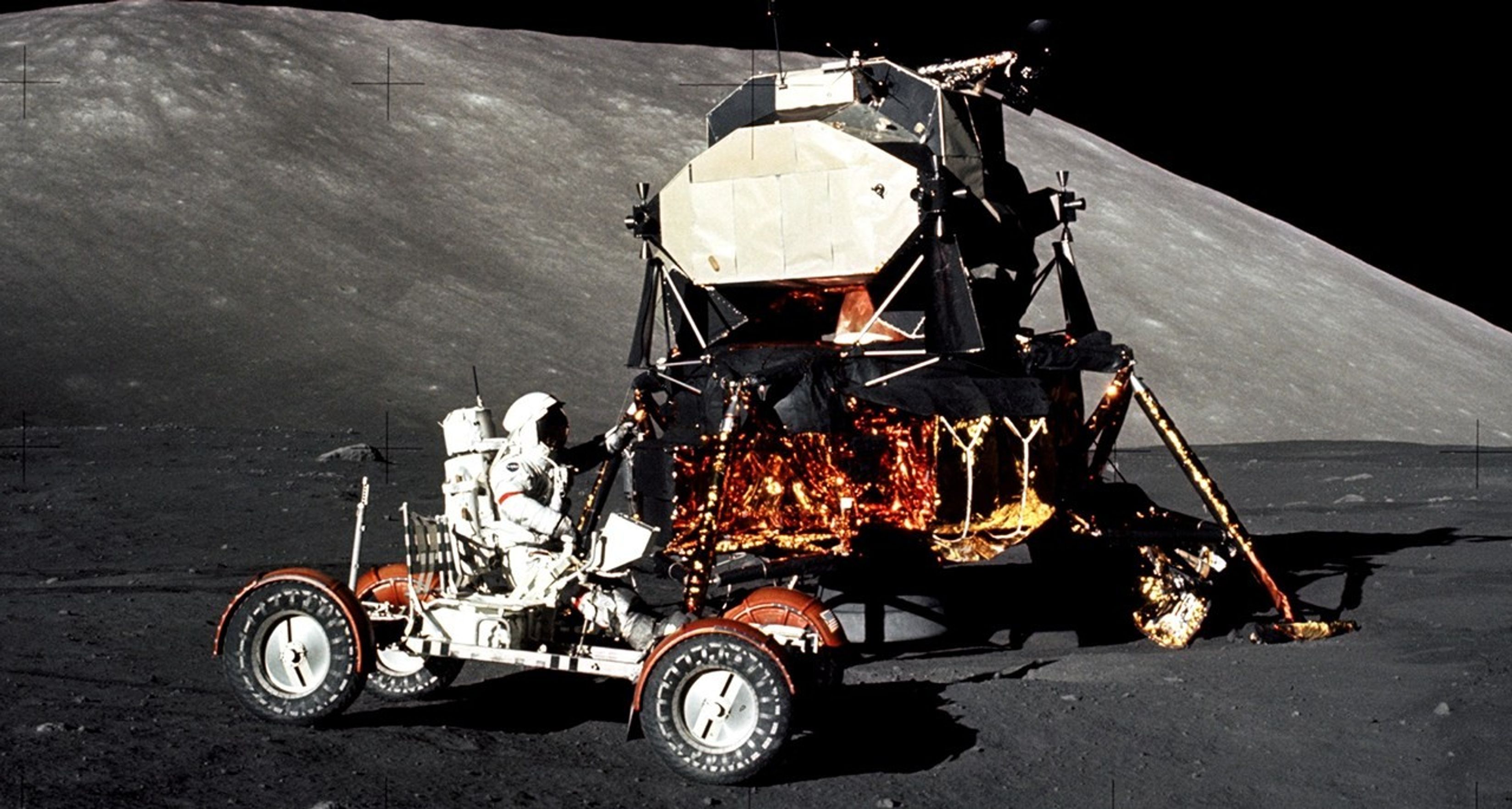
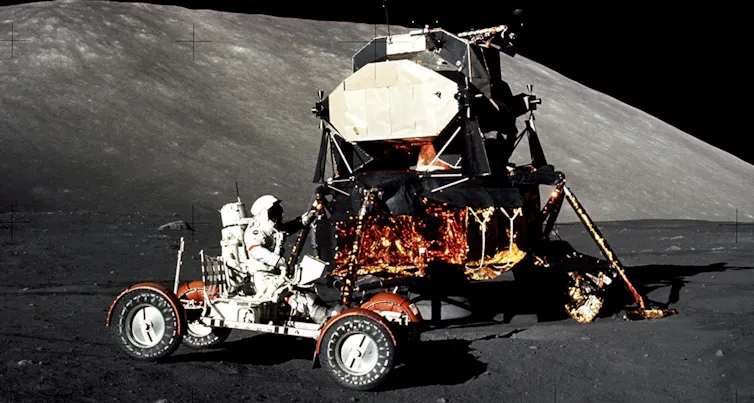
At 13:24:59 Central Standard Time on December 19 1972, the Apollo 17 command module splashed down in the Pacific Ocean, about 350 nautical miles south-east of Samoa, concluding the last mission to the Moon.

During his career, Apollo 17’s commander, Eugene A. Cernan, logged 566 hours and 15 minutes in space, of which more than 73 hours were spent on the surface of the Moon. Cernan was the second American to have walked in space, and the last person to leave his footprints on the surface of the Moon.

The conclusion of the Apollo 17 journey marked not only the end of a mission, but the close of an era. Between 1969 and 1972, 12 astronauts walked on the Moon over the course of six separate landings.

Half a century later, Nasa is preparing to return under its Artemis programme. For the Artemis II mission, set to launch on April 1 2026, four astronauts will travel in a loop around the Moon in Nasa’s next-generation Orion crew capsule.

More than 50 years is a long gap, and it is only natural to ask if Americans could reach the Moon routinely in the early 1970s, why did it take so long for them to try to go back?

The Apollo 17 mission in 1972 marks the last time humans set foot on the Moon.
Nasa

The answer is not simple. It has little to do with technology and much more with how politics, money and global support work. The place to start is with Apollo itself: its model of exploration was not built to last, and was clearly not sustainable.

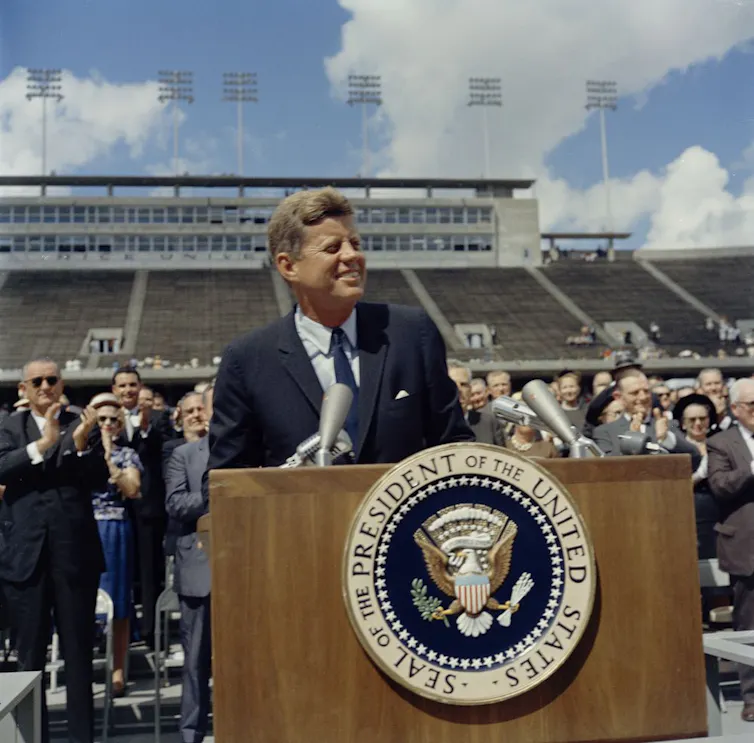
On May 25 1961, before a joint session of Congress, President John F. Kennedy committed the US to the goal, before the decade was out, of landing a man on the Moon and returning him safely to the Earth.

After Kennedy’s assassination in 1963, President Lyndon B. Johnson ensured that this Moon landing goal was met. But rising costs from the Vietnam war and domestic reforms reduced his appetite for further space investment.

John F Kennedy’s speech at Rice University in 1962 reaffirmed America’s commitment to landing on the Moon.
JFK Library

In fact, Nasa’s budget peaked in 1966 and began falling even before Apollo’s success, undermining prospects for sustained exploration. Further funding was declined, planned missions were cancelled, and Apollo ended in 1972 – not because it failed, but because it had accomplished its task.

Sustainable exploration (in space as on Earth) requires stable political commitment, predictable funding, and a clear long-term purpose. After Apollo, the US struggled to maintain all three at once.

Policymakers began to ask what direction Nasa should take next. In 1972, President Richard Nixon directed the space agency to begin building the space shuttle. It would lead Nasa to shift its focus away from deep space exploration towards operations in low-Earth orbit.

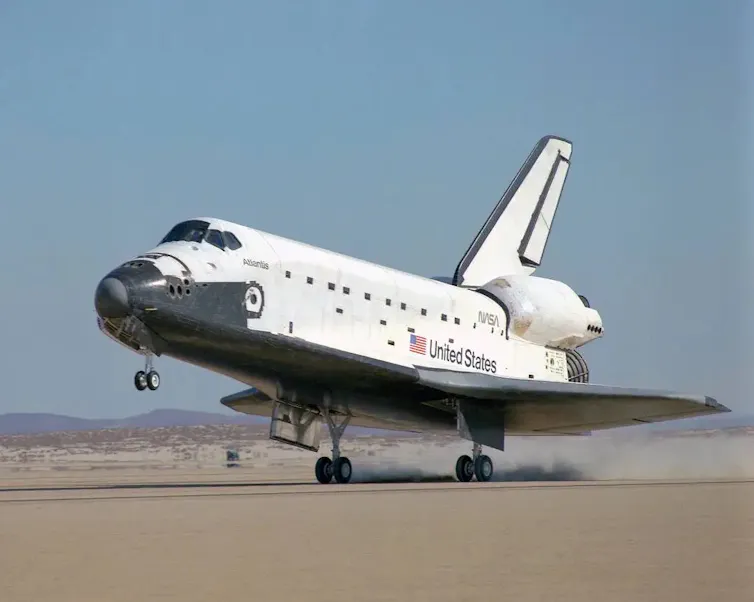
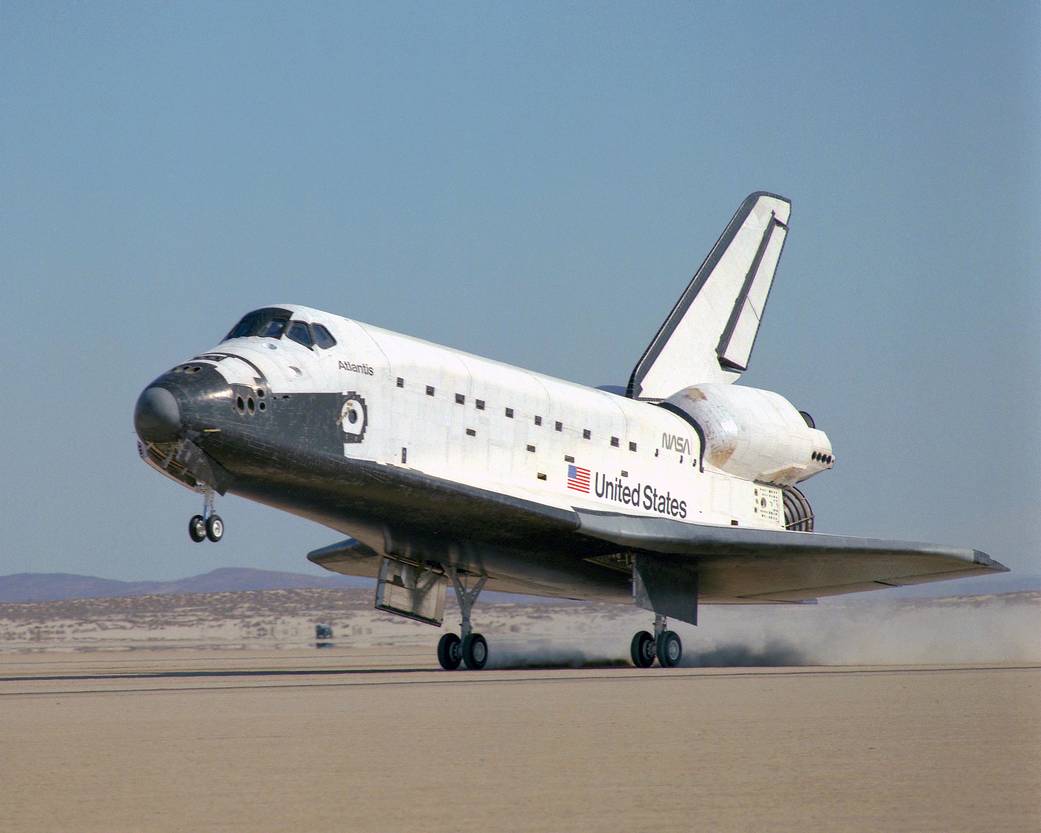
‘Space truck’: the shuttle was marketed as providing affordable access to low-Earth orbit. The reality was somewhat different.
Nasa

Marketed as a reusable “space truck”, the space shuttle was intended to make orbital access routine and affordable. However, it would turn out to be a vehicle of incredible complexity, marred by technical failures and human tragedies – the Challenger and Columbia accidents in which 14 astronauts’ lives were lost.

Eight years into the shuttle programme, some in the space community believed it was time for the US to once again set its sights on the Moon – and the tantalising prospect of a landing on Mars. On July 20 1989, the 20th anniversary of Apollo 11’s first Moon landing, President George H.W. Bush announced the Space Exploration Initiative (SEI).

The plan aimed for a long-term commitment to construct Space Station Freedom, return astronauts to the Moon “to stay”, and finally send humans to the red planet.

However, the high estimated costs of SEI, reaching hundreds of billions of dollars, led to its downfall. Weak support in Congress along with other factors led to its cancellation under Bill Clinton’s presidential administration.

During the 1990s, the International Space Station (ISS) project cemented low-Earth orbit as the priority for human exploration. The space shuttle was the US’s means of building the station and transporting crews to and from the orbiting outpost.

The ISS became a symbol of scientific cooperation and technical prowess. Experiments carried out on the station generated valuable insights into everything from medical research to materials science. However, it also soaked up resources that might otherwise have supported deep-space exploration.

The Columbia disaster in 2003 – in which a space shuttle broke up over Texas with the loss of its crew – led to another rethink of America’s direction in space. As a result, President George W. Bush announced the Vision for Space Exploration.

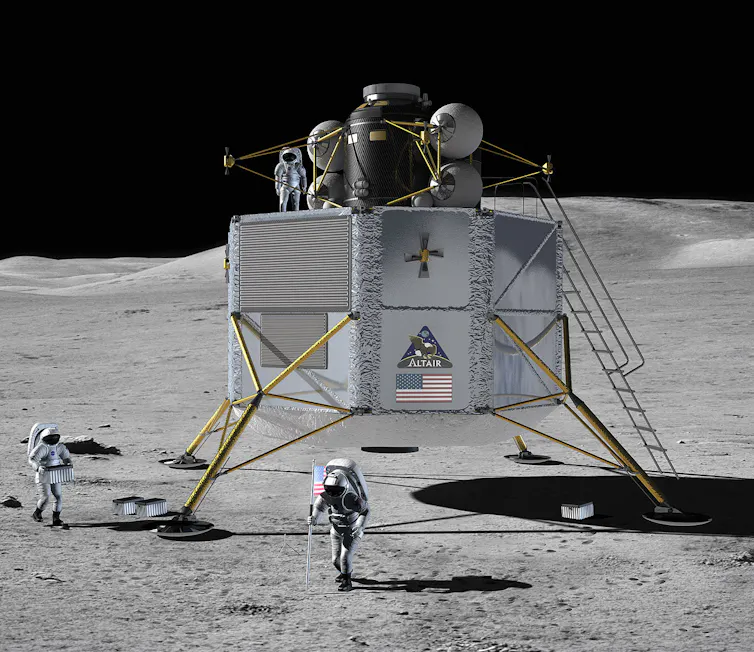
The aim of this proposal, which would give rise to what was known as the Constellation programme, was to rebuild Nasa’s capability for reaching the Moon, with Mars as its longer-term goal. But independent reviews warned that costs and schedules were unrealistic. Congress never really gave full financial support to Constellation, leading to its cancellation in 2010 during Barack Obama’s presidency.

This repeated cycle of cancelled space projects exposes some inherent limitations to the system for funding lunar exploration. A sustainable Moon programme needs strong multi-sector commitment, and mechanisms in place for guaranteed multi-decade funding.

Constellation would have sent astronauts to the lunar surface on a lander called Altair.
Nasa

But such large programmes must compete each year with defence, healthcare and social spending. Electoral turnover and shifting committee leadership in the US further weaken the prospect of continuity.

Lunar exploration has also suffered from an unresolved strategic question: why go back at all? Apollo’s purpose was largely geopolitical, and after the cold war no equally compelling justification really emerged.

Scientific returns from human space missions are limited compared with robotic exploration. Commercial prospects remain uncertain, and prestige alone rarely sustains or secures large budgets.

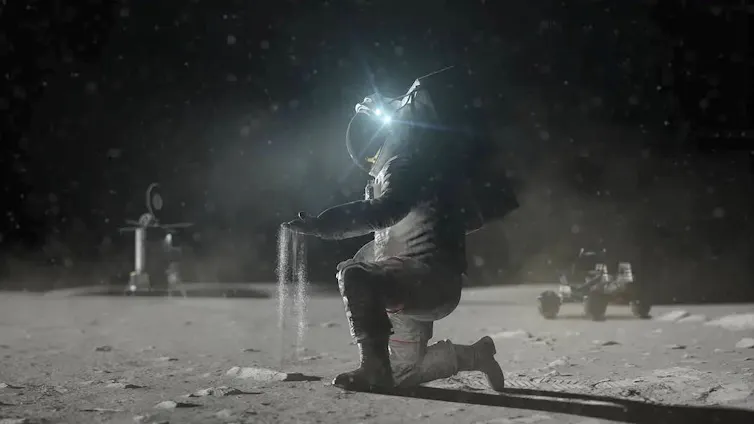
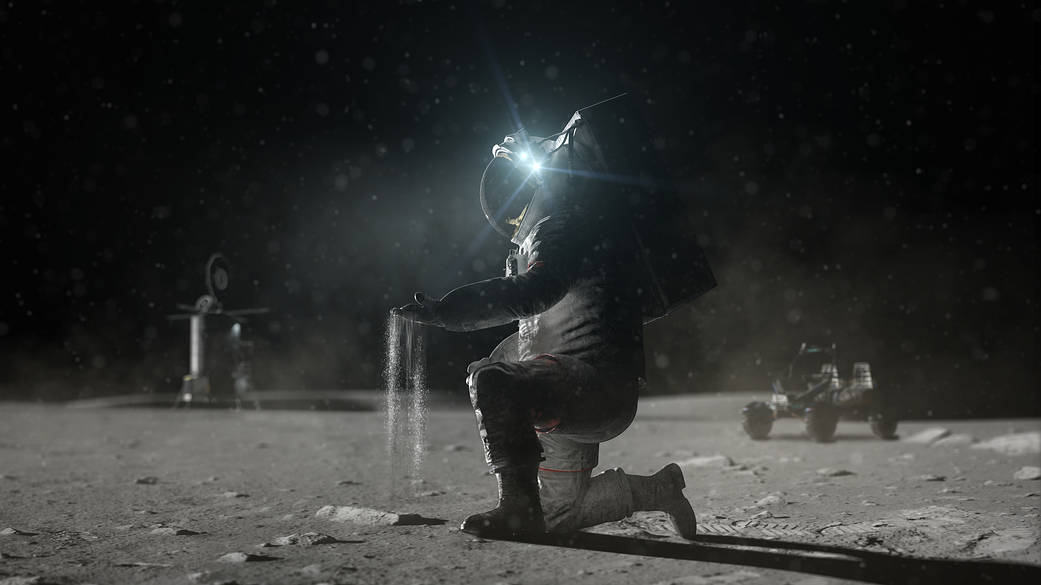
Maybe a more fitting question is: why does Artemis appear to have escaped the pattern? Well, Nasa argues that sending astronauts back to the lunar surface – and in particular, establishing a sustained presence there – will help researchers learn “how to live and work on another world as we prepare for human missions to Mars”. That is true, up to a point.

Nasa also emphasises that Artemis will be built through commercial partnerships and international cooperation, creating the first long-term human foothold on the Moon.

With Artemis, has Nasa finally found a rationale to maintain a more enduring presence on the Moon?
Nasa

The programme seems to sit at a carefully crafted intersection of US government leadership, commercial launch capabilities, and a broad coalition of international partners brought together under the Artemis Accords. The accords are a set of common principles regarding the use of the Moon and other targets in outer space, agreed between the US and other countries.

The main difference from previous promises to return to the Moon is that this, at least in theory, spreads risk and widens the base of political support. In practice, though, Artemis remains costly and exposed to shifting budgets and priorities.

There is also a cultural dimension to this question. Apollo created a powerful – albeit fragile – myth of swift, heroic technological advance. Artemis is building its large technological base in societies and democratic contexts where investments and commitments tend to evolve slowly, shaped by negotiation, compromise and
competing interests.

If Artemis succeeds, it will be because all the political, economic, societal and scientific incentives have finally aligned in a durable way. But until that alignment is proven, the 50-year gap between Apollo and Artemis is less an engineering puzzle than a reminder of how difficult sustained exploration is for modern democracies.

The Conversation

Domenico Vicinanza does not work for, consult, own shares in or receive funding from any company or organisation that would benefit from this article, and has disclosed no relevant affiliations beyond their academic appointment.

ref. Why has it taken so long to return to the Moon? – https://theconversation.com/why-has-it-taken-so-long-to-return-to-the-moon-274640

How ‘ocean peacebuilding’ can help calm global conflicts

Source: The Conversation – UK – By Robert Blasiak, Associate Professor in Ocean Stewardship, Stockholm University

Irene Fox/Shutterstock

Conflict and turmoil are seemingly rife in the ocean. Choked shipping lanes. Sabotaged seabed cables and pipelines. Migrants risking dangerous sea passages. Collapsed fish populations. Coastlines washed away by a changing climate.

But if we only consider the ocean in terms of conflict, our policymakers start to focus just on threats, borders, extraction and defence. And we miss a key opportunity. Despite the friction, powerful solutions already exist and can be scaled up.

Research shows that the ocean can be a catalyst for proactive peacebuilding. Ocean peacebuilding is the use of marine scientific cooperation, sustainable resource management and conservation efforts to anticipate and prevent conflict while fostering trust among nations.

Ocean peacebuilding is already underway, even in the most unexpected places and those shaped by the sharpest geopolitical tensions. It happens in three key ways.

Building bridges

By embracing diversity of thought when tackling problems, stereotypes and biases can be challenged, simplistic assumptions crumble and common humanity can emerge. This “contact hypothesis” has been key to ocean peacebuilding in the Gulf of Mexico. One hundred miles of water separates the Florida Keys from Cuba – plus several decades of geopolitical tensions.

Beneath the water’s surface, marine ecosystems know no such boundaries. Coral larvae, endangered sharks, turtles and fish travel the currents of the gulf. Remove a key nesting site or a stop along a migratory corridor, and those species could disappear for everyone.

Marine biologists from Cuba, Mexico and the US began quietly meeting in the 2000s to discuss conservation of marine wildlife and share data, despite the diplomatic standoff between the US and Cuba. When relations thawed in 2014, the then US president Barack Obama and former Cuban president Raul Castro re-established diplomatic relations between their countries.

map of Cuba
Several decades of geopolitical tensions separate Cuba from Florida Keys, but marine life knows no such boundaries.
M-Production/Shutterstock

Together they established the “Redgolfo” network of marine protected areas across the Gulf of Mexico. Marine protected areas or MPAs are parts of the ocean or coastline where human activity is restricted to protect natural resources, biodiversity or cultural heritage.

Scientific cooperation became a trusted foundation for heads of state to sign agreements and shake hands. Things improved.

Building standards

But the world never stands still. Politicians come and go, priorities shift, norms evolve. The second mechanism of ocean peacebuilding is the spreading of norms that empower civil society.

Designating marine protected areas without consultation and excluding local or Indigenous communities can end in failure and even spark conflict.

So when 14 serving heads of state came together in 2018 to establish the High Level Panel for a Sustainable Ocean Economy, their flagship commitment was to ensure 100% sustainable management within their respective jurisdictions by 2025 through designing sustainable ocean plans.

They not only all agreed to this – they also agreed that these plans must be developed in an inclusive way and be underpinned by the best available science and Indigenous knowledge.

A group of countries that collectively accounts for 50% of the Earth’s coastlines had agreed on shared standards of how to plan ocean conservation and use. It relied on inclusion, consultation and empowerment of civil society.

Building trust

In 2004, the armed conflict in Indonesia’s Aceh province entered its 29th year. And then another disaster struck: an earthquake triggered a devastating tsunami that swept across the region. More than 230,000 people died. The shock was profound.

One former combatant said: “My family was gone; the people were gone; the enemy was gone. What is there to fight for?” Within months, a peace deal was signed.


Read more:
Reflecting on 20 years of the Aceh tsunami: From ‘megathrust’ threat to disaster mitigation


In the following months, efforts to establish an Indian Ocean tsunami early warning system began. Over time, the system was expanded and improved. Ocean scientists and seismologists in the region began working together. In Aceh, the government started multiple initiatives to install tsunami buoys and improve its early warning system.

The government was taking steps to improve the wellbeing of its people. This leads to collaboration that re-establishes and builds trust in public institutions – a critical priority in a post-conflict setting.

Can ocean peacebuilding stop a war?

Today, US-Cuba relations seem to be spiralling towards conflict. What difference could ocean peacebuilding make? History shows that even amid acute tension, ocean science is a vital diplomatic back channel. It keeps dialogue alive and gives a sense of shared prosperity and that ecological loss is a cost born by all.

At the height of the cold war and nuclear arms race, the US and USSR entered into a détente programme of ocean science collaboration. Known as the Polymode program, this focused on studying the structure of currents and eddies in the Atlantic Ocean. For years, hundreds of scientists from the two countries worked together, sharing data, vessels, ports and equipment. Science advanced. Yet when the USSR invaded Afghanistan in 1979, everything stopped.

So while we need new narratives, we cannot afford to be naïve.

Ocean peacebuilding won’t stop all wars. But it may help prevent some from starting and others from returning. In Northern Ireland, an environmental organisation called the Loughs Agency shows how cross-border institutions can sustain peace while stewarding shared marine ecosystems.

The more deeply peace is built into institutions, processes and standards, the stronger the prospects for avoiding future conflict.

The Conversation

Robert Blasiak is a member of the Advisory Board of the UN Decade of Ocean Science for Sustainable Development 2021-2030. This is a voluntary and unpaid position.

Paul Conville does not work for, consult, own shares in or receive funding from any company or organisation that would benefit from this article, and has disclosed no relevant affiliations beyond their academic appointment.

ref. How ‘ocean peacebuilding’ can help calm global conflicts – https://theconversation.com/how-ocean-peacebuilding-can-help-calm-global-conflicts-278903

Why business students should spend time connecting with nature

Source: The Conversation – UK – By George Ferns, Senior Lecturer in Business and Society, University of Bath

PeopleImages/Shutterstock

In business, nature often gets reduced to numbers: emissions targets, sustainability metrics, biodiversity data. But when professionals rely too heavily on what’s measurable, they can risk missing what’s meaningful. One of the most effective ways to tackle this is through outdoor education.

For business students and professionals, this approach offers something conventional leadership programs often miss. Outdoors, environmental issues become tangible. Ecosystems, soil, and water are no longer abstract case material, but living systems to notice and learn from.

My own work with students studying for a Masters in business administration (MBA) shows how outdoor learning can support business professionals. It helps them rethink leadership, sustainability and their relationship with the living world in ways that classroom teaching rarely achieves.

My students and I have headed out of seminar rooms at the University of Bath and into nearby fields and woodland to experience, instead of just think and talk about, sustainability. Some were hesitant at first. As they slowed down and tuned in, though, the conversations shifted.

One told me they had not felt so clear-headed in years. Others described sudden “ah-ha” moments – experiencing interdependence (a cornerstone of both ecology and sustainability) not as theory, but as an experienced reality.

These moments highlight what philosophers describe as the shift from “shallow” to “deep” connection with nature. As I have argued in research, shallow approaches treat nature as a backdrop for reports, strategies, or symbolic gestures. Deep connection arises when leaders feel their place within living systems through direct, embodied experience.

Other studies have found similar results. A research study that reviewed a wide range of outdoor learning programs found consistent outcomes. Participants reported stronger motivation, improved wellbeing and more positive environmental attitudes.

Recent research in has found that direct engagement with nature is one of the strongest predictors of a lifelong commitment to helping the environment. Experiential education can support this. It involves hands-on, immersive experiences in nature, where people engage emotionally with ecosystems and reflect on their place within them, rather than learning in abstract ways.

Photo of hands planting tree
Learning outdoors can shift perspectives.
Larek/Shutterstock

This matters for business because leadership decisions are not purely analytical. They are influenced by perception, emotions and values. Research shows that awe-inspiring encounters in nature can reduce stress and enhance empathy. In one study, participants who spent meaningful time outdoors later drew themselves smaller, reflecting a humbler, interconnected sense of self.

For business leaders, humility and empathy are not soft extras. They are essential for navigating crises, building trust and making effective long-term decisions. Outdoor learning creates the conditions for these qualities to develop.

This is why nature-based leadership retreats and wilderness programs are on the rise.

Business practice

A growing number of companies are taking their teams outdoors to connect employees more deeply with their sustainability strategies. Rather than discussing sustainability in meeting rooms, participants encounter nature directly through the living systems they depend on. The intention is to make organisational values tangible and emotionally resonant.

Clothing company Patagonia’s founder, Yvon Chouinard, has long credited time outdoors as foundational to his company’s environmental values. Footwear company Vivobarefoot’s leadership team has held nature immersions on remote beaches and in woodlands to guide a shift toward “regenerative thinking”.

These initiatives are not fringe experiments – they signal how business culture itself is beginning to shift.

Of course, there is a risk that outdoor learning initiatives become either a form of greenwashing or simply another obligatory corporate away day. Simply taking employees outdoors does not guarantee meaningful engagement with sustainability. Without careful design and integration into organisational practice and culture, such experiences may remain superficial – inspiring individuals without leading to real change.

Additionally, peer-reviewed research on the effectiveness of nature-based retreats for corporate sustainability is still limited. Many organisations that adopt them already hold strong pro-environmental values.

Evidence does, however, suggests outdoor education can influence how people think and lead. Reviews of outdoor leadership initiatives show strong “learning transfer”. Follow-up studies on outdoor education programmes indicate that leadership capacities developed in nature – such as independence, confidence and decision-making – persist after outdoor education retreats.

Business leaders must do more than analyse. They must feel their connection to the living world in order to lead with compassion and courage. Nurturing that connection may be one of the most strategic decisions any (future) business leader can make, both for the planet and for themselves.

The Conversation

George Ferns does not work for, consult, own shares in or receive funding from any company or organisation that would benefit from this article, and has disclosed no relevant affiliations beyond their academic appointment.

ref. Why business students should spend time connecting with nature – https://theconversation.com/why-business-students-should-spend-time-connecting-with-nature-259228

The revolution in dinosaur science started 50 years ago – here’s what we have learned

Source: The Conversation – UK – By Michael J. Benton, Professor of Vertebrate Palaeontology, University of Bristol

The study of dinosaurs has been through a revolution in recent decades. The story began half a century ago, when Robert McNeill Alexander, a professor of zoology at the University of Leeds, showed how the speed of an animal could be calculated from the spacing of its footprints and its body size.

This formula worked both for modern and extinct animals and so, for the first time, the speed of a dinosaur could be estimated from a fossilised trackway. Alexander calculated speeds for different dinosaurs of between 1.0 and 3.6 metres per second (up to 13kmh) – rather slower than others had guessed.

In the 1970s, dinosaurs were becoming exciting again after years of being treated as lumbering failures. Termed the “dinosaur renaissance”, American paleontologists Robert Bakker and John Ostrom were among those transforming understanding by arguing that dinosaurs were active, possibly warm-blooded, and that they included the ancestors of birds. Remarkable fossils of feathered dinosaurs from China, found from 1996 onwards, cemented this idea.

Before Alexander’s groundbreaking study in 1976, palaeontologists had made “reasonable guesses” about the function of dinosaurs – persuasive arguments but often untestable. Alexander began a movement to apply scientific methods to investigating dinosaur function and behaviour.

His research heralded the start of a revolution in palaeobiological methods, using modern scientific methods to bring dinosaurs to life in a testable way.

Modern techniques applied to the deep past

There are many questions about dinosaurian palaeobiology: what colours were they, how fast did they run, how did their jaws operate, how long did they take to grow to adult size?

Modern palaeobiologists conduct a three-step process to answer such questions. First, observe the fossil, then apply what we call the neontological toolkit – sets of observations and rules from the modern world that can be applied to ancient situations – and finally, make an inference about the dinosaur’s behaviour.

To establish the running speed of dinosaurs from fossilised dinosaur tracks, Alexander measured the tracks, applied the formula derived from modern animals, and presented the speed calculation. He showed definitively that large dinosaurs could not gallop at the speed of a racehorse, as some had suggested.

A more recent example by one of us (Emily) is the use of engineering methods to establish dinosaurs’ jaw movements. The computational methods are identical to those used to design aircraft, buildings and medical limb replacement devices, and so they are all stress-tested and they work. By making a 3D model of a skull or skeleton, the dinosaur’s jaw movements and forces, as well as leg movements, could be calculated.

Feeding calculations show that some flesh-eating dinosaurs punctured bone, while others pulled at their dead prey to yank off chunks of flesh. The most famous dinosaurian flesh eater, Tyrannosaurus rex, bit with a force of 50,000 newtons – enough to have bitten a car in half.

Video: CBBC.

Scanning can reveal embryonic dinosaurs inside their eggs, and sections through their bones show growth rings that tell us their age at death. This means palaeontologists can calculate the rate of growth of dinosaurs and indeed some of them, during growth spurts, were putting on as much as 1-2 tonnes a year.

Earlier calculations suggested T. rex reached adult size of 6-8 tonnes at 20 years, but re-examination by Holly Woodward and colleagues suggests more like 30 years. This revision is not based on guesswork, but on counting bone rings and estimating body masses from a larger sample of specimens than first used.

But what about their colours? Even here, the new wave of investigative palaeontology has revealed the answer. In 2010, in work done between Bristol, Beijing and Yale University, the colours and colour patterns of two small theropod dinosaurs, Sinosauropteryx and Anchiornis, were published.

The neontological toolkit here was from modern birds, whose melanosomes (tiny capsules inside their feathers) contain variants of the pigment melanin. Two types of melanin give either black, brown and grey colours or ginger colours, and each type is contained in a differently shaped capsule.

These shapes were preserved in the dinosaurs’ fossil feathers. Details of their coloured crests and wing and tail feather stripes show that small dinosaurs at least used these colours in competitive displays, just like some modern birds.

We don’t need a time machine

All these studies are scientific hypotheses that can be disproved by contrary evidence. We don’t need a time machine to determine, say, that the small Chinese dinosaur Sinosauropteryx had a ginger-and-white striped tail, or that T. rex could run at a range of speeds from 16 to 40 kilometres per hour.

Anyone who disagrees with these findings simply has to provide a critique of the chain of evidence to identify where an error has been made. But this scientific revolution in dinosaur studies does not mean every question about them has been answered.

For example, we don’t yet know the sounds dinosaurs made, nor exactly how they communicated with each other. In some cases, researchers have reconstructed the nasal passages and discovered what toots and honks some dinosaurs made – but we cannot be sure these are realistic.

What are the limits of our knowledge about dinosaurs? It would be wise to be cautious in our predictions. After all, it was once widely claimed we would never know their true colours. A new generation of smart investigators may soon identify new toolkits that solve many more questions about these extraordinary creatures.

The Conversation

Emily Rayfield receives funding from UK research councils NERC and BBSRC.

Michael J. Benton does not work for, consult, own shares in or receive funding from any company or organisation that would benefit from this article, and has disclosed no relevant affiliations beyond their academic appointment.

ref. The revolution in dinosaur science started 50 years ago – here’s what we have learned – https://theconversation.com/the-revolution-in-dinosaur-science-started-50-years-ago-heres-what-we-have-learned-278600

Noma wouldn’t be the first – in elite kitchens abuse is worn as a badge of honour and suffering is rewarded

Source: The Conversation – UK – By Rebecca Scott, Senior Lecturer in Marketing and Strategy, Cardiff University

hxdbzxy/Shutterstock

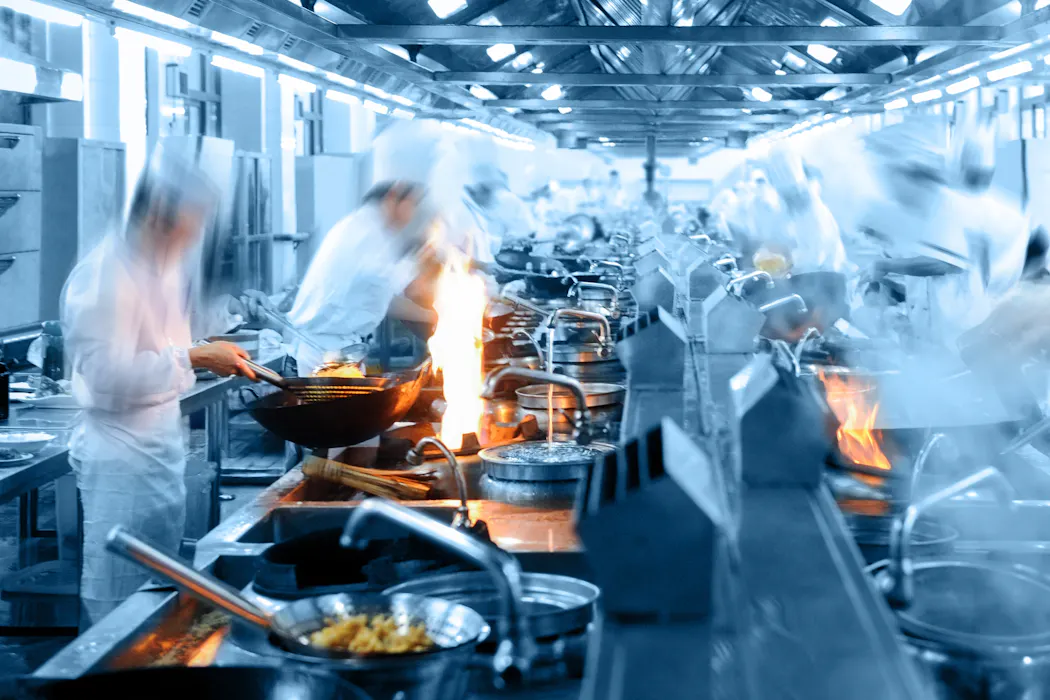
We love the magic of eating out. Instagrammable plates, a curated atmosphere, chefs that can serve artistry in every delectable bite. But what if our pleasure is part of an illusion? Behind many opulent dining rooms lies a harder truth: the taste and spectacle we celebrate are too often produced in kitchen cultures shaped by fear, humiliation and even violence.

René Redzepi of the renowned Danish restaurant Noma has recently quit after 35 staff members alleged he had been physically and emotionally abusive towards them. Having researched elite kitchens, I can tell you reports of toxic kitchen cultures are not new. So much so that this reality has bled into popular culture. This ranges from fictional chefs like the emotionally unstable Carmy of The Bear, who is depicted as having come up in kitchens like Noma’s, to the very real Anthony Bourdain, who wrote in his book, Kitchen Confidential, that macho, competitive, self-reliant and aggressive behaviours are normal behind closed doors.

In research alongside colleagues in sociology and organisational studies, I spoke to elite chefs who shared their experiences of working in such kitchens. What they told us exposed three reasons why cultures of violence persist in these work environments.

1. Out of sight

Elite kitchens are often hidden worlds, tucked into basements and behind closed doors, far from the calm luxury of the dining room. That separation creates what we call a “geography of deviance”: a space where social norms, workplace expectations and even employment protections can start to fall away.

Think about basement kitchens. These are often windowless and airless. There’s the clatter, the heat, the blades, the fire. Then there are all the tools of craft, which can be repurposed into tools of violence. If you’ve watched the first season of The Bear, you’ve seen this happen when sous-chef Sydney in a heated moment accidentally stabs front-of-house manager Ritchie. Throughout that show we see characters lose their cool and act abusively towards each other.

One chef that we interviewed described the kitchen “like being in a submarine”. Another chef explained how “being out of sight definitely allows abuse to happen”.

Hidden away, the kitchen becomes a backstage world where shouting, intimidation and physical abuse can be normalised. Shared hardship binds the brigade together, creating a tight-knit underworld of enduring violence. What emerges is a kind of community enclosure where new rules apply.

2. Scars are badges of honour

For many chefs, suffering is not just a part of the job; it becomes part of who they are. The pressure and pain of kitchen life are folded into a chef’s professional identity. Scars, burns and cuts are worn as marks of legitimacy. Chefs are recognised as elite by what is burned onto their skin. As one Michelin chef shared:

I was on the tube once and I was hanging – I stood up holding the top rail. And someone was like: “Oh, where are you a chef then?” I was like: “What do you mean?” And they were like: “Well look at your arm, you must be a chef!” And I had all burn marks on my arms from the oven. It felt so cool to be recognised as a chef.

What we call “embodied identity work” helps explain this: chefs don’t just endure suffering, they can come to see it as meaningful. Pain is often reframed as discipline, growth and transformation – a way to prove commitment, build skill and become the kind of chef they aspire to be.

3. Enduring pain leads to success

In elite kitchens suffering doesn’t just wound, it distinguishes, signalling that a chef can stand the heat and keep going. Physical and mental durability is often tied to employability and advancement.

One Michelin chef explains how:

It just blew up in the service … [He] picked up his bread knife from the middle of the kitchen and just – had it to my neck in front of everyone … [he] said: “I’m going to fucking kill you.” And that was traumatising … Not so long after that I got moved to the flagship – the three Michelin star restaurant. They thought: “Fuck, this guy’s good! … Fuck, man, that guy’s just done that to him and he doesn’t give a fuck. Bring him over.”

Like professional musicians, the military,
policing and athletic sports, elite kitchens can turn suffering into virtue. That is why violence persists and what makes cultures difficult to change. Violent behaviours are not always seen as a failure in the workplace, but part of what it takes to belong and succeed.

This article features references to books that have been included for editorial reasons, and may contain links to bookshop.org. If you click on one of the links and go on to buy something from bookshop.org The Conversation UK may earn a commission.

The Conversation

Rebecca Scott does not work for, consult, own shares in or receive funding from any company or organisation that would benefit from this article, and has disclosed no relevant affiliations beyond their academic appointment.

ref. Noma wouldn’t be the first – in elite kitchens abuse is worn as a badge of honour and suffering is rewarded – https://theconversation.com/noma-wouldnt-be-the-first-in-elite-kitchens-abuse-is-worn-as-a-badge-of-honour-and-suffering-is-rewarded-279546

Why a social media ban for teenagers misses the point

Source: The Conversation – UK – By Jeremy Howick, Professor and Director of the Stoneygate Centre for Excellence in Empathic Healthcare, University of Leicester

Pressmaster/Shutterstock.com

Taylor Little became so badly addicted to her smartphone that she felt she had lost many of her teenage years. “I was literally trapped by addiction at age 12 and lost my teenage years because of it,” she said. Her addiction was to social media, which led to suicide attempts and prolonged depression.

Molly Russell, at just 14, took her own life. Her parents blame the apps on her phone for exposing her to graphic and disturbing content that took control of her mindset.

These stories are not unique. Data from thousands of people shows that social media increases loneliness, depression, anxiety and suicidal thoughts. Last week, a jury in California found that Meta and YouTube were liable for causing a teenager’s addiction to social media. The idea that social media causes harm is no longer in dispute.

The proposed response – in Australia, now proposed in the UK and elsewhere – is to ban social media for under-16s. It is an understandable impulse. But there are good reasons to think it won’t work – despite politicians claiming a successful start to the ban.

Teenagers have always found ways around rules. Getting an older sibling to buy alcohol is a time-honoured tradition. When it comes to social media, teenagers are more tech-savvy than the adults trying to restrict them, and evidence is emerging that many are working around the age verification systems put in place to enforce bans, such as by using VPNs (virtual private networks).

Rules will exist, but compliance will be patchy and hard to enforce. Those most determined to access social media may also be the most resourceful in getting around restrictions. This means that the teenagers most at risk may also be the least affected by a ban. Evidence from other areas shows that when certain activities are driven underground, they often become more harmful.

Not neutral tools

Even if the bans worked perfectly, they would address only part of the problem. It is difficult to disentangle the harms of social media from the devices that deliver it.

Smartphones are not neutral tools: they are engineered to hold attention through constant notifications, “frictionless” access to content, and rewards for regular interactions. Research links smartphone use – not just social media – to disrupted sleep, impaired attention and cognition, mental health problems, physical ailments such as chronic back pain and addiction.

Social media is one component of a broader “smartphone ecosystem”, and targeting one app while leaving the ecosystem intact is unlikely to solve much.

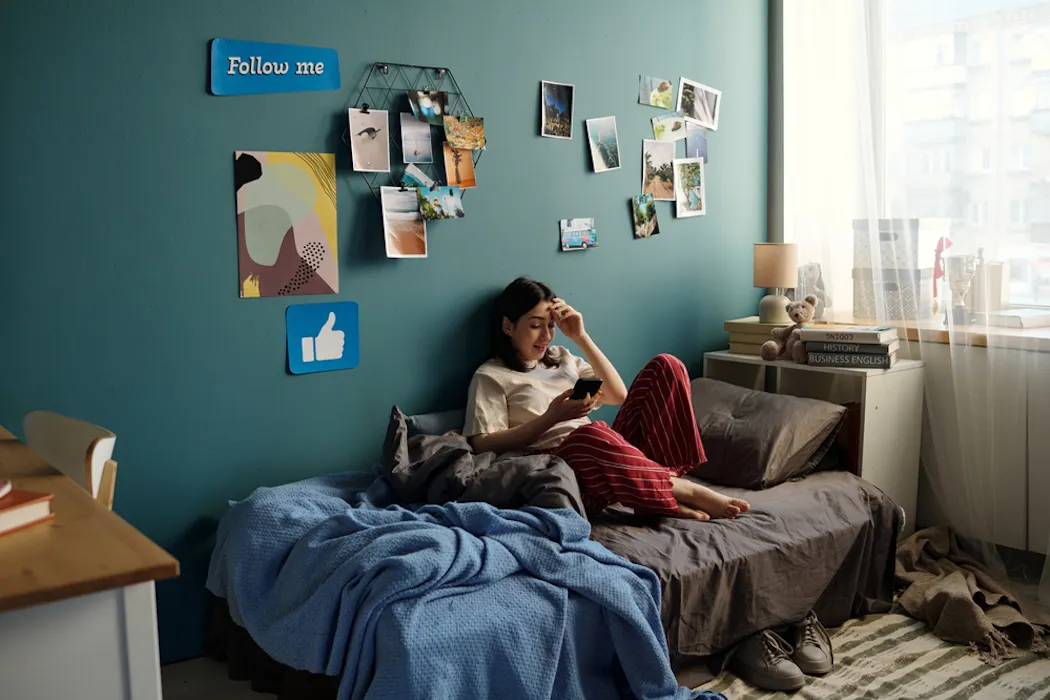
If social media is blocked, teenagers are not going to put their phones down. They will migrate to mobile games, group chats and endless web browsing – activities that rely on the same design features driving their social media use: notifications, streaks (features that track consecutive days of use and reward consistency), infinite scroll. The problem is not any single app but a pattern of behaviour that will find new outlets.

Nor is this only a problem for teenagers. Adults struggle with excessive smartphone use too. Heavy use is associated with poorer sleep, reduced attention and higher stress – and in some respects the adult consequences are more severe. Distracted driving, often fuelled by phone use, kills thousands of people every year.

Man looking at his phone while driving.
Distracted driving kills thousands each year.
Noody/Shutterstock.com

This matters for teenagers because behaviour is learned by watching others. Children who see parents, teachers and other adults checking their phones absorb that as the norm. A policy that targets only young people does nothing to change the culture they are growing up inside.

And opting out is becoming harder for everyone. Primary school children are expected to use smartphones for homework – on apps that share more than a passing resemblance to addictive games. Online banking has become more difficult without one. Workplaces assume employees are reachable via multiple WhatsApp groups at all hours.

When opting out means opting out of modern life, restricting access to one category of app starts to look less like a solution and more like a gesture.

If the goal is to reduce harm, the focus needs to widen. The deeper issue is the central role smartphones now play in everyday life – for all of us, not just teenagers. That points towards different kinds of intervention: delaying smartphone adoption among younger children, encouraging simpler devices, redesigning compulsive features across all apps, and ensuring that essential services such as banking, education and travel stop assuming everyone is glued to a screen.

Banning social media for teenagers may feel like decisive action. But until the broader dependency is addressed, it will not deliver the change its advocates are hoping for.

The Conversation

Jeremy Howick does not work for, consult, own shares in or receive funding from any company or organisation that would benefit from this article, and has disclosed no relevant affiliations beyond their academic appointment.

ref. Why a social media ban for teenagers misses the point – https://theconversation.com/why-a-social-media-ban-for-teenagers-misses-the-point-279492

As that new food caddy lands, here’s how to reduce waste – not just recycle it

Source: The Conversation – UK – By Katy Tapper, Professor of Psychology, City St George’s, University of London

Thomas Holt/Shutterstock, CC BY-NC-ND

If you live in England, you may have recently received a new food waste caddy. Councils are now required to collect your separated food waste and turn it into fuel, fertiliser or compost. So you can live happily in the knowledge that your potato peelings and stale bread will be put to good use rather than going to landfill.

But there’s a risk that the less we feel bad about wasting food, the less effort we may make to try to limit the amount we waste. This is a problem, because around 40 to 50 times more energy goes into producing, transporting and selling food than can be recovered from recycling it. To drastically cut food-related emissions we need to get serious about reducing food waste, not just recycling it.

Reducing food waste is hard. It’s difficult to know exactly how many potatoes will get eaten at Sunday lunch. Leftover potatoes in the fridge can be easily forgotten. Predicting how many bananas your children will eat before they turn too ripe during the week is tricky. And it’s difficult to persuade yourself to eat that stale crust of bread for lunch when you could get a fresh baguette on your way to work.

There are so many different things that influence our food needs and preferences.

Plan and track

How can we make it easier? Our research points to two key steps that could make an important difference.

First, experiment with shorter term, more flexible meal planning. There is evidence that food planning behaviours cut waste. These include planning meals ahead of time, writing a shopping list and checking fridge and cupboard supplies before buying. But the further ahead we meal plan, the more time there is for things to change. You might get invited out to dinner, you could run out of time to cook, your child moves on from their obsession with hummus.

Introducing some flexibility could help. This may include planning for a meal of leftovers, including meals that can be adapted to accommodate different ingredients (such as stir fries or stews or something with eggs). Swapping meals around between days depending on time, inclination and number of mouths to feed also helps.

clipboard wiht meal planning notes, held by hands in front of open organised fridge with fresh veg
Meal planning can help reduce food waste.
Pixel-Shot/Shutterstock

This tactic won’t be right for everyone. If you have little interest in cooking or limited time and energy, this might just all sound like too much hard work.

Another approach is to use the introduction of the food waste collection scheme as an opportunity to start tracking your waste. How many caddies do you fill each week? Could you aim for a smaller number? Is there anything that seems to lead to more waste or less?

This type of monitoring can create a feedback loop where we compare what’s actually happening with what we want to happen and use any gap between the two to decide what to do next. Feedback loops may be especially helpful for outcomes that are influenced by many different things, such as a person’s weight, a population’s life expectancy or a household’s food waste.

Experimenting with different ways to cut your food waste can prompt you to identify the habits that work best for you. For example, you may discover your kids like frozen overripe bananas in smoothies. Or that putting your leftover potatoes toward the front of the fridge means you’re less likely to forget about them.

This all assumes you’re motivated to reduce your food waste in the first place. If carbon emissions don’t bother you, you could think about the financial savings. In the UK, an estimated £17.5 billion of food is wasted every year. That’s around £1,000 a year for a household of four. These costs are certainly not small potatoes.

The Conversation

Katy Tapper has received funding from Zero Waste Scotland and Oviva UK Limited. She has received consulting payments via City St George’s, University of London from Zero Waste Scotland, WRAP and Scottish Government.

Christian Reynolds serves in advisory roles with the Nutrition Society, Institute of Food Science & Technology, Faculty of Public Health, and ISO/TC 34/SC 20. He has received consulting payments via City St Georges, University of London, from WRAP, Zero Waste Scotland, DEFRA, Welcome trust, and the FSA. He has undertaken pro bono advisory, speaking, and review work with various organizations . In 2020, he received €49,858 in research funding from the Alpro Foundation.

ref. As that new food caddy lands, here’s how to reduce waste – not just recycle it – https://theconversation.com/as-that-new-food-caddy-lands-heres-how-to-reduce-waste-not-just-recycle-it-277674

BTS: The Return shows a global band renegotiating identity and nationhood

Source: The Conversation – UK – By Sarah A. Son, Senior Lecturer in Korean Studies, University of Sheffield

When pop superstars BTS announced a temporary hiatus in 2022, it exposed a tension at the heart of their global success.

As I wrote at the time, the world’s biggest K-pop group had become entangled in South Korea’s competing priorities: cultural soft power on the one hand, and its national security obligations on the other.

Now, nearly four years later, the Netflix documentary BTS: The Return takes fans behind the scenes as they prepared for their much-anticipated comeback. Directed by Bao Nguyen, the documentary follows the group’s reunion after completing mandatory military service and the making of their new album, Arirang.

But the documentary is not the triumphant comeback narrative that fans may have been anticipating. Instead, it reveals the seven members (Jin, Suga, j-hope, RM, Jimin, V and Jung Kook) grappling with a more complicated question. What does it mean to return as global stars, as individuals reshaped by time and experience and as artists newly conscious of what it means to “represent” Korea?

The trailer for BTS: The Return.

At one level, The Return follows a familiar structure marked out by previous pop-star documentaries: studio footage, creative disagreements and moments of reflection. But early in the documentary there is a persistent sense of uncertainty.

The group’s seven members, who served in the South Korean military at different times over the preceding three years and nine months, are grappling with who they have become since leaving the limelight. The transition from military life back into music production feels abrupt and disorienting.

When the members regroup, there is also a strong sense of urgency. A comeback date is already fixed and deadlines drive an intense creative process that doesn’t always unfold as easily as they would wish.

Scenes of late-night discussions, constant revision and ongoing self-critique reinforce the idea that even at rest, the group remains in production mode. The Return shows the additional strain placed on artists who are global figures attempting evolve while newer K-pop boy bands have ascended the ranks and even topped the Billboard album charts.

The band speak openly about feeling stuck, worrying that songs fail to feel “cool”, and the difficulty of finding a sound that reflects who they are now. At one point they joke about naming a track Slump, reflecting their feeling of wanting to give up. At another, they suggest abandoning the pressure around the lead single entirely. But in each moment of doubt voiced by one member, another inevitably steps in with words of encouragement: “Come to your senses, we can do this!”

Their perspective is helped by sitting down to watch old footage of their first days as a group, performing in small venues and handing out flyers for free concerts. These scenes remind them that grit and hard work served them well on the road to global stardom and can do so again.

Representing Korea

The development of the new album in the documentary brings a central tension into focus.

The album draws on the traditional Korean folk song of the same name. It’s often described as an unofficial national anthem, associated with longing and separation. As the concept takes shape, the group are encouraged by producers to lean more explicitly into Korean cultural themes and references.

This generates both excitement and hesitation.

The band show a clear desire to showcase Korean language and identity, as they discuss writing more lyrics in Korean, arguing that authenticity has been diluted by their extensive use of English in prior work. At the same time, they are acutely aware of how these choices might be received by different audiences.

V worries that using an extended sample of Arirang in one song may be seen as “patriotic hype” by Koreans. RM reflects that naming the album after a folk song risks positioning the group as a “national team”.

While they reject the label of “global Korean heroes”, they ultimately decide to lean into their Korean heritage throughout parts of the album, acknowledging that it’s impossible to be certain about what will end up taking off among audiences.

For a group often framed as an instrument of South Korea’s soft power, these choices highlight the challenges of knowing how best to assert cultural identity and reconnect with what distinguishes them in a highly globalised industry.

K-pop operates through tightly controlled visibility, where “idols” are constantly seen but are heavily mediated for fear of tarnishing the clean image the industry seeks to project.

In this context, BTS are not just another K-pop band. Their long-running success and truly global appeal has made them leading representatives of K-pop as an industry and of a particular narrative of national success.

The documentary translates this geopolitical significance into interpersonal dynamics, where the group’s members show the need to “carry” something collectively, to display group cohesion and to meet expectations that extend far beyond music.

RM describes being part of BTS as wearing “a big, incredible crown”, the weight of which can feel overwhelming.

A reflective return

As the group return to Korea to finalise the album, the tone of the documentary shifts towards reflection. The band describe themselves as more introverted, more measured and more certain of themselves in some respects. They are also more conscious of the stakes. The Return is a negotiation between past identity, present experience and future direction.

The wrestling with their maturity and identity after an extended hiatus seems to be paying off so far. Despite RM experiencing an injury just before their live comeback concert in the historic Gwanghwamun Square in Seoul, the album received five stars from Rolling Stone Magazine and hit over 4 million sales in its first week.

BTS are back, but BTS: The Return makes clear that coming back means redefining themselves, their sound and the terms on which they carry Korea with them to the world.

The Conversation

Sarah A. Son does not work for, consult, own shares in or receive funding from any company or organisation that would benefit from this article, and has disclosed no relevant affiliations beyond their academic appointment.

ref. BTS: The Return shows a global band renegotiating identity and nationhood – https://theconversation.com/bts-the-return-shows-a-global-band-renegotiating-identity-and-nationhood-279582

The Symptomatic Surreal: Leonora Carrington exhibition explores her complex relationship with death

Source: The Conversation – UK – By Ailsa Peate, Lecturer in Latin American and Museum Studies, University of Westminster

Encounters with Leonora Carrington’s work are often shaped by their setting, from expansive museum displays to more intimate curatorial spaces. Nowhere is this more evident than at London’s Freud Museum, where new exhibition The Symptomatic Surreal offers a markedly different lens on her life and art.

It’s the first exhibition of the British-Mexican surrealist’s work in the UK for 35 years. The show offers a markedly different experience from encountering her art in Mexico, where she lived from 1942 until her death in 2011.

In institutions such as the Museo de la Mujer (Woman’s Museum) in Mexico City, displays tend to emphasise the more outlandish aspects of her work and personality. Instead, The Symptomatic Surreal houses a selection of Carrington’s sketches made during her internment in Peña Castillo sanatorium in Santander, Spain, in the latter half of 1940.

The exhibition is understated, located in a room far smaller and less open than where I’d engaged with her work previously. I noted no natural light can enter. It’s a perfect fit for the story of Carrington’s confinement and the creativity which ensued.

It’s also important that the museum was once home to Sigmund Freud and his family. As the exhibition unfolds, psychoanalysis comes increasingly to the fore, deepening visitors’ understanding of Carrington’s life, her art and her evolving interpretations of the unconscious.


Read more:
Freud Museum exhibition uses art to explore the psychoanalyst’s often contradictory relationships with women


A life less ordinary

Born in Chorley, north-west England, in 1917 into a family enriched by the textile industry, Carrington felt constrained by expectations that she perform the role of a debutante, despite her growing interest in art and surrealism. Leaving the UK for Paris, she pursued both her artistic ambitions and her relationship with the established – and married – German surrealist Max Ernst. The couple later settled in Provence in the south of the country, from where Ernst periodically returned to Paris to visit his wife, to whom he remained married.

The relationship was ultimately derailed in 1940 by Ernst’s second arrest for being an enemy alien in the country, and ensuing detainment in the Camp des Milles, not far from where he lived with Carrington. In despair after her separation from Ernst and enforced flight from their once shared Provençal home due to encroaching Nazi forces, Carrington crossed the border to Spain via Andorra. During the journey, her grasp on reality became fitful, resulting in a complete breakdown after she arrived in Madrid.

The Symptomatic Surreal presents the aftermath of this break, focusing on Carrington’s sketches at the sanatorium where she was kept for approximately six months. She compared her time there to “being dead”, telling friend Marina Warner: “I’d suffered so much when Max was taken away to the camp, I entered a catatonic state, and I was no longer suffering in an ordinary human dimension.”

Curator Vanessa Boni captures this suffering and foregrounds a period of Carrington’s life which was distinctly unsafe. It was a time during which, visitors learn, the artist was treated three times with Cardiazol, a “treatment” that induced seizures in sanatorium patients to render them compliant.


Read more:
New book sheds light on surrealist artist Leonora Carrington’s extraordinary life and work


Boni has taken Carrington’s own description of the sanatorium as “like death” to heart, making connections to death throughout the exhibition. Areas of the work foreshadow the beliefs around death Carrington would later be exposed to in Mexico. Boni’s choice to draw together statuettes and figures of Egyptian deities Anubis, Isis, Horus and Osiris from Freud’s own collection speaks to a shared interest in death as a stage of transformation.

Gently and with careful attention to language, the exhibition traces Carrington’s undoing and reconstitution, or “rebirth”, as Boni described it in conversation with me. This narrative unfolds through personal letters Carrington sent to her father during her internment, alongside important passages from her written work, Down Below (1944). It is further developed through the artwork of the same name, as well as sketches produced during her time in the sanatorium.

We learn that both Freud and Carrington held a preoccupation with what the artist termed the “down below”, or underworld. It is hard not to see Mexico, the home of the underworld of Mictlán, a place of transformation reached after death, suggested as a fated eventual home for the artist. In Mexican belief systems, death is not feared but a constant presence for the living. This is echoed in a quotation from Carrington chosen to welcome visitors to The Symptomatic Surreal: “I didn’t know where I was going. This seems to be a recurring thing in my life. I think it’s death practice.”

Having progressed through Carrington’s experiences and reactions to her treatment at the sanatorium, we are led to the painting of Down Below (1940), a piece which is certainly uneasy to take in. Lounging, disjointed figures stare vacantly, or indeed without eyes, in front of a circus tent, hinting at the frenzy which may occur behind its curtains. Glints of vibrancy – bright red stockings, mustard yellow tights, a goose feather white body and the Kelly green of Carrington’s horse alter-ego (also present in many of her sketches on display) – are at odds with the heavy experiences which led to the work’s creation, and which bleed into the darkening skies above.

The Symptomatic Surreal is a potent gift for any fan of Leonora Carrington, and certainly for those who seek to understand any of her later works, whether on the canvas, drawn, sculpted or written. The Freud Museum is an excellent home for the exhibition. The show highlights the way we process the unconscious, death and our relationships with mental health through careful curatorial choices.

The Symptomatic Surreal is at London’s Freud Museum until June 28 2026

The Conversation

Ailsa Peate does not work for, consult, own shares in or receive funding from any company or organisation that would benefit from this article, and has disclosed no relevant affiliations beyond their academic appointment.

ref. The Symptomatic Surreal: Leonora Carrington exhibition explores her complex relationship with death – https://theconversation.com/the-symptomatic-surreal-leonora-carrington-exhibition-explores-her-complex-relationship-with-death-279278