Meduza: Berlin exhibition highlights the publication speaking truth to Putin while in exile

Source: The Conversation – UK – By Julie Curtis, Professor of Russian Literature (Emerita), University of Oxford

While Vladimir Putin imposes ever-harsher restrictions on freedom of speech some people still seek to voice opposition to him, inside and outside Russia. The exhibition NO in Berlin was dedicated to these people – “to all those who have the courage to disagree.”

Its main focus was the respected media organisation Meduza, established in Latvia in 2014 by journalists fleeing the increasingly restrictive policies of oligarch media moguls and the Russian security services after the annexation of Crimea.

Meduza’s coverage has remained a trusted source for those in the west and in Russia (where it has yet to be blocked) wanting closely to follow events under the Putin regime. The significance of Meduza’s work, which is published in Russian and English, has only been heightened by Russia’s full-scale invasion of Ukraine in February 2022.

NO, held in Berlin’s Kunstraum Kreuzberg/Bethanien cultural centre, was a multidisciplinary exhibition that wove together contemporary art and documentary testimonies. The first section of the exhibition featured the works of 13 artists from Russia and elsewhere reflecting upon key themes inspired by Meduza’s work: dictatorship, censorship, exile, war, resistance, fear, loneliness, polarisation, and hope.

The second featured a specially commissioned documentary by Russian playwright and exile Mikhail Durnenkov. The video project reflects on the last ten years of Meduza and uses the testimonies of its journalists and collaborators.

As soon as the invasion of Ukraine began, the Russian authorities announced that publishing any account of the events which did not correspond to official versions could incur up to 15 years in prison. The journalists of Meduza, naturally, have not respected these constraints. As the film critic Anton Dolin puts it in the documentary: “I’m a product of the 1990s [after the collapse of the USSR], I’m used to feeling like an adult, a person who chooses his own trajectory.”

Telling the truth, and thereby inevitably expressing solidarity with Ukraine as the victim of Russian aggression, led to Meduza being proclaimed an “undesirable organisation” in 2023. This now means that criminal charges may be brought against anybody who so much as mentions Meduza’s existence on their social media. Those anonymous contributors who are still working within Russia are therefore taking extraordinary risks.

The Russian authorities have started to restrict access to VPNs (virtual private networks, used for confidential access to websites), banned the Meduza app and, as the testimonies in the documentary attest, have also deployed spyware to harass individuals and mounted relentless cyber-attacks to try and close the Meduza site down.

Even abroad, Meduza’s journalists take care not to reveal their office’s address, not to bring visitors there or even have food delivered. All this only serves, of course, to underline the significance of Meduza’s work, and the extent of the threat the Russian government perceives from its fearless reporting.

Life in exile

Most of the journalists interviewed for the exhibition now find themselves involuntarily in exile. While over 6 million Ukrainians have fled to Europe as refugees because of the war, around 650,000 Russians have also left Russia during the same period.

Once in Europe, they are left wondering just what their status is abroad: are they themselves refugees? Political émigrés? Have they become effectively the opposition to Putin in exile? Will they ever return to their native country, for which some have a love-hate relationship?

Life in exile is a contradictory existence. There are benefits of a material kind, and journalists are for the most part physically safe. And yet, as the exhibition shows, they feel profoundly rootless, cut off from their normal lives and environments, welcome neither at home nor entirely in their new countries. They maintain a bridge to their home country, yet it is a bridge they cannot imagine themselves crossing in the foreseeable future. Many of the journalists are still young, many of them women.

Galina Timchenko, co-founder and publisher of Meduza, reflects on the paternalism of dictatorship, which guarantees security and stability for the national “family” at the expense of individual freedom. And the war correspondent and writer Elena Kostyuchenko adds: “War is a concentration of patriarchal culture, its manifestation.”

One anonymous contributor from within Russia comments:

“At the beginning of the war, I thought that people supported the war because they didn’t know what was really happening. […] It turns out the problem isn’t so much that journalists can’t tell the truth about the war, but that people to whom that truth is addressed don’t want to hear it.”

One Meduza editor reported utter dismay upon discovering that even their own family members believed the attack on Ukraine to be justified. And yet the journalists persevere.

There is little optimism in this exhibition. Most contributors acknowledge that they have little chance of overcoming the Leviathan that is Putin’s police state. The violent deaths of several journalists within Russia, the murder of politician Boris Nemtsov in Moscow in 2015, and the suspicious death of the politician and vocal critic of Putin Aleksey Navalny in prison in 2024 were shattering blows to liberal hopes for a more democratic future.

The Meduza journalists live with fear and guilt about what might happen to them physically, or to their loved ones back home. As Meduza’s co-founder Ilya Krasilshchik puts it:

Inside the country, we have a decimated civil society, opposition leaders killed or imprisoned, and people who have fallen into a state of apathy. Externally, there is the attack on Ukraine and an alliance with the worst political regimes on the planet…But even now, we know of people who have spent years speaking out against authoritarianism, dictatorship and war…Even when it’s impossible to win, we can save ourselves, our family, friends, values and sense of self-esteem.

These émigrés fall back on a personal code of ethics, a belief in the transformative power of non-violent acts of resistance, solidarity with fellow dissidents and a genuine sense of community. Saying “no” powerfully outweighs the dangers of saying nothing at all.


Looking for something good? Cut through the noise with a carefully curated selection of the latest releases, live events and exhibitions, straight to your inbox every fortnight, on Fridays. Sign up here.


The Conversation

Julie Curtis does not work for, consult, own shares in or receive funding from any company or organisation that would benefit from this article, and has disclosed no relevant affiliations beyond their academic appointment.

ref. Meduza: Berlin exhibition highlights the publication speaking truth to Putin while in exile – https://theconversation.com/meduza-berlin-exhibition-highlights-the-publication-speaking-truth-to-putin-while-in-exile-263006

Meet the women who turned beach cleanups into a global movement – and what was forgotten along the way

Source: The Conversation – UK – By Elsa Devienne, Assistant Professor in History, Northumbria University, Newcastle

Beach cleanup pioneer Linda Maraniss brandishing collected waste at the Texas senate assembly. Reproduced with permission from Linda Maraniss.

In October 1984, volunteers on the coast of Oregon hauled away 26 tonnes of waste in a single day, most of it plastics. It was the first beach cleanup of its kind – part scientific survey, part environmental action – and it helped expose how the plastic industry was polluting the ocean.

Today, however, beach cleanups risk becoming feel-good exercises that let the industry off the hook. Over the decades, the focus shifted. And up until fairly recently, associated reports no longer named companies, but blamed “people” or “us”.

But in the 1980s, three unsung women had a different vision of cleanups as citizen science, aimed squarely at corporate polluters. They wanted hard evidence of where the litter came from and who was responsible. This is a key conclusion of my academic research: if beach cleanups are to fulfil their promise, they must go back to their roots and hold producers – not careless people – accountable.

That was the original strategy. Back in 1984, 47-year-old Judie Neilson was working at her desk at the Oregon Fish and Wildlife Department when she happened upon a specialist magazine containing an article on ocean plastics.

Neilson knew that marine animals got stuck in fishing nets but, she told me recently in an interview for the Plastisphere podcast, she “didn’t know they had an appetite for Styrofoam”. The story of a brown bear found dead in Yakutat Bay in Alaska with 13 plastic cups in its stomach stuck with her. She had to do something.

Armed with decades of experience as an environmental volunteer, the cleanup Neilson designed was a collective experiment, an opportunity not just to clean, but to collate data on the number and type of trash. Neilson was adamant: this “[was] not an anti-litter campaign.”

Not only did the 2,100 volunteers collect those 26 tonnes of trash, but they returned 1,600 questionnaires, detailing the number and type of garbage. The data revealed a shocking state of affairs: 60% was expanded polystyrene.

The Oregon cleanup made the headlines and soon spread to other states. In 1985, there were “Debris-A-Thons” in New Jersey, “Beach Sweeps” in North Carolina, and “Get the Trash Out of the Splash” in Alabama.

But 1986 was when the cleanup took on a truly national and scientific dimension. That year, the campaign group Ocean Conservancy organised the first “Coastal Cleanup” along the Texas shoreline. Two women were at the helm. One of them, marine biologist Kathy O’Hara, was writing a scientific report on marine litter for the US Environmental Protection Agency, which identified plastics as the number one marine debris.

The other, Linda Maraniss, had just relocated to Texas with her husband and two children. As a newcomer to the state, she had been shocked when visiting Padre Island National Seashore, a wild coastline on the Gulf of Mexico: “This isn’t a beach,” she thought, “it’s a landfill”.

Inspired by Neilson’s efforts, Maraniss and O’Hara organised a statewide coastal cleanup on September 20 1986, hoping it would provide hard facts on, to quote O’Hara’s report: “what types of plastic is out there, where it comes from, what it does, or who controls it”.

So where was all the plastic from? Beachgoers? In contrast to the the “Crying Indian” campaign in the 1970s – a famous advert, funded by the soda and packaging industry, that blamed pollution on individual litterbugs rather than corporations – the plastic trash could not only be blamed on beachgoers.

Volunteers found salt fishing bags, hard hats, fishing nets. This was evidence that plastic pollution was mainly caused by the fishing, petroleum, boating and cruising industries. Ocean dumping (from boats and oil platforms) was rife.

A shift in focus

By the early 1990s, International Coastal Cleanup Day had become a major global effort involving almost all US states, and 12 countries across the globe. It also had won important victories, including the enforcement of the ocean dumping ban on plastics. But it hadn’t made a dent in the marine pollution problem.

So, in the early 2000s, Ocean Conservancy changed its strategy. First, cleanups now focused on “land-based” sources of waste – a change backed by the data.

But the exact origin of land-based garbage was much harder to ascertain. Since land-based waste was usually made up of consumer items (plastic bottles, bags and the like), consumers, who had largely been absent from earlier reports, were now visible.

Second, cleanup reports stopped classifying the type of trash by material. Instead, they shifted to linking beach waste to activities, with “shoreline and recreational activities” in first place.

Counting plastics, depending on the method adopted, can lead to different conclusions. In the 2000s, the word “plastic” almost disappeared from cleanup reports. Instead, beach picnickers or, even more vaguely, “people” were blamed. By focusing on individual behaviour rather than the material, cleanups tended to obscure the responsibility of the companies selling plastics.

Today, Ocean Conservancy still runs International Coastal Cleanup Day (in fact, this year is the 40th cleanup) and the classification by material type has been reintroduced. Meanwhile, activists from the Break Free From Plastic coalition run different kinds of cleanups.

Their “brand audits” use citizen science to document the brands whose products end up in the ocean and hold them accountable. In their last cleanup report, volunteers found 31,564 coke bottles, with The Coca-Cola Company and Pepsico being the corporations whose brands were by far the most commonly found.

As plastic production soars, beach cleanups can’t just tidy up the mess. Like the pioneers from the 1980s, cleanup organisers need to confront the industries behind it, and demand we move away from unnecessary single use plastics.

The Conversation

Elsa Devienne receives funding from a British Academy/Leverhulme Small Grant.

ref. Meet the women who turned beach cleanups into a global movement – and what was forgotten along the way – https://theconversation.com/meet-the-women-who-turned-beach-cleanups-into-a-global-movement-and-what-was-forgotten-along-the-way-264652

Smell triggers the same brain response as taste does – even if you haven’t eaten anything

Source: The Conversation – UK – By Putu Agus Khorisantono, Postdoctoral Researcher, Department of Clinical Neuroscience, Karolinska Institutet

Our sense of smell and taste are strongly connected. Dragon Images/ Shutterstock

Taste is often thought to be controlled solely by our tastebuds. But maybe you’ve noticed how food can taste bland when you have a cold and and your nose is blocked? This common experience highlights just how important our sense of smell is when it comes to taste – and how strongly the two are connected.

When we eat something, two processes happen simultaneously. First, the taste buds on the tongue are activated by the food. At the same time, the odours from these foods travel up through the mouth and into the back of the nose – a process called “retronasal smelling”. These two processes combine in the brain to create the sensory experience we call flavour.

The connection between these two processes is extremely powerful. Just as blocking your sense of smell can alter the way your food tastes, aroma alone can also be perceived as a taste.

But though this phenomenon is well established, the mechanism behind it remained unknown. So we conducted a study that set out to understand why smell can control our taste. We discovered that aroma triggers a similar response in the brain as taste does – even if a person hasn’t actually “tasted” anything.

To conduct our study, we recruited 25 people to our laboratory. For the first part of the study, each person was given a variety of different beverages to test. These tasted and smelled of different sweet and savoury flavours. For the sweet flavours, participants were given beverages that tasted and smelled like golden syrup, raspberry or lychee. For the savoury flavours, the beverages tasted and smelled of bacon, chicken broth or onion.

Our tasters then performed a learning task where they had to correctly remember the abstract visual cues each flavour had been assigned. This helped the participants to establish a strong connection between the taste and smell components of each flavour.

Next, we scanned each person’s brain using functional magnetic resonance imaging (fMRI). This allowed us to see the brain’s responses to the various stimuli by measuring changes in blood flow. During these scanning sessions, we presented our volunteers with drinks that had only one type of sensory input – either taste or smell, but not both.

Then we used machine learning to identify unique patterns in how different areas of the brain responded when it was exposed to a sweet or savoury taste, or a sweet or savoury aroma.

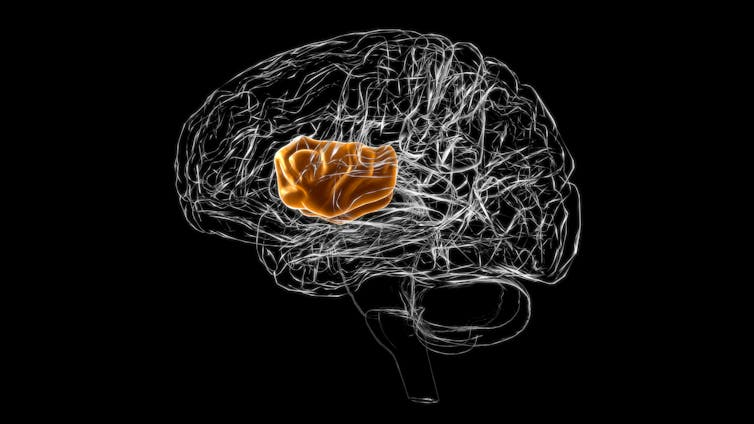
As expected, we saw that the insula (the brain area that is the primary taste hub) showed different responses to sweet and savoury tastes. But it also showed a pattern of response to both sweet and savoury odours.

A digital rendering of the human brain, with the insula region highlighted in orange.
The insula is the brain’s primary taste hub.
mybox/ Shutterstock

Most importantly, the odour response patterns overlapped with the taste patterns. This means that the insula responds to odours in a similar way as it responds to taste. So if a person smells something sweet, the brain would respond in the same way as if you’d actually eaten something sweet.

This overlap was even more pronounced when we looked specifically at the insula’s “dysgranular” and “agranular” regions. These regions are involved in processing perceptual signals from within the body. Since hunger and thirst signals also come from the body, this could suggest that the brain uses the odour of a food to determine whether it would satisfy the body’s nutritional needs.

Flavour response

This changes what we think about the insula’s role in food perception. It was once thought to just be a taste processing site, but our research shows it’s a far more sophisticated structure that takes in taste information and integrates it with other sensory components to create flavour.

These results were also the first ever to directly show the overlapping brain response between tastes and smells in the brain’s taste centre. Essentially, this indicates that when we eat something, we perceive food odours as tastes because they induce the same response patterns in the insula as actual tastes.

Our findings have exciting implications for understanding sensory experiences and could lead to advances in the field.

The clearest application is creating innovative foods and drinks that use aromas to compensate for the removal of less healthy ingredients – such as sugar, salt or fat. But there’s still a lot we need to learn about how odours and tastes affect our dietary habits.

Understanding how this mechanism works could also help people with a reduced sense of smell (anosmia) since they may form flavour preferences differently than the rest of the population.

We’re currently conducting a follow-up study to see if this phenomenon also occurs with odours that are perceived outside of the mouth (known as orthonasal smelling). This happens when we sense an odour by sniffing it. Orthonasal smelling plays a pivotal role in food anticipation. If this does lead to a similar activation as taste, it would mean that smell is crucial to hunger regulation.

In fact, rodent research indicates that food smells encourage eating by activating a subgroup of neurons. And, this activation is inhibited when that food is eaten. Understanding how this works would unlock a host of techniques to manage eating behaviour.

Our study also showed that while responses to tastes and odours overlap, this flavour response changed throughout the course of the experiment – becoming less distinct as time went on. This suggests that when you’re repeatedly exposed to a smell without tasting it, the brain stops associating the two over time. So you might stop “tasting” these aromas if you don’t reinforce the connection occasionally.

Better understanding just how the brain processes our sense of taste and smell could have important implications for influencing eating behaviour. Some day, it could be possible to reduce cravings and guide food choices using smell alone.

The Conversation

Janina Seubert receives funding from the European Research
Council (ERC) under the European Union’s Horizon 2020 research and
innovation programme (grant agreement n° 947886) and from the
Swedish Research Council (VR 2018-0318 and VR 2022-02239).

Putu Agus Khorisantono does not work for, consult, own shares in or receive funding from any company or organisation that would benefit from this article, and has disclosed no relevant affiliations beyond their academic appointment.

ref. Smell triggers the same brain response as taste does – even if you haven’t eaten anything – https://theconversation.com/smell-triggers-the-same-brain-response-as-taste-does-even-if-you-havent-eaten-anything-264922

Child dies from complications of measles years after infection – SSPE explained

Source: The Conversation – UK – By Benedict Michael, Professor, Infectious Neuroscience, University of Liverpool

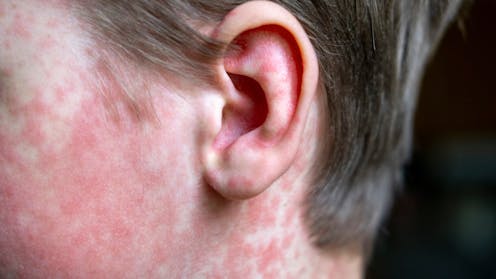
A child with measles. Natalya Maisheva/Shutterstock.com

A school-age child has died from a devastating brain complication of measles in Los Angeles, highlighting the deadly consequences of declining vaccination rates.

The child, who was too young to receive the measles vaccine, developed subacute sclerosing panencephalitis (SSPE) – a progressive and almost always fatal brain condition that strikes years after initial measles infection.

SSPE affects around one in 10,000 people who contract measles, but the risk soars to one in 600 for infants infected before their first birthday. The condition causes progressive brain scarring and inflammation, typically emerging six to eight years after the original measles infection.

Early symptoms can be mistaken for learning difficulties or concentration problems. But over months, patients develop rapidly worsening dementia, uncontrollable jerking movements and seizures. Despite treatment attempts with antiviral and anti-inflammatory drugs, nearly all patients die within five years.

The tragedy underscores growing concerns about measles outbreaks in countries with previously high vaccination coverage. The US Centers for Disease Control and Prevention has reported nearly 1,500 measles cases so far this year alone.

The anti-vaccine legacy

Declining vaccination rates stem partly from fraudulent research attempting to link the MMR vaccine to autism – claims by a now-discredited doctor that have been thoroughly debunked. Social media misinformation has amplified these fears, potentially worsened by COVID pandemic scepticism around vaccines.

Before measles vaccination began in the 1960s, the UK saw between 100,000 and 800,000 cases annually. Globally, the disease killed around 2-3 million people each year. Measles remains one of the most contagious viruses known, infecting nine out of ten unvaccinated people exposed to it.

The measles vaccine is 97% effective and prevented more than 60 million deaths worldwide between 2000 and 2023. Crucially, high vaccination rates create “herd immunity” that protects infants too young for vaccination – like the child who died in Los Angeles.

Anti-vaxx protestors in London, England.
Vaccination rates have fallen since the pandemic.
Jessica Girvan/Shutterstock.com

Medical experts can diagnose SSPE through brain scans, electrical activity tests and spinal fluid analysis to detect antibodies against the replicating measles virus. However, treatment options remain extremely limited due to the condition’s rarity, which prevents large-scale clinical trials.

It comes about because the measles virus can lie dormant in the body after infection, later mutating and attacking the brain. This causes irreversible widespread brain cell death and inflammation – the “panencephalitis” that gives SSPE its name.

While SSPE was once common in developing countries, it has become rare in nations with robust childhood vaccination programmes. However, falling vaccination rates now threaten to bring back this and other preventable diseases.

Given the years-long delay between measles infection and SSPE development, health officials warn that more tragic cases may follow current outbreaks. By the time SSPE cases become common, it will be too late to prevent a great many more through vaccination.

The death in LA serves as an important reminder that measles is not a benign childhood illness. It can cause serious complications, including pneumonia and, as this case shows, delayed but deadly brain damage years later.

The Conversation

Benedict Michael is affiliated with Encephalitis International.

ref. Child dies from complications of measles years after infection – SSPE explained – https://theconversation.com/child-dies-from-complications-of-measles-years-after-infection-sspe-explained-265220

Is Milei’s electoral blow the beginning of the end for his radical economic vision?

Source: The Conversation – UK – By Matt Barlow, Lecturer International Political Economy, University of Glasgow

In his first real electoral test since sweeping to power in October 2023, the party of Argentina’s right-wing populist president, Javier Milei, has suffered a landslide defeat. The result can be read as an emphatic reminder of the remarkable endurance in Argentina of Peronism – the movement named after former president Juan Perón.

The ideology is grounded in the state taking a leading role in the economy through progressive policies to deliver social justice – the antithesis of Milei’s mission to cut the state down to size.

Elections in the province of Buenos Aires on September 7 left Milei’s Liberty Advances party on 34% of the vote with the various factions of the Peronist party (under the banner of Homeland Force Front) on 47.4%.

While it was essentially a provincial election, the contest took on a symbolism nationally. Milei himself had framed it as a life-or-death battle between his libertarian movement and the left-wing wealth redistrubutive politics of Peronism.

Since 2003, the movement has often been called Kirchnerism because of its association with Néstor Kirchner and his wife Cristina Fernández de Kirchner. Both were once president of the country representing the Peronist party.

Despite being barred from seeking public office due to corruption charges, Fernández de Kirchner continues to dominate left-wing progressive politics in Argentina. Before the vote in Buenos Aires province, Milei argued that it was a chance for voters to put the final nail in the coffin of Kirchnerism by backing his liberal policies.

This idea of putting an end to Kirchnerism is an interesting one. Speaking with an Argentinian academic friend after Milei’s 2023 victory – the biggest vote margin since the return to democracy in 1983 – my friend said: “Kirchnerismo is dead”. In his eyes, the scale of the defeat meant that politically it could not come back from it.

I disagreed, because social justice and wealth redistribution underpin Kirchnerist progressive policies. This is certainly polarising, but it maintains significant support. Kirchnerism has been the left-wing identity of the Peronist party since 2003, and the Peronist ideology is deeply embedded in Argentinian society.

The recent vote was Milei’s first litmus test since taking his “chainsaw” to the Argentinian state through his programme of deep austerity. The 13 percentage point loss was a clear rejection of his policies in the most populous province, which accounts for 40% of the Argentinian population.

And while Buenos Aires province is traditionally a Peronist stronghold, in 2023 Milei came within 1.5% of taking it, showing that his anti-establishment appeal had gained widespread support. But after less than two years in office, the political pendulum looks to be swinging back to the Left.

Página 12, a left-wing Kircherist newspaper, summed up this idea of the battle between two social and economic visions. Its headline, “Peronism had defeated the austerity and hunger of Milei”, pointed to the extreme spending cuts for which he is now infamous.


Read more:
Kemi Badenoch says she wants to be Britain’s Javier Milei – but is the Argentinian president a model to follow?


But what does this defeat mean for the president ahead of Argentina’s October mid-term legislative elections?

First, it suggests the political capital that Milei held in 2023 has quickly eroded. When campaigning, Milei took advantage of disillusionment with the political status quo. Then, he had the advantage of being a political outsider with radical ideas that could, perhaps, work.

Now, for nearly two years his rhetoric has shaped policies that directly impact the lives and livelihoods of citizens.

Milei’s policies have managed to tame inflation. The level of rampant monthly price rises has been brought down to around 2% from the more than 7% seen in 2022. But this figure is of little comfort to many for whom his policies, such as freezing pensions, disability benefits and wages below inflation and cutting energy and transport subsidies, has made lives much harder.

In June 2025, unemployment figures reached 7.9% – the highest level since 2021. Surveys show that more than 50% of Argentine workers fear losing their jobs. Milei’s cuts to state spending on education, social care, healthcare and infrastructure have all contributed to the unemployment figures.

Real wages are being eroded as salaries fail to keep pace with inflation. And Milei’s removal of currency controls has meant that the Argentine peso has appreciated significantly against the dollar.

This is pushing up the cost of living in dollar terms, which is bad news for Argentinians. For years, many have saved in dollars to avoid the plummeting value of the peso.

Argentina is now one of the most expensive countries in Latin America – with some of the lowest salaries. All of this means that 63.7% of Argentinians are finding it more difficult to make it to the end of the month financially.

Political headwinds

Second, Milei’s hopes of expanding his minority in the country’s congress, in order to deepen his project of economic liberalism, have taken a big hit. Opposition politicians watered down his package of economic reforms, so gaining influence in the senate and chamber of deputies is essential if he is to go further.

The Peronists are the largest bloc in the country’s congress, so Milei must make significant gains in the mid-terms to counter this.

Many political commentators are suggesting that this defeat should be a point of reflection, leading Milei to change course. The president has no such plans for now though, and instead has vowed to double down on austerity.

But herein lies the problem. Milei promised that his radical policies were the answer to Argentina’s longstanding economic problems. But while making substantial progress in his agenda – with strong support from the IMF – his policies to tame inflation, balance the budget, and to deliver stability and growth are not yet being felt by Argentinians.

And reports of corruption against his sister Karina Milei (also secretary-general of his presidency) have rocked this anti-establishment president. This is the man who promised to fight the corruption.

It has been a tumultuous few weeks for the Argentine president. But does it spell the beginning of the end for Milei’s radical economic policies? The extent to which the Buenos Aires province is a barometer for national sentiment will become clear on October 26.

The Conversation

Matt Barlow does not work for, consult, own shares in or receive funding from any company or organisation that would benefit from this article, and has disclosed no relevant affiliations beyond their academic appointment.

ref. Is Milei’s electoral blow the beginning of the end for his radical economic vision? – https://theconversation.com/is-mileis-electoral-blow-the-beginning-of-the-end-for-his-radical-economic-vision-265099

Is your child in a classroom with other year groups? Here’s how it could help them

Source: The Conversation – UK – By Pinky Jain, Head of Teacher Education, Leeds Beckett University

Rawpixel.com/Shutterstock

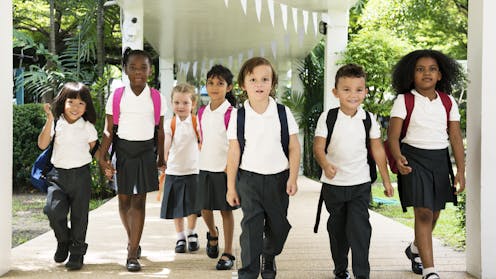
Some children at primary school, as they head into a new school year, will find themselves learning alongside children of different ages. Year one and year two might be educated in the same classroom, for instance.

Many schools have mixed year group teaching for a range of reasons. It might be because of the size of school: in schools with a small number of pupils, it may be more practical to combine classes.

In other situations, the school may have expertise that they would like to use in the best possible way, and they feel that putting year groups together would be the best way to support all children. This might be because both year groups need to build strength in a particular subject, which a certain teacher specialises in. Or it might be the best way to make use of the school’s resources, such as teaching assistant expertise, to support children.

The routine and structure of the class will be set up to support each child and also ensure that the right level of learning is provided to children.

Much of the research carried out on mixed-age classes is based in small rural schools, as that is where there tends to be the most mixed-age classrooms. It is worth noting that the outcomes of these small schools are generally as good as schools nationally. Research has found limited impact on children, their learning and outcomes as a result of mixed-age classes.

A review of research findings on mixed-age classrooms has found that there is no empirical evidence that student learning suffered from this style of learning. In fact, some students in mixed-age classrooms have reported higher scores in their attitudes towards school and self-concept (how they feel about themselves) compared to their peers in single-age classrooms.

Reflecting the real world

In the world outside school, children regularly interact across a wide range of ages. At home, they often live alongside siblings and relatives spanning multiple generations. In after-school clubs and activities, children may differ by several years in age. Public spaces for play and learning such as parks and museums are open to children of all ages.

Beyond childhood, it is uncommon to encounter higher education or professional environments composed of people from only a single age group. Even during the primary school day, it is typical for children of all ages to share break times. In nearly every context, mixed-age interaction is the norm except for one notable exception – the school classroom.

Children high fiving
Apart from in classrooms, mixed-age friendships are the norm.
Inside Creative House/Shutterstock

There are some additional benefits to mixed-age classes. They may help enhance social skills, promote individualised learning, and help children thrive socially and emotionally.

They can create a more realistic approach to learning, where older children work more independently and can mentor younger children, and enhance children’s communication and collaboration skills. They can also support a greater sense of belonging and community in schools, when children across year groups form friendships.

A new school year is full of excitement but also apprehension. There will be a lot of new things for parents and their child to manage and cope with. Having your child go into a mixed-age class is a supportive start and one which, if managed well, may enhance children’s experiences in school.

It is important that communication between school and parents is open and honest. Schools will consider a wide range of resources that will support all children’s development over the time that they are in school.

So it is important that if you are unsure about sending your child into a school where there are mixed-age classes, that you have conversations with the school about what they are planning, and how they will be supporting children to develop their learning. Parents and school working in collaboration is the best way to support children as both school and parents have a key role play in supporting children’s development.

Children who are in mixed-age classes will not feel any different to single age classes. As a lot of mixed-age classes are in small schools, there is an additional benefit in that it prepares children to move to high school where they will encounter and mix with children of all ages. Being in a mixed-age class will support and offer a variety of friendships and support their time in school.

The Conversation

Pinky Jain does not work for, consult, own shares in or receive funding from any company or organisation that would benefit from this article, and has disclosed no relevant affiliations beyond their academic appointment.

ref. Is your child in a classroom with other year groups? Here’s how it could help them – https://theconversation.com/is-your-child-in-a-classroom-with-other-year-groups-heres-how-it-could-help-them-263071

Americans expect inflation to be far higher than it really is, polling shows

Source: The Conversation – UK – By Paul Whiteley, Professor, Department of Government, University of Essex

BearFotos/Shutterstock

American voters often rank inflation as the most important issue facing the US. But something odd has happened to inflationary expectations since Donald Trump became president in January. Americans believe inflation is much higher than it is, and are bracing themselves for further increases.

The difference between real inflation and what the public think it is has diverged by a significant amount – much more so than under former president Joe Biden.

In December 2024, while Biden was still in office, respondents in surveys conducted by the University of Michigan predicted a rate of inflation of 2.8%, when it was actually 2.7%. However, by May 2025, five months into Trump’s second term, the public was estimating inflation at 6.6% when inflation had fallen to 2.4%.

The inflation expectations surveys included the following question: “By about what percent do you expect prices to go up/down on the average, during the next 12 months?”

The chart below shows the average response to this question over four years. This tells us what the average American feels about price increases, rather than what is actually happening in the economy. These views directly affect spending by consumers and therefore growth and employment in the US economy.

Expectations and actual inflation 2021 to 2025:

A graph by Paul Whiteley

Graph by Paul Whiteley with Federal Reserve and University of Michigan data., CC BY-SA

The red line on the chart above shows the actual inflation rate in the US, measured by the annual change in the consumer price index. It starts from former US president Joe Biden’s inauguration as president in January 2021 when the pandemic had a big impact on inflation. Subsequently, the rate has been declining since early 2022 although there was a modest increase from the start of Donald Trump’s second term from January 25 this year.

Some of these expectations can be explained by specific items. For example, food prices in the US have continued to increase as the chart below shows. The increases were rather rapid after the end of the pandemic, and they have continued but at a slower rate from the start of 2023, even though the broader inflation rate was falling at the time. Food prices are a particularly sensitive item because food is an essential.

Another item is the rapid rise in house prices that started after the pandemic and has continued under the Trump administration. This has put home ownership beyond the means of many Americans. However, neither of these can fully explain why the public believe inflation is so much higher than it actually is since the start of Trump’s second term in office.

Consumer food price index in the US 2021 to 2025:

A graph showing the Consumer Food Price Index.

Graph by Paul Whiteley, CC BY-SA

A reason for this concern among the US public could be the financial uncertainty among businesses and financial markets and consumers.

Donald Trump’s attempts to sack Lisa Cook, the governor of the Federal Reserve, currently held up by the courts, is one example of a factor creating economic instability. The Fed is an independent institution that controls inflation via changes in interest rates and so dramatic changes there are likely to create worries about what happens next.

What about tariffs?

The introduction of high tariffs on goods from other countries by the Trump administration is probably another factor. Put simply, tariffs are a tax on imports and so have a direct impact on the price of goods on sale in the US.

This, coupled with a fall in the value of the dollar in recent months, will be pushing up prices in American shops. A dollar would buy 98 euro cents in January of this year, almost a one-for-one exchange rate. By August 25, it would buy only 85 euro cents, a fall in value of around 15%.

Trump’s so-called “big beautiful bill”, which passed Congress in July, could be another source of inflationary expectations. This extends the tax cuts introduced in Trump’s first term, reducing taxes by US$4.5 trillion (£3.3 trillion) over ten years while cutting welfare spending and reducing investments in green energy projects.

The Yale University Budget Lab, a research centre studying financial policy, estimates that the bill will add US$3 trillion to the nation’s debt over the period 2025-2034 and US$12.1 trillion from 2025-55. This means that the US Treasury has to pay higher rates to encourage lenders when they become nervous about the inflationary consequences of the deficits.

If a country has to borrow large amounts to balance the books, it creates a temptation to print more money, which then boosts inflation.

When it comes to the political consequences of this, inflationary expectations are really important. This is because the public’s judgment about the president’s handling of inflation are largely the same as judgments about his overall presidency.

This can be seen in the chart below, which comes from successive surveys conducted by YouGov for the Economist newspaper since Trump came to office.

Approval ratings for the president’s handling of inflation and his overall job ratings:

Trump's approval ratings graphed.

Graph by Paul Whiteley based on data from YouGov for the Economist, CC BY-SA

The chart compares Trump’s overall job approval with his approval ratings for handling inflation. They track very closely – and both are rapidly falling, indicating that the failure to combat inflation is tarnishing the president’s approval ratings.

Presidential job approval is closely related to voting behaviour, so if inflation continues to rise and the public believe it will be even higher in the future, then this is likely to damage both Trump and the Republican party in the midterm elections next year.

The Conversation

Paul Whiteley has received funding from the British Academy and the ESRC.

ref. Americans expect inflation to be far higher than it really is, polling shows – https://theconversation.com/americans-expect-inflation-to-be-far-higher-than-it-really-is-polling-shows-264070

Regulating AI use could stop its runaway energy expansion

Source: The Conversation – UK – By Shweta Singh, Assistant Professor, Information Systems and Management, Warwick Business School, University of Warwick

Generative AI promises to help solve everything from climate change to poverty. But behind every chatbot response lies a deep environmental cost.

Current AI technology requires the use of large datacentres stationed around the world, which altogether draw enormous amounts of power and consume millions of litres of water to stay cool. By 2030, datacentres are expect to consume as much electricity as all of Japan, according to the International Energy Agency, and AI could be responsible for 3.5% of global electricity use, according to one consultancy report.

The continuous massive expansion of AI use and its rapidly growing energy demand would make it much harder for the world to cut its carbon emissions by switching fossil fuel energy sources to renewable electricity.

So, we are left with pressing questions. Can we harness the benefits of AI without accelerating environmental collapse? Can AI be made truly sustainable – and if so, how?

We are at a critical juncture. The environmental cost of AI is accelerating and largely unreported by the firms involved. What the world does next could determine whether AI innovation aligns with our climate goals or undermines them.

At one end of the policy spectrum is the path of complacency. In this scenario, tech companies continue unchecked, expanding datacentres and powering them with private nuclear microreactors, dedicated energy grids or even reviving mothballed coal plants.

Aerial view of power plants
Microsoft is set to reopen Three Mile Island nuclear power plant in Pennsylvania to power its AI services. (Photo taken in 2008. The plant has been dormant since 2019).
Dobresum / shutterstock

Some of this infrastructure may instead run on renewables, but there’s no binding requirement that AI must avoid using fossil fuels. Even if more renewables are installed to power AI, they may compete with efforts to decarbonise other energy uses. Developers may tout efficiency gains, but these are quickly swallowed by the rebound effect: the more efficient AI becomes, the more it is used.

At the other end lies a more radical possibility: a global moratorium or outright restriction on the most harmful forms of AI, akin to international bans on landmines or ozone-depleting substances.

This is politically improbable, of course. Nations are racing to dominate the AI arms race, not to pause it. A global consensus on bans is, at least for now, a mirage.

But in between complacency and prohibition lies a window – rapidly closing – for decisive, targeted action.

This could take many different forms:

1. Mandatory environmental disclosure:

AI companies could report how much energy, water and emissions are used to train and use their models. Having a benchmark helps to measure progress while improving transparency and accountability. While some countries have started to impose greater corporate sustainability reporting requirements, there is significant variation. While mandatory disclosures alone won’t reduce consumption directly, they are an essential starting point.

2. Emissions labelling for AI services:

Just as carbon emissions labels on restaurant menus or supermarket produce can guide people to lower-impact options, users could be given a chance to know the footprint of their digital choices and AI providers, like efforts to measure the carbon footprint of websites. In the US, the blue Energy Star label, one of the country’s most recognisable environmental certifications, helps customers choose energy-efficient products.

Alternatively, AI providers could also temporarily reduce functionality to account for varying levels of renewable energy available that powers them.

3. Usage-based pricing tied to impact:

Existing carbon pricing aims to ensure that heavy users should pay their environmental share. Research shows that this works best when carbon is priced across the economy for all companies, rather than just specifically targeted at individual sectors. Yet much depends on digital tech providers fully accounting for such environmental burdens in the first place.

4. Sustainability caps or “compute budgets”:

This would especially target non-essential or commercial entertainment applications. Organisations may limit their employees’ usage similar to how they restrict heavy office printing or indeed corporate travel. As companies begin to measure and manage their indirect supply chain emissions, energy and water footprints from using AI may require new business policies.

5. Water stewardship requirements in water-stressed regions:

A simple regulation here would be to ensure no AI infrastructure depletes local aquifers unchecked.

Market forces alone will not solve this. Sustainability won’t emerge from goodwill or clever efficiency tricks. We need enforceable rules.

Consumer awareness isn’t enough

Awareness does help. But expecting individuals to self-regulate in a system designed for ease-of-use is naive. “Only use AI when needed” might soon be like “Don’t print this email” a decade or two ago – well-meaning, often ignored and utterly insufficient.

Plastic figures plant trees on top of paper saying 'please don't print'
Coming soon: an AI equivalent?
awstoys / shutterstock

The world is building an AI-powered future that consumes like an industrial past. Without guardrails, we risk creating a convenience technology that accelerates environmental collapse.

Maybe AI will one day solve the problems we couldn’t, and our concerns about emissions or water will seem trivial. Or maybe we just won’t be around to worry about them.

The way we engage with AI now – blindly, cautiously, or critically – will shape whether it serves a sustainable future, or undermines it. Policymakers should treat AI as it would any other wildly profitable resource-intensive industry, with carefully thought through regulation.


Don’t have time to read about climate change as much as you’d like?

Get a weekly roundup in your inbox instead. Every Wednesday, The Conversation’s environment editor writes Imagine, a short email that goes a little deeper into just one climate issue. Join the 45,000+ readers who’ve subscribed so far.


The Conversation

Frederik Dahlmann receives funding from National Institute for Health & Care Research (NIHR).

Shweta Singh does not work for, consult, own shares in or receive funding from any company or organisation that would benefit from this article, and has disclosed no relevant affiliations beyond their academic appointment.

ref. Regulating AI use could stop its runaway energy expansion – https://theconversation.com/regulating-ai-use-could-stop-its-runaway-energy-expansion-258425

Bolsonaro’s conviction marks a historic moment in Brazil’s political history

Source: The Conversation – UK – By Marieke Riethof, Senior Lecturer in Latin American Politics, University of Liverpool

Four out of five members of Brazil’s supreme court have voted to convict the former president, Jair Bolsonaro, for plotting a military coup after losing the 2022 election to his left-wing rival, Luiz Inácio Lula da Silva. Bolsonaro has been sentenced to more than 27 years in prison, though his lawyers say they will appeal the decision.

Seven of Bolsonaro’s allies have also been convicted on charges related to the coup attempt. Five of these people – Walter Braga Netto, Mauro Cid, Paulo Sérgio Nogueira de Oliveira, Augusto Heleno Ribeiro and Almir Garnier Santos – come from a military or navy background. Bolsonaro’s former justice minister, Anderson Torres, and the former director of Brazil’s intelligence agency, Alexandre Ramagem, have been convicted too.

This is the first time in Brazil’s long history of political instability that a coup attempt has led to a conviction. It is also symbolically important that the only woman on the panel, Judge Carmen Lúcia, cast the deciding vote. Bolsonaro has an established track record of making denigrating comments about women.

The date of the verdict is equally important. It was delivered on September 11, which coincides with the 52nd anniversary of the 1973 Chilean military coup. This shows how far democracy in the region has come since an era when much of South America was under military rule.

Alexandre de Moraes, the supreme court judge who led the Bolsonaro trial, alluded to this in August. He said that Brazil’s 1988 constitution established the judiciary’s independence by restricting “interference by the armed forces, whether official or semi-official, in Brazilian politics”.

These constitutional guarantees mean that politicians like Bolsonaro cannot undermine democratic institutions with impunity.

The coup attempt took place on January 8 2023, less than a week after Lula was inaugurated as Bolsonaro’s successor. Echoing the attack on the US Capitol building in Washington two years earlier, hundreds of Bolsonaro supporters stormed the national congress, presidential palace and supreme court in the capital, Brasília.

They left a trail of destruction. Although the protests appeared initially to be a spontaneous act, investigations soon unearthed evidence that the event had been planned by Bolsonaro and his allies.

A history of dictatorship and threats against democracy have cast a long shadow over Brazilian politics. A right-wing military dictatorship ruled the country between 1964 and 1985. It began when the armed forces overthrew the democratically elected president, João Goulart, amid an economic crisis and fears about a turn to the left. The US government of the time supported the coup.

Brazil established a National Truth Commission in 2012, which spent two years investigating the thousands of cases of torture, extrajudicial killings, enforced disappearances and other violations that occurred during this period. However, there have been no convictions.

Under pressure from mass demonstrations and an economic crisis, the military gradually relaxed repression in the 1980s and allowed political parties to form. Brazil has been under civilian control since then. But the armed forces began to play a significant political role again during Bolsonaro’s presidency.

General Hamilton Mourão, his vice-president, served in the military during the dictatorship. And various other military figures were appointed to powerful positions in government. Bolsonaro also regularly celebrated the dictatorship and downplayed its human rights violations.

There were various examples of democratic backsliding under Bolsonaro. He, for example, questioned the legitimacy of democratic election results in 2022 – comments that saw him barred from running in elections for seven years.

Within this context, the decision to convict Bolsonaro of an attempted coup is a strong sign that Brazil’s democratic institutions have been able to withstand threats to democracy and the rule of law. It is a signal that attempts to undermine the country’s democratic institutions will not go unpunished.

Beyond Brazil’s borders

Bolsonaro’s conviction resonates beyond Brazil. During his presidency, Bolsonaro positioned Brazil as a close ideological ally to Donald Trump, who was then in his first presidential term.

Trump referred to Bolsonaro’s trial as a “witch hunt” as the court case progressed. He hit Brazil with 50% tariffs, framing them as retaliation for Bolsonaro’s prosecution. Reacting to the guilty verdict, Trump said it was “very surprising” and compared it to his own judicial struggles.

Lula has spoken out against US interference in Brazilian politics, calling the idea that “Trump can dictate rules for a sovereign country like Brazil” unacceptable.

The Brazilian foreign affairs ministry has also criticised the US secretary of state, Marco Rubio, for interfering in the country’s sovereignty and democracy. In a social media post, Rubio called the conviction “unjust” and said the US “will respond accordingly to this witch hunt”.

Looking ahead, Brazil’s next presidential elections are in 2026. Unless Bolsonaro manages to appeal his conviction and election ban, he will not be running again for the foreseeable future. Although Lula has not formally announced his candicacy he would be the front-runner.

But if there is a run-off, which would most likely be with right-wing politician and former army captain Tarcísio de Freitas, the race will probably be very close. There is a risk that the conviction will turn Bolsonaro into a martyr, which would strengthen politicians like de Freitas, who identify themselves with Bolsonaro’s politics.

Ahead of his conviction, around 40,000 Bolsonaro supporters protested in Rio de Janeiro and São Paulo. These demonstrations indicate continuing support. However, regardless of what happens next, the supreme court’s decision makes it much less likely that challenges to democracy will succeed in Brazil.

The Conversation

Marieke Riethof does not work for, consult, own shares in or receive funding from any company or organisation that would benefit from this article, and has disclosed no relevant affiliations beyond their academic appointment.

ref. Bolsonaro’s conviction marks a historic moment in Brazil’s political history – https://theconversation.com/bolsonaros-conviction-marks-a-historic-moment-in-brazils-political-history-265210

Why OpenAI’s solution to AI hallucinations would kill ChatGPT tomorrow

Source: The Conversation – UK – By Wei Xing, Assistant Professor, School of Mathematical and Physical Sciences, University of Sheffield

OpenAI’s latest research paper diagnoses exactly why ChatGPT and other large language models can make things up – known in the world of artificial intelligence as “hallucination”. It also reveals why the problem may be unfixable, at least as far as consumers are concerned.

The paper provides the most rigorous mathematical explanation yet for why these models confidently state falsehoods. It demonstrates that these aren’t just an unfortunate side effect of the way that AIs are currently trained, but are mathematically inevitable.

The issue can partly be explained by mistakes in the underlying data used to train the AIs. But using mathematical analysis of how AI systems learn, the researchers prove that even with perfect training data, the problem still exists.

The way language models respond to queries – by predicting one word at a time in a sentence based on probabilities – naturally produces errors. The researchers in fact show that the total error rate for generating sentences is at least twice as high as the error rate the same AI would have on a simple yes/no question, because mistakes can accumulate over multiple predictions.

In other words, hallucination rates are fundamentally bounded by how well AI systems can distinguish valid from invalid responses. Since this classification problem is inherently difficult for many areas of knowledge, hallucinations become unavoidable.

It also turns out that the less a model sees a fact during training, the more likely it is to hallucinate when asked about it. With birthdays of notable figures, for instance, it was found that if 20% of such people’s birthdays only appear once in training data, then base models should get at least 20% of birthday queries wrong.

Sure enough, when researchers asked state-of-the-art models for the birthday of Adam Kalai, one of the paper’s authors, DeepSeek-V3 confidently provided three different incorrect dates across separate attempts: “03-07”, “15-06”, and “01-01”. The correct date is in the autumn, so none of these were even close.

The evaluation trap

More troubling is the paper’s analysis of why hallucinations persist despite extensive post-training efforts (such as providing extensive human feedback to an AI’s responses before it is released to the public). The authors examined ten major AI benchmarks, including those used by Google, OpenAI and also the top leaderboards that rank AI models. This revealed that nine benchmarks use binary grading systems that award zero points for AIs expressing uncertainty.

This creates what the authors term an “epidemic” of penalising honest responses. When an AI system says “I don’t know”, it receives the same score as giving completely wrong information. The optimal strategy under such evaluation becomes clear: always guess.

The researchers prove this mathematically. Whatever the chances of a particular answer being right, the expected score of guessing always exceeds the score of abstaining when an evaluation uses binary grading.

The solution that would break everything

OpenAI’s proposed fix is to have the AI consider its own confidence in an answer before putting it out there, and for benchmarks to score them on that basis. The AI could then be prompted, for instance: “Answer only if you are more than 75% confident, since mistakes are penalised 3 points while correct answers receive 1 point.”

The OpenAI researchers’ mathematical framework shows that under appropriate confidence thresholds, AI systems would naturally express uncertainty rather than guess. So this would lead to fewer hallucinations. The problem is what it would do to user experience.

Consider the implications if ChatGPT started saying “I don’t know” to even 30% of queries – a conservative estimate based on the paper’s analysis of factual uncertainty in training data. Users accustomed to receiving confident answers to virtually any question would likely abandon such systems rapidly.

I’ve seen this kind of problem in another area of my life. I’m involved in an air-quality monitoring project in Salt Lake City, Utah. When the system flags uncertainties around measurements during adverse weather conditions or when equipment is being calibrated, there’s less user engagement compared to displays showing confident readings – even when those confident readings prove inaccurate during validation.

The computational economics problem

It wouldn’t be difficult to reduce hallucinations using the paper’s insights. Established methods for quantifying uncertainty have existed for decades. These could be used to provide trustworthy estimates of uncertainty and guide an AI to make smarter choices.

But even if the problem of user preferences could be overcome, there’s a bigger obstacle: computational economics. Uncertainty-aware language models require significantly more computation than today’s approach, as they must evaluate multiple possible responses and estimate confidence levels. For a system processing millions of queries daily, this translates to dramatically higher operational costs.

More sophisticated approaches like active learning, where AI systems ask clarifying questions to reduce uncertainty, can improve accuracy but further multiply computational requirements. Such methods work well in specialised domains like chip design, where wrong answers cost millions of dollars and justify extensive computation. For consumer applications where users expect instant responses, the economics become prohibitive.

The calculus shifts dramatically for AI systems managing critical business operations or economic infrastructure. When AI agents handle supply chain logistics, financial trading or medical diagnostics, the cost of hallucinations far exceeds the expense of getting models to decide whether they’re too uncertain. In these domains, the paper’s proposed solutions become economically viable – even necessary. Uncertain AI agents will just have to cost more.

However, consumer applications still dominate AI development priorities. Users want systems that provide confident answers to any question. Evaluation benchmarks reward systems that guess rather than express uncertainty. Computational costs favour fast, overconfident responses over slow, uncertain ones.

Falling energy costs per token and advancing chip architectures may eventually make it more affordable to have AIs decide whether they’re certain enough to answer a question. But the relatively high amount of computation required compared to today’s guessing would remain, regardless of absolute hardware costs.

In short, the OpenAI paper inadvertently highlights an uncomfortable truth: the business incentives driving consumer AI development remain fundamentally misaligned with reducing hallucinations. Until these incentives change, hallucinations will persist.

The Conversation

Wei Xing does not work for, consult, own shares in or receive funding from any company or organisation that would benefit from this article, and has disclosed no relevant affiliations beyond their academic appointment.

ref. Why OpenAI’s solution to AI hallucinations would kill ChatGPT tomorrow – https://theconversation.com/why-openais-solution-to-ai-hallucinations-would-kill-chatgpt-tomorrow-265107