Why OpenAI’s solution to AI hallucinations would kill ChatGPT tomorrow

Source: The Conversation – UK – By Wei Xing, Assistant Professor, School of Mathematical and Physical Sciences, University of Sheffield

OpenAI’s latest research paper diagnoses exactly why ChatGPT and other large language models can make things up – known in the world of artificial intelligence as “hallucination”. It also reveals why the problem may be unfixable, at least as far as consumers are concerned.

The paper provides the most rigorous mathematical explanation yet for why these models confidently state falsehoods. It demonstrates that these aren’t just an unfortunate side effect of the way that AIs are currently trained, but are mathematically inevitable.

The issue can partly be explained by mistakes in the underlying data used to train the AIs. But using mathematical analysis of how AI systems learn, the researchers prove that even with perfect training data, the problem still exists.

The way language models respond to queries – by predicting one word at a time in a sentence based on probabilities – naturally produces errors. The researchers in fact show that the total error rate for generating sentences is at least twice as high as the error rate the same AI would have on a simple yes/no question, because mistakes can accumulate over multiple predictions.

In other words, hallucination rates are fundamentally bounded by how well AI systems can distinguish valid from invalid responses. Since this classification problem is inherently difficult for many areas of knowledge, hallucinations become unavoidable.

It also turns out that the less a model sees a fact during training, the more likely it is to hallucinate when asked about it. With birthdays of notable figures, for instance, it was found that if 20% of such people’s birthdays only appear once in training data, then base models should get at least 20% of birthday queries wrong.

Sure enough, when researchers asked state-of-the-art models for the birthday of Adam Kalai, one of the paper’s authors, DeepSeek-V3 confidently provided three different incorrect dates across separate attempts: “03-07”, “15-06”, and “01-01”. The correct date is in the autumn, so none of these were even close.

The evaluation trap

More troubling is the paper’s analysis of why hallucinations persist despite extensive post-training efforts (such as providing extensive human feedback to an AI’s responses before it is released to the public). The authors examined ten major AI benchmarks, including those used by Google, OpenAI and also the top leaderboards that rank AI models. This revealed that nine benchmarks use binary grading systems that award zero points for AIs expressing uncertainty.

This creates what the authors term an “epidemic” of penalising honest responses. When an AI system says “I don’t know”, it receives the same score as giving completely wrong information. The optimal strategy under such evaluation becomes clear: always guess.

The researchers prove this mathematically. Whatever the chances of a particular answer being right, the expected score of guessing always exceeds the score of abstaining when an evaluation uses binary grading.

The solution that would break everything

OpenAI’s proposed fix is to have the AI consider its own confidence in an answer before putting it out there, and for benchmarks to score them on that basis. The AI could then be prompted, for instance: “Answer only if you are more than 75% confident, since mistakes are penalised 3 points while correct answers receive 1 point.”

The OpenAI researchers’ mathematical framework shows that under appropriate confidence thresholds, AI systems would naturally express uncertainty rather than guess. So this would lead to fewer hallucinations. The problem is what it would do to user experience.

Consider the implications if ChatGPT started saying “I don’t know” to even 30% of queries – a conservative estimate based on the paper’s analysis of factual uncertainty in training data. Users accustomed to receiving confident answers to virtually any question would likely abandon such systems rapidly.

I’ve seen this kind of problem in another area of my life. I’m involved in an air-quality monitoring project in Salt Lake City, Utah. When the system flags uncertainties around measurements during adverse weather conditions or when equipment is being calibrated, there’s less user engagement compared to displays showing confident readings – even when those confident readings prove inaccurate during validation.

The computational economics problem

It wouldn’t be difficult to reduce hallucinations using the paper’s insights. Established methods for quantifying uncertainty have existed for decades. These could be used to provide trustworthy estimates of uncertainty and guide an AI to make smarter choices.

But even if the problem of user preferences could be overcome, there’s a bigger obstacle: computational economics. Uncertainty-aware language models require significantly more computation than today’s approach, as they must evaluate multiple possible responses and estimate confidence levels. For a system processing millions of queries daily, this translates to dramatically higher operational costs.

More sophisticated approaches like active learning, where AI systems ask clarifying questions to reduce uncertainty, can improve accuracy but further multiply computational requirements. Such methods work well in specialised domains like chip design, where wrong answers cost millions of dollars and justify extensive computation. For consumer applications where users expect instant responses, the economics become prohibitive.

The calculus shifts dramatically for AI systems managing critical business operations or economic infrastructure. When AI agents handle supply chain logistics, financial trading or medical diagnostics, the cost of hallucinations far exceeds the expense of getting models to decide whether they’re too uncertain. In these domains, the paper’s proposed solutions become economically viable – even necessary. Uncertain AI agents will just have to cost more.

However, consumer applications still dominate AI development priorities. Users want systems that provide confident answers to any question. Evaluation benchmarks reward systems that guess rather than express uncertainty. Computational costs favour fast, overconfident responses over slow, uncertain ones.

Falling energy costs per token and advancing chip architectures may eventually make it more affordable to have AIs decide whether they’re certain enough to answer a question. But the relatively high amount of computation required compared to today’s guessing would remain, regardless of absolute hardware costs.

In short, the OpenAI paper inadvertently highlights an uncomfortable truth: the business incentives driving consumer AI development remain fundamentally misaligned with reducing hallucinations. Until these incentives change, hallucinations will persist.

The Conversation

Wei Xing does not work for, consult, own shares in or receive funding from any company or organisation that would benefit from this article, and has disclosed no relevant affiliations beyond their academic appointment.

ref. Why OpenAI’s solution to AI hallucinations would kill ChatGPT tomorrow – https://theconversation.com/why-openais-solution-to-ai-hallucinations-would-kill-chatgpt-tomorrow-265107

Ten ways diabetes and dementia are linked

Source: The Conversation – UK – By Craig Beall, Associate Professor in Experimental Diabetes, University of Exeter

Alones/Shutterstock.com

The link between diabetes and dementia is becoming increasingly clear. New research shows how blood sugar problems affect brain health and vice versa. Here are ten evidence-based insights into how the two conditions are related.

1. Diabetes raises the risk of dementia

People with diabetes are about 60% more likely to develop dementia than those without, and frequent episodes of low blood sugar are linked to a 50% higher chance of cognitive decline.

2. Insulin resistance affects the brain too

Insulin resistance – the major cause of type 2 diabetes – happens when cells stop responding properly to insulin. This means that too much sugar, in the form of glucose, is left in the blood, leading to complications.

It usually affects the liver and muscles, but it also affects the brain. In Alzheimer’s, this resistance may make it harder for brain cells to use glucose for energy, contributing to cognitive decline.

3. A brain sugar shortage in dementia

The brain is only 2% of our body weight, but uses about 20% of the body’s energy. In dementia, brain cells appear to lose the ability to use glucose properly.

This mix of poor use of glucose and insulin resistance is sometimes unofficially called type 3 diabetes.

4. Alzheimer’s can raise diabetes risk

People with Alzheimer’s often have higher fasting blood glucose, even if they don’t have diabetes. This is a form of pre-diabetes. Animal studies also show that Alzheimer’s-like changes in the brain raise blood glucose levels.

Also, the highest genetic risk factor for Alzheimer’s, the APOE4 genetic variant, reduces insulin sensitivity by trapping the insulin receptor inside the cell, where it cannot be switched on properly.

5. Blood vessel damage links both conditions

Diabetes damages blood vessels, causing complications in the eyes, kidneys and heart. The brain is also at risk. High or varying blood glucose levels can injure vessels in the brain, reducing blood flow and oxygen delivery.

Diabetes can also weaken the brain’s protective barrier, letting harmful substances in. This leads to inflammation. Reduced blood flow and brain inflammation are strongly linked to dementia.

6. Memantine: a dementia drug born from diabetes research

Memantine, used to treat moderate to severe Alzheimer’s symptoms, was originally developed as a diabetes medication. It didn’t succeed in controlling blood glucose, but researchers later discovered its benefits for brain function. This story shows how diabetes research may hold clues for treating brain disorders.

7. Metformin might protect the brain

Metformin, the most widely used diabetes drug, does more than just lower blood glucose. It gets in to the brain and may lower brain inflammation.

Some studies suggest that people with diabetes who take metformin are less likely to develop dementia, and those who stop taking it may see their risk increase again.

Trials are testing its effects in people without diabetes.

Bottles of metformin on a shelf.
Metformin may lower brain inflammation.
Carl DMaster/Shutterstock.com

8. Weight-loss injections may reduce plaque buildup

GLP-1 receptors agonist drugs, such as semaglutide (Ozempic, Wegovy), lower blood glucose and support weight loss. Records show that people with diabetes on these drugs have a lower dementia risk. Comparing GLP1 drugs to metformin, studies have found that they were even more effective than metformin at reducing dementia risk.

Two major trials, Evoke and Evoke Plus, are testing oral semaglutide in people with mild cognitive impairment or early mild Alzheimer’s.

9. Insulin therapy might help the brain

Since insulin resistance in the brain is a problem, researchers have tested insulin sprays given through the nose. This method delivers insulin straight to the brain while reducing effects on blood sugar.

Small studies suggest these sprays may help memory or reduce brain shrinkage, but delivery methods remain a challenge. Sprays vary in how much insulin reaches the brain, and long-term safety has not yet been proven.

10. SGLT2 inhibitors may lower dementia risk

New evidence suggests that compared to GLP-1 receptor agonists, SGLT2 inhibitors, (a type of diabetes drug) are superior at reducing dementia risk, including Alzheimer’s and vascular dementia, in people with type 2 diabetes. These tablets lower blood sugar by increasing sugar removal in urine. This study builds on early evidence suggesting they lower dementia risk by reducing inflammation in the brain.

This growing body of evidence suggests that managing diabetes protects more than the heart and kidneys, it also helps preserve brain function.

Questions remain whether diabetes drugs only reduce the diabetes-associated dementia risk or whether these drugs could also reduce risk in people without diabetes.

However, diabetes research has been very successful in creating at least 13 different classes of drugs, multiple combination therapies, giving rise to at least 50 different medicines. These reduce blood sugar, improve insulin sensitivity and reduce inflammation. A “side-effect” may be better preservation of brain health during ageing.

The Conversation

Craig Beall currently receives funding from Diabetes UK, Breakthrough T1D, Steve Morgan Foundation Type 1 Diabetes Grand Challenge, Medical Research Council, NC3Rs, Society for Endocrinology and British Society for Neuroendocrinology.

Natasha MacDonald receives funding from Diabetes UK.

ref. Ten ways diabetes and dementia are linked – https://theconversation.com/ten-ways-diabetes-and-dementia-are-linked-264393

After Angela Rayner’s exit from government, what’s the future for employment rights in the UK?

Source: The Conversation – UK – By Rachel Scarfe, Lecturer in Economics, University of Stirling

CandyBox Images/Shutterstock

After the resignation of Angela Rayner, the UK government faces an urgent question: what will happen to its flagship employment rights bill? The former deputy prime minister was an important champion of the bill – and businesses have seized an opportunity to call for it to be diluted. At the same time, unions are pressing hard in the opposite direction.

Shortly after Labour won office in 2024, prime minister Keir Starmer described the bill as “the biggest levelling up of workers’ rights in a generation”, adding it was designed to give people “security, dignity and respect at work”.

In its manifesto, Labour had promised to “make work pay” – so the ambitious draft bill introduced in October 2024 contained 28 reforms to employment rights. These include requiring employers to guarantee workers a minimum number of hours; strengthening redundancy rights; rights to parental leave and protection from unfair dismissal from a worker’s first day; and expanding trade union rights.

Not only are the changes wide-ranging, they also affect a very large number of workers. There are, for example, nine million people in the UK who have been in their job for less than two years and who will gain the right to claim unfair dismissal.

The bill passed the House of Commons in March 2025. The House of Lords made some important amendments, giving workers a “right to request” rather than a “right to have” guaranteed working hours, increasing the qualifying period for unfair dismissal to six months (rather than one day), and reinstating the previous 50% turnout threshold for a trade union to vote for industrial action.

The planned legislation addresses a clear problem in the UK. In-work poverty and precarious work (characterised by low wages, uncertain income and insecurity) have been increasing. More and more people do not earn enough to make ends meet – between 1996 and 2024 the proportion of people in poverty who lived in families with at least one person working increased from 44% to 65%).

This is expensive – benefits paid to working people cost the government around £50 billion a year.

Introducing the bill, Rayner described it as “pro-growth, pro-business, pro-worker”. The UK’s slow productivity growth has been a problem since the financial crisis, and the government hopes that the better retention and higher job satisfaction that the bill could bring about will increase productivity. This view is broadly supported by academic research.

What do its critics say?

The government estimates that the bill will cost businesses between £900 million and £5 billion annually. This seems small, especially in comparison to total wage costs in the UK of more than £1.3 trillion.

However, it was introduced at a time when employers’ costs were already increasing. In April 2025, employers’ national insurance contributions increased from 13.8% to 15% of earnings, and the threshold for paying contributions fell from £9,100 a year to £5,000.

The minimum wage increased from £11.44 to £12.21 per hour for those over 21 and from £8.60 to £10 per hour for 18 to 20-year-olds. These changes hit sectors with lots of young, low-paid workers – hospitality and retail, for example – hardest. Employers in these sectors often use flexible working (such as zero-hours contracts) to offset the costs of higher minimum wages.

shopper pushing a trolley in a uk supermarket
If businesses pass rising staff costs on to consumers, the bill may end up harming the people it was designed to help.
1000 Words/Shutterstock

If this becomes more difficult because of restrictions imposed by the bill, employers can attempt to pass increased costs on to customers by raising prices. But if food prices increase, for example, this will hurt lower-paid workers (who spend a high proportion of their income on food) – the very people the bill is intended to help.

Of course, not all employers can pass on higher costs. Universities, for instance, have already estimated that national insurance increases cost them £430 million per year.

Restrictions to “fire and rehire” (where employers fire employees and rehire them under different terms, such as less generous pensions) may affect employers looking to restructure. In such cases, employers may instead cut jobs. With the number of UK vacancies falling for three years, this could accelerate the decline.

The UK’s new business secretary, Peter Kyle, has taken over the role of supporting the bill through parliament. He has previously supported it, although he has also committed to lowering regulation, which is seemingly at odds with this bill.

Both business and union leaders are lobbying hard ahead of the Commons debate on September 15. Unions are demanding Labour MPs be whipped to oppose the Lords’ amendments, and some have threatened to disaffiliate from the party if not. For now, the government insists it will pass the bill and reject the amendments. But businesses will hope that new ministers will be more sympathetic to their concerns.

There are still lots of details to be worked out. For example, the bill does not define what counts as the “minimum hours” workers would be guaranteed. With the timeline for introducing all the changes stretching to 2027, business leaders will have plenty of time to lobby for delayed implementation or to reduce its coverage.

The Conversation

Rachel Scarfe is a member of the Labour Party

ref. After Angela Rayner’s exit from government, what’s the future for employment rights in the UK? – https://theconversation.com/after-angela-rayners-exit-from-government-whats-the-future-for-employment-rights-in-the-uk-265141

Peter Mandelson was always a high risk appointment – his departure will not end the matter for Keir Starmer

Source: The Conversation – UK – By Martin Farr, Senior Lecturer in Contemporary British History, Newcastle University

The line between pulling off a diplomatic masterstroke and setting up an accident waiting to happen can be a fine one. In the seven-month fable of Peter Mandelson’s UK ambassadorship to the US, the crossing of that line has created a political polycrisis for which it is hard to think of a parallel.

In the week after the prime minister, despite his efforts, lost his deputy, and the week before the American president arrives in the UK for an unprecedented – and unpopular – second state visit, Keir Starmer, despite his efforts, has lost the person he controversially personally appointed to the UK’s highest diplomatic post. Worse, over a matter that also happens to implicate Donald Trump – a matter journalists could conceivably raise at the president’s and prime minister’s press conference during the forthcoming state visit.

The risk in the main was in the ambassadorship itself. The US is the UK’s closest and most important international ally and the Washington ambassador is the lynchpin of that relationship. They are the UK’s eyes and ears, permanently operating at the centre of the political and social life of the US capital in the way that no other country’s ambassador has been, is, or could be.

But the risk was also in the man. Prince of Darkness, Third Man, (only last week: “my familiar role as professional villain”), possessed of a public career already involving two high-profile reputation-wracking resignations, Mandelson has always been weapons-grade Marmite.

It was a reflection of post-Brexit British weakness, rather than strength – the desperate need for a trade deal – that Starmer turned to him. Yet personal relations being so important with this president, it can now be seen to have made less sense to have replaced a scandal-free ambassador – Karen Pierce – who was on the best possible terms with Trump and his people. She may return.

Its prominence is why, perhaps, DC is usually the only British ambassadorship that is ever “political” – that is, that a prime minister personally chooses someone who isn’t a diplomat. And even then, it’s rare. One may now see now why. The previous political appointment – in the 1970s – also ended inauspiciously, in a welter of recriminations over nepotism and extra-marital affairs resulting in best-selling novelisation and a hit movie.

The main grounds for Mandelson’s appointment were his public prominence (his “weight”), his experience as an EU trade commissioner, and his almost preternatural networking skills. The latter has been his undoing, given that for years he networked with the man who was to become the world’s most infamous sexual abuser of children.

To describe the appointment as high risk and high reward matters because of the supreme importance of the office and the singular character of the officer. If one can screen the Epstein stain momentarily, the widespread frustration in government was that Mandelson had been justifying that risk.

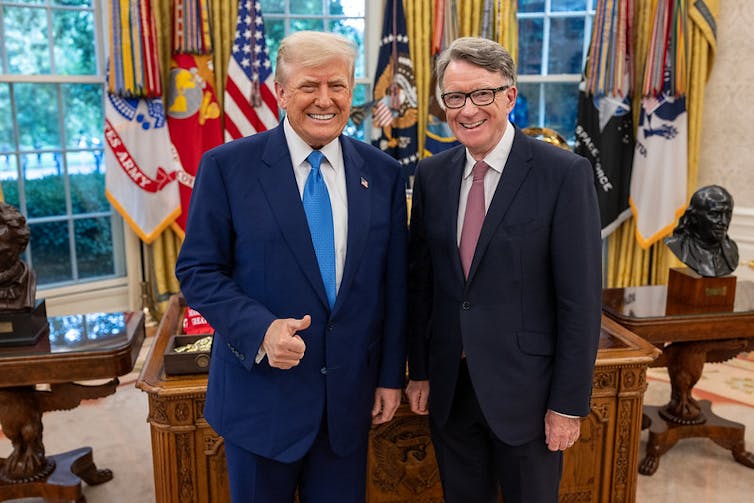
He was clearly an effective ambassador. Only the week before he delivered a trenchant statement of the contemporary special relationship; the day before he was sacked he had spent an hour with Trump. Ambassadors tend not to have meetings with presidents.

Peter Mandelson with Donald Trump
Mandelson meets Trump in.
UKinUSA/Flickr/Official White House Photo by Daniel Torok, CC BY-SA

Fundamentally this falls on the fallen. Mandelson knew of the Epstein material that has come to be made public, knowing that it might be made public. He admitted only this week that even more was likely to come after the initial, highly embarrassing, disclosure.

Mandelson took the UK’s most important diplomatic post knowing he was sitting on a ticking bomb. Given the precise nature of the explosive, the political obituary can certainly now be written about one of the most vivid public figures of the past 30 years.

But the more consequential damage will be to the man who appointed him. Downing Street’s statement that security vetting took place without its involvement is not credible.

Peter Mandelson and Keir Starmer
Mandelson and Starmer, pictured in February 2025.
Flickr/Number 10, CC BY-NC-ND

Much may hinge on what the vetting files reveal – if they are revealed. The decision on whether to release them is a matter for MPs, and how Labour backbenchers choose to vote will be a significant indicator as to the mood in the party.

A crisis from Hades, replete with shadowy associations of global elites and paedophile rings; a hot buffet for online conspiracists, who may be more numerous and prominent in the US, but are far from reticent in the UK. And so the political class undergoes another detention.

The political damage to the government in general and to the prime minister in particular is hard to overstate. That is in part a matter of misfortune: that this particular major crisis comes a week after the previous one. But it has nevertheless provided the leader of the opposition with the most palpable success of her own benighted tenure. Seldom can a relaunch have relapsed so quickly.

However hapless he may increasingly appear, it’s too early to write Starmer’s political obituary. The election may be over three years away, his parliamentary majority is unassailable, and his party – unlike that of the leader of the opposition – has no culture of regicide (although mayor Andy Burnham, observing and pronouncing from Manchester, seems increasingly prepared to test that). Yet the very size of that majority, and the near certainty that many Labour MPs will be one-term, makes public expressions of discontent consequence-free, and consequently freer.

It’s more than curious that so innately risk-averse a person as Keir Starmer appointed so risk-taking a person as Mandelson to his country’s highest-profile international office. That misgivings were aired at the time, including in these very pages, is the least of it.


Want more politics coverage from academic experts? Every week, we bring you informed analysis of developments in government and fact check the claims being made.

Sign up for our weekly politics newsletter, delivered every Friday.


The Conversation

Martin Farr does not work for, consult, own shares in or receive funding from any company or organisation that would benefit from this article, and has disclosed no relevant affiliations beyond their academic appointment.

ref. Peter Mandelson was always a high risk appointment – his departure will not end the matter for Keir Starmer – https://theconversation.com/peter-mandelson-was-always-a-high-risk-appointment-his-departure-will-not-end-the-matter-for-keir-starmer-265159

After the Epping Forest case, the government needs to be bold and build asylum housing that works

Source: The Conversation – UK – By Jonathan Darling, Professor in Human Geography, Durham University

Over recent weeks, the interim injunction to halt the housing of asylum seekers at the Bell hotel in Epping has thrown government plans into crisis. The Home Office has now successfully appealed this judgment but does still need to come up with another plan for housing asylum seekers in the longer term.

The case has highlighted the need to rebuild relationships with local government. In trying to stop the Bell hotel from housing asylum seekers, Epping Forest district council argued that an initial ruling in its favour was an important step in “redressing the imbalance” between the priorities of the Home Office and the interests of councils and residents. Long-standing concerns about a lack of consultation over where, and how, asylum seekers are housed suggest we should expect to see further legal challenges in places where these hotels are located.

The lack of communication with communities over the hotels has generated fertile ground for anti-migrant protests. The outcome has been an accommodation model that works for no one and increasingly fraught relationships between central and local government.

Hotels are used as emergency accommodation because the last government failed to process asylum claims, leaving a backlog of people trapped in the asylum system. They are unable to work or secure their own housing.

The Labour government has made a commitment to end the use of hotels by 2029 and has made some progress in reducing hotel use since its peak in 2023. But there are no easy alternatives.

It has tried to use former RAF bases and military barracks as sites for mass accommodation but conditions are extremely poor. The short-term holding facility at Manston has seen outbreaks of disease, severe overcrowding, and accusations of racism by contracted staff. Accommodation at RAF Wethersfield in Essex has been likened to a prison by those housed there with charities warning of a mental health crisis unfolding as a consequence of insufficient support. And the costs of running these sites are greater than hotels.

Alternatives

The government could instead look to European neighbours like Germany and Sweden, where asylum seekers are able to work after set periods in the asylum system. This means a reduced reliance on the state for housing and greater pathways to integration. Despite campaigns to support the right to work for asylum seekers, the UK continues to deny such a right. This limits the ability of asylum seekers to secure their own housing. In the current political climate, willingness to change course and grant asylum seekers the right to work seems unlikely.

The Epping Forest case should force the government to rethink. The immediate priority must be to work closely with local government to provide safe and secure community-based housing for people seeking asylum.

Achieving this will require ending the privatisation of asylum accommodation and returning control to local authorities. Empowering councils to have a stake in the future of asylum accommodation will mean that the asylum system can benefit from the knowledge and expertise of local government on housing conditions, markets and standards.

Moving asylum accommodation back under public control means an end to the excessive profiteering of private contractors. It can also offer scope for experimenting with housing models that have been ignored by profit-driven housing providers.

For example, approaches to co-housing show how investments in accommodating asylum seekers can be shared with other groups in need of housing. In Amsterdam, co-housing projects have provided accommodation for young refugees alongside Dutch students who choose to live in specially designed housing units with shared facilities and social spaces. In Berlin, co-housing accommodates asylum seekers alongside residents with German citizenship and dedicated community hubs. These models show that alternatives can both involve the local community and deliver dignified housing.

Respecting refugee rights

This summer the government has shown no leadership on asylum. Reform UK and an increasingly radical Conservative party have promised simplistic and hardline policies that show no respect for the lives and rights of asylum seekers.

In response, the government should be bold. To change the failing asylum accommodation system the government needs to make a public case for why housing asylum seekers with dignity matters. The government should communicate the importance of respecting international law and the right to asylum. That means defending the 1951 Refugee Convention against those who are seeking to remove protections for people fleeing conflict and persecution.

It also means rejecting the idea that those seeking asylum in Britain are “illegal” – a term that has become mainstream. Asylum seekers have a legal right to seek safety and their actions in doing so are not illegal. Calling asylum seekers “illegal” makes it easier to dismiss their need for protection and to justify their poor treatment.

Leadership involves challenging the divisive language used to describe asylum seekers, rather than allowing terms such as “invasion” to remain uncontested. Divisive language pits vulnerable groups in society against one another.

Legally, and morally, the state has responsibilities to support all those facing homelessness. Denying these responsibilities and restricting the rights of asylum seekers will not advance the rights of others. Instead, focus should be on developing public housing options that combine resources for all those who are homeless.

Innovative and inclusive ways to provide safe, secure, and dignified accommodation to asylum seekers and other people are available. The Epping Forest case should give the government the imperative to explore them.


Want more politics coverage from academic experts? Every week, we bring you informed analysis of developments in government and fact check the claims being made.

Sign up for our weekly politics newsletter, delivered every Friday.


The Conversation

Jonathan Darling has received funding from the Economic and Social Research Council. He is affiliated with the No Accommodation Network as a trustee.

ref. After the Epping Forest case, the government needs to be bold and build asylum housing that works – https://theconversation.com/after-the-epping-forest-case-the-government-needs-to-be-bold-and-build-asylum-housing-that-works-264060

Similarities between recharging and refuelling make the switch to electric cars an easier choice

Source: The Conversation – UK – By Nicole Bulawa, Lecturer in Marketing, Lancaster University

Amani A/Shutterstock

Charging your electric car for the first time can seem confusing. The whole process just isn’t very intuitive. There are different plug types and charging speeds, plus various ways of charging at home, at motorway stations or in car parks.

Despite how complex it may seem at first, most people find it pretty straightforward once they get used to it. One reason for this is explained in my research which shows how imitation helps people get to grips with new technology. In this case, electric car charging copied the well-known: refuelling a car.

That might seem obvious, but not all countries opted for a recharging infrastructure. China, for example, is focusing on battery swapping. As the name suggests, the battery in your electric car is swapped for a charged one. So, while imitation is not the only option, it is the approach that has made the UK’s electric vehicle infrastructure feel less alien to us.

As a result, large charging stations in the UK could easily be mistaken for petrol stations simply because of their design. They are located on or near motorways, are often sheltered, and have rows of parking spaces. Not to mention, there is usually a shop, as one would expect at any typical petrol station. Rapid chargers also resemble their petrol counterparts. These are the ones that can charge an electric car up to 80% in just 20 to 60 minutes and look like a fuel pump with their boxy, towering design and cable connections.

The basic principles of charging and refuelling are also very similar.

To refuel your car, you drive to a petrol station, park next to a fuel pump, connect the nozzle to the car, pay and drive off again. Now, imagine swapping the petrol station for a charging station and replacing the fuel nozzle with a plug. Nothing much has changed except you are now charging an electric car instead of filling a tank with petrol – apart from the environmental impact perhaps.

Inspiration for designing charging stations was taken from more than just the car industry. When it comes to payment options, you can still make one-off card payments, just as you would at any petrol station. Or, to save on charging costs, you can use one of the many charging apps and subscriptions. We often use these in everyday life, so they make the whole process of electric car charging a bit more familiar.

The limits of imitation

But new technologies also bring change and change means that we can’t just copy everything. One of the main points of difference is that charging takes longer than refuelling.

Since changes, especially those involving longer waiting times, are not very well received, something had to be done. Spoiler alert: it was not done by imitating something. Quite the opposite, in fact.

While navigation maps showed petrol and charging stations along the route, information on charging station availability had to be added to avoid electric car drivers arriving at a particular station to find it full, with hours of waiting time ahead. This allows people to see how many chargers are being used in real life. So, it shows that certain adaptations are needed for technology to be integrated into everyday life effectively.

man holding lightbulb
Even lightbulbs are an iteration of previous inventions.
Aon Khanisorn/Shutterstock

These add-ons are usually introduced to address hiccups caused by unexpected consumer behaviour, such as blocking charging stations even when the car is nicely charged. Originally, the rules for charging were very similar to those for refuelling (as a reminder: you park your car, fill it up, pay and leave).

But since charging an electric car typically takes longer than refuelling, drivers took the liberty of overstaying their welcome. In other words, drivers failed to return to their electric car once it was charged, causing a bottleneck of frustrated drivers. As a result, new rules were introduced to specify how long an electric car can remain at a bay once charging is complete, particularly for rapid charging.

We usually think of innovations as being new and exciting. However, many innovations, from Thomas Edison’s electric lightbulb to the modern circus, contain features that we have seen or used before. The traditional circus tent, for example, is still used in modern circuses, but theatrical and acrobatic performances have replaced animal shows, which was a novelty at the time. While the concept of imitation may not always have the best reputation due to its apparent lack of originality, it has played a significant role throughout history and will probably continue to do so in the future.


Don’t have time to read about climate change as much as you’d like?

Get a weekly roundup in your inbox instead. Every Wednesday, The Conversation’s environment editor writes Imagine, a short email that goes a little deeper into just one climate issue. Join the 45,000+ readers who’ve subscribed so far.


The Conversation

The study was supported by ERF funding from ESCP Business School. The funding body did not exert any influence over the study or its subsequent dissemination.

ref. Similarities between recharging and refuelling make the switch to electric cars an easier choice – https://theconversation.com/similarities-between-recharging-and-refuelling-make-the-switch-to-electric-cars-an-easier-choice-262000

Donald Trump’s vision for Gaza’s future: what a leaked plan tells us about US regional strategy

Source: The Conversation – UK – By Rafeef Ziadah, Senior Lecturer in Politics and Public Policy (Emerging Economies), King’s College London

The Gaza Reconstitution, Economic Acceleration and
Transformation Trust (Great Trust) vision.
Supplied

Entire neighbourhoods in Gaza lie in ruins. Hundreds of thousands are crammed into tents, struggling for food, water and power. Despite this devastation, a leaked 38-page document from Donald Trump’s administration – the Gaza Reconstitution, Economic Acceleration and Transformation (Great) Trust – proposes to “fundamentally transform Gaza” folding it into the India–Middle East–Europe Economic Corridor (Imec).

While framed as a reconstruction plan, it outlines “massive US gains,” Imec’s acceleration, and consolidation of an “Abrahamic regional architecture” – a term that refers back to the 2020 Abraham Accords, US-brokered agreements that normalised relations between Israel, the UAE and Bahrain.

In many respects, the document echoes the “Gaza 2035” plan promoted by Israeli prime minister Benjamin Netanyahu. This was the 2024 proposal that envisioned Gaza as a sanitised logistics hub linked to Saudi Arabia’s Neom mega-project and stripped of meaningful Palestinian presence.

As my co-authors and I trace in a recent book Resisting Erasure: Capital, Imperialism and Race in Palestine, this continues a pattern of policies that deny Palestinians political agency and reduce Gaza to an investment opportunity.

Imec was launched at the 2023 G20 summit in New Delhi. Signed by the US, EU, India, Saudi Arabia and the United Arab Emirates, it was billed as a transformative infrastructure project. It comprised a chain of railways, ports, pipelines and digital cables linking South Asia to Europe via the Arabian Peninsula.

Israel was not formally a signatory, but its role was implicit. The corridor runs from Indian ports to the UAE, overland through Saudi Arabia and Jordan to the Haifa Port in Israel, then across the Mediterranean to Greece and Europe.

Like many such mega-projects, Imec is marketed in the language of efficiency – faster trade times, lower costs, new energy and data corridors. But its deeper significance is political. For Washington it serves as a counterweight to China’s Belt and Road Initiative (BRI) while binding India into a US-led system. Europe views it as a hedge against the Suez Canal and Russian pipelines.

The Gulf monarchies see a chance to position themselves as the region’s main centre for trade and transport. Israel promotes Haifa as a gateway for Euro-Asian trade. India, meanwhile, gains quicker access to Europe while tightening its ties with both Washington and the Gulf.

Gaza as obstacle and gateway

The plan casts Gaza both as an Iranian outpost undermining Imec and as a historic crossroads of trade routes linking Egypt, Arabia, India and Europe.

By invoking Gaza’s history as a trading route, the plan presents the territory as a natural logistics gateway poised to “thrive once again” at the centre of a “pro-American regional order”. The blueprint proposes extending Gaza’s port from Egypt’s al-Arish, integrating its industries into regional supply chains, and reorganising its land into “planned cities” and digital economies.

Map showing proposed route of Imec.
Imec and its connections.
European Council on Foreign Relations, CC BY-NC-SA

What is being imagined is not recovery for its residents, but the conversion of Gaza into a logistics centre serving Imec.

Perhaps the most radical element of the Great Trust is its model of direct trusteeship. The plan envisions a US-led custodianship, beginning with a bilateral US–Israel agreement and eventually expanding into a multilateral trust. This body would govern Gaza, oversee security, manage aid and control redevelopment. After a “Palestinian polity” is established, the trust would still retain powers through a Compact of Free Association.

Even the most ill-fated US occupation plans in Iraq and Afghanistan did not so openly imagine territory as a corporatised trusteeship for global capital.

‘Voluntary’ relocation

Another striking feature of the plan is its provision for “voluntary relocation.” Palestinians who leave their homes in Gaza would receive relocation packages, rent subsidies and food stipends. The document assumes a quarter of the population will depart permanently, with financial models showing how the scheme becomes more profitable the more people leave.

In reality, the notion of voluntary departure under siege and famine is not voluntary at all. Israel’s blockade has produced what UN officials describe as engineered mass starvation. To frame out-migration as a choice is to sanction ethnic cleansing.

The plan also shows how the language of the Abraham Accords has been grafted onto Gaza’s imagined future. Nearly every element is dressed in “Abrahamic” branding: an Abraham gateway logistics hub in Rafah, an Abrahamic infrastructure corridor of railways, even new highways renamed after Saudi and Emirati leaders.

Techno-futurist gloss is added through smart manufacturing zones, AI-regulated data centres, luxury resorts and new digital-ID cities, planned “smart cities” where daily life, from housing and healthcare to commerce and employment, would be mediated through ID-based digital systems.

Saudi Arabia and the fig leaf of Palestinian statehood

A central ambition of the Great Trust is to channel Gulf capital into Gaza’s redevelopment under its trusteeship. The plan forecasts US$70–100 billion (£50-£74 billion) in public investment and another $35–65 billion from private investors, with public–private partnerships financing ports, rail, hospitals and data centres.

Saudi Arabia, though not formally part of the Abraham accords, signalled its acceptance of the overall framework when it backed Imec. For Washington, Gaza’s reconstruction is imagined as the final step in persuading Riyadh to make normalisation official – a prize that would anchor the “Abrahamic order”.

The Trump plan is designed to smooth this path, offering Saudi Arabia a custodial role in Gaza’s redevelopment and lucrative stakes in Imec. To make the deal more palatable, it even floats the idea of a Palestinian “polity” – a limited governance entity under trusteeship.

While such an arrangement may be billed as a step towards Palestinian statehood recognition by Saudi Arabia, this is precisely why any future gestures of recognition must be treated with caution. The real question is what, exactly, is being recognised, and in whose interest.

The Great Trust is, at its core, an investment prospectus. The document values Gaza today at “practically $0” – but projects it could be worth $324 billion within a decade.

Gaza is described less as a society than as a distressed asset to be flipped. This is disaster capitalism at its sharpest. It is devastation reframed as the precondition for speculative profit.

Yet visions of free-trade zones and futuristic cities quickly collide with reality. Palestinians have consistently rejected such schemes. What this leaked document makes clear however, is that Gaza’s future is being framed within this broader US effort to reshape the region.

The Conversation

Rafeef Ziadah does not work for, consult, own shares in or receive funding from any company or organisation that would benefit from this article, and has disclosed no relevant affiliations beyond their academic appointment.

ref. Donald Trump’s vision for Gaza’s future: what a leaked plan tells us about US regional strategy – https://theconversation.com/donald-trumps-vision-for-gazas-future-what-a-leaked-plan-tells-us-about-us-regional-strategy-264899

The ‘Gaza Riviera’ is a fantasy plan that relies on urbicide and expulsion

Source: The Conversation – UK – By Jonathan Silver, Professor of Urban Geography, University of Sheffield

The majority of Gaza’s urban sites will have to be rebuilt from the ground up. Anas-Mohammed/Shutterstock

The US and Israel have sparked international condemnation over their leaked vision for the reconstruction of a shattered Gaza. The urban development plan seems to have evolved since its emergence earlier in the year. It now includes economic drivers such as blockchain-based trade initiatives, data centres and “world-class resorts”.

And its alignment to the proposed regional logistical network, the India-Middle East-Europe Corridor (Imec) aims to put it at the centre of a pro-American regional architecture.

The images and details that have emerged in the Gaza Reconstitution, Economic Acceleration and Transformation (Great) Trust blueprint indicate a vision that clearly pays homage to Gulf urbanism. Similar mega-projects, towers and speculative real estate ventures have driven the transformation of Dubai and other Gulf cities since the 1980s.

The 38-page document, initially published in the Washington Post, is an architectural fantasy of a hyper-modern, coastal enclave. Its planning origins seem twofold. First, it’s rooted in the libertarian ideologies of what’s known as a charter city – urban development spaces with different laws and institutions than the jurisdiction they sit within, such as Prospera in Honduras.

Second, it appears to take inspiration from the authoritarian control of oil-rich monarchies such as the UAE and Saudi Arabia. These states are now intimately aligned with US president Donald Trump and Israel itself.

The plan was reportedly aided by the Boston Consulting Group, with staff from the Tony Blair Institute apparently privy to previous discussions. Boston Consulting Group has since said that two of its former partners took part in the work without its knowledge. The Tony Blair Institute has also distanced itself, saying it has never “authored, developed or endorsed” plans to relocate residents from Gaza.

The US$100 billion (£74 billion) investor-led plan has all the standard ingredients of a new city. This includes prestige waterfront developments for the international elite. It envisages apartment blocks owned by international real estate developers, whether Saudi state-owned funds or US corporate trusts.

Special economic zones with favourable tax conditions supposedly promise advanced manufacturing potential. And various kinds of green and sustainable technologies are also proposed – potentially greenwashing the massive carbon footprint of the conflict.

Gaza is unlikely to be the next Dubai though. The plan includes massive Israeli security buffer zones, suggesting the likelihood of resistance from Palestinian militant groups to occupation. In all likelihood, it would also finally extinguish any prospect of a two-state solution.

The risks for financial investors will be massive. These include possible legal liabilities around land theft and potential incorporation into court proceedings on genocide at the International Court of Justice should these happen. It’s no wonder the plan has been described as “insane” by a senior associate at the Royal United Services Institute think tank, and opposed by some parts of the Israeli media.

Understanding the urban dimensions of the “Gaza Riviera” plan needs more than a planning lens though. It involves placing its development within the wider history and geography of Palestine. Doing so arguably positions the initiative less as a reconstruction effort and more as the next step towards the erasure of the Palestinian presence in the territory.

Scholars of settler colonialism have shown that its logic is one of elimination. This, it’s explained, is to enable territorial control and to establish a new settler society on the land. As Theodor Herzl, founding father of Zionism and held in high regard by Israeli prime minister Benjamin Netanyahu, argued: “If I wish to substitute a new building for an old one, I must demolish before I construct.”

Israel has previously asserted territorial control over Gaza, including the forced transfer of Palestinians to the territory in 1948, which they refer to as the Nakba (the catastrophe), as well as with illegal settlements between 1967 and 2005, and the blockade of the strip from 2007. All these forms of control should be understood within the logic of elimination. The most recent military onslaught in Gaza demonstrates the latest phase in this process.

The plan is reliant on two on-the-ground factors beyond the financial and geo-political – urbicide and expulsion. First, establishing this new society involves demolishing centuries of historical built environment and the support networks of urban life. This urbicide of Gaza is the deliberate destruction of its civil infrastructure, built environment, roads and hospitals, removing its physical character and functionality as a settlement.

What the plan would mean for Palestinians

Forensic Architecture is a group of researchers who use architectural techniques to investigate state violence and human rights abuses. Its Cartography of Genocide database has documented that the Israel Defense Forces’ spatial violence has been nearly complete in many areas of Gaza. This sets the necessary conditions for the plan to proceed.

The plan has little space for the 2.3 million Palestinians living in Gaza. There are reports of residents being offered up to US$5,000 to make way for the “Riviera”, supposedly on a temporary basis.

Meanwhile the Israeli military continues killing Palestinian civilians and pushing massive displacement within Gaza itself, while far-right Israeli politicians make public their desire to remove Palestinians from the territory.

Claims that Israel is committing genocide in Gaza – including from the International Association of Genocide Scholars – are becoming more widespread. Israel’s actions have resulted in death and injury to tens of thousands of Palestinians. The plan for the redevelopment of Gaza can also be understood within this settler colonial logic: an urban idea that, in order to be achieved, necessitates the erasure of all that stood before through the expulsion of the population and urbicide of the built environment.

The Conversation

Jonathan Silver does not work for, consult, own shares in or receive funding from any company or organisation that would benefit from this article, and has disclosed no relevant affiliations beyond their academic appointment.

ref. The ‘Gaza Riviera’ is a fantasy plan that relies on urbicide and expulsion – https://theconversation.com/the-gaza-riviera-is-a-fantasy-plan-that-relies-on-urbicide-and-expulsion-264811

What owning a cat does to your brain (and theirs)

Source: The Conversation – UK – By Laura Elin Pigott, Senior Lecturer in Neurosciences and Neurorehabilitation, Course Leader in the College of Health and Life Sciences, London South Bank University

Is oxytocin surging through their brains? Zhenny-zhenny/Shutterstock

Cats may have a reputation for independence, but emerging research suggests we share a unique connection with them – fuelled by brain chemistry.

The main chemical involved is oxytocin, often called the love hormone. It’s the same neurochemical that surges when a mother cradles her baby or when friends hug, fostering trust and affection. And now studies are showing oxytocin is important for cat-human bonding too.


Read more:
Your dog can read your mind – sort of


Oxytocin plays a central role in social bonding, trust and stress regulation in many animals, including humans. One 2005 experiment showed that oxytocin made human volunteers significantly more willing to trust others in financial games.

Oxytocin also has calming effects in humans and animals, as it suppresses the stress hormone cortisol and activates the parasympathetic nervous system (the rest and digest system) to help the body relax.

Scientists have long known that friendly interactions trigger oxytocin release in both dogs and their owners, creating a mutual feedback loop of bonding. Until recently, though, not much was known about its effect in cats.

Cats are more subtle in showing affection. Yet their owners often report the same warm feelings of companionship and stress relief that dog owners do – and studies are increasingly backing these reports up. Researchers in Japan, for example, reported in 2021 that brief petting sessions with their cats boosted oxytocin levels in many owners.

In that study, women interacted with their cats for a few minutes while scientists measured the owners’ hormone levels. The results suggested that friendly contact (stroking the cat, talking in a gentle tone) was linked to elevated oxytocin in the humans’ saliva, compared with a quiet resting period without their cat.

Many people find petting a purring cat is soothing, and research indicates it’s not just because of the soft fur. The act of petting and even the sound of purring can trigger oxytocin release in our brains. One 2002 study found this oxytocin rush from gentle cat contact helps lower cortisol (our stress hormone), which in turn can reduce blood pressure and even pain.

Man holding grey cat on lap.
Snuggling with a cat can help suppress the stress hormone cortisol.
Vershinin89/Shutterstock

When is oxytocin released between cats and humans?

Research is pinpointing specific moments that cause the release of this hormone in our cross-species friendship. Gentle physical contact seems to be a prime trigger for cats.

A February 2025 study found that when owners engaged in relaxed petting, cuddling or cradling of their cats, the owners’ oxytocin tended to rise, and so did the cats’ – if the interaction was not forced on the animal.

The researchers monitored oxytocin in cats during 15 minutes of play and cuddling at home with their owner. Securely attached cats who initiated contact such as lap-sitting or nudging showed an oxytocin surge. The more time they spent close to their humans, the greater the boost.

What about less-cuddly felines? The same study noted different patterns in cats with more anxious or aloof attachment styles. Avoidant cats (those who kept their distance) showed no significant oxytocin change, while cats who were anxious (constantly seeking their owner but easily overwhelmed by handling) had high oxytocin to begin with.

Oxytocin of avoidant and anxious cats was found to drop after a forced cuddle. When interactions respect the cat’s comfort, the oxytocin flows – but when a cat feels cornered, the bonding hormone is elusive.

Maybe humans could learn something from their feline friends on managing attachment styles. The key to bonding with a cat is understanding how they communicate.

Unlike dogs, cats don’t rely on prolonged eye contact to bond. Instead, they use more understated signals. The most well known is the slow blink. It’s a feline smile, signalling safety and trust.

Purring also plays a role in bonding with people. The low-frequency rumble of a cat’s purr has been linked not only to healing in cats themselves, but also to calming effects in humans. Listening to purring can lower heart rate and blood pressure; oxytocin mediates these benefits.

The companionship of a cat, reinforced by all those little oxytocin boosts from daily interactions, can serve as a buffer against anxiety and depression – in some cases providing comfort on par with human social support.


Read more:
Is your cat vocal or quiet? The explanation could be in their genes


Are cats just less loving than dogs?

It’s true that studies generally find stronger oxytocin responses in dog–human interactions. In one widely discussed 2016 experiment, scientists measured oxytocin in pets and owners before and after ten minutes of play. Dogs showed an average 57% spike in oxytocin levels after playtime, whereas cats showed about a 12% increase.

In humans, oxytocin levels rise during meaningful social interactions. Studies show that contact with a loved one produces stronger oxytocin responses than contact with strangers. So, a happy dog greeting is akin to that rush of seeing your child or partner.

Dogs, being pack animals domesticated for constant human companionship, are almost hard-wired to seek eye contact, petting and approval from us – behaviour that stimulates oxytocin release in both parties. Cats, however, evolved from more solitary hunters which didn’t need overt social gestures to survive. So, they may not display oxytocin-fueled behaviour as readily or consistently. Instead, cats may reserve their oxytocin-releasing behaviour for when they truly feel safe.

A cat’s trust isn’t automatic; it must be earned. But once given, it is reinforced by the same chemical that bonds human parents, partners and friends.

So, next time your cat blinks slowly from across the sofa or climbs on to your lap for a purr-filled cuddle, know that something invisible is happening too: oxytocin is rising in both your brains, deepening the trust and soothing the stress of daily life. Cats, in their own way, have tapped into the ancient biology of love.

The Conversation

Laura Elin Pigott does not work for, consult, own shares in or receive funding from any company or organisation that would benefit from this article, and has disclosed no relevant affiliations beyond their academic appointment.

ref. What owning a cat does to your brain (and theirs) – https://theconversation.com/what-owning-a-cat-does-to-your-brain-and-theirs-264396

On Swift Horses: a film that fails to go deep enough on the complex queer lives of people in the 50s

Source: The Conversation – UK – By Kate McNicholas Smith, Senior Lecturer in Screen, University of Westminster

This piece contains spoilers for On Swift Horses

On Swift Horses, directed by Daniel Minahan and adapted from the novel by Shannon Pufahl, is a romantic drama set in the US in the 1950s – an era familiar from classic Hollywood cinema and countless nostalgic films and TV series. Daisy Edgar-Jones plays Muriel, who is quickly (if somewhat reluctantly) engaged to be married to Lee (Will Poulter) – a working-class man with aspirations to the American dream. The arrival of Lee’s brother Julius (Jacob Elordi), however, reveals cracks in the young couple’s seemingly perfect relationship.

That this is a queer film is not immediately obvious from its publicity. In fact, promotional materials might lead audiences to assume that Muriel and Julius embark upon an affair.

While the pair are drawn to one another, the connection between them is more complex. Muriel is struggling with the gendered expectations of the era and, as the film will go on to explore, both characters are queer.

Upon moving to California with Lee, Muriel meets two queer women who will open up new possibilities. The first is the glamorous Gail (portrayed by queer, non-binary artist Kat Cunning), who kisses Muriel and leads her to a local gay bar. The second is Sandra (Sasha Calle), her Latinx, visibly queer coded neighbour.

Both meetings showcase the lingering looks and subtle flirtations of queer romance – codes forged out of necessity and often used, or interpreted, as queer subtext. In On Swift Horses, however, queerness takes centre stage as Muriel and Sandra begin an affair.

Meanwhile, Julius abandons plans to join Lee and Muriel in suburban California in favour of a wilder, freer life in Vegas. It’s in the desert city where, finding work in a casino, he meets and falls in love with Henry (played by Mexican actor Diego Calva).

In both romances, the iconography of 1950s Americana are reimagined, making visible, to an extent, the very real queer subcultures of the era. For example, in the gay bar that Gail leads Muriel to, the lesbian party Muriel stumbles upon at Sandra’s house, and the secret haunts of gay men. In these scenes, the hidden but vibrant worlds of 1950s queer people are represented.

This was, after all, the era of butches (masculine-presenting lesbians), studs (Black masculine-presenting lesbians) and femmes (feminine-presenting lesbians) – these were identities that emerged in queer women’s bar communities that resisted the heteronormativity of the era. It encompassed clothing, roles and relationships. It also saw the rise of the homophile movement, which was early LGBTQ+ activism that challenged social stigmas and sought acceptance, albeit on limited terms.

Both secretive subcultures and social movements were necessary as this was a period of significant legal and social repression, with the government viscously targeting communists and those deemed “deviants”. Included in this was the Lavender Scare where queer people were targeted. The film portrays this too, with police raids and violent attacks always on the periphery of queer lives. As Gail warns Muriel, “We’re all just a hair’s breadth from losing everything.”

This poignant line has contemporary resonances. As Calle notes in an interview: “…even though the movie is based in the 50s, everything that happened – the oppression that was happening at that time – is so relevant today.”

The film is enjoyable and the ending hopeful. However, I ultimately found it unsatisfying as the characters and narrative never really go deep enough. While Sandra insists to Muriel that she is a real person, the film doesn’t really give her much room to be one – her life and story remain unknown, her function is largely to facilitate Muriel’s journey (a familiar trope). Similarly, while Henry does point out that, as a Mexican queer man, things are different for him than they are for Julius, the queer Latinx characters remain secondary and the racialised context of the period is never fully explored.

Interestingly, director Daniel Minahan is best known for television – having directed hit series such as Six Feet Under, True Blood, Game of Thrones and Fellow Travellers (a series that also depicts closeted queer lives in the 50s). As the critic Mike McCahill notes in The Guardian, On Swift Horses might similarly have worked better as a television series. In this format, the more expansive possibilities of a TV show would have offered more space to flesh out the characters and their trajectories.


Looking for something good? Cut through the noise with a carefully curated selection of the latest releases, live events and exhibitions, straight to your inbox every fortnight, on Fridays. Sign up here.


The Conversation

Kate McNicholas Smith does not work for, consult, own shares in or receive funding from any company or organisation that would benefit from this article, and has disclosed no relevant affiliations beyond their academic appointment.

ref. On Swift Horses: a film that fails to go deep enough on the complex queer lives of people in the 50s – https://theconversation.com/on-swift-horses-a-film-that-fails-to-go-deep-enough-on-the-complex-queer-lives-of-people-in-the-50s-265119