Weight loss drug semaglutide shown to be safe and potentialy more effective at higher dose – new findings

Source: The Conversation – UK – By Martin Whyte, Associate Professor of Metabolic Medicine, University of Surrey
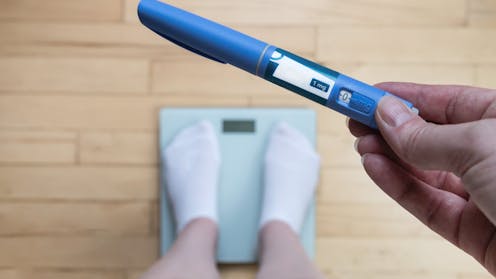
These were the first trials to examine the effects of a 7.2mg dose of semaglutide on body weight. Caroline Ruda/ Shutterstock

A higher dose of the weight loss drug semaglutide (better known by its brand name Wegovy) may help people lose up to 25% of their body weight – without the risk of severe side-effects. These findings are based on the results of two recently published clinical trials.

Semaglutide has proven to be effective in helping people lose weight. But weight loss tends to plateau after about one year of use – even when taking the highest approved dose of the drug. This means patients may not reach their weight loss goals.

So researchers set out to understand whether a higher dose can be effective without the risk of severe side-effects.

In the first trial, researchers studied the effect of a 7.2mg dose of semaglutide in adults with obesity. This is three times the currently approved 2.4mg dose found in Wegovy. Participants were randomly assigned to either receive the higher dose, the standard dose or a placebo drug once a week for a period of 72 weeks.


Read more:
Semaglutide: beware of buying the weight-loss drug online


Participants were also told to reduce their daily calorie intake by around 500 calories per day and increase the amount of physical activity they did each week (aiming for around 150 minutes).

The participants who received the 7.2mg dose lost an average of nearly 21% of their body weight – compared with 17.5% for those on the standard dose. Participants who took the placebo only lost 2.4% of their body weight. These figures are based on those who fully adhered to the treatment regimen.

Around 33% of the participants on the higher dose also experienced very high levels of weight loss – losing 25% or more of their total body weight. This is roughly double the proportion seen in the standard-dose group, where just under 17% achieved this degree of weight loss.

The participants who used semaglutide also saw greater improvements in their cardiometabolic health compared to those who only received the placebo.

As might be anticipated, side-effects were more common in people taking the higher dose of semaglutide than those taking the lower dose. The most common side-effects were gastrointestinal issues, such as nausea or diarrhoea. Around 3% of participants using the higher dose and 2% of participants using the standard dose stopped using the drug because of these gastrointestinal issues.

A second trial then investigated what effect a higher dose of semaglutide would have in people with type 2 diabetes.

It’s well established that people with type 2 diabetes tend to lose less weight on semaglutide compared to those without diabetes. It’s not currently known why this is. So the second trial sought to understand whether a higher dose of semaglutide would also have a significant effect on weight loss in people with type 2 diabetes.
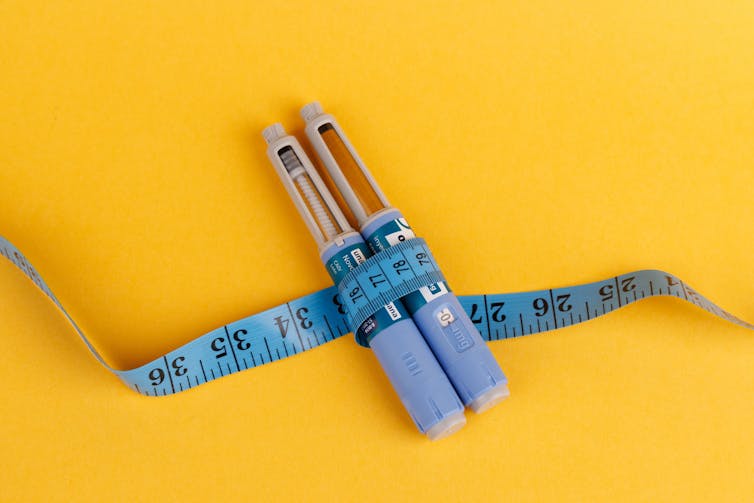
Two vials of semaglutide, with a blue measuring tape wrapped around them.
The higher dose of semaglutide also helped people with type 2 diabetes lose more weight.
Edugrafo/ Shutterstock

This time they recruited 512 participants with obesity who also had type 2 diabetes. They used the exact same study design as they did in the previous study.

Those treated with 7.2mg of semaglutide lost just over 13% of their body weight. The standard dose group lost around 10% of their body weight, while the placebo group lost just under 4% of their total body weight.

Beyond weight loss, the 7.2mg dose of semaglutide brought measurable improvements in metabolic health. On average, waist circumference decreased by 6.5cm compared to the placebo group. Blood glucose levels (HbA1c, a measure of diabetes control) also fell by nearly 2% in those taking the higher dose.

Gastroinstestinal problems were again the most commonly experienced side-effects in those taking semaglutide – with around 6% of the study’s participants stopping the trial because of these side-effects.

Patient benefit

Semaglutide promotes weight loss by mimicking the body’s natural GLP-1 hormone, which helps regulate blood sugar and appetite. These drugs act on brain pathways that control energy balance and food intake, leading to reduced hunger and an earlier sense of fullness (satiety) after eating. This can help people to eat less, leading to weight loss.


Read more:
Eight conditions weight-loss jabs might be beneficial for


Higher doses of semaglutide lead to greater weight loss by more strongly activating the brain regions that control appetite, resulting in reduced hunger and increased feelings of fullness. They also slow stomach emptying more effectively, helping to decrease overall food intake.

The results from these two trials show that a higher dose of semaglutide is both safe to use and very effective. Being able to use a higher dose of semaglutide offers more options for patients when it comes to managing their weight and controlling their blood sugar. It also gives an option to people who may not respond to the standard 2.4mg dose or whose weight loss may plateau.

These findings also show that semaglutide can compete against other weight loss drugs, such as tirzepatide (Mounjaro). In an earlier head-to-head trial, a 10gm-15mg dose of tirzepatide resulted in a 20% loss of body weight in participants – while a standard dose of semaglutide only resulted in an approximately 14% loss in body weight. But these recent studies now show that a higher dose of semaglutide can lead to comparable levels of weight loss.

These results may also raise questions about whether dose escalation may become a future standard of care in obesity treatment.

The Conversation

Martin Whyte does not work for, consult, own shares in or receive funding from any company or organisation that would benefit from this article, and has disclosed no relevant affiliations beyond their academic appointment.

ref. Weight loss drug semaglutide shown to be safe and potentialy more effective at higher dose – new findings – https://theconversation.com/weight-loss-drug-semaglutide-shown-to-be-safe-and-potentialy-more-effective-at-higher-dose-new-findings-265312


Three ways your mental and physical health will benefit from being kinder to yourself

Source: The Conversation – UK – By Jennifer Donnelly, Doctoral Researcher, Meditation-based Interventions in Clinical Settings, Centre of Positive Health Sciences, RCSI University of Medicine and Health Sciences

Self-compassion is viewing yourself with kindness instead of judgment. feodarina/ Shutterstock

“Be kind to yourself” is a piece of advice that’s often given to people during difficult times or moments of stress. But for someone who is driven, a perfectionist or facing pressure, the idea of self-compassion can feel uncomfortable. To them, kindness might feel like letting themselves off the hook.

But research actually shows that consistently feeling shame and self-judgment can activate the body’s stress response just as strongly as physical danger. This increases cortisol and inflammation, both of which are linked to long-term health problems.

On the contrary, research suggests that being kind to yourself – known in psychology as “self-compassion” – can actually support motivation, accountability and resilience without the cost of burnout.

Self-compassion can be defined as the ability to view yourself with kindness and a mindful or balanced perspective on what’s happening to you – as opposed to viewing yourself with judgment, focusing on your mistakes or feeling like you’re alone in your experience.

The key components of self-compassion include mindful awareness (noticing your pain or struggle without denial or exaggeration), self-kindness (offering support rather than criticism) and shared humanity (remembering that everyone struggles sometimes and that imperfection is part of being human).

Self-compassion doesn’t mean letting yourself off the hook. It means staying connected to yourself in a way that supports real, healthy change.

But practising self-compassion is often easier said than done. If you’re someone who finds it difficult to be kind to yourself, here are three ways having more self-compassion can be beneficial for you – and how to increase self-compassion in your everyday life.

1. Reduces your body’s stress response

Stress is a natural part of life that our bodies are well-adapted to cope with. It allows us to perform daily tasks and be more engaged. However, consistent exposure to stress without relief may result in chronic stress. This can lead to both mental and physical health problems including cardiovascular disorders, decreased immunity and mental health challenges such as depression.

To reduce exposure to chronic stress, we need to be able to engage our brain’s parasympathetic system – the part of the nervous system that helps the body relax and also controls functions such as digestion and breathing. The parasympathetic system is often stimulated by relaxation and feelings of safety, security and comfort.

Self-compassion may be a powerful tool in helping create the feeling of security and comfort within ourselves that’s needed to stimulate this internal system. Research suggests self-compassionate thoughts can result in physiological changes such as improved heart rate variability – a marker of emotional regulation and resilience.

2. Helps you respond and adapt to feedback

Many people fear that too much self-compassion could mean they become self-centred or avoid responsibility. But when we practise self-compassion, we often become more available to others.

We model healthier coping strategies, respond better to feedback and recover faster from setbacks.

The reason this happens is because self-compassion teaches us to respond to ourselves with the same care we would offer others. Instead of saying: “I’m not good enough,” a self-compassionate person might say: “This was hard, what can I learn for next time?”

A young woman wearing glasses hugs herself.
Self-compassion can make us more empathetic towards others.
Krakenimages.com/ Shutterstock

Better yet, as we begin to show empathy towards our own imperfections and mistakes, we are better able to extend that empathy towards others.

3. Makes you more likely to succeed

Another common fear is that self-compassion will make us lazy or unambitious. But studies show the opposite to be true.

People who practise self-compassion are more likely to take responsibility for their actions, try again after failure and stay engaged with long-term goals. They procrastinate less and take more conscientious, less impulsive decisions.

By contrast, shame and negative self-esteem may drive short-term performance, but we’re less likely to maintain this motivation over time.

How to practise self-compassion

If you’d like to give self-compassion a go, the next time you catch yourself in a loop of harsh self-talk, pause and ask: if someone I loved were in this situation, what would I say to them? Then try offering yourself the same words.

And use neutral, non-judgmental language. Instead of “I shouldn’t feel this way” or “I’ve failed again,” try to make your thinking less personal. You could tell yourself instead: “This is hard” or “I’m not the only one who feels this way.” You could even try to be more forward thinking, asking yourself: “This is my situation right now, what can I do next?” These small shifts reduce emotional reactivity and help support clearer thinking under pressure.

Finally, look at the bigger picture. It’s easy to feel alone in our struggles. But everyone, regardless of culture, background or personality, experiences doubt, regret or imperfection. Remind yourself that no one is perfect and everyone has hard days. You’re not alone.

Practices such as loving-kindness meditation can also help with developing self-compassion. During this form of meditation, the focus is on sending good wishes or kind thoughts to yourself and others.

Whether you’re navigating illness, chronic stress or the pressures of daily life, being kind to yourself isn’t indulgence – it’s a skill that protects your health, your mind and your future self.

The Conversation

Jennifer Donnelly does not work for, consult, own shares in or receive funding from any company or organisation that would benefit from this article, and has disclosed no relevant affiliations beyond their academic appointment.

ref. Three ways your mental and physical health will benefit from being kinder to yourself – https://theconversation.com/three-ways-your-mental-and-physical-health-will-benefit-from-being-kinder-to-yourself-263569

When insulation goes wrong – the science behind why botched retrofits can be so damaging

Source: The Conversation – UK – By Sarah Price, Research Fellow at the Leeds Sustainability Institute, Leeds Beckett University

Chizhevskaya Ekaterina/Shutterstock

Insulation is designed to make heating our homes more efficient, but if it isn’t installed properly it can sometimes lead to condensation, damp and mould. Recently UK government ministers revealed the scale of the issue and reported that thousands of homes may have had botched insulation fitted since 2022 under a government scheme called the Energy Company Obligation.

Many people have also told journalists they were hoping the insulation would make their homes warmer in cold weather, and were confused and alarmed to find sub-standard installation made mould and damp worse.

To understand why, we first need to think about where moisture in our homes comes from.

There’s rain and ground water, of course, but we often forget about moisture in the air. Air is great at holding moisture. Every time we breathe, we give off carbon dioxide and water vapour. Bathing, cooking, washing-up and drying clothes indoors add even more moisture to the air.

Normally, ventilation – the flow of fresh air in and stale air out – helps carry some of this moisture away. Some people open their windows regularly and some homes are naturally “leaky”, with gaps in walls, roofs and floors that let air in and out.

Now imagine a home that was once well ventilated because it’s leaky, which then has
insulation fitted to the walls. It’s going to get more sealed up, and this can upset the balance of moisture in the air inside the home, making it more humid.

And if the occupant isn’t good at opening windows enough, particularly in the colder months, (which most of us aren’t!), this can lead to condensation, damp and mould, especially in colder corners of rooms where insulation is often missing. It takes more skill and can cost more to install insulation in corners.

Moisture is more likely to condense when there are cold surfaces inside – like a pint of beer in a pub, or a pair of glasses steaming up when you come in from outside. These cold spots, where insulation is missing, are called thermal bridges, and they stay cold while the rest of the wall warms up.

This is unfortunately a common theme in retrofitting insulation to homes. Insulation is installed, gaps in the material are left, and ventilation is forgotten about. This is why housing experts now say “no insulation without ventilation”.

Walls and moisture

There are other ways in which insulation can lead to damp and mould. These usually relate to moisture being trapped inside the building fabric. For example, if external wall insulation is not properly sealed at the top, rainwater can be absorbed into the bricks behind the external wall insulation.

The wall has a hard time releasing moisture because the external wall insulation slows down drying to the outside. The wall tries to release moisture to the inside instead, which means that the ventilation system needs to work extra hard and may get overloaded – if there even is one installed.

This is what led to the mushrooms growing in people’s homes in the 2013 Preston external wall insulation debacle. It involved a botched external wall insulation retrofit of properties with many vulnerable residents.

Moisture can also get trapped behind internal wall insulation on solid masonry walls. It makes the existing solid brick wall colder because it’s being insulated from the inside warmth of your home. Tiny gaps in the insulation system can allow warm moist air from inside the house to get to the back of the internal wall insulation and to reach the colder external brick wall. If that happens, condensation, and therefore mould, could form inside the wall.

The solution is to make sure there are no gaps in the insulation, and to use the right kind of insulation. Some types of insulation such as wood fibre or calcium silicate board are better at managing moisture. It’s also important to make sure the wall is in good condition to start with, with no cracks and to install an internal air barrier to stop any of the warm moist air getting in behind the internal insulation in the first place.

This all might sound a bit alarming, but the good news is that we’ve learned a lot about moisture in retrofit.

If you’re thinking about retrofitting your home with insulation, ask the contractor if they’ve considered the things listed in the infographic below:

List of things to consider in regards to insulation.

Sarah Price, CC BY-NC-SA

A ventilation system can be easily retrofitted to any home. It can be done before, during or after installation of the insulation. It should include extraction fans in kitchens and bathrooms to extract moisture at source, combined with supply vents or trickle vents in all the other rooms.

Research from the Leeds Sustainability Institute has shown that taking a whole-house approach to installing insulation can reduce the risk of condensation. The whole-house approach is something experts have been talking about for a while and just means thinking of the house as a system including ventilation and cold spots, and not just focusing on the bit being insulated.

The Conversation

Sarah Price works for Leeds Beckett University

ref. When insulation goes wrong – the science behind why botched retrofits can be so damaging – https://theconversation.com/when-insulation-goes-wrong-the-science-behind-why-botched-retrofits-can-be-so-damaging-264916

Israel’s strike on Qatar was a serious blow against diplomacy in the Middle East

Source: The Conversation – UK – By M. Waqas Haider, PhD Researcher, Lancaster University

The recent Israeli strike on Hamas leaders in Doha, where they had gathered to discuss a US-brokered peace proposal, has triggered substantial repercussions throughout the Middle East and beyond. Israeli prime minister, Benjamin Netanyahu, characterised it as a “justified” operation against a militant organisation.

But, by conducting the strike against a nation widely acknowledged as a neutral facilitator in peace negotiations, Israel has not only intensified its confrontations with Hamas but also destabilised the delicate framework of diplomacy and conflict resolution in the region.

The BBC headlined its report by veteran Middle East correspondent: “diplomacy in ruins”. The strike event raises urgent questions about the future of mediation, the erosion of international norms on sovereignty, and the trust required for both governments and armed groups to engage in negotiations.

Its implications go beyond the Israeli–Palestinian conflict. It will affect the very principles of how peace efforts are carried out in today’s divided world. It is also likely to affect the future of the Abraham Accords, the agreements by which Israel has been normalising relations with Arab states.


Read more:
Middle East leaders condemn Israel’s attack on Qatar as Netanyahu ends all talk of Gaza ceasefire – expert Q&A


To fully understand why Israel’s strike against a target in Qatar was such a significant disruption, it helps to consider Qatar’s historical role in international diplomacy. For 20 years, Qatar has served as a neutral platform for diplomatic negotiations in the Middle East.

The city has hosted talks between the Taliban and the United States, contributed to mediating Sudan’s civil conflict, and consistently facilitated indirect discussions between Israel and Hamas amid crises regarding Gaza ceasefires.

Qatar’s compact size and substantial wealth position it as an unparalleled global hub for dialogue and diplomacy. Its reputation as a secure and neutral meeting place attracts rivals and world leaders alike, especially when other venues are unavailable or unsuitable for any of the parties involved.

This strategic role not only bolsters Qatar’s international influence but also offers the global community a vital platform for meaningful engagement and conflict resolution.

The strike in Doha undermines this carefully cultivated image. If even Qatar cannot assure safety to those involved in negotiations, other groups and governments might start doubting the worth of such mediation entirely.

Equally significant is the impact on sovereignty. International law makes it clear that using force inside another country’s borders without permission is a breach of that country’s sovereignty. This principle is a cornerstone of international relations, designed to protect weaker states from the actions of stronger ones.

For smaller states such as Qatar, who offer their territory for negotiations, this raises a troubling dilemma. Can they still provide a safe and neutral venue for peace talks if their sovereignty is not respected?

If mediating states are no longer seen as safe hosts, fewer will be willing to take on the role. That leaves the world with fewer neutral venues at a time when conflicts are multiplying and diplomacy is more necessary than ever.

The damage is not only legal but psychological. Peace talks rely on trust – both in the process and in the safety of the participants. For non-state actors such as Hamas, or others considering talks, the Doha strike signals that negotiations may expose them to deadly risk.

This perception could make groups less willing to engage in dialogue, even when talks are the only realistic path to de-escalation. The Taliban, for example, only agreed to negotiate with the US because they believed Doha was a safe zone. Without that confidence, the 2020 peace deal might never have been reached.

Geopolitical ripple effects

The strike also complicates broader regional politics. The US, for example, has long depended on Qatar as the host of its largest military bases in the Middle East – a vital centre for its operations in the region. Washington now has to balance its strong alliance with Israel against its strategic reliance on Qatar.

Iran, meanwhile, is likely to interpret the strike as evidence of Israeli aggression, using it to bolster relations with groups opposed to Israel. Other Gulf states, some of which have been cautiously normalising relations with Israel, may pause to reconsider whether such actions promote stability or introduce new risks. Such actions also act as spoilers in the peace process, increasing the relative motivation of such groups not to accede to the demands.

Rather than creating space for dialogue, this strike has pushed both sides further from the negotiating table — leaving the peace process in tatters. To compound matters, Benjamin Netanyahu has refused to rule out further strikes abroad targeting Hamas leaders.

More broadly, the incident illustrates how modern conflicts are increasingly spilling into areas once reserved for diplomatic efforts, and these actions also extend beyond the bounds of “coercive diplomacy”.

This is a carrot-and-stick approach to diplomacy which relies on positive inducements as well as threats of force to modify or influence the adversary’s behaviour. Israel’s strikes were not coercive diplomacy, but an act of war – an attempt to decapitate Hamas leadership. The attack shows how the boundary between war and negotiation has become increasingly blurred – with military actions now directly disrupting peace efforts.

The challenge facing the international community must not be understated. In the absence of secure and impartial venues, such as Doha, organising peace negotiations becomes significantly more complex. Multilateral organisations such as the United Nations, in conjunction with major powers, have a duty to strengthen safeguards for mediating nations and to denounce infringements on sovereignty that jeopardise them.

Qatar’s credibility as a mediator may have been damaged, but the principle it embodies remains vital. If neutral venues fail, the foundations of diplomacy also crumble. This would result in more conflicts having no peaceful solutions and lead the world closer to endless confrontation.

The Conversation

M. Waqas Haider does not work for, consult, own shares in or receive funding from any company or organisation that would benefit from this article, and has disclosed no relevant affiliations beyond their academic appointment.

ref. Israel’s strike on Qatar was a serious blow against diplomacy in the Middle East – https://theconversation.com/israels-strike-on-qatar-was-a-serious-blow-against-diplomacy-in-the-middle-east-265313

Racism isn’t innate – here are five psychological stages that may lead to it

Source: The Conversation – UK – By Steve Taylor, Senior Lecturer in Psychology, Leeds Beckett University

Sadly, there are signs that racism is increasing across the world.

Research from Europe and Australia in recent years has found a rise in the number of people experiencing racism. Reports from the US and UK have indicated that most ethnic minority participants felt racism was getting worse. And a global study has found rising incidents of discrimination.

Animosity to those who appear different to us seems easy to arouse, especially in times of hardship and upheaval. Throughout history, human groups have scapegoated minorities, such as Jews, the Roma and immigrants.

Some scientists have suggested that racism is an innate human trait that evolved in the distant past. According to the evolutionary psychologist Pascal Boyer, racism is “a consequence of highly efficient economic strategies” that enables us to “keep members of other groups in a lower-status position, with distinctly worse benefits”.

In other words, why would our ancestors decrease their own chances of survival by sharing resources with other groups?

Another theory from evolutionary psychology is that racism may have evolved as an “energy-saving” strategy. To interact or mate with ethnically different groups would have involved a lot of time and energy, through coordinating with different social norms. Therefore, we developed a tendency to view different groups as different species to avoid, saving ourselves “costly interaction with outgroup members”.

However, I argue the above theories are dubious. First of all, evidence suggests that, due to tiny populations, there was an abundance of resources for early human beings, and so no need to actively deny others from accessing food and water. Second, the above theories don’t fit with what anthropology tells us about the behaviour of early human groups.

There is a great deal of anthropological and archaeological evidence showing that prehistoric groups didn’t avoid each other. They often intermarried, frequently mixed and changed membership. The same pattern is shown by an absence of territorial behaviour and a strikingly low level of warfare.

Alternative explanations

Maybe other areas of psychology can provide a better explanation. Research shows a link between prejudice and poor psychological functioning, including poor relationships with insecurity and aggression. This can often be traced back to a disturbed and insecure childhood. Other research has shown a link between racism and anxiety, demonstrating that people become more prejudiced during challenging times.

More generally, studies demontrate that when people are made to feel insecure or anxious, they are more likely to identify with their national or ethnic groups. This enhances their self-esteem and their sense of identity, as a defence against insecurity and anxiety.

There are clearly social and economic factors that encourage racism, such as hierarchy and inequality. But the above research suggests that racism is largely a psychological defence mechanism against anxiety and insecurity.

Five stages to racism

From this psychological perspective, it’s possible to identify different stages in the development of racism. According to the theory I propose in my book DisConnected, the process begins when a person lacks a sense of security and identity, which generates a desire to affiliate themselves with a group. This affiliation strengthens their identity and provides a sense of belonging.

What’s wrong with this? Why shouldn’t we take pride in our national or religious identity, and feel a sense of brotherhood or sisterhood with others who share our identity?

Milwaukee, WI., USA - July 15, 2024: Demonstrators with the Coalition to March on the RNC protest the nomination of Donald Trump for president on the first day of the Republican National Convention
Tensions have been rising in the US for many years.
Vic Hinterlang/Shuttestock

Because group identity often leads to a second, more dangerous stage. In order to further strengthen their sense of identity, members of a group may develop antagonism towards other groups. Such hostility may make the group feel more defined and cohesive, as if they can see themselves more clearly in opposition to others.

A third stage of the process is when members of a group withdraw empathy from members of other groups, limiting their concern and compassion to their peers. They may act benevolently towards members of their own group but be indifferent or callous to anyone outside it. As I show in DisConnected, the withdrawal of empathy turns other human beings into objects, and enables cruelty and violence.

Fourth is the homogenisation of individuals belonging to other groups. People are no longer perceived in terms of their individual personalities or behaviour, but in terms of prejudices about the group as a whole. Any member of the group is a legitimate target and can be punished for the alleged transgressions of other individuals from the group. In contemporary terms, any asylum seeker can be punished for the alleged crime of an individual asylum seeker.

Finally, people may project their own psychological flaws and personal failings onto another group, as a strategy of avoiding responsibility. Other groups become scapegoats, and consequently are liable to attacked or even murdered. People with strong narcissistic and paranoid personality traits are especially prone to such projection, since they struggle to accept their personal faults, instead searching for others to take the blame.

In other words, racism is a symptom of psychological ill-health, a sign of anxiety and of a lack of identity and inner security. Psychologically healthy people with a stable sense of identity and security are very rarely (if ever) racist. They ultimately have no need to strengthen their sense of self through group identity.

In my view, racism is an aberration, not an innate human trait. It’s also worth remembering that the very concept of race is baseless. There is no genetic or biological basis for dividing the human race into distinct “races”.

There are just groups of human beings — all of whom came from Africa originally — who developed slightly different physical characteristics over time as they travelled to, and adapted to, different climates and environments.

The Conversation

Steve Taylor does not work for, consult, own shares in or receive funding from any company or organisation that would benefit from this article, and has disclosed no relevant affiliations beyond their academic appointment.

ref. Racism isn’t innate – here are five psychological stages that may lead to it – https://theconversation.com/racism-isnt-innate-here-are-five-psychological-stages-that-may-lead-to-it-264391

Climate change is fast shrinking the world’s largest inland sea

Source: The Conversation – UK – By Simon Goodman, Lecturer in Evolutionary Biology, University of Leeds

The Caspian Sea is roughly the size of Germany or Japan, but is shrinking fast. Nasa

Once a haven for flamingos, sturgeon and thousands of seals, fast-receding waters are turning the northern coast of the Caspian Sea into barren stretches of dry sand. In some places, the sea has retreated more than 50km. Wetlands are becoming deserts, fishing ports are being left high and dry, and oil companies are dredging ever-longer channels to reach their offshore installations.

Climate change is driving this dramatic decline in the world’s largest landlocked sea. Found at the boundary between Europe and central Asia, the Caspian Sea is surrounded by Azerbaijan, Iran, Kazakhstan, Russia, and Turkmenistan, and sustains around 15 million people.

The Caspian is a hub for fishing, shipping, and oil and gas production, and is of rising geopolitical importance as it sits where the interests of global superpowers meet. As the sea shallows, governments face the critical challenge of maintaining industries and livelihoods, while also protecting the unique ecosystems that sustains them.

I’ve been visiting the Caspian for more than 20 years, working with local researchers to study the unique and endangered Caspian seal, and support its conservation. Back in the 2000s, the far north-eastern corner of the sea was a mosaic of reed beds, mudflats and shallow channels that teemed with life, providing habitats for spawning fish, migrating birds, and tens of thousands of seals that gathered there to moult in the spring.

Now these remote wild places we visited to catch seals for satellite tracking studies are dry land, transitioning to desert as the sea retreats, and the same story is playing out for other wetlands around the sea. This experience parallels that of coastal communities, who year by year are seeing the water recede away from their towns, fishing wharves and ports, leaving infrastructure stranded on newly-dry land, and the people fearful for the future.

Seals and satellite maps
Top: Caspian seals among reed beds in Komsomol Bay (shaded orange in satellite images), April 2011. Bottom: The extent of coastal recession in the north east Caspian Sea 2001-2024, satellite imagery from Nasa Worldview.
(Seal photo: © Simon Goodman, University of Leeds; satellite imagery from NASA Worldview

A sea in retreat

The level of Caspian Sea has always fluctuated, but the scale of recent change is unprecedented. Since the turn of the current century, water levels have declined by around 6cm per year, with drops of up to 30cm per year since 2020. In July 2025, Russian scientists announced the sea had dropped below the previous minimum level recorded during the era of instrumental measurements.

During the 20th century, variations were due to a combination of natural factors and humans diverting water to use for agriculture and industry, but now global warming is the main driver of decline. It might seem inconceivable that a body of water as large as the Caspian could be at risk, but in the hotter climate the rate of water entering the sea from rivers and rainfall is reducing, and is now being outstripped by increased evaporation from the sea surface.

Even if global warming is limited to the Paris agreement target of 2°C, water levels are predicted to fall up to ten metres compared to the 2010 coastline. With the current global trajectory of greenhouse gas emissions, the decline could reach 18 metres, which is about the height of a six-storey building.

Because the northern Caspian is shallow – much of it only around five metres deep – small decreases in depth mean huge losses of area. In recent research, colleagues and I showed that even an optimistic ten-metre decline would uncover 112,000 square kilometres of seabed – an area larger than Iceland.

What’s at stake

The ecological consequences would be dramatic. Four out of ten ecosystem types unique to the Caspian Sea would disappear completely. The endangered Caspian seal could lose up to 81% of its current breeding habitat, and Caspian sturgeon would lose access to critical spawning habitat.

Cute babe seal + maps
Top: Caspian seal pup sheltering by ice ridge; Bottom: Potential reduction in Caspian seal breeding habitat under different water level decline scenarios. Under a five-metre decline, the loss could as much as 81%.
Seal: © Central-Asian Institute of Environmental Research; Maps: Court et al. 2025

As in the Aral Sea disaster, where another massive lake in central Asia almost entirely disappeared, toxic dust from exposed seabed would be released, with serious health risks.

Millions of people are at risk of displacement as the sea recedes, or face highly degraded living conditions. The sea’s only link to the global shipping network is through the delta of the Volga River (which flows into the Caspian) and then via an upstream canal to the Don River for connections to the Black Sea, Mediterranean and other river systems. But the Volga is already struggling with reduced water depth.

Ports like Aktau in Kazakhstan and Baku in Azerbaijan need dredging just to keep operating. Similarly oil and gas companies are having to dredge long channels to their offshore facilities in the north Caspian.

Already the costs of protecting human interests are in the billions of dollars and are only set to grow further. The Caspian is central to the “middle corridor”, a trade route linking China to Europe. As water levels fall, shipping loads must be reduced, costs rise, and settlements and infrastructure risk being stranded tens or even hundreds of kilometres from the sea.

A race against time

Countries around the Caspian are having to adapt, relocating ports, and dredging new shipping lanes. But these measures risk conflicting with conservation goals.

For instance, there are plans to dredge a major new shipping channel across the “Ural saddle” of the north Caspian. But this is an important area for seal breeding, migration and feeding, and will be a vital area for the adaptation of ecosystems as the sea recedes.

Since the rate of change is so rapid, traditional fixed boundary protected areas risk becoming obsolete. What’s needed is an integrated, forward-looking approach to planning across the whole region. If the areas ecosystems will need to adapt to climate change are mapped and protected now, planners and policy makers will be better able to ensure future infrastructure projects avoid or minimise further damage.

To do this Caspian countries will have to invest in biodiversity monitoring and planning expertise, all while coordinating action across five different countries with different priorities.

Caspian countries are already recognising the existential risks, and have begun to form intergovernmental agreements to address the crisis. But the rate of decline may outstrip the pace of political cooperation.

The ecological, climatic and geopolitical importance of the Caspian Sea means its fate ultimately matters far beyond its receding shores. It provides a key case study in how climate change is transforming major inland water bodies across the world, from Lake Titicaca to Lake Chad. The question is whether governments can act fast enough to protect both the people and nature of this rapidly changing sea.

The Conversation

Simon Goodman has provided advice to the United Nations Environment Programme (UNEP) on Caspian seal conservation, and in the past has conducted research and advised oil and gas companies in the Caspian on how to minimise their impact on seals. His recent work was not funded by or linked to industry. He is co-chair of the International Union for Conservation of Nature (IUCN) pinniped specialist group.

ref. Climate change is fast shrinking the world’s largest inland sea – https://theconversation.com/climate-change-is-fast-shrinking-the-worlds-largest-inland-sea-265239

Big-spending Premier League needs to spread more of its wealth to poorer clubs or everyone loses

Source: The Conversation – UK – By Robert Simmons, Professor of Economics, Lancaster University

The 2025 summer football transfer window was a record for the English Premier League with teams spending £3.9 billion on transfer fees for new players. That’s more than the top divisions of France, Germany, Italy and Spain combined.

The most expensive transfer was Alexander Isak’s drawn out switch from Newcastle United to Liverpool, who forked out £125 million for the forward and will also pay him a salary of around £13 million a year (plus bonuses).

So there is plenty of money being spent at the top end of English football. But it’s a very different story in the tiers below, where the likes of Morecambe FC and Sheffield Wednesday have spent the summer in crisis over financial issues.

In fact, all three divisions below the Premier League (Championship, League One and League Two) make a financial loss every year. The economic chasm between the teams at the top and those at the bottom is only getting wider and there is an ever-increasing chance that some clubs will soon become insolvent.

And though the economic strife affecting teams in the lower leagues might not seem like such a big problem for the Premier League giants and their fans – any fans of any team, in fact – it should be.

The four divisions (92 clubs) of English league football are linked every season by promotion and relegation. Such is the fluidity of this system that Brighton and Hove Albion and Bournemouth are now enjoying life in the Premier League having gradually clawed their way up from the fourth tier.

In the other direction, Luton Town has been relegated twice in the past two years from the Premier League to League One. The jeopardy attached to the hope and dread of going up or going down is part of what makes English football so captivating – and attractive to broadcasters and sponsors.

If clubs are weak financially, and unable to afford to develop or bring in fresh talent, the whole system risks becoming static. In recent years, even promoted sides struggle (all the teams promoted to the Premier League in the last two seasons have been immediately relegated again), often resulting in unappealing fixtures where weaker teams are thrashed by stronger ones. This kind of competitive imbalance could undermine the value of future broadcast rights fees.

Those fees are important part of the football economy, although again, it is the teams at the top of the tree which benefit the most.

Championship, League One and League Two clubs received negligible fee income from broadcast rights until recently, after a new broadcast deal with Sky TV started in 2024 which is worth £935 million over five years. (The current domestic Premier League deal is worth £6.7 billion over four years.)

Sharing is caring

So lower division clubs now have games accessible to viewers and a new income stream that should help offset financial losses. But the real financial win comes from getting as far up the football pyramid as possible

For the lower leagues then, promotion is always the biggest goal. The new celebrity-backed owners of Birmingham City and Wrexham have the explicit ambition of reaching the Premier League. The end of season playoff final between two Championship teams fighting for promotion to the Premier Leagues is estimated to be worth around £200 million, given the increased broadcast incomes that would follow.

For its part, the Premier League has often restated a commitment to keeping the 92-team hierarchical structure of English football intact, and currently supports teams in the lower leagues through a mechanism of “solidarity payments”.

As of the 2024-25 season, these payments were £5.5 million per club for Championship teams (apart from those relegated from EPL which receive much larger “parachute payments” instead), £1 million per club for League One and £0.75 million per club for League Two.

Nevertheless, many EFL clubs still rely on loans and capital injections, often by their owners, to get by. And the gap in economic power remains vast.

In 2023-24, Liverpool’s total revenue was £614 million while Morecambe’s was £4.57 million.

If the EPL is serious about sustaining the 92-team hierarchical structure in England then there is scope for dramatically increasing these solidarity payments – which could be made conditional on sound financial practices by receiving clubs. Like a wealth tax for football, more generous payments would essentially help to reduce economic inequality across English football as a whole, and make for a financially much healthier sport.

The Conversation

Robert Simmons does not work for, consult, own shares in or receive funding from any company or organisation that would benefit from this article, and has disclosed no relevant affiliations beyond their academic appointment.

ref. Big-spending Premier League needs to spread more of its wealth to poorer clubs or everyone loses – https://theconversation.com/big-spending-premier-league-needs-to-spread-more-of-its-wealth-to-poorer-clubs-or-everyone-loses-263750

Why have cancer survival rates stopped improving in the UK?

Source: The Conversation – UK – By Ahmed Elbediwy, Senior Lecturer in Cancer Biology & Clinical Biochemistry, Kingston University

The ten-year survival rate for many cancers has doubled in the past 50 years — but for others, there has been hardly any change. namtipStudio/ Shutterstock

More people are surviving cancer than ever before in history. Advances in cancer treatments and diagnostic tools mean we’re able to catch cancer earlier on and treat even aggressive forms of the disease.

But a major new study has shown that the steady increase in cancer survival rates that we’ve seen in England and Wales over the last 50 years has plateaued.

The researchers looked at data from over 10 million adults diagnosed with cancer over an almost 50-year period (1971-2018) in England and Wales. They found that the ten-year survival rate for patients has doubled in the past 50 years – from around 23% to 50%. That’s obviously fantastic news. But they also found that the overall increase in survival rates has begun to plateau in the past few decades.


Read more:
Cancer survival in England is not improving – here’s what needs to be done


Some cancers, including breast, bowel and cervical cancers, have seen huge improvements in diagnosis and ten-year survival rates. But other types of cancer, including pancreatic, brain, lung, stomach and oesophageal, historically have a much lower survival rate. For these cancers, there has hardly been any change in survival rate observed in the past 50 years.

There are a few key reasons that may explain why survival rates from these types of cancer have not improved.

One is lifestyle changes. Over the past 50 years, the average person’s diet has changed significantly – with ultra-processed foods making up a greater proportion of peoples’ diets. These foods tend to be high in calories and low in nutritional value.

This shift has contributed to a startling increase in global obesity rates. This obesity increase has coincided with a substantial increase in risk of obesity-related cancers, including pancreatic, kidney, colorectal, ovarian and gallbladder cancer.

Moreover, UK research has found a link between ultra-processed foods and cancer – finding that the more ultra-processed foods a person consumes, the greater their risk of developing many types of cancer, including ovarian.

Meanwhile, although smoking rates have declined over the past 50 years in England, air pollution has now become a significant concern when it comes to lung cancer. Exposure to air pollution causes around one in ten cases of lung cancer in the UK. It’s estimated that almost 6,000 people who have never smoked die of lung cancer every year in the UK.

Another possible reason for survival rates not improving is location. Some areas of the UK have better access to drugs, cancer specialists and advanced screening programmes. This “cancer postcode lottery” means that two people with the same cancer may have very different outcomes depending on where they live. Patients who live in lower socioeconomic areas face longer waits for treatment, receive poorer care, and have lower cancer survival rates.

A recent report from the Macmillan Cancer Trust found that up to 40% of UK residents have struggled to get cancer treatment and care because of where they live.

This disparity is a historic issue, which has been documented as far back as 1981. Despite measures put in place to address it, socioeconomic inequalities in cancer survival continue to be observed.

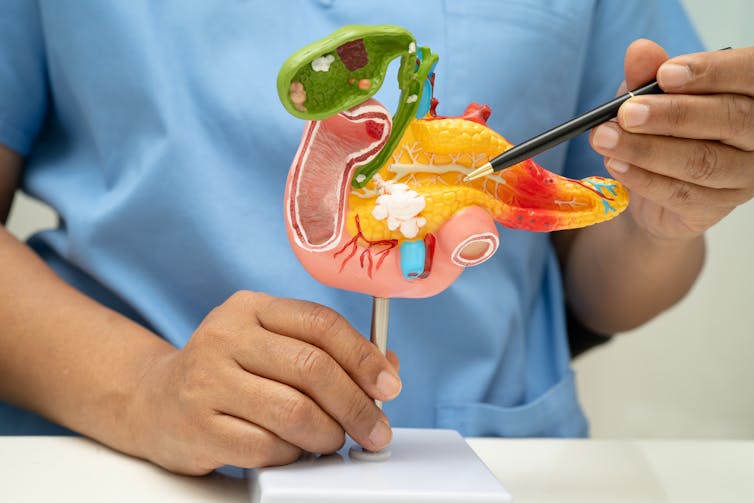
A doctor or nurse wearing blue scrubs uses a pen to point at a diagram of the pancreas.
Certain types of cancer, such as pancreatic cancer, have not received as much research investment as other types of cancer.
sasirin pamai/ Shutterstock

Another potential factor is investment in treatments and treatment costs. In these respects, pancreatic, brain, lung, stomach and oesophageal cancers have historically been underfunded compared to other types of cancer. According to the World Cancer Research Fund, these types of cancer only receive 16% of the research investment that goes to other more common types of cancer (such as breast cancer). This means we’re still behind when it comes to effectively diagnosing and treating these conditions.

Treatment cost is another significant factor. Newer cancer treatments are expensive. In order to be approved for NHS use, the drug cannot cost more than £20,000–£30,000 per patient and it must give a patient at least one year in good health after using it.

This criteria has meant that some effective cancer treatments have been rejected in the past because they didn’t meet these requirements. Given the lack of investment some types of cancers have historically seen, rejecting them for being too costly could mean that patients living with these types of cancer may have missed out on important treatments.

Improving cancer survival rates

Many of the cancers which have seen little improvement in survival rates are difficult to screen because signs and symptoms often don’t appear until the later stages of the disease. This makes it difficult to catch them earlier on, when they might be more easily treated.

So the first and most important way of increasing survival rates is by establishing more effective screening programmes. This will allow for earlier diagnosis and increase the chances of treatments working.

Media advocacy could also be used to improve awareness of these types of cancer and improve uptake of existing screening programmes. Celebrity cancer stories have brought greater awareness to many common types of cancer – such as breast, bowel and cervical cancer. This has resulted in more people seeking out diagnoses and treatment, which may partly explain why these types of cancer have seen continued improvements in survival rates over the past 50 years.

Encouragingly, research is advancing in the field of hard-to-treat cancers. Greater investment will only further help us understand these difficult to treat cancers and develop more effective treatments for them.

Greater investment into the NHS is also vital. This will help us to reduce waiting times for diagnosis and treatment, which is critical for effective treatment and cancer survival. The UK government plans to release their national cancer plan later this year, which will outline the key ways they plan to improve cancer care and survival rates.

On the whole, we’re better able to treat and diagnose cancer than we were 50 years ago. With continued investment and research, it’s hoped we can further improve the prospects for those types of cancer whose survival rates have lagged behind.

The Conversation

The authors do not work for, consult, own shares in or receive funding from any company or organisation that would benefit from this article, and have disclosed no relevant affiliations beyond their academic appointment.

ref. Why have cancer survival rates stopped improving in the UK? – https://theconversation.com/why-have-cancer-survival-rates-stopped-improving-in-the-uk-264443

The 17th-century woman who wrote about surviving domestic abuse

Source: The Conversation – UK – By Naomi Baker, Senior Lecturer in English Renaissance Literature, Manchester University

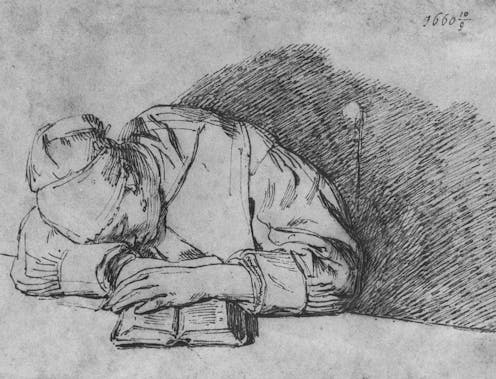
A Woman Asleep Over a Book by Jan de Bray (1660). British Museum

Women have been describing their experiences of male abuse for centuries – we just haven’t always been ready to listen to them.

In the 17th century, Anne Wentworth (1630-c.1693) spoke out against her abusive husband and the religious institution that protected him. She knew it was risky to reveal the shocking truth about an outwardly charming man who was regarded as a pillar of the community. Yet she felt compelled to tell her story.

Not only was her own life – and that of her daughter – on the line, but William Wentworth’s abusive behaviour was evidence of corruption within the Baptist church of which they were both members. Wentworth believed herself to be on a divinely appointed mission. God was using her as his “battleaxe”, she claimed, the instrument with which he would excise the rottenness at the heart of this religious community.

The remarkable Wentworth, who published accounts of her experience of spousal abuse, is one of a dozen dissenting 17th-century women whose incredible stories I tell in my book, Voices of Thunder: Radical Religious Women of the Seventeenth Century.

Like the other women in the book, Anne prioritised her sense of God’s voice speaking in her conscience above all else – a stance that empowered her to stand up to institutional forms of power and oppression. William and his powerful Baptist allies did everything they could to silence and to discredit her. But no amount of intimidation could divert her from her quest to bring the truth about her husband to light.

Originally from Lincolnshire, Anne married William, probably a glove dealer, in around 1652. They lived in London, where they were members of a “Particular” (or Calvinist) Baptist congregation. For almost 20 years, William “grossly abused” Anne both mentally and physically, being such a “scourge and lash” to her that she “lived in misery”.

By the time she was 40 years old, she was physically and emotionally spent. After so many years of suffering “great oppression and sorrow of heart”, Anne collapsed with a “hectic fever”. Narrowly escaping death, she believed that God had spared her life for a reason. No longer willing to live a lie, she decided that it was time not only to leave her husband but to declare her “testimony” to “the world”.

For years she had suffered in silence but now the truth poured out of her. In just four years she published four searing accounts of her experiences, including A True Account of Anne Wentworth’s Being Cruelly, Unjustly, and Unchristianly Dealt With by Some of Those People Called Anabaptists (1676) and A Vindication of Anne Wentworth (1677).

‘Mad’ women

Anne knew that publishing her story would enrage her husband and would alienate her from the church community that “could not bear the truth to be spoke” about him.

Her story was met with hostility, as she knew it would be. In the eyes of the Baptists, she wrote, she was a “proud, passionate, revengeful, discontented, and mad woman”, one who had “unduly published things to the prejudice and scandal of [her] husband” and had “wickedly left him”. She had given an account of decades of abuse, but it was Anne rather than William who was hauled before the leaders of their church, charged with “rejecting and neglecting their church” and with “dissatisfying” her husband.

Soon afterwards, Anne’s husband locked her out of her home. And then on September 25 1677 he committed what to Anne’s mind was his worst crime to date. Determined to suppress her testimony, William ran off with all her manuscripts, destroying six-years’ worth of writing. So “cruel” and “unchristian” had he become that by the following month Anne and her daughter were in hiding, having been forced to run for their lives. Her only so-called crime, she pointed out, was her writing: “Oh, injustice!”

It was Anne’s spiritual convictions that inspired her to speak out against oppression and injustice. She believed that God had spoken to her personally, calling her to fight not simply against her husband or the Baptist church but against wider forces of evil and oppression. Like many in her era, she believed herself to be living in the end times, when the battle against Antichrist spoken of in the biblical book of Revelation would reach its climax.

As a religious hypocrite, William in Anne’s view embodied the spirit of Antichrist, meaning that her crusade to expose the truth about him became to her mind nothing short of an apocalyptic struggle. It was this sense of the cosmic significance of her “testimony” that empowered her to tell her story.

Anne’s account of her experiences ends on a happy note. A year after being locked out of her home, she managed to regain entry, immediately changing the locks so that her husband no longer had the “power to come and put her out”. Supported by her remaining friends, she was back in the home where she had first put pen to paper, risking her reputation, home and community for the sake of speaking the truth.

Anne faced severe repercussions for telling the unvarnished truth about her life, but her determination to do so means that her story remains available to us today. It stands as testimony to one 17th-century woman’s refusal to be silenced.


Looking for something good? Cut through the noise with a carefully curated selection of the latest releases, live events and exhibitions, straight to your inbox every fortnight, on Fridays. Sign up here.


This article features references to books that have been included for editorial reasons, and may contain links to bookshop.org, so if you click on one of the links and go on to buy something, The Conversation UK may earn a commission.

The Conversation

Naomi Baker does not work for, consult, own shares in or receive funding from any company or organisation that would benefit from this article, and has disclosed no relevant affiliations beyond their academic appointment.

ref. The 17th-century woman who wrote about surviving domestic abuse – https://theconversation.com/the-17th-century-woman-who-wrote-about-surviving-domestic-abuse-260128

Donald Trump’s second state visit to the UK: the pageantry, politics and pitfalls

Source: The Conversation – UK – By David Hastings Dunn, Professor of International Politics in the Department of Political Science and International Studies, University of Birmingham

Donald Trump’s second state visit to the UK provides an opportunity to compare and contrast the visit he made six years ago, while Elizabeth II was on the throne.

Although it’s unprecedented for a head of state to visit twice, Trump’s second visit, from September 16 to 18, is consistent with royal protocol. This dictates that a head of state can make one visit to the UK per monarch, so given that Charles III is now the UK’s head of state, the protocol allows for Trump to make a second visit.

Much has changed in the world and in the US president’s approach in the years since Trump’s first visit. From a British perspective the aim will be to gloss over the differences between the two leaders and stress continuity in UK-US relations.

This means underlining the historic relationship between the UK and the US, their common heritage, cultural and political traditions, and their shared values and international outlook. State visits are a pictorial narrative of symbolic connectivity, both cultural and political, a visible link to past visits and relationships.

To achieve this, the Trumps will visit St George’s Chapel at Windsor, inspect the guard of honour and be taken on a tour of the Royal collection in Green Drawing Room of Windsor Castle, where they will be shown objects which relate to British and American shared history.

A joint flypast of British and American air force F-35 aircraft will symbolise both industrial and military collaboration as the embodiment of the “special relationship”. As with last time, the programme has been choreographed to keep Trump a safe distance from protesters and politics.

This – as last time – will be the “heritage and high life” version of Britain. This visit represents a high point in Trump’s journey from the outer boroughs of New York to the heart of what he regards as elite society.

Symbolically, it seems to complete his mother’s journey, after fleeing poverty in Scotland in the 1930s, for her son to now be hosted and feted by the British monarch. Trump’s love of the royal family is well documented; their global fame, celebrity and high regard are aspects of performative public life that he aspires to emulate.

Potential pitfalls

Trump’s visit comes as the UK grapples with a number of issues in which the US has a significant interest. First is the removal of Peter Mandelson as the UK’s ambassador to the US.

Mandelson is known to have developed a friendly relationship with the US president, so the subject of his dismissal and its circumstances – over a friendship with Jeffrey Epstein – may be at the front of Trump’s mind as his opponents at home press to discover more about the nature of his own relationship with the disgraced financier.

Another issue is the UK government’s pledge to recognise Palestinian statehood alongside other G7 allies such as France and Canada.

The official US position, repeated recently by the American ambassador to Israel, Mike Huckabee, is that recognition of the state of Palestine would be “disastrous” and “rewards Hamas’s monstrous terrorism”. And you’d imagine the UK government will be keen for Trump to avoid references to recent anti-immigration marches.

For Keir Starmer, the UK’s prime minister, the hope must be that Trump and his team will be on their best behaviour during the visit for fear of spoiling the celebratory mood. Perhaps repeatedly stressing the “special relationship” will help insulate the UK from Trumpian criticism.

The real test of this will be after all the royal pageantry of honour guards, flypasts and state banquets, when Trump is due to meet Starmer at Chequers on September 18. Starmer will want the narrative to focus on a new “landmark” deal on building nuclear reactors between the two countries. He will be hoping to negotiate a more favourable tariff regime on UK steel exports.

It’s unlikely, though, that Mandelson’s sacking and Palestinian statehood will not be raised. The potential for the US president to air his views in public is one which must be worrying the UK prime minister and his advisers.

The US president has demonstrated his tendency to try to dominate every news cycle by provocative acts and statements – what’s known as “flooding the zone”. On his first state visit to the UK, he preceded the trip with an interview in The Sun newspaper, in which he intervened in the leadership contest underway in the Conservative party.

He endorsed Boris Johnson, saying he would make an excellent new premier. On Trump’s arrival he immediately engaged in a Twitter exchange with London Major Sadiq Khan, who had opposed his visit, calling him “a stone cold loser”.

A very different president

In his first term of office, Trump’s presidency was largely managed by the so-called “adults in the room”. He was surrounded by establishment advisers who protected the novice president and the wider world from some of his more erratic impulses and wilder instincts.

His second term, however, represents a very different version of Trump in power. Surrounded by loyalists and enablers, Trump has set about dismantling the traditional idea of what American power represents, at home and abroad. From the domestic turmoil as his policies repeatedly challenge US constitutional norms to his erratic and often dangerous trade and foreign policies, the contrast is striking.

Part of the way in which this manifests in foreign policy is a willingness to leverage American power to advance US national interests, apparently without concessions to America’s allies. Trump’s willingness to demand support for the fossil fuel industry, to press for a tougher approach to China, and his championing of an absolutist approach to free speech are all features of this second-term strategy – and may well be on the agenda when he meets Starmer.

With a US president who appears willing to change his foreign policy approach based on how he may feel on any given day, it’s a visit fraught with potential pitfalls.

The Conversation

David Hastings Dunn has previously received funding from the ESRC, the Gerda Henkel Foundation, the Open Democracy Foundation and has previously been both a NATO and a Fulbright Fellow.

ref. Donald Trump’s second state visit to the UK: the pageantry, politics and pitfalls – https://theconversation.com/donald-trumps-second-state-visit-to-the-uk-the-pageantry-politics-and-pitfalls-265295