Three types of drought – and why there’s no such thing as a global water crisis

Source: The Conversation – UK – By Filippo Menga, Visiting Research Fellow, Professor of Geography, University of Reading

Lithium fields in the Atacama Desert, Chile. Freedom_wanted/Shutterstock

Hosepipe bans have been announced in parts of England this summer. Following the driest spring in over a century, the Environment Agency has issued a medium drought risk warning, and Yorkshire Water will introduce restrictions starting Friday, 11 July. It’s a familiar story: reduced rainfall, shrinking reservoirs and renewed calls for restraint: take shorter showers, avoid watering the lawn, turn off the tap while brushing your teeth.

These appeals to personal responsibility reflect a broader way of thinking about water: that everyone, everywhere, is facing the same crisis, and that small individual actions are a meaningful response. But what if this narrative, familiar as it is, obscures more than it reveals?

In my new book, Thirst: The global quest to solve the water crisis, I argue that the phrase “global water crisis” may do more harm than good. It simplifies a complex global reality, collapsing vastly different situations into one seemingly shared emergency. While it evokes urgency, it conceals the very things that matter: the causes, politics and power dynamics that determine who gets water and who doesn’t.

What we call a single crisis is, in fact, many distinct ones. To see this clearly, we must move beyond the rhetoric of global scarcity and look closely at how drought plays out in different places. Consider the UK, the Horn of Africa, and Chile: three regions facing water stress in radically different ways.

UK: a crisis of infrastructure

Drought in the UK is rarely the result of absolute water scarcity. The country receives relatively consistent rainfall throughout the year. Even when droughts occur, the underlying issue is how water is managed, distributed and maintained.

Roughly a fifth of treated water is lost through leaking pipes, some of them over a century old. At the same time, privatised water companies have come under growing scrutiny for failing to invest in infrastructure while paying billions in dividends to shareholders. So calls for households to use less water often strike a dissonant note.

The UK’s droughts are not just the product of climate variability. They are also shaped by policy decisions, regulatory failures and eroding public trust. Temporary scarcity becomes a recurring crisis due to the structures meant to manage it.

Horn of Africa: survival and structural vulnerability

In the Horn of Africa, drought is catastrophic. Since 2020, the region has endured five consecutive failed rainy seasons – the worst in four decades. More than 30 million people across Ethiopia, Somalia and Kenya face food insecurity. Livelihoods have collapsed and millions of people have been displaced.

Climate change is a driver, but so is politics. Armed conflict, weak governance and decades of underinvestment have left communities dangerously exposed. These vulnerabilities are rooted in longer histories of colonial exploitation and, more recently, the privatisation of essential services.

Adaptation refers to how communities try to cope with changing climate conditions using the resources they have. Local efforts to adapt to drought (such as digging new wells, planting drought-resistant crop or rationing limited supplies) are often informal or underfunded.

When prolonged droughts strike in places already facing poverty, conflict or weak governance, these coping strategies are rarely enough. Framing climate-induced drought as just another chapter in a global water crisis erases the specific conditions that make it so deadly.

woman in africa dress pushes jerrycan along desert in drought
Drought in Africa can be catastrophic.
Dieter Telemans/Panos Pictures, CC BY-NC-ND

Chile: extraction and exclusion

Chile’s water crisis is often linked to drought. But the underlying issue is extraction. The country holds over half of the world’s lithium reserves, a metal critical to electric vehicles and energy storage.

Lithium is mined through an intensely water-consuming process in the Atacama Desert, one of the driest places on Earth, often on Indigenous land. Communities have seen water tables drop and wetlands disappear while receiving little benefit.

Chile’s water laws, introduced under the Pinochet regime, allow private companies to hold long-term rights regardless of environmental or social cost. Here, water scarcity is driven less by rainfall and more by law, ownership and global demand for renewable technologies. Framing Chile’s situation as just another example of a global water crisis overlooks the deeper political and economic forces that shape how water is managed – and who gets to benefit from it.

No single crisis, no single solution

While drought is intensifying, its causes and consequences vary. In the UK, it’s about infrastructure and governance. In the Horn of Africa, it’s about historical injustice and systemic neglect. In Chile, it’s about legal frameworks and resource extraction.

Labelling this simply as a global water crisis oversimplifies the issue and steers attention away from the root causes. It promotes technical solutions while ignoring the political questions of who has access to water and who controls it.

This approach often favours private companies and international organisations, sidelining local communities and institutions. Instead of holding power to account, it risks shifting responsibility without making meaningful changes to how power and resources are shared.

In Thirst, I argue that the crisis of water is a cultural and political one. Who controls water, who profits from it, who bears the cost of its depletion: these are the defining questions of our time. And they cannot be answered with generalities. We don’t need one big solution. We need many small, just ones.

This article features a reference to a book that has been included for editorial reasons. If you click on one of the links to bookshop.org and go on to buy something, The Conversation UK may earn a commission.


Don’t have time to read about climate change as much as you’d like?

Get a weekly roundup in your inbox instead. Every Wednesday, The Conversation’s environment editor writes Imagine, a short email that goes a little deeper into just one climate issue. Join the 45,000+ readers who’ve subscribed so far.


The Conversation

Filippo Menga does not work for, consult, own shares in or receive funding from any company or organisation that would benefit from this article, and has disclosed no relevant affiliations beyond their academic appointment.

ref. Three types of drought – and why there’s no such thing as a global water crisis – https://theconversation.com/three-types-of-drought-and-why-theres-no-such-thing-as-a-global-water-crisis-260723

How a popular sweetener could be damaging your brain’s defences – new study

Source: The Conversation – UK – By Havovi Chichger, Professor, Biomedical Science, Anglia Ruskin University

Found in everything from protein bars to energy drinks, erythritol has long been considered a safe alternative to sugar. But new research suggests this widely used sweetener may be quietly undermining one of the body’s most crucial protective barriers – with potentially serious consequences for heart health and stroke risk.

A new study from the University of Colorado suggests erythritol may damage cells in the blood-brain barrier, the brain’s security system that keeps out harmful substances while letting in nutrients. The findings add troubling new detail to previous observational studies that have linked erythritol consumption to increased rates of heart attack and stroke.

In the new study, researchers exposed blood-brain barrier cells to levels of erythritol typically found after drinking a soft drink sweetened with the compound. They saw a chain reaction of cell damage that could make the brain more vulnerable to blood clots – a leading cause of stroke.


Get your news from actual experts, straight to your inbox. Sign up to our daily newsletter to receive all The Conversation UK’s latest coverage of news and research, from politics and business to the arts and sciences.


Erythritol triggered what scientists call oxidative stress, flooding cells with harmful, highly reactive molecules known as free radicals, while simultaneously reducing the body’s natural antioxidant defences. This double assault damaged the cells’ ability to function properly, and in some cases killed them outright.

But perhaps more concerning was erythritol’s effect on the blood vessels’ ability to regulate blood flow. Healthy blood vessels act like traffic controllers, widening when organs need more blood – during exercise, for instance – and tightening when less is required. They achieve this delicate balance through two key molecules: nitric oxide, which relaxes blood vessels, and endothelin-1, which constricts them.

The study found that erythritol disrupted this critical system, reducing nitric oxide production while ramping up endothelin-1. The result would be blood vessels that remain dangerously constricted, potentially starving the brain of oxygen and nutrients. This imbalance is a known warning sign of ischaemic stroke – the type caused by blood clots blocking vessels in the brain.

Even more alarming, erythritol appeared to sabotage the body’s natural defence against blood clots. Normally, when clots form in blood vessels, cells release a “clot buster” called tissue plasminogen activator that dissolves the blockage before it can cause a stroke. But the sweetener blocked this protective mechanism, potentially leaving clots free to wreak havoc.

The laboratory findings align with troubling evidence from human studies. Several large-scale observational studies have found that people who regularly consume erythritol face significantly higher risks of cardiovascular disease, including heart attacks and strokes. One major study tracking thousands of participants found that those with the highest blood levels of erythritol were roughly twice as likely to experience a major cardiac event.

However, the research does have limitations. The experiments were conducted on isolated cells in laboratory dishes rather than complete blood vessels, which means the cells may not behave exactly as they would in the human body. Scientists acknowledge that more sophisticated testing – using advanced “blood vessel on a chip” systems that better mimic real physiology – will be needed to confirm these effects.

The findings are particularly significant because erythritol occupies a unique position in the sweetener landscape. Unlike artificial sweeteners such as aspartame or sucralose, erythritol is technically a sugar alcohol – a naturally occurring compound that the body produces in small amounts. This classification helped it avoid inclusion in recent World Health Organization guidelines that discouraged the use of artificial sweeteners for weight control.

Erythritol has also gained popularity among food manufacturers because it behaves more like sugar than other alternatives. While sucralose is 320 times sweeter than sugar, erythritol provides only about 80% of sugar’s sweetness, making it easier to use in recipes without creating an overpowering taste. It’s now found in thousands of products, especially in many “sugar-free” and “keto-friendly” foods.

A man reaching for a protein bar in a shop.
Erythritol can be found in many keto-friendly products, such a protein bars.
Stockah/Shutterstock.com

Trade-off

Regulatory agencies, including the European Food Standards Agency and the US Food and Drug Administration, have approved erythritol as safe for consumption. But the new research adds to a growing body of evidence suggesting that even “natural” sugar alternatives may carry unexpected health risks.

For consumers, the findings raise difficult questions about the trade-offs involved in sugar substitution. Sweeteners like erythritol can be valuable tools for weight management and diabetes prevention, helping people reduce calories and control blood sugar spikes. But if regular consumption potentially weakens the brain’s protective barriers and increases cardiovascular risk, the benefits may come at a significant cost.

The research underscores a broader challenge in nutritional science: understanding the long-term effects of relatively new food additives that have become ubiquitous in the modern diet. While erythritol may help people avoid the immediate harms of excess sugar consumption, its effect on the blood-brain barrier suggests that frequent use could be quietly compromising brain protection over time.

As scientists continue to investigate these concerning links, consumers may want to reconsider their relationship with this seemingly innocent sweetener – and perhaps question whether any sugar substitute additive is truly without risk.

The Conversation

Havovi Chichger does not work for, consult, own shares in or receive funding from any company or organisation that would benefit from this article, and has disclosed no relevant affiliations beyond their academic appointment.

ref. How a popular sweetener could be damaging your brain’s defences – new study – https://theconversation.com/how-a-popular-sweetener-could-be-damaging-your-brains-defences-new-study-261500

Israel is exploiting the vacuum left by southern Syria’s sectarian clashes and a weak state

Source: The Conversation – UK – By Rob Geist Pinfold, Lecturer in International Security, King’s College London

Several days of bitter sectarian fighting in the south of Syria has brought the fledgling government in Damascus dangerously close to direct conflict with Israel, after Israeli warplanes launched strikes against government buildings in the Syrian capital, Damascus, on July 16.

The United Nations and a number of countries condemned the attacks, which the UN secretary general, Antonio Guterres, said were “escalatory airstrikes”. Yet Israeli defence minister, Israel Katz, triumphantly used the social media site X to post a video of a Syrian news anchor diving for cover during the strikes.

Efforts to agree a ceasefire in the region have faltered and fighting between Druze and Bedouin militias in the southern Syrian province of Sweida is understood to have resumed. The BBC has reported that at least 600 people have been killed in the fighting so far.

The violence was seemingly sparked by a petty crime. On July 11, a Bedouin gang allegedly kidnapped and robbed a Druze merchant and the road between Sweida and Damascus. This prompted a series of tit-for-tat sectarian kidnappings and killings.


Get your news from actual experts, straight to your inbox. Sign up to our daily newsletter to receive all The Conversation UK’s latest coverage of news and research, from politics and business to the arts and sciences.


On July 14, Syrian security forces entered the province to restore order, only to be ambushed by Druze fighters. Reports of these fighters executing government forces caused outrage throughout the country. Syria’s government then sent more troops, including tanks and heavy weapons.

But as these reinforcements arrived, they were met by a new challenge: more deadly and prolific Israeli airstrikes against government forces.

Weak central government

This cycle of violence exemplifies the underlying cause of the recent conflict. Syria’s interim central government lacks the credibility and capacity to exert its authority throughout the country.

This is particularly true in Sweida, which has been de facto autonomous for many years. The overstretched Assad regime largely withdrew from the province, during the decade of civil war. When his regime fell, many of the local militias which had served as Sweida’s de facto rulers were reluctant to surrender their weapons.

The recent violence exemplifies why this is a problem. Absent a strong local state, Druze militias took it upon themselves to exact justice, allegedly leading them to attack innocent Bedouins. This led the Bedouins to mobilise in self-defence. There are reports of violence and summary executions on both sides and also by government troops.

Syria’s Druze have good reason not to trust the new regime in Damascus, given the latter’s jihadist roots and history of anti-Druze violence during the civil war. The Sweida Military Council (SMC), a Druze militia led by the Venezualan-born cleric, Hikmet al-Hiji, were hostile to the new government almost from the outset. Other Druze militias in Sweida and elsewhere, however, were in tentative negotiations with Damascus to integrate into government control.

That would be a welcome and necessary step for creating trust in Syria’s new administration and increasing its capacity and capability to rule throughout the country.

But this process has now been derailed. Damascus’s mass mobilisation of troops, tanks and heavy weapons was condemned by all Sweida’s Druze factions, including those formerly close to the government. Some of these groups even fought the advancing security forces.

After government troops withdrew as part of the most recent ceasefire agreement, the province has quickly returned to the same chaotic militia rule that first caused the violence. Bedouin militias have already rejected the ceasefire and resumed hostilities against their Druze rivals.

Israel’s position

The recent violence has not only exacerbated sectarian tensions throughout Syria, it has also disrupted the tentative Israel-Syria peace process. Just one week ago, observers speculated that Israel and Syria might normalise relations. That now looks increasingly unlikely.

When the Assad regime fell in December 2024, Israel occupied swaths of Syrian territory and launched an unprecedented number of strikes throughout the country. Under heavy US pressure, though, Israel moderated its policies. It even began direct negotiations with Syria’s new government.

But as the conflict in southern Syria escalated, Jerusalem warned Damascus that a mass deployment of the state’s security forces within the province would cross a red line, because it would bring Syrian troops close to Israel’s borders. It would also endanger Syria’s Druze, a community that Israel’s government have sworn to protect.

But the fledgling Syrian government has said it aims to be an inclusive, centrally run – rather than a federal – state, so it has to bring Druze and other minorities, such as Syria’s Kurds, into the fold and put an end to the sectarian clashes.

By subsequently escalating its attacks, killing more members of the state security forces than since the Assad regime fell and humiliating the government by destroying its institutions in Damascus, Israel got the result it wanted.

It did so, according to Benjamin Netanyahu, through “forceful actions”. The Israel prime minister told journalists on July 17 that: “We have established a clear policy: the demilitarization of the area south of Damascus and the protection of our brothers, the Druze.”

Israel was faced with a choice: continue imposing its will on Syria militarily, or cooperate with the country’s new government. It has apparently chosen the former.

The fact is that in Sweida, and elsewhere in the fractured country, Syria remains a state with too many guns, gangs, militias and powerful external interests vying for control. Its heterogeneous population increasingly distrust one another and rely on their own ethno-religious groups to fulfil the responsibilities that a weak and distrusted central government cannot.

That distrust continues to flare into open violence in southern Syria. And it appears there is little the fragile central government can do about it.

The Conversation

Rob Geist Pinfold does not work for, consult, own shares in or receive funding from any company or organisation that would benefit from this article, and has disclosed no relevant affiliations beyond their academic appointment.

ref. Israel is exploiting the vacuum left by southern Syria’s sectarian clashes and a weak state – https://theconversation.com/israel-is-exploiting-the-vacuum-left-by-southern-syrias-sectarian-clashes-and-a-weak-state-261482

The US Environmental Protection Agency’s retreat from science endangers the health of people and the planet

Source: The Conversation – UK – By Scott Glaberman, Associate Professor of Comparative Toxicology, University of Birmingham

Andromeda stock/Shutterstock

Pollution causes more illness and early death than any other environmental threat, accounting for one in six deaths worldwide. For decades, the US Environmental Protection Agency’s (EPA) Office of Research and Development (ORD) has driven many of the biggest advances for safeguarding human health and ecosystems from chemicals.

But this year, the Trump administration began dismantling the office by terminating programmes, cutting staff, closing laboratories and moving remaining scientists into regulatory offices. Legal challenges temporarily blocked mass government layoffs.

But that changed when a recent Supreme Court ruling gave the Trump administration the green light to proceed with widespread redundancies and the total elimination of ORD.


Get your news from actual experts, straight to your inbox. Sign up to our daily newsletter to receive all The Conversation UK’s latest coverage of news and research, from politics and business to the arts and sciences.


Now, in so doing, the US is not just gutting its own scientific foundation. It’s also putting decades of global progress in chemical safety, pollution control and public health at risk.

ORD is the EPA’s independent science arm, conducting research that supports clean air, water and land. From detecting pollutants and assessing health risks to guiding environmental cleanup, it ensures EPA decisions are grounded in credible, evidence-based research. ORD develops this science under intense scientific, policy, political and legal scrutiny, which means it produces the best available science that is credible and robust.

ORD doesn’t just study pollution, it uncovers threats before they become crises. Take North Carolina’s Cape Fear River, which supplies drinking water to an estimated 2 million people.

While most scientists focused on known pollutants, ORD used advanced screening tools to detect GenX, a little-known synthetic “forever chemical”. Despite evidence that GenX was contaminating the river basin since the 1980s, not much was known about its potential to harm living systems.

waterfront by cape fear river, sunny blue skies
Forever chemicals were found to be polluting North Carolina’s Cape Fear River in the US.
Kosoff/Shutterstock, CC BY-NC-ND

ORD rapidly filled this void, linking GenX to decreased birth weight and increased mortality in newborn rats, prompting swift regulatory action against the manufacturer to ensure cleaner, safer water for local communities. No other government agency in the world delivers this kind of rapid, science-led response.

It’s not just the strength of ORD’s science that sets it apart, but also its visionary thinking. Among ORD’s most influential ideas is a model that maps out how a chemical is causing harm.

This works like a chain of building blocks, linking tiny effects (like a chemical disrupting a hormone) to much bigger problems, such as cancer or even extinction. Each step shows how one change leads to another until it reaches something we truly care about. This approach helps scientists detect danger early, before it leads to irreversible damage.

Then there’s the EPA’s groundbreaking work in computational toxicology. Nearly two decades ago, leading scientists warned that chemical safety testing relied too heavily on outdated methods and animal experiments.

In response, ORD built ToxCast, a system that uses tiny cells and computer models to screen thousands of chemicals for effects like endocrine disruption or cell damage. It’s faster, cheaper and more humane, and helps scientists predict which substances may pose serious risks.

These scientific breakthroughs don’t come from policy offices. They require researchers with the independence to explore and innovate.

Beyond the US

Europe has bold goals to phase out animal testing. Much of the science driving this shift comes from ORD.

Tools like Ecotox (the world’s largest chemical toxicity database) and the CompTox dashboard (a platform that links predictive models and non-animal test data for over a million substances) are widely used across the EU and UK. Without ORD, these vital resources, hosted by EPA, could disappear, stalling global progress toward safer, more ethical chemical testing.

EPA also collaborates closely with European partners. It maintains formal agreements and joint programmes with the European Chemicals Agency and the UK’s Department for Environment, Food and Rural Affairs. Areas of focus include air quality, computational toxicology and chemical risk assessment.

ORD is a leading scientific institution with global reach. Its tools and ideas have shaped how governments detect hazardous chemicals, understand their effects, and protect people and the planet. From toxicity databases to modern, non-animal testing methods, ORD underpins how we respond to pollution. Eliminating it would create a dangerous void, just as chemical and climate threats are accelerating.

Don’t have time to read about climate change as much as you’d like?

Get a weekly roundup in your inbox instead. Every Wednesday, The Conversation’s environment editor writes Imagine, a short email that goes a little deeper into just one climate issue. Join the 45,000+ readers who’ve subscribed so far.


The Conversation

Scott Glaberman previously worked at the US EPA.

North Carolina State University receives funding from the California Air Resources Board for a research project for which Dr. Frey is a co-principal investigator. H. Christopher Frey served from 2022 to 2024 as Assistant Administrator for the Office of Research and Development, and as Science Advisor, at the U.S. Environmental Protection Agency.

Tamara Tal previously worked at the US EPA in the Office of Research and Development.

ref. The US Environmental Protection Agency’s retreat from science endangers the health of people and the planet – https://theconversation.com/the-us-environmental-protection-agencys-retreat-from-science-endangers-the-health-of-people-and-the-planet-260956

Cognitive warfare: why wars without bombs or bullets are a legal blind spot

Source: The Conversation – UK – By David Gisselsson Nord, Professor, Division of Clinical Genetics, Faculty of Medicine, Lund University

Master1305/Shutterstock

Imagine waking up to the news that a deadly new strain of flu has emerged in your city. Health officials are downplaying it, but social media is flooded with contradictory claims from “medical experts” debating its origin and severity.

Hospitals are filled with patients showing flu-like symptoms, preventing other patients from accessing care and ultimately leading to deaths. It gradually emerges that a foreign adversary orchestrated this panic by planting false information – such as the strain having a very high death rate. Yet despite the casualties, no rules define this as an act of war.

This is cognitive warfare, or cog war for short, where the cognitive domain is used on battlefields or in hostile attacks below the threshold of war.


Get your news from actual experts, straight to your inbox. Sign up to our daily newsletter to receive all The Conversation UK’s latest coverage of news and research, from politics and business to the arts and sciences.


A classical example of cog war is a concept called “reflexive control” – an art refined by Russia over many decades. It involves shaping an adversary’s perceptions to your own benefit without them understanding that they have been manipulated.

In the context of the Ukraine conflict, this has included narratives about historical claims to Ukrainian land and portraying the west as morally corrupt.

Cog war serves to gain advantage over an adversary by targeting attitudes and behaviour at the individual, group or population level. It is designed to modify perceptions of reality, making “human cognition shaping” into a critical realm of warfare. It is therefore a weapon in a geopolitical battle that plays out by interactions across human minds rather than across physical realms.

Because cog war can be waged without the physical damage regulated by the current laws of war, it exists in a legal vacuum. But that doesn’t mean it cannot ultimately incite violence based on false information or cause injury and death by secondary effects.

Battle of minds, bodily damage

The notion that war is essentially a mental contest, where cognitive manipulation is central, harks back to the strategist Sun Tzu (fifth century BC), author of The Art of War. Today, the online domain is the main arena for such operations.

The digital revolution has allowed ever-more tailored content to play into biases mapped through our digital footprint, which is called “microtargeting”. Machine intelligence can even feed us targeted content without ever taking a picture or recording a video. All it takes is a well-designed AI prompt, supporting bad actors’ pre-defined narrative and goals, while covertly misleading the audience.

Such disinformation campaigns increasingly reach into the physical domain of the human body. In the war in Ukraine, we see continued cog war narratives. These include allegations that the Ukrainian authorities were concealing or purposefully inciting cholera outbreaks. Allegations of US-supported bioweapons labs also formed part of false-flag justifications for Russia’s full-scale invasion.

During COVID, false information led to deaths when people refused protective measures or used harmful remedies to treat it. Some narratives during the pandemic were driven as part of a geopolitical battle. While the US engaged in covert information operations, Russian and Chinese state-linked actors coordinated campaigns that used AI-generated social media personas and microtargeting to shape opinions at the level of communities and individuals.

Fake image of Donald Trump being arrested.
wikipedia

The capability of microtargeting may evolve rapidly as methods for brain-machine coupling become more proficient at collecting data on cognition patterns. Ways of providing a better interface between machines and the human brain range from advanced electrodes that you can put on your scalp to virtual reality goggles with sensory stimulation for a more immersive experience.

Darpa’s Next-Generation Nonsurgical Neurotechnology (N3) program illustrates how these devices may become capable of reading from and writing to multiple points in the brain at once. However, these tools might also be hacked or fed poisoned data as a part of future information manipulation or psychological disruption strategies. Directly linking the brain to the digital world in this way will erode the line between the information domain and the human body in a way never done before.

Legal gap

Traditional laws of war assume physical force such as bombs and bullets as the primary concern, leaving cognitive warfare in a legal grey zone. Is psychological manipulation an “armed attack” that justifies self-defence under the UN charter? Currently, no clear answer exists. A state actor could potentially use health disinformation to create mass casualties in another country without formally starting a war.

Similar gaps exist in situations where war, as we traditionally see it, is actually ongoing. Here, cog war can blur the line between permitted military deception (ruses of war) and prohibited perfidy.

Imagine a humanitarian vaccination programme secretly collecting DNA, while covertly used by military forces to map clan-based insurgent networks. This exploitation of medical trust would constitute perfidy under humanitarian law – but only if we start recognising such manipulative tactics as part of warfare.

Developing regulations

So, what can be done to protect us in this new reality? First, we need to rethink what “threats” mean in modern conflict. The UN charter already outlaws “threats to use force” against other nations, but this makes us stuck in a mindset of physical threats.

When a foreign power floods your media with false health alerts designed to create panic, isn’t that threatening your country just as effectively as a military blockade?

While this issue was recognised as early as 2017, by the groups of experts who drafted the Tallinn Manual on cyberwarfare (Rule 70), our legal frameworks haven’t caught up.

Second, we must acknowledge that psychological harm is real harm. When we think about war injuries, we picture physical wounds. But post-traumatic stress disorder has long been recognised as a legitimate war injury – so why not the mental health effects of targeted cognitive operations?

Finally, traditional laws of war might not be enough – we should look to human rights frameworks for solutions. These already include protections for freedom of thought, freedom of opinion and prohibitions against war propaganda that could shield civilians from cognitive attacks. States have obligations to uphold these rights both within their territory and abroad.

The use of increasingly sophisticated tactics and technologies to manipulate cognition and emotion poses one of the most insidious threats to human autonomy in our time. Only by adapting our legal frameworks to this challenge can we foster societal resilience and equip future generations to confront the crises and conflicts of tomorrow.

The Conversation

David Gisselsson Nord receives funding from the Swedish Research Council, the Swedish Cancer Society and the Swedish Childhood Cancer Foundation. He has also received a travel grant from the US Department of Defence.

Alberto Rinaldi has received funding from the The Raoul Wallenberg Visiting Chair in Human Rights and Humanitarian Law and the Swedish Research Council.

ref. Cognitive warfare: why wars without bombs or bullets are a legal blind spot – https://theconversation.com/cognitive-warfare-why-wars-without-bombs-or-bullets-are-a-legal-blind-spot-260607

Decoding hints that Xi Jinping may be under pressure to relinquish some of his power

Source: The Conversation – UK – By Chee Meng Tan, Assistant Professor of Business Economics, University of Nottingham

Political and economic pressures might force Chinese president and overall leader Xi Jinping to delegate some of his powers to his deputies in a highly significant move. This has prompted some observers and media outlets to speculate that Xi’s grip on power may be waning.

A major part of why this is happening is likely to stem from Xi’s difficulties in dealing with China’s economic woes, which began from a real estate crisis in 2021. For years, the Chinese Communist Party (CCP) has relied on providing economic prosperity to legitimise its rule over the country.

But the continuously lacklustre performance of the Chinese economy over the past four years coupled with Trump’s trade war with Beijing is making recovery a difficult task. And this is likely to be a factor that undermines Xi’s rule.


Get your news from actual experts, straight to your inbox. Sign up to our daily newsletter to receive all The Conversation UK’s latest coverage of news and research, from politics and business to the arts and sciences.


These rumours about Xi started just after the latest meeting, on June 30, of the politburo (the principal policy making body of the party), which brings China’s top leaders together to make major decisions.

For people who don’t follow Chinese politics, the idea of Xi delegating some authority might seem nothing special. However, in understanding China, it’s important to understand that Xi has massive power, and it seems the politburo is signalling there are some changes on the horizon.

What are the clues?

Symbolism and indirect language play an important role in how the communist party communicates with Chinese people. The way it is done comes through slogans or key phrases, which are collectively known as “tifa (提法)”’.

This method of information is important since it shapes political language and debate, and influences how a Chinese, and international, audience understands what’s going on. At first glance, the politburo’s call for enhancing “policy coordination” and the “review process” of major tasks may appear to indicate that the central government is seeking to ensure local officials follow through with Beijing’s agenda.

But there is probably more to the politburo’s statement than meets the eye. The statement said that specialised bodies that exist within the party’s central committee, which includes the powerful commissions that Xi’s loyalists now hold, should focus on “guidance and coordination over major initiatives” and to “avoid taking over others’ functions or overstepping boundaries”“.

For experienced China watchers there are hints here that this powerful decision-making body is making a veiled threat against Xi for holding on to too much power. But the opaque nature of China’s elite decision-making process, where a great deal of backroom politics occurs behind closed doors, means that decoding its messages isn’t always easy.

China’s president Xi Jinping on a public outing, after several weeks when he was not seen in public.

Because of all of this, there is increasing speculation that a power struggle is in progress. This isn’t entirely surprising given Xi’s purge of many senior party officials through anti-corruption campaigns and dominance over the highest levels of government is likely to have earned him many enemies over the years.

Another sign that all isn’t going well with Xi’s regime is the removal of some his allies from key positions within the government. Xi began his anti-corruption campaign in 2012 when he became China’s leader. On paper, while officially framed as a drive to clean up corruption, evidence suggests that the campaign may have been used to remove Xi’s political rivals.

The problem for Xi is that the campaign is being used against his loyalists as well. In October 2023, defence minister Li Shangfu, who was considered a Xi ally, was sacked due to what was later confirmed in 2024 to be from due to corruption charges. But the dismissals of Xi loyalists continued.

Admiral Miao Hua, who was in charge of ideological control and personnel appointment within the armed forces and Xi’s associate since his days as a party official in Fujian province, was suspended from office in November 2024. And in June 2025, he was removed after being investigated for corruption .

The previous month, General He Weidong, who was vice-chairman of the powerful Central Military Commission, was arrested also for alleged corruption. Are the purges a consequence of Xi ceding ground to political rivals? This is a possibility.

But even if it weren’t and the purges are part of a concerted effort to stamp out corruption, Xi’s campaign will not only cast aspersions on his ability to appoint the right people into government, but also create a climate of fear among allies and potentially create further enemies. Either scenario puts Xi on the spot. But since Xi became China’s head of state in 2013, he and his loyalists have taken over leadership of many key national commissions, making him the most powerful Chinese leader since the time of Chairman Mao.

These commissions include the Central Financial Commission, which regulates China’s financial markets, the Central Science and Technology Commission, which aims to accelerate China’s technological progress, and the Central Cyberspace Affairs Commission, which regulates China’s digital content.

Who is on the up?

But it looks like Xi is about to delegate some of his power, and there are some other decisions that may indicate a shift. For the first time since coming into power in 2012, Xi skipped the annual summit organised by the Brics group (named after Brazil, Russia, India, China and South Africa). Instead, from July 5 to 7 this year, Chinese premier Li Qiang, led a delegation to Rio de Janeiro.

This isn’t the first time that Li has represented Xi in high-profile conferences abroad. In September 2023, Li attended the G20 summit in New Delhi, India, and has taken part in Asean summits.

But the Brics appearance alongside with Li’s increasingly prominent role in economic policy making may suggest that his influence is on the rise, while Xi’s is declining. Watch this space.

The Conversation

Chee Meng Tan does not work for, consult, own shares in or receive funding from any company or organisation that would benefit from this article, and has disclosed no relevant affiliations beyond their academic appointment.

ref. Decoding hints that Xi Jinping may be under pressure to relinquish some of his power – https://theconversation.com/decoding-hints-that-xi-jinping-may-be-under-pressure-to-relinquish-some-of-his-power-228240

Testosterone gel: what happens if it rubs off on other people

Source: The Conversation – UK – By Daniel Kelly, Senior Lecturer in Biochemistry, Sheffield Hallam University

Marc Bruxelle/Shutterstock.com

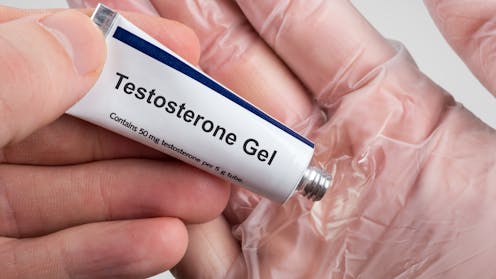
A case that first appeared in a medical journal several years ago has recently resurfaced in the media, highlighting an unexpected risk of hormone therapies: a baby girl in Sweden developed unusually large genitals after lying on her father’s bare chest, accidentally exposed to his testosterone gel.

The incident is a reminder that hormone treatments, while safe when used correctly, can pose risks to others if proper precautions aren’t followed.

Testosterone is a powerful sex hormone that plays a crucial role in male development. In the early months of life, babies undergo rapid development, making their bodies, and hormones, extremely sensitive. Even small amounts of testosterone absorbed through the skin can affect a baby’s development, particularly with repeated exposure.


Get your news from actual experts, straight to your inbox. Sign up to our daily newsletter to receive all The Conversation UK’s latest coverage of news and research, from politics and business to the arts and sciences.


During “mini-puberty” – a short surge in hormone levels occurring a few months after birth – boys experience rising testosterone levels that help complete reproductive system development and prime it for adulthood. This process also influences brain development.

In girls, oestrogen rises slightly during this period, but testosterone remains very low. When a girl is exposed to external testosterone, such as from hormone gel, it can cause unexpected changes, including enlarged clitoris or fusion of the labia. This is precisely what occurred in the Swedish case.

Testosterone gels are commonly prescribed to treat men with low testosterone deficiency. The gel is typically applied once daily to clean, dry skin on the shoulders, upper arms or stomach. These alcohol-based gels help the hormone absorb into the skin.

While the gel dries within minutes, residue can remain on the skin for an hour or two after application. If someone touches the treated area too soon, or rests directly on it, they can inadvertently absorb some of the hormone. This risk is particularly significant for babies and children, whose thinner, more absorbent skin and developing bodies make them more vulnerable.

Testosterone gels are also increasingly used off-label in women to treat menopause symptoms (such as low libido, low mood and fatigue) and at around one-tenth of the dose given to men. This lower dose is achieved by applying a smaller amount of the same male product — this time to the lower abdomen, buttocks or outer thighs.

This means there’s much less hormone overall, but incidental exposure from women is also possible, for example, when holding a child soon after application.

Some perspective

While stories like this understandably cause concern, it’s crucial to understand the actual risk level. In the UK, around 50,000 to 100,000 people are prescribed testosterone on the NHS, with gel formulations popular due to their ease of application. If accidental exposure were common, we would see far more cases than the small number reported in medical journals.

The instructions accompanying these gels are clear: apply only to specified areas, wash hands immediately, cover the skin once dry and avoid close skin contact for several hours. When these guidelines are followed, transfer is very unlikely.

A female GP talking to a male patient.
Thousands of people in the UK are prescribed testosterone replacement therapy.
Monkey Business Images/Shutterstock.com

In the case of the Swedish child, when the father stopped resting the baby on his bare chest, the genital changes reversed over time. This pattern holds true for other reported cases – if exposure stops early, many effects can fade naturally.

However, in more severe or prolonged cases, children may need medical treatment. This could include hormonal tests, continued monitoring, anti-hormone treatment, or even surgery if physical changes don’t resolve. Early intervention is key, making it essential to consult a doctor if there’s any concern.

For those with babies, young children, or pregnant partners at home, the solution is straightforward planning. Apply the gel when you won’t be in direct contact immediately afterwards, or consider alternative application methods such as injections, skin patches, or tablets (available in the US), which carry lower risks of unintentional exposure to others.

This case serves as a valuable reminder that testosterone therapy, like all medications, comes with responsibilities. When used properly, it’s an effective treatment for men with diagnosed testosterone deficiency, improving sexual function and mood, with evidence suggesting it can also support muscle mass, bone health, and metabolism.

There is no need to fear these treatments, but if you are prescribed this medication, use it responsibly and follow the instructions carefully.

The Conversation

Daniel Kelly does not work for, consult, own shares in or receive funding from any company or organisation that would benefit from this article, and has disclosed no relevant affiliations beyond their academic appointment.

ref. Testosterone gel: what happens if it rubs off on other people – https://theconversation.com/testosterone-gel-what-happens-if-it-rubs-off-on-other-people-261110

Exercise could ease symptoms for people with chronic lymphocytic leukaemia (CLL) – new study

Source: The Conversation – UK – By David Bartlett, Senior Lecturer of Exercise Immunology, Faculty of Health and Medical Sciences, School of Biosciences, University of Surrey

Ground Picture/Shutterstock

Chronic lymphocytic leukaemia (CLL) is the most common adult blood cancer in the western world, and it predominantly affects older adults. Most people are diagnosed after the age of 70, but increasing numbers of younger people, some under 60, are also being affected.

CLL starts when a type of immune cell called a B cell – normally responsible for producing antibodies – becomes cancerous. This not only stops it from working properly, but also weakens the rest of the immune system.

For many people, CLL begins as a slow-moving, low-grade disease that doesn’t need immediate treatment. These patients are placed on “active monitoring,” where they’re regularly checked for signs of progression. Others, especially those with more aggressive forms of the disease, will need immediate and targeted treatment to destroy the cancer cells.

But regardless of the stage, CLL involves a prolonged and often unpredictable course. It’s associated with a higher risk of infections, secondary cancers and a heavy symptom burden that can affect quality of life for years.


Get your news from actual experts, straight to your inbox. Sign up to our daily newsletter to receive all The Conversation UK’s latest coverage of news and research, from politics and business to the arts and sciences.


People on active monitoring often find themselves in a kind of medical limbo: well enough not to need treatment, but not well enough to feel secure. Fatigue, anxiety, social isolation and fear of infection are common. For those receiving treatment, side effects including nausea, bleeding, diarrhoea and extreme tiredness can make everyday life even more challenging.

Because CLL weakens the body’s ability to fight infection, many people begin avoiding places where germs might spread: busy shops, family gatherings, even the gym. But while this instinct is understandable, it can come at a cost. Over time, isolation and inactivity can chip away at physical fitness, reduce resilience and make it harder to recover from illness or cope with stress.

The role of exercise

Exercise is good for everyone but for people living with CLL, it can be life-changing. Our research shows that physical activity is strongly linked to fewer symptoms and a better quality of life. Fatigue, the most common and often most debilitating symptom, was significantly lower in people who stayed active. Many also reported reduced pain and a greater sense of physical wellbeing.

Cancer-related fatigue isn’t just feeling a bit tired. It’s a deep, persistent exhaustion that doesn’t improve with sleep or rest. The exact biological reasons behind it aren’t fully understood, but one thing is clear: regular movement helps. People who are more active tend to feel better – and live better.

The good news is that even gentle activity can make a difference. Low-intensity activities are safe for almost everyone and come with meaningful health benefits. Walking, yoga, swimming – anything that gets you moving – can help ease symptoms. In fact, research shows that just 12 weeks of regular exercise can reduce fatigue and improve day-to-day wellbeing.

People with additional health concerns, such as heart disease, diabetes or bone conditions, should take extra care. It’s always a good idea to speak to a doctor or physiotherapist before starting a new routine. The PAR-Q+ (physical activity readiness questionnaire) is a helpful tool to assess whether it’s safe to begin exercising.

Once cleared, the goal is to work up to the recommended activity levels: 150–300 minutes of moderate activity a week (like brisk walking or cycling) or 75–150 minutes of vigorous activity (like jogging or swimming), along with two sessions of muscle-strengthening activities per week. Start slowly and build gradually.

Because people with CLL are immunocompromised, it’s important to reduce infection risks while staying active. That might mean exercising outdoors, avoiding crowds, wearing a mask, or choosing quieter times at the gym. But, as long as precautions are taken, the benefits of movement far outweigh the risks.

Benefits of keeping active

In one of our pilot studies, people with CLL who had not yet started treatment showed smaller increases in tumour cell counts after 12 weeks of exercise. Their immune systems also appeared more robust, with stronger responses to abnormal cells. This research is still in its early stages, but it’s encouraging to see that exercise doesn’t appear to accelerate disease progression – and might even help to slow it.

The biggest improvements were seen in people who started off with the worst symptoms or poorest physical condition. In other words, those with the most to gain, gained the most. Older adults, in particular, seemed to benefit from even modest activity.

People receiving treatment were generally less active and reported lower quality of life than those who weren’t but their symptom levels were similar. That suggests physical activity might offer especially meaningful benefits for people going through treatment.

Exercise is already a well-established part of care for people with solid tumours such as breast or bowel cancer.

What’s different about CLL is that many people don’t receive treatment for years – yet still experience symptoms and lower quality of life. Our study shows that physical activity matters just as much for this group. Whether someone is on active monitoring or undergoing treatment, staying active can help ease symptoms, boost energy and improve daily life.

It’s a powerful reminder that even small steps can make a big difference and that living well with CLL isn’t just about waiting for treatment. It’s about reclaiming strength, mobility and agency, one movement at a time.

The Conversation

David Bartlett receives funding from the American Society of Hematology

ref. Exercise could ease symptoms for people with chronic lymphocytic leukaemia (CLL) – new study – https://theconversation.com/exercise-could-ease-symptoms-for-people-with-chronic-lymphocytic-leukaemia-cll-new-study-261221

A brief art history of adultery

Source: The Conversation – UK – By Natalie Hanley-Smith, Teaching fellow in early modern history, University of Warwick

The Stolen Kiss by Jean Honore Fragonard (1787). Hermitage Museum

A stolen glance across a crowded room, a shadowy figure slipping through a doorway, a lover hidden behind a curtain – adultery has long been a drama of secrecy. From Renaissance masterpieces to tabloid snapshots, the act of romantic betrayal has not only shaped personal lives but also left its mark on art history. Painters across the centuries have turned this most intimate of transgressions into art, inviting viewers to become voyeurs of passion, guilt and desire.

Historically, artistic representations of adultery have been used to raise questions about the importance of love and sexual desire in marriage. Artists have also used their works to explore themes of culpability and punishment, and to explore the consequences of infidelity for the families of the adulterers.

Renaissance and Baroque artists picked up on the theme of adultery by depicting episodes from the Bible. Portraying scenes that were set in eras during which the punishment women faced for adultery was death, artists including Rembrandt, Rubens and Tintoretto, explored religious disciplinary processes and the difficulties of pronouncing moral judgments.


Looking for something good? Cut through the noise with a carefully curated selection of the latest releases, live events and exhibitions, straight to your inbox every fortnight, on Fridays. Sign up here.


Rembrandt’s The Woman Taken in Adultery (1644) tells the story of how Christ’s compliance with Jewish law was put to the test by a council of Pharisees (members of a biblical Jewish sect who were fanatic about obeying religious laws), who bring an adulteress before him.

The punishment for her crime according to Mosaic law was to be stoned to death. Christ’s response, “he that is without sin among you, let him first cast a stone at her”, emphasised the moral hypocrisy of the men who stood as judges.

Painting of a woman kneeling in the centre of lots of men. They wear dark colours while she is in white.
Close up of The Woman Taken in Adultery by Rembrandt (1644).
National Gallery

Although the figure of Jesus is prominent in the painting, the adulteress is central. She appears penitent, dressed in white and bathed in light – a striking contrast to the dark male figures that surround her.

That is not to say women were always portrayed as vulnerable. Throughout early modern Europe (circa 1450-1800), perceptions of women were heavily influenced by biblical figures such as Eve.

Women were largely believed to be the more lustful sex, weaker and more likely to succumb to temptation, and to be more deceptive and manipulative than men. The German Renaissance painter, Lucas Cranach demonstrated this belief in The Fable of the Mouth of Truth (1534).

The painting depicts another married woman surrounded by men who are scrutinising her. But in this case, she is not repentant. Instead, she is trying to trick her way out of receiving any punishment for her infidelity with the help of her lover, who is masquerading as a fool.

A woman sticking her hand into the mouth of a statue of a lion, surrounded by men.
The Fable of the Mouth of Truth by Lucas Cranach (1534).
Germanic National Museum

Certain artistic genres were employed to publicise and critique changes to laws regarding adultery and divorce. For centuries, church courts dealt with marital disputes and adultery in Britain.

A full divorce (that allowed both parties to remarry) was only possible by act of parliament, which made it unobtainable for all but very wealthy men.

The art of divorce

After the Matrimonial Causes Act was passed in 1857, divorce became a matter for the civil courts, and therefore a viable option for a greater proportion of British society.

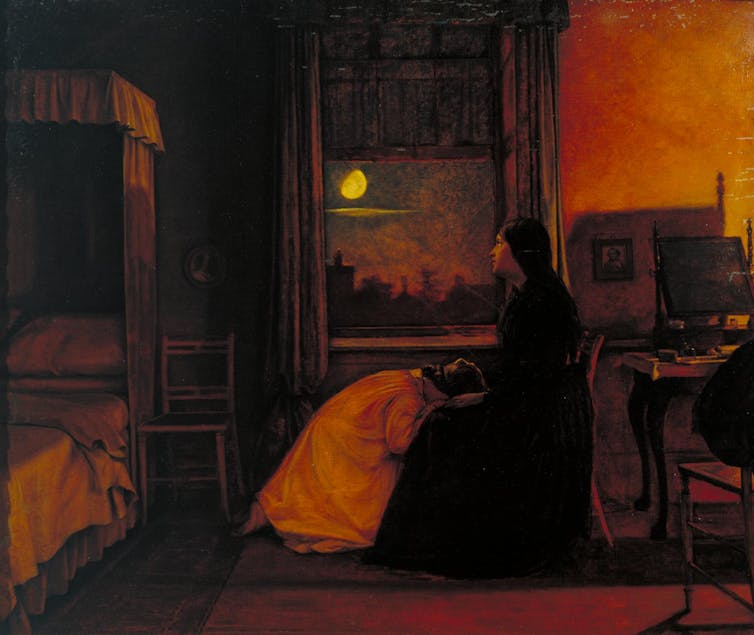
Several pre-Raphaelite artworks, including Augustus Egg’s Past and Present series, depicted the damage that infidelity and subsequent divorce could have on the family unit. Egg’s work emphasised that women, who were often ostracised and cut from their social and familial networks after divorce, were punished more severely than men for their transgressions.

A woman weeps into another woman's lap
Past and Present Number Two by Augustus Egg (1858).
Tate Britain

Satirists including James Gillray and Thomas Rowlandson chose very different devices to critique laws concerning adultery when they ridiculed “Criminal Conversation”, a civil suit that was introduced in the early 18th century, and only ended with the 1857 Act.

“Crim con” allowed a man to sue his wife’s lover for robbing him of her affections and domestic support. If his suit was successful, the husband could claim financial compensation from his rival, sometimes to the tune of tens of thousands of pounds.

Perhaps unsurprisingly, such suits were most often pursued by members of the landed gentry and the aristocracy. Moreover, as they were heard in the Court of the King’s Bench, which was open to journalists and the public, the salacious details of the affairs were published in newspapers and pamphlets.

Cartoon showing a man sat on the shoulders of another man so he can look into the window of a bath house where a woman is naked
The 1782 cartoon by James Gillray, depicting Sir Richard Worsley helping George Bisset view his wife naked in a bath-house.
National Portrait Gallery

Crim con suits were much deplored by contemporary moralists. They emphasised the impropriety of a man receiving money from another man for the sexual services of his wife, as well as the debauchery of some elite husbands, who were viewed as being culpable and complicit in their wives’ affairs.

The crim con trial of Worsley versus Bisset in February 1782 attracted a considerable amount of publicity and was depicted by several of London’s best satirists. A story about the affair that inspired many satirical prints had been discussed at length in court. Lady Worsley had been enjoying a dip at Maidstone bathhouse, when her husband allegedly hoisted her lover, Captain Bisset, on to his shoulders, so that he could see her naked body.

The notion that Worsley was a voyeur who had pimped his wife out for his own delectation was so popular that it even influenced the judge, who awarded him a humiliating one shilling in damages.

The satires were meant to entertain and titillate their audiences, but they also raised awareness of the apparent profligacy of the ruling elite. Representations of the adulterous liaisons of celebrities, including military heroes like Admiral Lord Nelson, politicians like Charles James Fox, actresses like Mary Robinson, and even royals, such as George IV, were used to highlight their moral corruption, and they provided much fodder for activists demanding political reform.

The history of adultery in art draws attention to the intersections between personal relationships and the public realm. Even today, when consensual relationships between adults are not formally policed, affairs continue to prompt public discussions about private morality, ideal marriages and the suitability of casting judgment. We continue to enjoy the opportunity to moralise while being entertained by the salacious portrayals of other people’s affairs.

The Conversation

Natalie Hanley-Smith does not work for, consult, own shares in or receive funding from any company or organisation that would benefit from this article, and has disclosed no relevant affiliations beyond their academic appointment.

ref. A brief art history of adultery – https://theconversation.com/a-brief-art-history-of-adultery-255805

It doesn’t have to be welfare versus warfare. Changes that make tax fairer could fund both

Source: The Conversation – UK – By Giray Gozgor, Associate Professor of Economics & Finance, School of Management, University of Bradford

Historically, UK spending on defence has often been pitted against welfare, education and local government. But at a time when the government has pledged to meet Nato’s target for defence spending – 5% of GDP in the next decade, up from around 2.3% – it appears to be offering a different fiscal equation.

The government has suggested that it aims to shift the tax burden upwards, targeting especially large profits and tax avoidance. Despite recent fury over its welfare reforms, as far as taxes go, the government still appears to believe that those with the broadest shoulders should carry the weight.

Past approaches to balancing the books relied on austerity or slashing welfare spending. Throughout the 2010s and early 2020s, Conservative governments framed public finance as a rigid trade-off. This mentality dominated budget decisions, forcing domestic priorities to shrink as defence budgets grew.

However, Labour now appears to want to boost defence spending without austerity-level cuts to public services.

Beyond defence, this shift of the tax burden could signal a broader transformation in how national priorities are financed. If implemented effectively, this approach could protect public services even during times of global insecurity.

But while it may seem like a win-win, reforms of this nature have often faced political resistance or been deprioritised in favour of short-term fixes. What is different now is that global economic uncertainty is creating growing pressure for more sustainable and equitable choices.

So who pays?

The core question in any public finance debate is not what the money is spent on, but who pays for it. First, the government wants to close some of the loopholes that allow large firms to legally reduce their tax bill. Of course, the risk here is that some leave the UK and their taxes are lost entirely.

The government also has in its sights high-income individuals. While around 60% of tax receipts come from the top 10% of earners, these people can also benefit from lower effective tax rates thanks to tax-efficient investments, for example. Again though, the risk for Labour is that it causes some of them to leave the country.

Similarly, those with a high net worth often hold assets offshore in order to pay less tax in the UK. This can be legal, but opaque, and the government would like to increase the tax these people pay.

Lastly, Labour is looking more closely at what to do about taxing sectors with windfall profits, namely energy.

This approach is not only ideological but also strategic. By targeting wealth and excess, the government hopes to fund new priorities without alienating working and middle-class voters, and to avoid painful cuts to essential services.

But clearly, it is not quite as simple as that. To make this sustainable, a combination of targeted tax reform, economic growth and spending efficiency will be needed. However, this approach could mark a pivot towards a fairer way of sharing the burden. It also reflects a more profound shift in political storytelling.

Labour leaders have made clear that there will be no return to austerity. The broader policy direction suggests ambitions to invest in the NHS, early-years and social housing, as well as refining in-work welfare benefits such as universal credit.

But these aims require fiscal headroom, and this is where the challenge lies. Parallel commitments such as raising defence spending and funding welfare might look impossible to live up to. Many are questioning whether the government can maintain economic stability without increasing the overall tax burden on ordinary households.

The answer depends on three things: political will, economic performance and execution. Even if there is public support for a fairer tax system, building and enforcing it will require effort and patience beyond this parliament. The government will need to strengthen tax compliance, close legal loopholes and prevent the flight of capital.

None are easy, but we argue they are entirely achievable. Progress globally is already proving it. Automatic tax-data sharing between nations and the Organisation for Economic Cooperation and Development’s global minimum tax (which ensures that large corporations operating in member nations pay at least 15% tax) have made offshore tax havens far less viable.

At home, modernising tax laws and properly funding enforcement can shut down legal exploitation of the system. With political will and international cooperation, these reforms can deliver a fairer system without sacrificing competitiveness.

The UK’s debt to GDP ratio is very high, and economic growth is sluggish. Therefore, there is little space for manoeuvre. That’s why tax reform, not just tax increases, will be key. Efficiency in collection, transparency and closing loopholes are just as crucial as raising tax rates.

The financial implications of military expansion are real, but so are the choices in how the country funds it. Labour is betting that a fairer tax system can finance Britain’s rising defence commitments while protecting public services. However, efforts to procure or produce new military equipment rank very low on the public’s priorities..

protester holding a sign reading tax the rich feed the poor
Aiming taxes upwards could be a vote-winner with lower and middle earners.
JMundy/Shutterstock

Defence needs steady funding to handle national security threats. Welfare programmes are vital to support vulnerable people, reduce economic inequality and to help more people into paid work.

Progressive taxation taps wealth from the richest but often sparks fierce resistance from powerful groups. The alternative (cutting schools, hospitals or pensions) is politically and morally costly.

But this strategy requires clear communication and a commitment to both security and social justice. If successful, it could mark a real turning point in how the UK balances its responsibilities.

The Conversation

The authors do not work for, consult, own shares in or receive funding from any company or organisation that would benefit from this article, and have disclosed no relevant affiliations beyond their academic appointment.

ref. It doesn’t have to be welfare versus warfare. Changes that make tax fairer could fund both – https://theconversation.com/it-doesnt-have-to-be-welfare-versus-warfare-changes-that-make-tax-fairer-could-fund-both-259812