Twilight at 20: the many afterlives of Stephenie Meyer’s vampires

Source: The Conversation – UK – By Sarah Olive, Senior Lecturer in Literature, Aston University

This year marks the 20th anniversary of Stephenie Meyer’s novel, Twilight. The book series of the same name has sold over 160 million copies, been translated into 38 languages and adapted into five blockbuster films.

Vampires are perennially popular, largely because we make and remake them to help us address our social concerns and fears. As author Nina Auerbach argues in her 1995 book Our Vampires, Ourselves: “We make the vampires we need for the times we live in.”

The vampires of Twilight captured the spirit of 2005. Fantasy fiction and film with a central struggle between good and evil abounded: think Harry Potter and The Lord of the Rings. The melancholy of Twilight’s characters also chimed with chart-topping emo music (which formed some of the soundtrack for the film adaptations).

The novel follows the relationship between teenage human Bella Swan and vampire Edward Cullen, a centenarian soul in an immortal late-teenage boy’s body. The book appealed to the millennial feminism of 2005: it was told from Bella’s point of view, and Edward’s aesthetic (preppy minimalism) and pastimes (reading and playing piano) offered an alternative to machismo. But does Twilight offer the vampires we need in 2025?


This article is part of a mini series marking 20 years since the publication of Stephenie Meyer’s first Twilight novel.


Criticism of the Twilight saga has gained momentum in recent years. Much attention has focused on the series’ representations of abstinence. Some of the abstinence has been widely celebrated, including the way that Edward eschews human blood and has converted his family to “vegetarian” vampirism. They feed off animals rather than humans. Other instances are more divisive, such as his refusal to “turn” Bella into a vampire – despite her repeated requests – and insistence on abstaining from sex until they are married in the fourth novel, Breaking Dawn (2008). He only relents and turns her into a vampire when she nearly dies during childbirth.

Edward’s leading role in determining the couple’s physical relationship, and their subsequent dominant-submissive dynamic, has attracted much feminist critique. Especially about the suitability of a Bella as role model for young women.

Critics and those who “love to hate” Twilight alike have also explored a prominent moment where Edward gaslights Bella. Gaslighting refers to consciously manipulating someone into thinking their perception of reality is untrue.

A fan video about Edward’s ‘gaslighting’ behaviour with over 1.5 million views on YouTube.

Meyer describes him racing across a carpark in time to stop an out-of-control car from crushing Bella using only his bare hands. Fearing his supernatural nature will become public, he repeatedly tells Bella that she’s deluded because of her injuries – he claims he was stood next to her at the time of the accident. He makes Bella and other characters question her true version of events and persuades them to believe his lie.

Another behaviour that has met with debate is Edward repeatedly breaking into Bella’s bedroom to watch her sleep – is it romantic, creepy or criminal?

Meyer’s response

Partly in response to these accusations of anti-feminism, Meyer published the novel, Life and Death: Twilight Reimagined in 2015 to celebrate the tenth anniversary of Twilight’s release.

Stephenie Meyer at a microphone stand
Stephenie Meyer in 2012.
Gage Skidmore, CC BY-SA

The novel is a gender-swapped version of Twilight with vampire Edythe and human Beau. The debate around turning Beau into a human takes up far less space than in Twilight. He is turned after being attacked by a vampire from another coven, a marked departure from Bella’s slower trajectory. Meyer’s claims in the book’s introduction that it is possible to invert the protagonists’ genders and have the same story were therefore undercut.

Meyer has retold the saga from the perspective of other characters too. There’s The Short Second Life of Bree Tanner (2010) based on the third book in the saga, Eclipse (2007), and Midnight Sun (2020), which recounts Twilight from Edward’s point of view.

There has been much speculation that Meyer has a tricky relationship with Twilight fan fiction, such as the Fifty Shades of Grey series by E.L. James – best-selling sado-masochistic erotica novels and blockbuster films that began life as Twilight fan fiction.

Creating alternative versions of her novels seems to be Meyer’s way of regaining control over them in the face of the abundant, unauthorised, creative responses made by fans.

Twilight’s lack of diversity

In addition to its debated feminist credentials, shortfalls in the diversity of the series may also influence Twilight’s longevity.

Where the Me Too movement has made a significant impression on attitudes towards sexual assault, movements such as Black Lives Matter and We Need Diverse Books have shifted them in relation to race, sexuality and other marginalised identities since the saga was first published.

A scene showing adult werewolf Jacob Black “imprinting” on baby Renesmee in Breaking Dawn has been decried not only in relation to consent and age inappropriateness, but also racist stereotyping.

The moment Jacob ‘imprints’ on Bella and Edward’s infant daughter in the film.

Imprinting in the saga is depicted as an involuntary phenomenon wherein Quileute shape-shifters (an Indigenous community to which Jacob belongs) are bound for life to someone instinctively perceived to be their soulmate. It works a little like love at first sight, except that it immediately entails the imprinter’s utter dedication to and responsibility for their imprintee.

Openly queer characters aren’t a feature of Twilight but, as with gaps in its racial and gender representation, fans have filled the voids they identify with their own interpretations and creations.

Meyer is currently collaborating with Netflix to adapt Midnight Sun as an animation. This may add impetus to the “Twilight renaissance” exemplified by user-generated content in recent years, but the truly powerful reincarnations that will enable Twilight to navigate the challenges thrown at it in recent years, and in years to come, will continue to come from the Twihards (as fans of the series are known) themselves.


Looking for something good? Cut through the noise with a carefully curated selection of the latest releases, live events and exhibitions, straight to your inbox every fortnight, on Fridays. Sign up here.


This article features references to books that have been included for editorial reasons, and may contain links to bookshop.org. If you click on one of the links and go on to buy something from bookshop.org The Conversation UK may earn a commission.

The Conversation

Sarah Olive does not work for, consult, own shares in or receive funding from any company or organisation that would benefit from this article, and has disclosed no relevant affiliations beyond their academic appointment.

ref. Twilight at 20: the many afterlives of Stephenie Meyer’s vampires – https://theconversation.com/twilight-at-20-the-many-afterlives-of-stephenie-meyers-vampires-263008
Caribbean coral reefs are running out of time to keep up with rising seas – new study

Source: The Conversation – UK – By Chris Perry, Professor in Tropical Coastal Geoscience, University of Exeter

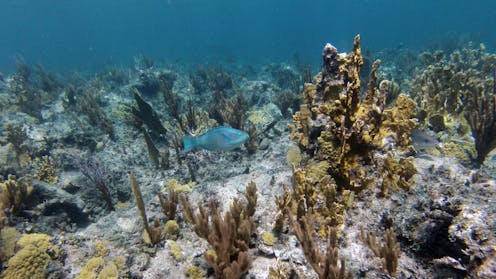
Weedy corals colonise a dead reef structure in the Turks and Caicos Islands. Lauren T Toth, CC BY-NC-ND

Caribbean coral reefs are sounding the alarm. These ecosystems, which protect millions of people and sustain billion-dollar industries, are on the verge of collapse – not in some distant future, but within our lifetimes.

We have been studying reefs across the western Atlantic region for more than 25 years to understand the ways reef communities are changing, and how this affects their ability to keep growing.

Our new research shows that reefs across the region are now reaching a point where they will no longer keep pace with sea-level rise. This will affect the ability of reefs to buffer coastlines from wave energy, threatening nearshore habitats.

Unless global warming by 2100 is limited to below 2°C (relative to pre-industrial levels), our study suggests nearly every reef will stop growing – and most will start eroding by the end of this century. The consequences for coastal communities will be severe.

Coral reefs aren’t just attractive dive sites. They are living breakwaters: dampening wave energy, reducing storm damage, and creating sheltered environments for habitats like seagrass meadows that serve as fish nurseries. Lose the reef structure and you don’t just lose biodiversity – you expose shorelines, weaken food security, and put lives at risk.


Read more:
Safe havens for coral reefs will be almost non-existent at 1.5°C of global warming – new study


Globally, reefs protect an estimated 5.3 million people and coastal assets worth more than US$100 billion (£74 billion) every decade. Even if reef decline seems like a distant issue for many, the changes taking place now – and the consequences of these changes in future – are illustrative of what happens when regional ecosystems pass thresholds for their persistence.

Many of the world’s coastal ecosystems, which also provide protection and habitable land, are equally threatened – with implications for us all.

A coral bleaching time series in Mexico.

Historically, Caribbean reefs grew upward at rates averaging 4–5 millimetres a year – fast enough to keep up with past sea level changes. Our research shows that their average growth rate has slowed to less than 1 millimetre per year, or just a centimetre each decade.

Reefs have been battered for decades by overfishing, disease outbreaks and pollution. Climate change is accelerating their decline; a trend we have been monitoring at many reef sites. Unprecedented levels of thermal stress occurred in 2023 and 2024 across the western Atlantic, leading to widespread coral bleaching.

Rising ocean temperatures can kill corals outright, slow the growth of surviving corals and increase coral vulnerability to disease, while simultaneously driving sea levels higher.

This “double squeeze” means reefs are moving in the wrong direction. Instead of building upward as sea levels rise, many are starting to erode. Our new modelling shows that by 2040, more than 70% of Caribbean reefs will be in states where their structures are starting to erode away. If warming passes 2°C, that figure rises to over 99% by 2100.

coral reef, surface of waves in blue sea
A degraded reef crest in the Caribbean island of St Croix.
Lauren T Toth, CC BY-NC-ND

Modelling reef growth rates

One of the big challenges in our research is linking today’s reef ecology with reef growth potential – in other words, how the balance of living organisms translates into vertical “accretion” (reef building).

We analysed sequences of corals preserved in fossilised reefs from locations across the tropical western Atlantic region, and used that information to improve our understanding of how reef growth rates vary depending on the types of coral present on a reef.

We then combined this with ecological data collected during diving surveys to determine the types and abundance of corals that contribute to reef building. These surveys were conducted on more than 400 modern reef sites across the region. We collected data on corals and other marine species, such as parrot fish and urchins, that contribute to reef building.

This allowed us to calculate present-day reef growth rates – and to project how rates will change in the future. We could then compare these rates against present and future sea level rise projections for different levels of climate warming.

Climate scientists predict we are on track for around 2.7°C of warming by the end of the century under current climate policies and emission levels. That would drive sea levels up by 8-10 millimetres a year by 2100 – far faster than reefs can currently match.

By 2060 under such warming, reefs in the region are likely to see an extra 30–40cm of water above today’s levels. By 2100, the figure could reach in excess of 70cm, and would exceed one metre under higher warming trends. The consequences will be stark: reduced storm protection, faster shoreline erosion, disrupted ecosystems and damaged infrastructure.


Read more:
Restored coral reefs can grow as fast as healthy reefs after just four years – new study


We also investigated whether reef restoration could reverse these trends. Efforts to plant corals and breed heat-tolerant strains are under way and offer some hope. In small areas, with enough resources, they have been shown to boost growth and recovery.

However, the scale of the problem – thousands of square miles of reef – means restoration alone is very unlikely to be enough. Cutting emissions is critical to halting declines in reef growth, and essential to give restoration efforts any chance.

turquoise ocean, waves breaking, brown coral reefs visible underwater
A wave breaks over a reef crest in Mexico.
Lorenzo Alvarez-Filip, CC BY-NC-ND

The uncomfortable truth

The science is blunt: our emissions trajectory will decide whether reefs can continue to grow or will start to erode away. Staying close to 1.5°C of warming would offer reefs a fighting chance. Push much beyond that and we condemn them – and the people who depend on them – to widespread loss.

Technologies that help cut emissions and reduce greenhouse gas concentrations in the atmosphere already exist, and new technologies are emerging. Green energy, carbon capture and ecosystem restoration can all play a role, but require political will and investment. Our own choices matter too – from how we live on a daily basis to the politicians we elect.

Coral reefs are the canaries in the climate coal mine. If we allow their degradation to continue, it won’t stop there. It will be shorelines, food systems and communities next.


Don’t have time to read about climate change as much as you’d like?

Get a weekly roundup in your inbox instead. Every Wednesday, The Conversation’s environment editor writes Imagine, a short email that goes a little deeper into just one climate issue. Join the 45,000+ readers who’ve subscribed so far.


The Conversation

Chris Perry receives funding from the Natural Environment Research Council, The Leverhulme Trust and the Bertarelli Foundation.

Christopher Cornwall receives funding from The Royal Society of New Zealand and the Tertiary Education Commission.

Lorenzo Alvarez-Filip does not work for, consult, own shares in or receive funding from any company or organisation that would benefit from this article, and has disclosed no relevant affiliations beyond their academic appointment.

ref. Caribbean coral reefs are running out of time to keep up with rising seas – new study – https://theconversation.com/caribbean-coral-reefs-are-running-out-of-time-to-keep-up-with-rising-seas-new-study-265203

Is acupuncture worth it for back pain? New study has answers

Source: The Conversation – UK – By Kieran O’Sullivan, Professor, Physiotherapy, University of Limerick

Papa Wor/Shutterstock.com

Lower back pain is the leading cause of disability worldwide, yet most treatments offer limited relief. One of the most divisive is acupuncture – recommended in US guidelines for lower back pain but not in the UK. A new study has now examined whether it truly helps.

The study found that acupuncture does provide some relief for people with lower back pain, though the benefit was modest. Having additional maintenance sessions did not boost the effect.

More significantly, the improvement was smaller than that seen in studies using different approaches from Australia and the US. Although acupuncture is unlikely to be the best treatment for lower back pain, the fact that it helps at all reveals something important about the condition and how people can find relief.

The study included 800 older adults who were randomly assigned to “usual care” or one of two acupuncture plans. The standard programme involved 11 sessions over 12 weeks, while the enhanced version added five more maintenance sessions over the following 12 weeks. The trial took place with 55 acupuncturists in different parts of the US and focused on older adults.

After six and 12 months, both acupuncture groups had similar results, so the extra follow-up sessions didn’t help. Both acupuncture groups had less pain and disability after six months than those who received usual care – and about 40% improved by at least 30%. These improvements persisted until the 12-month evaluation, and no major safety concerns emerged.

Woman sitting on the edge of a bed, holding her lower back in agony.
Lower back pain is the leading cause of disability.
Fizkes/Shutterstock.com

These findings align with large reviews of lower back pain treatments focusing on acupuncture or all non-drug and non-surgical approaches. Overall, acupuncture performs somewhat better than no treatment or usual care at improving pain and disability, though this benefit is typically small.

More tellingly, reviews show that any benefit from acupuncture appears even smaller when compared with sham (pretend) or placebo treatments. This means some of the benefit may come from the experience of being treated, not the acupuncture itself.

What patients expect can affect how much they say they improve, which is important in all studies that rely on self-reported pain. This makes it crucial to consider what comparison treatment was used when any study claims acupuncture helps, as usual-care groups – who typically receive less time and attention – are easiest to outperform.

Better options exist

Some people might say that any relief from lower back pain is worth celebrating or even paying for. But it’s also important to think about whether safer and cheaper options are available.

The benefits of different mind-body treatments for lower back pain studied in Australia and the US are worth considering, as they appear to offer greater reductions in pain and disability without increasing costs or risks.

The Australian study showed much greater reductions in disability and pain (using the same outcome measures) through a rehabilitation programme delivered by physiotherapists that addressed both physical and psychological aspects of back pain. Even more importantly, the economic analysis revealed significant cost savings.

The US study involved teaching people that back pain comes from their brain being overprotective, rather than actual damage to their back. It used talk therapy techniques to help the participants think about and respond to pain differently. As with the Australian study, the US study also demonstrated much larger reductions in pain and disability than those seen with acupuncture – albeit using slightly different measures.

The fact that these holistic, mind-body rehabilitation programmes outperform acupuncture – and other relatively basic interventions such as massage and medication – reflects the emerging international consensus that comprehensive approaches help people manage their lower back pain.

Effective help for people with lower back pain exists; the challenge is ensuring healthcare professionals are properly trained to deliver these treatments, and that sufferers are aware of the available approaches.

Without accessible alternatives, people with lower back pain will understandably continue seeking treatments such as acupuncture which they know about, can access and provide some modest symptom relief. It is hard to fault them when alternatives that are both accessible and affordable are not available.

The Conversation

Kieran O’Sullivan receives funding from the EU (Erasmus+) and the Irish Government (Research Ireland) for research on low back pain. He also receives honoraria and expenses for speaking about low back pain at conferences. He is a co-author on one of the studies cited in this article.

ref. Is acupuncture worth it for back pain? New study has answers – https://theconversation.com/is-acupuncture-worth-it-for-back-pain-new-study-has-answers-265342

Earth’s inner core: nobody knows exactly what it’s made of – now we’ve started to uncover the truth

Source: The Conversation – UK – By Alfred Wilson-Spencer, Research fellow of Mineral Physics, University of Leeds

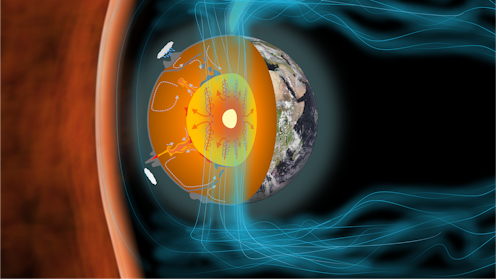
Alfred Wilson-Spencer, CC BY-SA

The iron-rich core at the centre of our planet has been a crucial part of Earth’s evolution. The core not only powers the magnetic field which shields our atmosphere and oceans from solar radiation, it also influences plate tectonics which have continually reshaped the continents.

But despite its importance, many of the most fundamental properties of the core are unknown. We do not know exactly how hot the core is, what it is made of or when it began to freeze. Fortunately, a recent discovery by me and my colleagues brings us much closer to answering all three of these mysteries.

We know the temperature of Earth’s inner core is very roughly about 5,000 Kelvin (K) (4,727°C). It was once liquid, but has cooled and become solid over time, expanding outwards in the process. As it cools, it releases heat to the overlying mantle, driving the currents behind plate tectonics.

This same cooling also generates the Earth’s magnetic field. Most of the field’s energy today comes from freezing the liquid part of the core and growing the solid inner core at its centre.

However, because we cannot access the core, we have to estimate its properties to understand how it is cooling.

A key part of understanding the core is knowing its melting temperature. We know where the boundary between the solid inner core and liquid outer core is from seismology (the study of earthquakes). The temperature of the core must equal its melting temperature at this location, because this is where it is freezing. So, if we know what the melting temperature is exactly, we can find out more about the exact temperature of the core – and what it’s made of.

Mysterious chemistry

Traditionally, we have two ways to figure out what the core is made of: meteorites and seismology. By examining the chemistry of meteorites – which are thought to be pieces of planets that never formed, or pieces of the cores of destroyed Earth-like planets – we can get an idea of what our core could be made of.

The problem is that this only gives us a rough idea. Meteorites show us that the core should be made of iron and nickel, and maybe a few percent of silicon or sulphur, but it’s difficult to be more specific than this.

Seismology, on the other hand, is far more specific. When the sound waves from earthquakes travel through the planet, they speed up and slow down depending on what materials they pass through. By comparing the travel time of these waves, from earthquake to seismometer, with how fast waves travel through minerals and metals in experiments, we can get an idea of what the interior of the Earth is made of.

It turns out these travel times require that the Earth’s core is about 10% less dense than pure iron, and that the liquid outer core is denser than the solid inner core. Only some known chemistry of the core can explain these properties.

But even among a small selection of possible constituents, the potential melting temperatures vary by hundreds of degrees – leaving us none the wiser about the precise properties of the core.

A new constraint

In our new research, we’ve used mineral physics to study how the core might first have begun to freeze, discovering a new way to understand the chemistry of the core. And this approach appears to be even more specific than seismology and meteorites.

Supercooled water.
Supercooled water.
wikipedia, CC BY-SA

Research simulating how atoms in liquid metals come together to form solids has found that some alloys require more intense “supercooling” than others.
Supercooling is when a liquid is cooled below its melting temperature. The more intense the supercooling, the more often atoms will come together to form solids, making a liquid freeze faster. A water bottle in your freezer can be supercooled to -5°C for hours before freezing, whereas hail forms in minutes when water droplets are cooled to -30°C in clouds.

By exploring all possible melting temperatures of the core, we find that the most supercooled the core could have been is around 420°C below the melting temperature – any more than this and the inner core would be larger than seismology finds it to be. But pure iron requires an impossible ~1000°C of supercooling to freeze. If cooled this much, the entire core would have frozen, contrary to seismologists’ observations.

Adding silicon and sulphur, which both meteorites and seismology suggest could be present in the core, only make this problem worse – requiring even more supercooling.

Our new research explores the effect of carbon in the core. If 2.4% of the core’s mass was carbon, around 420°C of supercooling would be needed to begin freezing the inner core. This is the first time that freezing of the core has been shown to be possible. If the carbon content of the core was 3.8%, only 266°C of supercooling is needed. This is still a lot, but far more plausible.

This new finding shows that while seismology can narrow the possible chemistry of the core down to several different combinations of elements, many of these cannot explain the presence of the solid inner core at the centre of the planet.

The core cannot be made just of iron and carbon because the seismic properties of the core require at least one more element. Our research suggests it is more likely to contain a bit of oxygen and possibly silicon as well.

This marks a significant step toward understanding what the core is made of, how it started freezing, and how it has shaped our planet from the inside out.

The Conversation

Alfred Wilson-Spencer receives funding from the Natural Environment Research Council (NERC) grants NE/T000228/1 and NE/V010867/1. He works for the University of Leeds.

ref. Earth’s inner core: nobody knows exactly what it’s made of – now we’ve started to uncover the truth – https://theconversation.com/earths-inner-core-nobody-knows-exactly-what-its-made-of-now-weve-started-to-uncover-the-truth-265408

Robert Redford: the ‘golden boy with a darkness in him’

Source: The Conversation – UK – By Nathan Abrams, Professor of Film Studies, Bangor University

Robert Redford, who has died at the age of 89, was perhaps everybody’s idea of a classical Hollywood movie actor. His conventional good looks – his blond hair, boyish charm and chiselled chin – led him to be cast as a sex symbol and a romantic lead opposite Jane Fonda in Barefoot in the Park (1967), Barbra Streisand in The Way We Were (1973), and Meryl Streep in Out of Africa (1985).

Dustin Hoffman described him as a “walking surfboard”. But the Californian golden boy belied his appearance. No airhead, beneath the surface was a shy and sensitive actor who used his looks to his advantage, insisting on starring in and later directing movies with weight. These included a series of anti-establishment and countercultural films that reflected his anti-corruption and pro-environmental activism.

From the early 1960s through to the 2020s, Robert Redford appeared in some of the most iconic, if unconventional, films of the second half of the 20th century. Those of us born in the late 1960s and early 1970s grew up with Redford. He came to attention as the timid, newly married Paul Bratter in Neil Simon’s Broadway play, Barefoot in the Park, in 1967, before starring in the movie of the same name.

His breakout role was as the titular Sundance in the irreverent and subversive paean to the wild west, Butch Cassidy and the Sundance Kid (1969), beginning what would later be called a bromance with his co-star, Paul Newman. He teamed up again with Newman, a fellow activist, in the Depression-era set The Sting (1973), which led to Redford’s first and only Oscar nomination as an actor.

That same year, he starred in The Way We Were alongside Streisand, who described him as “the blond, suntanned California guy, surfing and riding horses”. Directed by Sydney Pollack, Redford would go on to star in a further six of his films. The director called him “an interesting metaphor for America, a golden boy with a darkness in him”.

Following his liberal instincts, Redford appeared in two of the post-Watergate and post-Vietnam War films that encapsulated the pervasive feeling of distrust and suspicion of the government that followed the administration of Richard Nixon.

In the spy thriller Three Days of the Condor (1975), Redford was an introverted CIA codebreaker caught up in a conspiracy. And in All the President’s Men (1976), he played the real-life Washington Post journalist Bob Woodward alongside Dustin Hoffman as Carl Bernstein as they exposed the Watergate Hotel scandal that helped to bring down Nixon.

The film, which Redford was instrumental in bringing to the screen, was so powerful that it has been credited by some with swinging the presidential election of that year to the Democrat Jimmy Carter.

Redford branched into directing with Ordinary People in 1980, about an upper-middle-class family’s fracturing with grief following their son’s death. The film starred Donald Sutherland and Mary Tyler Moore and won four Oscars, including for best picture and best director, beating Martin Scorsese’s Raging Bull.

Redford’s later efforts were not always as successful, but Quiz Show in 1994, about the real-life scandal of a fixed television game show in the 1950s, received Academy nominations.

Other films he directed showcased his politics. The Milagro Beanfield War (1988), about the fight to protect a small beanfield in a New Mexico village against larger business and political interests, reflected Redford’s own concerns about the environment and land preservation.

His 2007 Lions for Lambs explored the impact of US foreign policy through the intersecting lives of a US congressman (Tom Cruise), a journalist (Meryl Streep) and an academic (Redford) against the backdrop of the war on terror in Afghanistan.

In 2014, Redford even joined the Marvel cinematic universe, starring as US government leader and secret Hydra operative Alexander Pierce in 2014’s Captain America: The Winter Soldier and Avengers: Endgame in 2019. It was a callback to those 1970s paranoid thrillers, especially Three Days of the Condor. This introduced him to a younger generation of fans and audiences most likely unfamiliar with his earlier work.

“The idea of the outlaw has always been very appealing to me. If you look at some of the films, it’s usually having to do with the outlaw sensibility, which I think has probably been my sensibility. I think I was just born with it,” Redford said in 2018.

“I wanted to tell stories about the America that I grew up in. And for me, I was not interested in the red, white and blue part of America. I was interested in the grey part – that’s where complexity lies.”

The Conversation

Nathan Abrams receives and has previously received external funding from charities and government-funded, foundation or research council grants.

ref. Robert Redford: the ‘golden boy with a darkness in him’ – https://theconversation.com/robert-redford-the-golden-boy-with-a-darkness-in-him-265507

How Luxembourg detects microbes in its water supply before they pose a health risk

Source: The Conversation – UK – By Jean-Baptiste Burnet, Lead R&T Scientist, Luxembourg Institute of Science and Technology (LIST)

Microbes in water are like invisible travellers – and some carry disease with them. Keeping the water that flows through our treatment plants, rivers and taps healthy and safe from microbial infection is a challenge.

The distribution of microbes varies considerably across time and space. This makes them difficult to track through conventional monitoring programmes which rely on infrequent sampling (monthly or weekly at best) at fixed locations.

When contamination occurs, it can be very episodic (for just a few hours, say) and microbial concentrations can be extremely low. Without advanced and highly sensitive detection methods, some microbes will remain undetected.

Continuous monitoring is the best way to detect epidemics before they explode, identify contaminations before they spread, and proactively protect public health. In the small country of Luxembourg, we have been trialling new online monitoring initiatives such as Microbs and Cyanowatch to achieve this at a national level.

Luxembourg acts as a “living laboratory” where, by collaborating directly with local authorities, our team at the Luxembourg Institute of Science and Technology (List) is developing ways to prevent swimmers’ exposure to toxic bacteria, for example, or to protect people during viral outbreaks like the COVID-19 pandemic.

Water flows from natural sources through streams and rivers to treatment plants, then through distribution networks to our homes, and finally to wastewater treatment – before returning back into the environment. At each step, our dedicated observatories, equipped with multiple sampling and measurement instruments, continuously collect samples and monitor microbial water quality.

These observatories mean we can assess risks to the Luxembourg public’s health continuously – and take rapid, meaningful decisions early when needed.

Meet the microbes

These advanced surveillance systems become even more crucial as global changes intensify the microbial threats we face. Climate change, population growth, biodiversity loss and agricultural intensification are creating an explosive cocktail for the emergence – or re-emergence – of human and animal pathogens, by enabling more contact between people and animals.

aerial view looking down on wastewater treatment plant
A wastewater treatment plant.
Bilanol/Shutterstock

Blue-green algae known as cyanobacteria are ancient bacteria that can turn toxic when flooded with excess nutrients (phosphorous and nitrogen) from sewage and agricultural run-off. In warm, stagnant waters, this can create massive algal blooms that cost societies billions each year.

These blooms can disrupt natural ecosystems through the release of toxins into the water. In acute cases of human exposure, they can trigger gastro-intestinal, skin or neurological symptoms.

Viruses present a different challenge. These tiny invaders survive in water for extended periods, spreading rapidly through interconnected wastewater and drinking water supplies. From SARS-CoV-2 (the virus that causes COVID-19) to the noroviruses that cause vomiting and diarrhoea, they can trigger major outbreaks of disease.

This triple threat – climate change-induced water temperature increase, nutrient pollution, and the complex ways that pathogens circulate – demands monitoring approaches that can detect these hazards before they strike.

Monitoring these microbes

At List, we are creating innovative tools to protect public health by closely monitoring microbial hazards.

For example, at Haute-Sûre reservoir (the country’s main recreation site and drinking water supplier), a field observatory is equipped with automated instruments for real-time, 24-7 monitoring of cyanobacteria blooms. Automated cameras take hourly images at key locations, and sensor buoys in the water detect early signs of harmful blooms.

When a risk is detected, on-site toxin tests are performed – with results available within an hour. Local authorities can be alerted immediately to issue bathing bans in contaminated areas while keeping safe zones open. Such bans can also be lifted more quickly using this system.

Another water observatory was recently set up in Luxembourg to remotely and continuously monitor bacteria in drinking water. Using sensors which transmit high-resolution data in near-real time, this observatory tracks changes in microbial water quality at strategic spots across the drinking water supply network. This helps improving water management and supports the long-term supply of safe drinking water.

Meanwhile, our wastewater-based observatory, Microbs, brings together information from the inlets of 13 wastewater treatment plants across the country to monitor viruses such as SARS-CoV-2 and influenza. On-site instruments autonomously collect wastewater samples which are analysed in the lab to provide an early warning of viral outbreaks – often before they appear in the community.

Covering around 75% of Luxembourg’s population, this observatory played a key role during the COVID-19 pandemic. The data, shared regularly with health authorities, became as important as case numbers or hospitalisations, helping to guide targeted testing and implement an early response to protect the population.

To complement our technology-driven observatories, we have also launched a citizen-based observatory. Together with UK scientists, we adapted an app called Bloomin’ Algae which allows the public to report and upload photos of cyanobacteria blooms at Luxembourg’s bathing sites. These can then be verified by experts, with confirmed sightings appearing on a public map.

As climate change and population growth put strain on precious water resources, technology and citizen input, used together, are an important way to improve water monitoring and protect public health, quickly.


Don’t have time to read about climate change as much as you’d like?

Get a weekly roundup in your inbox instead. Every Wednesday, The Conversation’s environment editor writes Imagine, a short email that goes a little deeper into just one climate issue. Join the 45,000+ readers who’ve subscribed so far.


The Conversation

Jean-Baptiste Burnet receives funding from the National Research Fund Luxembourg (project 329963 INTER AUDACE) and from the Ministry of Environment (SMARTWATER, CYANOMON and CYANOWATCH projects).

Leslie Ogorzaly receives funding from the National Research Fund Luxembourg (Grant numbers: COVID-19/2022/14806023/CORONASTEP+, C21/BM/15793340/VIRALERT) and jointly from the Ministry of Health and Social Security and the Ministry of Environment (SUPERVIR project).

ref. How Luxembourg detects microbes in its water supply before they pose a health risk – https://theconversation.com/how-luxembourg-detects-microbes-in-its-water-supply-before-they-pose-a-health-risk-258018

Israel is committing genocide in Gaza, says UN commission. But will it make any difference?

Source: The Conversation – UK – By Malak Benslama-Dabdoub, Lecturer in law, Royal Holloway University of London

The UN’s independent international commission of inquiry has just released a report that may go down as one of the most significant documents in modern international law. After nearly two years of investigation, the commission has concluded that Israel is committing genocide in Gaza.

Chaired by former UN human rights chief Navi Pillay and supported by human rights experts Miloon Kothari of India and Chris Sidoti of Australia, the commission made the explosive determination of “genocidal intent”. It’s a legal and moral threshold that few international bodies have thus far dared to cross.

The Israel Defense Forces (IDF) are pressing ahead with a new ground offensive in Gaza City, despite criticism from human rights bodies as well as many of Israel’s allies and large numbers of Israeli citizens, who have protested against the ongoing military operation.

So, the UN commission’s report prompts an important question: does this determination matter? And if the UN’s most serious legal finding cannot compel action to prevent further genocidal acts (if that is what Israel is guilty of), what is the fate of the rules-based international order?

What makes this report fundamentally different from prior condemnations is its focus on intent. Accusations of war crimes and crimes against humanity have been levelled before, but genocide, as defined by the 1948 convention, requires a specific mindset. To prove genocide, it’s necessary to show an “intent to destroy, in whole or in part, a national, ethnic, racial or religious group”.

The commission’s finding is not merely an interpretation of Israel’s actions but a direct indictment of its leadership’s purpose. The report cites statements by senior Israeli officials as “direct evidence of genocidal intent” – such as Yoav Gallant describing Gazans as “human animals” when the then-defense minister announced that Israel would impose a total siege of Gaza, two days after the October 7 Hamas attack.

Israel’s president, Isaac Herzog, is also quoted by the report saying: “It’s an entire nation out there that is responsible. It is not true, this rhetoric about civilians who were not aware and not involved. It is absolutely not true.” His words are taken by the commission as “incitement to the Israeli security forces personnel to target the Palestinians in Gaza as a group as being collectively culpable for the 7 October 2023 attack in Israel”.

The report cites Israel’s prime minister Benjamin Netanyahu’s reference to the bible story in which God tells the Israelites to wipe out their enemies in the town of Amalek – “kill both man and woman, child and infant, ox and sheep, camel and donkey” – as evidence of genocidal intent. It further notes that IDF personnel “yelled and chanted direct references to Amalek as they launched attacks in Gaza”.

The UN commission also singles out the destruction of Gaza’s only IVF clinic. The clinic had stored an estimated 4,000 embryos and 1,000 sperm samples. Deliberate targeting of the clinic was, the report said, “a measure intended to prevent births among Palestinians in Gaza”.

It concludes that “genocidal intent was the only reasonable inference that could be drawn from the totality of the evidence”.

Does this determination matter?

This is the first time an international body has named a genocide as it unfolds. In Rwanda in 1994, officials avoided the word “genocide” until most of the killing had already taken place. In Bosnia, the Srebrenica massacre was only formally recognised as genocide years later by international courts. In Myanmar, the UN fact-finding mission waited until 2018 – a year after the military’s campaign against the Rohingya – to conclude that the generals acted with genocidal intent.

Here, the UN is recognising genocide as it takes place. The Commission’s report could provide fresh evidence for the ongoing cases against the state of Israel and its leaders that are before the International Court of Justice and International Criminal Court (ICC).

Yet here lies the core problem. Courts can issue orders and warrants but without cooperation from states, enforcement is weak. Israel is not an ICC member, and its powerful allies are unlikely to surrender any of Israel’s leaders who may face charges.

Meanwhile the UN security council, paralysed by the US’s use of its veto, cannot compel action. Israel has repeatedly ignored all UN resolutions and reports, calling them biased.

The UK, too, has continued to do business with Israel. Just this month, its prime minister, Keir Starmer, hosted Herzog in Downing Street. Enforcement depends on state power. If the US, UK and EU continue to shield Israel diplomatically, the commission’s report will not translate into any tangible resolutions or actions – thereby illustrating the weakness of international law.

International law at stake

Genocide against the Palestinian people must be prevented at all costs. But the credibility of international law is also at stake if nothing is done in response to the UN commission’s determination.

The UN charter was designed to prevent the very kind of impunity we are witnessing. Yet when one permanent member of the security council, the US, can unilaterally block action, the system itself breaks down.

The commission’s report lays bare the hypocrisy of a global system that claims to be governed by law but is, in practice, governed by the political will of a few powerful states.

If a formal legal finding of genocide has no practical effect on the ground – if it does not stop the killing, the starvation or the destruction – this implies that international law is merely a suggestion, not a mandate, when powerful nations are at the centre of the controversy.

For Palestinians, the report is validation. For international law, it is a test. Either the genocide determination triggers real accountability – sanctions, arms embargoes, prosecutions – or it exposes the gap between lofty promises and political reality.

The UN commission’s report is likely to fuel pressure in the UN general assembly. It will undoubtedly energise civil society and may strengthen ongoing legal cases. But whether it has concrete consequences depends on states being willing to act against Israel – and, crucially, whether the US and UK maintain their protective stance.

The UN still counts for something, but perhaps not in the way it once did. Its power is not in the capacity to enforce, but in the power to name, to document and to judge.

The future of international law may well be judged on what happens next: whether the gravest crime in its canon can be recognised but left unchecked.

The Conversation

Malak Benslama-Dabdoub does not work for, consult, own shares in or receive funding from any company or organisation that would benefit from this article, and has disclosed no relevant affiliations beyond their academic appointment.

ref. Israel is committing genocide in Gaza, says UN commission. But will it make any difference? – https://theconversation.com/israel-is-committing-genocide-in-gaza-says-un-commission-but-will-it-make-any-difference-265513

How a fly sees the world – and why understanding its vision can help prevent disease

Source: The Conversation – UK – By Roger Santer, Lecturer in Zoology, Aberystwyth University

What do you look like to a house fly? Lee Hua Ming/Shutterstock

Jakob von Uexküll was a Baltic German biologist ahead of his time, intrigued by the idea that animals inhabit unique perceptual worlds quite unlike our own. In 1934, he described angling for flies by swinging an adhesive-covered pea on a thread, finding that male flies would dive on the pea and be caught. Within the perceptual world of a fly, the swinging pea was a potential mate.

We can’t be exactly sure what a fly’s perceptual world looks like, but we know it must be very different to our own. And learning about it can do much more than satisfy our curiosity. It could help keep people safe from disease.

While a human eye has only one lens, the main eyes of flies are compound eyes that each consist of hundreds or thousands of individual lenses. A fruit fly eye has about 700, and a blowfly eye 5,000. Each of these lenses is part of a sampling unit called an ommatidium, which also contains eight light-sensitive photoreceptor cells.

The structure of the compound eye affects a fly’s ability to make out shapes and patterns. In houseflies, light from a given point in its field of view activates seven photoreceptors in seven separate ommatidia through their respective lenses. Combined, that information is a bit like an image pixel.

Information about shape and pattern is generated when the visual system compares neighbouring “pixels”. The arrangement of lenses in the compound eye limits the minimum size of a “pixel” and thus a fly’s ability to make out spatial details.

As a result, a fly can only resolve relatively coarse spatial detail. If a housefly and a human with 20/20 vision were taking an eyesight test, the fly would need to be about 6cm from the chart to make out the detail that the human could at six metres. For the fly to achieve human-like spatial resolution, it would need larger lenses and a flatter eye, resulting in a compound eye about one metre in diameter.

This lack of spatial acuity is compensated for with speed. Some fly species’ photoreceptors respond much faster than human photoreceptors. This is true of day-active flies which have faster-responding photoreceptors than their more ponderous, nocturnal kin. For us, a flashing light blurs into a constant one at 50-90 flashes per second, but a blowfly’s photoreceptors can distinguish more than 200 separate flashes per second. Thus, we perceive motion in the fast sequence of static images comprising a cartoon, but a fly might not be fooled.

Green bottle fly on leaf.
Blowfly photoreceptors are much faster than human ones.
PARMAM-BHUN2556/Shutterstock

Given this, it’s no wonder that swatting an irritating fly can be a challenge.
When a scientist from Florida tried to photograph resting long-legged flies, he found that the flies were generally in flight, potentially startled by the flash, before the image was even captured.

Saying this, some fly eyes are specially adapted for both spatial and temporal detail. Male flies of many species have eyes that meet at the top and front of the head, whilst those of females have an obvious gap. The extra region of the male eye is the “love spot”, with larger lenses and faster-responding photoreceptors that give improved sensitivity to small and fast-moving objects needed for tracking females during high-speed airborne courtship chases.

Killer fly relatives of the humble housefly are also adapted for great visual prowess, here needed to catch small insect prey like fruit flies mid-flight.

Most people don’t consider perception as they try to shoo an annoying fly out of an open window, or whack it with a newspaper. However, understanding insect perception can inspire new ways of controlling pests, as von Uexküll’s fly “fishing rod” demonstrated. This is important because lots of flies transmit disease, so we need to control flies to prevent sickness in humans and animals.

Perception of colour is important in this context. The human retina has three kinds of cone photoreceptors sensitive to blue, green and red light, and our brains compare those three signals to create colour perceptions. By contrast, a typical housefly ommatidium has five types of photoreceptors including a couple sensitive to UV, but none that are particularly sensitive to red light.

As a result, colour perceptions must be quite different for flies and humans, and experiments with blowflies suggest they perceive just four distinct colours, some with no human equivalent. Whether this is true of other flies remains to be seen.

In Africa, tsetse flies spread sleeping sickness, which has profound effects on the central nervous system that upset the sleep/wake cycle, cause confusion and sensory disturbances, and ultimately lead to death without treatment.

Coloured fabric targets doused with insecticide are often used to control tsetse flies and protect humans and animals, and normally these targets are blue. However, we modelled fly colour perception to develop a better colour for luring flies, which turned out to be purple to a human eye. We recently found that this colour attracts stable flies and houseflies as well, which are also vectors of human and animal disease.

In urban settings, we are combining colour and spatial vision models to understand how to better manage flies in these environments. A particular challenge is that artificial lighting is designed for human vision, and lacks UV wavelengths that flies are sensitive to. This gives the light an entirely different colour from their point of view, and potentially prevents flies from differentiating between colours that they otherwise would under natural lighting.

By delving into the fly’s perceptual world, we hope we can better understand their behaviour, and devise new methods to control them.

The Conversation

Roger Santer has received funding from the Global Challenges Research Fund delivered through the Higher Education Funding Council for Wales and distributed via the Centre for International Development Research at Aberystwyth. He has also benefitted from funding from the Biotechnology and Biological Sciences Research Council to Aberystwyth University.

Matt Sparks receives funding from a PhD studentship through an EPSRC UKRI Doctoral Training Partnership between Swansea University and Rentokil Initial under the name ‘Characterisation and manipulation of urban light environments for fly control’.

ref. How a fly sees the world – and why understanding its vision can help prevent disease – https://theconversation.com/how-a-fly-sees-the-world-and-why-understanding-its-vision-can-help-prevent-disease-257151

‘Fat but fit’: what the latest study reveals

Source: The Conversation – UK – By Rachel Woods, Senior Lecturer in Physiology, University of Lincoln

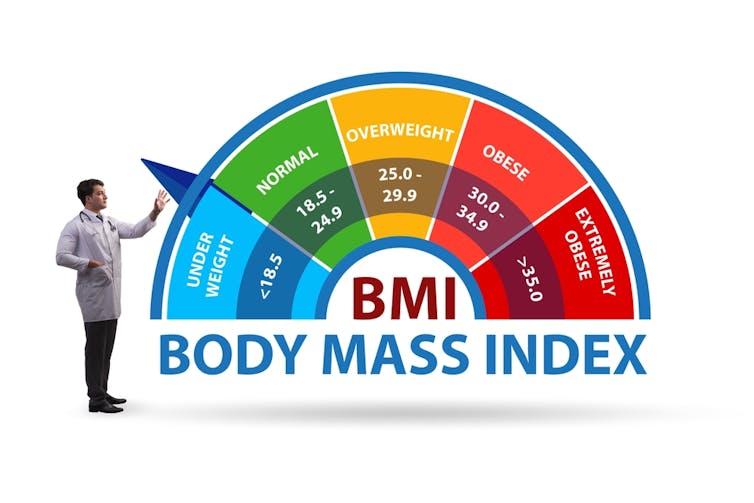
Being a bit overweight later in life may have protective health effects. Niks Ads/Shutterstock.com

Being slightly overweight might not shorten your life, but being very thin might. A large Danish study tracking more than 85,000 adults has found that people with a BMI below 18.5 were nearly three times more likely to die early than those in the middle to upper end of the so-called “healthy” range.

The link between body weight and health is more complicated than often assumed. This new research, which is yet to be peer reviewed, suggests that the lowest risk of death may not sit neatly in the traditional “healthy” body mass index (BMI) range.

Instead, the findings suggest that people with BMIs that would normally be classed as “overweight” appear to have outcomes that are just as good as, or even better than, those with lower BMIs.

Researchers found a U-shaped curve when plotting BMI against mortality, meaning those with the lowest and highest BMIs were at the highest risk of death.

In the data, presented as a conference paper at the Annual Meeting of the European Association for the Study of Diabetes, being underweight carried the greatest danger. People with a BMI below 18.5 were nearly three times more likely to die prematurely than those with a BMI between 22.5 and 24.9.

Those at the lower end of the “healthy” range also faced higher risks, with BMIs between 18.5 and 19.9 doubling the likelihood of death. Even people with BMIs between 20 and 22.4 were at a 27% higher risk of an early death compared with the reference group. These findings seem surprising, given that the BMI range of 18.5 and 24.9 is usually considered optimal.

At the other end of the scale, carrying extra weight did not always translate into greater risk. In the study, people with BMIs between 25 and 35 (typically categorised as “overweight” or “obese”) showed no significant increase in mortality compared with the reference group.

Only those with a BMI of 40 or more saw their risk of death rise substantially, more than doubling (2.1 times).

These findings add further data that challenges the common societal association between thinness and health. But research shows that being underweight is a risk to health, particularly in older age.

Having some fat reserves can help the body cope with illness. For example, patients undergoing cancer treatments, such as chemotherapy, tend to lose weight due to factors such as appetite loss and changes to taste.

Those with more fat reserves at the start can draw on them, helping their bodies continue essential functions. In contrast, someone with very little fat may run out of reserves quickly, limiting their body’s ability to recover.

Unintentional weight loss is also often a warning sign of illness, with conditions such as cancer and type 1 diabetes often resulting in weight loss before diagnosis. This means a low BMI can sometimes be a marker of underlying disease.

Not surprising

Following on from the researchers’ conference paper, there have been headlines such as: Being too thin can be deadlier than being overweight, Danish study reveals. That might sound surprising, but it shouldn’t. We need food to survive, and without it, we will die. We know this, and have known this for hundreds, if not thousands of years.

Without food, the body enters a catabolic state, where it breaks down tissues to get the energy needed to keep the brain functioning. In this process, other important body functions, such as immune function, are put on hold to prioritise energy for the brain.

It is worth noting that the Danish participants in this study had all undergone body scans for health reasons. These scans are costly, so they are usually carried out for a good reason – when a health issue is suspected.

The researchers acknowledge that a possible reason for their findings is that participants could be losing weight due to an underlying illness, and so it could be the illness itself, rather than the associated weight loss that is increasing the risk of death.

Still, the findings reinforce what other research has suggested: thinness is not always protective, and extra weight is not always harmful. The concept that you can be “fat but fit” continues to gain scientific backing.

Does this mean the “healthy” BMI range should be revised upward? The researchers suggest this, saying that modern medical advances, which help people manage obesity-related conditions such as diabetes and heart disease, could be shifting the safest weight range higher than before. A BMI between 22.5 and 30 may now carry the lowest risk of death, at least in the Danish population studied.

A man pointing at a body mass index chart.
A blunt tool.
Elnur/Shutterstock.com

A blunt tool

The trouble is, BMI has always been a blunt tool, as I have previously argued. It doesn’t take into account important factors for health, such as diet, lifestyle, and fat distribution, among others.

BMI can be misleading for people from different racial, ethnic, or cultural backgrounds. Critics say the standard cutoffs are based on white body types, which can make perfectly healthy bodies from other groups seem “unhealthy”.

Indeed, BMI was developed nearly two centuries ago using data from a small sample of white, European men. Although some efforts have been made to adapt ranges for certain ethnic groups, for example, NHS guidance lowers the BMI thresholds for increased risk of diabetes in Asian and black groups, BMI still fails to account for differences in body composition, fat distribution and baseline risk among individuals in our diverse society.

When significant healthcare decisions – such as access to fertility treatments and certain surgeries – are based on BMI, we should expect it to be an accurate and fair measure, developed and validated in populations that truly represent the people it is applied to.


Read more:
Why you can’t judge health by weight alone


In an ideal world, healthcare professionals would have access to more detailed measures such as blood tests, imaging scans, and detailed lifestyle information. These are costly and time consuming, but they reveal much more than a height-to-weight ratio ever can. Until better measures are widely available, BMI will continue to be used, but studies like this underline the need to refine how it is interpreted.

The Danish data is still preliminary. More details and further research will be needed before drawing firm conclusions. But the headline message stands: being very thin is dangerous, and carrying some extra weight may not shorten life. The real lesson is not that thin is bad and fat is good, but that BMI alone is a fragile measure of health.

The Conversation

Rachel Woods does not work for, consult, own shares in or receive funding from any company or organisation that would benefit from this article, and has disclosed no relevant affiliations beyond their academic appointment.

ref. ‘Fat but fit’: what the latest study reveals – https://theconversation.com/fat-but-fit-what-the-latest-study-reveals-265305

Why are state visits such powerful diplomatic tools? A constitutional expert explains

Source: The Conversation – UK – By Stephen Clear, Lecturer in Constitutional and Administrative Law, and Public Procurement, Bangor University

The US president and first lady, at the king’s invitation, are on a state visit to the UK and will stay at Windsor castle. The event is laden with ceremony and glitz, but it also carries great political potential – for the host nation in particular.

Formal visits by foreign heads of state are generally aimed at strengthening international relationships. The invitation for this visit was handed to Donald Trump in the Oval Office, on camera, by Keir Starmer at a time when the British prime minister was seeking to act as the bridge between the US and Europe over the war in Ukraine.

While many countries have state visits, their ceremonial style varies. In the US, ceremonial honours usually involve arrival on the White House south lawn, accompanied by a military band, 21-gun salute and then a state dinner. But it is the scale and grandeur of the UK’s carriage processions, state banquets, speeches in parliament and military pageantry, tied to the monarchy’s long history, which make them a powerful diplomatic tool for the UK. Trump has made no secret of his delight at being invited for an unprecedented second state visit.

Trump’s praise of the royal family is testament to the soft power at work here. An offer of an audience with the king can deepen diplomatic ties. In this instance, it’s a powerful tool for enhancing the UK-US relationship at a time when this is a priority for Britain.

How state visits work

In the UK, the procedures surrounding state visits are guided by conventions (traditions) and protocols. The prerogative – the government’s residue discretionary power – also comes into play.

The formal invitation for a UK state visit is issued in the name of the king, as head of state. However, in practice, the decision as to who receives them is usually based on another country firstly expressing an interest, and then the UK government offering ministerial advice to the king to extend an invitation. This advice usually comes from the foreign secretary in conjunction with the prime minister, as part of their prerogative powers surrounding foreign relations.

Windsor castle
Most of Trump’s visit will take place at Windsor castle.
Shutterstock/Tomas Marek

Once an invitation is issued, the Foreign, Commonwealth and Development Office, together with the royal household, will set the agenda for ceremonies, banquets, guards of honour and meetings with the king and prime minister.

Typically, the king will receive two foreign heads of state per year. In 2024, he hosted the emperor and empress of Japan, and the amir sheikh and sheikha of Qatar. These visits are usually only a couple of days and start with a ceremonial welcome attended by the king and other senior royal family members.

Having arrived in London on Tuesday, September 16, Trump will spend Wednesday at Windsor castle with the royal family and attend a state banquet in the evening. He will leave on Thursday for Chequers, the prime minister’s country residence, where the two will hold a bilateral meeting.

Diplomatic immunity, costs and threat levels

To facilitate secure visits, the State Immunity Act 1978 affords heads of state the same privileges as are applied to the heads of diplomatic missions. The visits are further underpinned by customary international sources such as the Vienna Convention on Diplomatic Relations of 1961. While these do not make explicit reference to state visits, they establish practices surrounding immunities and the treatment of heads of state in the discharge of their public duties.

In reality, hosting the US president means the UK has to manage a high threat level – which also means paying a lot, mostly for security and policing. Trump’s last state visit in 2019 cost £3.9 million.

But state visits bring reward as well as expenditure. These are not just opportunities for ceremony: meetings take place around the pomp, and there are always vigorous diplomatic efforts to reach agreements that can be announced while leaders are delivering speeches during the visit.

Even before Trump had touched down, it had been announced that Google would invest £5 billion in artificial intelligence in the UK over the next two years. More announcements of this kind can be expected to follow.

This will go some way to meeting a call from the UK parliament’s Business and Trade Committee for Starmer to apply “maximum pressure” on Trump to secure a trade and technology alliance to rival China. Starmer will also be hoping to negotiate on tariffs during the Chequers meeting on Thursday.

What the king does

The UK is a constitutional monarchy, meaning the king’s powers are limited by law, and are largely used by the UK government rather than the royal family. While the king is able to “advise and warn”, decisions are ultimately taken by the government. In that sense, the king reigns, but does not rule.

Nonetheless, the monarchy is very useful in delicate diplomatic situations. Wielding significant soft power in international diplomacy and serving as a visible symbol of stability and continuity on the global stage as head of the Commonwealth, the king can promote shared values and cooperation across borders.

His role in awarding honours, celebrating the voluntary and charitable sector, and delivering speeches often makes him synonymous with officially recognising success and excellence. The demands made of the monarchy to remain politically neutral on all matters can lead to them being seen as a unifying force.

It is noteworthy that even during moments of intense geopolitical tension, such as after the Russian invasion of Ukraine in 2022 when significant economic sanctions were being placed on Russia by the UK, the Russian president, Vladimir Putin, still offered condolences to the new king upon the death of Queen Elizabeth II – describing it as a “heavy, irreparable loss” of an “authority on the world stage”.

In this context, the king’s capacity to act as a bridge in diplomacy is an asset. Starmer will be hoping that the cost of hosting this second state visit will translate into tangible outcomes for the UK.

The Conversation

Stephen Clear does not work for, consult, own shares in or receive funding from any company or organisation that would benefit from this article, and has disclosed no relevant affiliations beyond their academic appointment.

ref. Why are state visits such powerful diplomatic tools? A constitutional expert explains – https://theconversation.com/why-are-state-visits-such-powerful-diplomatic-tools-a-constitutional-expert-explains-265425