The mistakes Keir Starmer made over disability cuts – and how he can avoid future embarrassment

Source: The Conversation – UK – By Thomas Caygill, Senior Lecturer in Politics, Nottingham Trent University

Labour MPs have forced a major government climbdown over disability benefit cuts, in an embarrassing turn of events for Keir Starmer. The prime minister has blown a hole in his budget by agreeing to scrap plans to tighten eligibility criteria for disability benefits via the universal credit and personal independence payment bill.

In return, MPs passed what was left of the bill – although 49 of them still rebelled, voting against the government. The bruising encounter bodes poorly for the future. Starmer’s Number 10 operation has been shown to be unable to communicate effectively with MPs. The team was neither able to win MPs over when the bill was being developed, nor bring them into line when agreement could not be reached.

The question now must be whether Starmer will ever be able to push through any difficult legislation in the future. He now needs to give serious attention to his relationship with MPs.


Want more politics coverage from academic experts? Every week, we bring you informed analysis of developments in government and fact check the claims being made.

Sign up for our weekly politics newsletter, delivered every Friday.


The government has insisted that welfare costs are becoming unsustainable. Back in March, it unveiled plans to cut sickness and disability benefits in order to save £5 billion a year from the welfare budget by 2030. However, the government’s own figures suggested that 250,000 people could be pushed into poverty because of the changes, which led to criticism from many Labour MPs and disability charities.

The threat of rebellion forced a partial u-turn by the government which appeased the vast majority of rebels. Although the remaining rebels failed to pass their wrecking amendment in the end, the fact the government was continuing to negotiate and offer concessions well into the debate on the night of the vote shows that the whips still felt there was a prospect of defeat. This behaviour during the debate is highly unusual and could all have been prevented.
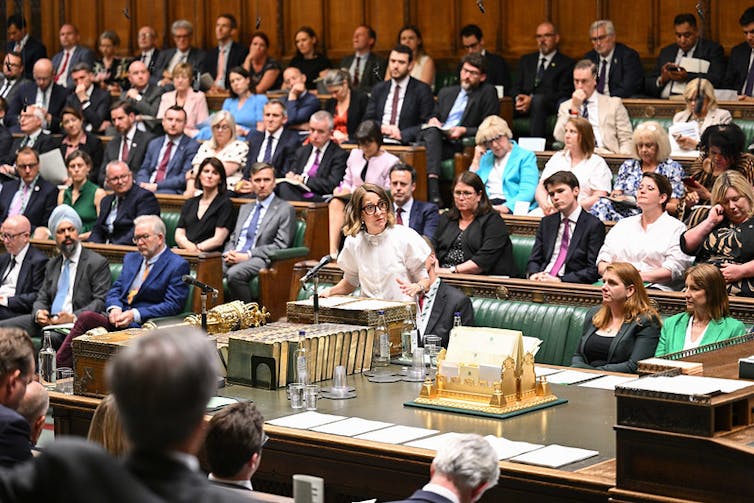
Labour MPs in the House of Commons.
Labour MPs on the night of the vote.
UK Parliament/Flickr, CC BY-NC-ND

Whenever there is disagreement between the government and its own backbench MPs, the role of the whips becomes even more vital. The whips have an important role in informing backbench MPs of which way the party leadership expects them to vote during divisions in the House of Commons.

However, this is in fact a two-way channel of communication. Whips are also responsible for reporting concerns and dissension among MPs to the chief whip, who then has a duty to report such issues to the prime minister and cabinet.

There has clearly been a breakdown in this two-way channel of communication in the case of the disability benefits cuts. Reports suggest that whips were warning that trouble was brewing to ministers but were being ignored.

How to avoid a repeat incident

A key complaint among Labour backbenchers was that they were not consulted on the proposals before they were announced. As the potential consequences of the changes became clearer, more MPs raised concerns about them.

A lesson for the government here is that adequate groundwork is needed to get MPs on side with policies. That might mean allowing select committees to have more insight into the government’s thinking. It’s notable that select committee chairs were leading figures in this rebellion.

It might also mean making greater use of departmental groups within the Parliamentary Labour Party to allow backbench MPs to feed into discussions at an earlier stage. Crucially, it also means more one-to-one, informal conversations.

All this helps MPs feel like they have a vested interest in the policy and have had their voices heard. If you implement such a safety valve early on, the need for views and frustrations to be expressed so publicly later on in the process is reduced. Instead, in this case, we’ve had Labour backbenchers revealing to the media that, a year into office, they’ve still never even met Starmer.

We have seen a trend in recent years of MPs becoming more focused on their constituency role. This, combined with the large rise in the number of MPs who hold marginal seats (meaning they are at greater risk of losing those seats at the next election) means that they prioritise constituents concerns over the party line. MPs who are worried about holding their seat at the next election have little to lose from threats about losing the whip.

Labour’s position in the polls over recent months has exacerbated this problem. An analysis by the Disability Poverty Campaign Group in April suggested that for dozens of Labour MPs, the number of people claiming the benefits that were to be cut in their constituencies was greater than the size of their majority. In other words, there was a direct line to be drawn between voting for the bill and election loss.

An additional factor that must be considered is that the sheer number of Labour MPs currently in parliament means that the usual incentives for loyalty don’t necessarily apply. Loyalty is often negotiated with promises of ministerial office in the future, but Starmer doesn’t turn over his team often and, in any case, there simply aren’t enough such carrots to dangle in front of everyone when a party has more than 400 MPs.

Labour would also have to win a second term for such promises to be meaningful and that is currently in jeopardy. All this means there are fewer incentives for MPs to play the long game.

What is clear is that Starmer’s approach to party management is not working. Given how the changing nature of politics in the UK, MPs are likely to get a taste for rebellion – particularly if, as happened in this case, rebellions deliver results. This is something any government should seek to avoid.

Clearly there is a need for more groundwork to give MPs a sense of ownership over policy. There is also an argument for the prime minister and senior members of the cabinet to spend more time doing the rounds in the House of Commons tearooms, speaking to the parliamentary party at large and listening to their concerns directly. This might improve parliamentary party relations and keep the lid on future rebellions.

The Conversation

Thomas Caygill is currently in receipt of a British Academy/Leverhulme Small Research Grant for research on post-legislative scrutiny in the Scottish Parliament and has previously received funding from the Economic and Social Research Council.

ref. The mistakes Keir Starmer made over disability cuts – and how he can avoid future embarrassment – https://theconversation.com/the-mistakes-keir-starmer-made-over-disability-cuts-and-how-he-can-avoid-future-embarrassment-260254


Euro 2025: women’s football has exploded – here’s how it can grow even more

Source: The Conversation – UK – By Christina Philippou, Associate Professor in Accounting and Sport Finance, University of Portsmouth

Aside from victory and sporting glory, the players in the women’s Euro 2025 football tournament are playing for more money than ever before. The prize fund of €41 million (£35 million), to be shared among the 16 participating sides, is more than double what it was last time around.

It’s still a long way off from the prize money on offer to the men’s equivalent tournament (€331 million), but is a clear indication of the continuing rise of interest and investment in women’s football, particularly within England.

The English team’s hosting and victory of the 2022 women’s Euros were rightly credited with providing a massive boost to the game three years ago. But interest in women’s club football was already on the rise, with an almost sixfold increase in revenue between 2011 (the first season of the Women’s Super League (WSL)) and 2019.


Get your news from actual experts, straight to your inbox. Sign up to our daily newsletter to receive all The Conversation UK’s latest coverage of news and research, from politics and business to the arts and sciences.


Other numbers are encouraging too. Generally, match-day attendances have seen a dramatic rise including for the sport’s second tier (now named WSL2).

Broadcasting income for WSL was up 40% in 2023-24 compared to the previous season. And a new five-year deal with Sky Sports and the BBC, worth £65 million, is worth almost double the previous arrangement.

However, there’s room for improvement.

Research suggests that well-considered scheduling (weekend games are best) can have a marked effect on attendances (as does weather and pricing). And stadium capacity matters too, partly because more people can attend but also because a larger (often iconic) stadium tends to act as an attraction in itself.

For example, Arsenal’s women’s side saw average crowds of just under 29,000 in 2024-25 compared to a WSL average of 6,662. They have the highest revenue from match-day income, with nine games being played at the Emirates stadium last season and all WSL games scheduled to be played there in the next.

Facilities within the stadiums are another concern, as they were traditionally built for mostly male spectators, so do not cater as well to the more female and family demographic of women’s football.

This means, for example, that there are often not enough women’s toilets available, while refreshment options may be geared towards drinkers rather than children. Even the gates seem designed for a steady entry trickle of fans over an hour rather than a mass turnout of time-pressured families arriving just before kick-off.

Some good news on this front is that Brighton and Hove Albion FC are now building a stadium specifically for use by their women’s team, due to be in use by 2027. And Everton have decided to repurpose Goodison Park for use by its women’s side following the men’s move to a new stadium.

Commercial break

But aside from people actually watching the matches, the biggest chunk of income for women’s teams comes from commercial enterprises. And while affiliated teams (those linked to a men’s side) can benefit from sharing a brand, there are also a large number of commercial partners emerging specifically in the women’s game.

Companies selling makeup, baby products, sports bras and period pants are all involved in the business side of women’s football. More will probably follow.

But while commercial and competition success stories are something to celebrate, women’s football still faces challenges. One of the big ones is to do with building a legacy – the idea that just hosting a major tournament should not be the end goal, but something which ensures lasting change and development.

Building a legacy is not straightforward, but after England’s success in Euro 2022, the side used their platform to ensure change on issues including access to football for girls in schools and availability of kit.

As for the club game, attitudes to building a legacy by offering financial support to women’s teams are mixed. Some clubs view the women’s team as different (in terms of marketing, say) but integrated as part of the club (in terms of ticketing and sharing of resources). Others seem to consider a women’s side as good PR or community outreach rather than a genuine commercial opportunity.

In the last couple of years, we have seen both Reading and Blackburn women’s teams withdraw from the WSL2, while Wolves failed to apply for license to the league.

All of those teams mentioned worries over costs. And most women’s teams do lose money.

But men’s teams tend to lose money too, with the majority not only making losses but also being technically insolvent (meaning owners need to pump money in to keep clubs going).

The difference is that women’s football is essentially in a start-up phase, with lots of commercial, broadcasting and match-day potential, as showcased by annual revenue growth rates. In contrast, the men’s football market is a mature one that has been professional for decades, and shows much lower annual revenue growth.

Euro 2025 then, needs to play its part in keeping up momentum. It needs to keep the crowds, the commercial partners, the broadcasters and fans on board and committed.

For while women’s football is connected to men’s football, it is a different business. And celebrating that difference could do the women’s game a world of economic good.

The Conversation

Christina Philippou does not work for, consult, own shares in or receive funding from any company or organisation that would benefit from this article, and has disclosed no relevant affiliations beyond their academic appointment.

ref. Euro 2025: women’s football has exploded – here’s how it can grow even more – https://theconversation.com/euro-2025-womens-football-has-exploded-heres-how-it-can-grow-even-more-257864

Why investing in climate-vulnerable countries makes good business sense

Source: The Conversation – UK – By Ali Serim, Advisor for the Centre of Geopolitics of Global Change, ODI Global

A new flood barrier is being built to prevent climate-induced Flooding in Chittagong in Bangladesh. amdadphoto/Shutterstock.com

At a coastal port in Chittagong, Bangladesh, something remarkable is underway. With support from a US$850 million (£620 million) investment from the World Bank, engineers are building flood-resistant infrastructure that can survive rising seas and stronger storms. A new 3.7-mile-long barrier will protect people, homes, and trade in one of the world’s most climate-vulnerable regions.

Projects like this do more than save lives. They show why investing in climate
adaptation is one of the smartest financial opportunities of our time. There are plenty of global conferences where leaders discuss climate change and make big
promises. Yet, less than 5.5% of global climate finance actually reaches the countries most at risk. That is not just a failure of fairness. It is a missed chance for real impact.

As the world gathers in Seville, Spain for the fourth international meeting on development financing, the focus must go beyond pledges and shift toward practical, on-the-ground investment in resilience.

At the previous UN climate finance meeting, also held in Seville, leaders focused
on fixing how public money flows through global institutions. But just as important is the need to invest in climate adaptation. This means helping people live with the changes already happening, including more floods, longer droughts, rising seas and intense heat.

While mitigation is about stopping climate change getting worse (by switching to clean energy or protecting forests that absorb carbon, for example), adaptation is about coping with the effects we can no longer avoid. It includes building stronger homes, growing more resilient crops, and improving hospitals and schools so they can keep working during extreme weather. Both approaches are necessary, but adaptation often gets less attention. And less money.

Private investors have already committed large sums to clean energy projects. But they have done much less to support communities on the frontlines of climate change. Many of these countries struggle with limited budgets, complex rules for accessing finance, and a lack of support to develop viable projects. So promising ideas often go unfunded.

children in colourful clothing getting on to solar powered boat on river
Children attend a school on a solar-powered boat in Rajshahi district, Bangladesh.
G.M.B Akash/Panos Pictures, CC BY-NC-ND

That is beginning to change. New tools are helping investors take on less risk and back more projects. These include low-interest loans, partnerships between public and private institutions, and guarantees that reduce the risk of failure.

The Green Climate Fund is the largest source of dedicated climate finance for developing countries. By the end of 2023, it had approved US$13.5 billion in funding, rising to US$51.9 billion when co-financing is included. This money helps unlock adaptation efforts that were previously out of reach.

We can already see progress. In Kenya and Ethiopia, farmers are using drought-resistant seeds to grow more food in changing conditions. In the Caribbean, solar energy is powering schools and clinics in remote communities. And in Bangladesh, the new port infrastructure in Chittagong is protecting a vital economic hub while boosting local businesses.

Working with nature

In coastal areas, restoring mangrove forests can reduce the force of incoming storms, protect biodiversity and support fisheries. The Pollination Group, a climate investment firm, is helping turn “nature-based solutions” like these into projects that attract private finance.

In his previous role as the Prince of Wales, King Charles III launched the Natural Capital Investment Alliance, an initiative that aims to mobilise US$10 billion for projects that restore and protect nature while offering solid financial returns. The alliance also helps investors better understand these kinds of opportunities by creating clearer guidance and standards. This supports the Terra Carta, a charter created by King Charles III that offers a roadmap for businesses to align with the needs of both people and the planet by 2030.

Investors who step into these emerging spaces gain more than financial returns. They build long-term relationships with governments and local communities. They help shape future policy. And they create lasting foundations for growth in places that are ready to lead if given the chance.

Adaptation projects also bring real benefits to people. They improve access to clean water, protect food supplies, create jobs, strengthen education and support healthcare systems. For families already facing climate disruption, these changes are not just improvements. They are lifelines.

By creating stable and welcoming environments for responsible investment, governments can accelerate this shift. By simplifying how money is accessed, international institutions can make it easier for good ideas to become funded projects. Philanthropic groups and development agencies can help build local skills and prepare projects for funding. Private investors can bring capital, innovation and experience.

Investing in climate adaptation is no longer just a moral issue. It is a smart, scalable and necessary response to a changing world.


Don’t have time to read about climate change as much as you’d like?

Get a weekly roundup in your inbox instead. Every Wednesday, The Conversation’s environment editor writes Imagine, a short email that goes a little deeper into just one climate issue. Join the 45,000+ readers who’ve subscribed so far.


The Conversation

Ali Serim does not work for, consult, own shares in or receive funding from any company or organisation that would benefit from this article, and has disclosed no relevant affiliations beyond their academic appointment.

ref. Why investing in climate-vulnerable countries makes good business sense – https://theconversation.com/why-investing-in-climate-vulnerable-countries-makes-good-business-sense-259732

Why white clothing is a requirement at Wimbledon

Source: The Conversation – UK – By Roger Fagge, Associate Professor in the Department of History, University of Warwick

When Carlos Alcaraz beat Jannik Sinner at the Roland Garros men’s final on June 8 2025, in what is already seen as a classic match, there was some comment on the sartorial choices of the two players.

They both wore Nike tops. Alcaraz’s was collarless, with horizontal blue bordered green and black stripes, and black shorts. Meanwhile Sinner wore a green polo-style shirt with collar, blue shorts and a blue Nike cap. Sinner’s shirt bore more than a passing resemblance to an Irish rugby union top, and was seen by some as somewhat incongruous on a tennis court.

In the women’s final on June 7, meanwhile, Coco Gauff brilliantly defeated Aryna Sabalenka, the number one seed. Gauff wore a custom New Balance kit with a dark blue marbled effect, finished off with a stylish grey leather jacket worn to and from the court. Sabalenka wore a colourful Nike tennis dress.

Technology, design and fashion all play a role in a player’s choice of tennis kit, as does their commercial potential – Sabalenka’s exact dress can be bought from the Nike website. But things are different at the Wimbledon championships, where “almost entirely white” kit is still a requirement.


Looking for something good? Cut through the noise with a carefully curated selection of the latest releases, live events and exhibitions, straight to your inbox every fortnight, on Fridays. Sign up here.


Founded in 1877, making it the oldest and most prestigious tennis tournament in the world, at Wimbledon, any colour must be limited to a 10mm strip.

White clothing was enforced at Wimbledon from the 19th century, in part because it covered up unwelcome signs of sweat. White clothing was also seen as cooler in the summer heat. But as time went on it became tied in with a sense of history and tradition, and the uniqueness of the Wimbledon tournament. Though there have been some occasional notable revisions.

Many women in the tennis community, including Billie Jean King, Judy Murray and Heather Watson, have argued that women players find white undershorts problematic when they are menstruating. As a result, the All England Club revised the rules in 2023 to allow dark undershorts, “provided they are no longer than their shorts or skirt”.

There had been earlier controversies over clothing at Wimbledon, sometimes over propriety, as in 1949, when Gertrude Moran challenged dress codes with “visible undergarments”. More recently in 2017 Venus Williams was asked to change during a rain break in a match because of visible fuchsia bras straps. The following year, Roger Federer, chasing his eighth Wimbledon title, was asked to change his orange-soled Nike shoes. They all acquiesced.

This history of all-white kits

All-white clothing is also linked to cricket, which shares elements of class and tradition with tennis. Playing in the summer sun meant cricket “whites” were a sensible option. However coloured caps of a player’s county or nation, were allowed by the cricket authorities, and cricket jumpers for the not so sunny days typically had the colours of the team on the v neck.

Man in cricket whites
White clothing is also associated with cricket.
Shutterstock

By 2020 the international Cricket Council (ICC) allowed larger sponsorship on shirts. The move to limited overs games played under floodlights saw the introduction of coloured kit, sometimes displaying a garishness that surpassed football shirts. However Test matches and longer-form cricket like the four-day county championship matches are still played in cricket whites.

And white shirts and kit have played a role in other sports, including football. If white shirts suggest respectability and style, somewhat ironically, the powerful white-clad Leeds side of the mid 1960s-70s, managed by Don Revie, earned the sobriquet “dirty Leeds” for their feisty approach to the dark arts of football. History and tradition matter as much in football as any sport, and fans of a certain age at other clubs, still refer to the Yorkshire club by this moniker.

But that’s enough football, as we’re firmly in Wimbledon season. So break out the Pimm’s, scones and jam, and let’s enjoy the tennis. Thankfully for the traditionalists among us there will be no marbled, green or blue kit on the centre court.

This article features references to books that have been included for editorial reasons, and may contain links to bookshop.org. If you click on one of the links and go on to buy something from bookshop.org The Conversation UK may earn a commission.

The Conversation

Roger Fagge does not work for, consult, own shares in or receive funding from any company or organisation that would benefit from this article, and has disclosed no relevant affiliations beyond their academic appointment.

ref. Why white clothing is a requirement at Wimbledon – https://theconversation.com/why-white-clothing-is-a-requirement-at-wimbledon-259469

Could electric brain stimulation lead to better maths skills?

Source: The Conversation – UK – By Roi Cohen Kadosh, Professor of Cognitive Neuroscience, University of Surrey

Triff/Shutterstock

A painless, non-invasive brain stimulation technique can significantly improve how young adults learn maths, my colleagues and I found in a recent study. In a paper in PLOS Biology, we describe how this might be most helpful for those who are likely to struggle with mathematical learning because of how their brain areas involved in this skill communicate with each other.

Maths is essential for many jobs, especially in science, technology, engineering and finance. However, a 2016 OECD report suggested that a large proportion of adults in developed countries (24% to 29%) have maths skills no better than a typical seven-year-old. This lack of numeracy can contribute to lower income, poor health, reduced political participation and even diminished trust in others.

Education often widens rather than closes the gap between high and low
achievers, a phenomenon known as the Matthew effect. Those who start with an advantage, such as being able to read more words when starting school, tend to pull further ahead. Stronger educational achievement has been also associated with socioeconomic status, higher motivation and greater engagement with material learned during a class.

Biological factors, such as genes, brain connectivity, and chemical signalling, have been shown in some studies to play a stronger role in learning outcomes than environmental ones. This has been well-documented in different areas, including maths, where differences in biology may explain educational achievements.


Get your news from actual experts, straight to your inbox. Sign up to our daily newsletter to receive all The Conversation UK’s latest coverage of news and research, from politics and business to the arts and sciences.


To explore this question, we recruited 72 young adults (18–30 years old) and taught them new maths calculation techniques over five days. Some received a placebo treatment. Others received transcranial random noise stimulation (tRNS), which delivers gentle electrical currents to the brain. It is painless and often imperceptible, unless you focus hard to try and sense it.

It is possible tRNS may cause long term side effects, but in previous studies my team assessed participants for cognitive side effects and found no evidence for it.

Concept illustration of right and left brain hemispheres.
Could tRNS help people improve their maths skills?
Prostock-studio/Shutterstock

Participants who received tRNS were randomly assigned to receive it in one of two different brain areas. Some received it over the dorsolateral prefrontal cortex, a region critical for memory, attention, or when we acquire a new cognitive skill. Others had tRNS over the posterior parietal cortex, which processes maths information, mainly when the learning has been accomplished.

Before and after the training, we also scanned their brains and measured levels of key neurochemicals such as gamma-aminobutyric acid (gaba), which we showed previously, in a 2021 study, to play a role in brain plasticity and learning, including maths.

Some participants started with weaker connections between the prefrontal and parietal brain regions, a biological profile that is associated with poorer learning. The study results showed these participants made significant gains in learning when they received tRNS over the prefrontal cortex.

Stimulation helped them catch up with peers who had stronger natural connectivity. This finding shows the critical role of the prefrontal cortex in learning and could help reduce educational inequalities that are grounded in neurobiology.

How does this work? One explanation lies in a principle called stochastic resonance. This is when a weak signal becomes clearer when a small amount of random noise is added.

In the brain, tRNS may enhance learning by gently boosting the activity of underperforming neurons, helping them get closer to the point at which they become active and send signals. This is a point known as the “firing threshold”, especially in people whose brain activity is suboptimal for a task like maths learning.

It is important to note what this technique does not do. It does not make the best
learners even better. That is what makes this approach promising for bridging gaps,
not widening them. This form of brain stimulation helps level the playing field.

Our study focused on healthy, high-performing university students. But in similar studies on children with maths learning disabilities (2017) and with attention-deficit/hyperactivity disorder (2023) my colleagues and I found tRNS seemed to improve their learning and performance in cognitive training.

I argue our findings could open a new direction in education. The biology of the learner matters, and with advances in knowledge and technology, we can develop tools that act on the brain directly, not just work around it. This could give more people the chance to get the best benefit from education.

In time, perhaps personalised, brain-based interventions like tRNS could support learners who are being left behind not because of poor teaching or personal circumstances, but because of natural differences in how their brains work.

Of course, very often education systems aren’t operating to their full potential because of inadequate resources, social disadvantage or systemic barriers. And so any brain-based tools must go hand-in-hand with efforts to tackle these obstacles.

The Conversation

Roi Cohen Kadosh serves on the scientific advisory boards of Neuroelectrics Inc., and Innosphere Ltd. He is the founder and shareholder of Cognite Neurotechnology Ltd. He received funding from the Wellcome Trust, UKRI, the British Academy, IARPA, DASA, Joy Ventures, the James S McDonnell Foundation, and the European Union. He is affiliated with the University of Surrey.

ref. Could electric brain stimulation lead to better maths skills? – https://theconversation.com/could-electric-brain-stimulation-lead-to-better-maths-skills-260134

Why is Islamophobia so hard to define?

Source: The Conversation – UK – By Julian Hargreaves, Lecturer, Department of Sociology and Criminology, City St George’s, University of London

The UK government wants a new definition of Islamophobia and has created a working group of politicians, academics and independent experts to provide one. It aims to settle long-running political debates over the term.

The concept of Islamophobia describes anti-Muslim and anti-Islamic prejudices and their impact on Muslim communities. The term became familiar in the UK following publication of the Runnymede Trust report, Islamophobia: A Challenge for Us All, in 1997.

The concept is now used to discuss negative public opinion towards Muslims and Islam, biased media reporting, verbal and physical assaults and online attacks. It is also used when discussing social and economic inequalities, discrimination within various institutional settings and unfair treatment from the police and security services.

Previous definitions have been controversial, failing to unite politicians, academics and British Muslims, and leading to charged debates over free speech.

Some academics have argued that the word “Islamophobia” – which suggests a phobia or fear of Islam – is an inaccurate label for a prejudice which often targets skin colour, ethnicity and culture.

Many Muslim-led organisations accept that the term is imperfect and interchangeable with others such as “anti-Muslim hatred”. However, they maintain the term “Islamophobia” is needed to focus attention on a growing problem.

Definitions and controversy

The 1997 Runnymede Trust report defined Islamophobia as an “unfounded hostility towards Islam”, “the practical consequences of such hostility in unfair discrimination against Muslim individuals and communities” and “the exclusion of Muslims from mainstream political and social affairs”.

The Runnymede Trust revised its definition in a follow-up report published in 2017. The report defines Islamophobia in two ways.

The first is “anti-Muslim racism”. A longer, second version amends the United Nation’s 1965 definition of “racial discrimination”. These revised definitions are important because they re-framed Islamophobia as a product of racist thinking rather than religious prejudices.

Other attempts to define Islamophobia include British academic Chris Allen’s 200-word definition. Allen defined it as an ideology like racism that spreads negative views of Muslims and Islam, influencing social attitudes and leading to discrimination and violence. US political scientist Erik Bleich defined it more succinctly as “indiscriminate negative attitudes or emotions directed at Islam or Muslims”.

In 2018, the all-party parliamentary group on British Muslims published another definition linking Islamophobia to racism. According to the APPG, “Islamophobia is rooted in racism and is a type of racism that targets expressions of Muslimness or perceived Muslimness.” The APPG called for its definition to be legally binding.

The APPG definition was adopted by various organisations including local authorities, UK universities and the Labour party while in opposition. But it was rejected by the then Conservative government and later by the current Labour government, which argued it was seeking “a more integrated and cohesive approach”.

This lack of consensus over previous definitions led Angela Rayner, the deputy prime minister, to announce the working group in March 2025. The group’s aim is to provide a new definition of “anti-Muslim hatred and Islamophobia” which is “reflective of a wide range of perspectives and priorities for British Muslims”.

Former Conservative MP and attorney general Dominic Grieve was appointed to chair the group, evidence of Labour’s ambition to build consensus.

Protesters carrying a 'no to Islamophobia banner', a woman in a hijab speaks into a megaphone
A march in London against Islamophobia, racism and anti-migrant views.
Shutterstock

Some are concerned that use of the term “Islamophobia”, and particularly the APPG definition, stifles legitimate criticism of Islam. Free speech campaigners have argued that it is “blasphemy via the back door”.

The centre-right thinktank Policy Exchange published a report claiming that the term is used in bad faith to divert attention away from serious social problems within some Muslim communities – specifically, discussion of the grooming gangs scandal.

These debates bear resemblance to those surrounding the term “antisemitism” and the adoption of a definition proposed by the International Holocaust Memorial Alliance. The term is widely accepted, although critics have argued this specific definition stifles legitimate criticism of the Israeli state.

A new approach

A new definition of “Islamophobia” must balance the protection of Muslim communities and freedoms of religion, expression and assembly for all Muslims and non-Muslims in the UK. It must be clear enough for everyday use, specific enough for academic and policy research, and capable of generating support across the UK’s diverse Muslim population.

A proposed definition by an emerging thought leader on British Islam addresses these challenges. Mamnun Khan is a writer whose work explores the social integration of Muslims in contemporary British society. Khan is associated with Equi, a thinktank which describes its work as “drawing on Muslim insight”. Other members of Equi are members of the government’s working group.

Khan sets out three tests that a definition must pass, based on Islamic law, moral teachings within Islam and other more universal values. First, a definition must serve the public interest. Second, it must be just and balanced and preserve freedom of expression. Third, it must uphold the dignity of Muslim communities.

For Khan, “Islamophobia, also known as anti-Muslim hatred, is an irrational fear, hostility, or prejudice toward Muslims that leads to discrimination, unequal treatment, exclusion, social and political marginalisation, or violence.”

Khan’s definition has many good qualities. It brings together stronger elements of previous definitions – for, example, the separation of negative attitudes and outcomes – without being weakened by jargon or strong political ideology. On the other hand, some social scientists may question whether defining something as “irrational” is a matter of preference rather than academic research.

The working group also needs to decide whether Islamophobia and anti-Muslim hatred are closely related or exactly the same. Failure to do so will cause confusion and inconsistency among those wishing to apply the term precisely. Regardless, Khan’s example is a strong step in the right direction. A better definition of Islamophobia is needed, and now within reach.

The Conversation

Julian Hargreaves is an Affiliated Researcher at the Prince Alwaleed bin Talal Centre of Islamic Studies, University of Cambridge.

ref. Why is Islamophobia so hard to define? – https://theconversation.com/why-is-islamophobia-so-hard-to-define-258522

Five ways to avoid illness like the Lionesses

Source: The Conversation – UK – By Samantha Abbott, Doctoral Researcher, Department of Sport Science, Nottingham Trent University

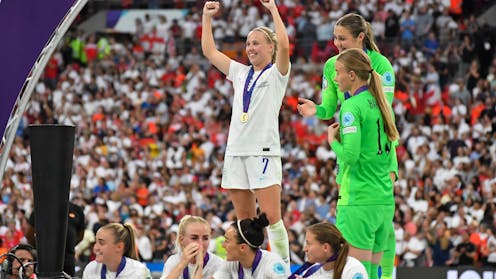
England’s Beth Mead cheering on podium after win v Germany in the Women European Championship Final 2022 photographyjp/Shutterstock

Think back to the last time you had a cold or the flu. Now imagine stepping onto the pitch for a European Cup final, while battling through those symptoms. For elite athletes, illness can strike at the worst possible time – and it could hit women harder.

Research suggests that female athletes are more susceptible to cold and flu-like illnesses than their male counterparts. For England women’s national football team, the Lionesses, this risk only increases before a major tournament like the Euros.

Close contact, shared kit, disrupted sleep and travel all add up to a perfect storm for infection. But targeted nutritional strategies, alongside good sleep and hand hygiene, can offer a crucial line of defence.


Get your news from actual experts, straight to your inbox. Sign up to our daily newsletter to receive all The Conversation UK’s latest coverage of news and research, from politics and business to the arts and sciences.


1. Fuel first: energy matters for immunity

Before anything else, players need to eat enough. Energy supports both performance and immune function. In fact, female athletes who didn’t meet their energy needs in the run-up to the 2016 Olympics were four times more likely to report cold or flu symptoms.

This is especially relevant in women’s football, where low energy and carbohydrate intake has been documented among professional players and recreational players too. Regular meals and snacks that include carbohydrate-rich foods like oats, bread and pasta, especially around training, are essential to meet energy demands and support immune health.

2. Eat the rainbow

Athletes are often encouraged to go beyond the public’s five-a-day fruit and veg target, aiming instead for eight to ten portions daily. Why? Because colourful plant foods are packed with vitamins, minerals, antioxidants and anti-inflammatory compounds: all vital for immunity.


Read more:
We’re told to ‘eat a rainbow’ of fruit and vegetables. Here’s what each colour does in our body


Each colour offers unique benefits. For instance, red fruits and vegetables, such as tomatoes, contain lycopene, a powerful antioxidant. Orange produce like carrots get their colour from beta-carotene, which is converted by the body into vitamin A – a key vitamin for immune health.

Eating a rainbow of colours means getting a wide range of nutrients.

3. Vitamin C: powerful but timing matters

Vitamin C has long been linked with reducing the risk and severity of cold and flu symptoms. One Cochrane review found that regular vitamin C intake halved the risk of illness in physically active people.

However, more isn’t always better. Long-term use of high-dose vitamin C supplements could blunt training adaptations – the structural and functional changes the body undergoes in response to repeated exercise – because of its anti-inflammatory effects. That’s why vitamin C is most effective when used strategically, such as during high-risk periods like travel or intense competition. Good food sources include oranges, kiwis, blackcurrants, red and yellow peppers, broccoli and even potatoes.

4. Gut health supports immune health

Around 70% of the immune system is located in the gut, making gut health a key player in illness prevention. This is where probiotics (live bacteria) and prebiotics (which feed those bacteria) come in.

Probiotics, found in fermented foods like kefir and kimchi or in supplement form, have been shown to reduce the duration and severity of respiratory illnesses in athletes. Prebiotics have similarly shown promise. In one study, a 24-week prebiotic intervention in elite rugby players reduced the duration of cold and flu symptoms by over two days.


Read more:
Gut microbiome: meet Lactobacillus acidophilus – the gut health superhero


In the build-up to the Euros, including probiotic-rich foods in their diet or taking a daily prebiotic and probiotic supplement may help players stay healthy and return to training faster if they do get ill.

5. Zinc lozenges: first aid for a sore throat

If cold-like symptoms do appear, zinc lozenges can offer fast-acting relief. Zinc has antiviral, antioxidant and anti-inflammatory properties. When zinc is delivered as a lozenge, it acts directly in the throat, where many infections begin. Taken within 24 hours of symptoms starting, zinc lozenges could shorten illness duration by a third.

But caution is key. Long-term use of high-dose zinc supplements can actually suppress immune function. Zinc lozenges should only be used short-term at symptom onset, not as a daily supplement.

Staying match-ready during major tournaments means more than just tactical drills and fitness. Nutrition is a powerful ally in illness prevention, especially for women’s teams like the Lionesses. From fuelling adequately to supporting gut health and knowing when to supplement, these nutritional strategies can make the difference between sitting on the bench and bringing a trophy home.

The Conversation

The authors do not work for, consult, own shares in or receive funding from any company or organisation that would benefit from this article, and have disclosed no relevant affiliations beyond their academic appointment.

ref. Five ways to avoid illness like the Lionesses – https://theconversation.com/five-ways-to-avoid-illness-like-the-lionesses-259302

The Bear season 4: this meaty restaurant drama is still an enticing bingeable prospect

Source: The Conversation – UK – By Jane Steventon, Course Leader, BA (Hons) Screenwriting; Deputy Course Leader & Senior Lecturer, BA (Hons) Film Production, University of Portsmouth

Take a soupçon of identity crisis, a pinch of perfectionism, a scoop of burnout and mix thoroughly with a large measure of fraternal grief and sear over a hot grill and voilà! You have The Bear, a perfectly blended drama about a chef on the edge, driven by relentless ambition and exacting standards as he turns his family’s humble sandwich shop into a fine-dining restaurant.

This intoxicating family drama was eaten up by critics and audiences alike in 2022, its first season garnering a rare perfect 100% score on Rotten Tomatoes, the subsequent two reaching scores of 99% and 89% respectively. It’s certainly a hard act to follow for season four.

The first ten minutes of The Bear’s pilot episode thrillingly defined what was to come in high-octane style and scene-setting detail. The first season delivered a clever mix of authentic dialogue and setting, relatable family dysfunction and dynamic production style.

Showstopping scenes of stressful kitchen heat were served up alongside a delectable range of new and established talent in the form of Jeremy Allen White (Carmy), Ebon Moss-Bachrach (Richie), Ayo Edebiri (Sydney) and Oliver Platt (Cicero/Uncle Jimmy).


Looking for something good? Cut through the noise with a carefully curated selection of the latest releases, live events and exhibitions, straight to your inbox every fortnight, on Fridays. Sign up here.


In charge is showrunner Christopher Storer, who came up with the concept after being inspired by his friend’s father Chris Zucchero, the owner of Chicago sandwich joint Mr Beef.

With his professional chef sister also serving as a consultant, Storer succeeded in creating a deliciously authentic and intensely real drama. Buoyed along the way by 21 Emmys and five Golden Globes, Storer also watched his cast ascend, the tortured-soul performance of White garnering particular praise.

Testing the parameters of a long-running show, Storer focused in on the entire cast of characters and their backstories, a successful tactic used by shows such as Orange is the New Black to keep the drama – largely confined to a kitchen set – fresh.

Pulling in Hollywood die-hards Oliver Platt and Jamie Lee Curtis for familial tough-love roles further enriched the mix, often using a non-chronological timeframe to go back to moments of family turbulence and tension. This made for three-dimensional characters and enabled evolution around difficult themes such as the aftermath of suicide and generational trauma.

The Bear has come a long way in three seasons, starting with a spit and sawdust establishment serving up the lunchtime beef sandwiches for its working customers.

Carmy’s experience and longing for the high-end restaurant of his dreams hurtled forward in season two, as he sent his core crew off in different directions to hone their skills and help form his vision. A restaurant trying to win success but plagued with challenges, there were exhausting familial tensions embedded in every episode of season three.

Several themes play out in The Bear: love, family, loyalty, community and purpose. The relationship between Carmy and cousin Richie (not a real cousin, but a term of endearment) is key to linking past and future. Richie provides some of the highlights of comedy and pathos as he spits truth bombs, most frequently at talented sous-chef Syd.

It is Syd who follows Carmy’s aspirations for gastronomic perfection but can’t abide the lack of order or the intense highs and lows that inevitably go hand in hand with his talent. And this is one central question to consider for the latest series: just how long will the audience remain loyal to Carmy and his endless quest for artistry in a high-failure rate industry?

It’s all in the sauce

Storer begins season four with a ghost. Carmy and his dead brother Mikey (Jon Berthal) banter in a seven-minute scene, with Carmy ultimately confiding the dream of a restaurant as Mikey watches him make tomato sauce (“too much garlic”). The tomatoes resonate: Mikey left behind money hidden in tomato cans that ended up saving Carmy’s sanity and his dream of a proper restaurant.

Just as oranges represent death to Frances Ford Coppola, Storer uses tomatoes to underscore themes; here they symbolise familial loyalty and history, a solid base to a meal, a core ingredient. Mikey was one of the core ingredients in Carmy’s life, and now he’s gone.

Carmy awakens to a rerun of Groundhog Day on late-night TV and fittingly, we too are back – same dish, now more seasoned and enriched with its core ingredients and ready to serve up a big bowlful of family, love, ambition, strife and grief.

The episode furthers the theme of loyalty as the restaurant receives The Tribune’s review – the cliffhanger of the season three finale. Naturally, Storer doesn’t let up – the food critic highlights “dissonance” and Carmy is back in emotional chaos, with Syd urging him to lighten up and lose the misery.

In truth, this series could do with adding some more humour in the mix; the teasing and frivolous banter of season one has got somewhat lost in the seasons that followed.

Storer ramps up the tension, setting several ticking clocks in place: chiefly Uncle Jimmy’s notice period for the business to turn a profit is literally installed on a digital clock in the kitchen. Then Syd’s headhunter calls, offering her desired autonomy and an exit strategy from the chaos.

And Carmy raises the stakes with an intention to gain a Michelin star. Thus a heroic journey is set in place for the whole cast, with future battles both internal and external laid out.

There’s too much going on at this feast and the feeling of being stuffed full of story is tangible by the end of the first episode. Still, with a season lining up more emotional turbulence steered by White, more celebrity cameos (Brie Larson and Rob Reiner are lined up) and the excellent cinematography and performances that we have come to expect, Storer stirs his secret sauce.

The Bear still offers an entertaining and enticing proposition, bingeable and mostly satisfying.

The Conversation

Jane Steventon does not work for, consult, own shares in or receive funding from any company or organisation that would benefit from this article, and has disclosed no relevant affiliations beyond their academic appointment.

ref. The Bear season 4: this meaty restaurant drama is still an enticing bingeable prospect – https://theconversation.com/the-bear-season-4-this-meaty-restaurant-drama-is-still-an-enticing-bingeable-prospect-260143

Where does the UK most need more public EV chargers?

Source: The Conversation – UK – By Labib Azzouz, Research Associate in Transport and Energy Innovation, University of Oxford

Electric vehicle chargers at a motorway service station in Grantham, England. Angus Reid/Shutterstock

The automotive and EV industry has repeatedly insisted that the UK needs more electric vehicle (EV) chargers to help motorists make the switch from conventional fossil-fuel burning cars.

The Labour government has announced £400 million to install EV chargers, mainly on streets in poorer residential neighbourhoods, in place of the Conservative’s £950 million rapid charging fund that was directed at installing chargers in motorway service stations.

Does it matter where these chargers are – and who pays to build them?

The short answer is yes, it does matter. Our research conducted at motorway and local EV charging stations across England – including those located in residential areas, high streets and community centres – indicates that these two types of infrastructure serve distinct groups of users and fulfil different purposes.

Suggesting that one can substitute for the other risks sending mixed signals to both the industry and the driving public.

We found that motorway charging stations tend to cater to wealthier men, who are more likely to own premium EVs with long-range batteries and better performance. Many of these drivers have access to home chargers, so their use of public chargers is only for occasional, long-distance travel for business, leisure, or holidays – trips that require chargers along motorways.

Convenience and charging speed are often more important than the price of public charging, particularly when the travel costs of these drivers are covered by their employers.

Local public charging stations, on the other hand, serve more diverse groups. These include drivers from lower-income households who are more likely to own older and smaller EVs with shorter ranges. Access to home charging is often limited, especially for people living in flats or urban areas without driveways, garages or off-street parking.

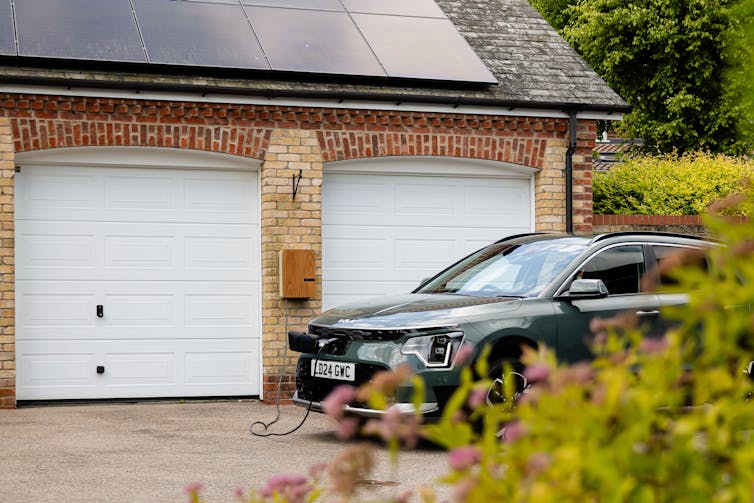
An electric car on a home driveway plugged into a charge point.
Not everyone can plug in at home.
Andersen EV/Shutterstock

Local chargers are also vital for taxi and delivery drivers who depend on their vehicles for work and make frequent short trips throughout the day. There are many professional drivers without access to workplace charging stations who need alternative local provision – something the Conservative government recognised in its 2022 EV charging strategy.

Ultimately, the transition to EVs should take a balanced approach that carefully considers social equity, economic viability and environmental impact.

Different locations serve different drivers

Motorway charging stations are commercially attractive to private investors, such as energy companies, specialist charging providers and car manufacturers, despite their higher upfront costs and complex requirements.

This is because service stations offer greater short-term revenue due to their ability to set premium prices. This is a result of there being limited alternatives and high demand for rapid charging, especially among long-distance travellers, and the willingness of EV drivers to pay for speed and convenience – unlike in more price-sensitive neighbourhood settings.

Unsurprisingly, the government found that the rapid deployment of motorway chargers in recent years has been largely driven by the private sector. Our research highlighted that these revenues could be enhanced by a broader range of retail, dining and relaxation amenities, turning the time waiting for a car to charge into a more productive and pleasurable experience.

Residential charging stations may not offer high profits per charge, but they typically require lower capital investment and benefit from consistent and predictable use. They are also suited to measures for reducing strain on the grid and balancing energy supply and demand.

These measures include tariffs that make it cheaper to charge EVs during off-peak hours, or technology that allows cars to feed electricity stored in batteries back into the grid. These features make them appropriate for public funding, where return on investment is measured not just in profit but in value for the public.

Considering that local EV charging serves those who do not have access to home charging and who drive for a living, the case for public funding is even stronger. These sorts of chargers make switching to an EV easier for different groups.

For example, safe and carefully placed public chargers could help more women switch to EVs – although our research suggests that, while “careful placement” might refer to residential areas, it doesn’t necessarily mean on streets. Well-lit car parks and community destinations are sometimes considered safer options.

A pebble-dash wall with an EV charge point on it.
Charging points outside a community centre in the Outer Hebrides, Scotland.
AlanMorris/Shutterstock

By helping EV drivers make frequent short trips, local chargers can also significantly reduce urban air pollution, emissions and noise, contributing to more liveable, healthier cities.

That said, motorway charging stations and those near key transport corridors still play a crucial role in a comprehensive national network, and public funding may be required in more peripheral and rural areas of the UK where installations lag and commercial interest is limited.

While long-distance trips are less frequent than short ones, they account for a disproportionately large share of energy use and emissions. Switching such trips to electric will be essential to reaching net zero goals.

It seems reasonable to prioritise public investment in local EV charging infrastructure to support a fairer EV transition, but this should not be limited to on-street chargers. Investment is needed in residential and non-residential areas, public car parks, community centres and workplaces.

Different types of EV charging are not interchangeable – all are needed to support the switch.


Don’t have time to read about climate change as much as you’d like?

Get a weekly roundup in your inbox instead. Every Wednesday, The Conversation’s environment editor writes Imagine, a short email that goes a little deeper into just one climate issue. Join the 45,000+ readers who’ve subscribed so far.


The Conversation

Labib Azzouz has received funding from the UK Research and Innovation via the UK Energy Research Centre and Innovate UK as part of the Energy Superhub Oxford (ESO) project.

Hannah Budnitz receives government funding from UK Research and Innovation grants via the Economic and Social Research Council and the Engineering and Physical Sciences Research Council. She has also previously received funding from Innovate UK and the Department for Transport.

ref. Where does the UK most need more public EV chargers? – https://theconversation.com/where-does-the-uk-most-need-more-public-ev-chargers-259623

Why frequent nightmares may shorten your life by years

Source: The Conversation – UK – By Timothy Hearn, Senior Lecturer in Bioinformatics, Anglia Ruskin University

Lightfield Studios/Shutterstock.com

Waking up from a nightmare can leave your heart pounding, but the effects may reach far beyond a restless night. Adults who suffer bad dreams every week were almost three times more likely to die before age 75 than people who rarely have them.

This alarming conclusion – which is yet to be peer reviewed – comes from researchers who combined data from four large long-term studies in the US, following more than 4,000 people between the ages of 26 and 74. At the beginning, participants reported how often nightmares disrupted their sleep. Over the next 18 years, the researchers kept track of how many participants died prematurely – 227 in total.

Even after considering common risk factors like age, sex, mental health, smoking and weight, people who had nightmares every week were still found to be nearly three times more likely to die prematurely – about the same risk as heavy smoking.

The team also examined “epigenetic clocks” – chemical marks on DNA that act as biological mileage counters. People haunted by frequent nightmares were biologically older than their birth certificates suggested, across all three clocks used (DunedinPACE, GrimAge and PhenoAge).

The science behind the silent scream

Faster ageing accounted for about 39% of the link between nightmares and early death, implying that whatever is driving the bad dreams is simultaneously driving the body’s cells towards the finish line.

How might a scream you never utter leave a mark on your genome? Nightmares happen during so-called rapid-eye-movement sleep when the brain is highly active but muscles are paralysed. The sudden surge of adrenaline, cortisol and other fight-or-flight chemicals can be as strong as anything experienced while awake. If that alarm bell rings night after night, the stress response may stay partially switched on throughout the day.

Continuous stress takes its toll on the body. It triggers inflammation, raises blood pressure and speeds up the ageing process by wearing down the protective tips of our chromosomes.

On top of that, being jolted awake by nightmares disrupts deep sleep, the crucial time when the body repairs itself and clears out waste at the cellular level. Together, these two effects – constant stress and poor sleep – may be the main reasons the body seems to age faster.

brain scans.
Your brain clears out waste when you sleep.
Teeradej/Shutterstock.com

The idea that disturbing dreams foreshadow poor health is not entirely new. Earlier studies have shown that adults tormented by weekly nightmares are more likely to develop dementia and Parkinson’s disease, years before any daytime symptoms appear.

Growing evidence suggests that the brain areas involved in dreaming are also those affected by brain diseases, so frequent nightmares might be an early warning sign of neurological problems.

Nightmares are also surprisingly common. Roughly 5% of adults report at least one each week and another 12.5% experience them monthly.

Because they are both frequent and treatable, the new findings elevate bad dreams from a spooky nuisance to a potential public health target. Cognitive behavioural therapy for insomnia, imagery-rehearsal therapy – where sufferers rewrite the ending of a recurrent nightmare while awake – and simple steps such as keeping bedrooms cool, dark and screen free have all been shown to curb nightmare frequency.

Before jumping to conclusions, there are a few important things to keep in mind. The study used people’s own reports of their dreams, which can make it hard to tell the difference between a typical bad dream and a true nightmare. Also, most of the people in the study were white Americans, so the findings might not apply to everyone.

And biological age was measured only once, so we cannot yet say whether treating nightmares slows the clock. Crucially, the work was presented as a conference abstract and has not yet navigated the gauntlet of peer review.

Despite these limitations, the study has important strengths that make it worth taking seriously. The researchers used multiple groups of participants, followed them for many years and relied on official death records rather than self-reported data. This means we can’t simply dismiss the findings as a statistical fluke.

If other research teams can replicate these results, doctors might start asking patients about their nightmares during routine check-ups – alongside taking blood pressure and checking cholesterol levels.

Therapies that tame frightening dreams are inexpensive, non-invasive and already available. Scaling them could offer a rare chance to add years to life while improving the quality of the hours we spend asleep.

The Conversation

Timothy Hearn does not work for, consult, own shares in or receive funding from any company or organisation that would benefit from this article, and has disclosed no relevant affiliations beyond their academic appointment.

ref. Why frequent nightmares may shorten your life by years – https://theconversation.com/why-frequent-nightmares-may-shorten-your-life-by-years-260008