How Jane Austen’s landscapes mapped women’s lives

Source: The Conversation – UK – By Nada Saadaoui, PhD Candidate in English Literature, University of Cumbria

Jane Austen’s novels are often remembered for their wit, romance and sharp social critique. Yet they are also profoundly geographical works: cities, seaside resorts, country estates and naval towns structure the possibilities and limitations of her heroines’ lives.

In Austen’s world, place equals power. Where a woman could walk, who she might encounter and how her movements were constrained often determined the course of her story. Tracing Austen’s fictional geographies – from Bath’s promenades to Brighton’s dangers, Portsmouth’s naval streets and the expansive grounds of Pemberley – reveals how these locations shaped women’s freedoms, reputations and choices.

For Catherine Morland in Northanger Abbey (1817), Bath is both exciting and bewildering. She is “about to be launched into all the difficulties and dangers of a six weeks’ residence in Bath”. The phrase parodies gothic terror while also capturing Catherine’s unpreparedness for the subtler hazards of urban sociability: flattery, pretence and manipulation.

Her early walks are tentative. She dutifully accompanies Mrs Allen to the Pump Room, where they “paraded up and down for an hour … looking at everybody and speaking to no one”. The scene highlights both the possibilities and frustrations of urban walking: exposure to fashionable society without any guarantee of genuine connection.


This article is part of a series commemorating the 250th anniversary of Jane Austen’s birth. Despite having published only six books, she is one of the best-known authors in history. These articles explore the legacy and life of this incredible writer.


Anne Elliot in Persuasion (1817) moves through Bath with greater clarity. Where Catherine mistakes politeness for affection, Anne recognises the city as a site of display and competition. For her, Bath represents confinement. She longs for the lawns and groves of Kellynch Hall, where she once walked freely: “She disliked Bath, and did not think it agreed with her; and Bath was to be her home.”

Bath’s crowded rooms and choreographed promenades stand in stark contrast to the restorative rural landscapes Anne loves. Through both heroines, Austen portrays the city as a stage on which women must learn to navigate visibility, reputation and choice.

Brighton: risk, display and reputation

If Bath is a space of display, Brighton brims with danger. As a fashionable seaside resort, it promised excitement and opportunity, but for young women it carried real risk.

In Pride and Prejudice (1813), 15-year-old Lydia Bennet imagines Brighton as paradise: “In Lydia’s imagination, a visit to Brighton comprised every possibility of earthly happiness … the streets of that gay bathing-place covered with officers.”

Lydia demands to go to Brighton in the 1995 adaptation of Pride and Prejudice.

Lydia’s giddy enthusiasm blinds her to danger, and the fantasy ends in disaster. Allowed too much freedom, she elopes with a cad, Wickham, disgracing her family. Yet after the marriage is hastily arranged, she boasts: “I only hope they may have half my good luck. They must all go to Brighton. That is the place to get husbands.”

Lydia’s naïve pride underscores Austen’s critique of Brighton as a site of social peril. This negative portrayal was not accidental: Brighton was strongly associated with the Prince Regent and his notorious lifestyle, whose extravagance Austen quietly mocked, despite him being a big fan. In her writing, the resort embodies a world of unregulated freedom and moral laxity – a place where allure could swiftly lead to ruin.

Portsmouth: naval life and restricted mobility

In Mansfield Park(1814), Fanny Price’s return to her family home in Portsmouth reveals another urban geography, shaped not by leisure but precarity.

This naval town, sustained by war and colonial trade, is crowded, noisy and unstable. Unlike the protected grounds of Mansfield, where walking fosters reflection, Portsmouth’s streets are chaotic and male-dominated, exposing women to scrutiny and risk.

Henry Crawford visits Fanny in Portsmouth in the 1999 film of Mansfield Park.

Fanny recoils at her new surroundings: “The men appeared to her all coarse, the women all pert, everybody under-bred.” Walking here is not liberating but “strange, awkward, and distressing״.

When Henry Crawford suggests going for a walk with Fanny, it is treated as rare and functional. Mrs Price admits her daughters “did not often get out” unless “they had some errands in the town”. Henry, wealthy and male, strolls without restriction. Fanny and her sister Susan, by contrast, can only walk under supervision.

Austen uses Portsmouth to highlight how class, gender and geography intersect to restrict women’s mobility and reinforce inequality.

Pemberley: moral geography and possibility

By contrast, the countryside walks at Pemberley in Pride and Prejudice offer Elizabeth Bennet a landscape of harmony and possibility.

Austen describes “a large, handsome stone building, standing well on rising ground״, surrounded by woods, streams and “great variety of ground”. Elizabeth and her aunt and uncle gradually ascend through “a beautiful wood stretching over a wide extent” before their first view of the house. This prompts her famous reflection: “She had never seen a place for which nature had done more … At that moment she felt that to be mistress of Pemberley might be something!”

Lizzie visits Pemberley in the 2005 adaptation of Pride and Prejudice.

Unlike the artificial grandeur of other estates, Pemberley harmonises with its natural setting, reflecting Darcy’s character. Its “natural importance” conveys authenticity rather than display. Walking here is exploratory and expansive, offering shifting perspectives that mirror Elizabeth’s changing emotions.

Pemberley becomes moral geography: a space whose openness and balance anticipate a union founded on respect, responsibility and freedom.

Across her fiction, Austen maps women’s lives through the spaces they inhabit and traverse. Bath exposes the pressures of visibility, Brighton the risks of temptation, Portsmouth the limits of mobility and Pemberley the possibilities of harmony. Walking, whether through crowded assembly rooms, along seaside promenades or across open parkland, becomes a measure of female agency.

Austen’s mapped worlds remind us that geography is never neutral. It shapes choices, relationships and power. Her novels continue to resonate because they ask a question still urgent today: where, and how freely, can women move?


Looking for something good? Cut through the noise with a carefully curated selection of the latest releases, live events and exhibitions, straight to your inbox every fortnight, on Fridays. Sign up here.


The Conversation

Nada Saadaoui does not work for, consult, own shares in or receive funding from any company or organisation that would benefit from this article, and has disclosed no relevant affiliations beyond their academic appointment.

– ref. How Jane Austen’s landscapes mapped women’s lives – https://theconversation.com/how-jane-austens-landscapes-mapped-womens-lives-266878


The Twits: new Netflix adaptation brings Roald Dahl’s magic to life

Source: The Conversation – UK – By Oliver Gingrich, Programme Lead BA (Hons) Animation, University of Greenwich

A film adaptation of Roald Dahl’s classic children’s book The Twits has been promised for more than two decades. The Netflix animation plays to the strengths of the beloved classic, while adapting it to present times. Dark humour, many pranks, twists and turns ensure an enjoyable visual feast.

The film was written, directed and produced by the Oscar-nominated film-maker Phil Johnston, also known for his animated films Wreck-it Ralph (2012) and Zootopia (2016). The Twits is a fast-paced, whirlwind animation that speaks to audiences of all ages.

In this contemporary adaptation, the vindictive Mr and Mrs Twit (Johnny Vegas and Margo Martindale) are joint owners of the dilapidated amusement park Twitlandia. In a reinterpretation from the original plot, the park is now located in America, and its attractions include rides made out of toilets. The derelict rides are powered by the Muggle-Wumps – colourful monkey-like creatures that are held prisoner by the Twits.

The Twits spread their spite towards each other all over their hometown. When Twitlandia gets shut down by the police, they choose to take revenge on the city. Their evil scheming is uncovered by two unlikely heroes, orphans Beesha (Maitreyi Ramakrishnan) and Bupsie (Ryan Anderson Lopez), who set out to unmask the Twits and free the Muggle-Wumps from their misery.

The trailer for The Twits.

The story leans on the original while reimagining it for global audiences, combining Dahl’s dark humour with a contemporary tale of public deceit. The Twits remain as intransigently nasty and detestable as in the original book, in keeping with Dahl’s fairytale juxtaposition of good versus evil.

Animation artistry

Some critics have taken issue with the Americanisation of the plot. But from an animation perspective, the film’s craftsmanship and collaborative 3D animation expertise still warrant recognition.

The environment design is complex and visually eclectic. The lighting design, meanwhile, is successfully atmospheric and supports the moody and dark twilight present throughout most of the story world.

Though it has been created through CGI, at first glance the film looks like a stop-motion production. The texture of the animation appears almost realistic if not quite painterly, with an aesthetic reminiscent of the 2014 stop-motion film, Box Trolls. The character designs make original use of what is known as shape language – the effective use of simple shapes in character design to communicate both personality and emotion to the viewer.

A fast-paced story like The Twits would be difficult to tell other than through CGI animation. Set pieces such as a city sinking in hot dog grease, a house being displaced by an angry mob and the magic of the Muggle-Wumps require a wealth of technical animation skills.

The magic of animated feature films stems from a substantial team effort. And a successful animation team requires a supportive ecosystem to thrive. The talent list for this film includes more than 350 highly technically skilled artists across cinematography and layout, 3D modelling, art direction, 3D character design, rigging, 3D environment design, 3D lighting, sound, rendering and other fields.

The Twits was produced by the British animation company Jellyfish Pictures before its animation studio closed its doors forever earlier this year. Against the backdrop of a volatile animation industry landscape, it remains important to ensure a favourable climate for animation companies in the UK through continued access to funding, tax breaks and support for skills development in animation practices.

The UK has a longstanding history in children’s animation from the Woodentops in the 1950s to the many iterations of Noddy’s adventures, to Aardman Animation’s many successes, most notably Wallace and Gromit. The UK remains a leading global centre for children’s animation. It is therefore no surprise that the UK was at the heart of the animation pipeline for The Twits.

Animation UK estimates the UK Animation industry’s value at £1.7 billion, with a workforce of 16,000 and over 800 animation production companies. While there are economic challenges, the sector continues to be fuelled by a diverse, highly skilled workforce in which 93% hold a degree. Regional centres such as the University of Greenwich or the National Centre for Computer Animation provide animation degrees across 2D and 3D animation, in support of a talent pool for animated features such as The Twits.

As an international co-production, The Twits points to the fast-paced changes and challenges the animation industry is experiencing globally. But despite such economic headwinds, The Twits is a case in point for just what a labour of love an animated feature film is.


Looking for something good? Cut through the noise with a carefully curated selection of the latest releases, live events and exhibitions, straight to your inbox every fortnight, on Fridays. Sign up here.


The Conversation

Oliver Gingrich receives funding from Arts and Humanities Research Council.

Min Young Oh does not work for, consult, own shares in or receive funding from any company or organisation that would benefit from this article, and has disclosed no relevant affiliations beyond their academic appointment.

– ref. The Twits: new Netflix adaptation brings Roald Dahl’s magic to life – https://theconversation.com/the-twits-new-netflix-adaptation-brings-roald-dahls-magic-to-life-267759

Budget 2025: what should Rachel Reeves do about tax? Join our live event

Source: The Conversation – UK – By Sarah Reid, Senior Business Editor, The Conversation

Sean Aidan Calderbank/Shutterstock

It is the economics version of music’s “difficult second album”. When the UK chancellor, Rachel Reeves, steps up to deliver her follow-up budget on November 26, she faces some daunting choices.

Now that the Office for Budget Responsibility – the UK’s’s independent financial watchdog – is expected to downgrade its predictions for UK prosperity, Reeves is widely anticipated to put up taxes again (something she herself alluded to recently). But beyond that, few people agree on the best way for her to do it.

The British Chambers of Commerce is calling this a “make-or-break budget”, demanding a tax approach that incentivises growth after Reeves hit employers with a national insurance (NI) rise last year. Equally, no one expects the chancellor to break Labour’s manifesto pledge and raise one of the “big three”: income tax, VAT or employee NI contributions.

So where does that leave her? And what would be best for Britain’s (and Labour’s) prospects of revival – not just in the short term, but for the long-term prosperity of those people, young and old, who find themselves struggling with the cost of living, spiralling rents and precarious employment?

To help us understand the complexities of this key political and socioeconomic moment, The Conversation and the LSE International Inequalities Institute have teamed up for a special pre-budget, online event on Tuesday, November 18 from 5pm-6.30pm GMT – in which leading experts from the worlds of business, taxation and government policy will tackle all these questions and more.

The experts who will join us for this event, which I will be chairing, are:

Headshot of Helen Miller, IFS director

★ Helen Miller (pictured), director of the Institute for Fiscal Studies (IFS), the leading UK thinktank whose pre-budget analyses always offer some important clues to the chancellor’s thinking.

★ Mike Savage, co-founder and former director of the International Inequalities Institute, and one of the UK’s leading voices on the relationship between wealth and inequality.

★ Emma Chamberlain, one of the UK’s leading tax experts working in London’s Pump Court Tax Chambers. She was a co-author of the Wealth Tax Commission’s 2020 final report on the pros and cons of an annual or one-off UK wealth tax.

★ Maha Rafi Atal, Adam Smith senior lecturer in political economy at the University of Glasgow and an award-winning business journalist.

Questions about wealth and inequality

One of the key aspects of our discussion will be how the chancellor could address the UK’s national and private wealth stores – not merely by changing tax rates, but by rethinking some antiquated taxes altogether. This could mean, for example, transforming Britain’s council tax system (as 13 of Reeves’ fellow MPs have called for), scrapping stamp duty in favour of a tax on some first-home sales, or releasing the triple lock on pensions.

Another option backed by many experts is a one-off windfall tax on existing wealth. In the UK, nearly 60% of total wealth is now held by the richest 10% of private individuals, whereas the bottom half of the UK population hold only around 5% of the total wealth between them. It is a startling rise in inequality which, according to our guest Mike Savage, means that:

The current debate about wealth taxation should not be framed purely in technical terms – whether it is an efficient way of raising funds for the public purse without damaging UK economic prosperity – but needs to be seen as a question of values and common purpose.

If you’d like to join us for our online expert discussion, please sign up for free here. And if you have a question you’d like our experts to answer, email it now to mybudgetquestion@theconversation.com.


Budget 2025 event advert with the chancellor's famous red briefcase.

The Conversation and LSE’s International Inequalities Institute have teamed up for a special pre-budget, online event on Tuesday, November 18 from 5pm-6.30pm. Join leading experts from the worlds of business, taxation and government policy as they discuss the difficult policy choices facing Chancellor Rachel Reeves in her upcoming budget.

Sign up for free here


The Conversation

– ref. Budget 2025: what should Rachel Reeves do about tax? Join our live event – https://theconversation.com/budget-2025-what-should-rachel-reeves-do-about-tax-join-our-live-event-267878

Stroke can happen to anyone – an expert explains how to spot the signs and act fast

Source: The Conversation – UK – By Siobhan Mclernon, Senior Lecturer, Adult Nursing and co-lead, Ageing, Acute and Long Term Conditions. Member of Health and Well Being Research Center, London South Bank University

Pormezz/Shutterstock

Stroke can happen to anyone, at any age and at any time. The number of strokes among younger adults under 55 is rising worldwide, and every day in the UK around 240 people experience the traumatic and life-changing effects of a stroke.

A stroke is sometimes described by doctors and stroke awareness campaigns as a “brain attack” to help people understand that a stroke is as urgent and life-threatening as a heart attack. Both happen when blood flow is suddenly cut off, depriving vital tissue of oxygen and nutrients.

There are two main types of stroke. In an ischaemic stroke, blood flow to the brain is blocked, usually by a clot in a blood vessel. Without oxygen, brain cells begin to die, which can cause loss of movement, speech, memory or even death. In a haemorrhagic stroke, a blood vessel inside the brain bursts. This is often due to high blood pressure, which weakens blood vessel walls and makes them more likely to rupture.

Treating a stroke is a race against time because, as doctors say, “time is brain”: the longer the brain is starved of blood and oxygen, the more brain cells die. Treatments that can dissolve or remove a clot in an ischaemic stroke or lower dangerously high blood pressure in a haemorrhagic stroke must be given quickly to limit brain damage.

Anyone with a suspected stroke should be taken by emergency services directly to a specialist stroke unit. Patients admitted to these dedicated units tend to have better outcomes because they receive expert care from doctors trained specifically to manage stroke.

How to recognise the signs of stroke

A lack of early recognition of stroke symptoms is linked to higher mortality rates. The acronym “Fast” (Face, Arm, Speech, Time) has been a cornerstone of public stroke awareness for more than 20 years. It was developed as a quick screening tool for use before hospital admission, helping people recognise the signs of a stroke and seek urgent medical help.

Fast highlights the most common warning signs of stroke, but some strokes present differently. To make sure fewer cases are missed, additional symptoms such as dizziness, visual changes and loss of balance have been added, creating the Be Fast acronym.

B = Balance problems. A sudden loss of balance or coordination, dizziness, or a sensation that the room is spinning.

E = Eyes. Sudden blurred vision, loss of vision in one or both eyes, double vision, or difficulty focusing.

F = Face. Facial weakness or unevenness, often with a droop on one side of the mouth or eye.

A = Arm or leg weakness or numbness, often affecting one side of the body.

S = Speech difficulty, slurred speech, trouble finding words, or an inability to speak clearly.

T = Time to call an ambulance. Make a note of when symptoms began, as this helps doctors decide which treatment is most effective.

Other warning signs

Stroke symptoms often develop suddenly and can vary from person to person. Some people, particularly women, may experience stroke symptoms that are not included in the Be Fast acronym. Women are less likely to be recognised as having a stroke because their symptoms can differ from men’s. These may include sudden fatigue, confusion, nausea, fainting, or general weakness rather than clear paralysis or slurred speech.


Read more:
Paramedics are less likely to identify a stroke in women than men. Closing this gap could save lives – and money


Other possible signs for any person include a severe headache with no clear cause, vomiting, difficulty swallowing, agitation, or sudden memory loss. In some cases, a person may collapse, lose consciousness, or have a seizure.

Sometimes stroke symptoms last only a few minutes or hours before disappearing completely within 24 hours. This may indicate a Transient Ischaemic Attack (TIA), sometimes called a “mini stroke.” A TIA happens when the blood supply to the brain is briefly interrupted, causing temporary symptoms. The difference between a TIA and a full stroke is that the blockage clears on its own before permanent brain damage occurs. However, a TIA is still a medical emergency and a serious warning sign that a major stroke could soon follow.

Advances in technology

Telemedicine has become an important tool in making rapid diagnosis and early treatment possible. By using secure video links, paramedics can consult with hospital stroke specialists in real time, even while still at the scene or en route to hospital. This allows early diagnosis, faster decision making and immediate preparation for treatment once the patient arrives.

For example, some ambulances now operate as mobile stroke units equipped with brain imaging scanners and clot-busting medicines. In London, video calls between senior doctors and paramedics at emergency scenes have helped speed up care and direct patients to the most appropriate treatment centre.

While telemedicine connects specialists to paramedics on the move, other tools are bringing medical help directly to patients within moments of a 999 call. The GoodSAM app was first developed to improve survival after cardiac arrest by alerting nearby trained responders to begin CPR before an ambulance arrives. The platform has since expanded to support other life-threatening emergencies, including stroke.

When someone calls for help, the system identifies clinically trained staff or volunteers in the area and dispatches them to the scene while paramedics are on their way. These responders can provide rapid assessment, basic first aid and reassurance to the patient and family, and can help ensure that key information such as the time symptoms began is ready for the arriving medical team. By combining digital technology, trained volunteers and rapid communication, the app is helping bridge the critical gap between the onset of symptoms and hospital treatment: the period where, quite literally, every minute matters.

A stroke can strike suddenly and without warning, but quick recognition and immediate medical attention can mean the difference between life and death. Learning the Be Fast signs and acting immediately could save a life, protect the brain and preserve a person’s ability to speak, move and think.

The Conversation

Siobhan Mclernon does not work for, consult, own shares in or receive funding from any company or organisation that would benefit from this article, and has disclosed no relevant affiliations beyond their academic appointment.

– ref. Stroke can happen to anyone – an expert explains how to spot the signs and act fast – https://theconversation.com/stroke-can-happen-to-anyone-an-expert-explains-how-to-spot-the-signs-and-act-fast-266039

From the cold war to today, why espionage cases are so difficult to prosecute

Source: The Conversation – UK – By Philip Murphy, Director of History & Policy at the Institute of Historical Research and Professor of British and Commonwealth History, School of Advanced Study, University of London

The collapse of the prosecutions of Christopher Cash and Christopher Berry is a reminder that bringing charges for espionage can be an extremely risky business, particularly in western democracies. Cash and Berry were accused of spying for China, but the CPS dropped the case before it could go to trial. They deny the charges against them.


Read more:
How Britain’s weakened global position may have pulled it into a Chinese spying scandal


Espionage cases have caused headaches for UK governments for decades. Harold Macmillan, who as prime minister from 1957 to 1963 suffered more than his fair share of embarrassment from them, complained to his biographer: “You can’t just shoot a spy as you did in the war.”

Instead, there would be a “great public trial”, during which “the Security Services will not be praised for how efficient they are but blamed for how hopeless they are. There will be an enquiry … a terrible row in the press, there will be a debate in the House of Commons and the Government will probably fall.”

Macmillan was describing the case of John Vassall, whose 1962 conviction for spying caused a major political scandal. But his words resonate powerfully today.

Espionage trials risk revealing the sometimes highly confidential methods by which evidence had been gathered against the accused. And in some cases, the evidence itself is too circumstantial to prove guilt beyond reasonable doubt.

One of the major postwar sources of secret information about Moscow’s agents were the Venona documents. These were Soviet messages partially decrypted by US intelligence officers. But the Venona project remained a closely guarded secret until the 1980s, and only officially made public in 1995. As such, it proved necessary to obtain other forms of evidence to convict some of those incriminated by this source.

In the case of Julius and Ethel Rosenberg, accused of passing nuclear secrets to the USSR, this took the form of a confession by Ethel’s brother, David Greenglass. Nevertheless, the couple’s execution in the US in 1953 drew condemnation from across the world, and Ethel’s conviction remains controversial.

It was only possible for British courts to convict another nuclear spy identified by Venona, Klaus Fuchs, because patient interrogation by MI5 officer William Skardon eventually led him to confess.

Immunity or prosecution

The current MI5 chief, Ken McCallum, has publicly distanced himself from the collapse of the cases against Cash and Berry, and the Security Service clearly hopes that the 2023 National Security Act will make future prosecutions much easier. But historically, the Security Service has sometimes been more than happy for suspects to avoid a trial in return for cooperation.

In 1961, MI6 officer George Blake was convicted of espionage for the USSR under section one of the 1911 Official Secrets Act. However, concerns over the weakness of the evidence against him led to questions about whether the case could or should be brought to court.

The authorised history of MI5, (2009) revealed that intelligence chiefs were prepared to contemplate offering Blake immunity from prosecution, in return for a confession. Luckily for them, he confessed before any such offer was made. He was sentenced to 42 years in prison, but managed to escape in 1966 with the help of two peace campaigners. He lived the rest of his life in Moscow.

Two decades later, similar concerns surrounded the case of Michael Bettaney, a disillusioned MI5 officer suspected of passing secrets to the USSR. As they interrogated Bettaney, his colleagues were anxiously aware that they did not have enough evidence against him that could be used in court. Potentially, he could simply walk away and even leave the country. Again, luckily, Bettaney broke under questioning, confessed and was sent to prison.

Political headaches

Aside from questions of evidence, the British establishment traditionally shied away from anything – criminal trials included – that cast light on the secret world of intelligence gathering.

Writing in 1985, military historian Michael Howard likened the prevailing attitude to that towards intramarital sex: “Everyone knows it goes on and is quite content that it should, but to speak, write or ask questions about it is regarded as extremely bad form.”

When the subjects of sex and espionage merged, as they did explosively in 1963 with allegations that the war minister John Profumo had shared a mistress with a Russian spy, they created a political shock which left Macmillan’s administration mortally damaged.

The following year, it became clear to the intelligence community that Anthony Blunt, the surveyor of the queen’s pictures in the royal household, was the “fourth man” in the Cambridge Five spy ring. The Tory government of Alec Douglas-Home gladly accepted the advice of the heads of MI5 and MI6 that Blunt should be offered immunity from prosecution in return for his full confession, and his treachery concealed from the British public.

The arrangement spared Douglas-Home a scandal on the scale of Profumo. But after the public unmasking of Blunt in 1979, the embarrassing task of defending the offer of immunity was left to Margaret Thatcher.

Frequently in the past, the urge to punish spies has been subordinated to broader considerations of the national interest. Much comment in the case of Cash and Berry has focused on the supposed difficulties in defining China as an “enemy”. However, the easy cold war distinction between enemies and allies has been breaking down.

The British government now regularly finds itself having to maintain effective diplomatic and trading relationships with countries that are disagreeable or positively malign. There is much about the current case we do not know and may never know. But if it turned out that influential figures in the British government were reluctant to endanger relations with China in the interests of prosecuting two fairly low-grade alleged Chinese agents, I doubt whether anyone would be very surprised.


Want more politics coverage from academic experts? Every week, we bring you informed analysis of developments in government and fact check the claims being made.

Sign up for our weekly politics newsletter, delivered every Friday.


The Conversation

Philip Murphy has received funding from the AHRC. He is a member of the European Movement UK.

– ref. From the cold war to today, why espionage cases are so difficult to prosecute – https://theconversation.com/from-the-cold-war-to-today-why-espionage-cases-are-so-difficult-to-prosecute-267674

Trump’s heated White House meeting with Zelensky shows how well Putin is playing the US president

Source: The Conversation – UK – By Stefan Wolff, Professor of International Security, University of Birmingham

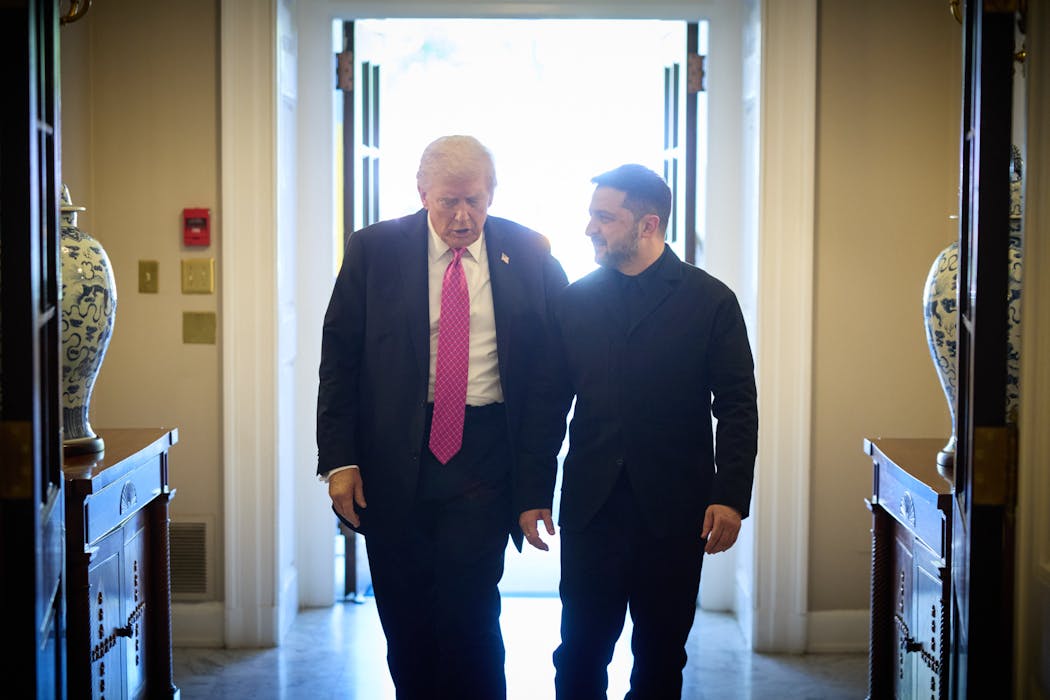
On-again, off-again relatonship: Donald Trump and Volodymyr Zelensky. Press service of the president of Ukraine

Within 24 hours last week Donald Trump performed yet another pivot in his approach to the Russian war against Ukraine. It’s become a familiar pattern of behaviour with the US president. First he expresses anger and frustration with his Russian counterpart, Vladimir Putin. Then he threatens severe consequences.

And finally – usually after some contact with the Russian president – he finds some imaginary silver lining that, in his considered view alone, justifies backing down and essentially dancing to the Russian dictator’s tune again.

The latest iteration of his by now very predictable sequence of events has unfolded as follows. Back in September, while he was still busy pushing his ultimately unsuccessful campaign to be awarded the Nobel peace prize, the US president began to envisage a Ukrainian victory against Russia. This, he said, would involve Kyiv reclaiming all territory lost to Russia’s aggression since the illegal annexation of Crimea in 2014.

To make this happen, there was suddenly talk of US deliveries of Tomahawk missiles to Ukraine. Access to these missiles would enable strikes against Russian military assets and energy infrastructure far beyond the current reach of most of Ukraine’s weapons. Trump and the Ukrainian president, Volodymyr Zelensky, spoke twice by telephone on October 11 and 12 to discuss the details. A deal was expected to be announced after they met in the White House on October 17.

Yet, the day before that meeting, Trump, apparently at the Kremlin’s request, took a phone call from Putin. Over the course of two hours of flattery and promises of reinvigorated trade relations, the Russian president managed to get Trump to back off his threat to supply Ukraine with Tomahawks.

This message was promptly delivered the following day to the Ukrainian delegation led by Zelensky. While clearly not as disastrous as their first encounter in the White House in February this year, Ukraine’s humiliation was clear.

Not only were Tomahawks taken off the table, but Kyiv and its European allies are essentially back to square one and the very real possibility of a deal between Putin and Trump. Or rather two deals to be hammered out by senior officials first and then sealed at another Trump-Putin summit in Budapest.

The first deal would likely be on the broader terms of a peace settlement. After the meeting, Trump posted on his social media channel that Russia and Ukraine should simply accept the current status quo and stop the fighting. With Trump thus appearing keen – again – to stop the fighting in Ukraine on the basis of a compromise between Russia and Ukraine means that Ukraine would lose as much as 20% of its internationally recognised territory. This is something that Kyiv and its European allies have repeatedly said is unacceptable.

The second deal would be on resetting relations between Washington and Moscow. This is something that Trump has been keen on for some time and suggests that more severe sanctions on Russia and its enablers, including India and China, are unlikely to be forthcoming any time soon.

Before Zelensky’s trip to Washington, there appeared to be some genuine hope that a ceasefire could be established as early as November. But Trump’s arrangements with Putin do not mention a ceasefire. Instead they make an end to the fighting conditional on a deal between the US and Russian presidents, which Zelensky is then simply expected to accept.

This will put further pressure on Ukraine, which suffers from daily attacks against critical infrastructure and is particularly harmful to the country’s economy and civilian population and foreshadows another difficult winter.

Russia continues its push for territory

So far, so bad for Ukraine. But this was not an accidental outcome that could have gone the other way, depending on the whims of Trump. Ever since the US president appeared to shift gear in his approach to the war in late September, the Kremlin carefully prepared the ground for a rapprochement between the two presidents – with a mixture of concern, threats and a good dose of flattery.

The goal of this rapprochement, however, is not a better peace deal for Russia. Putin surely knows this is unrealistic. Rather, it appears that the Kremlin’s main goal was buying itself more time to continue ground offensive in the Donbas.

ISW map showing state of the confict in Ukraine, October 19 2025.
State of the confict in Ukraine, October 19 2025.
Institute for the Study of War

This is best achieved by preventing the US from fully backing the position of Ukraine and its European allies. In this context, the choice of venue for a potentially deal-clinching summit between Trump and Putin is also interesting.

It will not be possible for Putin to travel to Budapest without flying through Nato airspace and through the airspace of countries that are at least candidate states for EU membership. This will put serious pressure on the EU and Nato to allow Putin passage or otherwise be seen as obstructing Trump’s peacemaking efforts – a narrative that the Kremlin has been peddling for some time, part of its strategy to disrupt the transatlantic relationship.

On the other hand, Trump’s latest turnaround – difficult as it may be for Kyiv to stomach – does not bring Ukraine closer to defeat. In Ukraine, mobilisation is in full swing and domestic arms production is increasing. Ukraine is further helped by the commitment of more than half of Nato’s member states to supply Kyiv with more US weapons.

There are three key takeaways from the diplomatic flurry over the past few weeks.

First, for all of Putin’s bluster, the threat of supplying Ukraine with Tomahawk missiles clearly had an effect. Putin made a move to reach out to Trump, thereby exposing an obvious vulnerability on Russia’s part. Second, and this barely needed confirmation, Trump is not a dependable ally of Ukraine or within the transatlantic alliance. He clearly has not given up on the possibility of a US-Russia deal, including one concluded behind the back and at the expense of Ukraine and European allies.

Finally, Zelensky may be down again after his latest fruitless encounter with Trump, but Ukraine is definitely not out. After all, Trump was right that Russia is a bit of a paper tiger and Ukraine can still win this war, or at least negotiate an acceptable settlement. Until Europe steps up, the key to this remains in the White House.

The Conversation

Stefan Wolff is a past recipient of grant funding from the Natural Environment Research Council of the UK, the United States Institute of Peace, the Economic and Social Research Council of the UK, the British Academy, the NATO Science for Peace Programme, the EU Framework Programmes 6 and 7 and Horizon 2020, as well as the EU’s Jean Monnet Programme. He is a Trustee and Honorary Treasurer of the Political Studies Association of the UK and a Senior Research Fellow at the Foreign Policy Centre in London.

Tetyana Malyarenko does not work for, consult, own shares in or receive funding from any company or organisation that would benefit from this article, and has disclosed no relevant affiliations beyond their academic appointment.

– ref. Trump’s heated White House meeting with Zelensky shows how well Putin is playing the US president – https://theconversation.com/trumps-heated-white-house-meeting-with-zelensky-shows-how-well-putin-is-playing-the-us-president-267760

Hamas turns to executions as it tries to establish a monopoly on force in Gaza

Source: The Conversation – UK – By Tahani Mustafa, Lecturer in International Relations, King’s College London

An uneasy ceasefire is still in place in Gaza despite Israeli strikes on what it called “Hamas terror targets” in response to what the Israel Defense Forces said here rocket attacks on its positions.

But there appears to be continuing violence between Hamas fighters and members of various armed clans that has increased since the withdrawal of Israel from parts of Gaza. In the days following the ceasefire agreement being struck on October 13. Most notably, videos circulated which appeared to show Hamas executing members of some of the clans. The killings appear to have been brutal and conducted without even the pretence of an impartial legal process.


Read more:
Hamas is battling powerful clans for control in Gaza – who are these groups and what threat do they pose?


Speaking to my contacts in Gaza developed through 15 years of research, including one employee of an international organisation who has advised Hamas and the Palestinian Authority, it appears many Gazans may support these executions. One source in the office of the security coordinator in Gaza told me this week that many people in Gaza believe this show of force could pave the way for the reestablishment of law and order and the effective distribution of aid.

In part, this reflects the situation in Gaza since Israel began its assault two years ago, after the Hamas attack of October 7 2023. That day saw an estimated 3,000 Hamas fighters pour across the borders into southern Israel, killing about 1,200 people and taking 250 hostages.

The months and years that followed saw Israel launched an overwhelming military assault on Gaza, killing more than 68,000 and wounding more than 170,000, according to estimates from the Gaza health ministry. Israel’s declared intention was the destructio of Hamas as both a government and a military force. The civilian population of Gaza witnessed growing chaos and lawlessness as the conflict led Hamas forces into hiding.

But a significant number have survived. AN estimated 7,000 Hamas fighters have now been deployed across the territory. In seeking to crack down publicly and brutally on the most serious forms of lawlessness Gaza has seen over the last two years – including murders, revenge killings, trafficking, kidnappings, robbery, theft and drug dealing – Hamas appears to be demonstrating its resolve to establish an effective monopoly on the use of force in Gaza.

Hamas faced a similar situation in 2007, when it abruptly inherited governance of the Gaza Strip. Fatah, the Palestinian faction that has controlled the Palestinian Authority (PA) since its creation in 1994, moved with the backing of the US, against the then newly elected Hamas government.

After a protracted struggle, Hamas lost control over the West Bank, but expelled Fatah from Gaza. In Gaza, Hamas inherited an administration in the process of being rebuilt after its virtual destruction.

The group addressed the yawning security vacuum and lawlessness in a way similar to the way it appears to be doing now. It employed brutality establish a monopoly on the use of force. It disarmed the various armed factions and established a civil administration. Its administration was based on that of the PA, but was generally recognised to be more effective and less corrupt than the PA and its security forces.

It worked with other political factions in the Strip, including Fatah, in rebuilding Gaza’s administration. Many of the civil servants, judges and even police it employed were not members of Hamas – and were not required to become so.

This is not to say there weren’t limits to important freedoms under Hamas rule – there were. But these were arguably no more authoritarian than those imposed by Fatah in the West Bank.

Who are the clans?

At the centre of the criminality in Gaza today are armed gangs, whose members are often drawn from the territory’s powerful clans. These clans are extended families that have historically played leading roles in their communities – but have also, at times, operated like local mafia.

During the recent conflict, clans have settled old scores with violence. Gangs associated with the clans have expanded into racketeering, drug dealing, kidnapping, robbery and extortion.

Israeli prime minister Benjamin Netanyahu has confirmed his country has armed some of the gangs, following reports of Israeli forces handing over weapons directly or leaving weapons for them to claim hoping they would use them against Hamas. Hamas has made much of this, characterising the men it publicly executed as “collaborators”. The largest assembly of clans, the Palestinian Tribal Committee, has supported Hamas’s crackdown and condemned the criminality of the gangs.

Hamas is reported to have offered an amnesty deal to the clans and gangs, calling on them to surrender their weapons and for any involved in criminality to hand themselves in to face trial. Thus far, the Dogmush and Majaydah clans have complied, days after 26 members of the Dogmush were killed in clashes with Hamas.

US approval

While the US president, Donald Trump, has said that Hamas has to disarm “within a reasonable period of time”, he has also stated that he has given them a green light to reestablish law and order in the Strip “for a period of time”. Flying back to the US from Egypt on October 14, Trump told reporters: “Well, they [Hamas] are standing because they do want to stop the problems, and they’ve been open about it, and we gave them approval for a period of time.”

Trump: Hamas can resore law and order in Gaza.

It is true that order needs to be restored if aid is to reach those who need it. It is also essential if some form of civil administration to provide for the most basic needs of Gazans is to be reestablished in the interim, before a final deal on what to do with Gaza, Hamas and the Israeli occupation of Gaza is agreed.

But by arming these clans, Israel has arguably further destabilised the territory and contributed to the discord and civil strife that threatens to overwhelm the Gaza Strip as Hamas conducts its brutal campaign. The worse things get, the more likely that Gazans will be willing to accept Hamas’s form of order, based not on law but on extrajudicial violence.

The Conversation

Tahani Mustafa is affiliated with the European Council on Foreign Relations (ECFR)

– ref. Hamas turns to executions as it tries to establish a monopoly on force in Gaza – https://theconversation.com/hamas-turns-to-executions-as-it-tries-to-establish-a-monopoly-on-force-in-gaza-267558

Could your walk be a signal about your ability to win a fight?

Source: The Conversation – UK – By Connor Leslie, Assistant Professor in Criminology, Northumbria University, Newcastle

Your walk carries information about how much of a threat you might pose. Wirestock Creators/Shutterstock

Humans have been fighting each other since the earliest stages of our species’ history.

Scientists believe that these fights changed how we evolved, particularly men. This is known as intrasexual selection, where competition between members of the same sex shape how they evolve. My new research raises the possibility we may have evolved to detect clues about whether a man is dangerous from the way he walks.

As it was men who were more likely to engage in physical fights in our early history, it would be beneficial for them evolve to win and survive a fight. Men are still more likely to be the perpetrator of violent crimes, and men account for a higher proportion of victims of violence when the perpetrator is a stranger.


Read more:
How much do we actually know about the psychology of violence?


Men on average not only have 80% more arm muscle mass and 50% more lower body muscle mass than women but also tougher skulls to help them survive their fights.

You may win a fight, but if you win with a broken jaw, it will not feel like much of a victory when you try and eat. So evolving the ability to tell if someone can hurt us would have allowed our ancestors to ready themselves for a fight or try and avoid the confrontation if the risk seemed too high.

And it seems that we are good at this, according to research over the last two decades. In a 2009 study participants from several countries including Bolivia, Argentina and the US were asked to look at photographs of men’s faces and bodies.

They could tell when a man was strong, even from just looking at the face pictures. When they looked at photographs of women, the participants could still assess strength, but less accurately compared to the photographs of men.

Voices hold important information about other people’s strength too. A 2010 study
had participants listen to voice recordings of native speakers in English, Spanish, Romanian and indigenous Bolivian language Tsimane. Participants could accurately estimate the speakers’ upper body strength, although they were less accurate when it came to female speakers than men.

Silhouette of man walking through underpass tunnel.
If you find someone’s walk intimidating, it’s not just you.
LBeddoe/Shutterstock

But when a fight is coming our way, it is unlikely that we would only see the person’s face, or just hear their voice.

Research, helped by modern day motion capture techniques, has started to show humans can detect a potential threat from body language. These techniques can produce a computer-generated representation of someone that hides certain physical features. It can make a tall person and short person look the same height or make a person with a lot of muscle look like someone who has very little.

Researchers using these techniques in a 2016 study found that participants could still detect when someone is strong, even though they couldn’t tell what the person looked like. This suggests that there may be something in the way we move that shows to someone else that we can harm them.

One of the videos made with motion capture techniques for the author’s study.

For our new research, my colleagues and I used similar motion capture techniques to represent how 57 different men walked without showing their size. We then asked 137 participants to watch three-second (on average) representations of the models walking.

On average the participants rated the men who were physically bigger (a combination of BMI, bicep, shoulder, chest, and waist circumferences) as higher in physical dominance, even though they couldn’t see how big they were. Higher physical dominance means they are more likely to win a fight.

What we may have found are specific movements that could indicate someone’s size and so their potential ability to cause physical harm. Men who were perceived as being more likely to win a fight had more of a swagger to them, where their shoulders moved more in a swaying motion. This is almost the stereotypical walk of the western movie hero.

The exact nature of this link isn’t clear. Might we simply have evolved to spot bigger men, who tend to walk with a confident swagger? Or are we alert to signals that these men might want to do us harm?

Previous research has suggested men may, consciously or subconsciously, try to give off intimidating signals through their walk.

A 2003 study by cognitive psychologist Nikolaus Troje of people’s perception of other people’s gait used this style of walking as a caricature of male walking style. He pointed out that male animals often try to occupy as much space as possible to appear bigger than he is.

“Like in pigeons where the male puffs up his feathers or like in lions where the male evolves its mane, we find in our species sex-specific differences in the way to move which eventually result in men to appear bigger and heavier.”

It’s also worth noting we found other factors could affect people’s perception. Women participants were more likely to rate the men in the videos as high in physical dominance than the male participants. And older people rated the men’s movements as higher in physical dominance compared to younger participants.

However, our natural movement, our walk, is surprisingly hard to change. So being able to read the signs of danger in someone walking towards us would be a very valuable skill to evolve.

The Conversation

Connor Leslie does not work for, consult, own shares in or receive funding from any company or organisation that would benefit from this article, and has disclosed no relevant affiliations beyond their academic appointment.

– ref. Could your walk be a signal about your ability to win a fight? – https://theconversation.com/could-your-walk-be-a-signal-about-your-ability-to-win-a-fight-262649

The exercise paradox: why workouts aren’t great for weight loss but useful for maintaining a healthy body weight

Source: The Conversation – UK – By Rachel Woods, Senior Lecturer in Physiology, University of Lincoln

Studies show exercise only has a modest effect on weight loss. Giuseppe Elio Cammarata/ Shutterstock

The basic principle of weight loss is straightforward: if you consume fewer calories than you burn, you’ll lose weight. In practice though, this isn’t usually so easy or simple.

Alongside counting calories or eating smaller portions, many people add exercise into the equation when trying to lose weight to help tip the balance. Yet research shows that exercise may only have modest effects on weight loss.

But before you ditch your workouts, it’s important to note that exercise still plays a really important role when it comes to health – perhaps especially in keeping the pounds off after reaching your goal weight.

There are several processes that help explain why exercise doesn’t always result in huge amounts of weight loss.

Exercise can stimulate appetite, leading to increased food intake. People may also subconsciously move less throughout the rest of the day after doing a workout, which means exercise may have less impact on their overall calorie deficit.

The body also becomes more efficient over time – burning fewer calories while doing the same activity. This process, sometimes called “metabolic adaptation”, reflects the body’s tendency to defend against weight loss.

From an evolutionary perspective, conserving energy during periods of intense physical activity probably protected our ancestors from starvation. But in today’s world, metabolic adaptation is one of many factors that can make weight loss difficult.

The importance of exercise

Although exercise may not be the main driver of weight loss, it seems it might play a role in maintaining weight loss.


Read more:
Seven techniques to avoid weight regain, approved by experts


In a study of over 1,100 people, physical activity was shown to have little effect on the amount of weight a person initially lost. However, doing higher levels of activity after losing weight was strongly linked to maintaining the weight loss.

It’s worth noting that exercise was also associated with measurable health improvements – including better cholesterol, lower inflammation, better blood sugar control and insulin sensitivity, all of which are associated with lower risk of health problems, such as heart disease and type 2 diabetes.

Two girls perform ab exercises on yoga mats in their living room.
Exercise has many health benefits.
Chay_Tee/ Shutterstock

These many health benefits show just how important it is to exercise both while losing weight and maintaining weight loss.

Evidence also suggests that combining exercise with weight loss drugs (such as Saxenda), may help people maintain their weight loss better than using the drug alone.

Why exercise works

It may seem confusing that exercise isn’t especially effective for losing weight but can help prevent regain. The reasons behind this paradox aren’t fully understood, but several mechanisms may offer an explanation.

The first has to do with our resting energy expenditure (the amount of calories our body burns when doing nothing).

When we lose weight, our resting energy expenditure decreases by more than you would expect for the amount of weight lost. This is thought to contribute to weight regain. But exercise raises total daily energy expenditure, which can help to partially offset this.

A second factor relates to muscle mass.

Weight loss usually results in the loss of both fat and muscle. Losing muscle lowers resting energy expenditure, which can contribute to weight regain.

But exercise, especially resistance training (such as Pilates or lifting weights), can help preserve or even rebuild muscle mass. This can boost our metabolism, which may aid in long-term weight maintenance.

Physical activity also helps our body to maintain its ability to burn fat. After losing weight, the body often becomes less efficient at using fat for energy.

But intense exercise can improve fat burning and metabolic flexibility – the ability to switch between burning carbohydrates and fat depending on what’s available. This helps the body continue burning fat even when calorie intake is low or weight is lost.

Exercise improves insulin sensitivity as well. This reduces the amount of insulin required to regulate blood sugar. This is beneficial as higher insulin levels can promote fat storage and reduce fat breakdown.

Exercise has many indirect effects on us that can aid in weight maintenance. For instance, exercise can improve sleep, mood and reduce stress levels. These all reduce levels of the stress hormone cortisol, which could lower the amount of fat the body stores.

Regular activity can also help regulate appetite and blood glucose, which may help reduce cravings and limit overeating.

It’s important to acknowledge that everyone is different. This means we all respond differently to exercise in terms of how many calories we burn or whether a workout makes us feel hungrier later in the day.

Different types of workouts also confer their own benefits when it comes to health and weight maintenance.

Aerobic exercise (such as brisk walking, cycling or running) burns calories and, at higher intensities, may also enhance the body’s ability to burn fat for fuel.

Resistance training, on the other hand, helps build and preserve muscle mass. This supports a higher resting energy expenditure, aiding long-term weight maintenance.

Exercise may not be the most powerful tool for losing weight, but it could help sustain hard-earned weight loss. Perhaps most importantly, it offers many physical and mental health benefits that go far beyond the numbers on the scale.

The Conversation

Rachel Woods does not work for, consult, own shares in or receive funding from any company or organisation that would benefit from this article, and has disclosed no relevant affiliations beyond their academic appointment.

– ref. The exercise paradox: why workouts aren’t great for weight loss but useful for maintaining a healthy body weight – https://theconversation.com/the-exercise-paradox-why-workouts-arent-great-for-weight-loss-but-useful-for-maintaining-a-healthy-body-weight-266715

Trump is attracting investment to the US – but at a huge cost to workers and the environment

Source: The Conversation – UK – By Benjamin Selwyn, Professor of International Relations and International Development, Department of International Relations, University of Sussex

Early in his second presidency, Donald Trump’s imposition of tariffs was met with widespread scepticism. Critics warned of economic decline and a global backlash. Yet the current landscape for the United States paints a more complex picture.

Less than a year into his second term in office, the White House claims that Trump is bringing manufacturing back to the US. It also proclaims that Trump has secured trillions of dollars of foreign direct investment (FDI) in 2025 alone. Other voices, however, estimate that these commitments will amount to just a fraction of that.

So what’s the true picture? Much of this FDI is going into the US’s burgeoning semiconductor sector. This inward investment is indeed a stark reversal from the post-1991 trend of outbound American capital, when US firms raced to set up factories in countries where it was cheaper to manufacture.

And the surge is bolstered by commitments of US$300 billion (£225 billion) in capital investment commitments from tech giants like Amazon, Microsoft, Alphabet and Meta. These investments reflect both Trump’s aggressive diplomacy and his close relationship with Silicon Valley’s tech elite.

Despite concerns about a tech bubble, these investments signal a deepening state-private partnership, and a reorientation of priorities with a view to coming out on top in the global AI race.

Central to this strategy is the reshaping of global supply chains. At a conference of venture capitalists in March, US vice-president J.D. Vance criticised US firms for their reliance on cheap overseas labour. He warned of the risks of losing the US’s technological advantage, especially to China.

The solution, Vance and Trump argue, is to bring investments and jobs back home. But does this logic – backed by massive domestic and foreign investment – translate into the kind of reshoring (when operations that were previously moved abroad transfer back to the country) that delivers good jobs?

In our new book Capitalist Value Chains, Christin Bernhold and I argue that global supply chains have made labour exploitation and environmental degradation worse. Efforts by both former president Joe Biden and Trump to contain China’s rise reflect not a retreat from globalisation, but a strategic reconfiguration of supply chains.

In the early days of globalisation, American administrations supported China’s rise as the workshop of the world and an exporter of low-cost consumer goods to the US. But over the last 15 years, the US has increased efforts to contain China’s technological rise, while continuing to rely on its cheap imports.

Trump’s tariffs on China represent a step change. The US’s strategy now seems to have shifted from slowing China’s advance to attempts to inflict severe economic damage on the Chinese economy in order to reduce it to a subordinate, rather than rival, trading partner.

So will these investments create quality employment? And what are the environmental consequences? The likely answers are probably not, and probably terrible.

Reshoring doesn’t mean abandoning global supply chains. Recently, Trump threatened sweeping tariffs on China in response to its restrictions on rare earth exports. Western industries – especially automotive and defence – warned that this escalation could break supply chains. US chip-dependent sectors such as electronics, defence and telecoms still rely heavily on Chinese rare earths.

Even if the US succeeds in reshaping supply chains, it doesn’t guarantee the creation of good jobs. Despite Trump’s pro-labour rhetoric, his administration’s actions tell a different story.

In March 2025, Elon Musk’s Department of Government Efficiency laid off 216,000 federal workers. Collective bargaining rights were stripped from 400,000 employees across agencies like Veterans Affairs, the Environmental Protection Agency and the Transportation Security Administration. The White House also revoked the US$15 per hour minimum wage requirement for publicly-funded businesses.

Pain for US workers

Traditional sectors are suffering. Since April, machinery giant John Deere has cut more than 2,000 jobs, citing cost increases blamed on Trump’s tariffs. The big three carmakers – Ford, GM and Stellantis – claim that tariffs will cost them US$7 billion in lost earnings in 2025, with severe consequences for pay and jobs.

Will the tech sector’s massive capital spends offset these losses? Most of the US$300 billion pledged by firms like Apple and Amazon is earmarked for AI infrastructure: high-powered data centres, custom chips, graphics processing units and cloud networks.

These are capital-intensive projects that generate short-term construction jobs but offer little in the way of long-term employment.

Simultaneously, tech companies are downsizing as they substitute AI for human labour. Microsoft announced layoffs of 6,000 and 9,000 employees from its 228,000-strong global labour force in May and July 2025, including 800 in Washington, Microsoft’s home state.

And what about the quality of the remaining jobs? At Amazon, for example, the company’s software engineers have described how it is using AI to cut jobs and speed up work. According to reports, tasks that previously took weeks are now expected to be completed in days. One engineer told journalists that his team was halved in size, but is expected to produce the same amount of code, using AI tools.

The environmental costs of AI are mounting. Researchers have found that data centres already consume 4.4% of the US’s electricity. By 2028, AI could require as much power as 22% of American households use annually.

aerial view of a google data centre in nevada, usa
Enormous data centres, like this one in Nevada, are using an increasing share of the US’s electricity.
Audio und werbung/Shutterstock

This surge in demand, combined with federal budget cuts to green energy initiatives, is diverting renewable energy away from broader decarbonisation efforts such as hydrogen tech projects, battery plants and upgrades to the electric grid.

These figures are only set to rise if the surge continues. According to the International Energy Agency, fossil fuels – particularly coal and natural gas – are expected to supply more than 40% of the additional electricity needed by data centres until 2030.

Trump’s push towards AI, coupled with his tariff regime and alliance with Silicon Valley’s elite, may reshape the economy and global supply chains – but not in favour of workers or the planet. The promise of revitalised manufacturing and job creation masks deeper risks: automation, weakened labour protections and escalating environmental harm.

The Conversation

Benjamin Selwyn does not work for, consult, own shares in or receive funding from any company or organisation that would benefit from this article, and has disclosed no relevant affiliations beyond their academic appointment.

– ref. Trump is attracting investment to the US – but at a huge cost to workers and the environment – https://theconversation.com/trump-is-attracting-investment-to-the-us-but-at-a-huge-cost-to-workers-and-the-environment-267505