Surge in global youth mortality fuelled by mental illness, drugs, violence and other preventable causes

Source: The Conversation – UK – By Manuel Corpas, Lecturer in Genomics, University of Westminster
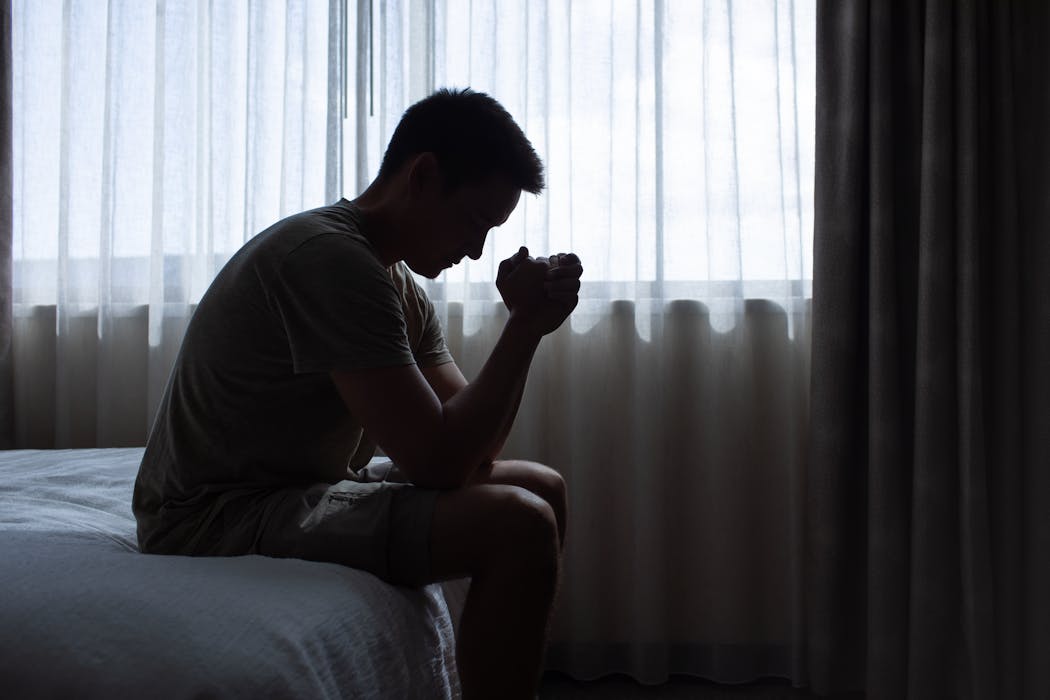
In some regions, youth mortality has actually risen in the past decade. KieferPix/ Shutterstock

Global mortality continues to fall. Life expectancy has improved to unprecedented levels and deaths in young children have plummeted. Yet for adolescents and young adults, especially those aged 15 to 24, little progress has been made according to data from the latest Global Burden of Disease study. In parts of North America and eastern Europe, mortality in those aged 15-24 has actually risen in the past decade.

This latest study also showed the main causes of death among young people aren’t disease or poor health. The main causes were shown to be injury, violence, suicide, road traffic accidents and substance abuse.

This shows us that health systems worldwide are still ill-equipped to prevent or intervene effectively in social and structural causes of youth mortality.

The Global Burden of Disease study is one of the largest studies on the picture of health, disease and mortality worldwide. The study analysed more than 310,000 data sources collected between 1950 and 2023 from 204 countries. Using death registries, censuses and household surveys, the research team estimated age-specific mortality trends across the lifespan.

The overall picture is one of uneven progress.

For children, especially in low and middle-income countries, vaccines, improved sanitation and better nutrition have saved millions of lives. In east Asia, for instance, mortality in under-fives fell by 68% between 2011 and 2023.

For older adults, the global mortality rate declined by 67% between 1950 and 2023, thanks to better screening, medication and chronic disease management.

Deaths from cardiovascular disease (the leading cause of death globally) have also improved substantially. But cardiovascular disease and other non-communicable diseases (such as cancer and diabetes) still account for nearly two-thirds of all deaths ariund the world.

For young people aged 15-24, the risk profile was different. For them, the main causes of death were primarily preventable ones.

In North America, deaths among people aged 20 to 39 rose by as much as 50% in the past decade – largely due to suicide, drug overdose and alcohol-related harms. The picture was also similar in some parts of Latin America.

But in other parts of the world, such as sub-Saharan Africa, infectious diseases (such as as tuberculosis) and unintentional injuries were the main drivers of youth mortality.

The study also highlighted stark inequalities in mortality risk for youth from marginalised, low-income or Indigenous groups. For instance, the study found that mortality in young women aged 15-29 living in sub-Saharan Africa was 61% higher than previously estimated, mostly due to maternal mortality, road injuries and meningitis.

However, these groups remain systematically underrepresented in global health datasets. The study found that more than 80% of countries lacked nationally representative data across key health domains, including mental health and child health. This meant most of the data was drawn from high-income regions.

Latin Americans, for example, make up over 8% of the global population but represent less than 1% of some global reference datasets. Such a systemic lack of representation from these groups renders their health needs invisible – including the health needs of those affecting the young.

Emerging trends

Today’s young people face unprecedented economic insecurity, social volatility, violence and pressures from social media – all of which can have an extraordinary toll on both mental health and wellbeing.
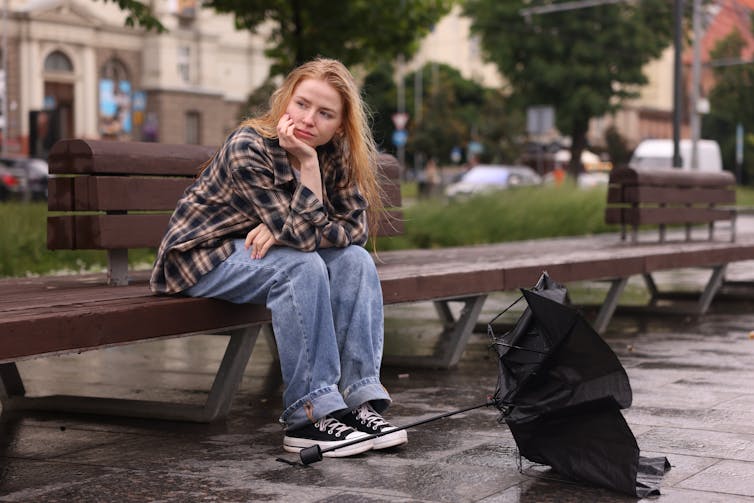
A young woman sits alone on a bench outside, gazing thoughtfully.
The mental health needs of young people must urgently be addressed.
New Africa/ Shutterstock

Mental health challenges underlie many of the leading causes of adolescent death reported in the study. It’s clear from this and other studies that youth mental health urgently needs to be addressed.

For instance, research from Spain which looked at over 2 million adolescent hospitalisations between 2000 and 2021, found admissions for mental health conditions more than doubled – surging especially after the COVID-19 pandemic.

For teenage boys, substance use, ADHD and psychosis were the most common causes of hospitalisation. For girls, eating disorders, anxiety and depression were more prevalent.

A related study found admissions for adolescent anorexia nervosa rose by almost 90% after 2020 – with cases overwhelmingly concentrated in girls aged 13-17.

Health survey data from 2023 also showed that half of US young adults aged 18-24 reported experiencing symptoms of anxiety or depression. Additionally, a separate US survey also found that more than one-third of 18-24-year-olds reported they’d recently thought about self-harm or suicide.

Other factors which may also have contributed to high youth mortality rates may include a historical lack of preparedness by health systems in focusing on adolescent health issues, as well as a lack of interventions aimed at reducing the actual leading causes of youth death (such as road safety, violence prevention and meaningful mental health care).

The response to youth mortality cannot be medical alone as the leading causes of death in this age group require interventions that sit outside healthcare and require coordination across sectors.

Data systems must also change. Youth from low-income countries, Indigenous people and marginalised groups are underrepresented in research. This means we don’t fully understand the needs of these groups and the problems they face – making it difficult to plan and implement effective interventions.

Youth health must be re-framed as an equity issue, as well. The current model treats young people as responsible for their own poor outcomes, when research shows that, overwhelmingly, these issues can be caused by conditions that young people do not control: poverty, exposure to violence, unsafe road environments, inadequate mental health services and lack of economic opportunity.

These deaths are preventable. We cannot celebrate global health gains when youth mortality is stagnant – and even worsening in many parts of the world. Preventing adolescent and young adult deaths is the next frontier for a fairer, healthier future.

The Conversation

Manuel Corpas does not work for, consult, own shares in or receive funding from any company or organisation that would benefit from this article, and has disclosed no relevant affiliations beyond their academic appointment.

ref. Surge in global youth mortality fuelled by mental illness, drugs, violence and other preventable causes – https://theconversation.com/surge-in-global-youth-mortality-fuelled-by-mental-illness-drugs-violence-and-other-preventable-causes-267459
How Britain’s weakened global position may have pulled it into a Chinese spying scandal

Source: The Conversation – UK – By Robert Dover, Professor of Intelligence and National Security & Dean of Faculty, University of Hull

helloRuby/Shutterstock

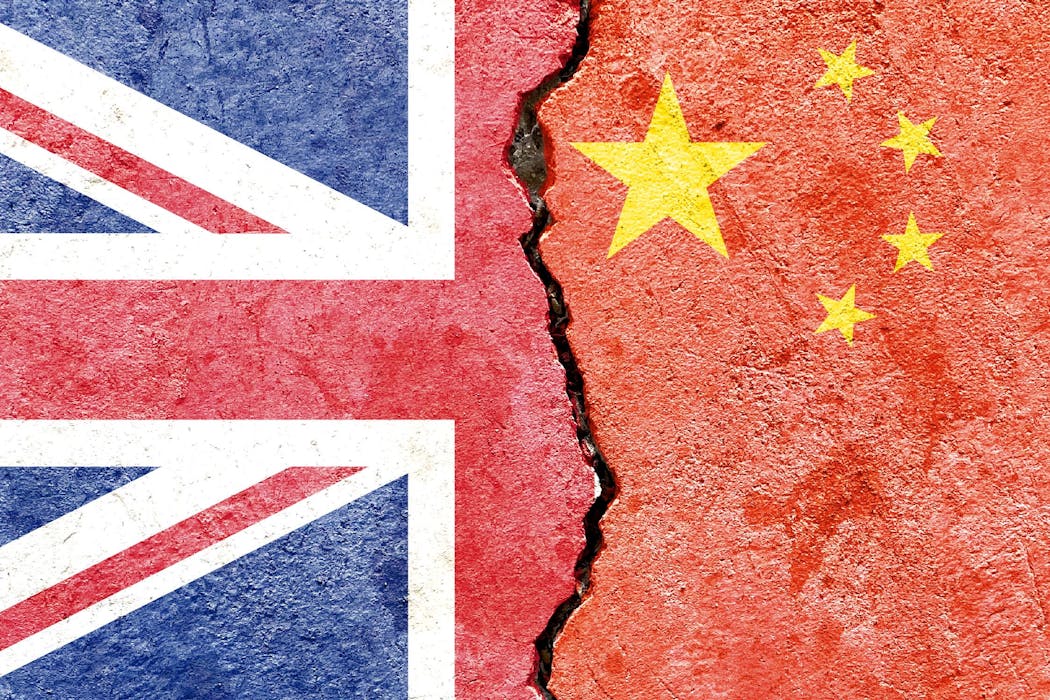
The alleged Chinese spying affair currently troubling the UK government after the collapse of a trial is markedly different from previous espionage scandals. That is because it is centred not on the actions of suspected spies, but on the behaviour of the government. How did this come to happen?

The two men – former parliamentary researcher Christopher Cash and academic Christopher Berry – remain without stain on their character. The case against them, which they denied, was dropped before going to trial.

As in all spy cases, there is a gap between the speculation (what those outside of government are free to theorise on), and the secrets (the classified material and processes behind closed doors).

The speculation is around whether government behaviour collapsed the prosecution to benefit diplomatic and trade relations with China. The secrets, which a parliamentary inquiry will now investigate, are whether this was indeed what happened, and who in the government, if anyone, was involved in the collapse of the case.

Cash and Berry were charged under the 1911 Official Secrets Act (now replaced by the 2023 National Security Act). They were accused of passing “at least 34 reports” containing politically sensitive information about parliament or parliamentarians to a Chinese intelligence agent.

The information was then allegedly passed to Cai Qi, a senior Chinese communist party official often referred to as President Xi Jinping’s right-hand man. The content of the material (which does not need to be classified for the sharing of it to be illegal) and how damaging it may be will also be of interest to the inquiry.

Prosecutors unexpectedly dropped the charges weeks before a trial was to go ahead. The CPS said that it could not obtain necessary evidence from the government that China was a threat to the UK’s national security.

Because of precedent from a 2024 Russian spying case, witness statements were needed to say that at the time of the alleged offences, China was an enemy of the UK. The deputy national security advisor, Matthew Collins, provided three witness statements (in December 2023, February 2025 and July 2025) to the CPS, which the government has now made public.

These statements make clear the range of Chinese intelligence activities against the UK, including continual attempts to compromise UK government systems. They also outline the scale of the challenge from China, and align with current government policy and the last government’s 2023 integrated review of foreign, defence and security policy.

In my view as a researcher of intelligence and national security, Collins’ statements clearly provide evidence of a range of challenges that China poses to the UK. They chime with aspects of the 1989 Security Service Act that puts economic security on a par with other security threats. However, it might have been challenging to put to a jury something the government was not prepared to state outright.

The director of public prosecutions, Stephen Parkinson, reportedly told MPs that he had 95% of the evidence he needed for prosecution. The government has said that it’s up to Parkinson to explain what that remaining 5% would be.

There are now several key questions. Was the government involved in the CPS’s decision to drop the charges? What discussions took place within government around this case? Does the government view China as a threat to the level required by the CPS? And could the prime minister have stopped the case from collapsing, had he wanted to?

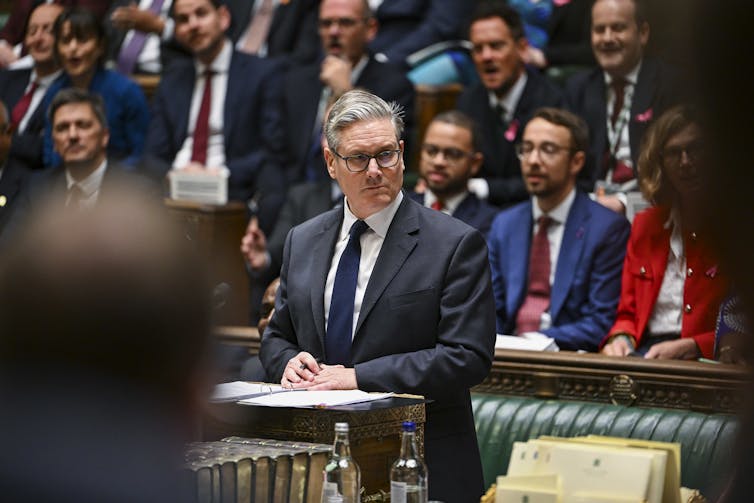
Starmer at PMQs
Prime Minister Keir Starmer is facing questions over the collapse of the trial.
House of Commons/Flickr, CC BY-NC-ND

The government’s statements about Collins, emphasising his expertise and role, effectively ask us to believe that he did not consult his boss (Starmer’s trusted aide, Jonathan Powell), nor consult anyone else in Whitehall about an issue that has deep diplomatic ramifications.

The prime minister has acknowledged that he was told the case was on the brink of collapse two days before it did. The PM maintains that he did not involve himself in it.

Starmer made the point that CPS decisions are independent of the government.
While true, it would be very disciplined of Starmer to allow a case with such diplomatic importance to resolve itself without any political input. The government has, historically, intervened in legal cases of a national security nature, including the 1991 arms to Iraq scandal which led to the Scott inquiry, the Binyam Mohammad case (2010), the Belhaj case (2017) and Shamima Begum cases (2021-24). All of these involved the government putting forward national security arguments to protect intelligence relationships and foreign partners.

Brewing storms

The current government has sought to blame the fallout on the last Conservative government’s ambiguity on China. Labour’s position is similarly complex. It sees China as an important partner for trade, global warming, pandemic mitigation and on emerging conflicts. It also sees China as a persistent challenge to British security.

Complicating this further is the director general of MI5, Ken McCallum, expressing his frustration with the collapse of the prosecution. He described how large the threat from Chinese espionage is, citing a successful MI5 operation from the previous week. He also said that MI5 had seen a 35% increase in all state-based plots against the UK.

The speculation around the diplomatic and economic advantages of this case collapsing is created by the challenges of the UK’s post-Brexit economy. The UK needs to do business with China, but without being exploited as many nations are seen to be.

A UK still within the EU might have felt more able to weather the storm of offending China with a prosecution. This also applies to the Chinese government’s delayed application to transform the former Royal Mint building into an embassy. Opponents of which have raised security concerns about its proximity to sensitive underground fibre-optic cables, which could be tapped into for eavesdropping purposes. The Chinese government has threatened consequences if it is not approved.

There are a growing number of friction points for the UK operating with increasingly confident and assertive international partners and competitors. The inquiry into the collapsed prosecution will shine a light on how the British establishment is handling these.

The Conversation

Robert Dover does not work for, consult, own shares in or receive funding from any company or organisation that would benefit from this article, and has disclosed no relevant affiliations beyond their academic appointment.

ref. How Britain’s weakened global position may have pulled it into a Chinese spying scandal – https://theconversation.com/how-britains-weakened-global-position-may-have-pulled-it-into-a-chinese-spying-scandal-267673

Scary stories for kids: Watership Down made me aware of my mortality at four

Source: The Conversation – UK – By Aislinn Clarke, Lecturer in Film Studies, Queen’s University Belfast

When I think of my first encounter with horror, I don’t think of a vampire, a witch, or even a possessed girl’s head spinning round (I saw The Exorcist at the age of seven). I think of a Sun God, I think of teeth and claws slicked with blood, I think of the Black Rabbit of Death. And he wasn’t even the bad guy.

I’m not talking about some campy folk horror from the 1960s. I’m talking about the 1978 animated version of Richard Adams’ Watership Down.

I was perhaps four when I saw it. The opening sequence remains a core memory: the myth of the Prince with a Thousand Enemies, the Original Rabbit, rendered in gorgeous animation that evoked Aboriginal art via the films of New Zealand artist Len Lye. Then the great crimson wave of blood flowing across the fields. Death, cold and indiscriminate, was coming to the gentle slopes of Watership Down.

That was the moment I first felt awe and terror at the fragility of life. And the utter indifference of death. The kind of awe and terror we assume children’s minds can neither comprehend nor bear.

And that was just the beginning.


This article is part of a series of expert recommendations of spooky stories – on screen and in print – for brave young souls. From the surprisingly dark depths of Watership Down to Tim Burton’s delightfully eerie kid-friendly films, there’s a whole haunted world out there just waiting for kids to explore. Dare to dive in here.


It’s easy to assume that because Watership Down is a cartoon about woodland animals, it must be gentle. It isn’t. And that’s why it’s so powerful. My parents had already let my older siblings and I watch the campy spectacle of Hammer Horror at Halloween, but they couldn’t have guessed the deeper impact of Adams’s rabbits – they let me watch alone from the safe distance of the shag rug one sunny afternoon in 1984.

Nothing terrible had yet happened to me. I hadn’t known grief or loss. Watership Down cracked that open. For the first time, I understood, viscerally, that all the earth’s creatures – including myself – are mortal, and that death was coming for us all.

But don’t let that put you off sharing it with your four-year-old.

The value of horror is that it gives us a safe space to process fear. It takes the anxieties we can’t name and turns them into something we can face. I watched horror films with my family every weekend – Poltergeist, Day of the Dead, The Evil Dead.

Afterwards I slept like the actual dead. Soundly. Peacefully. I didn’t have nightmares, even if I did dream of rabbits. I didn’t need nightmares. For, what is a horror film, after all, if not a nightmare you share with people you love – a nightmare that can be switched off and tucked back into its case?

And, yes, I am saying that Watership Down is a horror film. Like Lovecraft’s cosmic horror, like The Thing or Alien, the terror of Watership Down arises from mortal insignificance. We too are small, powerless, unmoored, no different to the rabbits fleeing the down.

The film’s horror depends on empathy, the recognition that every creature wants what we want: to live, to love, to survive. Children understand that we are not special.

However, it is perhaps the most primal and defining characteristic of humanity that, not only do we fear death, but we know it is coming. Such darkness is part of being human and we can’t insulate children from the fullness of being human.

If we try, the chances are that the darkness will come out anyway in their nightmares, understood as a terrible thing that their own mind created in the dead of night. To share a film like Watership Down with them is to say: “I trust you with this. You are ready for awe, wonder, and yes, for fear too. And it is because we fear that we hope.”

Richard Adams opened his novel with a gruesome quote from the ancient Greek tragedian Aeschylus and added: “If that makes the child put it back on the shelf, then to Hell with the child.”

His provocation was not contempt but a refusal to patronise. Children, he argued, deserve stories that take them seriously. Indeed, to live without curiosity, without discomfort, without provocation, is the stuff of nightmares. That is hell.

Both the book and the film trust their audience to confront mortality honestly. That trust makes for stronger children – and stronger adults. Adams rejected allegorical readings of his story, insisting that this gut wrenching heroes’ journey, with its keen sense of justice, really was about rabbits.

Children understand that not everything has to be about us. Only adults insist on being the default main character. Children know that in this beautiful, terrible world, everything – even us – just wants to live.

Perhaps all of this is more than one would expect from a cartoon film about woodland animals. Maybe we could all use a sunny afternoon on the rug, watching Watership Down, and remembering what it is like to be small and afraid and full of hope.


Watership Down has a PG rating, which means some material may not be suitable for young children, so parental guidance is advised.

This article features references to books that have been included for editorial reasons, and may contain links to bookshop.org. If you click on one of the links and go on to buy something from bookshop.org The Conversation UK may earn a commission.


Looking for something good? Cut through the noise with a carefully curated selection of the latest releases, live events and exhibitions, straight to your inbox every fortnight, on Fridays. Sign up here.


The Conversation

Aislinn Clarke does not work for, consult, own shares in or receive funding from any company or organisation that would benefit from this article, and has disclosed no relevant affiliations beyond their academic appointment.

ref. Scary stories for kids: Watership Down made me aware of my mortality at four – https://theconversation.com/scary-stories-for-kids-watership-down-made-me-aware-of-my-mortality-at-four-267052

Protecting Brazil and Indonesia’s tropical forests requires political will, law enforcement and public pressure

Source: The Conversation – UK – By Rachael Garrett, Moran Professor of Conservation and Development, University of Cambridge

Tarcisio Schnaider/Shutterstock

The vast tropical forest nations of Brazil and Indonesia are both home to millions of people, including Indigenous communities. They store enormous amounts of carbon to protect our climate and are home to staggering numbers of species found nowhere else in the world.

How are their forests still standing while other forests have fallen? Answering this question is critical in the current global moment. As people gear up for the 30th UN climate summit (Cop30) in Belém, Brazil, in November, this “Amazon Cop” could help galvanise action to save the world’s forests with a clearer blueprint for success.

While progress at global climate and biodiversity summits often seems limited, our study highlights how sustained pressure from civil society and international commitments can lead to improved political will for forest protection.

In the agricultural powerhouse of Brazil, 60% of the land area (511 million hectares – more than 20 times the size of the UK) is still covered in natural forests. In the diverse archipelago of Indonesia, known for its globally important production of palm oil, among other tropical crops, 50% of the land (nearly 94 million hectares) is remaining.

Last year, global records for deforestation were shattered, with 6.7 million hectares of pristine tropical forests being cleared – an area almost the size of Ireland. Even by recent standards this was a huge amount of loss, driven by raging fires in the hottest year on record. Yet over a billion hectares of tropical forests remain. Two of the forest giants – Brazil and Indonesia – have both bucked the trend of increasing forest loss at different times in recent years.

aerial shot of rainforest and river
Brazil reduced deforestation in the Amazon rainforest by 84% between 2004 and 2012.
Curioso.Photography/Shutterstock

Brazil reduced deforestation in the Amazon rainforest by 84% between 2004 and 2012. However, deforestation picked up again in the late 2010s and under President Jair Bolsonaro’s administration.

In Indonesia, a similarly impressive 78% reduction in deforestation was achieved between 2016, when devastating forest fires created a haze across south-east Asia, and 2021. Fortunately these reductions have been sustained, at least for now.

To understand the reasons for Brazil and Indonesia’s success, we brought together the world’s leading experts in forest conservation in these two regions. Most of them came from these two countries. By asking our experts to participate in multiple rounds of surveys and providing feedback on responses from one round to the next, we could identify the full range of factors that are important for protecting forests. This approach, known as a Delphi process, enabled us to avoid groupthink or excessive influence by strong-willed or well-respected characters.

Still standing?

Our results were clear: across both countries, our experts judged that political will and law enforcement were by far the most important factors for protecting forests.

The study revealed how international diplomacy and advocacy by civil society have been pivotal in creating the awareness and demand for political leadership to emerge. Moving to the 2010s, Indigenous rights were seen as an important complement to political will and law enforcement.

These results point to the need to accelerate pressure on policymakers to protect forests and continue to spread public awareness. This is a difficult task with a human toll: worldwide, more than 2100 environmental defenders were killed between 2012 and 2023.

Political will to conserve forests also waned in the late 2010s in Brazil, and is in question under the current Indonesian administration.

Yet the need for instant results and a temptation to pursue the latest big idea should not overshadow the long-lasting and hard-won consequences of sustained pressure for good forest stewardship.

As policymakers, activists and scientists from around the world converge on the Amazon for the next UN climate summit, the message from our research is clear: above the fray of tense negotiations and discussions over policy minutiae, political leadership and persistent advocacy can and do protect forests. We’ve done it before, and we can do it again.


Don’t have time to read about climate change as much as you’d like?

Get a weekly roundup in your inbox instead. Every Wednesday, The Conversation’s environment editor writes Imagine, a short email that goes a little deeper into just one climate issue. Join the 45,000+ readers who’ve subscribed so far.


The Conversation

Rachael Garrett consults for the businesses Sumthing and Rainforest Builder. She receives funding from the European Research Council (ERC) grant 949932 and the company Suzano. She is affiliated with the Global Land Programme as co-chair of the Science Steering Committee and the UK Joint Nature Conservation Committee. She serves on the UN Science Panel for the Amazon and UN Forum on Sustainability Standards Academic Advisory Board.

Joss Lyons-White receives funding from the European Research Council (ERC) grant 949932.

Matthew Spencer works for IDH, which works on forest-risk commodities and agricultural market transformation and is funded by European government donors and philanthropic foundations. His visiting fellowship at the Cambridge Conservation Initiative is supported by the Turner Kirk Trust.

ref. Protecting Brazil and Indonesia’s tropical forests requires political will, law enforcement and public pressure – https://theconversation.com/protecting-brazil-and-indonesias-tropical-forests-requires-political-will-law-enforcement-and-public-pressure-261958

Europe’s climate is changing fast – here’s how it’s affecting people and the economy

Source: The Conversation – UK – By Rosemary Anthony, Lecturer in Climate Change and Sustainability, University of Salford

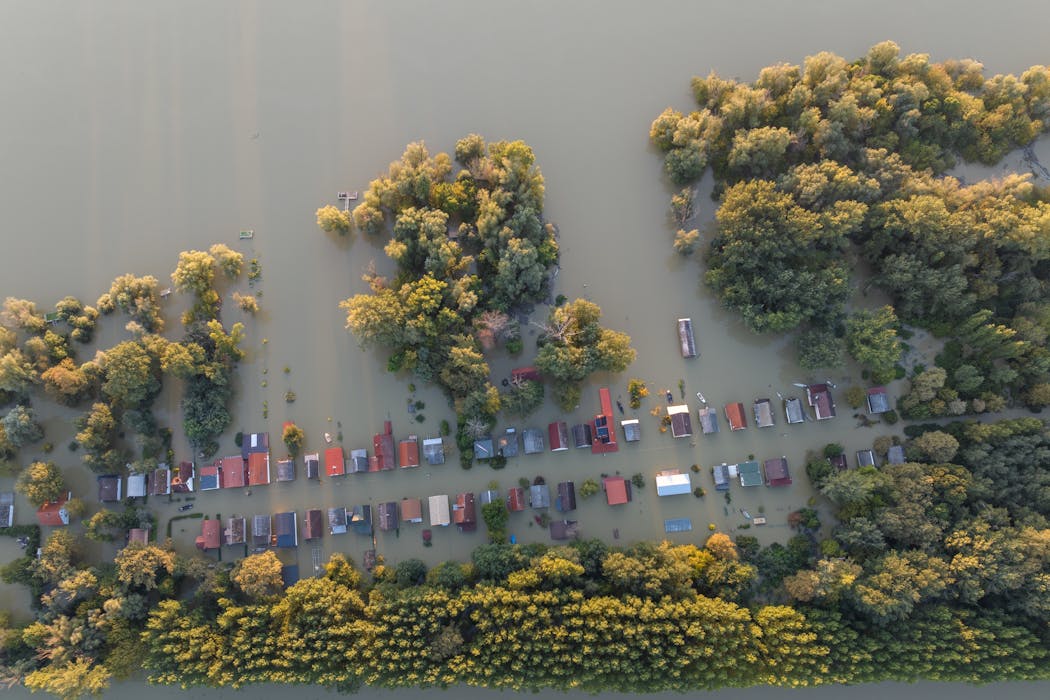
Rising floodwaters near the River Danube in 2024. My StockPhotos/Shutterstock

Temperatures across Europe are rising at twice the global average. This alarming trend is leading to more frequent and intense heatwaves, droughts, floods and storms.

But climate change isn’t just about extreme weather. It damages ecosystems, infrastructure and economies, plus people’s resilience and prosperity, meaning the European way of life is at risk.

The latest information from the European Environment Agency shows that while progress is being made, the state of the environment is deteriorating. Europe is the fastest warming continent and major economic and social losses from climate-related events are mounting – with more than €738 billion (£643 billion) in losses from 1980-2023, and over €162 billion from the last three years.

Adaptation (action required for societies to adjust to the adverse effects of climate changes) is needed but lagging behind the escalating risk due to inconsistent and under-resourced approaches. As a result, ecosystem and societal resilience are undermined.

Healthy ecosystems underpin sustainable living by ensuring food and water security, and providing essential goods and services.

For people living in Europe, the effects are already visible and personal. People are increasingly exposed to disease, pollution, and even premature death due to extreme weather. Homes and communities face destruction. In 2025, extreme weather has included extensive floods in Valencia, Spain, and wildfires raging across Turkey, Portugal, Cyprus, France and Spain.


Read more:
Three ways to reduce Europe’s flood risk


Public services – such as health services and early responders, like the fire service – come under pressure. Daily life becomes more uncertain. More than 464,000 people across Europe are already experiencing the trauma of forced displacement, due to floods, wildfires and storms.

Currently, these are internal displacements, meaning they have not crossed borders into other countries. But this extreme weather is now occurring more frequently, so the risk of wider displacement is rising.

Storm Amy hit the UK in early October. It brought down many trees and cut thousands of people off from power for days, disrupting train travel and leaving many homes without internet access – cutting off a lifeline for many. Scotland was particularly affected, with Scottish and Southern Electricity Networks having to restore power to over 86,000 properties.

roof damage on block of flats
Storm Amy brought in high winds and rain throughout Scotland.
Euan Cherry/Shutterstock

These disruptions do not just take a physical toll. They bring significant financial and emotional stress. Families, businesses and entire communities are shouldering growing economic burdens from climate-related damages.

There is a growing sense of stress and anxiety tied to the uncertainty and inevitability of climate-induced extreme weather. The emotional strain only deepens when particularly vulnerable communities are faced with the aftermath, such as villages in Spain and Portugal, where wildfires tore through forests, homes and businesses.

With extreme weather being predicted more frequently, it is distressing and frightening to rebuild when resilience has already been lowered by damage.

Political shifts across Europe are adding pressure to an already fragile situation. Progress is jeopardised by a rollback of green policies, denial of climate science, and a return to polluting practices such as the EU’s delayed launch of its anti-deforestation reporting law for the second time, meaning forests continue to be in threat of destruction to produce goods and commodities such as palm oil, soy and beef. As these setbacks mount, climate anxiety grows, and our ability to meet climate goals drifts further out of reach.

A more prosperous path

Failing to act now will lead to higher costs down the line and deepen existing inequalities. On the other hand, strengthening green policies and sustainable practices offers a path to a healthier, fairer and more prosperous future. The cost of inaction far outweighs the costs associated with acting now.

Some parts of Europe are building resilience by focusing on clean energy, building a more circular economy and protecting natural assets such as forests and rivers.

Schemes such as the €4.2 billion fund to support 77 decarbonisation projects as part of the EUs clean energy transition should help to reduce emissions by 2050. Plus, there are plans to protect and properly manage natural environments such as peatlands, which are excellent carbon stores.

Despite challenges, such as the future of political agendas and willingness to engage in the green agenda, there is reason for optimism. The EU has already cut greenhouse gas emissions by 37% since 1990, proving that meaningful change is possible. Europe has emerged as a global leader in climate action, and with continued effort, it can stay on course to meet ambitious green goals to reach net zero by 2050.

But success requires everyone, governments, businesses and communities, to work together. By uniting social, political and environmental efforts, we can still secure a liveable, thriving planet for future generations.


Don’t have time to read about climate change as much as you’d like?

Get a weekly roundup in your inbox instead. Every Wednesday, The Conversation’s environment editor writes Imagine, a short email that goes a little deeper into just one climate issue. Join the 45,000+ readers who’ve subscribed so far.


The Conversation

Rosemary Anthony does not work for, consult, own shares in or receive funding from any company or organisation that would benefit from this article, and has disclosed no relevant affiliations beyond their academic appointment.

ref. Europe’s climate is changing fast – here’s how it’s affecting people and the economy – https://theconversation.com/europes-climate-is-changing-fast-heres-how-its-affecting-people-and-the-economy-266399

Misunderstanding the tide is putting millions at risk on UK coasts – here’s what you need to know

Source: The Conversation – UK – By Martin Austin, Senior Lecturer in Coastal Dynamics, Bangor University

Imagine you’re walking along a beach, talking to your friend, enjoying the sunshine. Time goes by and it’s time to head back. But as you approach the headland you had walked around previously, you realise that’s not possible anymore: the tide has come in and there is no path around it now. You’re trapped in a bay with the tide continuing to submerge the beach.

The scary, and sometimes life-threatening, experience of being cut off by the tide is not as rare as you might think. Our survey found that millions of people – 15% of the UK public – have been cut off by the tide (or nearly so) at least once.

Often there is a simple enough solution, such as climbing up a hill or getting your feet wet. But sometimes there is no easy way out, and the danger increases quickly as the water level rises fast.

That’s when it is essential to call for help. Since 2020, tidal cut-offs in the British Isles have resulted in around 3,600 Royal National Lifeboat Institution (RNLI) lifeboat and lifeguard rescues, with some 35,500 people being assisted.

This high frequency of tidal cut-offs tells us that getting into danger is not down to exceptional misfortune or, as some might think, people’s own stupidity. It is much too common for that. Our survey shows there are systematic reasons – in particular, misconceptions about how the tide works – that regularly lead to people getting into difficulty.

The tide is principally driven by the gravitational pull of the Moon and Sun. But because their positions relative to the Earth are always changing, and the coastal geography varies, tidal movements are more complex than most people realise.

The gravitational pull of the Moon is strongest during full and new Moons. This leads to larger tides every two weeks, known as spring tides. The Sun has a stronger effect when it is closest to the equator, so tidal changes near the spring and autumn equinoxes are greater.

The timing and height of tides therefore vary widely in both time and space. When school holidays coincide with large spring tides, the risk of incidents increases.

Tidal literacy

To avoid getting cut off by the tide, be aware of what the water is doing – even if you don’t intend to go swimming. In our study, 60% of those cut off were never intending to enter the water. They were simply engaging in activities on the shore such as walking, rockpooling, dog walking and fishing.

Four in ten people in our survey were unaware that tides come in twice daily, that they vary in timing each day, and that they differ in height across the country. So, even if you’ve seen and understood the effects of tidal movement in one place, you won’t automatically know how it works elsewhere and at a different time.

Despite this variation, tides can be predicted accurately and tide tables are publicly available online which show tidal movements in different locations. Every time you visit the coast, choose a website you trust and understand, and work out what the tide will be doing when.

This useful habit requires some practice. Over a quarter of our survey respondents struggled with basic tide-table reading, and only a quarter could extract more complex information – such as when to safely return from a walk to an island that is cut off from land at high tide.

Many people overestimate their ability. So, don’t just rely on your own knowledge – if you’re visiting a place for the first time, ask the locals, coastguards or RNLI about any specific dangers.

In some places such as sand or mudflats, the tide can come in faster than you can run – especially if it comes in behind you, cutting you off from the safe shore. The word “flat” is very misleading, as these areas are usually scattered with deceptive channels and creeks.

Our survey revealed that many people believe the tide comes in slowly, consistently and directly toward the shore, and this is what can easily result in dangerous situations. In reality, the water uses the uneven surface to advance from various directions, and can unexpectedly and very rapidly cut off sandbanks from behind.

As you walk around headlands, cross a causeway or head out on to sand flats, always make sure there is an escape route should the tide behave in unexpected ways. Stay alert: being distracted frequently leads to being cut off, according to our survey participants.

Efforts are underway to restore society’s relationship with the sea, including via the worldwide ocean literacy agenda. Wales is the first country to include “safe access” in its national ocean literacy strategy. Hopefully, other countries will follow suit.

By highlighting the extent of misconceptions around tides for the first time, the insights from our survey suggest that ocean literacy should include understanding of tides. This will enable safe and enjoyable access to coasts, nurturing positive relationships and behaviour that support the planet’s health.


Swimming, sailing, even just building a sandcastle – the ocean benefits our physical and mental wellbeing. Curious about how a strong coastal connection helps drive marine conservation, scientists are diving in to investigate the power of blue health.

This article is part of a series, Vitamin Sea, exploring how the ocean can be enhanced by our interaction with it.


The Conversation

Martin Austin receives funding from the NERC and EPSRC.

Elisabeth S. Morris-Webb receives funding from The Research Council of Norway

Thora Tenbrink receives funding from the AHRC and ESRC. She is a co-director of the community enterprise Together for Change.

ref. Misunderstanding the tide is putting millions at risk on UK coasts – here’s what you need to know – https://theconversation.com/misunderstanding-the-tide-is-putting-millions-at-risk-on-uk-coasts-heres-what-you-need-to-know-265037

Why The Traitors is still a masterclass in the psychology of human deception

Source: The Conversation – UK – By Paul Jones, Associate Dean for Education and Student Experience at Aston Business School, Aston University

The Traitors might sound like another reality TV gimmick. But look closer, and you’ll find a psychological pressure cooker where deception, trust and paranoia are all on view.

Contestants live together in a Scottish castle. A few are secretly chosen as Traitors, tasked with “murdering” their fellow players while avoiding suspicion. The rest are “Faithfuls”, trying to banish the Traitors before it’s too late.

With no evidence, alliances are fragile and instinct becomes weaponised. Let’s unpack the psychology driving every twist, accusation, and betrayal.

At the heart of The Traitors is theory of mind. This is our ability to guess what others are thinking. In normal life, it helps us empathise. In the castle, it fuels suspicion.

Players spiral through layers of paranoid thinking: “Does she know I suspect her?” It’s mentally exhausting. Stress impairs our judgement. We misread silence, mistake nerves for guilt, and project our fears.

Alyssa (who featured in the first series) was banished simply for being quiet. Her calmness was seen as coldness, and that was enough to say goodbye, despite the fact that she was a Faithful, not a Traitor.

Lying is mentally taxing. Suppressing the truth, inventing a story, managing facial expressions, it all increases our cognitive load. Under pressure, even skilled liars show cracks: pauses, micro-expressions (brief, involuntary facial expressions that reveal a person’s true emotions) and anxiety.

But here’s the twist, truth-tellers look just as twitchy. Psychologist Paul Ekman called this the “Othello error”: mistaking fear for deceit. Series 2’s Paul played a cool, calculated game, manipulating perception with emotional detachment. The group couldn’t keep up.

The roundtable is where logic crumbles. Once a few confident voices point fingers, others fall in line. This is known as groupthink, and it is where the drive for agreement overrides critical thinking.

Add confirmation bias, which is where we see what we expect, and things escalate fast. In Series 2, contestant Kyra was banished after one comment was misread. No one challenged it. Bye Kyra. Often, they don’t just get it wrong, they agree on getting it wrong.

The problem with ‘vibes’

When facts fail, instinct fills the gap. But “weird vibes” are shaped by in-group bias. We can’t help but trust those who seem like us.

Players who don’t match the group’s emotional script – those who are too
quiet, too blunt, too intense – become scapegoats. In contrast, Traitors who mirror emotions survive. Wilf (Series 1) played this to perfection: loyal friend on the outside, silent assassin within.

Traitors don’t see themselves as villains. They rationalise: “It’s just a game.” By rewriting the story, their cognitive dissonance (the discomfort of acting against their values) is soothed away.

Faithfuls do it too. When they wrongly banish someone, they convince themselves the signs were there. It’s not evil. It’s self-preservation. Few people enjoy the tension of contrasting values and actions.

In the absence of truth, perception rules. Every laugh, pause or raised eyebrow becomes part of the performance.

Sociologist Erving Goffman called this “impression management”. On The Traitors, it’s survival. Too passive? You’re hiding something. Too assertive? You’re manipulative.

The goal is to appear confident, sincere and harmless. Even silence is strategic, but dangerous if misread.

We watch The Traitors knowing more than the players, and yet we still get it wrong. It flatters our instincts, then flips them. We shout at the screen and we fall for the same tricks.

It reflects our real lives: teams, friendships, group chats. We all manage impressions. We all judge others. And under pressure, we all rewrite reality to stay safe. The real twist? The psychological traps of The Traitors aren’t locked in a castle. They’re everywhere.

The Conversation

Paul Jones does not work for, consult, own shares in or receive funding from any company or organisation that would benefit from this article, and has disclosed no relevant affiliations beyond their academic appointment.

ref. Why The Traitors is still a masterclass in the psychology of human deception – https://theconversation.com/why-the-traitors-is-still-a-masterclass-in-the-psychology-of-human-deception-267750

How an international security force in post-war Gaza could work

Source: The Conversation – UK – By Nir Arielli, Associate Professor of International History, University of Leeds

With the first phase of the ceasefire agreement in Gaza nearing completion, diplomatic discussions are underway to establish a multinational security force that could pave the way for longer-term stability in the war-riven territory.

The US is already planning to deploy 200 troops to the region to monitor and support the ceasefire. Several Arab and Muslim countries, including Egypt, Turkey and Indonesia, are also considering contributing troops to assist the implementation of the ceasefire agreement inside Gaza.

But at the same time, the prospects of a long-term ceasefire hang in the balance. Hamas has started to redeploy its forces around the enclave, and has attacked civilians it sees as opposing its rule. Israel’s prime minister, Benjamin Netanyahu, has also threatened to return to war if Gaza is not completely demilitarised.

This is why an international stabilisation force (ISF) is a central plank in the plans for post-war Gaza that have been put forward by the US president, Donald Trump.

In November 2023, a few weeks after the war in Gaza began, we worked with Mary Elizabeth Walters from the US Air Force to produce a proposal for deploying a multinational peacekeeping force in Gaza.

We examined historical cases where the deployment of peacekeeping troops had been unsuccessful, such as in Lebanon from 1982. We also analysed cases that yielded more positive outcomes, including the missions sent to Bosnia and Herzegovina in late 1995 and East Timor and Kosovo in 1999. Many of our recommendations remain relevant.

Equipped, mandated and ready

For the ceasefire to last, the ISF will need to tackle the thorny problem of disarming Hamas and other Palestinian armed groups. In the event that Hamas refuses to hand over its weapons, the ISF must be equipped, mandated and ready to compel militants to do so.

The UN’s peacekeeping mission in southern Lebanon, Unifil, has never been equipped, mandated or ready to disarm Hezbollah. Lacking a mandate that would allow the use of force (other than in self-defence), Unifil troops have been unable to prevent Hezbollah from establishing fortifications – even right next to Unifil positions.

Had Unifil been more robust, perhaps the war along the Israeli-Lebanese border between Israel’s military and Hezbollah in 2024 could have been prevented.


Read more:
Israel-Hezbollah ceasefire deal promises a precarious peace in a region racked by conflict


The ISF in Gaza, if it does materialise, will require endorsement by the UN security council. While this is not guaranteed, none of the council’s five permanent member states – China, France, Russia, the UK and US – have an obvious interest in blocking it.

Such endorsement could empower the peacekeepers to use force where they deem it necessary. Chapter VII of the UN Charter gives the security council the power to authorise peacekeepers to target particular combatant groups, demobilise warring parties and decommission their weapons.

There are historical examples of such forces achieving a degree of success. The Kosovo Force (Kfor) was deployed to Kosovo in 1999 in the wake of Nato’s bombing campaign, which halted Serbia’s ethnic cleansing of Albanian Kosovars.

Kfor was authorised by the UN security council under Chapter VII of the UN Charter, granting the mission the legal standing to adopt robust rules of engagement. Numbering 50,000 troops, Kfor’s mandate was to ensure the withdrawal of Serbian forces, disarm and demilitarise the Kosovo Liberation Army militant group, and provide security and public safety.

It was also tasked with supporting humanitarian assistance and the return of refugees, and coordinating with the UN’s Interim Administration Mission in Kosovo. Kfor’s robust mandate and capabilities allowed it to prove largely successful in these tasks.

The legitimacy of the Gaza force among Palestinians will also be crucial. Without it, the ISF will constantly need to defend itself and would struggle to carry out any other tasks. Some Palestinian armed groups, including the Democratic Front for the Liberation of Palestine, have already rejected suggestions of an international security mission in Gaza.

But the ISF may be able to boost its standing among Gazans by playing a role in relief efforts and coordinating international aid. Ensuring that the supply of electricity and water returns quickly, and minimising any risk caused by sewage spillages, may help the force gain initial legitimacy.

In the longer term, the ISF must be prepared to train local forces so that its responsibilities could gradually be handed over to Palestinians. A peacekeeping mission in Gaza should be an interim phase – otherwise, it will be seen by many Gazans as just another foreign occupying force.

The ISF in Gaza is rightly conceived as just one part of a broader plan to improve Palestinian governance and promote peace between Israel and Palestine.

But for this broader plan to succeed – and for the current precarious moment to be traversed – a carefully planned and adequately staffed security force will be key. Without it, Gaza is likely to become embroiled in conflict once again.

As we pointed out in 2023, successfully deploying a robust and capable multinational force in Gaza could send a message to Palestinians, Israelis and the rest of the region that a new path has been taken. It would make clear that there will not be a return to the conditions prevailing before the war in Gaza began.

The Conversation

The authors do not work for, consult, own shares in or receive funding from any company or organisation that would benefit from this article, and have disclosed no relevant affiliations beyond their academic appointment.

ref. How an international security force in post-war Gaza could work – https://theconversation.com/how-an-international-security-force-in-post-war-gaza-could-work-267657

The Life of Violet: three unearthed early stories where Virginia Woolf’s genius first sparks to life

Source: The Conversation – UK – By Jade French, Postdoctoral Researcher , Loughborough University

BotaniHue/Shutterstock/Wikimedia

Few feelings are more thrilling for a literature scholar than unearthing an archival gem. Urmila Seshagiri, professor of English at the University of Tennessee, got to experience such a jolt when she was told about previously unseen typescripts of three short stories by Virginia Woolf.

These interconnected tales, written in 1907, comprise a mock biography of Woolf’s friend Mary Violet Dickinson, an independent woman who moved in aristocratic circles and who would be crucial to the development of Woolf’s early writing.

In 2022, Seshagiri was finally able to make the trip to Longleat House, a stately home in south-west England, and open up a cream-coloured case containing a polished version of the stories. Another set exists in the US at the New York Public Library, catalogued as Friendships Gallery (the title of the first story). However, to see these drafts reworked by Seshagiri gives them fresh editorial impetus.

It had previously been presumed these stories were a lighthearted footnote to Woolf’s canon in draft form, written as a joke for a friend rather than work to be taken seriously. But now they have been published, bound and critically contextualised for the first time as The Life of Violet: Three Early Stories.

In contextualising these stories, Seshagiri introduces us to a young Virginia Stephen’s “first fully realised literary experiment”, written as she stood on the precipice of Bloomsbury Group-inflected fame.

Juvenilia – work produced when an artist is still young – often isn’t taken seriously. Woolf was even quoted as saying: “I don’t want immaturities, things torn out of time, preserved.”

But the typescripts stored at Longleat House suggest otherwise. Woolf had made amendments and opinions were sought from her sister Vanessa Bell, who thought the work was “very witty and brilliant”.

Seshagiri writes about the seemingly minor changes made by Woolf in detail, with “each clause balanced and weighted for impact”, as well as her overall compositional vision. And she explains how Woolf wove in Dickinson’s own pencilled edits.

Despite such attention to detail, the stories are short – unlike Dickinson, who stood at six feet two inches. Woolf conceptualises her friend as a giant, both literally and figuratively.


Read more:
How Virginia Woolf’s work was shaped by music


Together, Friendships Gallery, The Magic Garden and A Story to Make You Sleep can be read as a manifesto on female friendship and the importance of intergenerational exchange (Woolf was 20 and Dickinson 37 at their first meeting).

These were not merely society ties – their friendship ran deep: Dickinson cared for Woolf during a mental health crisis in 1904 at her home in Welwyn in Hertfordshire. Dickinson is also credited with enabling Woolf’s early literary ambitions as she took steps toward her inimitable style.

In Friendships Gallery, we meet Violet as a child and follow her to middle age, although Woolf’s narrator refuses to fill in the blanks that “yawn like awful caverns”. Instead of facts, we find anecdotes woven into an elevated mediation on biography.

Woolf asks: “Where does care for others become care for oneself?” Individual care is extended collectively outwards, as Violet’s bold laughter and antics slough off Victorian values. Through her friend’s example, Woolf maps out a route towards independence for a new generation of women.

In The Magic Garden, Violet takes tea in an aristocratic home, fielding information on gardening and plumbing. Such information fuels her quest for autonomy, as she cries out with joy about the benefits of having “a cottage of one’s own”. Such calls for creative independence preempt Woolf’s later manifesto, A Room Of One’s Own (1929).

While the first two stories are anchored in an insider’s perspective of English class dynamics, skewering prevailing social norms, the last, A Story to Make You Sleep, takes inspiration from Dickinson’s visit to Japan and the letters she wrote to Woolf.

Turning from mock biography to ancient myth, the story follows a giant princess who saves a village through laughter, before riding a sea monster into an unknown destiny. Unmoored from a context Woolf knew, the use of made-up words and faux Japanese customs stand out – a point Seshagiri reflects on with nuance in the Afterword.

These fantastical, farcical, anti-fairytales offer a glimpse into the early friendships that underpinned Woolf’s world in the years after her parents passed away. They also hint at the playfulness to come in Flush: A Biography (1933) – a social commentary told from the perspective of poet Elizabeth Barrett Browning’s cocker spaniel. They equally foreshadow the tale of queer love and time travel in Orlando: A Biography (1928), based on Woolf’s relationship with the writer and gardener Vita Sackville-West.

Beyond Woolf’s own canon of experimental biography, they also connect her to a tradition of surreal, feminist fabulists. In them, she finds odd kinship with the likes of Leonora Carrington and Angela Carter.


Read more:
Virginia Woolf on the magic of going to the cinema


In bringing together these stories under the title The Life of Violet, the edition charts a literary turning point in the Woolf’s life. The stories are filled with recurring subjects found in her writing: of women’s history and education, of egalitarianism, of experimenting, and of blending biographical fact with fiction.

They remind us that Woolf had a playful, sardonic side and used comedy, as much as highbrow literary experiments, to push beyond the boundaries of tradition. Discoveries such as this also show that the steady image of literary figures (especially those with a booming industry behind them) is never fixed – but rather, reshaped through new readers and ongoing interpretation.

This article features references to books that have been included for editorial reasons, and may contain links to bookshop.org. If you click on one of the links and go on to buy something from bookshop.org The Conversation UK may earn a commission.


Looking for something good? Cut through the noise with a carefully curated selection of the latest releases, live events and exhibitions, straight to your inbox every fortnight, on Fridays. Sign up here.


The Conversation

Jade French receives funding from The Leverhulme Trust.

ref. The Life of Violet: three unearthed early stories where Virginia Woolf’s genius first sparks to life – https://theconversation.com/the-life-of-violet-three-unearthed-early-stories-where-virginia-woolfs-genius-first-sparks-to-life-266005

Should the UK introduce targeted prostate cancer screening? The case for and against

Source: The Conversation – UK – By Pinar Uysal-Onganer, Reader in Molecular Biology, University of Westminster

StanislavSukhin/Shutterstock.com

Former UK prime minister Rishi Sunak has called for a targeted prostate cancer screening programme for men most at high risk of the disease, reviving a national debate on how to save more lives and tackle health inequalities among men.

The plan, supported by Prostate Cancer Research, would provide regular screening for men aged 45 to 69, particularly those of African-Caribbean descent or with a family history of the disease.

The case for prostate cancer screening

Pinar Uysal-Onganer, Reader in Molecular Biology, University of Westminster

Prostate cancer is the most common cancer in men in the UK, with more than 63,000 new cases each year. But big gaps remain in who gets diagnosed, how early it’s caught and who survives, reflecting differences in race, region and access to healthcare.

African-Caribbean men are twice as likely to develop the disease and are more likely to die from it than white men. The risk is also higher for those with a father or brother who has had prostate cancer. These differences are not purely biological – they also reflect gaps in awareness, access to care and trust in the health system. A targeted screening programme could begin to close that gap.

The screening process would begin with a PSA (prostate-specific antigen) test, which detects the concentration of a protein produced by the prostate gland. If the PSA level is higher than expected, this would trigger a step-by-step diagnostic process, including MRI scans to improve accuracy and, when necessary, a biopsy to confirm the diagnosis.

Recent improvements in imaging technology help doctors to differentiate aggressive prostate cancers from less aggressive ones with much greater accuracy, making modern screening considerably more precise than it was ten years ago.

Early detection is vital in prostate cancer, as it is with many other cancers. Prostate cancer often develops silently for years before any symptoms appear. By the time it is noticed, it may already have spread beyond the prostate gland.

At that stage, treatments such as hormone therapy or chemotherapy can help control the cancer, although rarely cure it. Detecting prostate cancer earlier through targeted screening would enable less invasive and more effective treatment, offering a far greater chance of full recovery.

Importantly, this proposal recognises the need for greater inclusivity in men’s health. African-Caribbean men and those living in deprived areas are often underrepresented in clinical research, which contributes to gaps in understanding and poorer outcomes.

A screening model based on scientific evidence and community engagement could help close that gap. It would also encourage younger men, particularly those in their 40s, to take a more active interest in preventive health, replacing fear and stigma with informed confidence.

The proposed programme, estimated to cost £25 million annually (approximately £18 per patient, would be less expensive than many current national screening initiatives while offering potentially transformative benefits.

Notably, men in Scotland, as well as the north-west, West Midlands and Wales, have significantly lower survival rates, indicating persistent geographical inequalities in prostate cancer prognosis. Beyond early diagnosis, the proposal could foster trust and participation among underrepresented groups, stimulate biobank research to better understand ethnic and genetic risk and ultimately set a precedent for equity-driven preventive healthcare.

A national targeted PSA screening programme would save lives and demonstrate that all men, regardless of background or postcode, deserve the same chance of early detection.

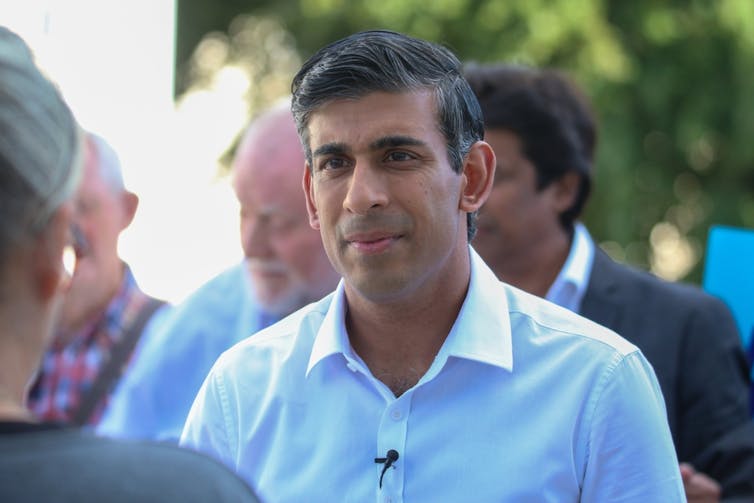
Rishi Sunak.
Rishi Sunak is a patron of Prostate Cancer Research.
Sussex Photographer/Shutterstock.com

The case against prostate cancer screening

Alwyn Dart, Lecturer, Cancer Institute, UCL

Men should see their doctor regularly to look after their health and spot problems early. Serious illnesses like heart disease, diabetes and some cancers can be controlled or stopped altogether if caught in time. But men don’t always look after their health as well as women do.

One in five men put off going to the doctor or having tests. This is often because they feel embarrassed, awkward, or worried about what other people might think, especially when it comes to intimate health issues. When men finally do get help, their problems are often more serious and harder to fix by then. This is particularly true for prostate problems and prostate cancer.

A test called the PSA test has been suggested as a simple way to screen for prostate cancer. A single blood test could easily be added to routine health checks. Women already have screening programmes for breast and cervical cancer that have been running for years and save thousands of lives every year by catching cancer early. So on the face of it, having a similar blood test for prostate cancer in men seems like an obvious good idea.

But here’s the problem. The PSA test isn’t nearly as reliable as the tests for breast and cervical cancer. While breast cancer tests have a “sensitivity” (ability to accurately detect cancer) of between 50-91%, the PSA test has a sensitivity of around 20% – at the standard PSA cut-off of 4ng/mL. Things like an enlarged prostate, infections, or even recent exercise can give false results and make it look like someone has cancer when they don’t.

This unreliability causes a lot of problems. A high PSA result triggers a whole chain of tests and investigations into the prostate, some of which can be invasive, uncomfortable and painful. These investigations themselves can cause unnecessary worry and put men at risk of harm. Men might end up anxious and stressed for no good reason.

The other issue is that some prostate cancers grow very slowly and might never actually harm a person during their lifetime. They might just need careful watching rather than aggressive treatment. But when tests give “false positives” – saying someone has cancer when they don’t – each one means more investigations that need to happen. This piles pressure on doctors, radiologists and other specialists who are already stretched thin.

If someone is diagnosed with prostate cancer and gets surgery or radiation treatment, it can lead to serious side-effects like loss of bladder control, erectile dysfunction and serious psychological stress. Research shows that most prostate cancers tend to grow slowly and are not be life-threatening.

The PSA test is also unreliable in the other direction. Some men who actually do have prostate cancer may get a normal result and don’t get checked properly when they should have been.

Looking at the bigger picture, studies show that PSA screening only prevents three deaths from prostate cancer out of every 1,000 men tested. But it leads to unnecessary diagnoses and interventions in up to 60 out of 1,000 men. That’s far more harm than good.

From the NHS’s point of view, setting up a nationwide PSA screening programme would be hugely expensive and disruptive. Experts estimate it would increase the number of tests and scans needed by approximately 23%.

This would mean thousands more appointments, more specialist doctors and staff, and lots of money spent on scanners and lab work – all things the NHS is already stretched thin trying to provide. This extra workload could mean less time and money for patients who urgently need help with other cancers or serious illnesses.

The real answer isn’t just to test more men for prostate cancer; it’s to find a better test. Men should definitely pay more attention to their own health, but until we have a test that can tell the difference between prostate cancers that will genuinely threaten someone’s life and those that won’t, a nationwide PSA screening programme would do more damage than good.

It would turn healthy men into patients, overload hospitals even more, and wouldn’t actually give people clear answers. What we really need is a test that finds the right cancers, at the right time, using the right tool – in other words, a better test.

The Conversation

Pinar Uysal-Onganer receives funding from Prostate Cancer UK.

Alwyn Dart does not work for, consult, own shares in or receive funding from any company or organisation that would benefit from this article, and has disclosed no relevant affiliations beyond their academic appointment.

ref. Should the UK introduce targeted prostate cancer screening? The case for and against – https://theconversation.com/should-the-uk-introduce-targeted-prostate-cancer-screening-the-case-for-and-against-267493