
US backs Nato’s latest pledge of support for Ukraine, but in reality seems to have abandoned its European partners

Source: The Conversation – UK – By Stefan Wolff, Professor of International Security, University of Birmingham

Recent news from Ukraine has generally been bad. Since the end of May, ever larger Russian air strikes have been documented against Ukrainian cities with devastating consequences for civilians, including in the country’s capital, Kyiv.

Amid small and costly but steady gains along the almost 1,000km long frontline, Russia reportedly took full control of the Ukrainian region of Luhansk, part of which it had already occupied before the beginning of its full-scale invasion of Ukraine in February 2022.

And according to Dutch and German intelligence reports, some of Russia’s gains on the battlefield are enabled by the widespread use of chemical weapons.


Get your news from actual experts, straight to your inbox. Sign up to our daily newsletter to receive all The Conversation UK’s latest coverage of news and research, from politics and business to the arts and sciences.


It was therefore something of a relief that Nato’s summit in The Hague produced a short joint declaration on June 25 in which Russia was clearly named as a “long-term threat … to Euro-Atlantic security”. Member states restated “their enduring sovereign commitments to provide support to Ukraine”. While the summit declaration made no mention of future Nato membership for Ukraine, the fact that US president Donald Trump agreed to these two statements was widely seen as a success.

Yet, within a week of the summit, Washington paused the delivery of critical weapons to Ukraine, including Patriot air defence missiles and long-range precision-strike rockets. The move was ostensibly in response to depleting US stockpiles.

This despite the Pentagon’s own analysis, which suggested that the shipment – authorised by the former US president Joe Biden last year – posed no risk to US ammunition supplies.

This was bad news for Ukraine. The halt in supplies weakens Kyiv’s ability to protect its large population centres and critical infrastructure against intensifying Russian airstrikes. It also puts limits on Ukraine’s ability to target Russian supply lines and logistics hubs behind the frontlines that have been enabling ground advances.

Despite protests from Ukraine and an offer from Germany to buy Patriot missiles from the US for Ukraine, Trump has been in no rush to reverse the decision by the Pentagon.

ISW map showing the state of the conflict in Ukraine, July 6 2025
Russia is now claiming to have completed its occupation of the province of Luhansk in eastern Ukraine.
Institute for the Study of War

Another phone call with his Russian counterpart, Vladimir Putin, on July 3, failed to change Trump’s mind, even though he acknowledged his disappointment with the clear lack of willingness by the Kremlin to stop the fighting. What’s more, within hours of the call between the two presidents, Moscow launched the largest drone attack of the war against Kyiv.

A day later, Trump spoke with Zelensky. And while the call between them was apparently productive, neither side gave any indication that US weapons shipments to Ukraine would resume quickly.

Trump previously paused arms shipments and intelligence sharing with Ukraine in March, 2025 after his acrimonious encounter with Zelensky in the Oval Office. But the US president reversed course after certain concessions had been agreed – whether that was an agreement by Ukraine to an unconditional ceasefire or a deal on the country’s minerals.

It is not clear with the current disruption whether Trump is after yet more concessions from Ukraine. The timing is ominous, coming after what had appeared to be a productive Nato summit with a unified stance on Russia’s war of aggression. And it preceded Trump’s call with Putin.

This could be read as a signal that Trump was still keen to accommodate at least some of the Russian president’s demands in exchange for the necessary concessions from the Kremlin to agree, finally, the ceasefire that Trump had once envisaged he could achieve in 24 hours.

If this is indeed the case, the fact that Trump continues to misread the Russian position is deeply worrying. The Kremlin has clearly drawn its red lines on what it is after in any peace deal with Ukraine.

These demands – virtually unchanged since the beginning of the war – include a lifting of sanctions against Russia and no Nato membership for Ukraine, while also insisting that Kyiv must accept limits on its future military forces and recognise Russia’s annexation of Crimea and four regions on the Ukrainian mainland.

This will not change as a result of US concessions to Russia but only through pressure on Putin. And Trump has so far been unwilling to apply pressure in a concrete and meaningful way beyond the occasional hints to the press or on social media.

Coalition of the willing

It is equally clear that Russia’s maximalist demands are unacceptable to Ukraine and its European allies. With little doubt that the US can no longer be relied upon to back the European and Ukrainian position, Kyiv and Europe need to accelerate their own defence efforts.

A European coalition of the willing to do just that is slowly taking shape. It straddles the once more rigid boundaries of EU and Nato membership and non-membership, involving countries such as Moldova, Norway and the UK.
and including non-European allies including Canada, Japan and South Korea.

The European commission’s white paper on European defence is an obvious indication that the threat from Russia and the needs of Ukraine are being taken seriously and, crucially, acted upon. It mobilises some €800 billion (£690 billion) in defence spending and will enable deeper integration of the Ukrainian defence sector with that of the European Union.

At the national level, key European allies, in particular Germany, have also committed to increased defence spending and stepped up their forward deployment of forces closer to the borders with Russia.

US equivocation will not mean that Ukraine is now on the brink of losing the war against Russia. Nor will Europe discovering its spine on defence put Kyiv immediately in a position to defeat Moscow’s aggression.

After decades of relying on the US and neglecting their own defence capabilities, these recent European efforts are a first step in the right direction. They will not turn Europe into a military heavyweight overnight. But they will buy time to do so.

The Conversation

Stefan Wolff is a past recipient of grant funding from the Natural Environment Research Council of the UK, the United States Institute of Peace, the Economic and Social Research Council of the UK, the British Academy, the NATO Science for Peace Programme, the EU Framework Programmes 6 and 7 and Horizon 2020, as well as the EU’s Jean Monnet Programme. He is a Trustee and Honorary Treasurer of the Political Studies Association of the UK and a Senior Research Fellow at the Foreign Policy Centre in London.

ref. US backs Nato’s latest pledge of support for Ukraine, but in reality seems to have abandoned its European partners – https://theconversation.com/us-backs-natos-latest-pledge-of-support-for-ukraine-but-in-reality-seems-to-have-abandoned-its-european-partners-260334
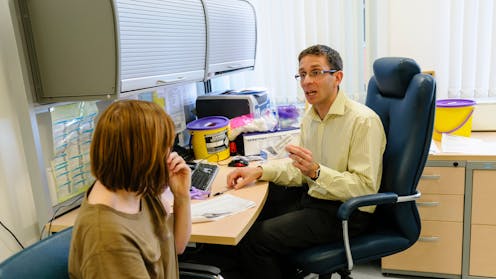

What people really want from their GP – it’s simpler than you might think

Source: The Conversation – UK – By Helen Atherton, Professor of Primary Care Research, University of Southampton

Stephen Barnes/Shutterstock.com

Booking a GP appointment is a routine task, yet for many people it’s a source of frustration. Long waits, confusing systems and impersonal processes have become all too familiar. While much attention has been paid to how difficult it is to get an appointment, less research has asked a more fundamental question: what do patients actually want from their general practice?

To answer this, my colleagues and I reviewed 33 studies that were a mixture of study designs, and focused on patients’ expectations and preferences regarding access to their GP in England and Scotland.

What people wanted was not complicated or cutting edge. People were looking for connection; a friendly receptionist and good communication from the practice about how they could expect to make an appointment. And they wanted a general practice in their own neighbourhood with clean, calm waiting rooms. So far, so simple.


Get your news from actual experts, straight to your inbox. Sign up to our daily newsletter to receive all The Conversation UK’s latest coverage of news and research, from politics and business to the arts and sciences.


People wanted booking systems that were simple and user-friendly, without long automated phone menus (“press one for reception”). Preferences varied. Some patients valued the option to book appointments in person at the reception desk, while others preferred the convenience of online booking.

Regardless of how they booked, patients wanted shorter waiting times or, at least, clear information about when they could expect an appointment or a callback.

Ideally, general practice would be open on Saturdays and Sundays for those who cannot attend during the week.

Remote consultations – by phone, video or email – have become more common since the pandemic, and many patients found them helpful. For those with caring responsibilities or mobility issues, they offered a convenient way to access care without needing to leave home.

However, remote appointments weren’t suitable for everyone. Some patients lacked privacy at work, while others – particularly those with hearing impairments – found telephone consultations difficult or impossible to use.

What patients consistently wanted was choice, particularly when it came to remote consultations. While in-person appointments were seen as the gold standard, many recognised that telephone or video consultations could be useful in certain situations. Preferences varied widely, which made the ability to choose the type of consultation especially important.

Patients also wanted choice over who they saw, especially for non-urgent issues or when managing ongoing health conditions.

In today’s general practice, care is often delivered by a range of professionals, including nurses, pharmacists and physiotherapists. While many patients were open to seeing different healthcare professionals, older adults and people from minority ethnic backgrounds were more likely to prefer seeing a GP.

Overall, patients wanted the option to choose a GP over another healthcare professional – or at least be involved in that decision.

Satisfaction at all-time low

Unsurprisingly, what patients want from general practice varies, reflecting different lifestyles, needs and circumstances. But what was equally clear is that many people are not able to get what they want from the appointment system.

According to a recent British Social Attitudes survey, patient satisfaction with general practice is at an all-time low, with just below one in three people reporting that they are very or quite satisfied with GP services.

Some elements of the UK government’s recently announced ten-year plan for the NHS in England may address some of these concerns, but it remains far from certain. The emphasis on the NHS app as a “doctor in your pocket” does not align with what many patients are asking for: genuine choice over whether they access care online or in person.


Read more:
NHS ten-year plan for England: what’s in it and what’s needed to make it work


A mobile phone showing the NHS app.
Not everyone wants a doctor in their pocket.
NHS/Shutterstock.com

The proposal to open neighbourhood health centres on weekends could benefit those who need more flexible access. However, simply increasing the number of appointments misses the point: patients want more than just availability. They want care that is accessible, personalised and responsive to their individual needs.

The evidence is clear and the solutions simple, yet patient satisfaction remains at an all-time low. The government must stop assuming technology is the answer and start listening to what patients are actually telling them. The cost of ignoring their voices is a healthcare system that serves no one well.

The Conversation

Helen Atherton receives funding from the National Institute for Health Research and the Research Council of Norway.

ref. What people really want from their GP – it’s simpler than you might think – https://theconversation.com/what-people-really-want-from-their-gp-its-simpler-than-you-might-think-260520

Georgia: how democracy is being eroded fast as government shifts towards Russia

Source: The Conversation – UK – By Natasha Lindstaedt, Professor in the Department of Government, University of Essex

Georgia was once considered a post-Soviet success story. After years of authoritarian rule, followed by independence which brought near state collapse, corruption and chaos, Georgia appeared to have transitioned to democracy.

In a period after independence in 1991 and before 2020, elections were regularly held and were deemed mostly free and fair, the media and civil society were vibrant and corruption levels had diminished significantly.

The “Rose revolution” in 2003 ushered in an era of unprecedented reform and suggested a move towards democracy and a closer relationship with the west. Georgians were full of hope for the country’s future, and prospects of joining the European Union – or at least moving closer to Europe.

Fast forward two decades and Georgia has fully returned to authoritarianism. Six opposition leaders are in prison or facing charges and now thinktank leaders are being targeted with investigations that could land them in prison. Typically these charges centre around accepting foreign funding or criticising the government.


Get your news from actual experts, straight to your inbox. Sign up to our daily newsletter to receive all The Conversation UK’s latest coverage of news and research, from politics and business to the arts and sciences.


In moves in line with other authoritarian regimes around the world, opposition organisations such as thinktanks are being told to produce financial documents in short timeframes, and accused of financial mismanagement and threatened with prosecution if they don’t.

In May 2024, Georgia passed a Russian-inspired foreign agent law — which would require non-governmental organisations (NGOs) receiving foreign funding to register themselves and face restrictions. Protests erupted each time Georgia’s parliament debated this measure, but eventually the pro-RussianGeorgia Dream party prevailed. More than 90% of NGOs receive funding from abroad, so the new law cripples the efforts of some 26,000 of them.

Many Georgians were outraged that the passage of the bill may end dreams of one day becoming a European Union candidate country. Regular surveys have found that about 80% of Georgians have aspirations for their country to join the EU.

Though Georgia faces a host of economic problems, the Georgia Dream party has campaigned on delivering a return to traditional values. Like Russia they have also passed a series of laws in 2024 that target the LGBTQ+ community, such as banning content that features same-sex relationships and stripping same-sex couples of rights, such as adoption.

Parallels with Russia?

Georgia Dream also passed legislation making treason a criminal offence, a clear attempt to eliminate political opponents. Any insults of politicians online are also considered a criminal offence.

Also, in June of this year civil society organisations in Georgia received court orders requiring them to disclose highly sensitive data. Meanwhile, members of the Georgia Dream party were accused of assaulting opposition party leader Giorgi Gakharia suffering a broken nose and a concussion, which they denied.

In another effort to exercise greater control over the state, since the beginning of this year more than 800 civil servants have been dismissed. Similar to the purges that took place in Turkey — this is not being done in the name of efficiency, but to ensure that the bureaucracy is loyal to wishes of the Georgia Dream government.

This hasn’t happened overnight, as the laws had already changed several times to weaken legal protections for civil servants.

During its time in government, the Georgia Dream party has moved the country much closer to Russia, often by portraying the nation as locked in a cultural struggle against the west. Despite this, 69% of Georgians still see Russia as Georgia’s main enemy, up from 35% in 2012.

Though the Georgia Dream party faces increasing public opposition to its rule, it gained nearly the same amount of votes in the 2024 elections as it did in 2012 – when it was at its peak of popularity. The election result in October 2024 may be partly explained by accusations of fraud and other irregularities.

How did this happen?

One of the first big threats to Georgia’s democracy came in August 2008 when Russia invaded the country to offer support for two breakaway regions in South Ossetia and Abkhazia which declared themselves independent from Georgia. The international community did little to censure Russia, giving Russian president Vladimir Putin the confidence to engage in further acts of aggression.

Russia has maintained troops in South Ossetia, only about 30 miles from Georgia’s capital Tbilisi, and continues to play an important role in Georgian politics, undermining democracy.

The next threat came from within. Billionaire Bidzina Ivanishvili was elected prime minister of Georgia in 2012 as the leader of Georgia Dream. despite the fact that he officially stepped down from this position in 2013, he has wielded power behind the scenes and is still widely considered to be the de facto leader of Georgia.

Though Georgia did not immediately slide towards autocracy under the Georgia Dream party, today there are few remnants of democracy left. The major opposition parties are banned, opposition politicians and journalists are spied on, and protests are repressed by the police.

Cameras are now installed on the streets of Tbilisi as part of a crackdown on protest and fines for protesting have increased. Elections are no longer considered to be free and fair by the European Union and others as the Georgia Dream party uses its access to the state resources to dole out patronage to its supporters and intimidate voters.

In just over two decades, Georgia has managed to plunge back to authoritarianism. Once hailed as a beacon of democratic reform, the country is now gripped by a Russian-influenced ruling party that has consolidated power through repression, surveillance and manipulation.

But while the Georgia Dream party has tried to dismantle the country’s democratic institutions, support for resistance is high. According to a poll in 2025, more than 60% of respondents supported protests against the government and 45% identified as active supporters. And 82% feel Georgia is in crisis, with 78% blaming Georgian Dream.

It appears that Russia may have succeeded in undermining democracy in Georgia, but not in shaping hearts and minds.

The Conversation

Natasha Lindstaedt does not work for, consult, own shares in or receive funding from any company or organisation that would benefit from this article, and has disclosed no relevant affiliations beyond their academic appointment.

ref. Georgia: how democracy is being eroded fast as government shifts towards Russia – https://theconversation.com/georgia-how-democracy-is-being-eroded-fast-as-government-shifts-towards-russia-260430

US labels QRIS a trade barrier – what’s next for Indonesia’s digital payment system?

Source: The Conversation – France (in French) – By Farhan Mutaqin, PhD Researcher, University of Edinburgh

The United States has recently called out Indonesia’s national digital payment system QRIS (Quick Response Code Indonesian Standard) for being unfair. The Office of the US Trade Representative (USTR) assessed QRIS as a trade barrier in its the National Trade Estimate Report 2025. The report – which includes broader trade concerns – underpins the Trump administration’s plan to impose 32% tariff duty for Indonesian products as of July 2025.

QRIS synchronises Indonesia’s electronic money payments, digital wallets, and mobile banking into one national standard system. By scanning a QR code, payment takes only a matter of seconds, allowing a swift cashless transaction compared to using cards.

USTR report criticises how QRIS implementation limits access for international stakeholders — particularly US companies — and creates an imbalance in Indonesia’s digital payments market.

The report also cites Indonesia’s National Payment Gateway (GPN) as less transparent and limits foreign ownership. The card, which is for domestic use only, eases administrative financial burdens, encourages cashless payment and facilitate social disbursement of social assistance.

Putting the trade assessment aside, QRIS helps small businesses and low-income groups in Indonesia to access modern payment facilities, closing the gap that Visa and Mastercard cannot provide. Throughout 2024, more than 30 million small businesses and merchants across Indonesia have made transactions via QRIS.

Here are what readers need to know about QRIS and what may come for Indonesia after its labelling as a trade barrier.

How significant is QRIS?

QRIS transaction value and popularity have skyrocketed since the central bank, Bank Indonesia, introduced it to the market in August 2019, months away before COVID-19 entered Indonesia. Throughout 2024 QRIS has recorded 2.2 billion transactions with a total value of Rp 242 trillion (around US$14.9 billion). This figure increased by 188% compared to the previous year.

In the first quarter of 2025, Bank Indonesia’s latest report noted that QRIS transactions surged to 2.6 billion with a transaction value reaching Rp 262 trillion (US$16 billion).

So, why does QRIS have such a huge reputation?

Massive digital adoption and user convenience factors triggered its growth, contributing to financial inclusion and supporting the growth and productivity of the Indonesian economy.

According to 2024 survey, the main reasons Indonesians use QRIS are its simplicity (49%) and transaction speed (42%). Promotion factors (33%) and the habit of not carrying cash (28%) also add to its appeal.

Wide outlet coverage (23%) and perceived security (22%) are also factors causing QRIS to be increasingly in demand. This practicality and growing digital habits in Indonesia are the main drivers of QRIS adoption.

From the merchant’s perspective, QRIS has advantages over card payments. The card system requires expensive EDC machines that cost Rp 3–5 million (US$180-310) per device.

Meanwhile, the merchant can receive payments via QRIS with just a single printed QR code, without needing extra equipment. QRIS transaction fees are also much lower at around 0.3% of transactions (even 0% for micro merchants), compared to 2–3% on cards.

QRIS is also compatible with all Indonesian and most of ASEAN countries e-wallets.

According to the Indonesian Payment System Association QRIS has become “the king of digital payment” channels for local transactions. Meanwhile, Visa–Mastercard’s position remains dominant for cross-border payments.

Risk of QRIS blocking

The USTR claims developed without input from international stakeholders may serve as an empty accusation.

Bank Indonesia designed QRIS to meet domestic needs while aligning with international standards like EMVCo standards carried by Europay, Mastercard, and Visa (EMV). The three global payment giants are also members of Indonesian Payment System Association and were involved in QRIS drafting process, accompanying the government and the central bank. Given how strictly regulated digital payment systems are, it’s hard to believe the US lacks information about QRIS.

However, the label of “trade barriers” has already been attached by the US and could ruin Indonesia’s negotiation process with other countries.

First, this issue could potentially hamper QRIS adoption in other countries. While Singapore, Malaysia, and Thailand have already facilitated QRIS into their national payment systems, further expansion into India and South Korea could be hampered by concerns about creating friction with Washington.

Second, the classification of QRIS as a trade barrier could also hinder the expansion of Indonesian small businesses into overseas markets. In fact, this standard was designed so that micro and small business actors can speed up the transaction process, including cross-border transactions with foreign buyers.

Advantage or disadvantage?

Both. It brings opportunities and challenges. The impact of USTR claim for Indonesia will depend largely on its negotiating strategy in the coming terms.

For now, the 32%-tariff sanction – affecting products from shoes, textiles, to nickel components – has been suspended until early July 2025. The two countries are continuing negotiations, including technical discussions on QRIS access since the US complaint aired.

But Indonesia can turn the US protest into an opportunity. The threat of tariffs forced the two countries into a two-month negotiation window.

Indonesia could trade off small adjustments to QRIS rules for larger rewards —such as lower tariffs on nickel products or new investment commitments from the US, especially in the fields of technology or the latest financial systems.

At least, Bank Indonesia has stated that “If America is ready, we are ready,” – a nod for possibility to prepare clearer guidelines for both countries. Arranging such documents will benefit all parties, including foreign and local business.

At last, Indonesia needs to share the success story of QRIS more widely. Currently, QRIS has served 56 million users, supports payments at more than 33 million outlets, and is seamlessly connected to several countries such as Malaysia, Singapore, and Thailand. This shows that the payment system is open, beneficial, and contributes to financial integration across countries and regions.

QRIS’s rapid growth, along with how the US feels threatened by it, shows huge potential for Indonesia’s digital finance. This can actually contribute to its bargaining position in the international arena in this digital era.


This article was originally published in Indonesian, translated into English with the help of machine translator and further edited by human editors.

The Conversation

Para penulis tidak bekerja, menjadi konsultan, memiliki saham atau menerima dana dari perusahaan atau organisasi mana pun yang akan mengambil untung dari artikel ini, dan telah mengungkapkan bahwa ia tidak memiliki afiliasi di luar afiliasi akademis yang telah disebut di atas.

ref. US labels QRIS a trade barrier – what’s next for Indonesia’s digital payment system? – https://theconversation.com/us-labels-qris-a-trade-barrier-whats-next-for-indonesias-digital-payment-system-257616

Journal indexation: The misconception of guaranteed quality

Source: The Conversation – France (in French) – By Ilham Akhsanu Ridlo, Assistant professor, Universitas Airlangga

Higher education institutions and research institutes are no strangers to commercial scientific journal indexers such as Scopus and Web of Science (WoS). These platforms serve as primary benchmarks for academic success and research performance evaluation. Within the scientific community, indexers function as a credibility currency for research’s perceived prestige and reliability.

This requirement has led to the misconception that indexation equates to research quality — while it does not necessarily guarantee high-quality research.

The indexation process merely demonstrates compliance with administrative requirements set by indexers. These include a peer review system, transparent editorial policies, and properly structured metadata or supporting data.

In other words, journal indexation alone cannot serve as the sole metric for research performance. Instead, evaluation systems should prioritise impact-driven indicators.

Journal indexation vs research quality

There are many factors that contribute to research quality, including the compatibility between the research question and the chosen methodology, the integrity and transparency of the research process, and the accessibility of data or supplementary research materials (such as datasets, methods of analysis, and research logs). Peer review processes typically evaluate these aspects.

Take Nature journal, for example. This prestigious publication retracted an article titled A Specific Amyloid-ß Protein Assembly in the Brain Impairs Memory in 2024 after it was proven that the lead researcher had manipulated images. Unfortunately, before the retraction, the article had already been cited 2,375 times and accessed by more than 74,000 readers.

According to the indexer Web of Science, Nature has an impact factor of 50.5 and is classified in journal quartile Q1 (18.51) in the ScimagoJR indexer (Scopus) under the multidisciplinary category.

Despite being widely regarded as a reputable reference, bibliometric indicators — statistical analyses of published books and articles — have inherent limitations.

For instance, the impact factor only measures the average number of citations per article in a journal over the past two years. However, citation distribution is often uneven — while some articles receive many citations, others may receive none. As a result, the impact factor does not necessarily reflect the overall quality of all published articles in a given journal.

The misconception impacts

This misconception about journal quality has negatively affected the academic climate, particularly in developing countries like Indonesia. Many policies prioritise the quantity of publications and citation rates over research quality.

As a result, policymakers in higher education and research direct academics to focus on topics with global appeal to increase their chances of publication in indexed journals recognised by international indexing institutions.

Regrettably, this trend often leads to the neglect of local social and humanities issues, such as environmental sustainability and community-based problems, which are considered less appealing to an international audience.

The pressure to publish in indexed journals also increases the risk of unethical academic practices. Misconduct such as plagiarism, data fabrication, and ‘salami slicing’ — the practice of splitting a single study into multiple smaller papers to inflate publication counts — has become more prevalent. In fact, paper mills—cartels of publishing companies that sell fabricated scientific articles — are a documented issue.

These practices not only damage researchers’ credibility but also undermine the integrity of the academic community as a whole. As publicly funded institutions, universities and research institutes must prioritise disseminating inclusive and impactful knowledge to society.

What are the alternatives?

Research quality appraisal requires a more inclusive and holistic paradigm to counter the negative effects of indexation-based performance evaluation. Several global science initiatives advocate for such changes, including the Declaration on Research Assessment (DORA), launched in 2012, the Leiden Manifesto in 2021, and the Coalition for Advancing Research Assessment (COARA) in 2023.

Reforming academic policies at both institutional and national levels is crucial to fostering a thriving research ecosystem. Relevant ministries must promote evaluation systems that prioritise research impact, while bibliometric indicators should serve as complementary rather than primary assessment tools.

Governments and academic institutions can also offer incentives for research that addresses strategic national issues rather than focusing solely on indexation standards.

Additionally, academic institutions should enhance capacity-building programmes for journal editors and researchers, including training in academic writing and editorial management. This approach can help local journals meet international standards while retaining their unique identity.

Transparency is equally vital. One concrete step is facilitating researchers’ storage of raw data and related materials in the National Scientific Repository (RIN), ensuring public accessibility.

Scientific articles undergoing peer review can also be shared as pre-prints, allowing the public to read and provide feedback. For publicly funded research, adhering to transparency principles demonstrates the researcher’s accountability to the society that finances their work.

While journal indexation improves the accessibility of scientific articles, it should not be the sole performance metric — let alone a measure of research quality. Relying on bibliometric indicators as a ‘shortcut’ for performance appraisal could ultimately reduce the research’s relevance and societal impact in Indonesia.


Kezia Kevina Harmoko contributes in this translation process

The Conversation

Ilham Akhsanu Ridlo tidak bekerja, menjadi konsultan, memiliki saham, atau menerima dana dari perusahaan atau organisasi mana pun yang akan mengambil untung dari artikel ini, dan telah mengungkapkan bahwa ia tidak memiliki afiliasi selain yang telah disebut di atas.

ref. Journal indexation: The misconception of guaranteed quality – https://theconversation.com/journal-indexation-the-misconception-of-guaranteed-quality-250829

The story behind the ‘Moko’ drums, sacred musical instruments from the Alor-Pantar archipelago

Source: The Conversation – France (in French) – By Francesco Perono Cacciafoco, Associate Professor in Linguistics, Xi’an Jiaotong-Liverpool University

The day was still alive when a group of Abui people danced in a circle around the ‘maasang’ – the central altar of their village – alternating coordinated movements with rhythmic pauses. The drums were played, marking each step with their sounds, believed to connect the world of the gods with the world of humans.

They were performing the ‘lego-lego’ dance, an integral part of ancestral rituals. The dance was directed by the cadenced rhythm produced by the ‘Moko’ drums, distinctive musical instruments that are also prestigious heirlooms and sacred tools, mostly found in the Alor-Pantar archipelago, in East Nusa Tenggara.

Recently, with Shiyue Wu, my Research Assistant at Xi’an Jiaotong-Liverpool University (Suzhou, Jiangsu, China), I developed and published research about the names of the ‘Moko’ drums and bronze gongs from Alor in three representative Papuan languages spoken in the island: Abui (Central Alor), Sawila (Eastern Alor), and Kula (Eastern Alor).

This research aims to increase our knowledge on the ‘Moko’ drums and their significance and sanctity for the cultural identity and heritage of the peoples living in the Alor-Pantar archipelago.


Baca juga:
Finding ‘Kape’: How Language Documentation helps us preserve an endangered language


Unclear historical references

Among the many ancestral traditions and ritual objects attested in Southeastern Indonesia, the ‘Moko’ drums represent a unique blend of symbolic and religious values and practical functions in the social life of the local Papuan communities. Technically, they are bronze kettle-drums, specifically membranophones, instruments that produce their sounds by being hit on their vibrating skins, or membranes.

Despite their widespread use and cultural significance among indigenous communities in Alor, Pantar and beyond — like in Timor and among the Austronesian and Papuan groups of Flores —, the history and origins of these musical instruments are still relatively obscure and seem to fade into the mists of time.

The ‘bronze gongs’ from the Alor-Pantar archipelago vary in size and are typically round, flat metal discs played with a mallet. They are equivalent to the ‘Moko’ drums, at the level of musical and social functions.

The indigenous peoples believe that the drums and gongs have no local origins from the islands, but their possible place of production is unknown. We recently confirmed this through fieldwork conversations with our Abui local consultant.

‘Moko’ drums’ unique attributes

Each ‘Moko’ drum (and bronze gong) is characterised by physical (size, shape, and the produced sounds) and aesthetic (iconography and decorations) features, which make it unique. The uniqueness of the drums and gongs is strengthened by the fact that each type of these membranophones has an ‘individual’ name, which indicates a specific category, with its dedicated musical and iconographic attributes.

For example, there are ‘fiyaai futal’ (in Abui), the “candlenut-flower” drum, and ‘bileeqwea / bileeq-wea‘ (in Abui), the “lizard-blood” drum.

All the ethnic groups in Alor, Pantar and surrounding areas use their own local variants for the names of the different drums. This nomenclature reflects specific ritual and trading features of each musical instrument.

Despite this, the native speakers cannot explain the name ‘Moko’ in itself, with its etymological and semantic origins. They agree upon the likely foreign origin of the instruments, but no one can pinpoint a possible location for their production (some say Java, Makassar, India, Vietnam, or even China, but without any conclusive evidence) or the trade routes across which they were likely imported to the islands.

Some local myths and origin stories tell about the unexpected discovery, by local people, of ‘Moko’ drums buried in the ground, adding a veil of mystery to their enigmatic roots. Being treasured items, the drums were actually buried under the ground by locals, to avoid the risk to fall into the hands of colonisers or to be taken away by outsiders.

The term ‘Moko’ is universally attested and used in everyday conversations by the Alor-Pantar speakers, independently of their languages and villages. However, nobody, among the locals, can explain the roots of the name or propose an interpretation for its possible meaning. The ‘Moko’ drums are, therefore, an unsolved puzzle in the context of the material culture and linguistic landscape of the Alor-Pantar archipelago.

It is possible that the name ‘Moko’ was coined ‘internally’, in Alor and Pantar, perhaps in the ‘Alor Malay’ language, which is commonly spoken in the archipelago since the 14th century. The denomination would have, then, spread towards external areas.

However, this hypothesis cannot be proven with incontrovertible evidence, and the direction of the naming process could have also been the opposite, from outside into Alor and Pantar.

Our paper presents systematic lists of the names of drums and gongs, with the original denominations in the three different above-mentioned languages, the related translations, name-by-name, synthetic notes on the possible origins of their nomenclature, a catalogue of the instruments by categories (based on fieldwork and direct observation), and a set of pictures reproducing a small selection of drums according to their cultural significance.

Beyond musical functions

The ‘Moko‘ drums are relatively ancient ritual objects commonly used, in the past, in generally pre-Christian worship ceremonies performed by the indigenous communities. The traditions survived until today, through local folklore and public celebrations.

The drums, as well as the related bronze gongs, still play an important role as a valuable local ‘currency’. Highly regarded as prestigious family possessions, they are used for trade and social practices embedded into traditional customs, like bride-price negotiations.

The path towards a full understanding of the historical dynamics of the production and spread of the ‘Moko’ drums and gongs — as well as their provenance and the etymologies of their names — might still be long. However, this does not diminish their cultural and material significance among the Alor-Pantar peoples.

Despite their obscure origins, ‘Moko’ drums and bronze gongs are meticulously catalogued, described and rated by the local communities in the islands. Periodically, a multi-ethnic council gathers to assess, update and validate the different values and levels of social prestige and rarity of every single instrument.

This safeguarding effort, combined with the collection and systematisation of ‘first hand’ data, which we are currently developing, may considerably help in shedding light on the nature and origins of these enigmatic instruments.

The Conversation

Francesco Perono Cacciafoco received funding from Xi’an Jiaotong-Liverpool University (XJTLU): Research Development Fund (RDF) Grant, “Place Names and Cultural Identity: Toponyms and Their Diachronic Evolution among the Kula People from Alor Island”, Grant Number: RDF-23-01-014, School of Humanities and Social Sciences (HSS), Xi’an Jiaotong-Liverpool University (XJTLU), Suzhou (Jiangsu), China, 2024-2025.

ref. The story behind the ‘Moko’ drums, sacred musical instruments from the Alor-Pantar archipelago – https://theconversation.com/the-story-behind-the-moko-drums-sacred-musical-instruments-from-the-alor-pantar-archipelago-253225

No land, no future: The dilemma facing rural youth in Indonesia

Source: The Conversation – France (in French) – By Dr Christina Griffin, Research fellow, Crawford School of Public Policy, Australian National University

Every morning, Indah (18 years old) wakes early to catch the company bus from her coastal village in Maros Regency, South Sulawesi. She travels for over one hour to a shrimp manufacturing warehouse in the urban outskirts of Makassar City—the capital of the province.

Despite living in a rural village, she does not have any land to establish herself in farming. She works at a factory, just like many other young women in her village, as there are few options left.

The rural landscape has changed rapidly, driven by expanding urbanisation, mining activities, commodity crops, and infrastructure development—displacing once-fertile agricultural land. As a result, fewer rural young people have access to adequate amounts of farmland to make a viable living from agriculture alone, and lingering informality in the workplace makes stable off-farm employment difficult to find.

Indah’s story is representative of many youth in rural Indonesia, who are seeking new pathways to achieve their livelihood hopes and aspirations.

To understand the changing nature of young people’s livelihoods, aspirations, and hopes, we conducted in-depth fieldwork in four villages spanning different geographies in the Maros Regency. In each village, we heard how young people—including Indah—face similar challenges as they imagine, realise and recalibrate their future aspirations.

Rising rates of tertiary education, but jobs not guaranteed

Over the past few decades, Maros has undergone rapid agrarian and economic changes. The creation of the Bantimurung-Bulusaraung National Park has limited local communities access to candlenut forests.

Additionally, the conversion of rice fields into shrimp ponds during the 1990s shrimp boom led to soil degradation and dependency on unstable commodities.

These changes, along with the expansion of mines, railways, factories, and housing on productive farmland, have pushed rural youth away from land-based livelihoods. Today, they are increasingly drawn to retail and manufacturing jobs in cities or consider migrating to other islands.

This situation means that education is seen as a gateway to “modern” jobs outside agriculture. Finishing senior high school is considered essential to secure a dream job—whether as a civil servant, salaried retail worker, or in mechanical-oriented jobs.

However, educational achievements do not always guarantee the anticipated pathways to a better future. Local job market conditions do not always deliver for educated youth. As a result, many young people seek creative pathways to employment, entrepreneurship, or to “escape” to cities or even abroad.

Our research documented the trajectories that rural youth pursue.

  • Gendered factory work

Factory work in Makassar’s industrial zone, such as KIMA, is an increasingly important livelihood for rural young women lacking access to land or the finances needed to study.

These women are collected from the village by a company bus at 6 am. They work in a shrimp processing factory from 8 am until 5 pm, sometimes continuing with overtime shifts until 10 pm. While the availability of this work is reasonably steady, workers lack formal contracts.

A 19-year-old female working in shrimp processing said,

“Actually, I want to work at a convenience store, but only those who have the money to continue through to high school can. If you have lower levels of schooling, you have to go to KIMA.”

  • Cyclical migration

Many rural youth choose migration to pursue a better future. Sometimes, they keep one foot in either world, as they cyclically move between rural village life, fishing, plantation work, or urban opportunities.

Young women have found work as domestic helpers in Saudi Arabia and Malaysia, while others commute to factories in Makassar’s industrial zone. Meanwhile, young men secure jobs in oil palm plantations, labouring for land conversions, transportation, or construction work across Sulawesi, Papua, Kalimantan, or Malaysia.

Some migrate closer to home, to towns like Maros and Makassar City, to access schools, universities, labouring jobs, manufacturing work, or opportunities as drivers and mechanics.

One 42-year-old male landowner remarked,

“The unemployment rate here is high, if young people don’t migrate, they will stay unemployed in the village.”

  • Becoming an entrepreneur

Youth also respond to the uncertainty of agriculture and labour force opportunities through the pursuit of entrepreneurial activities.

Becoming an entrepreneur is seen as a pathway to business ownership, financial stability, and a better rural future. These pursuits may involve the opening of small automobile workshops, fashion boutiques, trading petty goods on social media platforms, or tourism ventures, all within the village.

“Even if it’s a small business, if that person is the boss, that’s a successful person,” said a 30-year-old male entrepreneur.

Hopeful future-making

Rural youth in Indonesia do not reject education or hard work, but their social and economic conditions often limit their options. These include access to land and agricultural capital, as well as the ability to secure finances for tertiary education.

Despite these challenges, they continue to shape their lives through hope, recalibrating their aspirations to the realities they face.

Rural youth are not passive and actively pursue their hopes for a better future, whether through migration, local entrepreneurship, education, or for some, farm ownership.

Listening to the hopes of South Sulawesi’s rural youth teaches us an important lesson: development must go beyond infrastructure. We need to understand how youth envision their futures and support their choices—including those who choose to stay in their villages—through fair and inclusive policies.

Indonesia could actively support young people to prosper in rural areas through ongoing investment in rural revitalisation policies, improving access to land, capital, education, job opportunities, and social services in rural areas. Our research shows that youth are still interested in farming. Yet, they require access to an adequate amount of securely tenured farmland and capital to realise this opportunity.

If we are serious about making rural areas viable places to live, greater efforts are needed to sustain rural opportunities for young people. The voices and hopes of rural youth deserve to be heard, not pitied.

The Conversation

Dr Christina Griffin is affiliated with the Australian National University dan University of Melbourne. This research was funded by the Partnership for Australia Indonesia Research (PAIR). We thank the Forest and Society research group at Hasanuddin University for leading the fieldwork

Muhammad Alif K. Sahide, Nurhady Sirimorok, dan Wolfram Dressler tidak bekerja, menjadi konsultan, memiliki saham, atau menerima dana dari perusahaan atau organisasi mana pun yang akan mengambil untung dari artikel ini, dan telah mengungkapkan bahwa ia tidak memiliki afiliasi selain yang telah disebut di atas.

ref. No land, no future: The dilemma facing rural youth in Indonesia – https://theconversation.com/no-land-no-future-the-dilemma-facing-rural-youth-in-indonesia-254598

Gandang Ahung of the Dayak people: More than a gong ensemble, a way of life at risk

Source: The Conversation – France (in French) – By Muhammad Rayhan Sudrajat, Ethnomusicologist & Lecturer, Universitas Katolik Parahyangan

It was first started one morning in 2015. I travelled 109 kilometres from Palangka Raya to a village in the Katingan River basin, Central Kalimantan. When I entered the village, I could feel the sound of the Gandang Ahung, the sacred gong ensemble used in the Tiwah death ceremony, vibrating in my chest. Its frequency filled the entire space, uniting humans, spirits, and nature in a single breath. Some people closed their eyes; even the forest outside seemed to hum along.

Amidst the chanting, the ritual began: participants danced around the field where the Tiwah ceremony was held. Their distinctive hand and foot movements followed the rhythm. Baram, a traditional liquor from Katingan, was then shared among the dancers.

The sound of Gandang Ahung lingered in the air, summoning spirits from the river’s rise and fall to partake in the sacred offering of blood. It opened the path to the upper realm —Lewu Rami je dia Kasene Beti Lewu Tatau Habaras Bulau Rundung Janah dia Bakalesu Uhat — the radiant village beyond time, where souls find rest in Hindu-Kaharingan cosmology.

Gandang Ahung is not only a form of cultural heritage, but an inseparable part of how the Katingan Awa Dayak community understands life, death, and their relationship with nature.

However, this sacred ritual is now threatened due to the rampant deforestation in Kalimantan. Cultural shifts brought by modernisation are also slowly eroding not only the physical environment, but also the soundscape, cosmology, and rituals like Tiwah. If these sounds disappear, so too might the worldview passed down through generations..

Tiwah ceremony: The echo of living tradition

In the Katingan Awa Dayak tradition, Tiwah is regarded as the second-level death ceremony, conducted long after the initial or first-level funeral. The first stage involves the immediate handling of the body, burial, and essential rites to initiate the soul’s journey—considered a temporary phase, as the soul remains in transition.

The second-level Tiwah, serves as the final ritual to guide the soul to the afterlife, reunite it with ancestors, and restore harmony between humans, spirits, and nature. It includes the exhumation and ceremonial cleansing of the bones, reburial in a family bone house (pambak), and is marked by extensive communal offerings, music, and dance.

There are no “spectators” in the ceremony: all villagers are participants. Children help, the pisur (religious leaders) lead, and the entire community listens not just with their ears but with their full presence. For months, families, neighbors, and religious leaders work together to prepare this procession.

In Tiwah, sound is not merely entertainment. It becomes a language to speak to spirits, to remember the departed, and to reconnect the fragile web of life.

Gandang Ahung, with its echoes and vibrations, plays a central role in the ceremony: It opens the way for the liau (spirits) to reach Lewu Tatau.

Gandang Ahung can be carried anywhere, depending on the needs of the ritual. Interestingly, the instrument never sounds the same from one location to another, corresponding to the space where it is played. This shows how its sound is inseparable from surrounding land, rivers, and trees.

Unlike how music comes through notation, tempo, and technique in the West, sound flows from relationships in the Katingan Awa community. The player, the community, and the spirits shape the sound. The player does not simply follow the beat – he adjusts his strokes to the dancer’s body movements.

The tone is not dictated by a written score but arises from feeling — what is “right” in the moment. Here, in the ritual space, sound becomes a mode of communication, not merely a performance.

Some pisur I spoke with explained that the rhythm of Gandang Ahung is not measured in beats, but guided by breath and intuition. The beats are slow for the Tiwah ceremony to accompany the Manganjan dance, a dance specifically for the Tiwah ceremony.

Fading with forest loss

Deforestation, river pollution, and the displacement of Indigenous communities threaten not only the physical environment and its biodiversity — they also erase the acoustic landscapes embedded in local rituals and cosmology.

When forests are lost, sounds like Gandang Ahung and their profound meanings also slowly fade. The Gandang Ahung is not merely played — it is brought to life in rituals deeply rooted in nature: from the wood used to craft the drums, to the ceremonial space in the village heart, to the spirits believed to inhabit trees, rivers, and lakes.

As forests are cleared for palm oil plantations, the space for these sacred sounds disappears — along with the communities’ ways of understanding life, death, and their bond with nature.

Nurturing sound, nurturing life

Hindu-Kaharingan itself, though recognised by the government, is often dismissed as mere ‘folklore’ or an ‘outdated tradition.’ Practices like Tiwah rarely appear in mainstream media – let alone gain recognition in national academic discourse.

If Indonesia is truly committed to education and cultural preservation, we must start viewing traditions like Gandang Ahung not simply as artefacts, but as living philosophies and practices.

Like classical music theory, these traditions are built on their own systems, ethics, and methodologies. They need to be taught, respected, and lived — not just documented and then forgotten.

Concrete steps include protecting customary forests as soundscapes, integrating local music traditions into school curricula, and involving communities in the documentation of rituals.

The Schools of Living Traditions (SLT) program in the Philippines, run by the National Commission for Culture and the Arts (NCCA), offer a powerful example. The program has successfully preserved traditional arts and music through non-formal education that involves local cultural experts as teachers. It is recognized by UNESCO as a best practice in safeguarding intangible cultural heritage.

Such measures are vital to ensure that sounds like Gandang Ahung transcend nostalgia and continue to thrive — not just in ceremonies, but in the everyday lives of the Katingan Awa community and Indonesians more broadly.

The Conversation

Muhammad Rayhan Sudrajat tidak bekerja, menjadi konsultan, memiliki saham, atau menerima dana dari perusahaan atau organisasi mana pun yang akan mengambil untung dari artikel ini, dan telah mengungkapkan bahwa ia tidak memiliki afiliasi selain yang telah disebut di atas.

ref. Gandang Ahung of the Dayak people: More than a gong ensemble, a way of life at risk – https://theconversation.com/gandang-ahung-of-the-dayak-people-more-than-a-gong-ensemble-a-way-of-life-at-risk-256809

Weighing the green cost: How nickel mining in Indonesia impacts forests and local communities

Source: The Conversation – France (in French) – By Michaela Guo Ying Lo, Postdoctoral Researcher in Environment, Conservation, and Development, University of Kent

Indonesia produced nearly four times the amount of nickel in recent years compared to a decade earlier — following the global push for a low-carbon revolution that drives the mining for the mineral essential for electric vehicles, renewable energy technologies, and stainless-steel production.

This boom, however, takes a toll on nickel-rich regions like Sulawesi, threatening a one-of-a-kind biodiversity hotspot, known as ‘Wallacea’.

Our recent study raises questions about the sustainability of nickel mining practices as we highlight its environmental and social impacts in Sulawesi, based on data from 7,721 villages.

Sulawesi’s forests and biodiversity at risk

Our study shows that between 2011 and 2018, villages near nickel mines experienced deforestation at nearly double the rate of non-mining areas. The loss is attributable to land acquisition needed to mine the mineral.

Deforestation will not only worsen global warming but also destroy habitats and threaten wildlife populations. Among the species potentially affected are Sulawesi’s 17 primate species, such as Celebes crested macaque and Peleng tarsier—all of them are endemic to the island. If this trend continues, it could set back efforts to both mitigate greenhouse gas emissions and conserve biodiversity.

A video showcasing the Peleng tarsier, one of 17 endemic primates threatened by nickel-driven deforestation.

The costs and benefits to local communities

Our research reveals that unsustainable nickel mining practices have increased the pollution and the frequency of mining-related disasters, such as landslides and flash floods. They directly impact local communities that rely on agriculture, fishing, and other natural resource-based livelihoods.

The effects of nickel mining, however, are nuanced. Environmental damage and land acquisition have triggered conflicts.
But while social well-being declined in areas near nickel mines, the impact varied significantly across regions, and was positive in some areas.

This implies that communities across Sulawesi can experience both positive and negative impacts. In villages with high poverty levels, for example, the environmental and health impacts of mining have been particularly severe. In these villages, adverse health effects are more likely to occur due to limited resources and capacity to cope with pollution associated with mining activities.

However, our study also shows that these poorer regions have also gained the greatest benefits from mining, including improved infrastructure and living conditions. Revenue from mining has likely added to investments into public goods, such as improving water systems and transportation networks.

More information is needed to understand what is driving this variation, but it underscores the precarious balance posed by nickel mining. While it provides vital development opportunities, it also threatens vulnerable ecosystems and exposes communities to significant environmental and health risks. Achieving progress without deepening hardship remains a complex challenge for sustainable development in Indonesia and other nickel producing countries.

Towards sustainable nickel mining

Tackling these challenges requires a just and sustainable approach to nickel mining. If the harm continues, it could undermine efforts to conserve Sulawesi’s unique biodiversity. That’s why protecting its ecosystems is critical.

Several recommendations have been proposed by other academics and actors, three of which we emphasise through our mining evaluation:

1. Strengthening environmental and social standards

Governments and mining companies must follow strict environmental and social standards to minimise harm to ecosystems and communities. This includes strict regulations on deforestation and water management, along with protections for workers and affected communities.

For mining companies, frameworks like the OECD Due Diligence Guidelines can ensure that businesses carry out the necessary protocols to identify, prevent, and account for adverse impacts that result from their mining practices. At the same time, state actors should continue to fulfil their obligations to protect and respect the rights of those affected by mining.

2. Ensuring community participation

Local communities must be central to decision-making around mining projects. Inclusive consultation and consent processes can help mitigate harm and ensure that mining operations do not harm those who rely on the environment for their livelihoods.

Involving communities in decision-making helps mining companies build trust and share benefits. As one case study has shown in Sulawesi, engaging local populations in evaluating the nickel production process can lead to corrective actions. Community feedback can ensure that mining projects not only achieve compliance but also align with the aspirations and well-being of affected communities.

3. Establishing robust monitoring and accountability

Regular monitoring and evaluation of mining operations, from start to finish, is crucial — not just for nickel but other mining commodities too. Companies should be held accountable for environmental damage and social harm, while successful practices should be highlighted to serve as models for the industry. Independent oversight by NGOs and local groups can boost transparency, ensure accountability, and promote best practices.

Time is crucial. With the low-carbon transition speeding up, swift action is needed to prevent environmental and social harm worldwide.

By reforming nickel mining practices, Indonesia can play a vital role in building a just, sustainable, low-carbon future, and provide a model for other countries.

This is a chance to balance economic prosperity, environmental protection, and social equity — ensuring the green energy transition’s benefits outweigh its costs.

The Conversation

Michaela Guo Ying Lo received funding from the University of Kent Global Challenges Doctoral Centre.

Jatna is also a member of Indonesian Academy of Sciences (AIPI) and lecturer in University of Indonesia

Matthew Struebig received funding from Natural Environment Research Council UK and Leverhulme Trust UK.

ref. Weighing the green cost: How nickel mining in Indonesia impacts forests and local communities – https://theconversation.com/weighing-the-green-cost-how-nickel-mining-in-indonesia-impacts-forests-and-local-communities-246259

Finding ‘Kape’: How Language Documentation helps us preserve an endangered language

Source: The Conversation – France (in French) – By Francesco Perono Cacciafoco, Associate Professor in Linguistics, Xi’an Jiaotong-Liverpool University

Shiyue Wu, a member of Francesco Perono Cacciafoco’s research team at Xi’an Jiaotong-Liverpool University (XJTLU), who is currently developing intensive fieldwork in Alor Island to document and preserve endangered languages, discovered and first documented Kape during a Language Documentation fieldwork in August 2024 and therefore actively contributed to this study.


As of 2025, more than 7000 languages are spoken across the world. However, only about half of them are properly documented, leaving the rest at risk of disappearing.

Globalisation has propelled languages such as English and Chinese into the mainstream, and they now dominate global communication.

Parents today prefer their children learn widely-spoken languages. Meanwhile, indigenous languages, such as Copainalá Zoque in Mexico and Northern Ndebele in Zimbabwe, are not even consistently taught in schools.

Indigenous people generally did not use writing for centuries and, therefore, their languages do not have ancient written records. This has contributed to their gradual disappearance.

To prevent the loss of endangered languages, field linguists – or language documentarists – work to ensure that new generations have access to their cultural heritage. Their efforts reveal the vocabulary and structure of these languages and the stories and traditions embedded within them.

My research team and I have spent over 13 years documenting endangered Papuan languages in Southeast and East Indonesia, particularly in the Alor-Pantar Archipelago, near Timor, and the Maluku Islands. One of our significant and very recent discoveries is Kape, a previously undocumented and neglected language spoken by small coastal communities in Central-Northern Alor.

Not only is the discovery important for mapping the linguistic context of the island, but it also highlights the urgency of preserving endangered languages by employing Language Documentation methods.

The discovery of Kape

In August 2024, while working with our Abui consultants, Shiyue Wu, my Research Assistant at Xi’an Jiaotong-Liverpool University, discovered a previously-ignored, presumably undocumented Papuan language from Alor, ‘Kape’.

At the time, she was gathering information about the names and locations of ritual altars known as ‘maasang’ in the Abui area, with assistance from our main consultant and several native speakers. In Central Alor, every village has a ‘maasang’.

During conversations about the variants in altar names across Alor languages and Abui dialects, some speakers mentioned the name of the ‘maasang’ (‘mata’) in Kape—a language previously unrecorded and overlooked in linguistic documentation.

‘Kape’ translates to ‘rope’, symbolising how the language connects its speakers across the island, from the mountains to the sea. Geographically and linguistically, it is associated with Kabola in the east and Abui and Kamang in Central Alor.

At this stage, it is unclear whether Kape is a distinct language or a dialect of Kamang, as the two are mutually intelligible. Much of Kape’s basic lexicon (the collection of words in one language), indeed, shares cognates (related words among languages) with Kamang.

However, Kape is spoken as the primary (native) language by the whole Kape ethnic group of Alor, and the speakers consider themselves an independent linguistic and ethnic community. This could serve as an element for regarding Kape as a language.

Kape also shows connections with Suboo, Tiyei, and Adang, other Papuan languages from Alor Island. The speakers, known as ‘Kafel’ in Abui, are multilingual, fluent, to some extent, in Kape, Kamang, Bahasa Indonesia, Alor Malay, and, sometimes, Abui.

So far, no historical records have been found for Kape, though archival research may reveal more about its origins. Based on its typology and lexical characteristics, Kape appears as ancient as other languages spoken in Alor. Like many Papuan languages, it is critically endangered and requires urgent documentation to preserve its legacy.

Documenting languages: An ongoing challenge

Language Documentation aims to reconstruct the unwritten history of indigenous peoples and to guarantee the future of their cultures and languages. This is accomplished by preserving endangered, scarcely documented or entirely undocumented languages in disadvantaged and remote areas.

External sources, like diaries by missionaries and documentation produced by colonisers, can help reconstruct some historical events. However, they are insufficient for providing reliable linguistic data since the authors were not linguists.

My research team and I document endangered languages, starting with their lexicon and grammar. Eventually, we also explore the ancient traditions and ancestral wisdom of the native speakers we work with.

We have contributed to the documentation of several Papuan languages from Alor Island, especially Abui, Kula, and Sawila. These languages are spoken among small, sometimes dispersed communities of indigenous peoples belonging to different but related ethnic clusters.

They communicate with each other mostly in Bahasa Indonesia and Alor Malay. This is because their local languages are almost never taught in schools and are rarely used outside their groups.

Over time, in addition to documenting their lexicons and grammars, we worked to reconstruct their place-names and landscape names, oral traditions, foundation myths, ancestral legends and the names of plants and trees they use.

We also explored their traditional medical practices and local ethnobotany, along with their musical culture and number systems.

Safeguarding Kape is not just linguistically relevant. Its preservation and documentation are not just about attesting its existence – they also contribute to revitalising the language, keeping it alive, and allowing the local community to rediscover its history, knowledge, and traditions to pass down to the next generations.

This journey has just begun, but my team and I – with the indispensable collaboration from our local consultants and native speakers – are prepared to go all the way towards its completion.

The Conversation

Francesco Perono Cacciafoco received funding from Xi’an Jiaotong-Liverpool University (XJTLU): Research Development Fund (RDF) Grant, “Place Names and Cultural Identity: Toponyms and Their Diachronic Evolution among the Kula People from Alor Island”, Grant Number: RDF-23-01-014, School of Humanities and Social Sciences (HSS), Xi’an Jiaotong-Liverpool University (XJTLU), Suzhou (Jiangsu), China, 2024-2025.

ref. Finding ‘Kape’: How Language Documentation helps us preserve an endangered language – https://theconversation.com/finding-kape-how-language-documentation-helps-us-preserve-an-endangered-language-247465