Europe must reject Trump’s nonsense accusations of ‘civilizational erasure’ – but it urgently needs a strategy of its own

Source: The Conversation – UK – By Francesco Grillo, Academic Fellow, Department of Social and Political Sciences, Bocconi University

European leaders must agree on how to respond to the accusation that their continent faces “civilizational erasure”. These were the strongest words used in the most strongly-worded national security strategy ever released by a US government, making it clear that allyship is no longer a given.

And yet, what exactly does “civilizational erasure” mean? The term seems to come straight out of science fiction and deserves qualification. What kind of civilisation is being erased?

The document released by the US government explicitly specifies that this is not about economic decline so much as the “values” that make European nations “reliable allies” to the US.

The implication is that the current administration is worried that “life, liberty and the pursuit of happiness” are no longer foundational to Europe as they were to America. In addition, it seems that Trump is worried that migration is the cause of this problem.

This is curious. As far as “freedom of speech” and “political liberty” go, even the ranking published annually by the hyper libertarian Washington-based Cato Institute acknowledges that six of the top ten most free countries of the world are from the EU. In contrast, the US is tied with the UK at number 17.

The evidence on being “happy” is even worse for Americans (they are ranked 24th by Gallup) and even better for Europeans (four of the top five happiest nations in the world seem to be in the EU, and the fifth is Iceland).

Perhaps the most dangerous symptom of civilizational decline is apparent when we consider the parameter of the ability to pursue “life”. According to the OECD, in 2024, the US spent more on health than any other country per person at over U$12,000 (£9,000) per year (Switzerland, in a distant second place, at US$8,000). Yet Americans’ life expectancy is six years less on average than Europeans’.

Last but not least, migration. The US government seems concerned that too many immigrants will make Europe unrecognisable, but it is the United States that hosts the largest number of first or second-generation immigrants (including Donald Trump, whose mother and four grandparents were all born in Europe). The security strategy’s diagnosis seems oddly oblivious to the role migrants played in building American success.

How should Europe respond?

It is, thus, difficult to see how Europe is being erased. It is nevertheless true that Europe has a problem. Whereas the US has a strategy, Europeans are very far from even agreeing on what their own interests are.

As wrong as the US may be to attempt to establish a strategy on Europe’s behalf, this lack of vision makes it increasingly unsustainable for Europe to remain one of the best places to be born or to live.

Three messages stand out clearly from the strategy. First, the US does not want to be the world’s sheriff and is not going to pay to stabilise the world. There is even the implication here that the US is happy for the world to be divided into cold war-style “areas of influence”.

Second, the US now believes it is a mistake to think exporting democracy or liberalism maximises the chance of world peace and will no longer pursue this agenda. Third, the US believes that nation states are the cornerstone of any possible world order and that multilateralism (a notion encompassing a diverse range of institutions from the UN to the EU) is undermining that.

While Europe does not need to agree on these assertions, it can use each of the three US points to come up with a response.

Friedrich Merz, Keir Starmer,  Volodymyr Zelenskyy and Emmanuel Macron sitting in front of their national flags.
European leaders gathered in London to discuss the path ahead after the US published its security strategy.
Flickr/Number 10, CC BY-NC-ND

It should, for example, be relatively happy to fill the gap left by US retreat. This would see Europe equipping itself to contribute to stability in Europe, North Africa and the Middle East. Europe should probably also acknowledge that the Americans have a point when they say that “exporting democracy” does not necessarily buy peace.

Second, Europe can even agree with the US that “exporting” institutions and market regulations is complicated and not effective. We must simply focus on protecting human rights as much as possible, without asking other countries to imitate our model.

Third, and most important, it is true that international organisations are not working. But Europeans should answer US rhetoric not by going back to small nation states (as the security strategy suggests) but by assuming the leadership of a radical reform of multilateralism.

The international organisations that Trump has criticised, must rapidly become more capable of delivering solutions efficiently. This must include the EU because it’s obvious that any kind of strategy cannot be led by 27 individual nations working separately.

European civilization is not imploding. It is, however, true that such a civilization requires financial, political and defence resources. These were once bought cheaply from allies who no longer wish to subsidise Europe’s way of life.

It is time for a European security strategy. And one whose message, in a nutshell, is that Europeans are ready to lead and thrive in the changed geopolitcal climate of the 21st century.

The Conversation

Francesco Grillo is affiliated with Vision, the think tank,

ref. Europe must reject Trump’s nonsense accusations of ‘civilizational erasure’ – but it urgently needs a strategy of its own – https://theconversation.com/europe-must-reject-trumps-nonsense-accusations-of-civilizational-erasure-but-it-urgently-needs-a-strategy-of-its-own-271763
Farmers and supermarkets worry that extreme weather will stop food getting to consumers – here’s what needs to change

Source: The Conversation – UK – By Mohammed F. Alzuhair, Doctor of Business Administration Candidate and Researcher, Durham University

www.hollandfoto.net/Shutterstock

Storm Amy with its gusts of nearly 100mph brought heavy rain, fallen trees, and transport disruption across parts of the UK in October. Shortly after, a cold spell brought frost risks in several areas. The shift from flooding to frost showed how quickly farmers’ access to fields, harvesting and transport can be disrupted.

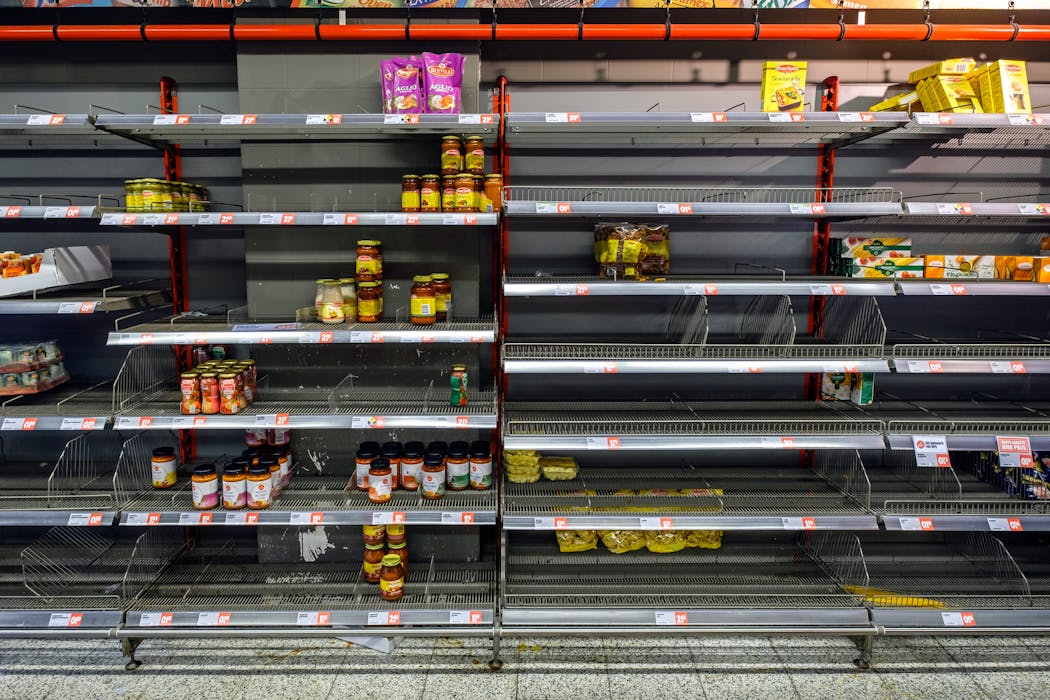
It also revealed how heavily the food chain depends on clear, connected information when conditions change suddenly. Without improvements, in this type of extreme weather, supermarkets risk running short of food.

Extreme weather, like the floods and high winds of Storm Bram on December 9, is reshaping UK farming. A recent survey found that 87% of farmers have seen lower productivity because of droughts, floods or heatwaves, and major retailers now link higher food prices to weather-related harvest losses.

A recent UK assessment of resilience in the systems delivering food from farms to shops also identifies how much pressure severe weather places on production and transport.

Storm Amy exposed that clearly. It left fields too muddy for machinery and blocked rural access roads in several areas. Harvesting was paused and collections rescheduled because vehicles could not operate safely or reach farms by normal routes.

When many farms face the same conditions at once, produce reaches distribution centres later and waste risks rise. The storm illustrated how quickly weather can unsettle the flow of food, and how much depends on clear, connected information when conditions shift suddenly.

How information moves through the system is important. Farmers may know frost is coming, but not whether access roads are open nearby, whether rivers are rising in their region, or whether retailers are shifting collection times. Each part of the chain acts on its own information, so decisions are made later than they need to be.

A shared early-warning system could change that by giving farmers, retailers and public agencies (such as local authorities) the same practical signals at the same time. Information about soil conditions, water availability, severe-weather alerts and access, could help the food system can adjust earlier and avoid possible food shortages.

Food is already classified as part of the UK’s critical national infrastructure, meaning disruptions can affect essential services. Projections from the Met Office, the UK’s weather and climate science agency, suggest Britain will face hotter, drier summers and warmer, wetter winters.

They also warn of more frequent extreme events. Even as intense rain falls in some areas, reservoirs in parts of south-east England are entering winter below typical levels, showing how uneven rainfall can leave soils saturated while water storage remains tight.

The rapid shift from heavy rain to colder conditions illustrates what the Met Office describes as compound events – hazards arriving close together that can cause greater disruption than either would on their own. For farmers, this can mean managing soaked ground one day and protecting crops from frost the next, all while keeping collections and deliveries on track.

How Storm Amy affected one farmer.

Data that doesn’t connect

Farmers already monitor soil moisture, field conditions and crop status. Public agencies track rainfall, river levels and flood alerts. Retailers have complicated systems that include transport networks and assessing expected demand. But these numbers sit in different systems, often using different formats, making them difficult to bring together quickly.

At its core, this is a problem of systems not being able to talk to each other when it matters. Work on the food data transparency partnership (which brings together views from government departments and industry) highlights the need for common standards.

Technical groups make the same point – that inconsistent formats and definitions prevent organisations from forming a clear shared view of what is happening on the ground.

Each set of data helps in isolation; the difficulty is that they are not easily viewed together.


Read more:
The UK’s food supply is more fragile than you might think – here’s why it should be a national priority


Supermarkets want change too

In November, Tesco’s UK chief executive, Ashwin Prasad, called for a national framework for farm data, noting that 96% of farmers say inconsistent standards make planning harder. When both the UK’s largest retailer and its suppliers highlight the same barrier, it suggests a deeper, system-wide issue rather than an isolated concern.

Government plans for revising its agricultural policy is starting to acknowledge these issues. There are pilot schemes testing the use of shared environmental data on farms. And the food data transparency partnership is working on more consistent data rules. These efforts are important foundations, but recent events show that more practical, real-time coordination is still needed, especially in emergencies.

Public agencies hold information that no other part of the system can access: regional transport pressures, infrastructure constraints and emergency responsibilities. They are also required to assess climate-related risks under government reporting standards which will start to be introduced in 2026. These assessments depend on accurate, timely data, something that becomes far harder to provide when information is fragmented.

With clearer and more connected information, government bodies could identify which rural roads matter most for moving perishable goods, direct targeted support to farmers when severe weather threatens crops, spot pressure points when multiple regions face disruption, and plan long-term investments in flood management, soil health and water resources.

Why early-warning systems are needed

The UK already has many of the components needed for a modern, connected food-information system, detailed monitoring on farms themselves, national forecasting and sophisticated retail logistics. The priority now is to bring these parts together.

A shared early-warning layer could make a difference. It would not replace existing tools or farmers’ experience, but provide a small set of common signals, soil conditions, water availability, severe-weather alerts and key access-route issues, available to everyone at the same time. To work in practice, it must also ensure that farmers retain clear control over how their data is used so that trust and coordination develop together.

A recent survey found that more than 80% of UK farmers are worried that climate change is “harming their livelihoods”. That sense of pressure underlines the need for systems that help farmers prepare earlier and respond more confidently when conditions change.

Better, more connected data is one of the simplest ways to offer that support, and to help keep food moving smoothly as British weather becomes increasingly unpredictable.


Don’t have time to read about climate change as much as you’d like?

Get a weekly roundup in your inbox instead. Every Wednesday, The Conversation’s environment editor writes Imagine, a short email that goes a little deeper into just one climate issue. Join the 47,000+ readers who’ve subscribed so far.


The Conversation

Mohammed F. Alzuhair does not work for, consult, own shares in or receive funding from any company or organisation that would benefit from this article, and has disclosed no relevant affiliations beyond their academic appointment.

ref. Farmers and supermarkets worry that extreme weather will stop food getting to consumers – here’s what needs to change – https://theconversation.com/farmers-and-supermarkets-worry-that-extreme-weather-will-stop-food-getting-to-consumers-heres-what-needs-to-change-270924

Mini brains, big questions: science is racing ahead of ethics

Source: The Conversation – UK – By James Poulter, Associate Professor of Genomic Medicine, University of Leeds

In a little over ten years, organoid models – miniature, lab-grown clusters of cells that imitate real organs – have transformed how we study human development and disease while accelerating drug discovery. As a bonus, they’ve reduced our reliance on animal testing.

Among these models, brain organoids – 3D, brain-like structures grown from stem cells – have progressed from simple cell clusters to sophisticated models that mimic important aspects of brain development and function.

Recent breakthroughs have made them more complex: some organoids now show electrical activity similar to what is seen in a very early-stage human foetus. Others form networks of nerve cells that can send signals back and forth, in a similar way to how real brains communicate.

These advances promise deeper insights into brain disorders such as Alzheimer’s and schizophrenia, and could revolutionise drug testing and personalised medicine. Yet, as complexity grows, so does ethical unease.

Bioethicists warn that current rules for human and animal research don’t fit well for things that come from human cells, are alive, and are becoming more like real brains

Under controlled conditions, brain organoids can self-organise into layers resembling – at a very basic level – the developing human brain.

At first, organoids were basic models of the cortex. But newer methods now let scientists combine organoids that mimic different brain regions and even blood vessels, making them more complex and long-lasting. Researchers have also found ways to accelerate their development, enabling them to form working neural networks more quickly and even connect with robots.

Organoids are useful because they let scientists study human biology without invasive procedures. They can show how the brain develops in early life – something we normally can’t see inside the womb. They can also mimic conditions like Alzheimer’s and autism so researchers can understand them better and test new treatments.

Organoids provide safer, more reliable ways to test drugs and help reduce the need for animals in research, supporting global efforts to phase out mandatory animal testing.

Yet, in many ways, organoids are not really miniature brains at all. They lack sensory input, body integration and do not replicate the vast complexity of a human brain.

Brain organoids in a flask.
Human brain organoids.
NIAID/Shutterstock.com, CC BY

Still, as organoids build neural networks and show electrical activity like that seen in premature babies, an important question arises: when does this level of complexity suggest they might have some kind of feeling or experience?

This is the main ethical concern. If organoids can process information or change their behaviour in response to it, do they gain moral status?

Consciousness remains one of science’s most elusive concepts. There’s no clear definition or way to measure it. Some organoids have shown brain-like activity similar to that of premature babies, sparking headlines and public concern.

Many scientists argue that these signals just show early, immature brain activity, not actual awareness. Still, ethical cautions suggest we should consider thresholds for how complex and active organoids become before proceeding unchecked.

Regulatory limbo

Ethical frameworks for research assume two categories: human subjects and animals. However, organoids fit neither. They are human-derived but not a person; living but not sentient.

This ambiguity makes oversight of this field of research difficult. In the US and Europe, organoid research falls under general tissue-use regulations, focusing on donor consent rather than organoid welfare.

China recently introduced the first comprehensive organoid guidelines, covering things like the possibility of consciousness and mixing human and animal cells. Most other countries lack clear rules. Because of this, experts are calling for international oversight, ongoing consent mechanisms and advisory panels to keep research transparent and maintain public trust.

Brain organoids now sit at a crossroads: powerful enough to reshape neuroscience, yet complex enough to challenge our ethical comfort zones. As these models edge closer to behaviour we normally associate with living brains, the world needs clearer rules, shared standards and open dialogue.

The science is moving fast, and our ethical frameworks must evolve just as quickly if we want this revolution to benefit society responsibly.

The Conversation

James Poulter receives research funding from UK Research and Innovation.

ref. Mini brains, big questions: science is racing ahead of ethics – https://theconversation.com/mini-brains-big-questions-science-is-racing-ahead-of-ethics-269411

‘Mindful gifting’ could be the kindest thing you do for yourself and others this Christmas

Source: The Conversation – UK – By Ines Branco-Illodo, Senior Lecturer in Marketing, University of Stirling

Mr. SEPTEMBER/Shutterstock

This year’s Christmas advert from UK department store John Lewis is notable for its emotional impact and captivating storytelling. In it, a middle-aged former raver is gifted a vintage vinyl record by his son. The focus is on this fairly modest gift, which quietly speaks a language of love amid the noise and excess of the festivities.

The gift, seemingly secondhand, carries meaning far beyond its monetary value, illustrating that the social benefits of gifting are available without heavy environmental costs. This resonates with what we, in our research, have termed “mindful gifting”, where thoughtful gifts have the ability to generate immense joy and celebrate connection.

Every year, the holiday season arrives with a familiar contradiction. People want to show love, yet feel overwhelmed by the pressure to buy more, spend more and wrap everything in glittering plastic or paper.

This seasonal pressure begins earlier each year. December is now one of the most environmentally damaging months across the world. Around three in five UK adults receive unwanted Christmas gifts each year, representing an estimated £1.2 billion in wasted spending.

Consumers navigate the Christmas period bombarded with messaging around deals and the expectation to buy more. Amid the deepening climate crisis, and at a time when many people struggle with financial anxiety, the idea that having more things equates to greater happiness is becoming increasingly hard to justify.

However, our research has found that there is a way to give that genuinely supports wellbeing, for both giver and receiver.


Read more:
Christmas can be stressful for many people – here’s what can help you get through the festive season


This mindful gifting is reflected in the choices, practices and rituals of both givers and receivers that show consideration of the consequences of the gift for themselves and others (and for the planet). This approach allows giving to advance a broader social good, more closely reflecting the spirit of the season.

Mindful gifting brings together research on more thoughtful consumption and offers a practical approach to giving and receiving that signals love without the pressure of overspending and accumulating clutter.

Our research indicates that mindful giving has a greater positive effect on overall wellbeing and creates less waste than conventional festive shopping. Homemade presents, meaningful experiential gifts such as a surprise trip to a favourite place, and gifts that support the recipient (for instance, a carefully chosen book with a thoughtful dedication) or benefit others (such as a donation in their name), can boost the wellbeing of both the giver and receiver far more effectively than impulse purchases.

Likewise, thoughtfully crafted wrapping made from reused paper or fabric can show real attentiveness. When giving to others, people tend to overestimate how much recipients expect to be spent, leading to expensive gifts that create pressure, suspicion or guilt. Instead, the most-valued gifts are personalised, sentimental and grounded in empathy, particularly in difficult situations.

Mindful receiving is also important. This means gracious acceptance, regifting to those who would appreciate the item more and cutting out unnecessary packaging.

In search of the ‘perfect gift’

In earlier research, we found that the “perfect gift”, a term beloved by retailers, has little salience for gift recipients. Instead, people tend to remember “the best gift ever” as one full of personal meaning that arises from a genuine understanding of them by the giver. Often it entails experiences shared with the giver that linger long after the physical gift fades from memory.

For Faye, one of the participants in our research, the best gift ever was a Nutcracker-themed treasure hunt that her father had created with clues around the house leading to a doll under the Christmas tree. This was followed by a trip to the Nutcracker ballet.

Another interviewee still treasures a hand-me-down doll’s pram that she received as a child, just after the second world war. Although it was supposed to have been left by Father Christmas, she recognised her sister’s toy and understood the work her dad had put into repainting and restoring it for her.

These stories reflect our new findings on mindful gifting: care, awareness, attentiveness and appreciation in gift exchanges are the real drivers of the most cherished presents.

Mindful gifting does not necessarily mean giving less. It means slowing down and taking the time to find (and appreciate) gifts that carry meaning and express genuine affection. Choosing gifts more carefully might even transform the festive season from a source of stress, excessive expense and waste into one of deeper purpose and meaningful bonds. Mindful gifting is a path to connection, not to consumerism.

It is a quiet yet profound way to say that you care, as the boy in the advert and the record for his father capture so beautifully.

The Conversation

Teresa Pereira Heath receives funding from National Funds of the Portuguese Foundation for Science and Technology (FCT), and, when eligible, is co-financed by European funds, within the project UID/03182/2025, Centre for Research in Economics and Management, University of Minho. DOI: https://doi.org/10.54499/UID/03182/2025

Ines Branco-Illodo does not work for, consult, own shares in or receive funding from any company or organisation that would benefit from this article, and has disclosed no relevant affiliations beyond their academic appointment.

ref. ‘Mindful gifting’ could be the kindest thing you do for yourself and others this Christmas – https://theconversation.com/mindful-gifting-could-be-the-kindest-thing-you-do-for-yourself-and-others-this-christmas-271426

The hidden health risks of bottled water

Source: The Conversation – UK – By Muhammad Wakil Shahzad, Associate Professor and Head of Subject, Mechanical and Construction Engineering, Northumbria University, Newcastle

Art_Photo/Shutterstock

Growing mistrust of tap water has helped turn bottled water into a global staple, even in countries where public supplies are among the most rigorously tested. Marketing has positioned bottled water as purer, healthier and more convenient, but the scientific evidence tells a different story.

This perception of purity is central to bottled water’s appeal, yet studies show the product often brings its own set of risks for both health and the environment.

A 2025 study suggested that bottled water may not be as safe as many people assume. Tests on water sold in refillable jugs and plastic bottles found high levels of bacterial contamination.

The findings add to a growing body of research suggesting that in many places tap water is not only safe but often more tightly regulated and reliably monitored than bottled alternatives.

In most developed countries, tap water is held to stricter legal and testing standards than bottled water. Public supplies are monitored daily for bacteria, heavy metals and pesticides. In the UK, the Drinking Water Inspectorate publishes results openly. In the US, water suppliers must meet the National Primary Drinking Water Regulations overseen by the Environmental Protection Agency. Across Europe, water quality is governed by the EU Drinking Water Directive.

Bottled water, by contrast, is regulated as a packaged food product. It is tested less frequently and manufacturers are not required to publish detailed quality information.

Research has identified contaminants in bottled water, including microplastics, chemical residues and bacteria. A 2024 study detected tens of thousands of plastic particles per litre in some products. Other research suggests that bottled water often contains higher concentrations of microplastics than tap water, with potential links to inflammation, hormone disruption and the build-up of particles in human organs.

Plastics and microplastics in sand on a beach in the Canary Islands
Plastic bottles break down into microplastics, and even smaller nanoplastics, over time.
IgnacioFPV/Shutterstock

Plastic bottles can also leach chemicals such as antimony, phthalates and bisphenol analogues. Antimony is a catalyst used to make PET bottles, and PET is the most common plastic used for single-use drinks. Phthalates are plasticisers that keep plastics flexible. Bisphenol analogues such as BPS or BPF are close relatives of BPA, a chemical used to harden some plastics and to line food and drink cans. These substances can migrate into the water, especially when bottles sit in warm environments such as cars, delivery vans or direct sunlight.

Scientists are concerned because some of these compounds can act as endocrine disruptors, meaning they may interfere with the body’s hormone systems. High exposure to certain phthalates and bisphenols has been linked to effects on reproductive health, metabolism and development, although levels found in bottled water are generally low and the long-term risks are still unclear. Researchers are now exploring what repeated, chronic exposure might mean over time, particularly as bottled water consumption continues to rise worldwide.

Bottled water is not sterile. Once opened, microorganisms can multiply quickly. A half-finished bottle left in a warm car can become an ideal environment for microbial growth. Reusing single-use bottles also introduces bacteria from saliva and the wider environment.

Tap water generally contains beneficial minerals, a point well documented in public health research. In the UK and other countries, fluoride is added to some supplies to prevent tooth decay. Bottled water varies widely in mineral content, and studies suggest that children who drink bottled water more frequently have higher rates of dental caries.

How green is your bottle?

Drinking too much bottled water is also hard on the planet. Global consumption is so high that around one million plastic bottles are purchased every minute.

Danish water technology company Aquaporin estimates that producing a litre of bottled water can require up to two thousand times more energy than supplying a litre of tap water. The carbon footprint is higher too, averaging around eighty grams of carbon dioxide per litre once bottling, transport and cooling are included.

The plastic debris present in beach sediments at the remote islands of the Andaman, India
Plastic bottles are a major source of beach pollution.
Venturing wild/Shutterstock

The bottled water debate cannot be separated from the wider pressures facing global water supplies. Access to clean drinking water remains an urgent challenge worldwide. Climate change, rapid urbanisation, industrial pollution and population growth are straining freshwater resources. Unesco warns that more than two billion people already live in regions experiencing high water stress.

To offer alternatives to bottled water, I am working with a team of researchers on Solar2Water, a portable solar-powered device that generates clean drinking water directly from the air.

The system is decentralised, producing water at the point of use rather than relying on long pipelines or large treatment plants. Producing water locally helps reduce reliance on single-use plastics and eases demand on municipal systems.

As pressure on infrastructure grows, decentralised systems that produce clean drinking water at the point of use can complement existing networks. They strengthen resilience during climate shocks, reduce dependence on single-use plastics and provide options for communities where trust in tap water has been damaged.

Bottled water remains essential during emergencies or where tap water is genuinely unsafe. But in most developed countries it is neither safer nor cleaner than tap water. As climate change and pollution reshape water access, understanding the real differences between bottled and tap water matters more than ever.

The Conversation

Muhammad Wakil Shahzad is the founder and CEO of EcoTech X Team, which produces Solar 2 Water Generators. He has received funding from Northern Accelerator.

ref. The hidden health risks of bottled water – https://theconversation.com/the-hidden-health-risks-of-bottled-water-268513

How building with Lego can help teens talk about life’s big questions

Source: The Conversation – UK – By Martha Shaw, Associate Professor in Education, London South Bank University

stockphoto-graf/Shutterstock

If you’re thinking about buying Christmas presents for children, chances are a Lego set isn’t too far from your mind. The endless creativity that Lego bricks present means they can be used for far more than following instructions to build the model on the front of the box. They are even used in academic research.

Our research uses Lego to get young people talking to each other about identity, belonging and participation in society. We help young people engage with one another to think critically about their place in the world and their relationships with others.

We draw on the concept of “worldview” – beliefs and values that shape how we perceive things – and explore how our worldview (whether religious, non-religious or somewhere in between) influences how we see and interact with others and society.

In a recent study, we gave piles of Lego bricks to ten groups of young people in four secondary schools across England and asked them to build models to show their responses to questions. Besides the fact that it’s fun, building with Lego is a powerful way for people to express themselves.

Making and thinking

“Building” gives people time to reflect and can lead to more thoughtful, imaginative, and often emotional responses. The power of metaphor is particularly helpful in exploring personal or sensitive issues. It provides a sense of distance; we feel less exposed and able to discuss things that can be difficult to express.

This is a technique used in the Lego Serious Play approach: a tool developed for the workplace by the Lego Group with the idea that by “thinking through fingers” we use both sides of the brain with potential to unleash insight and imagination. We apply this to explore ideas of commonality and difference.

Students in our study explored ideas of identity by building a model to show “three things that make you, you”. Some students focused on things they like, such as hobbies, or important things for them. Many also highlighted people that mattered to them, their heritage, nation, faith, communities and nature. We asked students to explain their models and, in doing so, they explored the complex and diverse aspects of their own and others’ identities.

When building a model of “where you feel you belong”, the students considered their connections to people and places. What emerged were multiple allegiances and loyalties in which gender, ethnicity, nationality, religion, interests, aspirations and politics all intersected in complex and unpredictable ways. We asked students what connections there were between their Lego constructions, and to show this by attaching string between their own and others’ models.

Making connections

We then asked students to show and explain the things they do in these places as a way to explore their participation in social and civic life. At this point, we asked students about their religion or worldview and to sprinkle beads onto their models where this was relevant for them. This helped students think about their personal worldview and understand how this relates to identity and belonging, to their actions, and to society.

Finally, we asked the students to build together “what it means to be a citizen”. Here they combined their ideas, working together in a new and interactive way that pays attention to difference and connection. “It shows how we are all connected together in society and how in order for society to function we must work together,” one of the students said.

Our research shows that young peoples’ worldviews are complex and dynamic: they shape and are shaped by interaction in society. In other words, there is a complex interplay between worldviews, civic identity and action. The young people told us that the research process increased their understanding of themselves and each other. The experience of building and discussion built empathy, a sense of interconnectedness and shared vision for a more cohesive society. As part of our project, we’ve put together resources on this method for teachers to use.

A recent review of the national curriculum for England aims to equip young people in tackling the challenges of our changing world, and recommends increased provision of religious education and citizenship. As a research method and an educational tool, Lego or other building toys have the potential to help teachers and young people to think outside the box, whether that’s the Lego box, identity “boxes” or traditional approaches to learning.

The Conversation

Martha Shaw receives funding from Culham St Gabriel’s Trust.

Alexis Stones works for University College London (UCL) as a lecturer, researcher and subject lead for Religious Education. She has received funding from Culham St Gabriel’s Trust and previously from Templeton World Charity Foundation.

ref. How building with Lego can help teens talk about life’s big questions – https://theconversation.com/how-building-with-lego-can-help-teens-talk-about-lifes-big-questions-244113

Eternity: this clever film proves romance isn’t about choosing ‘the one’ – a philosopher of love explains

Source: The Conversation – UK – By Tony Milligan, Teaching Associate in Philosophy, University of Sheffield

In the new rom-com Eternity, Joan (Elizabeth Olsen) faces an impossible choice: spend forever with the steady husband she’s loved for years, or reunite with the dreamy first husband she married back in her carefree youth.

In this afterlife, everyone gets one shot at choosing where – and with whom – they’ll spend eternity, guided (and occasionally harassed) by an overworked Afterlife Coordinator on a strict deadline. Once the decision is made, it’s final. A few souls try to wriggle out of their choice, but escapees are hunted down and flung into the void. Not a place where anyone wants to be.

Joan can pick the dependable but unglamorous Larry (Miles Teller) or her youthful love, Luke (Callum Turner) who died a war hero. Everyone in this post-life holding area is restored to the physical age when they were happiest. Troublingly for Larry, Joan is the age she was when she married Luke, and when she kissed him goodbye before his fateful posting overseas.


Read more:
Valentine’s Day: a brief history of the soulmate – and why it’s a limited concept


On the face of it, this choice of eternities doesn’t make much sense. So much of our human love is about mortal longings, rather than immortal longings. An eternity of me would be more than I would inflict upon anyone, let alone my wife Suzanne, a woman who really deserves better. Human love only makes sense in a transitory context, just as the beauty of cherry blossom would be lessened if we could freeze dry it and secure it permanently to the tree with Gorilla glue.

But Eternity is not truly about a love that could last forever. It is about the way that love, real ordinary love, involves more than happiness, and how love shapes our decisions in ways that seem to be involve recognition rather than choice. These are familiar philosophical themes which could become quite heavy, but Eternity handles them deftly, with an upbeat humour.

The trailer for Eternity.

In the film, the afterlife is just as confusing as the regular world. God isn’t around to offer judgement. The decision about futures must be made quickly so that the system can cope without becoming overloaded. Trains are continually moving, bringing new arrivals to a massive hotel, before they depart permanently to their forever destination.

The trains do not travel on roads to freedom. Destinations offer only a themed existence. They include Paris World, with a fake rive gauche where a fake Jean-Paul Sartre and a fake Albert Camus argue passionately in a café about the finer points of existentialism before getting into a fist fight. Sure, it’s something that many philosophers would like to see – but not endlessly.

The story first appears to focus on an existentialist idea: in life, we are forced to make impossible choices without any final moral guidance. Even love, it seems, must give way to the harsh fact that our choices have no solid foundation.

And, like any good student of Sartre, Joan discovers that this is not a pleasant situation. The philosopher and political economist John Stuart Mill believed that the greatest happiness and the greatest freedom to choose must go together. Freedom to choose does not make us happy. It makes us anxious.

The turning point of the film comes when Joan starts to see that neither happiness nor choice really decides anything. Threatened with the prospect of her wandering off to Paris World, one of her husbands tries to decide for her by sacrificing his own happiness.

A husband trying to decide for his wife is, no doubt, a rare and dangerous sort of thing and it does not stick. What’s interesting about Eternity is that it doesn’t settle for this obvious “Judgment of Solomon” solution, where the man willing to sacrifice his own happiness is the one she should choose in the end.

Yes, that does turn out to be part of the story. And yes, it does help her to recognise that maximising happiness is not the same as living a good and meaningful life – a life in which happiness has its place but only alongside other things. But the film also makes a deeper move. Joan risks being cast into the void when she realises that the whole business of choice has been shadow play. While she has the body of her younger self, she has the history of her older self. And that matters.

It matters because love is not a response to the unique characteristics of others: their physique, laughter or what philosophical discussions of love jokingly refer to as “the way they wear their hat and sip their tea”. Rather, love is the recognition of a shared history of caring for one another. A recognition of who, and what, counts as home.

Joan’s struggle is not a struggle to overcome a paralysing anxiety, to make her impossible choice and then march resolutely into the future. It is simply a struggle to go home.


Looking for something good? Cut through the noise with a carefully curated selection of the latest releases, live events and exhibitions, straight to your inbox every fortnight, on Fridays. Sign up here.


The Conversation

Tony Milligan does not work for, consult, own shares in or receive funding from any company or organisation that would benefit from this article, and has disclosed no relevant affiliations beyond their academic appointment.

ref. Eternity: this clever film proves romance isn’t about choosing ‘the one’ – a philosopher of love explains – https://theconversation.com/eternity-this-clever-film-proves-romance-isnt-about-choosing-the-one-a-philosopher-of-love-explains-271647

What these Danish activists can teach the rest of the world about fighting climate crisis

Source: The Conversation – UK – By Kristoffer Balslev Willert, Postdoctoral Research in the SDU Climate Cluster Project, University of Southern Denmark

Burning forests, flooded streets, a planet spinning toward collapse. Climate activists around the world face disaster and despair on a daily basis. Research suggests that although campaigners are deeply committed to tackling the crisis, they face a high risk of burnout.

This is not surprising given that a large part of their work includes challenging political, economic and cultural resistance. And when also taken with the fact that legal repression of climate activism is on the rise globally.

On top of this, many people still believe that living sustainably is about loss. Less holidays, less consumption: more sacrifice, less fun.

But that’s not the whole story. Because beneath the noise of global summits and corporate promises, another kind of climate activism is quietly taking root. One that blends imagination and playfulness – and, dare we say it, joy.

Across Denmark, this kind of activism takes many forms. Young people run repair cafes, grow community gardens and organise forest walks. They create art projects and storytelling discussions and explore what life beyond fossil fuels could actually look like.

Our research suggests that these projects are central to how grassroots groups can inspire action – and offer a new model for climate activism both in Denmark and beyond.

Another way of thinking

One of the groups, Arternes Ambassadører (“species’ ambassadors”) which aims to give democratic representation to other species, explains more:

The energy that drives us is very much about joy, enthusiasm, creativity and imagination. I think that’s lacking in nature activism, which is often driven by anger and protest, disappointment and concern. We prefer to imagine what we would like to see happen.

Our interviews with more than 40 green grassroots movements suggests that protests and boycotts are only a small part of their work. Many now recognise that positive visions of sustainable living attract far more support than negative messaging.

Veggie Friends | Rap about food waste by the the Danish ecoband project Økobandet.

Den Grønne Ungdomsbevægelse (The Green Youth Movement), for example, aims to spark imagination through action. They publish books about possible futures, lead forest excursions to get people thinking creatively about sustainability. And each year award the Bumblebee Prize to businesses pioneering sustainable practices.

Grønne Nabofællesskaber (Green Neighbourhood Communities) calls this “everyday activism”. A spokesperson told us: “We can see that when we cooperate and build alternatives, we get a bigger voice.”

Community living

Ecological villages and communal spaces such as Freetown Christiania in Copenhagen, further put these ideas into practice. Residents of all ages live together, host communal meals, run non-market festivals and develop renewable energy projects.

One ecovillage member told us: “We need to alter our consumption habits. But we can help each other in that process.” Another resident we spoke to put it this way: “This is just the beginning (as) part of the green transition, this lifestyle (will) at some point become more mainstream”.

While craft and reuse communities emphasise visibility and action, as one group told us: “The alternatives already exist, so it’s just a matter of getting out there and making people aware of it.”

These activities do more than show new ways of living. They help activists cope with exhaustion and build local resilience. They also help to tackle the “crisis of imagination”, whereby people struggle to picture a world beyond fossil fuels and consumerism.

Cooperative origins

The origins of this kind of grassroots collective action can be tracked back to the beginning of the late 19th century, when Danish farmers and workers built thousands of cooperatives — dairies, slaughterhouses, shops, housing associations — all owned and run collectively. Communities pooled resources, made democratic decisions and shared the benefits. Over time, the movement became a defining feature of Danish society: if you want change, you do it together.

This history matters because it taught generations of Danes that everyday people can organise, experiment and build alternatives when institutions fall short. And that legacy shapes today’s green grassroots movements too.

Our recent research found that many Danish climate groups draw directly on this tradition — and adapt the old cooperative spirit to the climate crisis.

This might be harder to pull off in countries with less social cohesion or civic support. But these ideas are still relevant beyond Denmark. As one of the energy communities told us: “Our local fight is a contribution to a larger, global fight”.

A new future

As our report shows, these kinds of approaches help people see sustainability not as a burden, but as a richer, more fulfilling way to live. This is especially important in the global north, where the impacts of climate change still feel distant.

Though many of the Danish groups we spoke with stress that the climate crisis provides an opportunity to create totally new narratives and practices. As a spokesperson for the Copenhagen environmental organisation cirka cph told us: “We look into a future where our society will change radically. The important question is: What can we learn? And how can we create the best settings for the future society?”

Indeed, what these grassroots movements share is that they don’t claim to have all the answers. They experiment, imagine and prototype possible futures. They make the green transition tangible, local and inclusive and ultimately take activism beyond doom and despair to a place of hope and possibility.


This article was commissioned as part of a partnership between
Videnskab.dk and The Conversation.

The Conversation

This article was commissioned as part of a partnership between
Videnskab.dk and The Conversation. Kristoffer Balslev Willert receives funding from Danmarks Frie Forskningsfond (DFF).

Bryan Yazell receives funding from Danmarks Frie Forskningsfond (DFF) and Interreg Europe.

This article was commissioned as part of a partnership collaboration between
Videnskab.dk and The Conversation.

ref. What these Danish activists can teach the rest of the world about fighting climate crisis – https://theconversation.com/what-these-danish-activists-can-teach-the-rest-of-the-world-about-fighting-climate-crisis-268723

Donald Trump’s peace agreements are also business deals

Source: The Conversation – UK – By Patrick E. Shea, Senior Lecturer in International Relations and Global Governance, University of Glasgow

The US president, Donald Trump, presided over two major agreements in early December. The Democratic Republic of the Congo (DRC) and Rwanda signed a peace deal initially negotiated in June. At the same ceremony, Trump announced a strategic partnership between the US and the DRC.

The US-DRC agreement grants American companies priority access to the country’s vast mineral wealth. US firms get “right of first offer” on major mining projects. The DRC holds significant reserves of cobalt, copper and lithium.

This caps a remarkable six-month period. Since August, the Trump administration has signed mineral access agreements with Ukraine, Armenia and Azerbaijan, and reportedly Argentina. It has also negotiated bilateral arrangements with Saudi Arabia, Australia, Malaysia, Thailand and Japan.

The pace is striking. Traditional development programmes that secured American economic interests abroad typically took years to negotiate and implement. These deals are happening in weeks.

This isn’t simply Trump putting American economic interests forward. The scramble reveals how far the US has fallen behind China in securing access to critical minerals – and how much of that gap is the US’s own fault.

US presidents have always mixed economic interests with foreign policy. In the 1940s and early 50s, the Marshall Plan rebuilt Europe while opening markets. Cold War development aid created trading partners while dampening communist appeal. So Trump’s transactional style isn’t entirely new.

But the current mineral scramble stems from three converging problems – many of the administration’s own making.

Transactional approach

First, China restricted US access to critical minerals in retaliation for Trump’s tariff policies. Beijing imposed export controls on rare earth elements essential for the US to manufacture semiconductors, batteries and defence systems.

This created immediate supply-chain vulnerabilities. The US lacks domestic sources of these minerals. American tech and defence companies suddenly faced potential shortages with no alternative suppliers readily available.

Initially, this vulnerability may not have concerned Trump. During his first term, critical minerals weren’t a foreign policy priority. The 2017 national security strategy didn’t mention them. These materials were associated primarily with the green energy transition, a policy area Trump actively opposed.

But the rapid development of artificial intelligence changed the calculation. Training large AI models requires massive data centres. These facilities depend on advanced cooling systems, high-efficiency motors and power systems that use rare-earth elements now restricted by China.

Critical mineral access had become a strategic imperative for the US. Trump’s November 2025 national security strategy explicitly prioritises “securing access to critical supply chains and materials”. This shift coincides with the second problem: the tech sector’s growing influence over American politics. Major tech companies have secured unprecedented access to policymaking and dramatically increased their lobbying since ChatGPT first launched in late 2022.

Whether these mineral deals actually benefit the US as a whole remains unclear. The scramble treats mineral access as a zero-sum competition with China rather than a challenge that could be managed through international coordination. In addition, these rushed agreements may serve AI companies’ short-term needs without creating long term supply chain security.

The third problem for US foreign policy is the US gutted its institutional capacity for securing overseas investments. The United States Agency for International Development (USAID) traditionally ran programmes that built state capacity in developing countries. These initiatives trained civil servants, developed regulatory frameworks and established procurement systems.

My research shows how programmes facilitated US investments. When countries had functioning land registries, clear property rights and professional bureaucracies, US companies could invest with confidence.

Trump froze USAID operations in January 2025. Without these institutions, the US can no longer build the governance frameworks that make American investment feasible. Instead, the administration must negotiate explicit access provisions in each bilateral deal.

The pace of recent deals reflects US’s desperate attempts to catch up with China. Whether the US can catch up will have to be evaluated, but there are several reasons to be sceptical of the benefits of the deals that have already been signed.

The DRC agreement illustrates the limitations of this approach. It promises US support for “protection of critical infrastructure” and “safeguarding territorial integrity”. But it offers little detail on how these commitments will be delivered.

Fighting between M23 rebels and DRC forces has continued even as the agreements were announced. The US lacks the institutional capacity to coordinate effective security cooperation. USAID programmes that would have built state capacity and investment safeguards no longer exist. The State Department offices that would implement security assistance have been hollowed out.

The agreement promises to establish “streamlined permitting processes” for US investors in the mining sector. But it’s unclear how investor disputes will be resolved or how American access will remain secure if political circumstances change.

Attention span

Trump’s track record further undermines these arrangements. His pattern of abandoning both promises and threats makes any commitment less credible. Investors understand this. When Trump threatened comprehensive sanctions against Russia in July 2025, Russian markets rallied rather than panicked.

Compare this to the institutional approach. USAID programmes built genuine state capacity over the years. Countries became better able to manage resources, enforce contracts and maintain stability. That created lasting conditions favourable to American investment while also supporting local development.

Without institutional backing, these mineral deals rely entirely on continued presidential attention and goodwill. My research shows that credible economic commitments require a robust diplomatic and bureaucratic apparatus. Trump has undermined this infrastructure.

If the US wants to secure critical mineral supplies effectively, reversing course would be necessary. Reinstating development agencies and rebuilding diplomatic capacity would serve American interests far better than serial bilateral bargaining.

But that would require patience and institutional investment. Trump’s approach offers neither. The US has fallen behind in the race for critical minerals. These rushed deals may provide short-term access. But they cannot create the stable, long-term supply chains American tech and defence industries actually need.

The Conversation

Patrick E. Shea does not work for, consult, own shares in or receive funding from any company or organisation that would benefit from this article, and has disclosed no relevant affiliations beyond their academic appointment.

ref. Donald Trump’s peace agreements are also business deals – https://theconversation.com/donald-trumps-peace-agreements-are-also-business-deals-271539

The science of human touch – and why it’s so hard to replicate in robots

Source: The Conversation – UK – By Perla Maiolino, Associate Professor of Engineering Science, member of the Oxford Robotics Institute, University of Oxford

aerogondo2/Shutterstock

Robots now see the world with an ease that once belonged only to science fiction. They can recognise objects, navigate cluttered spaces and sort thousands of parcels an hour. But ask a robot to touch something gently, safely or meaningfully, and the limits appear instantly.

As a researcher in soft robotics working on artificial skin and sensorised bodies, I’ve found that trying to give robots a sense of touch forces us to confront just how astonishingly sophisticated human touch really is.

My work began with the seemingly simple question of how robots might sense the world through their bodies. Develop tactile sensors, fully cover a machine with them, process the signals and, at first glance, you should get something like touch.

Except that human touch is nothing like a simple pressure map. Our skin contains several distinct types of mechanoreceptor, each tuned to different stimuli such as vibration, stretch or texture. Our spatial resolution is remarkably fine and, crucially, touch is active: we press, slide and adjust constantly, turning raw sensation into perception through dynamic interaction.

Engineers can sometimes mimic a fingertip-scale version of this, but reproducing it across an entire soft body, and giving a robot the ability to interpret this rich sensory flow, is a challenge of a completely different order.

Working on artificial skin also quickly reveals another insight: much of what we call “intelligence” doesn’t live solely in the brain. Biology offers striking examples – most famously, the octopus.

Octopuses distribute most of their neurons throughout their limbs. Studies of their motor behaviour show an octopus arm can generate and adapt movement patterns locally based on sensory input, with limited input from the brain.

Their soft, compliant bodies contribute directly to how they act in the world. And this kind of distributed, embodied intelligence, where behaviour emerges from the interplay of body, material and environment, is increasingly influential in robotics.

Touch also happens to be the first sense that humans develop in the womb. Developmental neuroscience shows tactile sensitivity emerging from around eight weeks of gestation, then spreading across the body during the second trimester. Long before sight or hearing function reliably, the foetus explores its surroundings through touch. This is thought to help shape how infants begin forming an understanding of weight, resistance and support – the basic physics of the world.

This distinction matters for robotics too. For decades, robots have relied heavily on cameras and lidars (a sensing method that uses pulses of light to measure distance) while avoiding physical contact. But we cannot expect machines to achieve human-level competence in the physical world if they rarely experience it through touch.

Simulation can teach a robot useful behaviour, but without real physical exploration, it risks merely deploying intelligence rather than developing it. To learn in the way humans do, robots need bodies that feel.

A ‘soft’ robot hand with tactile sensors, developed by the University of Oxford’s Soft Robotics Lab, gets to grips with an apple. Video: Oxford Robotics Institute.

Intelligent bodies

One approach my group is exploring is giving robots a degree of “local intelligence” in their sensorised bodies. Humans benefit from the compliance of soft tissues: skin deforms in ways that increase grip, enhance friction and filter sensory signals before they even reach the brain. This is a form of intelligence embedded directly in the anatomy.

Research in soft robotics and morphological computation argues that the body can offload some of the brain’s workload. By building robots with soft structures and low-level processing, so they can adjust grip or posture based on tactile feedback without waiting for central commands, we hope to create machines that interact more safely and naturally with the physical world.

Occupational therapist Ruth Alecock uses the training robot 'Mona'
Occupational therapist Ruth Alecock uses the training robot ‘Mona’.
Perla Maiolino/Oxford Robotics Institute, CC BY-NC-SA

Healthcare is one area where this capability could make a profound difference. My group recently developed a robotic patient simulator for training occupational therapists (OTs). Students often practise on one another, which makes it difficult to learn the nuanced tactile skills involved in supporting someone safely. With real patients, trainees must balance functional and affective touch, respect personal boundaries and recognise subtle cues of pain or discomfort. Research on social and affective touch shows how important these cues are to human wellbeing.

To help trainees understand these interactions, our simulator, known as Mona, produces practical behavioural responses. For example, when an OT presses on a simulated pain point in the artificial skin, the robot reacts verbally and with a small physical “hitch” of the body to mimic discomfort.

Similarly, if the trainee tries to move a limb beyond what the simulated patient can tolerate, the robot tightens or resists, offering a realistic cue that the motion should stop. By capturing tactile interaction through artificial skin, our simulator provides feedback that has never previously been available in OT training.

Robots that care

In the future, robots with safe, sensitive bodies could help address growing pressures in social care. As populations age, many families suddenly find themselves lifting, repositioning or supporting relatives without formal training. “Care robots” would help with this, potentially meaning the family member could be cared for at home longer.

Surprisingly, progress in developing this type of robot has been much slower than early expectations suggested – even in Japan, which introduced some of the first care robot prototypes. One of the most advanced examples is Airec, a humanoid robot developed as part of the Japanese government’s Moonshot programme to assist in nursing and elderly-care tasks. This multifaceted programme, launched in 2019, seeks “ambitious R&D based on daring ideas” in order to build a “society in which human beings can be free from limitations of body, brain, space and time by 2050”.

Japan’s Airec care robot is one of the most advanced in development. Video by Global Update.

Throughout the world, though, translating research prototypes into regulated robots remains difficult. High development costs, strict safety requirements, and the absence of a clear commercial market have all slowed progress. But while the technical and regulatory barriers are substantial, they are steadily being addressed.

Robots that can safely share close physical space with people need to feel and modulate how they touch anything that comes into contact with their bodies. This whole-body sensitivity is what will distinguish the next generation of soft robots from today’s rigid machines.

We are still far from robots that can handle these intimate tasks independently. But building touch-enabled machines is already reshaping our understanding of touch. Every step toward robotic tactile intelligence highlights the extraordinary sophistication of our own bodies – and the deep connection between sensation, movement and what we call intelligence.

This article was commissioned in conjunction with the Professors’ Programme, part of Prototypes for Humanity, a global initiative that showcases and accelerates academic innovation to solve social and environmental challenges. The Conversation is the media partner of Prototypes for Humanity 2025.

The Conversation

This article was commissioned in conjunction with the Professors’ Programme, part of Prototypes for Humanity, a global initiative that showcases and accelerates academic innovation to solve social and environmental challenges. The Conversation is the media partner of Prototypes for Humanity 2025. Perla Maiolino receives funding from the UKRI Engineering and Physical Sciences Research Council and EU Horizon Europe Research and Innovation programme.

ref. The science of human touch – and why it’s so hard to replicate in robots – https://theconversation.com/the-science-of-human-touch-and-why-its-so-hard-to-replicate-in-robots-271558