Donald Trump’s strikes against narcoterrorists are new but the logic behind them isn’t

Source: The Conversation – UK – By Elisabeth Schweiger, Lecturer in International Politics, University of Stirling

The Trump administration’s push to label drug traffickers as “narcoterrorists” and kill them at sea has generated global outrage. But the controversy risks missing the larger story.

Experts, non-governmental organisations and the UN have condemned the strikes as unlawful assassinations and Washington’s claim that it is acting in self-defence does not appear to hold up to legal analysis.

Yet these attacks are not a dramatic break. They extend a decades-long pattern of US “targeted killings”, from Yemen to Somalia to Syria. These attacks are almost always justified through controversial legal interpretations and have often been met with muted international opposition.

There’s a chance that the current narrative doesn’t address the deeper, more meaningful criticisms of the thinking behind it.

Recent escalations by the Trump administration in targeting what the White House describe as narcoterrorists in the Caribbean have sparked significant debate. The attacks against accused drug traffickers have been extensively reported and the UN High Commissioner for Human Rights has called on the US government to halt the “extrajudicial killing of people aboard these boats, whatever the criminal conduct alleged against them”.

The Trump administration has vaguely justified the attacks through the right to self-defence in an armed conflict against narcoterrorists. But that claim has been refuted by UN experts, who have pointed out that “international law does not permit the unilateral use of force abroad to fight terrorism or drug trafficking”.

Under international law, the use of force in self-defence can only be justified if an armed attack against a state has occurred first or is imminent. For a situation to be classed as an armed conflict, certain threshold requirements need to be reached. Simply declaring that you are in an armed conflict with a group does not make it so.

Furthermore, criminals are not combatants, no matter how politically and socially problematic they may be. As such, lethal actions against them infringe upon fundamental human rights obligations – such as the right to life and the right to a fair trial.

‘War on terror’

The assaults and their justifications undoubtedly represent a troubling new development in US military practices. Yet the focus on attacks against drug criminals in the Caribbean obscures the similarities to current military operations conducted by the US against people they have designated as terrorists in the Middle East and Africa.

These have received barely any attention in public debates even though hundreds of people have recently been killed in Yemen, as well as in attacks in Syria, Iraq and Somalia.

The current campaign in the Caribbean is part of a broader pattern. For more than two decades, successive US administrations have carried out targeted killings overseas under contested definitions of what combatants are and what constitutes an armed conflict during the so-called “war on terror”.

The US-led campaign against Islamic State killed thousands of people, with civilian deaths estimated between 8,000 and 13,000 between 2014 and 2019. US airstrikes in Somalia and Yemen continue. Strikes at the port of Ras Isa and Sadaa’s remand migration detention centre a few months ago appear to have killed at least 150 civilians and injuring 200 more.

A witness, interviewed by Amnesty International described the attack on the migration centre: “They said they woke up to find dismembered bodies around them. You could see the shock and horror on their faces.”

The first attack on a so-called ‘drug boat’ in the Caribbean, close to Venezuela, September 2 2025.

It is worth remembering that the UK and other European powers have often participated in and facilitated such attacks and rarely challenged their legality.

Many countries have been fearful of directly confronting the US and objecting to these infringements of international law. As I have showed elsewhere, the legality of targeted killing strikes of terrorists outside of armed conflict has been consistently rejected by the overwhelming majority of countries.

States have characterised such practices by Israel as extrajudicial executions and have indicated concern over US practices – but they have often stopped short of openly opposing a global superpower.

So the strikes in Venezuela follow a pattern used regularly by the US and others. The Trump administration may have justified its strikes by coming up with the new and deeply problematic category of narcoterrorists. But the underlying logic remains unchanged. The US claims the authority to execute any individual it deems a threat – wherever and whenever it chooses.

Normalising murder

The consequences of this pattern are hardly unforeseeable. Experts have long warned that normalising such practices risks undermining the prohibition on the use of force and of extrajudicial killings. This potentially sets a precedent for powerful states to use lethal force against anyone they deem inconvenient.

The risk is that the monstrosity of this logic becomes obscured and the idea of targeting non-combatant narcoterrorists is eventually normalised once the initial surge of outrage fades. Already, the discussion in some quarters is beginning to shift from whether such strikes should occur to how they should be conducted, focusing on issues like target identification.

And while the attacks on drug traffickers rightly attract scrutiny, comparatively little attention is paid to the continuing, systemic use of lethal operations in parts of Africa or the Middle East, which often takes place under similar legal rationales.

This relative silence is significant. As I argue in my forthcoming book Silent War, this lack of protest and media attention – and the silence in public debates – not only reflects orientalist assumptions and power asymmetries. It also effectively enables and legitimises such political aggression.

The Conversation

Elisabeth Schweiger does not work for, consult, own shares in or receive funding from any company or organisation that would benefit from this article, and has disclosed no relevant affiliations beyond their academic appointment.

ref. Donald Trump’s strikes against narcoterrorists are new but the logic behind them isn’t – https://theconversation.com/donald-trumps-strikes-against-narcoterrorists-are-new-but-the-logic-behind-them-isnt-271688

Paddington The Musical: why the little bear from Peru is a hero in a very classical sense

Source: The Conversation – UK – By Emma Stafford, Professor of Greek Culture, University of Leeds

This year, fans of the tiny marmalade-loving bear from Peru can catch him on stage at London’s Savoy Theatre in the West End, in Paddington The Musical.

This is a stage adaptation of the first film in the most recent Paddington franchise, which began in 2014. While it features more than 18 new songs by Tom Fletcher (of the band McFly), it follows the film’s plot quite closely. It also shares its values of home, family and tolerance of difference – particularly relevant to current debates on immigration.

As an expert in ancient Greek culture, what struck me most was how this theatrical re-imagining casts Paddington as a hero in the tradition of Homeric epic.

Although there have been several iterations of the Paddington story since he was first introduced by Michael Bond in A Bear Called Paddington (1958), his journey has always been prompted by the destruction of his Peruvian home by an earthquake. His only surviving relative, Aunt Lucy, is too old to look after him, so he must find a new home. And so Paddington makes his way to London and to his new adopted family, the Browns.

This quest can be compared to Virgil’s epic poem the Aeneid. In this tale Aeneas flees the fall of Troy and wanders the Mediterranean until he eventually settles at the site of the future Rome. Arguably, both stories conform with American writer Joseph Campbell’s theory of the monomyth, or the “hero’s journey”, in which a quest is precipitated by a crisis. In this, the hero must overcome various challenges, often with the help of a mentor and some form of talisman or supernatural aid. In the end, he is victorious and reaches home transformed.

The quest for home and belonging is a popular theme in 21st-century film but it goes right back to Homer’s Odyssey. There the hero Odysseus has to overcome monsters, gods and men before finally achieving his nostos, his return home, with the help of the goddess Athene.

Such divine assistance may not be available to Paddington, but Aunt Lucy serves as his spiritual guide. In the musical, we never see her but her guidance is communicated by letter. As her words are read out, a bear-shaped constellation appears on the wall behind, giving her an almost magical quality.

Adversaries and talismans

Ancient and modern heroes alike must face monsters of one sort or another. Paddington’s adversaries are primarily human.

Opposition is briefly offered in act one by the splendidly bombastic Lady Sloane (Amy Booth-Steel) who is the leader of the Geographers’ Guild.

This institution originally sent the explorer Montgomery Clyde to Peru to collect dead animal specimens, but expelled him when came back empty handed, having instead befriended Paddington’s bear family. Lady Sloane is easily vanquished by Paddington’s superpower – his famous hard stare.

Paddington turns this withering look on people he thinks are behaving badly, making them feel hot under the collar and forcing them to realise the error of their ways. A whole musical number is dedicated to this small but mighty gesture.

In act two, the geographers reappear in pursuit of Paddington. Their song, The Geographer’s Guild, pays musical homage to Gilbert and Sullivan for whose light operas the Savoy Theatre was originally built. Its lyrics joke about the imperialist acquisitiveness of the geographers, who have already “collected” the Elgin marbles and now have their eye on the Statue of Liberty.

Foremost of his adversaries, however, is Millicent Clyde (Victoria Hamilton-Barritt), evil daughter of the sympathetic explorer Montgomery. She introduces herself with the magnificent number Pretty Little Dead Things in which she lists the animals she has subjected to taxidermy – many of which can be seen as part of the stage set.

Millicent is on a mission to complete what her father could not, and in the climactic scene, Millicent has taken Paddington to be stuffed at the Natural History Museum. These scenes wonderfully feature the distinct hind quarters of Dippy, the dinosaur skeleton-cast that, until recently, stood in the museum’s entrance, Hintze Hall.

If the hard stare is his superpower, Paddington’s talisman is undoubtedly that orange sticky substance. Act two opens with the ridiculously catchy song Marmalade, an extravagant fantasy in which the Brown’s cantankerous neighbour Mr Curry is won over by the taste of a marmalade sandwich, a fantasy into which the audience are drawn as they join in with the “ma-ma-ma-ma-marmalade” refrain.

While the marmalade sandwich kept in Paddington’s hat is a fundamental part of Michael Bond’s original character, it is pressed into service in the film as the secret weapon with which he escapes the clutches of Millicent Clyde. In the musical, it is likewise used to enlist the aid of Hank the Pigeon (voice/puppeteer Ben Redfern) and his fellow birds.

So Paddington is a hero, in the classical sense of the word. He is on a journey to find home after his was destroyed and is guided from afar by his Aunt Lucy. Along the way he must overcome evil and other obstacles. But with the help of his hard stare as his weapon and his trusty talisman, a marmalade sandwich, he triumphs.

This article features references to books that have been included for editorial reasons, and may contain links to bookshop.org. If you click on one of the links and go on to buy something from bookshop.org The Conversation UK may earn a commission.


Looking for something good? Cut through the noise with a carefully curated selection of the latest releases, live events and exhibitions, straight to your inbox every fortnight, on Fridays. Sign up here.


The Conversation

Emma Stafford does not work for, consult, own shares in or receive funding from any company or organisation that would benefit from this article, and has disclosed no relevant affiliations beyond their academic appointment.

ref. Paddington The Musical: why the little bear from Peru is a hero in a very classical sense – https://theconversation.com/paddington-the-musical-why-the-little-bear-from-peru-is-a-hero-in-a-very-classical-sense-271654

Lahore’s toxic winters: how smog is reshaping daily life in urban Pakistan

Source: The Conversation – UK – By Gulnaz Anjum, Assistant Professor of Climate Psychology, Centre for Social Issues Research, Department of Psychology, University of Limerick

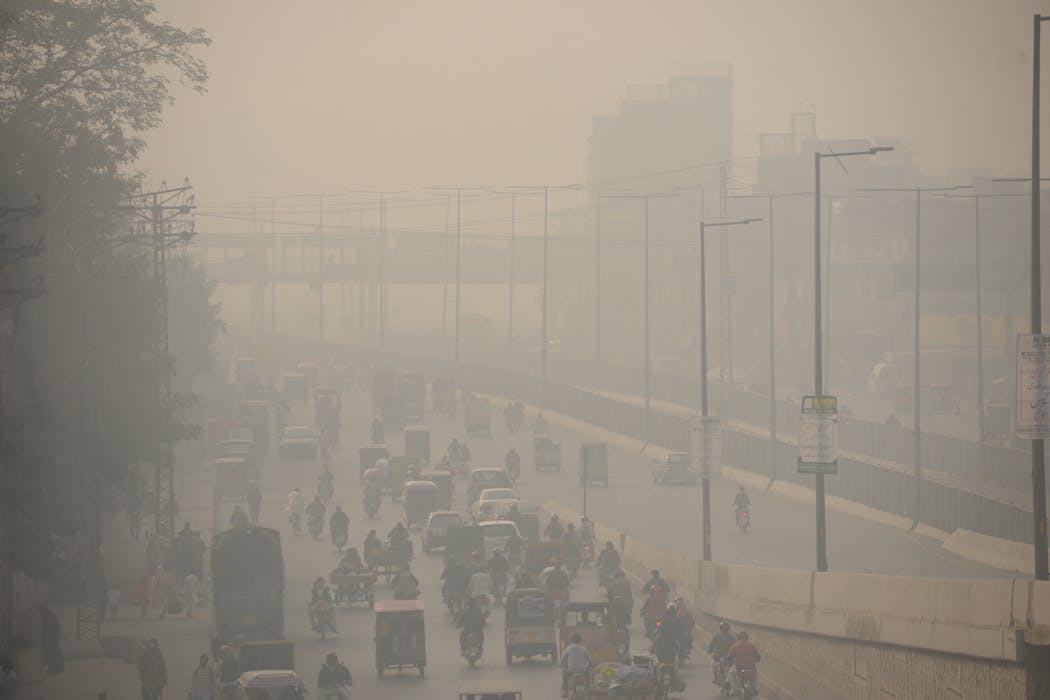
Commuters make their way along a road amid smoggy conditions in Lahore, Pakistan. Murtaza.Ali/Shutterstock

In November 2025, Lahore, the second-largest city in Pakistan, registered a “hazardous” air quality index of 509, according to IQAir, a global air quality monitoring organisation. The number speaks for itself. Eyes sting, throats burn and headlights blur into halos. In winter, the city feels as though it has slipped beneath a toxic sea.

Across Pakistan’s major cities, the shift into colder months no longer brings relief from heat or flooding. Winter has become smog season.

For weeks at a time, the sky turns grey-brown and the air tastes metallic before noon, a result of fine particles and acidic gases accumulating in the air and irritating the mouth and throat. These are not abstract environmental problems but daily, sensory realities. Smog now shapes routines, moods and the way people move through their day.

Lahore’s smog crisis is not new, but the numbers are becoming more alarming. The World Health Organization recommends that annual average levels of fine particulate matter should remain below five micrograms per cubic metre. According to a recent IQAir report, Lahore’s 2024 average was 102.

The burden of disease caused by air pollution is now estimated to be on a par with unhealthy diets and tobacco smoking. Global assessments place Pakistan among the countries with the highest mortality linked to air pollution, with particle concentrations far above recommended limits.

For residents of Pakistan’s cities, these statistics translate into physical and emotional strain. People describe waking with headaches after nights of coughing. Parents say the school run feels like walking through exhaust fumes.

Outdoor workers such as drivers, street vendors and construction labourers often report tasting metal in the air by late afternoon. Emerging research links smog episodes with spikes in respiratory illness, cardiovascular stress and hospital visits, especially among children and people with existing health conditions.

Winter in Lahore is sometimes described as “a lockdown without staying at home”. Public health advice on very polluted days often includes avoiding outdoor exercise, keeping windows closed and wearing masks when outside. Air quality apps now send real-time alerts to hundreds of thousands of users across the city.

But staying indoors is a luxury for many. Street vendors cannot sell food from their kitchens. Transport workers cannot drive rickshaws or buses from behind sealed windows. Families living in cramped, poorly ventilated housing do not breathe clean indoor air either; they breathe a mixture of outdoor pollution and indoor smoke from cooking or heating.


Read more:
Toxic air in the home is a global health emergency


The causes of this toxic winter mix are well documented. Older diesel trucks and buses emit large quantities of fine particles and nitrogen dioxide. Industrial zones and poorly regulated brick kilns burn low-quality fuel. Construction activity increases the amount of dust in the air. Seasonal burning of crop residues left behind after harvesting, such as stalks and straw, in Punjab and neighbouring regions worsens pollution even further.

Cold winter temperatures trap pollutants close to the ground. With little wind or rain to disperse them, a dense brown haze settles over Lahore and other urban areas. Recent analyses show that Lahore’s emissions remain high throughout the year, but peak during winter when weather conditions are least favourable.

Smog affects more than the lungs. It influences how people feel, behave and cope with daily life. Residents frequently report a sense of heaviness or irritability on high pollution days, difficulty concentrating or a “claustrophobic” feeling when visibility drops and the city seems to close in. Studies show that air pollution has negative effects on mental health. For families already dealing with crowded housing, unstable work and unreliable transport, smog adds another layer of psychological strain.

Smog’s uneven toll

These effects are not shared equally. Low-income communities in cities like Lahore and Karachi often live closer to industrial corridors, busy roads or burning waste sites, and have far less control over their exposure.

People who work outdoors breathe in more polluted air than those who can work remotely or retreat indoors. Women managing unpaid care work describe feeling exhausted by the constant monitoring of children’s coughs, many of whom also miss school.

For many households in Pakistan, air pollution interacts with other environmental threats such as extreme heat, flooding and water shortages. It is a pattern seen across developing countries, where climate change and pollution intensify existing inequalities and resilience depends not only on people’s physical wellbeing but also on collective capacity to support one another and withstand overlapping crises.

Recognising these psychological and social dimensions is essential for designing effective public health and environmental responses. When smog becomes seasonal – a regular feature of winter rather than an occasional occurrence – people adapt in ways that affect social life, work patterns, schooling and mental wellbeing.

Persistent exposure can lead to hopelessness, a sense that nothing can be done, which undermines motivation to participate in civic discussions or environmental initiatives. Others experience heightened worry about their children’s health, education and future, a form of “pollution anxiety”.

These emotional responses matter because they shape how communities understand risk, respond to public messaging and engage with policy measures.

No one can solve city-wide smog alone, yet waiting only for national reforms can feel too slow and too distant. Community-level action occupies the space in between. Neighbourhood clean-air campaigns, school-based monitoring, local tree planting, reporting of illegal burning and collaborations between residents, health workers and municipal staff can increase awareness and create political pressure for broader systemic change.

These efforts do not replace national policy; they make it more likely to succeed. And they give people a sense of agency in a context where pollution can otherwise feel overwhelming.


Don’t have time to read about climate change as much as you’d like?

Get a weekly roundup in your inbox instead. Every Wednesday, The Conversation’s environment editor writes Imagine, a short email that goes a little deeper into just one climate issue. Join the 47,000+ readers who’ve subscribed so far.


The Conversation

The authors do not work for, consult, own shares in or receive funding from any company or organisation that would benefit from this article, and have disclosed no relevant affiliations beyond their academic appointment.

ref. Lahore’s toxic winters: how smog is reshaping daily life in urban Pakistan – https://theconversation.com/lahores-toxic-winters-how-smog-is-reshaping-daily-life-in-urban-pakistan-270494

What’s the safest way to walk home at night? We’ve created an AI-powered app that shows you

Source: The Conversation – UK – By Ilya Ilyankou, PhD candidate at SpaceTimeLab, UCL

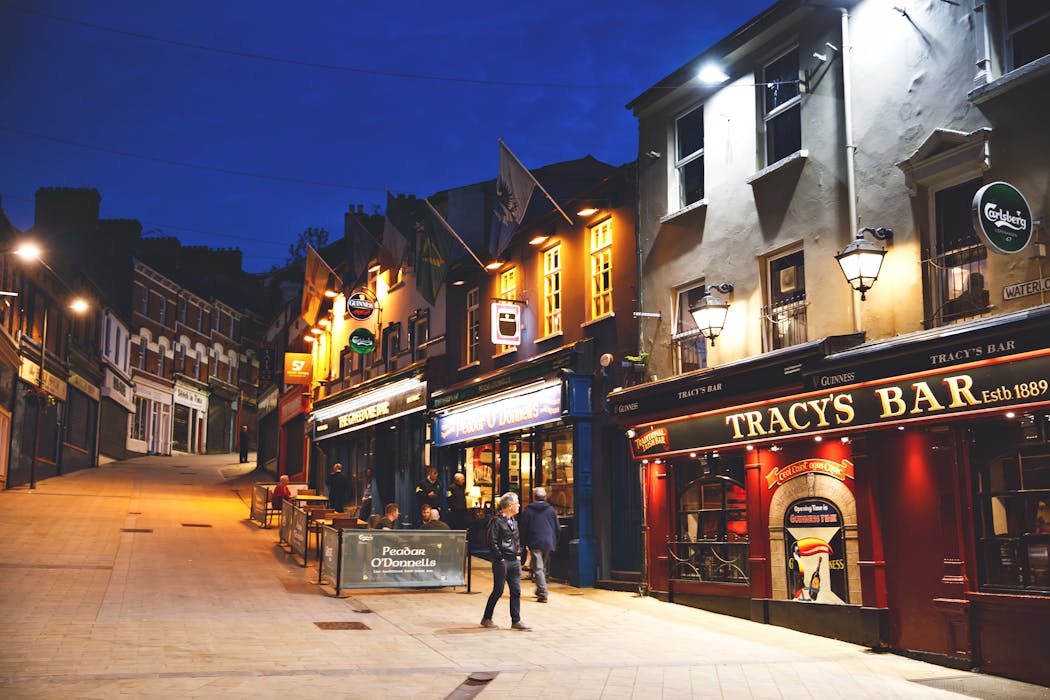
Night-time view of Derry city centre in Northern Ireland, where the Safest Way app is promoted in pubs to advise on safer walking routes. Irina WS/Shutterstock

In the historic walled city of Derry (also known as Londonderry) in Northern Ireland, the night-time economy is vibrant. But like many urban centres, it presents safety challenges for those trying to get home. At night, a volunteer group known as the Inner City Assistance Team (iCat) often patrols the streets, intervening when people feel vulnerable – whether due to intoxication, a mental health issue, or simply being alone in unlit or unfamiliar areas.

Recently in the city, iCat introduced Safest Way, a pedestrian navigation app I co-developed during my PhD research at UCL. The app employs AI technology to show users not just faster but safer routes when walking to and from a destination – for example, the safest way home after a night out.

The necessity for such interventions is rooted in a stark disparity in how urban safety is experienced by women and men.

Research by the Office for National Statistics in 2022 found that 82% of women feel unsafe walking alone in parks or open spaces after dark, compared with 42% of men. And 63% of women actively avoid travelling alone when it is dark, against 34% of men.

A survey by Plan International UK in 2024 found that nearly three-quarters of girls and young women (ages 14-21) sometimes choose longer routes home to avoid potential danger, and almost two-thirds take taxis home at least once a month because of the risks associated with public transport or walking.

Such fears are a direct response to the built environment, with research showing that factors such as street lighting and conditions of pavements are key aspects of how safe women feel . Lighting is often the deciding factor: 60% of women who feel unsafe walking to and from public transport cite poor lighting as the primary reason.

Woman walking along a street at night.
The vast majority of women say they feel unsafe walking alone after dark.
Haru Photography/Shutterstock

Bridging the data gap

For decades, urban walkers have been treated like vehicles, with mapping tools optimising routes for a single metric – travel time – while treating a dark alley and a high street as identical, if the distance is the same. The question of feeling safe has been largely overlooked by this technology.

Part of the reason for this has been a lack of unified data. While local authorities and police forces collect vast amounts of information regarding street lighting, CCTV locations and crime incidents, this data is typically fragmented, incompatible or locked in static PDFs.

To bridge this gap, my team and I developed a data pipeline to aggregate these and other sources. In London, this required issuing dozens of freedom of information requests to borough councils to obtain precise geospatial data on over half a million street lights and thousands of public CCTV cameras. Our lighting map was awarded first prize in the 2025 UCL data visualisation competition.

We then combined this information with official police crime datasets, urban features such as the location of parks, industrial areas and run-down buildings, plus open-source Mapillary and OpenStreetMap data to “safety score” individual street segments.

Even then, objective data is only half the picture. Perceived safety – how safe a street feels to someone walking it – is critical to the route choices they make. To model this at scale, we turned to Artificial Intelligence: specifically, OpenAI’s vision-language model Clip (Contrastive Language-Image Pre-Training).

Unlike traditional computer vision that detects discrete objects such as street lamps, Clip (and similar vision-language models) encodes the semantic meaning of an entire scene – converting both visual data and user-provided text prompts into mathematical vectors.

Classifying subjective viewpoints such as “feels safe” or “quite risky” is an ongoing area of research. But in our 2025 study, we found a high correlation between the way AI and our human testers perceived safety, based on 500 photographs of London street segments.

While we now hope to scale this approach to modelling urban safety to millions of streets in the UK and beyond, we are realistic about the limitations. Past crime and urban design data can inform safer choices, but they cannot predict individual incidents. Our model is designed to support decision-making not guarantee safety, and it should sit alongside wider efforts by venues, councils and police to make night-time streets safer.

Derry’s early adoption

Since launching its beta version, the Safest Way app has been adopted by approximately 1,000 users, primarily in London and Derry, where most of the safety infrastructure is fully mapped.

Coordinating the Derry launch from afar was a challenge. A Safest Way team member visited the city early in 2025 to learn about the city’s complex political landscape firsthand. But the pilot’s success was made possible largely thanks to our partners, iCat.

The volunteer group’s co-founder, Stephen Henry, told the Irish News that the idea to bring the app to the city had come about following some attacks on women there in 2024.

The group now distributes beer mats with Safest Way logos and QR codes in local pubs. “We encourage staff to download the app too,” Henry points out, “as they often don’t leave the premises until 3am or later”.

Having recently showcased our technology at the Prototypes for Humanity conference in Dubai, we are now scaling the app’s data coverage – from street lighting to AI-modelled perception of safety – to cover all of England and then the rest of the UK. We aim to close the information gap that currently forces vulnerable groups to pay a safety tax.

In Derry, the technology already provides a digital layer of protection that complements the physical presence of volunteers. By including this tech in their vulnerability training for security staff and using it during their patrols, iCat is moving beyond reactive assistance to proactive risk reduction.

This article was commissioned in conjunction with Prototypes for Humanity, a global initiative that showcases and accelerates academic innovation to solve social and environmental challenges. The Conversation is the media partner of Prototypes for Humanity 2025.

The Conversation

Ilya Ilyankou receives PhD funding from the UKRI’s Engineering and Physical Sciences Research Council and Ordnance Survey. He is a co-founder and chief technology officer of Safest Way, a startup supported by the Ordnance Survey’s Geovation accelerator programme. This article was commissioned in conjunction with Prototypes for Humanity, a global initiative that showcases and accelerates academic innovation to solve social and environmental challenges. The Conversation is the media partner of Prototypes for Humanity 2025.

ref. What’s the safest way to walk home at night? We’ve created an AI-powered app that shows you – https://theconversation.com/whats-the-safest-way-to-walk-home-at-night-weve-created-an-ai-powered-app-that-shows-you-271710

Why global environmental negotiations keep failing – and what we can do about it

Source: The Conversation – UK – By Catalina Turcu, Professor of Sustainable Built Environment, UCL

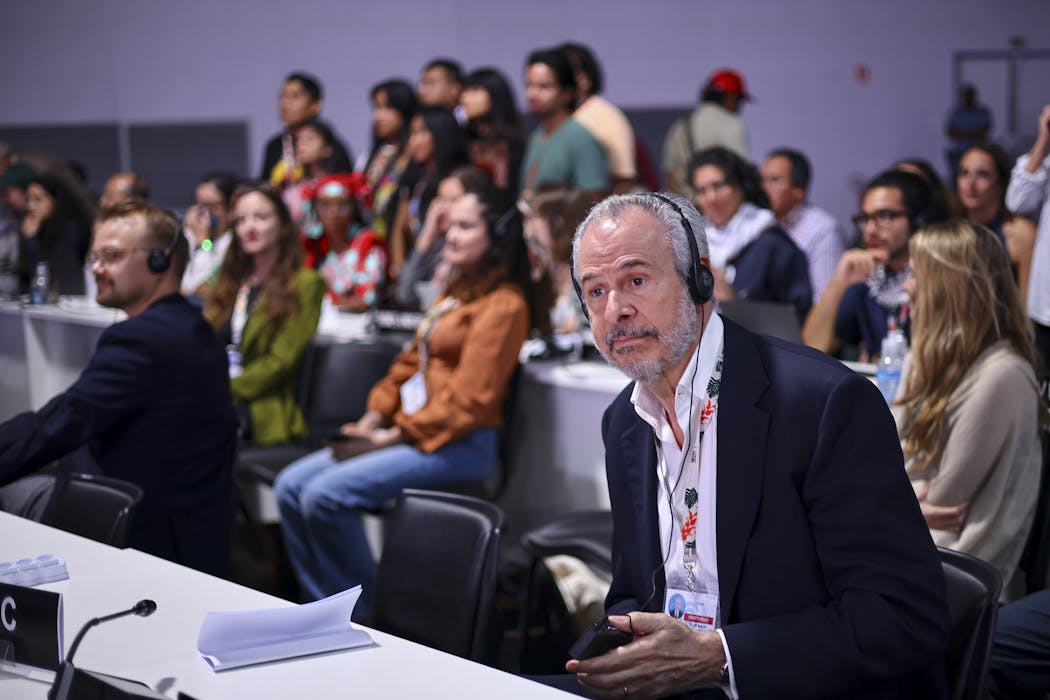
President Andre Correa do Lago during closing plenary meeting of the 30th UN climate summit (Cop30). Photo by Ueslei Marcelino/Cop30, CC BY-NC-ND

In the past year alone, four major environmental negotiations have collapsed.

Global talks on a treaty to cut plastic pollution fell apart. Governments did not agree on the timeline and scope for the seventh assessment report of the Intergovernmental Panel on Climate Change (IPCC). Talks on the International Maritime Organization’s net-zero framework failed to reach consensus. And the summary for policymakers for the UN Environment Programme’s flagship report on the state of the environment was not approved.

These failures signal a deeper breakdown in how the world tackles environmental crises such as climate change, biodiversity loss, pollution and waste and land degradation.

There are cracks in the system. International negotiations are built on principles of representation and consensus, meant to ensure fairness and inclusivity. In theory, every country has a voice, and decisions reflect collective agreement. In practice, however, these principles often paralyse or delay progress.

Consensus can allow a few countries to block collective action, even when most members are in favour, while calls for representation are sometimes used to delay decisions in the name of democracy – ironically, sometimes by states where democratic principles are in question.

Take the global plastics treaty negotiations. Talks have hit a deadlock between countries seeking limits on plastic production and oil-producing countries pushing to focus only on waste and recycling. Similarly, the IPCC process is grappling with unprecedented disputes over timelines and plans for removing carbon from oceans and rivers.

Then there’s the politicisation of science. Every paragraph of a policy summary – distilling key scientific findings for governments – is negotiated line by line. This process often dilutes or deletes science to fit national agendas, with the recent UN climate summit (Cop30) declaration removing any mention of fossil fuels. The result: assessments that take years to produce and summaries mired in political wrangling, eroding trust in science, and delaying the urgent action they are meant to drive.


Read more:
Why climate summits fail – and three ways to save them


Who really decides? Formally, it is the member states – that’s nations and entities like the EU. On paper, every country has an equal voice. In reality, power dynamics tell a different story.

Some nations dominate the floor with large, well-prepared teams, armed with technical experts and seasoned negotiators. They arrive with detailed positions, ready to shape the agenda. Others, often from smaller or less-well-resourced states, struggle to be heard. Their delegations are thin, sometimes just one or two people juggling multiple sessions.

Gender gaps persist, too. Despite decades of commitments to equality, men still speak far more often than women in many negotiations – up to four times more in some sessions of the recently collapsed Global Environment Outlook, the UN’s flagship report on the state of the global environment that connects climate change, nature loss and pollution to unsustainable consumption.

Negotiations to agree on possible ways to tackle the issues fell apart when some governments failed to agree with scientific conclusions outlined in the report. This is not just about optics, and it affects whose perspectives shape global environmental policy. When voices are missing, so are ideas and priorities.

Scientists, meanwhile, sit at the back of the room. Their role is largely reactive – allowed to clarify technical points only when specifically asked by member states. Their expertise, which should anchor decisions in evidence, is often sidelined by political bargaining. The result? Policies that sometimes drift away from what science says is necessary to protect ecosystems and communities.

The new fault lines

Rising nationalism and geopolitical tensions make cooperation harder. Environmental action is increasingly framed as a sovereignty issue, with domestic interests trumping global solutions. Climate pledges are weighed against economic competitiveness, biodiversity targets through trade-offs and resource control. Trust erodes, negotiations drag on, and the planet pays the price.

This reality shows in the slow progress of major agreements. Multilateralism, once the only path forward, now splinters into shifting blocs. Some countries stall decisions to protect short-term gains; others walk away entirely, creating a void – and an opportunity for others to step in.

Improving this means rethinking the system from the ground up. That involves challenging the consensus stranglehold. The requirement for consensus often paralyses negotiations. Allowing coalitions of ambitious countries to move ahead when consensus fails could break deadlocks and create momentum. So-called “coalitions of the willing” (such as the fossil fuel phase-out coalition announced at Cop30) can set higher standards and inspire others to follow.

Giving science a stronger voice, while allowing political input, ensures that decisions remain grounded in facts without ignoring legitimate national concerns.
Current models treat scientific input as secondary to political negotiation. Hybrid approval systems can protect evidence without ignoring legitimate national concerns.

Modernising the process can speed up negotiations. Moving away from paper-heavy, language-dependent systems towards digital tools and AI-assisted drafting could accelerate text negotiations, reduce translation or language delays and make participation easier for smaller delegations.

Beyond funding and technical aid, small delegations can be empowered through real-time intelligence, dedicated staff, mentorship and early access to information. Gender and regional balance can be ensured through measures like speaking-time quotas and consistent, process-long leadership roles.

The collapse of these talks is a warning. Our governance systems were built for another era, yet environmental crises today are more complex and more interconnected than ever. The machinery meant to solve them is buckling under outdated rules and rising pressure.

Without bold reform, multilateral environmentalism risks irrelevance. Failure to reach global agreements will invite fragmented, unilateral fixes – patchwork solutions far too weak to prevent ecological breakdown. The question is not whether reform is needed, but whether we act before it’s too late.

The stakes are high. Every delay means more emissions, more extinctions and more communities exposed to environmental impacts. The world cannot afford negotiations that stall while ecosystems collapse. We need systems that are agile, inclusive, evidence-based and fit for the 21st century.


Don’t have time to read about climate change as much as you’d like?

Get a weekly roundup in your inbox instead. Every Wednesday, The Conversation’s environment editor writes Imagine, a short email that goes a little deeper into just one climate issue. Join the 47,000+ readers who’ve subscribed so far.


The Conversation

The author served as Coordinating Lead Author for the GEO 7 assessment and participated in the SPM approval meeting in Nairobi (27–31 October 2025). She also acted as a scientific observer at COP28 in the UAE and at the 60th session of the Subsidiary Body for Scientific and Technological Advice (SBSTA), following negotiations in the Research and Systematic Observation (RSO) Working Group in preparation for COP29 in Azerbaijan.

ref. Why global environmental negotiations keep failing – and what we can do about it – https://theconversation.com/why-global-environmental-negotiations-keep-failing-and-what-we-can-do-about-it-269749

The race to mine the Moon is on – and it urgently needs some clear international rules

Source: The Conversation – UK – By Adam Urwick, Junior analyst, RAND Europe, RAND Europe

The vision of mining space for resources is no longer science fiction. The Moon’s proximity to Earth and the presence of precious resources make it an increasingly attractive prospect for exploitation.

Resources thought to be present on the Moon include uranium, potassium,
phosphorus, water ice, platinum group metals and helium-3. The last of these is a rare isotope that could help power relatively clean fusion energy in future.

There are billions of dollars in it for companies able to kickstart mining operations, even if such returns are still years away. Technological breakthroughs in launch and exploration capabilities are occurring at breakneck pace. In the US, Seattle-based startup Interlune, working with Iowa industrial manufacturer Vermeer, is developing an electric lunar excavator designed to extract helium-3.

Their prototype can process up to 100 metric tons of lunar soil per hour. Interlune plans a 2027 mission to confirm helium-3 concentrations before deploying a pilot plant in 2029.

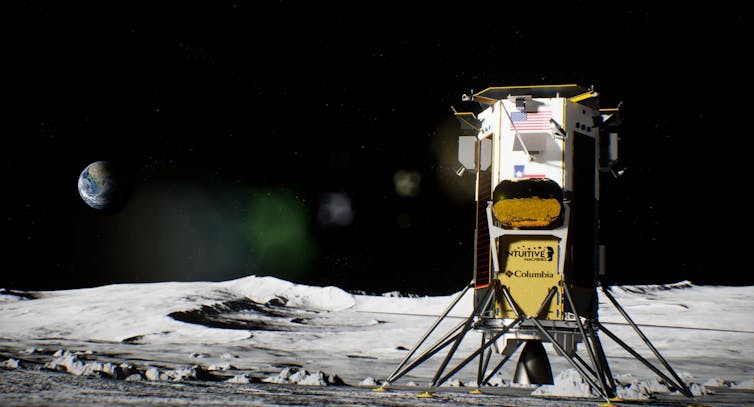
The Pittsburgh-based space company Astrobotic is developing the Griffin-1 lander to transport a rover designed by the California-based company Astrolab for surface analysis. A different lander called Nova-C,, built by Intuitive Machines in Houston, is being designed to conduct analysis of lunar soil and rock under Nasa’s Prism programme. Prism is a science and technology initiative designed to support various aspects of lunar exploration.

Meanwhile, Nasa’s Polar Resources Ice Mining Experiment 1 (Prime-1), which was carried to the Moon this year by an Intuitive Machines lander, demonstrated Honeybee Robotics’ Trident drill on the lunar surface. Trident both drills and extracts samples of lunar soil.

SpaceX’s giant Starship rocket, which has a large payload capacity and reusable design, could send multiple large experiments to the Moon, and cut launch costs by as much as US$250–US$600 (£188-£451) per kg. Assuming it overcomes its teething problems, Starship could be the game changer that makes large-scale lunar infrastructure and resource missions economically viable.

While US-led initiatives have been commonplace in lunar exploration, new political and corporate players are emerging globally. China aims to achieve human lunar landings by 2030, with plans for the robotic construction of lunar bases in partnership with Russia and other nations. This would establish an international Lunar Research Station by 2035.

Nova-C
Intuitive Machines’ Nova-C lander is being used to test capabilities relevant to mining.
Intuitive Machines

Australia’s 2026 rover will put its mining expertise to work extracting oxygen and collecting soil on the Moon, while Japan’s Slim mission focuses on precision landings that can target resource-rich areas. At the same time ispace, a Japanese company, is developing a mini rover to explore lunar resources.

In the EU, the Argonaut programme is developing the Esa (European Space Agency)‘s first lunar lander, with the involvement of a growing body of industrial enterprises across Europe. These missions are critical for gathering data and capabilities needed to understand what’s actually available on the Moon and how we might one day mine it.

Frozen treaties

Yet despite evolving technical capabilities, the international legal framework governing exploitation of the Moon is both very limited and frozen in the Cold War era. The 1967 outer space treaty established that space cannot be subject to national appropriation, but debate remains as to whether this prohibition extends to private entities extracting resources.

The treaty’s article I declares exploration shall benefit “all mankind”, yet provides no mandatory mechanism for sharing benefits, leaving it entirely to nations that have conducted activities to decide how, or whether, to share benefits at all.

The 1979 Moon agreement attempted to designate lunar resources as the “common heritage of mankind” and establish an international regime for exploitation. This agreement received only 15 ratifications, and none from spacefaring powers. The “common heritage” concept met fierce opposition from industrialised countries, who viewed it as restricting their technological advantage.

National legislation, as well as other types of agreement, has filled the vacuum. The US Commercial Space Launch Competitiveness Act of 2015 granted American citizens rights to extract space resources. Luxembourg, UAE and Japan followed with similar laws. The Artemis accords of 2020, which are non-binding arrangements between the US and other countries, have provided for voluntary coordination among like-minded states. They have established principles for lunar activity including transparency and safety zones.

However, they function more as a coalition agreement than a universal law. Clear
international property-rights frameworks would determine which nations capture value. The current state of ambiguity primarily benefits those with clearer frameworks and first-mover advantages, and indicates a missed opportunity for equitable benefit-sharing from space resources.

The pursuit of profit raises paramount scientific and environmental concerns.
Astronomers caution that large-scale mining activities could disrupt ongoing research and preservation of the lunar environment, leading to calls for development of comprehensive lunar laws and regulations to manage these activities responsibly.

Esa’s push for a zero debris charter, which it hopes will gain global recognition by 2030, reflects a growing awareness that mining and resource use in space must go hand in hand with responsible behaviour.

As lunar mining and exploration accelerate, the security dimension also becomes
increasingly complex and fraught, with the potential for conflict between nations. Valuable lunar resources such as water ice and rare metals are concentrated in limited, highly contested regions.

In the absence of internationally binding governance agreements, the risk of overlapping claims, operational interference and even direct confrontation is real. Exclusion zones and safety zones around mining sites could serve as flashpoints for disputes over access, resource rights and commercial interests.

The possibility of competing governance frameworks, such as the Artemis Accords and the Outer Space Treaty, to manage claims could further exacerbate the risk of conflict. The urgent need for international cooperation and transparent, equitable frameworks is clear.

The international community stands at a crossroads. The technology enabling lunar
resource extraction is arriving faster than most anticipated. Policymakers and legislators have a waning opportunity to design and implement governance that keeps pace with innovation and growing appetites for lunar resources.

Binding international agreements – particularly between the great space powers – which emphasise principles of stewardship, clarify access rights and support common benefits from lunar development would ensure the Moon becomes a proving ground for the equitable and sustainable development of space.

The Conversation

The authors do not work for, consult, own shares in or receive funding from any company or organisation that would benefit from this article, and have disclosed no relevant affiliations beyond their academic appointment.

ref. The race to mine the Moon is on – and it urgently needs some clear international rules – https://theconversation.com/the-race-to-mine-the-moon-is-on-and-it-urgently-needs-some-clear-international-rules-270943

​From head to mistletoe: the curious biology of elves

Source: The Conversation – UK – By Michelle Spear, Professor of Anatomy, University of Bristol

Roman Samborskyi/Shutterstock.com

As Christmas Eve draws near, we’re reminded of the tireless elves behind the scenes, toiling in workshops to bring festive magic to life.

Imagine Santa’s elves not as fantasy figures but as highly adapted beings designed for the unique demands of their world. From enhanced resilience to happy hormones and efficient energy production, each adapted anatomical feature serves a purpose, allowing them to work joyfully, and without pause, in a cold climate that would challenge the rest of us.

Through the lens of this imagined elf, we take a look at general anatomy, using scientific principles and a nod to the Will Ferrell movie Elf to fill in some of the festive details.

Ho-ho-hormones

The remarkable cheer and endurance of an elf can be attributed to a finely tuned endocrine system that supports both their emotional resilience and energy needs.

Their pituitary glands probably produce high baseline levels of serotonin and endorphins – often called “feel-good hormones” – helping them maintain a naturally cheerful disposition even under the pressures of Christmas deadlines.

Beyond individual happiness, elves surely must thrive on teamwork in the workshop. An elevated capacity to release oxytocin, the “bonding hormone”, helps foster strong social connections, promoting a collaborative and harmonious working environment.

With extra oxytocin receptors in the brain, elves would quickly form bonds with each other, boosting morale and creating a positive atmosphere that is crucial for high-stress, close-quarters work. Also essential for good elf and safety.

Presumably, elves would require adaptable sleep patterns to handle the long hours leading up to Christmas. Their pineal glands could produce a specialised form of melatonin, allowing them to reset their internal clocks on demand.

This adaptation would support both sustained alertness during extended shifts and quick recovery naps, keeping them fresh and focused throughout the season.

Good skin and elf care

In the north pole’s long winters, elves may rely on their skin’s heightened ability to synthesise vitamin D even in low-light conditions. This helps regulate mood and energy by supporting serotonin production, which promotes emotional stability, and enhancing mitochondrial function for efficient energy production.

Their skin might also be rich in melanin that adapts to seasonal light changes, maximising their sunlight absorption without risk of seasonal-affective disorder.

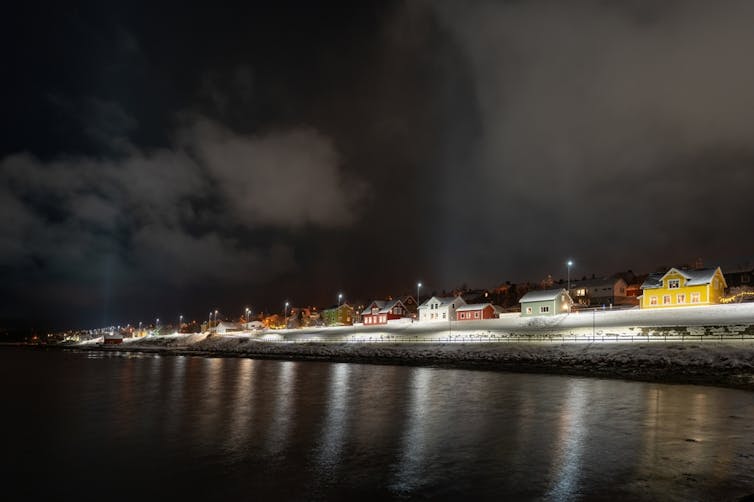
A dark polar night tableau.
Elves’ skin is perfectly adapted to dark polar nights.
Esa Ylisuvanto/Shutterstock.com

Sugar and spice

The elf digestive system is probably optimised for processing high-carbohydrate, high-sugar diets without succumbing to the energy crashes humans might experience.

To thrive on a diet rich in sweets, elves would rely on high levels of sucrase, maltase and amylase — enzymes that break down sugars and starches quickly. This enzymatic boost allows for rapid glucose release, sustaining their energy without the usual sugar crash, and keeping them fuelled for long hours in the workshop.

Elves’ livers could also play a crucial role, storing vast reserves of glycogen for quick energy release when needed, especially during the busiest days of the festive season. Their small intestines might boast enhanced villi – tiny, finger-like projections that line the gut – increasing the surface area for nutrient absorption and ensuring every candy cane is put to good use.

Elves might have highly efficient mitochondria – the tiny powerhouses inside cells that convert food into energy – allowing them to produce energy from nutrients more effectively. This could keep their energy levels steady without sharp crashes, helping them remain upbeat and active throughout their lengthy work shifts.

Cold comfort

Thriving in the subzero temperatures of the north pole requires more than a good set of thermals. Elves’ circulatory systems probably feature counter-current heat exchange mechanisms – where warm blood flowing out heats up cold blood coming back in – similar to those found in penguins’ feet and human testicles, to minimise heat loss in extremities. Blood vessels in their hands and feet would work in tandem to recycle warmth.

Elf respiratory systems are equally impressive, designed to maximise oxygen intake in cold, thin air. With larger-than-average nasal cavities lined with specialised mucous membranes, elves can warm and humidify incoming air, protecting their lungs from the frigid environment.

Hear comes Santa Claus

Acute hearing would be essential for quality control and ensuring every toy meets Santa’s exacting standards.

In a bustling workshop, elves need heightened sensory abilities to stay on task. Their ears, already iconic, might also feature internal adaptations – enhanced auditory canals for picking up subtle sounds.

Elf eyes, adapted for the low-light conditions of the winter months, would probably boast a high density of rod cells – the light-sensitive cells in the retina that help us see in darkness – allowing them to see clearly even during the longest polar nights. Perhaps they’ve also evolved a reflective layer behind the retina, similar to a cat’s tapetum lucidum, giving them a distinctive twinkle and ensuring no detail escapes their gaze.

Sleighing it

An elf’s musculoskeletal system would need to be both robust and specialised for the physical demands of their job. Working long hours crafting toys requires dexterous hands supported by flexible yet strong finger joints, enhanced by tendons and ligaments adapted to repetitive tasks. To avoid the perils of repetitive strain injuries, elves might have increased collagen production, keeping their joints supple and resilient.

With an optimised ratio of fast-twitch muscle fibres (for quick movements) and slow-twitch fibres (for endurance), elves would be perfectly suited for bursts of energy and sustained activity alike, ensuring they can switch seamlessly between nimble toy-making and the occasional snowball fight.

So this Christmas, as you admire the handiwork of Santa’s helpers, spare a thought for the ingenious anatomical adaptations that make the merry work of elves possible.

The Conversation

Michelle Spear does not work for, consult, own shares in or receive funding from any company or organisation that would benefit from this article, and has disclosed no relevant affiliations beyond their academic appointment.

ref. ​From head to mistletoe: the curious biology of elves – https://theconversation.com/from-head-to-mistletoe-the-curious-biology-of-elves-269155

Europe must reject Trump’s nonsense accusations of ‘civilizational erasure’ – but it urgently needs a strategy of its own

Source: The Conversation – UK – By Francesco Grillo, Academic Fellow, Department of Social and Political Sciences, Bocconi University

European leaders must agree on how to respond to the accusation that their continent faces “civilizational erasure”. These were the strongest words used in the most strongly-worded national security strategy ever released by a US government, making it clear that allyship is no longer a given.

And yet, what exactly does “civilizational erasure” mean? The term seems to come straight out of science fiction and deserves qualification. What kind of civilisation is being erased?

The document released by the US government explicitly specifies that this is not about economic decline so much as the “values” that make European nations “reliable allies” to the US.

The implication is that the current administration is worried that “life, liberty and the pursuit of happiness” are no longer foundational to Europe as they were to America. In addition, it seems that Trump is worried that migration is the cause of this problem.

This is curious. As far as “freedom of speech” and “political liberty” go, even the ranking published annually by the hyper libertarian Washington-based Cato Institute acknowledges that six of the top ten most free countries of the world are from the EU. In contrast, the US is tied with the UK at number 17.

The evidence on being “happy” is even worse for Americans (they are ranked 24th by Gallup) and even better for Europeans (four of the top five happiest nations in the world seem to be in the EU, and the fifth is Iceland).

Perhaps the most dangerous symptom of civilizational decline is apparent when we consider the parameter of the ability to pursue “life”. According to the OECD, in 2024, the US spent more on health than any other country per person at over U$12,000 (£9,000) per year (Switzerland, in a distant second place, at US$8,000). Yet Americans’ life expectancy is six years less on average than Europeans’.

Last but not least, migration. The US government seems concerned that too many immigrants will make Europe unrecognisable, but it is the United States that hosts the largest number of first or second-generation immigrants (including Donald Trump, whose mother and four grandparents were all born in Europe). The security strategy’s diagnosis seems oddly oblivious to the role migrants played in building American success.

How should Europe respond?

It is, thus, difficult to see how Europe is being erased. It is nevertheless true that Europe has a problem. Whereas the US has a strategy, Europeans are very far from even agreeing on what their own interests are.

As wrong as the US may be to attempt to establish a strategy on Europe’s behalf, this lack of vision makes it increasingly unsustainable for Europe to remain one of the best places to be born or to live.

Three messages stand out clearly from the strategy. First, the US does not want to be the world’s sheriff and is not going to pay to stabilise the world. There is even the implication here that the US is happy for the world to be divided into cold war-style “areas of influence”.

Second, the US now believes it is a mistake to think exporting democracy or liberalism maximises the chance of world peace and will no longer pursue this agenda. Third, the US believes that nation states are the cornerstone of any possible world order and that multilateralism (a notion encompassing a diverse range of institutions from the UN to the EU) is undermining that.

While Europe does not need to agree on these assertions, it can use each of the three US points to come up with a response.

Friedrich Merz, Keir Starmer,  Volodymyr Zelenskyy and Emmanuel Macron sitting in front of their national flags.
European leaders gathered in London to discuss the path ahead after the US published its security strategy.
Flickr/Number 10, CC BY-NC-ND

It should, for example, be relatively happy to fill the gap left by US retreat. This would see Europe equipping itself to contribute to stability in Europe, North Africa and the Middle East. Europe should probably also acknowledge that the Americans have a point when they say that “exporting democracy” does not necessarily buy peace.

Second, Europe can even agree with the US that “exporting” institutions and market regulations is complicated and not effective. We must simply focus on protecting human rights as much as possible, without asking other countries to imitate our model.

Third, and most important, it is true that international organisations are not working. But Europeans should answer US rhetoric not by going back to small nation states (as the security strategy suggests) but by assuming the leadership of a radical reform of multilateralism.

The international organisations that Trump has criticised, must rapidly become more capable of delivering solutions efficiently. This must include the EU because it’s obvious that any kind of strategy cannot be led by 27 individual nations working separately.

European civilization is not imploding. It is, however, true that such a civilization requires financial, political and defence resources. These were once bought cheaply from allies who no longer wish to subsidise Europe’s way of life.

It is time for a European security strategy. And one whose message, in a nutshell, is that Europeans are ready to lead and thrive in the changed geopolitcal climate of the 21st century.

The Conversation

Francesco Grillo is affiliated with Vision, the think tank,

ref. Europe must reject Trump’s nonsense accusations of ‘civilizational erasure’ – but it urgently needs a strategy of its own – https://theconversation.com/europe-must-reject-trumps-nonsense-accusations-of-civilizational-erasure-but-it-urgently-needs-a-strategy-of-its-own-271763

New cancer therapy brings remission for patients with deadly T-cell leukaemia

Source: The Conversation – UK – By Justin Stebbing, Professor of Biomedical Sciences, Anglia Ruskin University

WikeSandra/Shutterstock.com

A small group of patients with an otherwise incurable form of T‑cell leukaemia have seen their cancer driven into remission by an innovative form of immune therapy.

The treatment uses T-cells – a type of white blood cell – from a healthy donor, re-engineered in the lab to recognise and attack leukaemia cells. Unlike personalised cancer therapies made from each patient’s own cells, these can be prepared in advance as an “off-the-shelf” product and given quickly to people in urgent need.

For families facing a disease that has returned after every standard treatment, a ready-made therapy that can clear leukaemia to undetectable levels is a major step forward. The latest results of the first 11 patients, treated at Great Ormond Street and King’s College Hospital, have just been published in the New England Journal of Medicine.

The scientific trick here is particularly clever. In T‑cell leukaemia, the cancer itself is made of T-cells, so simply adding more T-cells from outside would normally cause friendly fire: the therapeutic cells would attack each other as well as the cancer or be rejected by the patient’s immune system. By using gene‑editing tools, researchers have switched off or altered key molecules on the donor T-cells so that they can slip past the patient’s immune defences and focus their attack on the leukaemia cells.

In early studies, some patients with no remaining treatment options achieved deep remissions, where even sensitive tests could no longer detect leukaemia. This then opened the door to a stem cell or bone marrow transplant from a donor, which remains the only realistic route to a long‑term cure for these patients.

T-cells explained.

Nuance lost in the media coverage

For the non-expert, it is tempting to see headlines about “reversing incurable cancer” and assume this is a magic bullet that will soon replace chemotherapy or radiotherapy. The truth is both more modest and, in some ways, more impressive.

This treatment is not designed to be the first thing given to every person with leukaemia. It is a specialist option for the few whose cancer has resisted or returned after standard treatments. In that setting, where the alternative may be palliative care alone, having an extra step on the ladder – one more line of defence – can be life changing, even if it is not perfect.

Another point often lost in media coverage is that this therapy is a bridge, not a destination. In the reported cases, the goal was to reduce the cancer burden enough to make a stem cell transplant feasible.

The engineered T-cells are not expected to provide lifelong control by themselves. Instead, they act as a very powerful but temporary strike against the leukaemia, buying time for the patient to receive a transplant, which can then rebuild a healthy immune and blood‑forming system.

That combined strategy – intensive but time‑limited immune therapy, followed by transplant – is what offers a realistic chance of long‑term survival for some of these patients.

Here, life after such treatment is rarely straightforward. A stem cell or bone marrow transplant can save a life, but it is also one of the most demanding procedures in modern medicine. In the months afterwards, patients are at high risk of serious infections, because their new immune system is still immature and may also be suppressed by drugs used to prevent rejection.

Many people experience profound fatigue, weight loss and emotional distress. A significant number spend repeated spells in hospital coping with complications such as graft‑versus‑host disease, where the donor immune cells attack the patient’s own tissues.

Even years later, survivors may live with chronic skin, gut or liver problems, hormonal changes, fertility issues, or the psychological impact of prolonged illness and uncertainty.

From that perspective, it is important not to present this new T‑cell treatment as a simple one‑time cure, after which life instantly returns to normal. For some patients in the New England Journal of Medicine “case series” (a report on a small set of patients), the therapy was part of a long, difficult journey that had already included multiple rounds of chemotherapy and hospital admissions.

Adding an experimental immune therapy and then a transplant increases both the chances of survival and the complexity of aftercare. After treatment, care isn’t just about checking whether the leukaemia has returned. Patients often need lifelong monitoring for late effects, vaccinations to retrain their new immune systems, and support with returning to work, study and family life.

A transformation hard to overstate

At the same time, for those people and their families, the gains are immense. To walk out of hospital after being told that nothing more could be done, and then later hear the words “no evidence of leukaemia”, is a transformation that is hard to overstate.

Parents describe seeing their children go back to school or play sport. Adults talk about being able to plan a holiday or think about the future again. These very human milestones embody the promise of the science far more clearly than any technical description of gene editing or immune receptors. Yet they rest on decades of painstaking lab work, safety testing and thoughtful choices by doctors, and on patients and families willing to take part in experimental treatments when the outcome is uncertain.

There is also a wider significance beyond this particular leukaemia. If donor‑derived, gene‑edited T-cells can be made safe and effective for one rare and aggressive cancer, the same concept might be adapted for other blood cancers or even some solid tumours.

An off‑the‑shelf cell therapy that can be stored, shipped and given in many hospitals could be far more accessible than bespoke therapies that rely on each patient’s own cells, which are complex and slow to manufacture. That said, scaling up production, ensuring the cells are available equitably, and managing the costs will be major challenges for health systems.

So, where does that leave the public trying to interpret dramatic headlines? It helps to hold two ideas in mind at once. First, this is an extraordinary scientific and clinical achievement for a group of patients who had very few options left, offering real hope where previously there was almost none. Second, it is not a universal cure, and it comes at the price of intense treatment and long‑term follow‑up.

The most honest way to describe it is as an extra lifeline for some people in very specific circumstances – a powerful new tool added to an existing toolbox, not the end of cancer as we know it. That may sound less dramatic than “reversing the incurable”, but for the families involved, it can mean everything.

The Conversation

Justin Stebbing does not work for, consult, own shares in or receive funding from any company or organisation that would benefit from this article, and has disclosed no relevant affiliations beyond their academic appointment.

ref. New cancer therapy brings remission for patients with deadly T-cell leukaemia – https://theconversation.com/new-cancer-therapy-brings-remission-for-patients-with-deadly-t-cell-leukaemia-271643

What Labour’s migration reforms mean for LGBTQ+ asylum seekers

Source: The Conversation – UK – By Diego Garcia Rodriguez, Leverhulme Research Fellow, Faculty of Social Sciences, University of Nottingham

Gwoeii/Shutterstock

The UK government’s recently-announced plan to overhaul the asylum system rests on the idea that protection for refugees should be temporary and subject to regular review.

Currently, refugees are usually granted five years’ permission to stay, after which they can apply for settlement (indefinite leave to remain). Under the new proposals, recognised refugees would first receive “core protection” – 30 months’ leave, renewable after review. The government is also proposing a system that would make some people wait 20 years for settlement.

Like in Norway and Denmark, the UK is proposing allowing refugee status to be revoked and people deported if their country of origin is deemed to have become “safe”. In 2021, Denmark judged parts of Syria safe to return to and revoked or refused renewals for hundreds of Syrians, even as charities warned that returnees still faced serious risk.

For LGBTQ+ people, these plans present particular risks that could undermine their safety and ability to live openly.

Home Office data shows that, in 2023, 1,377 asylum claims (2% of the total) included sexual orientation as part of the basis for asylum. Equivalent gender identity statistics are not available.

For these asylum seekers, “safety” does not switch on when their countries’ laws change or a conflict stops. States can look stable on paper while people remain unsafe in their family homes, neighbourhoods, workplaces and at police stations.

The Home Office uses its official guidance about countries to evaluate whether it would be “safe” to return someone. It also might refer to relevant case law from the Upper Tribunal, a UK court that deals with immigration and asylum cases.

Some nationalities are treated as coming from “designated” safe states under British law, which can affect how asylum claims are processed. LGBTQ+ asylum charities have argued that countries are sometimes deemed safe even when they are dangerous for LGBTQ+ people.

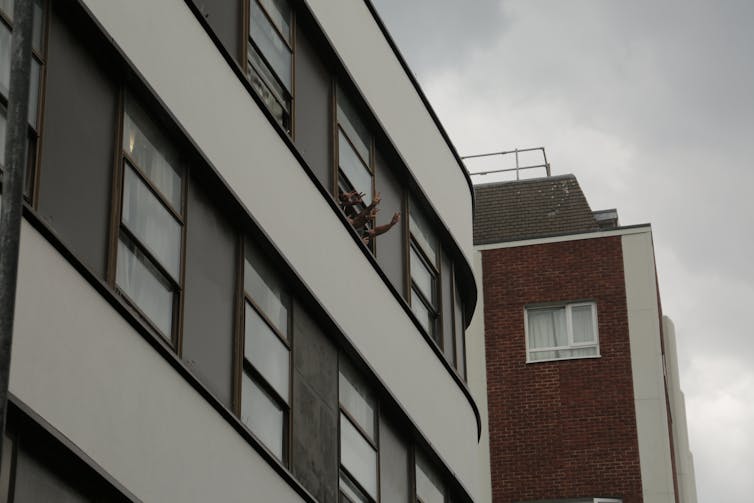
Asylum seekers waving out of the window of a hotel in London.
The UK wants to end the use of hotels to house asylum seekers.
BalochLenses/Shutterstock

In my research, I have encountered such examples. For example, I have met LGBTQ+ Namibians whose asylum claims were rejected after Namibia’s supreme court recognised foreign same-sex marriages (though same-sex marriage is still not legal in the country), despite evidence of well-founded fear of persecution and a lack of state protection.

My research interlocutors from countries labelled “safe” emphasised the differences between official “safety” and everyday threats. An Indian lesbian woman explained: “Being who I am in India, I wouldn’t be safe there, that’s why I left after my family started to threaten me.”

A lesbian woman speaking from Brazil, where she was deported from the UK after initially fleeing due to violent threats, said: “People think Brazil is safe, but it’s not, and you’re lucky to be alive if you’re LGBT here … It’s not about it being legal or illegal, you need to look at real life, what’s going on with people around you, churches, your boss.”

Both global and local non-profit organisations that support LGBTQ+ people have recorded high levels of violent deaths of LGBTQ+ people in Brazil, including the most killings of trans people in any country for 18 consecutive years.

The UN refugee agency has warned that misusing “safe country” concepts risks breaching the principle of non-refoulement: the duty not to return someone to persecution.

Under the UK’s asylum proposals, once a country is declared safe, refugees seeking to remain in the UK would have to prove that it would be dangerous for them to return.

If the possibility of being deported remains for 20 years, many will plan for life back under secrecy and return to the “closet” to stay safe. This may complicate their asylum applications, as the Home Office expects that claimants live “openly” as LGBTQ+ when assessing their applications.


Read more:
Many people think it’s impossible to be LGBTQ+ and religious – this ‘homosecularism’ is dangerous for asylum seekers


Increased precarity

LGBTQ+ claimants tend to have thin safety nets. Family support is often absent because relatives are part of their persecution. While other claimants lean on organisations linked to their ethnic communities, I have found in my work that many LGBTQ+ people avoid them due to fear of stigma or violence.

A lesbian Nigerian woman told me that staff at a community organisation described same-sex relationships as something to “cast out”. Another said: “Not all people are going to accept you as you are”. This does not mean the UK is not welcoming or safe. Many asylum seekers have found support in LGBTQ+ organisations, inclusive churches and wider community spaces.

Additionally, the government’s plans to remove its obligation to provide accommodation and support for asylum seekers could make their situations more precarious – leading to homelessness, exploitative “sofa surfing” and risky survival strategies.

A fair asylum system should not declare whether a country is “safe” but, instead, assess whether an asylum seeker would be safe if returned there. That is the basic logic of refugee protection under the refugee convention, which says that states must not “expel … a refugee” to a place “where his life or freedom would be threatened”. In the UK, “safe country” lists are a modern policy tool introduced in the late 20th century as part of domestic law.

If Labour’s reforms turn refugee protection into a renewable status, the predictable result is more wrongful returns. This risks establishing a misleading picture of “real” refugees as only those fleeing wars, dismissing queer claimants facing targeted persecution.

The Conversation

Diego Garcia Rodriguez receives funding from the Leverhulme Trust. He is a Research Fellow at the University of Nottingham and a trustee at the LGBTIQ+ asylum charity Time To Be Out.

ref. What Labour’s migration reforms mean for LGBTQ+ asylum seekers – https://theconversation.com/what-labours-migration-reforms-mean-for-lgbtq-asylum-seekers-271239