New advertising restrictions on unhealthy food and drink have come into force in the UK, targeting products deemed to be high in fat, salt or sugar. From now on, TV, radio or online adverts that feature these foods will be banned before 9pm.
The advertising ban is part of a government plan to halve childhood obesity by 2030. It includes a range of strategies including marketing and advertising controls on unhealthy food, changes to retail environments such as removing high-calorie foods from checkouts, and industry targets to reformulate unhealthy products.
The government wants to incentivise brands to reformulate and promote healthier options, and there is some evidence that this approach can be successful. The sugar tax, for instance, has reduced total sales of sugar from soft drinks by 35% since it was introduced in 2018.
Restrictions on promotions of less healthy foods in supermarkets and online retailers have also led to a small reduction in the sales of these products.
The government is generally reluctant to disclose the extent to which lobbying by industry has a bearing on regulation, citing issues of confidentiality. However, implementation of the new legislation, which was originally due to come into force in October 2025, was delayed and ultimately amended to exempt “brand advertisements”.
In essence, companies cannot advertise a restricted product, but are allowed to advertise their brand. This means they can comply with the legislation by advertising their brand or range as long as they do not show a specific identifiable less healthy product. So a fast-food chain could show its logo or other elements of its brand identity but could not show its burgers or milkshakes.
Losing this “appetite appeal” in adverts may not be a big problem for brands. Some of the most iconic food adverts do not feature the specific food product.
Instead of explicit images of foods, creatives can use storytelling and emotion to do the persuading. It now seems that the creative sector is chomping at the bit to meet this challenge by finding inventive ways to get the brands noticed.
When it announced the brand exemption in May 2025, the government said it wanted to ensure that the food industry “has confidence to invest in advertising” while simultaneously wishing to “protect children from advertising of less healthy products”. In truth, both can’t be achieved simultaneously. The exemption is effectively a massive loophole and points to the government’s capitulation to industry pressure.
The fact that outdoor advertising is not included in the restrictions is also a missed opportunity. Since the regulations were announced in 2020, there has been a marked increase in spending on outdoor advertising like billboards and posters on bus shelters by food companies. Outdoor advertising of less healthy foods is pervasive and effective.
Bans on this form of advertising, as happened across the Transport for London network from 2019, for example, have been shown to reduce spending on calories from less healthy foods and are widely accepted by the public. But the food industry tempts cash-strapped local authorities into selling council-owned sites to advertise their products.
Restricting marketing of less healthy foods on television and online but not extending the measures to outdoor advertisements does not make sense. There is a need for a coordinated national strategy on outdoor advertising to make the ban apply across the board, which should include restrictions on non-council owned assets such as billboards and displays.
Taken together, the current set of policies on less healthy foods are a step in the right direction, but they need to go much further. Of course, providing more transparency on lobbying from the food industry would be a start.
Implementing policies using the stricter 2018 nutrient profiling model would also help because it has a different approach to scoring sugar, salt, fibre and calories. This means it is harder for products to be classed as healthy.
While policies that restrict marketing and promotion of less healthy foods can incentivise companies to reformulate their products, this approach has significant limitations from a public health perspective.
Other initiatives like the sugar reduction programme may benefit individual health, but risk creating new environmental problems. Some non-sugar sweeteners have been identified as environmental contaminants, meaning that products reformulated to be “healthier” for consumers may actually prove harmful to the planet.
This tension highlights the broader complexity of public health nutrition policy, where improvements in one domain can inadvertently create problems in another.
The UK cannot reformulate its way out of a poor national diet. A big part of the problem of diet and health in the UK is the poor overall quality of what people are eating.
Policies on less healthy foods are just one part of the solution. It is much more complex and challenging to increase the proportion of healthier foods in people’s diets, which is why the government should invest in public health nutrition research.
If the UK is serious about preventing diet-related poor health, it needs to consider its food culture and values. It must be possible to find ways to increase the appeal, cost and convenience of healthier foods. This new advertising ban is a small part of the puzzle that is improving the national diet. But essentially, eating better needs to get a lot easier.
Beverley O’Hara does not work for, consult, own shares in or receive funding from any company or organisation that would benefit from this article, and has disclosed no relevant affiliations beyond their academic appointment.
Many people want to try to address injustice, but don’t know where to start. Some forms of injustice can be addressed by donating money to charities or aid organisations. However, as the American political theorist Iris Marion Young argued, many of the most serious injustices in the world are structural and require political solutions.
Structural injustices are not the result of people deliberately acting wrongly, but instead come about when large numbers of people act in tiny, normal and morally acceptable ways. Without necessarily meaning to, they help perpetuate injustices such as sweatshop labour, as well as factors that lead to poverty and climate change. We might say that these injustices are baked into society.
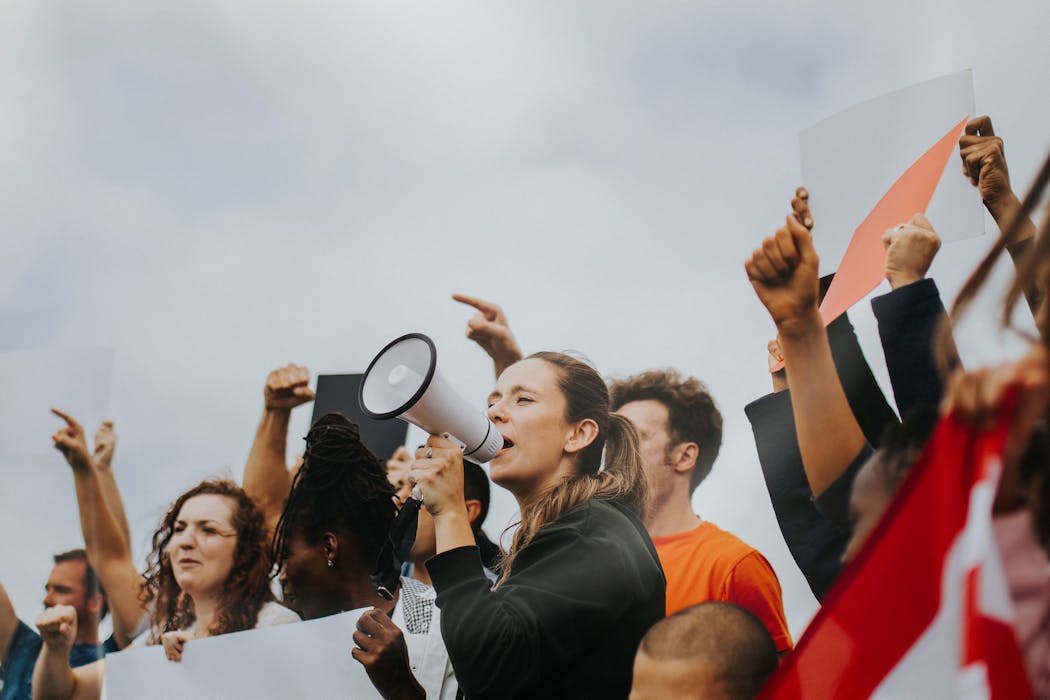
Individual efforts – for example by buying less, donating to charity or buying ethical alternatives – can’t solve these problems entirely. The structures will remain unchanged without political action. Becoming an activist is a way of taking up what philosophers call our “political responsibility” for structural injustice.
But despite all the injustice in the world, and the pressure from social media to care loudly about every issue, devoting a significant amount of time to activism isn’t achievable for everyone.
Most people – especially those with caring responsibilities – have scarce free time to develop the requisite knowledge about the political issues or the relevant skills to take part. People also need to manage the practicalities of activism, such as attending a demonstration or participating in a letter-writing campaign. Some forms of activism also require skills, such as speaking in public or expressing political views online.
If this sounds intimidating, here are three small ways you can help tackle injustice.
1. Activism light
Getting involved in activism doesn’t have to be a full-time job. For those with other commitments, it’s still better to do something rather than nothing.
This might mean engaging in small ways around other commitments, for example, by attending occasional protests or posting political content on social media.
You might worry that this route is minimally effective, and engaging in what may appear to be tokenistic activity is certainly a concern here if that time could be better spent on more effective alternatives.
But lots of small actions can quickly add up when they take place as part of a collective effort. Engaging in smaller forms of activism can also provide learning opportunities. Small actions can help skill you up to participate more effectively in more complicated and demanding forms of activism in the future.
A second way to address structural injustice without becoming activists comes from the ethicist Robin Zheng. Zheng argues that we can alter unjust structures by pushing the boundaries of our existing social roles.
We all occupy various social roles, such as parent, teacher or friend. As these roles are part of the social structures we live in, performing these roles with “a raised consciousness” can help challenge injustice from where we already are.
This doesn’t have to be by doing anything additional, but by doing what we already do – differently. For example, as teachers we might educate our students on the injustice of sweatshop labour, or as parents we might prioritise gender equality in raising our children.
3. Be a scaffolder
Finally, you might support the activism of others without engaging in activism yourself. This (often unrecognised) work is vital for the success of collective political action. Without it, activism would be more burdensome for activists, and much activism would simply not occur.
Take, for example, the role of many ordinary citizens within black communities during the 1960s struggle for civil rights in the US who supported activists without engaging in activism themselves. Rather than attending protests, many supported the actions of those who did, through supplying food, transport or places to stay.
Engaging in scaffolding could be as simple as looking after someone’s child so that they can attend a protest, or providing protesters with food or coffee.
Scaffolding can still take place even if you don’t come into contact with activists in your everyday life. Campaigns exist where people can sponsor activists by organising training, covering the costs of childcare and transportation, or even paying the bail of those detained while protesting.
Supporting activism at a distance without providing financial contributions is more difficult. Crafting supplies for protesters is one way this can be achieved – as in the case of the “pussyhats” created by knitting circles around the world for attendees at the Women’s March on Washington.
Challenging unjust structures can seem daunting, but it is something we all can do without becoming full-time activists.
Joshua Hobbs does not work for, consult, own shares in or receive funding from any company or organisation that would benefit from this article, and has disclosed no relevant affiliations beyond their academic appointment.
Source: The Conversation – UK – By Michael La Corte, Research Associate, Curation and Communication, University of Tübingen
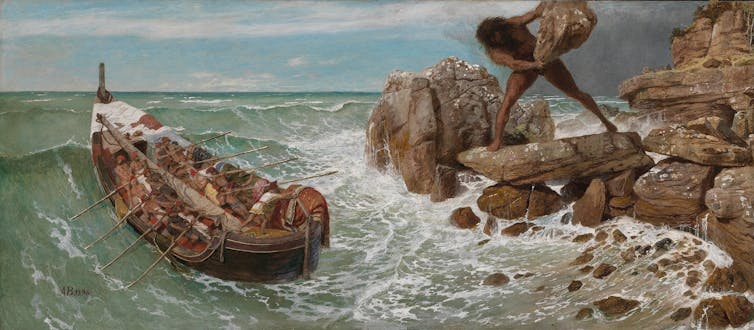
Imagine waking up to find strangers in your home – eating your food, killing your animals, then laughing as they blind you. Later, they tell the world you were the monster.
We are describing one of the better known episodes of Homer’s Odyssey, written around the late 8th or early 7th century BC. The intruders are protagonist Odysseus’s men, and the “monster” they attack is Polyphemus, a solitary giant shepherd later remembered only as a cyclops.
For centuries, we’ve followed the hero’s journey without asking what it costs. But what if the cyclops wasn’t the monster, but just one of many lives shattered along the way?
Director Christopher Nolan’s new adaptation of The Odyssey hits cinemas in July 2026. But will it celebrate Odysseus as the clever hero – or finally confront the wreckage he leaves in his wake?
Homer’s Odyssey, composed at the turn of the 8th to the 7th century BC, follows Odysseus, king of Ithaca, as he struggles to return home from the Trojan war, outwitting monsters, gods and fate. It’s a tale of resilience and cunning – and the template for countless stories since: the clever man triumphs over the monstrous other and sails home in glory.
We know the pattern by heart. But we rarely ask: who gets trampled along the way, and whose story is never told?
This article is part of Rethinking the Classics. The stories in this series offer insightful new ways to think about and interpret classic books and artworks. This is the canon – with a twist.
In the scene of Odysseus v Polyphemus, the cyclops is cast as a brute, a savage who traps the hero and his men in a cave. Odysseus responds with legendary cunning: wine, lies, a sharpened stake – and escape.
From the outside, it’s textbook heroism, yet Homer himself hints at the cost of that victory. He has Odysseus reveal his name only after the escape: “Tell them it was Odysseus, sacker of cities, who blinded you.” It’s a moment of pride, not necessity – the spark that seals his fate. In that instant, the clever survivor becomes the arrogant aggressor, and the story’s moral axis begins to tilt.
Yet if we shift perspective, the story changes. Polyphemus is a solitary shepherd, living in peace. Strangers break into his home, steal his food, kill his livestock, and leave him blinded and broken. His cave isn’t a prison but a home under siege. His violence, while brutal, emerges from desperation. You could easily argue that Polyphemus isn’t the villain. He’s the victim.
This reversal reveals a troubling pattern: our cultural instinct to root for the protagonist, no matter what they do – as long as the cause feels noble. From ancient epics to Hollywood blockbusters, we excuse deception, destruction, even murder, if it serves the “greater good”.
We cheer when the hero escapes – but rarely look back at what’s left behind. A burned city. A grieving family. A blinded shepherd. If it fits the story, we accept the collateral damage as necessary. That’s the seductive logic of heroism: clean endings, messy consequences.
In Homer’s writing, Polyphemus gets a single moment of anguish – a prayer to Poseidon, his father – and then vanishes from the story. His voice, his pain, his version of events do not fit the heroic arc.
And this pattern continues. Empires and conquerors have long branded enemies as “barbarians”, “savages” or “monsters” to justify violence. From Roman propaganda to colonial domination in the Americas and Africa – and, more recently, to claims of “denazification” in Ukraine – this tactic dehumanises the “other side” and erases their stories. Strip the enemy of humanity, and their suffering becomes legitimised.
If history is so often written by the victors, we must ask: what remains of heroism when we finally listen to the so-called monsters? As global conflicts polarise public discourse around heroes and villains, the stories we choose, and those we silence, matter more than ever.
The trailer for The Odyssey.
What if we shift the spotlight? Polyphemus becomes more than a monster – he’s a mirror, showing how unchecked heroism can slip into cruelty. Cleverness isn’t virtue. And survival at others’ expense isn’t always justified.
Odysseus, the “man of many turns” is brilliant but ambiguous. His actions bring destruction alongside triumph. For every hero who returns, many suffer or are lost. True heroism lies not just in daring escapes, but in owning the cost left behind.
The cyclops’ tale warns us how easily we dehumanise those in the hero’s way. How we flatten complexity to fit a script. How we justify harm if the story feels right. Rethinking Polyphemus complicates Odysseus and challenges us as storytellers and audiences.
The real challenge for Nolan’s The Odyssey won’t be spectacle or scale, but perspective. Will it dare to look beyond the hero? Will it give voice to those left in his shadow? Clint Eastwood did just that with Flags of Our Fathers (2006) and Letters from Iwo Jima (2006), telling the story of the battle of Iwo Jima from opposing sides. By letting the “enemy” speak, he shattered the illusion of a single, righteous story.
If Nolan embraces that sort of complexity, The Odyssey won’t just retell a myth but will challenge us to rethink who we name as heroes and to listen more closely to those we once dismissed as monsters.
Looking for something good? Cut through the noise with a carefully curated selection of the latest releases, live events and exhibitions, straight to your inbox every fortnight, on Fridays. Sign up here.
This article features references to books that have been included for editorial reasons, and may contain links to bookshop.org. If you click on one of the links and go on to buy something from bookshop.org The Conversation UK may earn a commission.
The authors do not work for, consult, own shares in or receive funding from any company or organisation that would benefit from this article, and have disclosed no relevant affiliations beyond their academic appointment.
Source: The Conversation – UK – By Richard Hargy, Visiting Research Fellow in International Studies, Queen’s University Belfast
Republican congresswoman Marjorie Taylor Greene, once a close ally of Donald Trump, spelled out in one short sentence why elements of the US president’s core voter base were dismayed at the weekend operation that captured Venezuelan leader Nicolás Maduro: “This is what many in Maga thought they voted to end.”
The sentiment expressed by Greene, who recently broke with Trump over what she alleged was his unwillingness to order the justice department to fully release its files relating to the late convicted sex offender Jeffrey Epstein, was shared by some other elected Republican officials.
This included Kentucky’s Thomas Massie, who also publicly stated his disapproval with Trump’s decision to order the attack. But so far these voices are in the minority. In the days and hours since the operation, a series of prominent Congressional Republicans have united behind the president.
Senator Lindsey Graham of South Carolina, for example, praised Trump’s decision to green light the US mission. He wrote on social media: “We will be more prosperous and safer for it. I am hoping and praying that the Venezuelan people will soon have a fresh start on democracy and freedom.”
American public opinion on the Venezuela attack will be measured in the coming days. But it is useful to reflect on polling leading up to the event. The Trump administration has authorised a number of military strikes on alleged drug boats near Venezuelan territory in recent months, while Trump himself has repeatedly threatened land strikes in the country.
A poll from December 2025 conducted by Quinnipiac University in the US found that 63% of registered American voters opposed military action against Venezuela – a significant figure against this type of intervention. More than half of the 25% of voters that supported military action were Republicans.
Some Republican political operatives are warning that a prolonged American presence in Venezuela will be detrimental to Trump and his party ahead of midterm elections in November. Dave Carney, a Republican strategist, stated on January 3 that “Nobody wants a quagmire. Nobody wants … body bags coming back to Dover of American soldiers who are being sniped at from … a rebellious minority in Venezuela.”
Philip Elliot, senior correspondent at Time magazine, has asserted that Trump’s aversion to foreign interventions was a huge appeal for many who supported him in the 2024 election. Elliot wrote on January 3 that, for these people, Trump’s “incursion into Venezuela, the capture of its first family, and its about-face of campaign promises stung something bitter”.
Trump’s overseas strategy
The military operation in Venezuela modifies Trump’s make America great again (Maga) foreign policy doctrine. In his second inaugural address in January 2025, Trump pledged that: “We will measure our success not only by the battles we win, but also by the wars that we end, and perhaps most importantly, by the wars we never get into.”
But the recent events in Venezuela seem to indicate a shift in Trump’s overseas strategy. The attack sees the president follow similar forays by his Republican predecessors in the western hemisphere. These include Ronald Reagan’s decision to invade Grenada in 1983 and George H.W. Bush’s authorisation of a military operation to oust Panama’s president, Manuel Noriega, in 1989.
This reorientation was to some extent codified by the Trump administration’s new national security strategy, which was published in late 2025. Vanda Felbab-Brown of the Brookings Institution argues that this document pivots “the US toward the western hemisphere … essentially asserting a neo-imperialist presence in the region”. The document may explain the rationale behind the operation in Venezuela.
The military action in Venezuela represents a victory for the more hawkish members of the Trump administration. This is perhaps most true for secretary of state Marco Rubio, who has long advocated removing Maduro from power. A possible change in government in Venezuela could lead to other geopolitical events in the western hemisphere that Rubio has spent years pushing for.
In 2019, for instance, he intimated that a diminished Cuban regime would be a welcome “byproduct” of Maduro’s removal. Since the raid in Venezuela, Rubio has asserted that Cuba’s government may be on borrowed time. “If I lived in Havana and I was in the government, I’d be concerned at least a little bit,” he said.
Being focused solely on the foreign policy sphere is also currently a political advantage for Rubio, especially if he is contemplating a run for the presidency in 2028. The crisis in Venezuela ensures he avoids becoming ensnared in other current domestic political controversies, including the high cost of living and continuing controversy over the release of the Epstein files.
The road ahead
In the coming weeks and months, the Trump administration will strive to navigate a path that reduces the risk of the US becoming entangled in a military conflict in South America. It will face continuing criticism from within its own party ranks and the Democratic opposition in Congress. The administration will also face media scrutiny on the legality of the action as well as the future scope of the US mission in Venezuela.
Laurel Rapp from Chatham House, a research institute based in the UK, has stated the Trump team will worry particularly about the potential for some of the leaders within the “Maga movement” who have broken with Trump to “exploit this rift as the midterms heat up”.
There could be some political currency for Maga standard bearers opposed to military operation in Venezuela to trade on. But, in my opinion, it is unlikely to have serious national domestic political ramifications in the immediate term. This is due to the fact the military action was executed successfully and without any American deaths.
So, standby for the more established issues to return to the fore soon – the economy, healthcare costs and the Epstein files.
Richard Hargy does not work for, consult, own shares in or receive funding from any company or organisation that would benefit from this article, and has disclosed no relevant affiliations beyond their academic appointment.
Source: The Conversation – UK – By Priscilla Angelique-Page, Researcher, Generative Artificial Intelligence, Nottingham Trent University
Intelligent Band Machine. Real or AI generated?Priscilla Angelique-Page
When you click on the Spotify profile of Intelligent Band Machine you will see an image of three young men staring moodily back into the camera. Their profile confirms that they are a “British band”, “influenced by the post-punk scene” and trying to capture the spirit of bands like The Cure “while carving out their own unique sound”. When you listen to their music you might be reminded of Joy Division’s Ian Curtis.
If you dig a little deeper and read about them on their record label’s page you will find that Cameron is the lead singer and his musical tastes were shaped by the concerts he attended at Nottingham’s Rock City nightclub. Tyler, the drummer, was indeed inspired by The Cure, as well as U2, and The Smiths, while guitarist, Antonio, blends his Italian mother’s love of classic Italian folk songs with his British father’s passion for The Beatles and The Rolling Stones.
What these profiles don’t say is that Intelligent Band Machine is not real, at least not in the human sense. And I should know, because I created them.
I used a range of Generative Artificial Intelligence (GenAI) tools, as well as my skills as a professional songwriter and sound engineer to make their debut album, Welcome to NTU, and I released it on my dedicated AI record label, XRMeta Records in May 2025.
You might ask why an independently releasing singer-songwriter and music producer like me would create an artificial band. As well as being a musician, I’m an academic with a background in computer science, carrying out research about how GenAI can be used for music.
I had reservations about these tools and how they might affect me as a musician. I had heard about various AI controversies like “fake” Drake, and artists like Grimes embracing GenAI in 2023. So, I was also intrigued by the possibilities.
Over 100 million people have tried Suno, an AI music generation platform that can create songs with vocals and instrumentation from simple text prompts. More than 100 million tracks have been created using the Mubert API, which allows streaming to platforms like YouTube, TikTok, Twitch and Instagram; and according to Deezer 28% of released music is fully AI-generated.
It was time for me to investigate what these tools could do. This is the story of how I experimented with GenAI and was transformed from a dance artist to a post-punk soft rock band.
GenAI has changed everything
In my early days of songwriting one of the first pieces of equipment I bought was a Panasonic RQ-2745, a small slim portable cassette tape recorder that allowed me to record rough drafts of vocals on an audio cassette tape.
When cheap products like the Sony cfs-w30 boombox began to incorporate double cassette decks, I could overdub songs and add choruses or instruments like flute or guitar at home. If I wanted a quality recording, I had to book a recording studio. I became an expert at splicing tape to remove vocal parts from the tape recording or to fix tape jams.
Cutting and taping, became cutting and pasting as I experimented with the very early free digital music sequencers that were included on a disk I found on the cover of a PC magazine. I felt liberated when sequencers like Cubase, Pro Tools, and Logic allowed high quality recordings to be produced at home. This, along with the significant reduction in the cost of studio equipment, led to the emergence of the bedroom producer and the proliferation of the 808 sound. This deep, booming, bassline can be heard in hits like It’s Tricky by RUN DMC, Emergency Room by Rihanna, and Drunk in Love by Beyoncé.
Digital distribution and social media then paved the way for self-releasing independent artists like me to communicate directly with fans, sell music, and bypass record labels.
Yet during all of these changes musicians still needed the skills and knowledge to create their songs. Like many musicians I honed my skills over several years, learning to play the guitar, flute and piano, and developing sound engineering skills. Even when AI powered tools began to be incorporated into digital audio workstations, a musician’s skill and knowledge was still needed to use these tools effectively.
Being able to create music from text prompts changed this.
Not since the introduction of music streaming services in the late 1990s has there been such a dramatic shift in music composition and listening technologies. Now non-musicians can create studio quality music in minutes without the extensive training that I had, and without having to buy instruments or studio equipment.
Now anyone can do this. It was time for me to learn what these tools could do.
I typically produce RnB/neo soul, nu-jazz and dance music, although I can write songs for multiple genres of music. For the experiment, I wanted to try a genre that I do not usually produce music for.
The Insights section is committed to high-quality longform journalism. Our editors work with academics from many different backgrounds who are tackling a wide range of societal and scientific challenges.
I tested about 60 different GenAI tools and platforms. These included standalone tools that focus on one task, like MIDI generation (musical data that can be played back on a keyboard or music sequencer). I also tried AI music studios. These platforms have user friendly interfaces that combine a range of AI tools to support lyric, music, image and video creation.
Suno and Udio were two of the best platforms. They can generate songs with complex vocal melodies and harmonies across a range of genres, with the best outputs being difficult to distinguish from what human musicians can create. Both Telisha “Nikki” Jones and music mogul Timbaland are said to have used Suno to create music for their AI-generated artists.
In June 2025, Timbaland announced the signing of his AI artist TaTa to his dedicated AI record label, Stage Zero. In September 2025 Jones was reported to have signed a US$3 million (about £2.3 million) deal with Hallwood Media for her AI-generated artist Xania Monet.
At the time of my experiment in March/April 2025, both Suno and Udio had issues, such as silence gaps, tempo changes, inconsistent vocal quality, and variations in genre. Sometimes the voice might change within the song. There was limited control in terms of editing, and the audio quality could vary within a single track or across a series of songs.
After trying several GenAI music platforms I decided to use Udio due to the quality of its output and its favourable terms and conditions at that time. Taking inspiration from pop-rock and post-punk bands like Joy Division and The Cure, I started the journey towards creating a new persona.
Using GenAI to produce one or two good songs was quite simple. Producing an album of 14 songs that sounded as if they were played by the same band was more challenging, particularly generating the same male voice and musical style for each song.
The songs were either far too similar to each other or had other issues such as the voice changing, or the instruments sounding too different. A careful listen to the songs in Unfolded by the AI artist Xania Monet will reveal similar inconsistencies. For example, you can hear a difference in the voice that is generated for the first song, This Aint No Tryout, compared to Back When Love Was Real.
GenAI can’t write (decent) lyrics
My first task was to create the lyrics. I generated about 1,000 songs using Udio and found repeated words and phrases in the lyrics like “neon”, “whisper”, and “we are, we are, we are”, appearing both within and across the two user accounts I created. Themes like darkness, shadows, and light were also repeated within the lyrics for a significant number of songs.
GenAI just couldn’t write lyrics with the complexity or playfulness I needed, so I chose to write the lyrics for the album myself and used a semi-autobiographical narrative. This allowed me to maintain a story across the album; from arriving at Nottingham Trent University and settling into student accommodation, to experiencing university life, graduating and leaving.
I could interweave current affairs like the closure of Nottingham’s Victoria Centre Market in the song Goodbye Vicky Market. I included lines that referenced Nottingham’s historical figures like Alan Sillitoe, who wrote The Loneliness of the Long Distance Runner, and the author D.H. Lawrence, in the song, Books.
After writing the lyrics I generated the music. There were issues with prompt adherence. I tested prompts of different lengths. In some cases, prompts were partly or wholly ignored. I might write a prompt asking for one genre and a different genre would be produced.
There were also issues with the synthetic voice pronouncing some of the lyrics. For example, it could not pronounce “NTU” or “Sillitoe” and I had to rewrite some of the lyrics phonetically or edit the audio to get the correct pronunciation for certain words.
I relied on my sound engineering skills; extending the outputs, editing, mixing, remixing, and manually recording vocals in Cubase to achieve a coherent final mix. This took a significant amount of time. In fact, editing the Udio outputs took so much time it would have been easier to recreate the music myself. I can write a song in ten minutes, and I sometimes record myself freestyling lyrics for an entire song directly in Cubase, so this was frustrating.
I encountered similar issues with prompt adherence when generating images and video. When using Kling AI to create images of the band members, I followed its prompt engineering guide. However, I had to generate hundreds of images and edit them with external tools to achieve the final band photos.
Generating video was equally tricky. One way to create a video is to upload a photo, which becomes the first frame. The rest of the video is generated based on the prompt. However, when I uploaded Cameron’s profile image to Kling AI, the initial frames of the ten-second video resembled him. But by the end of the video, Cameron often morphed into someone else, and this happened frequently when generating video.
Prompts for camera instructions, such as zoom and pan, were frequently ignored. I also had to edit out scenes with other problems, such as the appearance of extra fingers or an additional leg on the band members.
All this wasn’t cheap either. With 8,000 Kling AI credits at a cost of US$64.99 (about £50), I could generate about 40 ten-second videos, but many were unusable.
Music generation is cheaper. Paying between US$24 and US$30 (roughly £18-£24) for a monthly subscription might allow a user to create between 2,000 and 3,000 songs, depending on how the “credits” are used. I was very surprised to discover how quickly these song credits can be consumed. Every error or song that didn’t suit my taste still cost credits.
Eventually, after generating thousands of songs, hundreds of images and video, using tools like Duck.ai to create the band’s biographies, and spending many hours editing the outputs; Cameron, Tyler and Antonio began to emerge as the band.
AI-generated band Intelligent Band Machine: Antonio, Cameron, and Tyler. Priscilla Angelique-Page
Something unexpected happened
I have always been passionate about creating my own music. As much as I love writing songs, the poor royalty payouts I was receiving had become disheartening. A song I recorded in 2001 and released in 2011 called Only Heaven Can Compare was streamed about 1 million times in France during 2024 but I only received about £21 in royalties.
Prior to streaming, had my song been downloaded by just 10,000 people, I would have been paid about £6,900 (69p per download). Artists like Kate Nash have raised concerns about the poor royalty payouts to musicians, citing her £500,000 payout for over 100 million plays of her song “Foundations”.
But as I created the band’s album something unexpected started to happen. I began to enjoy creating music again. The frustrations with using GenAI was balanced by wonder and curiosity.
At times Udio was able to generate vocals that were so realistic I could hardly believe they were created by an AI model. There were moments when I laughed, when I was really moved, and even had chills when I heard some of the songs.
Lyrics that once lay dormant in multiple lever arch files on my bookshelf began to find new life through these generative tools, allowing me to rapidly test them across multiple genres.
I decided to take this experiment further.
After carefully selecting a set of songs I had written many years ago, I created a new persona, Jake Davy Smith. For his 14 track album, called I’ll Be Right Here, which was released on November 22, 2025, I used Suno’s v5 model to generate studio quality music that matched my original vision.
Suno’s extensive editing tools allow users to upload vocals, create a cover song, and edit the music, lyrics, or voice with greater precision than their earlier models. This helped me nearly recreate my original songs. The track Calling is an example of a rock ballad I wrote years ago, recorded and didn’t release.
Conflicting emotions
Reflecting on this experiment, I found myself with conflicting views about using GenAI. These tools are fast and affordable (in some cases, completely free). They can produce instant results. I now have tools that I can use to quickly reimagine my old songs.
I can use multiple personas to bring my lyrics to life. I am Priscilla Angelique. I am Intelligent Band Machine. I am Jake Davy Smith. I am Moombahtman 25, a male African American moombahton artist who combines hip hop with Latin American beats, and I have many more personas.
I am a “multiple persona musician” or MPM, a term I’ve created to define my new musical identity. Musicians having alter egos isn’t new, but GenAI has completely changed how this is done.
However, there’s another side to this. Human musicians are now having to compete with algorithms capable of producing high quality music at scale – as well as with each other.
These tools are improving rapidly, and the issues I experienced when using Udio to create the album for Intelligent Band Machine in March/April 2025 have already been addressed in Suno’s v5 model. It is now easier to create a persona with a consistent voice. Users can upload their own songs and also create cover versions of their songs.
Creating the album for Intelligent Band Machine took about one month and there were multiple issues with trying to create consistently sounding high quality AI-generated songs. I spent hours reviewing thousands of outputs and then more time editing the final set of curated songs in Cubase.
My experience was very different when I created the album for Jake Davy Smith. I used lyrics I had already written, generated between five and 20 versions of each song, and spent far less time editing them. The process was faster, however, there were still some issues. Changes in Jake’s voice occurred, though they were less frequent and easier to correct. There were also problems with pronunciation, but I could now quickly regenerate the audio. In essence, what had previously taken a month now took only a week.
Ethical issues and data collection
Yet beneath this lies a further internal conflict related to the data used to train these AI models or, as music journalist Richard Smirke describes it, “the largest IP theft in human history”. It is this issue that has made a technology that ought to have been celebrated as one of the biggest technological achievements in decades, one of the most contested instead.
Chatbots like ChatGPT, estimated to have 1 billion users worldwide, have been described by the linguist and activist Noam Chomsky as both “marvels of machine learning” and the “banality of evil”. Image generators like OpenAI’s DALL-E have also come under fire. Critics like Ted Chiang challenge whether AI can make art and other commentators have criticised the lack of cultural diversity in image generation.
In addition to this, in 2024 the UK government announced it was considering an exception to copyright law that would allow industry to use copyrighted works for AI training without compensating the creators. This led to protests. More than 1,000 musicians released a silent album called Is This What We Want in protest against unauthorised AI training. The artists included Kate Bush, Annie Lennox, Damon Albarn, and The Clash.
Elton John and Paul McCartney also voiced their opposition to changes in copyright law that would benefit AI companies. The mystery about whether a band called The Velvet Sundown was AI-generated added fuel to the fire and sparked further debate during the summer of 2025.
Yet AI companies have been winning, or at least partially winning, court cases. In November 2025 Getty Images “lost its claim for secondary infringement of copyright” against Stability AI. Other AI companies are making deals, and this includes Udio and Suno’s recent deals with music companies. However, more alternative platforms are emerging. Klay.vision is negotiating with the big labels prior to launching, and Soundraw only uses music created in-house for AI training.
So GenAI is here to stay, and musicians will need to adapt. Library music, background music, and music for social media or film can easily be created with AI. However, there are risks. The risk that similar music may be generated for other users; the risk that any uploaded songs may be used for training data. Then there’s the risk that these tools may inadvertently generate something that breaches someone else’s IP.
One way for musicians to safely use GenAI is by training models using their own data, as YACHT did when they used their back catalogue of songs as training data for a new album. In this way musicians can have full control over the outputs. This is something I will be exploring for the next stage of my research.
What AI can’t do
My transformation has been anything but straightforward. It has been marked by the deep frustration I encountered when initially using these tools, an ongoing conflict about how these tools are trained, and moments of genuine amazement. The albums I created may be imperfect, but they are a clear departure from my usual style and show how GenAI can support musical creativity.
Priscilla Angelique-Page aka Priscilla Angelique, wearing an AI-generated jacket and shirt. Priscilla Angelique-Page
Financially, the albums are unlikely to recoup the cost of creating them, as independent musicians may need hundreds of millions of streams to earn a decent income from music. Even a few million streams of the songs will barely cover the various fees for music, image and video generation of around £140. Merchandise, licensing, sync deals and other revenue streams will likely remain important sources of income for musicians, whether they are human or AI-generated.
On the legal side, one possible way forward is for AI companies to make open-source versions of their models freely available for offline use. Some already have, but for those that haven’t, it seems fair that if they have used our data to build these systems, they should allow broader access to the models themselves.
New technologies might change how music is produced. We have gone from clapping to drumming, and from using drum machines in recording studios to generating “new” sounds with AI. Yet now that I have completed these experiments, I realise that one thing remains the same.
Whether I am cutting tape using scissors, cutting and pasting in a sequencer like Cubase, or regenerating parts in an AI music studio like Suno, human creativity is still an essential part of the process. Using GenAI was transformative, yet it was my creative decisions that shaped the songs, the albums, the avatars for my personas, their biographies, and the overall vision. This is something that AI cannot do – at least, not for now.
To hear about new Insights articles, join the hundreds of thousands of people who value The Conversation’s evidence-based news. Subscribe to our newsletter.
Priscilla Angelique-Page does not work for, consult, own shares in or receive funding from any company or organisation that would benefit from this article, and has disclosed no relevant affiliations beyond their academic appointment.
“Quitters day” falls on January 9 this year and marks the point at which people are most likely to give up their New Year’s resolutions. As usual, weight loss is one of the most common goals. But there are compelling reasons to suggest that ditching the diet is not a failure at all. In fact, it may be a sensible and healthy choice.
The science behind weight and health is not a straightforward story of cause and effect. It is widely assumed that carrying extra body fat automatically makes someone unhealthy, but this does not stand up to scrutiny.
The amount of body fat a person can carry before health problems develop varies widely between people. Biological sex, ethnicity and genetics all play a role. However, the most common way we measure body size, the body mass index or BMI, does not reflect this complexity. BMI is simply a ratio of weight to height and does not measure body fat, fitness, diet, physical activity or metabolic health.
As a result, it is entirely possible to have a high BMI and be metabolically fit and healthy, meaning that indicators such as blood sugar, cholesterol and blood pressure fall within healthy ranges. Conversely, someone with a BMI categorised as “normal” may still experience poor health.
There is also strong evidence that being underweight can carry serious health risks, particularly in later life. In short, body size alone tells us very little about a person’s actual health.
Despite this, our society remains deeply preoccupied with physical appearance and the so-called thin ideal. Historical anti-fat attitudes that associate larger bodies with moral weakness or social inferiority continue to shape contemporary culture. This places enormous pressure on people to conform to narrow and unrealistic physical standards.
Failing to meet these standards has profound psychological consequences. Millions of people with average-sized bodies experience persistent self-criticism, emotional turmoil and low self-esteem. Of even greater concern is the alarming rise in eating disorders among children and adolescents in recent years, a trend closely linked to appearance-based pressure and weight stigma.
Human bodies naturally come in many shapes and sizes and have fluctuated throughout history. Over the past 200 years, average height has increased in response to improved nutrition, healthcare and living conditions.
Highly processed, calorie-dense foods are cheap, heavily marketed and widely available, while work patterns are more sedentary and time for food preparation and physical activity is constrained. The result is an environment that promotes weight gain at a population level, regardless of individual willpower or intentions.
GLP-1 treatments have reshaped obesity treatment. These drugs were originally developed for diabetes and work by mimicking a hormone involved in appetite regulation, helping people feel fuller for longer. For some, they can be life-changing.
However, their ubiquity has a darker cultural side. The wave of highly visible physical transformations risks undermining the progress made by the body positivity movement. There are growing signs that we are sliding back towards idealising extremely thin bodies.
This shift is particularly worrying when it plays out in cultural spaces that are highly visible to and influential on young girls. Celebrity culture and media moments, such as the recent attention surrounding the Wicked press tour, where discussion of performances and production was repeatedly eclipsed by commentary on women’s bodies, have prompted intense public scrutiny. Even when framed as concern or criticism, this fixation reinforces the idea that thinness remains central to how beauty and success are judged.
The belief that thinness equals beauty is so deeply embedded that imagining a world without it can feel unrealistic. Yet similar cultural shifts have happened before. There was a time when smoking was incredibly chic, and it would have seemed unimaginable that it would later be banned in public places.
The same should happen with the thin ideal. Alongside other outdated beauty standards such as wearing corsets or using white lead makeup, it belongs firmly in the past.
Greater exposure to diverse body types shifts what people perceive as normal, healthy and attractive. This makes representation especially important for young, developing brains in an appearance-obsessed society.
Meaningful change requires leadership that challenges outdated views rather than reinforcing them. This is particularly evident when contrasted with high-profile business leaders who have publicly defended exclusionary beauty standards or framed thinness as a prerequisite for desirability.
In the absence of medical reasons to lose weight, resisting the pressure to diet is a rational and healthy choice. Focusing on body acceptance, fitness, strength or improving diet-quality offers far more sustainable benefits than weight loss targets.
Beverley O’Hara does not work for, consult, own shares in or receive funding from any company or organisation that would benefit from this article, and has disclosed no relevant affiliations beyond their academic appointment.
In the depths of winter, sunscreen might not be top of many people’s shopping lists. Yet it remains a staple in most households, and many of us are encouraged to use it year-round. But sunscreen’s history reveals more than just protection from the sun.
For decades, sunscreen advertising has shaped beauty ideals, dictated how women’s bodies should look and reinforced social norms.
Our recent study analyses historical and contemporary advertising campaigns and shows how these messages have endured, continuing to influence ideas about gender, health and personal responsibility. These messages are not only about safety or wellbeing, but about staying youthful, attractive and socially acceptable.
The early 20th century saw an increase in recreational sun exposure. Entrepreneurs quickly seized the opportunity, producing creams and oils that promised a golden tan without the burn. From the start, these products were tied to female beauty and sexual appeal.
Early ads often showed young, white women in swimsuits, lounging on beaches or posing suggestively behind deckchairs or foliage. The language in these ads reinforced these visual cues. Slogans such as “protect yourself” and “be sun smart” played on both vulnerability and allure, implying that a woman who cared for her skin was also maintaining her desirability. The link between health and sexual appeal was subtle but powerful.
Tanned, smooth skin soon became the aspirational ideal, partly because for white western consumers a tan came to symbolise leisure and affluence. It suggested the ability to travel abroad or spend time outdoors, rather than working indoors or in factories.
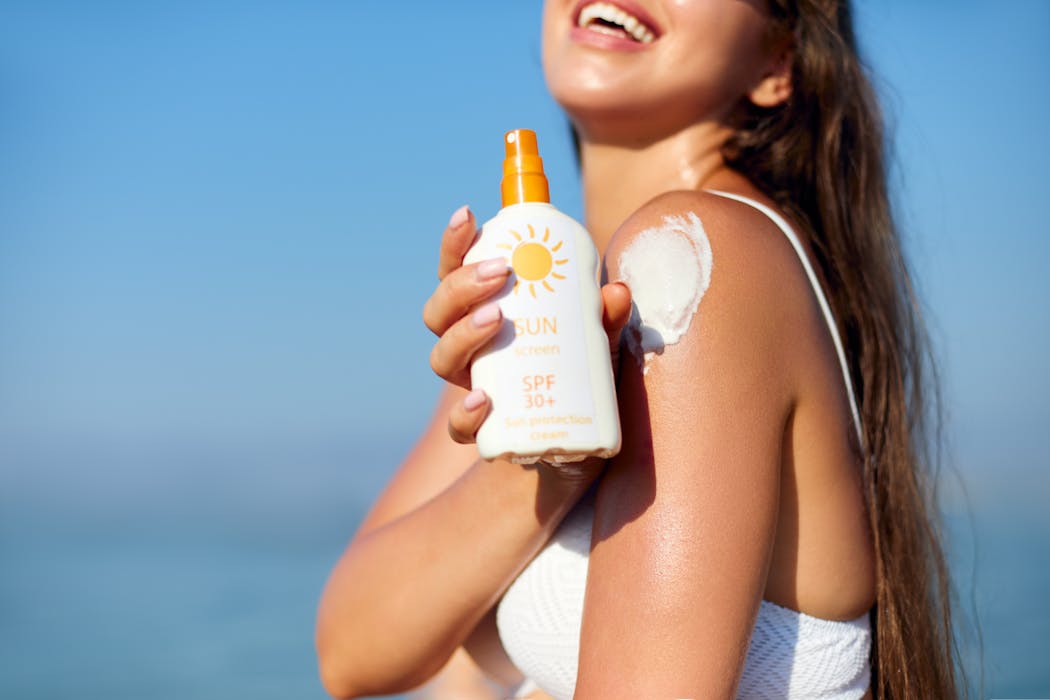
Modern sunscreen campaigns still celebrate beauty but now frame it in the language of empowerment and self-care. Women are often shown in bikinis, playfully applying sunscreen, accompanied by captions about confidence and personal responsibility for maintaining their looks and wellbeing.
Yet the underlying message remains the same: sun protection is closely tied to appearance, particularly youthful, evenly toned skin. Men and people of colour remain largely absent, keeping the focus on a narrow, eurocentric standard of beauty.
Science as a selling point
Sunscreen advertising has long used science to convey authority. From the 1930s onwards, campaigns highlighted laboratory-sounding ingredients such as “eucerit” or “pantosal” and made confident claims about skin protection and vitamin D, even when consumers had little idea what these terms meant. Early Nivea and Ambre Solaire campaigns, for example, promoted “scientific skincare” without explaining the science behind it.
These ads did not just promise safety. They also framed women as responsible for managing their own risk. Infographics, percentages and scientific-sounding language suggested that careful sunscreen use was not only smart but virtuous. As our analysis shows, this framing positioned skincare as a moral responsibility, in which a “good” woman was expected to monitor, manage and discipline her body. If her skin burned or aged, the implication was that she had failed to protect herself correctly.
Contemporary marketing continues this pattern. New ingredients such as “LUMINOUS630” or “Q10” are promoted for anti-ageing rather than sun protection, supported by bullet points and sleek graphics. The message is familiar: women must control their skin to prevent wrinkles, spots and sagging.
Visual cues such as sunhats, sunglasses or shaded settings are sensible precautions against UV damage. In advertising, however, they also reinforce the idea of women as delicate and in need of protection. Science here is not purely informational. It becomes a marketing tool that shapes behaviour, assigns personal responsibility and encourages self-surveillance. While awareness of skin health is a positive thing, women are still disproportionately targeted with messages that link vigilance and self-control to beauty and youth rather than cancer prevention.
From seasonal necessity to daily routine
Sunscreen was once promoted as a straightforward, seasonal product, something to pack for a summer holiday rather than use every day. Advertising assumed it would be applied at the beach, by the pool or on sunny foreign trips, not during everyday life.
By the 1980s and 1990s, brands began introducing formulas for oily, dry or sensitive skin, signalling a shift away from seasonality and towards daily use. Products were increasingly tailored to specific consumer “types”, expanding the market while acknowledging that sunscreen could aggravate conditions such as acne or eye sensitivity.
Focusing on skin “type” rather than skin tone also allowed brands to sidestep racial inclusivity. Advertising often implied that sun protection was mainly a concern for lighter skin, reinforced by the near-exclusive use of white models and language that positioned fair skin as more “at risk”. This helped sustain the idea that darker skin was naturally more resilient and therefore less in need of protection.
Some manufacturers have begun to acknowledge this more explicitly. Certain Garnier Ambre Solaire facial products now state that they are “formulated to protect all skin tones”, while Nivea product descriptions also reference suitability for “all skin tones”. These statements reflect a gradual shift in how sunscreen is framed, though representation in advertising has been slower to change.
Today, sunscreen is promoted as a daily essential. It appears in moisturisers, makeup and cosmeceuticals, cosmetic products that include biologically active ingredients intended to affect the skin, such as boosting collagen or evening pigmentation. Many campaigns feature step-by-step guides to application. While sunscreen does need to be applied correctly to work effectively, the tone of these ads often presents it as a lifestyle ritual rather than a straightforward health precaution.
At the same time, modern ads emphasise environmental consciousness through recyclable packaging, reef-safe formulations and vegan ingredients. This may reflect genuine sustainability efforts, but the framing often focuses on individual virtue, encouraging consumers to take personal responsibility for environmental harm rather than holding companies accountable for the wider ecological impact of the cosmetics industry.
Towards inclusive sunscreen marketing
Sunscreen is now sold as a health product, a beauty tool and a marker of environmental awareness. But when advertising sexualises women’s bodies and links sun protection to appearance, it undermines the health message and reinforces narrow ideals of femininity.
Men remain largely invisible in sunscreen marketing, which may help explain why they are less likely to use sunscreen and face higher skin cancer rates. People with darker skin tones are rarely represented either, perpetuating the myth that they are naturally protected from sun damage.
The solution is simple. Sunscreen advertising should represent all genders, ethnicities and skin tones, and focus on clear, evidence-based information about sun protection and skin cancer risk. Framing sunscreen as a universal health practice, rather than a beauty product, can challenge exclusionary norms, genuinely empower consumers and promote wellbeing for everyone under the sun.
The authors do not work for, consult, own shares in or receive funding from any company or organisation that would benefit from this article, and have disclosed no relevant affiliations beyond their academic appointment.
Ski season is well underway, and those in search of Alpine air and exhilaration will be taking to the slopes. But while skiing is a pastime many enjoy, it’s also fraught with injury.
This isn’t to say you need to be fearful of skiing. But having an awareness of some of the common skiing injuries before you hit the slopes might help reduce the chances of one happening.
Skier’s thumb
This condition’s medical name is actually ulnar collateral ligament (UCL) injury – though skier’s thumb rolls off the tongue more easily. The UCL is a tiny little ligament with critical importance in stabilising the thumb, allowing it to create a strong grip, or pinch action. You find it at the base of the thumb where it joins the hand.
Skier’s thumb can occur when the thumb is wrenched backwards and outwards by the ski pole – causing the UCL to become overstretched, leading to strain, or even a tear. It can also happen if you fall on your outstretched hand.
You’ll probably notice pain and tenderness at the base of the thumb, near the web-space between thumb and index finger. It may also appear swollen or bruised.
Loss of function in the ligament will affect your ability to grip objects, so even simple actions such as holding a pen or turning a key in a lock become difficult. The thumb can feel altogether looser, sometimes unstable.
Depending on the severity of the damage, skier’s thumb can persist for a few weeks to months on end while the ligament heals.
To prevent skier’s thumb happening in the first place, correct use of ski poles is crucial. Namely, this involves keeping hands in a safe position, letting go of the poles if you fall and being wary of the attached straps which can also wrench the thumb. Good grip technique and well-fitting gloves can also help here.
Shin splints
I’ve noticed complaints of shin splints seem to hit my case list more frequently in the winter months as experienced and avid skiers return from their holidays.
Shin splints refer to pain felt at the front of the legs, during or after exercise. Skiing is just one of the causes. Running, dancing and other sports which involve leaping and jumping (such as basketball) can cause shin splints, too.
This injury is typically the result of repeated stress and overuse which damages the hard and soft tissues. Since you need to use the muscles in the calf and shin regions to control the skis, long days on the slopes can overload them – especially in beginners, or those with poor muscle conditioning.
They can also arise from poorly-fitted equipment – such as loose or tight-fitting boots that rub or stress the shin, especially if you’re spending a lot of time leaning backwards to stay upright. Aggressive skiing, particularly on hard packed snow, can also be an irritant.
Should you start noticing shin splints, powering through them can make the problem worse. Instead ease off for the day – check your boots, find some softer snow to ski on, or stop altogether. Some gentle stretching at the ankle joint can also help.
Snow blindness
Even your eyes can be at risk of injury when skiing. The condition I’m referring to is photokeratitis – also know as “snow blindness” or “arc eye.”
This condition occurs when the cornea – the clear layer of the eye that covers the pupil and iris – becomes inflamed. The cornea has the important role of refracting and transmitting light to the retina. Arc eye is caused by exposure to ultraviolet (UV) light. Think of it as a sort of eye-related sunburn.
On the slopes, there’s very little cover and there can be lots of sun exposure. The snow also tends to reflect the sun’s light back at us. All of this UV exposure can result in a painful, watery eye – sometimes accompanied by a twitching eyelid. You may also have redness and difficulty looking at bright lights.
Since the condition can be really painful, you’ll need to cover your eye and see a doctor to confirm the diagnosis. They may prescribe some eye drops to help relax and lubricate the eye to reduce symptoms, and antibiotics to prevent infection. Simple pain relief (such as paracetamol), can also help. Luckily most cases resolve within one to two days.
Wearing UV-protective ski goggles, particularly those that are tinted and well-fitting, can also help prevent snow blindness.
Tens of thousands of injuries are attributed to skiing each year. So to avoid getting hurt the next time you’re on the slopes, it’s key to invest in the correct kit and not move onto more difficult slopes until you’re comfortable and capable enough.
Most importantly, don’t ignore pain and attempt to get back onto the slopes for fear of missing out. And if you do suffer an injury of any kind, be sure to visit the ski resort’s medical team – they’re there for a reason.
Dan Baumgardt does not work for, consult, own shares in or receive funding from any company or organisation that would benefit from this article, and has disclosed no relevant affiliations beyond their academic appointment.
Donald Trump and his senior officials have hailed Operation Absolute Resolve, the raid on Caracas and the capture and abduction of Venezuelan president, Nicolás Maduro, as an outstanding military success.
It’s also easy to argue it was a blatant and unashamed violation of international law. And it signals a further erosion of what is left of the rules-based international order.
The temptation for the White House now is to declare victory and quickly move on to other targets while the world is still stunned by the audacity of kidnapping a sitting foreign leader. The people and leaders of Cuba (long an obsession for Trump’s secretary of state, Marco Rubio), Colombia (the largest supplier of cocaine to the US) and Mexico (the key route through which fentanyl gets into the US) will be deeply worried about their future prospects in a Trumpian world.
As will Greenlanders, particularly in light of Trump’s comments over the weekend that the US “need[s] Greenland from the standpoint of national security”. Not to mention the ominous tweet by Maga influencer, Katie Miller – the wife of Trump’s influential deputy chief of staff, Stephen Miller – showing a map of Greenland in the colours of the US flag.
The US president certainly won’t be discouraged by the meek response from many European officials. This has been deeply disconcerting, signalling that many of the most ardent defenders of international law appear to have given up pretending it matters any more.
The EU’s foreign policy chief, Kaja Kallas, was first out of the block, with a post that started by pointing out Maduro’s lack of legitimacy as president and ended with an expression of concern for European citizens in Venezuela. She just about managed to squeeze in that “the principles of international law and the UN charter must be respected”. But this sounded like – and most likely was – an afterthought.
A subsequent joint statement by the EU26 (all member states except Hungary) was similarly equivocal and did not explicitly condemn Washington’s breach of international law.
The British prime minister, Keir Starmer, focused his statement on the fact that “the UK has long supported a transition of power in Venezuela”, that he “regarded Maduro as an illegitimate president” and would “shed no tears about the end of his regime”. Before closing with his desire for a “safe and peaceful transition to a legitimate government that reflects the will of the Venezuelan people”, the former human rights lawyer briefly reiterated his “support for international law”.
The German chancellor, Friedrich Merz, however, wins the prize for prevarication. As well as making almost identical comments about Maduro’s lack of legitimacy and the importance of a transition in Venezuela, he also noted that a legal assessment of the US operation is complicated and that Germany will “take its time” to do so.
The view from Moscow and Beijing
While there was a mixture of enthusiasm and worry across Latin America, the strongest condemnations came from Moscow and Beijing.
The Russian president, Vladimir Putin, had signalled his support for Maduro early on in the escalating crisis at the beginning of December. A statement by the Russian foreign ministry on January 3 initially merely offered support for efforts to resolve the crisis “through dialogue”. In subsequent press releases, Russia has taken a stronger line, demanding that Washington “release the legitimately elected president of a sovereign country and his spouse”.
China similarly expressed concern about the US operation as a “clear violation of international law”. A foreign ministry spokesman urged Washington to “ensure the personal safety of President Nicolás Maduro and his wife, release them at once, stop toppling the government of Venezuela, and resolve issues through dialogue and negotiation”.
Moscow’s position in particular is, of course, deeply ironic. To condemn the US operation as an “unacceptable violation of the sovereignty of an independent state” may be correct. But it is hardly credible in light of Moscow’s decade-long war against Ukraine that has involved the illegal occupation and annexation of nearly 20% of Ukraine’s territory.
China, on the other hand, can now have its cake and eat it in Taiwan, which, unlike Venezuela, is not widely recognised as a sovereign and independent state. With regime change back on the international agenda as a seemingly legitimate endeavour, little is left, from Beijing’s point of view, of the case against reunification – if necessary by force.
Trump’s actions against Venezuela may not have accelerated Chinese plans for forceful reunification, but they will have done little to deter them. The episode is likely to have emboldened more Chinese assertiveness in the South China Sea.
Carving up the world
All this points to a further gradual conversion of American, Chinese and Russian great power interests – to have their recognised spheres of influence in which they can do as they please. But while China and Russia may be unable to do much about their now-deposed ally Maduro, there is no obvious or straightforward way to delineate where one sphere of influence begins and another one ends.
In custody: Nicolás Maduro, handcuffed and wearing prison clothes, with Drug Enforcement Agency officers. X
The expectation of a carve up of the world between Washington, Moscow and Beijing also explains the lack of European outrage over Trump’s operation against Venezuela. It signals a European realisation that the days of the liberal international order are well and truly over. Europe is unlikely to take a futile stand that would only risk being abandoned by Trump and assigned to Putin’s sphere.
On the contrary, European leaders will do their utmost to gloss over differences with the US and try to capitalise on an almost throwaway remark by Trump at the end of his press conference on Saturday that he is “not thrilled” with Putin.
What matters for Europe now are no longer the niceties of international norms. It’s now a question of keeping the US and its mercurial president on side in the hope of being able to defend Ukraine and deter Russia from further aggression.
Such efforts to accommodate the US president are only going to work to some extent. Trump’s decision to restate his ambition to annex Greenland, whose vast critical mineral resources he covets, plays into his vision of absolute dominance in the western hemisphere.
This revival of the two century-old Monroe doctrine (recast by Trump at the weekend as the “Donroe doctrine”) was outlined in the new US national security strategy in December. It clearly does not end with regime change in Venezuela.
The strategy set out to “reestablish conditions of strategic stability across the Eurasian landmass” or “mitigate the risk of conflict between Russia and European states”. But further destabilising the transatlantic alliance by threatening the territorial integrity of Denmark over Greenland and possibly abandoning Europe and Ukraine to the Kremlin’s imperial designs are likely to have the opposite effect.
Likewise, if the Venezuela incursion further encourages Chinese territorial claims in the South China Sea and possibly a move on Taiwan, it will hardly achieve America’s aim, spelled out in the national security strategy, of preventing military confrontation with its most significant geopolitical rival.
Like other US regime change efforts since the end of the cold war, US action in Venezuela is likely a self-isolating and self-defeating move. It signals a return of law of the jungle for which the US, and much of the rest of the world, will ultimately pay a heavy price.
Stefan Wolff is a past recipient of grant funding from the Natural Environment Research Council of the UK, the United States Institute of Peace, the Economic and Social Research Council of the UK, the British Academy, the NATO Science for Peace Programme, the EU Framework Programmes 6 and 7 and Horizon 2020, as well as the EU’s Jean Monnet Programme. He is a Trustee and Honorary Treasurer of the Political Studies Association of the UK and a Senior Research Fellow at the Foreign Policy Centre in London.
Source: The Conversation – UK – By Samantha Garrard, Senior Marine Ecosystem Services Researcher, Plymouth Marine Laboratory
Tropical coral reefs cover less than 1% of the seafloor, yet support 25% of all marine species. They are also incredibly vulnerable. Over the past few decades, an estimated 30%-50% have already been lost.
Yet we are approaching a terrifying threshold. After record-breaking ocean heatwaves of 2023-24, which saw coral “bleaching” in at least 83 countries, scientists are looking towards 2026 with growing dread.
The question is whether this will be the year a global tipping point is reached for warm-water coral – a point beyond which their fate is sealed, and even the most resilient species can no longer recover.
The fate of these ecosystems may hinge on events in the Pacific Ocean, in particular a natural climate cycle called the El Niño–Southern Oscillation (ENSO). We have only just emerged from a devastating El Niño (the warm phase) that helped push 84% of the world’s coral reefs into “bleaching-level” heat stress.
Usually, reefs have a few years to “breathe” during the cooler La Niña phrase. However, as the planet warms El Niños are becoming stronger and more frequent, and the transition periods are becoming shorter and less cool.
Healthy reefs are among the most biodiverse places on the planet. Sergei74 / shutterstockl
With another El Niño expected in 2026, only a short time after the last one, many reefs will not have had sufficient time to recover. This next phase could trigger widespread coral reef collapse.
A point of no return?
The fear is that 2026 could mark a “tipping point”. These are moments when an ecosystem changes really suddenly, often in a way that can’t easily be undone.
However, these thresholds can be notoriously hard to spot as they happen. Every reef is different, and it can be hard to spot these permanent shifts amid short‑term shocks like heatwaves and extreme weather all while global temperatures are still climbing. This makes it harder to see the bigger picture of how the reef is actually doing over the long term.
Reaching a simultaneous global tipping point for all corals in 2026 is an unlikely worst-case scenario. But at a local level, many warm-water coral reefs are clearly set to fare badly. Some reefs have already passed the point of no return, and if extreme heatwaves occur across the tropics again so soon, the extent of loss over the next 12 months could be catastrophic.
What coral collapse looks like
When a reef passes that tipping point, the transformation can be stark.
It begins with bleaching, which happens when the surrounding sea becomes too hot. The stress causes the coral to expel the tiny colourful algae living inside its tissues, turning it white. The coral isn’t dead yet, but if high temperatures last too long, it can die.
When stressed by warm waters, coral expel the algae that give them their colour. Sarah_lewis / shutterstock
Heat sensitive species are the most likely to disappear. And when corals die, they are quickly replaced by algae. Once that happens, it’s really hard for new coral larvae to settle and grow. The damage can last for a very long time, and the reef might never return to how it was before.
Another El Niño-induced mass bleaching isn’t a death sentence for all corals, of course, as how well they cope with heat stress varies across different ecoregions. Some species struggle when temperatures rise, while others have shown they can tolerate or adapt to warmer conditions. Coral in the Gulf of Aqaba (between Egypt’s Sinai Peninsula and Saudi Arabia) and Madagascar handled the record-breaking temperatures of 2023–24 surprisingly well, suggesting that some coral communities have some natural resistance to heat stress.
Reefs in deeper waters offshore might also be able to act as a “seed bank” for the future. These reefs, called mesophotic reefs and found about 30 to 50 metres underwater, get extra protection during heatwaves as they’re shielded by layers of cooler, heavier water. Because of this, deeper reefs might act as important “safe zones” where warm-water coral species have a better chance of surviving, at least into the near future.
Beyond the heat
Even though temperatures are expected to rise in 2026, corals are already more likely to bleach because of things like pollution, overfishing, and coastal development. The good news is that reducing these pressures can help reefs recover. Take the Mesoamerican Reef, for example, which extends nearly 700 miles along the coast of Mexico and Central America. Even though bleaching affected 40% of the reef in 2024, some parts improved because fish populations bounced back after better fisheries management.
Ocean acidification, caused by the sea absorbing more CO₂ from the atmosphere, makes it harder for corals to build their hard skeletons, which weakens them and slows their growth. This threatens even the deep, cold-water corals that don’t suffer from bleaching.
To help these biodiversity powerhouses survive the 21st century, we must do three things: aggressively cut carbon emissions to cool the water, reduce local stressors like pollution or overfishing, and incorporate selective breeding of heat-tolerant corals into restoration plans to improve resilience to heatwaves.
Don’t have time to read about climate change as much as you’d like?
Samantha Garrard receives funding from the United Kingdom Research and Innovation and from Horizon Europe, funding European research through the European Commission.


















.jpg)
