Focusing on surface-level diversity is stopping Britain from becoming truly multicultural

Source: The Conversation – UK – By Daniel McNeil, Department of Social Policy, Sociology and Criminology Stuart Hall Interdisciplinary Chair, University of Birmingham
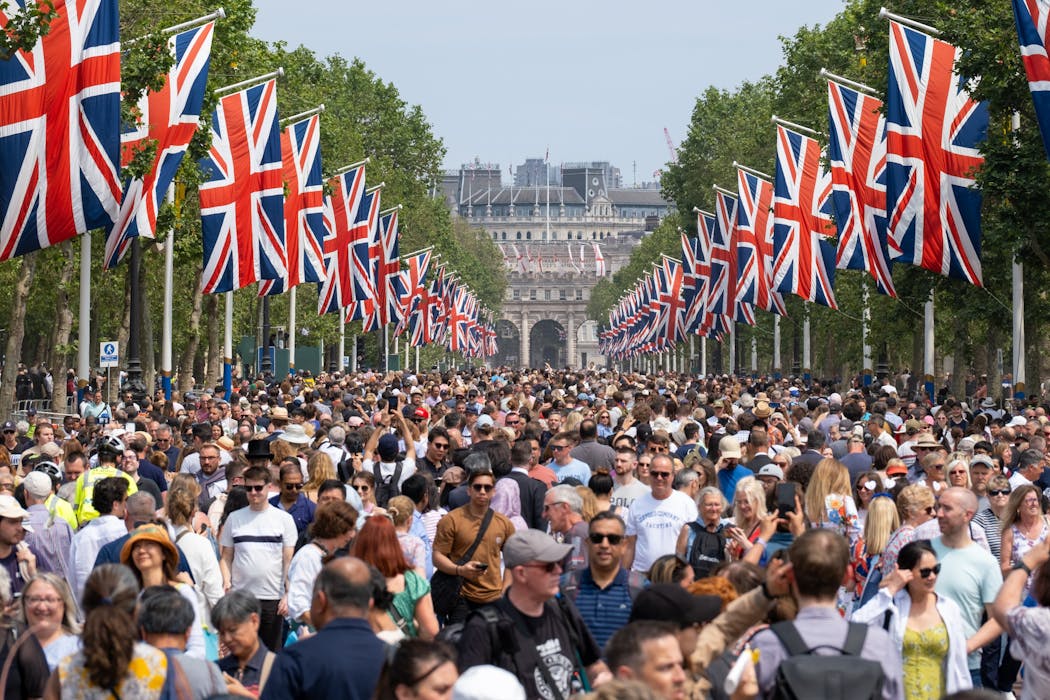
Watcharisma/Shutterstock

Arguments about diversity in Britain often get stuck on the surface. Instead of talking about who holds power or how resources are distributed, many politicians and culture warriors obsess over the colour of faces in adverts, media and public spaces.

Reform UK MP Sarah Pochin claimed that adverts “full of black people, full of Asian people” drove her “mad”, before apologising for the wording. Conservative MP Robert Jenrick depicted Handsworth in Birmingham as a slum where he “didn’t see another white face”. One reading of this comment is that it implies that the absence of white people signals disorder or decline.

In 2020, a Sainsbury’s Christmas advert featuring a black family sparked outrage online. Critics on social media declared that the country they recognised had vanished, that “too many” adverts now featured people who didn’t look like them.

Such controversies point to the heart of a dilemma currently facing Britain: a society wrestling with deep inequalities keeps picking fights about surface-level diversity.

A central problem is that multiculturalism is often confused with what might be called “multicolourism”. Multicolourism is cosmetic. It fixates on diverse racial representation in marketing materials, political campaigns or media imagery, and it masks racial disparities in wealth, housing and senior leadership positions.

Multiculturalism, by contrast, is hard work. It isn’t just about how Britain looks, but how it functions. It aims to build institutions, norms and everyday practices that enable different communities to disagree, collaborate and coexist while enjoying equal rights and opportunities. It is about the distribution of resources and civic respect, not counting the number of black or brown faces in an advert or campaign.

There is a long history of anxieties about black and Asian people holding space in British culture and politics. Such concerns about the racial diversity of British society are often conflated with debates about immigration and multiculturalism.

This can lead to problematic assumptions that all black and Asian people are migrants and that someone’s skin tone reveals their culture or values. For example, a Reform UK mayoral candidate has claimed that David Lammy and other ethnic minority politicians do not have a “primary loyalty” to Britain.

Surface-level diversity

While critics of multiculturalism have questioned the elevation of black and Asian people to prominent roles in British society, proponents of multicolourism have diverted attention away from the inequalities in British society.

The advertising sector is a helpful guide to the limitations of multicolourism. In a sign of progress, the Advertising Standards Authority now urges agencies to prioritise the quality of portrayals rather than numerical ratios – an acknowledgement that representation must go beyond tokenism. But research shows that, while agencies showcase diverse imagery in their campaigns, leadership and creative control remain overwhelmingly white.

In 2021, the Green Park Business Leaders Index found no black chairs, CEOs or CFOs in the FTSE 100. The 2024 Parker Review found little change, with no more than two black chairs, CEOs or CFOs in the FTSE 100. It also reported that approximately 13% of senior management positions at the top 100 firms in 2023 were held by people labelled “ethnic minorities” – notably lower than the 18% of people identified as non-white in the 2021 census.

Wealth inequality is even more stark. Research from the LSE’s Centre for Analysis of Social Exclusion shows that the median Bangladeshi, black African and black Caribbean households have negligible net wealth. This means their total liabilities are roughly equal to or exceed than the total value of their assets.

By comparison, the median white British household has a net worth of £140,000. These disparities shape everything about life prospects: where people can live, the stability they can build and the risks they can take.

How Britain lost its nerve on multiculturalism

Not long ago, Britain seemed to be moving toward a confident multicultural future. Postwar migration remade the country, and landmark equality laws in the 1960s and 70s helped dismantle the legal structures of discrimination. By 2000, the Commission on the Future of Multi Ethnic Britain laid out a serious vision for equal citizenship and plural identities.

But over the past decade and a half, that political confidence has crumbled. The Sewell Commission’s 2021 claim that Britain is not “institutionally racist” further shifted public debate away from reforms that would tackle structural inequality.

Some argue that the elevation of minority ethnic individuals to high-level positions is evidence that British institutions are not racist. This, too, is multicolourism. There is often reluctance to ask: have they achieved prominence despite, or because of, institutional racism?

Britain has ended up in an odd situation: public and private institutions proudly celebrate how diverse their organisations and campaigns look, while leadership structures have not shifted quickly enough.

We cheer the spectacle of footballers taking the knee, but are at risk of losing a generation of coaches and managers from a black, Asian or mixed heritage background. We elect politicians who celebrate their immigrant heritage, but who also support policies that make life harsher for ethnic minorities and migrants. The country wants the appearance of inclusion more than the responsibilities that come with it.

Rows about who appears on a poster or in a Christmas advert are keeping Britain stuck on a path of multicolourism. These debates are noisy, emotionally charged and ultimately hollow.

The other path demands more of us. It asks us to examine why wealth gaps persist, why senior leadership remains so homogeneous and why some communities face structural barriers while others enjoy structural advantages. It is the path of real and principled multiculturalism – an honest attempt to build a society where the rules are fair, the opportunities real and the institutions trustworthy.

It is slower. It is harder. It cannot be captured in a photo. But it is the only route that leads to a Britain confident enough not to fear its own reflection.

The Conversation

Daniel McNeil does not work for, consult, own shares in or receive funding from any company or organisation that would benefit from this article, and has disclosed no relevant affiliations beyond their academic appointment.

ref. Focusing on surface-level diversity is stopping Britain from becoming truly multicultural – https://theconversation.com/focusing-on-surface-level-diversity-is-stopping-britain-from-becoming-truly-multicultural-268013

Plant sex life is more complicated than you probably imagine

Source: The Conversation – UK – By Lila Maladesky, PhD candidate in Biology, Lund University

Jorm Sangsorn/Shutterstock

Humans like plants. We like seeing them change the colour of their leaves throughout the year. They connect us to nature even if we live in a big city. But most people don’t think that much about the lives of plants, and least of all, about their sex life.

Because plants don’t move around much, it is common to think they lead boring lives. But today I want to convince you that they can be more interesting than you give them credit for. And for that, I will focus on people’s usual favourite plants: the ones that flower.


Many people think of plants as nice-looking greens. Essential for clean air, yes, but simple organisms. A step change in research is shaking up the way scientists think about plants: they are far more complex and more like us than you might imagine. This blossoming field of science is too delightful to do it justice in one or two stories.
This article is part of a series, Plant Curious, exploring scientific studies that challenge the way you view plantlife.


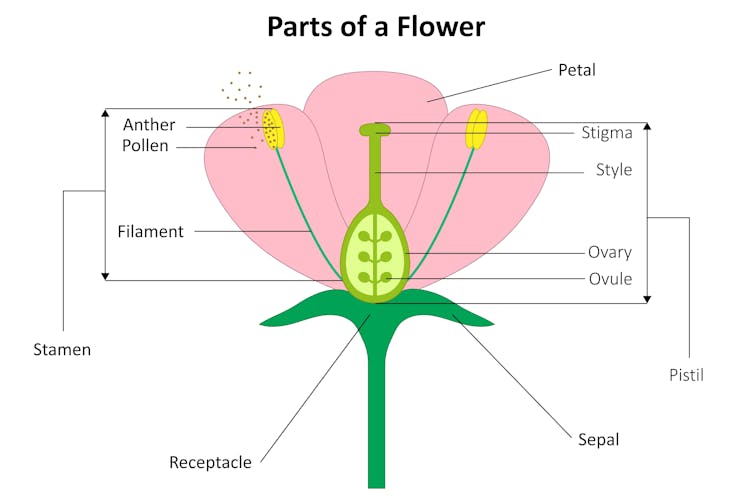
About 90% of flowering plants are hermaphroditic, which means that their flowers have both male and female function. This is what we call perfect flowers. Take the tomato for example. If you open one of its flowers, you will see it has an ovary (part of the female organ) and anthers with pollen (part of the male organ).

Diagram of male and female parts of a flower.
Most flowers are hermaphroditic.
MarinaSummer/Shutterstock

In tomatoes, pollen from a flower can pollinate the ovary of the same flower. This means that a tomato plant doesn’t need another tomato nearby to reproduce. Pretty convenient, especially if there are not many other plants of your species around.

Bumblebee pollinating yellow flower.
Tomato flowers are hermaphroditic.
Ferlx/Shutterstock

However, this is not the case for all hermaphroditic plants. Some of them can’t self-pollinate, like apples. In those species you do need two individual plants to produce fruit.

Things get more complicated. Scientists think that the first flowering plant to appear on earth was probably hermaphroditic. But what about this other 10% that are not hermaphroditic? What are they and where do they come from?

Let’s dive in.

The alternative to perfect flowers is unisexual flowers, which have either an ovary or anthers with pollen. In some species, male flowers and female flowers grow from the same individual. This is what we call monoecious plants. The plant has both male and female functions but separated in different flowers. Often, these flowers appear at different times of the year, which doesn’t allow the plant to pollinate itself.

There is another alternative to this, which is the total separation of sexes in different individual plants. Willows are one example. In this species, one willow tree will have only male flowers or just female flowers. So, a willow tree can be male or female, more like we are used to in animals like mammals or birds.

This separation of sexes in plants is called dioecy. One reason why dioecy may evolve is because of the negative effects that self-pollination can bring. It’s similar to how humans reproducing with relatives can give their offspring a higher chance of diseases.

White willow catkin flower on the left and yellow ones on the right
Male (left) willow and female (right) willow flowers.
Shutterstock collage

But that’s not all. A small proportion of unisexual plants have systems that seem to be in between hermaphroditism and dioecy. The system is called androdioecy when you can find hermaphroditic individuals and males within one population. An example of this is a herb native to California, US, called the Durango root. This system is rare in nature.

Close up of green herb with thick stem.
The Durango root belongs to a rare sex determination system.
Jared Quentin/Shutterstock

The alternative system is called gynodioecy, and it is the other way around. It is a system where females coexist with hermaphrodites. This happens in some wild strawberries.

Lastly, in some cases, male and females have been found alongside hermaphrodites. Some researchers call this trioecy (three sexes). And for this one, one example is the tasty papaya.

Exploring evolution

I mentioned earlier that hermaphroditism is probably the original sex determination system in flowering plants. So how did the other systems evolve from it?

In plants, as in many animals, sex is mostly determined by genes. This means that a seed will become a male or female plant depending on what their DNA says. Studying genetics has never been easy. But it has become easier over the last few decades, with technologies that allow us to study the genes in more detail.

Before this technological revolution, most studies were done in what we call model organisms, like mice, flies and some specific plants like thale cress (Arabidopsis thaliana). But now, studying other organisms is becoming increasingly easy. This has allowed scientists to see that in nature there is a lot of variation in sex determination. If we take dioecy as an example, scientists found examples of this system in groups of plants that are not closely related. This means that dioecy has evolved several times. And this is true for the other systems as well.

Gynodioecy, androdioecy and monoecy seem to be a link between hermaphroditism and dioecy. This means that systems can potentially go back and forth, from hermaphroditism to dioecy. And in fact, cases of changes in both directions have been found.

But what about the genes that determine these mechanisms? Scientists have found a variety of genes involved in different species. So, it turns out, there are many ways to evolve a male organism.

This variation in sex determination systems is why studying this topic in plants is interesting. In animals, many big groups, like insects, are dioecious, and they have been for millions of years. This makes it harder to study how dioecy evolved in the first place.

Flowering plants tell us a story about continuous change. The different sex determining systems are connected. If a species evolves separate sexes, hermaphroditism can still reappear in the future. But which is the best system? In nature, there is never one correct answer. It depends on the environment where the plants live and the challenges they have to face.

The Conversation

Lila Maladesky’s PhD project is funded by the European Research Council

ref. Plant sex life is more complicated than you probably imagine – https://theconversation.com/plant-sex-life-is-more-complicated-than-you-probably-imagine-269229

Reading the sky: how Irish weather lore preserved a deep understanding of the natural world

Source: The Conversation – UK – By Karol Mullaney Dignam, Associate Professor, School of History and Geography, University of Limerick

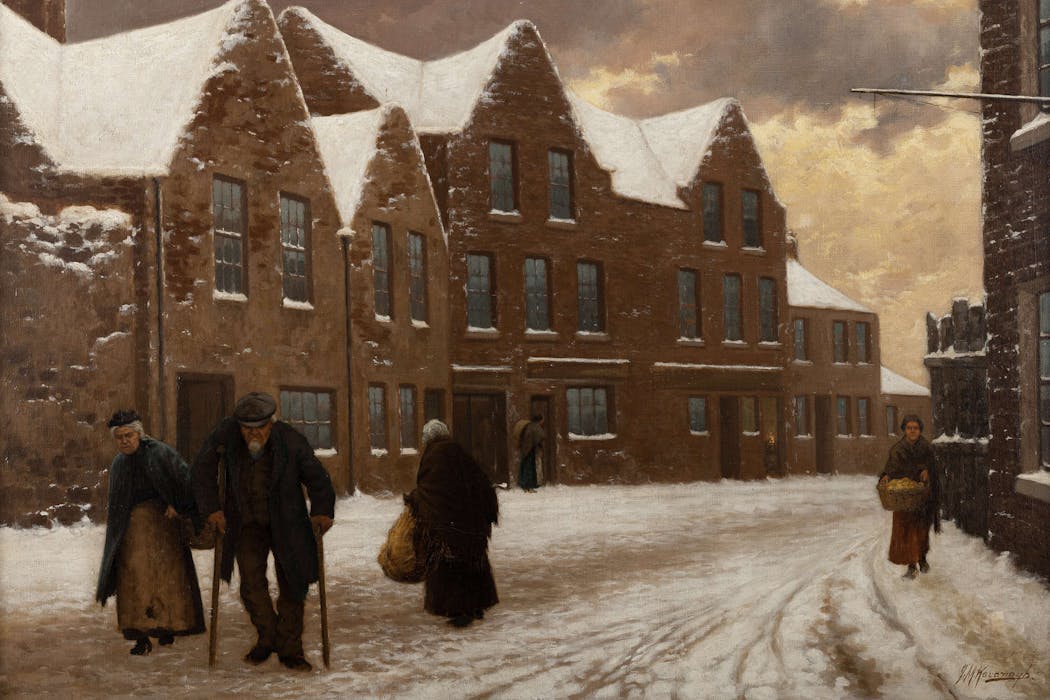
Old Dublin by Joseph Malachy Kavanagh (between 1876 and 1918). Adams

Long before meteorology and climate science, Irish people looked to the natural world to forecast the weather and make sense of their surroundings. They read the skies, the seas and the behaviour of animals for signs of change: a halo around the moon meant rain was near; swallows flying low foretold a storm.

This weather lore – known as seanchas i dtaobh na haimsire in Irish – was grounded in generations of observation and shared through memorable sayings or rhymes. One familiar example is: “Red sky at night is a shepherd’s delight; red sky in the morning is a shepherd’s warning.” But weather lore is more than folklore. It is evidence of a society attuned to subtle environmental cues – what researchers now call traditional ecological or environmental knowledge.

Weather lore forms part of Ireland’s cultural heritage (dúchas) preserved in the National Folklore Collection, one of western Europe’s largest archives of oral tradition. Established in the 1930s and now digitised, it encompasses several compilations, including the Main Manuscript Collection of field-recorded folklore and the Schools’ Collection, gathered by schoolchildren from older generations. Together, these hold millions of pages of stories, customs and beliefs, among them thousands of weather sayings in both Irish and English.

Across the archive, weather lore highlights natural indicators – moon halos, sun colour, wind direction, animal behaviour – as clues to coming weather changes. Farmers timed sowing and harvesting, fishermen watched the skies before setting out to sea. Without barometers or technologically enhanced forecasts, people relied on sensory cues in the environment – shifts in colour, movement, sound, even smell. These observations were based on practical knowledge, honed over generations and patterns repeated nationwide.

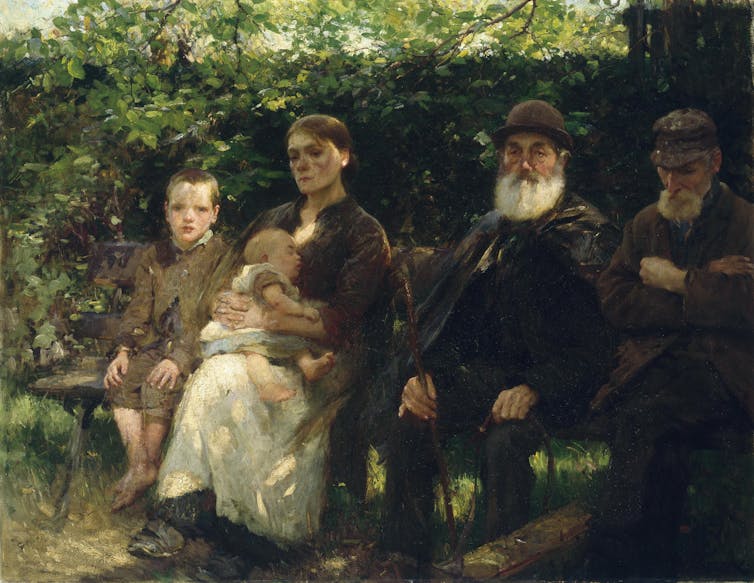
Painting of four members of different generations of one family including a baby sitting in a park
In a Dublin Park, Light and Shade by Walter Osborne (1895).
National Gallery of Ireland

Many stories of Irish weather lore have modern scientific explanations while others reflect superstition or coincidence.

Birds and animals: Cats turning their backs to the fire signalled a storm; dogs eating grass suggested rain. Swallows flying high meant fine weather, while low flight warned of rain. Seagulls coming inland foretold storm or rain. Foxes barking at night were said to herald dry weather.

Celestial clues: A “ring” around the moon was a classic sign of rain. Sunsets mattered too – red skies promised fair conditions, while coppery or yellow hues foretold rain. Twinkling stars were linked to frost or wind; shooting stars denoted dry weather (in Irish) or wind (in English). The Northern Lights were often interpreted as omens beyond weather, such as impending war.

House and hearth: The direction and behaviour of chimney smoke was also related to weather prediction. When smoke rose straight up, it signalled fine weather, but when it drifted downward or failed to ascend, rain or storm was expected. Blue flames in the fireplace meant storm or frost; falling soot signalled rain; damp hearthstones and cracking furniture were also read as warnings of unsettled weather to come.

Landscape and sound: Hills appearing “near” suggested rain, while seeming distant meant clear skies. Even sound carried meaning: when the rumble of a train or the roar of a waterfall sounded close, bad weather was expected; when distant, good weather was on the way.

Weather lore and cultural heritage

Weather shapes how we experience place, identity and memory. Weather lore carries cultural weight, being woven into everyday conversation, proverbs and poems and passed down through storytelling.

A red sunset visible through the window in a painting of the interior of a cottage
The Interior of a Cottage by William Mulready (1828).
Royal Collection

Verses helped people remember patterns. An Irish folklore variant of a familiar rhyme appears in both the Irish and English languages: “A rainbow at night is the farmer’s delight; a rainbow in the morning is the farmer’s warning.”

These rhymes also acted as calendars, helping communities anticipate seasonal changes. For example:

January brings the snow

Makes us oft our fingers blow

February brings the rain

And thaws the frozen lakes again

These sayings reinforced continuity and belonging, with evident regional differences. In the west, Irish-language sources mention marine indicators – sea colour, foam currents, seals (known as mucaí mara, sea pigs) – and use vivid metaphors like the “moon lying on its back” or “clouds like Kerry mountains”. Off-shore island communities noted tides and coastal sounds.

In contrast, English-language sources from the mainland emphasise agriculture: soil moisture, crop cycles and harvest lore. Farmers watched trees and hedgerow plants – haws and sloes – for seasonal predictions: “Ash before oak, there’s sure to be a soak; oak before ash, there’s sure to be a splash.” “March dust” was like gold because dry conditions early in spring were believed to promise a bountiful harvest.

Irish folklore has long been studied for its historical depth, linguistic richness and cultural significance. Recent studies explore how this lore connects to heritage and environmental awareness. Interpreted today, weather lore is more than folklore. Researchers are now beginning to frame this as “weather heritage”.

In an era of climate uncertainty, Irish weather lore points to something we risk losing: the habit of paying attention to what nature is telling us.


The climate crisis has a communications problem. How do we tell stories that move people – not just to fear the future, but to imagine and build a better one? This article is part of Climate Storytelling, a series exploring how arts and science can join forces to spark understanding, hope and action.


The Conversation

Karol Mullaney-Dignam has previously received external, government funding from the Irish Research Council (formerly IRCHSS, now Research Ireland) in relation to her research on musical culture and Irish country houses (Postdoctoral Research Fellowship, 2010-12, New Foundations Grant, 2016). She has also been funded around the same topic via a Royal Irish Academy Charlemont Award (2015). Additionally, she has worked as a project specific consultant and received project specific funding from the Irish Office of Public Works around the same topic.

ref. Reading the sky: how Irish weather lore preserved a deep understanding of the natural world – https://theconversation.com/reading-the-sky-how-irish-weather-lore-preserved-a-deep-understanding-of-the-natural-world-271268

A sign of Europe’s troubled times? Lithuania brings in tax reforms to boost defence spending

Source: The Conversation – UK – By Karl Matikonis, Assistant Professor, University College Dublin

proslgn/Shutterstock

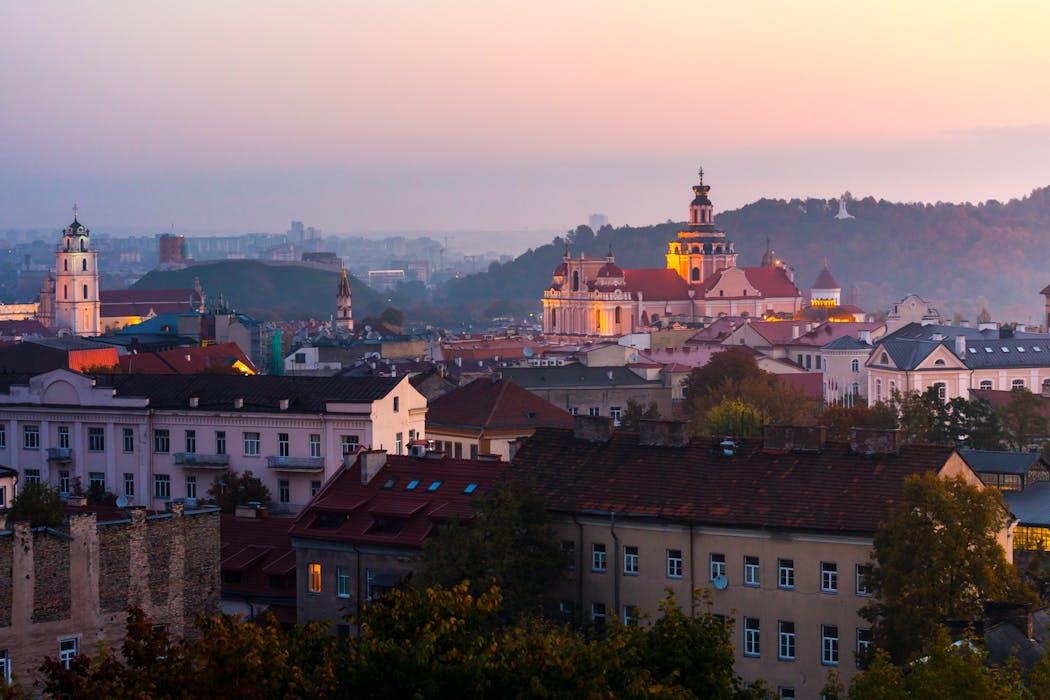
Lithuania is entering 2026 with a tax shift that brings its system closer to countries like Ireland and the UK. From January 1, the long-standing flat 15% personal income-tax rate for self-employed people is being abolished for higher earners. These workers will now be integrated into the same new progressive bands that apply to employment income.

On the surface, it’s a technical adjustment. But politically, economically and symbolically it captures a moment in Europe’s history. That is to say, higher defence spending, shrinking fiscal space, EU rules that tie funding to progress on reforms and a public mood swinging towards the idea of “fairness”.

That’s why this small Baltic reform is being watched far beyond Lithuania’s capital Vilnius.

Security is now a direct fiscal driver. Lithuania, positioned on Nato’s eastern frontier, has tied parts of its tax package to defence funding. A new 10% security contribution on insurance premiums (excluding life insurance) makes that link explicit.

As budgets tighten, ageing populations, higher borrowing costs and the legacy of COVID spending leave governments with far less room to maintain tax preferences, especially those that create visible distributional gaps.

This is not only an EU dynamic. The UK’s recent budget, which pushes the overall tax burden to its highest level in decades, reflects similar constraints in the financial picture.

EU funding conditions are also prompting reform. Lithuania’s disbursements under its €3.8 billion (£3.32 billion) plan are linked to progress on income tax, property-tax changes and digital administration. The 2026 package addresses several of these milestones.

In other words, Lithuania didn’t just change taxes. It read the room.

The reasons for the generous regime

For nearly three decades, lightening the load for freelancers made sense. As my new research shows, Lithuania emerged from the Soviet system with limited administrative capacity. Most citizens had never filed a tax return, and the state needed to grow a private sector rapidly.

Flat, low-tax self-employment acted as a tool to build markets, encourage people to move out of the informal, cash-only economy and secure quasi-voluntary compliance in a state still developing its enforcement capacity.

But that era is over. Lithuania now operates one of the EU’s more digitised tax administrations. Returns are largely pre-populated, third-party reporting is extensive and the country’s tax inspectorate uses real-time and automated risk analysis. Under these conditions, the original administrative justification for maintaining a separate and significantly more generous freelancer regime has weakened.

In June 2025, Lithuania’s Seimas (parliament) approved a fiscal package to come into force on January 1 2026. The core principle is alignment: employees and the self-employed with comparable earnings now face broadly similar and more progressive income tax rates.

Until the end of 2025, freelancers paid a flat 15% income tax. But now this is replaced by a progressive regime of 20%, 25% and 32%. Lower-income sole traders are protected by a structured tax credit on the first €20,000 of income, which tapers out up to €42,500.

Above the taper threshold, employment and self-employment income will now be subject to the same income tax bands.

Several other measures are taking effect, including corporation tax increases from 16% to 17%; rising real estate tax; a new excise duty on sugary drinks and the 10% “national defence contribution” applied to non-life insurance premiums.

As the figure below (which is based on my analysis) shows, the reform narrows though does not eliminate the gap between freelancers and employees. But symbolically and structurally, it marks a clear shift.

Lithuania is confronting a challenge faced by many European states. Countries with sizeable gaps between the taxation of employees and the self-employed, including Italy, the Netherlands and Czech Republic, are grappling with the same pressures: rising defence budgets, tighter EU fiscal governance and labour markets where workers move easily between employment, contracting and the gig economy.

In these settings, systems designed in the 1990s no longer reflect how income is generated. Lithuania’s reform is one of the clearest recent examples of a broader shift towards taxing different forms of income in a more similar way.

There is also a subtler change under way. For many years, Lithuania’s flat freelancer tax was justified as a means of supporting entrepreneurship. Today, the public conversation has shifted. With digital administration lowering compliance barriers, fairness is increasingly defined as parity rather than privilege. Compliance tends to rise when taxpayers believe the system treats comparable earners even-handedly.

lithuanian flag with the message united we stand being held up alongside a ukrainian flat at a peaceful protest in vilnius
Taxation as a new form of civic participation.
Michele Ursi/Shutterstock

And in 2026’s security climate, linking part of the reform to defence spending has turned taxation into something closer to civic participation.

Lithuania’s reform is not radical; it is normalisation. But the direction of this change indicates where many European systems are heading: towards higher defence expenditure, closer EU fiscal oversight and tax structures that tolerate fewer discrepancies between different forms of work.

In that sense, this small Baltic state may simply have moved early, partly because of its geopolitical position. But others are likely to follow.

The Conversation

Karl Matikonis previously received funding from the Economic and Social Research Council for unrelated research.

ref. A sign of Europe’s troubled times? Lithuania brings in tax reforms to boost defence spending – https://theconversation.com/a-sign-of-europes-troubled-times-lithuania-brings-in-tax-reforms-to-boost-defence-spending-271275

How US intervention in Venezuela mirrors its actions in Panama in 1989

Source: The Conversation – UK – By Adriana Marin, Lecturer in International Relations, Coventry University

The US dramatically escalated its confrontation with Venezuela on January 3, moving from sanctions and targeted strikes on alleged drug-trafficking vessels to direct military action. In a pre-dawn operation, US forces captured the Venezuelan president, Nicolás Maduro, and his wife, Cilia Flores, and removed them from the country.

The operation has prompted historical comparisons with the US invasion of Panama in late 1989. Although separated by more than three decades and unfolding in different international contexts, the two episodes reveal a continuity in how the US approaches intervention, sovereignty and legality in the western hemisphere.

The US invasion of Panama was justified at the time through a now-familiar set of claims. US officials argued they were protecting American citizens, restoring democracy following contested elections, combating drug trafficking and upholding treaty obligations linked to the Panama canal.

However, none of these arguments provided a solid legal basis for the use of force under the UN charter. Panama had not attacked the US, there was no imminent armed threat and the operation was not authorised by the UN security council. The invasion prompted international condemnation and was denounced by the UN general assembly as a violation of international law.

Yet concern over the legality of the operation mattered far less to the US than its political outcome. The Panamanian leader, Manuel Noriega, was removed from power and transferred to the US where he was tried on criminal charges. The US achieved its strategic objectives quickly and international condemnation produced no lasting consequences.

Panama thus established a powerful precedent: a smaller state could be reshaped forcibly without multilateral approval, provided the intervention was framed persuasively and executed decisively.

A US military vehicle in the Punta Paitilla neighbourhood of Panama City.
A US military vehicle in the Punta Paitilla neighbourhood of Panama City in December 1989.
Amador Diversified / Shutterstock

Central to that framing was what I call the criminalisation of sovereignty. Noriega was portrayed by US politicians not simply as an authoritarian ruler, but as a criminal figure. This mattered because it blurred the line between war and law enforcement, enabling regime change to be recast simply as an arrest.

Panama’s sovereignty, in turn, appeared less like a legal right and more like a shield open to abuse by criminals. While legal issues remained, the framing reduced political resistance, particularly within the US. This logic has reemerged in US discourse surrounding Venezuela.

Venezuela’s authorities have long been portrayed by Washington as criminal, corrupt and illegitimate. The US has designated drug networks linked to Venezuela, such as the so-called Cartel de los Soles, as terrorist organisations. It has also issued indictments against Maduro and other government officials on narco-terrorism and drug-trafficking charges.

As was the case in Panama, this framing shifts the debate away from inter-state relations and towards enforcement against individuals. This weakens the perceived legitimacy of Venezuelan sovereignty and helps normalise coercive external action.

It may also hint at Maduro’s eventual fate. The US state department did not recognise Noriega as Panama’s head of state, which made his later prosecution easier because it was argued he was not entitled to immunity.

Maduro, in a similar way, has been described by the state department as the “de facto but illegitimate ruler of Venezuela”. This purported lack of democratic legitimacy could mean the two men ultimately face a similar outcome in court.

Democracy plays a rhetorical role in both cases. The invasion of Panama was presented as a response to cancelled elections and democratic breakdown. In Venezuela, claims of democratic illegitimacy, contested elections and authoritarian governance have been also used to justify sustained external pressure and, now, direct intervention.

In neither case does democracy function as a legal basis for the use of force. International law does not permit military action to restore or impose democracy, nor does it allow states to determine the legitimacy of other governments unilaterally. Democracy in these contexts operates as a moral narrative rather than a lawful justification.

Pattern of intervention

There are, of course, differences between the two cases. The operation in Panama saw tens of thousands of US troops deployed on the ground. The US intervention in Venezuela was more targeted, relying on a mix of economic sanctions, diplomatic isolation and the selective use of force.

But rather than signalling a transformation in strategic intent, this reflects changes in military technology, media scrutiny and political risk.

Unlike in 1989, modern interventions unfold under real-time global media coverage and social media scrutiny, sharply increasing reputational costs. Greater domestic sensitivity to foreign entanglements also raises the political risk of overt military action.

However, notwithstanding these changes, the objective in both cases remains the same: rapid political disruption designed to weaken or remove an unfriendly regime while avoiding the costs of prolonged occupation.

The international environment has also changed. Panama took place at the end of the cold war, when US dominance in the western hemisphere was largely uncontested. Venezuela unfolds in a more fragmented global order, where regional and global players are more willing to challenge US actions.

Yet this difference cuts both ways. While global opposition may be louder, the enforcement capacity of international law remains limited. As Panama demonstrated, condemnation without consequence does little to deter future interventions.

What ultimately unites the two cases is the principle of selective sovereignty. In both Panama and Venezuela, sovereignty has been treated not as a universal legal protection but as a conditional status. States governed by leaders that have been labelled as criminal, illegitimate or destabilising are seen as having forfeited their rights.

This is not how sovereignty functions in international law, but it is how power often operates in practice. Each time this logic is applied, it weakens the credibility of the rules-based international order and reinforces the idea that legality bends to strength.

Panama’s significance lies precisely in this normalisation, showing that intervention could succeed politically even when it failed legally. Venezuela suggests that this lesson has not only been learned, but refined. Where Panama involved overt illegality, Venezuela reflects a more diffused form of coercion, spread across legal, economic and military domains.

Recent events in Venezuela thus do not represent a dramatic break from past practice. They represent continuity. Panama was not an aberration of the late cold war but a formative moment in post-war US interventionism. Venezuela is its modern-day echo.

The language has evolved and the methods have adapted, but the underlying assumption remains stable: that when powerful states deem it necessary, sovereignty can be suspended, legality reinterpreted and intervention justified after the fact.

That is the real significance of the comparison. Panama then and Venezuela now show a durable pattern in how intervention is imagined, defended and repeated.

The Conversation

Adriana Marin does not work for, consult, own shares in or receive funding from any company or organisation that would benefit from this article, and has disclosed no relevant affiliations beyond their academic appointment.

ref. How US intervention in Venezuela mirrors its actions in Panama in 1989 – https://theconversation.com/how-us-intervention-in-venezuela-mirrors-its-actions-in-panama-in-1989-272659

The rise and fall of Babycham – the sparkling pear drink that sold the champagne lifestyle at a small price

Source: The Conversation – UK – By Steve Parissien, Lecturer in Architectural History, University of Oxford

As a cultural historian who has worked with and lectured on the drinks industry for many years I was asked to write a book about post-war Britain and the drinks that made it. I immediately knew I had to include Babycham – a post-austerity tipple that had made Britain smile.

Britain in the early 1950s was gradually emerging from the shadow of war and was dealing with bankruptcy and post-war shortages. By the time of Queen Elizabeth II’s coronation in 1953, British manufacturing was getting back on its feet.

In that year, a little-known Somerset brewery, Showerings, hit upon a novel idea: offer cash-strapped Britons sick of the grey years of austerity a festive, sparkling alcoholic tipple that was cheap but fun. Thus was born Babycham, the celebratory drink that looked like champagne, but wasn’t.

I have distinct memories of my mum drinking the sparkling beverage in the 1960s, sometimes with brandy as a cheap, working-class alternative to the classic champagne cocktail. And who can forget those wonderful, deer-themed champagne coupes which Babycham distributed, and which are now collectors’ items.

As I write in my book Another Round, it was originally named “Champagne de la Poire” by its creators, Francis and Herbert Showering of Shepton Mallet in Somerset. Babycham was a new alcoholic perry – a cider made from pears. It had the modest strength of 6% alcohol-by-volume and came in both full-sized bottles and fashionable, handbag-sized four- and two-ounce versions.

At sixpence a bottle, Babycham’s bubbles come at a fraction of the price of genuine French bubbly – a luxury that very few could afford. Babycham came to epitomise the brave new world of mid-1950s Britain – British ingenuity still seemed to lead the world, and anything seemed possible.

Marketing with fizz

Babycham’s innovative brand design, marketing methods and advertising techniques brought flashy and flamboyant American techniques to the staid world of British beverages as its makers exploited not just the expanding potential of magazines and radio but, crucially, the revolutionary medium of television advertising. Perhaps most importantly, it was also the first British alcoholic drink to be aimed squarely at women.

Showerings and their advertising guru Jack Wynne-Williams made Babycham into the first British consumable to be introduced through advertising and marketing, rather than marketing an existing product. Their eye-catching new baby deer logo featured in the ad campaign of autumn 1953 and has been with us ever since. And it was equally prominent when their groundbreaking debut TV ad in 1956 made Babycham the first alcoholic brand to be advertised on British television.

In order to convey the idea that Babycham provided a champagne lifestyle at a beer price, Showerings advised their (largely female) customers that it was best served in an attractive and undeniably feminine French champagne coupe. Coupes were soon being customised by Showerings, who plastered them with the brand’s distinctive new deer logo and thereby created an instant kitsch collectable. In this way, Babycham offered the aspirational female Briton of the 50s and 60s a fleeting illusion of glamour and sophistication at the price of an average pub tipple.

All of this Americanised marketing paid handsome dividends. Babycham’s sales tripled between 1962 and 1971. These bumper sales enabled the Showerings to be acquired by drinks leviathan Allied Breweries in 1968, and after the merger Francis Showering was appointed as a director of the new company.

It was only in the early 1980s that Babycham’s sales began first to fall, and then to plummet. During this decade the drinks market was becoming more sophisticated and diverse. Women were turning more to wine and cocktails than to retro tipples made from sparkling pear juice.

However, after a period in the doldrums, the Babycham brand is back. In 2016, a younger generation of Showerings bought back the family’s original cider mill in Shepton Mallet and sought to revive their famous sparkling perry, relaunching Babycham in 2021.

If it is remembered at all, it’s now associated with celebrations such as birthdays or Christmas. No longer seen as a regular indulgence. The Babycham brand and its winsome fawn logo do seem rather old-fashioned today but in an age of nostalgia for the Britain of the past it could be ripe for a renaissance.


Looking for something good? Cut through the noise with a carefully curated selection of the latest releases, live events and exhibitions, straight to your inbox every fortnight, on Fridays. Sign up here.


The Conversation

Steve Parissien does not work for, consult, own shares in or receive funding from any company or organisation that would benefit from this article, and has disclosed no relevant affiliations beyond their academic appointment.

ref. The rise and fall of Babycham – the sparkling pear drink that sold the champagne lifestyle at a small price – https://theconversation.com/the-rise-and-fall-of-babycham-the-sparkling-pear-drink-that-sold-the-champagne-lifestyle-at-a-small-price-271347

Online ‘brainrot’ isn’t ruining children’s minds – it’s a new way of navigating the modern internet

Source: The Conversation – UK – By Oli Buckley, Professor in Cyber Security, Loughborough University

Alena A/Shutterstock

“Brainrot” is what many people call the chaotic, fast-moving memes, sounds and catchphrases that spread across TikTok, Roblox and online gaming and into playgrounds. An example is the endlessly repeated chant of “six-seven”, which still echoes through houses and schools across the country – to the bewilderment (or annoyance) of many teachers and parents.

But if you’ve ever said “I’ll be back” in a mock-Arnie voice or asked “you talkin’ to me?”, you’ve already engaged in a form of brainrot. The instinct to repeat and remix lines from the culture around us is nothing new.

What has changed is the source material. For young people growing up in a digital world, quotable moments don’t come from films or TV but from TikTok edits, Roblox streams, speedrun memes, Minecraft mods (modifications) and the fast-paced humour of online gaming.

Hearing a child burst into the looping “Skibidi dop dop dop yes yes” audio from the Skibidi Toilet trend, or repeat a surreal line from a Roblox NPC (non-player character), might sound like nonsense to adults. For the younger generation these fragments slot neatly into a fast-paced, highly referential style of humour. Today’s equivalents are faster, more layered and often more chaotic, with that chaos very much part of the appeal.

Although brainrot is often used knowingly and with a touch of irony to describe these phrases, remixing and repeating fragments of media has always been part of how people connect. It creates a shared cultural code, a second language made of references, rhythms and sounds that bind groups together and turn everyday moments into opportunities for humour and social connection. In many ways, this style of communication offers lightness and playfulness in a world that can often feel slow and muted by comparison.

Changing play

Brainrot is changing how children play online. Many adults grew up with video games that were built around structure. In Pokémon, Zelda or Half-Life, you cleared goals, quests and puzzles to reach endings. Even when games were open-world, giving you nearly total freedom to choose what challenges you take on and when, there was an underlying design logic you were meant to follow.

Those experiences shaped how we thought about play, and later how we approached designing games and interactive tools in research. Structure, narrative and pacing felt fundamental.

Watching children engage with today’s digital culture, and particularly with what gets called brainrot, challenges these assumptions. Their experiences aren’t always built around long-form story arcs or carefully crafted mechanics and challenges. Instead, it’s fluid, fragmentary and relentlessly social.

They jump between Roblox games, short TikTok edits, chaotic Minecraft mods and meme-based jokes without losing the thread. What sometimes looks like disjointed overstimulation to adults is entirely coherent to them. They’re fluent in a form of digital literacy that involves stitching together references, humour, audio, images and interactions at high speed.

Brainrot and research

From a research perspective, this has been a timely reminder that how children engage online changes. Young people aren’t abandoning meaningful play, they’re interacting with an online environment that is dramatically different from the one their parents grew up with.

There is research that raises questions about whether switching between short, chaotic bursts of content might affect attention or wellbeing for some users. For example, a recent study found associations between heavy use of short-form video apps and poorer sleep in adolescents, but also noted that higher social anxiety partly explained this pattern.

A broader analysis of a number of research studies reported similar correlations between heavier use and lower scores on attention tasks, as well as higher stress and anxiety. But these findings do not show causation. It remains unclear whether short-form content affects attention, or whether young people with particular cognitive styles simply gravitate towards media that already fits how they process information.

This shift has changed how we design games for learning. Instead of assuming attention must be sustained in a single direction, we think more about how curiosity works in shorter bursts, how play can be modular, and how meaning can emerge from participation rather than instruction.

Brainrot may not be something we’d replicate directly in an educational game, but some of its qualities, its pace, its playfulness, its remixing of ideas, can offer valuable prompts for thinking differently about how young people engage.
The way we learn is constantly evolving and it doesn’t always fit our older frameworks. Rather than resisting that, there’s value in trying to understand it, and in meeting them where they already are.

If we want to understand why brainrot resonates so strongly with children, it helps to see it not as meaningless noise, but as a form of social communication. These references work as inside jokes, but ones that can be remixed endlessly.

This is part of the appeal: brainrot is malleable, collaborative and playful. If you understand it, then you can riff on it, combine it, subvert it, and use it to signal belonging. There’s a enticing level of creativity stitched into the chaos.

There is also an element of self-awareness in much of brainrot culture. Its absurdity isn’t accidental, it’s part of the joke. In that sense it has echoes of earlier artistic or cultural movements that embraced nonsense or playful subversion. One of the key things is that this isn’t something imposed on children by companies or algorithms. Brainrot is something young people choose to build together, adapting and evolving references within their own circles.

Brainrot isn’t evidence that young people are disengaged or unimaginative. It’s a reflection of how they make sense of a digital world that is fast, fragmented and overflowing with ideas.

The Conversation

The authors do not work for, consult, own shares in or receive funding from any company or organisation that would benefit from this article, and have disclosed no relevant affiliations beyond their academic appointment.

ref. Online ‘brainrot’ isn’t ruining children’s minds – it’s a new way of navigating the modern internet – https://theconversation.com/online-brainrot-isnt-ruining-childrens-minds-its-a-new-way-of-navigating-the-modern-internet-268623

Why brides are still reluctant to choose secondhand wedding dresses

Source: The Conversation – UK – By Lauren Thomas, Senior Lecturer in Marketing & Events, University of South Wales

shutterstock Dochynets Maryna/Shutterstock

Secondhand fashion is booming, yet most brides – even those who care about sustainability – still choose to walk down the aisle in a new wedding dress.

It’s a striking contradiction. Wedding gowns are expensive and resource-intensive to produce. They require large amounts of fabric and water for a garment worn only once. And while many couples are thinking more carefully about the environmental cost of their celebrations, secondhand bridalwear remains the exception rather than the norm.

Our research with UK brides uncovers why so many continue to resist the broader shift toward pre-loved fashion, when it comes to their big day. What we found is that wedding dresses carry cultural and emotional power far beyond their physical form.

For many brides, choosing the dress is a symbolic milestone in the transition from partner to wife. TV shows like Say Yes to the Dress have cemented the idea of a magical, transformative moment. It’s a moment that often involves loved ones, tears and the collective recognition of “the one”. Within this cultural script, the wedding dress is meant to signal the start of a new identity.

A bride trying on a wedding dress in a boutique, with a consultant adjusting the gown.
shutterstock.
VisualProduction/Shutterstock

We interviewed 18 brides for our study. Many felt that secondhand options disrupt this narrative. Brides revealed to us that wearing a pre-loved dress would feel like stepping into someone else’s story, making it harder for them to imagine their own.

Most brides in our study cared about the environment and liked the idea of greener choices, but sustainability rarely shaped the final decision. Brides often found themselves weighing their personal values against a deeply ingrained emotional script from their childhood about how the wedding should feel and who they aspire to be on the day.

The dress played a central role in this identity transition. Brides used it to express the version of themselves they wanted to present as they became a wife, relying on fit, tailoring and style to craft that image. This made control especially important.

Many felt that secondhand options limited their ability to shape the dress around their identity. They worried about alterations, condition and whether a pre-owned dress could truly carry the personal meaning they envisioned.

Shopping for the dress was also part of this transition. Many brides pictured a boutique appointment with family or friends, where they could try on different versions of themselves and choose “the one”. This moment helped them confirm the role they were stepping into.

Secondhand shopping rarely supports this experience. Charity shops may feel informal or lack privacy, and online platforms remove the chance to feel the fabric or judge the fit. Without a space that carries the emotional weight of the choice, the brides we spoke to felt the transition was disrupted.

Practical issues added further pressure. Secondhand dresses are one-offs, which limits control over size and style, and their condition can be difficult to assess. These barriers weakened brides’ sense of control over how they would look and feel on the day.

Misconceptions reinforced this reluctance. Many brides simply did not know what secondhand options existed or how to navigate them. Some assumed the dresses would be dated, damaged or unhygienic. Without clear guidance or visibility, most brides never explored secondhand seriously, even if they liked the idea in principle.

What secondhand needs to offer

For brides to consider secondhand, the shopping experience must help them feel in control and emotionally connected to the dress. Brides in our study wanted curated boutiques offering fittings, expert guidance and reassurance about cleaning and alterations, all within a calm space where they could imagine themselves on their wedding day.

They also wanted secondhand options to be easier to find and navigate. Presenting pre-loved dresses as unique and meaningful, rather than as compromises, may help them feel like a credible part of the journey into married life.

Brides are not only choosing a dress. They are managing an identity shift. The wedding dress is one of the main items they use to shape who they will be on their wedding day. Sustainability matters, but it rarely outweighs the powerful symbolic and emotional role the wedding dress plays.

Secondhand bridalwear will only thrive if it supports this emotional transition. Greater visibility, stronger emotional resonance and an experience that helps brides feel the dress is truly theirs, may encourage others to choose secondhand without sacrificing the meaning they attach to becoming a wife.

The Conversation

The authors do not work for, consult, own shares in or receive funding from any company or organisation that would benefit from this article, and have disclosed no relevant affiliations beyond their academic appointment.

ref. Why brides are still reluctant to choose secondhand wedding dresses – https://theconversation.com/why-brides-are-still-reluctant-to-choose-secondhand-wedding-dresses-271238

China’s five green economy challenges in 2026

Source: The Conversation – UK – By Chee Meng Tan, Assistant Professor of Business Economics, University of Nottingham

As China heads into the new year it will start rolling out its 15th five‑year plan, this one is for 2026-2030.

Beijing is doubling down on greening its economy, and aims to hit two major climate goals: “carbon peaking”, where carbon dioxide emissions have reached a ceiling by 2030, and “carbon neutrality”, where net carbon dioxide emissions have been driven down to zero by 2060.

Yet, China’s green push sits uneasily with its energy realities: coal still provides about 51% of its electricity as of mid‑2025, underpinning China’s difficulty in greening its energy system swiftly. Here are five major challenges that will shape China’s green transition as it moves into 2026.

1. Energy transmission and wastage

Imagine standing in western China (for instance in Tibet, Xinjiang and Qinghai), which produces a lot of solar and wind energy. On bright and windy days, these installations generate vast amounts of clean electricity. Yet much of that power goes to waste.

China’s grid can only handle a limited load, and when renewable generation peaks, it risk overloading the power network. So grid operators respond by telling energy producers to dial down output, which is a process called “curtailement”. The result is that electricity from the west often fails to reach eastern economic hubs, such as Beijing, Tianjin, Shandong, Jiangsu, Shanghai, Zhejiang, Fujian and Guangdong, where demand is greatest.

China needs to invest heavily in the ways to transport and store excess energy. The State Grid Corporation of China claims that it will be spending 650 billion yuan (£69 billion) in 2025 to upgrade the power network, and perhaps much more in subsequent years.

The challenge here is sustaining these capital-intensive projects while the broader economy still grapples with the lasting effects of the 2021 property crisis.

China is building massive solar farms, but also coal-fired power stations.

2. Cutting coal without blackouts

Even as China vows to go green and be a world leader in environmental energy, it continues to expand its coal capacity, and has added enough new coal-fired power stations in 2024 to power the UK twice over per annum. This apparent contradiction stems from concerns over energy security.

Beijing is determined to avoid a repeat of the blackouts and power shortages of 2020–2022. Coal provides dependable, round‑the‑clock power that renewables cannot yet fully replace. Yet the steady expansion of coal capacity undercuts China’s climate pledges and highlights ongoing tensions between China’s president, Xi Jinping’s, dual carbon goals and the country’s pressing energy demands, which raises questions about how far political ambition can stretch against economic reality.

3. Taming overcapacity without hurting growth

China’s vast manufacturing strength, which was once an asset, is now posing a problem. The rapid expansion of solar, wind, and electric vehicle industries has created overcapacity across the clean‑tech sector. Factories are producing more panels, turbines, and batteries than the domestic market can absorb. This has created a cut-throat price war, where companies sell at below cost price, which erodes company profits.

Beijing must find a balance between restraining overproduction without choking growth in green industries. This balancing act is politically sensitive, as local governments depend on these industries to create jobs (7.4 million in 2023), and generate substantial revenue. It was estimated that in 2024 green industries contributed 13.6 trillion yuan to China’s economy or 10% of the country’s GDP.

4. Trade tensions from overcapacity

China’s surplus of clean tech such as cheap solar panels, electric vehicles (EVs), and batteries, have triggered trade tensions abroad. In 2023 and 2024, the European Union investigated allegations of Chinese subsidies being poured into EVs, wind turbines and solar panels. Tariffs of up to 35.3% were placed on Chinese EVs. However, tariffs on Chinese solar panels and wind turbines have not been imposed so far.

But, on January 1 2026 the EU’s Carbon Border Adjustment Mechanism (CBAM) comes into effect. The CBAM is a carbon tax that Europeans will pay if imported goods are made using high carbon emissions. While the tax does not explicitly target EVs and solar panels, it will cover carbon-intensive materials used in their production, such as steel and aluminium, which are made using coal-fired plants.

What this means is Chinese clean tech might lose its competitive edge in the European market as customers are driven away from its products. Industrial players might rely on exports to stay afloat given the highly competitive nature of China’s domestic green market, but the CBAM is likely to undermine China’s green industry.

5. Fulfilling green targets locally

Chinese local governments are formally responsible for putting Beijing’s climate policies into practice, but many are expected to implement these policies largely on their own. While provincial authorities typically have more fiscal resources and technical expertise, city-level governments within each province often don’t have the funds to do so, which makes it difficult to deliver on green initiatives in practice.

At the same time, even when local authority leaders are told to achieve climate‑related targets, their career advancement remains closely linked to conventional economic performance indicators such as GDP growth and investment.

All of this helps explain the continued enthusiasm for new coal‑fired power projects. They are framed not only as a fail‑safe in case renewables and grids cannot meet rising demand, but also as avenues for local employment, fixed‑asset investment and fiscal revenue.

China’s continued greening in 2026 will be challenged by all of these issues.

The Conversation

Chee Meng Tan does not work for, consult, own shares in or receive funding from any company or organisation that would benefit from this article, and has disclosed no relevant affiliations beyond their academic appointment.

ref. China’s five green economy challenges in 2026 – https://theconversation.com/chinas-five-green-economy-challenges-in-2026-270866

The ancient braces myth: why our ancestors didn’t need straight teeth

Source: The Conversation – UK – By Saroash Shahid, Reader in Dental Materials, Queen Mary University of London

Hryshchyshen Serhii/Shutterstock.com

Ancient Egyptians and Etruscans pioneered orthodontics, using delicate gold wires and catgut to straighten teeth. It’s a tale that has appeared in dentistry textbooks for decades, portraying our ancestors as surprisingly modern in their pursuit of the perfect smile. But when archaeologists and dental historians finally scrutinised the evidence, they discovered that most of it is myth.

Take the El-Quatta dental bridge from Egypt, dating to around 2500BC. The gold wire found with ancient remains wasn’t doing what we thought at all. Rather than pulling teeth into alignment, these wires were stabilising loose teeth or holding replacement ones in place. In other words, they were functioning as prostheses, not braces.

The gold bands discovered in Etruscan tombs tell a similar story. They were probably dental splints designed to support teeth loosened by gum disease or injury, not devices for moving teeth into new positions.

There are some rather compelling practical reasons why these ancient devices couldn’t have worked as braces anyway. Tests on Etruscan appliances revealed the gold used was 97% pure, and pure gold is remarkably soft.

It bends and stretches easily without breaking, which makes it useless for orthodontics. Braces work by applying continuous pressure over long periods, requiring metal that’s strong and springy. Pure gold simply can’t manage that. Try to tighten it enough to straighten a tooth and it will deform or snap.

Then there’s the curious matter of who was wearing these gold bands. Many were found with the skeletons of women, suggesting they might have been status symbols or decorative jewellery rather than medical devices. Tellingly, none were discovered in the mouths of children or teenagers – exactly where you’d expect to find them if they were genuine orthodontic appliances.

But perhaps the most fascinating revelation is this: ancient people didn’t have the same dental problems we face today.

Malocclusion – the crowding and misalignment of teeth that’s so common now – was extremely rare in the past. Studies of Stone Age skulls show almost no crowding. The difference is down to diet.

Our ancestors ate tough, fibrous foods that required serious chewing. All that jaw work developed strong, large jaws perfectly capable of accommodating all their teeth.

Modern diets, by contrast, are soft and processed, giving our jaws little exercise. The result? Our jaws are often smaller than those of our ancestors, while our teeth remain the same size, leading to the crowding we see today.

Since crooked teeth were virtually non-existent in antiquity, there was hardly any reason to develop methods for straightening them.

A caveman chewing on a bone.
Jaws were larger, due to food being tougher to chew on.
Gorodenkoff/Shutterstock.com

That said, ancient people did occasionally attempt simple interventions for dental irregularities. The Romans provide one of the earliest reliable references to actual orthodontic treatment.

Aulus Cornelius Celsus, a Roman medical writer in the first century AD, noted that if a child’s tooth came in crooked, they should gently push it into place with a finger every day until it shifted to the correct position. Although basic, this method is built on the same principle we use today – gentle, continuous pressure can move a tooth.

After the Roman era, little progress occurred for centuries. By the 18th century, however, interest in straightening teeth had revived, albeit through some rather agonising methods.

Those without access to modern dental tools resorted to wooden “swelling wedges” to create space between overcrowded teeth. A small wedge of wood was inserted between teeth. As saliva was absorbed, the wood expanded, forcing the teeth apart. Crude and excruciating, perhaps, but it represented a step towards understanding that teeth could be repositioned through pressure.

Scientific orthodontics

Real scientific orthodontics began with French dentist Pierre Fauchard’s work in 1728. Often called the father of modern dentistry, Fauchard published a landmark two-volume book, The Surgeon Dentist, containing the first detailed description of treating malocclusions.

He developed the “bandeau” – a curved metal strip wrapped around teeth to widen the dental arch. This was the first tool specifically designed to move teeth using controlled force.

Fauchard also described using threads to support teeth after repositioning. His work marked the crucial shift from ancient myths and painful experiments to a scientific approach that eventually led to modern braces and clear aligners.

With advances in dentistry during the 19th and 20th centuries, orthodontics became a specialist field. Metal brackets, archwires, elastics and eventually stainless steel made treatment more predictable.

Later innovations – ceramic brackets, lingual braces and clear aligners – made the process more discreet. Today, orthodontics employs digital scans, computer models, and 3D printing for remarkably precise treatment planning.

The image of ancient people sporting gold and catgut braces is certainly appealing and dramatic, but it doesn’t match the evidence.

Ancient civilisations were aware of dental problems and occasionally attempted simple solutions. Yet they had neither the necessity nor the technology to move teeth as we do now.

The real story of orthodontics doesn’t begin in the ancient world but with the scientific breakthroughs of the 18th century and beyond – a history that’s fascinating enough without the myths.

The Conversation

Saroash Shahid does not work for, consult, own shares in or receive funding from any company or organisation that would benefit from this article, and has disclosed no relevant affiliations beyond their academic appointment.

ref. The ancient braces myth: why our ancestors didn’t need straight teeth – https://theconversation.com/the-ancient-braces-myth-why-our-ancestors-didnt-need-straight-teeth-270962