Should AI be allowed to resurrect the dead?

Source: The Conversation – UK – By James Muldoon, Associate Professor in Management, University of Essex

The growing industry of ‘grieftech’ enables people to interact with dead relatives. Deepbrain AI

When Roro (not her real name) lost her mother to cancer, the grief felt bottomless. In her mid-20s and working as a content creator in China, she was haunted by the unfinished nature of their relationship. Their bond had always been complicated – shaped by unspoken resentments and a childhood in which care was often followed closely by criticism.

After her mother’s death, Roro found herself unable to reconcile the messiness of their past with the silence that followed. She shared her struggles with her followers on the Chinese social media platform Xiaohongshu (meaning “Little Red Book”), hoping to help them with their own journeys of healing.

Her writing caught the attention of the operators of AI character generator Xingye, who invited her to create an AI version of her mother as a public chatbot.

“I wrote about my mother, documenting all the important events in her life and then creating a story where she was resurrected in an AI world,” Roro told me through a translator. “You write out the major life events that shape the protagonist’s personality, and you define their behavioural patterns. Once you’ve done that, the AI can generate responses on its own. After it generates outputs, you can continue adjusting it based on what you want it to be.”

During the training process, Roro began to reinterpret her past with her mother, altering elements of their story to create a more idealised figure – a gentler and more attentive version of her. This helped her to process the loss, resulting in the creation of Xia (霞), a public chatbot with which her followers could also interact.

After its release, Roro received a message from a friend saying her mum would be so proud of her. “I broke down in tears,” Roro said. “It was incredibly healing. That’s why I wanted to create something like this – not just to heal myself, but also to provide others with something that might say the words they needed to hear.”

Grief in the age of deathbots

As I recount in my new book Love Machines, Roro’s story reflects the new possibilities technology has opened for people to cope with grief through conversational AI. Large language models can be trained using personal material including emails, texts, voice notes and social media posts to mimic the conversational style of a deceased loved one.

These “deathbots” or “griefbots” are one of the more controversial use cases of AI chatbots. Some are text-based, while others also depict the person through a video avatar. US “grieftech” company You, Only Virtual, for example, creates a chatbot from conversations (both spoken and written) between the deceased and one of their living friends or relatives, producing a version of how they appeared to that particular person.

Video by The Guardian.

While some deathbots remain static representations of a person at the time of their death, others are given access to the internet and can “evolve” through conversations. You, Only Virtual’s CEO, Justin Harrison, argues it would not be an authentic version of a deceased person if their AI could not keep up with the times and respond to new information.

But this raises a host of difficult questions about whether estimating the development of a human personality is even possible with current technology, and what effect interacting with such an entity could have on a deceased person’s loved ones.

Xingye, the platform on which Roro created her late mother’s chatbot, is one of the key prompts for proposed new regulations from China’s Cyberspace Administration, the national internet content regulator and censor, which seek to reduce the potential emotional harm of “human-like interactive AI services”.

What does digital resurrection do to grief?

Deathbots fundamentally change the process of mourning because, unlike seeing old letters or photos of the deceased, interacting with generative AI can introduce new and unexpected elements into the grieving process. For Roro, creating and interacting with an AI version of her mother felt surprisingly therapeutic, allowing her to articulate feelings she never voiced and achieve a sense of closure.

But not everyone shares this experience, including London-based journalist Lottie Hayton, who lost both her parents suddenly in 2022 and wrote about her experiences recreating them with AI. She said she found the simulations uncanny and distressing: the technology wasn’t quite there, and the clumsy imitations felt as if they cheapened her real memories rather than honoured them.

Official trailer for the grieftech documentary Eternal You.

There are also important ethical questions about whose consent is required for the creation of a deathbot, where they would be allowed to be displayed and what impact they could have on other family members and friends.

Does one relative’s desire to create a symbolic companion who helps them make sense of their loss give them the right to display a deathbot publicly on their social media account, where others will see it – potentially exacerbating their grief? What happens when different relatives disagree about whether a parent or partner would have wanted to be digitally resurrected at all?

The companies creating these deathbots are not neutral grief counsellors; they are commercial platforms driven by familiar incentives around growth, engagement and data harvesting. This creates a tension between what is emotionally healthy for users and what is profitable for firms. A deathbot that people visit compulsively, or struggle to stop talking to, may be a business success but a psychological trap.

These risks don’t mean we should ban all experiments with AI-mediated grief or dismiss the genuine comfort some people, like Roro, find in them. But they do mean that decisions about “resurrecting” the dead can’t be left solely to start-ups and venture capital.

The industry needs clear rules about consent, limits on how posthumous data can be used, and design standards that prioritise psychological wellbeing over endless engagement. Ultimately, the question is not just whether AI should be allowed to resurrect the dead, but who gets to do so, on what terms, and at what cost.

This article includes a link to bookshop.org. If you click the link and go on to buy from bookshop.org, The Conversation UK may earn a commission.

The Conversation

James Muldoon does not work for, consult, own shares in or receive funding from any company or organisation that would benefit from this article, and has disclosed no relevant affiliations beyond their academic appointment. James is the author of Love Machines: How Artificial Intelligence is Transforming Our Relationships (Faber).

ref. Should AI be allowed to resurrect the dead? – https://theconversation.com/should-ai-be-allowed-to-resurrect-the-dead-272643

Five ways to make your day at work feel better

Source: The Conversation – UK – By Ioannis Kratsiotis, Lecturer in Organisational Psychology, Manchester Metropolitan University

novak.elcic/Shutterstock

Most people know what a difficult day at work feels like. It can be tiring, draining and tense, leaving you unable to switch off. But there are also days when work feels lighter and more energising.

These good days are not necessarily defined by big wins or major achievements. In fact, they tend to come from harmonious experiences in the workplace that support our psychological needs.

Research I carried out with colleagues suggests that when people feel genuinely supported by the people around them, it helps to meet three basic needs: a sense of autonomy, a sense of competency and a sense of connection.

Meeting these needs is often what makes some days feel better than others. And workers can create these better days for themselves and for the people around them with these five simple suggestions.

1. Ask for help and offer it in return

Support does not need to be formal or time consuming. A brief check in, a quick question or an offer to share advice can make a real difference.

These small interactions help people feel connected and supported, which lifts mood and motivation throughout the day. Support works best when it goes both ways, so look for opportunities to both ask for help and offer it when you can.

2. Recognise the small wins

Feeling effective is one of the strongest drivers of wellbeing, so take a moment to notice the small things that went well.

Perhaps you made progress on a task or finally completed something on your to do list that you’d been avoiding. Recognising these small wins builds a sense of competence that carries into the rest of the day and into life outside work.

3. Give people (and yourself) some space

A sense of freedom in how we approach our work plays an important role in how we feel each day. Give yourself permission to make small choices about how you complete your tasks and allow colleagues this same freedom when possible.

Showing trust in others can strengthen your relationships, while giving yourself space can help you maintain focus and motivation.

4. Reach out before the end of the day

Short moments of genuine connection can change the tone of the entire day. A simple thank you, a message of appreciation or a short conversation with a colleague can lift your mood more than you might expect.

Reaching out to someone before you finish your day can help you leave work feeling lighter and more energised. Building positive workplace relationships not only feels good but also provides a reliable support network you can draw on when needed.

5. Stay balanced

Sometimes we feel drained because one of our basic needs is not being met. Perhaps we have had too little freedom in our work, too few moments of progress or not enough human connection.

Restoring balance matters more than maximising any one need, so taking a moment to notice what feels low is the first step towards bringing back a sense of equilibrium. The next step is to do one small thing to address it.

Man looking content at workspace.
Seek balance.
SofikoS/Shutterstock

Choose the order of your upcoming tasks if you need a greater sense of autonomy, complete a manageable task if you need a sense of progress and check in with a colleague if you feel isolated. Encouraging others to do the same helps build a team climate where balance and support are shared responsibilities. When this happens, good days become more common.

Small changes, big differences

The main message of our research is simple. Good days at work do not require major changes or perfect conditions. They are created through small everyday moments of support that help us feel free, capable and connected.

When these needs are in balance, people feel better during the workday and have more energy when they get home. Work will always have its difficult moments, but we have more influence over our daily experience than we sometimes realise.

By paying attention to the small moments that shape our day, and by supporting each other in simple but meaningful ways, we can create more days that leave us feeling fulfilled at work and refreshed at home.

The Conversation

Ioannis Kratsiotis does not work for, consult, own shares in or receive funding from any company or organisation that would benefit from this article, and has disclosed no relevant affiliations beyond their academic appointment.

ref. Five ways to make your day at work feel better – https://theconversation.com/five-ways-to-make-your-day-at-work-feel-better-272217

How to avoid an injury when exercising outdoors this winter

Source: The Conversation – UK – By Jen Wilson, Senior Exercise and Health Practitioner, Nottingham Trent University

It’s important to warm-up properly before a winter workout. DuxX/ Shutterstock

Exercising in the cold weather can be refreshing and invigorating. But it can also come with a unique set of risks – including the potential for slips, falls and injuries. This is why it’s especially important to look after your body before and after an outdoor workout in the winter.

There are a few reasons why the cold increases your risk of suffering an injury while exercising.

First, the cold can significantly affect muscle function. When the temperature of the muscles falls below the body’s core temperature of 37°C, muscle tissue becomes stiffer, less elastic and more susceptible to damage.

And for every 1°C reduction in muscle temperature, there’s a 4–6% decline in our ability to produce force and power. This is particularly relevant for dynamic activities such as running, where explosive force and rapid movement are required.

Second, cold temperatures cause the blood vessels in our arms, legs, hands and feet to narrow (known as vasoconstriction). This limits the amount of oxygenated blood that’s being circulated to the working muscles.


Read more:
Winter exercise is important for maintaining physical and mental health


This reduced blood flow may impair performance and slow metabolic processes, causing it to take longer for you to recover after a workout. In more extreme cold temperatures, you can lose coordination and experience numbness in the extremities, further elevating risk of slips, missteps and injury.

Even if the temperatures are well above freezing, you’re still at risk of injury. Prolonged exposure to cold, wet conditions can lead to microvascular damage (injury to the body’s smallest blood vessels) due to sustained reductions in blood flow. This can reduce tissue and nerve function, affecting everything from coordination and reaction time and further increasing risk of injury.

But while exercising in the cold may come with risks, there are also many things we can do before and after workouts to lower our risk of suffering an injury.

1. Warm-up thoroughly

Because colder muscles are stiffer and more vulnerable to strain, a good warm-up is essential.

Before your workout, aim to do a 20-minute warm-up. This should start with some brisk walking, jogging, light cycling – or any other activity that gets your heart rate up gradually but isn’t so intense you couldn’t still hold a conversation.

You should also perform dynamic movements such as leg swings, walking lunges and arm circles help elevate both core and muscle temperature.

Static stretching is best left for later in the session, once tissues have warmed and are more pliable.

2. Layer up

Clothing plays a significant role in regulating body temperature and protecting against cold-related stress. But it’s important not to wear clothing that’s bulky or restrictive, as this may cause overheating or limit your natural movement patterns and increase injury risk.

It’s recommended instead that you layer properly. Start with a moisture-wicking base layer made of natural fibres (such as wool, which can help prevent heat loss even if your clothes get damp), an insulating middle layer (such as a light fleece) and a breathable, wind-resistant outer layer.

Special attention should be given to the extremities, as they’re most vulnerable to heat loss. Gloves, hats and thermal socks will help preserve warmth.

Make sure to wear shoes that have good traction or even use walking sticks to reduce risk of slipping on wet or icy surfaces. If you’re working out in low-light conditions, make sure to wear a reflective outer layer for visibility.

3. Fuel for your workout

Drinking plenty of water is just as important in the cold as it is in hot weather. But the cold weather may cause people to drink less water. Cold weather may also make it appear as though we aren’t sweating as much. This may mask dehydration, making it even more important you’re hydrating properly.

A woman wearing a white hat and a bright pink jacket sips from a water bottle while standing outside on a winter's day.
Hydration is just as important in the winter.
Aleksandar Malivuk/ Shutterstock

Energy demands may also rise in cold weather. Shivering, wearing heavier clothing and increased effort when exercising in snowy or icy condition can all make us burn more calories. So make sure you’re eating enough food to maintain energy levels, preserve performance and help the body cope with the bold temperatures.

Foods rich in carbohydrates should be eaten before exercise, whereas protein and carbohydrates should be eaten within 30 minutes to 2 hours after a workout.

4. Check the weather

Before starting any cold-weather session, it’s important to check the temperature, wind chill, moisture levels and ground conditions.

If conditions are particularly severe (such as the winds are very strong, it’s very cold, icy or raining heavily), it’s best you modify the session or workout indoors instead to avoid an injury.

5. Cool down gradually

After your workout, aim to cool down gradually. Maintain circulation and prevent a sudden drop in blood flow to the extremities by doing some light aerobic activity, such as brisk walking. This is to ensure that blood is still being properly circulated back toward the heart.

Once your heart rate has decreased, aim to do some static stretching (such as holding a hamstring stretch) to help reduce muscle stiffness and aid recovery. This might also help you feel looser after exercise.

6. Change out of wet clothes immediately

Wet clothing accelerates heat loss dramatically. Wet skin also cools much faster than dry skin, increasing susceptibility to hypothermia and other cold-related injuries, such as frostbite.

Be sure to change into dry, warm layers as soon as possible after a workout to avoid injury and warm-up effectively.

7. Stay alert for signs of an injury

Persistent shivering, confusion and lethargy can be signs of hypothermia. Numbness or waxy, pale skin can be signs of frostbite. If you have any of these symptoms after your workout, it’s key you address them promptly or seek medical advice.

Cold weather exercise can be both invigorating and beneficial. Taking the right steps to mitigate risks and avoid injury can ensure training outdoors during the colder months can remain safe, productive and enjoyable.

The Conversation

The authors do not work for, consult, own shares in or receive funding from any company or organisation that would benefit from this article, and have disclosed no relevant affiliations beyond their academic appointment.

ref. How to avoid an injury when exercising outdoors this winter – https://theconversation.com/how-to-avoid-an-injury-when-exercising-outdoors-this-winter-271424

How a ferocious 19th-century hurricane helped Irish people get their British pension

Source: The Conversation – UK – By Robyn Atcheson, Open Learning Tutor in Social History, Queen’s University Belfast

An illustration of the ‘Night of the Big Wind’ from 1839. Wikipedia, CC BY

Sunday January 6 1839 signalled the end of the festive season, the last of the 12 days of Christmas. The people of Ireland woke to light snow and many were looking forward to the evening’s celebrations.

January 6 was known as Nollaig na mBan – “women’s Christmas” when womenfolk across the country took a day off from their traditional domestic chores as a reward for all their efforts, and visited friends and family.

The temperature rose dramatically by mid-afternoon before rain started around 3pm. The Ordnance Survey had been carrying out observations at Phoenix Park in Dublin for a decade and their readings showed how quickly the atmosphere was changing during the day. As evening approached, people were aware of an approaching storm.

By 10pm Ireland was hit with the full force of a hurricane that would last at least eight hours. It had travelled over the Atlantic Ocean, gathering momentum, before crashing over the west coast. Waves even broke over the top of the Cliffs of Moher. And so the destruction began.

A perfect storm

The Enniskillen Chronicle wrote the next day: “The gale increased in violence until it became a perfect hurricane, unroofing houses, blowing down chimneys, prostrating boundary walls, and almost everything that offered resistance.”

As windows shattered and the thatch on rooftops blew away, the people of Ireland were in darkness, only able to see in the flashes of lightning and the light of an apparent aurora borealis. In recorded memories of the event, the main sensory experience was the sheer noise of the storm – “the deafening roar of a thousand pieces of artillery”, a reporter wrote on January 10.

Thousands of trees were blown down across Ireland. Fires broke out, fanned by the fierce winds. Along the Tyrone-Monaghan border there was a fire in almost every townland (the name for settlements before modern towns were established). In Dublin, the Bethesda Chapel caught on fire, burning the church, its attached school, six town houses and the House of Refuge for “reclaimed females”.

The river Liffey overflowed, there were flash floods in Strabane and all the water was reportedly blown out of a canal near Tuam. The earth was stripped alongside the river Boyne, exposing the bones of soldiers killed in battle 150 years earlier. Fish were found six miles inland while vegetation even 40 miles inland tasted of brine.

It is difficult to calculate the number of lives lost that night. Estimates put the death toll between 250 and 300 people. Many sailors died at sea, including the captain and entire crew of the Andrew Nugent, wrecked off Arranmore Island. Lord Castlemaine was fastening his bedroom window at Moydrum Castle in Athlone when the storm blew it open, hurling him across the room and killing him instantly.

Those who died in the aftermath, from injuries, pneumonia, frostbite or other related consequences of the storm, have never been counted. Stacks of hay and corn were devastated by fire. The houses that suffered the most were those of the lower classes.

Storm then famine

Some families and communities were only just recovering from the effects of the storm by 1845 when Ireland faced another national catastrophe with the first failure of the potato crop.

As they sought to make sense of the seemingly apocalyptic event they had lived through, people turned to religion and superstition. The storm was variously interpreted as a battle between English and Irish fairy folk, the devil causing havoc, and as a warning from God that the day of judgement would soon arrive. With the onslaught of the Great Hunger six years later, it is no wonder that people were afraid to name this terrible event.

By the end of the century, the “Night of the Big Wind” had become the most common name used by the poor to discuss the trauma of January 1839. It had become easier to discuss this freak occurrence than the more traumatic An Gorta Mór, the Irish term for the Great Hunger of the late 1840s.

In a strange twist, cultural memories of the night were also to become very lucrative in the next century. In 1909 the Old Age Pension Act was implemented in the United Kingdom. Old age was deemed to include those 70 years old and above.

In Ireland – still part of the UK at this point – this was a problem, as birth registration had not been made compulsory until 1864. Many old people, particularly Catholics, had no way to prove they were over the threshold. Memories and anecdotal evidence were turned to as a means of establishing whether someone was eligible.

Being able to give an account of your memory of “the Big Wind” was a sure-fire way of establishing you were over 70. Pension bureaucracy noted that quite a lot of people had the same memory and even recounted it in the same phrase: “I was able to eat a potato out of my hand on the ‘Night of the Big Wind’.”

This was an expression that was easy for people to remember, and showed the individual was old enough to feed themselves in 1839. By March 1909, 80,000 people in the United Kingdom had applied for the pension – 70,000 of them were Irish.

One such pensioner was Tim Joyce from Co. Limerick who cheerfully recounted: “I always thought I was 60. But my friends came to me and told me they were certain sure I was 70, and as there were three or four of them against me, the evidence was too strong for me. I put in for the pension and got it.”


Looking for something good? Cut through the noise with a carefully curated selection of the latest releases, live events and exhibitions, straight to your inbox every fortnight, on Fridays. Sign up here.


The Conversation

Robyn Atcheson does not work for, consult, own shares in or receive funding from any company or organisation that would benefit from this article, and has disclosed no relevant affiliations beyond their academic appointment.

ref. How a ferocious 19th-century hurricane helped Irish people get their British pension – https://theconversation.com/how-a-ferocious-19th-century-hurricane-helped-irish-people-get-their-british-pension-271653

The ‘Donroe doctrine’: Maduro is the guinea pig for Donald Trump’s new world order

Source: The Conversation – UK – By Pablo Uchoa, PhD Candidate in International Politics, Institute of the Americas, UCL

Shortly after US special forces captured and extracted Nicolás Maduro and his wife, Cilia Flores, on November 3, Donald Trump said that the US would now “run” Venezuela.

Whatever Washington’s plans for the future of Venezuelan governance, this show of US force in Latin America looks like the first manifestation of a more assertive American foreign policy outlined in the national security strategy published in November 2025. This plainly asserted the Trump administration’s intention to “reassert and enforce the Monroe doctrine to restore American pre-eminence in the Western Hemisphere”.

Rather than force regime change at this point, Trump has indicated that he is willing to work with Maduro’s vice-president, Delcy Rodriguez, who has been sworn in as president. Rodríguez has adopted a conciliatory tone, inviting the US government to “work together on a cooperative agenda”. For the US president, “cooperation” will involve giving US oil companies unfettered access to Venezuela’s oil reserves, the largest in the world.

Announcing the raid at a press conference held hours after American forces snatched Maduro, Trump appeared to issue threats of similar interventions in Colombia, which he said was run by a “sick man who likes to make cocaine and sell it to the US”. His secretary of state, Marco Rubio – the child of Cuban exiles – also hinted at US intentions towards Cuba, saying: “If I lived in Havana and I was in the government, I’d be concerned at least a little bit.”

The US secretary of defense, Pete Hegseth, was perhaps most revealing of the three, talking about the administration’s goal of “reestablishing American deterrence and dominance in the Western Hemisphere”. In a clear warning to US foes, Hegseth said that no other country could have pulled this operation off, adding: “Our adversaries remain on notice. America can project our will anywhere, anytime.”

This is worrying in terms of geopolitics for two reasons.

First, the administration has shown a remarkable lack of engagement with international law. It has chosen instead to frame the raid as a police action to apprehend Maduro as a “narco-terrorist” responsible flooding the US with drugs.

This thin veil of legality has proved successful in the past. In 1989, the administration of George H.W. Bush ordered the invasion of Panama to capture the strongman dictator Manuel Noriega. Noriega was tried in Miami and jailed for 20 years on charges of being a sponsor of illicit drug trafficking.

Despite the UN passing a resolution condemning the invasion as a “flagrant violation of international law” (vetoed by the US, UK and France) the invasion enabled the US to take control of the canal. It held the canal for a decade before handing over operations to the Panama Canal Authority on December 31 1999.

The success of Bush’s invasion could explain why the Trump administration is taking a similar approach with Venezuela. Washington’s official line been to focus on Maduro’s alleged criminality rather than any US ambition to affect regime change in Venezuela.


Read more:
How US intervention in Venezuela mirrors its actions in Panama in 1989


Hegseth also insisted that the raid was about “safety, security, freedom and prosperity for the American people”. This assertion succinctly captures how the parameters of US national security have evolved to be much broader than defence. They now appear effectively inseparable from advancing US economic interests globally.

It’s an updated version of the Monroe doctrine, which the national security strategy described as the “Trump corollary”, but which the president himself has referred to as the “Donroe doctrine”. The term, which appears to have been coined by the New York Post (but which Trump nonetheless appears to have taken a liking to – as with most things that bear his name) is a vision of geopolitics which projects US power across the Americas.

And it looks set to be used to grab whatever resources the US perceives as beneficial to its interests, from Greenland’s minerals and strategic position to the Panama canal and Venezuelan oil.

A new era of interventionism?

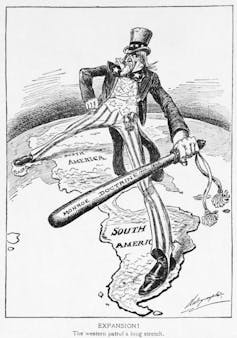
Naturally, it is in Latin America where these threats become more palpable. The 1823 Monroe doctrine – developed under the then president, James Monroe – designated the western hemisphere as an area of US influence in which the European powers of the time were explicitly warned not to interfere. Seven decades later, the 1904 “Roosevelt corollary” added the principle that the US could interfere in any Latin American countries plagued by “wrongdoing or impotence” and “requiring intervention by some civilized nation”.

Cartoon of Uncle Sam Straddling the Americas.
The Munroe doctrine.
Louis Dalrymple, Wikimedia Commons

This principle was invoked to justify direct occupation of Latin American countries contrary to US interests in the early 20th century. In this century, China’s growing links in Latin America have prompted a resurgence of references to the Monroe doctrine – particularly by Republican Congress members.

In 2026, these developments highlight the Trump administration’s willingness to enhance the capabilities of this outlook. It is not clear how the Donroe doctrine differs from its predecessors. But like them, it seems to subordinate international law to national interest.

And while it is aimed at a global audience, it also appears to entitle powerful countries with the right of having spheres of influence. Commentators have referred to this as an era of “rogue superpowers” and the “Putinisation” of US foreign policy.

The absence of conspicuous military support for Maduro from either Russia or China reinforces those arguments. China reportedly buys 76% of Venezuelan oil, while Moscow has in recent years had strong military ties with Caracas. The two countries have also cooperated closely to help each other avoid US oil sanctions.

The new US foreign policy stance as exemplified by the snatching of Maduro means the world is more dangerous – and Latin America considerably more vulnerable. But for now it’s Venezuela, which appears to be the laboratory where Trump has decided to flex America’s geopolitical muscles.

And it looks as if Maduro is the unlucky guinea pig, whose fate is designed to indicate what the world’s most powerful military can and will do to advance its economic and national security interests around the world.

The Conversation

Pablo Uchoa was funded by UKRI, through LAHP, to complete his PhD in Political Science at the UCL Institute of the Americas.

ref. The ‘Donroe doctrine’: Maduro is the guinea pig for Donald Trump’s new world order – https://theconversation.com/the-donroe-doctrine-maduro-is-the-guinea-pig-for-donald-trumps-new-world-order-272687

How writing about places people know makes the climate crisis less abstract

Source: The Conversation – UK – By Sam Illingworth, Professor of Creative Pedagogies, Edinburgh Napier University

The Victorian tropical palm house at the Royal Botanic Gardens in Edinburgh, Scotland. Prettyawesome/Shutterstock

The discourse around climate change can lead to anxiety, detachment or resignation because it often stretches language in ways that make the world feel distant.

Global averages and abstract temperature thresholds make it harder for people to relate to climate change in their own specific location. And while the language of sustainable development appeals to rationality, it fails to engage people creatively and collectively.

But we have discovered that writing about local places that people are already connected to changes this dynamic and gives people a way to examine their own assumptions within a recognisable framework.


Read more:
How stories of personal experience cut through climate fatigue in ways that global negotiations can’t


Across our research in the UK and Sweden, grounding dialogue in the environments people know consistently improved understanding of climate issues and shifted the tone of discussion.

When participants begin with places they care about, they move away from remote fears and towards more constructive reflection. They draw on memory, observation and the granular details of daily life. Climate thinking becomes easier when it is tied to real places because it helps people connect abstract ideas to what they see and experience. This pattern appears across community projects, university teaching and collaborative studies.

The city of Lund in southern Sweden provides a distinctive perspective on this issue because it is shaped by mobility. Many students arrive, stay briefly, then move on. At the same time, the area’s gardens, parks, bike paths and nature reserves offer spaces for lingering and reflection.

Similarly, the city of Edinburgh in Scotland holds a transient student population alongside a deep sense of local community. This again creates a tension between movement and belonging.

yellow flowers blooming, old building in background
The botanical gardens of Lund, Sweden.
Michael Persson/Shutterstock

Our work and other research shows that short exercises rooted in wetlands, coasts, gardens, museums or neighbourhoods can help people situate themselves in unfamiliar settings. Participants in our research are invited to write brief descriptions of what they notice, what appears to be changing and how this affects their own thinking. This creates space to test ideas without the defensiveness or polarisation that often accompanies climate debate.

A poem about a tidal line or a short essay about a street after heavy rain asks the writer to pay close attention. That attention becomes inquiry. It sharpens their observation, exposes assumptions and prompts questions about meaning and significance. This is analytical rather than sentimental.


The climate crisis has a communications problem. How do we tell stories that move people – not just to fear the future, but to imagine and build a better one? This article is part of Climate Storytelling, a series exploring how arts and science can join forces to spark understanding, hope and action.


Facts alone aren’t enough

Our shared work suggests that this approach localises the climate crisis without turning it into individual anecdote. Creative writing does not replace scientific explanation. It creates a structure through which readers relate evidence to the world they live in.

When someone writes about a familiar hill or a particular stretch of coastline, they are not claiming universal insight. They are sharing a real-life example. They are showing how climate data connects to a concrete place, which makes the discussion more accessible and helps others respond with observations from their own contexts.

This matters because climate communication sometimes assumes that information alone will drive change. Evidence shows that it rarely does. People need ways to integrate new knowledge with their own experience. Place-based writing provides that structure. It anchors reflection, keeps ideas from drifting into abstraction, and introduces creative constraints that demand clarity. Choosing which details carry meaning or which elements to omit reveals how people prioritise environmental concerns and interpret change.


Read more:
You don’t have to be a net zero hero – how focus on personal climate action can distract from systemic problems


Our teaching with undergraduates demonstrates this clearly. Students write short texts about specific places and discuss them in small groups. The task does not assess style. It assesses attention. People explain why they chose their place and what climate-related issues they observed or inferred. Listening to others exposes how local climate knowledge is produced, circulated and sometimes misread.

It highlights the tension between perception and evidence and requires each writer to discern which ecological questions feel most urgent in their own backyard.


Don’t have time to read about climate change as much as you’d like?

Get a weekly roundup in your inbox instead. Every Wednesday, The Conversation’s environment editor writes Imagine, a short email that goes a little deeper into just one climate issue. Join the 47,000+ readers who’ve subscribed so far.


The Conversation

The authors do not work for, consult, own shares in or receive funding from any company or organisation that would benefit from this article, and have disclosed no relevant affiliations beyond their academic appointment.

ref. How writing about places people know makes the climate crisis less abstract – https://theconversation.com/how-writing-about-places-people-know-makes-the-climate-crisis-less-abstract-270206

MMRV: what families need to know about the UK’s new chickenpox vaccine

Source: The Conversation – UK – By Ed Hutchinson, Professor, MRC-University of Glasgow Centre for Virus Research, University of Glasgow

The UK has added chickenpox to the routine childhood vaccination schedule for the first time, using a combined MMRV jab that also protects against measles, mumps and rubella. Here’s what parents need to know.

What is the new chickenpox vaccine?

The first thing to say is that the MMRV vaccine is not actually new. It’s been safely used in other countries (including the US, Australia and Germany) for decades, and has been available privately in the UK for some years. This year, MMRV is being introduced into the UK childhood vaccination schedule and will be available free of charge through the NHS.

The MMRV vaccine protects against four different viruses. For decades in the UK, the MMR vaccines have been used to safely protect children against a trio of particularly horrible infections: measles, mumps and rubella. The MMRV vaccine has one extra component, which protects children against the varicella zoster virus (VZV).

VZV might sound unfamiliar, but it causes some very familiar diseases. If you have ever had chickenpox, that was the point at which you caught VZV. Chickenpox is a short illness, but VZV is incurable – the virus will remain hiding in your nervous system for the rest of your life. In about one-third of people, it will eventually reactivate, causing a large, painful patch of infected skin known as shingles.

Recent research has shown that VZV reactivations also increase the risk of dementia in older adults.

Is the vaccine safe?

The MMRV vaccine has been used safely for decades. Like all vaccines, it was only approved for use because any risks from getting the vaccine are much less than the risks from having an infection.

How will the vaccine be given?

The MMRV vaccine is given as an injection in the upper arm or thigh. Typically, two doses are required for full protection. The NHS provides details of the vaccination.

When will children receive it?

In the future, children will be offered the vaccine alongside other childhood vaccines at 12 and 18 months. If your child was born before January 1, 2026 different timings may apply.

What if my child has already had chickenpox?

Children over six years are already likely to have caught chickenpox. You can’t normally catch VZV twice, so they will not normally be offered the new vaccine. If your child is over six but hasn’t had chickenpox, you may wish to consider getting the vaccine privately.

Why is the NHS introducing a chickenpox vaccine now?

The UK waited longer than many countries to introduce chickenpox vaccination, partly because of debates about the cost, and partly because it was unclear how long-lasting the protection would be.

Data from the US, where the vaccine has been used since the mid-1990s, now shows that the vaccine does provide robust, long-lasting protection.

There were also arguments about shingles. If you are infected with VZV, your immunity against the virus is boosted each time you encounter someone with chickenpox, and this can help unvaccinated people prevent VZV reactivations. The fact that there is now a shingles vaccine means that this is less of a problem than it used to be.

Is chickenpox really a serious illness?

Most cases of chickenpox are uncomfortable but resolve without severe illness, though some scarring is common. In rare cases, though, chickenpox can progress to cause very severe disease involving the lungs or brain, which can cause lifelong effects or even be fatal.

Even if chickenpox itself proves to be merely unpleasant – which in itself is worth protecting against – the fact that VZV is incurable and can cause serious diseases such as shingles and dementia in later life makes the chickenpox vaccine worth taking.

If you already had chickenpox – and if you are an adult who didn’t have the chickenpox vaccine, you probably did – there are other vaccines that can prevent your VZV reactivating, an event that would cause shingles and could increase your risk of dementia.

These shingles vaccines are freely available through the NHS if you are over 65, or if you have a weakened immune system.

A child with chickenpox.
Chickenpox can leave scars.
Dragana Gordic/Shutterstock.com

Will the vaccine stop chickenpox completely?

Chickenpox is highly contagious and, at the moment, global elimination seems a long way off. However, with widespread use of the MMRV vaccine, the UK could join the group of countries where chickenpox – and the diseases that follow it – change from being nearly universal to rare events.

The Conversation

Ed Hutchinson receives grant funding from UKRI and the Wellcome Trust. He is the Chair of the Microbiology Society’s Virus Division, a Board Member of the European Scientific Working Group on Influenza, an unpaid scientific advisor to Pinpoint Medical, and has sat on an advisory board for Seqirus.

ref. MMRV: what families need to know about the UK’s new chickenpox vaccine – https://theconversation.com/mmrv-what-families-need-to-know-about-the-uks-new-chickenpox-vaccine-272691

How can Labour escape the doom loop in 2026?

Source: The Conversation – UK – By Matthew Flinders, Founding Director of the Sir Bernard Crick Centre for the Public Understanding of Politics, University of Sheffield

The PM insists he’ll still be in office at the end of the year. Flickr/Number 10 , CC BY-NC-ND

The British media’s obsession with the end of Keir Starmer’s premiership continues, with New Year’s coverage focusing on whether the prime minister will survive 2026.

Starmer began the year by telling BBC broadcaster Laura Kuenssberg that he can – and even that he will lead the Labour party into the next general election. But unless the most unradical of politicians does something very radical very quickly, the elections in May 2026 are likely to produce a leadership challenge.

However, leadership is not the core problem that the Labour party – or indeed, any party – really needs to focus on. The problem is that British politics is trapped in a “doom loop” that is, to some extent, of its own making.

It is lost in a self-reinforcing negative feedback cycle in which an initial problem triggers responses that worsen the original problem, locking the system into a spiral of decline.

Poor economic performance since the 2008 global financial crisis and a marked slowdown in productivity growth has led to poor UK performance in real wage growth and living standards. Low growth, high taxes and rising debt interest leads to declining confidence on the bond markets which leads to higher borrowing costs which, in turn, stifle growth and make deficits harder to tackle.

Although Rishi Sunak fought the 2024 election on the basis that it was possible to “reverse the creeping acceptance of a narrative of decline”, the public was not convinced.

In opposition, Starmer rejected the need for grand narratives or ideological ties. And he did not “win” the election thanks to a positive vision for Britain but largely due to the weight of disillusionment with the chaos of successive Conservative governments.

If anything, the doom loop has simply continued under Starmer, this time as what would become known as “miserabilism”. His governing style has been based around dampening expectations, emphasising national crises and blaming previous governments.

A perceived lack of ambition and a style and persona that emphasised grim necessity over hope and belief has exacerbated the problem. The paradox of such a pessimistic approach is that it has only added to a narrative of “broken Britain” that has increased populist pressures.

The problem is not (just) Starmer. The deeper problem is that none of the main contenders to replace him seem capable of offering a bold story of renewal and achievement that can stimulate collective confidence and national self-belief. Nor, if we are honest, are the leaders of the main opposition parties.

Towards the end of 2025 the doom loop was almost deafening. In October, BBC Radio 4 asked its listeners, “What kind of a state are we actually in?” before summarising their responses in the following terms:

If you pull out the kaleidoscope there are record delays for court cases, prisoners are being released, doctors are striking, water companies are pumping raw sewage wherever they can (preferably into lakes, rivers and the sea, that’s where they like to put it). We are one of the world’s richest seven economies and yet it does not feel like that by listening to the news … Bins on the streets, rats in the kitchen, gangs running prisons, knifes in the schools, university system broken, asylum system broken, benefits system broken, social housing system broken, politics broken, broken railways, poisoned rivers, failing high streets … you’d head for the hills if they weren’t strewn with rubbish.

An absence of ideas in response to these problems has created the political vacuum that Nigel Farage’s Reform party has exploited with such zeal. For Farage the story is simple – the UK is stuck in a spiral of decline that can only be broken by a combination of economic nationalism, cultural conservatism and populist politics.

Whether you believe in Farage’s diagnosis of the problem or prescriptions for reform, what he offers is a vaunted solution to the doom loop problem that is clear and confident.

The power of narrative

As academics Alex Prior and Clara Eroukhmanoff have argued, political leaders not only need a clear narrative but they also have to be compelling characters within that narrative. Margaret Thatcher offered both the narrative and persona. She acknowledged the existence of challenges while telling a story about how she intended to fix them.

Tony Blair did the same. Meanwhile, the loss of a Conservative majority in 2017 was attributed to Theresa May “performing neither the narrative nor the persona”.

Starmer is not, and never has been, a storyteller. The limits of his performative competence were demonstrated in his 2026 New Year “things will get better” message to the British public. His argument that “decline” really will be “reversed” was unconvincing, his body language and facial expressions betrayed a lack of inner belief and the whole video has a tragi-comic dimension that is difficult to miss.

A New Year message from the PM.

It’s easy to dismiss political storytelling as spin or selective framing – to call it propaganda or a manipulative tool for circumnavigating rational thought. But humans are storytelling animals. Understanding and ideas evolve through narratives.

Stories are sense-making and sense-giving modes of communication. They frame issues and they have an emotional appeal that resonates with their audiences. The “story paradox” is that they can bind people together and they can tear communities apart.

The dominant narrative in British politics is destructive, cynical and polarising. It focuses on failure and perpetuates the doom loop.

The question for 2026 is less about Starmer’s future and more about whether the political class can rebut this dominant and dangerous narrative of “broken Britain” with a positive and inclusive story about nurturing social change, building flourishing communities, generating inclusive growth and playing a role in the emergent world order.

But most of all this story must connect with the day-to-day concerns and lived experiences of voters and be able to radically reshape the tone of public debate. Britain urgently needs to tell a different story.

The Conversation

Matthew Flinders does not work for, consult, own shares in or receive funding from any company or organisation that would benefit from this article, and has disclosed no relevant affiliations beyond their academic appointment.

ref. How can Labour escape the doom loop in 2026? – https://theconversation.com/how-can-labour-escape-the-doom-loop-in-2026-272758

V&A East: the spirit of the 19th-century cultural campus of ‘Albertopolis’ lives on

Source: The Conversation – UK – By Bill Sherman, Director of the Warburg Institute, School of Advanced Study, University of London

This year the V&A opens its new outpost in east London. In 2025 it unveiled the so-called Storehouse, and its new V&A East Museum opens in April 2026. V&A East is part of a new cultural campus, on the site of the 2012 Summer Olympics, dedicated to collections, education and policy.

Designed by Diller Scofidio + Renfro (DS+R), the architecture firm best known for the giant Shed at the end of Manhattan’s High Line, the Storehouse serves as the new home for hundreds of thousands of objects that are not on display in the Museum’s main galleries in South Kensington.

It will be joined by the V&A East Museum, which will aim to spotlight making and the power of creativity to drive social change. It will open with the exhibition The Music Is Black: A British Story, which will reveal how Black British music has shaped British culture.

When the V&A East Storehouse opened it was met with both critical and popular acclaim, offering a beleaguered museum sector a glimpse of what London’s deputy mayor for culture called “the museum of the future”. However, if the V&A has created a new kind of institution, it’s fair to say, it has done so by going “back to the future”.

Indeed, that was the title of one of the early presentations I myself helped to create in 2016, when I was the V&A’s director of research and collections, to secure the approval of both the Museum’s Board of Trustees and London’s Mayor.


Read more:
How the new V&A Storehouse is reshaping public access to museum collections


We drew inspiration from our recent record. As it happens, the three-year period during which V&A East was conceived saw three of the most successful exhibitions in the Museum’s history – David Bowie Is (2013), Disobedient Objects (2014) and Alexander McQueen: Savage Beauty (2015). Each of these exhibitions was a masterclass in museology (the practice of organising, arranging and managing museums) devoted to subjects once seen as difficult if not impossible to display.

We also met with people who had designed ambitious commercial and cultural infrastructures, including one of Germany’s largest hardware chains and one of Australia’s busiest public libraries. We visited other institutions devoted to giving new access to non-displayed collections such as Glasgow’s Museums Resource Centre and Rotterdam’s Boijmans Van Beuningen Museum, whose dramatic Depot opened in 2021 as “the world’s first publicly accessible art storage facility.”

These new projects pointed us, in turn, to a history that stretched back to the middle of the 19th century, when the V&A grew out of the Great Exhibition of 1851. This first World’s Fair attracted more than six million visitors and provided both collections and capital for the South Kensington Museum (the precursor to the V&A and the Science Museum). This institution was the first to offer food to visitors and evening hours. It was also supported by the first system of artificial lighting.

The decades that followed the fair saw pioneering developments in how museums were run. There were strides in technologies of reproduction such as photography and plaster casts. There was increasing circulation of collections to remote locations. Makers and artists were incorporated more into the galleries. There was also a core commitment to integrating research and teaching in the museum.

In those years, the Victoria and Albert Museum became part of a campus (known half-jokingly as Albertopolis) bringing together complementary institutions devoted to collections, education and policy. This was the explicit model not only for V&A East but for the redevelopment of the entire Queen Elizabeth Park in the wake of the 2012 Summer Olympics. In planning both the Storehouse and the new museum that will open next spring, we worked closely with partners (first UCL and the Smithsonian and later Sadler’s Wells, London College of Fashion, BBC Symphony Orchestra and others) who could create new synergies with old collections.

The V&A East Storehouse may well be the world’s largest cabinet of curiosities. It is certainly the most democratic: the Victoria and Albert Museum’s new facility in East London is free to visit and sits at the intersection of four of the UK’s most diverse and deprived neighbourhoods.

“It holds everything,” according to the V&A’s website, “from the pins used to secure a 17th century ruff to a two-storey section of a maisonette flat from the Robin Hood Gardens housing estate, demolished in 2017.” Other artefacts include The Kaufmann Office, the only complete interior by architect Frank Lloyd Wright outside of the US.

Visitors can not only see these “reserve collections” through a dizzying vista of open shelving but can order up to five items for a closer look. They can explore displays made by artists-in-residence and members of the community. They can look down through the glass-panelled floor into a state-of-the-art conservation lab. The project puts a national collection into the hands of the people and makes the experience no more daunting than a trip to the local Ikea, or, for that matter, the Westfield Shopping Centre, through which most people will pass on their short walk from Stratford Station.

When the project was conceived, Martin Roth, the V&A’s Director, asked us to turn the museum inside out, giving our visitors new insights into how collections are made, preserved and shown. Gus Casely-Hayford, the Director of V&A East, wants to bring a different demographic to the V&A, including local people who may never have been to a museum.

Its opening will complete East London’s new cultural campus. Only time will tell if the experiment of V&A East is as successful as Prince Albert’s visionary model in South Kensington.


Looking for something good? Cut through the noise with a carefully curated selection of the latest releases, live events and exhibitions, straight to your inbox every fortnight, on Fridays. Sign up here.


The Conversation

Bill Sherman receives funding from Research England.

ref. V&A East: the spirit of the 19th-century cultural campus of ‘Albertopolis’ lives on – https://theconversation.com/vanda-east-the-spirit-of-the-19th-century-cultural-campus-of-albertopolis-lives-on-272103

How I’m helping rice farmers in India harness the power of fungi in the soil

Source: The Conversation – UK – By Emily Servante, Postdoctoral Researcher, Cereal Symbiosis, Department of Plant Sciences, University of Cambridge

Ramphal. a rice farmer from Chamrori vilaage in India. Tilda, CC BY-NC-ND

It’s an exciting time to be a microbiologist working in rice research. A global push towards the cultivation of water-saving rice is enabling farmers to harness the power of microbes that thrive in less water.

Some farmers already use rice production systems that reduce or eliminate the length of time rice is submerged in a flooded paddy field. At the sowing stage, planting of pre-germinated seeds (direct seeding) rather than traditional transplanting of small plants into flooded paddies reduces the need for waterlogged fields. Waterlogged rice paddies emit huge amounts of methane, a potent greenhouse gas.

Similarly, an irrigation practice known as alternate wetting and drying uses pipes drilled into fields to encourage water management and intermittent flooding, reducing water usage and methane emissions.

Among microbes thriving in less water are arbuscular mycorrhizal fungi. These are beneficial soil fungi that live inside plant roots and help to extend plants’ reach into the soil to collect nutrients, acting as “natural biofertilisers”.

Arbuscular mycorrhizal fungi are aerobic, meaning they require oxygen for survival. This makes them more likely to be well suited to the drier, more aerated soils (with air spaces to allow efficient exchange of nutrients, water and air) that are increasingly promoted in sustainable rice systems.

To test this theory, I stepped out of the Crop Science lab at the University of Cambridge and into the field at the International Rice Research Institute (IRRI) in the Philippines.

Using some ink stain and a microscope, I examined roots from IRRI 154, a direct-seeded water-saving rice variety developed by the institute.

The results were striking: in IRRI 154 grown in traditional flooded paddy conditions, there were no signs of arbuscular mycorrhizal fungi colonising the rice roots. But in irrigated, non-flooded “dry” conditions, the fungi were present in up to 20% of the root. This was a clear indication that water-reducing farming practices like dry direct-seeding can promote arbuscular mycorrhizal fungi colonisation in rice.

Similarly, a recent study reported that arbuscular mycorrhizal fungi help rice grown under alternate wetting and drying in Senegal to have increased resilience to changes in water and nutrient levels.

Arbuscular mycorrhizal fungi don’t just help plants access nutrients. They can also provide resistance to pathogens and increased survival in harsh climate conditions such as drought. Encouraging them to colonise rice plants could therefore enhance the overall resilience of rice, an increasingly important trait in the face of climate change and water shortages.

By supporting and even boosting beneficial microbes like these, our team at the Crop Science Centre also hope to reduce the use of synthetic nitrogen fertilisers. Fertilisers are a major source of nitrous oxide (N₂O), a potent greenhouse gas. One alternative is for farmers to apply biofertilisers, products containing live beneficial microorganisms such as arbuscular mycorrhizal fungi to promote growth.

Determining and testing optimal formulations and application strategies is a big challenge for researchers like me. The effectiveness of biofertilisers depends on several critical quality-control factors. This includes avoiding contamination, preventing spoilage during storage, successful establishment in the soil and efficient colonisation of plant roots.

The soil is a complex environment. Solutions need to be tailored to local landscapes and specific situations. That’s where an ongoing partnership with Tilda, a UK rice brand, comes in. Tilda successfully implemented water-saving alternate wetting and drying with thousands of basmati farmers in India. Since this encourages the arbuscular mycorrhizal fungi, it has enabled my colleagues and I to put our science into practice.

I visited farmers in Haryana and Uttar Pradesh to ask about their thoughts on using local arbuscular mycorrhizal fungi-based biofertilisers to reduce the use of synthetic fertiliser. To my surprise, many had heard of “mycorrhizae” and were optimistic about its potential.

landscape shot of rice farms, green fields
Rice farms around Alahar village in India.
Tilda, CC BY-NC-ND

Our first mission was to check the presence of arbuscular mycorrhizal fungi in Pusa 1, a popular basmati variety grown in the area. Together with the rice farmers in Haryana, we turned the local rice market (mandi) into a lab, setting up ink staining and microscopes for people to see. I found the characteristic tree-like structure of arbuscular mycorrhizal fungi in a root, and ran outside to tell the crowd of over 20 farmers and agronomists to take a look.

From lab to field

Having confirmed that the fungi were present in Pusa 1 basmati, and with advice from Tilda’s local agronomists, we decided to test two locally available “mycorrhizae” biofertilisers in 31 pilot farms.

We visited the farmers involved in this pilot in September 2025. In Uttar Pradesh, we visited the family farm of Bhoti Devi, a female farmer, and gathered under a tree for shade while discussing field observations with her and some other farmers in the area.

The farmers told me that the rice with added mycorrhizae biofertiliser appeared to have increased root growth and a higher number of tillers (farm machinery with rotating blades that churn up and aerate the soil), indicating a potential boost in yields. I shared images from my own tests in Cambridge which showed similar results. It was so exciting to share and compare our observations.

In Haryana, ten farmers similarly described improved root growth. This visible improvement gives us and farmers confidence that these biofertilisers could be improving crop performance while water-saving techniques are being used. Now, we’re gathering data from this season to confirm these initial observations.

Indian woman in orange dress, sat smiling
Bohti Devi, a rice farmer from Alahar village.
Tilda, CC BY-NC-ND

Our next steps for the biofertiliser testing are two-fold: to investigate whether we can apply them to reduce the use of synthetic fertiliser, and to examine the composition and sustainability of the available commercial biofertiliser products. This will ensures they reduce the use of synthetic fertiliser and associated greenhouse gas emissions. With more than 4,000 farmers in Tilda’s network, tests can be scaled up to assess the effects of reduced synthetic fertiliser on rice yields.

Translating our lab-based research into a real-world, scalable application is a dream scenario. From breeding programmes at IRRI in the Philippines to farmer fields in India, water-saving rice systems like direct seeding and alternate wetting and drying are promoting the presence of arbuscular mycorrhizal fungi in rice roots.

Together with rice farmers in India, we can explore how to use more natural biofertilisers to reduce synthetic fertilisers and build more sustainable farming systems.


Don’t have time to read about climate change as much as you’d like?

Get a weekly roundup in your inbox instead. Every Wednesday, The Conversation’s environment editor writes Imagine, a short email that goes a little deeper into just one climate issue. Join the 47,000+ readers who’ve subscribed so far.


The Conversation

Emily Servante is collaborating on a project with Tilda, funded by the Ebro Foundation.

ref. How I’m helping rice farmers in India harness the power of fungi in the soil – https://theconversation.com/how-im-helping-rice-farmers-in-india-harness-the-power-of-fungi-in-the-soil-269209